Inicio Blog Página 9

Hombre del condado de Bucks acusado de amenazar a miembro del Congreso de Estados Unidos

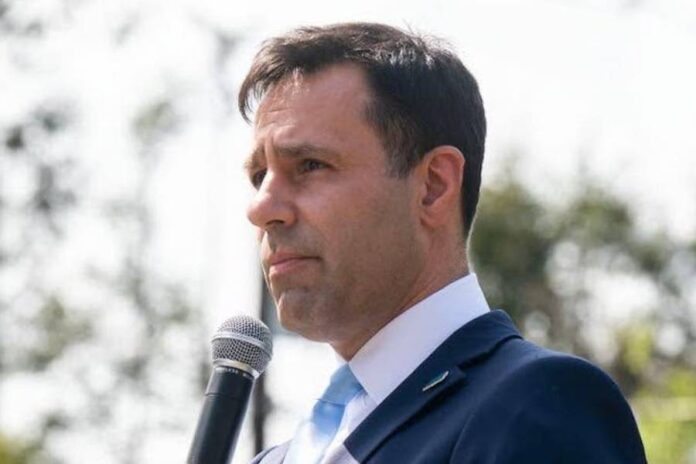
Joe Khan es el Fiscal de Distrito del condado de Bucks (Foto: RR.SS.)

El fiscal federal David Metcalf anunció que Aaron Michael McComsey, de 44 años y residente de Perkasie, Pensilvania, fue arrestado el jueves 15 de octubre y acusado formalmente de dos cargos por amenazar con agredir, asesinar o secuestrar a un funcionario federal.

La imputación alega que, alrededor del 4 de agosto de 2026, el acusado amenazó deliberadamente con agredir y asesinar a un miembro del Congreso de los Estados Unidos, con la intención de obstaculizar, intimidar e interferir con el representante congresional mientras este desempeñaba sus funciones oficiales, así como con la intención de tomar represalias contra dicho miembro del Congreso debido al ejercicio de sus funciones oficiales.

Según se alega en la imputación, McComsey envió correos electrónicos a la oficina del funcionario federal donde señalaba: “Aetna me ha excluido. Medicare no cubre los medicamentos. Y Medicaid se niega a pagar. Entraré en síndrome de abstinencia en 36 horas. Después de ese tiempo, (el funcionario) ya no estará en este mundo. Arreglen esto o él desaparecerá para siempre”. También indicaba “Díganle a (el funcionario) que quiero 6,000 dólares para los costos de mis medicamentos de este mes. Es millonario. Que pague él. Ya no aguanto más. Ese hombre está acabado”.

Escribió también “Espero con ansias la próxima graduación de los ‘Eagle Scouts’. Ese será su fin”;  y añadió “Iré para allá pronto si esto no se resuelve”.

De ser declarado culpable, el acusado afronta una pena máxima de 12 años de prisión.

Este caso fue investigado por la Policía del Capitolio de los Estados Unidos y está siendo procesado por el fiscal federal adjunto Joseph LaBar. La Fiscalía Federal ha agradecido a la Oficina del Fiscal de Distrito del condado de Bucks, liderada en la actualidad por el fiscal de distrito Joe Khan su colaboración en este caso.

La ciudad anuncia cierres de calles y otros detalles para el Philly Bike Ride 2026

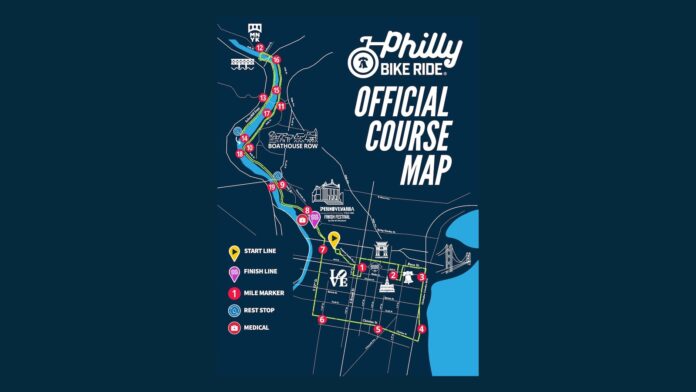
FILADELFIA – La ciudad de Filadelfia dio a conocer información sobre los cierres de calles para la edición anual 2026 del Philly Bike Ride, que se llevará a cabo el sábado 17 de octubre.

Actividades e información del día del evento

El Philly Bike Ride es un paseo ciclista recreativo de 20 millas libre de automóviles, accesible y abierto a ciclistas de todos los niveles a partir de los 3 años de edad. El recorrido incluye lugares históricos como Center City e Independence Hall, vistas al agua a lo largo de Penns Landing y Kelly Drive, y una línea de meta junto al emblemático Museo de Arte de Filadelfia, donde se celebrará un festival al finalizar el paseo.

El Philly Bike Ride se realizará independientemente de las condiciones meteorológicas, comenzando el recorrido a las 7:30 a. m. La clausura será a las 12:30 p. m.

Cierres de calles

Las siguientes calles estarán cerradas al tráfico de vehículos a partir de las 3:30 a. m. del sábado 17 de octubre y reabrirán a las 2:00 p. m.:

• Eakins Oval, frente al Museo de Arte de Filadelfia

• Benjamin Franklin Parkway, entre Eakins Oval y la calle 20

• Kelly Drive, entre Spring Garden Street y la calle 25

• Rampa de salida de Spring Garden Street en Eakins Oval

Las siguientes calles estarán cerradas al tráfico vehicular a partir de las 6:30 a. m. del sábado 17 de octubre y reabrirán a más tardar a las 12:00 p. m.:

• Benjamin Franklin Parkway, entre la calle 20 y la calle 15 Norte (N. 15th Street)

• Arch Street, entre Benjamin Franklin Parkway y la calle 15 Norte

• Calle 15 Norte, entre Arch Street y South Penn Square

• Penn Square, entre la calle 15 Norte y Broad Street

• Broad Street, entre Penn Square y Race Street

• Calle 5, entre Market Street y Race Street

• Race Street, entre Broad Street Norte y Christopher Columbus Boulevard

• Calle 6 Norte, entre Race Street y Market Street

• Market Street, entre la calle 6 Norte y la calle 5 Norte

• Calle 5 Norte, entre Market Street y Race Street

• Christopher Columbus Boulevard, entre Race Street y Christian Street

• Christian Street, entre Christopher Columbus Boulevard y la calle 22 Sur (S. 22nd Street)

• Calle 22 Sur / Calle 22 Norte, entre Christian Street y Benjamin Franklin Parkway

• Kelly Drive, entre la calle 25 y Falls Bridge

• Falls Bridge, entre Kelly Drive y MLK Drive

• MLK Drive, entre Falls Bridge y Black Road

Restricciones de estacionamiento

El estacionamiento en la vía pública se verá afectado en las siguientes calles, las cuales se señalizarán como zonas de «Prohibición temporal de estacionamiento» desde la medianoche (12 a. m.) hasta la 1 p. m. del sábado 17 de octubre:

• Benjamin Franklin Parkway, entre las calles 22 y 16

• Logan Square, entre las calles 18 y 19

• Arch Street, entre las calles 16 y 15

• N. 15th Street, entre Arch Street y Market Street

• Market Street, entre la calle 6 y Penn Square

• Penn Square, entre Market Street y la calle 15

• Race Street, entre N. Broad Street y Christopher Columbus Boulevard

• Christian Street, entre Christopher Columbus Boulevard y S. 22nd Street

• S. 22nd Street / N. 22nd Street, entre Christian Street y Benjamin Franklin Parkway

• Art Museum Drive, entre Benjamin Franklin Parkway y Pennsylvania Avenue

• Spring Garden Street, entre Pennsylvania Avenue y Kelly Drive

Los conductores deberán respetar las señales de «Prohibición temporal de estacionamiento». Los vehículos estacionados en estas ubicaciones durante el horario indicado serán trasladados. Si cree que su automóvil ha sido reubicado, llame al distrito policial de la zona donde estaba estacionado.

Es posible que se requieran cierres de calles y restricciones de estacionamiento adicionales en las cercanías del lugar del evento, según lo aconseje la situación. Se recomienda a los residentes y visitantes obedecer siempre las señales y las instrucciones del Departamento de Policía de Filadelfia.

Transporte público

Uso de SEPTA

Para los participantes que utilicen SEPTA, hay tres estaciones de metro ubicadas a menos de una milla de la línea de salida del Philly Bike Ride: Fairmount, Spring Garden y Race-Vine; todas ellas se encuentran en la línea Broad Street (B). Existe un transbordo gratuito a la línea (B) Broad Street Line desde la línea (L) Market-Frankford Line y las rutas de tranvía en la estación 15th Street / City Hall; además, se encuentra a poca distancia a pie de las estaciones de tren regional (Regional Rail) en el centro de la ciudad (Center City).

Si viaja a Filadelfia desde Nueva Jersey en el tren PATCO, puede tomar la línea (B) Broad Street Line para llegar al recorrido de la bicicleta. Bájese del PATCO en la estación 12th/13th & Locust Street. Tome la escalera mecánica o las escaleras hasta el nivel del vestíbulo, pase los torniquetes de salida del PATCO y siga las indicaciones para salir a la calle. Diríjase hacia el norte por S 13th Street en dirección a St. James Street y luego gire a la izquierda en Walnut Street. La estación Walnut-Locust de SEPTA se encuentra en la esquina de las calles Broad y Walnut.

Planifique con antelación y consulte el horario completo de su estación preferida en septa.org.

Desvíos de SEPTA

Las siguientes rutas de autobús de SEPTA que atraviesan el recorrido se desviarán de sus rutas habituales a partir de las 5:30 a. m. del sábado 17 de octubre:

•  2, 4, 7, 9, 12, 16, 17, 21, 23, 25, 27, 31, 32, 33, 38, 40, 42, 43, 44, 45, 47, 48, 49, 57, 61, 76, 124 y 125

Se señalizarán los desvíos y los cambios específicos de ruta estarán disponibles en línea en la página de estado del sistema (System Status Page) de septa.org. Puede comunicarse con el Servicio de Atención al Cliente de SEPTA llamando al 215-580-7800 o directamente a través de X (anteriormente Twitter) en @septa_social.

Información sobre seguridad pública

Durante el evento, la Ciudad proporcionará apoyo policial, control de tráfico y servicios médicos de emergencia tanto en el evento como en las zonas circundantes.

Si necesita asistencia, atención médica o si su bicicleta presenta un problema mecánico grave y requiere transporte hasta la linea de llegada (Finish Festival), comuníquese con el personal de asistencia en ruta llamando al 215-606-3562. En caso de emergencia médica crítica, llame al 911.

El registro de participantes, la asistencia para resolver problemas el día del evento y la información general se encuentran en Eakins Oval, junto a la línea de salida.

Los ciclistas sordos o con dificultades auditivas pueden reunirse en el escenario de la línea de salida, ubicado en la intersección de la calle 20 y Benjamin Franklin Parkway, donde habrá un intérprete disponible. Para solicitar otras adaptaciones de accesibilidad, envíe un correo electrónico a hello@phillybikeride.com.

Los asistentes no deben dejar bolsos ni otros objetos sin vigilancia en ningún momento. En caso de emergencia o para reportar a una persona, actividad u objeto sospechoso (mochila, paquete, contenedor, etc.), notifique inmediatamente a un oficial de policía o llame al 911. No intente abrir, mover, cubrir ni tocar ningún objeto sospechoso.

Para obtener consejos e información general sobre cómo prepararse para eventos especiales, consulte la Guía de seguridad para eventos especiales antes de asistir.

Para más información sobre el Philly Bike Ride, visite phillybikeride.com.

Alertas del evento

Suscríbase para recibir alertas gratuitas por mensaje de texto de la Ciudad con información sobre el clima, el transporte, detalles del evento y actualizaciones de seguridad pública. Envíe el mensaje de texto «ReadyPhila» (una sola palabra, sin espacios) al número 888-777.

Información adicional

El área de objetos perdidos se encuentra en el escenario de la zona del Festival de Meta (Finish Festival). Para objetos perdidos después del domingo 18 de octubre o para consultas generales sobre el Philly Bike Ride, comunícate a hello@phillybikeride.com.


Democrats hope a rematch can dislodge Trump loyalist Perry in Pennsylvania

Rep. Scott Perry, R-Pa., chair of the House Freedom Caucus, speaks during a news conference on Capitol Hill in Washington, July 14, 2023. A liberal activist wants a Pennsylvania court to bar U.S. Rep. Scott Perry from the state's primary ballot, arguing that Perry engaged in insurrectionist activity and cannot appear on the state's ballot under the Constitution's insurrection clause. The seven-page lawsuit was filed Tuesday, Jan. 2, 2024, in Pennsylvania's Commonwealth Court. (Photo: AP/Patrick Semansky/File)

HARRISBURG, Pa. — Of all the Republican members of Congress who represent swing districts, there may be none as closely linked to President Donald Trump as Scott Perry of Pennsylvania.

Perry backed Trump’s signature tax-cutting laws in 2017 and 2025. He’s aggressively defended Trump’s war with Iran. And when Trump tried to overturn Democrat Joe Biden’s presidential election victory in 2020, Perry sought to invalidate Pennsylvania’s electoral votes and elevate an acting attorney general who would act on conspiracy theories.

Now the question is whether Perry’s ties to Trump will be his undoing in a midterm election where the president is dramatically unpopular and Perry faces a second challenge from Democrat Janelle Stelson after he narrowly defeated the former local television anchor two years ago.

Asked if he needed to differentiate himself from an unpopular Trump to win, Perry brushed off the question.

“I speak for myself. I don’t speak for him, and he doesn’t speak for me,» Perry told The Associated Press. “If you want to know where I stand on an issue, the issue is mine. I’ve always been that way. Nothing’s changed.”

Democrats see Perry as vulnerable

Democrats have long believed that Perry was vulnerable because of his hard-right politics that look increasingly out of step with a Republican-leaning district that is moderating as Harrisburg’s suburbs grow.

He defeated Stelson by only 1 percentage point in 2024, making it one of the country’s closest House races that year. Trump won the district by 5 percentage points against Democrat Kamala Harris, a performance that analysts say suggests that loyal Trump voters pulled Perry across the finish line.

The Trump administration seems interested in helping Perry win.

The Department of Homeland Security attacked Stelson in a public statement after the arrest of a Nigerian man who it said was in the country illegally and working for Stelson’s campaign. Stelson’s campaign, however, said it didn’t employ the man, spending records didn’t show a payment to him and a nonpartisan watchdog said the department had violated a law intended to keep the federal government from trying to help or hurt candidates for office.

Perry served as leader of the hard-line House Freedom Caucus in 2022 and 2023, when the caucus was a key player in two high-profile speakership fights.

The federal investigation into Trump’s effort to prevent Biden from taking office also put Perry in a national spotlight. He became the only member of Congress to have his personal cellphone seized by federal authorities.

A federal judge later ordered Perry to turn over texts and emails to FBI agents. He was never charged with a crime.

Perry insists he’s independent of Trump

Perry is quick to point out that he has disagreements with Trump.

For instance, he voted in February against a $1.2 trillion spending plan backed by Trump to end a partial federal government shutdown and said he opposes Trump’s plan to allow 600,000 Chinese students into American universities.

“I’m one of the guys that stands up against my own party when I think they’re going the wrong way,” Perry said. “And not just quietly. Vocally.”

In a recent visit, Republican National Committee Chairman Joe Gruters said he told Perry to lean into his strengths, such as Perry’s nearly four decades in the Army and the National Guard that included flying helicopter missions in Iraq.

“When you compare his record of service, not only to Pennsylvania but the country, I think it’s lights out,” Gruters said. “And that’s where he wins.”

However, Perry has already suffered because of his association with Trump.

One Republican voter, Terry Wallace, a retired Army colonel, said he had voted for Perry before the Jan. 6, 2021, storming of the U.S. Capitol by a mob of Trump supporters but won’t anymore.

“I mean, he led the effort to throw out the Pennsylvania votes from the presidential election,» Wallace said. «I remember the next thing he claimed was the Brits were fixing our voting machines. And then he accused a person, the CIA director, of a cover-up.”

It’s the same story with Tracy Pawelski. She used to work in the U.S. Capitol and had friends in the Capitol Police, and she came to see Perry as an “election denier and minion of the president” who can’t be trusted.

Scott Trompeter, a Republican who dislikes Trump, said he’s unhappy that Perry has backed the president at a time when Trompeter, an Air Force veteran, and his girlfriend are clipping coupons to make ends meet.

On top of rising food and gas prices, Trompeter is aghast at Trump-fueled “nonsense” like Trump’s plans to host military drones, snipers and ammunition inside a ceremonial arch that he wants to build across the Potomac River from Washington.

“Like, what is going on?» Trompeter said. “And then people like Scott Perry will vote for that if it comes to a vote.”

Stelson is targeting moderate voters

Stelson spent almost four decades working in television, mostly as an anchor at the NBC affiliate in the Harrisburg market. She also embedded with the Pennsylvania National Guard in Kosovo, moderated debates and interviewed presidents and other politicians.

Running for office for the first time in 2024, she easily won a six-way Democratic primary to challenge Perry, despite drawing flack because she didn’t live in the district and had just changed her registration from Republican to Democrat.

Then, as now, Stelson has crafted a platform designed to sway moderate Republicans. She portrays Perry as helping jack up the cost of living, plays down criticism of Trump and avoids associating herself with the Democratic Party’s left flank.

For instance, she talks about how Trump strengthened border security while Biden failed, calls herself a fiscal conservative and rejects Perry’s accusation that she would align with the socialist left if elected.

“He’s lying, and he knows he’s lying,” Stelson said.

She quips that, to beat Perry, she needs to win 5,134 more Republican votes — one more vote than her losing margin in 2024 — and dismisses suggestions that pursuing moderates will cost her the Democrats she’ll also need.

What she worries about, she said, is what people tell her about every day, and that’s their struggle with the cost of living.

“They don’t ask me where I sit on a political spectrum,” she said. «I don’t think they care.”

Trump dice que le “encantaría” un tercer mandato, pero la Constitución dice que no es posible

El presidente Donald Trump no puede ser elegido para un tercer mandato en 2028, sin importar cuántas gorras rojas con el lema “Trump 2028” se vendan en sus mítines. La Enmienda 22 de la Constitución de Estados Unidos, ratificada en 1951, lo establece en una sola oración: “Ninguna persona podrá ser elegida para el cargo de presidente más de dos veces”.

Trump ganó las elecciones presidenciales de 2016, perdió las de 2020 y volvió a ganarlas en 2024. Aun así, el presidente quiere permanecer en la Casa Blanca y continúa hablando de presentarse nuevamente a las elecciones, lo que genera expectativas entre sus seguidores. En marzo de 2025, le dijo a NBC News que no estaba bromeando sobre un tercer mandato y que “hay métodos” para conseguirlo. La Organización Trump continúa vendiendo gorras y camisetas con el lema “Trump 2028”, y su exasesor Steve Bannon declaró a The Economist que Trump “va a ser presidente en 2028”. En otras ocasiones, Trump afirma que solo está bromeando o que menciona el tema para molestar a sus oponentes. En octubre de 2025, les dijo a los periodistas: “Está bastante claro que no tengo permitido postularme”.

Muchas familias de nuestra comunidad latina han emigrado de países donde los líderes modificaron las reglas y dejaron de lado la Constitución para permanecer en el poder. Para estos inmigrantes, el respeto a la Constitución representa seguridad, y los límites a los mandatos presidenciales ofrecen la garantía de que el poder cambiará de manos. Durante la mayor parte de la historia estadounidense, esa garantía fue una tradición, no una ley. Entonces llegó Franklin D. Roosevelt.

Los votantes eligieron a Roosevelt en 1932 y 1936. Ganó un tercer mandato en 1940 y un cuarto en 1944. Murió en el cargo en abril de 1945, apenas unos meses después de comenzar su cuarto mandato. En respuesta, el Congreso decidió que ninguna persona debía concentrar tanto poder durante un periodo tan prolongado. Propuso la enmienda en 1947 y los estados la ratificaron el 27 de febrero de 1951. La enmienda también establece límites para quienes asumen la presidencia durante el mandato de otra persona y posteriormente buscan ser elegidos para el cargo.

Algunos aliados de Trump han planteado posibles alternativas, como que el presidente se postule para vicepresidente y que, posteriormente, el mandatario en funciones renuncie para cederle el puesto. Sin embargo, la mayoría de los especialistas en derecho constitucional considera que esa posibilidad también está cerrada. La Enmienda 12 establece que ninguna persona que no reúna los requisitos constitucionales para ocupar la presidencia puede ser elegida para la vicepresidencia.

La única vía para permitir un tercer mandato sería reformar la Constitución para modificar o derogar la Enmienda 22. Para ello, se necesitaría la aprobación de dos tercios de ambas cámaras del Congreso y la ratificación de tres cuartas partes de los estados, es decir, 38 de los 50. Pocos días después del inicio del segundo mandato de Trump, el representante republicano Andy Ogles, de Tennessee, propuso una enmienda con ese propósito, pero la iniciativa no ha sido sometida a votación.

Tal vez exista poco interés en que Trump ocupe la presidencia por tercera vez. Por ahora, la Enmienda 22 continúa funcionando como una barrera constitucional alrededor del Despacho Oval, y ningún lema de campaña puede modificarla. El próximo presidente será elegido en noviembre de 2028, en las urnas.

En agosto, en la Base Conjunta Andrews, en Maryland, un periodista volvió a preguntarle a Trump sobre la posibilidad de buscar otro mandato. Su respuesta pareció dejar el asunto zanjado, al menos por ahora.

“Me encantaría postularme”, respondió, “pero la ley es muy estricta”.

Who decides where you count? Redistricting and its impact on Pennsylvania’s Latino communities

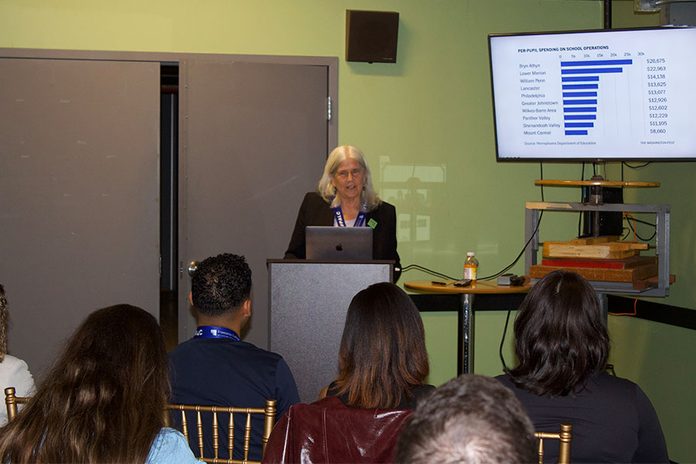
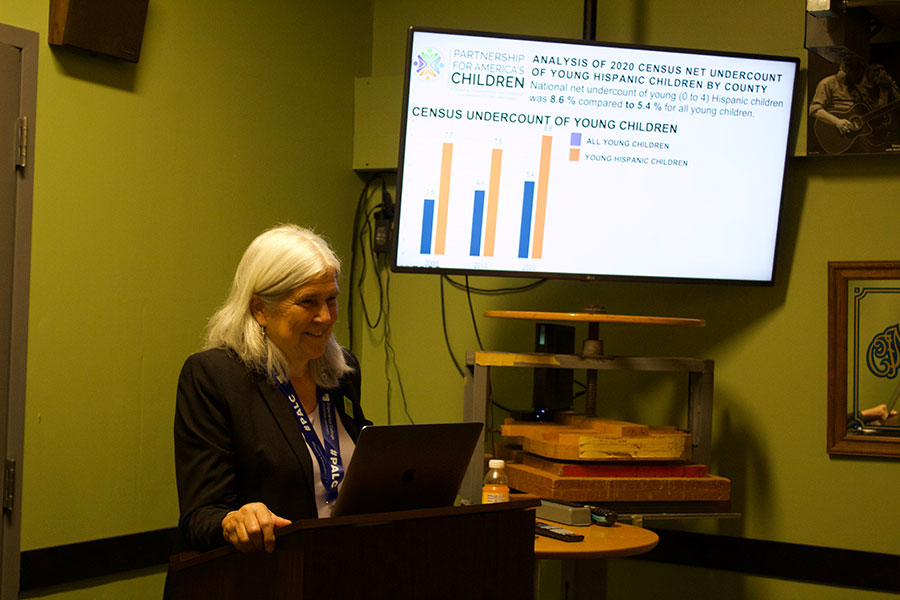
Dr. Carol Kuniholm, co-founder and chair of Fair Districts PA, presents during thePolitics & Civic Engagement track at the 2026 Pennsylvania Latino Convention. (Photo: Benjamin Figueroa Medina)

Easton, PA – Every 10 years, Pennsylvania redraws the political maps that decide which neighborhoods vote together and which lawmakers represent them.

That may sound technical, but the idea is simple: first, the Census counts people. Then population numbers are used to redraw voting districts. Those districts help determine who represents residents in the Pennsylvania House, Pennsylvania Senate and U.S. House of Representatives. Pennsylvania is required to redraw its state legislative districts after each federal census. 

For Pennsylvania’s Latino community, that connection was the focus of a Politics & Civic Engagement presentation at the 2026 Pennsylvania Latino Convention led by Dr. Carol Kuniholm, co-founder and chair of Fair Districts PA. The 2020 Census counted 1,049,615 Hispanic or Latino residents in Pennsylvania, out of a total population of just over 13 million. 

Those numbers matter because redistricting happens after the Census. If one part of Pennsylvania gains a lot of people while another loses population, the political map may need to change so districts continue representing roughly similar numbers of residents.

That is where redistricting comes in. Redistricting simply means redrawing the boundaries of political districts. A district is the geographic area represented by a particular elected official.

The controversy begins when those lines are intentionally drawn to give a political party or group an advantage. That is commonly known as gerrymandering.

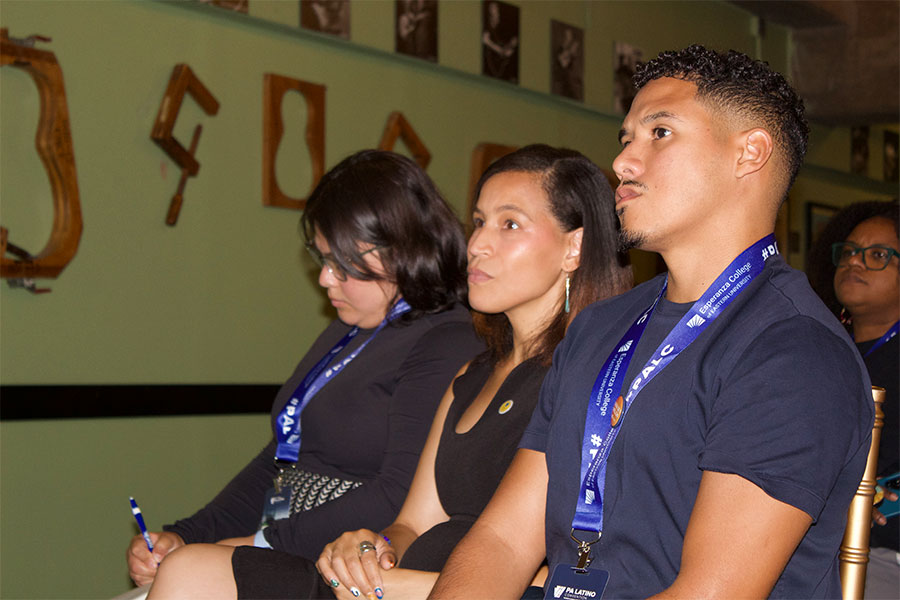
Latino participants listen, observe and ask questions during a discussion on gerrymandering and political representation at the 2026 Pennsylvania Latino Convention. (Photo: Benjamin Figueroa Medina)

Imagine a community with a large Latino population. Depending on where the district lines are placed, that community could remain together in one district or be divided among several districts. Those choices can affect how communities are represented and how their votes are distributed among different districts.

During the presentation, Kuniholm described gerrymandering as the “keystone of cronyism and control,” presenting the argument that politicians should have less influence over the process of drawing political maps.

Pennsylvania currently uses two different systems.

For the Pennsylvania House and Senate, a five-member Legislative Reapportionment Commission draws the districts. Four members are the Republican and Democratic floor leaders of the state House and Senate, or people they appoint. Those four choose a fifth person to chair the commission. If they cannot agree, the Pennsylvania Supreme Court selects the chair. 

Congressional districts work differently. Those maps are normally created through legislation passed by the Pennsylvania General Assembly and presented to the governor. 

Kuniholm discussed House Bill 31 and Senate Bill 131, proposals that would change that system.

The proposals would establish an 11-member Independent Redistricting Commission responsible for drawing both state legislative and congressional districts. Under House Bill 31, four commissioners would be registered with Pennsylvania’s largest political party, four with the second-largest party and three with neither of those two parties.

The proposed system also includes public participation and new rules governing how maps would be created.

But there is an important distinction: these proposals are not law.

As of September 2026, House Bill 31 remained in the House State Government Committee, while Senate Bill 131 remained in the Senate State Government Committee. However, both proposals were effectively dead for the 2025–2026 legislative session because they could no longer meet the constitutional deadline required for proposed amendments to be considered in the next election cycle.

The conversation also matters for younger Pennsylvanians.

You do not have to be old enough to vote for the Census to affect your future political representation.

A teenager counted in the 2030 Census could become a voter only a few years later while still living under political maps created using that Census data.

In other words: you count before your vote.

That may be one of the simplest ways to understand why the Census and redistricting matter.

The process is not only about politicians or complicated maps; it is about whether neighborhoods remain together, whether communities are divided, who residents vote alongside and which elected officials are responsible for representing them.

For Pennsylvania’s Latino communities, the question is therefore larger than how many Latinos live in the Commonwealth.

It is what happens after they are counted.

Dr. Carol Kuniholm, co-founder and chair of Fair Districts PA, leads a Politics & Civic Engagement presentation on Census data, redistricting and representation during the 2026 Pennsylvania Latino Convention. (Photo: Benjamin Figueroa Medina)

For Latinos, the issue is about more than population growth. It is also about what happens to that population when political boundaries are redrawn. More than one million Hispanic or Latino Pennsylvanians were counted in the 2020 Census, meaning their communities were part of the population data used to build the political maps that will remain in place for much of the decade.

Where those lines are placed can matter for Latino neighborhoods. A community may remain largely together within one district or be divided among several. During Pennsylvania’s last redistricting process, Latino organizations and residents raised concerns about keeping Latino “communities of interest” together and protecting their ability to participate meaningfully in the political process. Other testimony also examined circumstances where different district configurations could create opportunities for Latino influence. That means there is not always one simple answer to what the “right” map looks like, but Latino communities have a direct stake in how those decisions are made.

For a Latino family, that can make an issue that looks like lines on a map much more personal. Those boundaries help determine which neighborhoods share representatives and which elected officials residents turn to in Harrisburg or Washington. It is one reason understanding the Census matters even for people who do not follow politics closely: being counted is part of the process that shapes representation for the next decade.

Where are the lines drawn? Who draws them? And how will those decisions shape representation for the next decade?

Kuniholm’s presentation asked attendees to pay attention to a process that rarely becomes part of everyday conversation. The lines may look like shapes on a map, but inside those lines are families, neighborhoods and communities.

Esperanza College prepares its annual early childhood education conference under the theme “Standing in the Gap”

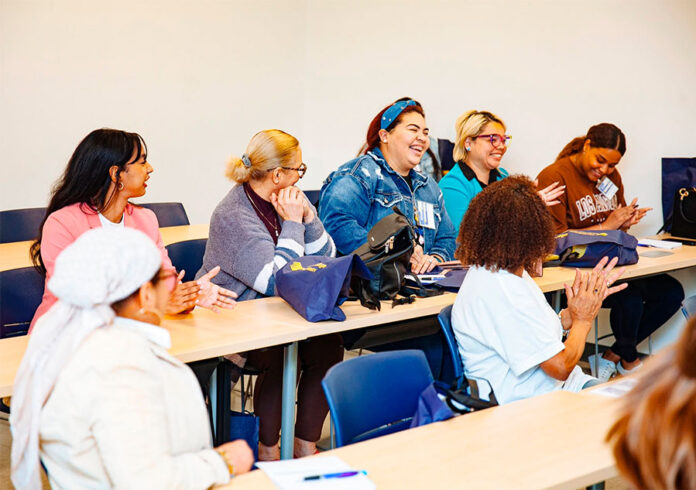
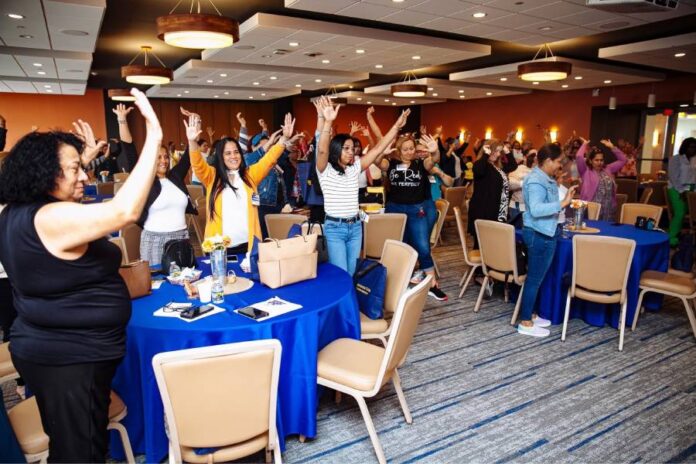
Conference participants interact and exchange experiences while taking part in learning activities. (Photo: RR. SS)

Esperanza College will hold its fifth free early childhood education conference on Saturday, October 31, sponsored by Vanguard. The event is part of the Hope Latinx Early Learning Pathways program, through which the institution trains bilingual early childhood educators and other professionals to make a difference in the lives of Latino students and those from other communities.

The event will take place from 8:30 a.m. to 3 p.m. and will give participants the opportunity to learn alongside fellow educators through workshops, network with colleagues, and explore resources and services offered by invited exhibitors. Several community programs will also participate, providing information about services and resources available to educators and owners of childcare centers.

The theme, “Standing in the Gap,” invites participants to recognize the fundamental role educators play. Inspired by Ezekiel 22:30, it highlights the call to stand in the gap for children and families. The theme presents educators as living bridges connecting each child with the opportunities they need to thrive and overcome the systemic, political, and economic barriers that perpetuate educational inequalities. Just as a bridge connects separate paths, educators who stand in the gap create connections that allow children, families, and early childhood professionals to move forward together toward success and educational equity. This is a call to act with compassion, commitment, and responsibility, recognizing that the well-being of children requires the collective efforts of educators, families, and communities, while acknowledging the weight carried by those who do this work.

The keynote speaker will be Ana María Rodríguez, M.Ed., author of Crianza Empoderada and creator of Empowered Family, an educational platform that provides practical tools to help parents and caregivers understand children’s behavior and break learned generational patterns. Her work incorporates trauma-informed approaches and knowledge of brain development to promote healthier family relationships. Her background in education and community work includes various roles focused on child development, youth support, and family strengthening. She currently leads Counseling and Prevention Services at Congreso de Latinos Unidos, where she coordinates programs designed to address the needs of children, youth, and families.

Esperanza College will also collaborate with First Up, which will provide facilitators to lead workshops on trauma-informed practices, advocacy, well-being, nature-based learning, art, and play. The workshops will be offered in English and Spanish, giving participants opportunities to expand their knowledge and strengthen their professional practices.

Through this initiative, Esperanza College reaffirms its commitment to professionals who work every day to support children’s development and well-being. The conference aims to recognize their work, strengthen their skills, and remind them that by working together, they can help create safer, healthier, and higher-quality environments for the children and families they serve in their communities.

Esperanza College prepara su conferencia anual de educación infantil bajo el tema “Parado en la brecha”

Los participantes escuchan a los profesionales, intercambian experiencias y obtienen créditos de formación durante la conferencia. (Foto: RR. SS.)

Esperanza College celebrará el sábado 31 de octubre su quinta conferencia gratuita sobre educación infantil, patrocinada por Vanguard. Esta actividad forma parte del programa Hope Latinx Early Learning Pathways, mediante el cual la institución capacita a educadores bilingües de la primera infancia y a otros profesionales para que contribuyan a mejorar la vida de los estudiantes latinos y de otras comunidades.

El evento se llevará a cabo de 8:30 a. m. a 3:00 p. m. y brindará a los participantes la oportunidad de aprender junto con otros educadores mediante talleres, establecer contactos con colegas y conocer los recursos y servicios que ofrecerán los expositores invitados. También participarán varios programas comunitarios que proporcionarán información sobre los servicios y recursos disponibles para educadores y propietarios de centros de cuidado infantil.

El tema “Parado en la brecha” invita a reconocer el papel fundamental que desempeñan los educadores. Inspirado en Ezequiel 22:30, destaca el llamado a ponerse en la brecha por los niños y las familias. La propuesta presenta al educador como un puente que conecta a cada niño con las oportunidades necesarias para prosperar y superar las barreras sistémicas, políticas y económicas que perpetúan las desigualdades educativas. Así como un puente une caminos separados, el educador que se pone en la brecha crea conexiones que permiten a los niños, las familias y los profesionales de la primera infancia avanzar juntos hacia el éxito y la justicia educativa. Este es un llamado a actuar con compasión, compromiso y responsabilidad, y a reconocer que el bienestar de la niñez requiere el esfuerzo conjunto de educadores, familias y comunidades, sin dejar de reconocer el peso que recae sobre quienes realizan esta labor.

La oradora principal será Ana María Rodríguez, M.Ed., autora del libro Crianza Empoderada y creadora de Empowered Family, una plataforma educativa que ofrece herramientas prácticas para ayudar a padres y cuidadores a comprender el comportamiento infantil y romper patrones generacionales aprendidos. Su trabajo incorpora enfoques informados por el trauma y conocimientos sobre el desarrollo cerebral para promover relaciones familiares más saludables. Su trayectoria en el ámbito educativo y comunitario incluye diversos cargos enfocados en el desarrollo de la niñez, el apoyo a los jóvenes y el fortalecimiento familiar. Actualmente, lidera los Servicios de Consejería y Prevención de Congreso de Latinos Unidos, donde coordina programas dirigidos a atender las necesidades de niños, jóvenes y familias.

Esperanza College también colaborará con First Up, que aportará facilitadores para impartir talleres sobre prácticas informadas por el trauma, defensa de derechos, bienestar, aprendizaje basado en la naturaleza, arte y juego. Los talleres se ofrecerán en inglés y español y brindarán a los participantes la oportunidad de ampliar sus conocimientos y fortalecer sus prácticas profesionales.

A través de esta iniciativa, Esperanza College reafirma su compromiso con los profesionales que trabajan diariamente en favor del desarrollo y el bienestar de los niños. La conferencia busca reconocer su labor, fortalecer sus herramientas y recordarles que, al trabajar unidos, pueden contribuir a crear entornos más seguros, saludables y de calidad para los niños y las familias a las que sirven en sus comunidades.

The power of words: listening to understand better

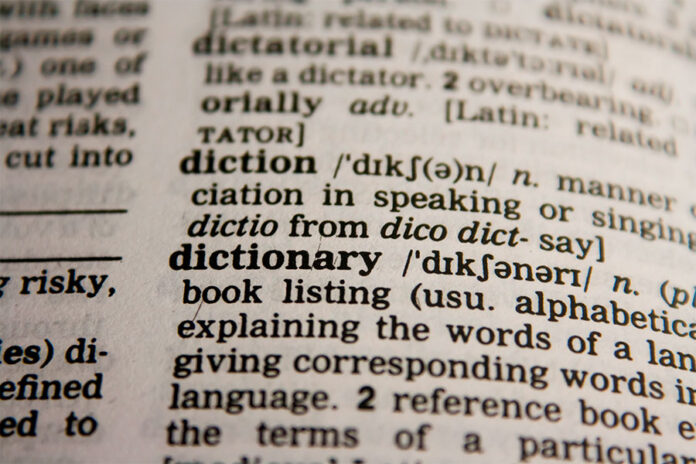
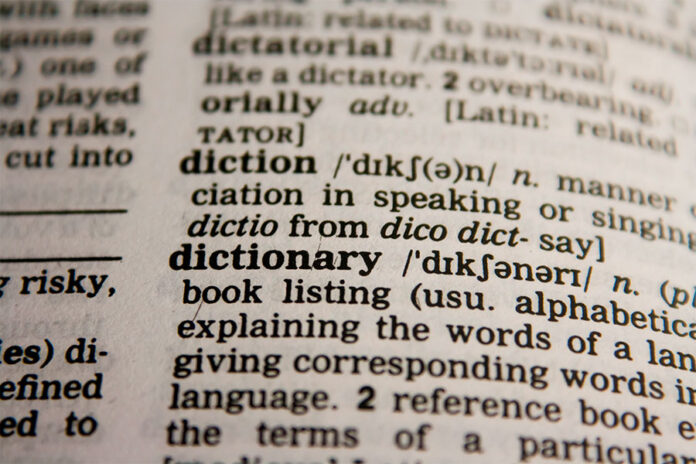
A limited vocabulary and misinterpreting the meaning of words can make it difficult to understand messages. (Photo: Pixabay/Pexels)

The art of listening in order to clearly understand what has been heard—in other words, to interpret the message we receive clearly—requires practice, concentration, and commitment.

What prevents us from interpreting what we hear clearly? Everyone has their own answer to this question; mine is the following: “Not truly listening.” There is a big difference between listening and hearing. Let me be clear: I am not claiming to be an academic expert. I learned the difference between listening and hearing early in my personal life, while I developed the art of listening through my education. What can hinder the art of listening? In my opinion, it is a lack of vocabulary. Have you ever wondered how many words you really know and how many you understand? When was the last time you looked up the true meaning of a word in a dictionary or on Google?

According to the dictionary of the Royal Spanish Academy, listening means “paying attention to what one hears,” while hearing means “perceiving sounds with the ear.” The truth is that we can hear clearly, but if we do not understand the words we hear, we cannot fully understand the message. Likewise, if we assign the wrong meaning to a word, our interpretation may be incorrect.

Word: a feminine noun defined as a lexical unit formed by a sound or a set of articulated sounds that carry meaning and belong to a grammatical category.

Have you ever stopped to think about the power of a word and how we use it to gain power? Personally, I believe that the word has unlimited power. What is your opinion?

To me, power and the word are inseparable lovers. I have long since lost count of how many times I have had to turn to a dictionary to look up words and understand their meaning. The reality is that, whether in a conversation or in writing, a word can hide what someone is really trying to communicate. This is especially true when a word can replace many others because it has, or is given, a very general meaning. The dictionary refers to this type of word as a “catch-all word.” Ultimately, we all need words to express ourselves, whether verbally or in writing.

Have you ever had difficulty expressing what you want to say? How many times have your words been misunderstood when speaking or sending a written message? This has happened to me hundreds of times, especially when communicating between two languages: English and Spanish.

An example comes to mind. On one occasion, I was at an event celebrating our Hispanic heritage when I was told that someone wanted to present an award to a guest. I knew the guest personally and knew he had no idea he was going to receive the award. So, I announced that it was a well-deserved recognition for a beloved and admirable person. I said the following: “This person is here and has no idea why we are going to call him up to the microphone.”

When his mother heard this, she became offended because she understood me to be saying that her son did not know what he was doing. Although we explained to her that this was not at all what I had meant, I believe that to this day she remains convinced that we were making fun of her son.

The truth is that the power of the word hypnotizes us, takes over our thoughts, and plays with our emotions, especially when it stirs up fear within us. I believe that if we can control our thoughts, then we can control our emotions and, in this way, counteract the use of that power to manipulate us. The most visible example today is the spread of fear about new digital technology. Educate yourself, expand your technological vocabulary, and do not let yourself be swept away by the fear being spread. Remember the countless times fear has been spread for different reasons and nothing has happened. Yet, we have suffered uncertainty, unease, and despair—emotions that fear continually inflicts upon us.

El poder de las palabras: escuchar para comprender mejor

La falta de vocabulario y la interpretación equivocada del significado de las palabras pueden dificultar la comprensión de los mensajes. (Foto: Ilustraiva/Pixabay/Pexels)

El arte de escuchar para comprender claramente lo que se ha escuchado, en otras palabras, para interpretar con claridad el mensaje que recibimos, requiere práctica, concentración y aplicación.

¿Qué nos impide interpretar con claridad lo que escuchamos? Cada cual tiene su propia contestación a esta pregunta; la mía es la siguiente: «La falta de escuchar verdaderamente». Hay una gran diferencia entre escuchar y oír. Que quede claro que no estoy diciendo que sea una experta académica. La diferencia entre escuchar y oír la aprendí muy temprano en mi vida personal, mientras que el arte de escuchar lo desarrollé durante mi formación educativa. ¿Qué puede obstaculizar el arte de escuchar? En mi opinión, la falta de vocabulario. ¿Alguna vez se ha preguntado cuántas palabras conoce realmente y cuánto comprende de su significado? ¿Cuándo fue la última vez que buscó en un diccionario o en Google el verdadero significado de una palabra?

Según el diccionario de la Real Academia Española, escuchar significa “prestar atención a lo que se oye” y oír significa “percibir con el oído los sonidos”. Lo cierto es que podemos oír con claridad, pero si no entendemos las palabras que escuchamos, no logramos comprender el mensaje. Del mismo modo, si damos un significado equivocado a una palabra, nuestra interpretación puede ser errónea.

Palabra: sustantivo femenino que se define como una unidad léxica formada por un sonido o un conjunto de sonidos articulados que tienen significado y pertenecen a una categoría gramatical.

¿Alguna vez se ha detenido a pensar en el poder de la palabra y en cómo la usamos para obtener poder? Personalmente, opino que la palabra tiene un poder ilimitado. ¿Cuál es su opinión?

Para mí, el poder y la palabra son amantes inseparables. Hace mucho tiempo que perdí la cuenta de cuántas veces he tenido que recurrir al diccionario para buscar palabras y comprender su significado. La realidad es que, ya sea en una conversación o en un escrito, la palabra puede ocultar lo que realmente se quiere comunicar. Esto ocurre especialmente cuando una palabra puede sustituir a muchas otras porque tiene, o se le atribuye, un significado muy general. El diccionario denomina a este tipo de palabra “palabra comodín”. En definitiva, todos necesitamos las palabras para expresarnos, ya sea verbalmente o por escrito.

¿Alguna vez ha tenido dificultades para expresar lo que quiere decir? ¿Cuántas veces han malinterpretado sus palabras al hablar o al enviar un mensaje escrito? A mí me ha sucedido cientos de veces, especialmente cuando nos comunicamos entre dos idiomas: el inglés y el español.

Me viene a la mente un ejemplo. En una ocasión, estaba en un evento para celebrar nuestra hispanidad cuando me indicaron que querían entregarle un galardón a un invitado. Yo conocía personalmente al invitado y sabía que no tenía idea de que recibiría ese galardón. Por eso, anuncié que se trataba de un reconocimiento bien merecido para una persona querida y admirable. Dije lo siguiente: “Esta persona está aquí y no tiene ni idea de por qué lo vamos a llamar al micrófono”.

Al escuchar esto, su madre se indignó, pues entendió que yo estaba diciendo que su hijo no sabía lo que hacía. Aunque se le explicó a la señora que eso no era en absoluto lo que yo había querido decir, creo que hasta el día de hoy sigue convencida de que nos estábamos burlando de su hijo.

Lo cierto es que el poder de la palabra nos hipnotiza, se apodera de nuestros pensamientos y juega con nuestras emociones, especialmente cuando despierta en nosotros el miedo. Yo entiendo que, si logramos controlar nuestros pensamientos, entonces podemos controlar nuestras emociones y, de esta manera, contrarrestar el uso de ese poder para manipularnos. El ejemplo más visible en la actualidad es la propagación del miedo a la nueva tecnología digital. Infórmese, amplíe su vocabulario tecnológico y no se deje llevar por el miedo que se difunde. Recuerde la infinidad de veces en que, por diferentes razones, se ha propagado el miedo sin que ocurra aquello que se teme. Aun así, hemos sufrido la incertidumbre, el desasosiego y la desesperanza que el miedo siempre nos provoca.

Pastores que han marcado la diferencia en la comunidad hispana de Filadelfia

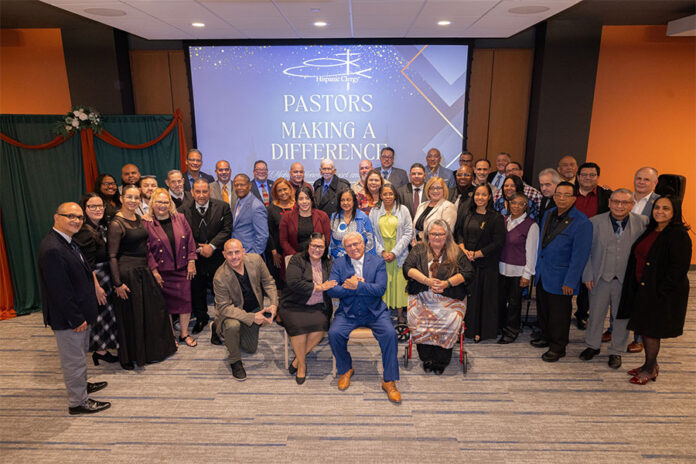
Pastores hispanos de Filadelfia se reunieron en Esperanza Arts Center para reconocer la labor y los logros de líderes religiosos que han dejado una huella duradera en sus iglesias y en la comunidad. (Foto: Justin Plant)

Filadelfia, PA.— El miércoles 7 de octubre de 2026 se celebró en el Gran Salón de Esperanza Arts Center una ceremonia de reconocimiento y agradecimiento a pastores que han dejado huella en sus iglesias, en la comunidad y en la vida de las personas a las que sirven.

El evento, organizado por la Asociación Ministerial de Clérigos Hispanos de Filadelfia y Vecindad, reunió a 35 pastores, acompañados de sus cónyuges, familiares y miembros de sus congregaciones. En total, asistieron 120 personas.

Durante el evento, el departamento de Fe y Capacidad de Esperanza entregó reconocimientos a pastores por su trayectoria de servicio en Filadelfia. Los cuatro galardonados con el Premio al Legado fueron Efraín Cotto, de El Mesías; Miguel A. Díaz, de La Luz Verdadera; Víctor M. Rivera, de Arca de Salvación; y Juan Vázquez, de Rosa de Sarón, quienes han dedicado más de 50 años al servicio de sus iglesias y de la comunidad.

También se entregaron reconocimientos especiales por el compromiso con el servicio y la labor de construir puentes en la comunidad hispana. La Dra. Anita Medina recibió el reconocimiento como Constructora de Puentes; el Rev. Dr. Herman Morales, el de Legado de Influencia; y el pastor Harrison Capellán fue nombrado Pastor del Año.

Durante la ceremonia, los asistentes guardaron unos minutos de silencio en memoria de 11 pastores fallecidos que dejaron una huella en la comunidad hispana. Sus nombres se exhibirán en el salón de los fundadores de Esperanza. Rev. David Dodd, Rev. Raúl Le Duc, Rev. Fred Estrada Sr., Rev. Serafín Fiore, Rev. Bill Gage, Butch Naters Gamala, Rev. Abraham Oliver, Rev. José Miguel Roque, Rev. Felipe G. Sabatel, Rev. Víctor Ulloa, Father Rev. Gil Vega.

Durante el encuentro, los pastores compartieron anécdotas, intercambiaron experiencias y tuvieron la oportunidad de conocerse. También hubo reencuentros entre antiguos maestros y alumnos, así como testimonios que ofrecieron apoyo y consuelo a las nuevas generaciones de líderes religiosos. Los asistentes destacaron el esfuerzo, el amor y la perseverancia con los que los pastores homenajeados han desarrollado su labor, incluso cuando esta ha implicado dejar de lado algunos de sus propios sueños. 

El reverendo Rubén Ortiz, vicepresidente de Fe y Capacidad de Esperanza, comentó: “Honrar a quienes han dedicado sus vidas a servir al pueblo de Dios y a nuestra comunidad es importante. Nos tomamos un momento para animar e invertir en estos pastores, así como ellos lo han hecho con tantos otros, para que no olvidemos su ejemplo”.

Al finalizar la ceremonia, cada pastor recibió un juego portátil de comunión y una pequeña botella de aceite ungido. El encuentro concluyó con conversaciones entre los asistentes y palabras de exhortación sobre la importancia de reconocer y preservar el legado de los pastores homenajeados. 

Pastores hispanos de Filadelfia se reunieron en Esperanza Arts Center para reconocer la trayectoria y el servicio de líderes religiosos que han dejado huella en sus iglesias y en la comunidad.