

Inicio Blog Página 56

ICE adjudica contrato de 16,7 millones de dólares para comprar 6.000 guantes de electrochoques

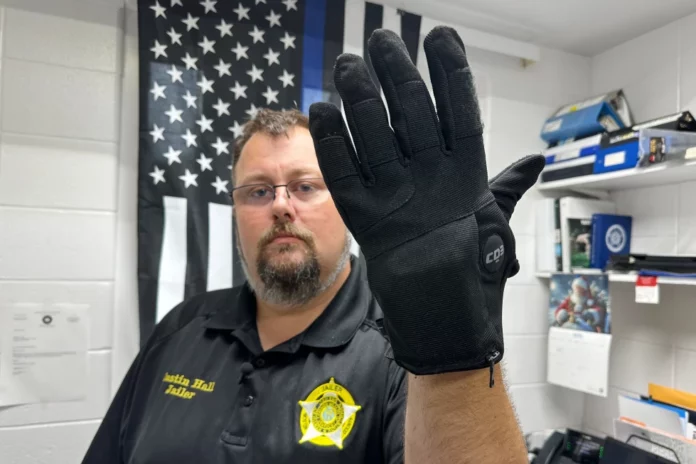
Justin Hall, custodio de la cárcel del condado de Nelson, en Kentucky, muestra un guante de electrochoques que se utiliza en la instalación, el jueves 13 de agosto de 2026, en Bardstown, Kentucky. (Foto: AP/Dylan Lovan)

El Servicio de Inmigración y Control de Aduanas de Estados Unidos ha adjudicado un contrato de 16,7 millones de dólares para la compra de 6.000 pares de guantes capaces de propinar dolorosas descargas eléctricas, asegurando que serán utilizados por sus agentes para controlar a detenidos y manifestantes que se resistan.

La agencia prosiguió con la compra a pesar de la oposición de grupos defensores de los derechos civiles y legisladores demócratas, quienes aseguran que no se puede confiar en que los agentes del Servicio de Inmigración y Control de Aduanas ( ICE por sus iniciales en inglés) los utilicen de manera adecuada.

Un aviso publicado el jueves en una base de datos federal indicaba que el ICE celebró un contrato sin licitación para la compra de los guantes a Compliant Technologies LLC, una empresa con sede en Kentucky. El acuerdo incluye la adquisición de 6.000 dispositivos, además de equipo y servicios de apoyo durante los próximos seis meses.

Defensores de los derechos civiles han dicho que los agentes del ICE ya enfrentan críticas por su uso de la fuerza con poca supervisión o rendición de cuentas mientras aplican la ofensiva migratoria del presidente Donald Trump.

El ICE publicó el aviso horas después de que un grupo de senadores federales encabezado por la demócrata Catherine Cortez Masto instó al ICE a cancelar su plan de adquirir los dispositivos. En una carta dirigida al director interino del ICE, Cortez Masto y 15 de sus colegas de la bancada demócrata cuestionaron el jueves la necesidad de los dispositivos.

“El flagrante y trágico uso indebido de la fuerza en Los Ángeles, Chicago, Minneapolis, Houston, Maine y otros lugares de todo el país genera un considerable escepticismo sobre la capacidad profesional de la agencia para desplegar de forma segura una nueva herramienta que podría usarse para perjudicar a estadounidenses sin una causa”, se lee en la carta.

Los senadores fueron los más recientes en manifestar su oposición al plan, que se dio a conocer este mes cuando el ICE publicó un aviso en el que delineaba planes para comprar miles de “dispositivos conductivos de distracción y desescalada” para agentes e investigadores.

Los dispositivos son guantes normales de patrullaje hasta que un agente presiona un botón para activar el modo eléctrico. Deben ponerse directamente sobre la piel de una persona para producir una dolorosa descarga, la cual se promociona como una forma de someter a rijosos. Algunas cárceles y departamentos de policía local han utilizado los dispositivos en años recientes.

Según el aviso del ICE, los agentes emplearán los dispositivos en “entornos de alta tensión”, incluidos arrestos, traslado de detenidos combativos y al responder a disturbios civiles fuera de instalaciones de detención.

“Se utilizará cuando un sujeto se resista de manera activa o pasiva y un agente necesite obtener el control rápidamente para evitar lesiones a ambas partes”, señaló el documento.

Añadió que las descargas ayudarán a “mantener el control sobre reclusos y prevenir agresiones o intentos de fuga”, permitirán a los agentes esposar a personas que ocultan las manos y ayudarán en el control de multitudes. El objetivo será el de evitar el uso de “fuerza más severa”, incluidas armas de fuego. El aviso señaló que los guantes se usarían con “normas aprobadas de capacitación y rendición de cuentas”, pero no dio más detalles.

Cortez Masto y los demás senadores afirmaron que el dispositivo “presenta riesgos sustanciales si se despliega durante arrestos civiles, y aún más si se despliega sin límites claros, capacitación adecuada y supervisión integral”. Indicaron que, si el ICE sigue adelante con el plan, debe hacer públicos los detalles sobre cómo se capacitará a los agentes y cómo se documentará y revisará internamente el uso de los guantes para evitar abusos.

El Departamento de Seguridad Nacional, la agencia matriz del ICE, reaccionó el jueves con actitud desafiante ante los críticos del plan.

“Los políticos de las ciudades santuario que intentan impedir que nuestras fuerzas federales del orden cuenten con cualquier equipo de seguridad son despreciables y un intento deliberado de socavar y poner en peligro a nuestros agentes”, señaló la agencia en un comunicado.
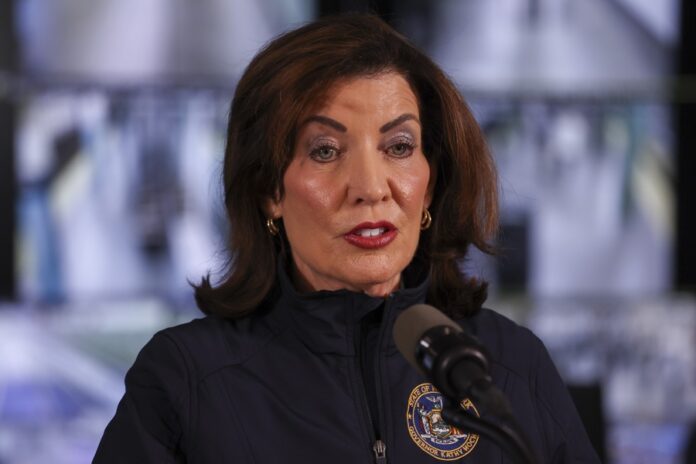

Nueva York demanda a alguacil de condado por incumplir nueva ley estatal de migración

(Foto: EFE/SARAH YENESEL/Archivo)

La Fiscalía General de Nueva York presentó este jueves una demanda contra la oficina del alguacil del condado de Rensselaer, en el este del estado, por incumplir la nueva ley estatal que le obliga a rescindir sus acuerdos de cooperación con el Servicio de Inmigración (ICE) establecidos bajo la sección 287(g) de la Ley de Inmigración.

La nueva Ley «Policía local, crímenes locales» de Nueva York fue aprobada para la protección de la comunidad inmigrante cuando había 12 oficinas de Policía en todo el estado con acuerdos migratorios bajo esa provisión federal, y de estas solo la de Rensselaer se ha negado a disolverlo, dando paso a una demanda de la Fiscalía y la gobernadora Kathy Hochul.

Hochul señaló que cumplir la nueva ley, que entró en vigor esta semana, «no es opcional», y destacó que hoy se tomaron las medidas para garantizar que esa agencia local cumpla con sus obligaciones.

En la práctica, la ley «Policía local, crímenes locales» veta la cooperación entre las fuerzas del orden locales e ICE en asuntos migratorios de carácter civil, mientras que esta sigue activa en asuntos penales.

La oficina del alguacil de Rensselaer ha mantenido un acuerdo 287(g) con ICE desde marzo de 2020, lo que permite a los policías locales interrogar, arrestar y detener a personas por presuntas violaciones de la ley federal de inmigración.

La demanda, que se produce después de que la Fiscalía notificara y pidiera información sobre ese acuerdo al condado de Rensselaer, es la primera acción legal de la recién creada Oficina de Confianza para Inmigrantes de la Fiscalía, que velará por el cumplimiento de la ley.

Otro condado con acuerdos con ICE, el de Nassau, que estuvo durante años asediado por la violencia de las pandillas y está liderado por el aspirante a gobernador republicano Bruce Blakeman, informó esta semana de que cumpliría la nueva ley firmada por Hochul.

La Coalición de Inmigración de Nueva York aplaudió la acción de la Fiscalía y Hochul por tomar las medidas necesarias para garantizar que las agencias de seguridad pública de Nueva York rindan cuentas a las comunidades a las que sirven, en lugar de ejecutar la agenda de deportación del ICE y la Administración del presidente Donald Trump.

The decline of empathy

(Foto: Ilustrativa/Pexels)

In my years working in media and advertising, I’ve watched trends come and go. But the single most unsettling shift I see in our country today isn’t in technology or politics, it’s the steady erosion of basic human empathy.

For example, today I heard a commercial from an advertiser, a «sweepstakes company», calling someone a loser because he said, «winning isn’t everything.» When I hear these commercials, they make me cringe a little.

I worked in the advertising industry for many years, and one thing we always aimed to do was avoid alienating anyone with our campaigns. I’m sure you’ve heard the famous quote attributed to Michael Jordan, that «Republicans buy sneakers, too.» Because of that mindset, we were very careful with how we wrote copy. We tried to be as inclusive as possible, especially when promoting a brand that everyone had the opportunity to buy. What struck me as strange about this sweepstakes ad is that sweepstakes are based entirely on chance and luck. Your odds of winning are purely random, so it doesn’t matter if you think you’re a «winner» or not.

I wonder if the «golden age» of advertising is behind us. The proliferation of social media and algorithmic targeting has made advertising hyper-focused. Advertisers can not only reach consumers who are ready to buy, but they can almost overwhelm you into making a purchase. With AI taking over the industry, advertising will become even more targeted, if that’s even possible. Going back to that sweepstakes ad, though, I am surprised by how comfortable advertisers have become using the word «loser.»

I can’t help but think this is a symptom of a broader “lack of empathy” in our society today, something we have heard about repeatedly over the last decade. Modern advertising often feels less empathetic because brands rely heavily on data algorithms and aggressive sales pitches rather than deep cultural understanding. Research used to tell us that empathetic ads perform much better, yet fewer campaigns today successfully connect real human feeling with a winning creative strategy.

Recently, I listened to an episode of the podcast Speaking of Psychology titled «The Decline of Empathy and the Rise of Narcissism,» featuring Sara Konrath, PhD. In the episode, she discusses how concern and care for others’ feelings, virtues we strive to instill in our children, are sorely lacking among many American adults today. Scientific research supports the idea that Americans are caring less about others and more about themselves. Dr. Konrath, an associate professor of philanthropic studies at Indiana University and director of the Interdisciplinary Program on Empathy and Altruism Research, and she explores these shifts in depth.

Despite these trends, I believe there is hope. Right now, many modern ads feel cold and focus strictly on quick sales. However, a growing number of brands are beginning to use genuine kindness, honest stories, and deep human connection to rebuild trust. As the sense of empathy appears to be declining, we can only hope that more advertisers will choose to foster kindness and care within our communities.

La crisis de la empatía

(Foto: Ilustrativa/Pexels)

En mis años de trabajo en medios y publicidad, he visto modas ir y venir. Pero el cambio más inquietante que veo en nuestro país hoy día no tiene que ver con la tecnología ni con la política; se trata de cómo se ha ido perdiendo, poco a poco, la empatía humana básica.

Por ejemplo, hoy escuché un anuncio de una compañía de sorteos en el que llamaban “loser” a alguien solo porque dijo que “ganar no lo es todo”. Cada vez que escucho un comercial así, la verdad es que me da hasta un poco de vergüenza ajena.

Trabajé en la industria publicitaria durante muchos años y algo que siempre teníamos claro era evitar marginar o faltar el respeto a nadie con nuestras campañas. De seguro han escuchado la famosa frase atribuida a Michael Jordan, en la que dijo: «los republicanos también compran tenis». Con esa mentalidad, éramos súper cuidadosos con cada palabra que escribíamos. Tratábamos de ser lo más inclusivos posible, especialmente al promocionar marcas que cualquier persona pudiera comprar. Lo que me pareció rarísimo de este anuncio de sorteos es que estos juegos dependen puramente de la suerte. Tus probabilidades de ganar son totalmente al azar, así que no importa si te crees un “ganador” o no.

A veces me pregunto si esa “época de oro” de la publicidad ya quedó atrás. Con la explosión de las redes sociales y de los algoritmos, la publicidad ahora es hiperdirigida. Los anunciantes no solo llegan al consumidor que está listo para comprar, sino que casi te acorralan para que termines de comprar. Y ahora que la inteligencia artificial está tomando el control de la industria, las campañas van a ser aun más personalizadas, si es que eso es posible. Pero, volviendo al anuncio del sorteo, me impresiona lo normal que se ha vuelto, para los creativos, usar la palabra «perdedor» sin ningún tipo de filtro.

No puedo evitar pensar que esto es solo un síntoma de una falta de empatía más profunda en nuestra sociedad actual, algo de lo que hemos estado hablando bastante durante la última década. La publicidad moderna a menudo se siente fría y sin alma porque las marcas dependen demasiado de los datos de un algoritmo y de estrategias de venta agresivas, en lugar de conectar con la cultura y con la gente real. Los estudios de mercado de antes nos demostraban que los anuncios empáticos funcionaban muchísimo mejor; sin embargo, hoy día muy pocas campañas logran conectar las emociones verdaderas con una buena estrategia creativa.

Hace poco escuché un episodio del pódcast Speaking of Psychology titulado «El declive de la empatía y el aumento del narcisismo», con la Dra. Sara Konrath. En la entrevista, ella explica cómo la preocupación y el cuidado por los sentimientos de los demás —valores que tanto nos esforzamos por inculcar a nuestros hijos— brillan por su ausencia en muchos adultos en los Estados Unidos. La ciencia respalda la idea de que la gente se preocupa menos por los demás y más por sí misma. Como profesora de estudios filantrópicos en la Universidad de Indiana y directora del Programa Interdisciplinario de Investigación sobre Empatía y Altruismo, la Dra. Konrath analiza esta transformación social a fondo.

A pesar de todo esto, estoy convencido de que hay esperanza. Aunque ahora mismo muchos anuncios se sientan fríos y estén enfocados únicamente en la venta rápida, hay un grupo creciente de marcas que empieza a apostar por la empatía, las historias honestas y las conexiones humanas reales para recuperar la confianza del público. Aunque parezca que la empatía va en caída libre, nos toca mantener la fe y esperar que más creativos elijan sembrar respeto, empatía y verdadero sentido de comunidad.

Voices of Afro-Latinidad in Philadelphia

From left to right: Alicia DeLarge, curator of the exhibitions at BWA; Debora Reaves Charmelus; and Gabriela Watson-Burkett, hosts of the Diálogos podcast. (Photo: Montserrat Mandri Fernández)

PHILADELPHIA, PA – On August 26, Brandywine Workshop and Archives (BWA) hosted the launch celebration for AfroLatinidad Out Loud, an event organized by Inti Media and Kontan Creative Studios to introduce the second season of Diálogos, Inti Media’s podcast that explores conversations about culture and social issues focused on BIPOC communities in Philadelphia and around the world.

Through journalism, podcasts, and documentaries in English, Spanish, and Portuguese, Inti Media amplifies community stories with the goal of transforming narratives, strengthening civic engagement, and promoting racial justice and gender equity. The podcast is hosted by Debora Reaves Charmelus and Gabriela Watson-Burkett, who engage in conversations with Afro-Latino artists and changemakers, delving into their work, personal and professional journeys, and what it means to create at the intersection of race and ethnicity.

Artwork from the exhibition We; the People. (Photo: Montserrat Mandri Fernández)

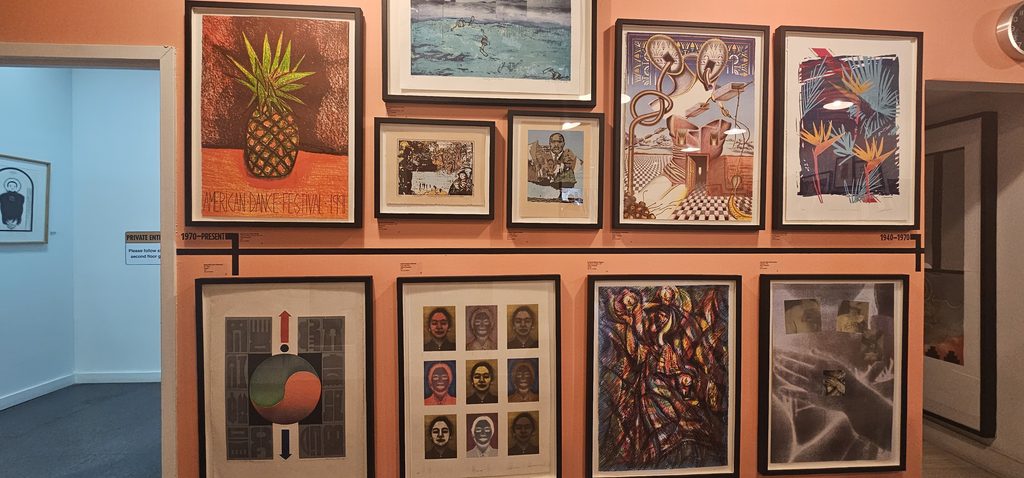
Brandywine Workshop and Archives (BWA) is a nonprofit arts organization dedicated to the preservation and creation of fine art prints. It provides a space for exploring traditional, contemporary, and innovative printmaking technologies. During the event, attendees had the opportunity to experience BWA’s two current exhibitions, We; the People and PrintLab: Material Futures.

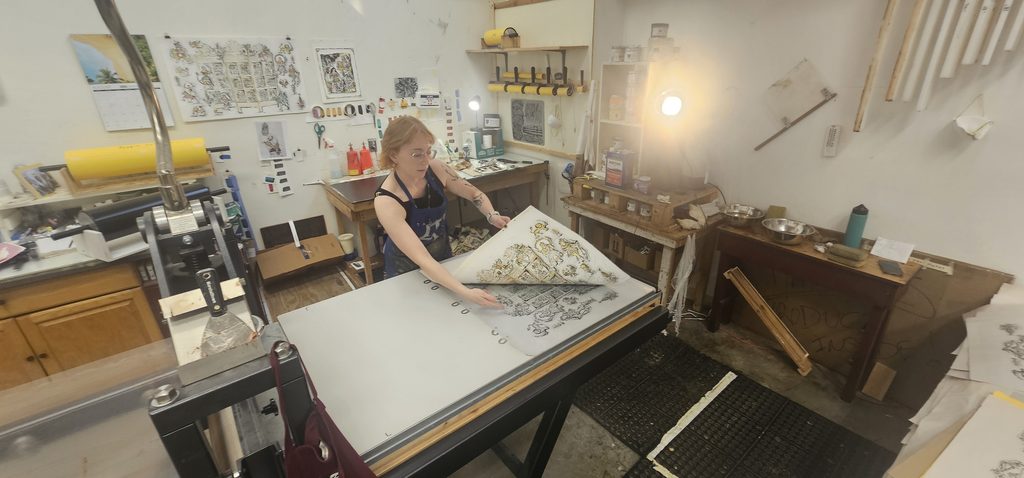
Justine Ditto, Master Printer, demonstrating the printmaking process. (Photo: Montserrat Mandri Fernández)

We; the People, curated by BWA Curator Alicia DeLarge and independent curator Cindy Harley, draws on Brandywine’s collection to explore the migrations and cultural exchanges that have shaped Philadelphia over the centuries. The exhibition addresses themes such as belonging, displacement, labor, faith, resistance, and identity, and features a visual timeline that traces historical moments and migration processes that have influenced the city.

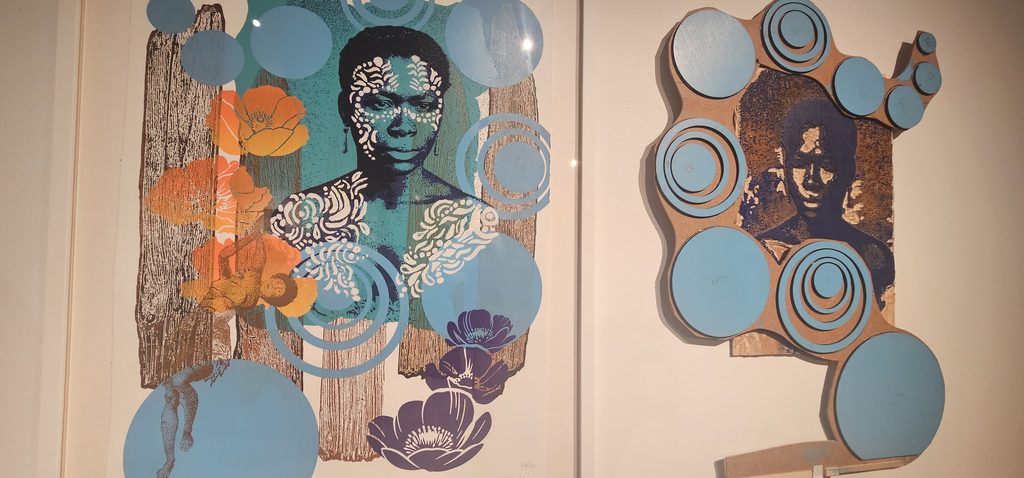
One of the works featured in the exhibition PrintLab: Material Futures. (Photo: Montserrat Mandri Fernández)

Meanwhile, PrintLab: Material Futures showcases works by artists participating in BWA’s PrintLab Residency Program, supported by The Pew Charitable Trusts. The program encouraged eight artists to pursue new creative directions, employing a range of techniques and exploring themes including migration, spirituality, memory, ancestry, identity, and cultural exchange, pushing printmaking beyond its traditional boundaries.

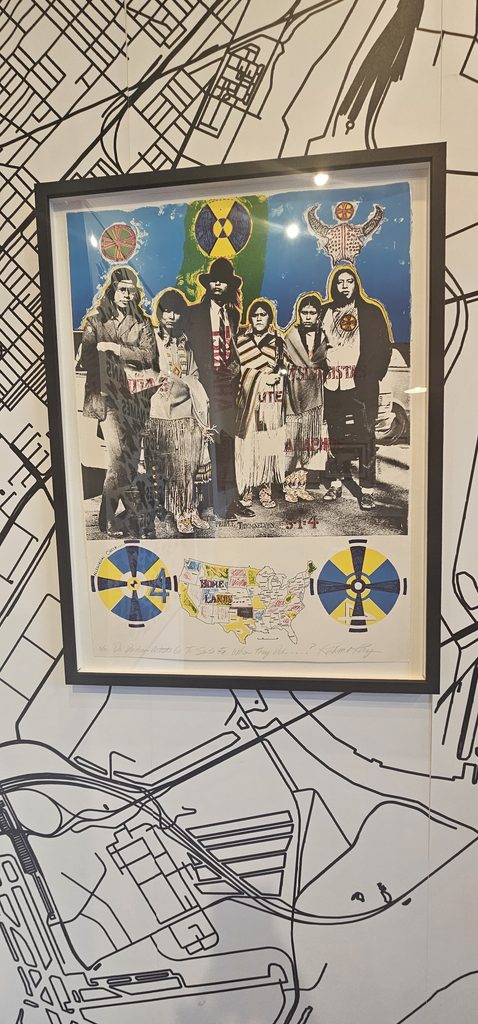
Do Indian Artists Go to Santa Fe When They Die? (1988), by Richard Ray Whitman (Yuchi (Euchee)/Muscogee (Creek) Nation)
 

After sharing conversation and Latin-inspired refreshments, guests were invited on a guided tour of the printmaking studios, where they learned about the techniques and materials used in the production process. The tour highlighted the time, craftsmanship, and dedication required to create each work, many of which take several weeks to complete.

The AfroLatinidad Out Loud event was an evening filled with art and culture. Admission to the exhibitions and galleries at Brandywine Workshop and Archives is free and can be arranged by appointment through the following link: Schedule Your Visit.

An immigrant’s chronicle in Philadelphia: When the country you love no longer feels like home

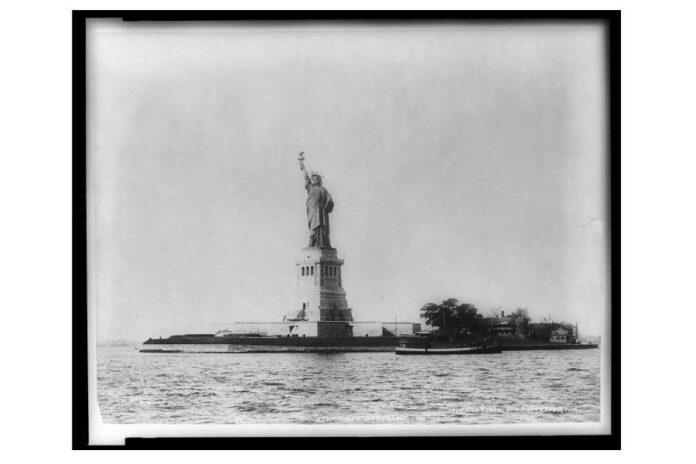
Estatua de la Libertad, Nueva York / J.S. Johnston, fotografía de paisajes y marina. (Foto: División de Grabados y Fotografías de la Biblioteca del Congreso, Washington, D.C. 20540, EE. UU.).

It’s 2002, and I’m in my first-grade classroom in Flushing, Queens. I had just arrived in the United States from Argentina and knew very little about the place I would call home for the next twenty-four years. There was one thing I understood: at the start of every class, everybody stood up, put a hand over their heart, and recited the Pledge of Allegiance. I didn’t know much, but I knew that, in order to fit in, I had to at least learn the Pledge… or act like I knew the words. It was the first thing I learned in English.

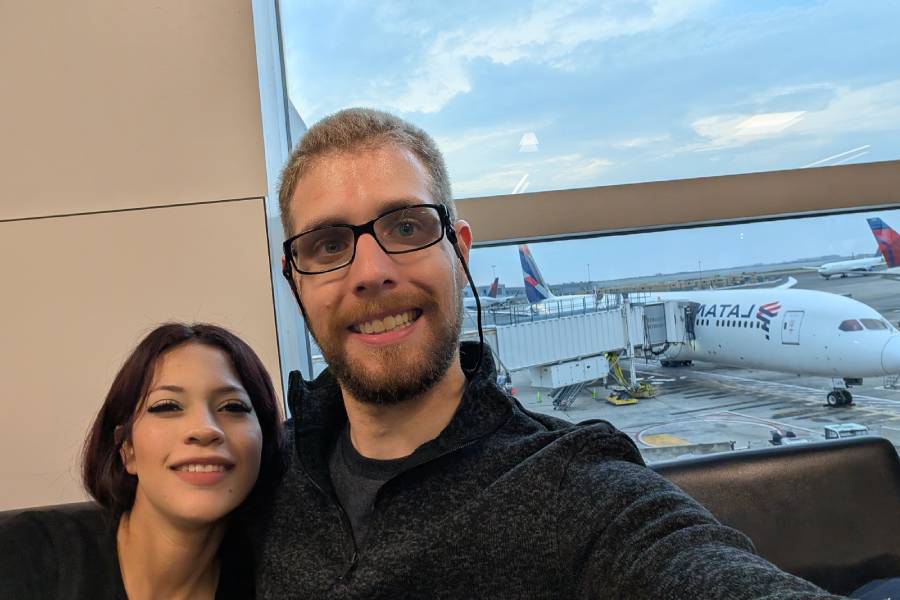
Matías Demichelis y su esposa Anahí partiendo del Aeropuerto Internacional JFK, julio de 2026. (Foto: Cortesía/Matías Demichelis)

My family moved to Bethlehem, Pennsylvania, in 2003, and I carried this ritual with me everywhere I went, including every school function that began with the words, “I pledge allegiance to the flag…” At Donegan Elementary School, I was placed in ESL. By the third grade, I remember being pulled out of class one day and told that I was speaking, reading, and writing English at a more advanced level than my peers. This mastery of the language opened many doors for me. My parents provided my younger brother and me with everything we needed. I was once told that there was never a book beyond my reach.

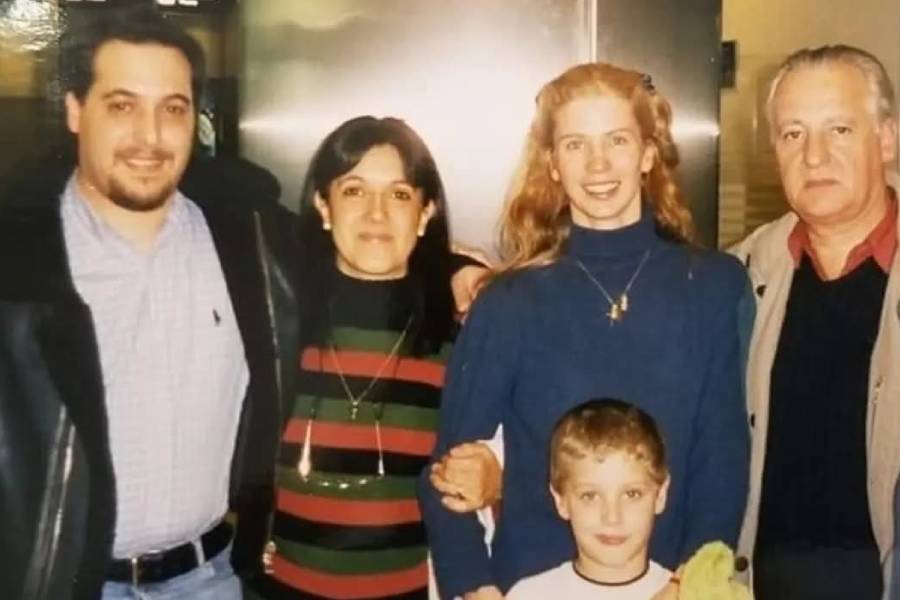
Primera mudanza a los Estados Unidos, julio de 2002. (Foto: Cortesía/Matías Demichelis)

My collection of books grew taller than I did, and before long I was reading about American history and government, biographies, and everything from fiction to nonfiction. My worldview changed in a remarkably short time. I no longer felt like an outsider, but like someone who understood many of the idiosyncrasies of the nation I called home. My attention turned to the Founding Fathers and to statesmen such as Washington, Jefferson, Madison, and Lincoln… people who helped shape the country I came to know. I learned about checks and balances, the rule of law, the separation of powers, the end of rule by divine right, and the principle that no one was above the law.

As I grew older and experienced the country firsthand through college, different jobs, and travel, I noticed a social landscape that was changing rapidly. Our neighbors seemed to become more insular, customers at work were less patient, and teachers were more fearful of expressing their opinions. I also witnessed a rise in nativist rhetoric, encouraged by opportunistic politicians who often avoided the difficult decisions required by governing. Campaigns of hope and change increasingly gave way to appeals based on fear, anger, and resentment toward the “other.”

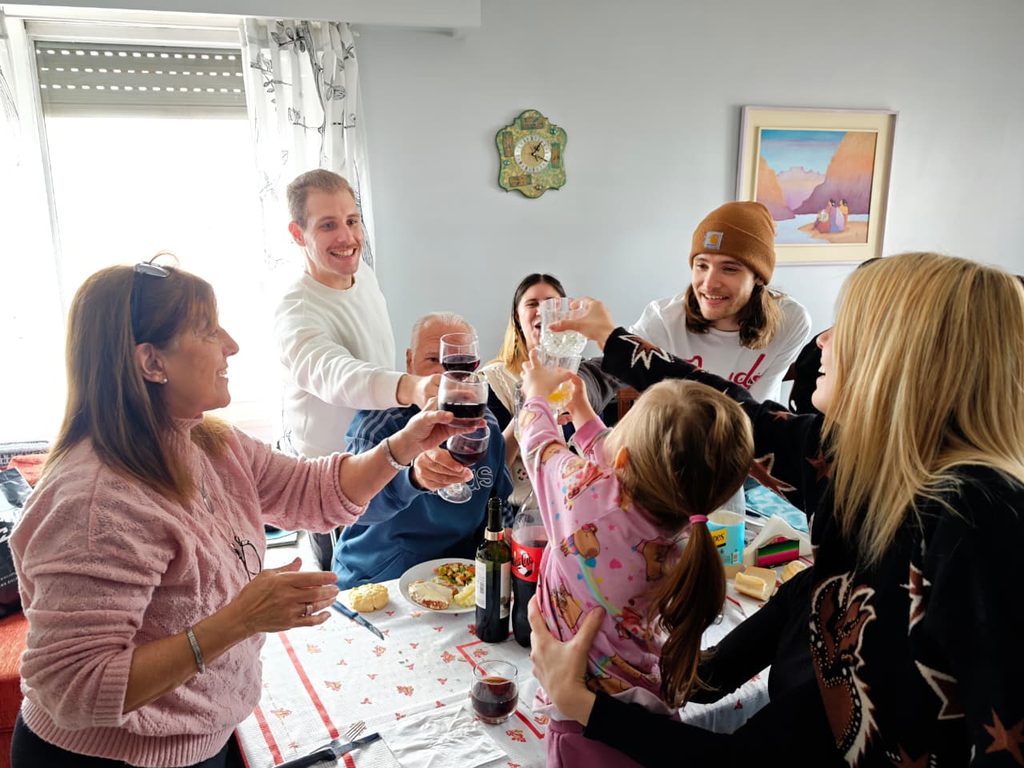
La familia Demichelis reunida en Argentina. (Foto: Cortesía/Matías Demichelis)

Over the course of twenty four years, I began to recognize a growing distance between the America I had encountered in history books and the country I was experiencing around me. I had learned about the nation that produced the Bill of Rights, the Emancipation Proclamation, the New Deal, the Civil Rights Act, and the moon landing. The promise contained in those achievements was real, but I came to believe that the American Dream was too often presented as a guarantee rather than an aspiration that remained unevenly fulfilled. The War on Terror, a global pandemic, and the return of sweeping tariffs exposed tensions and insecurities that the books of my childhood had not prepared me to understand.

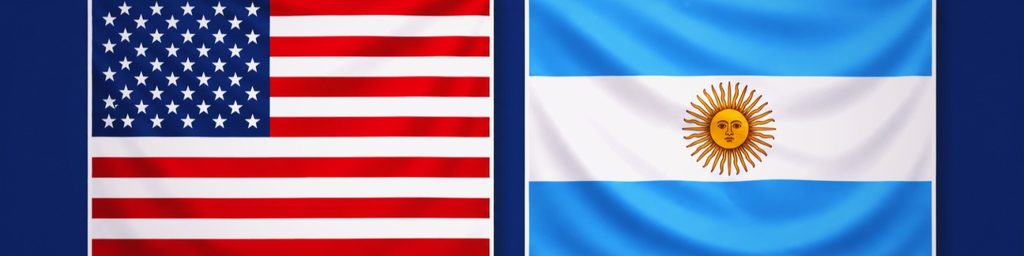
Bandera de EE. UU. y bandera de Argentina. (Foto: Cortesía/Matías Demichelis)

What made America great, and what can still make it great, is its people: people driven by the desire to live better than the generation before them; people who confront challenges with ingenuity and innovation; and people who refuse to be held captive by authoritarian currents. Nevertheless, I no longer felt able to continue my own struggle from within the country. As a permanent resident rather than a citizen, the broader political climate made my place in American society feel increasingly uncertain. I worried that a classroom lesson departing from the accepted political discourse might invite official scrutiny. I feared that publishing an article criticizing those in power could attract government attention and produce immigration consequences. I also worried that an innocent mistake or inconsistency in an immigration record from years earlier might someday be interpreted or used against me. Whether or not those fears would have materialized, they shaped how safely I felt I could teach, write, and participate in public life. Rights that I understood to be protected under American law began to feel less secure in practice.

I could no longer live in a country I didn’t recognize, a country that, I felt, could no longer fully see me as one of its own. In July 2002, I arrived at JFK. In July 2026, I departed from the same airport, uncertain when I would again see Lady Liberty raise her mighty torch over the horizon. That statue once welcomed people of all classes and creeds, and I retain faith that the words of Emma Lazarus will stand the test of time: “Give me your tired, your poor, your huddled masses yearning to breathe free.” America the Beautiful, may your torch shine brightly once again.

El Departamento de Justicia acusa a más de 80 personas en operativo contra pandillas en Puerto Rico

El Departamento de Justicia acusa a más de 80 personas en operativo contra pandillas en Puerto Rico

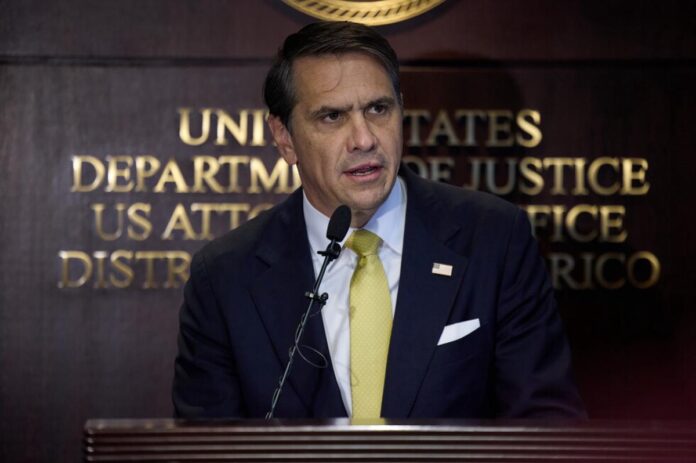
San Juan, Puerto Rico .— El Departamento de Justicia de Estados Unidos presentó cargos contra más de 80 personas como parte del desmantelamiento de una violenta pandilla puertorriqueña, anunció el procurador general estadounidense, Todd Blanche, el jueves durante una visita a la isla como parte de los esfuerzos del gobierno del presidente Donald Trump en el combate al crimen violento.

Los fiscales federales afirman que la pandilla conocida como “Los Baja Deo” durante años traficó fentanilo, cocaína y otras drogas desde la ciudad costera occidental de Mayagüez, generando casi 50 millones de dólares en ganancias. El grupo también es responsable de tiroteos, asesinatos, secuestros y agresiones, así como de la distribución de al menos 340 kilogramos de fentanilo o narcóticos adulterados con fentanilo, manifestó Blanche.

“Nuestras Fuerzas de Tarea de Seguridad Nacional en todo el país están unificadas, y están unificadas para poner fin a la presencia de cárteles criminales, pandillas extranjeras y organizaciones criminales trasnacionales en todo Estados Unidos”, expresó el secretario de Justicia, recientemente confirmado, a los reporteros desde las oficinas de la agencia federal en San Juan:

La presencia de Blanche en el territorio caribeño estadounidense para el anuncio subraya los esfuerzos del gobierno de Trump por poner el foco en su labor contra los cárteles y las pandillas que alimentan el tráfico de drogas y la violencia en comunidades de todo Estados Unidos. El gobierno de Trump ha reconfigurado drásticamente el Departamento de Justicia para convertir la lucha contra la inmigración ilegal y el crimen violento en una prioridad máxima.

Héctor Ramírez-Carbó, secretario de Justicia interino para Puerto Rico, afirmó que “estos 81 miembros violentos de la pandilla ahora enfrentarán a la justicia, y también lo hará cualquier otro que intente ocupar su lugar”. Añadió que “hoy, las familias de Mayagüez pueden disfrutar en paz de lo que sus comunidades tienen para ofrecer sin temor a sufrir daños”.

Trump signs executive order officially renaming Lake Ontario ‘Lake America’

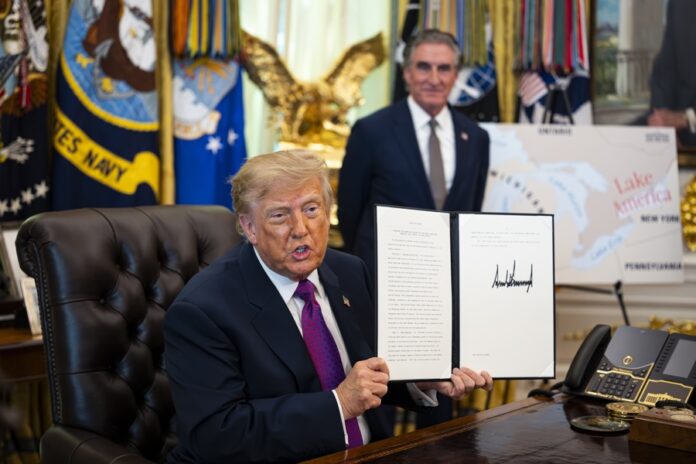
US President Donald Trump shows a signed executive order to rename Lake Ontario as Lake America, amid a recent trade war, in the Oval Office of the White House in Washington, DC, US, 27 August 2026. (Foto: EFE/AL DRAGO)

 United States President Donald Trump signed an executive order on Thursday to rename Lake Ontario «Lake America.»

​“Lake of America’ was something I’ve been thinking about for a long time,” said the president, who had already issued the threat on Tuesday via social media after he got into a war of insults with the premier of the Canadian province of Ontario, Doug Ford, amid the trade war with the neighboring country.

​Regarding the name changes, Trump noted, “So, if you think about it, we have a gulf, and we have a lake. Now, all we need is an ocean.”

“So maybe we’ll have to change the name of the Atlantic and/or the Pacific. Maybe we’ll change them,” he added.

​Regarding Canada, Trump continued to criticize its leaders and once again threatened to impose further tariffs.

Furthermore, and in line with his recent offensive against Canada, Trump insisted that “on Trade, and in other ways, also, they are among the worst Nations in the World to deal with,” he wrote on Truth Social.

​“They feel entitled, and yet, WE DON’T NEED CANADA, THEY NEED US! They do 95% of their business with the U.S., with us, the exact opposite!” he added.

Agenda Comunitaria: actividades y eventos a partir del 26 de agosto

29 de agosto

CELEBRATE ASIA

En Cherry Street Pier de 1 p. m. – 5 p. m. Organizado por Kampoeng Indonesia. Forma parte de PECO Multicultural Series. Festival gratuito.

Ofrece actuaciones culturales, actividades familiares y deliciosa comida.

31 de agosto

CLÍNICA DE CIUDADANÍA

Organizada por Esperanza Immigration Legal Services, Philadelphia Chinatown Development Corporation (PCDC) y New Americans Campaign (NAC) Evento gratuito. De 10 a. m. – 2 p. m. en 1001 Vine St., 2º piso, Filadelfia, PA 19107

Es necesario verificar previamente la aplicabilidad del solicitante; puede textear o llamar al: 347-719-1402 y registrarse en este enlace.

2 de septiembre

SUNSET & SAILS ON THE WATERFRONT

En el Estuary en Sea Philly (Delaware River Waterfront) de 6 p. m. – 8 p. m. (Se necesita reservar previamente en este enlace.

Organizado por Greater Philadelphia Hispanic Chamber of Commerce, el evento forma parte del Dine Latino Food & Culture Passport. Combinas vistas al atardecer del río de Filadelfia, comida, bebida y música en vivo. Los asistentes podrán ver el perfil de Filadelfia desde las embarcaciones de madera de Sea Philly.

3 de septiembre

TRIBUTO A LOS ARTISTAS DEL “SONIDO FILADELFIA”

Dell Music Center

El 3 de septiembre se rendirá homenaje a los legendarios productores y compositores Kenny Gamble, Leon Huff y Thom Bell, y a los artistas detrás del “Sonido de Filadelfia”.

Las puertas se abrirán a las 5:30 p. m. y el concierto comenzará a las 7:00 p. m.

5 de septiembre

CONNECTING ROOTS MULTICULTURAL FAIR 2026

Organizado por NAMI Filadelfia en Friends Hospital (4641 Roosevelt Boulevar, Philadelphia, PA 19124). De 11 a. m. a 3:00 p. m. Este evento provee de recursos, servicios y oportunidades educativas centradas en la salud, el bienestar y el apoyo comunitario.

Para registrarse: https://www.eventbrite.com/e/connecting-roots-multicultural-fair-2026-tickets-1994985661818#location

8 al 27 de septiembre

PHILADELPHIA FRINGE FESTIVAL

Danza, teatro, circo, clown, música y presentaciones inmersivas en cartelera. Encuentra todos los espectáculos del festival en https://phillyfringe.org/events/?

10–25 de septiembre

THE WELCOMING WEEK

Organizaciones y comunidades reúnen a vecinos de diversos orígenes para construir vínculos sólidos y reafirmar la importancia de contar con espacios acogedores e inclusivos para lograr la prosperidad colectiva.

Ver listado de eventos en: https://welcomingweek.org/

10 de septiembre

WORLD HERITAGE CITY CELEBRATION

Organizado por Global Philadelphia en The Crystal Tea Room en el 9º piso, The Wanamaker Building (100 E Penn Square, Philadelphia, PA 10107).

Tickets en este enlace

10 y 11 de septiembre

SUMMIT OF VENEZUELAN AMERICAN ORGS

Organizado por Casa de Venezuela Filadelfia, Casa de Venezuela Filadelfia, PA y Casa de Venezuela Delaware en Esperanza Arts Center (4261 N 5th St, Philadelphia, PA 19140).

12 de septiembre

PAGE TO SCREEN: LOVE CHILD SCREENING AND PHILADELPHIA FILM SOCIETY

Organizado por Philadelphia Film Society a las 12:00 p. m. Proyección gratuita de “Love Child” (2011) como cierre del evento “From Page to Screen: A Dominican Arts & Film Series).

13 de septiembre

FERIA DEL BARRIO

Organizada por Taller Puertorriqueño en North Fifth Street (between Huntington and Somerset). De 12:00 p. m. a 5:00 p. m. Llueva o haga sol.

13 de septiembre

FESTIVAL DE LA INDEPENDENCIA DE MÉXICO

Organizado por el Centro Cultural Mexicano en Filadelfia en Independence Blue Cross RiverRink Summerfest en Filadelfia, PA. De 2:00 p. m. a 7:00 p. m.

Más información en www.mexicanculturalcenter.org o info@mexicanculturalcenter.org

18 de septiembre

RAÍCES, RITMO, SABOR

Organizado por ALPFA. En 701 Market Street, Philadelphia, PA, 19106, 2º piso. Celebración de la herencia hispana a través de la música, comida y comunidad.

19 de septiembre

ROCK THE BLOCK 2026

Celebración comunitaria del sheriff. De 10 a. m. a 4 p. m. en 6400 Block of Ogontz Av., Filadelfia, PA 19126.

Comida gratuita, recurso y entretenimiento.

22 de septiembre

ROOTED IN RESILIENCE

Organizado por Pennsylvania Immigration Coalition.

Tickets: https://www.paimmigrant.org/

27 de septiembre

DESFILE ANUAL PUERTORRIQUEÑO DE FILADELFIA

Organizado por Concilio de 12:30 p. m. a 3:00 p. m. (Benjamín Franklin Parkway / Logan Square, Filadelfia).

El tema de este año será “Nuestras Raíces. Nuestro Arte. Nuestro Legado”.

6 de octubre

PARTY IN THE WAREHOUSE

The Share Food Program está celebrando su Fiesta Anual en el Warehouse de 5:30 p.m. a 8:00 p.m. para celebrar su 40º aniversario.

17 de octubre

CONCILIO’S ANNUAL AWARDS GALA 2026

17 de octubre a las 6:00 p. m. – 18 de octubre a las 12:00 a. m.

Más información en https://elconcilio.net/event/concilios-annual-awards-gala-2026/

24 de octubre

EL FESTIVAL DEL JÍBARO

En Norris Square Park de 1 p. m. a 7 p. m. Gratuito y abierto al público. Celebración cultural puertorriqueña de Filadelfia con música en vivo, comida y actividades culturales.

19 de noviembre

PUERTO RICAN DAY PARADE AWARDS CEREMONY

Organizado por Concilio (141 E. Hunting Park Ave., Philadelphia). De 6:00 p. m. a 8:00 p. m.

Ceremonia anual de entrega de premios del Día del Desfile Puertorriqueño

FUERA DE FILADELFIA

Montgomeryville–Lansdale area

29 de agosto

BUXMONT BONZEROO featuring Exit 31

Branch Creek Taphouse – Exit31 forma parte de , tres días de música en vivo con 58 bandas en 14 sedes. Actuaremos en el Branch Creek Taphouse (30 W Chestnut St Souderton PA 18964)  de 6:45 p. m. a 7:30 p. m.

3 de septiembre

PRIMER JUEVES EN ALDERFER AUCTION DOYLESTOWN

A las 10 am en 3359 Durham Rd Doylestown, PA, 18902

Valoraciones con el especialista en artes decorativas Christian Answini.


11 de septiembre

THE HOUSE AT POOH CORNER

Teatro DCP (795 Ridge Rd, Telford, PA 18969). A las 7:30 p. m.

12 de septiembre

MOMMY MARKET

Indian Valley Family YMCA (890 Maple Ave., Harleysville, PA 19438) a las 9 a. m.

Tianguis de ropa, juguetes y libros de niños. Precio por asistir $1 por adulto. Precio para vendors $10 (solo espacio), $15 (espacio con mesa).

13 y 14 de septiembre

AUDITIONS

Teatro DCP (795 Ridge Rd, Telford, PA 18969). A las 7:30 p. m.

Audiciones para “A Christmas Carol: A Live Radio Play”. Toda la información sobre las audiciones, los fragmentos del guion (“sides”) y las fechas de las funciones puede consultarse en www.dcptheatre.org/auditions.

18 de septiembre

En el Centro de Convenciones de Filadelfia (1101 Arch Street, Philadelphia)

18 de septiembre

DESIGNER BAN BINGO! BENEFITTING THE ALZHEIMER’S ASSOCIATION

West Point Fire Hall (660 Garfield Ave., West Point, PA 19486) a las 7 p. m.

Entradas $40 (por adelantado); $45 (en la puerta)

19 de septiembre

CENTRAL SCHWENKFELDER CHURCH’S ANNUAL COUNTRY FAIR

Central Schwenkfelder Church (2111 S Valley Forge Rd, Lansdale, PA 19446) a las 10 a. m. 

Kennett Square

19 de septiembre

FESTIVAL DE LA HERENCIA HISPANA DE KENNETT SQUARE

Organizado por CGKS. Celebración del Día de la Independencia de México y Centroamérica (600 S. Broad St., Kenneth Square, PA). Gratis y abierto a todos.

Philabundance and Senator Sharif Street serve up a lesson in healthy cooking as grocery prices climb

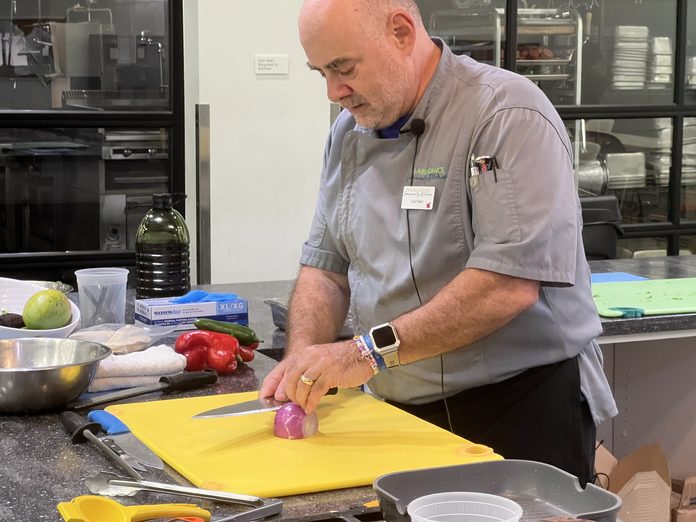
Chef Marc BrownGold teaches the attendees of the Philabundance event to prepare healthy dishes (Photo: Aleida Garcia)

With grocery bills climbing and last year’s suspension of SNAP benefits still fresh in memory, Philabundance is making a difference in the community’s health. Its demonstration kitchen at 224 North 10th Street shared a cooking event on Wednesday afternoon, August 26, 2026, to show neighbors how to turn a bag of fresh ingredients into a nutritious meal for less than the cost of a drive-thru.

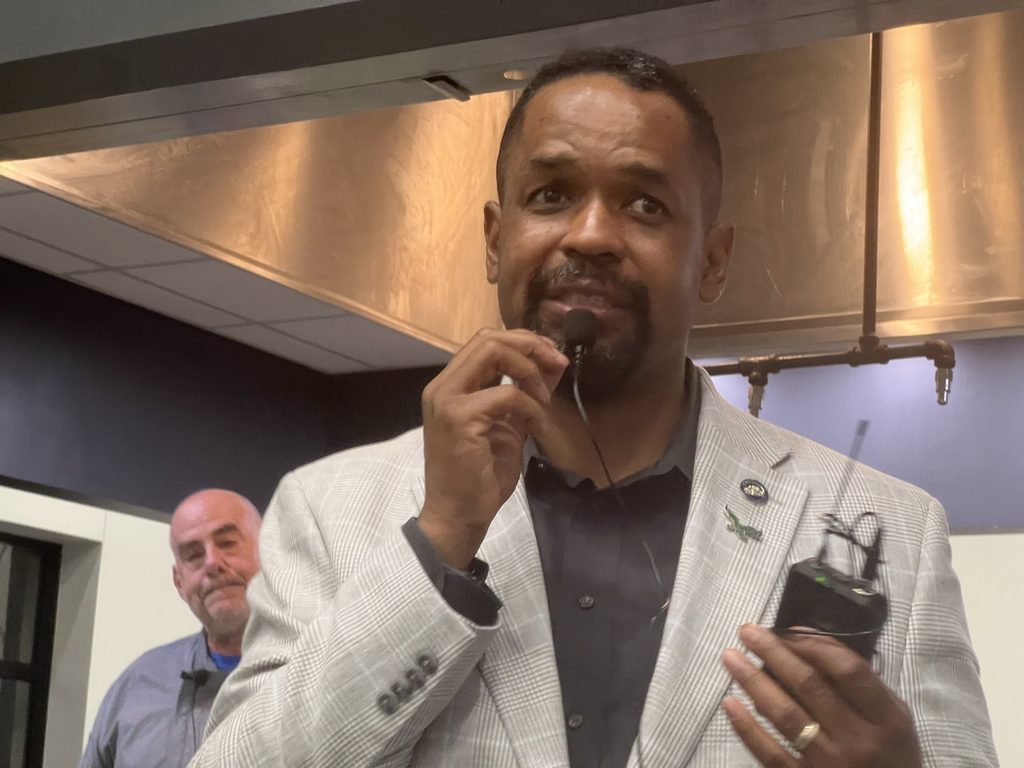
State Senator Sharif Street speaking to attendees during the event. (Photo Aleida García)

The well-attended event, held with the support of State Senator Sharif Street, comes as U.S. grocery prices have risen roughly 5 to 6 percent since 2024, according to the USDA Economic Research Service, with staples such as beef climbing far faster. Nutritionists urge families to cook at home, but for many households the question is how to make the healthiest meals for the most reasonable price.

“Learning how to prepare nutritious meals helps to improve our quality of life,” Street told the gathering. “It is part of our overall wellness plan,” Senator Street said. “he and his wife, April, have five children, and taking a family of seven out to eat has become very expensive. When they were starting out, he explained, they lived on a strict budget, and cooking healthy meals at home was not a choice but a must.

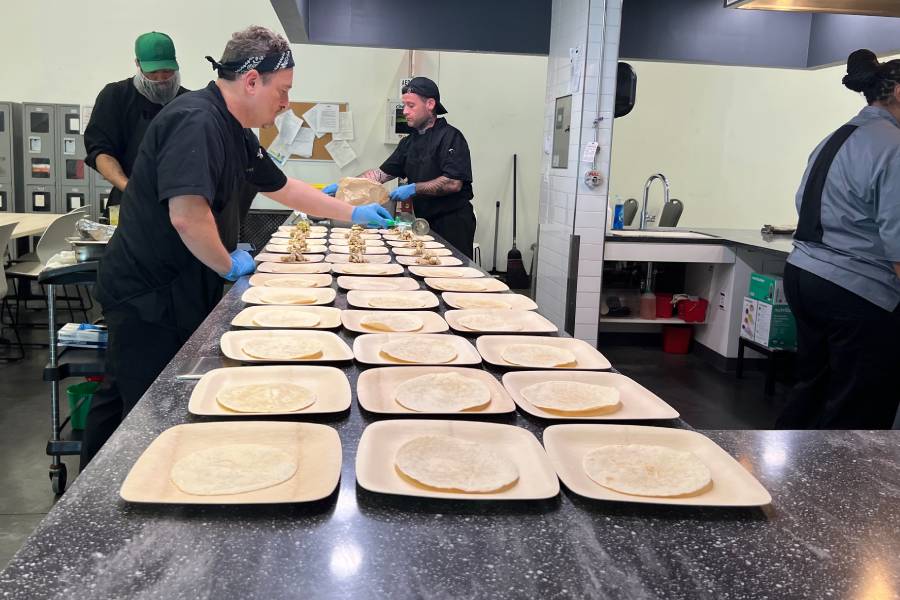
Culinary students at the Philabundance Community Kitchen Culinary Program prepare samples for the audience. (Photo: Aleida Garcia)

Philabundance, which provides 44 million pounds of food each year, which is the equivalent of 36 million meals across nine counties in Pennsylvania and New Jersey, was born from that same instinct. In 1984, Pamela Rainey Lawler saw edible food going to waste while her neighbors went hungry and began rescuing surplus from restaurants, caterers, and farmers out of the back of her Subaru. Today, CEO Loree Jones Brown speaks proudly of the Philabundance Community Kitchen’s training program, which prepares people on public assistance for restaurant careers and places them in internships that lead to permanent jobs.

At the event, the sizzle of chicken in the pan and the sharp, bright scent of lime filled the demonstration kitchen. Chef Marc BrownGold, director of the Philabundance Community Kitchen, led the session alongside executive chef Jennifer Jones, with the timing of a stand-up comedian, showing the crowd how to sharpen a knife and how to cut vegetables and fruit quickly and efficiently.

The dish was chicken fiesta tacos, topped with a salsa of red onion, lime, cilantro, jalapeños, mango, and avocado, laid over a flour tortilla on the plate. Chef Marc fried boneless chicken cubes until golden and assembled the tacos as the attendees leaned in like students at the front of a class.

Yolanda Smith of Brewerytown went back for seconds. “Marc BrownGold is brilliant, funny, and well-educated about food,” Smith said. “The food was delicious, and I even asked for a second plate. The spice was perfect, and I loved the mangoes.” When the program ended, each participant left with a bag containing the recipe and all the ingredients needed to make the dish at home, plus one more thing. “And in case you’re not ready to cook tonight,” Chef Marc said, “we are sending you home with a frozen version of the meal.” “ I’ll be back for the next class in October,» said Yolanda as she happily left the building with her newfound knowledge and the ingredients to remake Chef Marc BrownGold recipe.