

Inicio Blog Página 24

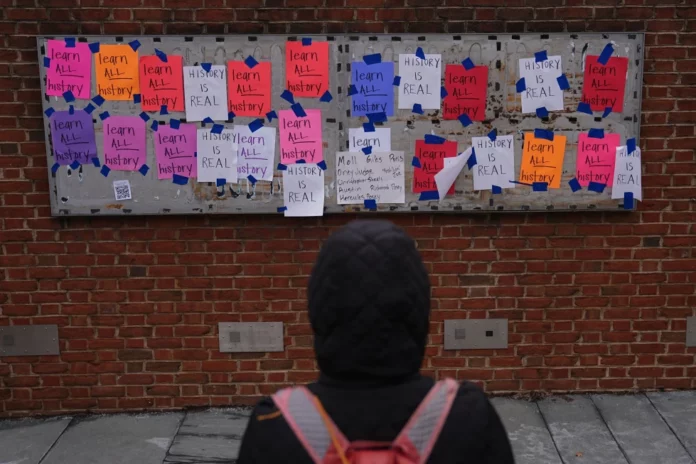
Estudiantes al Consejo Escolar de Filadelfia: “Este plan no tiene corazón”

Winston Hayes a student at Lankenau told the School Board that learning about cows at Saul HIgh School was not the same as learnng Argoecology at Lankenau. (Photo: Aleida Garcia)

En una sala abarrotada, convocados por el Distrito Escolar de Filadelfia, estudiantes, padres y funcionarios electos transmitieron un mensaje unificado: inviertan en nuestros niños; no repitan los errores de 2013. El premio nacional otorgado recientemente a Lankenau, anunciado apenas días antes de la votación, solo acentuó la urgencia del momento.

En el centro de la disputa se encuentra el plan maestro del Proceso de Planificación de Instalaciones del distrito. Publicado el 22 de enero de 2026, el plan inicialmente proponía cerrar 20 escuelas durante los próximos diez años; sin embargo, tras recibir fuertes críticas de la comunidad, la cifra se redujo a 18. El plan también contempla la fusión de seis escuelas y la modernización de 159 edificios, con un costo proyectado de aproximadamente $2.8 mil millones.

Estudiantes con camisetas que representaban varias de las escuelas propuestas para el cierre se sentaron frente al podio, algunos sosteniendo carteles escritos a mano y otros aferrados a papeles con las declaraciones de tres minutos que habían ensayado. El ambiente no era exactamente de enojo, pero sí se sentía como un enfrentamiento. La audiencia estaba decidida: estudiantes, padres y maestros que ya habían vivido reuniones similares. Vienen a expresar sus opiniones, aunque sospechan que sus palabras podrían no ser escuchadas ni tomadas en cuenta.

Según el superintendente, el Dr. Tony Watlington, las consideraciones financieras hacen necesarias acciones decisivas. El distrito destaca por encuestas con 13.700 respuestas, 35 sesiones de verificación de datos con los directores y un sitio web de datos con información sobre todas las escuelas.

El presidente del Consejo Escolar, Reginald Streater, visiblemente frustrado en ocasiones cuando los oradores excedían su tiempo o cuando se escuchaban voces desde el fondo del salón, ha defendido el plan como una necesidad fiscal, argumentando que el distrito no puede seguir manteniendo edificios con baja matrícula. El superintendente Watlington ha dicho públicamente que cerrar escuelas en la sexta ciudad más grande del país es “inevitable” dadas las realidades financieras. El jueves por la noche, nadie que se acercó al micrófono compartió ese punto de vista.

Solicité comentarios al Departamento de Comunicaciones del Distrito Escolar de Filadelfia sobre si las reuniones de marzo de 2026 influirían en el futuro del plan maestro. El distrito no respondió antes del cierre de esta edición.

Los estudiantes mencionaron repetidamente a funcionarios electos que se habían reunido con ellos y habían tomado en serio sus preocupaciones: las concejalas Cindy Bass, Quetzy Lozada, Jamie Gauthier y Nina Ahmad. Gauthier, quien representa al Distrito 3, repitió el 12 de marzo el mismo argumento que había expuesto días antes: pidió al consejo que desacelerara el proceso, que afinara sus datos y tratara a las escuelas con respeto.
“El Consejo Escolar debe ofrecer a las comunidades afectadas un proceso más lento y transparente”, afirmó.

La representante estatal Morgan Cephas, del Distrito 192 en West Philadelphia, agradeció a los estudiantes, al personal, a los padres y a los simpatizantes que asistieron a las audiencias. Expresó preocupación sobre el transporte: los estudiantes reubicados podrían enfrentar hasta una hora adicional de viaje al día, tiempo que se resta al estudio, a la familia y al descanso. También cuestionó si el valor inmobiliario de los edificios influyó en la selección de las escuelas propuestas para el cierre. La equidad del plan, añadió, también es discutible: aunque los estudiantes negros y latinos representan alrededor del 70% de la matrícula total, constituirían el 90% de los afectados por los cierres.

La concejal general, la Dra. Nina Ahmad, con doctorado en química, habló con especial urgencia sobre lo que se perdería si programas especializados como el de Lankenau fueran disueltos en lugar de ser protegidos. Llamó al distrito a establecer alianzas más amplias —con el Concejo Municipal, la legislatura estatal y socios filantrópicos— antes de tomar decisiones de vida o muerte.

La delegación más grande y vocal fue la de Lankenau High School, y no solo por lealtad vecinal. Lankenau es la única escuela secundaria en Filadelfia con un currículo basado en ciencias ambientales, con rutas académicas en ecología, agroecología y agricultura urbana que no existen en ninguna otra escuela del distrito. El plan propone cerrar Lankenau y redirigir su matrícula a George W. Saul High School, especializado en ciencias animales.

Una estudiante lo expresó con precisión: “No pueden decirle a una botánica que estudiar vacas lecheras es suficiente”.
Las disciplinas no son intercambiables y estudiantes y maestros lo dejaron claro.

Durante los cierres de 2012–2013 —30 escuelas en total— más de 10.000 estudiantes fueron desplazados, la mayoría negros o de bajos ingresos. Un estudio de la Universidad de Pensilvania (Steinberg y MacDonald) demostró que el rendimiento académico disminuyó en las escuelas receptoras durante dos años y que los estudiantes desplazados acumularon más ausencias y suspensiones, especialmente quienes viajaban más lejos. El distrito asegura haber considerado esos datos e incorporado protecciones en el plan actual.

El mensaje se repitió una y otra vez: la desinversión en estos edificios ha sido deliberada y prolongada. Moffet School, una escuela de barrio pequeña y diversa, fue mencionada como ejemplo de lo que se pierde cuando instituciones que sostienen a las comunidades trabajadoras son tratadas como prescindibles. Varios oradores también enfatizaron que las escuelas no incluidas en la lista de cierres tampoco están a salvo; esas instalaciones también necesitan inversión real, no un deterioro silencioso.

Asia Alicea seguía presente cuando terminó la reunión. Había dicho lo que iba a decir y había conmovido a muchos. Si el consejo la escuchó, la pregunta está abierta.

Kristi Noem is gone, but racism remains — and the war continue

Fotografía cedida por la Presidencia de Ecuador que muestra al presidente de Ecuador, Daniel Noboa (d), hablando con la secretaria de Seguridad Nacional de los Estados Unidos, Kristi Noem (i) durante una reunión este sábado, en el marco de la llamada cumbre 'Escudo de las Américas' en Miami (EE.UU.). EFE/ Presidencia de Ecuador

At last, Donald Trump decided to remove Kristi Noem, the official of many controversies. But there are no signs that anything will truly change.

The man chosen to replace her is as unqualified as she ever was: Senator Markwayne Mullin.

Mullin has been nominated by President Donald Trump to lead the Department of Homeland Security (DHS) following Noem’s dismissal, and he is expected to assume the role of Secretary of Homeland Security on March 31, 2026.

The DHS is one of the largest agencies in the federal government. With roughly 260,000 employees and a broad range of responsibilities—including FEMA—it also has the largest budget of any department. Its mission is to protect the homeland, not simply to deport people of color.

Neither Noem nor Mullin has demonstrated the experience required to run such a vast and complex institution.

Noem was not removed because of the deaths of detainees in immigration facilities. She was not dismissed because citizens and lawful residents were sometimes swept up in immigration arrests. Nor did the White House appear troubled by repeated accusations that ICE agents used excessive force while detaining individuals at homes, workplaces, or on the streets.

Mass raids during this period detained thousands of people with no criminal record. By some reports, roughly 75 percent of those arrested had no prior convictions.

Una persona es detenida en medio de protestas contra la ofensiva de detención de inmigrantes en Minneapolis el 13 de enero del 2026. (Foto: AP/Adam Gray)

Even the controversy surrounding a government jet allegedly refitted with luxury accommodations and rumored to be linked to Noem and her aide Corey Lewandowski did not appear to end her tenure.

What finally crossed the line seems to have been political rather than ethical. Reports indicated that Noem oversaw a $220 million advertising campaign that prominently promoted her public profile. During a congressional hearing, she stated that Trump had approved the ads—something the president later denied.

That claim reportedly infuriated him.

After her removal, Noem was reassigned to a position associated with the “Shield of the Americas,” a role said to have no staff, no aircraft, and few defined responsibilities.

Yet the policies that drew criticism during her tenure remain unchanged.

There has been no meaningful shift away from enforcement tactics that critics say have spread fear throughout immigrant communities and raised serious human-rights concerns.

Trump has long insisted on being the central voice and image of his political movement. Few others are permitted to share that spotlight.

Meanwhile, the country faces larger challenges.

The United States appears to be drifting toward another unnecessary war. At the same time, the public has not received full transparency on issues such as the Trump-Epstein files or the underlying weaknesses in the nation’s economic foundations.

These pressures are creating unease within the Republican Party. Some candidates are quietly searching for political distance that will not anger the MAGA base.

Already, about 30 Republicans have announced they will not seek reelection.

At the same time, polls suggest that many Americans oppose current mass-deportation policies and the harsh tactics associated with some ICE operations.

While calls had been growing in Congress for bipartisan action against Noem, her departure now makes that unnecessary. Nevertheless, investigations and possible civil or criminal proceedings could still emerge if questions about her testimony under oath continue.

Beyond Washington, international tensions are escalating.

With domestic programs already strained, a widening conflict in the Middle East is beginning to affect American consumers.

Iran’s government has named Mojtaba Khamenei as the Islamic Republic’s new supreme leader following the reported death of his father, Ayatollah Ali Khamenei, in an airstrike at the start of the current conflict.

According to Iranian state media, several members of Mojtaba Khamenei’s family—including his wife Zahra Adel, his mother Mansoureh Khojasteh Bagherzadeh, and one of his sons—also died in the initial attacks.

Given those circumstances, the new leader may carry deep grievances against Israel, the United States, and their allies.

At home, the detention and deportation of large numbers of immigrant workers—combined with rising fuel prices linked to war—are weakening public confidence in both government leadership and economic management.

For MAGA-aligned candidates heading into the next election cycle, these developments could become serious political warning signs.

Manifestantes se concentraron frente a la Casa Blanca en Washington D. C., Estados Unidos, el 28 de febrero de 2026 para protestar contra los ataques militares lanzados por Estados Unidos e Israel contra Irán. (Foto: EFE/JIM LO SCALZO)

Jennifer Rodríguez: Latino leadership and economic development in Philadelphia

GPHCC Annual Meeting 2025. (Photo: provided by GPHCC)

March is a month filled with activities in Philadelphia. In addition to commemorating Women’s History Month, the city is also reflecting on community work, leadership, and the impact of organizations that drive local economic development. Within this context, Jennifer Rodríguez, President and Chief Executive Officer of the Greater Philadelphia Hispanic Chamber of Commerce (GPHCC), shares her vision for the growth of the Latino community, the role of women in the economy, and the challenges and opportunities tied to the upcoming 250th anniversary of the United States.

Professional journey

Jennifer Rodríguez was born and raised in Puerto Rico. Her path toward economic leadership began when she decided to move to the United States to pursue higher education.

“I was born and raised in Puerto Rico. I left the island to study Business Administration at Boston University,” she explained.

After graduating, she relocated to Washington, D.C., where she worked at the National Academy of Sciences on the Ford Foundation Fellowship Program for minorities.

“The program sought to increase the number of minority professors and scholars at universities. We received applications from some of the best students in the country to fund their doctoral studies,” she recalled.

JJennifer Rodríguez, President and CEO of GPHCC. (Photo: Courtesy of GPHCC)

During that period, Rodríguez developed a strong interest in economics, sociology, public policy, and urban planning.

“Whenever I reviewed research proposals, I was especially drawn to topics related to economics, urban design, and public policy. That’s where I began to better understand the social challenges many communities face.”

Her interests led her to continue her education at the University of Pennsylvania, where she earned a master’s degree in Urban and Regional Planning. She later began working in economic development at the Philadelphia Industrial Development Corporation (PIDC), a key institution closely tied to city government.

Rodríguez later joined the community organization Asociación Puertorriqueños en Marcha (APM), where she worked on community development initiatives in North Philadelphia.

“That’s where I truly learned about Philadelphia’s Latino community. I didn’t grow up here, so it was a very formative experience for me,” she said.

She emphasizes that while the Latino community faces economic challenges, it is also remarkably strong.

“It is a community with limited economic resources, but extremely resilient, creative, and hardworking. The entrepreneurial spirit among immigrants is very strong.”

For the past ten years, Rodríguez has led the Greater Philadelphia Hispanic Chamber of Commerce, working to connect Latino entrepreneurs with resources, training, and growth opportunities. One of the most significant achievements, she says, is that Latino businesses now have a seat at the table where major city decisions are made.

“The most important accomplishment is that the Latino business community is now taken seriously. We are present in the spaces where decisions about Philadelphia’s economic future are made.”

GPHCC State of Hispanic Business Forum. (Photo: Courtesy of GPHCC)

Women’s History Month and Latino leadership

During Women’s History Month, Rodríguez highlights the critical role Latina women play in economic growth.

“If you look at the data, you’ll see that Latinas are driving much of the economic development within the Hispanic community.”

According to Rodríguez, approximately 60 percent of Latino business growth is driven by women, who are starting businesses at a rate six times higher than the national average.

“Women in our community are leading business creation and economic development.”

She also pointed to Latinas’ leadership in education and social progress.

“When you look at indicators such as high school graduation and higher education attainment, Latina women are leading many of those gains.”

Although challenges remain, she believes progress is accelerating.

“We are not yet at the same level as other groups, but the pace of progress is increasing and gaps are closing.”

Rodríguez stressed that building a successful business requires support, professional networks, and access to knowledge.

“To succeed, you need a support system—experts and peers who can walk alongside you in the process.”

She also emphasized the importance of planning and preparation.

“Business is not improvised. You need to plan, have a clear vision, and execute with discipline.”

She shared a message for women interested in entrepreneurship:

“Entrepreneurship is not a solo activity. Entrepreneurship is a team sport—it’s community-based.”

GPHCC 2025 Annual Meeting. (Photo: Courtesy of GPHCC)

The 250th Anniversary and opportunities for Philadelphia

Philadelphia is preparing for one of the most significant moments in its history: the celebration of the 250th anniversary of U.S. independence, along with a series of international events expected to draw visitors from around the world.

These events present both opportunities and challenges for the Latino community.

“Much of the activity will be concentrated in Center City and South Philadelphia, while many Latino businesses are located in other neighborhoods.”

For that reason, GPHCC is developing new initiatives to connect visitors with Latino culture and businesses throughout the city. One of these initiatives is the creation of a “Latino Passport,” a feature within a mobile app that will allow visitors to discover Latino-owned restaurants, cultural events, and local businesses.

“We want visitors to experience a Latino summer in Philadelphia and discover everything our community has to offer.”

The platform will promote local businesses and make it easier for tourists to find Latino cultural experiences.

Despite global challenges and international uncertainty, Rodríguez believes Philadelphia is uniquely positioned.

“If someone is thinking about which city to visit in the United States this year, Philadelphia is an obvious choice.”

Jennifer Rodríguez at the GPHCC State of Hispanic Business Forum. (Photo: Courtesy of GPHCC)

After a decade leading the Chamber, Rodríguez summarizes her experience in one word: pride. For her, the growth of Latino entrepreneurship and the_toggle diversity of the community reflect Philadelphia’s future.

“I see Latino entrepreneurs across many industries—technology, architecture, communications, services, and construction.”

She also highlighted the continued cultural enrichment of the city.

“The arrival of people from the Dominican Republic, Venezuela, Honduras, Mexico, and many other countries makes our community increasingly vibrant.”

For Jennifer Rodríguez, supporting Latino business development is also a way to contribute to the broader economic and cultural growth of Philadelphia.

For more information, visit: https://www.philahispanicchamber.org/

Students to the Philadelphia School Board: “This plan has no heart”

Asia Alicea a student at Lankenau School tells the school board that their plan has no heart. (Photo Aleida Garcia)

Inside a packed town hall held at the School District of Philadelphia, the students, parents, and elected officials delivered a unified message: invest in our children, don’t repeat the mistakes of 2013 — and Lankenau’s national award, announced days before the vote, only sharpened the urgency. At the center of the dispute is the district’s Facilities Planning Process master plan. Released on January 22, 2026, it originally proposed closing 20 schools over the next ten years, but after hearing dissenting feedback from the community, the number was reduced to 18 schools. The plan also includes the merger of six schools and the modernization of 159 buildings. The projected cost would be in the area of $2.8 billion.

Students in colorful T-shirts representing several schools slated for closure sat in rows of seats arranged before the podium, some holding handwritten signs, others gripping papers with the three-minute statements they had rehearsed for the allotted time. The mood was not angry –exactly, yet it felt like a face-off at times. The audience was determined, the sort of determination of students, parents, and teachers who have been here before in past closure meetings. They come to speak their minds, but they suspect that their words might not be taken to heart or implemented. According to the Superintendent, Dr. Tony Watlington, financial considerations necessitate decisive action. The school district points to District-wide surveys with 13,700 responses, 35 data verification sessions with principals, and the public release of a data website that shares scores for all schools.

One by one, they walked to the microphone, and one by one, they said the same thing in different ways: do not close our schools. Asia Alicea, a student at Lankenau High School, offered a clear response. The plan, she said, lacked care for the students it claimed to serve. “This facility plan has no heart,” she told the board. “It’s no plan.” The room went quiet.

Board President Reginald Streater, who at times appeared visibly frustrated as speakers ran over their time limits or voices called out from the back of the room, has defended the plan as a fiscal necessity — arguing that the district cannot continue to maintain buildings that are significantly underenrolled. Superintendent Tony Watlington Sr. has said publicly that closing schools in the nation’s sixth-largest city is “inevitable” given the financial realities. On Thursday night, no one who came to the microphone agreed with that framing.

I reached out to the School District of Philadelphia Communications Department for comments on whether the March 2026 board meetings had affected the future of the proposed Facilities Master Plan. The School District of Philadelphia did not respond to a request for comment by press time.

City Councilmember Jamie Gautier states that she will be continuously present to oppose school closings.

Students repeatedly invoked the names of elected officials who had met with them and taken their concerns seriously: Councilmembers Cindy Bass, Quetzy Lozada, and Jamie Gauthier, and Dr. Nina Ahmad, City Councilmember at large. Councilmember Gauthier, who represents District 3 and also spoke at the March 6 board meeting, returned on March 12 with the same argument she had made a week earlier. She urged the board to slow down, to be precise about its data, and to treat the schools with respect. “The school board owes the affected communities a slower, more transparent process”, she said.  

State Representative Morgan Cephas, who represents the 192nd District in West Philadelphia, thanked the students, staff, parents, and supporters who had attended the hearings. She raised a concern about transportation, suggesting that reassigned students could face commutes of an additional hour or more each day, time taken from studying, family, and rest. Representative Cephas also questioned whether the value of school buildings as real estate had played any role in selecting which schools to close, arguing that development interests and educational decisions do not belong in the same conversations. The plan’s equity, she said, was also questionable. According to the district’s own data, Black and brown students constitute roughly 70 percent of total enrollment,

yet represent 90 percent of students who would be affected by the proposed closures.

Dr. Nina Ahmad, a PhD in chemistry and a City Councilmember-at-large, spoke with particular urgency about what would be lost if specialized programs like Lankenau Environmental Sciences Magnet High School were dissolved rather than protected, calling on the district to pursue a broader partnership — with City Council, the state legislature, and philanthropic partners — before making life-changing decisions.

Lankenau High School drew the largest and most vocal contingent of supporters at the meeting, and for reasons that went beyond neighborhood loyalty. Lankenau is the only high school in Philadelphia with a curriculum built around environmental science — offering students structured pathways into ecology, agroecology, and urban agriculture that exist nowhere else in the district. The district’s proposal would close Lankenau and redirect its students to George W. Saul High School, which specializes in animal science. One Lankenau student put the problem precisely: “You cannot tell a botanist that studying dairy cows is enough”. The disciplines are not interchangeable, and the students, their teachers, and their supporters made clear they understood the difference better than the plan’s architects appeared to.

Just days before the board meeting, Lankenau Environmental Science Magnet High School took home two of the most prestigious honors at the 2026 PHS Philadelphia Flower Show: the Alfred M. Campbell Memorial Trophy, awarded for the educational exhibit making the most inventive use of plants, and a PHS Gold Medal for excellence in educational display. The winning exhibit, titled “Inheritance,” traced the cultural histories of plants and elements, tracing ancestral foodways. Individual students earned second-and third-place awards for ten plants on display at the show. Supporters of the school noted the painful irony: Lankenau was named a model for environmental education in the same week the district proposed closing it.

When the district closed 30 schools between 2012 and 2013 — six in the first year, twenty-four in the second — more than 10,000 students were displaced, a majority of them Black or from low-income families. The neighborhood schools that received those displaced students fared no better: a landmark study by University of Pennsylvania education professor Matthew Steinberg and Penn criminology professor John MacDonald, published in the Economics of Education Review and drawn entirely from Philadelphia student data, found that academic achievement at receiving schools declined measurably for up to two years following the influx of displaced students. Displaced students themselves accumulated significantly more absences and suspension days, and those behavioral consequences grew worse the farther they had to travel to their new schools. The district has said that it has studied those findings and included safeguards in the current plan.

The message from speaker after speaker was consistent and, by the end of the evening, almost rhythmic in its insistence: the neglect of these buildings has been deliberate and long. Moffet School — a small, diverse neighborhood school with a devoted community — was cited as an example of what is lost when institutions that anchor working-class neighborhoods are treated as expendable. Speakers also made clear that the schools absent from the closure list were not safe: those buildings, too, require real investment, not the quiet deterioration that precedes the next round of cuts. Asia Alicea was still in the room when the meeting ended. She had said what she came to say and moved many in the room. Whether the board had heard her was, as of Thursday night, an open question.

Desirée Vila, atleta paralímpica: «Tuve que aprender a perdonar para seguir avanzando»

Desirée Vila
La atleta paralímpica Desirée Vila perdió la pierna derecha con apenas 16 años, víctima de una negligencia médica. Lejos de hundirse, su historia se ha convertido en un ejemplo de resiliencia y superación que ahora cuenta en 'Ganas de Vivir', un documental que repasa una vida extraordinaria en la que tuvo "que aprender a perdonar y pasar página", tal y como revela en una entrevista con EFE. EFE/Estefanía Medina Manzano

La atleta paralímpica Desirée Vila perdió su pierna a los 16 años por una negligencia médica. Lejos de hundirse, su historia se ha convertido en un ejemplo de resiliencia y superación que ahora cuenta en el documental ‘Ganas de Vivir’ en el que desgarra una lucha en la que tuvo que “aprender a perdonar para pasar página y seguir avanzando a pesar de que una parte tuya se quede ahí».

La película, en el debut como director de El Langui y que estrenan ahora en el Festival de Málaga, desvela un proceso lleno de sombras y esfuerzo en el que le tocó empezar de cero: «Me dijeron que debían amputar para salvarme la vida y en ese momento prefería morir; no me veía capaz de llevar una vida así», asegura en una entrevista con EFE.

Vila (Pontevedra, 1998) perdió la pierna en una etapa en la que las niñas encuentran especial dificultad para aceptarse delante del espejo. Pero no solo perdió parte de su identidad, sino que vio truncado su sueño de ser gimnasta: «Formaba parte de la selección española de gimnasia acrobática y en ese momento supe que nunca volvería a competir», confiesa.

Un documental que ahonda en los momentos más duros, en los que tuvo incluso pensamientos suicidas y un trastorno de la conducta alimentaria (TCA) derivado de la falta de aceptación de su nueva imagen.

«Me sentía fea, tapaba la prótesis y no me gustaba mi cuerpo. Vivimos en una sociedad que necesita la aprobación externa constante», señala Vila, que ahora utiliza sus redes sociales para romper tabúes. «Tener una prótesis no me hace menos que los demás. Mi abuela me decía que usara pantalones largos para esconderla; hoy entiendo que no hay un solo cuerpo válido».

El perdón como herramienta de cura

Uno de los pilares del documental, es la gestión emocional de la negligencia médica que sufrió en un centro privado y resultó en su amputación: «Una parte de mí se quedó en aquel hospital», reflexiona Vila, quien subraya la importancia de «perdonar para sanar, aunque no te pidan perdón».

El accidente ocurrió mientras hacía un ejercicio de preparación para el Europeo. Al caer, su pierna se dobló y le provocó una rotura de tibia y peroné. Lo que el médico no vio esa tarde es que la vena poplítea, clave en la circulación sanguínea de la pierna, estaba obstruida y por lo tanto, si no se actuaba de inmediato, se produciría una necrosis y sería mortal.

«Tuve que volver a nacer y aprender a caminar, a ducharme y a ser autónoma de nuevo. Caer tan abajo cuando vienes de competir al más alto nivel es muy complicado. En el documental hablo de algo que nunca había tratado y es que yo llegué a pensar en no querer seguir más aquí», explica sobre la discapacidad sobrevenida que la obligó a sacar fuerzas y reinventarse por completo.

El atletismo, la salvación

Tras meses de depresión y tratamiento con antidepresivos, Desirée Vila encontró en el atletismo la ilusión perdida.

En tan solo un año como atleta se proclamó campeona de España en 100 metros y salto de longitud. De este modo, lo que comenzó como un proceso de rehabilitación terminó incluso llevándola a los Juegos Paralímpicos de Tokio 2020, donde obtuvo un diploma olímpico.

«El atletismo me devolvió la energía. Ahora estoy preparando Los Ángeles 2028», afirma con una sonrisa.
El título del documental, «Ganas de vivir», resume su filosofía actual: «Por muy bien rodeada que estés, cada uno tiene que buscar dentro de sí esa fuerza que le devuelva la capacidad de levantarse. Lo único incurable son las ganas de vivir».

Mi Salud Wellness Center strengthens community health with support from Health Justice for Hunting Park

Mi Salud Wellness Center provides physical and emotional health education to the community. (Photo: Courtesy)

The commitment to community health continues to bear fruit in the heart of Feltonville. Mi Salud Wellness Center, a community-based organization with nearly five years of service in North Philadelphia, was one of the recipients of Health Justice for Hunting Park, an initiative led by Esperanza and the City of Philadelphia’s Department of Public Health to promote health equity and community health.

Keila Canete, president of Mi Salud Wellness Center, explains that her vision is to build a healthier community where residents have access to prevention and wellness resources:
“Our organization is community-based and grassroots. Our main goal is to provide health promotion, disease prevention, and wellness services in Feltonville and North Philadelphia, and to continue expanding into other areas,” she said.

The first Health Justice for Hunting Park cohort with awarded organizations including Mi Salud Wellness Center, Hunting Park United, Nicetown Tioga Improvement Team, and Timoteo Sports. (Photo: Esperanza)

Mi Salud Wellness Center opened its doors in 2021 after identifying a clear need in the community. According to Keila, Feltonville lacked organizations focused on health promotion and prevention:
“The community here lacked resources focused on health promotion and prevention. There was no other organization dedicated to providing health information, preventive screenings, and support services directly in the neighborhood,” she explained.

With the support of a local church that provided the initial space, the organization began offering programs and services in both English and Spanish. Today, they offer healthy living workshops, cooking and exercise classes, diabetes prevention and management programs, activities for youth and older adults, and an active food pantry. They also operate a resource center that offers preventive health screenings, HIV testing, nicotine replacement therapies, and COVID testing.

The program was implemented with three groups—youth, adults, and older adults—based on the Creation Life curriculum. (Photo: Courtesy)

“Many people in our community suffer from chronic illnesses, including mental health conditions. That’s why we implement disease prevention and management programs, especially focused on diabetes, which is highly prevalent in the Latino community,” Keila stated.

In 2025, Mi Salud Wellness Center received funding through Health Justice for Hunting Park, which allowed them to implement an innovative holistic health program focused on the connection between mind, body, and spirit.
“We were blessed to receive the grant. This holistic program was made possible exclusively thanks to those funds,” she said.

The program was developed for three groups—youth, adults, and older adults—through an eight-week course based on the Creation Health (Creation Life) curriculum. The approach addresses not only physical health but also mental, emotional, social, environmental, and spiritual aspects of well-being.

Mi Salud Wellness Center received funding through the Health Justice for Hunting Park initiative. (Photo: Courtesy)

“We are used to talking only about physical health. But this program was different and unique because it addressed mental, emotional, social, environmental, and spiritual health,” she explained.

The organization hopes to continue expanding its programs and strengthening its impact on the community. (Photo: Courtesy)

For Keila, the meaning of Health Justice for Hunting Park goes beyond funding: “Health justice means a lot. It’s not just one issue. It’s equity, it’s access, it’s opportunity. The fact that Esperanza and the City of Philadelphia recognize that community organizations need support to bring these programs to our people is very important.”

Looking ahead, the organization hopes to continue expanding its programs and strengthening its impact on the community.

“The invitation is open to new partners, volunteers, and sponsors who want to support our mission of bringing health, prevention, and hope to those who need it most.” For more information: www.misaludwellness.org

The instrumentalization of faith: When God enters war, and truth dies

A column of smoke rises after an attack in Tehran, Iran, on Monday, March 2, 2026. (Photo: AP/Mohsen Ganji/File)

The war in Iran is not fought only with missiles, drones, and sanctions. It is also fought on symbolic terrain, where words matter as much as weapons. In this conflict, at least three religious traditions — Judaism, Christianity, and Islam — have been invoked by different actors to provide meaning, defense, or moral justification for violence.

This is not a new phenomenon. Whenever war is cloaked in sacred language, the conflict ceases to be merely geopolitical and becomes an absolute moral dispute. When God is invoked, the adversary is no longer just a political enemy: he becomes an existential threat, a negation of the good, someone with whom one does not negotiate but must defeat.

Yet this appropriation of religion by political power contradicts the ethical roots of the very traditions it invokes.

God must be outside the missile and inside the conscience

Judaism, at its prophetic core, is a tradition of law and justice, deeply marked by the memory of suffering and the constant warning against mistreating “the other.” Christianity was born as a radical ethic that placed the poor, the persecuted, and the victims at the center, and that distrusted imperial power and violence as a form of redemption. Islam, for its part, is grounded in justice, mercy and moral responsibility before God, with explicit rules — historically ignored — intended to limit violence even in times of war.

And yet today we see how these traditions are invoked not from their spiritual or ethical dimensions, but as identity tools, turned into national or civilizational banners. God no longer appears as a limit on power, but as its endorsement.

Here, a troubling paradox emerges: what began as a critique of domination, accumulation, and human arrogance has gradually been reinterpreted by structures of power seeking to legitimize themselves. In this process, religion stops challenging the conscience and instead shields political decisions that would otherwise be morally questionable.

Particularly troubling is the role of certain strands of Christian nationalism that evoke war as a “just” defense. When Christianity aligns without hesitation with military and economic power, it not only distances itself from its original message — it reverses it.

God does not drop bombs. States, armies, and elites often shield themselves in sacred language to silence doubt and neutralize compassion.

War not only destroys cities: it also corrupts words. In recent days, as attacks and counterattacks multiplied among the United States, Israel, and Iran, reports emerged that U.S. military commanders invoked “the divine plan” and references to the Apocalypse to explain the intervention to their troops; a religious freedom watchdog says it has received more than 200 internal complaints about the use of apocalyptic Christian rhetoric in the chain of command.

The systemic risk when religion becomes a pretext for power

Academic research over the past decades has shown how religion and collective identity intertwine in modern violence: traditions can offer languages of peace, but they can also be instrumentalized as identity banners serving national or expansionist projects. Understanding this ambivalence — and placing safeguards against it — is the responsibility of both those who govern and those who report.

From the 17th century, Sor Juana Inés de la Cruz left us an ethical compass. In Primero sueño, reason rises to the heavens in search of total knowledge… and fails. That “failure” is its victory: acknowledging the limits of understanding as an antidote to arrogance. Her lesson applies to politics: wherever power clothes itself in absolute certainty — and even worse, sacred certainty — unrestrained violence begins.

Three centuries later, Javier Cercas asks a more human question — on life after death — without seeking propaganda or absolution. El loco de Dios en el fin del mundo is not a catechism but a defense of questioning in the face of power; a portrait of faith that survives on the margins and distrusts the throne. Remembering this now matters: when religion merges with nation and state, its evangelical root as a limit on power is betrayed.

What is urgent is to clearly separate faith from war:

Civil language, civil rules. Presenting war as a Christian crusade or a jihad degrades civilian control over the military establishment and turns soldiers — believers or not — into instruments of dogma rather than of the Constitution.

Religious leaders as buffers, not sparks. Academia has documented it: the same traditions used to divide can — and should — serve to contain violence, not incite it.

This call is not against faith; it is in favor of its most uncomfortable truth: the one that judges us all, especially those in power. Prophetic Judaism, evangelical Christianity, and the Islam of mercy were born to place ethical limits on domination, not to sacralize force.

Sor Juana reminded us that intelligence that forgets its limits becomes arrogance; Cercas shows us that faith without questioning becomes propaganda. Let us learn something from both. Amid the noise, Impacto chooses this position: God outside the war, and conscience — critical, humble, human — at the center of every public decision.

Because in the end, there is no side that wins when the sacred turns into gunpowder; only humanity loses.

The attack on the synagogue: Confirmed facts vs. narrative noise

The recent attacks against a synagogue in Michigan and the attempted bombing amid protests and counterprotests in New York City do not appear to be disconnected events. They could be different expressions of the same phenomenon while also serving as the instrumentalization of fear in a context of war, polarization, and accelerated radicalization, where informational truth can easily be undermined.

Although authorities themselves have said that there was no proven direct connection with the international conflict at the time — and that the cases appear to involve digital self-radicalization — the incidents still serve to fuel Islamophobia.

Even though ideologically opposed, both attacks share structural elements: symbolic targets (a synagogue, the home of a Muslim mayor).

Media outlets then rush into speculation, contributing to the spread of fear and disinformation. Truth, in times of war and polarization, does not die from a single shot; it dies from simplification, haste, and fear.

In that terrain, journalism has two choices: to echo the noise or to stand as a barrier against distortion. Because if these events confirm anything, it is that when war is also fought in the realm of information, defending the truth becomes an act of resistance.

Growing a cooler, stronger Hunting Park

On a hot summer day in Hunting Park, the difference between standing on bare pavement and standing under a tree can feel like it’s 15–20 degrees cooler. The shade that trees provide is important.  It can help lower utility bills. It protects elders and children from extreme heat. It makes walking to school, waiting for the bus, or sitting on your stop more comfortable.

But not every neighborhood in Philadelphia has the same access to trees. Higher-income neighborhoods tend to have more trees and enjoy cooler summers, while lower-income neighborhoods experience the opposite. Planting trees is one practical way we can begin to change things for our community— together.

How can you get a free tree in Hunting Park?

Since 2017, Esperanza has planted and distributed over 1,300 trees across Hunting Park with the help of residents, students, and partner organizations committed to creating a better environment for all. This work is done through two different programs from Esperanza, one for trees on the street and one for trees in front and backyard.

Street trees – Planted in the sidewalk area in front of your home.

  • The City selects the right tree species for the location.
  • Esperanza volunteers plant the tree on the planting day.
  • A landscaping team waters and cares for it for the first two years.
  • Applications are accepted on a rolling basis.

Yard trees -Planted on your private property.

  • You choose from a seasonal catalog of fruiting and flowering trees.
  • You pick up and then plant the tree yourself on the distribution day.
  • You receive care instructions when you pick up your tree.
  • Apply ahead of time to “reserve” your tree, but walkups on the day of the distribution are welcome!

Right tree, right place

We know some neighbors have had negative experiences with trees in the past — cracked sidewalks, pipe concerns, and messy fruit. Today’s approach is different. Street tree sites are reviewed carefully by the City before trees are planted, checking for utilities and making sure trees have room to grow. Yard tree applicants receive detailed information about tree size and care so they can choose what fits their space. It’s all about the right tree in the right place.

A tree that grows, a community that flourishes

Tree planting days and tree giveaway events aren’t just about the environment. They’re about neighbors meeting neighbors, volunteers working side by side, kids getting their hands in the soil—small actions that add up to a stronger block. Every tree that is planted is a new beginning for our community!

If you want a free tree — or if you want to volunteer — join us. Apply at linktr.ee/esperanzahed or scan the QR code in the adjacent ad

Crecen las críticas al presupuesto Parker 2027 por nuevos impuestos y dudas sobre su viabilidad

Filadelfia. — La propuesta de presupuesto para el año fiscal 2027 presentada por la alcaldesa Cherelle Parker, valorada en cerca de 7 mil millones de dólares, ha generado una serie de críticas desde distintos sectores, que si bien reconocen su alcance y ambición, cuestionan la forma en que se recaudarán los ingresos, el impacto en los residentes de bajos recursos y la sostenibilidad financiera a largo plazo.

Impuestos a aplicaciones, el punto más controvertido

Una de las críticas más recurrentes se centra en los nuevos impuestos propuestos a los servicios de aplicaciones, entre ellos un recargo por cada viaje en Uber y Lyft, un impuesto a las entregas minoristas y un aumento del impuesto hotelero.
Empresas del sector del transporte y analistas económicos han advertido que estos cargos podrían ser trasladados directamente a los consumidores, afectando de manera desproporcionada a trabajadores y residentes de bajos ingresos que dependen de estos servicios para desplazarse diariamente o para recibir bienes esenciales.

Ingresos sujetos a aprobación estatal

Otro foco de preocupación es que parte del financiamiento del presupuesto no está garantizada, ya que algunas medidas, como el aumento al impuesto hotelero, requieren la aprobación de la Legislatura estatal de Pensilvania.
Esta dependencia ha generado dudas sobre la viabilidad real del plan presupuestario tal como está diseñado, especialmente si la autorización estatal no se concreta en los próximos meses.

Limpieza urbana: sin nuevas iniciativas contra el vertido ilegal

Aunque la alcaldesa Parker ha hecho de la limpieza urbana una de las banderas de su administración, el presupuesto de 2027 no contempla nuevos programas específicos para combatir el vertido ilegal. En su lugar, se propone continuar con los esfuerzos existentes y ampliar el uso de cámaras de vigilancia.
Organizaciones comunitarias han señalado que estas medidas resultan insuficientes, particularmente en vecindarios que históricamente han sido los más afectados por este problema.

Vivienda y endeudamiento a largo plazo

El plan de vivienda H.O.M.E., que contempla una inversión de 2 mil millones de dólares, ha sido destacado como uno de los más ambiciosos de la historia de la ciudad. Sin embargo, también ha suscitado críticas por su dependencia de bonos y de financiamiento a largo plazo, lo que podría aumentar la presión sobre las finanzas municipales en el futuro.
Estas preocupaciones se intensifican al considerar que la ciudad aún enfrenta compromisos financieros anteriores, como las obligaciones vinculadas al fondo de pensiones.

Preocupaciones del sector educativo

Desde el ámbito educativo, la Federación de Maestros de Filadelfia (PFT) ha valorado positivamente la inclusión de nuevos ingresos para las escuelas públicas, pero ha advertido que persisten serias interrogantes.
Entre ellas, destacan la falta de claridad sobre el financiamiento total para reparar y modernizar los edificios escolares, la necesidad de mayor transparencia en el plan de instalaciones y las preocupaciones continuas sobre la expansión de las escuelas charter. Según el gremio, la inversión propuesta podría no ser suficiente para atender las necesidades estructurales del sistema educativo (PFT).

Metas ambiciosas, resultados aún inciertos

Finalmente, analistas y algunos concejales han señalado que el presupuesto presenta objetivos ambiciosos en áreas clave como la seguridad pública, la vivienda y la movilidad económica, pero advierten que su éxito dependerá de una implementación eficaz y sostenida.
El escepticismo no se centra tanto en las prioridades planteadas, sino en la capacidad del gobierno municipal para ejecutar los programas sin incurrir en sobrecostos, retrasos o déficits futuros.

Un presupuesto bajo escrutinio

En conjunto, el presupuesto Parker 2027 ha sido descrito como un plan de gran escala, pero enfrenta cuestionamientos clave sobre quién asumirá el costo real de los nuevos impuestos, cómo se garantizarán los ingresos proyectados y si las inversiones propuestas serán suficientes y sostenibles.
El debate continuará ahora en el Concejo Municipal, donde se anticipan audiencias públicas y posibles ajustes antes de su eventual aprobación.

El liderazgo de Filadelfia puede luchar por nosotros, Alianza por una Filadelfia Justa enseña cómo

Filadelfia
(Foto: Ilustrativa/Pexels)

La organización Alianza por una Filadelfia Justa (A4JP) celebró una reunión virtual el 3 de marzo para presentar las campañas comunitarias que varios de sus miembros impulsarán esta primavera.

A4JP agrupa a más de tres docenas de organizaciones comunitarias y trabajadores de diversos sectores con un objetivo común: construir poder en el Ayuntamiento de Filadelfia y asegurar que las voces de las comunidades infrarrepresentadas sean escuchadas en los procesos de toma de decisiones.

Durante el encuentro se compartieron distintas iniciativas que, según los organizadores, muestran cómo las comunidades están “protegiendo a sus vecinos y exigiendo que los líderes de la ciudad defiendan a los trabajadores”.
“Necesitamos a todos en esta lucha para enfrentar las amenazas federales hacia nuestras comunidades inmigrantes”, expresó Kimmy Cook, organizadora de participación presupuestaria de A4JP. “Nos unimos para protegernos mutuamente y para asegurarnos de que los líderes de la ciudad defiendan a los habitantes de Filadelfia, como usted y como yo”, agregó.

Situación actual que ha motivado el inicio de las campañas tratadas en la reunión. (Imagen compartida en la presentación por A4JP)

Campañas presentadas

Líderes de distintas organizaciones detallaron l os objetivos de sus campañas actuales, su estado de avance y las formas en que la comunidad puede involucrarse.

ICE fuera de Filadelfia – ICE Out of Philly (impulsada por Asian Americans United)
Esta campaña busca prohibir que ICE oculte su identidad mediante cubiertas faciales y limitar toda colaboración municipal con acciones federales de inmigración. Propone prohibir el intercambio de datos con autoridades migratorias, impedir que agencias municipales recaben información sobre estatus migratorio, negar el uso de propiedades de la ciudad para redadas y bloquear el acceso a espacios privados sin una orden judicial. También amplía protecciones contra la discriminación basada en ciudadanía o estatus migratorio.

Prioridades de A4JP. (Imagen compartida en la presentación por A4JP)

Ley de Viviendas Seguras y Saludables – Safe Healthy Homes

(impulsada por PA’s Renters United, junto con Amistad y Treatment Not Trauma)
Incluye inversión en salud pública y seguridad comunitaria. Se enfoca en los derechos de los inquilinos a la seguridad, a reparaciones y a reubicaciones adecuadas. En Filadelfia, la mitad de los hogares son de alquiler y un 40% de los inquilinos viven en viviendas inseguras. Se espera que la propuesta sea votada por el pleno del Ayuntamiento alrededor del 19 de marzo.

Campaña “No al cierre de escuelas” (impulsada por 215 People’s Alliance y Standing Up for Philly Schools)
Organizadores del noreste de Filadelfia trabajan directamente con maestros, padres y estudiantes para abordar necesidades locales, incluyendo recursos adecuados para estudiantes inmigrantes y problemas de superpoblación escolar.

Campaña por los derechos de los trabajadores (impulsada por Philly Black Worker Project)
Promueve la aprobación de la ley D.U.E.S., que busca reconocer como clase protegida a los trabajadores con antecedentes de encarcelamiento y regular el sector de empleados temporales: igualdad salarial por igual trabajo, transporte adecuado y notificación con anticipación. El 19 de marzo será un día clave de cabildeo en la Alcaldía.

Campaña “Deje de contaminar nuestro aire” (impulsada por Reclaim Philadelphia)
Exige que los concejales prohíban que la ciudad envíe basura a incineradoras en Chester u otros municipios, señalando los impactos nocivos en comunidades vulnerables. La campaña también solicita que la alcaldesa Parker no renueve ni otorgue nuevos contratos de incineración esta primavera y explore alternativas más saludables para el manejo de residuos. El grupo realizará un evento en Germantown el 31 de marzo, de 6 p.m. a 8 p.m. (lugar por confirmar).

Cronología de la Alcaldía de Filadelfia. (Imagen compartida en la presentación por A4JP)