

Through Mi Isla y Yo and Para Mi Niña, two Puerto Rican artists explore identity and the dreams passed across generations.
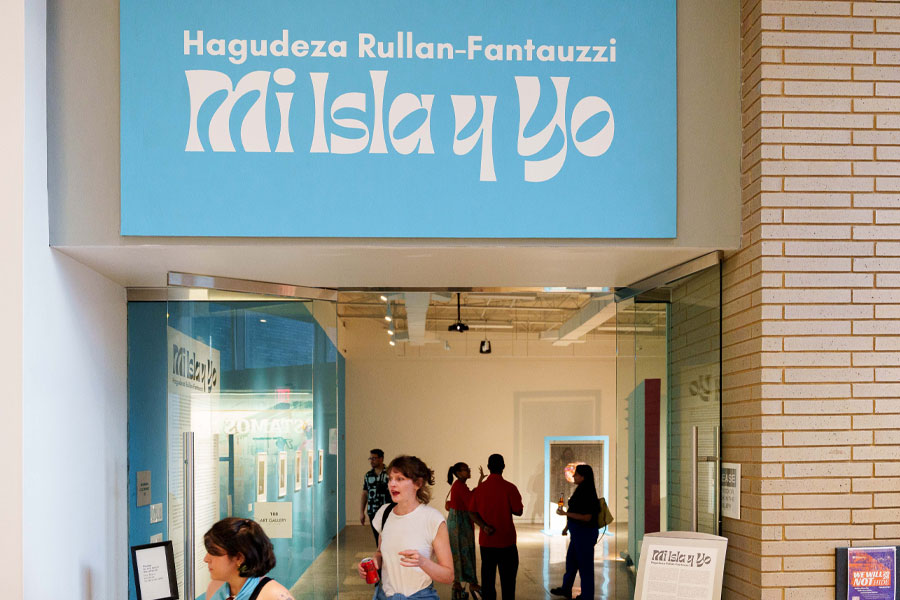
Philadelphia, PA – On Friday, April 24, Mi Isla y Yo, an exhibition by Hagudeza Rullán-Fantauzzi, opened alongside Miranda Lopez’s Para Mi Niña. Both works are included in Radical Americana, a citywide initiative in connection with the United States’ 250th anniversary.
The initiative brings together Philadelphia artists and cultural institutions to reflect on the country’s past, present, and future through art, history, civic dialogue, and cultural memory. At Taller Puertorriqueño, that national question took on a deeply personal shape.
The exhibitions invited viewers to consider how identity is formed through land, family, body, community, and the stories people inherit. For Rullán-Fantauzzi, Mi Isla y Yo brought together an evolving body of work.
“When my family first came to Philly, I went to Julia de Burgos Elementary right up the street,” Rullán-Fantauzzi said during the reception. “So, for me, it’s really a homecoming and really special to have this specific show here.”
Born in Ponce, Puerto Rico, and raised in Philadelphia, Rullán-Fantauzzi is an Afro-Boricua trans woman artist whose interdisciplinary practice spans movement, film, sculpture, installation, and abstraction. She describes Mi Isla y Yo as an exploration of liberation and autonomy “from the perspective of a kid born Trans in Borínquen,” connecting the body and the island as two sites shaped by control, resistance, and survival.
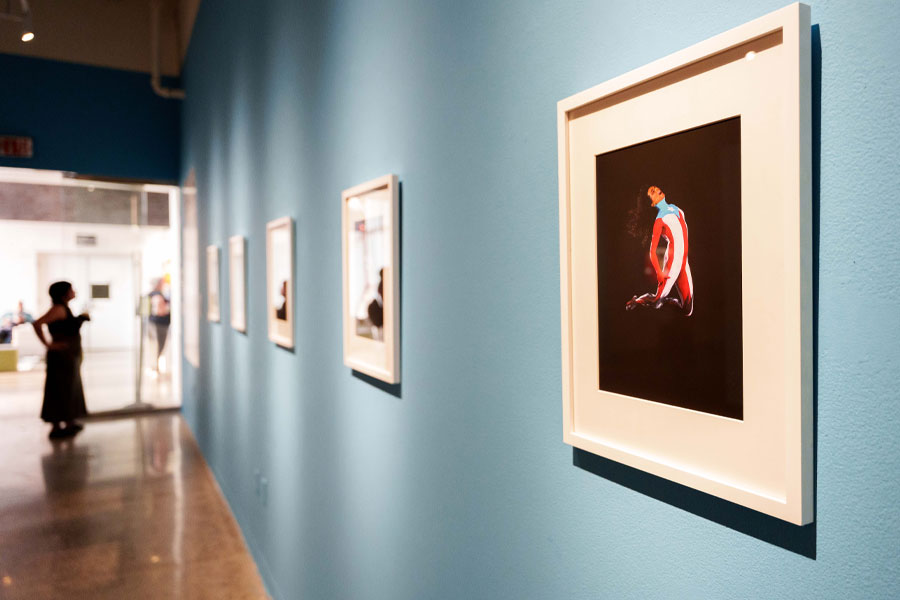
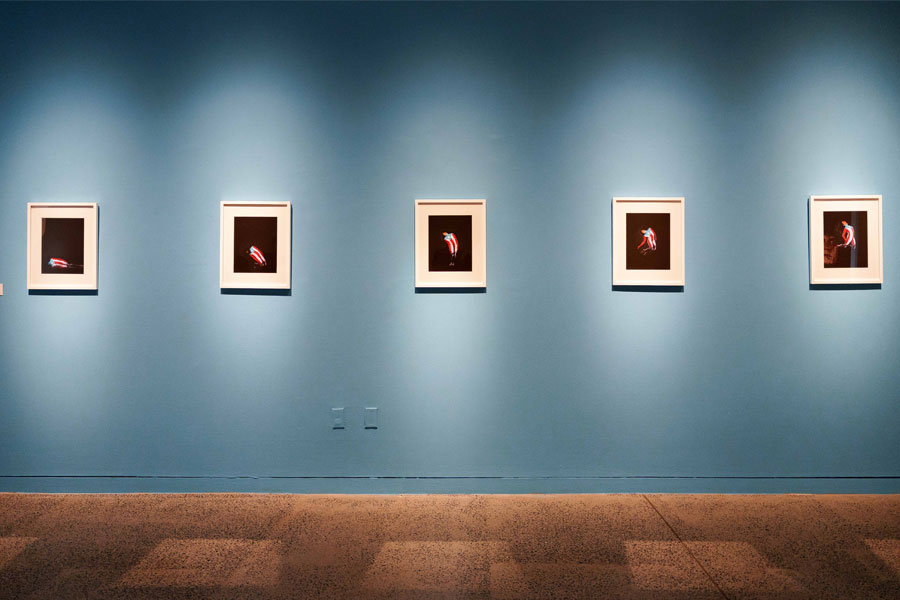
A central symbol in the exhibition is the Puerto Rican flag. In her photo series, La Guerrera, Rullán-Fantauzzi appears painted in the historical sky blue, red, and white of the flag, referencing the 1948 Gag Law, also known as Ley de la Mordaza, which criminalized the public display of the Puerto Rican flag. Through that symbol, the work connects the historical suppression of Puerto Rican identity to contemporary struggles around trans visibility and the right to exist fully.
Other works in Mi Isla y Yo expanded that conversation. In El Castigo de Dios, a short film, Rullán-Fantauzzi reflects on her experiences while critiquing capitalism, imperialism, racism, and transphobia through religious imagery and movement. The work was created before the beginning of her medical transition into womanhood, marking a significant moment in her personal and artistic journey.
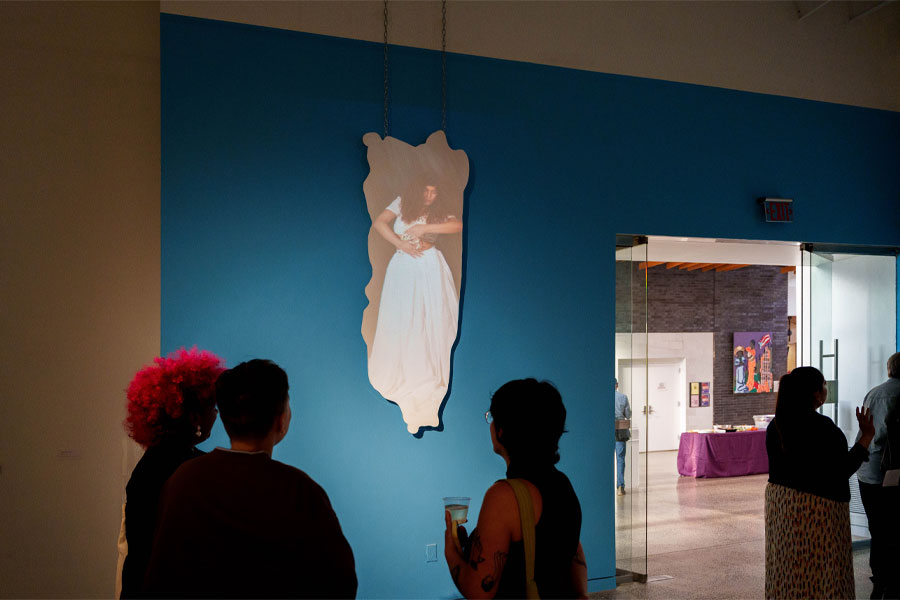
In Con Lágrimas de Coraje, a looping video of the artist performing in a white dress with a machete is projected onto a cutout of the island of Puerto Rico. The work turned the island itself into a surface where memory and struggle are held.
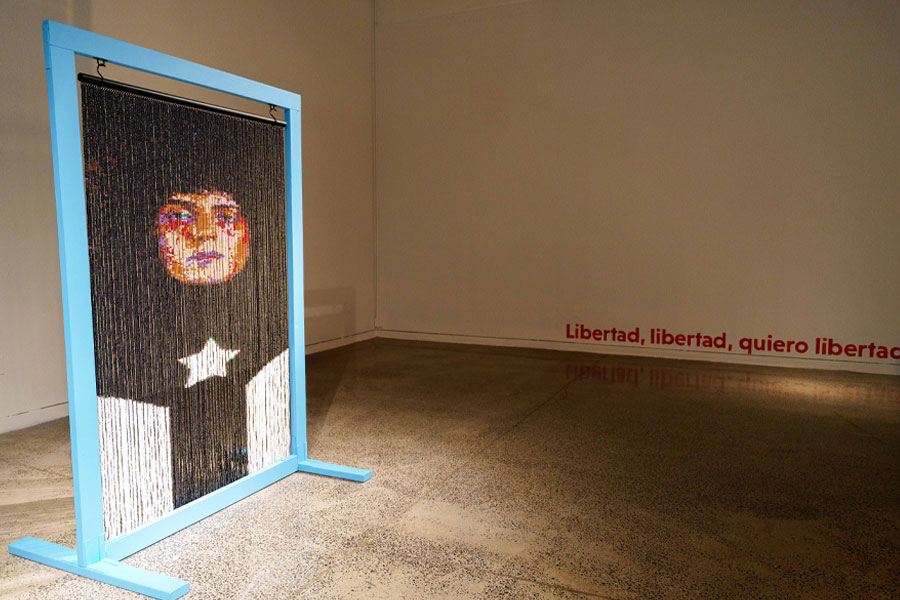
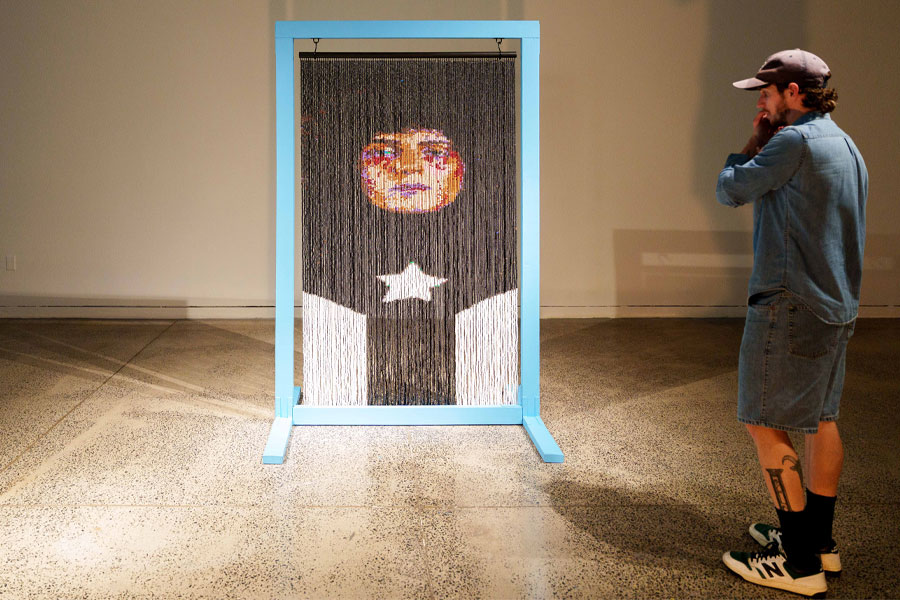
Another work, En las Manos de América, uses beads to reference a portrait from the La Guerrera photographs. The piece incorporates colors that evoke skin tone and the land of Puerto Rico, continuing the exhibition’s attention to how identity is shaped through both the body and place.
Together, the works show how heritage can live in many forms: in a flag, in movement, in the body, in religious memory, and in the land itself.
In that way, Mi Isla y Yo asks viewers to look at history not as something distant, but as something that continues to shape communities. It asks what happens when people are told their flag, their body, their language, or their way of being is too much. It also asks what becomes possible when those same people choose to live visibly anyway.
Across the gallery, Lopez’s Para Mi Niña offered another vision of freedom, one rooted in girlhood, family pride, and the women who make dreaming possible.
“We were asked what America’s 250th meant to us,” Lopez said. “When it came down to it, of course, I was going to put Puerto Rico in it somehow.”
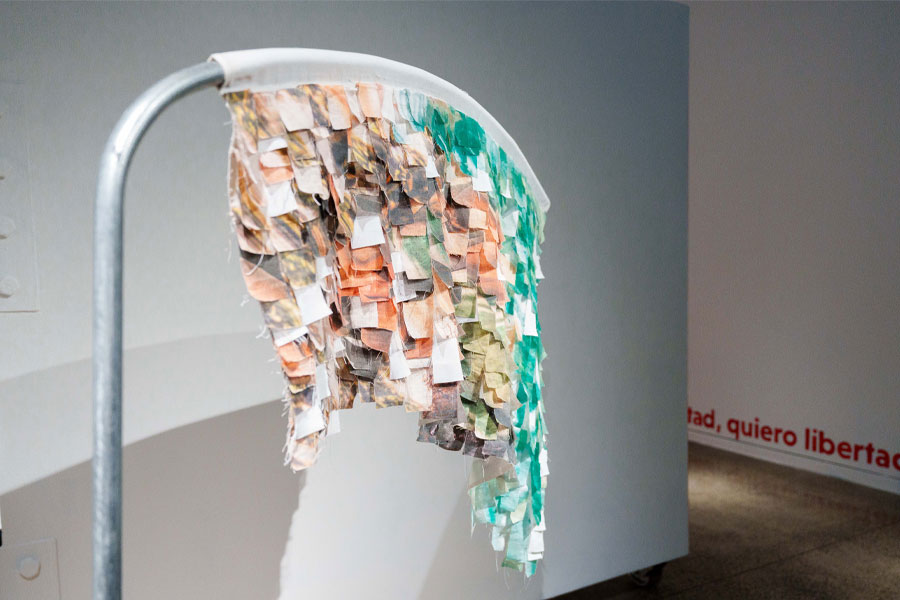
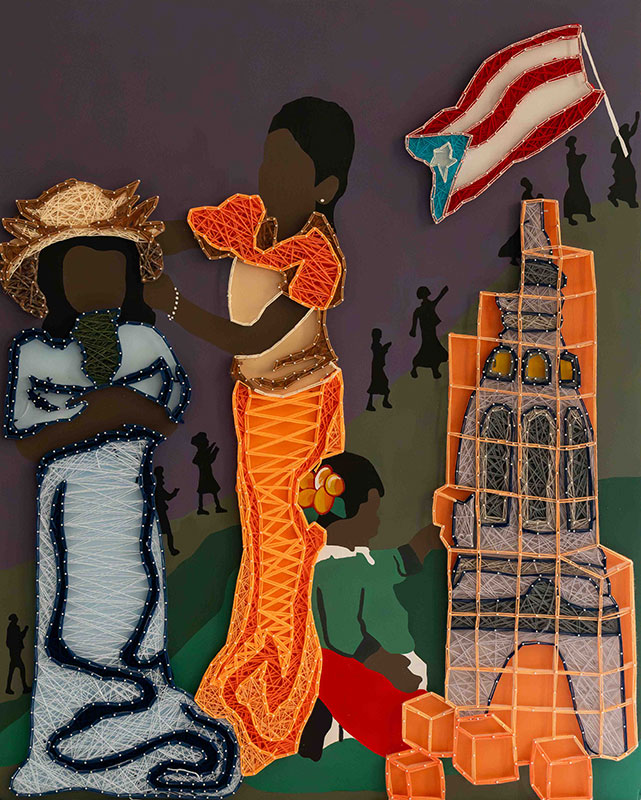
Her piece reflects the past, present, and future dreams of Black and Brown girls. It centers three young girls playing dress-up as their mothers, aunts, grandmothers, and matriarchs who worked during the World Trade Fair era. Wearing vibrant colors, flowers, prints, and dresses inspired by Puerto Rican culture and the spirit of Plena, the girls mirror the strength and pride of the women who came before them.
Through fiber, Lopez explores memory, labor, process, and material transformation. Her work uses textile practices to question where craft sits within contemporary art, while also honoring the communal knowledge carried through domestic work and shared making.
Lopez said the work was inspired in part by a real photograph connected to the Women’s Pavilion at Belmont Plateau during the World Trade Fair era.
“The two little girls are watching their mom as she plans the whole thing for them,” Lopez said. “As little girls, we just keep on dreaming, and that’s what it represents to me.”
That sense of dreaming is central to the work. Para Mi Niña honors the way older women clear a path for younger generations to imagine more for themselves. The youngest girl in the piece builds the Women’s Pavilion with blocks, symbolizing foundation and possibility.
Lopez’s work also speaks to the role of heritage inside the home. The pride a family carries, the symbols they protect, the music they play, the faith they hold, and the stories they repeat all become part of how children understand themselves.
“With parents who are die-hard Puerto Ricans and wear the cross on their neck every day, it is super important to keep your faith and hope alive,” Lopez said.
Seen together, Mi Isla y Yo and Para Mi Niña expand the meaning of freedom beyond a national anniversary. Freedom becomes the ability to name yourself, to remember where you come from, to honor the people who shaped you, and to imagine something different for those who come next.
Both artists ground their work in Puerto Rican identity, but neither treats heritage as something frozen in the past. Instead, heritage becomes active. It becomes a living force that shapes how people move through the world, how they resist erasure, and how they dream.
For Rullán-Fantauzzi, that dream is tied to sovereignty, bodily autonomy, and the right to exist without being controlled. For Lopez, it is tied to children watching the women before them build something, then learning that they too can lead and carry culture forward.
In a year when the country is preparing to celebrate 250 years of independence, these exhibitions ask a more personal and complicated question: what does freedom mean for communities whose histories include suppression and resistance? At Taller, the answer is not simple. It lives in the body, in the flag, in fabric, in childhood play, in faith, and in the memories passed from one generation to another. Together, Rullán-Fantauzzi and Lopez remind viewers that liberation is something people continue to dream of and create.