Inicio Blog Página 22

More single-parent homes, fewer supports: A Latino community challenge

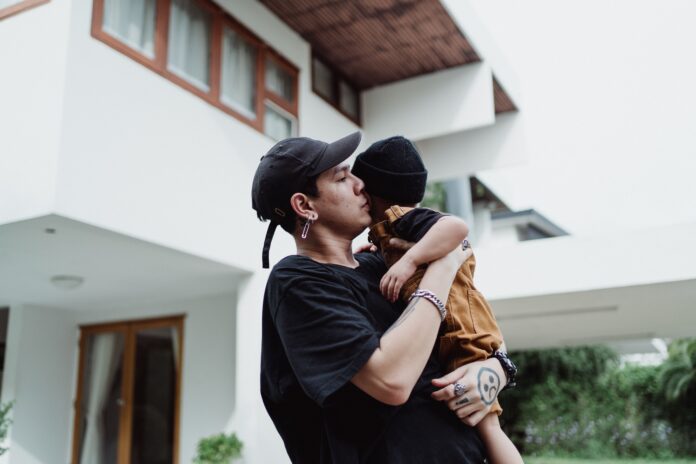
Children who grow up without a father present are more likely to drop out of school, have higher risk of living in poverty, and experience anxiety, depression, and behavioral issues. (Photo: Ilustrativa/Pexels)

In the United States, the structure of the family has changed significantly over recent decades. According to the U.S. Census Bureau, 1 in 4 children lives without a father in the home, one of the highest rates among industrialized countries. At the same time, the number of single fathers has increased by nearly 60% over the past 30 years, with more than 2.5 million households headed by men.

In total, nearly 11 million households with children are single-parent households, representing close to one-third of all families with children, according to the Pew Research Center.

These figures reflect a major shift with measurable consequences. Data from the U.S. Department of Health & Human Services and the National Fatherhood Initiative show that children who grow up without a father present are:

-More than twice as likely to drop out of school

-At higher risk of living in poverty

-More likely to experience anxiety, depression, and behavioral issues

-More likely to come into contact with the juvenile justice system

Research also shows that active father involvement is associated with better academic performance, higher self-esteem, and stronger social skills.

In Latino communities, including cities like Philadelphia, this trend has distinct dimensions. Factors such as migration, long work hours, and economic pressures directly affect fathers’ physical presence in the home. Even when emotional commitment exists, extended work schedules often limit time for daily parenting.

At the same time, the rise in single fathers reflects changing family roles. While they still represent a smaller share compared to single mothers, their growth signals increasing direct involvement of men in child-rearing.

However, these households face specific challenges. Studies indicate that single fathers often have less access to support networks and institutional resources, in part because many public policies have historically been designed with mothers in mind.

The data points to a central conclusion: a father’s active presence—whether inside or outside the home—directly influences children’s economic, educational, and emotional well-being. In Latino communities, where family remains a key source of social support, this reality has direct implications for child development and community stability.

La paternidad bajo presión en la comunidad latina

La participación activa del padre en la educación de los hijos está muy vinculada con mejor rendimiento escolar, mayor autoestima y habilidades sociales. (Foto: Ilustrativa/Pexels)

En Estados Unidos, la estructura familiar ha cambiado de forma significativa en las pasadas décadas. Según la Oficina del Censo, 1 de cada 4 niños vive sin padre en el hogar, una de las tasas más altas entre países industrializados. Paralelamente, el número de padres solteros ha aumentado cerca de un 60% en los últimos 30 años, superando los 2.5 millones de hogares encabezados por hombres. Cerca de 11 millones de hogares son monoparentales, lo que equivale a casi uno de cada tres hogares con niños, según datos del Pew Research Center. Ambas cifras son preocupantes porque las consecuencias son graves, en especial cuando el que falta es el padre.

Datos del U.S. Department of Health & Human Services y del National Fatherhood Initiative indican que los niños que crecen sin una figura paterna presente tienen:

-Más del doble de probabilidad de abandonar la escuela

-Mayor riesgo de vivir en pobreza

-Mayores niveles de ansiedad, depresión y problemas de conducta

-Mayor probabilidad de contacto con el sistema de justicia juvenil

La evidencia también muestra que la participación activa del padre está vinculada con mejor rendimiento académico, mayor autoestima y mejores habilidades sociales.

En comunidades latinas, incluyendo ciudades como Filadelfia, el tema adquiere características particulares. Factores como la migración, los turnos laborales extensos y las condiciones económicas influyen directamente en la presencia física de los padres en el hogar. Incluso cuando existe compromiso emocional, las largas jornadas de trabajo limitan el tiempo disponible para la crianza cotidiana.

Al mismo tiempo, el aumento de padres solteros refleja un ajuste en los roles familiares. Aunque representan una proporción menor frente a las madres solteras, su crecimiento marca una tendencia clara hacia una mayor participación directa de los hombres en la crianza.

Sin embargo, estos hogares enfrentan retos específicos. Distintos estudios señalan que los padres solteros tienen menor acceso a redes de apoyo y recursos institucionales, en gran parte porque muchas políticas públicas han estado históricamente orientadas hacia madres.

Los datos coinciden en un punto central: la presencia activa del padre —ya sea dentro o fuera del hogar— influye directamente en el bienestar económico, educativo y emocional de los hijos. En contextos comunitarios latinos, donde la familia es un elemento clave de apoyo social, esta realidad tiene implicaciones directas para el desarrollo de la niñez y la estabilidad comunitaria.

ICE Out: ¿cómo busca la ciudad proteger a su comunidad inmigrante?

Se muestran varios agentes del Servicio de Inmigración y Control de Aduanas de Estados Unidos (ICE). (Foto: EFEÁngel Colmenares)

En enero de 2026, la líder de la minoría Kendra Brooks y la concejala demócrata general Rue Landau anunciaron un paquete legislativo conjunto titulado «ICE OUT» para Filadelfia.

Esta legislación surgió a raíz de la oleada de agresiones perpetradas por agentes del ICE después de que Trump promulgará, en el verano de 2025, la ley de conciliación presupuestaria conocida como OBBBA (One, Big, Beautiful Bill Act). Una de las disposiciones de esta «gran y hermosa ley» consistía en intensificar las redadas del ICE en todo el país para detener a inmigrantes indocumentados, independientemente de su situación migratoria. La norma aumentó la financiación destinada a las autoridades de inmigración, asignando 100 millones de dólares en un solo año a lo que denominaron una campaña de «reclutamiento en tiempos de guerra».

Según informes de The Guardian, para finales de 2025, las muertes causadas por agentes del ICE habían aumentado casi un 200 %, alcanzando su cifra más alta en dos décadas.

Al menos 32 o 33 personas fallecieron bajo custodia del Servicio de Inmigración y Control de Aduanas (ICE) de EE. UU. en 2025, lo que convirtió a ese año en el más mortífero para la agencia en más de dos décadas.

Recientemente, en la primavera de 2026, el Congreso avanzó en la asignación de más fondos para el ICE, estableciendo una financiación anual de unos 70 millones de dólares hasta 2029, cifra que se suma a los 170 millones ya asignados el año anterior.

Al presentar el proyecto de ley, la concejala Kendra Brooks expresó su preocupación por el temor creciente que los agentes del ICE han generado en las comunidades de Filadelfia. Dado que la ciudad es conocida como la «Ciudad del Amor Fraternal», esta iniciativa busca reforzar las políticas de Filadelfia como ciudad acogedora. En 2001, el alcalde John Street implementó las primeras políticas importantes para garantizar que los funcionarios municipales y policiales mantuvieran confidencial la información de los inmigrantes. En 2014, Michael Nutter firmó una orden ejecutiva que impedía al ICE ingresar a lugares designados como santuarios; a raíz de esto, el término «Ciudad Santuario» comenzó a utilizarse ampliamente. En 2016, el alcalde Jim Kenney respaldó dicha orden y utilizó el término para describir a la ciudad durante su administración.

Ahora, con el segundo mandato de Trump en el cargo, esta legislación contrarrestar la violencia que el ICE ha ejercido en la ciudad.

Los detalles del paquete legislativo «ICE OUT» incluyen:

-Prohíbe que los agentes del ICE y otros agentes del orden ocultan sus identidades con máscaras o vehículos sin distintivos, y exige que los oficiales muestran sus placas de identificación.

-Eleva a rango de ley las órdenes ejecutivas que prohíben los acuerdos 287(g), los cuales permiten a la policía local actuar como agentes del ICE.

-Prohíbe que las agencias municipales colaboren con el ICE.

-Impide que las agencias municipales recopilen información sobre ciudadanía o estatus migratorio, o que compartan datos personales con el ICE.

-Prohíbe la discriminación o la negación de servicios por motivos de ciudadanía o estatus migratorio por parte del Ayuntamiento, empleadores, proveedores de vivienda o empresas privadas.

-Prohíbe que el ICE utilice propiedades municipales como puntos de partida para redadas.

-Impide que los empleados municipales permitan al ICE acceder a espacios públicos —como bibliotecas, refugios, centros de salud y centros recreativos— sin una orden judicial.

-Inspirado en leyes exitosas de ciudades y estados de todo el país, el paquete «ICE OUT» consagra las políticas existentes en la legislación y establece límites claros sobre cómo puede operar el ICE dentro de Filadelfia.

En abril de 2026, el proyecto de ley fue aprobado con el voto favorable del Concejo Municipal.

El pasado 15 de junio, HIAS Pennsylvania organizó un seminario web con la líder de la minoría, Kendra Brooks, y la concejala demócrata general, Rue Landau, para explicar mejor el proyecto de ley y responder a las preguntas del público.

¿Qué dice? ¿Qué hace y cómo hace que nuestra comunidad sea más segura?

Kendra Brooks comenzó explicando los motivos y el proceso de creación de esta legislación. A raíz de una serie de sucesos ocurridos en Filadelfia —donde personas sin identificar o individuos que se hacían pasar por agentes del ICE alarmaron a las comunidades entre 2025 y 2026— surgió una gran preocupación que requería medidas para detener o restringir estas acciones y así evitar mayores daños. “Todo comenzó con una serie de capacitaciones llamadas «ICE Out Trainings», en las que enseñamos a los miembros de la comunidad cómo brindar apoyo en caso de que agentes del ICE se presentarán en sus hogares, negocios o lugares de trabajo”, respondió ella.

Poco a poco, la iniciativa se convirtió en una propuesta legislativa, gracias a la colaboración de aliados en distintos puntos de Estados Unidos —como Minnesota y California— donde ya se había aprobado una legislación de este tipo.

¿Cuáles son los cambios más significativos que introduce esta legislación y por qué son importantes?

El aspecto central de la legislación se refiere al ICE: prohíbe a la ciudad establecer acuerdos de colaboración con dicha agencia, como el acuerdo 287(g).

Un acuerdo 287(g) es una colaboración formal, establecida bajo la Sección 287(g) de la Ley de Inmigración y Nacionalidad, que delega la autoridad federal de control migratorio a agentes del orden estatales y locales. El programa permite que agentes designados y capacitados por el ICE realicen funciones relacionadas con la inmigración, tales como interrogar a personas sobre su estatus migratorio y ejecutar órdenes federales de detención.

Esta legislación impide que esto suceda. Prohíbe a la ciudad recopilar datos migratorios y compartirlos con ICE. Impide que ICE ingrese a áreas propiedad de la ciudad o a espacios públicos y refuerza las disposiciones contra la discriminación para garantizar que todos tengan igual acceso a los servicios municipales.

Asimismo, evita que los agentes del ICE operan sin estar identificados y sin llevar el rostro descubierto, lo que facilita la identificación del agente en caso de que se produzca una redada.

«Estas personas actúan como justicieros, deteniendo a gente mientras llevan el rostro cubierto y sin identificarse. La mayoría de las personas en la calle no distinguen entre la Policía de Filadelfia, la Policía Estatal, ICE o la policía de SEPTA; simplemente saben que son policías», declaró Rue Landau durante la reunión. «Esto no es bueno para los policías; creo que esta fue una iniciativa excelente y, como dijo la concejala Brooks, sumamente importante para la comunidad».

¿Cómo contribuyeron los defensores de la comunidad y los residentes inmigrantes a dar forma al paquete legislativo final?

“En realidad, participaron desde el principio. Creo que una de las características de la forma de trabajar de nuestra oficina es que, en cualquier proyecto de ley que tramitamos en el Concejo, colaboramos directamente con los organizadores activistas y los defensores para asegurarnos de que sea lo que la gente quiere y necesita.”, respondió Brooks. “También participan cuando llega el momento de negociar, por así decirlo, el resultado final del paquete legislativo”.

Organizaciones como PIC (Pennsylvania Immigrant Coalition) y Juntos, por citar algunas, aportaron su perspectiva a esta legislación, asegurándose de que garantizara la seguridad de la comunidad tal como debió haber sido desde 2001, año en que la ciudad fue declarada “ciudad santuario”.

Cathryn Miller-Wilson planteó las preguntas que todos se hacían: ¿Ayudará realmente esta legislación a la comunidad cuando ICE sigue representando una amenaza para la sociedad? ¿Qué puede hacer la comunidad si, de camino al trabajo, se encuentra con agentes del ICE?

“Creo que ahí es donde entró en juego la capacitación. Considero que la preparación —que va de la mano con la legislación— es lo que, según nos dicen los miembros de la comunidad, les hace sentirse seguros. Entonces, ¿qué hacer si estás en el trabajo o en casa y el ICE llama a tu puerta?”, señaló Kendra Brooks. “No dejarlos entrar. Son muchos los pasos distintos que formaban parte de la capacitación que iniciamos antes incluso de la legislación. Así que creo que el aspecto de la seguridad se logró gracias a que la gente supo qué hacer, y el respaldo legal está ahí para protegerlos si algo sale mal. Uno de los argumentos en contra que escuchamos fue que esto no había sucedido aquí en Filadelfia. Nuestra respuesta fue: «Aún no»; no vamos a esperar a que ocurra algo para establecer la legislación”.

El paquete legislativo “ICE Out” de Filadelfia entrará en vigor el 6 de julio de 2026. Dado que Filadelfia será una de las sedes de la Copa Mundial de la FIFA, esta legislación alivia el temor de la mayoría de los miembros de la comunidad inmigrante mientras están listos para celebrar a sus países durante el torneo y vivir su día a día sin miedo a que un grupo de personas en mascaradas venga a aterrorizar la ciudad o a que ICE pueda entrar en cualquier lugar sin restricciones.

Para obtener información completa sobre este proyecto de ley y el seminario web, puede visitar https://hiaspa.org


ICE OUT: A legislation to prevent ICE attacks towards the community?

(Foto: EFE/ERIK S. LESSER/Archivo)

This past January 2026 Minority Leader Kendra Brooks and Democratic Councilmember At-Large Rue Landau announced a collaborative package of legislation titled ICE OUT for Philadelphia. 

The legislation was brought up after the uprising attacks ICE authorities have caused after Trump signed the OBBBA (One, Big, Beautiful Bill Act) reconciliation bill into law in the summer of 2025. Part of the Big, Beautiful Bill, to increase ICE raids nationwide to detain undocumented immigrants no matter the status. This bill increased the funding towards Immigration authorities making it $100 million in one year to what they have referred to as a «wartime recruitment» campaign.

It’s been reported by The Guardian that by the end of 2025, death by ICE agents increased by nearly 200%, reaching a two-decade high.

At least 32 to 33 individuals died in the U.S. Immigration and Customs Enforcement (ICE) custody in 2025, making it the agency’s deadliest year in more than two decades.

Recently this spring 2026 Congress moved forward in providing more funding to Immigration Customs Authority making it about $70 million in yearly funding till up to 2029. On top of the $170 million already provided last year. 

Councilmember Kendra Brooks highlighted community concerns about the climate of fear created by ICE enforcement while introducing the bill.
In 2001, Mayor John Street implemented the first major measures to ensure that city agencies, including police, kept immigration-related information confidential. In 2014, Mayor Michael Nutter signed an executive order restricting ICE from operating in designated protected spaces, a move that helped popularize the term “sanctuary city.” In 2016, Mayor Jim Kenney reaffirmed and expanded this approach, openly embracing the designation during his administration.
Now, as Donald Trump begins a second term in office, this legislation seeks to reinforce those protections and respond to growing concerns over ICE enforcement in the city.

Details of the ICE OUT Package include:

  • Prohibits ICE and other law enforcement agents from concealing their identities with face masks or unmarked vehicles and requires officers to display badges
  • Codifies executive orders banning 287(g) agreements, which allow local police to act as ICE agents
  • Prohibits city agencies from collaborating with ICE
  • Prevents city agencies from collecting citizenship or immigration status information or sharing personal data with ICE
  • Prohibits discrimination or denial of services based on citizenship or immigration status by the City, employers, housing providers, or private businesses.
  • Prohibits ICE from using city-owned properties as staging locations for raids.
  • Bars city employees from granting ICE access to city-owned spaces—such as libraries, shelters, health centers, and recreation centers—without a judicial warrant.

Modeled on successful legislation from cities and states across the country, the ICE OUT package enshrines existing policies into law and establishes clear limits on how ICE can operate within Philadelphia.

As of April 2026, the bill was passed with the positive vote of the City Councils.

On the evening of this Monday June 15th HIAS Pennsylvania had the opportunity to host a webinar with both Minority Leader Kendra Brooks and Democratic Councilmember At-Large Rue Landau to explain better about the bill and answer any questions the public had.

What does it say? What does it do, and how does it make our community safer?

Kendra Brooks started off with the reason why and how this legislation was created. As the series of events that happened here in Philadelphia with Unmask ICE agents, or people posing as ICE agents terrorizing communities in 2025/2026, it created a big concern that needed to either be stopped or restricted to prevent more harm.

“So, it actually started off with a series of training called ICE Out Trainings where we train people in the community how to be supportive in any event that ICE showed up at their door, their business, or a workplace.” She responded.

Little by little it formed into a legislation using the help of partners located in different parts of the United States like Minnesota and California who had this legislation passed in the past.

What are the most significant changes made by the legislation, and why do they matter?

The core of the legislation is ICE, prohibiting the city from entering into any cooperation agreements with ICE, like a 287 G agreement.

A 287(g) agreement is a formal partnership under Section 287(g) of the Immigration and Nationality Act that delegates federal immigration enforcement authority to state and local law enforcement officers. The program allows designated, ICE-trained officers to perform immigration functions, such as interrogating individuals about their status and executing federal detainers.

This legislation prevents it from happening. It prohibits the city from collecting immigration data and sharing it with ICE. It stops ICE from coming into Philadelphia city-owned areas, public property and it also reinforces non-discrimination provisions so that everybody can have equal access to city services.

It also prevents anyone who is an ICE agent from being identified and not masked up. Making it easier to identify the agent in case a raid does happen.

“These people are running around like vigilantes, picking people up, masked up and unidentified. Most people on the street don’t know the difference between Philadelphia Police, State Police, ICE, SEPTA, they just know it’s the cops.” states Rue Landau during the meeting. “This is not good for the cops, I think that, this was a very, very good piece, and as council member Brooks said, extremely important for the community”

How did community advocates and immigrant residents help shape the final package?

“They actually had been involved from the beginning. I think one of the things about how our office moved is that any piece of legislation that we move through council, we worked directly with the activist organizers and advocates to make sure that it’s what the people want and need.” Kendra Brooks responded. “They’re also involved when it’s time to kind of negotiate, you know, the final outcome of the package.”

With organizations such as PIC (Pennsylvania Immigrant Coalition), Juntos, to name a few, provided insight in this legislation making sure it created the security of safety for the community as it should have been since 2001 when the City was named as a sanctuary city.

Cathryn Miller-Wilson was able to ask the questions everyone was thinking. Will this legislation help the community when ICE is still a threat to society? Is there something the community can do if they’re on their way to work and are encountered by ICE officials?

“I think that’s where the training came in,” said Kendra Brooks. “Preparedness, combined with legislation, is what we’ve consistently heard from community members as essential to feeling safe—knowing what to do if ICE shows up at your home or workplace. Do not let them in. That’s one of the key steps emphasized in the trainings we launched ahead of this legislation. Safety comes from both: people knowing how to respond and having laws in place to protect them when something goes wrong. One argument we heard was that incidents like these haven’t happened in Philadelphia. Our response was clear: we are not going to wait for something to happen before putting this legislation in place.”

Philadelphia’s «ICE Out» legislation package takes effect on July 6, 2026. As Philadelphia will be one of the hosts for the FIFA world cup, this legislation eases the fear most immigrant community members feared as they prepared to celebrate their countries during the world cup, and be able to live an everyday life without the fear that a group of masked people will come and terrorize the city or that ICE will be able to enter anywhere without restrictions.

For the full information of this bill and webinar you can visit https://hiaspa.org
Dish It Up: Reflecting 50-year support for survivors of domestic abuse

Joanna Otero-Cruz, CEO of Women Against Abuse (WAA), at Dish It Up, marking 50 years of support for survivors of domestic abuse. (Photo: Courtesy)

In 1976—just five years after major advancements in women’s rights, including Phillips v. Martin Marietta Corporation, which outlawed employers refusing to hire women with preschool-age children, and Reed v. Reed, which struck down laws treating men and women differently—Women Against Abuse began its work. What started as a part-time hotline in a Germantown Young Women’s Christian Association (YWCA) has grown into a comprehensive model for supporting survivors of domestic abuse.

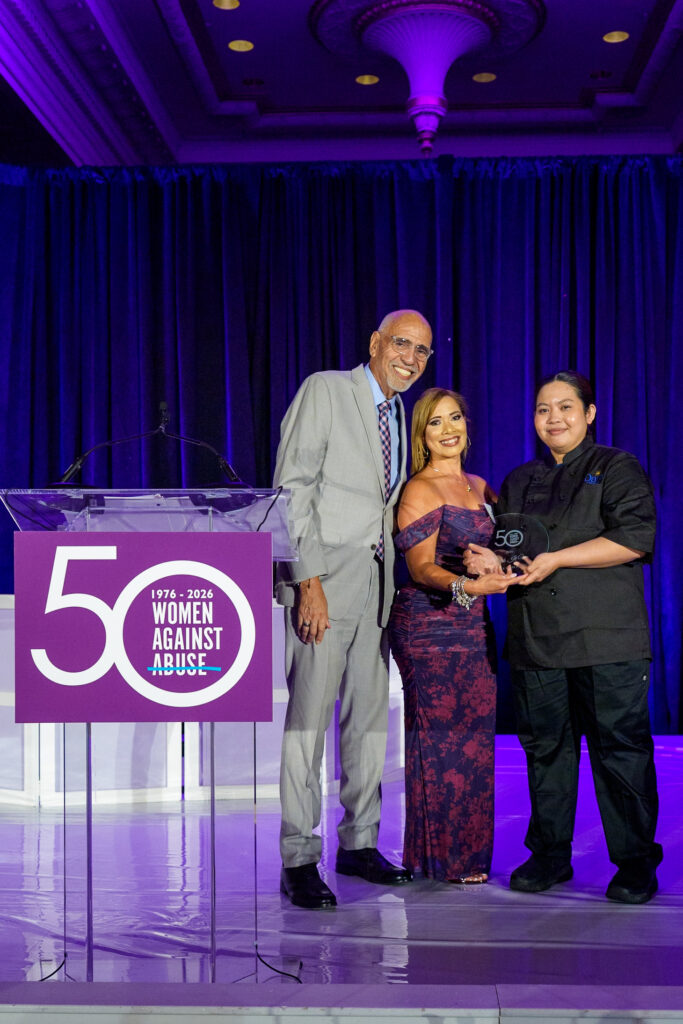
Rafel Toro, director nacional de Relaciones Públicas en Goya Foods, y Joanna Otero-Cruz presentan a Wichittra Phanseng del restaurante Dara Thai el Premio Purple Dish. (Foto: Crédito/Jose Rodriguez)

Within a year, the organization opened its first emergency shelter. The three-bedroom, one-bath rowhome quickly filled with 12 families seeking safety. By 1978, Women Against Abuse expanded its services by launching a Legal Center to help survivors navigate the justice system and secure long-term safety.

These early efforts continue to shape its mission. Today, the organization operates two 100-bed emergency safe havens and Sojourner House, the region’s first transitional housing program. It also runs a 24-hour citywide hotline, provides education on intimate partner violence, and maintains its Legal Center, which represented 1,401 individuals in fiscal year 2025.

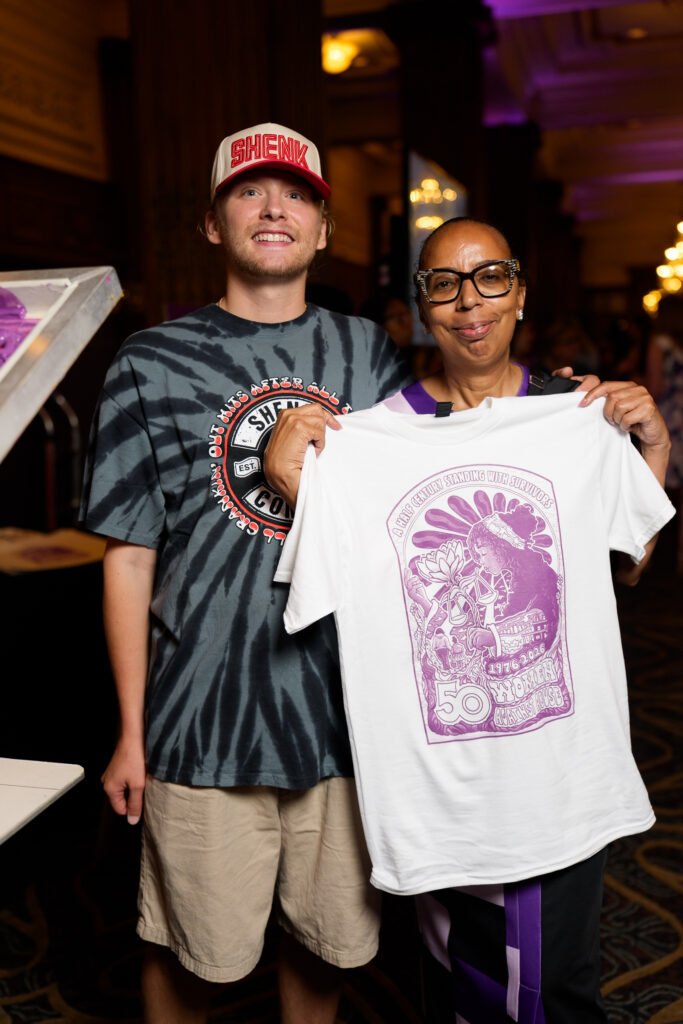
Veda Brown, Coordinadora de Participación Comunitaria del Salvation Army Philadelphia KROC Center, sostiene una camiseta conmemorativa del 50.º aniversario de Women Against Abuse, serigrafiada en el lugar durante Dish It Up. (Foto: Crédito/Jose Rodriguez)

This year’s Dish It Up event, held June 11, was both the organization’s annual fundraiser and a celebration of its 50-year impact. When asked about the future, President and Executive Director Joanna Otero-Cruz, emphasized adaptability and advocacy: “Remain present. There is still much advocacy to do. We must continue to evolve with the needs of survivors through service, advocacy, and the legislative changes that are necessary.”

Los asistentes a Dish It Up disfrutan de dulces y saladas preparadas por las chefs más talentosas de Filadelfia, junto con un bar premium abierto. (Foto: Crédito/Jose Rodriguez)

While Dish It Up is known for its culinary highlights and lively atmosphere, the event remains centered on the urgent needs of survivors. Donations have a direct impact: $60 funds for a case management session, $250 supports first responder training, and $1,000 provides a family with one week of safe shelter.

This year’s event raised a record-breaking $300,000. Goya received the 2026 Advocate of the Year Award for its longstanding financial support and food assistance.

Los asistentes a Dish It Up aprenden sobre los 50 años de impacto en el puesto informativo de Women Against Abuse. (Foto: Crédito/Karla Lara)

Through every service and partnership, Women Against Abuse delivers a powerful message: survivors are not alone. Reflecting on its history, Joanna noted, “Resilience is built day by day, generation by generation.” Events like Dish It Up highlight that enduring commitment as the organization continues to evolve and innovate.

Dish It Up: 50 años de apoyo a sobrevivientes de violencia doméstica

Joanna Otero-Cruz, CEO of Women Against Abuse (WAA), at Dish It Up, marking 50 years of support for survivors of domestic abuse. (Photo: Courtesy)

Dish It Up — una noche en apoyo a sobrevivientes de violencia doméstica — regresó al Crystal Tea Room con una profunda reflexión sobre los últimos 50 años de impacto.

En 1976 — apenas cinco años después de avances históricos en los derechos de las mujeres, incluyendo Phillips v. Martin Marietta Corporation, que prohibió la práctica de que empleadores privados se negaran a contratar a mujeres con hijos en edad preescolar, y Reed v. Reed, que anuló leyes que trataban de manera diferente a hombres y mujeres —Women Against Abuse comenzó su labor vital. Lo que empezó hace 50 años como una línea telefónica de ayuda a medio tiempo, operando desde una Asociación Cristiana de Mujeres Jóvenes (YWCA) en Germantown, se ha convertido desde entonces en un modelo integral para organizaciones que apoyan a sobrevivientes de violencia doméstica.

Rafel Toro, director nacional de Relaciones Públicas en Goya Foods, y Joanna Otero-Cruz presentan a Wichittra Phanseng del restaurante Dara Thai el Premio Purple Dish. (Foto: Crédito/Jose Rodriguez)

Solo un año después de su fundación, Women Against Abuse abrió su primer refugio de emergencia. La casa adosada, de tres habitaciones y un baño, se llenó de la noche a la mañana con 12 familias que buscaban seguridad frente a la violencia doméstica. Para 1978, la organización amplió su labor más allá de ofrecer una línea de ayuda y refugio de emergencia, abriendo su Centro Legal para ayudar a los sobrevivientes a navegar el sistema judicial y garantizar su seguridad a largo plazo.

Veda Brown, Coordinadora de Participación Comunitaria del Salvation Army Philadelphia KROC Center, sostiene una camiseta conmemorativa del 50.º aniversario de Women Against Abuse, serigrafiada en el lugar durante Dish It Up. (Foto: Crédito/Jose Rodriguez)

Estas primeras acciones e innovaciones continúan dando forma a la misión de la organización hoy en día. Women Against Abuse opera ahora dos refugios de emergencia con capacidad para 100 personas cada uno y Sojourner House, el primer programa de vivienda transitoria de la región. Otros servicios incluyen la operación de una línea de ayuda telefónica disponible las 24 horas en toda la ciudad, educación sobre la violencia de pareja íntima y su Centro Legal, que proporcionó representación legal a 1,401 personas en el año fiscal 2025.

El evento Dish It Up de este año, que tuvo lugar el 11 de junio, no fue solo la recaudación de fondos anual de la organización, sino también una celebración de todo lo que Women Against Abuse ha logrado durante el pasado medio siglo.

Los asistentes a Dish It Up disfrutan de dulces y saladas preparadas por las chefs más talentosas de Filadelfia, junto con un bar premium abierto. (Foto: Crédito/Jose Rodriguez)

Al ser consultada sobre cómo serán los próximos 50 años para la organización, la presidenta y directora ejecutiva Joanna Otero-Cruz enfatizó la importancia de la adaptabilidad y la defensa: “Debemos permanecer presentes. Aún queda mucha defensa por hacer. Debemos seguir evolucionando con las necesidades de los sobrevivientes a través del servicio, la incidencia y los cambios legislativos necesarios”.

Aunque el evento Dish It Up es conocido por su brillo, glamour y lo mejor de la escena culinaria de Filadelfia, la organización se mantiene enfocada en el serio trabajo necesario para apoyar a los sobrevivientes. La velada resalta la urgente necesidad de servicios, recursos y acción legislativa. Las donaciones tienen un impacto directo: $60 financian una sesión de gestión de casos, $250 apoyan la capacitación de primeros respondedores y $1,000 proporcionan a una familia una semana de alojamiento seguro.

Los asistentes a Dish It Up aprenden sobre los 50 años de impacto en el puesto informativo de Women Against Abuse. (Foto: Crédito/Karla Lara)

Los esfuerzos de recaudación de fondos de este año alcanzaron una cifra récord de $300,000. El Premio Defensor del Año 2026 fue otorgado a Goya por su apoyo continuo a Women Against Abuse, incluyendo contribuciones financieras y asistencia alimentaria.

A través del trabajo de Women Against Abuse, cada dólar recaudado y cada alianza formada envían un mensaje claro a las personas que experimentan violencia doméstica: no estás sola.

La resiliencia construida durante los últimos 50 años no ocurrió de la noche a la mañana. Como señaló Joanna Otero-Cruz, “La resiliencia se construye día a día, generación tras generación.” Una noche como Dish It Up es un poderoso recordatorio de ese compromiso continuo, mientras la organización sigue evolucionando e innovando.

Funding the front lines: Philadelphia’s strategy to reduce violence

Crime Scene Unit officers and detectives work the scene of an overnight shooting in Philadelphia, early Monday, July 7, 2025. (Photo: AP/Alejandro A. Alvarez/The Inquirer)

Parker Administration awards 2026 anti-violence grants as Philadelphia homicides continue to fall.

As Philadelphia observes Gun Violence Awareness Month, Mayor Cherelle L. Parker and the Office of Public Safety announced on June 16 the first 47 neighborhood organizations selected for the city’s Targeted Community Investment Grant (TCIG) 2026 anti-violence grants. Parker said the initiative is personal, recalling her experience as the child of a teenage mother and an uninvolved father, raised by her grandparents. “Where are the supports for people like the young Cherelle Parker and those who weren’t products of that perfect familial environment?” she asked. “It was organizations like yours that were working on the ground for boys and girls like me.” 

The funding was established to strengthen community-based organizations that intervene in conflict, support families living with grief, and create opportunities for youth. Chief Public Safety Director Adam Geer said the city’s approach to violence prevention has become “more sophisticated,” “more intentional,” and “more strategic.” For many of the organizations selected, the work is personal. These are groups that know the names behind the statistics.

One of these people is Roz Pichardo, founder of Operation Save Our City. “This TCIG grant will help the youth of my Kensington community gain skills for a future career as a responder, and that can be a segue to the medical field or a career as an EMT, nurse, firefighter, or social worker,” Pichardo said after receiving her third TCIG grant.  In a community marred by addiction, poverty, and loss, Pichardo has kept the Sunshine House open on Kensington Avenue, where people in the area come for food, relief from the heat, and help during a crisis. Kensington Avenue is home to worry and survival; in contrast, the Sunshine House is a place where people are seen, heard, and treated with dignity. Young people are redirected through summer programs, and everyone can find a door that is still open.

The announcement came as Philadelphia continues to see a steep decline in homicides. As of June 15, the Philadelphia Police Department had recorded 67 homicides in 2026, down 33 percent from the same point last year. The city ended in 2025 with 222 homicides, its lowest total since 1966 and far below the record 562 killings recorded in 2021. That decline has come during a period of increased city investment in anti-violence work. What began around 2014 as smaller block-level seed funding grew sharply during the pandemic, when shootings and homicides rose across the city.

Under the Kenney administration, roughly $22 million was directed toward grassroots violence-prevention efforts. Later concerns about oversight and management helped push the city to rebuild the program into the current vetted, tiered grant system overseen by the Office of Public Safety. The larger grant tiers will open later this year. The Community Capacity Grant, available by invitation only, will award amounts of $50,000 to $100,000. The Community Expansion Grant will offer awards from $100,000 to $1 million for more established organizations focused on trauma healing, mentorship, and violence prevention. The Office of Public Safety will post additional information on its grants page. Organizations with questions about eligibility may contact the office at ops@phila.gov.

Incarnacion Marino of Hunting Park, whose son was a victim of gun violence in 2015, said the grants represent hope for families. “We all deserve to walk on safe streets,” Marino said. “Although it is too late to save my son and many others, these programs can help save someone else’s child, so that the family will never have to know the excruciating pain and trauma that lasts for generations.”

Sueños en pausa, amor en acción: la historia del padre soltero Félix Moulier

Félix Moulier y su hija (Foto: Cortesía/Félix Moulier)

Corría el año 2023 cuando Félix Moulier recibió el premio a “El Mejor de Camden” (su ciudad natal). No pudo asistir a recogerlo y no pudo escuchar en directo los aplausos del público.

Ese día se encontraba recibiendo capacitación y clases de liderazgo. Porque para Félix, su sueño siempre ha sido servir a su ciudad y a sus habitantes como alcalde y para ello se ha preparado y continúa haciéndolo.

“Amo a Camden y Camden me ama a mí”, confesaba en 2018 para el blog de Stephen Danley, profesor de Rutgers–Camden University. Algo que se puede comprobar siguiendo su trayectoria comunitaria desde su adolescencia: siempre ha estado involucrado con organizaciones locales, desde el Salvation Army Kroc Center hasta el Desfile de San Juan Bautista, pasando por la Junta de Colaboración del Concejo de Distrito de Camden (“District Council Collaborative Board”) o la Asociación de Puertorriqueños en Marcha, por mencionar algunas.

“Tengo un propósito, que es lograr cambios y empoderar a las personas a diario”.

Pero si hay algo que Félix ama más que a su ciudad natal o llegar a ser su alcalde, es a su hija.

Ella ocupa el centro de su universo y como padre, se siente bendecido.

“Para mí, ser papá es la mayor bendición, ya que me permite ofrecer una calidad de vida que yo no tuve durante mi infancia”.

Hasta ahí la historia de este orgulloso puertorriqueño podría coincidir con la de otros muchos padres que aman a sus hijos infinitamente. Pero en su caso, hay algo que lo hace aún más especial: por circunstancias de la vida, Félix afrontó la paternidad solo.

Para él, “ser padre soltero conlleva muchos desafíos adicionales; por ejemplo, hasta hace poco enfrentaba una gran presión económica y, además, la sensación constante de no estar haciendo lo suficiente como padre”. 

No solo eso. Ser padre soltero le ha conllevado tener que renunciar por el momento a su gran sueño.

“He pospuesto mi sueño de ocupar un cargo público como alcalde de mi ciudad natal, aunque no he renunciado a él por completo”.

Para Félix, por encima de los sueños “están los valores”, y necesita ese tiempo para enseñárselos a su hija.

Todos sus sacrificios y renuncias se le olvidan al verla y comprobar “la expresión de seguridad que ella muestra al saber que nunca la dejaré sola, el amor incondicional que me brinda y la felicidad que manifiesta cuando está rodeada de familiares y amigos”.

Félix reconoce que “los sueños pueden hacerse realidad, pero no de la forma en que los imaginabas”.

A él, ser padre le ha ayudado como persona. “Ser padre me ha ayudado a crecer, al enseñarme que es aceptable que un hombre sea sensible. Durante mi crianza, eso se consideraba inaceptable tanto para las mujeres como, especialmente, para los hombres de mi familia”.

Su cansancio no le impide después de una jornada agotadora de trabajo, dedicarle tiempo a su niña y a apoyarla en aquellas cosas con las que la pequeña disfruta. 

No obstante, para poder equilibrar sus actividades con sus responsabilidades como padre, Félix ha tenido que dejar de lado o renunciar “a participar en juntas o comités cívicos para centrarme principalmente en mi hija”.

También recuerda a otros padres en su misma situación que no tienen que hacerlo solos.

“Por favor, construye una red de apoyo o comunidad que te ayude y te permita disponer de tiempo para ti mismo, algo que es muy necesario. Ser padre o madre es un desafío; es necesario encontrar tiempo para liberar el estrés y desconectarse de los altos niveles de sobreestimulación”.

Cada día, y especialmente cuando las cosas se ponen difíciles Félix se recuerda a sí mismo “la bendición de tener una hija, considerando que hay otras personas que no pueden tener hijos”.

Para Félix, la paternidad ha supuesto también la oportunidad de hacer las cosas y ser para su hija como su propio padre no pudo ser para él.

Y lo ha cumplido. ¡Felicidades a todos los papás! Más allá de los regalos, en el Día del Padre honramos la paternidad y reconocemos el esfuerzo, amor, dedicación y papel fundamental de los padres, abuelos y figuras paternas en la familia y la sociedad.

Fue precisamente una hija agradecida, quien creó en Estados Unidos esta festividad para homenajear a su padre, un veterano de guerra que la crio sola junto a sus cinco hermanos tras el fallecimiento de su madre.

Aprovechemos la oportunidad de esta fecha para reflexionar sobre la importancia de la paternidad responsable, y la importancia de dedicar tiempo de calidad que fomente el vínculo afectivo entre padres e hijos.

Dreams on hold, love in action: Single parent Félix Moulier’s story

Félix Moulier and his daughter. (Photo: Courtesy/Félix Moulier)

“I love Camden, and Camden loves me,” he shared in 2018 on Stephen Danley’s blog, a professor at Rutgers–Camden University. This is evident in his community involvement since adolescence: he has always been active in local organizations, from the Salvation Army Kroc Center to the San Juan Bautista Parade, as well as the District Council Collaborative Board of Camden and the Puerto Rican organization, Asociación Puertorriqueños en Marcha (APM) among others.

“I have a purpose, which is to create change and empower people every day.”

But if there is something Félix loves more than his hometown—or even becoming its mayor—it is his daughter.

She is at the center of his world, and as a father, he feels truly blessed.

“For me, being a dad is the greatest blessing, as it allows me to provide a quality of life, I did not have growing up.”

So far, the story of this proud Puerto Rican might resemble that of many fathers who love their children deeply. But in his case, there is something that makes it even more remarkable: due to life circumstances, Félix faced fatherhood on his own.

“For me, being a single father brings many additional challenges. Until recently, I faced significant financial pressure, along with the constant feeling that I wasn’t doing enough as a parent.”

Not only that—being a single father has also meant putting his greatest dream on hold.

“I have postponed my dream of holding public office as mayor of my hometown, although I have not given up on it completely.”

For Félix, values come before dreams, and he needs this time to instill them in his daughter.

All his sacrifices fade when he sees her and witnesses “the sense of security she shows, knowing I will never leave her alone; the unconditional love she gives me; and the happiness she radiates when surrounded by family and friends.”

Félix acknowledges that “dreams can come true—but not always in the way you imagined.”

Fatherhood has helped him grow. “Being a father has taught me that it’s okay for a man to be sensitive. Growing up, that was considered unacceptable—especially for the men in my family.”

Even after long and exhausting workdays, his fatigue does not stop him from spending time with his daughter and supporting her in the activities she enjoys.

To balance his responsibilities, Félix has had to step away from civic boards and committees to focus primarily on his daughter.

He also reminds other parents in similar situations that they don’t have to do it alone:

“Please build a support network or community that helps you and allows you to take time for yourself, which is essential. Parenting is challenging; it’s important to find time to release stress and disconnect from high levels of overstimulation.”

Every day—especially when things get difficult—Félix reminds himself “of the blessing of having a daughter, considering that there are people who cannot have children.”

Fatherhood has also given him the opportunity to do things differently from how they were done for him.

Happy Father’s Day! Beyond the gifts, this day honors fatherhood and recognizes the effort, love, dedication, and essential role of fathers, grandfathers, and father figures in families and society.

It was, in fact, a grateful daughter who created this holiday in the United States to honor her father, a war veteran who raised her and her five siblings alone after their mother’s passing.

Let us take this opportunity to reflect on the importance of responsible fatherhood and the value of dedicating quality time that strengthens the bond between parents and children.

Master artisan shares the backstrap loom to preserve indigenous heritage in Philadelphia

The artisan prefers to work in silence to concentrate. (Photo: Leticia Roa Nixon)

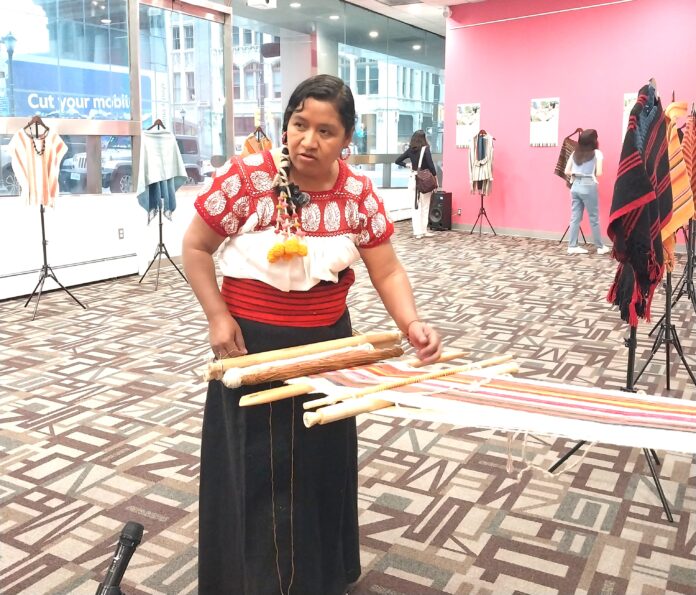
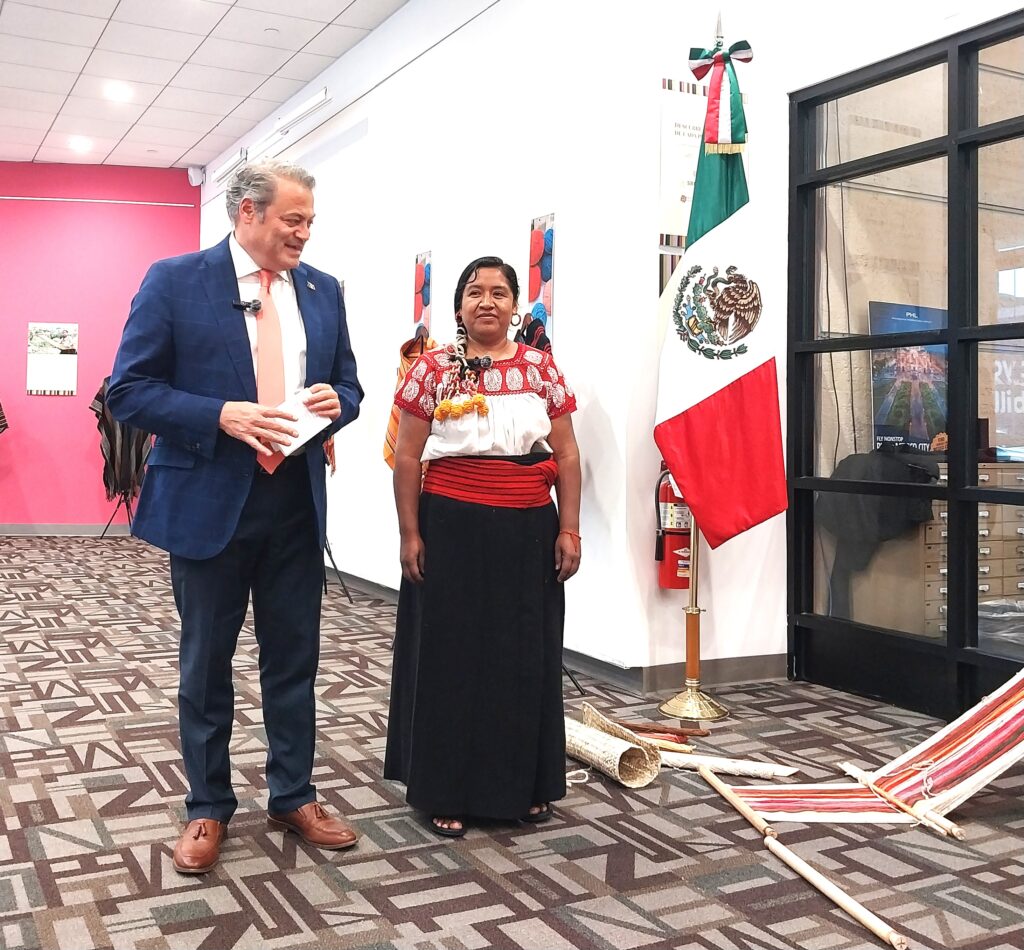
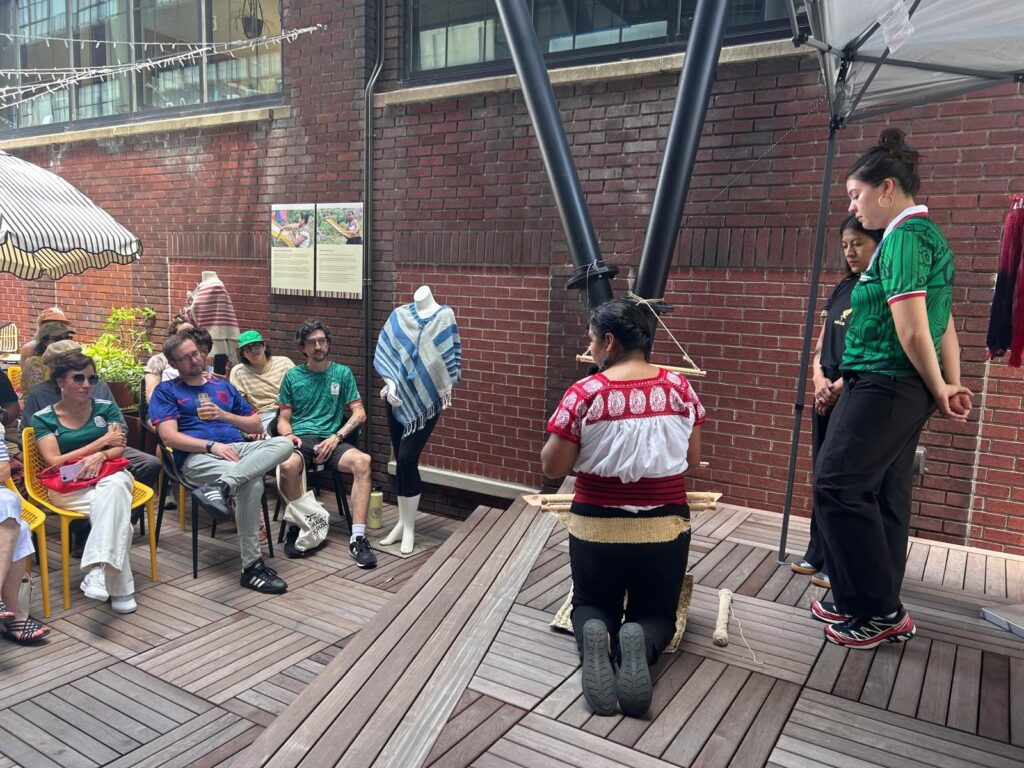
The Mexican Consulate in Philadelphia is contributing to the preservation of the indigenous identity of the state of Puebla through the exhibition “Weaving Roots” by master artisan Avelina Martínez García and the hands-on workshops she led in Philadelphia and the city of Reading.

Mexican Consul Carlos G. Obrador Garrido Cuesta with master artisan Avelina Martínez García. (Photo: Leticia Roa Nixon)

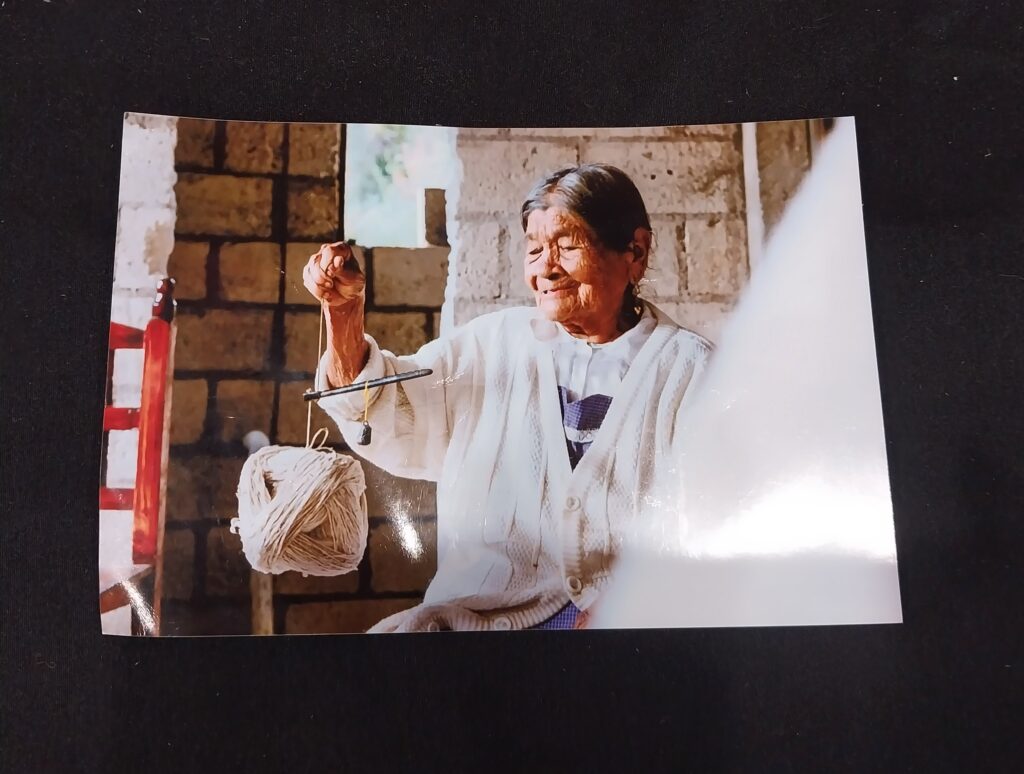
Mexico’s Consul in Philadelphia, Carlos G. Obrador Garrido Cuesta, served as presenter and host. During a demonstration of the backstrap loom on June 10 at the consulate headquarters in downtown Philadelphia, the proud guardian of cultural traditions stated, “It is an honor to share the tradition of my teacher and aunt-in-law, Trinidad Rodríguez Carmona. She is the one who taught me the knowledge of the backstrap loom.”

Trinidad Ramírez Carmona is the master artisan who taught Avelina Martínez the tradition of backstrap loom weaving. (Courtesy photo)

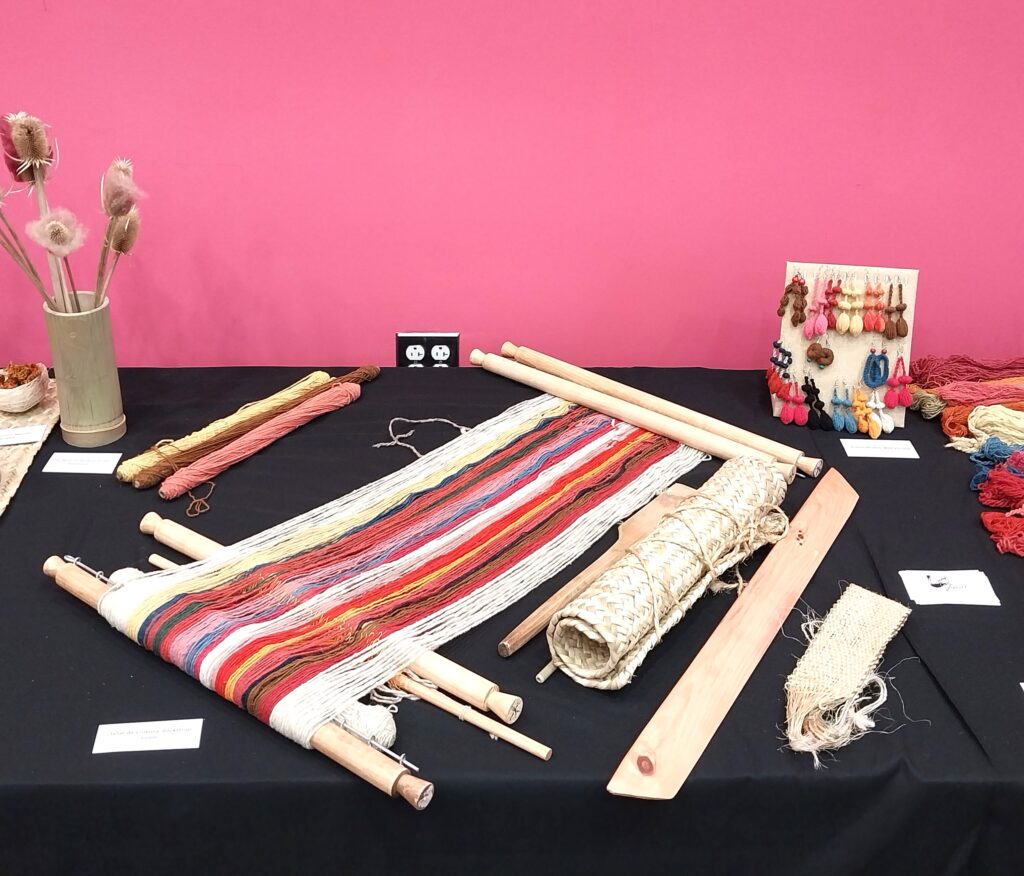
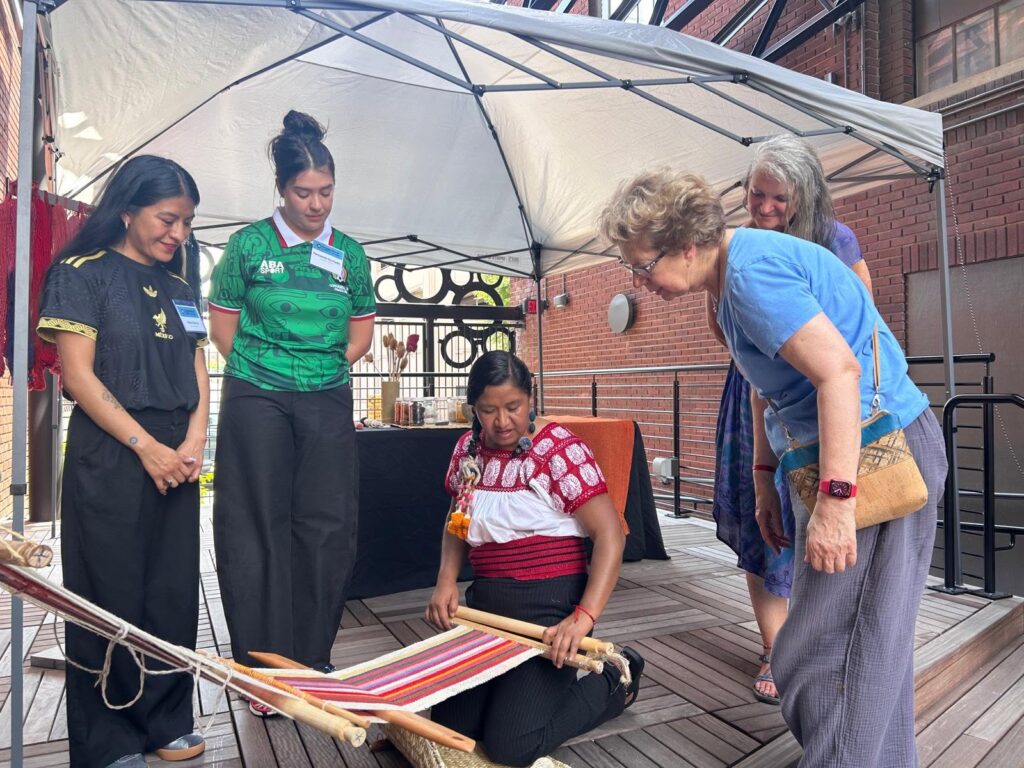
This loom is made of cedar, pine, or oak wood. It is secured to the weaver’s waist and attached by a rope to a fixed post or wall. Each component works in balance to create the textile, while the artisan’s body serves as the element that maintains tension in the threads, allowing control over the thickness and design of the fabric.

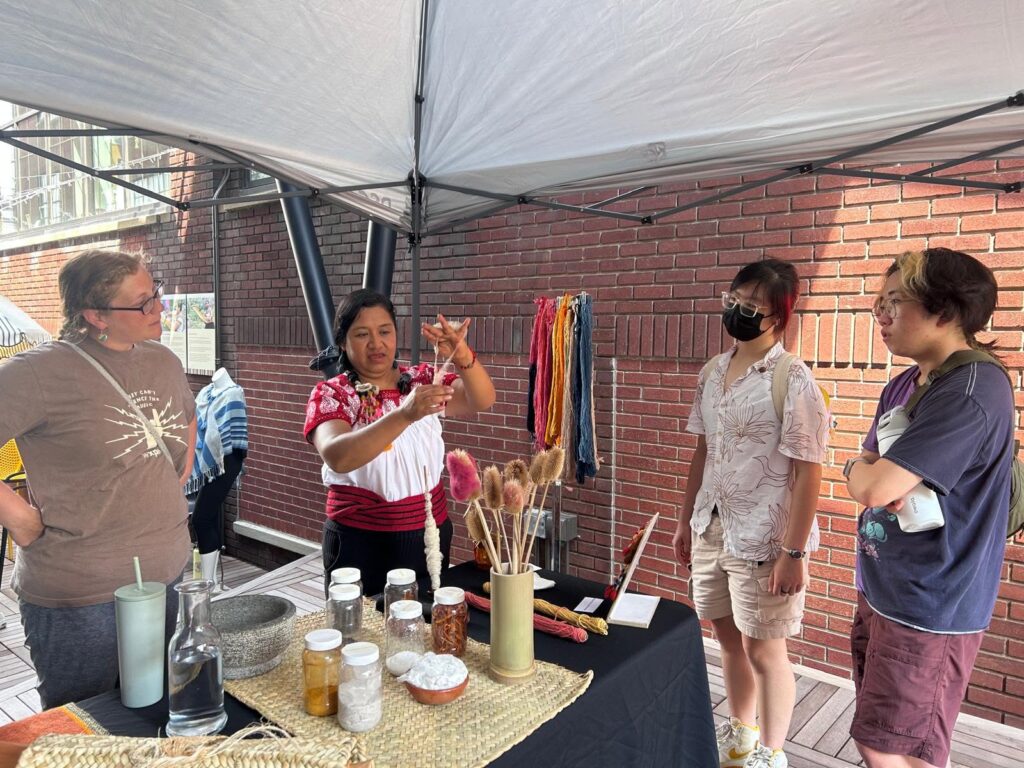
The main material used for traditional garments is sheep’s wool, in its natural white, black, and raw tones. Avelina dyes the fibers using natural pigments derived from indigo, cochineal, and brazilwood. She also uses walnut shells, marigold flowers, guava leaves, and other organic materials. The dedicated artisan learned through observation and experimentation, a process that has enabled her to produce textiles rich in color.

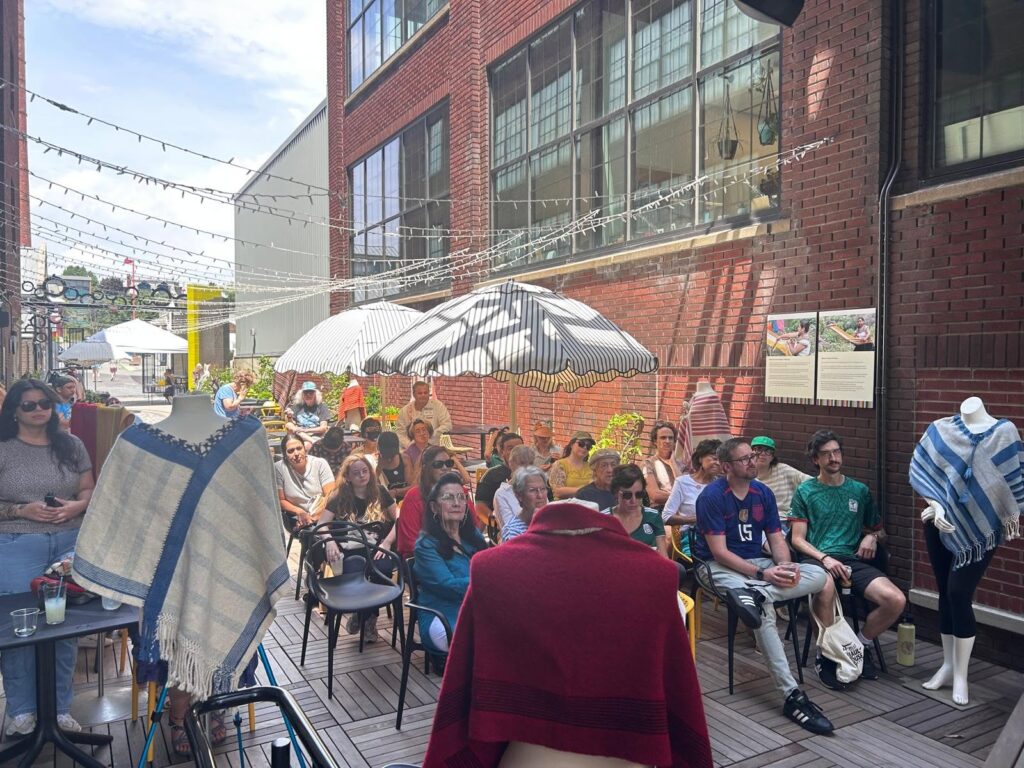
Local residents listen to an explanation of Avelina’s work. (Photo: Consulmex Social Media)

Preparing these dyes requires a high level of isolation and concentration. As she noted with both humor and firmness, she cannot be interrupted while working. Each color carries deep symbolic meaning; for example, her favorite color is red, commonly used in traditional belts, symbolizing women’s fertility.

Avelina demonstrated her weaving artistry at different venues throughout the city. (Photo: Consulmex Social Media)

How she began weaving

Originally from the community of Santa Cruz Cuautomatitla, in the municipality of Tochimilco, Puebla, Avelina shared:

“My aunt-in-law would always lend me her wool shawl in December, because it gets extremely cold there being so close to the Popocatépetl volcano. One day I asked her to make one for me, but my husband suggested that instead of making it, she should teach me how to weave it. That’s how I learned.”

She still remembers her mentor’s teaching: “If you like it, you’ll learn quickly; if you don’t, no matter how much I teach you, you won’t learn.” Avelina mastered the craft in just two months. When her teacher could no longer weave at age 90, Avelina continued the tradition.

“Right now we are in a process of recovery, because unfortunately much of our traditional craftsmanship is being lost. I am working hard to preserve it so it won’t disappear. I am the fourth generation in this tradition, and now I am teaching my daughter how to use the backstrap loom, and we want to reach more young people.”

Over time, her work has been recognized within her community and across Puebla through the State Tourism Office.

The exhibition included a display of the tannins and dyes used in her garments. (Photo: Consulmex Social Media)

Cultural legacy

Avelina is a Nahua woman, part of the largest Indigenous group in Mexico and direct descendants of ancient Mesoamerican civilizations such as the Mexica and Aztecs. They speak various forms of the Náhuatl language, and their culture is distinguished by strong agricultural traditions, craftsmanship, worldview, and a lasting influence on global cuisine.

Local residents listen to an explanation of Avelina’s work. (Photo: Consulmex Social Media)

The exhibition

The exhibition “Weaving Roots” at the Mexican Consulate features 15 unique pieces displayed in the gallery, including fine shawls, men’s coats, vests, and quechquemitls (traditional capes).

The cultural ambassador from Puebla states:
“Through this exhibition, I honor the women who came before me—grandmothers, mothers, aunts, and teachers who taught me the backstrap loom and the language of threads. In every textile lives their memory and a heritage that continues to grow stronger from generation to generation.”

She emphasized the importance of valuing handmade garments:
“Because in each one there is a piece of our lives—of the strain in our waists, backs, and hands.”

Visitors take a closer look at the artwork that is part of the legacy of the Mexican Nahuatl tradition. (Photo: Leticia Roa Nixon)

Through the efforts of The Americas Research Network and the support of institutions such as GoggleWorks Center for the Arts, this initiative not only showcased the aesthetic richness of Mexican textile art, but also raised awareness about the urgency of preserving it across generations.

At the end of her presentations, Avelina informed attendees that all of her garments and handicrafts are offered for sale as a way to self-finance her work and support her commitment to preserving this centuries-old cultural expression.