Jalen Hurts, quarterback de los Eagles de Filadelfia, anota el touchdown de la victoria en contra de los Bills de Buffalo durante el tiempo extra del juego de la NFL, el domingo 26 de noviembre de 2023, en Filadelfia. (AP Foto/Matt Rourke)
Hurts corre para el touchdown ganador en la prórroga
Jalen Hurts hizo el touchdown ganador en una corrida con 2:37 por jugar en el tiempo extra y los Eagles de Filadelfia superaron a los Bills de Búfalo por 34-37 en un frío y lluvioso domingo, para confirmar su supremacía en la NFL en la semana 12 de la temporada 2023.
Eagles tiene 10 ganados y un perdido, el mejor registro de la liga; es primer lugar del Este de la Conferencia Nacional.
Jalen Hurts lució con 200 yardas, tres anotaciones por aire y dos por tierra. Josh Allen, de Bills, sumó 339 yardas, dos ‘touchdowns’ por pase y dos por acarreo.
En el juego Hurts se convirtió en el primer ‘quarterback’ en la historia de la NFL que suma 10 anotaciones o más en tres temporadas en fila; tiene 36 en su carrera, la mayor cantidad para un mariscal de campo en sus primeras cuatro campañas.
Los Bills dominaron la primera mitad. Forjaron ventaja de 7-17 con un gol de campo, una anotación por tierra de Allen y un envío a las diagonales a Stefon Diggs. Los Eagles sumaron gracias a una jugada personal de Jalen Hurts.
En el tercer cuarto Philadelphia se acercó 14-17 vía una recepción de A.J. Brown. Buffalo respondió y se puso 14-24 con ‘touchdown’ de Josh Allen, su noveno en el año por tierra.
Eagles dio la vuelta 28-24 en el último periodo. Lo hizo gracias recepciones en las diagonales de DeVonta Smith y Olamide Zaccheaus.
Bills arrebató el mando 28-31 con envío de ‘touchdown’ a Gabe Davis a dos minutos del final. El local igualó 31-31 con gol de campo de 59 yardas con el que Jake Elliott envió el juego a tiempo extra.
En el agregado Buffalo se fue arriba 31-34 con patada de 40 yardas de Tyler Bass. Eagles triunfó 37-34 con ‘touchdown’ de Hurts.
EL MOMENTO DE LA VUELTA AL JUEGO
Jake Elliott empató el juego para Filadelfia con un gol de campo de 59 yardas faltando 20 segundos. Luego los Bills tomaron ventaja con un gol de campo en su primera posesión de la prórroga, Hurts corrió sin ser alcanzado para una anotación de 12 yardas que convirtió a los Eagles en el único equipo con marca de 10-1 en la NFL.
Hurts lanzó para tres anotaciones y corrió para dos más, y superó en el mano a mano a Josh Allen de Búfalo, mientras lideró a los Eagles de una desventaja de 17-7 al descanso por segundo juego consecutivo.
Hurts salió del campo con sus brazos extendidos celebrando en medio de la algarabía de los aficionados. Conectó con DeVonta Smith para recepciones de 17 y de 11 yardas en tiempo extra, y De’Andre Swift tuvo una corrida para 16 yardas que ayudó a colocar en posición a Hurts para el touchdown ganador.
Allen lanzó para 339 yardas y dos touchdowns, además anotó en dos acarreos para los Bills (6-6), quienes están en peligro de quedarse fuera de los playoffs tras ganar la división Este de la AFC en tres temporadas consecutivas. Allen fue interceptado en el cuarto periodo por James Bradbury, lo que puso en buen sitio a Hurts para un pase de anotación con Olamide Zaccheus para 29 yardas que puso por delante a Filadelfia 28-24.
Allen se escabulló para 15 yardas además de otras 15 en una infracción de rudeza innecesaria al pasador en la primera posesión de la prórroga para colocar a los Bills en posición de ganar. Tyler Bass – quien falló dos goles de campo – acertó la patada de 40 yardas para la ventaja con 5:52 por jugar.
Hurts completó 18 de 31 pases para un total de 200 yardas, además de una intercepción en un duelo entre dos de los quarterbacks más dinámicos de la NFL.
En otro partido los campeones Kansas City Chiefs se levantaron de una desventaja de 14 puntos para vencer 17-31 a Las Vegas Raiders. Con los Chiefs, Mahomes sumó dos pases de anotación.
Los monarcas se confirmaron en el primer lugar del Oeste con marca de 8-3; en la misma división los Raiders son últimos con 5-7.
En este juego Travis Kelce, de Chiefs se convirtió en el cuarto ala cerrada en la historia de la NFL en pasar 11.000 yardas. El miembro del Salón de la Fama, Tony González, es el uno con 15.127, yardas, seguido de Jason Witten, 13.036, y Antonio Gates, 11.841.
También el sábado Denver Broncos superó 29-12 a Cleveland Browns; fue la quinta victoria consecutiva para Denver.
En Arizona, Los Angeles Rams apalearon 14-37 a los Cardinals.
La semana 12 concluirá este lunes con el juego Bears-Vikings.
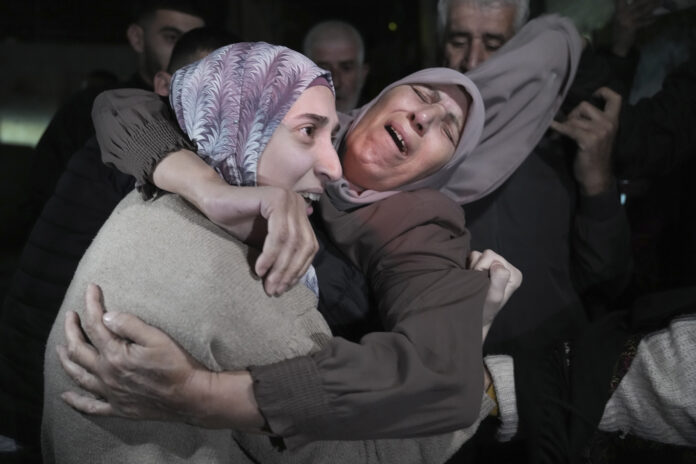
Shuruq Dwayat, a la izquierda, una prisionera palestina liberada por Israel, es abrazada por familiares a su llegada a casa en el vecindario de Sur Bahar, en Jerusalén Oriental, el domingo 26 de noviembre de 2023. (AP Foto/Mahmoud Illean)
DEIR AL-BALAH, Franja de Gaza (AP) — El frágil cese del fuego entre Israel y Hamás volvió a su cauce el domingo cuando los milicianos liberaron a 17 rehenes más, entre ellos 14 israelíes y la primera estadounidense, en una tercera ronda de liberaciones en virtud de una tregua de cuatro días que Estados Unidos señaló que espera que se extienda. A cambio, Israel liberó a 39 prisioneros palestinos.
Más rehenes fueron entregados directamente a Israel, quienes saludaron a una entusiasmada multitud a su llegada a una base de la Fuerza Aérea. Otros fueron liberados a través de Egipto. El ejército israelí informó que uno de los rehenes fue trasladado vía aérea a un hospital, y el director del Centro Médico Soroka indicó que Elma Avraham, de 84 años, se encontraba en estado crítico “como resultado de un periodo extendido en que la adulta mayor no recibió la atención que necesitaba”.
La rehén más joven que fue liberada fue Abigail Edan, una niña de 4 años de doble nacionalidad estadounidense e israelí cuyos padres fueron asesinados en el ataque de Hamás que detonó la guerra el 7 de octubre.
“Lo que ha tenido que vivir fue impensable”, dijo el presidente de Estados Unidos, Joe Biden, sobre la primera estadounidense liberada en virtud del cese del fuego. El mandatario dijo que no conocía su estado de salud y no dio detalles sobre los demás rehenes estadounidenses. Biden añadió que su objetivo era extender la tregua el mayor tiempo posible.
En total, nueve niños de 17 años o menos estaban en la lista, según la oficina del primer ministro israelí Benjamín Netanyahu. Otros tres tailandeses fueron liberados. Por otra parte, Hamás reveló que había liberado a uno de los rehenes rusos que tenía, “en respuesta a los esfuerzos del presidente ruso Vladímir Putin”. El ciudadano ruso-israelí con doble nacionalidad fue el primer rehén varón en ser liberado.
Los prisioneros palestinos liberados eran niños y jóvenes, de 15 a 19 años, acusados principalmente de disturbios públicos, daño a propiedad privada y, en algunos casos, de causar o amenazar con daños físicos a funcionarios israelíes por arrojar piedras o bombas incendiarias. Muchos fueron detenidos durante protestas y confrontaciones con las fuerzas. Muchos palestinos consideran a los prisioneros retenidos en Israel, incluidos aquellos implicados en ataques, como héroes que luchan contra la ocupación.
Se tiene previsto un cuarto intercambio el lunes, último día del cese del fuego, durante el cual se liberará a un total de 50 rehenes y 150 prisioneros palestinos. Todos son mujeres y menores.
Los mediadores internacionales encabezados por Estados Unidos, Egipto y Qatar están tratando de extender el alto el fuego.
“Podemos traer a todos los rehenes de regreso a casa. Debemos seguir presionando”, dijeron dos familiares de Edan, una tía abuela y un primo, en un comunicado en que agradecieron a los mediadores.
Por primera vez, Hamás señaló que buscará extender el acuerdo al analizar la liberación de un mayor número de rehenes. Netanyahu dijo en un comunicado que había hablado con Biden y reiteró su oferta de extender el cese del fuego un día por cada 10 rehenes adicionales que libere Hamás. Pero señaló que Israel reanudará su ofensiva “con todo nuestro poder” una vez que expire la tregua.
Antes de la última liberación, Netanyahu vistió un chaleco blindado y visitó la Franja de Gaza, donde habló con los soldados.
“A fin de cuentas, devolveremos a cada uno de ellos”, dijo, añadiendo que “continuaremos hasta el final, hasta la victoria. Nada nos detendrá”. No quedó claro a dónde se dirigió dentro de Gaza.
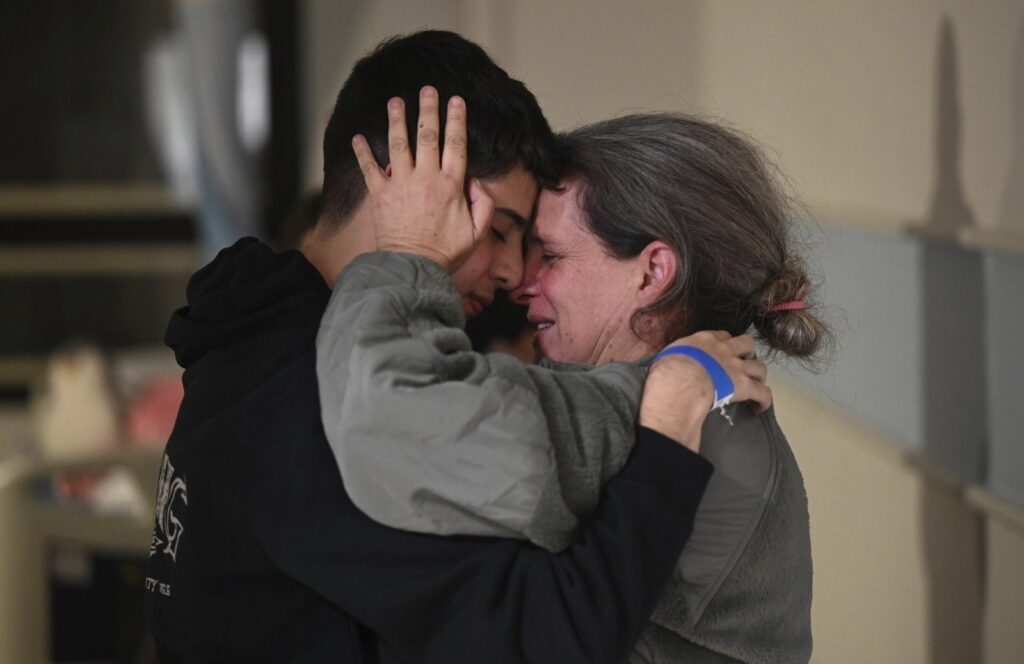
En esta fotografía difundida por Haim Zach/GPO se ve a Sharon Hertzman, a la derecha, abrazando a un familiar después de reunirse en el Centro Médico Sheba, el sábado 25 de noviembre de 2023, en Ramat Gan, Israel. (Haim Zach/GPO/Handout via AP)
Esta es la primera pausa significativa luego de siete semanas de conflicto, el de mayor número de muertos entre israelíes y palestinos en décadas. Más de 13.300 palestinos han muerto, aseguran las autoridades palestinas en el territorio gobernado por Hamás, de los cuales dos tercios de ellos mujeres y niños, según el Ministerio de Salud de Gaza, gobernada por Hamás. La guerra ya ha cobrado la vida de más de 1.200 israelíes, en su mayoría civiles asesinados en el ataque inicial.
En Nueva York, cientos de manifestantes judíos y aliados que exigen un cese permanente del fuego en Gaza cerraron el paso vehicular en el puente de Manhattan en ambas direcciones durante varias horas el domingo. Un portavoz de la policía de Nueva York no pudo brindar de momento la cifra exacta de personas detenidas.
En tanto, el brazo militar de Hamás dio a conocer un video en que se ve a milicianos entregando a rehenes a trabajadores y paramédicos de la Cruz Roja. El video muestra a algunos combatientes con el rostro cubierto y rehenes despidiéndose efusivamente.
Familias de la localidad de Kfar Aza, en el sur de Israel, se abrazaron, lloraron y aplaudieron el domingo al recibir la noticia de que los rehenes de su localidad habían llegado a Israel. Más de 70 de los alrededor de 700 habitantes del kibbutz fueron asesinados y 18 más fueron secuestrados.
Los rehenes liberados han permanecido mayormente fuera de la vista pública. Los hospitales afirmaron que en su mayoría gozan de buen estado de salud. Se saben pocos detalles públicos sobre las condiciones de su cautiverio.
Merav Raviv, cuyos tres familiares fueron liberados el viernes, señaló que se les alimentó de forma irregular y perdieron peso. Uno de ellos dijo que comía principalmente pan y arroz y dormía sobre una cama improvisada con sillas acomodadas. Los rehenes en ocasiones tenían que aguardar durante horas para ir al baño, declaró.
La presión de los familiares ha intensificado el dilema que enfrenta el gobierno de Israel, quien busca eliminar el poder militar y de gobierno de Hamás. Este y otros grupos de combatientes secuestraron a unas 240 personas durante su incursión al sur de Israel que dio inicio a la guerra. En total, 58 fueron liberados, uno más fue rescatado por las fuerzas israelíes y dos más fueron encontrados sin vida dentro de Gaza.
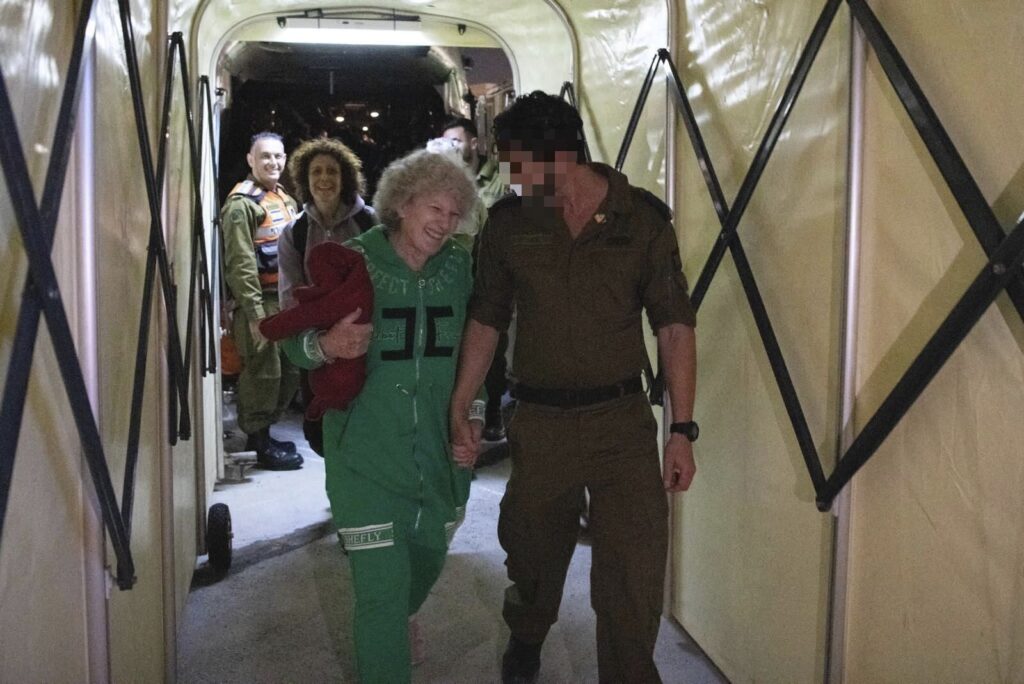
Ruth Munder, una rehén israelí liberada, camina acompañada por un soldado israelí poco después de su llegada a Israel, el viernes 24 de noviembre de 2023. (IDF vía AP)
La tregua le ha dado un respiro a los 2,3 millones de habitantes de Gaza, que aún se recuperan de los incesantes bombardeos israelíes que han desplazado a tres cuartas partes de la población y han destruido zonas residenciales. También se detuvo la oleada de cohetes que lanzaban los combatientes de Gaza hacia Israel.
En tanto, Hamás anunció la muerte de Ahmed al-Ghandour, quien estaba a cargo del norte de Gaza y era integrante de su principal consejo militar. Se trata del combatiente de mayor rango del que se tenga conocimiento que ha muerto en los combates. Las fuerzas armadas de Israel confirmaron su deceso.
Al-Ghandour había sobrevivido a por lo menos tres intentos de asesinato y estuvo involucrado en un ataque transfronterizo en 2006 en que combatientes palestinos capturaron a un soldado israelí, según el Proyecto Antiterrorismo, un grupo activista con sede en Washington.
___
Magdy informó desde El Cairo. Las periodistas de The Associated Press Isabel DeBre, en Jerusalén, y Tia Goldenberg en Tel Aviv, Israel, contribuyeron a este despacho.
Tres estudiantes estadounidenses de origen palestino, que iban vestidos con el tradicional pañuelo palestino, fueron atacados a tiros el sábado por la noche en la ciudad de Burlington (Vermont) por un individuo que todavía no ha sido identificado.
El Departamento de Policía de Burlington informó este domingo en un comunicado que un hombre blanco se acercó a los jóvenes mientras caminaban y «sin hablar, disparó al menos cuatro balas y se cree que huyó a pie».
Dos de ellos fueron heridos en el torso y uno en las extremidades inferiores. Dos de las víctimas están estables y una resultó gravemente herida.
Según los periodistas que acompañan al presidente Joe Biden, el mandatario fue informado sobre lo sucedido y «continuará recibiendo actualizaciones a medida que las autoridades recopilen más información».
La policía no identificó a las víctimas, pero dijo que todas tenían 20 años y estaban visitando a la familia de uno de ellos por las vacaciones de Acción de Gracias. Los tres son de ascendencia palestina y dos son ciudadanos estadounidenses, mientras que el otro es residente legal.
El jefe de policía de Burlington, Jon Murad, y el alcalde, Miro Weinberger, afirmaron que los heridos podrían ser víctimas de un crimen de odio, pero dijeron que las autoridades no lo han confirmado.
En un comunicado, la ong ADC (Arab American Anti-Discrimination Committee) afirmó que, tras revisar la información inicial proporcionada, hay «motivos para creer que este tiroteo se produjo porque las víctimas son árabes».
La organización identificó a los estudiantes como Hisham Awartani, de la Universidad de Brown; Kinnan Abdalhamid, de la Universidad de Haverford, y Tahseen Ahmed, de la Trinity University.
«ADC pide a las autoridades de Vermont que investiguen este tiroteo como un crimen de odio. Además, ADC se ha comunicado con el Departamento de Justicia (DOJ) y la Oficina Federal de Investigaciones (FBI) para solicitar también una investigación inmediata de los delitos de odio», apunta el comunicado.
El Consejo de Relaciones Islámicas-Estadounidenses (CAIR), la organización musulmana de defensa y derechos civiles más grande del país, ofreció hoy una recompensa de 10.000 dólares por información que conduzca al arresto y condena del autor.
CAIR también pidió a las autoridades policiales estatales y federales en Vermont que investiguen un posible motivo racial del tiroteo.
Hace unas semanas, Biden informó que había ordenado al secretario de Seguridad Nacional, Alejandro Mayorkas, y al fiscal general, Merrick Garland, que reforzaran la protección de la comunidad judía, musulmana y árabe-estadounidense a raíz de la guerra entre Israel y Hamás.
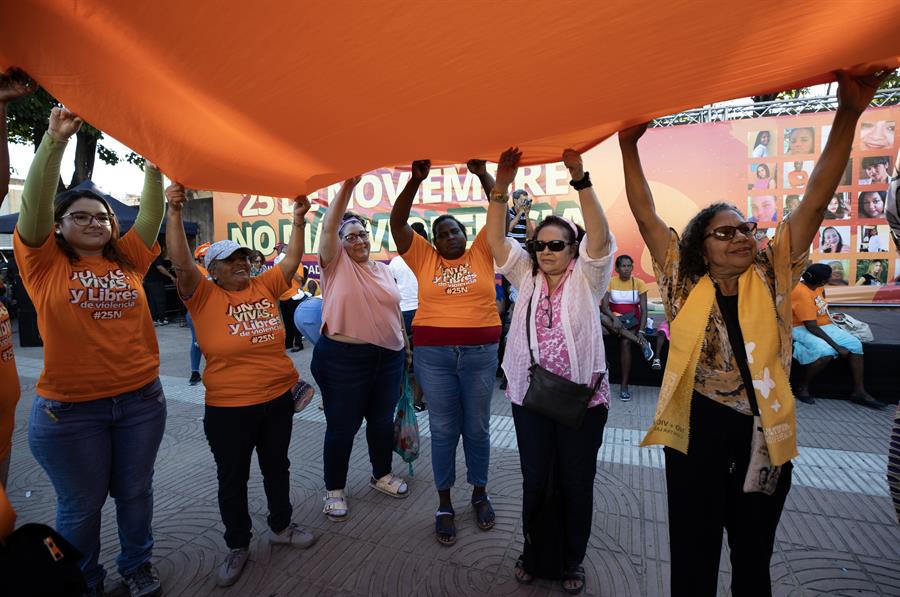
Personas participan en un acto con motivo del Día Internacional de la Eliminación de la Violencia contra la Mujer, hoy, en el parque Independencia, en Santo Domingo (República Dominicana). (Foto: EFE/Orlando Barría)
Santo Domingo.- Reducir sustancialmente la violencia contra las mujeres es, un año más, una asignatura pendiente en República Dominicana, el segundo país de América en feminicidios y donde prácticas como los embarazos adolescentes y las uniones infantiles están en muchas ocasiones normalizadas, denuncian los expertos.
Estas situaciones se dan, precisamente, en el país en el que hace más de seis décadas el régimen de Rafael Leónidas Trujillo asesinó a las hermanas Mirabal, símbolo mundial de la lucha de la mujer.
De hecho, la ONU decidió que el Día Internacional de la Eliminación de la Violencia contra la Mujer se conmemorara cada año el 25 de noviembre, fecha en la que en 1960 los cuerpos de las disidentes Patria, Minerva y María Teresa Mirabal aparecieron en un vehículo en el fondo de un barranco simulando que habían sufrido un accidente.
Alarmantes cifras en República Dominicana
República Dominicana presenta unas cifras alarmantes: segundo país americano en feminicidios (2,9 por cada 100.000 mujeres) solo superado por Honduras, según la Comisión Económica para América Latina y el Caribe (Cepal), y al menos 669 mujeres asesinadas en los últimos cinco años.
Pero antes de los feminicidos, «la expresión más fatal de la violencia machista», la víctima vive situaciones peligrosas. Así, en República Dominicana, cerca de 7 de cada 10 mujeres mayores de 15 años afirman que en algún momento han sufrido violencia física y/o psicológica, dice en una entrevista a EFE la oficial nacional de Programas de Género y Juventud del Fondo de Población de Naciones Unidas (Unfpa), Jeannie Ferreras.
Para esta agencia, también son violencia dos fenómenos con importante prevalencia en República Dominicana, las uniones tempranas/matrimonios infantiles y los embarazos adolescentes. Este último, según Ferreras, sigue siendo «un desafío muy importante», dado que en 2022 cerca del 20 % de los partos registrados correspondió a adolescentes y unos 1.000 embarazos eran de menores de 15 años, en ocasiones resultado de abusos sexuales.
«Este es un asunto que requiere más atención, más persecución y educar a la sociedad sobre una práctica normalizada», afirma.
También son «una práctica culturalmente aceptada» las uniones tempranas y, aunque se ha prohibido el matrimonio antes de los 18 años, alrededor de un 32 % de las mujeres entre 20 y 24 años dice que se casó o unió antes de esa edad y, de ellas, un número importante lo hizo antes de los 15 años.
Personas participan en un acto con motivo del Día Internacional de la Eliminación de la Violencia contra la Mujer, en el parque Independencia, en Santo Domingo (República Dominicana). (Foto: EFE/Orlando Barría)
Múltiples retos por delante
«Son muchos los desafíos para hacer frente a la violencia contra las mujeres en el país», afirma a EFE Sergia Galván, del movimiento feminista de República Dominicana, quien alerta también de la violencia obstétrica, «una de las formas de violencia más agravada sin que las mujeres encuentren respuestas, empezando por la penalización absoluta del aborto».
República Dominicana es uno de los pocos países de América en el que está prohibida totalmente esta práctica, frente a lo cual numerosos sectores piden que el Código Penal incluya el aborto cuando la vida de la madre corra peligro, el embarazo sea resultado de violación o incesto y si el feto tiene malformaciones que lo hacen incompatible con la vida.
Entre las tareas pendientes, la activista dice que institucionalmente es urgente adoptar la Ley Orgánica Integral contra la Violencia hacia las Mujeres, pues la actual norma es de ámbito intrafamiliar y deja fuera tipos de violencia como la psicológica, la patrimonial, la económica, la obstétrica, la callejera, la ciberviolencia o el acoso laboral.
También considera esencial avanzar en la tipificación de la violencia contra la mujer porque muchas situaciones quedan impunes y crear un registro único de casos a fin de evitar la revictimización y la pérdida de pruebas.
Educar contra la violencia
La Unfpa tiene clara la importancia de la educación para poner coto a la violencia.
Aquí cobra gran importancia su proyecto ´Fabricando sueños´, un taller en el que niñas y adolescentes de 8 a 15 años aprenden, jugando, las herramientas para poder reconocer y actuar ante la violencia, para que se consideren ciudadanas de pleno derecho, sepan de los sistemas de protección, vean que hay alternativas a la maternidad o la unión tempranas y conozcan su cuerpo.
Este año también hay un club de chicos para fortalecer la masculinidad positiva, en el que se les habla de manejo de conflictos, roles, prevención, autocuidado o prácticas saludables e igualitarias.
También para los varones adultos existe la iniciativa ´Cambiemos la ficha´. Resulta especialmente interesante, asegura Ferreras, ver cómo hombres muy mayores dicen a los jóvenes que hicieron cosas que no fueron positivas y que, si lo hubieran sabido antes, sus vidas podrían haber sido muy distintas.
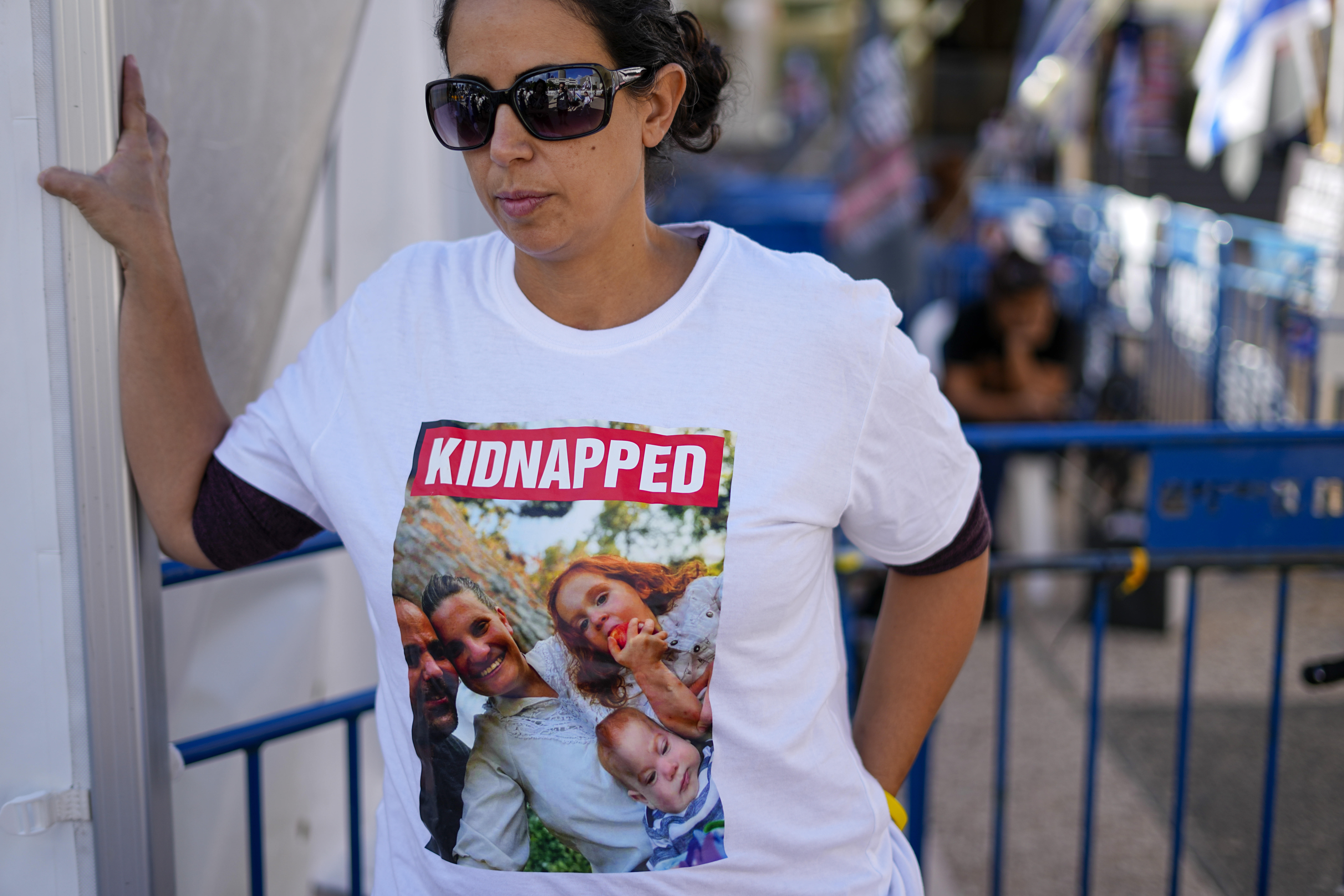
Ofri Bibas Levy viste una camiseta con la fotografía de su hermano, su cuñada y los dos hijos de ambos, de 4 años y 10 meses de edad, que están cautivos en Gaza, el martes 21 de noviembre de 2023, en Tel Aviv, Israel. (AP Foto/Ariel Schalit)
Mediadores dicen que Hamás liberará 13 israelíes y 7 extranjeros a cambio de 39 palestinos
JAN YUNIS, Franja de Gaza (AP) — Mediadores qataríes y egipcios dijeron que Hamás ha aceptado liberar a 13 israelíes y siete extranjeros el sábado en canje por 39 palestinos presos en Israel. Hamás había demorado el canje durante varias horas con el argumento de que Israel había violado las condiciones de una tregua que permitió esos canjes. La demora generó tensión en la segunda jornada de o que debía ser un alto el fuego de cuatro días.
Al anochecer, cuando los rehenes debían salir de Gaza, Hamás anunció que demoraba su liberación debido a lo que llamó violaciones de la tregua por Israel. El grupo alegó que las entregas de ayuda permitidas por Israel fueron menores a lo pactado y que era insuficiente la ayuda que llegaba al norte de Gaza, el foco de la ofensiva terrestre de Israel y principal zona de combate. Hamás también dijo que no se liberó a suficientes presos veteranos el viernes.
“Esto pone en peligro el acuerdo y hemos hablado con los mediadores sobre ello”, dijo Osama Hamdan, un funcionario jerárquico de Hamás, en Beirut. Pero Egipto, Qatar y el propio Hamás dijeron luego que se había superado el obstáculo y Hamás emitió una lista de seis mujeres y 33 niños y adolescentes que esperaba que Israel liberara.
Aunque persistía la incertidumbre acerca de los detalles del intercambio, había optimismo entre la gente y más temprano alegres familias se reunían en ambos lados.
En el primer día de los cuatro del cese del fuego, Hamás liberó a 24 de los aproximadamente 240 rehenes que tomó durante su asalto del 7 de octubre en Israel, que desencadenó la guerra, e Israel liberó a 39 palestinos de prisión. Entre los liberados de Gaza había 13 israelíes, 10 tailandeses y un filipino.
Hamás entregó el sábado a Egipto y Qatar, que actúan como mediadores en el proceso, un listado de 14 rehenes que quedarán libres, que fue comunicado a su vez Israel, explicó con un funcionario egipcio que habló bajo la condición de anonimato porque no estaba autorizado a revelar detalles sobre las negociaciones en curso. Otro funcionario del país, que también pidió no ser identificado, confirmó los detalles. El director de la oficina de prensa del gobierno de Egipto y el medio de comunicación estatal Qahera informaron que se liberarán 39 prisioneros a cambio de los 13 rehenes.
Según el acuerdo del cese del fuego, el grupo insurgente dejará marchar a un rehén israelí por cada tres prisioneros que recuperen la libertad, y el servicio penitenciario israelí dijo antes en el día que estaba preparando la liberación de 42 reos.
No estuvo claro de inmediato cuántos cautivos no israelíes se incluirían en el grupo.
Durante los cuatro días que durará el alto el fuego está previsto que Hamás deje marchar a al menos 50 rehenes israelíes, mientras que Israel liberará a 150 reos palestinos, todos mujeres y menores.
Israel anunció que la tregua se prolongará un día más por cada 10 rehenes extra que recuperen la libertad, algo que el presidente de Estados Unidos, Joe Biden, dijo que espera que ocurra.
Por otra parte, una delegación qatarí llegó a Israel el sábado para coordinar con las partes sobre el terreno y “garantizar que el acuerdo siga avanzando sin problemas”, según un diplomático conocedor de la visita, que habló bajo condición de anonimato porque no tenía permitido discutir los detalles con la prensa.
El inicio del cese el fuego el viernes en la mañana llevó la calma a los 2,3 millones de desesperados palestinos tras los incesantes bombardeos israelíes que mataron a miles de personas, sacaron a tres cuartas partes de la población de sus viviendas y arrasaron zonas residenciales. Los insurgentes gazatíes tampoco dispararon proyectiles sobre Israel.
Para Emad Abu Hajer, que reside en el campo de refugiados de Jabaliya, en las inmediaciones de la Ciudad de Gaza, la pausa del viernes supuso que pudo volver a excavar entre los escombros de su casa, arrasada por un ataque israelí la semana pasada.
Encontró los cadáveres de un primo y un sobrino el viernes, lo que elevó a 19 la cifra de víctimas mortales de ese ataque. A falta de localizar a su hermana y a otros dos familiares desaparecidos, reanudó la tarea el sábado.
“Queremos encontrarlos y enterrarlos con dignidad», afirmó.
Naciones Unidas dijo que la pausa le permitió incrementar el reparto de alimentos, agua y medicamentos a su nivel más alto desde que se permitió la llegada de convoyes de ayuda humanitaria al sitiado enclave el 21 de octubre. Las agencias de la institución pudieron distribuir 129.000 litros (34.078 galones) de combustible — que es algo más del 10% de lo entregado a diario antes de la guerra — además de gas para cocinar por primera vez desde el inicio de la guerra.
___
Magdy informó en El Cairo, Egipto. La periodista de The Associated Press Julia Frankel en Jerusalén contribuyó a este despacho.
Una estudiante llora durante el acto "Un minuto de ruido por Giulia" por Giulia Cecchettin, presuntamente asesinada por su celoso exnovio frente a la Universidad Estatal en Milán, Italia, 22 de noviembre de 2023. (Foto: AP/Luca Bruno/File)
Después del último y horripilante asesinato de una estudiante universitaria presuntamente a manos de su exnovio resentido y celoso, estudiantes desde Turín hasta Palermo han empezado a golpear al unísono los escritorios de las aulas para exigir que se ponga fin al asesinato de mujeres en Italia a manos de hombres.
Apenas unos días antes del asesinato de Giulia Cecchettin, de 22 años, los italianos aplaudían una película de gran éxito en taquilla sobre una mujer que soporta palizas y menosprecio por parte de su esposo autoritario. La película está ambientada en 1946, 24 años antes de que el divorcio se legalizara en Italia y en vísperas de la primera vez que a las mujeres italianas se les permitió votar. La exploración que hace la película del papel asfixiante del patriarcado en la sociedad italiana resuena dolorosamente hoy en día.
El momento es una notable confluencia entre la realidad y la ficción, que impulsa demandas en toda Italia para proteger a las mujeres y erradicar la mentalidad patriarcal entretejida en la sociedad.
Giulia Cecchettin desapareció después de reunirse con su exnovio, Filippo Turetta, para comer una hamburguesa en un centro comercial, pocos días antes de recibir su título en ingeniería biomédica en la Universidad de Padua.
A su exnovio, un año menor, le molestaba que ella hubiera terminado sus estudios antes que él y temía que lo dejara para perseguir sus sueños personales y profesionales, dijeron amigos y familiares. Todo estaba listo para celebrar el título de Cecchettin —se ataron lazos rojos a la valla metálica frente a la casa de su familia en Vigonovo, una ciudad de 10.000 habitantes cerca de Venecia— y un restaurante fue reservado para familiares y amigos.
Mientras estaba en el restaurante de hamburguesas, envió un mensaje de texto a Elena, su hermana mayor, para pedirle consejo sobre qué zapatos comprar para la ceremonia. Fue lo último que su familia supo de ella.
“El caso de Giulia sacudió a toda Italia”, dijo Paola Cortellesi, actriz y directora, en una entrevista a principios de esta semana en Roma. “Porque al desaparecer, toda Italia sabía que en poco tiempo se descubriría a una joven asesinada a manos de un hombre”.
“Porque a estas alturas es la misma rutina. Es escalofriante llamarlo rutina”, agregó al referirse a las estadísticas italianas que indican que aproximadamente cada tres días una mujer es asesinada por un hombre frecuentemente un cónyuge, una pareja o un ex.
Durante los siete días previos al hallazgo del cuerpo de Cecchettin, el 18 de noviembre —cubierto por bolsas de plástico negras en una zanja cerca de un lago en las estribaciones de los Alpes—, los noticieros de la nación dieron actualizaciones macabras.
A pocos kilómetros de su casa, la cámara de vídeo de un complejo industrial en una calle desierta capturó la imagen de un hombre, presuntamente Turetta, persiguiendo a Cecchettin, quien había salido huyendo del auto antes de ser golpeada repetidamente, derribada al suelo y metida a empujones en el vehículo, dejando cabellos y manchas de sangre en la acera.
Durante días, las cámaras de vigilancia en las carreteras registraron vistazos del auto de Turetta, primero en el norte de Italia, luego en Austria y finalmente en Alemania. El domingo 19 de noviembre, la policía alemana revisó un automóvil estacionado y sin gasolina en la orilla de una autopista. Turetta estaba adentro.
El miércoles, un tribunal alemán ordenó su extradición a Italia para ser investigado por sospecha de asesinato. El informe de un médico forense señaló 26 heridas, aparentemente infligidas con un cuchillo, en el cuello, los brazos y las piernas de la mujer, reportaron los medios italianos.
Mientras se desarrollaba el drama de la vida real del asesinato de Cecchettin, la película “C’è ancora domani” (Todavía hay un mañana) cautivaba al público de toda Italia.
Cortellesi, quien dirigió la película, dijo que su trabajo involucró al público “más allá de lo común, precisamente porque, como he estado diciendo, tocó un punto sensible en la vida de todos”. Cortellesi, una destacada actriz cómica italiana, también interpreta el papel principal de Delia, una esposa romana que ha sufrido maltratos y espera un futuro mejor para su hija adolescente.
Cortellesi contó cómo, en un preestreno, una mujer se levantó y reveló ante un cine lleno de desconocidos que ella también tenía un marido abusivo, y declaró: “Yo era Delia”.
Entre los admiradores de la película se encuentra Daria Dicorpo, profesora de secundaria en Roma. “Desafortunadamente, el tema de la violencia contra las mujeres siempre es actual”, dijo.
En el filme, a las mujeres —desde la clase socioeconómica baja hasta la alta— sus esposos les dicen que se guarden sus opiniones o, más claramente, que cierren la boca. “En cambio, no: tenemos que gritar, tenemos que comunicar la belleza de ser mujeres”, expresó Dicorpo.
Anteriormente, los italianos habían salido a las calles en marchas silenciosas y con antorchas para protestar por los asesinatos de mujeres. Pero Elena Cecchettin, hermana de Giulia, ofreció una alternativa: “hacer ruido” para honrar a su hermana. “Si tienes llaves, hazlas sonar”, pidió.
En una carta al diario Corriere della Sera, Elena Cecchettin desestimó las descripciones del presunto asesino de su hermana como un “monstruo”. Los asesinos “no están enfermos; son hijos sanos del patriarcado”, escribió.
“El feminicidio no es un crimen pasional: es un crimen de poder”, agregó Elena Cecchettin, utilizando un término que se refiere al asesinato de mujeres precisamente por ser mujeres o por el poder que los hombres ejercen sobre ellas.
El miércoles, después de la aprobación final de un proyecto de ley para proteger a las mujeres con medidas como un mayor uso de dispositivos electrónicos de vigilancia de hombres que las acechan o amenazan, los legisladores del opositor Movimiento 5 Estrellas golpearon rítmicamente sus escritorios “en un minuto de ruido”.
La directora Cortellesi apeló a las dos mujeres más poderosas de la política italiana actual: la primera ministra de extrema derecha, Giorgia Meloni, y Elly Schlein, quien encabeza el Partido Demócrata, la fuerza de izquierda más grande del Parlamento. Les pidió que “hicieran algo (sobre la violencia contra las mujeres) que no tenga nada que ver con mantener contento a su electorado”, dijo.
Schlein presiona para que una legislación bipartidista haga obligatorias lecciones, a partir de la primaria, para enseñar el respeto recíproco entre niñas y niños, hombres y mujeres. Pero el plan del ministro de Educación de Meloni prevé lecciones sobre “relaciones” en las escuelas secundarias.
La televisión estatal italiana RAI informó que en los días transcurridos desde que hallaron el cuerpo de Cecchettin, las llamadas a una línea directa nacional para mujeres que temen por su seguridad a manos de hombres han aumentado de unas 200 a 400 por día, incluidas las de padres de mujeres jóvenes.
“Las mujeres tienen miedo”, dijo Oria Gargano, quien dirige Be Free (Sé Libre), una cooperativa social que lucha contra la violencia, el tráfico sexual y la discriminación.
En las notas escritas a mano entre las flores, velas y ramos colocados frente a la casa de la familia Cecchettin, había una que decía: “Perdónanos por no haber hecho lo suficiente para cambiar esta cultura”.
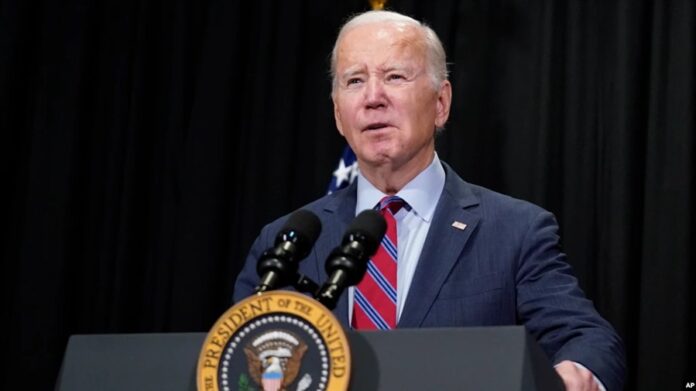
El presidente Joe Biden habla con periodistas en Nantucket, Massachusetts, el viernes 24 de noviembre de 2023, sobre los rehenes liberados por Hamás en la primera etapa de un intercambio en virtud de un acuerdo de alto el fuego de cuatro días.
El presidente de EE. UU., Joe Biden, se mostró esperanzado con el resultado de la tregua de cuatro días entre Israel y Hamás, que permitió la liberación de un primer grupo de rehenes retenidos en Gaza por el grupo militante palestino.
El presidente de Estados Unidos, Joe Biden, celebró este viernes la liberación del primer grupo de rehenes retenidos por Hamás en Gaza, tras materializarse un cese al fuego temporal negociado con el gobierno de Israel.
«Es sólo el comienzo», dijo Biden ante reporteros en una intervención desde el condado de Nantucket, Massachussetts.
En medio de la tregua, que comenzó temprano en la mañana de este viernes, fueron liberados más de una veintena de prisioneros -13 de ellos israelíes- que habían sido retenidos por Hamás en Gaza por casi siete semanas, desde que el pasado 7 de octubre el grupo palestino atacó territorios israelíes cercanos a la Franja y capturó aproximadamente a 240 personas, según Tel Aviv.
El pacto comprende la liberación de unos 50 israelíes y su devolución a sus hogares.
«Todos estos rehenes han pasado por una terrible experiencia. Este es el comienzo de un largo viaje de curación», manifestó el mandatario.
Como parte del trato, Israel también liberó a 39 palestinos que mantenía encarcelados, la gran mayoría habitantes de Cisjordania. En total se espera que sean excarcelados unos 150 palestinos en los próximos cuatro días.
EE. UU. se incluye entre el grupo de países de la Unión Europea y el mundo árabe que han participado en las negociaciones por la liberación de los rehenes, así como por el fin de las hostilidades, que se agudizaron cuando Israel lanzó su contraofensiva causando miles de muertes entre la población palestina en Gaza.
Israel ha reiterado que no detendrá sus ataques hasta diezmar totalmente las fuerzas del «grupo militante ilegal» Hamás.
En su intervención de este viernes, Biden agregó que se ha mantenido presionando por «una pausa en los combates» y dijo que con ello busca ampliar la ayuda humanitaria que llega desde el Mediterráneo hasta una devastada Gaza, a fin de mejorar las condiciones en los hospitales.
El mandatario demócrata elogió el trabajo de coordinación que mantiene desde hace semanas con otros dignatarios como el Emir de Qatar, Tamim bin Hamad Al Thani, el presidente de Egipto, Abdelfatah El-Sisi y el premier israelí Benjamín Netanyahu, «para ayudar a asegurar este acuerdo para concretarlo».
«Quiero agradecer a los tres líderes por su colaboración personal para lograrlo», remató Biden.
También se mostró a favor de la paz en la región. «Todos trabajamos juntos para construir un futuro mejor para la región. Un futuro donde este tipo de violencia sea impensable», agregó.
Avanza la ayuda humanitaria a Gaza
El presidente Biden informó que «más de 200 camiones llegaron hoy al punto fronterizo de Egipto en camino a Gaza» y detalló que los cargamentos portaban alimentos y medicinas, así como combustible y gas.
Esta mañana, la Oficina de Coordinación de Asuntos Humanitarios de Naciones Unidas informó en un comunicado que los 200 camiones entregados constituyen «el convoy humanitario más grande recibido desde el 7 de octubre».
Además informó que 21 pacientes en estado crítico «fueron evacuados en una operación médica a gran escala desde el norte de Gaza».
«La ONU acoge con satisfacción la liberación de 24 rehenes retenidos en Gaza desde el 7 de octubre y renueva su llamado a la liberación inmediata e incondicional de todos los rehenes», dijo la entidad en un comunicado.
El Comité Internacional de la Cruz Roja (CIRC, por sus siglas en inglés) también emitió un comunicado de satisfacción tras el anuncio de liberación de las personas en cautiverio bajo custodia de Hamás.
“Nos sentimos aliviados al confirmar que hoy facilitamos la liberación de 24 rehenes, transportándolos desde Gaza a la frontera de Rafah, donde fueron entregados a las autoridades egipcias, y la liberación de 33 detenidos palestinos de la prisión de Ofer en Ramala”, indicó.La Cruz Roja dijo que “Esta operación marca el impacto en la vida real de nuestro papel como intermediario neutral entre las partes”.
FILE -Incumbent Delaware County District Attorney Katayoun Copeland chats with supporter Lisa Savage from Media at GOP Headquarters in Springfield, Pa., Tuesday, Nov. 5, 2019. Former federal prosecutor Katayoun “Kat” Copeland will run for attorney general of Pennsylvania in 2024's election, she said this week, Friday, Nov. 24, 2023. (Steven M. Falk/The Philadelphia Inquirer via AP, File)
HARRISBURG, Pa.— Former federal prosecutor Katayoun “Kat” Copeland will run for attorney general of Pennsylvania in 2024, she said this week.
Copeland, a Republican, recently left her job in the U.S. attorney’s office in Philadelphia ahead of announcing her candidacy for attorney general, the state’s top law enforcement official.
The office has an annual budget of about $140 million and plays a prominent role in arresting drug traffickers, fighting gun trafficking, defending state laws in court and protecting consumers from predatory practices.
It played a key role in defending Joe Biden’s 2020 victory in the battleground state, fighting repeated attempts to overturn it in state and federal courts by Donald Trump’s campaign and Republican allies.
Copeland, 56, also was a prosecutor for Delaware County in suburban Philadelphia and served for two years as the court-appointed district attorney there. She ran for a full four-year term in 2019 but lost to Democrat Jack Stollsteimer.
Between her work for the district attorney’s office and the U.S. attorney’s office, Copeland has spent three decades as a prosecutor. In the U.S. attorney’s office, she rose to become chief of the criminal division and serve in the national security and cybercrimes unit.
Copeland has competition for the Republican nomination. York County’s district attorney, Dave Sunday, has announced his candidacy and is endorsed by the Republican Attorneys General Association. Craig Williams, a state House member from Delaware County, also has said he plans to run.
Four Democrats have also announced their candidacies: state Rep. Jared Solomon of Philadelphia, former state Auditor General Eugene DePasquale, former federal prosecutor Joe Kahn and Keir Bradford-Grey, the former head of Philadelphia’s and Montgomery County’s public defense lawyers.
Candidates must file paperwork by Feb. 13 to appear on the April 23 primary ballot.
Current Attorney General Michelle Henry, who was appointed to serve out the remainder of Josh Shapiro’s term as when he became governor, has said she does not plan to run for a full term.
El presidente estadounidense Joe Biden, derecha, y su homólogo chino Xi Jinping se saludan antes de una reunión en el marco de la cumbre del G-20, el 14 de noviembre de 2022, en Bali, Indonesia. (Foto: AP/Alex Brandon/Archivo)
Un resumen de las historias e imágenes más populares pero completamente falsas de la semana. Ninguna de éstas es legítima a pesar de que se compartieron ampliamente en las redes sociales. The Associated Press las verificó. Aquí están los hechos:
____
Fotografía de presidente Biden dando la espalda a mandatario chino está editada
LA AFIRMACIÓN: Una fotografía muestra al presidente estadounidense Joe Biden dándole la espalda al mandatario chino Xi Jinping durante su reunión el 15 de noviembre en la finca de Filoli, en Woodside, California.
LOS HECHOS: El 15 de noviembre Biden y Xi se encontraron en su primera reunión frente a frente en un año, comprometiéndose a estabilizar su tensa relación y dando a conocer acuerdos modestos para combatir el tráfico de fentanilo y restablecer las comunicaciones entre sus Fuerzas Armadas.
The Associated Press reportó que los mandatarios pasaron cuatro horas juntos —en reuniones, un almuerzo de trabajo y una caminata por el jardín Filoli en California, donde se llevó a cabo el encuentro—, con la intención de mostrarle al mundo que, si bien son competidores económicos globales, no están enfrascados en una confrontación.
“El planeta Tierra es lo suficientemente grande para que los dos países tengan éxito”, le dijo Xi a Biden.
Por su parte, el mandatario estadounidense le comentó a Xi: “Creo que es primordial que usted y yo nos entendamos claramente, de líder a líder, sin malentendidos ni mala comunicación. Tenemos que asegurarnos de que la competencia no derive en conflicto”.
Imágenes del encuentro de los líderes fueron retomadas por usuarios en redes, pero no todas son reales.
Una publicación compartida en Facebook muestra a Biden y a Xi parados fuera de la mansión de Filoli, pero el mandatario estadounidense está dándole la espalda al presidente chino, mientras que éste aparece con la mano extendida.
Pero tras realizar una búsqueda inversa de imágenes, AP encontró que la imagen está editada. La original en realidad fue tomada por el fotógrafo Kevin Lamarque para la agencia de noticias Reuters y muestra a los dos mandatarios de frente a punto de estrecharse las manos.
Los videos de la llegada de Xi a la mansión tampoco muestran a Biden dándole la espalda al presidente chino durante su encuentro.
Aunque en la reunión se alcanzaron los acuerdos previstos para contener la producción ilícita de fentanilo y reabrir los lazos militares, de acuerdo con un funcionario estadounidense de alto rango al término de la misma, persisten las diferencias en torno a la competencia económica y las amenazas a la seguridad mundial, informó AP.
— La periodista de AP Abril Mulato verificó esta información.
____
Video no muestra ataque contra parlamento palestino en Gaza
LA AFIRMACIÓN: Una grabación despliega el momento en el que la sede del Poder Legislativo en Gaza es destruida por un misil.
LOS HECHOS: La estructura que aparece en las imágenes no es la del Parlamento palestino, sino la de un edificio ubicado a unos 10 kilómetros del recinto legislativo en la ciudad de Juhor ad Dik.
Una publicación que circula en la red social X, antes llamada Twitter, incluye la secuencia en la que la estructura es detonada por una bomba para decir falsamente que muestra el recinto oficial. Usuarios han compartido la afirmación errónea para criticar los ataques israelíes en la zona.
Tras la incursión violenta del grupo extremista Hamás al sur de Israel el 7 de octubre, la región se ha visto inmersa en la violencia en medio de un conflicto que ha cobrado miles de vidas. El Ministerio de Salud en Gaza, controlada por Hamás, hasta el 10 de noviembre había reportado 11.078 muertos, recogió AP.
El martes el ministerio informó que había perdido la capacidad para hacer un recuento de los decesos ya que parte de su infraestructura ha sido destruida. El gobierno israelí ha situado la cifra de decesos en 1.200, la mayoría fallecidos en el ataque a principios de octubre.
Aunque Israel sí ha atacado y parcialmente destruido el edificio del Parlamento en Gaza, la estructura en el video no corresponde a la sede. Al revisar imágenes del edificio oficial AP corroboró que las características arquitectónicas de la estructura en la grabación no coinciden con las del Parlamento, ubicado en la calle Omer El Mokhtar.
Por ejemplo, el edificio en la secuencia tiene un techo plano y una forma rectangular alargada. La sede legislativa, en contraste, tiene una cúpula dorada al centro y una estructura cuadrangular.
De acuerdo con reportes de medios internacionales, el Parlamento fue parcialmente destruido en un ataque a mediados de noviembre. El ataque ocurrió después de que el gobierno israelí difundió fotografías de elementos militares dentro del recinto.
Además, la cuenta @GeoConfirmed en X, especializada en el rastreo y análisis de imágenes satelitales y geolocalización, también reportó que las imágenes no corresponden al Parlamento sino al edificio en Juhor ad Dik.
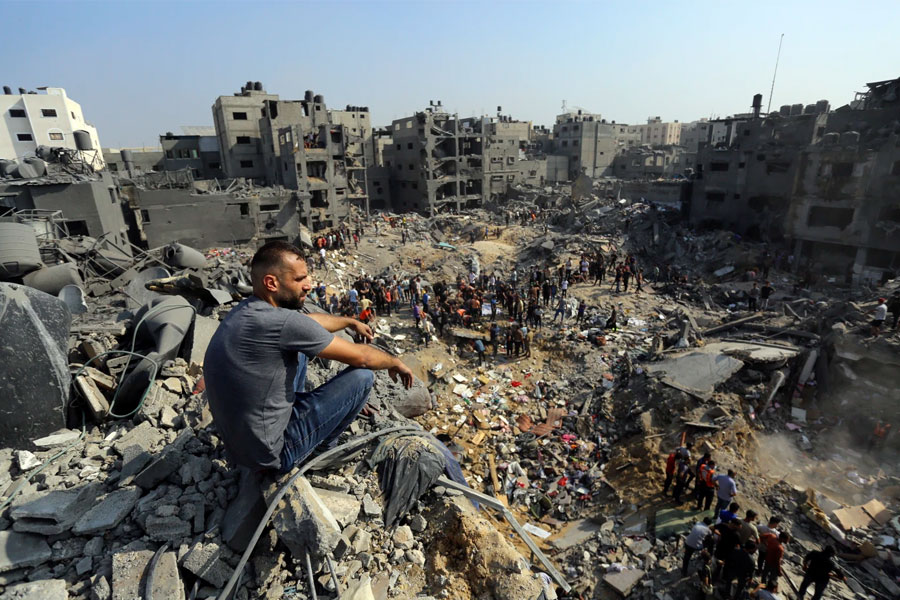
Un hombre se sienta sobre los escombros mientras otros buscan entre los restos de edificios atacados por la aviación israelí, en el campo de refugiados de Jabaliya, en el norte de la Franja de Gaza, el 1 de noviembre de 2023. (Foto: AP/Abed Khaled)
— El periodista de AP Marcos Martínez Chacón verificó esta información.
____
Biden y Putin no sostuvieron una llamada recientemente
LA AFIRMACIÓN: Recientemente el presidente estadounidense sostuvo una llamada con el mandatario ruso Vladimir Putin.
LOS HECHOS: Una publicación compartida en Facebook dice: “Noticias más recientes ¿Qué se quedó de la llamada urgente entre Biden y Putin, entre EE. UU. y RUSIA?”.
El mensaje está acompañado de un video en el que un narrador señala que los mandatarios “instauraron una llamada telefónica urgente en las últimas horas” para intentar conciliar y evitar una “inminente guerra” en Ucrania.
Posteriormente presenta varios reportes noticiosos que hablan sobre el diálogo entre los mandatarios que ocurrió el sábado 12 de febrero de 2022, no recientemente.
En ese entonces, AP informó que el presidente estadounidense dijo a su homólogo ruso que una invasión a Ucrania causaría un “sufrimiento humano generalizado” y que Occidente estaba comprometido con la diplomacia para poner fin a la crisis, pero “igualmente preparado para otros escenarios”.
La Casa Blanca informó que durante el intercambio telefónico de una hora entre ambos mandatarios Biden señaló que Estados Unidos y sus aliados responderán “enérgicamente e impondrán costos rápidos y severos” si Rusia ataca a su país vecino.
Ambos presidentes conversaron un día después que Jake Sullivan, asesor de Seguridad Nacional de Biden, advirtiera que información de inteligencia estadounidense mostraba que una invasión rusa podría comenzar en cuestión de días y antes de que los Juegos Olímpicos de Beijing concluyeran el 20 de febrero.
Por su parte, Rusia rechazó que tuviera intención de invadir, pero en ese momento había concentrado más de 100.000 efectivos cerca de la frontera con Ucrania y había enviado soldados para que participaran en maniobras en Bielorrusia, rodeando territorio ucraniano por tres flancos.
El 24 de febrero, 12 días después de esa llamada, Rusia emprendió una invasión a Ucrania que inició con ataques aéreos y de misiles contra las instalaciones militares ucranianas antes de que sus soldados y tanques cruzaran las fronteras desde el norte, este y sur de la nación europea.
Mientras las fuerzas ucranianas se defendían en varios frentes y los civiles se subían a trenes y automóviles para huir del país, Estados Unidos y los líderes europeos tomaron medidas para castigar a Rusia con fuertes sanciones financieras y la OTAN se movilizó para reforzar su flanco oriental.
La guerra iniciada por Putin y que continúa hasta el día de hoy, con decenas de miles de muertes en ambos bandos, es el conflicto más grande de Europa desde la Segunda Guerra Mundial.
— Abril Mulato
____
No se ha resuelto caso de magnicidio en México
LA AFIRMACIÓN: El caso del homicidio del excandidato presidencial mexicano Luis Donaldo Colosio, asesinado en 1994, ha sido resuelto. El presidente mexicano Andrés Manuel López Obrador hará que pague el exmandatario Carlos Salinas de Gortari, quien fue presidente de 1988 a 1994.
LOS HECHOS:Mario Aburto, quien se declaró autor material del homicidio de Colosio y que cumple una condena de 45 años de prisión, podría recuperar su libertad por el fallo de un tribunal que invalidó la sentencia y ordenó una nueva resolución del caso, indicó el Instituto Federal de Defensoría Pública (IFDP).
El pronunciamiento de la institución, que tuvo a su cargo la defensa de Aburto, se dio a conocer un día después de la resolución que emitió un tribunal colegiado que invalidó la sentencia del 1994 alegando que el asesino debió ser juzgado por el delito de homicidio con base en el Código Penal del estado Baja California, que contempla una pena máxima de 30 años de prisión por ese delito del fuero común, y no de acuerdo con el Código Penal Federal.
En ese entonces el IFDP señaló que Aburto debería ser sentenciado nuevamente bajo el Código Penal de Baja California y que espera que el tribunal declare “compurgada la pena” puesto que en 2024 el asesino completa 30 años encarcelado.
Por ejemplo, una publicación compartida en Facebook asegura incorrectamente que el caso Colosio se resolvió. “RESUELVE CRIMEN DE COLOSIO ! AMLO va por SALINAS DE GORTARI”, dice un mensaje que acompaña un video, pero en éste no se incluye ninguna evidencia que pruebe dicha afirmación.
La grabación es un fragmento de la conferencia de López Obrador del 12 de octubre en la que el presidente explicó a los periodistas lo que había determinado el tribunal colegiado federal en torno a Aburto.
Posteriormente, López Obrador comentó que algunos columnistas han publicado artículos imprecisos señalando que Aburto saldrá de la cárcel porque el gobierno está planeando una estrategia para acusar al expresidente Salinas de Gortari.
“Todos los de las páginas del conservadurismo lo retoman, que vamos a usar el caso porque suponemos que Salinas es el jefe del bloque conservador y que si Aburto se lanza en contra de Salinas y Salinas va a la cárcel, pues entonces les va a perjudicar en la elección del año próximo y vamos nosotros de esa manera a ganar. ¿Será que tienen la mente retorcida? O sea, qué interesante todo esto”, expresó el mandatario en el encuentro con medios.
El asesinato del candidato del Partido Revolucionario Institucional (PRI), que recibió dos disparos el 23 de marzo de 1994 durante en un mitin de campaña en la ciudad fronteriza de Tijuana, en el estado de Baja California, desencadenó una fuerte crisis política en México.
Aburto, que se encuentra actualmente en una prisión de máxima seguridad, confesó que actuó en solitario para asesinar a Colosio, pero tiempo después denunció que fue víctima de torturas reiteradas en medio de versiones de que el magnicidio pudo tener connotaciones políticas y ser alentado desde el poder.
Hace dos años la Comisión Nacional de los Derechos Humanos de México recomendó a la fiscalía federal reabrir la investigación del caso debido a las quejas por torturas interpuestas por Aburto y denuncias sobre irregularidades en su proceso.
— Abril Mulato.
___
Video no muestra a concursante transgénero en Miss Universo
LA AFIRMACIÓN: Una secuencia muestra a Miss Portugal, Marina Machete, una mujer transgénero, tocando su entrepierna durante la celebración de Miss Universo en El Salvador.
LOS HECHOS: La grabación es del discurso que ofreció la rapera estadounidense, Doja Cat, al recibir un Grammy en Las Vegas en 2022. Simuló ajustarse la cremallera para comentar que estaba en el baño cuando se enteró de que había ganado.
Una publicación que circula en la red social X, antes llamada Twitter, incluye el video de cinco segundos de Doja Cat para decir falsamente que es la participante de Miss Universo Marina Machete ajustando su entrepierna. Usuarios compartieron la publicación para mofarse de la comunidad transgénero.
Pero al hacer reversiones de fotogramas clave de la secuencia en Google, AP corroboró que muestra el momento en que Doja Cat recibió junto con la cantante estadounidense SZA el Grammy por Mejor Actuación de un dúo o grupo pop en la entrega de los Grammys el 3 de abril de 2022.
Al momento de recibir el premio por la canción “Kiss Me More” Doja Cat bromeó ajustándose la entrepierna para comentar que fue seleccionada como la ganadora del Grammy cuando estaba en el baño. La grabación de su discurso, de dos minutos y 42 segundos de duración, está disponible en el canal de YouTube de la Academia de la Grabación estadounidense, organizadora de los Grammys.
El video original despliega la toma completa de la premiación y en esta se aprecia completamente que a un lado de la rapera estaba SZA, apoyada en dos muletas y riendo de lo que Doja Cat acababa de hacer.
Desde 2012 los organizadores de Miss Universo cambiaron las reglas del concurso para permitir la participación de mujeres transgénero. La modificación ocurrió tras una polémica derivada de la exclusión de una concursante canadiense llamada Jenna Talackova, que era transgénero. Tras la controversia, Miss Universo le permitió participar.
En la edición 2023, celebrada en la capital salvadoreña, participaron dos mujeres transgénero. Una de ellas fue Marina Machete por Portugal y la otra fue Miss Países Bajos, Rikkie Kollé. La ganadora del certamen fue Miss Nicaragua, Sheynnis Palacios, reportó AP.
Jerusalén.- Israel confirmó este viernes que el grupo islamista Hamás ha entregado trece rehenes israelíes a la Cruz Roja, que están siendo trasladados hacia Egipto, informó la radio oficial del Ejército israelí citando a fuentes gubernamentales.
Los secuestrados saldrán por el cruce de Rafah, junto con otros doce cautivos tailandeses, como parte de un acuerdo para la liberación de 50 rehenes israelíes a cambio de la excarcelación de 150 presos palestinos durante cuatro días de tregua en Gaza.
Los doce tailandeses liberados no forman parte del acuerdo logrado entre Israel y Hamás con la mediación de Catar, Egipto y Estados Unidos, sino que sería el resultado de una negociación paralela entre Tailandia y el grupo islamista.
Desde el inicio de la guerra entre Israel y Hamás, Tailandia ha buscado diferentes vías para lograr la liberación de los secuestrados, entre ellas un viaje encabezado por el jefe de la diplomacia tailandesa a Egipto y Catar y reuniones en Irán de representantes del Gobierno tailandés con miembros del grupo islamista.
El primer ministro de Israel, Benjamín Netanyahu, junto con el titular de Defensa, Yoav Gallant, se encuentra en la base de Kirya en Tel Aviv, cuartel general del Ejército israelí, para supervisar la liberación inminente de los trece rehenes israelíes.
«El primer ministro y el ministro de Defensa seguirán de cerca la gestión de la operación para traer de vuelta al país a los israelíes liberados del cautiverio de Hamás», informó el Gobierno en un comunicado.
Los trece primeros rehenes israelíes salen hoy en canje por 39 presos palestinos, que se encuentran en estos momentos en la prisión israelí de Ofer para ser excarcelados cuando Israel confirme la identidad de los israelíes liberados.
El intercambio, en ambos casos, se reduce a mujeres y niños. En el caso de los presos palestinos, hoy saldán 24 mujeres y 15 adolescentes varones.
El jefe de Información gubernamental de Egipto, uno de los países que mediaron en este acuerdo, afirmó que las autoridades egipcias se están «preparando ahora» en el paso de Rafah para recibir a los liberados por Hamás «en preparación para su traslado al lado israelí».
En total serán liberados 50 rehenes israelíes a cambio de la excarcelación de 150 palestinos – en ambos casos todos mujeres y niños- durante los cuatro días que dure la tregua, que se podrá prolongar hasta diez días si Hamás está dispuesto a entregar a más cautivos, según Israel.
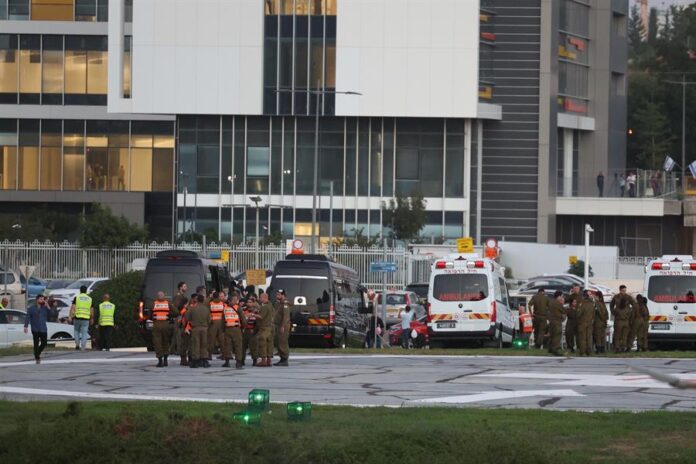
Por su parte, el Ejército israelí informó de que ya está todo listo para traer de vuelta a los secuestrados, que regresarán a Israel en cuatro helicópteros militares que ya están listos para esperarlos.