


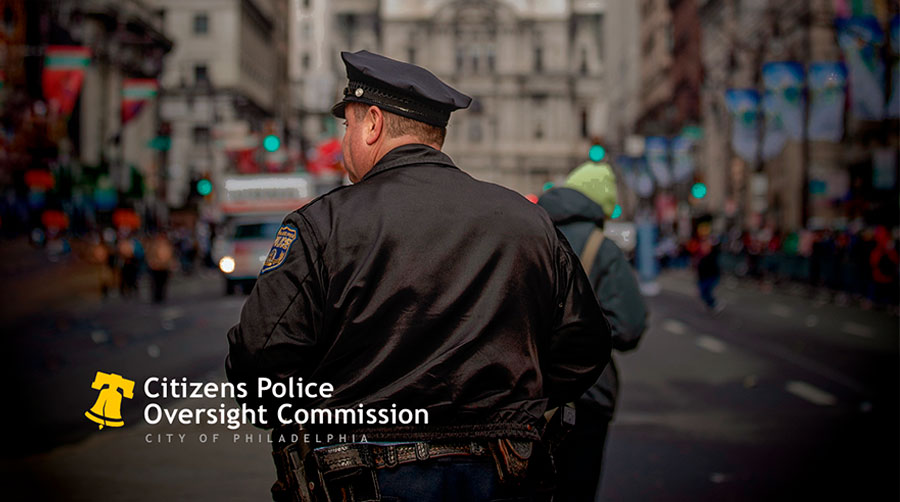
Announcement made in mid-July raises concerns about the impact of voluntary police encounters on Philadelphia residents
In mid-July, the Citizens Police Oversight Commission (CPOC) announced the launch of an inquiry into a pattern of police interactions known as “mere encounters,” following a review of community complaints and internal investigations that raised questions about how these encounters are experienced by residents across Philadelphia.
Under Pennsylvania law, a “mere encounter” is considered a voluntary interaction between police officers and civilians. Individuals are free to leave and are not required to answer questions. Unlike an investigative stop, officers do not need reasonable suspicion of criminal activity to initiate such encounters.
According to CPOC, a review of misconduct complaints revealed recurring reports of officers approaching individuals and asking whether they were carrying a firearm, requesting that they lift their shirts, display the contents of their bags, or submit to pat-down searches.
Cases raise concerns
The commission cited several cases that prompted the inquiry.
In one case, a 25-year-old Black man riding a bicycle was stopped, questioned about a firearm, frisked, and had his backpack searched. The man, who suffers from post-traumatic stress disorder (PTSD), reportedly experienced a panic attack during the interaction and did not receive medical assistance.
Another complaint involved a 36-year-old Black man who said officers followed him, blocked him from walking away, and searched his clothing despite his repeated statements that he was unarmed and did not consent to the search.
The commission also reviewed a complaint from a mother whose 13-year-old son was stopped by two officers while walking to a store. The officers allegedly asked whether the boy had a gun and requested that he open his coat so they could see his waistband. Internal Affairs was unable to locate any official record of the interaction.
CPOC stated that it identified numerous similar cases in which individuals were neither committing crimes nor carrying weapons and were not cited or arrested.
“As our case reviews suggest, the racial justice implications of this practice are concerning and command our attention,” said Ewuare Osayande, CPOC’s Deputy Executive Director.
Impact on community trust
According to the commission, many complainants described the encounters as humiliating, distressing, and, in some instances, traumatic. Several also expressed the belief that they had been targeted because of their race.
“These interactions may be brief, but their impact can be lasting,” said Tonya McClary, Executive Director of CPOC. “They affect not only the individuals involved, but also their families and broader community trust in law enforcement.”
A limited dataset reviewed by the commission found that “mere encounters” accounted for approximately 6% of police incidents recorded between December 2024 and June 2025. However, only about 21% of those interactions had properly tagged and linked body-worn camera footage available for review.
Next steps
As part of the inquiry, CPOC will request data and body-camera recordings from the Philadelphia Police Department involving incidents classified as “mere encounters.”
The agency also plans to conduct surveys and host community workshops that will include “Know Your Rights” training sessions and group discussions designed to gather firsthand experiences from residents.
The commission expects to publish its findings once the investigation is completed.
Community Participation
Philadelphia residents are encouraged to share their experiences by completing a survey at https://phila.gov/freetoleave or by requesting a community workshop through cpoc@phila.gov.
The Citizens Police Oversight Commission is an independent civilian oversight agency responsible for reviewing police conduct, improving accountability and transparency, and strengthening trust between law enforcement and the communities they serve.