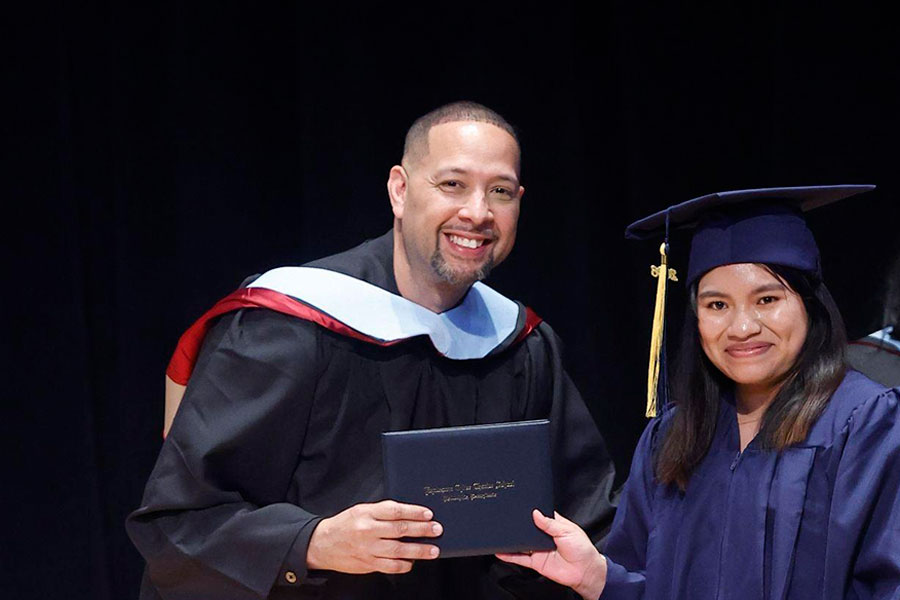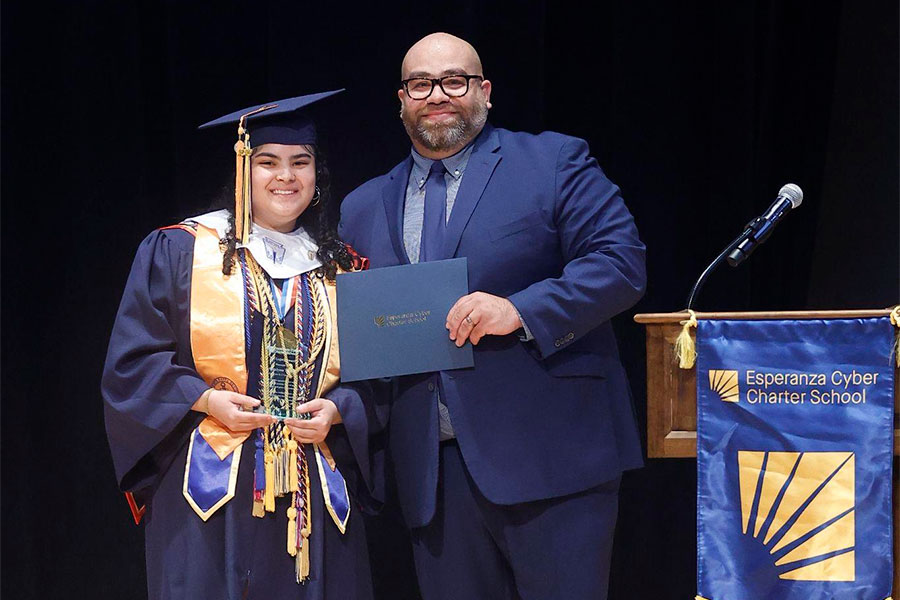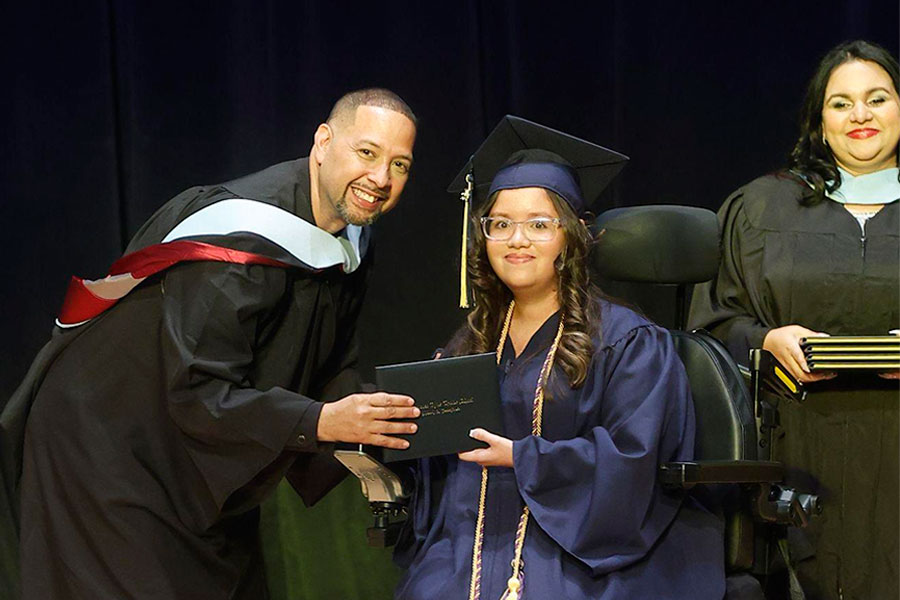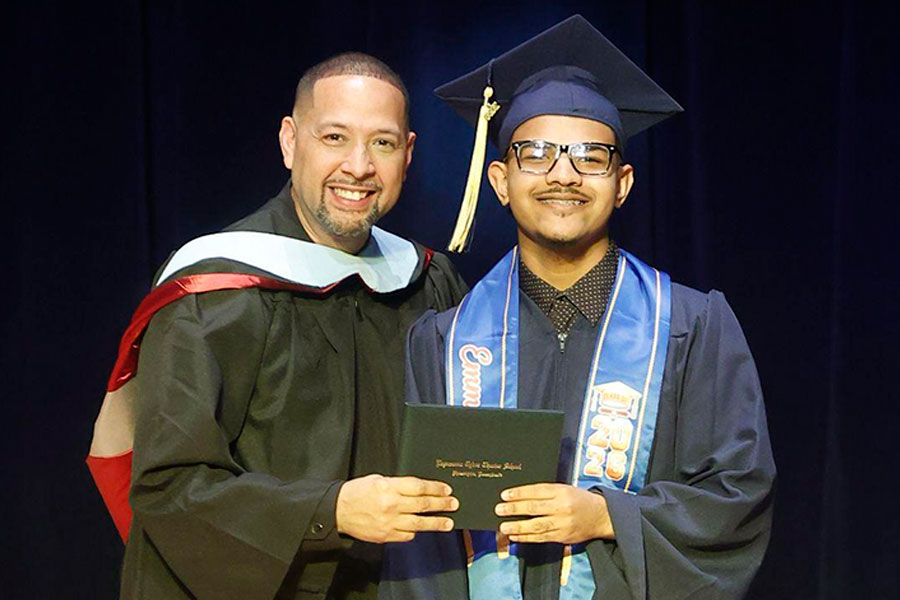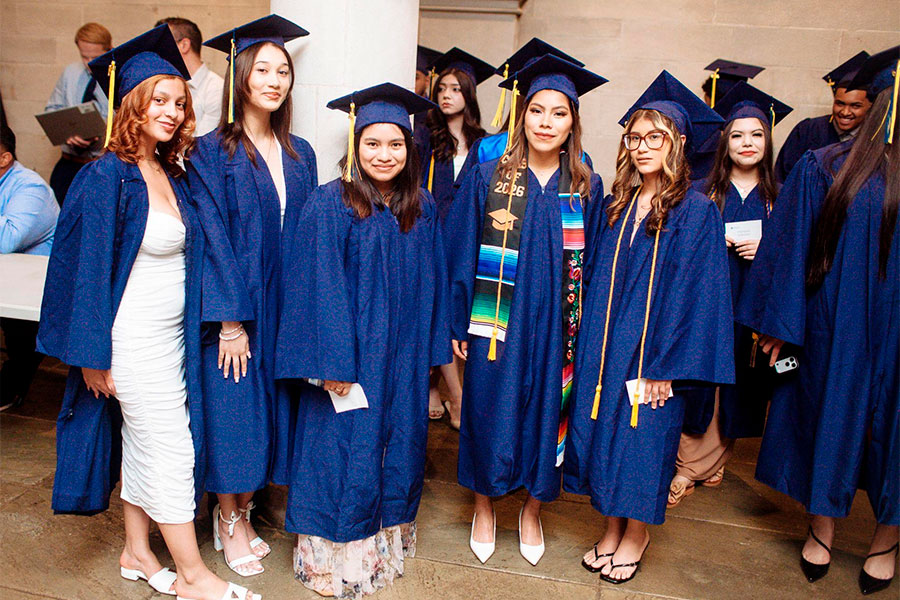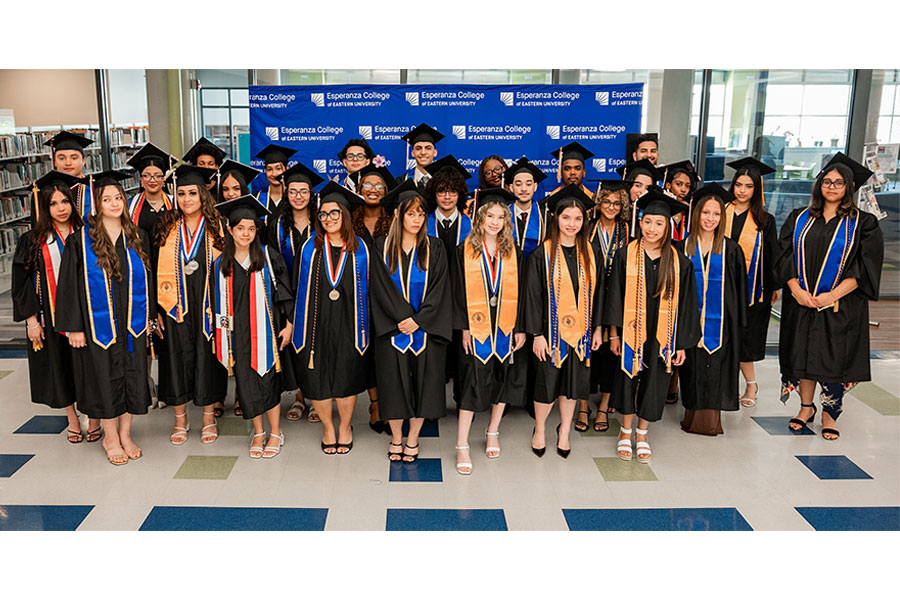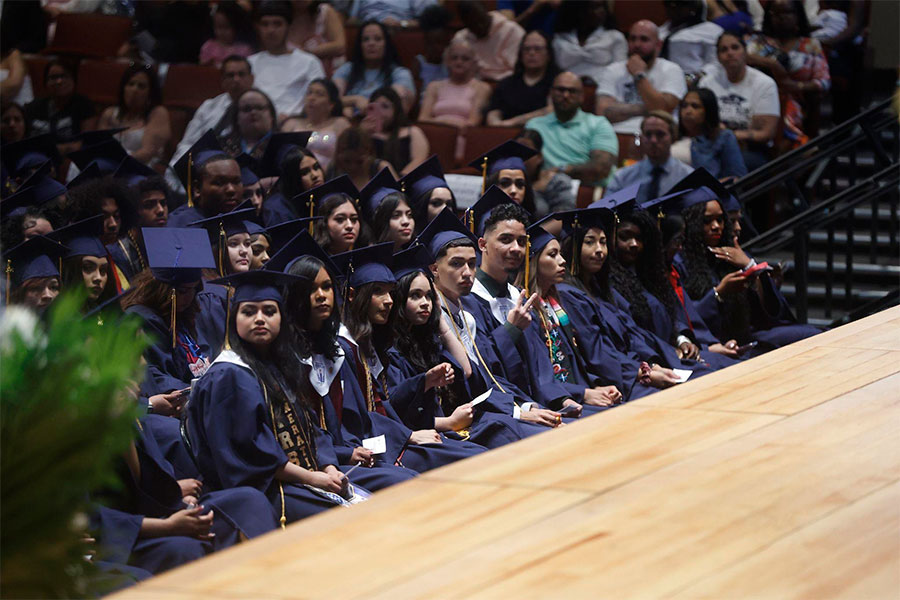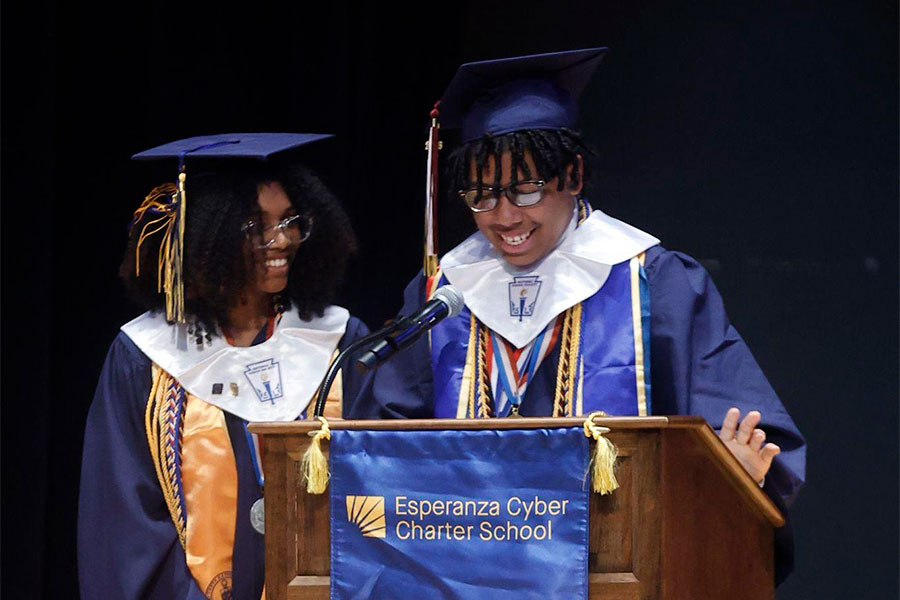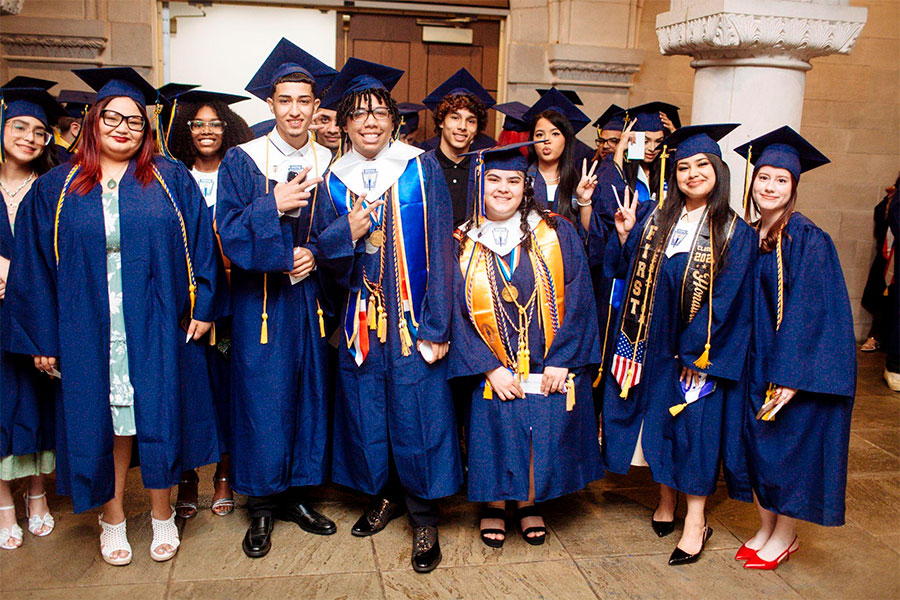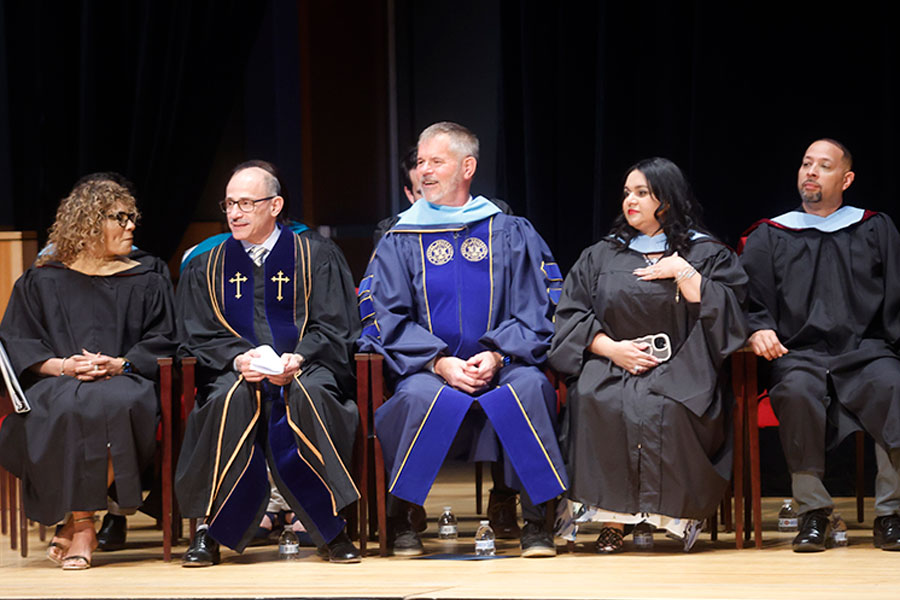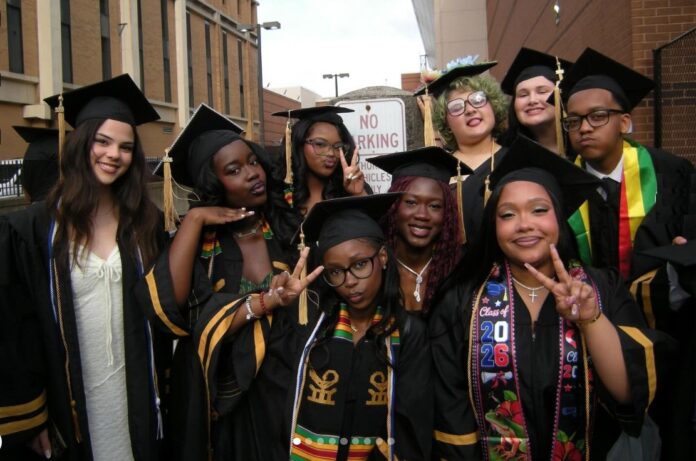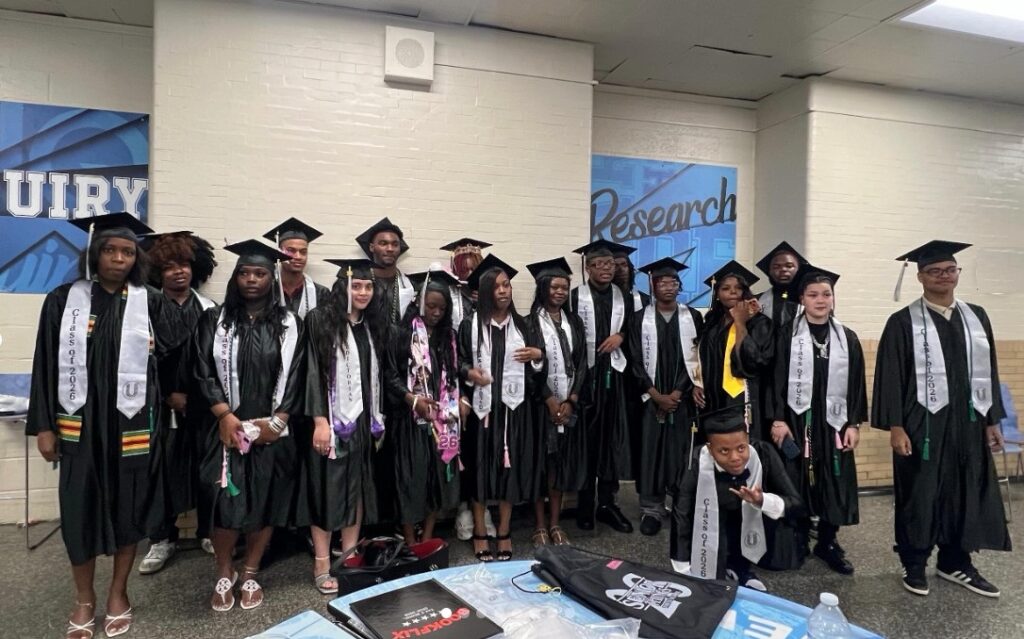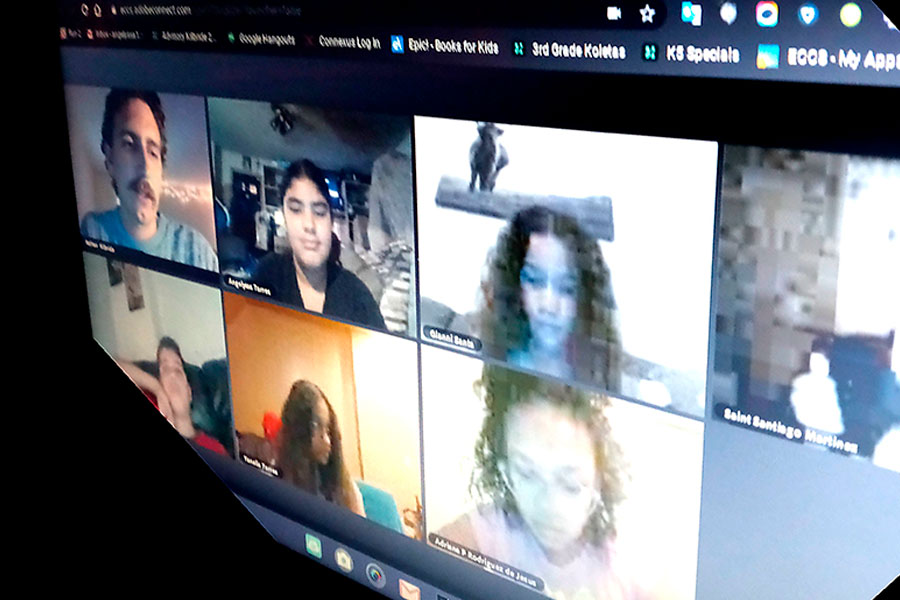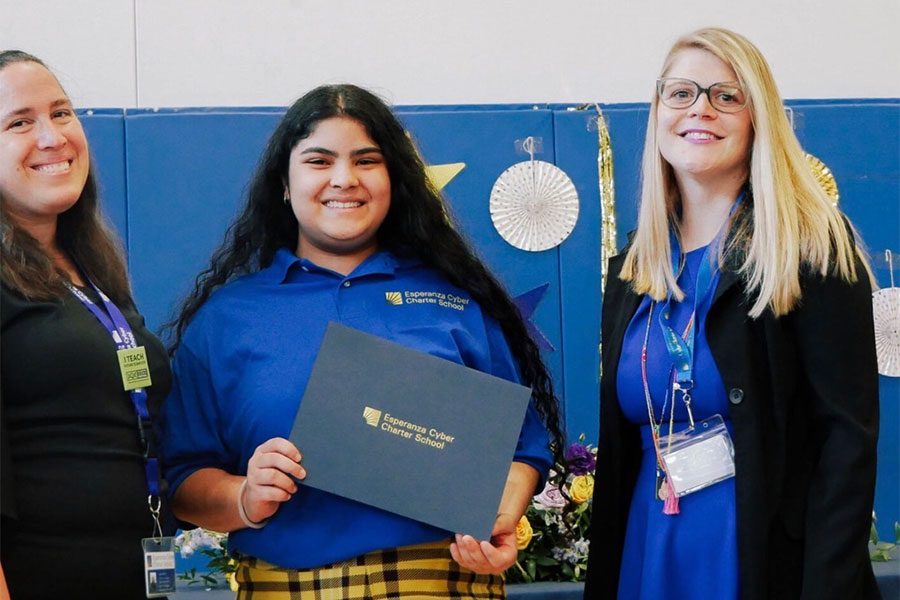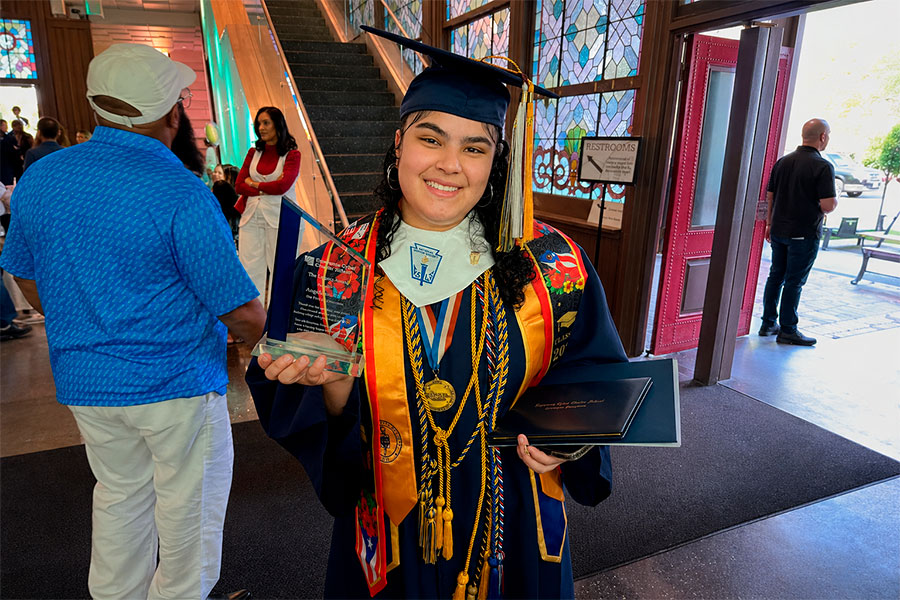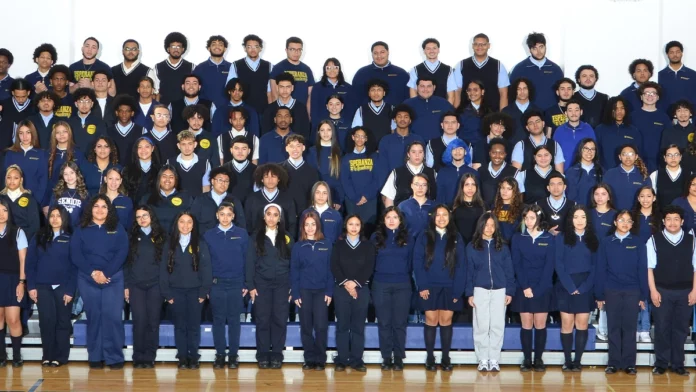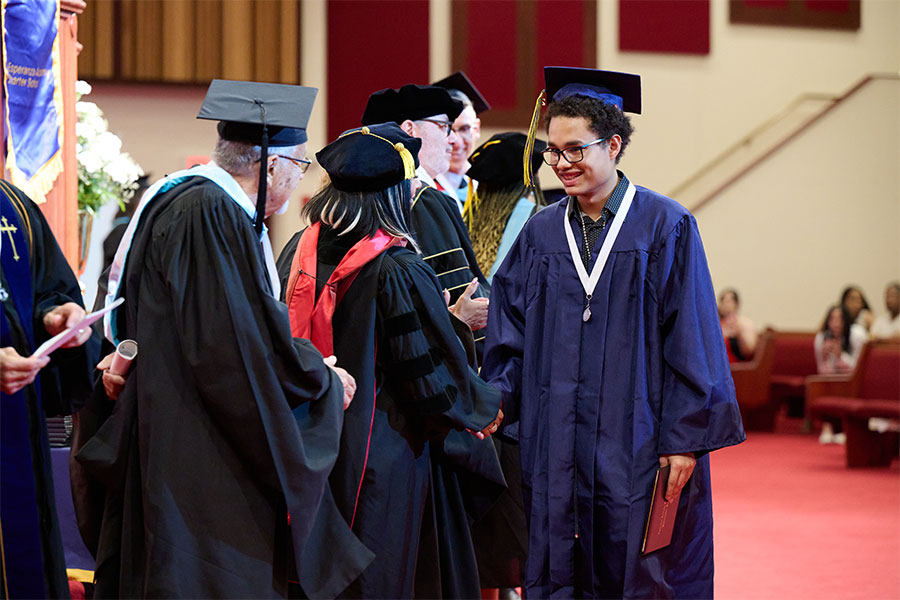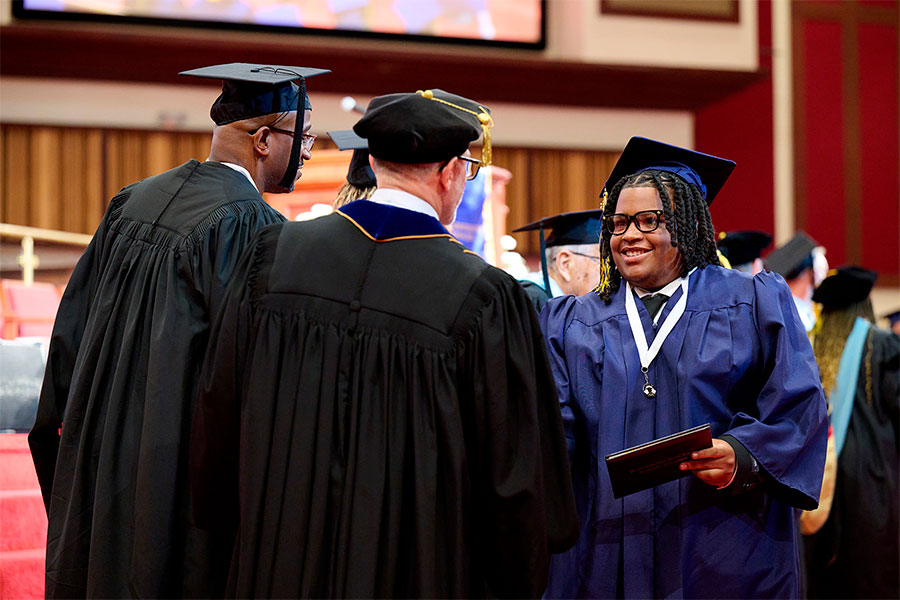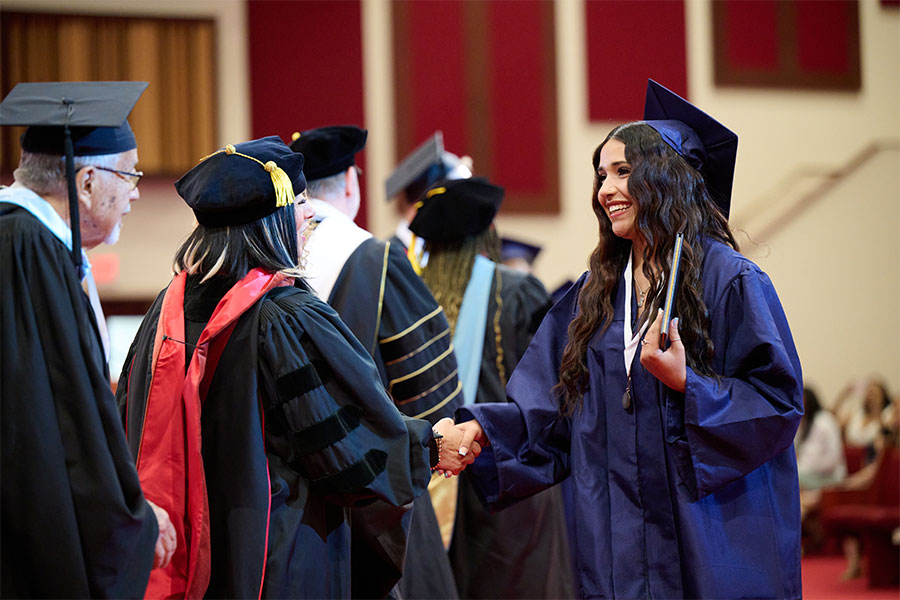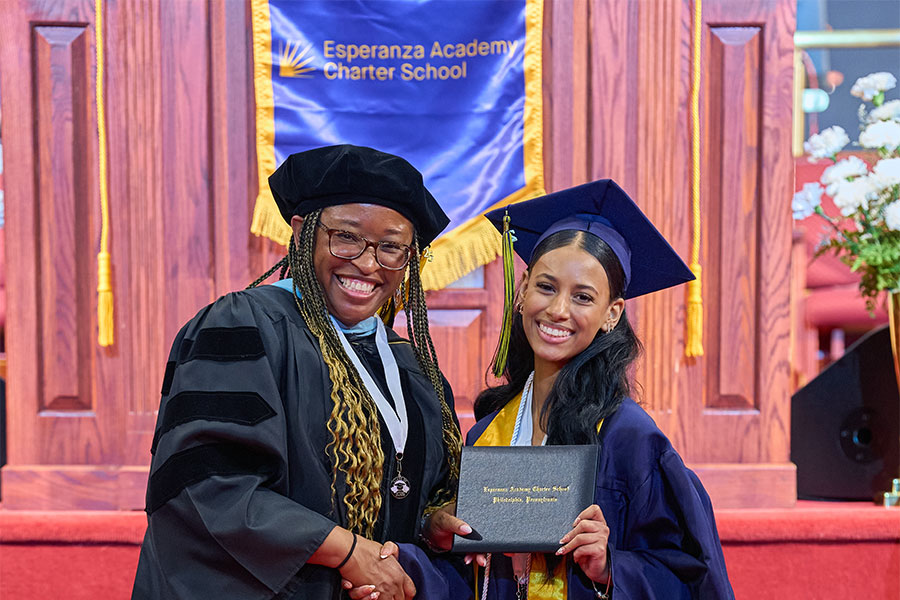


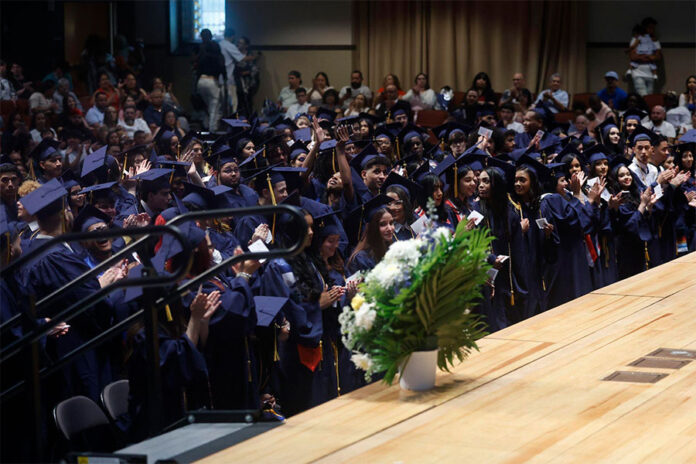
Esperanza Cyber Charter School Generación 2026
Más de 7,600 estudiantes celebran su graduación en Filadelfia

El Distrito Escolar de Filadelfia dio inicio esta semana a la temporada de graduaciones de la Clase 2026, reconociendo a más de 7,600 estudiantes que han completado o están en camino de cumplir los requisitos académicos para recibir su diploma de escuela superior.
Las ceremonias comenzaron el 9 de junio de 2026 y continuarán durante varios días en distintos espacios de la ciudad, incluyendo universidades, auditorios y centros comunitarios. Cada escuela secundaria del distrito llevará a cabo su propio acto de graduación.
Para obtener su diploma, los estudiantes deben cumplir con exigentes requisitos académicos establecidos por el distrito: 23.5 créditos en materias clave, la finalización de un proyecto multidisciplinario o de aprendizaje en servicio, y el cumplimiento de una de las cinco rutas de graduación aprobadas por el Departamento de Educación de Pensilvania (Ley 158).
Entre las primeras ceremonias destacadas se encuentran las graduaciones de South Philadelphia High School y Parkway Center City Middle College, ambas celebradas el 9 de junio, con participación de líderes del distrito como la Dra. Brenda Elliott, sub superintendente interina de Académicos, y Oz Hill, sub superintendente de Operaciones.

El 10 de junio, varias escuelas continuaron las celebraciones, incluyendo Jules E. Mastbaum High School, donde el superintendente del distrito, Tony B. Watlington, Sr., participó en la ceremonia, así como instituciones como Kensington Health Sciences Academy y la High School for Creative & Performing Arts, reflejando la diversidad académica y vocacional del sistema escolar.
Las graduaciones continúan el 11 de junio con eventos en escuelas como Murrell Dobbins Career & Technical Education High School, Benjamin Franklin High School y Overbrook High School, entre otras, llevadas a cabo en distintos puntos de la ciudad.
Más allá de los números, la Clase de 2026 representa una generación de estudiantes que ha superado múltiples desafíos y que se prepara para dar el siguiente paso hacia la universidad, la capacitación técnica o el mundo laboral.
El Distrito Escolar de Filadelfia reiteró su compromiso con la preparación integral de sus estudiantes, destacando no solo los logros académicos, sino también el desarrollo de habilidades prácticas y el compromiso comunitario como pilares fundamentales de esta nueva generación de graduados.
Transforming challenges into achievements: The inspiring story of Angelyssa Torres
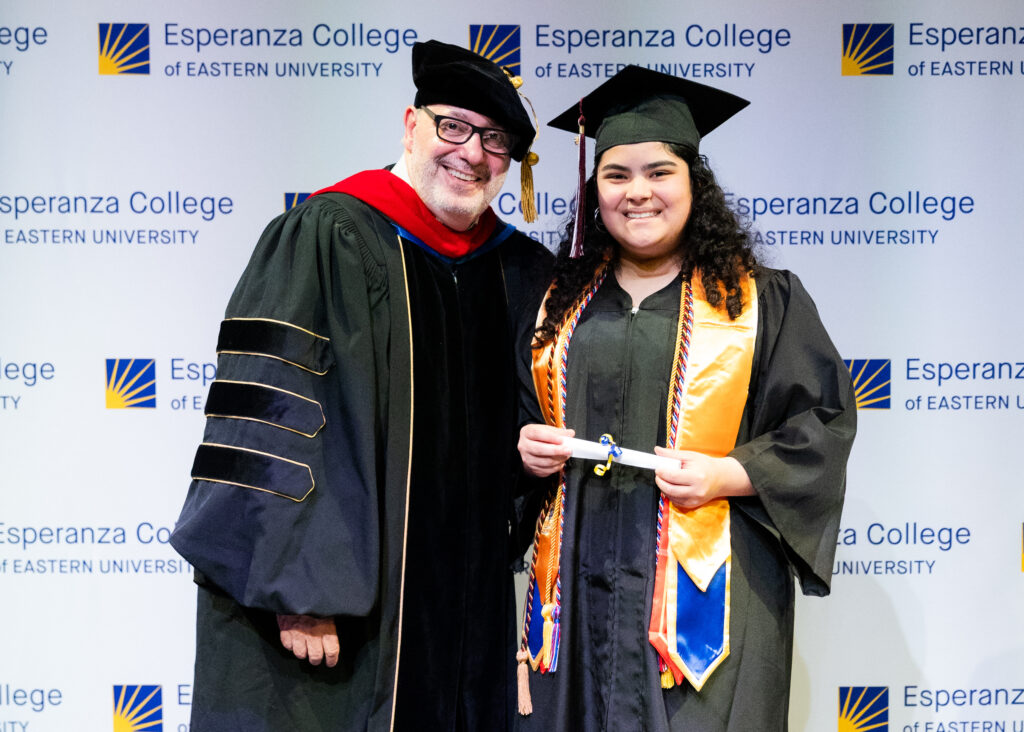
Selected for the Warren Buffett Scholarship, She Just Graduated from High School at ECCS and Earned an Associate Degree in Health Sciences at Esperanza College
The story of Angelyssa Torres, a young woman of Puerto Rican heritage born and raised in Philadelphia, could be that of any other young person her age who has faced multiple challenges since childhood. What makes Angelyssa’s story special is not the challenges themselves, but how she confronted them and emerged victorious.
“My parents enrolled me in Esperanza Cyber Charter School (ECCS) when I was in kindergarten,” says Angelyssa.
The reason was that she had been experiencing bullying from both staff and students at her previous school, and the situation became critical when a staff member injured her right ear. At that point, Angelyssa’s parents enrolled her in ECCS.
“My parents were familiar with Esperanza because my cousin studied there, so they enrolled me temporarily while they searched for a long-term solution.”
However, ECCS proved to be the best option through her high school graduation. The school offered flexibility, strong teacher support, and an environment tailored to her needs—Angelyssa is neurodivergent, with ADHD (Attention Deficit Hyperactivity Disorder) and dyslexia.
She was able to learn at her own pace and receive additional support from the school.
ECCS is a free public online school serving students in grades K–12 across Pennsylvania. Based in North Philadelphia, it combines remote learning with dedicated, culturally responsive support.
“Although online learning wasn’t common when I started, my parents saw the advantages of studying from home while still receiving a quality education and the support I needed.”
In this way, Angelyssa’s academic journey became unique, having learned in a virtual environment from a very young age.
Angelyssa was selected to participate in the Early College program during her final two years of high school, taking all her courses at Esperanza College. Students are able to earn an associate degree—at no cost to their families—while completing high school.
“Esperanza Cyber Charter School gave me flexibility while also challenging me academically. Throughout my years there, I learned time management, organization, and how to be an independent student. Personally, I gained confidence and developed skills that helped me during my first classes at Esperanza College and will continue to help me as I pursue my higher education,” she said.
Among ECCS’s key features are flexibility, support, free technology, dual enrollment opportunities (allowing high school students to earn transferable college credits or an associate degree at no cost), and services for students with special needs.
“ECCS combines live online classes with independent academic work, teacher support, and a variety of learning tools,” said the recent graduate and strong advocate of online learning.
“Virtual learning offers many advantages. This school provides the perfect combination of live instruction with teachers and independent work, allowing students to progress at their own pace. One major challenge is that students need strong time management skills and self-discipline to keep up with assignments; although teachers do their best to monitor progress, it’s easy to simply turn off the computer and move on with your day,” she added.
She remained motivated and highly recommends ECCS.
“The school offers flexibility, supportive teachers, and opportunities for students to challenge themselves academically. It’s a great option for motivated students who are willing to take responsibility for their own learning. They help students go further through the variety of programs and clubs they offer. When you struggle in the virtual format, they make sure to connect you with the help you need. When studying online, you never truly feel alone.”
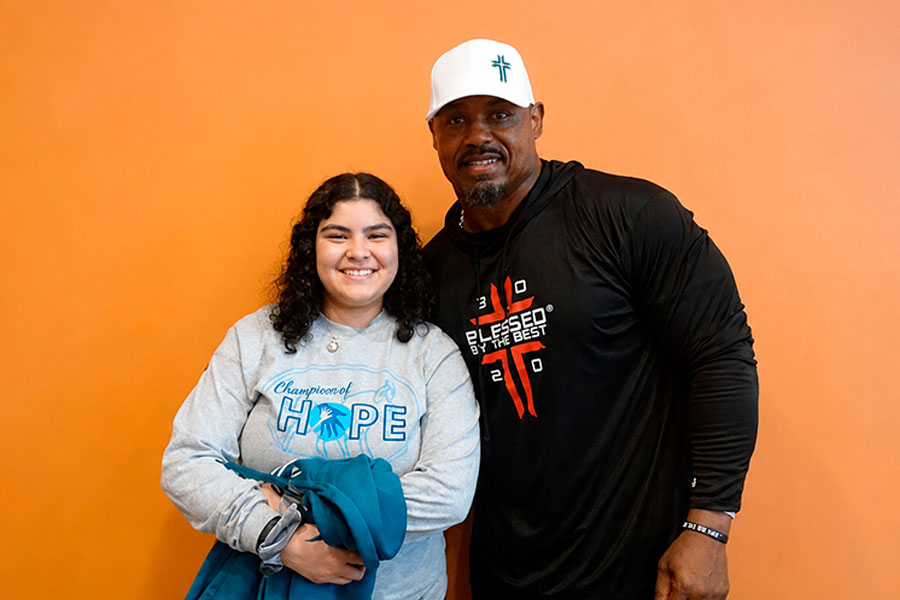
At Esperanza College, Angelyssa not only excelled academically but also took advantage of numerous personal and academic development opportunities available to outstanding students like her. She served as a student ambassador; was part of the Champions of Hope group, helping care for the community garden and the library club garden; and was an active member of HOSA-Future Health Professionals, representing the College in state and international competitions.
Angelyssa’s dual graduation—from high school and with an associate degree in Health Sciences—is only the beginning.
“Now that I’ve graduated, I’ve decided to continue my college education. I plan to move forward and earn my bachelor’s degree. I’m excited to keep growing, meet new people, and explore more opportunities related to my future goal of becoming a veterinarian.”
Angelyssa has been selected for the Warren Buffett Scholarship, which will fully cover her education at Delaware Valley University, where she will study Zoological Sciences.
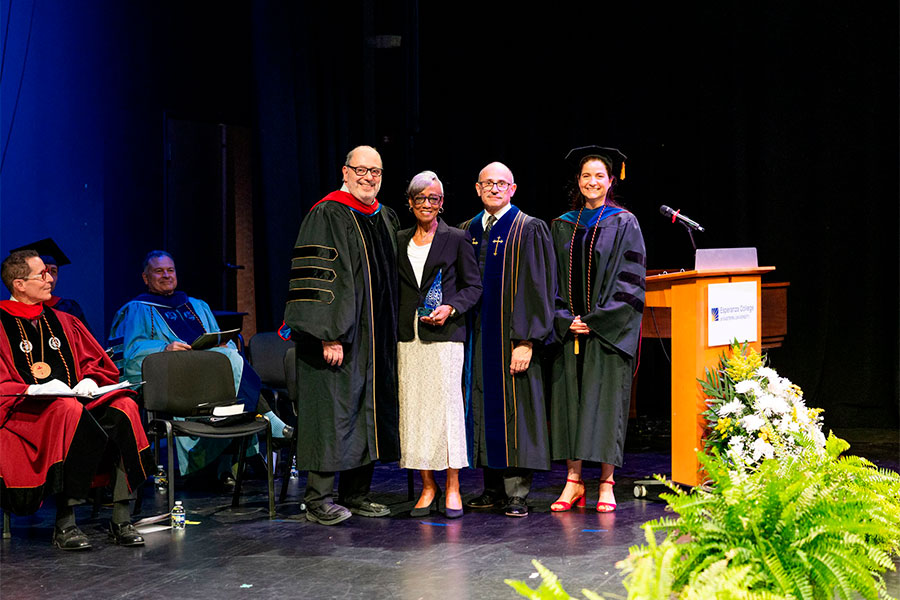
Angelyssa’s parents are proud of their daughter’s achievements. In addition to her dual graduation, they were especially impressed by the “Legacy Award” she received along with a scholarship, for being the first and only student (to date) to complete her entire education within the Esperanza system (ECCS and Esperanza College), and to do so one year ahead of schedule.
Esperanza provided her with the academic support, foundation, and opportunities necessary to achieve this milestone.
“They are very grateful to everyone who supported my journey—teachers, staff, and community members—who helped me succeed and encouraged me to take part in activities that initially made me nervous, such as joining the theater group, the National Honor Society, Student Government, the Early College program, and HOSA–Future Health Professionals (formerly Health Occupations Students of America),” she said—efforts that ultimately helped her stand out and be selected.
You Can Shape Your Child’s Future with ECCS in Four Steps:
To start Kindergarten, your child must turn 5 years old on or before September 1 of the current school year.
For admission and enrollment (Grades K–12):
- Apply online: Begin the process at https://www.esperanzacyber.org/
- Once accepted, register and submit documents: proof of age, Pennsylvania residency, immunization records, and previous school records (if applicable).
- Meet and plan with school staff.
- Student and parent/guardian attend an orientation session—and you’re all set!
You can create your own success story like Angelyssa with the support of ECCS and Esperanza College. Your future is in your hands with Esperanza!

In the words of Esperanza’s founder, president, and CEO, Reverend Luis Cortes:
Angelyssa is an example of how our youth and community can excel when we develop institutions that respond to our community needs. Opportunity creates new realities.
Congratulations to everyone who made this remarkable journey possible—especially Angelyssa.
Philadelphia’s Class of 2026 surpasses $450 million in scholarships and sets new milestones

The School District of Philadelphia continues to celebrate the Class of 2026, whose achievements extend far beyond graduation ceremonies, setting new benchmarks in college access and career readiness.
More than 7,600 students have graduated or are on track to graduate this year, earning nearly $450 million in scholarship offers—an increase of more than $100 million compared to last year. This growth reflects expanded access to higher education opportunities made possible through support from colleges, universities, foundations, and other organizations.
Students in the Class of 2026 have also secured more than 6,000 college acceptances, representing an increase of over 600 from the previous year. Among these accomplishments, more than 100 students were accepted into Ivy League institutions, while nearly 300 gained admission to Historically Black Colleges and Universities (HBCUs).
In career and technical pathways, nearly 800 students earned Career and Technical Education (CTE) certifications, 200 more than last year, significantly expanding their employment opportunities and career readiness. Additionally, more than 500 students earned college credits while still in high school, highlighting the continued growth of dual-enrollment programs.
Commitment to service is also evident, with more than 200 graduates enlisting in the military, reflecting the diverse paths students are taking after high school.
“Earning nearly half a billion dollars in scholarships, securing more than 6,000 college acceptances, and achieving nearly 800 CTE certifications demonstrates what is possible when students are provided with rigorous academic opportunities, strong support systems, and clear pathways to success,” said Superintendent Tony B. Watlington, Sr.
These results align with broader academic improvements across the district. Over the past three years, Philadelphia students have led learning growth among the 25 largest school districts in the nation and have outperformed 84% of districts nationwide. During this period, the district has also seen improvements in student and teacher attendance, standardized test scores, graduation rates, and reductions in dropout rates.
As graduation ceremonies take place across the city throughout June and into the summer, the School District of Philadelphia is recognizing not only academic success, but also the resilience and determination of this year’s graduating class.
The Class of 2026 represents a generation prepared to move forward—whether to college, technical careers, the workforce, or military service—with a strong foundation and the potential to make a lasting impact in Philadelphia and beyond.
La Clase 2026 de Filadelfia supera los $450 millones en becas y marca avances históricos

El Distrito Escolar de Filadelfia continúa celebrando a la Clase de 2026, cuyos logros no solo destacan en las ceremonias de graduación, sino también en cifras históricas de acceso a la educación superior y preparación profesional.
Más de 7,600 estudiantes han completado o están en camino de graduarse este año, alcanzando casi $450 millones en ofertas de becas, un aumento de más de $100 millones en comparación con el año anterior. Este crecimiento refleja el acceso ampliado a oportunidades educativas gracias al apoyo de universidades, fundaciones y otras organizaciones.
Además, los estudiantes han obtenido más de 6,000 aceptaciones universitarias, lo que representa un aumento de más de 600 en comparación con el año pasado. Entre estos logros, se incluyen más de 100 estudiantes aceptados en universidades de la Ivy League y cerca de 300 aceptados en universidades históricamente afroamericanas (HBCU).
En el área de preparación técnica y laboral, casi 800 estudiantes obtuvieron certificaciones de Educación Técnica y Profesional (CTE), 200 más que el año anterior, ampliando significativamente sus opciones de empleo y desarrollo profesional inmediato. Asimismo, más de 500 estudiantes ya han acumulado créditos universitarios, demostrando el avance de los programas de doble matrícula.
Ademas más de 200 graduados han decidido enlistarse en las Fuerzas Armadas, reflejando diversas trayectorias posteriores a la escuela superior.
“El hecho de que los estudiantes hayan obtenido casi medio billón de dólares en becas, más de 6,000 aceptaciones universitarias y cerca de 800 certificaciones CTE demuestra lo que es posible cuando se cuenta con oportunidades académicas rigurosas, sistemas de apoyo sólidos y rutas claras hacia el éxito”, expresó el superintendente Tony B. Watlington, Sr.
Estos resultados coinciden con mejoras sostenidas en el desempeño académico del distrito. En los últimos tres años, los estudiantes de Filadelfia han liderado las tasas de aprendizaje entre los 25 distritos escolares más grandes del país y han superado al 84% de los distritos a nivel nacional. También se han registrado mejoras en asistencia estudiantil y docente, resultados en exámenes, tasas de graduación y reducción de deserción escolar.
Mientras continúan las ceremonias de graduación en toda la ciudad, el distrito destaca no solo los logros académicos, sino también la resiliencia y determinación de esta generación.
La Clase de 2026 no solo cierra una etapa, sino que se encamina hacia la universidad, el mundo laboral, el servicio o la formación técnica con una base sólida que promete impacto en Filadelfia y más allá.
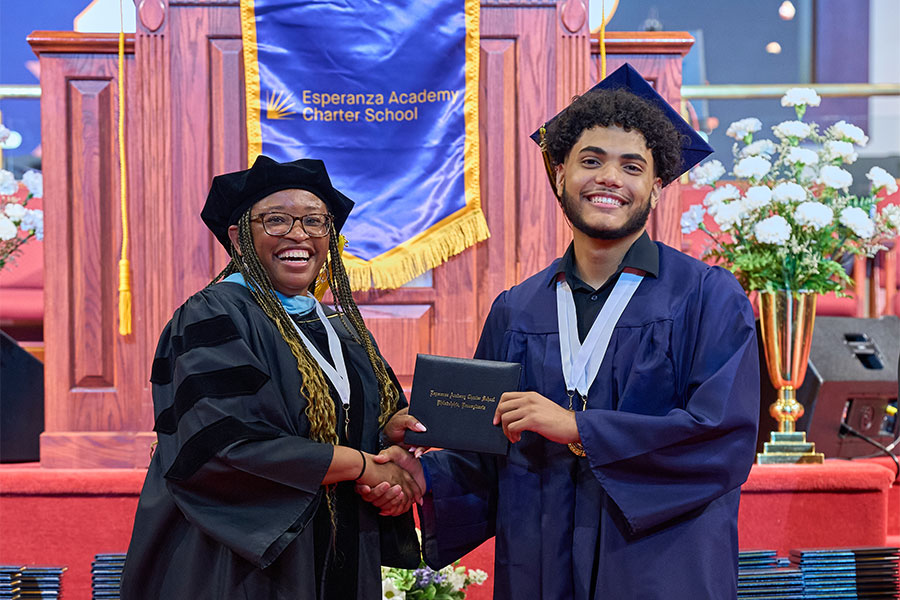
Esperanza Academy Charter School Celebrates the Class of 2026
Philadelphia, PA — Esperanza Academy Charter School (EACS) proudly celebrates its Class of 2026, a cohort of 194 graduates who reflect the school’s commitment to academic excellence, community leadership, and expanding educational opportunities in North Philadelphia.
Class of 2026 Highlights
The Class of 2026 showcases the impact of a comprehensive, forward-focused education:
- Total graduates: 194
- Seal of Biliteracy recipients: 40
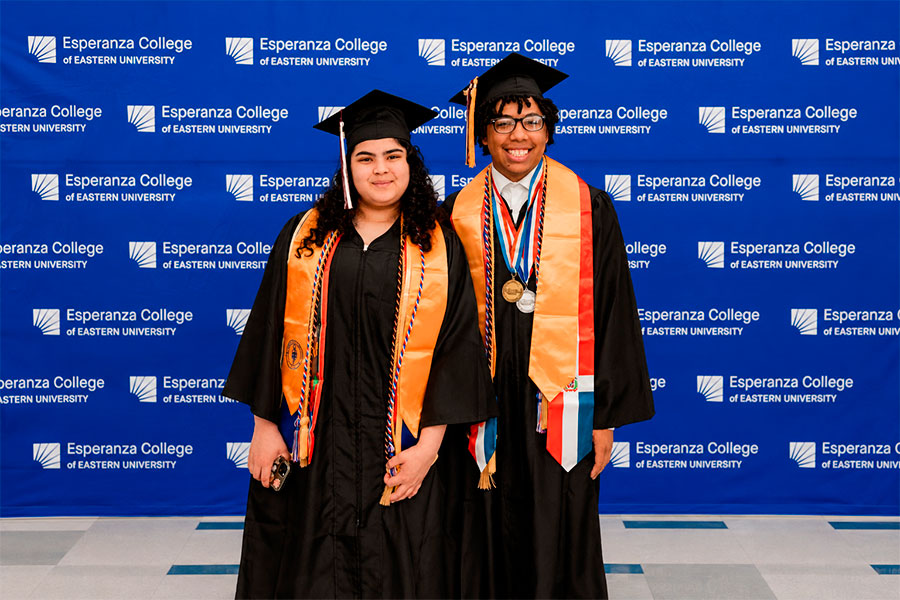
- Early College graduates earning an Associate’s degree: 28
- Students awarded scholarships: 67
The Seal of Biliteracy is a state-recognized credential awarded to students who demonstrate proficiency in English and one or more additional languages, highlighting the bilingual strength of Esperanza’s student body.
Early College: advancing opportunity
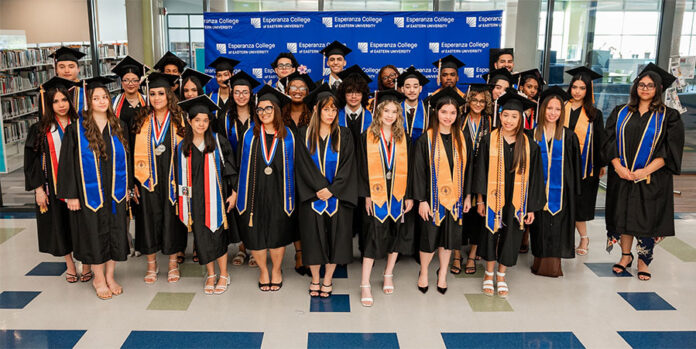
Among the most significant achievements, 28 students earned an Associate’s degree through the Early College Program in partnership with Esperanza College of Eastern University. This program enables students to take college-level courses while still in high school, saving thousands of dollars and accelerating their academic journey.
Academic excellence and student leadership
Valedictorian Andrea Aguilar-Rodriguez will attend Lehigh University on a full-ride scholarship to study Mechanical Engineering, while Salutatorian Israel Jimenez will attend LaSalle University to pursue Nursing.

A school rooted in community impact
Located in the Hunting Park neighborhood, Esperanza Academy Charter School has served the community since 2000 and now educates more than 2,200 students from kindergarten through 12th grade. The school is part of the broader Esperanza organization, committed to strengthening Latino communities through education, economic development, housing, arts, and social change.
The school’s focus on bilingualism, critical thinking, and college readiness continues to open doors for students and families, creating real pathways to economic mobility and long-term success.
A generation shaping the future
The Esperanza Academy Class of 2026 not only marks the end of an academic journey, but the beginning of a new generation of leaders ready to contribute to their communities and beyond.
Doble logro: estudiantes de Esperanza Academy y Cyber se gradúan del Programa Early College

Filadelfia, PA — La Escuela Charter Esperanza Academy (EACS) celebró que 28 estudiantes de la Clase del 2026 se gradúan este año con doble logro académico: su diploma de escuela superior y un grado asociado obtenido a través de su Programa Early College, en colaboración con Esperanza College de Eastern University. También de Esperanza Cyber Charter School, se graduaron 6 alumnos, por lo que un total de 34 estudiantes se graduaron del programa de Early College este año.
Un logro que transforma familias
En la comunidad de Hunting Park, donde Esperanza Academy ha servido desde el año 2000, este logro representa mucho más que un título. Para muchas familias latinas, es un paso concreto hacia la movilidad económica, la estabilidad y el progreso generacional.
La escuela atiende a más de 2,200 estudiantes desde kínder hasta el grado 12, ofreciendo programas académicos sólidos que incluyen cursos avanzados (AP), especializaciones por área de estudio y oportunidades universitarias tempranas.
Universidad mientras terminan la escuela superior
El Programa Early College permite que estudiantes elegibles comiencen cursos universitarios en 11.º o 12.º grado, con la posibilidad de completar un grado asociado sin costo alguno antes de graduarse de la escuela superior, ahorrando miles de dólares en matrícula.
Las áreas de estudio incluyen:
Administración de Empresas
Servicios Humanos y Comunitarios
Justicia Criminal
Educación de la Niñez Temprana
Ciencias de la Salud
Medios y Tecnología
Asistencia Médica
Orgullo comunitario y esperanza
La Dra. Evelyn Núñez, CEO y superintendente de Esperanza Academy, destacó el impacto del logro:
“Estamos increíblemente orgullosos de estos estudiantes. Obtener un diploma y un grado asociado requiere disciplina y compromiso extraordinario. Esperamos expandir este programa para que más jóvenes puedan aprovechar estas oportunidades transformadoras”.
El reverendo Luis Cortés, Jr., fundador y CEO de Esperanza, añadió:
“Estos graduados demuestran lo que es posible cuando una comunidad invierte en su gente. Este logro envía un mensaje claro: las barreras históricas que han afectado a las familias latinas sí se pueden superar”.
Más que una escuela: una comunidad de oportunidades
Esperanza Academy continúa abriendo puertas a través de la educación superior, preparando a jóvenes bilingües, culturalmente conscientes y listos para el siglo XXI.
Detrás de este éxito está Esperanza, una organización fundada en 1986 que hoy impacta a aproximadamente 35,000 personas al año mediante programas en educación, vivienda, desarrollo económico, artes y cambio social.
En Hunting Park, su misión es clara: construir una comunidad donde escuelas de calidad, viviendas accesibles, pequeños negocios y una vida cultural vibrante creen oportunidades para todos.
ICE: The mental health emergency we can no longer ignore
Juana Rodriguez, a U.S. citizen, was among those detained. Her hands were zip-tied, and she was prevented from feeding her three‑year‑old. “What happened turned our outing into a nightmare. My toddler was forced to witness an incredible amount of violence against people he loves and hear racial slurs about Latinos, experiences that no child should ever be exposed to,” she said.
The government claimed it was targeting five people for illegal gambling. Instead, 105 people were arrested — all on civil immigration charges. Did anyone consider the children’s trauma before approving the raid? If they had, it would never have happened.
For immigrant families, fear and uncertainty now shape daily life and mental health.
A growing mental health emergency
May was the Mental Health Awareness Month, but we think it should be called Mental Health ACTION Month. Across the nation, children’s mental health is deteriorating. Economic instability, bullying, and hateful rhetoric from political leaders worsen the stress. When leaders demean people based on ethnicity, religion, gender or gender identity, or immigration status, it fuels hostility in everyday life.
The results are devastating: between 2016 and 2021, youth emergency room visits for self‑inflicted injuries rose 169%. One in five child deaths results from suicide. In 2021, pediatric and psychiatric associations declared a national emergency in children’s mental health, and immigration‑related fear has only intensified the crisis.
Tragic cases like the suicides of 11‑year‑old Jocelynn Rojo Carranza and 13‑year‑old Gabriela Aparicio Ortega — both bullied about their parents’ perceived immigration status — show the human cost. Latina adolescents now report some of the nation’s highest suicide attempt rates, according to the CDC.
Children carry the weight
Dreamers — people born abroad but raised in this country — continue to live with instability as DACA’s future remains uncertain. Living life in four‑year increments, tied to a government application’s approval, is its own source of chronic stress.
Meanwhile, family separations persist. Maryland mother Arlit Maria Martinez was detained by ICE on her way to work. Two days later, her 15‑year‑old son died of cancer. She never got to say goodbye. Her three surviving children are living a nightmare.
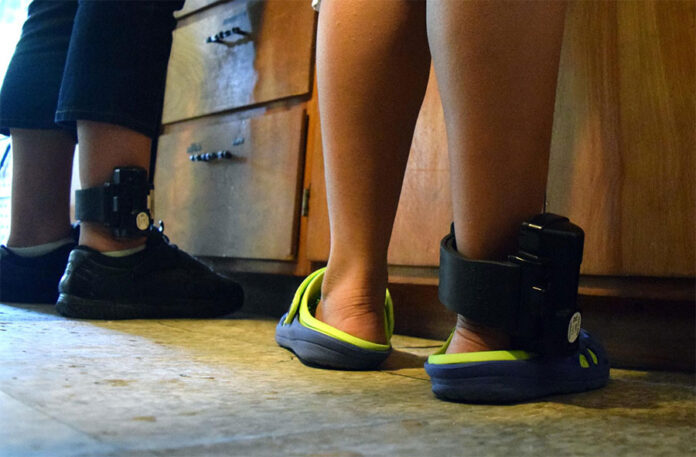
According to government data, ICE has detained more than 6,200 children nationwide, some as young as two years old. Each raid and detention inflicts lasting psychological harm. Even children who simply witness such actions internalize the idea that safety is conditional.
Parents, too, carry trauma and guilt. Immigration enforcement functions as a community‑wide stressor, disrupting social networks, economic stability, and any sense of safety. Fear seeps into everyday life — determining where families go, what they say, and whether they seek help.
When people are afraid to approach mental health professionals, distress becomes structural, not just emotional. Our collective nervous system is under strain.
What governments can do
Latino communities have always drawn strength from family, faith, and collective care. But resilience should not replace investment in mental health infrastructure. We must go beyond telling people to “seek help” and create systems that make help accessible, affordable, and culturally responsive.
Local governments can invest in trusted community partnerships. Prince George’s County, Maryland, offers a model through The Hope Center for Wellness and the City of Hyattsville — a collaboration that funds local providers, simplifies referrals, and ensures residents don’t face endless waitlists.
State governments must strengthen and expand the bilingual, culturally competent workforce by improving reimbursement rates, supporting training pipelines, and streamlining licensing so providers can serve across communities.
At the federal level, the government must protect loan forgiveness programs that keep social workers and therapists in community‑based roles. Weakening these programs shrinks the very workforce needed to meet the crisis. Federal policy must instead invest in workforce development, community‑based care, language access, and equity enforcement.
We must be clear: immigration policy is mental health policy. Reducing detention and prioritizing family unity are not just moral or political acts; they are public health interventions.
If we continue to tell people to “seek help” while maintaining systems that harm them, we aren’t closing the gap — we’re widening it.
If you or someone you love is struggling, support is available.
Call the SAMHSA National Helpline: 1‑800‑662‑4357 (free, confidential, English & Spanish, 24/7). Text HELLO to 741741 to reach the Crisis Text Line.
Sindy Benavides is the Founding Executive Director of Aquí: The Accountability Movement. Dr. Cheryl Aguilar PhD, LICSW, is a nationally recognized mental health clinician, researcher, and advocate focused on the intersection of mental health, immigration, and culturally responsive care.
ICE: la emergencia de salud mental que ya no podemos ignorar
El 19 de octubre de 2025, familias en Wilder, Idaho, se reunieron para carreras de caballos y comida cuando helicópteros y camiones blindados descendieron repentinamente. Agentes del Servicio de Inmigración y Control de Aduanas (ICE) — armados con pistolas, granadas aturdidoras y balas de goma — irrumpieron en el evento, aterrorizando tanto a niños como a padres.
Juana Rodríguez, ciudadana estadounidense, estaba entre los detenidos. Le sujetaron las manos y le impidieron alimentar a su hijo de tres años. “Lo que pasó convirtió nuestra salida en una pesadilla. Mi pequeño fue obligado a presenciar una cantidad increíble de violencia contra personas que ama y a escuchar insultos raciales contra los latinos, experiencias a las que ningún niño debería estar expuesto”, dijo.
El gobierno afirmó que buscaba a cinco personas por juego ilegal. En cambio, 105 personas fueron arrestadas — todas por cargos civiles de inmigración. ¿Alguien consideró el trauma de los niños antes de aprobar la redada? Si lo hubieran hecho, nunca habría sucedido.
Para las familias inmigrantes, el miedo y la incertidumbre ahora moldean la vida diaria y la salud mental.
Una creciente emergencia de salud mental
Mayo fue el Mes de Concientización sobre la Salud Mental, pero creemos que debería llamarse el Mes de ACCIÓN por la Salud Mental. En todo el país, la salud mental de los niños está deteriorándose. La inestabilidad económica, el acoso escolar y la retórica de odio de líderes políticos agravan el estrés. Cuando los líderes menosprecian a las personas por su etnia, religión, género o identidad de género, o estatus migratorio, alimentan la hostilidad en la vida cotidiana.
Los resultados son devastadores: entre 2016 y 2021, las visitas de jóvenes a salas de emergencia por autolesiones aumentaron un 169 %. Una de cada cinco muertes infantiles es resultado del suicidio. En 2021, asociaciones pediátricas y psiquiátricas declararon una emergencia nacional en la salud mental infantil, y el miedo relacionado con la inmigración no ha hecho más que intensificar la crisis.
Casos trágicos como los suicidios de Jocelynn Rojo Carranza, de 11 años, y Gabriela Aparicio Ortega, de 13 — ambas acosadas por el supuesto estatus migratorio de sus padres — muestran el costo humano. Las adolescentes latinas ahora reportan algunas de las tasas más altas de intentos de suicidio en el país, según los CDC.
Los niños cargan el peso
Los “Dreamers” — personas nacidas en el extranjero, pero criadas en este país — continúan viviendo con inestabilidad mientras el futuro de DACA sigue siendo incierto. Vivir la vida en incrementos de cuatro años, ligados a la aprobación de una solicitud gubernamental, es en sí mismo una fuente de estrés crónico.
Mientras tanto, las separaciones familiares persisten. Arlit Maria Martínez, una madre en Maryland, fue detenida por ICE camino al trabajo. Dos días después, su hijo de 15 años murió de cáncer. Ella nunca pudo despedirse. Sus otros tres hijos sobreviven en una pesadilla.
Según datos del gobierno, ICE ha detenido a más de 6,200 niños en todo el país, algunos de tan solo dos años. Cada redada y detención inflige un daño psicológico duradero. Incluso los niños que solo presencian estas acciones internalizan la idea de que la seguridad es condicional.
Los padres también cargan con trauma y culpa. La aplicación de leyes migratorias funciona como un factor de estrés a nivel comunitario, alterando redes sociales, la estabilidad económica y cualquier sentido de seguridad. El miedo se infiltra en la vida cotidiana: determina a dónde van las familias, lo que dicen y si buscan ayuda.
Cuando las personas temen acudir a profesionales de la salud mental, el sufrimiento se vuelve estructural, no solo emocional. Nuestro sistema nervioso colectivo está bajo presión.
Qué pueden hacer los gobiernos
Las comunidades latinas siempre han encontrado fortaleza en la familia, la fe y el cuidado colectivo. Pero la resiliencia no debe reemplazar la inversión en infraestructura de salud mental. Debemos ir más allá de decirles a las personas que “busquen ayuda” y crear sistemas que hagan esa ayuda accesible, asequible y culturalmente competente.
Los gobiernos locales pueden invertir en asociaciones comunitarias de confianza. El condado de Prince George’s, Maryland, ofrece un modelo a través del Hope Center for Wellness y la ciudad de Hyattsville, una colaboración que financia proveedores locales, simplifica las referencias y garantiza que los residentes no enfrenten listas de espera interminables.
Los gobiernos estatales deben fortalecer y ampliar la fuerza laboral bilingüe y culturalmente competente mediante la mejora de tarifas de reembolso, el apoyo a programas de formación y la simplificación de licencias para que los proveedores puedan servir a diversas comunidades.
A nivel federal, el gobierno debe proteger los programas de condonación de préstamos que mantienen a trabajadores sociales y terapeutas en roles comunitarios. Debilitar estos programas reduce precisamente la fuerza laboral necesaria para enfrentar la crisis. La política federal debe, en cambio, invertir en el desarrollo de la fuerza laboral, la atención basada en la comunidad, el acceso al idioma y la equidad.
Y debemos ser claros: la política migratoria es política de salud mental. Reducir la detención y priorizar la unidad familiar no son solo acciones morales o políticas; son intervenciones de salud pública.
Si seguimos diciendo a las personas que “busquen ayuda” mientras mantenemos sistemas que les perjudican, no estamos cerrando la brecha — la estamos ampliando.
Si usted o alguien que ama está pasando por dificultades, hay ayuda disponible.
Llame a la línea nacional de SAMHSA: 1-800-662-4357 (gratis, confidencial, en inglés y español, 24/7).
Envíe el mensaje de texto “HELLO” al 741741 para comunicarse con la Línea de Crisis por Texto.
*Sindy Benavides es directora ejecutiva fundadora de Aquí: The Accountability Movement. La Dra. Cheryl Aguilar, PhD, LICSW, es una reconocida clínica de salud mental, investigadora y defensora centrada en la intersección entre salud mental, inmigración y atención culturalmente competente.
m
Knowledge that nourishes: Mexican women share their culinary legacy
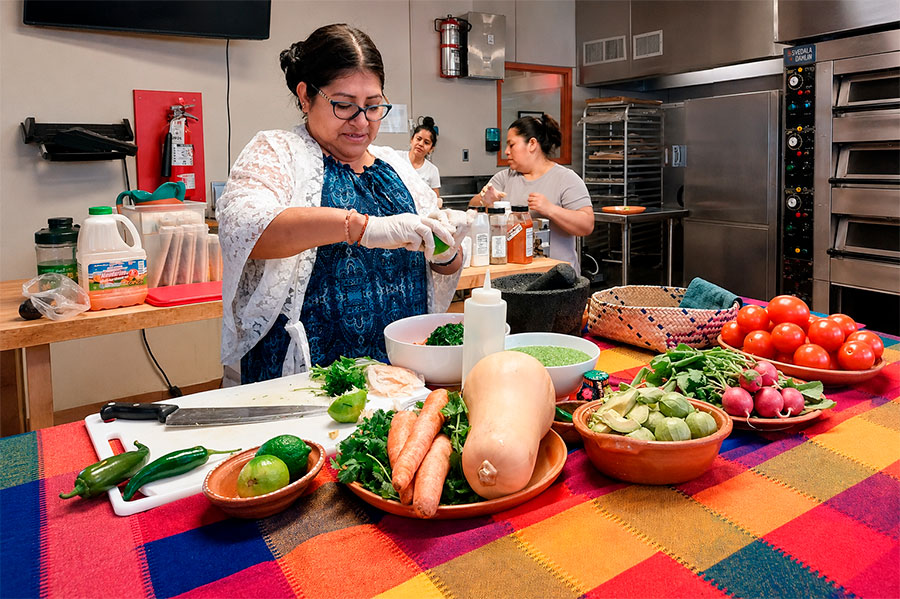
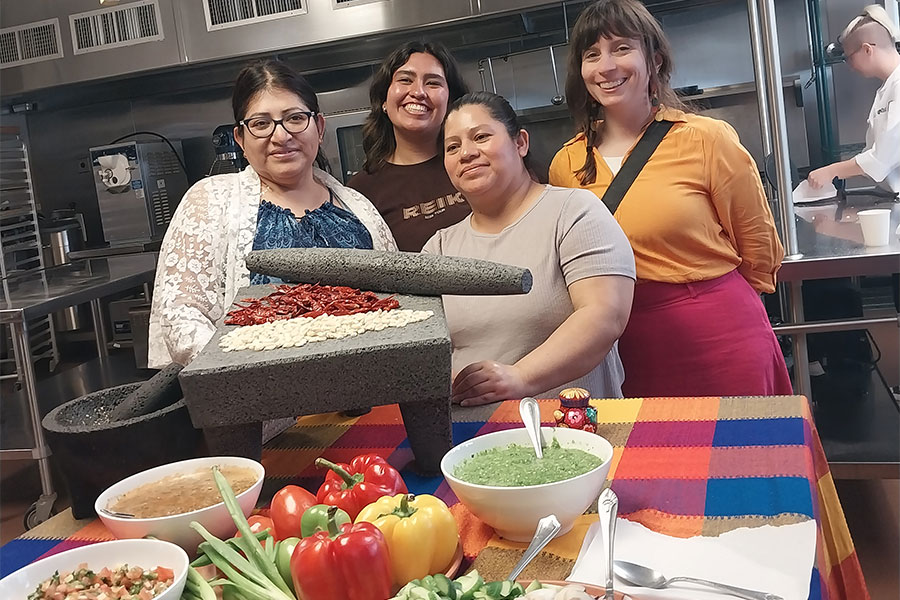
Drexel University in Philadelphia, in collaboration with the Fleisher Art Memorial, has organized a course focused on food justice with Mexican immigrant women from South Philadelphia. This educational program will begin on June 22 and will run for 10 weeks.

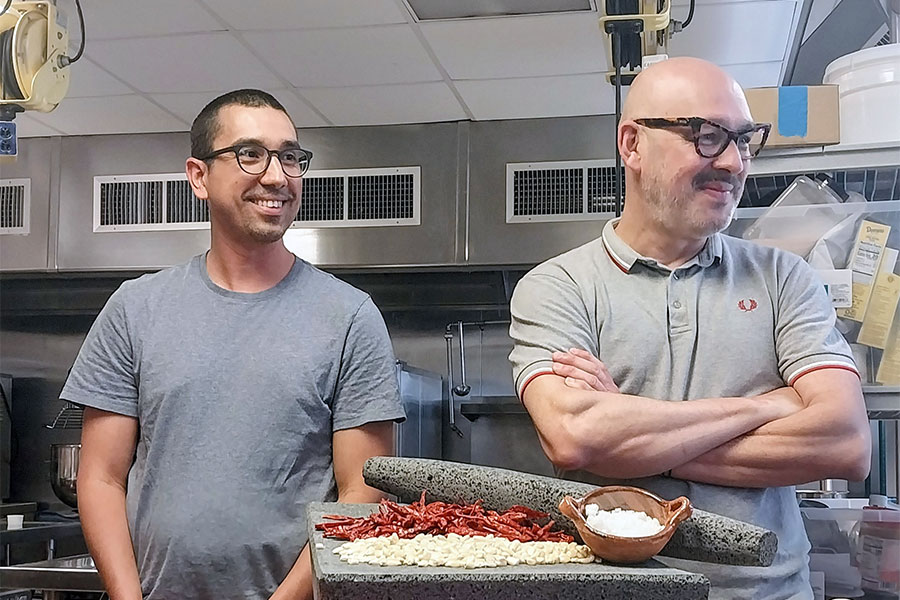
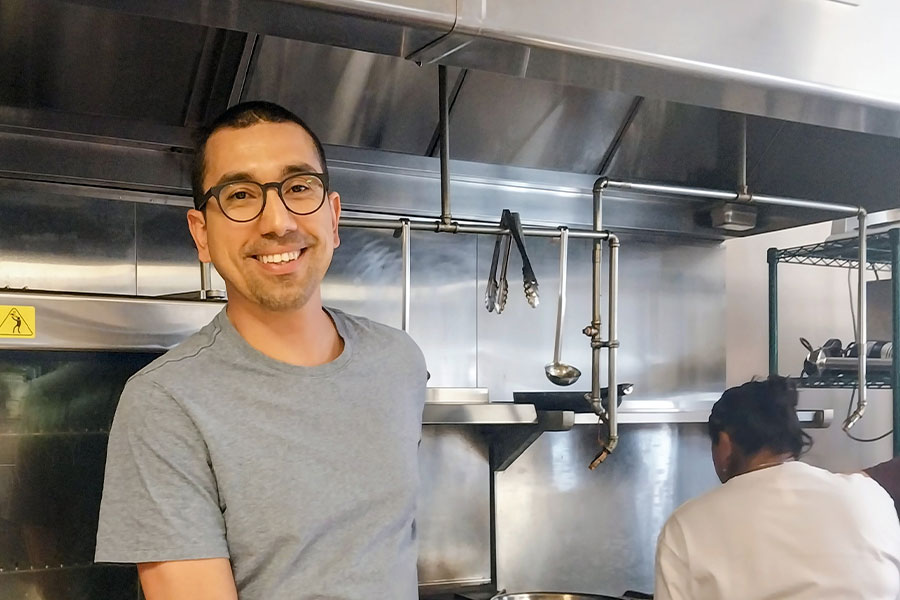
Community leader Ivonne Pinto García is part of this initiative, led by Dr. Steve Vásquez Dolph with the university’s Food Lab, whose associate director and research chef is Rachel Sherman.

The well-known activist from Puebla shared: “Many years ago, I met Professor Steve, who teaches Spanish and culture at Drexel University. He guides his students to engage in conversations about issues that matter to us, such as the right to gardens, access to green spaces, and reclaiming our traditions and culture. He also encourages us to remember our ancestors through seeds: to know them, understand where they are planted, and identify community spaces where we can grow food and take part in both planting and harvesting. In this case, the central theme of the workshops is corn, the king of our table.”

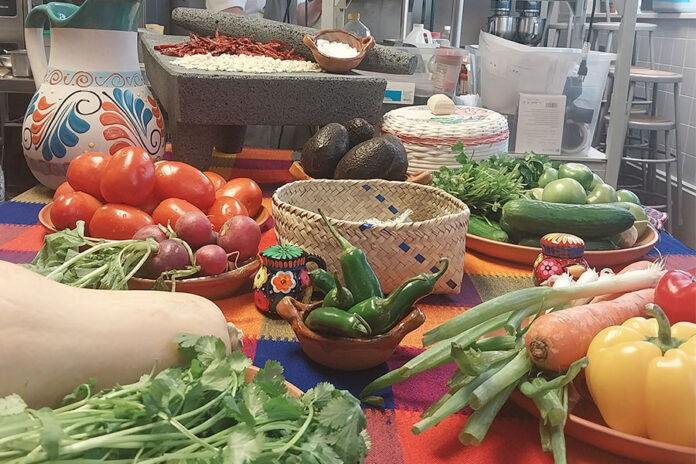
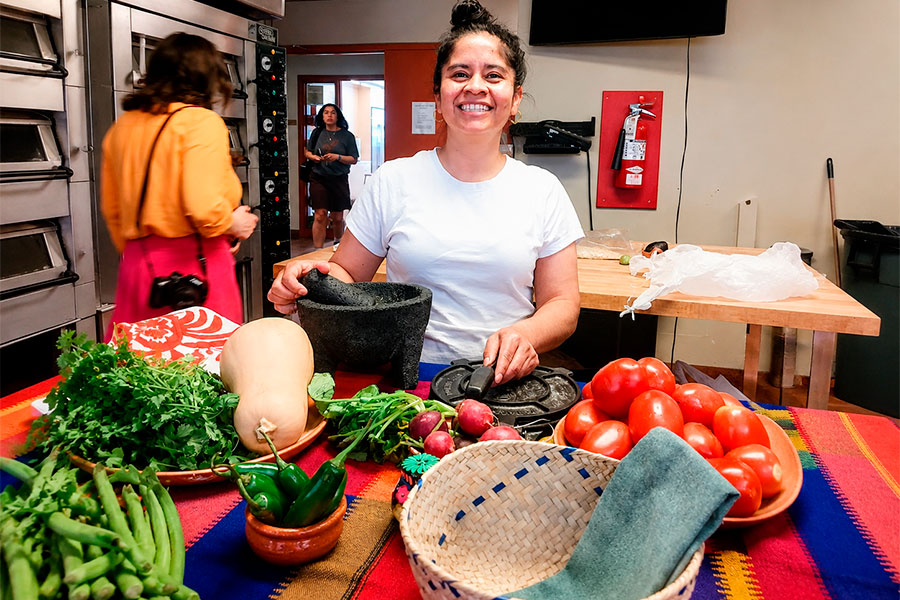
Two community chefs, Mary and Sonia, along with Susana, a talented baker, will share their culinary knowledge passed down from their families in Mexico. Twenty members of the immigrant community will take part in this free course alongside university students. They will learn about Mexican gastronomy and visit community gardens to complement their learning.

Student Victoria Rodríguez, an active participant in the course, highlighted the importance of “college students experiencing Mexican culinary traditions firsthand in an intergenerational setting.”

Steve Vásquez Dolph was born in Queens, New York, to Colombian immigrant parents. He holds a Ph.D. in Spanish and Portuguese studies from the University of Pennsylvania. At Drexel, he works closely with the Latino community in Philadelphia. In 2023, he was named Associate Dean for Diversity, Equity, and Inclusion in the College of Arts and Sciences. He has collaborated with local organizations such as the Sankofa Community Farm at Bartram’s Garden, the César Andreu Iglesias Community Garden, and the Norris Square Neighborhood Project to develop the course “Food Security and Land in Philadelphia.”