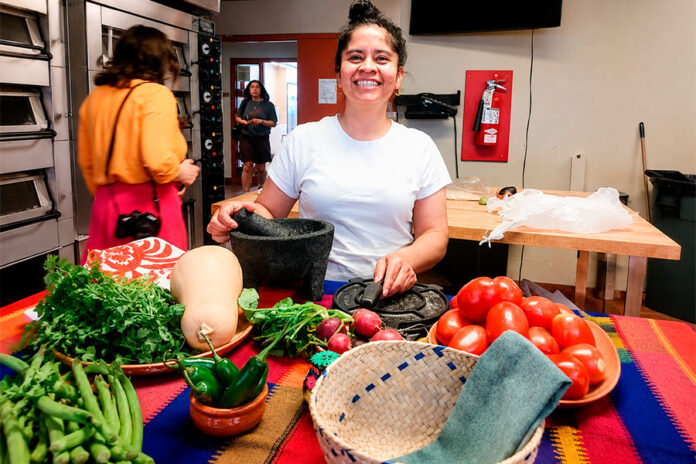
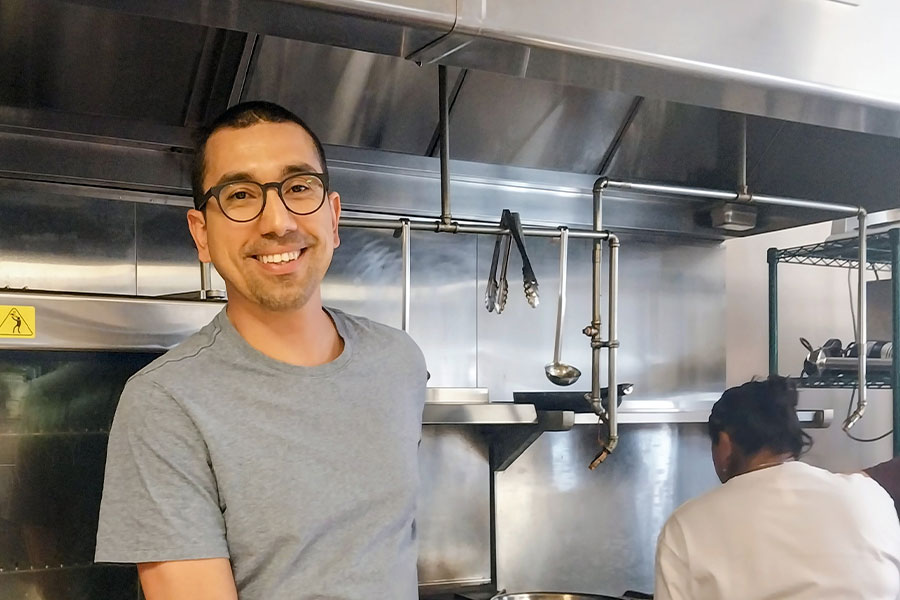
La líder comunitaria Ivonne Pinto García, parte del proyecto. (Foto: Leticia Roa Nixon)
La Universidad Drexel de Filadelfia, en colaboración con la organización artística Fleisher Art Memorial, ha organizado un curso enfocado en la justicia alimentaria junto a mujeres inmigrantes mexicanas del sur de la ciudad.
Este proceso educativo comenzará el 22 de junio y tendrá una duración de 10 semanas.
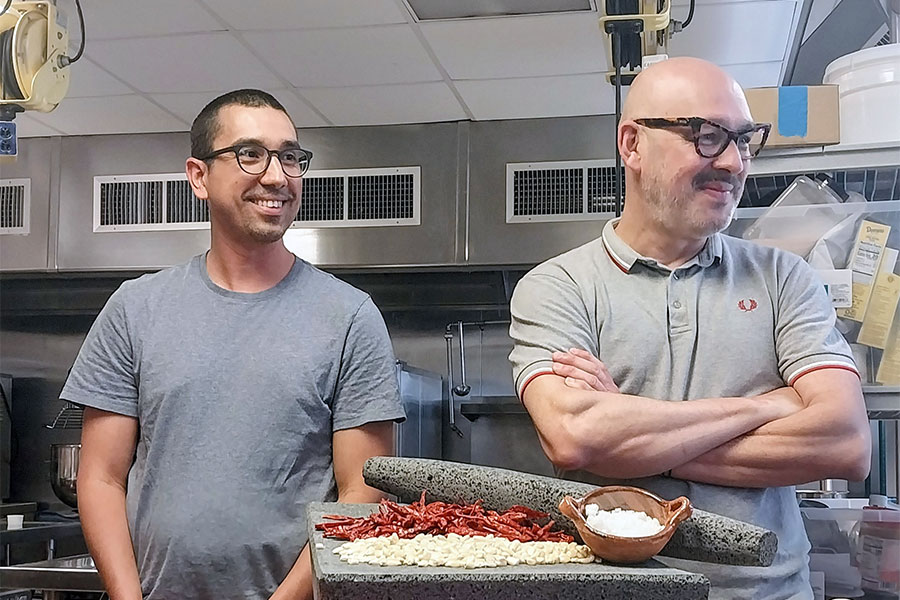
La líder comunitaria Ivonne Pinto García forma parte de esta iniciativa, liderada por el doctor Steve Vásquez Dolph en conjunto con el Food Lab de la universidad, cuya directora asociada y chef investigadora es Rachel Sherman.
Steve Vásquez a la izquierda y Gerard Silva a la derecha. (Foto: Leticia Roa Nixon)
La reconocida activista poblana expresó: “Hace muchos años conocí al profesor Steve, quien imparte español y cultura en la Universidad Drexel. Él guía a sus estudiantes a dialogar sobre temas que nos importan, como el derecho a los jardines, el acceso a espacios verdes, y la recuperación de nuestras tradiciones y cultura. También nos invita a recordar a nuestros ancestros a través de las semillas: conocerlas, entender dónde se siembran, y qué espacios comunitarios nos permiten cultivar y participar tanto en la siembra como en la cosecha. En este caso, el tema central de los talleres es el maíz, el rey de nuestra mesa”.
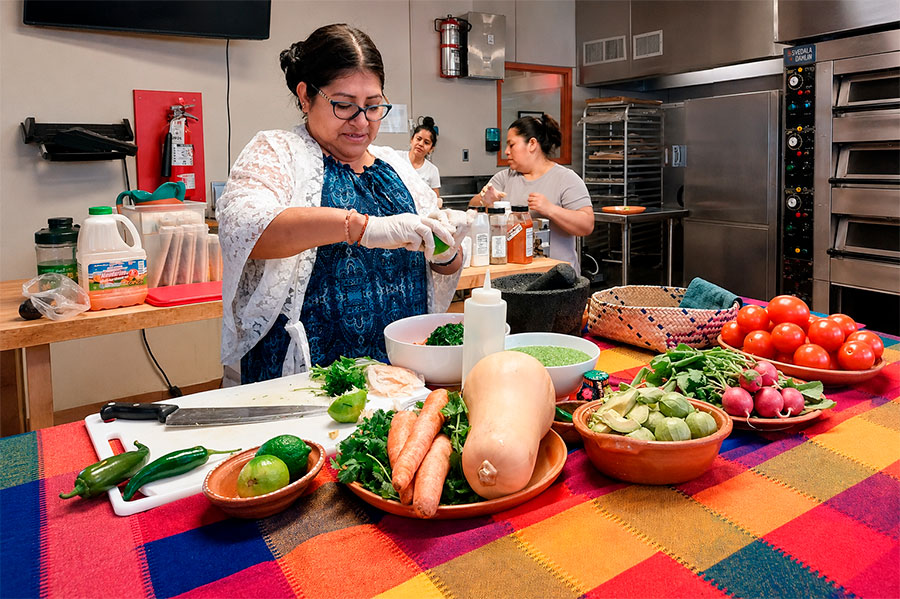
Mary López es una de las chefs del curso. (Foto: Leticia Roa Nixon)
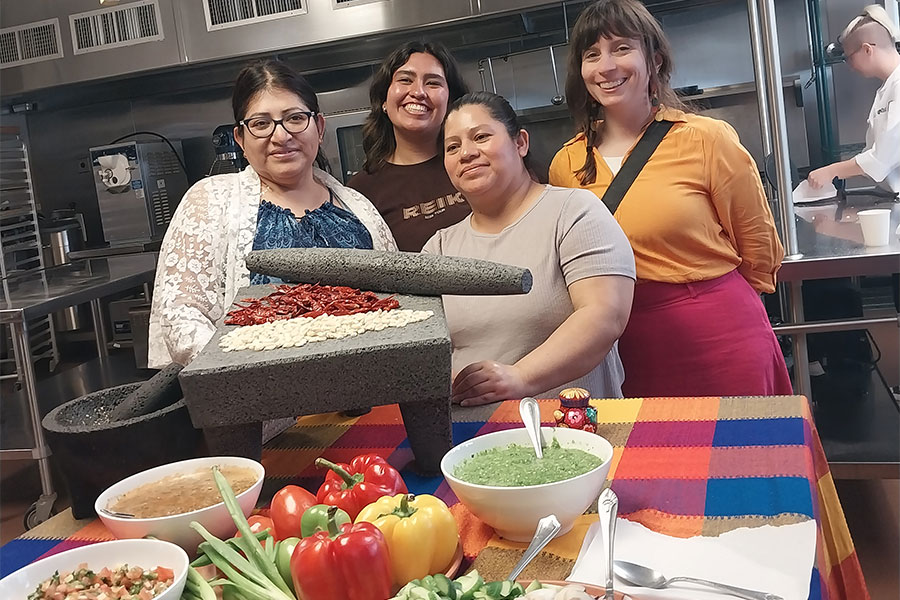
Dos chefs de la comunidad, Mary y Sonia, junto con Susana, una talentosa repostera, compartirán su conocimiento culinario, heredado de sus familias en México. Veinte miembros de la comunidad inmigrante participarán en este curso gratuito junto a estudiantes universitarios. Aprenderán sobre gastronomía mexicana y visitarán jardines comunitarios para complementar su formación.
Al frente, a la izquierda Mary; a la derecha Sonia; atrás, a la izquierda Victoria Rodríguez y a la derecha Rachel Sherman. (Foto: Leticia Roa Nixon)
La estudiante Victoria Rodríguez, participante activa del curso, destacó la importancia de que “los estudiantes universitarios conozcan directamente el arte culinario de la gastronomía mexicana en un entorno intergeneracional”.
Doctor Steve Vásquez Dolph, dedicado a la educación basada en la comunidad. (Foto: Leticia Roa Nixon)
Steve Vásquez Dolph nació en el distrito de Queens, Nueva York, hijo de inmigrantes colombianos. Cuenta con un doctorado en estudios de español y portugués de la Universidad de Pensilvania. En Drexel, colabora activamente con la comunidad latina de Filadelfia. En 2023 fue nombrado decano asociado de Diversidad, Equidad e Inclusión en la Facultad de Artes y Ciencias. Ha trabajado con organizaciones locales como la granja comunitaria Sankofa en Bartram’s Garden, el jardín comunitario César Andreu Iglesias y el Proyecto Vecinal de Norris Square para desarrollar el curso “Seguridad Alimentaria y Tierra en Filadelfia”.
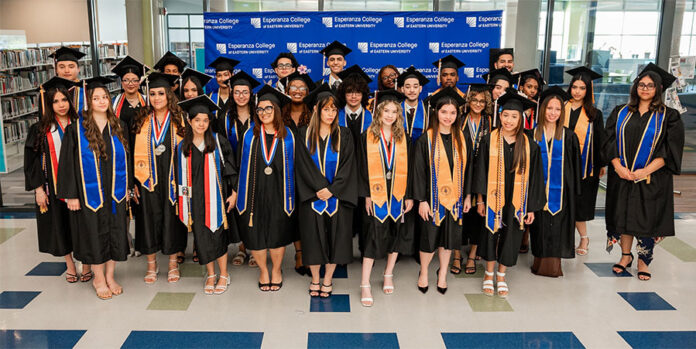
The Classes of 2026 from Esperanza’s schools are not only celebrating their graduation, but also marking the beginning of a new generation of Latino leaders ready to uplift and strengthen their community.
Philadelphia, PA — Esperanza Academy Charter School (EACS) proudly celebrated that 28 students from the Class of 2026 are graduating this year with a dual academic achievement: their high school diploma and an associate degree earned through its Early College Program, in partnership with Esperanza College of Eastern University. An additional six students from Esperanza Cyber Charter School also graduated, bringing the total number of Early College Program graduates to 34 this year.
An achievement that transforms families
In the Hunting Park community, where Esperanza Academy has served students since 2000, this milestone means far more than a diploma. For many Latino families, it represents a real pathway to economic mobility, stability, and generational progress.
The school serves over 2,200 students in grades K–12, offering strong academic programs including Advanced Placement (AP), career-focused majors, and early college opportunities.
College while still in high school
The Early College Program allows eligible students to begin taking college-level courses in 11th or 12th grade, with the opportunity to earn an associate’s degree at no cost, saving families thousands of dollars in tuition.
Fields of study include: Business Administration Community and Human Services Criminal Justice Early Childhood Education Health Sciences Media & Technology Medical Assistance
Community pride and hope
Dr. Evelyn Nuñez, CEO/Superintendent, shared:
“We are incredibly proud of these students. Earning both a high school diploma and an associate’s degree requires extraordinary dedication. We look forward to expanding this pathway so more students can benefit in the future.”
Reverend Luis Cortés, Jr., Founder and CEO of Esperanza, added:
“These graduates show what is possible when a community invests in its people. This achievement proves that the barriers Latino families have faced for generations can be overcome.”
More than a school: a community of opportunity
Esperanza Academy continues opening doors through higher education, preparing students who are bilingual, culturally aware, and ready for success in the 21st century.
Behind this success is Esperanza, an organization founded in 1986 that now serves about 35,000 individuals annually through programs in education, housing, economic development, arts, and social impact.
In Hunting Park, its mission is clear: to build a community where quality schools, affordable housing, thriving small businesses, and vibrant culture create pathways for all to succeed.
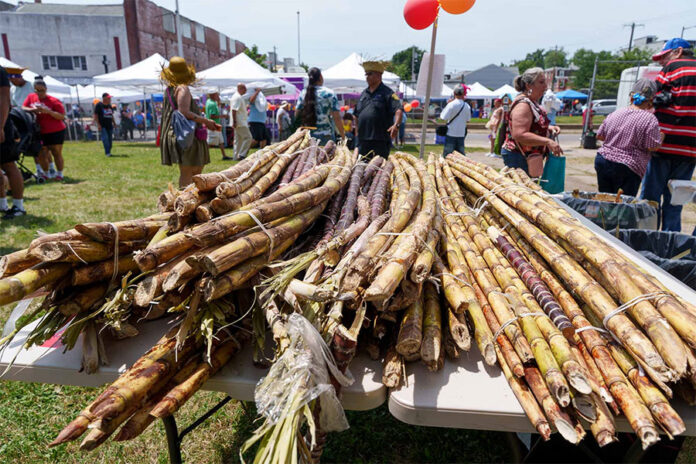
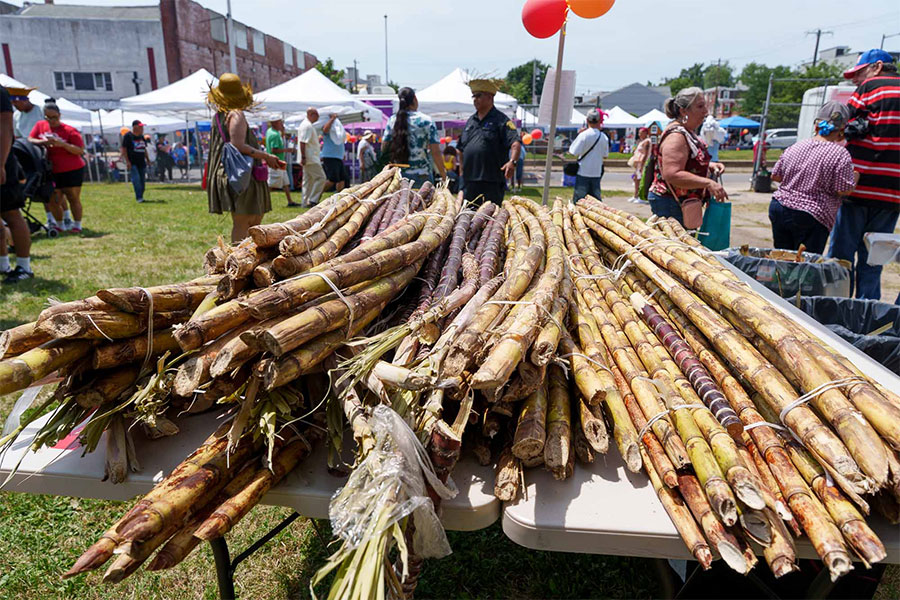
Bundles of sugar cane were displayed at the festival, honoring a symbol tied to Puerto Rican history and memory. (Photo: Taíno Studios)
APM’s 22nd annual festival brought music, food, dominoes, vendors, community resources, and a renewed call to preserve Latino cultural spaces in North Philadelphia.
Philadelphia, PA — On Saturday, June 6, Asociación Puertorriqueños en Marcha (APM) brought its 22nd Annual Sugar Cane Festival to 6th Street and Susquehanna Avenue, filling the heart of North Philadelphia with music, food, dominoes, vendors, children’s activities, community resources, and Puerto Rican cultural pride.
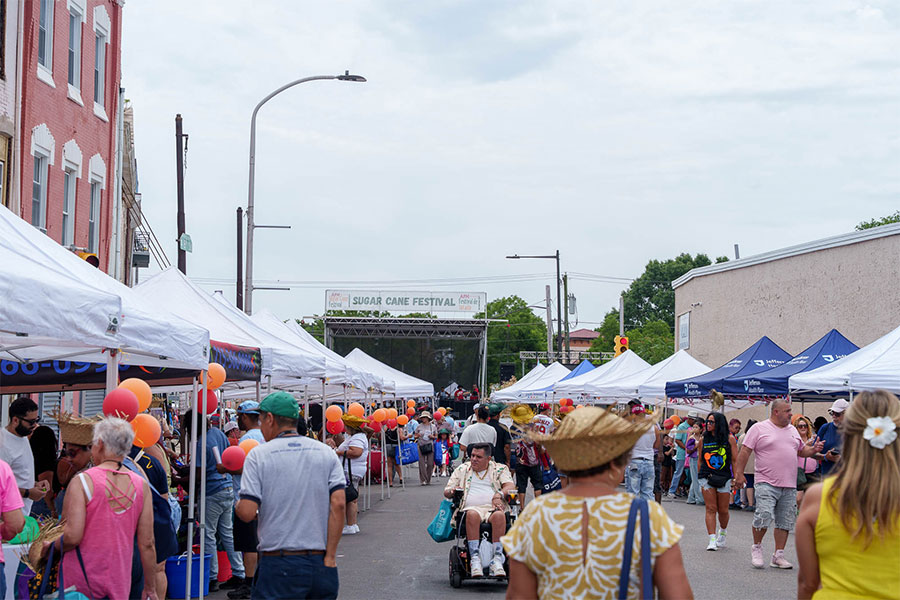
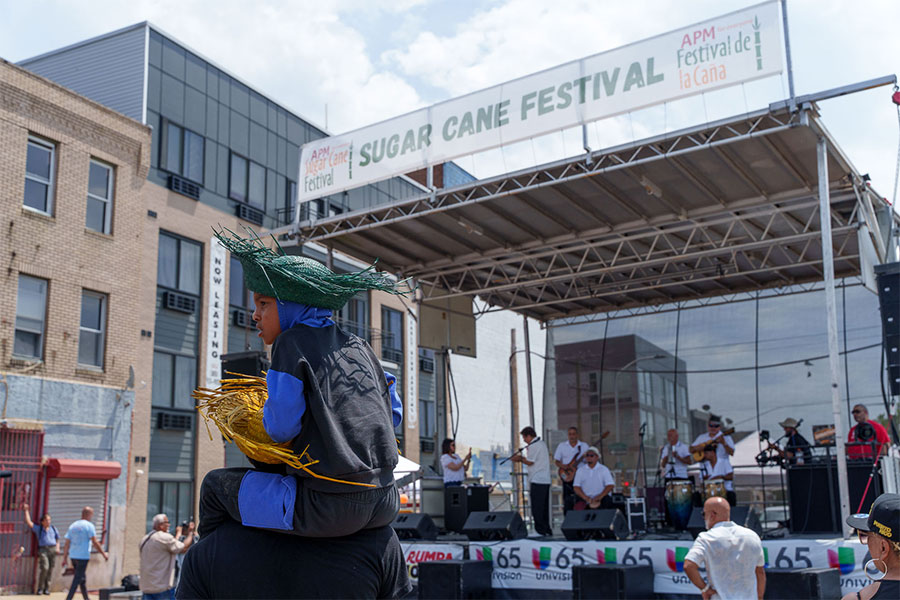
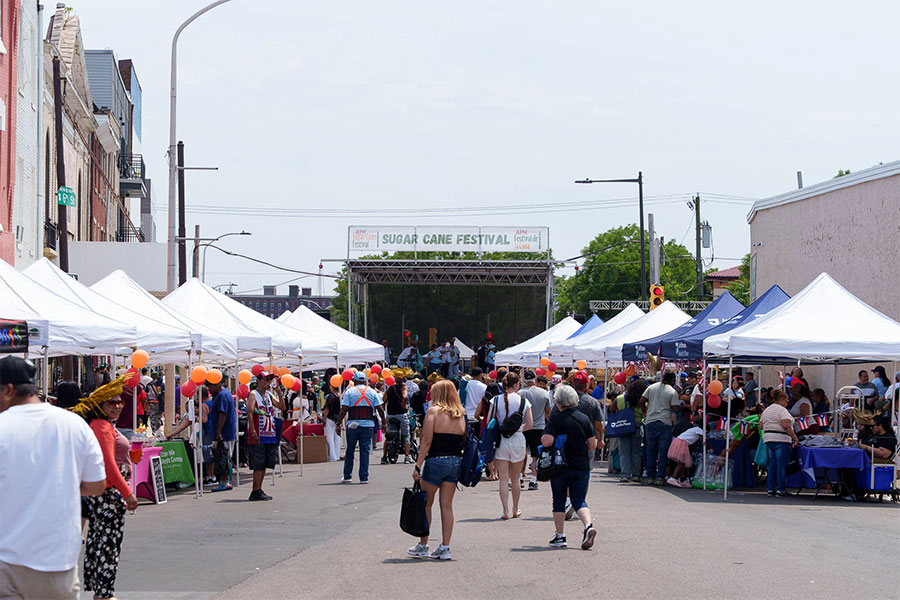
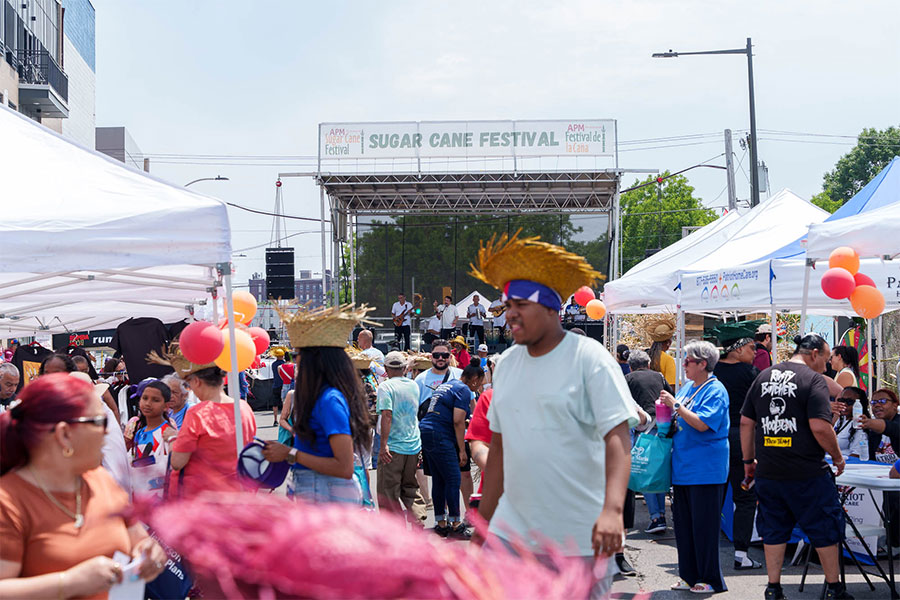
Crowds filled 6th Street and Susquehanna Avenue during APM’s 22nd Annual Sugar Cane Festival in North Philadelphia. (Photo: Taíno Studios)
For 22 years, the annual festival has gathered the community around the symbol of sugar cane in Puerto Rican history. Sugar cane recalls the island’s agricultural past, the labor of earlier generations, and the migration stories that helped shape Puerto Rican life across North Philadelphia. The festival aims to honor those roots every year.
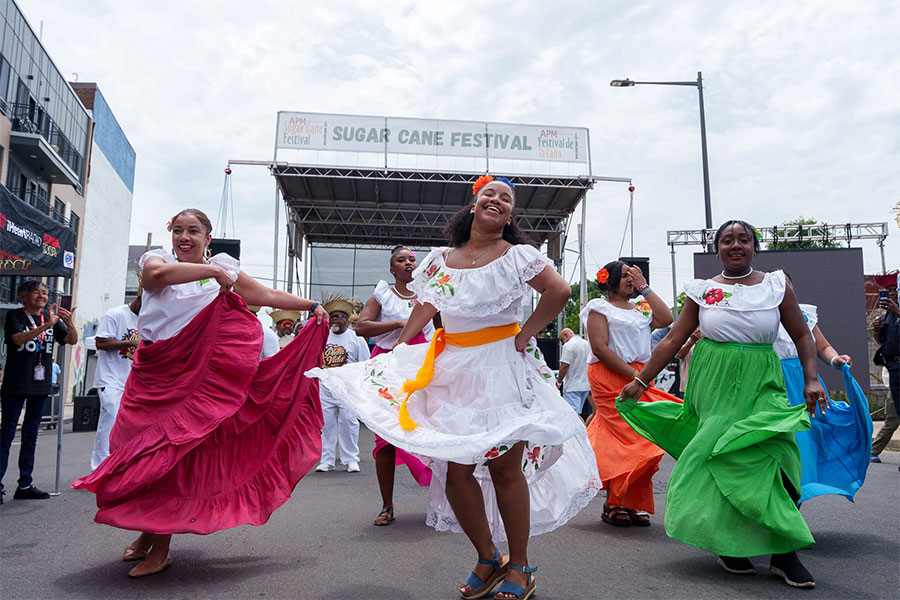
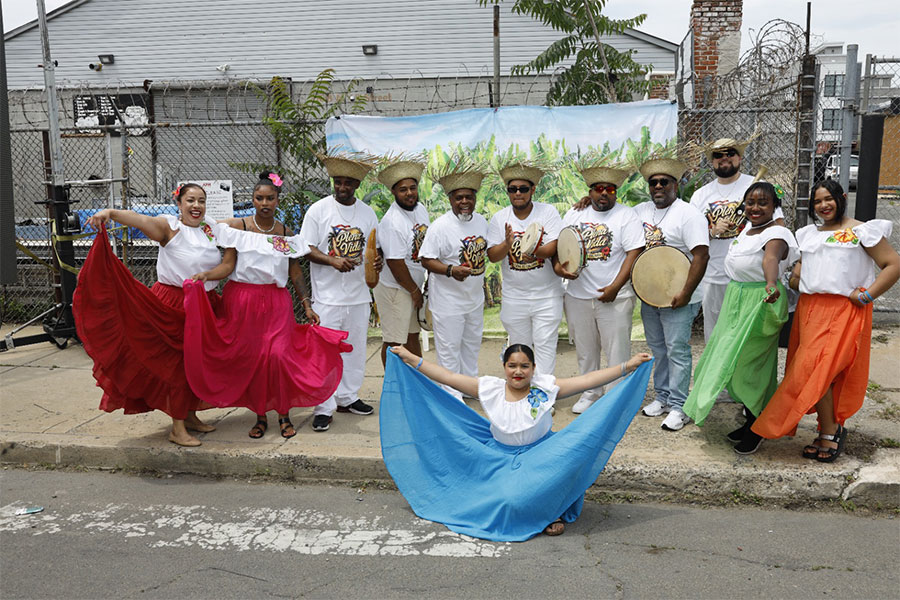
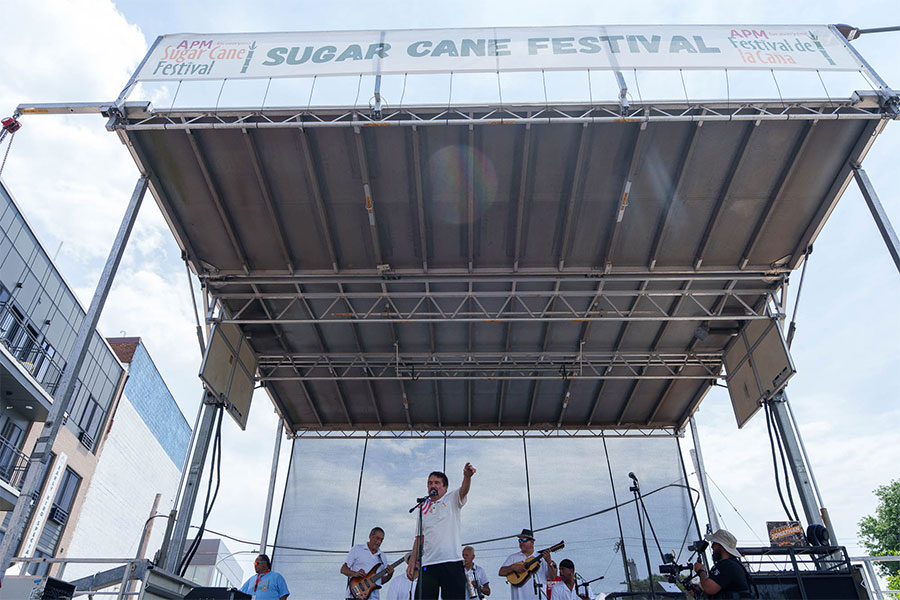
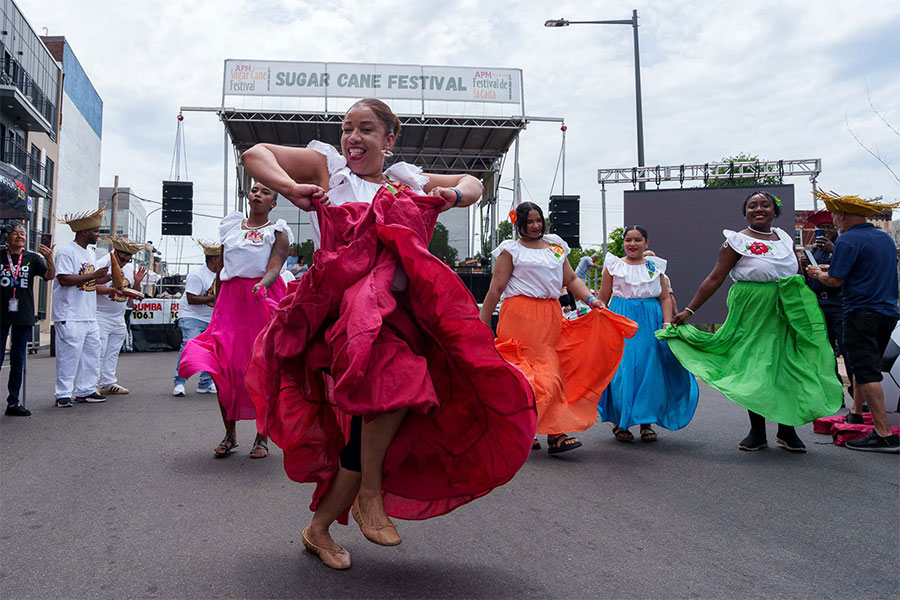
Dancers performed in front of the Sugar Cane Festival stage during the annual celebration of Puerto Rican culture. (Photo: Taíno Studios)
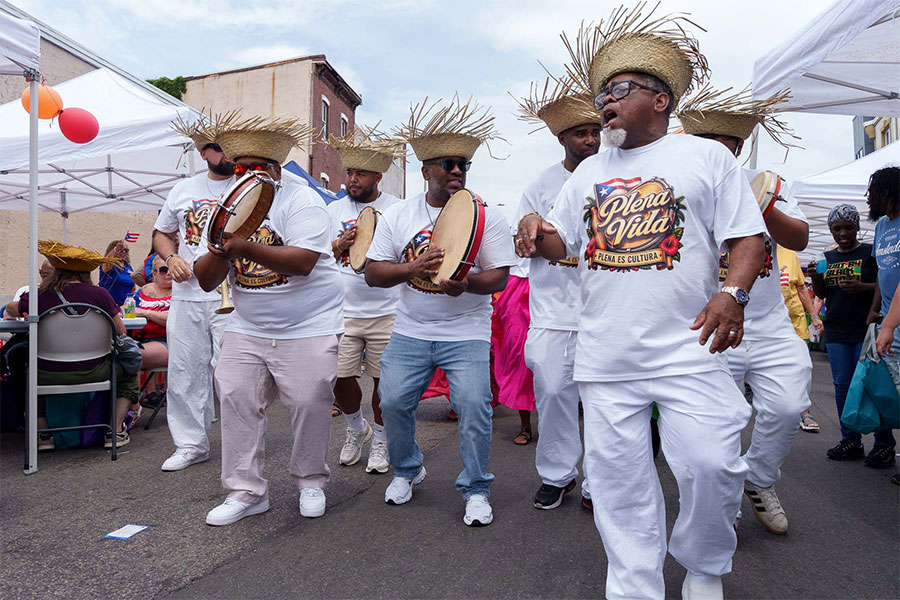
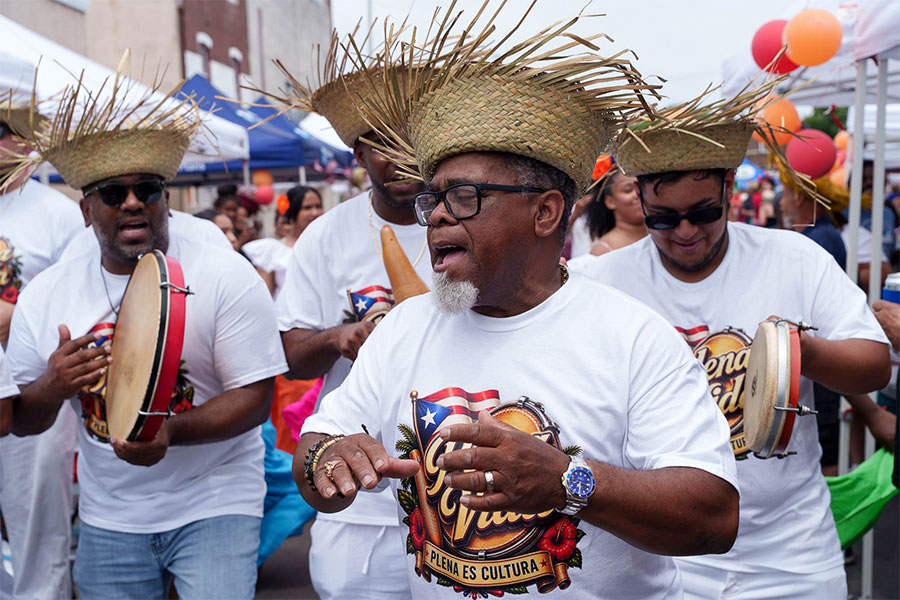
The program opened with music and announcements from Rumba 106.1, followed by a comparsa performance by Plena Vida. Ilia Garcia of Univision 65 served as emcee, welcoming attendees and helping guide the afternoon’s program.
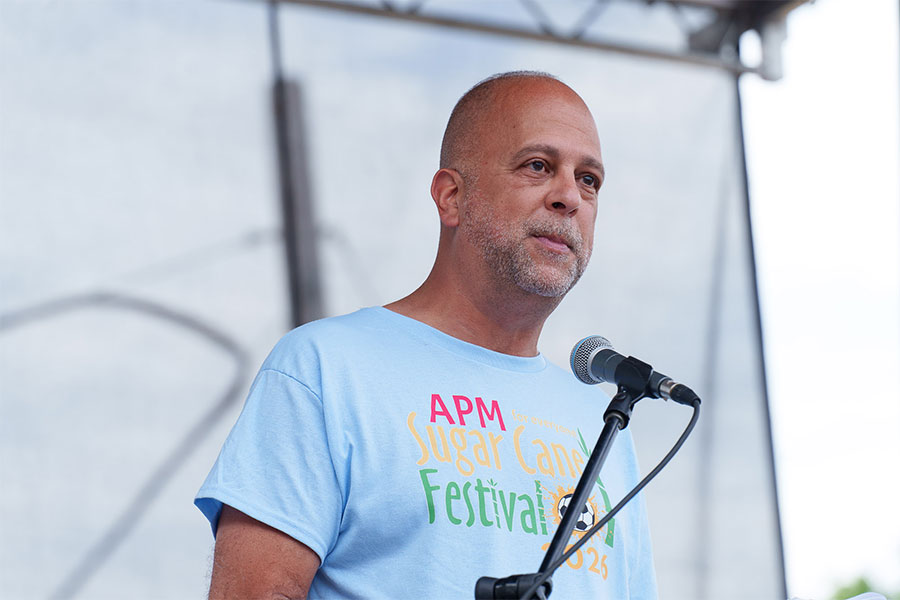
Remarks from APM leadership, elected officials, sponsors, and community partners reflected the festival’s role as both a cultural celebration and a community gathering space. Speakers highlighted APM’s ongoing work in North Philadelphia, the importance of preserving Puerto Rican heritage, and the partnerships that help make the annual festival possible.
Crowds filled 6th Street and Susquehanna Avenue during APM’s 22nd Annual Sugar Cane Festival in North Philadelphia. (Photo: Taíno Studios)
Throughout the afternoon, the festival featured live performances by Los Dominantes, Plena Vida, and Combo Melaza, along with raffle giveaways, a domino tournament, a children’s area, food trucks, health information, and community resource tents. The day brought together the sounds of bomba, plena, jíbara music, salsa, and neighborhood celebration.
The festival also served as a reminder of APM’s broader role in North Philadelphia. Beyond the performances and food, the resource tents connected residents to local organizations, services, health information, and small businesses.
During the festival, Manuel Delgado, MA, APM’s Chief Operating Officer, announced the organization’s ongoing effort to revamp Teatro Puerto Rico, connecting the day’s celebration to a larger investment in Latino arts and cultural infrastructure.
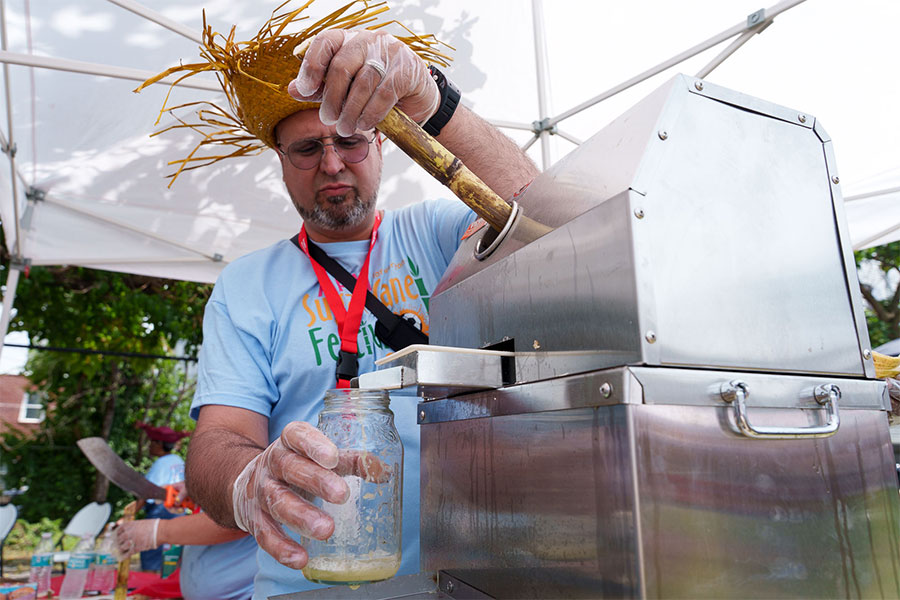
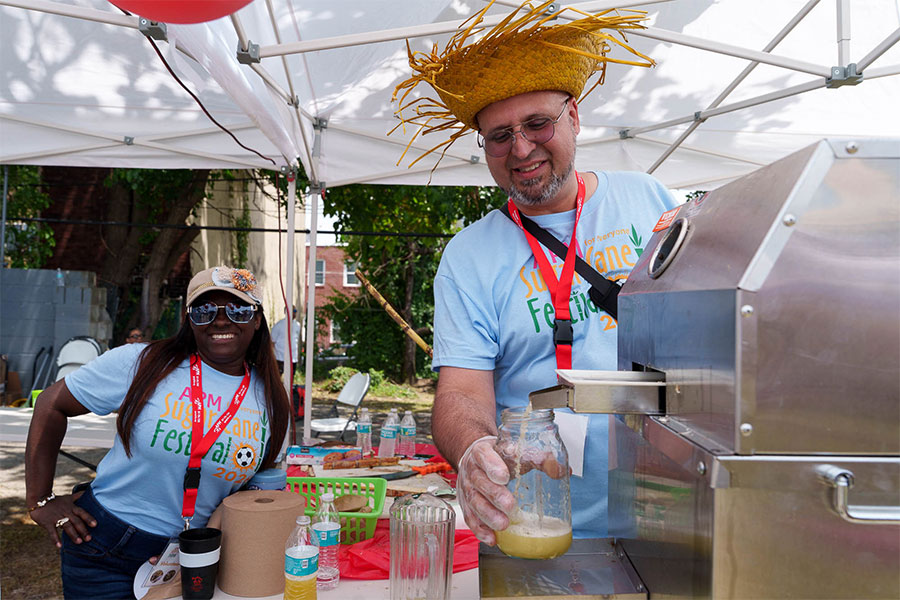
A festival volunteer pressed fresh sugar cane juice during APM’s 22nd Annual Sugar Cane Festival. (Photo: Taíno Studios)
APM’s vision for Teatro Puerto Rico is to restore the space as a sustainable community theater where Latino talent can thrive, new jobs can grow, and young people can explore technical theater and the arts. The organization is currently leading a $10 million capital campaign to help bring the theater back to life.
That connection between past and future ran through the festival. It could be seen in the music, in the domino tables, in the food, in the families walking the block, and in the vendor tents where artists and small businesses carried cultural memory forward through their work.
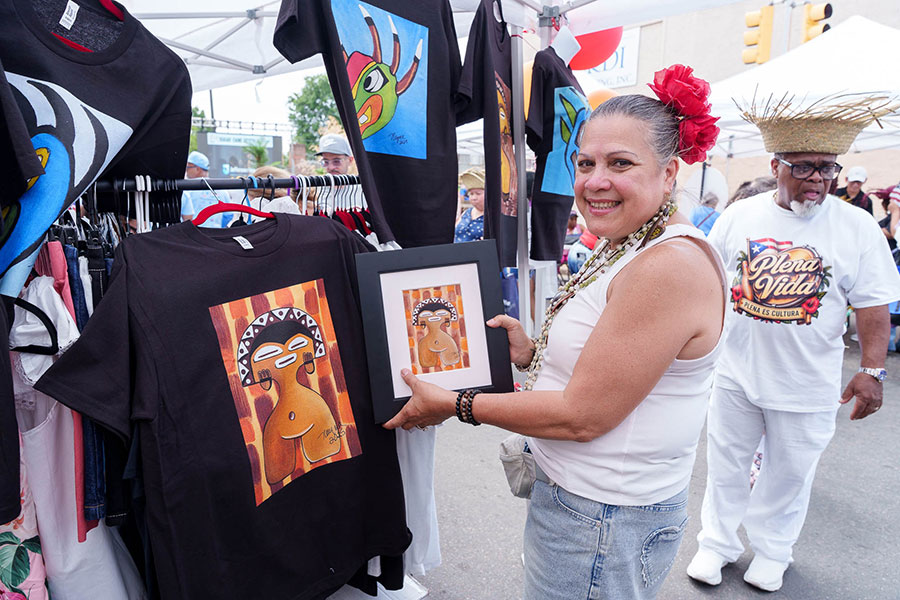
Neryna, founder of Neryna’s Raíces Collection, displayed Taíno-inspired artwork during the festival. (Photo: Taíno Studios)
One of those vendors was Neryna, founder of Neryna’s Raíces Collection. Her handmade, Taíno-inspired artwork reflects Puerto Rican cultural roots through symbols and designs connected to ancestral memory.
“Most Puerto Ricans know of their Taíno ancestry, but there are younger Puerto Ricans who do not, and so I hope to keep our ancestors’ story going with the art I create,” Neryna said.
Her presence was part of a broader spirit at the festival: artists and small businesses using their tents not only to sell, but to share identity and pride.
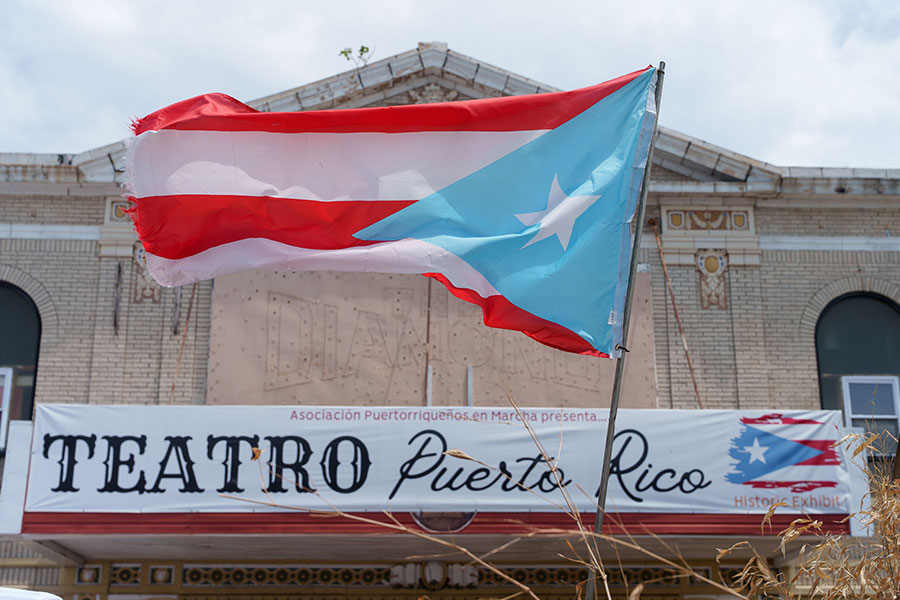
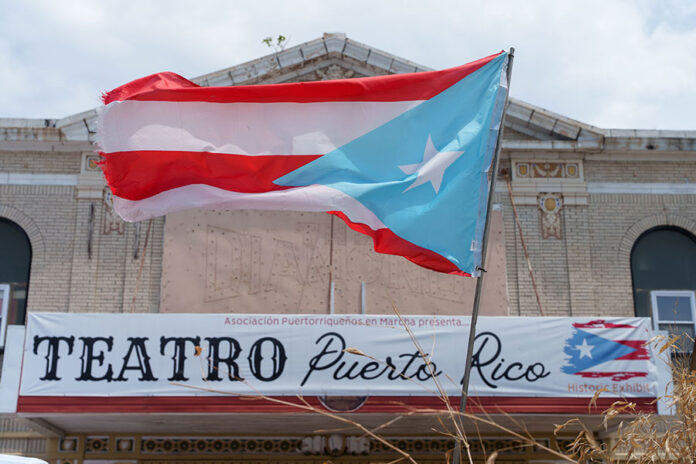
A Puerto Rican flag waved in front of Teatro Puerto Rico, which APM is working to restore as a Latino cultural space in North Philadelphia. (Photo: Taíno Studios)
For APM, the Sugar Cane Festival was both a celebration and a community platform. It brought joy to the street while also connecting residents to services, cultural institutions, small businesses, and the continuing story of Puerto Rican life in Philadelphia.
As Philadelphia prepares to mark the nation’s 250th anniversary in 2026, APM’s Sugar Cane Festival offered a reminder that American history also lives in the stories of Puerto Rican history. On 6th Street and Susquehanna Avenue, those stories were heard through the steady work of a community continuing to honor where it comes from.
Una bandera puertorriqueña ondeó frente al Teatro Puerto Rico, que APM trabaja para restaurar como espacio cultural latino en el norte de Filadelfia. (Foto: Taíno Studios)
El 22.º festival anual de APM reunió música, comida, dominó, vendedores, recursos comunitarios y un renovado llamado a preservar los espacios culturales latinos en el norte de Filadelfia.
Filadelfia, PA — El sábado 6 de junio, la Asociación Puertorriqueños en Marcha (APM) celebró su 22.º Festival Anual de la Caña en la calle 6 y la avenida Susquehanna, llenando el corazón del norte de Filadelfia con música, comida, dominó, vendedores, actividades para niños, recursos comunitarios y orgullo cultural puertorriqueño.
Multitudes llenaron la calle 6 y la avenida Susquehanna durante el 22.º Festival Anual de la Caña de Azúcar de APM en el norte de Filadelfia. (Foto: Taíno Studios)
Durante 22 años, este festival anual ha reunido a la comunidad en torno al símbolo de la caña de azúcar en la historia de Puerto Rico. La caña evoca el pasado agrícola de la isla, el trabajo de generaciones anteriores y las historias de migración que ayudaron a dar forma a la vida puertorriqueña en el norte de Filadelfia. El festival busca honrar esas raíces cada año.
Bailarinas se presentaron frente al escenario del Festival de la Caña de Azúcar durante la celebración anual de la cultura puertorriqueña. (Foto: Taíno Studios)
El programa comenzó con música y anuncios de Rumba 106.1, seguido por una comparsa de Plena Vida. Ilia Garcíade Univision 65 fue la maestra de ceremonias, dando la bienvenida a los asistentes y guiando el programa de la tarde.
Los comentarios de líderes de APM, funcionarios electos, patrocinadores y socios comunitarios reflejaron el papel del festival como celebración cultural y espacio de encuentro comunitario. Los oradores destacaron el trabajo continuo de APM en el norte de Filadelfia, la importancia de preservar la herencia puertorriqueña y las alianzas que hacen posible el evento anual.
Durante la tarde, el festival incluyó presentaciones en vivo de Los Dominantes, Plena Vida y Combo Melaza, además de rifas, un torneo de dominó, un área infantil, camiones de comida, información de salud y carpas de recursos comunitarios. El día reunió los sonidos de la bomba, la plena, la música jíbara, la salsa y la celebración del vecindario.
Multitudes llenaron la calle 6 y la avenida Susquehanna durante el 22.º Festival Anual de la Caña de Azúcar de APM en el norte de Filadelfia. (Foto: Taíno Studios)
El festival también sirvió como recordatorio del papel más amplio de APM en el norte de Filadelfia. Más allá de las presentaciones y la comida, las carpas de recursos conectaron a los residentes con organizaciones locales, servicios, información de salud y pequeños negocios.
Durante el evento, Manuel Delgado, MA, director de Operaciones de APM, anunció el esfuerzo continuo de la organización para revitalizar el Teatro Puerto Rico, conectando la celebración con una inversión más amplia en las artes y la infraestructura cultural latina.
Manojos de caña de azúcar se exhibieron en el festival, honrando un símbolo ligado a la historia y la memoria puertorriqueña. (Foto: Taíno Studios)
La visión de APM para el Teatro Puerto Rico es restaurarlo como un teatro comunitario sostenible donde el talento latino pueda prosperar, se generen nuevos empleos y los jóvenes exploren el teatro técnico y las artes. Actualmente, la organización lidera una campaña de capital de 10 millones de dólares para devolverle la vida al teatro.
Esa conexión entre pasado y futuro estuvo presente durante todo el festival. Se podía ver en la música, en las mesas de dominó, en la comida, en las familias recorriendo la calle y en las carpas de vendedores donde artistas y pequeños negocios transmitían la memoria cultural a través de su trabajo.
Neryna, fundadora de Neryna’s Raíces Collection, exhibió su arte inspirado en los taínos durante el festival. (Foto: Taíno Studios)
Una de esas vendedoras fue Neryna, fundadora de Neryna’s Raíces Collection. Su obra artesanal, inspirada en los taínos, refleja las raíces culturales puertorriqueñas mediante símbolos y diseños conectados con la memoria ancestral.
“Muchos puertorriqueños conocen su ascendencia taína, pero hay jóvenes que no, y espero mantener viva la historia de nuestros ancestros a través del arte que creo”, dijo Neryna.
Su presencia formó parte de un espíritu más amplio en el festival: artistas y pequeños negocios que utilizan sus espacios no solo para vender, sino también para compartir identidad y orgullo.
Para APM, el Festival de la Caña de Azúcar fue tanto una celebración como una plataforma comunitaria. Llevó alegría a la calle mientras conectaba a los residentes con servicios, instituciones culturales, pequeños negocios y la historia viva de la comunidad puertorriqueña en Filadelfia.
Un voluntario del festival exprimió jugo fresco de caña durante el 22.º Festival Anual de la Caña de Azúcar de APM. (Foto: Taíno Studios)
Mientras Filadelfia se prepara para conmemorar el 250.º Aniversario de la Nación en 2026, el Festival de la Caña de Azúcar de APM recordó que la historia estadounidense también vive en las historias puertorriqueñas. En la calle 6 y la avenida Susquehanna, esas historias se escucharon a través del trabajo constante de una comunidad que continúa honrando sus raíces.
Muchas personas no son conscientes del impacto mental y psicológico que implica abandonar la propia patria para intentar un nuevo comienzo en un país y una cultura desconocida. (Foto: EFE/Ángel Colmenares)
Cuando hablamos de inmigración, con frecuencia nos enfocamos en las oportunidades, los desafíos económicos o los procesos legales que enfrentan quienes llegan a un nuevo país. Sin embargo, existe una realidad de la que se habla poco: el duelo emocional que acompaña a millones de inmigrantes.
Migrar implica mucho más que cruzar una frontera. Significa dejar atrás familias, amistades, costumbres, tradiciones y, en muchos casos, una identidad construida durante años. Para algunos, también implica abandonar una profesión, un estatus social o proyectos de vida que parecían estar encaminados.
La adaptación a una nueva cultura, un nuevo idioma y nuevas formas de vida puede resultar un proceso complejo. Aunque muchas personas logran salir adelante, no todas cuentan con las herramientas emocionales necesarias para enfrentar los cambios y las pérdidas que acompañan la experiencia migratoria.
En el caso de muchos hombres inmigrantes, el reto suele ser aún más silencioso. Las expectativas culturales que les han sido inculcadas desde la infancia les exigen ser fuertes, proveedores y capaces de soportar cualquier adversidad sin mostrar vulnerabilidad.
Durante generaciones, escuchar frases como “los hombres no lloran” o “hay que aguantar” formó parte de la educación de muchos. Como consecuencia, hablar sobre sentimientos, ansiedad o depresión sigue siendo difícil para una gran parte de la población masculina.
Cuando las emociones no encuentran espacios para expresarse, algunas personas recurren a mecanismos de escape. El alcohol, las drogas, el exceso de trabajo o las conductas autodestructivas pueden convertirse en formas temporales de aliviar el dolor emocional, aunque a largo plazo terminan profundizando el problema.
La soledad es otro de los desafíos más frecuentes. Muchos inmigrantes viven lejos de sus redes de apoyo y enfrentan dificultades para establecer nuevas conexiones. A esto se suma la presión económica y la responsabilidad de sostener a familiares tanto en Estados Unidos como en sus países de origen.
La situación puede resultar particularmente frustrante para quienes llegaron con estudios universitarios, experiencia profesional o una posición estable en sus comunidades. Comenzar desde cero puede generar sentimientos de pérdida, frustración e incertidumbre sobre el futuro.
Especialistas en salud mental han señalado que los procesos migratorios suelen ir acompañados de múltiples duelos: la pérdida del hogar, del entorno familiar, del idioma y de las referencias culturales que forman parte de la identidad de una persona. Sin embargo, estos duelos suelen pasar desapercibidos porque la prioridad inmediata es sobrevivir y adaptarse.
Por ello, es fundamental reconocer que la salud mental también forma parte del bienestar de la comunidad inmigrante. Buscar apoyo profesional, participar en espacios comunitarios y hablar abiertamente sobre las emociones no deben interpretarse como una señal de debilidad, sino como una herramienta para construir una vida más saludable y equilibrada.
En nuestra comunidad, existen profesionales y organizaciones que trabajan a diario para brindar orientación y acompañamiento emocional a las familias inmigrantes. A través de programas de radio, talleres y espacios educativos, continúan promoviendo conversaciones necesarias sobre salud mental, adaptación cultural y bienestar emocional.
Entre otros programas como el de CRISOL, existen recursos disponibles para la comunidad inmigrante en Filadelfia. Para saber más de ellos puede comunicarse al correo electrónico philatinosradio@gmail.com o llamar al 215-764-6069.
Reconocer el duelo invisible del inmigrante es el primer paso para construir comunidades más fuertes, informadas y capaces de apoyarse mutuamente en el proceso de iniciar una nueva vida lejos de casa.
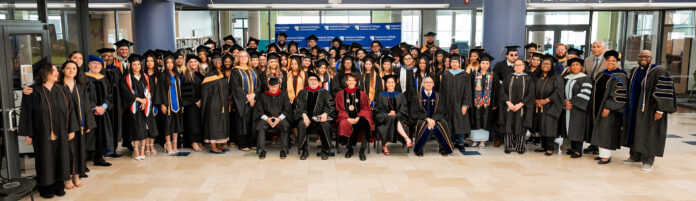
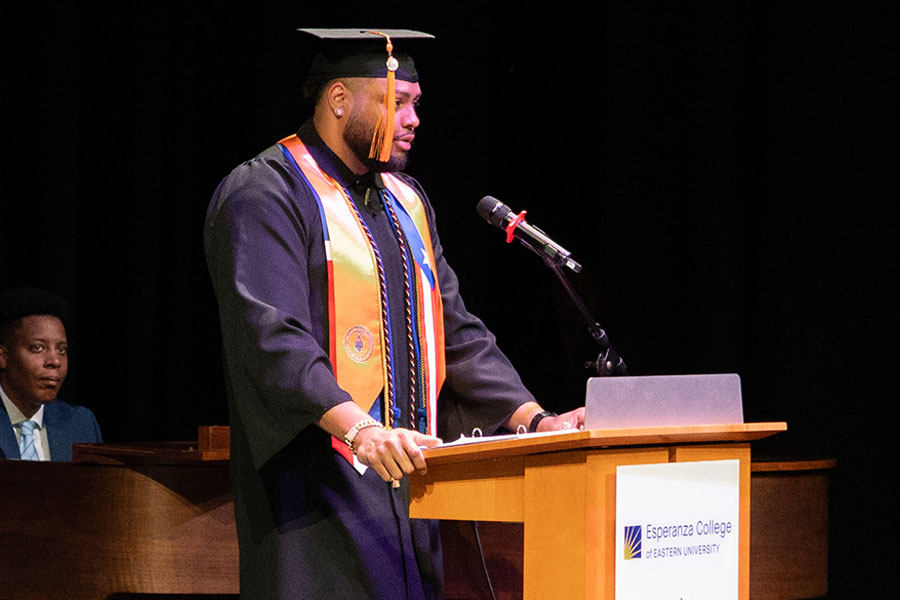
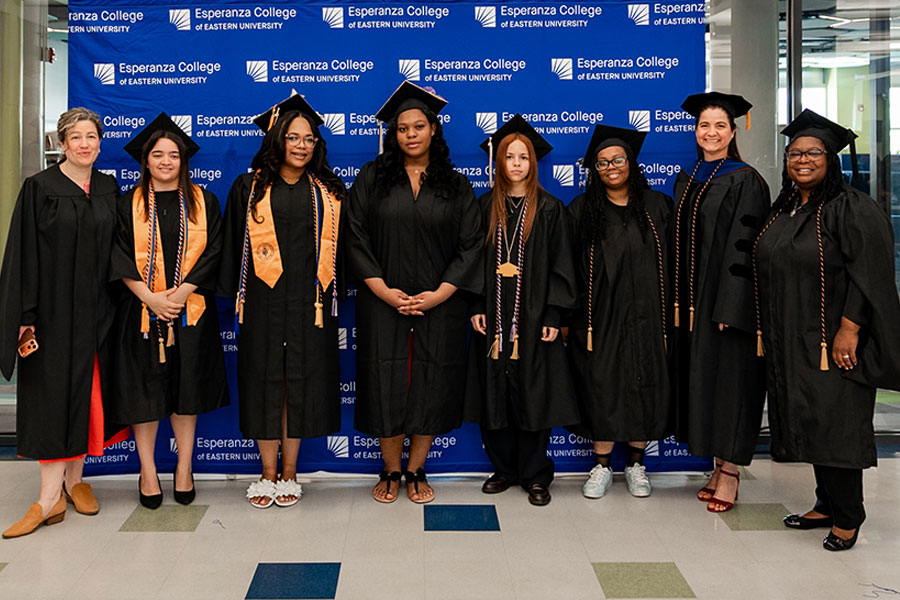
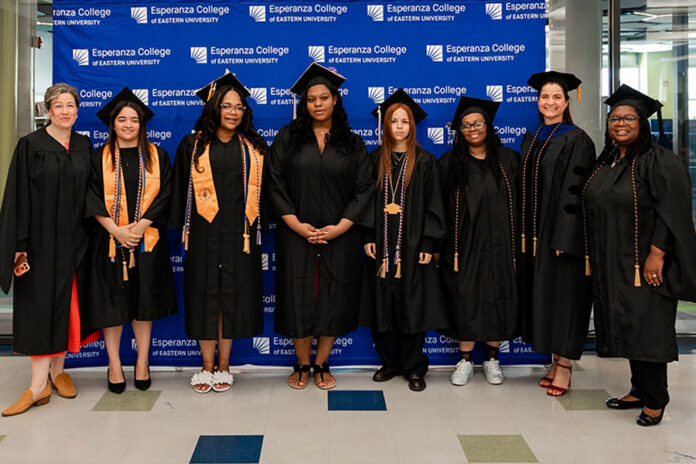
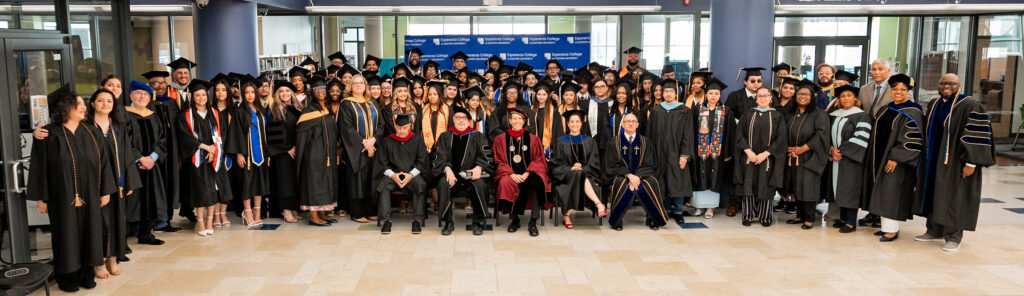
Graduandos, facultad, y administración de Esperanza College. (Foto: Thomas Baker)
El sábado 16 de mayo, Esperanza College conmemoró la graduación de la clase del 2026. La facultad, la administración, familiares y amistades se unieron para celebrar a los graduandos.
El colegio festejó en otoño su 25.º aniversario. Desde la primera clase graduanda en el 2004, un total de 1120 estudiantes han obtenido su grado asociado. Muchos han continuado obteniendo sus bachilleratos y, en algunos casos, sus maestrías y otros grados avanzados.
Esta es la clase más grande en graduarse. Ochenta y dos estudiantes obtuvieron su grado asociado en los siguientes programas: administración de empresas, servicios humanos y comunitarios, justicia criminal, manejo de e-sports, ciencias de la salud, asistencia médica y, medios y tecnología. La mayoría de los graduados continuarán sus carreras académicas en otoño.
El éxito académico de esta clase es extraordinario. Catorce estudiantes terminaron sus estudios con un promedio de calificaciones de 3.9 o más.
Guelmi Martinez, Valedictorian Clase 2026 de Esperanza College. (Foto: Thomas Baker)
Guelmi Martinez fue el valedictorian, el estudiante con el promedio más alto de la clase. Su mensaje a sus compañeros graduandos fue inspirador. “Triunfar no es solo acerca de lo que logramos para nosotros; incluye también cómo ayudamos a las personas a nuestro alrededor”, mencionó. La salutatorian, la estudiante con el segundo promedio más alto, fue Aliyah Baez-Davis.
La clase incluyó un grupo de treinta y cuatro jóvenes del Programa de «Early College». El programa es una colaboración entre Esperanza College, Esperanza Academy Charter y Esperanza Cyber Charter School. Estos estudiantes completaron sus grados asociados a la misma vez que se graduaron de la escuela superior.
Graduandos del programa “Health Occupations Pathways”, una colaboración con Jefferson Health. (Foto: Thomas Baker)
Siete graduandos fueron parte de la clase piloto del programa “Health Occupations Pathways”. Esta colaboración con Jefferson Health y el Distrito Escolar de Filadelfia, les provee la oportunidad a estudiantes a trabajar a tiempo completo en Jefferson mientras completan su grado asociado en Esperanza College.
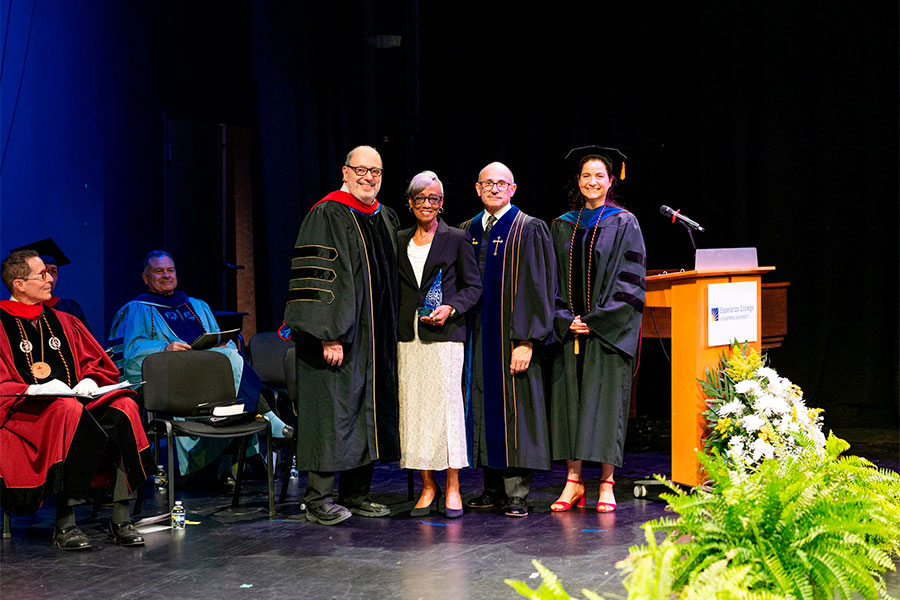
Marilyn Marsh decana retirada de Esperanza College fue honrada durante la graduación. (Foto: Thomas Baker)
Un momento especial fue la celebración de la Sra. Marilyn Marsh. Marilyn fue la decana ejecutiva de Esperanza College desde el 2019 hasta su retiro a principios de este año. Ella recibió un fuerte aplauso y un regalo por su contribución en acelerar la misión de la institución.
Esta clase diversa incluyó estudiantes tradicionales y adultos con familias, estudiantes diurnos y de noche, estudiantes presenciales y virtuales. El mensaje de Guelmi lo recapitula de esta manera, “El recorrido de cada uno es diferente. Algunos llegamos aquí con menos obstáculos, otros tuvimos que luchar con dificultades invisibles. Lo importante es que lo logramos. Debemos estar orgullosos de llegar a este momento”.
Todos en el equipo de Esperanza College estamos de acuerdo. Estamos muy orgullosos de nuestros graduandos.
* Nilsa R. Graciani, Ph. D. Academic Dean, Esperanza College.
Graduates of the “Health Occupations Pathways” program, a collaboration with Jefferson Health. (Photo: Thomas Baker)
On Saturday, May 16, Esperanza College celebrated the graduation of the Class of 2026. Faculty, administration, family members, and friends gathered to honor the graduates.
The college commemorated its 25th anniversary this past fall. Since its first graduating class in 2004, a total of 1,120 students have earned associate degrees. Many have gone on to pursue bachelor’s degrees and even master’s and other advanced degrees. This year marks the largest graduating class in the college’s history. Eighty-two students earned associate degrees in the following programs: Business Administration, Human and Community Services, Criminal Justice, Esports Management, Health Sciences, Medical Assisting, and Media and Technology. Most graduates plan to continue their academic careers in the fall.
Guelmi Martinez, Valedictorian, Esperanza College Class of 2026. (Photo: Thomas Baker)
The academic achievements of this class are outstanding. Fourteen students completed their studies with grade point averages of 3.9 or higher. Guelmi Martinez was the valedictorian, earning the highest GPA in the class. His message to fellow graduates was inspiring: “Success is not only about what we accomplish for ourselves; it also includes how we help those around us.” The salutatorian, the student with the second-highest GPA, was Aliyah Baez-Davis.
The class included thirty-four students from the Early College Program, a partnership between Esperanza College, Esperanza Academy Charter School, and Esperanza Cyber Charter School. These students earned their associate degrees while simultaneously completing their high school diplomas.
Seven graduates were part of the pilot cohort of the “Health Occupations Pathways” program. This collaboration with Jefferson Health and the School District of Philadelphia provides students the opportunity to work full-time at Jefferson while completing their associate degrees at Esperanza College.
Marilyn Marsh, retired dean of Esperanza College, honored during the graduation ceremony. (Photo: Thomas Baker)
A special moment during the ceremony was the recognition of Ms. Marilyn Marsh. Marilyn served as Executive Dean of Esperanza College from 2019 until her retirement earlier this year. She received a standing ovation and a gift in appreciation of her contributions to advancing the institution’s mission.
This diverse class included traditional students and working adults with families, as well as day and evening students, and both in-person and virtual learners. As Guelmi expressed, “Each journey is different. Some of us arrived here with fewer obstacles; others had to overcome invisible challenges. What matters is that we made it. We should be proud to have reached this milestone.”
Graduates, faculty, and administration of Esperanza College. (Photo: Thomas Baker)
All of us at Esperanza College wholeheartedly agree—we are extremely proud of our graduates.
*Nilsa R. Graciani, Ph.D. Academic Dean, Esperanza College.
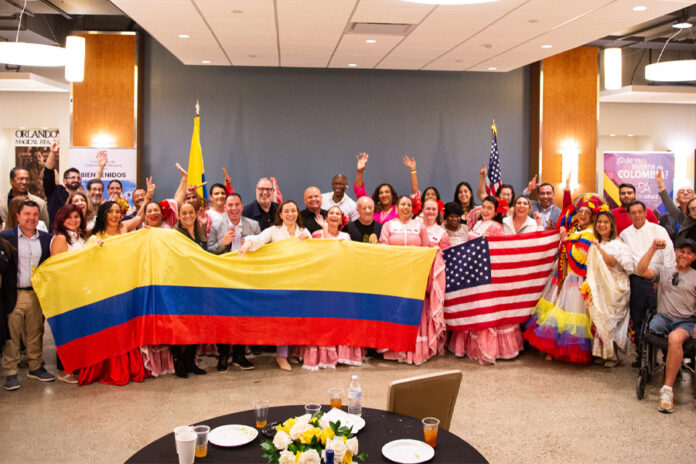
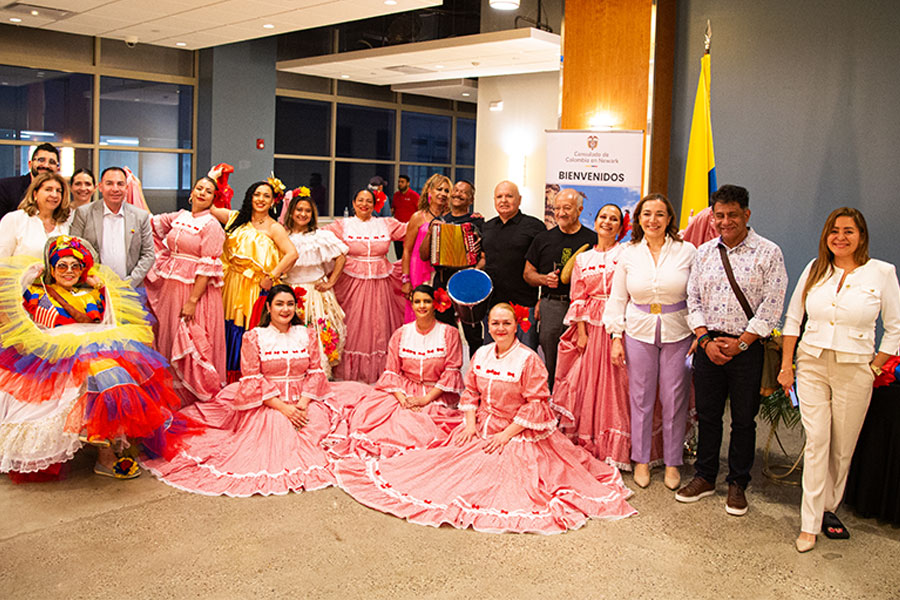
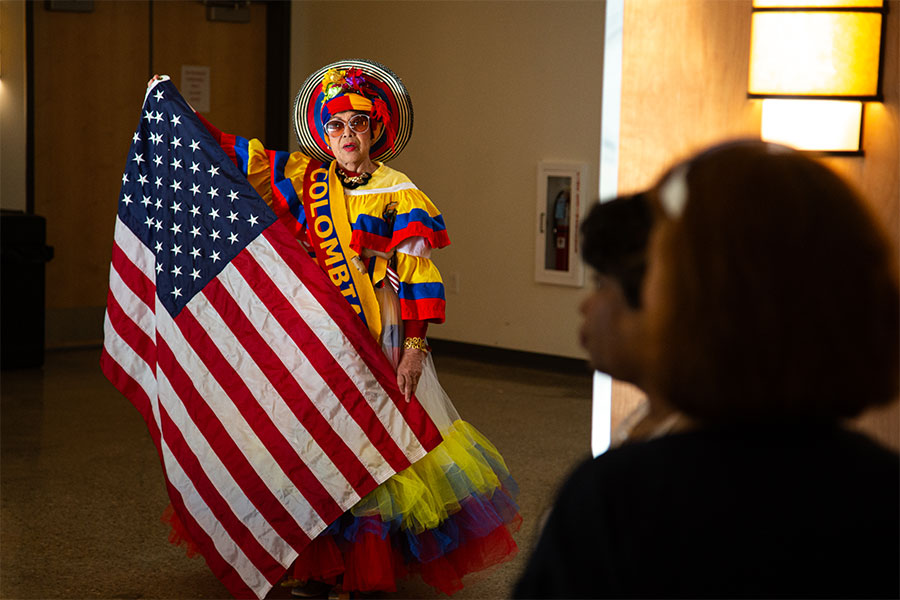
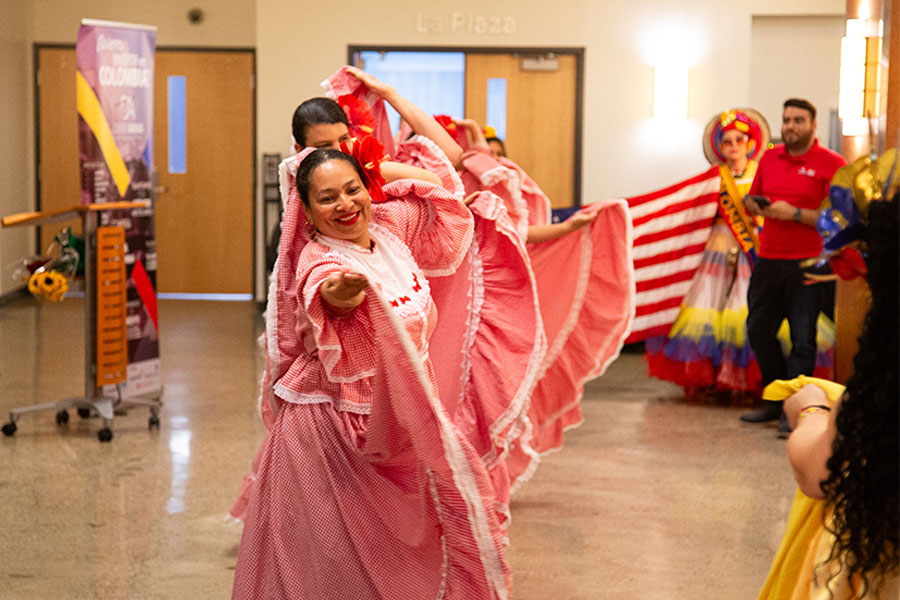
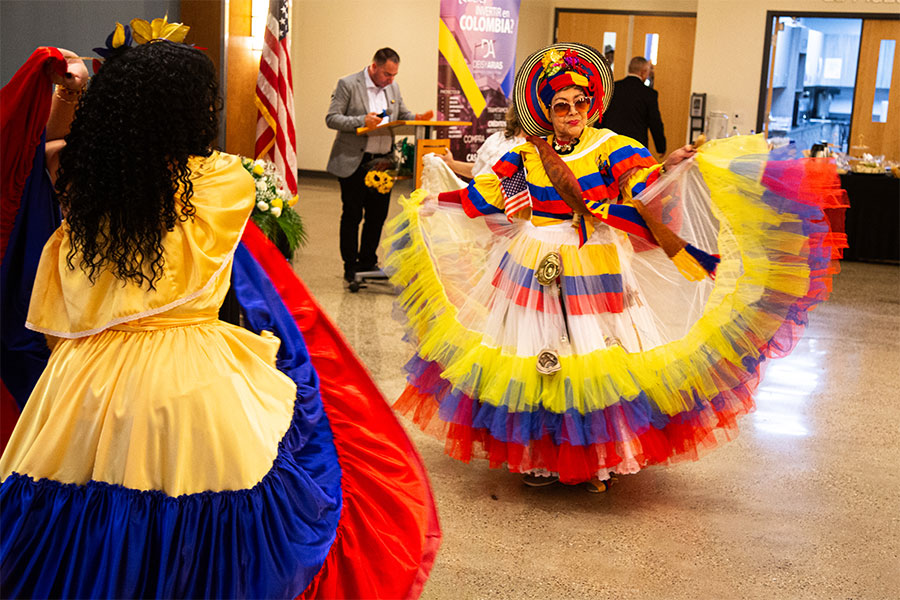
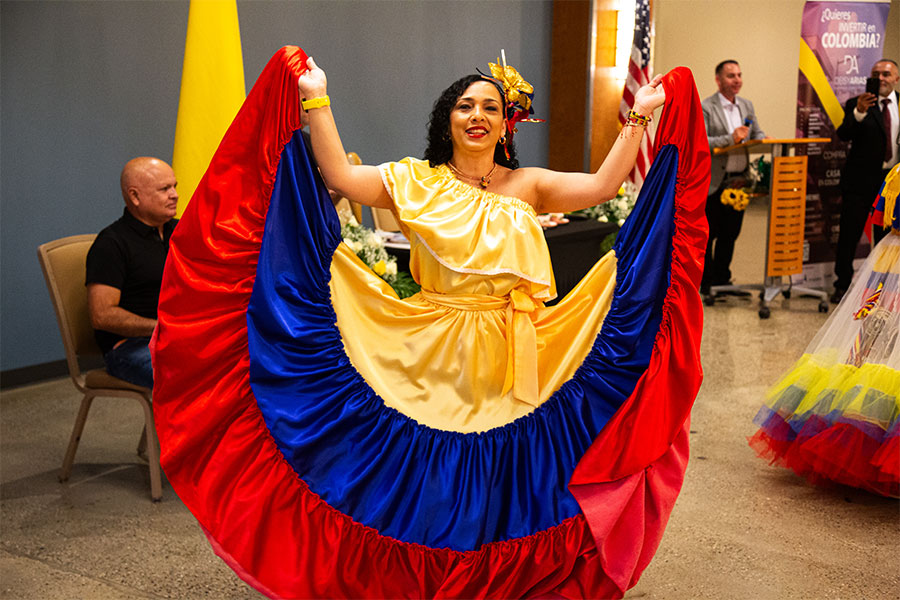
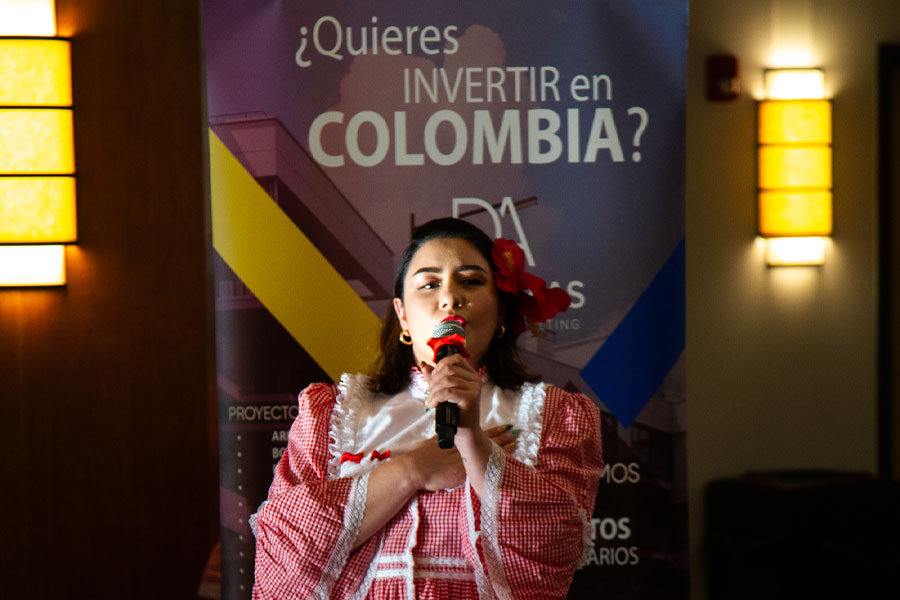
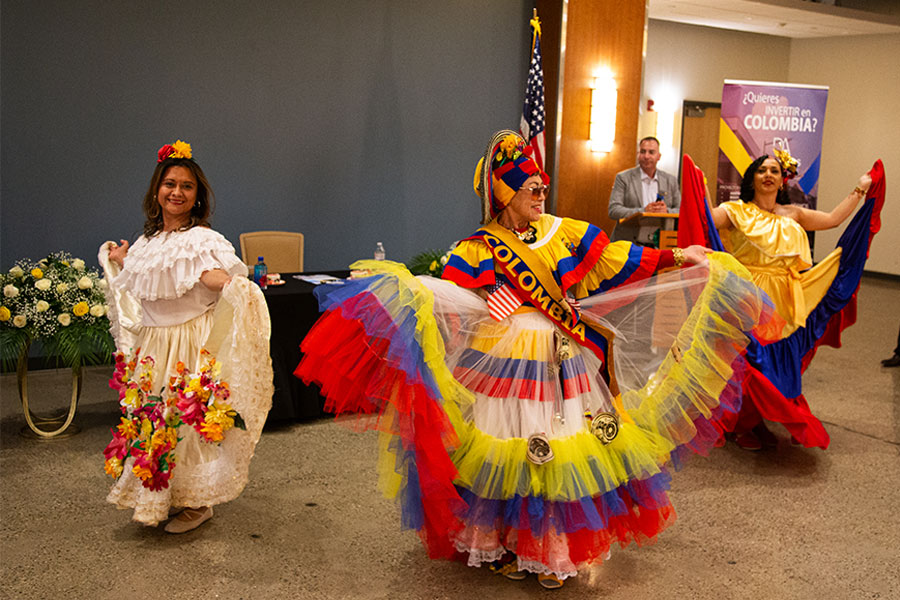
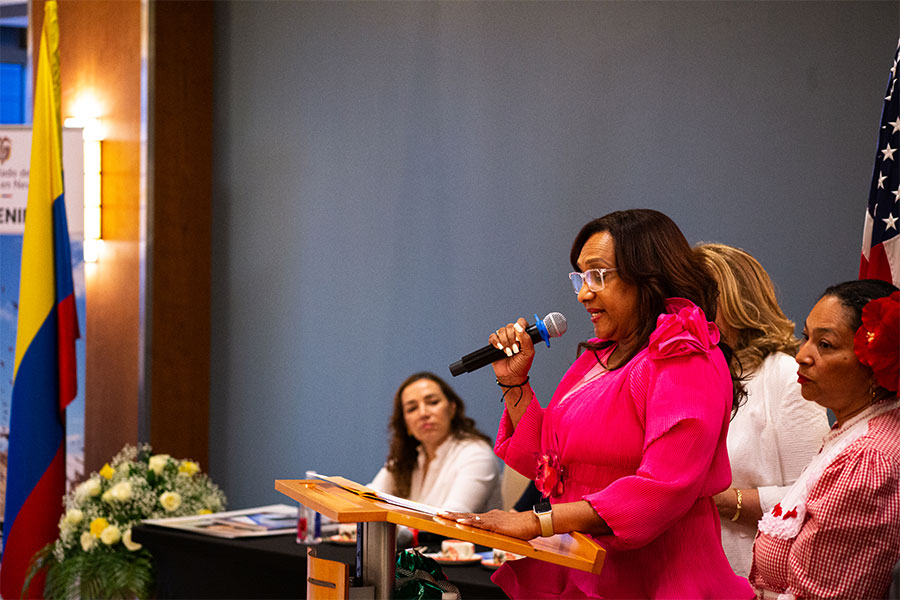
Líderes de la comunidad colombiana, emprendedores y ciudadanos de este país convirtieron este espacio en una celebración de sus símbolos patrios. (Foto: Cristian Marín)
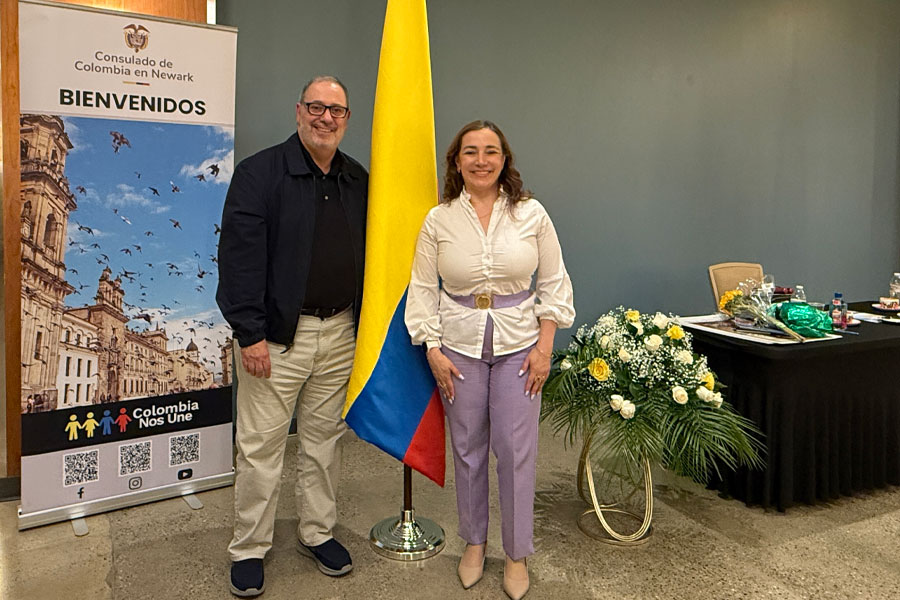
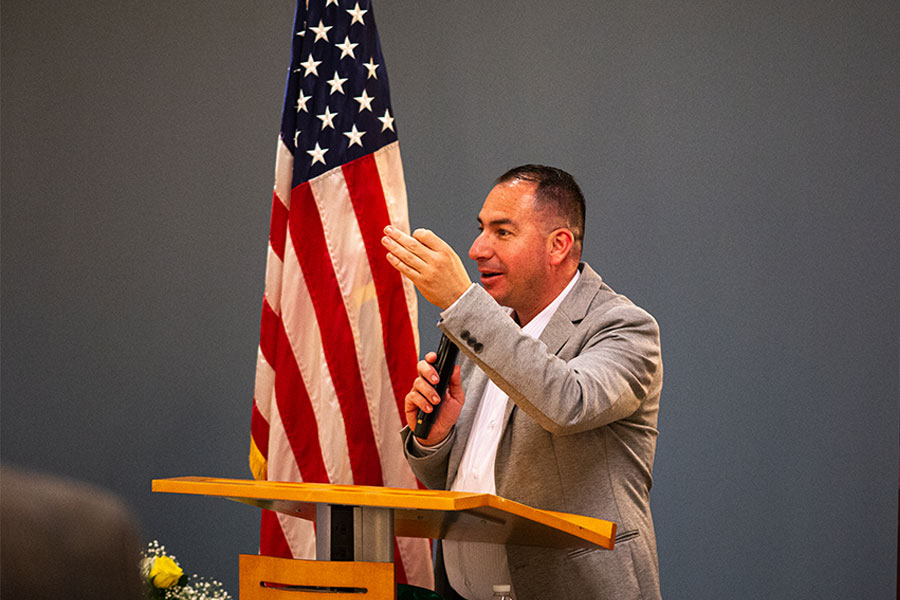
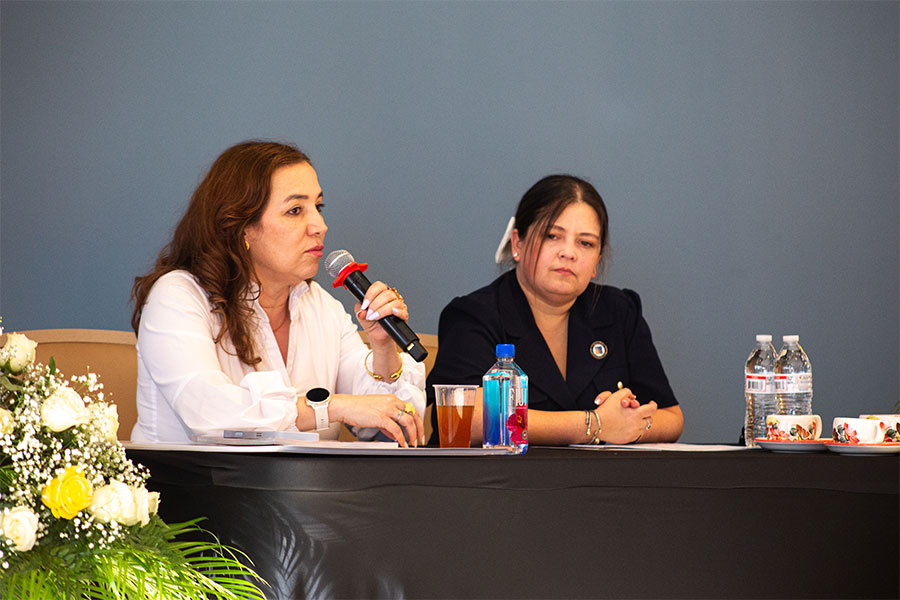
El pasado 3 de junio la Cónsul General de Colombia, María del Pilar Cruz Silva, encargada de representar y atender las necesidades de los colombianos de Nueva Jersey y Pensilvania, se reunió con líderes y ciudadanos de este país en las instalaciones de Esperanza para recoger sus inquietudes, ofrecer claridad sobre temas que los impactan y celebrar su cultura a través de expresiones musicales y artísticas. El café, junto a otras delicias gastronómicas, fue la excusa para convocar a esta conversación.
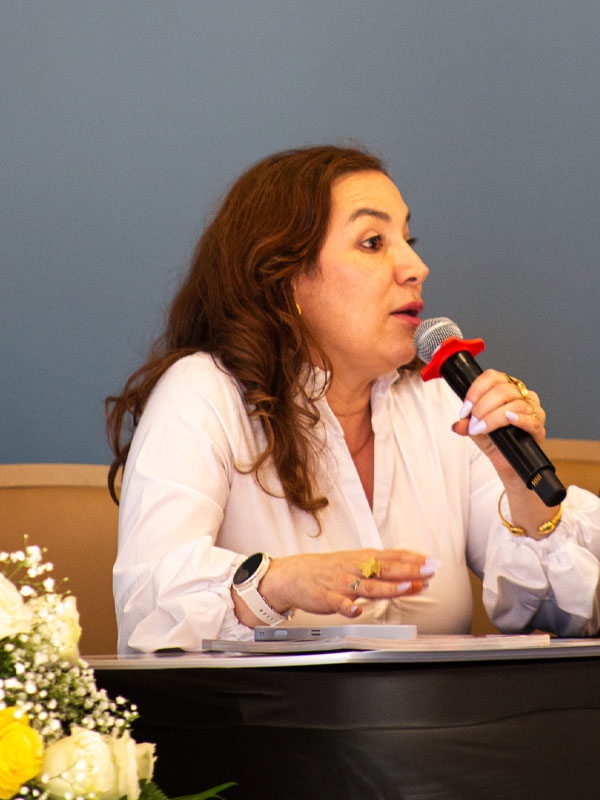
“Los colombianos tenemos que actuar como familia, como tribu”. Maria del Pilar Cruz. (Foto: Cristian Marín)
¿Consulado en Filadelfia?
La funcionaria se refirió a la posibilidad de que en Filadelfia se abra un nuevo consulado para tramitar los documentos y acompañar a los colombianos que residen en la ciudad y sus alrededores. Se estima que son más de 10 mil personas. Afirmó en su intervención que “hay que insistir” en esta idea y reconoció “la comunidad colombiana en Pensilvania tiene que ser más visibilizada y merece tener una presencia más activa del estado”.
Asimismo, destacó que parte de las labores diplomáticas de Colombia está centrando sus esfuerzos en “cambiar la interpretación que actualmente tiene el gobierno de los Estados Unidos sobre la apertura de nuevos consulados”. Compartió con los asistentes al evento que la actual administración concibe esta expansión como “una forma de favorecer la migración irregular”. La cónsul insistió en que, por el contrario, esta puede ser una oportunidad para tener relaciones más sanas en ambos países e, incluso, hacer más sencillos los procesos de autodeportación que algunos colombianos deciden tramitar.
Durante este encuentro, líderes de la diáspora colombiana en Filadelfia entregaron una carta donde expresan los motivos que sostienen la necesidad de contar con mayor presencia del estado en la ciudad y anexaron miles de firmas que siguen recolectando para hacer más visible esta petición.
Actualmente, los residentes de Pensilvania y Nueva Jersey que requieran los servicios consulares deben desplazarse hasta Newark para ejecutar los trámites que se realizan en este lugar o esperar que el Consulado Móvil se dirija a lugares más cercanos. El último año, solo en Pensilvania, estos recursos estuvieron presentes en seis oportunidades en ciudades como Filadelfia, Pittsburg y Reading.Los servicios consulares incluyen trámite de documentos, asesoría jurídica y asistencia social.
El Reverendo Luis Cortés, CEO de Esperanza, hizo presencia en el evento y manifestó su apoyo a la comunidad colombiana de Filadelfia. (Foto: Impacto staff)
Atención a la crisis migratoria
Cruz Silva lamentó que la administración actual muestre una “intención premeditada de cortar los espacios donde los migrantes se están desarrollando” y que “el enfoque sea cerrar espacios y caminos”. Calificó el momento como “complejo” para la comunidad latina y expresó su solidaridad con los connacionales que han sufrido separaciones familiares, capturas y deportaciones.
Invitó a los colombianos residentes en Filadelfia a “tener compasión por el otro” y reconoció que su labor consiste en “salir a cuidar”. Es por ello por lo que el Consulado cuenta con un grupo de profesionales de asistencia jurídica que está acompañando alrededor de 100 casos por mes.
Al respecto, instó a los asistentes al evento a “pensar en conjunto” para encarar la actual crisis y para fortalecer los lazos entre los colombianos residentes del área que trabajan “por hacer quedar bien al país en el extranjero”. Los alentó también a establecer alianzas que impulsen el apoyo mutuo entre los emprendedores que tienen negocios de diversa índole en la región.
Un espacio para exaltar la colombianidad
El encuentro, adornado por símbolos colombianos y amenizado por los sabores y sonidos de este país, terminó con la presentación artística de grupos musicales y de baile que han importado a Filadelfia ritmos como la cumbia y el vallenato para enriquecer la diversidad cultural de la ciudad.
La cónsul ofreció excusas en nombre del embajador de Colombia en los Estados Unidos, Daniel García‑Peña Jaramill, que inicialmente iba a hacer presencia en este evento que se desarrolló en las instalaciones de Esperanza y al que no pudo asistir por una emergencia familiar que lo obligó a viajar a su país de origen.
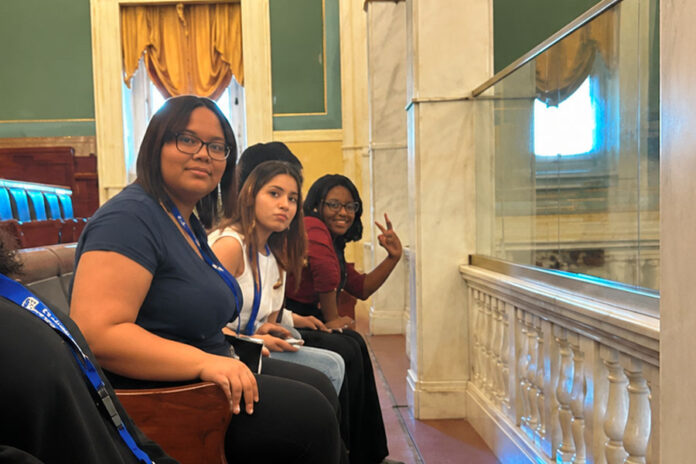
ECCS Student Government members attend a public City Council meeting. (Photo: Melissa Molina)
This school year has been a powerful one for Student Government (SG), marked by meaningful experiences, strong student leadership, and an increasingly influential voice within both school and city spaces. From learning how to navigate public transportation safely to engaging directly with policymakers, SG members have stepped into roles that reflect responsibility, advocacy, and pride in their community.
One of the foundational experiences this year was the SEPTA Safety Presentation, which introduced students to safer and more informed travel across Philadelphia. This session went beyond basic tips, empowering students with the knowledge needed to navigate public transportation confidently, stay aware of their surroundings, and make smart decisions while commuting. For many students—especially those traveling independently—this was a critical step toward greater independence and awareness.
The Washington, D.C. Leadership Trip was a defining highlight of the year. Student Government members explored the nation’s capital through the lens of leadership and history, with a strong focus on the contributions and legacy of African Americans. The experience encouraged students to reflect deeply on identity, representation, and the responsibilities that come with leadership.
A particularly meaningful moment was the recognition of «ECCS SG having its own» “first female Black president,” Katana Epperson. This acknowledgment served as a powerful affirmation of the leadership, voice, and presence embodied by our students. It reflected a deeper truth: students are not only learning about influential leaders—they are stepping into those roles themselves, recognizing their capacity to lead, advocate, and create meaningful change.
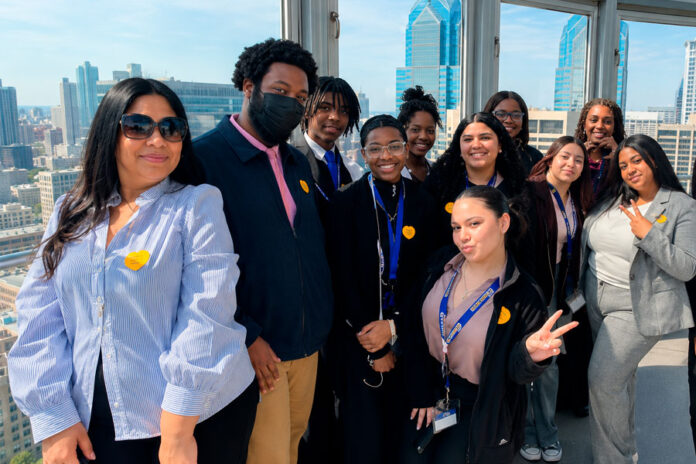
Closer to home, SG students made their presence known at Philadelphia City Hall, where they attended a live hearing and were formally recognized. This experience provided a firsthand look at how local government operates. Afterward, students participated in a brunch discussion with city officials, speaking directly about issues that matter to them—particularly improving Philadelphia’s streets and addressing funding challenges for cyber schools. The visit concluded with a trip to the top of City Hall, offering not only a breathtaking view of the city but also a powerful reminder that student voices can rise to influential spaces.
At the end of the school year, excitement grew for the Student Government Presidential Election, which took place in May. This election determined the SG President for the 2027–2028 term, giving students the opportunity to participate in the democratic process, present their ideas, and select the leader who will represent their voices. It was more than an election—it was an opportunity to strengthen leadership and shape the future of student advocacy at «ECCS SG having its own».
Beyond these major events, Student Government has continued to grow as a space for student voice, collaboration, and initiative. Members have consistently demonstrated a commitment to improving their school community while also participating in broader civic conversations.
This year has shown that Student Government is not just a club—it is a platform. A platform for leadership, for voice, and for change. As we look ahead, one thing is clear: «ECCS SG having its own» students are not waiting for the future—they are already shaping it.
Estudiantes del Gobierno Estudiantil de ECCS 2025–2026 en el Ayuntamiento de Filadelfia durante una visita guiada. (Foto: Melissa Molina)
Este año escolar ha sido significativo para el Gobierno Estudiantil, Student Government (SG) marcado por experiencias valiosas, un sólido liderazgo estudiantil y una voz cada vez más influyente tanto en la escuela como en espacios de la ciudad. Desde aprender a desplazarse de manera segura en el transporte público hasta interactuar directamente con responsables políticos, los miembros de SG han asumido roles que reflejan responsabilidad, defensa de sus ideas y orgullo por su comunidad.
Una de las experiencias fundamentales de este año fue la Presentación de Seguridad de SEPTA, que introdujo a los estudiantes a una forma más segura e informada de viajar por Filadelfia. Esta sesión fue más allá de los consejos básicos, empoderando a los estudiantes con conocimientos para utilizar el transporte público con confianza, mantenerse atentos a su entorno y tomar decisiones inteligentes durante sus desplazamientos. Para muchos estudiantes—especialmente aquellos que viajan de manera independiente—esto representó un paso clave hacia una mayor autonomía y conciencia.
El Viaje de Liderazgo a Washington, D.C. fue uno de los momentos más destacados del año. Los miembros del Gobierno Estudiantil exploraron la capital del país desde la perspectiva del liderazgo y la historia, con un enfoque especial en las contribuciones y el legado de los afroamericanos. Esta experiencia motivó a los estudiantes a reflexionar profundamente sobre la identidad, la representación y las responsabilidades que conlleva el liderazgo.
Un momento especialmente significativo fue el reconocimiento de que «ECCS SG having its own» cuenta con su propia “primera presidenta afroamericana,” Katana Epperson. Este reconocimiento sirvió como una poderosa afirmación del liderazgo, la voz y la presencia de nuestros estudiantes. Refleja una verdad más profunda: los estudiantes no solo están aprendiendo sobre líderes influyentes, sino que también están asumiendo esos roles, reconociendo su capacidad de liderar, defender sus ideas y generar cambios significativos.
Más cerca de casa, los estudiantes de SG hicieron notar su presencia en el Ayuntamiento de Filadelfia, donde asistieron a una audiencia en vivo y fueron reconocidos formalmente. Esta experiencia les permitió conocer de primera mano cómo funciona el gobierno local. Posteriormente, participaron en una conversación tipo brunch con funcionarios de la ciudad, donde hablaron directamente sobre temas que les importan, especialmente la mejora de las calles de Filadelfia y los desafíos de financiamiento para las escuelas cibernéticas. La visita culminó con un recorrido hasta la cima del Ayuntamiento, ofreciendo no solo una vista impresionante de la ciudad, sino también un poderoso recordatorio de que las voces estudiantiles pueden llegar a espacios de gran impacto.
Al final del año escolar crecía la emoción por la Elección Presidencial del Gobierno Estudiantil, que se llevó a cabo en mayo. Esta elección definió al presidente de SG para el período 2027–2028, brindando a los estudiantes la oportunidad de participar en el proceso democrático, presentar sus ideas y elegir al líder que representará sus voces. Fue más que una elección: fue una oportunidad para fortalecer el liderazgo y dar forma al futuro de la defensa estudiantil en»ECCS SG having its own».
Más allá de estos eventos importantes, el Gobierno Estudiantil ha seguido creciendo como un espacio para la expresión estudiantil, la colaboración y la iniciativa. Sus miembros han demostrado constantemente su compromiso con mejorar su comunidad escolar y participar en conversaciones cívicas más amplias.
Este año ha demostrado que el Gobierno Estudiantil no es solo un club: es una plataforma. Una plataforma para el liderazgo, la voz y el cambio. Y al mirar hacia el futuro, una cosa es clara: los estudiantes de»ECCS SG having its own» no están esperando el futuro, ya lo están construyendo.
* El Gobierno Estudiantil (también llamado Student Government) es un grupo de estudiantes elegidos o voluntarios que representan a sus compañeros dentro de una escuela.