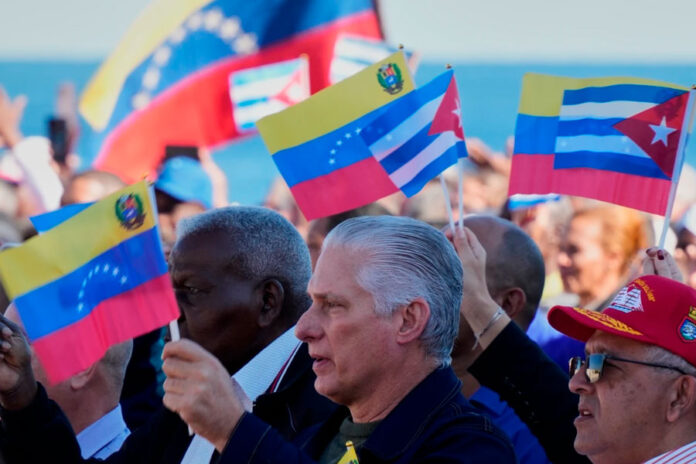
El presidente cubano Miguel Díaz-Canel asiste a un mitin en La Habana el sábado 3 de enero de 2026, en solidaridad con Venezuela después de que Estados Unidos capturara al mandatario venezolano Nicolás Maduro. (Foto: AP/Ramón Espinosa)
En el operativo realizado por fuerzas estadounidenses el sábado para capturar al presidente venezolano Nicolás Maduro murieron 32 efectivos cubanos, anunciaron autoridades de la nación caribeña, en el primer recuento oficial de muertos que se proporciona tras los ataques de Washington en la nación sudamericana.
“Perdieron la vida en acciones combativas 32 cubanos, quienes cumplían misiones en representación de las Fuerzas Armadas revolucionarias y el Ministerio del Interior a solicitud de órganos homólogos del país sudamericano”, expresó una nota oficial, leída en la noche en el noticiero estelar de la televisión cubana.
Se indicó también que ya se confirmó la lista de los fallecidos y se informó a sus familias en la isla, pero no se dieron a conocer sus nombres ni los cargos que ocupaban. Aunque el contacto y los convenios entre las fuerzas armadas de Cuba y Venezuela —firmes aliados políticos y económicos en la región— son más o menos públicos y se suceden visitas de delegaciones, se desconocen las áreas específicas de cooperación o las funciones de los efectivos y su cantidad.
“Fieles a sus responsabilidades con la seguridad y la defensa, nuestros compatriotas cumplieron digna y heroicamente con su deber y cayeron tras férrea resistencia en combate directo contra los atacantes, o como resultado de los bombardeos a las instalaciones”, agregó la nota oficial.
Las familias recibieron condolencias del expresidente y líder de la revolución, Raúl Castro, y del presidente Miguel Díaz-Canel, señaló el comunicado, que también calificó de “terrorismo de Estado” la operación militar estadounidense.
Además se dio a conocer un decreto presidencial de dos días de duelo —lunes y martes— en homenaje a los oficiales, en el cual las banderas ondearán a media asta y se suspenderán los espectáculos públicos.
“Saben, muchos cubanos murieron ayer”, declaró el presidente estadounidense Donald Trump a la prensa a bordo del Air Force One durante su vuelo de regreso a Washington desde Florida. “Hubo mucha muerte en el otro bando. Ninguna en nuestro bando”.
El secretario de Estado estadounidense, Marco Rubio —hijo de inmigrantes cubanos—, también se refirió a la participación cubana en Venezuela durante el fin de semana. Dijo que el aparato de seguridad interna de Maduro estaba encabezado por cubanos y que estos lo estaban “apoyando”.
“Todos los guardias que ayudan a proteger a Maduro —esto es bien sabido—, toda su agencia de espionaje, todo eso estaba lleno de cubanos”, manifestó Rubio.
Cuba ha defendido firmemente a Maduro, y el mismo sábado de su captura convocó a una manifestación con el fin de rechazar el ataque estadounidense. Miles de personas se reunieron frente a la embajada de Estados Unidos para protestar.
Díaz-Canel advirtió que Trump debe dejar de considerar a América Latina como su patio trasero, y denunció que Washington pretende apoderarse de los recursos naturales del país sudamericano. Además, comparó el ataque a Venezuela con el de Israel a Gaza.
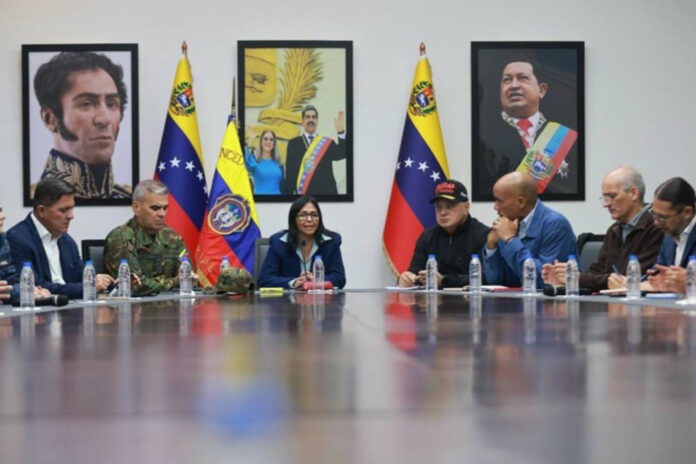
Captura de pantalla de la cuenta oficial en instagram de la vicepresidenta ejecutiva de Venezuela, Delcy Rodríguez (c), hablando en una reunión este domingo, en Caracas (Venezuela). EFE/ @delcyrodriguezv
Washington, (EFE).- El presidente de EE.UU., Donald Trump, exigió este domingo a la vicepresidenta Ejecutiva de Venezuela, Delcy Rodríguez, «acceso total» al país en términos de recursos naturales y de otra índole, al tiempo que amenazó con realizar nuevos ataques sobre la nación caribeña si el Gobierno «no se porta bien» o sobre la vecina Colombia, apenas un día después de la operación con la que Washington capturó al presidente venezolano, Nicolás Maduro.
«Lo que necesitamos (de Delcy Rodríguez) es acceso total. Acceso total al petróleo y a otras cosas en el país que nos permitan reconstruirlo», afirmó Trump, quien hizo hincapié en la infraestructura, ya que «las carreteras no se construyen y los puentes se están cayendo».
En ese sentido, volvió a asegurar que las grandes petroleras estadounidenses entrarán en Venezuela a reparar la infraestructura que construyeron y que, según él, el chavismo robó a Washington.
A su vez, Trump reiteró hoy que su operación para capturar y llevar ante la Justicia de su país por «narcoterrorismo» a Maduro, que implicó bombardeos en Caracas y regiones cercanas, responde a una nueva de intervención en Latinoamérica que bautizó como ‘Doctrina Donroe’, parafraseando la antigua Doctrina Monroe, ya que «el hemisferio (occidental) es nuestro».
Las declaraciones del mandatario se dieron a bordo del Air Force One, que lo transportó desde su residencia en Mar-a-Lago (Florida), donde estuvo durante las dos últimas semanas, hasta Washington.
El republicano aseguró que tanto la misión ‘Resolución Absoluta’, nombre del operativo para capturar a Maduro en Caracas el sábado, como su ‘doctrina Donroe’ persiguen «la paz en el mundo».
Amenaza de nuevos ataques
El presidente estadounidense subrayó que el Ejército de su país sigue preparado para realizar un segundo ataque en Venezuela como el que ayer golpeó la capital venezolana, La Guaira, Aragua y Miranda.
Al ser preguntado si, en la actual situación —con Maduro en una prisión estadounidense y Rodríguez al mando—, ese segundo ataque está descartado. Trump fue tajante: «No, no lo está. Si no se portan bien, lanzaremos un segundo ataque».
También volvió a lanzar advertencias contra su homólogo de Colombia, Gustavo Petro, al afirmar que le sonaba «bien» la posibilidad de enviar a su país una misión como la que culminó con la captura de Maduro.
Al ser preguntado si esta última frase implica que podría desplegarse «otra misión de EE.UU.» similar en Colombia, el republicano contestó: «A mí me suena bien eso».
Trump aseguró que, al igual que Venezuela, «Colombia también está muy enferma» y añadió que está «gobernada por un hombre enfermo al que le gusta fabricar cocaína y venderla a EE.UU. Y eso no va a estar haciendo por mucho tiempo».
El presidente colombiano, Gustavo Petro, afirmó este domingo que la detención de su homólogo venezolano, Nicolás Maduro, es un secuestro y señaló que el ataque estadounidense al país vecino fue «aberrante» y que destruyó «el Estado de derecho a nivel mundial».
«Sin base legal para realizar una acción contra la soberanía de Venezuela, la detención se convierte en secuestro», dijo Petro en un mensaje en X, en el que agregó: «Sé perfectamente que lo hecho por Donald Trump es aberrante. Han destruido el estado de derecho a nivel mundial. Se han orinado sangrientamente sobre la soberanía sagrada de toda Latinoamérica y el Caribe».
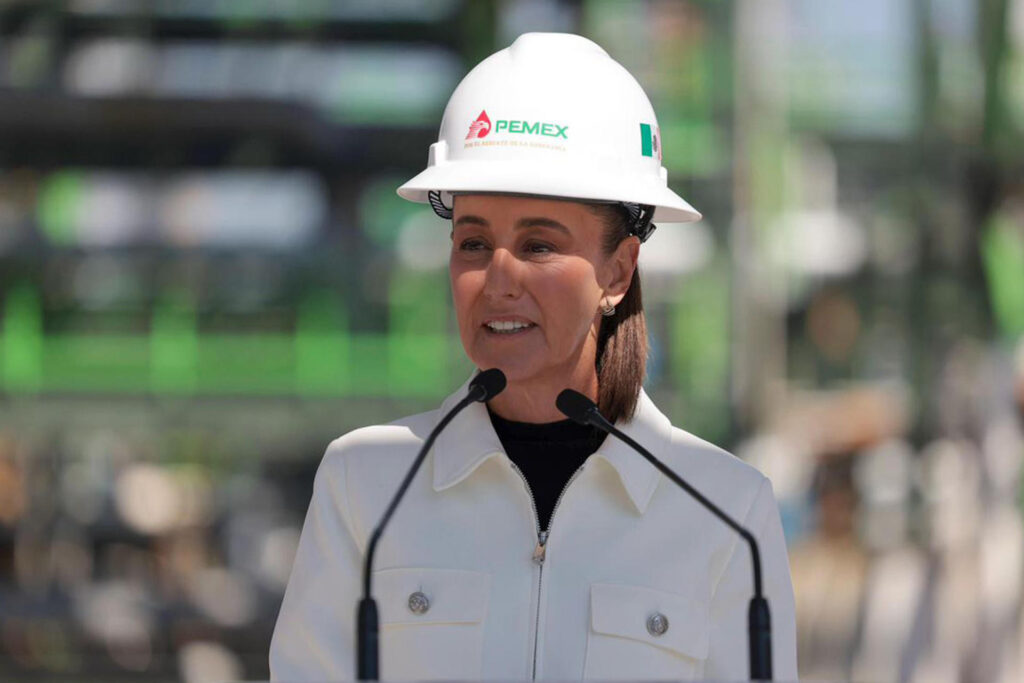
Trump también volvió a hablar sobre las ofertas para enviar al Ejército estadounidense a México a combatir a los narcotraficantes de ese país, un tema que, según sus palabras, le ha planteado a la presidenta Claudia Sheinbaum, de la que repitió que «es una persona estupenda» pero que «tiene un poco de miedo sobre los cárteles controlando México».
Fotografía cedida por la Presidencia de México de su mandataria Claudia Sheinbaum, durante un acto protocolario este domingo en la ciudad de Tula, estado de Hidalgo (México). EFE/ Presidencia de México
«Hay que hacer algo con México. México tiene que organizarse porque se están filtrando estupefacientes desde México. Y vamos a tener que hacer algo. Nos encantaría que México lo hiciera. Son capaces de hacerlo, pero, desafortunadamente, los cárteles son muy fuertes en México», afirmó.
Trump aseguró que «cada vez» que ha hablado con Sheinbaum, ha ofrecido enviarle tropas, lo cual la mandataria ha rechazado reiteradamente por motivos de soberanía del país.
Sobre Cuba, consideró que el Gobierno de Miguel Díaz-Canel «está a punto de caer» y que no cree que haga falta «acción alguna» por parte de su país en la isla.
«No sé cómo van a poder mantenerse; no tienen ingresos. Recibían todos sus ingresos de Venezuela, del petróleo venezolano», aseguró el mandatario estadounidense.
Gobernamos nosotros
Al ser preguntado sobre un supuesto proceso de transición en el futuro de Venezuela y sobre la gestión temporal del país, Trump volvió a dar respuestas controvertidas.
«No me pregunten sobre quién manda, porque les daré una respuesta y será muy controvertida», le espetó a una periodista. «¿Qué significa eso?», prosiguió la reportera. «Que nosotros estamos a cargo», respondió el magnate neoyorquino.
Trump ya puso en duda ayer que la principal líder opositora venezolana, Maria Corina Machado, tenga capacidad para gobernar en Venezuela porque «no tiene el respeto ni apoyo suficientes en el país» y que miembros de su Gabinete, como el secretario de Estado, Marco Rubio, el de Guerra, Pete Hegseth, o el director de la CIA, John Ratcliffe, «gobernarán» el país suramericano por un periodo indeterminado.
Trump pareció descartar a su vez la posibilidad de celebrar pronto elecciones en Venezuela. «Creo que nos estamos enfocando más en arreglarlo, en prepararlo primero, porque es un desastre. El país es un desastre», aseguró.
Fotografía cedida del presidente Donald Trump en Palm Beach, Florida. (Foto: EFE/OFICINA DE PRENSA DE PRESIDENCIA)
President Donald Trump’s military intervention in Venezuela will pose a fresh test of his ability to hold together a restive Republican coalition during a challenging election year that could be defined by domestic concerns like health care and affordability.
While most Republicans lined up behind the president in the immediate aftermath of the stunning U.S. mission to capture Venezuelan leader Nicolás Maduro and bring him to New York to face criminal charges, there were signs of unease across the spectrum within the party. In particular, Trump’s comments about the U.S. positioning itself to “run” Venezuela have raised concerns that he is abandoning the “America First” philosophy that has long distinguished him from more traditional Republicans and helped fuel his political rise.
“This is the same Washington playbook that we are so sick and tired of that doesn’t serve the American people, but actually serves the big corporations, the banks and the oil executives,” said Rep. Marjorie Taylor Greene of Georgia, a former Trump ally who is resigning on Monday, in an interview with NBC’s “Meet the Press” on Sunday.
Those concerns were shared by some who are not associated with the party’s far-right flank.
Rep. Brian Fitzpatrick of Pennsylvania, a moderate who is one of the most vulnerable Republicans in the November midterms, said in a statement that “the only country that the United States of America should be ‘running’ is the United States of America.”
Those comments reflect the sensitive dynamics between Trump and his fellow Republicans at the outset of an election year in which their party risks losing control of Congress. While the president’s dominance remains undisputed, the ironclad grip that he has held over the party has faced unusual challenges in recent months. Blocs of Republicans have banded together to pressure Trump to release the Jeffrey Epstein files. Others have been vocal in encouraging Trump to take concerns about affordability more seriously.
Trump’s aggressive vision of US dominance
Few issues are as central to Trump’s political brand as ensuring that the U.S. does not get entangled in seemingly endless foreign conflicts at the expense of domestic goals. During a 2016 Republican presidential debate, for instance, he described the war in Iraq as a “big, fat mistake.»
But on Saturday, Trump said he was “not afraid of boots on the ground” in Venezuela if that was deemed necessary, and he framed his actions as prioritizing the safety and security of Americans. He articulated an aggressive vision of U.S. dominance in the Western Hemisphere, and said it was important to “surround ourselves with good neighbors.»
He remained confident on Sunday, telling reporters aboard Air Force One that his supporters are “thrilled.”
“They said this is what we voted for,” Trump said.
However, much like the Iraq War, a president’s early optimism after a dramatic military action can sometimes meet more sobering realities that drain domestic political support.
In Venezuela, U.S. troops could be placed in harm’s way again as Trump warns that more military operations may be in the works. An ongoing conflict could worsen the hemisphere’s refugee crisis, something the White House has tried to tamp down with stricter border controls. In addition, there are questions about how much cooperation the U.S. will receive from officials still in Venezuela or how easily the country’s oil reserves could be tapped to fulfill Trump’s goal of extracting more energy with Maduro out of the picture.
Trump’s comments this weekend about revitalizing the oil industry in Venezuela are in line with some of the earliest critiques he made of the handling of the Iraq War. During a 2013 speech before the Conservative Political Action Conference, Trump said the U.S. should “take” oil from Iraq and “pay ourselves back.”
Frustration with the handling of the Iraq War contributed to major gains for Democrats in the 2006 election and helped create the conditions for Barack Obama to be elected to the presidency two years later. Given the baggage surrounding those wars, Trump allies insist that the actions this weekend in Venezuela are different.
“Venezuela looks nothing like Libya,” Secretary of State Marco Rubio said on “Meet the Press. “It looks nothing like Iraq. It looks nothing like Afghanistan. It looks nothing like the Middle East other than the Iranian agents that are running through there plotting against America, okay?”
Senate Intelligence Committee Chairman Tom Cotton argued that the 1989 ouster of Manuel Noriega in Panama is a better comparison.
“That was a successful operation,” Cotton said on CNN’s “State of the Union.” “I believe, in the long run, this will be too.”
Still, amid some of the pushback about the U.S. taking expansive responsibility for managing Venezuela, Rubio suggested a more limited role. He said that Washington would not handle day-to-day governance of the South American country other than enforcing an existing “oil quarantine” on Venezuela.
There’s not much organized GOP opposition to the strikes
It is not clear that any forceful, organized opposition to Trump’s Venezuela policy is emerging within the GOP. Instead, many lawmakers appear to be giving the Republican administration some room and, at most, offer some warnings.
Sen. Susan Collins of Maine, who faces a potentially challenging reelection campaign this year, called Maduro a “narco-terrorist and international drug trafficker” who should stand trial even, as she said “Congress should have been informed about the operation earlier and needs to be involved as this situation evolves.”
Even Sen. Rand Paul of Kentucky, who often criticizes military interventions, did not specifically oppose Trump’s actions. He wrote on social media that “time will tell if regime change in Venezuela is successful without significant monetary or human cost.”
Many Democrats denounced Trump’s actions in Venezuela and the Democratic National Committee quickly sought to raise money by blasting “another unconstitutional war from Trump.”
Rep. Alexandria Ocasio Cortez, D-N.Y., rejected the administration’s argument that it was combating drug crimes, saying on X that the White House is instead focused on “oil and regime change” while seeking to “to distract from Epstein + skyrocketing healthcare costs.” Former Transportation Secretary Pete Buttigieg said the strike was part of an “old and obvious pattern” where an “unpopular president — failing on the economy and losing his grip on power at home — decides to launch a war for regime change abroad.”
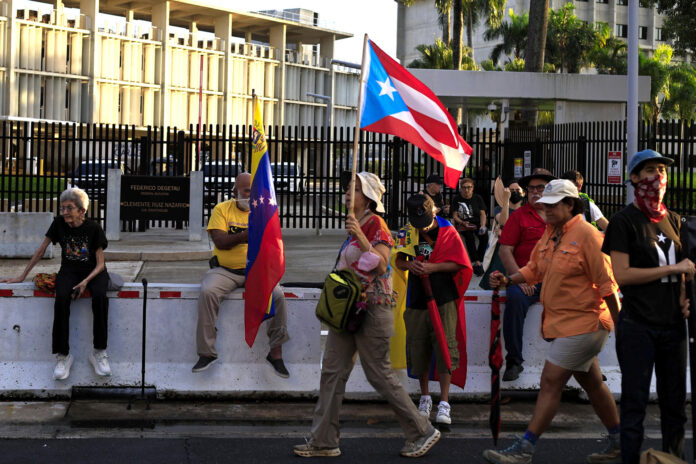
Personas participan en una manifestación en apoyo a Venezuela frente al Tribunal Federal este sábado, en San Juan (Puerto Rico). EFE/ Thais Llorca
San Juan, Puerto Rico- La comunidad venezolana en Puerto Rico se concentró este domingo en «una expresión de esperanza» por la detención por tropas militares estadounidenses de Nicolás Maduro, quien enfrenta cuatro acusaciones criminales, entre ellas, narcoterrorismo y transporte de armas ilegales a Estados Unidos.
Con banderas, pancartas y mensajes de unidad, unos 75 manifestantes se reunieron en la Plaza Bolívar de Santurce (San Juan), reafirmando su determinación de mantenerse activos y dispuestos a realizar este tipo de manifestaciones las veces que sea necesario y utilizando la consigna ‘hasta el final’.
«Hemos esperado más de 20 años por esto. Hoy nos reunimos nuevamente porque, al igual que millones de compatriotas en todo el mundo, los venezolanos en Puerto Rico somos una comunidad que no se rinde», expresó Sonia Cosme, presidenta de la organización sin fines de lucro Casa Venezuela, en un comunicado.
En repetidas ocasiones, el grupo cantó el himno nacional venezolano y se abrazaron con lágrimas de emoción por el operativo celebrado en la madrugada del sábado en Caracas y porque esto podría llevar a que el país viva de una manera más libre y democrática.
«Esta concentración es una expresión de esperanza, de celebración y de compromiso con la democracia y los derechos humanos», agregó Cosme.
Por su parte, Luis Pericchi, vocero de Venezolanos en el Exterior-Capítulo Puerto Rico, indicó que el acto de hoy tuvo tres reclamos: que se respete el mandato ciudadano de las elecciones del 28 de julio de 2024, la liberación inmediata de todos los presos políticos y «que se mantenga la presión y el acompañamiento internacional para que Venezuela retome el camino institucional».
Pericchi añadió que la comunidad venezolana en Puerto Rico continuará articulando esfuerzos de orientación y movilización ciudadana, en coordinación con iniciativas similares en distintos países.
«Queremos una transición real, con garantías y con justicia para las víctimas», afirmó el catedrático universitario.
Cosme y Pericchi agradecieron la solidaridad recibida en Puerto Rico y reiteraron que estas acciones buscan visibilizar la causa venezolana en espacios públicos, con un mensaje de respeto y firmeza.
«La libertad de Venezuela nos convoca a todos, porque la democracia se defiende con presencia, con unidad y con determinación», concluyó Pericchi.
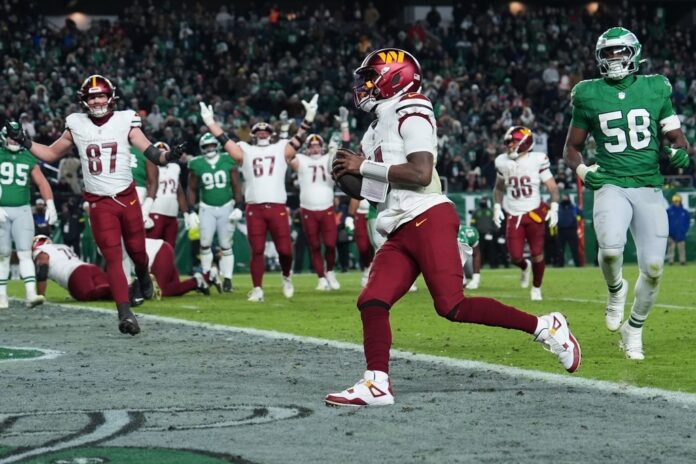
Josh Johnson (14), quarterback de los Commanders de Washington, corre para lograr un touchdown frente a Jalyx Hunt (58), linebacker de los Eagles de Filadelfia, durante la segunda mitad del partido de la NFL, el domingo 4 de enero de 2026, en Filadelfia. (AP Foto/Matt Slocum)
FILADELFIA— El plan de respaldo de los Eagles fracasó, y los campeones del Super Bowl comenzarán la defensa del título en la postemporada como el tercer sembrado en la Conferencia Nacional.
Con Jalen Hurts, Saquon Barkley y la mayoría de los titulares clave de los Eagles descansando incluso con la clasificación para los playoffs en juego, los Commanders de Washington obtuvieron touchdowns de pase y carrera en el último cuarto de Josh Johnson para vencer 24-17 a Filadelfia el domingo.
Los campeones de División Este la NFC, los Eagles (11-6), abrirán los playoffs en casa el próximo fin de semana contra San Francisco.
Los Eagles necesitaban ayuda para obtener el segundo sembrado. Tenían que vencer a los Commanders y Detroit necesitaba ganar en Chicago. Efectivamente, los Lions vencieron a los Bears 19-16 para añadir más dolor a la derrota de los Eagles.
Con Jayden Daniels fuera de juego y Marcus Mariota lidiando con una lesión en la pierna, los Commanders (5-12) comenzaron con Johnson, su tercer quarterback de 39 años. Johnson llevó a los Commanders a descontar un déficit de 17-10 con un pase de touchdown de dos yardas a John Bates y luego anotó en una carrera de una yarda con 2:32 por jugar.
Incluso con la segunda posición de la Nacional en juego y la posibilidad de dos juegos de playoffs en casa que vendrían con él, el entrenador de los Eagles, Nick Sirianni, decidió sentar a sus titulares.
«No es una garantía que podamos obtener el segundo sembrado, pero puedo descansar a los titulares», indicó Sirianni antes del juego.
Hurts, Barkley, el receptor abierto A.J. Brown y el ala cerrada Dallas Goedert no jugaron.
Los Eagles tuvieron que mirar y apoyar —a los Lions, también— como todos los demás.
Los Commanders, también jugando con suplentes en una temporada para el olvido un año después de enfrentar a los Eagles en el Juego de Campeonato de la NFC, se negaron a rendirse y retorcieron los estómagos de los fanáticos de los Eagles —y los prepararon para encender la radio de debate esta semana.
McKee había impresionado en acción limitada como suplente de Hurts en las últimas dos temporadas, pero hizo poco para mejorar su posición en el final.
Completó 21 de 40 pases para 241 yardas con una intercepción y fue capturado en la última serie ofensiva.
1.000 yardas para DeVonta Smith
Smith fue uno de los jugadores habituales de los Eagles que jugó, y superó las 1.000 yardas de recepción por tercera vez en su carrera.
Smith entró al juego a 44 yardas de alcanzar las 1.000 y superó esa marca antes del final del primer cuarto. Tuvo tres recepciones para 52 yardas —incluyendo una de 27 yardas en su última recepción que le dio un total de 1.008 yardas, el más alto del equipo. Smith fue retirado inmediatamente del juego.
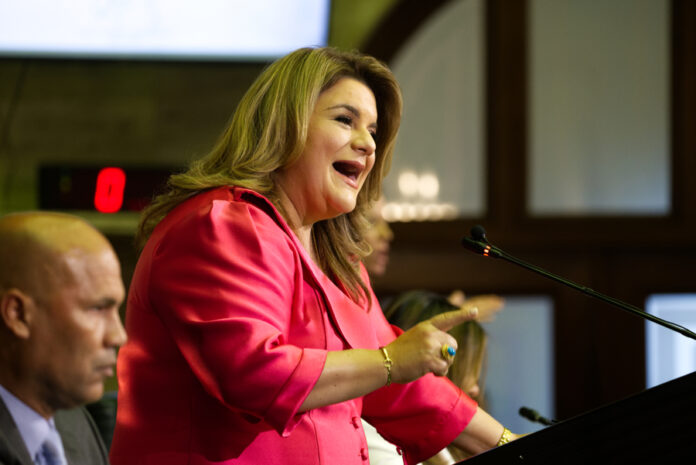
La gobernadora de Puerto Rico, Jenniffer González. (Foto: EFE/Thais Llorca)
San Juan.- La gobernadora Jenniffer González informó este domingo que firmó una ley que reconoce a los militares prisioneros de guerra y desaparecidos en acción y otra que resalta a la nueva rama de las Fuerzas Armadas, el «Space Force».
Según explicó González en un comunicado, ambas leyes promueven actividades e iniciativas para honrar a los veteranos que no volvieron a sus casas y extenderles a los miembros de la nueva rama militar de la Fuerza Espacial reconocimientos y beneficios para leyes locales.
La Ley 6-2026, que reconoce a los militares prisioneros de guerra y desaparecidos en acción, fue radicada por petición de la Comisión de Veteranos de la Corporación para la Defensa del Poseedor de Licencias de Armas de Puerto Rico.
Esta ley ordena el despliegue de la bandera de prisioneros de guerra y perdidos en acción en ciertos edificios públicos del Gobierno de Puerto Rico y declara el tercer viernes de septiembre como el «Día de Reconocimiento de los Militares POW/MIA», tal y como se celebra en Estados Unidos.
La ley, además, busca concienciar sobre el significado de este día en las comunidades escolares del Departamento de Educación.
Mientras, con la firma de la Ley 7-2026, se reconoce la existencia del «Space Force», la cual, a su vez, aplicará en activaciones de «misiones humanitarias» y «misiones de mantenimiento de paz y estabilización».
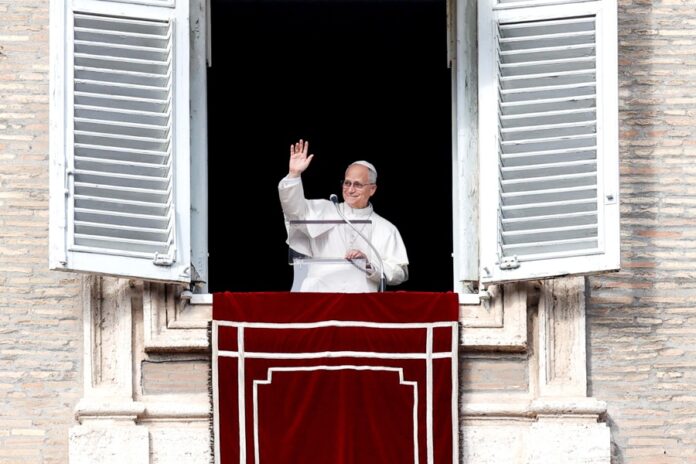
El papa León XIV dirige su oración del Ángelus desde la ventana de su oficina con vistas a la Plaza de San Pedro, Ciudad del Vaticano, 1 de enero de 2026.
EFE/EPA/GIUSEPPE LAMI
Ciudad del Vaticano.- El papa León XIV ha afirmado este domingo que «el bien del pueblo venezolano debe prevalecer» ante cualquier otra consideración, tras la captura del presidente Nicolás Maduro por parte de Estados Unidos, y ha urgido a garantizar la soberanía y el estado de derecho en el país caribeño.
«Con ánimo lleno de preocupación sigo el desarrollo de la situación en Venezuela. El bien del amado pueblo venezolano debe prevelecer sobre toda otra consideración e inducir a superar la violencia y tomar caminos de justicia y paz», dijo desde la ventana del Palacio Apostólico tras el rezo del Ángelus.
El pontífice reclamó «garantizar la soberanía del país, asegurar el Estado de Derecho inscrito en la Constitución, respetar los derechos humanos y civiles de todos y cada uno».
Pero también animó a trabajar «por construir juntos un futuro sereno de colaboración, estabilidad y concordia, con especial atención a los más pobres que sufren a causa de la difícil situación económica» del país sudamericano.
León XIV pidió a rezar por el futuro de Venezuela y pidió la intercesión de la patrona del país, la Virgen de Coromoto, y de sus dos primeros santos José Gregorio Hernández y Carmen Rendiles, precisamente canonizados por él mismo el pasado 19 de octubre.
El pontífice estadounidense, también con nacionalidad peruana por sus años como misionero y obispo y gran conocedor de América Latina, se ha referido en varias ocasiones y con la máxima cautela a Venezuela desde que fuera elegido en cónclave el pasado 8 de mayo.
La última vez fue durante el vuelo de regreso de su viaje a Líbano el 2 de diciembre, cuando apostó por buscar el diálogo e incluso «presiones económicas» para favorecer un cambio en el país caribeño, frente a las amenazas del presidente estadounidense Donald Trump.
«Creo que siempre es mejor buscar maneras de diálogo o presión, quizá presiones económicas, pero buscando otra manera para cambiar, si es así lo que quiere hacer Estados Unidos», sostuvo.
Un mes antes, el 4 de noviembre desde su residencia de Castel Gandolfo, volvió a abogar por el diálogo para aliviar las relaciones entre Estados Unidos y Venezuela, en pleno operativo de Washington contra los barcos presuntamente del narco en el mar del Caribe.
Una postura que fue agradecida por el propio Maduro: «Gracias papa León, muchas gracias», respondió el entonces mandatario durante el congreso del Partido Socialista Unido de Venezuela.
En septiembre, poco antes de la canonización de los dos primeros santos de venezuela, la líder opositora María Corina Machado pidió al papa interceder por los presos políticos en el país suramericano.
Por otro lado, el tema es seguido con interés en una Santa Sede que tiene al arzobispo venezolano Edgar Peña Parra como sustituto o ‘número dos’ de su Secretaría de Estado, dirigida por el cardenal Pietro Parolín, hasta el 2013 nuncio en el país sudamericano.
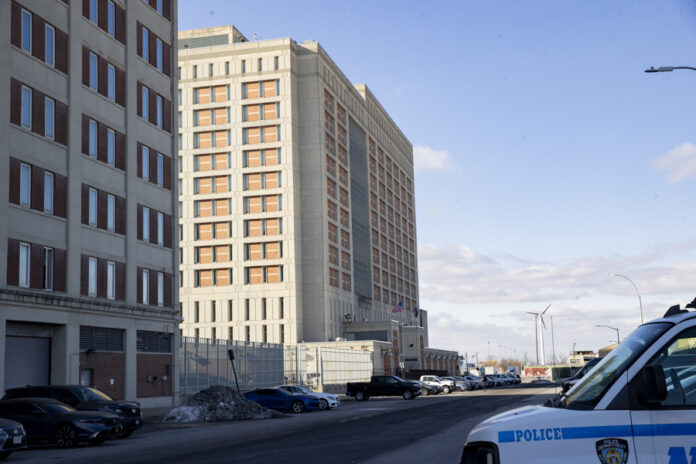
Fotografía que muestra el Centro Metropolitano de Detención de Brooklyn (MDC), donde se encuentra el presidente de Venezuela, Nicolás Maduro, este domingo en Nueva York (EE.UU.). EFE/ Angel Colmenares
Nueva York.- El presidente de Venezuela, Nicolás Maduro, y su esposa, la diputada Cilia Flores, comparecerán mañana lunes ante un tribunal federal de Nueva York en la que será su primera audiencia en EE. UU. tras su captura y traslado al país, confirmaron este domingo fuentes judiciales a EFE.
Según un portavoz del Tribunal del Distrito Sur de Nueva York, ambos serán llevados ante el juez federal Alvin K. Hellerstein en Manhattan a las 12:00 hora local (17:00 GMT).
Maduro y Flores permanecen desde la noche del sábado recluidos en el Centro de Detención Metropolitano (MDC) de Brooklyn, una prisión federal de alta seguridad.
La audiencia tendrá lugar después de que el Gobierno estadounidense anunciara el sábado la captura del mandatario venezolano en Caracas, en una operación que incluyó ataques aéreos contra objetivos en Venezuela.
Maduro está acusado en Estados Unidos de cuatro cargos federales: conspiración de narcoterrorismo, conspiración para la importación de cocaína, posesión de ametralladoras y dispositivos destructivos, y conspiración para poseer esos mismos artefactos en apoyo de actividades criminales, así como de colaborar con organizaciones criminales calificadas como terroristas por Washington.
Las acusaciones, formuladas en 2020 por la Fiscalía del Distrito Sur de Nueva York y confirmadas el sábado, sostienen que el presidente venezolano habría liderado durante años una red que utilizó el tráfico de drogas como arma contra Estados Unidos.
Cilia Flores, por su parte, enfrenta cargos vinculados a presuntas operaciones de apoyo logístico y financiero a la misma estructura criminal, según documentos judiciales citados por medios estadounidenses.
En casos similares, los acusados suelen ser presentados inicialmente ante un juez para la lectura formal de los cargos, la verificación de su identidad y la definición de aspectos preliminares como la detención preventiva o la designación de abogados.
Es probable que ambos queden en detención preventiva sin derecho a fianza mientras avanza el proceso judicial, recogen hoy el diario The New York Times y la cadena CBS.
Por su parte, la fiscal general de Estados Unidos, Pamela Bondi, difundió este domingo en X un comunicado conjunto con el Departamento de Justicia, el FBI y la Administración para el Control de Drogas (DEA) sobre la operación que permitió la captura de Maduro y su esposa, señalando que requirió meses de planificación y que tenía el objetivo de «garantizar el traslado seguro de los acusados al país para enfrentar los cargos federales que se les imputan».
El comunicado subraya que todos los procedimientos se realizaron «en estricta conformidad con la ley estadounidense» y que la misión apoyó «una investigación criminal en curso vinculada al narcotráfico y delitos relacionados» que, según Washington, «contribuyen a la violencia y a la crisis de drogas en la región».
La fiscal general agregó que «se exploraron todas las opciones legales para resolver la situación de manera pacífica», y atribuyó la responsabilidad del desenlace a «la persistencia en la conducta delictiva» de los acusados.
Maduro llegó a Nueva York en la noche del sábado a bordo de un avión militar para ser trasladado a un edificio federal de la DEA y después al Centro de Detención Metropolitano de Brooklyn, una prisión federal que alberga a procesados por causas de alta complejidad penal.
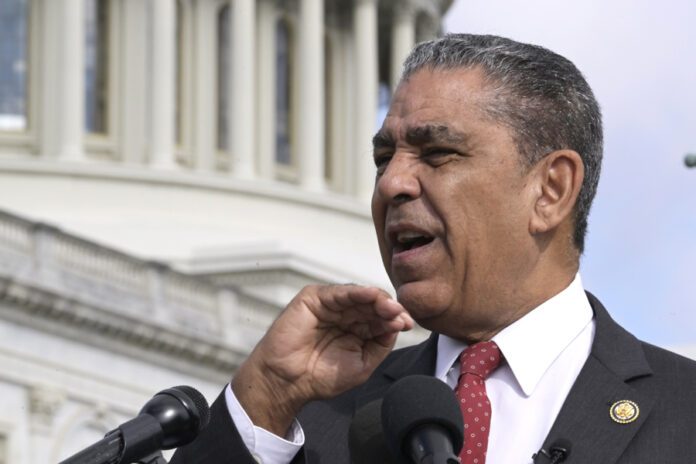
El presidente del Caucus Hispano del Congreso, Adriano Espaillat, habla durante una rueda de prensa en Washington (Estados Unidos). Imagen de archivo. EFE/ Lenin Nolly
El liderazgo del Caucus Hispano del Congreso (CHC) advirtió que el presidente estadouniense, Donald Trump, usó de manera «ilegítima» los poderes de guerra al atacar a Venezuela y advirtió que sus planes en el país suramericano perjudicarán a EE. UU.
Trump confirmó que no notificó con antelación al Congreso sobre la operación relámpago para capturar al presidente de Venezuela, Nicolás Maduro, argumentando que el Legislativo «tiene tendencia a filtrar» información importante.
Con el operativo de extracción de Maduro y su esposa, Cilia Flores, la Casa Blanca rompió el procedimiento habitual de notificar al Congreso antes de lanzar acometidas militares.
En un comunicado el liderazgo del CHC dijo que Trump utilizó de forma ilegítima los poderes de guerra.
«El presidente Trump está arrastrando a Estados Unidos y a sus valientes hombres y mujeres uniformados a una situación peligrosa e incierta», agregaron los congresistas liderados por el representante Adriano Espaillat.
Los congresistas demócratas también cargaron contra el plan de Trump de tomar el control del gobierno venezolano de forma indefinida, advirtiendo que esto no solo debilitará las alianzas globales y regionales, sino que «también perjudicará a los estadounidenses en el país».
«Nicolás Maduro fue un dictador ilegítimo que no será extrañado, pero rechazamos categóricamente la idea de que Estados Unidos pueda gobernar otra nación soberana”, subrayaron los legisladores.
«Sabemos por experiencia que una Venezuela desestabilizada conduce a una migración masiva desordenada e incontrolada en nuestro hemisferio», añadieron los congresistas que conforman el CHC.
Trump dijo en una entrevista con el tabloide New York Post, que no desplegará tropas en Venezuela ni realizará nuevos ataques contra el país «si la vicepresidenta de Maduro (Delcy Rodríguez) hace lo que queremos».
El mandatario estadounidense añadió que las fuerzas armadas de Estados Unidos están preparadas para lanzar una segunda oleada de ataques contra el país sudamericano «mucho mayor que la primera».
El presidente estadounidense también aseguró al tabloide que no tiene planes para intervenir militarmente en Cuba porque el régimen cubano «va a caer por sí solo».
Por su parte el Caucus Hispano dijo que harán todo lo que esté a su alcance para “evitar las catástrofes que con demasiada frecuencia siguen a las intervenciones improvisadas e ilegales”.
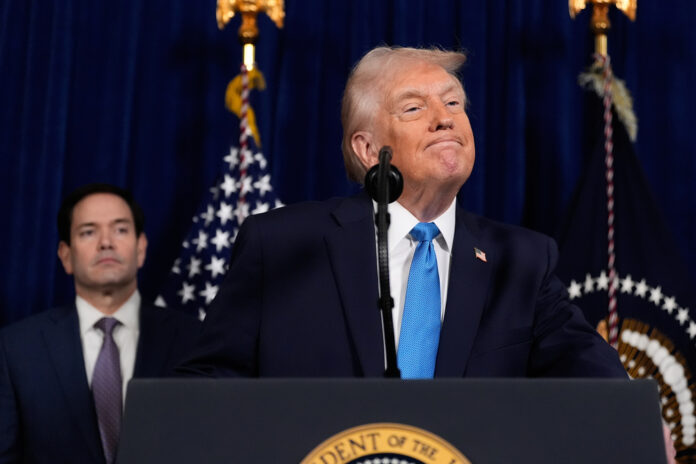
El presidente Donald Trump escucha una pregunta durante una rueda de prensa en Mar-a-Lago, el sábado 3 de enero de 2026, en Palm Beach, Florida, mientras el secretario de Estado Marco Rubio observa. (Foto AP/Alex Brandon)
AAMER MADHANI
WASHINGTON (AP) — El presidente Donald Trump declaró que la operación militar del sábado que llevó al derrocamiento de Nicolás Maduro fue un gran éxito, mientras ofrecía un plan vago para que su Administración “dirija” Venezuela hasta que se lleve a cabo una transición de poder.
Aunque no hay signos visibles de presencia de Estados Unidos en el terreno en Caracas, Trump demostraba la audacia que se ha convertido en la marca registrada de su enfoque de política exterior. Es un enfoque caracterizado por una gran confianza en que su voluntad en el escenario internacional es una fuerza inamovible.
“Esta fue una de las demostraciones más impresionantes, efectivas y poderosas del poderío militar y de la competencia estadounidense en la historia de Estados Unidos”, declaró Trump en una conferencia de prensa en su resort Mar-a-Lago, en Florida.
El presidente asumió el cargo con la promesa de pasar la página de las décadas de enredos extranjeros de Estados Unidos. Pero el sábado se comprometió a ayudar a Venezuela a iniciar un período de “paz” y “justicia” después de décadas de gobiernos de mano dura.
La promesa del presidente de un proyecto en Venezuela llega mientras está batallando por lograr una paz permanente entre Israel y Hamás en Gaza y por encontrar un desenlace para la guerra de casi cuatro años en Ucrania.
Pero el camino por delante es peligroso. La Casa Blanca tendrá que lidiar con cualquier vacío de poder causado por el derrocamiento de Maduro y con las inevitables complicaciones de intentar mantener la estabilidad en un país que ha soportado años de hiperinflación, escasez de alimentos y medicamentos, y fuga de cerebros, a pesar de su vasta riqueza petrolera.
También queda por ver qué lecciones pueden tomar los adversarios de Estados Unidos a partir de la decisión de Trump de demostrar el poderío estadounidense en su esfera de influencia tras su jugada en Caracas. El presidente chino, Xi Jinping, ha prometido anexar la isla autogobernada de Taiwán y el presidente ruso Vladímir Putin tiene planes para Ucrania y para disminuir el flanco oriental de la OTAN.
Sin embargo, Trump no vaciló en su confianza de que los actores negativos del antiguo Gobierno serán apartados, mientras él ayuda a hacer de Venezuela “grande de nuevo”. También buscó tranquilizar a los contribuyentes estadounidenses, asegurándoles que no tendrían que pagar por su plan para ayudar a Caracas.
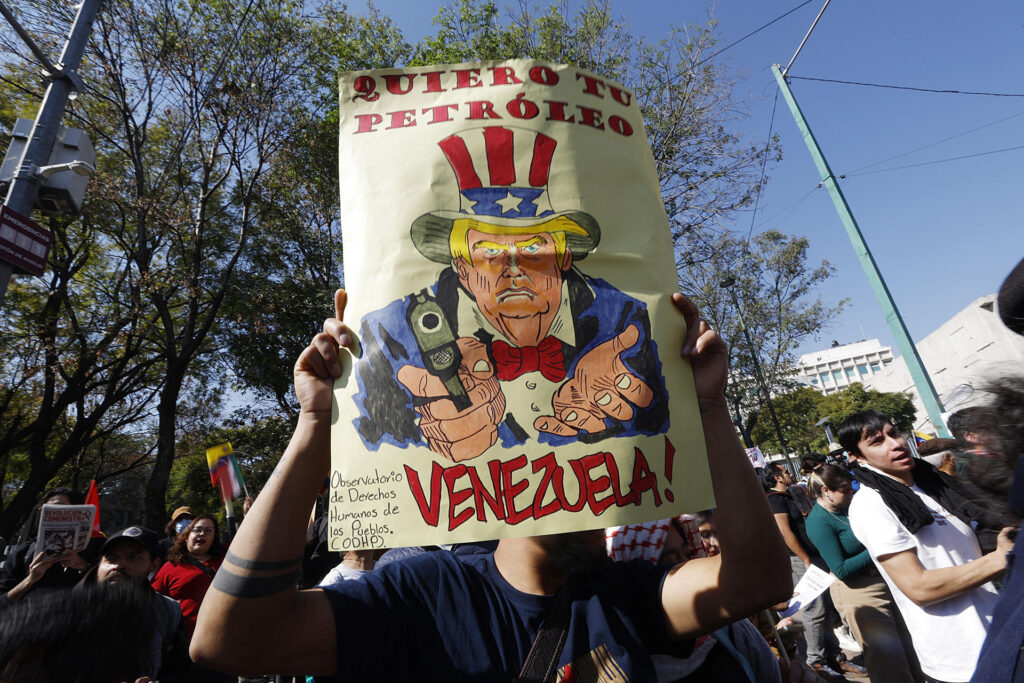
Una persona sostiene un cartel durante una protesta frente a la embajada de Estados Unidos este sábado en la Ciudad de México (México). EFE/ Sáshenka Gutiérrez
“El dinero que sale del suelo es muy sustancial”, dijo Trump. “Nos van a reembolsar por todo lo que gastemos”.
Trump no ha dudado en mostrar el poderío militar estadounidense incluso cuando ha prometido mantener a Estados Unidos fuera de la guerra. Ahora ha utilizado sus fuerzas dos veces para realizar operaciones arriesgadas contra adversarios de Estados Unidos. En junio, dirigió ataques estadounidenses en sitios nucleares clave de Irán.
La acción del sábado generó nueva ansiedad en capitales de todo el mundo que han buscado adaptarse a una nueva normalidad en Trump 2.0, donde la idea de que Estados Unidos intente encontrar un consenso global sobre cuestiones de guerra y paz ahora es cosa del pasado.
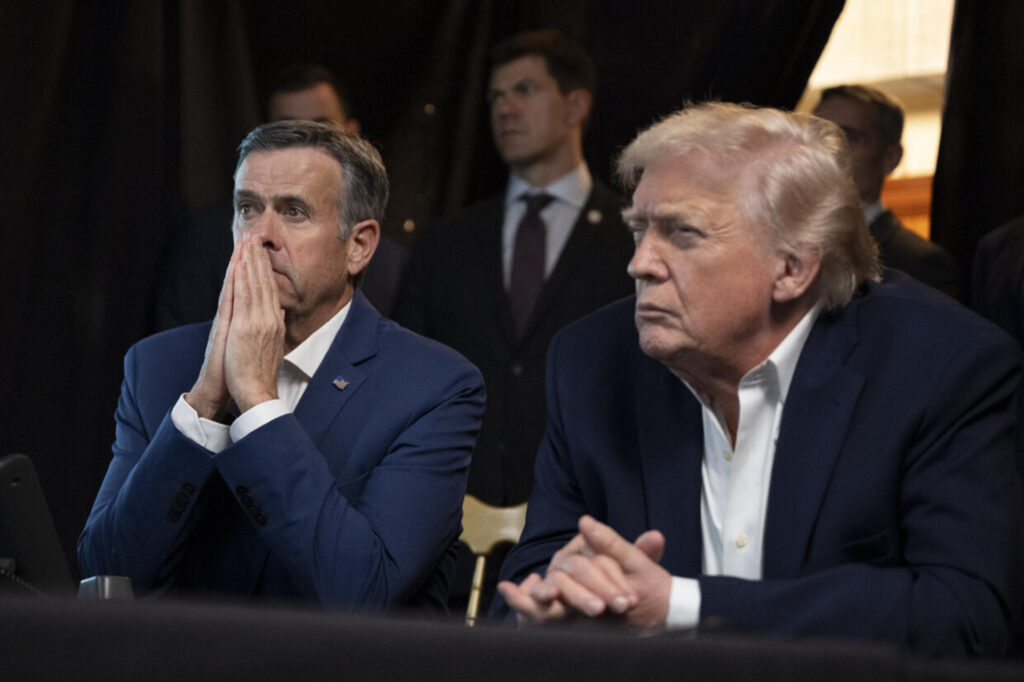
Donald Trump posted a photo of himself with his collaborators on his Truth Social account following Operation Absolute Resolution, his plan to overthrow Maduro. Jan.3, 2026. EFE/Trump on Truth Social
¿Qué sigue para Venezuela?
Los aliados europeos habían expresado preocupación mientras Trump acumulaba una presencia masiva de tropas en el Caribe en los últimos meses y realizaba decenas de ataques letales contra presuntos traficantes de drogas, muchos de los cuales la Administración afirmaba que eran un brazo del Gobierno de Maduro.
Ahora, la extradición nocturna de Maduro y su esposa por parte de la Administración Trump, así como sus planes para “dirigir” el país, incluso temporalmente, están planteando nuevas y serias preguntas sobre la legalidad de los movimientos de Estados Unidos en el marco de una campaña más amplia contra la nación sudamericana.
Maduro apenas era visto como un santo por la comunidad internacional. Sus elecciones de 2018 y 2024 fueron vistas como plagadas de irregularidades y consideradas ilegítimas.
Pero muchos aliados de Estados Unidos recibieron la noticia de la captura de Maduro con cierta inquietud.
El presidente de la Comisión Europea, António Costa, dijo que tenía “gran preocupación” por la situación en Venezuela tras la operación estadounidense.
El ministro de Relaciones Exteriores de Francia, Jean-Noël Barrot, dijo que “la operación militar que llevó a la captura de Maduro infringe el principio de no uso de la fuerza que sustenta el derecho internacional”.
La crítica de algunos demócratas a la acción militar de Trump para derrocar a Maduro fue inmediata.
“Esta guerra es ilegal, es vergonzoso que hayamos pasado de ser el policía del mundo a ser el matón del mundo en menos de un año”, escribió en X el senador Ruben Gallego, de Arizona. “No hay razón para que estemos en guerra con Venezuela”.
El Ministerio de Relaciones Exteriores de Rusia condenó el “acto de agresión armada” de Estados Unidos contra Venezuela en un comunicado publicado en su canal de Telegram el sábado. El derrocamiento de Maduro, quien contaba con el respaldo de Rusia, se produce mientras Trump insta a Putin a poner fin a la guerra en Ucrania.
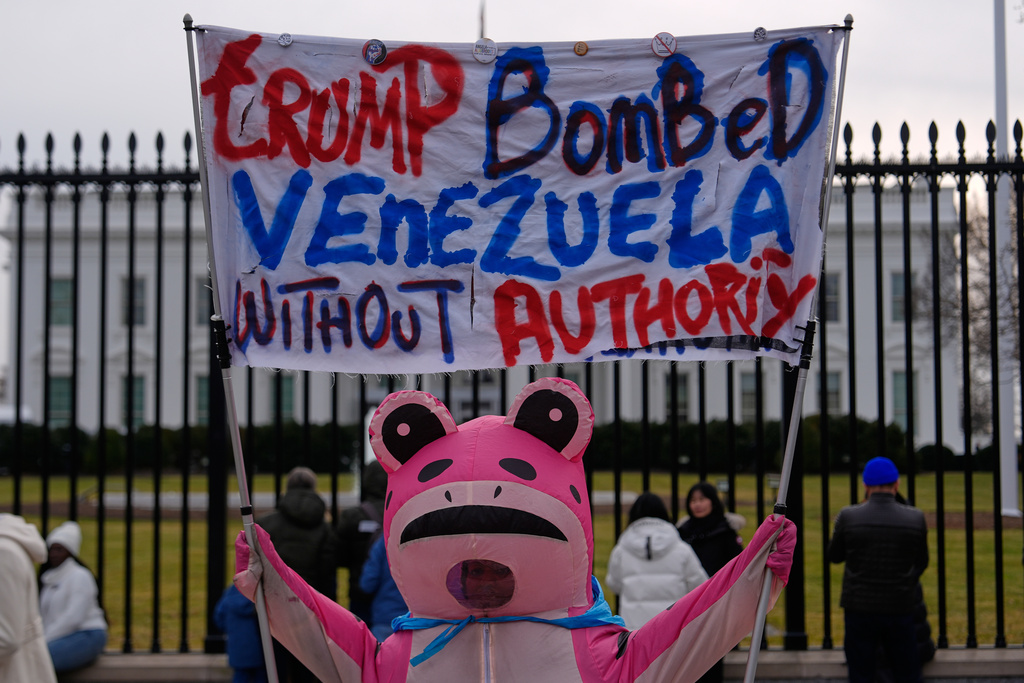
Manifestantes se reúnen frente a la Casa Blanca el sábado 3 de enero de 2026, en Washington, después de que Estados Unidos capturara al presidente venezolano Nicolás Maduro y a su esposa en una operación militar. El cartel dice «Trump bombardeó Venezuela sin autoridad». (AP Foto/Julia Demaree Nikhinson)
“Venezuela debe tener garantizado el derecho a determinar su propio destino sin ninguna intervención destructiva, y mucho menos militar, desde el exterior”, decía el comunicado.
De manera similar, el Ministerio de Relaciones Exteriores de China condenó en un comunicado la operación de Estados Unidos, afirmando que viola el derecho internacional y la soberanía de Venezuela.
La captura sigue a meses de presión
La operación fue la culminación de un impulso dentro de la Administración, liderado por el secretario de Estado, Marco Rubio, y otros enemigos de Maduro con ideas afines, quienes han instado a Trump a tomar medidas contra el líder venezolano durante años.
En el sur de Florida, epicentro de la diáspora venezolana opuesta a Maduro que ha influido en el pensamiento de Rubio, la operación del sábado fue aclamada como un momento que marca el cambio de era para la democracia.
El representante Carlos Gimenez, un republicano de Florida, dijo que había hablado con Rubio y agradeció a Trump por haber “cambiado el curso de la historia en nuestro hemisferio. Nuestro país y el mundo están más seguros por ello”, escribió en X, comparando la extradición de Maduro con la caída del Muro de Berlín.
Rubio aprovechó el momento para enviar una advertencia a Cuba, otro adversario de Estados Unidos en el Caribe y aliado del gobierno de Maduro. “Si viviera en La Habana y estuviera en el Gobierno, estaría preocupado, al menos un poco”, dijo Rubio.
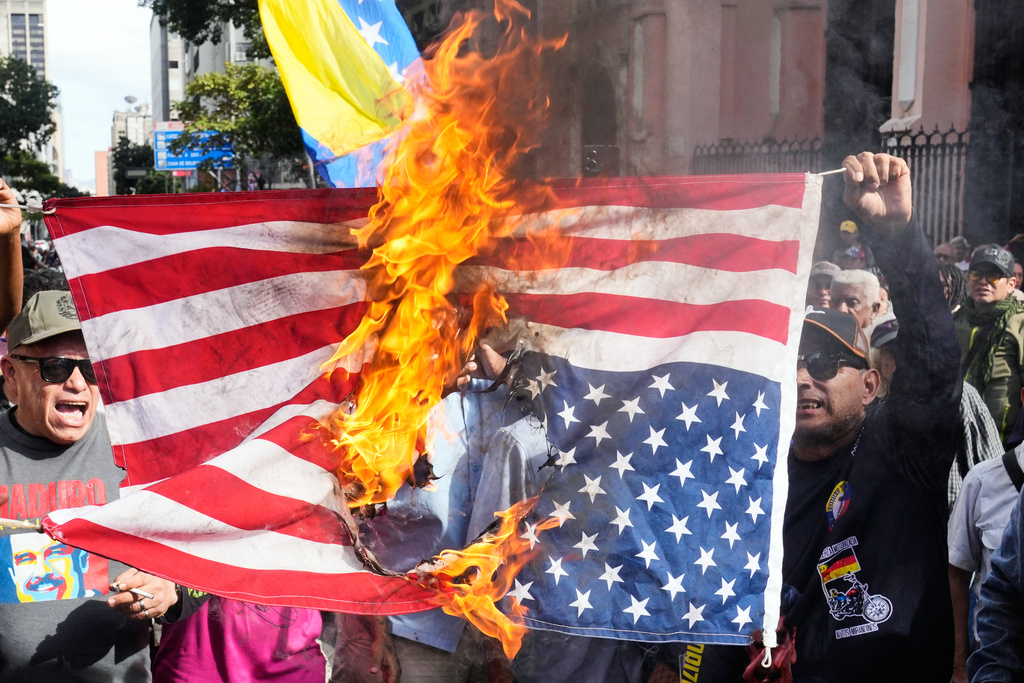
Manifestantes queman una bandera de EE. UU. en Caracas, Venezuela, el sábado 3 de enero de 2026, después de que fuerzas armadas estadounidenses bombardearan Caracas y capturaran al presidente venezolano Nicolás Maduro y a su esposa. (AP Foto/Ariana Cubillos)
Trump: Venezuela no tiene oportunidad sin la intervención
Maduro había buscado una vía para salir del poder mientras salvaba las apariencias.
Funcionarios del Gobierno venezolano habían propuesto un plan en el que Maduro dejaría el cargo de forma gradual, informó The Associated Press en octubre.
La propuesta pedía que Maduro renunciara en tres años y entregara el poder a su vicepresidenta, Delcy Rodríguez, quien completaría el mandato de seis años de Maduro que termina en enero de 2031. Rodríguez no se postularía a la reelección bajo el plan.
Pero la Casa Blanca rechazó la propuesta porque la Administración cuestiona la legitimidad del gobierno de Maduro y lo acusa de supervisar un Estado narcoterrorista.
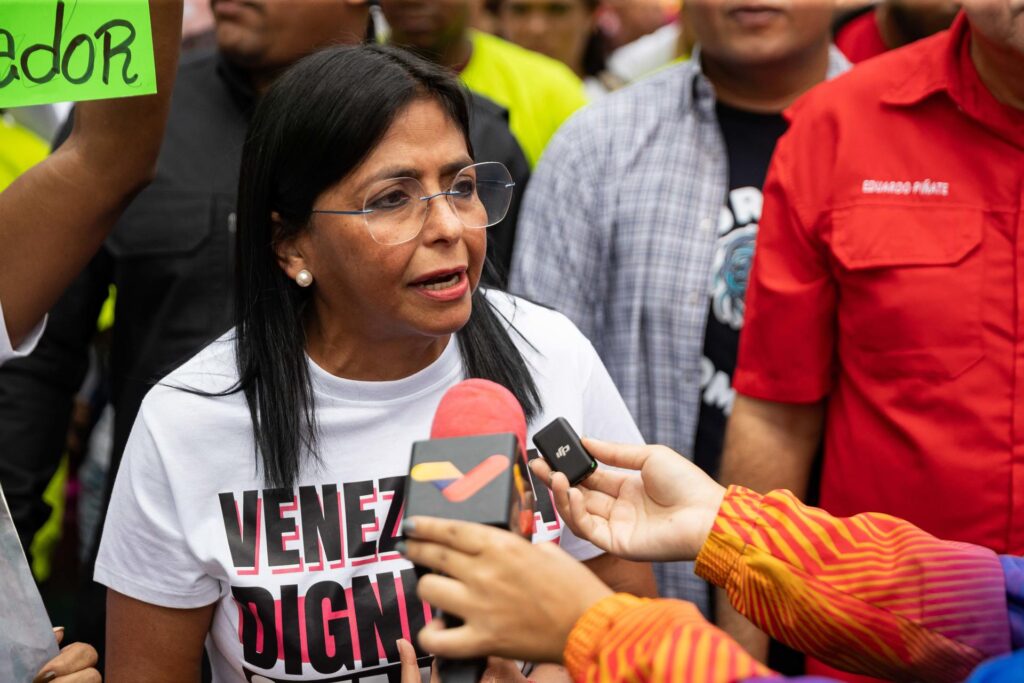
Fotografía de archivo de la vicepresidenta ejecutiva de Venezuela, Delcy Rodríguez. EFE/ Ronald Pena R
A principios de esta semana, Maduro dijo que Venezuela estaba abierta a negociar un acuerdo con Estados Unidos para combatir el narcotráfico y trabajar con Washington en la promoción de una mayor inversión estadounidense en la industria petrolera venezolana. Trump aseguró que recientemente se le ofrecieron a Maduro oportunidades para rendirse, pero las rechazó.
Rubio sostuvo una larga conversación telefónica el sábado con Rodríguez, informó Trump. En un discurso a la nación, ella exigió que Estados Unidos liberara a Maduro, pero dejó abierta la posibilidad de dialogar con Trump.
“Si simplemente nos fuéramos, (Venezuela) no tendría ninguna posibilidad de recuperarse. Lo dirigiremos adecuadamente. Lo dirigiremos profesionalmente”, dijo Trump. “Tendremos a las mejores compañías petroleras del mundo entrando, invirtiendo miles de millones y miles de millones de dólares… Y los mayores beneficiarios será el pueblo de Venezuela”.
La oposición venezolana sostiene que el presidente legítimo es el político exiliado Edmundo González, un aliado de la líder opositora María Corina Machado.
Trump dijo que no estaba listo para comprometerse con un líder en particular, pero prometió que su Administración debe permanecer “muy involucrada” en Venezuela.
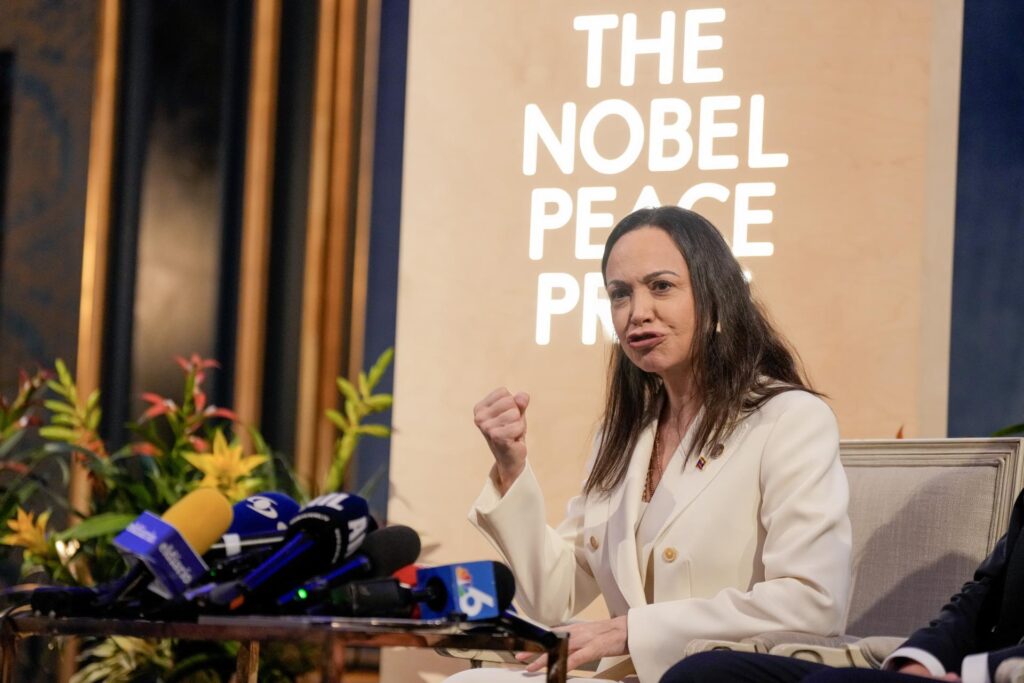
Fotografía de archivo de María Corina Machado. EFE/EPA/HEIKO JUNGE NORWAY OUT
“No podemos arriesgarnos a dejar que alguien más dirija (Venezuela), que simplemente tome el control donde (Maduro) lo dejó”, señaló Trump.
Darlene Superville en Palm Beach, Florida, Matthew Lee en Washington, Kanis Leung en Hong Kong, Sylvie Corbet en París y Elise Morton en Londres contribuyeron con la información.