

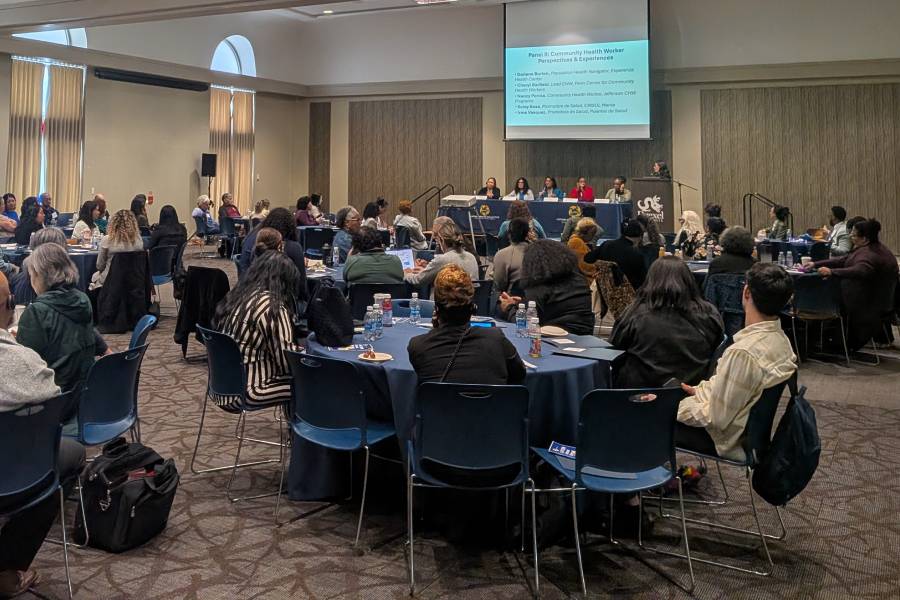
On Friday, October 16, allies, researchers, and health care providers concerned about the health of Philadelphia’s Latino community gathered at Drexel University for the annual retreat of the Latino Health Collective. Founded in 2020, the Latino Health Collective is a collaborative network of more than 60 Latino-serving organizations, city officials, policymakers, public health professionals, medical providers, and community leaders working to improve the health of Philadelphia’s Latino community.
Dr. Ana Martinez-Donate, co-director and founder of the Latino Health Collective, said, “We’ve been doing this for four years now. It’s our mission to bring people together, leverage all the expertise and motivation in the community and among those who serve them. This year, we wanted to talk about a particular approach that works well with the Latino community and other underserved communities, and that is the community health worker model.”
Organizations and groups serving Latinos across the city attended, including Esperanza, Mi Salud Wellness Center, St. Christopher’s Hospital for Children, Puentes de Salud, and many others. City government representatives, including staff from the Office of Immigrant Affairs and the Philadelphia Department of Public Health, were also present. COMPA Philly Language Justice Collective provided live interpretation in Spanish and English.
The retreat opened with a review of the results of a community survey on Latino health needs, presented by Dr. Ana Martinez-Donate. Additional presentations and panel discussions followed. The main focus of this year’s event was the community health worker model. Community health workers promote wellness by helping people adopt healthy behaviors. They implement programs and advocate for people who may have limited access to health resources and social services. Community health workers work in a variety of settings, including hospitals, public health departments, and community-based organizations.
During the event, community health workers from across the city were highlighted. A panel discussion showcased their commitment to addressing the health needs of the communities they serve, as well as their dedication to treating patients with compassion and dignity. Organizations represented included Esperanza Health Center, Jefferson, Penn Center for Community Health Workers, CRiSOLMente, and Puentes de Salud. Darlene Burton, a community health worker at Esperanza Health Center, said, “I’m able to be a bridge between the patient and the doctor.”
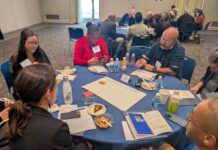
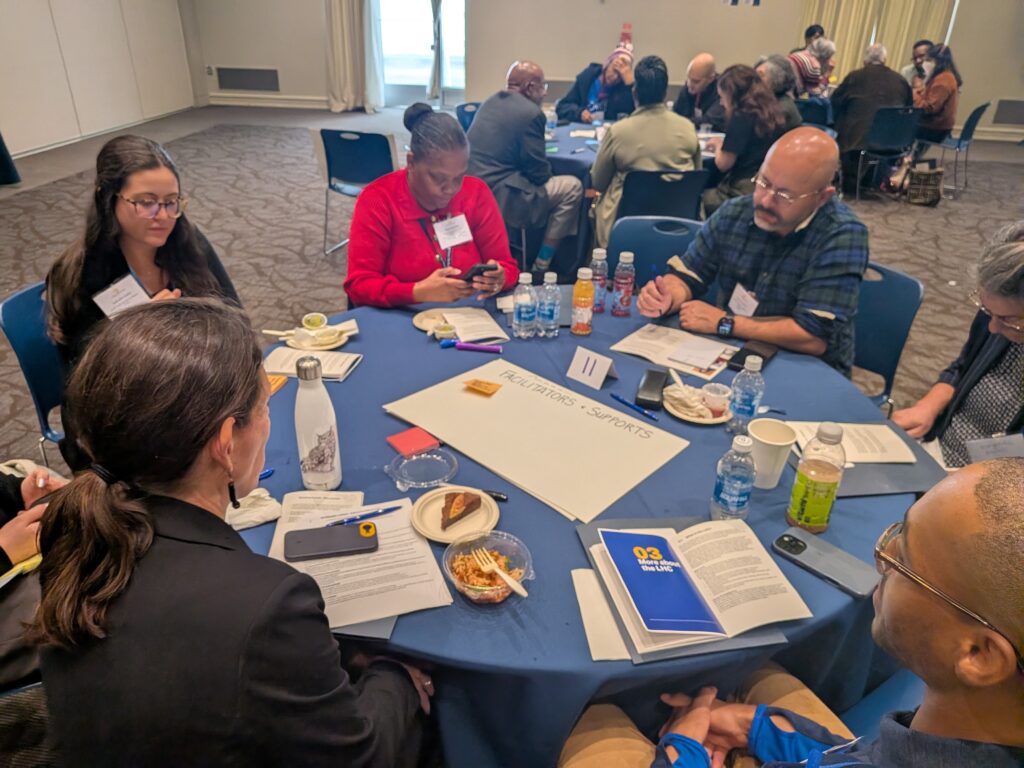
During lunch, small groups discussed how to improve community health worker programs so they can better respond to community needs. Mental health was emphasized, as many Latinos, especially immigrants, experience heightened stress and trauma and may have difficulty accessing services. Community health workers can help bridge this gap. Language and communication barriers, along with cultural sensitivity, were identified as other areas where community health workers can make a difference. Unpredictable or short-term funding and limited access to training were identified as challenges for these programs.
The 2026 retreat provided an opportunity to learn more about community health workers and the Latino Health Collective, exchange ideas, and connect with others committed to the health and well-being of Latino communities.