

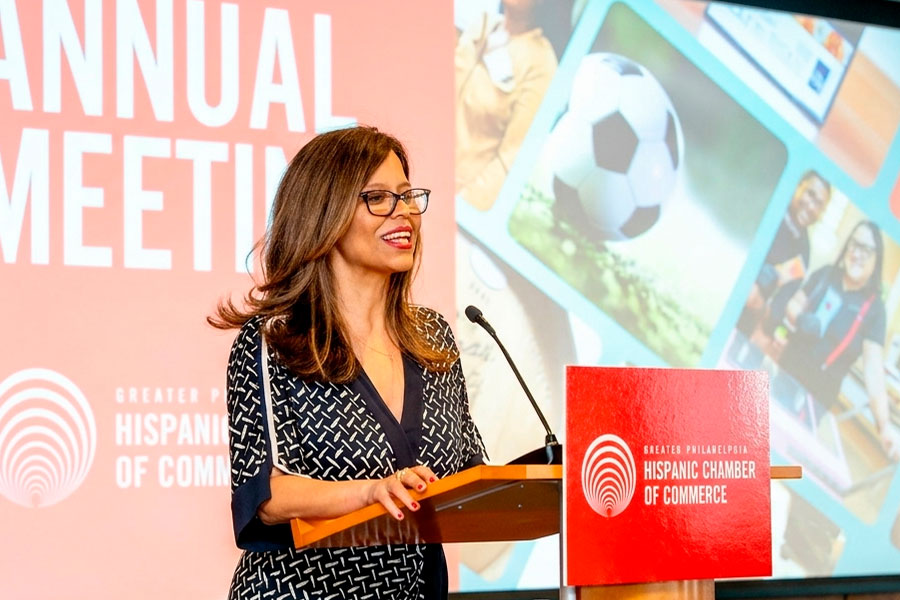
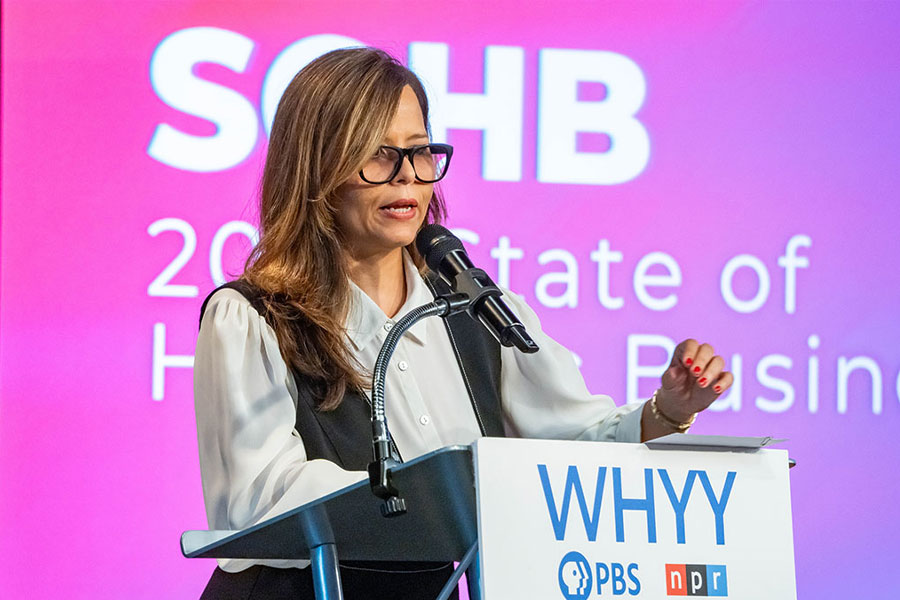
March is a month filled with activities in Philadelphia. In addition to commemorating Women’s History Month, the city is also reflecting on community work, leadership, and the impact of organizations that drive local economic development. Within this context, Jennifer Rodríguez, President and Chief Executive Officer of the Greater Philadelphia Hispanic Chamber of Commerce (GPHCC), shares her vision for the growth of the Latino community, the role of women in the economy, and the challenges and opportunities tied to the upcoming 250th anniversary of the United States.
Professional journey
Jennifer Rodríguez was born and raised in Puerto Rico. Her path toward economic leadership began when she decided to move to the United States to pursue higher education.
“I was born and raised in Puerto Rico. I left the island to study Business Administration at Boston University,” she explained.
After graduating, she relocated to Washington, D.C., where she worked at the National Academy of Sciences on the Ford Foundation Fellowship Program for minorities.
“The program sought to increase the number of minority professors and scholars at universities. We received applications from some of the best students in the country to fund their doctoral studies,” she recalled.
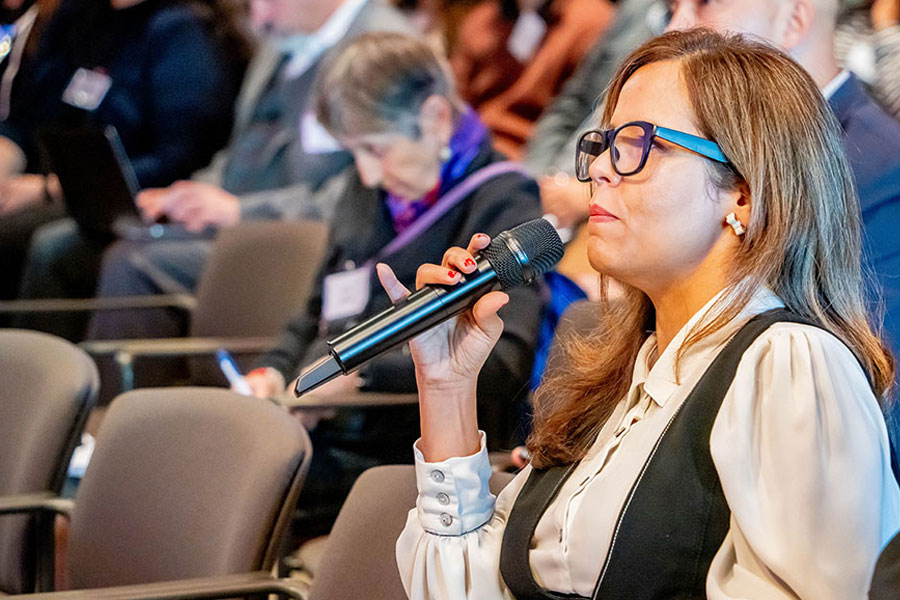
During that period, Rodríguez developed a strong interest in economics, sociology, public policy, and urban planning.
“Whenever I reviewed research proposals, I was especially drawn to topics related to economics, urban design, and public policy. That’s where I began to better understand the social challenges many communities face.”
Her interests led her to continue her education at the University of Pennsylvania, where she earned a master’s degree in Urban and Regional Planning. She later began working in economic development at the Philadelphia Industrial Development Corporation (PIDC), a key institution closely tied to city government.
Rodríguez later joined the community organization Asociación Puertorriqueños en Marcha (APM), where she worked on community development initiatives in North Philadelphia.
“That’s where I truly learned about Philadelphia’s Latino community. I didn’t grow up here, so it was a very formative experience for me,” she said.
She emphasizes that while the Latino community faces economic challenges, it is also remarkably strong.
“It is a community with limited economic resources, but extremely resilient, creative, and hardworking. The entrepreneurial spirit among immigrants is very strong.”
For the past ten years, Rodríguez has led the Greater Philadelphia Hispanic Chamber of Commerce, working to connect Latino entrepreneurs with resources, training, and growth opportunities. One of the most significant achievements, she says, is that Latino businesses now have a seat at the table where major city decisions are made.
“The most important accomplishment is that the Latino business community is now taken seriously. We are present in the spaces where decisions about Philadelphia’s economic future are made.”
Women’s History Month and Latino leadership
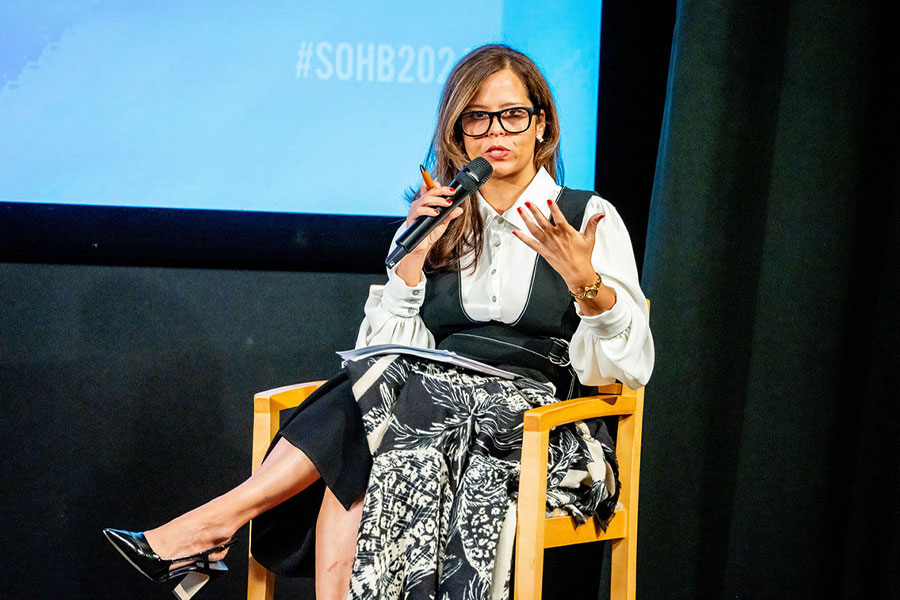
During Women’s History Month, Rodríguez highlights the critical role Latina women play in economic growth.
“If you look at the data, you’ll see that Latinas are driving much of the economic development within the Hispanic community.”
According to Rodríguez, approximately 60 percent of Latino business growth is driven by women, who are starting businesses at a rate six times higher than the national average.
“Women in our community are leading business creation and economic development.”
She also pointed to Latinas’ leadership in education and social progress.
“When you look at indicators such as high school graduation and higher education attainment, Latina women are leading many of those gains.”
Although challenges remain, she believes progress is accelerating.
“We are not yet at the same level as other groups, but the pace of progress is increasing and gaps are closing.”
Rodríguez stressed that building a successful business requires support, professional networks, and access to knowledge.
“To succeed, you need a support system—experts and peers who can walk alongside you in the process.”
She also emphasized the importance of planning and preparation.
“Business is not improvised. You need to plan, have a clear vision, and execute with discipline.”
She shared a message for women interested in entrepreneurship:
“Entrepreneurship is not a solo activity. Entrepreneurship is a team sport—it’s community-based.”
The 250th Anniversary and opportunities for Philadelphia
Philadelphia is preparing for one of the most significant moments in its history: the celebration of the 250th anniversary of U.S. independence, along with a series of international events expected to draw visitors from around the world.
These events present both opportunities and challenges for the Latino community.
“Much of the activity will be concentrated in Center City and South Philadelphia, while many Latino businesses are located in other neighborhoods.”
For that reason, GPHCC is developing new initiatives to connect visitors with Latino culture and businesses throughout the city. One of these initiatives is the creation of a “Latino Passport,” a feature within a mobile app that will allow visitors to discover Latino-owned restaurants, cultural events, and local businesses.
“We want visitors to experience a Latino summer in Philadelphia and discover everything our community has to offer.”
The platform will promote local businesses and make it easier for tourists to find Latino cultural experiences.
Despite global challenges and international uncertainty, Rodríguez believes Philadelphia is uniquely positioned.
“If someone is thinking about which city to visit in the United States this year, Philadelphia is an obvious choice.”
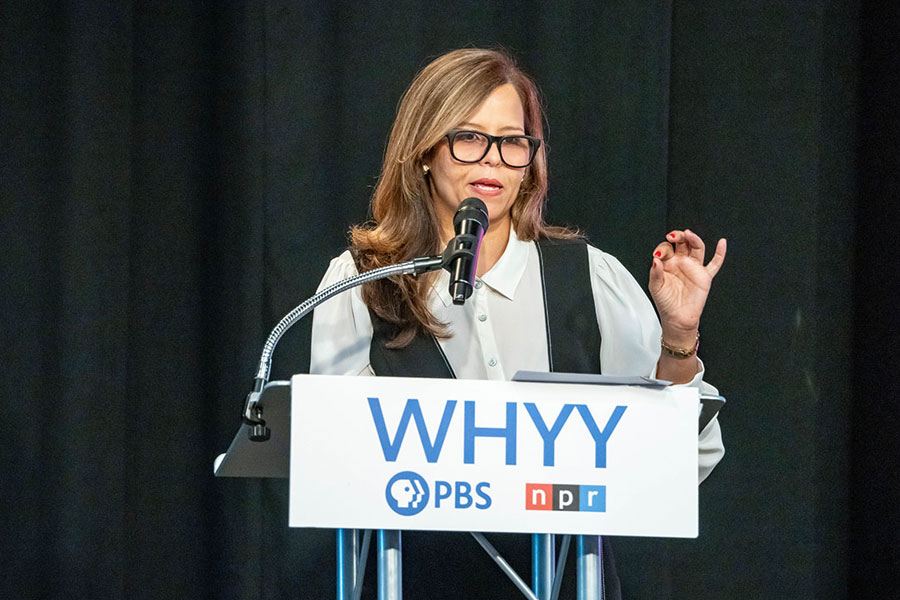
After a decade leading the Chamber, Rodríguez summarizes her experience in one word: pride. For her, the growth of Latino entrepreneurship and the_toggle diversity of the community reflect Philadelphia’s future.
“I see Latino entrepreneurs across many industries—technology, architecture, communications, services, and construction.”
She also highlighted the continued cultural enrichment of the city.
“The arrival of people from the Dominican Republic, Venezuela, Honduras, Mexico, and many other countries makes our community increasingly vibrant.”
For Jennifer Rodríguez, supporting Latino business development is also a way to contribute to the broader economic and cultural growth of Philadelphia.
For more information, visit: https://www.philahispanicchamber.org/