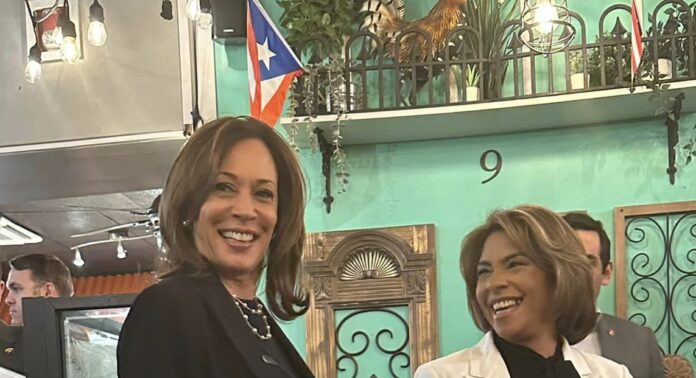
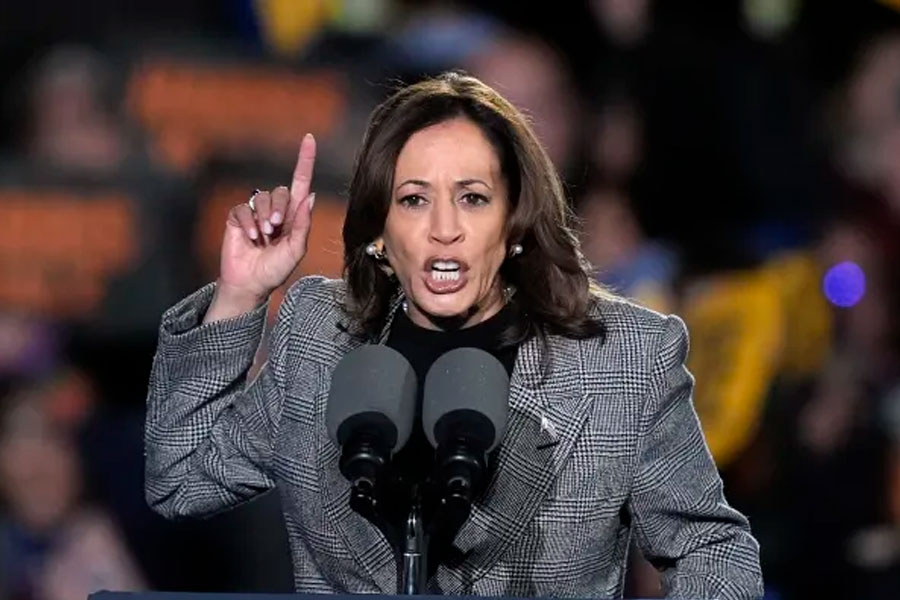
La vicepresidenta Kamala Harris durante un encuentro con la comunidad puertorriqueña de Filadelfia, acompañada con la concejala Quetcy Lozada, el 27 de octubre 2024. (Foto: RRSS)
¡Borinquen! Nombre al pensamiento grato como el recuerdo de un amor profundo; bello jardín de América el ornato, siendo el jardín América del mundo.
-Canto a Puerto Rico, José Gautier Benítez
Hoy, todos los que amamos este bello Jardín de América, y del mundo- nos duelen las entrañas y el corazón se nos aprieta de rabia y de dolor. Este es un pueblo noble y pacífico, que ama profundamente a su isla.
El domingo, continuando con un patrón de desprecio y desinformación que Donald Trump ha mantenido durante años contra los ocho millones de ciudadanos americanos que somos puertorriqueños, el comediante Tony Hinchcliffe nos insultó durante un evento del Partido Republicano al referirse a Puerto Rico como “una isla de basura en el océano”. ¿Eso es lo que piensan Trump y el Partido Republicano sobre los puertorriqueños? La política no es un chiste y esconderse detrás de un comediante es de cobardes.
Trump mantiene por años un discurso de desprecio y desinformación contra la isla que revela una obsesión y desdén hacia un pueblo que no tiene el poder del voto para defenderse, ya que los tres millones de ciudadanos americanos que vivimos en Puerto Rico no podemos votar en las elecciones presidenciales. Sin embargo, sí pueden votar los otros cinco millones que viven en Estados Unidos, a los que también tildaron de basura. No nos olvidemos del papel toalla que nos tiró mientras sufríamos sin electricidad por meses y no olvidemos que los fondos no llegaron porque Trump -a través de Departamento de Vivienda federal- los mandó a parar por considerar a los puertorriqueños “vagos que vivimos mendigando”.
Es de cobardes insultar al que no se puede defender. En el evento del domingo no solo insultaron a los boricuas. También insultaron a los latinos, a los negros y a las mujeres. Una turba enardecida gritó prostituta a la candidata presidencial del Partido Demócrata. Además, escupieron frente a un grupo de sus seguidores. Muchos eran latinos, que aplaudían, sin entender las consecuencias. Un día les va a tocar a ustedes.
El mundo entero ha quedado aturdido ante tal despliegue repugnante de odio que trae recuerdos de los discursos del nazismo y fascismo que pretendían eliminar las minorías de todos los que no somos iguales.
¿Esta es la gran América que queremos? ¿”Let’s make América great again” y olvidemos lo que nos enseñaron los padres de la Constitución, el derecho al libre pensamiento y a la libre expresión? ¿Olvidemos que todos tenemos los mismos derechos, garantizados por leyes que defienden la libertad de culto, libertad de expresión, libertad de prensa y de afiliación? “Let’s make America great again” ¿Qué significa? No nos olvidemos de los irlandeses, ingleses, franceses, españoles, alemanes, escoceses y otros que llegaron a América y fundaron esta nación. Fueron todos inmigrantes. Pero Trump criminaliza a todo inmigrante como delincuente. Hasta llegó a decir que un inmigrante que mate a una persona será condenado a pena de muerte, sin derecho a juicio, ni presunción de inocencia.
A una semana de las elecciones, las conductas erráticas y narcisistas de Trump ponen de manifiesto una falta de equilibrio y capacidad para construir acuerdos y soluciones a los serios problemas que enfrenta Estados Unidos, sus territorios, y el amplio grupo de sus países aliados. Un mundo marcado por conflictos bélicos exige líderes sensatos y convocantes. El expresidente ha ignorado dramas urgentes como el cambio climático y, lo que es peor, promueve medidas drásticas que amenazan los derechos humanos.
Trump padece de elementos psicopáticos que evidencia al mentir reiteradamente. No tiene noción moral y cree que las reglas no le aplican. Estos son rasgos propios de aquellas personas que son calificadas como narcisistas malignos. Trump es de los peores. Con estas características huecas emocionalmente, lo único importante para ese tipo de persona son ellos mismos. Esto se ve en su distorsión de la realidad y la pérdida de proporción sobre su propia persona. Nadie es mejor que él. Solo él existe. Estamos ante uno de los momentos más críticos, no solo de la historia de los Estados Unidos, sino del mundo.
En este momento crucial, Estados Unidos demanda un líder que respete la Constitución y honre el principio fundamental de que todos los ciudadanos americanos están protegidos por una Carta de Derechos que resguarda nuestras libertades, incluyendo el derecho a opinar y discrepar sin temor a represalias. Trump, como en el pasado, intenta silenciar a la prensa fiscalizadora y manipular la rama judicial, un ámbito donde enfrenta múltiples causas legales, siendo el mandatario con más casos contenciosos en la historia del país.
Esta encrucijada electoral exige una elección clara. Las propuestas de la candidata presidencial demócrata Kamala Harris presentan un programa de gobierno que promete progreso y bienestar para el pueblo americano. Su discurso inclusivo asegura un liderazgo sólido para la principal potencia mundial.
Kamala Harris aborda de manera directa las urgencias apremiantes de Puerto Rico. Continuará varios programas ya establecidos por la administración de Joe Biden, como el grupo de trabajo federal que gestiona los asuntos insulares de forma coordinada, reportando directamente a la Casa Blanca. Este esfuerzo ha logrado romper la burocracia que impedía el acceso a fondos de mitigación de daños y subvenciones para proyectos cruciales de reconstrucción y modernización de la infraestructura. Asimismo, la administración Biden ha enfocado su atención en la transformación energética del país y la reforma del sistema educativo.
Precisamente el domingo, mientras llovían insultos hacia Puerto Rico, la candidata demócrata ofrecía un mensaje esperanzador, prometiendo mantener el grupo interagencial dedicado exclusivamente a fortalecer y crear nuevas oportunidades. Abordó aspectos clave como fomentar la inversión en las industrias del futuro, impulsar el crecimiento de pequeñas empresas, mejorar el sistema de salud y elevar a los puertorriqueños. Además, enfatizó la necesidad de lograr paridad con los estados en el acceso a programas federales dirigidos a los más desfavorecidos y a los adultos mayores. Claramente, el Grupo de Trabajo sobre la Economía de Oportunidades para Puerto Rico sería independiente del actual, establecido por orden ejecutiva de Biden.
Kamala Harris no es perfecta. La administración de Biden tiene serios problemas que atender como es el de los inmigrantes. Esos problemas no se atienden con insultos y mentiras. Hay que crear políticas que aborden la realidad y que puedan encontrar soluciones.
Trump no discrimina. Es un candidato convicto y que no solo no tiene ningún tipo de remordimiento, sinoque considera que las mujeres somos un objeto al que se le puede tocar cuando se quiera. Son muchas las que han dado la voz de alerta.
¿Cómo un padre o una madre pueden votar por alguien que hace alardes de que le toca las partes privadas a las mujeres y no pasa nada?
Todos los que se sienten insultados, discriminados y ofendidos deben ejercer su voto a favor de Kamala Harris porque, aunque no necesariamente conocemos del todo a la candidata por entrar tarde en la carrera, fue valiente en decir presente. Su discurso no ha sido uno de odio. Al contrario, es uno de inclusión. Vamos a darle la oportunidad al respeto, a la empatía, al diálogo constructivo para buscar soluciones y para poder vivir en una sociedad tolerante que se nutra de las diferencias y del debate fundamentado. Con una prensa libre y sin miedo a los ataques injustos por hacer las preguntas correctas para recibir la información que el pueblo necesita recibir.
Hoy exhortamos a todos los que aman a nuestra isla bonita, la tierra del mar y el sol, que no le presten su voto a Donald Trump. A todos los puertorriqueños que puedan votar que nos representen a nosotros, a los que no podemos votar. Voten por Kamala Harris.
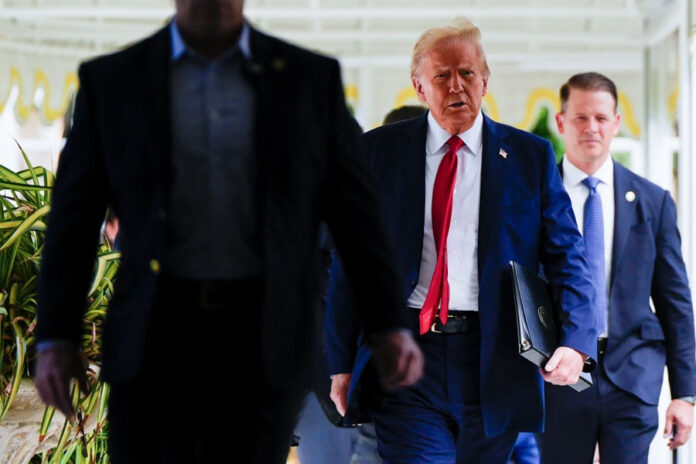
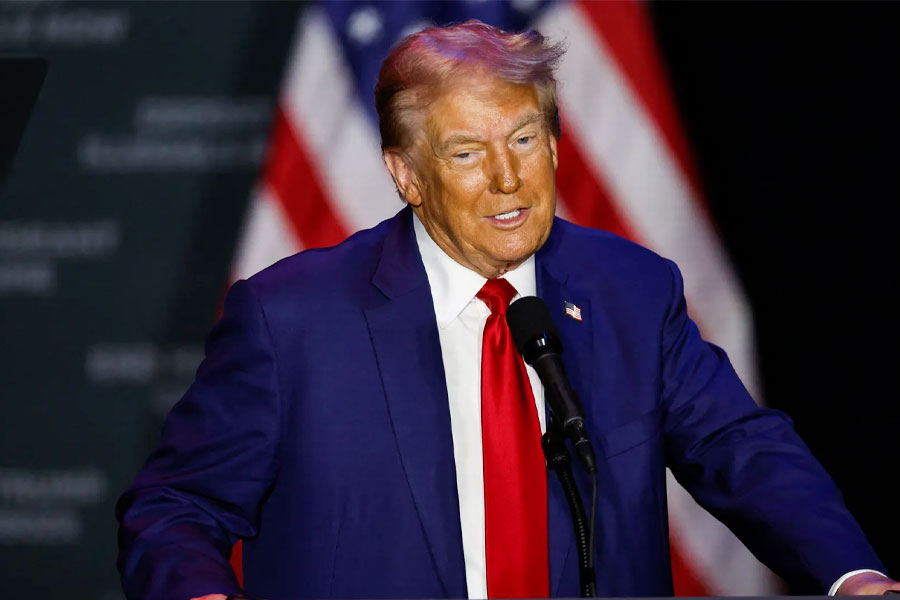
El candidato presidencial republicano, el expresidente Donald Trump, llega a un evento de campaña en su propiedad de Mar-a-Lago, el 29 de octubre de 2024, en Palm Beach, Florida (Foto: AP/Julia Demaree Nikhinson)
Instado por algunos aliados a disculparse por los comentarios racistas hechos por oradores en su mitin del fin de semana, Donald Trump optó el martes por tomar otro camino y afirmó que fue un “honor estar involucrado” en tal evento y describió la escena como un “festival de amor”, el mismo término que ha usado para describir el asalto del 6 de enero en el Capitolio de Estados Unidos.
Trump reunió a seguidores y reporteros en su finca de Mar-a-Lago dos días después de un masivo mitin en el Madison Square Garden que contó con una serie de comentarios groseros de varios oradores, incluido un segmento del comediante Tony Hinchcliffe en el que bromeó diciendo que Puerto Rico era una “isla flotante de basura”. Algunos de los aliados republicanos de Trump han condenado los comentarios, y su campaña se distanció públicamente de la broma de Hinchcliffe, aunque no de los otros comentarios.
Pero, ante la oportunidad de disculparse, tanto en Mar-a-Lago como en una entrevista anterior con ABC, Trump afirmó que “nunca ha habido un evento tan hermoso” como el mitin del domingo por la noche en su ciudad natal, Nueva York.
“El amor en esa sala. Fue impresionante”, dijo. “Fue como un festival de amor, un auténtico festival de amor. Y fue un honor para mí estar involucrado”.
A una semana del día de elecciones, algunos aliados de Trump han expresado alarma de que el mitin, que debía destacar el mensaje de cierre del nominado presidencial republicano de manera grandiosa en Nueva York, ha servido más bien como una distracción e incluso un revés, dada la importancia electoral de los puertorriqueños que viven en Pensilvania y otros estados en disputa.
Trump tenía previsto realizar un mitin más tarde el martes en Allentown, Pensilvania, una ciudad con una gran población hispana, donde lo acompañará la senadora sombra de Puerto Rico, Zoraida Buxo, según un funcionario de la campaña que habló bajo condición de anonimato antes de un anuncio formal.
Buxo, quien no tiene voto en el Senado porque Puerto Rico no es un estado, expresó su apoyo a Trump en la red social X. Dijo que Trump es el “líder fuerte” que Puerto Rico necesita.
Las secuelas del evento en Madison Square Garden generan el riesgo de resaltar las preocupaciones de los votantes sobre la retórica de Trump y su inclinación por la controversia en la recta final de la campaña por la presidencia. Los oradores en el mitin también hicieron comentarios racistas sobre los latinos, los afroestadounidenses, los judíos y los palestinos, junto con insultos sexistas contra la rival demócrata de Trump, la vicepresidenta Kamala Harris, y la exsecretaria de Estado Hillary Clinton.
El martes, Trump intentó pasar página a la controversia y volver a centrarse en Harris, criticando el historial de su rival en la frontera y la economía.
Trump, quien no aceptó preguntas en el evento, acusó a Harris de llevar a cabo una “campaña de odio absoluto” y afirmó que ella sigue “hablando de Hitler y los nazis porque su desempeño es horrible”.
En una entrevista con ABC News el martes, Trump intentó distanciarse de Hinchcliffe, pero no criticó lo que dijo.
“No lo conozco, alguien lo puso allí. No sé quién es”, afirmó Trump, según la cadena, e insistió en que no había escuchado los comentarios de Hinchcliffe. Pero, cuando se le preguntó qué pensaba de ellos, Trump “no aprovechó la oportunidad para rechazarlos, repitiendo que no había escuchado los comentarios”, informó ABC.
Los comentarios han provocado la indignación de líderes puertorriqueños.
El arzobispo de Puerto Rico exhortó a Trump a rechazarlos, diciendo que no era suficiente que la campaña dijera que la broma no reflejaba el punto de vista de Trump. El presidente del Partido Republicano de Puerto Rico dijo que el “pobre intento de comedia” de Hinchcliffe era “vergonzoso, ignorante y totalmente reprobable”.
En Pensilvania, donde Trump planeaba hacer campaña más tarde el martes, la población de votantes latinos se ha triplicado desde el año 2000. Más de la mitad de ellos son votantes puertorriqueños.
Angelo Ortega, un residente de Allentown de larga data y exrepublicano que planea votar por Harris esta vez, dijo que no podía creer lo que había escuchado sobre el mitin de Trump.
“No sé si se me cayó la mandíbula o simplemente estaba muy irritado, enojado. No sabía qué sentir”, dijo Ortega, quien nació en Nueva York pero cuyo padre llegó de Puerto Rico. Ortega ha estado haciendo campaña por Harris y dijo que conoce al menos a un votante hispano republicano que planea cambiar de Trump a Harris como resultado de los comentarios de Hinchcliffe.
“Ya están hartos. Estaban escuchando (a Trump), pero dijeron que eso fue como la gota que derramó el vaso”, dijo Ortega, miembro del grupo activista Make the Road PA.
Aun así, algunos puertorriqueños republicanos no se inmutaron. Lydia Maldonado, quien asistió al evento de Trump en Florida el martes, dijo que era importante señalar que el expresidente no fue quien hizo el comentario sobre Puerto Rico.
“Es un comediante, y un comediante ¿vive de que? De la gracia y de la tontería. El tipo es un tonto. No sabe lo que es Puerto Rico, no conoce nuestra cultura y metió la pata. Se llama perdonar y olvidar”, comentó Maldonado, quien es puertorriqueña.
La campaña de Harris ha lanzado un anuncio que se emitirá en línea en estados en disputa dirigido a votantes puertorriqueños y que destaca los comentarios del comediante.
Uno de cada tres latinos en Estados Unidos sería afectado por el plan de deportaciones masivas del expresidente Donald Trump, lo que crearía una crisis humanitaria en las comunidades hispanas y golpearía la economía del país y ciertas cadenas de suministros vitales para el país, según un análisis revelado este martes.
Al menos 28 millones de personas en el país se verían impactados si el expresidente (2017-2021) lleva a cabo su plan, según un reporte de FWD.us presentado hoy por una coalición de organizaciones defensoras de los inmigrantes y el senador demócrata por California Alex Padilla.
El estudio detalló que del total de personas potencialmente afectadas, cerca de 20 millones son latinos y están en riesgo de ser deportados o sufrir separación de familias, lo que representa una tercera parte de los miembros de esa comunidad en el país.
«Muchas vidas podrían ser destrozadas si es elegido Donald Trump y cumple con las promesas (de deportaciones masivas) que ha hecho», advirtió Padilla, que preside el Subcomité de Inmigración, Ciudadanía, y Seguridad Fronteriza en el Senado de EE.UU.
El demócrata subrayó que es importante que los votantes entiendan que la deportación de los aproximadamente 13 millones de indocumentados causaría «devastación» en comunidades enteras.
«No solo estamos hablando de inmigración, sino también de economía y de cómo muchos negocios se verían afectados», añadió.
En ese sentido, Janet Murguía, directora de UnidosUS, el grupo más grande de defensa de derechos civiles de los latinos en EE.UU., destacó que la deportación de millones de personas culminaría afectando varias cadenas de producción en el país. «Es una amenaza a nuestra economía», sentenció.
Promesa que crea división
Murguía añadió que la popular promesa del candidato republicano no es sobre la seguridad sino «sobre la división».
Para Vanessa Cárdenas, directora ejecutiva de America’s Voice, el objetivo del republicano y sus asesores es impulsar que más gente «sea deportable» y citó las palabras de Stephen Miller, el principal asesor en inmigración de Trump: «América para los americanos».
Los activistas también pusieron como ejemplo del mensaje divisivo los comentarios hechos por el comediante Tony Hinchcliffe el domingo pasado en un mitin del republicano en Nueva York, donde llamó a Puerto Rico una «isla flotante de basura» y bromeó diciendo que a los latinos «les encanta tener bebés».
Aunque la campaña republicana se desmarcó de los comentarios, el expresidente no se ha querido referir a estos y este martes dijo que el mitin celebrado el fin de semana en el Madison Square Garden fue un «festival del amor».
Gustavo Torres, presidente de CASA in Action, que alienta el voto de los latinos y este año ha enfocado sus esfuerzos en los estados clave de Georgia y Pensilvania, advirtió de que los votantes puertorriqueños y latinos en esos estados «no olvidarán» las ofensas de las que han sido víctimas e instó a los electores hispanos a salir a votar.
El reporte, además, citó estudios que demuestran que aunque la mayoría de votantes hispanos están de acuerdo con más políticas de seguridad para la frontera también apoyan una reforma migratoria con vía a la ciudadanía.
Harrisburg, PA – Today, the Pennsylvania Department of Education (PDE) hosted school leaders, state officials, and advocates in Harrisburg for the second annual PA MASLOW convening to support postsecondary students in meeting their basic needs.
“Over the past year, we have worked together with colleges and universities across the Commonwealth to ensure learners have access to the resources they need to learn, grow, and thrive on our campuses,” said Secretary of Education Dr. Khalid N. Mumin. “We know that students can’t learn when they’re focusing on meeting their basic needs, and that’s where PA MASLOW comes in – working across the K-16 landscape to build a bridge to continue supports throughout learners’ full educational journeys.”
Collegiate Basic Needs are important at every institution of higher education across the Commonwealth, including public two- and four-year institutions, private, not-for-profit institutions, and business trade and technical schools. Students in higher education institutions throughout the Commonwealth and nation experience anxiety and other mental health issues, food insecurity, housing insecurity, sexual violence, and more.
PA MASLOW is a cross-agency partnership that expands upon the mission of PDE—ensuring every student not only has access to education, but that the education pursued provides them with support and resources to create optimal learning environments. This initiative complements investments in higher education and engages postsecondary institutions in several pillars of work, including digital equity, housing and transportation, mental health, personal needs, adult student needs, financial, and safety and belonging.
In his 2024-25 budget, Governor Josh Shapiro secured nearly $60 million to make postsecondary education more accessible and affordable to Pennsylvanians, with a $35.1 million increase for Pennsylvania State System universities, a $15.7 million increase for community colleges, and an additional $143 million to PHEAA to make college more affordable for PA students, including: a $54 million increase for student grants, a $5 million increase for disadvantaged students’ scholarships, a $36 million increase for the Ready to Succeed Scholarship and expanded criteria to increase the number of eligible students, and $25 million for the new Grow PA Scholarship Program.
Earlier this year, PDE launched a new anti-stigma campaign to ensure students know it’s okay to ask for help. Through the PA MASLOW “You Good?” campaign, PDE developed posters that colleges and universities can personalize, print, and post on their campuses directing students to critical resources. PDE convened student panel discussions around the state as a proactive way to inform the anti-stigma campaign as well as the programs and policies that postsecondary institutions are implementing. Through quarterly virtual meetings, the department has been engaging with the field on ways to expand upon and improve anti-stigma efforts.
While most of PA MASLOW’s efforts have been to help practitioners support their learners, the department also created the EmpowerU landing page, directed to the Commonwealth’s diverse learners themselves to provide health, safety, and basic needs supports by connecting them with important resources right on their campuses and at their fingertips.
FILADELFIA.—El Departamento de Salud Pública de Filadelfia, en asociación con el Hospital Jefferson Einstein, lanzó recientemente el programa gratuito Family Connects Philadelphia. Este programa se basa en el modelo Family Connects, que apoya a los nuevos padres al proporcionar visitas de bienestar en el hogar realizadas por una enfermera registrada altamente capacitada. La enfermera conecta a los nuevos padres con recursos para nutrir a toda la familia y apoya la salud y el bienestar del recién nacido y del nuevo padre. Este servicio es gratuito para las familias, y las conversaciones entre las familias y las enfermeras son completamente confidenciales.
«Estamos muy emocionados de traer este modelo basado en la evidencia a Filadelfia», dijo la Dra. Stacey Kallem, directora de la división de Salud Materna, Infantil y Familiar del Departamento de Salud. «Se ha demostrado que este programa tiene impactos positivos en todos los ámbitos para los nuevos bebés y los padres, como menos visitas a la sala de emergencias, entornos domésticos más seguros y menos informes de ansiedad posparto».
«A todas las familias les vendría bien un poco de ayuda en los primeros días de la crianza de los hijos, y eso es exactamente lo que ofrece Family Connects», dijo la gerente del programa Family Connects, Ebony Durant.
Las visitas de Family Connects Philadelphia están disponibles para todas las familias que viven en Filadelfia y dan a luz en el Hospital Jefferson Einstein. El Departamento de Salud está monitoreando el éxito del programa Family Connects Philadelphia y puede trabajar para expandirlo a toda la ciudad en el futuro.
Las enfermeras de Family Connects brindan una variedad de servicios y están capacitadas para responder todo tipo de preguntas, incluida la información sobre la gran cantidad de recursos disponibles para los nuevos padres en Filadelfia. Los participantes en el programa pueden esperar el siguiente apoyo de su enfermera:
Examen de salud y bienestar para el padre y el bebé en el parto
Pruebas de detección y apoyo para la salud mental
Ayuda con la alimentación del bebé (lactancia materna, alimentación con biberón, extracción de leche, etc.)
Consejos sobre cómo bañarse, cambiar pañales y envolverlos
Información sobre sueño seguro
Asistencia para obtener seguro médico, cuidado de niños y otro tipo de apoyo familiar
Acerca de Family Connects
El modelo Family Connects se estableció en 2008 a través de una asociación con el Centro de Políticas para el Niño y la Familia de la Universidad de Duke, el Centro para la Salud del Niño y la Familia y el Departamento de Salud del Condado de Durham. Es un modelo basado en la evidencia diseñado para apoyar la salud integral e integrada de la persona para todas las familias de recién nacidos. El objetivo es iniciar a las familias en un camino positivo hacia la salud ayudando a garantizar que se cumplan las medidas clave de salud, proporcionando educación para la salud y vinculando a las familias con los recursos de la comunidad.
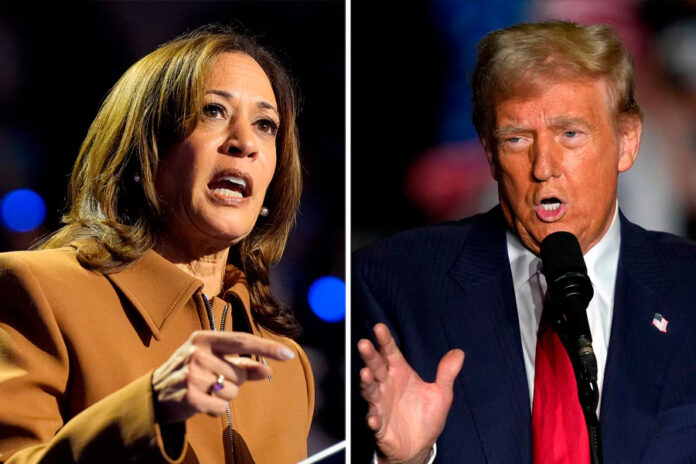
This combination of file photos shows Democratic presidential nominee Vice President Kamala Harris, left, speaking during a campaign rally in Kalamazoo, Mich., Oct. 26, 2024, and Republican presidential nominee former President Donald Trump, right, speaking during a campaign rally Oct. 22, 2024, in Greensboro, N.C. (Photo: AP)
Vice President Kamala Harris will deliver her campaign’s “closing argument” Tuesday from the same spot in Washington where former President Donald Trump helped incite a mob that attacked the U.S. Capitol on Jan. 6, 2021.
One week out from Election Day, Harris’ address from the grassy Ellipse near the White House is designed to encourage Americans to visualize their alternate futures if she or Trump takes over the Oval Office in less than three months.
Trump opened his remarks to reporters at Mar-a-Lago Tuesday morning by saying Harris is running on a “campaign of destruction” and “of absolute hate,” accusing her team of “perhaps even trying to destroy our country.” He will head to Pennsylvania later in the day for a Building America’s Future event in Drexel and a rally Tuesday night in Allentown.
The Ellipse, where Vice President Kamala Harris will deliver her closing message against former President Donald Trump, is a grassy park between the White House and the Washington Monument in Washington, D.C.
The area, which is administered by the National Park Service, has long played host to a range of political events and national traditions. Most recently, it was where then-President Trump delivered a lie-filled speech on Jan. 6, 2021, shortly before hundreds stormed the U.S. Capitol as Congress met to certify to 2020 election.
While the White House is often the backdrop for events on the Ellipse, expressly political events are allowed in the park, unlike at the White House.
The park was first developed in the 1850s and was part of landscape architect Pierre Charles L’Enfant’s plans for the nation’s capital. However, its development was cut short by a lack of funds and the Civil War, according to the National Park Service. During the conflict, soldiers were housed on the site, and the area had also been used as horse pens, a slaughterhouse and a trash dump, according to the Park Service.
Harris’ closing argument against Trump is far from her final event
Vice President Kamala Harris will deliver what her campaign is touting as her closing argument against former President Donald Trump on Tuesday in Washington, D.C.
But the event, a large gathering on the Ellipse park just south of the White House, will be far from her last rally.
Harris is slated to crisscross the country in the final days of the campaign, hitting all key battleground states as she makes her last pitch to voters.
Harris’ campaign has crafted the Tuesday event as both a physical and rhetorical counter to Trump.
She will urge voters to “turn the page” toward a new era and away from Trump, lambasting both the kind of rhetoric Trump has used and what it would mean to give him four more years as president. Physically, Harris will be standing in the same park where Trump delivered a lie-filled speech on Jan. 6, 2021, shortly before hundreds stormed the Capitol as Congress met to certify to 2020 election.
‘We are on track to win a very close election,’ Harris campaign chair says
Harris’ campaign chair says early voting returns in key states suggest the vice president’s supporters are turning out in numbers she needs to win.
In an online video running nearly three and a half minutes, Jen O’Malley Dillon says a lot of Republican-leaning voters were voting early in strong numbers as well — but those tended to be folks who would have otherwise voted on Election Day.
By contrast, she said, the Harris campaign believes low-propensity voters are breaking for the vice president.
O’Malley Dillion said the campaign’s polling shows that late-breaking undecided voters “are more open to supporting” Harris if they find out “more information” about her in the campaign’s closing days.
“It’s OK to be worried,” before Election Day, she said, but added, “We are on track to win a very close election.”
Democratic presidential nominee Vice President Kamala Harris speaks during a campaign rally at Burns Park in Ann Arbor, Mich., Monday, Oct. 28, 2024. (Photo: AP/Carlos Osorio)
‘This truly is a margin of error race’
Harris campaign chair Jen O’Malley Dillon has released a video telling supporters, “Why you don’t have to feel anxious and you can feel good” about next week’s election.
As the campaign has been arguing for months, O’Malley Dillon says Harris has “multiple pathways” to get to the 270 electoral votes needed to clinch the White House.
She said seven states remain in play — the “blue wall” of Pennsylvania, Michigan and Wisconsin, as well as Georgia, North Carolina, Arizona and Nevada.
O’Malley Dillon said that, rather than conceding any of those, as sometimes happens late in races, Harris is still campaigning hard in all of them because “this truly is a margin of error race.”
Hundreds of Miami-Dade County ballots were found on the side of the road
The elections department in Florida’s largest county confirmed Tuesday that a sealed bin and a sealed bag had been found by a driver and the ballots inside had already been scanned and tabulated at an early voting site on Monday, according to reporting by the Miami Herald.
A county employee forgot to lock the back of a truck and the containers fell out when they drove off, according to county elections supervisor Christina White, who said election workers confirmed nothing was damaged or tampered with.
A video posted by the popular South Florida social media account Only in Dade shows a passing driver apparently stopping to pick up the containers labeled with county barcodes and drive them to a police station.
The employee driving the truck has since been fired.
Harris campaign takes over Las Vegas’ Sphere to help get out the vote
The vice president’s team says her campaign is the first to advertise on the entertainment venue, which opened in 2023.
The exterior of the Sphere features a rotating series of messages encouraging people to vote for Harris and running mate Tim Walz by Election Day, Nov. 5. The messages include her slogan, “When we fight, we win,” and other phrases.
Nevada is among the handful of battleground states that the Democrat and Republican rival Donald Trump are trying hard to win.
Harris’ team says the Sphere advertising is a “critical piece” of their efforts in Nevada, which also include taking over the homepages of top newspapers and mobile billboards in Reno, Carson City and Las Vegas.
Harris is scheduled to campaign in Reno and Las Vegas on Thursday.
Trump on his Madison Square Garden rally: ‘There’s never been an event so beautiful’
While he didn’t mention a comedian’s controversial remarks about Puerto Rico, Trump expounded at length about his Madison Square Garden rally, which he called a “lovefest,” a term he has also used to reference the Jan. 6, 2021, riot at the U.S. Capitol.
At Mar-a-Lago on Tuesday, Trump noted “there’s never been an event so beautiful” as the Sunday night rally in his hometown of New York City. Trump called it “terrible to say,” as some of his critics have pointed out, that the same arena was host to a gathering of Nazis in 1939.
More than 20,000 people attended a Feb. 20, 1939 rally at the Garden organized by the German American Bund, a pro-Nazi group that hung swastikas alongside a huge portrait of George Washington.
Several of the speakers on Sunday referenced that event, including former professional wrestler Hulk Hogan, who said, “I don’t see no stinkin’ Nazis in here.”
“Nobody’s ever had love like that,” Trump said of the hourslong Sunday event that featured speakers including some of his children, wife Melania and high-level surrogates and supporters including TV psychologist Dr. Phil McGraw and former Fox News host Tucker Carlson. “It was really love for our country.”
Republican presidential nominee former President Donald Trump speaks during a news conference at his Mar-a-Lago estate, Tuesday, Oct. 29, 2024, in Palm Beach, Fla. (Photo: AP/Julia Demaree Nikhinson)
Trump wraps his remarks without referencing comments of a comedian at his New York rally
Trump has yet to address the controversy, also not mentioning it during his appearances in Georgia on Monday. On Tuesday, he did reference the event overall, calling it “an absolute lovefest” in his hometown.
Comedian Tony Hinchcliffe called Puerto Rico a “floating island of garbage” during the Sunday event at Madison Square Garden. His remark has drawn wide condemnation and highlighted the rising power of a key Latino group in the swing state of Pennsylvania. He also made demeaning jokes about Black people, other Latinos, Palestinians and Jews during his routine before Trump’s appearance.
The Harris campaign has released an ad that will run online in battleground states targeting Puerto Rican voters and highlighting the comedian’s remarks.
The comments landed Harris a show of support from Puerto Rican music star Bad Bunny and prompted reactions from Republicans in Florida and Puerto Rico.
Head of Puerto Rico’s Republican Party calls Hinchcliffe remarks ‘totally reprehensible’
The president of Puerto Rico’s Republican Party, Ángel Cintrón, rejected the comments of a comedian at a Trump rally in New York where he called the U.S. territory “a floating island of garbage.”
Cintrón said the “poor attempt at comedy” by Tony Hinchcliffe on Sunday was “disgraceful, ignorant and totally reprehensible.”
“There is no room for absurd and racist comments like that. They do not represent the conservative values of republicanism anywhere in our nation,” Cintrón said in a statement.
He noted that there are 3 million U.S. citizens in Puerto Rico and nearly 6 million in the U.S. mainland.
“Whether we are Republicans or Democrats, we are American and Puerto Rican citizens proud of our roots and incalculable contributions to American democracy for more than one hundred years,” Cintrón said.
Harris will have to ‘get herself a job someplace,’ Trump says
A week away from the end of voting in the general election, Trump is reflecting on his presidential run, saying, “We’ve had a great campaign” and predicting that Harris will have to go home and “get herself a job someplace, who knows.”
Trump is featuring speakers who say they were harmed by policies under Harris’ time in office
Tammy Nobles talked about the death of her daughter, saying the perpetrator was an MS-13 gang member in the country illegally.
Michael Koppy, owner of Go Green Dry Cleaners, talked about how he has had to help other small businesses unable to keep up with inflation and rising costs.
Christy Shamblin, whose daughter-in-law Marine Sgt. Nicole Gee was killed during the chaotic withdrawal from Afghanistan, said Donald Trump “demonstrates peace through strength.”
Trump: Anything positive about the economy during Harris’ time in office was ‘fake’
Saying that the economy under Harris’ time in office has caused destruction, Trump said that any boon was “fake.”
He then cited “one of the most respected people on Wall Street” as saying that “the economy is only good” because “people think Trump is going to get elected.”
Trump says he would create ‘compensation fund’ for the ‘victims of migrant crime’
As he has many times along the campaign trail, Trump is decrying federal authorities for dropping plane-loads of migrants “all over the Midwest,” mentioning Aurora, Colorado, and Springfield, Ohio.
Saying he was announcing the intent “for the first time,” Trump said that as president he would be “seizing the assets of the criminal gangs and drug cartels,” and using those assets “to create a compensation fund to provide restitution for the victims of migrant crime.”
Trump calls immigration reform ‘the single biggest issue’ for his campaign
Immigration reform — and blaming Democrats for issues caused by an influx of immigrants across the U.S.-Mexico border — has long been Trump’s signature campaign issue, and a week out from Election Day, he is sticking to that.
Saying that “we talk about inflation and the economy,” Trump added, “To me, there’s nothing more important than the fabric of our country being destroyed,” calling the border “the single biggest issue.”
Trump plays video featuring mother of 12-year-old found dead in Texas
Trump is playing a video featuring comments from the mother of Jocelyn Nungaray, a 12-year-old Texas girl who was found dead in a creek not far from her home.
Police charged two Venezuelan men who had entered the U.S. illegally with the girl’s murder.
Alexis Nungaray said that her daughter is “six feet in the ground based off of” Harris’ decisions and called for Trump’s reelection.
Trump alleges Harris ‘keeps talking about Hitler and Nazis because her record is horrible’
Trump accused Harris of not caring about the impact of her actions in what he called her “campaign of absolute hate,” saying that she intends to “keep this misery going, and she’s going to keep it going for as long as she can.”
Trump alleged that Harris “keeps talking about Hitler and Nazis because her record is horrible.”
Trump said that the “three great people” on stage with him would share their own stories about “how their lives have been shattered” by Harris’ policies.
Trump says he is ‘running on a plan to save America’
The GOP nominee said his Democratic rival, now Harris, is running on a “campaign of destruction” and “of absolute hate,” accusing her team of “perhaps even trying to destroy our country.”
Trump again said Democrats “stole the presidency of the United States” by ousting Biden from their ticket this year.
As he spoke, Trump was flanked on stage by three people, none of whom he has identified thus far.
Trump has arrived at his Mar-a-Lago event
Supporters cheered his name and raised cellphones in the air as he walked into the room, exactly one week before Election Day.
Two days ahead of Halloween, the former president walked out just after the playing of Michael Jackson’s “Thriller,” which has become a staple at many of his campaign rallies.
Trump began his remarks by saying that things are “going very well” but noted some “bad spots in Pennsylvania where some serious things have been caught or are in the process of being caught.”
Reading from paper on the podium in front of him, Trump began by criticizing Kamala Harris, saying she “has obliterated our borders” and has “caused so much destruction and death at home and abroad.”
Musk’s pro-Trump super PAC uses vulgarity demeaning women to describe Harris as a ‘communist’
Elon Musk’s super political action committee created an ad attacking Vice President Kamala Harris that includes multiple references to a vulgarity often used to demean women before calling her a “communist.”
The 35-second video from America PAC begins with a warning that it “contains multiple instances of the C-word.”
Calling Harris “a big ole C-word,” a narrator describes the Democratic nominee as a “tax-hiking, regulation-loving, gun-grabbing communist,” over images of her, as well as an illustration of a cat in a Soviet-style military uniform.
Musk endorsed Trump earlier this year and has appeared both at his rallies and at his own pro-Trump events throughout the battleground state of Pennsylvania. Both Musk and Trump have repeatedly referenced Harris as “Comrade Kamala,” implying that as president she would seek to implement socialist policies in the U.S.
The post is getting attention as Trump and his allies use increasingly inflammatory language in the final stretch of the campaign. Trump has repeatedly ridiculed Harris, at one point calling her “mentally impaired.” He has referred to CNN’s Anderson Cooper with a woman’s name, evoking the trope of gay men as effeminate. A Trump rally at Madison Square Garden on Sunday featured multiple crude and racist jokes, including one from comedian Tony Hinchcliffe who called Puerto Rico a “floating island of garbage.”
A spokesperson for the PAC declined to comment on the video.
Puerto Rico’s archbishop calls on Trump to disavow comedian’s rally comments
SAN JUAN, Puerto Rico. — The archbishop of Puerto Rico, Roberto O. González Nieves, has joined a long list of Puerto Ricans decrying the comments a comedian made at a Donald Trump rally on Sunday that disparaged the island.
González said in a letter that he was “dismayed and appalled” after hearing Tony Hinchcliffe say, “I don’t know if you guys know this, but there’s literally a floating island of garbage in the middle of the ocean right now. I think it’s called Puerto Rico.”
González called on Trump to disavow the comments, saying it was insufficient that his campaign issued a brief apology.
“It is important that you, personally, apologize for these comments,” González wrote.
The archbishop said that while he enjoys a good joke, humor has its limits.
“It should not insult or denigrate the dignity and sacredness of people,” he wrote. “These kinds of remarks should not be a part of the political discourse of a civilized society.”
Trump’s event at Mar-a-Lago has gotten underway with operatic and Broadway musical selections
Dozens of supporters, many clad in pro-Trump gear, stood near their seats and craned their necks to see if the GOP nominee and former president were about to enter an ornate Mar-a-Lago room set up for his remarks.
Several American flags and a screen with the words, “TRUMP WILL FIX IT!” were set up along the platform from which Trump was expected to speak.
‘We have to forgive and let it go,’ Trump supporter says Madison Square Garden rally remarks
A supporter of Trump who attended his event at Mar-a-Lago and heads the Republican Latino Club of Palm Beach said in Spanish it was important to clarify that the former president was not the one who made the crude comments about Puerto Rico.
“He is a comedian. He tries to be funny and says a lot of nonsense. The man is dumb. He has no clue about Puerto Rico and doesn’t know our culture. He screwed up. We have to forgive and let it go,” said Lydia Maldonado, who is Puerto Rican. “Our economy needs a change. Enough of this.”
The Allentown School District is closed ahead of Trump’s Pennsylvania visit
The district said in a statement that schools will be closed “out of an abundance of caution” since the rally is “expected to bring large crowds, heavy traffic and potential disruptions that may impact the safety and security of our students and staff.”
Trump is due to speak at the PPL Center in downtown Allentown at 7 p.m. ET.
Podcast host Joe Rogan polls listeners on a potential interview with Harris
In a post on the social platform X, Rogan says the Democrat’s campaign offered a date for Tuesday for an hourlong conversation, but that he would have had to meet her on the road. Rogan said he feels strongly that the conversation is best when done in his studio in Austin, Texas.
He headlined the post: “!! Austin TX podcast or let her walk. Thoughts?”
Asked for comment, a Harris campaign official said they were willing to sit down with Rogan when Harris was in Texas last week, but Rogan couldn’t accommodate.
The official, who spoke on condition of anonymity to discuss the campaign’s internal deliberations, said Rogan was offered the option of joining Harris on the road but that Rogan has insisted that the conversation be taped in Austin.
Trump sat down with Rogan for three hours last Friday in Texas.
Harris aide says Washington speech will focus on the ‘clear choice voters are facing this election’
Vice President Kamala Harris, who spent years working as a prosecutor, has spent her campaign for president laying out the case to voters for why she should be elected, a top aide said Tuesday.
Cedric Richmond says over the past three months Harris has given her opening statement and laid out evidence and the facts for voters.
On Tuesday, she’ll deliver a speech meant to sum it all up.
“She’ll make her closing argument directly to the American people — or the jury — and that’s who’s going to decide the outcome of this election,” he said. “And that’s how it should be.”
Richmond says the speech will be about the “clear choice voters are facing this election between Trump and his obsession with himself versus her new generation of leadership that is focused on the American people.”
Harris to focus on what her generation of leadership ‘really means’ in Washington speech
Vice President Kamala Harris chose the area near the White House and Washington Monument to speak on Tuesday because “it’s a reminder of the gravity of the job,” her campaign chairwoman says.
Campaign leader Jen O’Malley Dillon says the location, where Donald Trump helped incite a violent mob on Jan. 6, 2021, is a visual reminder of how much a president can do for good — or for ill.
It’s a “stark visualization of probably the most infamous example of Donald Trump and how he’s used his power for bad,” she said.
But Harris won’t spend a lot of time rehashing the violence of that day or recounting Trump’s continued efforts to lie about the election and sow doubt over voting. O’Malley Dillon says Harris will focus on talking about what her generation of leadership “really means,” and how much she will work to shape the country and impact people’s lives for the better.
Harris to sit for interviews in Detroit, Milwaukee, Philadelphia and elsewhere on Tuesday
Vice President Kamala Harris is doing five interviews Tuesday, including one with a Spanish-language radio in Pennsylvania aimed at Latino voters, in particular Puerto Ricans.
The interviews come after a comic at Donald Trump’s rally on Sunday made racist and vile jokes that singled out Puerto Ricans among other groups. Trump did not denounce the racist jokes. But he claimed he didn’t know the comic who gave a live performance at the venue before the Republican nominee took the stage.
Harris is also doing interviews in Detroit, Milwaukee, Philadelphia and Pittsburgh. That’s before she gives a speech in Washington later Tuesday where she’ll lay out her closing arguments.
‘I don’t know him,’ Trump says of comedian from New York rally without denouncing his remarks
Donald Trump said he doesn’t know the comic who made racist and vile jokes at his big Madison Square Garden rally. But he’s not denouncing the comments either.
“I don’t know him, someone put him up there. I don’t know who he is,” Trump told ABC News in an interview Tuesday ahead of his remarks at Mar-a-Lago, according to the network.
The comedian, Tony Hinchcliffe, had told a series of raunchy and crude jokes, including calling Puerto Rico an “island of floating garbage.”
The comments have drawn outrage from Puerto Rican leaders with just a week to go before the election.
In the interview, Trump also insisted he hadn’t heard Hinchcliffe’s comments, according to ABC. But, “When asked what he made of them, he did not take the opportunity to denounce them, repeating that he didn’t hear the comments.”
Trump supporters are gathering near the entrance of Mar-a-Lago’s main ballroom
The former president has arrived at his private club and residence in Palm Beach, Florida. He is set to meet with reporters at 10 a.m. ET. It is unclear whether the Republican will take questions.
Harris calls Los Angeles Times and Washington Post decisions not to endorse in the presidential race ‘disappointing’
The Democratic presidential nominee commented during an interview with Charlamagne tha God, DJ Envy, and Loren LoRosa for “The Breakfast Club” that aired Tuesday morning.
Both newspapers announced last week that they will not make endorsements in the presidential contest between Harris and Republican Donald Trump.
Harris sought to tie the decisions to billionaires in “Donald Trump’s club.”
Both publications are owned by wealthy executives, Jeff Bezos at the Post and Patrick Soon-Shiong at the Times.
Arab American voters make their choice — Harris, Trump or neither — in the election’s final days
DEARBORN, Mich. — Bowls of labneh and platters of za’atar bread covered the tables in a Lebanese restaurant near Detroit, yet no one seemed to have much of an appetite.
On one side were Kamala Harris ’ top emissaries to the Arab American community. On the other were local leaders who were explaining — once again — why many in the community couldn’t vote for the vice president because of the war in Gaza.
“I love this country, but I’ll tell you, we have never been so disappointed in this country as we are now,” said Nabih H. Ayad, chairman of the Arab American Civil Rights League. “We wanted to give the Democratic Party the opportunity to do something, and they haven’t.”
“The one line we can’t cross,” Ayad said, “is genocide.”
GOP works to turn out pro-Trump Jewish voters in swing states to trim Democrats’ edge
WEST BLOOMFIELD, Mich. — Rachel Weinberg calls herself a religious Jew first, then a proud American. She said she has only one choice for president: Donald Trump.
“I don’t like everything he says,” the 72-year-old retired preschool teacher from Michigan said after volunteer canvassers for the Republican Jewish Coalition knocked on her door Sunday. “But I vote for Israel. It is our life. I support Israel. Trump supports Israel with his mouth and his actions.”
Weinberg’s home in West Bloomfield, in vote-rich Oakland County, was among more than 20 that the Republican Jewish Coalition was visiting that morning. She has voted for Trump in previous elections as well.
The door-to-door outreach to Jewish voters with a history of backing Republicans is part of a new effort the group is undertaking this year in five presidential battleground states in hopes of boosting Trump over Democrat Kamala Harris in the Nov. 5 election.
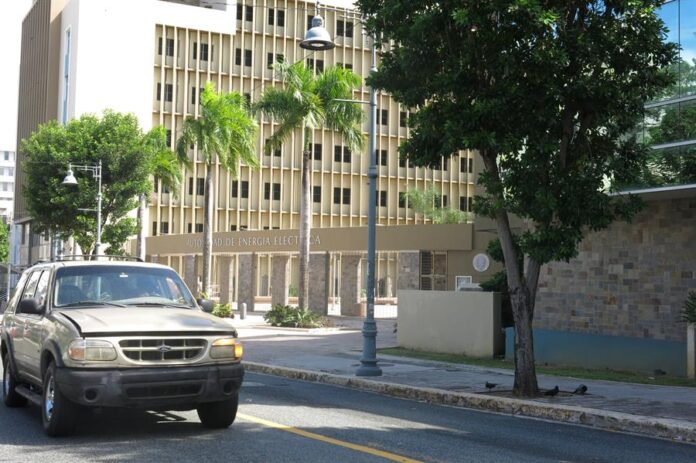
Imagen de un auto cruzando frente a la sede de la Autoridad de Energía Eléctrica de Puerto Rico, en San Juan. ( Foto: EFE/Esther Alaejos)
San Juan.– LUMA Energy, empresa a cargo de la transmisión y distribución de la energía eléctrica en Puerto Rico, aseguró este martes que evitó 133 millones de minutos de interrupciones de servicio para los clientes durante el año fiscal 2024.
Esto se logró al LUMA instalar 5.850 aparatos automatizados de distribución y de protección para reducir la magnitud y duración de los cortes de luz, explicó en un comunicado el director ejecutivo de la empresa, Juan Saca, al someter su informe anual del año fiscal al Negociado de Energía.
De igual manera, entre el 1 de julio de 2023 y el 30 de junio de 2024, los obreros de LUMA reemplazaron durante ese tiempo más de 6.500 postes nuevos capaces de resistir vientos de más de 160 millas por hora para fortalecer la confiabilidad y la resiliencia del sistema en condiciones del tiempo severas.
«Nuestro progreso durante el último año fiscal habla por sí solo: hemos reemplazado miles de postes, instalado miles de aparatos automatizados y despejado miles de millas de vegetación peligrosa en todo Puerto Rico», sostuvo Saca en el comunicado.
«Esto es un progreso real, y es lo que nuestros clientes esperan y merecen de su empresa de la industria eléctrica. De cara al futuro, continuaremos tomando las medidas necesarias para mejorar la red eléctrica y los servicios que con orgullo les brindamos a nuestros clientes, mientras seguimos construyendo un mejor futuro energético para Puerto Rico», enfatizó.
En el informe, LUMA destaca también que aumentó sus esfuerzos de confiabilidad y resiliencia de la red, mejoró la respuesta a las interrupciones de servicio, amplió sus servicios al cliente y promovió oportunidades de eficiencia energética para sus clientes.
LUMA acertó estos logros dentro de su presupuesto aprobado y continúa operando de manera fiscalmente responsable en representación de sus 1,5 millones de clientes.
Además, durante el pasado año fiscal, LUMA despejó vegetación peligrosa de sobre 1.500 millas de líneas eléctricas como parte de sus operaciones diarias.
Igualmente, reemplazó 14 disyuntores de transmisión y de distribución, instaló equipo de mitigación para la vida silvestre y cambió seis bancos de baterías en subestaciones para mejorar la confiabilidad regional de la red mediante la Iniciativa de Modernización de Subestaciones de LUMA.
Finalmente, la empresa destacó que brindó apoyo a sobre 44.200 clientes para conectarse a placas solares, representando más de 313 megavatios de energía limpia y renovable.
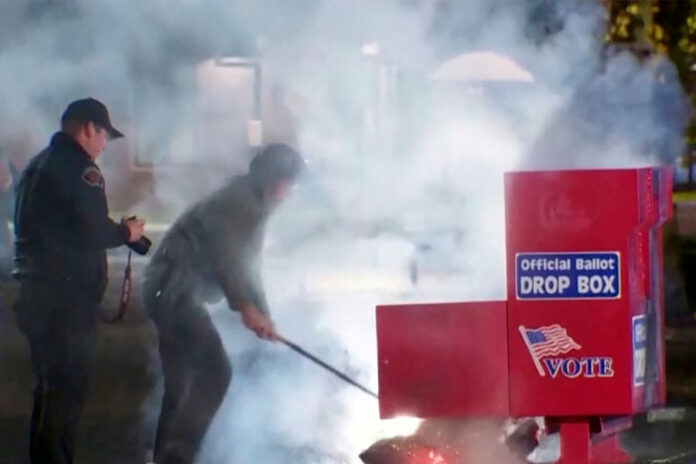
Rescatistas sacan el contenido en llamas de una urna electoral después de que estallara en llamas en un presunto incendio provocado en Vancouver, Washington, el 28 de octubre de 2024. (Foto: VOA/Evan Bell/ABC Affiliate KATU/ Reuters)
Autoridades de EE. UU. investigan una serie de aparentes incendios provocados en urnas de voto por correo, amenazas a la seguridad de los comicios que ponen presión sobre las autoridades, a una semana del día de unas elecciones reñidas e históricas.
Una serie de ataques a urnas electorales en todo Estados Unidos está aumentando la presión sobre los funcionarios estatales y locales, que esperan supervisar una elección presidencial segura y pacífica, tanto para la votación anticipada que se está llevando a cabo en gran parte del país, como para cuando millones de estadounidenses acudan a las urnas la próxima semana.
El estado de Washington, en el noroeste del país, confirmó a la Voz de América el lunes que la policía local y el Buró Federal de Investigaciones (FBI) están investigando informes de un supuesto «dispositivo incendiario» colocado en una urna electoral en Vancouver la madrugada del lunes.
Los funcionarios dijeron que nadie resultó herido, pero que algunas de las papeletas estaban dañadas. Un video obtenido por los medios locales mostró a los bomberos respondiendo al lugar, con algunas de las papeletas ardiendo en el suelo.
Funcionarios del otro lado de las fronteras estatales, en la cercana Portland, Oregon, informaron que una de sus urnas también fue atacada con un dispositivo incendiario, unos 30 minutos antes. Pero un sistema de extinción de incendios dentro de la urna de recolección evitó que se dañaran todas las papeletas, excepto tres.
“No se equivoquen, un ataque a una urna es un ataque a nuestra democracia y es completamente inaceptable”, dijo la secretaria de estado de Oregon, LaVonne Griffin-Valade, en una declaración compartida con la VOA.
El secretario de estado de Washington también condenó los aparentes ataques.
“Denuncio enérgicamente cualquier acto de terrorismo que tenga como objetivo perturbar las elecciones legales y justas en el estado de Washington”, dijo Steve Hobbs. “Tomamos en serio la seguridad de nuestros trabajadores electorales y no toleraremos amenazas o actos de violencia que busquen socavar el proceso democrático”.
Los incidentes en las urnas en Washington y Oregon siguen al ataque de la semana pasada a un buzón electoral en Phoenix, Arizona, en el suroeste del país. Funcionarios arrestaron a un sospechoso por prender fuego a la casilla, dañando unas 20 papeletas.
La oleada de ataques a buzones de correo y urnas para la recolección de votos se produce en un momento en que los funcionarios de seguridad de Estados Unidos están emitiendo nuevas advertencias sobre la posible violencia relacionada con las elecciones por extremistas con base en Estados Unidos.
“Creemos que los extremistas violentos domésticos (DVE, en inglés) representarán la amenaza física más importante para los funcionarios gubernamentales, los votantes y el personal y la infraestructura relacionados con las elecciones”, dijo el Departamento de Seguridad Nacional (DHS en inglés) en una evaluación no clasificada publicada a fines de septiembre.
Según la evaluación, entre los objetivos potenciales se incluyen “lugares de votación, lugares de entrega de urnas, sitios de registro de votantes, eventos de campaña, oficinas de partidos políticos y sitios de recuento de votos”.
El DHS advirtió que la mayor amenaza probablemente provenga de lo que describe como “extremistas violentos domésticos antigubernamentales o antiautoritarios, muchos de los cuales probablemente se inspirarán en quejas políticas partidistas o teorías conspirativas”.
El DHS y el FBI también han amplificado sus advertencias en una serie de boletines de seguridad no públicos enviados a agencias policiales en todo el país, algunos de los cuales fueron obtenidos por Property of the People, un grupo sin fines de lucro que se describe a sí mismo como “dedicado a la búsqueda agresiva de la transparencia gubernamental”.
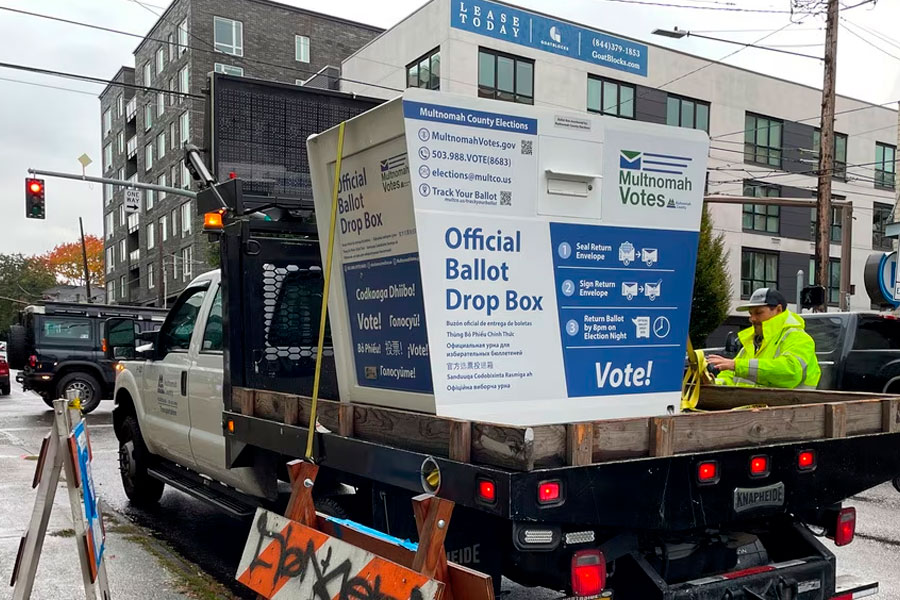
Una urna de reemplazo es descargada el lunes 28 de octubre de 2024 en Portland, Oregón. (Foto: VOA)
Algunos de los boletines revisados por la VOA citaron crecientes llamados en las redes sociales a ataques a las urnas de recolección de votos, así como crecientes llamados a la guerra civil luego del intento de asesinato del expresidente y candidato republicano Donald Trump en julio pasado.
“Estados Unidos sigue en un entorno de amenazas dinámico y elevado y seguimos compartiendo información con nuestros socios encargados de hacer cumplir la ley sobre las amenazas que plantean los extremistas violentos nacionales en el contexto de las elecciones de 2024”, dijo un portavoz del DHS a la VOA, cuando se le preguntó sobre los boletines.
“El DHS sigue trabajando con nuestros socios para evaluar y mitigar las amenazas emergentes que puedan surgir de actores nacionales o extranjeros”, añadió el portavoz. “El departamento sigue aconsejando a los aliados federales, estatales y locales que se mantengan atentos a las posibles amenazas y alienta al público a denunciar cualquier actividad sospechosa a las autoridades locales”.
Si bien los funcionarios de seguridad estadounidenses creen que la mayor amenaza de violencia puede provenir de extremistas antigubernamentales o antiautoridades con sede en Estados Unidos, los funcionarios de inteligencia estadounidenses han expresado su preocupación de que adversarios como Irán y Rusia también puedan estar presionándolos para que lleven a cabo ataques.
Una evaluación de inteligencia estadounidense desclasificada publicada la semana pasada advirtió que los funcionarios están “cada vez más seguros” de que Rusia está empezando a participar en planes “destinados a incitar a la violencia”.
Además, evaluó que Irán también “podría intentar incitar a la violencia”.
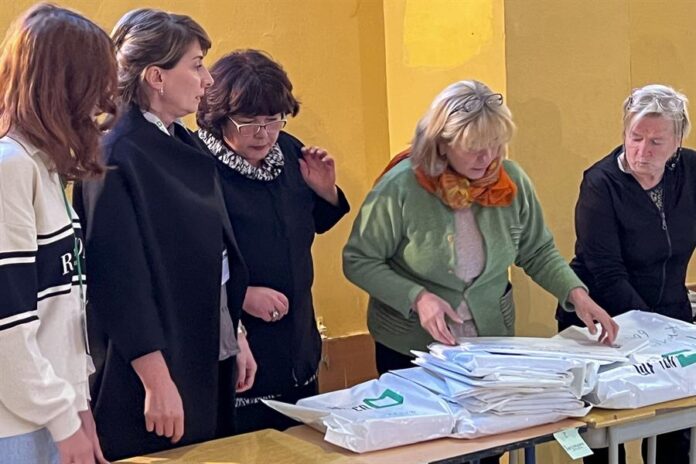
Varias personas durante el recuento de votos de las elecciones parlamentarias del pasado sábado en Georgia, este martes. La Comisión Electoral Central (CEC) de Georgia anunció hoy que efectuará un recuento de los sufragios emitidos en las elecciones parlamentarias del pasado sábado en cinco colegios de cada una de las 73 circunscripciones electorales del país. EFE/ Misha Vignanski
Tiflis.- La Comisión Electoral Central (CEC) de Georgia comenzó este martes el recuento de los sufragios emitidos en las elecciones parlamentarias del pasado sábado en cinco colegios de cada una de las 73 circunscripciones electorales del país.
Una portavoz de la CEC dijo a EFE que el recuento no está vinculado a las denuncias de fraude de la oposición, sino que obedece a una innovación de la ley electoral que entró en vigor en 2021 para aumentar la credibilidad de los resultados electorales.
Explicó que los colegios en los que se efectúa el recuento son elegidos de manera aleatoria.
La CEC, que según la ley tiene un plazo de seis días para efectuar el procedimiento de verificación del escrutinio, decidió hacerlo este mismo martes.
En el recuento de los cinco colegios del distrito de Mtatasminda de la capital geogiana estaban presentes varios observadores de las fuerzas políticas que participaron en los comicios, incluidos de la oposición, según pudo comprobar EFE.
La víspera, miles de opositores se congregaron en un mitin frente a la sede del Parlamento de Georgia, convocado por la presidenta del país, Salomé Zurabishvili, para demandar la repetición de los comicios, que según los resultados oficiales ganó con mayoría absoluta Sueño Georgiano, el partido gobernante.
«No perdimos las elecciones, nos robaron los votos, nos robaron el futuro», dijo la jefa de Estado ante los manifestantes.
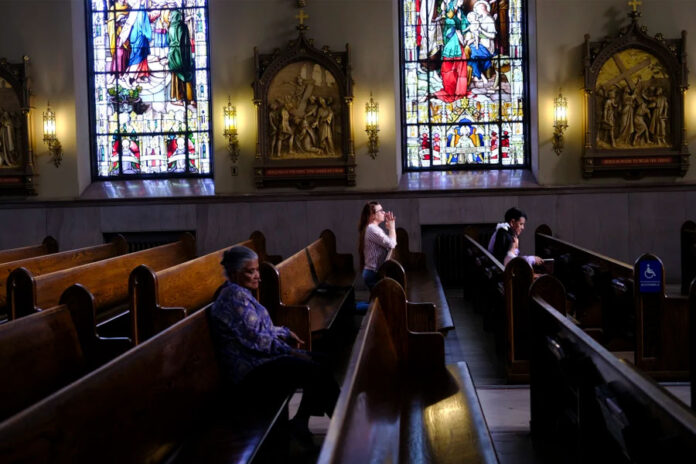
A parishioner prays at St. Peter the Apostle Catholic Church in Reading, Pa., on June 16, 2024. (Photo: AP/Luis Andres Henao)
PITTSBURGH. — Nationally, Catholic voters have been closely divided in recent presidential elections. This year, in the vital state of Pennsylvania, they’ll likely comprise at least a quarter of the electorate — and thus play a pivotal role in deciding the overall outcome.
There’s been a see-saw effect in the state.Donald Trump beat Hillary Clinton by about 44,000 votes in 2016; Joe Biden defeated Trump by 80,000 votes in 2020.
John Fea, a history professor at Messiah University in Mechanicsburg, Pennsylvania, said he believed Biden — an Irish-American Catholic and regular Mass-goer — connected with some Catholics as being one of their own.
“I don’t think most working-class Catholics thought Biden was a perfect candidate, but he was one of them,” said Fea, who studies the interaction of religion and politics.
Now Trump, a nondenominational Christian, is back atop the Republican ticket, with JD Vance — a Catholic — as his running mate.
The Democrats have a ticket without a Catholic, headed by Kamala Harris, who is of Black and South Asian heritage and is from a Baptist tradition with a strong social-justice orientation, and running mate in Tim Walz, a white Lutheran.
Fea said some voters in the counties around Scranton, where Biden was born, may have voted for him in 2020 because of the Catholic connection but might not vote for Harris.
“You could make an argument that as goes those counties … so goes Pennsylvania, so goes the nation,” Fea said.
As an ardent opponent of abortion, Nikki Bruni of Pittsburgh says she could never vote for Harris. Trump has her vote even though she’s dismayed he’s backing away from the GOP’s traditionally staunch opposition.
“I did consider not voting, but Pennsylvania is a swing state,” said Bruni, who directs People Concerned for the Unborn Child, a local anti-abortion group. “I have to do what I can morally to keep the evil from taking over completely.”
For Catholics supporting Harris, there’s a similar sense of urgency — that in a state where more than a quarter of voters in 2020 were Catholic, the entire election might hinge on a handful of their fellow believers.
One group, Catholics Vote Common Good, recently put up billboards around Pittsburgh and Erie, urging Catholics to consider the “common good” — an array of vital concerns in Catholic social teaching — not just the single issue of abortion.
“If you’re going to be pro-life, you need to be more than anti-abortion,” said the group’s Pennsylvania chair, Kevin Hayes. “Immigration has a pro-life component. Health care has a pro-life component. Providing adequate support to young families and young mothers with kids has a pro-life component.”
He also said Trump, with his verbal attacks on the judicial system and calling critics “ enemies from within ” poses a threat to democracy.
Even as both campaigns court Hispanic Catholics’ votes, most of Pennsylvania’s Catholic population is descended from white European immigrants, many of whom worked in the mines and mills of the state’s industrial heyday. They’ve decreased in number amid the decline in industry and scandals in the church, but many still remain, their legacy by marked by steeples and onion domes throughout the state.
“That demographic should not be overlooked,” said Hayes, who is among Catholics urging the Harris campaign to pay closer attention to them.
To be clear, there is no “Catholic vote” as there might have been in past generations, when Catholics could be expected to support their own as a voting bloc.
But there are Catholic voters — lots of them.
In 2020, 27% of Pennsylvania voters identified as Catholic, according to AP VoteCast, and neighboring swing states of Michigan and Wisconsin also have ample Catholic populations. A Franklin & Marshall Poll survey in October suggested there could be a competitive race among Catholics in the state.
Pennsylvania Catholics, who are overwhelmingly white and non-Hispanic, supported Trump over Biden by a 55%-44% margin that year, whereas the national Catholic vote, with a much larger Hispanic share, was about evenly split.
Vance, now the only Catholic in the race, has been strongly influenced by conservative Catholics. He has nonetheless supported Trump’s efforts to downplay abortion as a central issue, even as Trump still claims credit for Supreme Court appointees who helped reverse Roe v. Wade and turn the issue over to the states.
Groups like CatholicVote are supporting Trump and courting the Catholic vote.
Hayes and other Harris supporters have urged her campaign to pay more heed to Pennsylvania’s Catholics, and they’ve taken their own steps.
A group of Philadelphia-area Catholics recently traveled by bus to Wilkes-Barre, near Scranton — stopping for Mass at a Polish Catholic shrine along the way. They went door to door on behalf of their candidate before holding an evening campaign rally.
An organizer of the tour, Steve Rukavina, said the group was reaching out in particular to Catholics and others with ancestry in Poland, Ukraine and other Eastern European lands, including those in NATO.
He cited concerns that Trump has questioned NATO’s mission and repeatedly taken issue with the Biden-Harris administration’s sending of U.S. aid to Ukraine. Trump has made vague vows to end the war and praised Russian President Vladimir Putin.
“I believe that a significant number of Polish and Ukrainian Americans will switch and vote for the Democratic ticket in 2024 because of the NATO and Ukraine issues, coupled with the character issue,” Rukavina said.
U.S. Catholic bishops, in their guide to Catholic voters, declared opposing abortion “our pre-eminent priority because it directly attacks our most vulnerable and voiceless brothers and sisters.”
They also cited concerns that fit neither party’s platform entirely, including pro-LGBTQ+ issues, religious freedom threats, migrant suffering, racism, wars and access to healthcare and education.
Fewer than half of Catholics named abortion as a “very important” issue in deciding their vote, according to a late-summer survey by the Pew Research Center. More than half cited gun policy, foreign policy, Supreme Court appointments and health care, while two-thirds or more cited immigration, violent crime and the economy.
Trump supporter James Karamicky raised some of those concerns after leaving a recent Mass at St. Paul Cathedral in Pittsburgh. He criticized the Biden administration for its border policies and for sending many billions of dollars in aid to Ukraine.
“It’s too much money,” he said. “There’s people in this country that are suffering, homeless people, the vets.”
Tatiana Rad, Trump supporter and a Ukrainian Catholic immigrant, said the former president is the clear choice.
Rad grew up in the former Soviet Union, where Catholics were persecuted, and she sees Republicans as more favorable to religion. She backs Trump’s crack down on illegal immigration and believes he will make good his assertion that he’ll stop the war in Ukraine.
“If America will be strong, the whole world will be looking upon America,” she said. “They need to see a strong leader.”
Brandon Friez, a University of Pittsburgh student who supports Harris, said her presidency would be the best bet for preserving democracy. He also sees moral issues with the Republican Party and Trump.
“The long-term suffering of the poor is not something that should be allowed,” he said. “I feel like the Republican Party doesn’t do enough to alleviate the suffering of the poor.”