

-1.3 C
Philadelphia
spot_img
Inicio Blog Página 688

Biden respalda la libertad de expresión en las protestas contra la guerra en Gaza

libertad
EFE/EPA/MICHAEL REYNOLDS

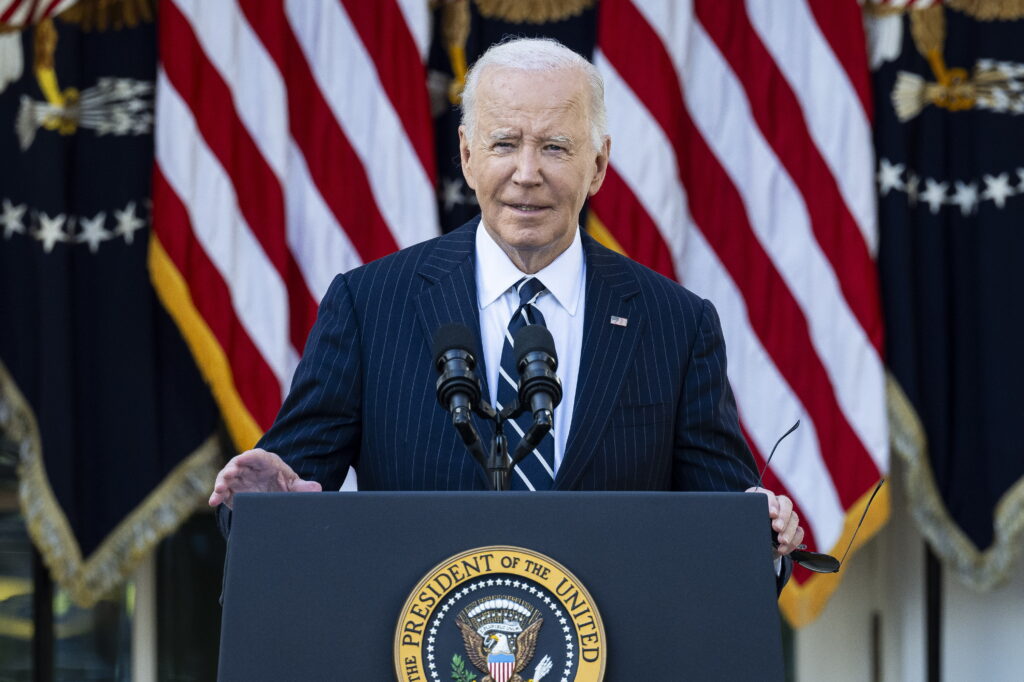
Washington.- El presidente estadounidense, Joe Biden, respalda el derecho a la libertad de expresión en las protestas estudiantiles que han estallado contra la guerra que Israel libra en Gaza, según afirmó este miércoles la portavoz de la Casa Blanca, Karine Jean-Pierre.

«El presidente cree que la libertad de expresión, el debate y la no discriminación en los campus universitarios son importantes», aseguró Jean-Pierre en una rueda de prensa.

Sin embargo, la portavoz también se refirió a las denuncias de antisemitismo y afirmó: «Cuando hablamos de retórica de odio, cuando hablamos de violencia, debemos denunciarlo».

El pasado domingo, Biden condenó «el flagrante antisemitismo» que, a su juicio, no tiene «cabida en los campus universitarios».

Las protestas contra la guerra en Gaza y el respaldo del Gobierno de Biden a Israel comenzaron hace semanas en la Universidad de Columbia, en la ciudad Nueva York, y desde entonces se han extendido a campus de todo el país.

Este mismo miércoles, en la Universidad de Texas en Austin, una veintena de personas fueron detenidas después de que la Policía, a caballo y con equipo antidisturbios, intentara dispersar a estudiantes que se manifestaban pacíficamente.

Estas protestas estudiantiles están acaparando gran parte del debate público y político en Estados Unidos, con los republicanos y una parte importante de los demócratas condenando las manifestaciones y acusando a los participantes de antisemitismo e incluso de apoyar al movimiento islamista Hamás.

El propio presidente de la Cámara de Representantes, el republicano Mike Johnson, viajó este miércoles a la Universidad de Columbia para reunirse con alumnos proisraelíes y ofrecer una rueda de prensa en la que denunció lo que consideró un «movimiento antisemita».

Las protestas estudiantiles en EE. UU. generan división dentro del Partido Demócrata

protestas
Estudiantes a favor de Palestina permanecen en un campamento este martes en el campus de la Universidad de Columbia ubicada en el Alto Manhattan en Nueva York (EE. UU.). EFE/Carla Samón

Nueva York.- Las protestas estudiantiles pro-palestinas que se han extendido por los campus universitarios en Estados Unidos han dejado en evidencia las divisiones dentro del Partido Demócrata en un año electoral en que es clave mostrar unidad ante la fortaleza que presenta su rival republicano.

Una vez más, ha sido el ala izquierda la que le se ha mostrado más cercana a los estudiantes, pero el ‘establishment’ del partido, comenzando por el propio presidente Joe Biden, han enarbolado un discurso de ‘ley y orden’ en el que han resaltado además los contados incidentes de antisemitismo, aunque entre los activistas haya un buen número de activistas judíos antiisraelíes.

Es significativo que las protestas tengan como epicentro Nueva York, una ciudad (y un estado) dominados por los demócratas desde siempre y que al mismo tiempo alberga la mayor comunidad judía del mundo fuera de Israel, además de magnates judíos que se cuentan entre los principales financiadores de las universidades.

La gobernadora del estado, Kathy Hochul, y el alcalde Eric Adams, ambos demócratas del ala derechista y firmes defensores del estado de Israel desde que comenzó la guerra en Gaza (incluyendo viajes de solidaridad al país hebreo), han sido tajantes al tomar distancias con los jóvenes activistas.

El alcalde Adams lleva varios días posicionándose contra ellos, y ayer fue más lejos al afirmar que las protestas eran organizadas por «agitadores externos» a la universidad, «gente que no tienen nada que ver con el asunto y quieren agravar las cosas».

Adams, un expolicía, fue más lejos: «La gente que protesta pacíficamente es una cosa, pero no andan arrojando botellas y sillas», dijo, en alusión a unas imágenes editadas y difundidas por la policía en la que se ve cómo se lanzan algunos objetos a los agentes cuando trataban de desmantelar un campamento en la Universidad de Nueva York.

Una congresista visita el campus

Le contestó a su manera la congresista Ilhan Omar, musulmana, que ayer se personó en el campus de Minnesota (donde se ha replicado la protesta, también con carpas) y, con un megáfono en mano, elogió a sus promotores: «Estoy increíblemente conmovida por vuestra valentía como cuerpo estudiantil, incluyendo vuestros propios cuerpos por delante, para levantaros en solidaridad y hacer que pare el genocidio que tiene lugar ahora en Gaza», les dijo.

Y añadió, entre aplausos de los presentes, que le parecía «profundamente doloroso» observar que, mientras el mundo descubre las fosas comunes en Gaza «nuestros medios de comunicación, políticos electos, nuestro presidente y nuestros líderes gastan su tiempo hablando de estas protestas».

La también congresista Alexandra Ocasio-Cortez no fue a ningún campus pero escribió en su cuenta de X que las manifestaciones de los estudiantes eran no violentas, y responder a ellas con un extraordinario despliegue policial era «una respuesta peligrosa y temeraria, que representa el fracaso del liderazgo».

Uno de los pesos pesados del partido, el líder de la mayoría demócrata en el Senado, Chuck Schumer, también judío, dejó claro cuál es el dilema al que se enfrenta el partido, que como en otros momentos de su historia se ha visto desbordado por actuaciones de desobediencia civil que le han sobrepasado.

«Los campus universitarios -escribió Schumer en un comunicado- deben ser lugares de aprendizaje y debate. Todo americano tiene derecho a protestar, pero cuando esa protesta deriva en antisemitismo, abuso verbal, intimidación o glorificación de los ataques del 7 de octubre contra el pueblo judío, eso cruza una línea roja».

Shapiro Administration, PA Office of Attorney General Encourage Participation in National Prescription Drug Take-Back Day This Weekend

shapiro

Since the program began 9 years ago, 1.3 million pounds of expired, unused and unwanted prescription medications have been destroyed across all 67 counties in an effort to prevent misuse.

Pennsylvanians can drop off expired, unused and unwanted prescription medications at hundreds of sites all across the Commonwealth.

Allentown, PA – Today, the Pennsylvania Department of Drug and Alcohol Programs (DDAP)Pennsylvania State Police (PSP)Department of Military and Veterans Affairs (DMVA), and Department of Aging (PDA) joined officials from the Pennsylvania Office of Attorney General and Lehigh County to encourage Pennsylvanians to take part in the Drug Enforcement Administration’s (DEA) National Prescription Drug Take-Back Day initiative this Saturday, April 27.

The DEA has offered National Prescription Drug Take-Back Day since 2010 with the goal of fighting prescription drug misuse by creating convenient ways to dispose of medication that could otherwise be at risk of misuse.  

“Prescription Drug Take-Back Day is a convenient way to dispose of expired, unused and unwanted prescription medications in a safe manner. I encourage Pennsylvanians to clean out their medicine cabinets, find the nearest take-back box, and drop the medications off on Saturday – it’s really that simple,” said DDAP Secretary Dr. Latika Davis-Jones.

During the most recent National Prescription Drug Take-Back Day in October 2023, the DEA collected more than 30,000pounds of unused medication in Pennsylvania alone across 262 collection sites.

In addition to the DEA’s Prescription Drug Take-Back Days, the Shapiro Administration offers year-round opportunities to dispose of medication through Pennsylvania’s Prescription Drug Take-Back Program.

 
“In addition to the DEA’s boxes on Saturday, there are hundreds of DDAP drug take-back boxes available throughout Pennsylvania year-round for residents to use,” said Secretary Davis-Jones.

Since the inception of Pennsylvania’s drug take-back program in 2015, more than 1.3 million pounds of prescription medication have been destroyed across the 888 take-back boxes in all 67 Pennsylvania counties.

The PSP aims to provide a safe and convenient means of disposal year-round by collecting unwanted prescription medications at 65 stations across the Commonwealth. No personal information is required, and drop-off boxes are available 24 hours a day, seven days a week. More than 4,400 pounds of medications were collected at PSP stations last year.

“The Pennsylvania State Police urges the public to take advantage of our free, convenient prescription drug drop-off boxes in the lobbies of 65 of our stations,” said Colonel Christopher Paris, Pennsylvania State Police Commissioner. “These boxes are an easy way to ensure unwanted or expired medications are properly and safely disposed of.”


The DMVA’s Counterdrug Joint Task Force (CJTF) is operated by the Pennsylvania National Guard (PNG) and is responsible for, along with narcotics agents from the Attorney General’s office, collecting and weighing discarded prescription drugs through Pennsylvania’s drug take-back program. In addition, the CJTF provides counterdrug support and training to federal, state, and local law enforcement agencies, community-based organizations, and educational and government organizations that request assistance at no cost to the agency supported. The PNG is part of the DMVA’s dual mission, which also includes supporting Pennsylvania’s more than 700,000 veterans. 

“We are proud to provide this service along with training and support to local law enforcement,” said Maj. Gen. Mark Schindler, Pennsylvania’s adjutant general and head of the DMVA. “Together, we can make our communities safer and healthier for everyone.”

“Nearly every family is impacted by substance use disorder — anyone is susceptible to addiction. And there are so many tragic stories that start with someone taking a legitimate prescription for necessary treatment, then spiral out of control,” Attorney General Michelle Henry said. “Our ongoing collaborations with federal, state and local partners are vital to providing support to our communities, but individuals can take preemptive steps by participating in programs like Drug Take-Back events by removing old, unneeded or unused medications from their homes.”

According to the U.S. Centers for Disease Control and Prevention, 83 percent of adults 65 and older report they are currently taking prescription medicine and older adults are also more likely to be taking multiple prescription medications. This can lead to a higher rate of exposure to potentially addictive medications. The increased availability of prescription medication in the homes of older adults makes it vitally important to regularly clean out and dispose of old, unwanted, or unneeded prescription medication.

“An older adult’s prescription needs may change over time, resulting in either taking a different medication or stopping a particular one altogether. This could generate unused or unwanted prescriptions that remain in their home and potentially getting into the wrong hands, leading to misuse, developing a substance use disorder or lethal overdose,” said Secretary of Aging Jason Kavulich. “To protect both the older adults and the persons who may come across those prescriptions, we encourage everyone to consider the risks and to take proper action to discard those unused or unwanted medications.”

“Lehigh County Drug and Alcohol is happy to support National Drug Take Back Day because it’s a reminder that everyone can be part of the solution to the opioid epidemic,” said Lehigh County Executive Phil Armstrong. “Each bottle of safely disposed medications that doesn’t make it onto the street can be a life saved.”

For more information on National Prescription Drug Take-Back Day, visit takebackday.dea.gov.

You can find one of Pennsylvania’s year-round drug take-back locations at ddap.pa.gov/drugtakeback.

Pennsylvania redesigned its mail-in ballot envelopes amid litigation. Some voters still tripped up

Pennsylvania
Chester County, Pa. election workers process mail-in and absentee ballots at West Chester University in West Chester on Nov. 4, 2020. A form Pennsylvania voters must complete on the outside of the envelopes used to return mail-in ballots has been redesigned, but that did not keep some voters from failing to complete it accurately for this week's primary, election officials said. Some votes will not count as a result. (Photo: AP/Matt Slocum/File)

HARRISBURG, Pa. — A form Pennsylvania voters must complete on the outside of mail-in ballot return envelopes has been redesigned, but that did not prevent some voters from failing to complete it accurately for this week’s primary, and some votes will not count as a result, election officials said.

The primary was the first use of the revamped form on the back of return envelopes that was unveiled late last year amid litigation over whether ballots are valid when they arrive to be counted inside envelopes that do not contain accurate, handwritten dates.

The most recent ruling was a 3rd U.S. Circuit Court of Appeals panel’s decision last month that upheld the date mandate. The groups and individuals who sued to challenge the requirement are currently asking the full 3rd Circuit to reconsider the matter.

Pennsylvania Secretary of State Al Schmidt said at an election night news conference that his agency will be following the county-by-county vote tabulation to see how many ballots get thrown out as a result. That will help determine whether the new design did more harm than good.

The new design provides blanks for the month and day and has voters complete the last two numbers of the year. The forms prompt voters with a preprinted “20” and requires them to complete the year by adding “24.”

“I think we’ve received a lot of positive feedback” about the redesign, Schmidt said, “and I’m confident it will result in fewer voters making unintentional, minor errors that are, however, defective in nature.”

The American Civil Liberties Union of Pennsylvania, which represents several voter groups in the federal litigation, has said more than 10,000 ballots in the state were disqualified in 2022 based on what opponents of the mandate consider to be a meaningless paperwork error. Older voters are disproportionately more likely to send in ballot envelopes with incorrect or missing dates. Democrats use mail-in voting far more than Republicans in Pennsylvania.

Votebeat Pennsylvania reported Monday that a top state election administrator told counties in an email last week they should count ballots “if the date written on the ballot can reasonably be interpreted to be ‘the day upon which (the voter) completed the declaration.'»

Lycoming County is not following that advice, and county Elections Director Forrest Lehman said his experience during the primary suggests the changes have not helped get more votes counted.

“I’m sure there may be some counties out there that are choosing to count these, but there are also a lot that aren’t,” Lehman said. “And there’s simply no denying that the design of these envelopes has created a new way to record a date that instantly became a huge percentage of all the incorrect dates.”

During the 2022 primary, Lycoming County set aside 49 mail ballots. This month, Lycoming set aside 48, among them 22 with incorrect dates. Half of those were invalidated because the voter did not write the last two digits of the year.

“Whatever they thought this would accomplish in terms of changing voter behavior, it didn’t change a thing,” he said, except that counties had to buy new envelopes.

Berks County set aside 91 mail-in primary ballots for having incorrect return envelope dates, 32 for lacking a date and 129 for not being signed or having someone — typically a spouse — sign another’s ballot. Berks saw nearly 52,000 total votes cast, including more than 16,000 by mail.

By the time the outer envelope email from the Department of State arrived last week, Berks County spokesperson Stephanie Nojiri said, officials there had already decided to count those that lack the “24” for the year because the new envelopes were all printed in 2024.

Allegheny County had already received nearly 1,400 incorrect ballots when officials there received the new advice from the state on Friday, said spokeswoman Abigail Gardner. The most common problem was a lack of the “24” year.

Allegheny election workers had been contacting voters by mailing back their ballots with letters that explained why, and about 800 were corrected. After receiving the Department of State guidance, the county began simply counting those without the “24″ on the date portion of the envelopes.

Some Nikki Haley voters are hanging on to her candidacy and, like her, refuse to endorse Trump

Republican presidential candidate former UN Ambassador Nikki Haley speaks during a news conference, March 6, 2024, in Charleston, S.C. Haley suspended her presidential campaign, she refused to endorse Donald Trump for the 2024 Republican nomination and apparently so did some of her supporters. Haley won almost 17% of Pennsylvania’s primary vote Tuesday, to Trump’s 83%, despite not campaigning for president since she ended her bid March 6. (Photo: AP/Chris Carlson/File)

HARRISBURG, Pa. — When Nikki Haley suspended her presidential campaign, she refused to endorse Donald Trump as the last remaining major candidate for the 2024 Republican nomination — and apparently so did some of her supporters in Pennsylvania.

Haley won almost 17% of Pennsylvania’s primary vote Tuesday, or 1 in 6 votes, to Trump’s 83%, despite not campaigning for president since she ended her bid in early March.

Pennsylvania’s 19 electoral votes up for grabs in the presidential election make it a premier battleground state. So should those Haley GOP voters refuse to support Trump in November, it could prove a damaging blow to his prospects for victory in the state and, possibly, reelection.

Haley’s base was never big enough to seriously challenge Trump before he clinched a third straight Republican presidential nomination.

But with nearly all ballots counted in Pennsylvania’s primary, the former U.N. ambassador and South Carolina governor tallied more than 156,000 votes, or about twice the 80,500-vote margin by which Democrat Joe Biden beat Trump in Pennsylvania in 2020. Pennsylvania’s election was even closer in 2016, when Trump beat Democrat Hillary Clinton by 44,000 votes.

A larger proportion of votes for Haley tended to come from urban and suburban areas where Trump suffered massive losses in his two previous presidential campaigns.

On the Democratic side, U.S. Rep. Dean Phillips of Minnesota won 7% against Biden, or nearly 70,000 votes as of Wednesday morning. Counties had reported nearly 60,000 for write-in candidates. A handful of counties had not yet reported write-in totals, and the breakdown of write-in votes for “uncommitted” was not immediately available.

Phillips and Haley qualified for Pennsylvania’s primary ballot before they dropped out of the presidential race, and Biden and Trump are on track to win their parties’ presidential nominations and face each other in November’s general election. Phillips has endorsed Biden.

All told, about 1 million ballots have been counted apiece in Tuesday’s GOP and Democratic presidential primaries in Pennsylvania, out of 3.5 million registered Republican voters and 3.9 million registered Democratic voters.

Pennsylvania holds closed primary elections, meaning that someone must have been registered as a Republican or a Democrat by April 8 to have voted in the primary for that party.

Primary voters take down at least 2 incumbents in Pennsylvania House

Pennsylvania
Shown is the Pennsylvania Capitol in Harrisburg, Pa., Feb. 8, 2022. A Philadelphia state representative lost his Democratic primary on Tuesday, April 23, 2024 one day after prosecutors announced that a pending warrant against him with allegations he violated a protective order had been issued in error and was withdrawn. (Photo: AP/Matt Rourke/File)

HARRISBURG, Pa. — Pennsylvania election results include a loss Tuesday in the Democratic primary by a Philadelphia state representative one day after prosecutors announced that they had erroneously issued a warrant mistakenly accusing him of violating a protective order.

Rep. Kevin Boyle, seeking an eighth term, was one of at least two incumbent state lawmakers defeated on Tuesday, losing to Sean Dougherty, whose father is state Supreme Court Justice Kevin Dougherty.

The warrant that was withdrawn came up in the context of a years-long child custody and divorce dispute. His ex-wife’s lawyer, Diana Schimmel, said Wednesday that they contacted police in Pennsylvania and New Jersey after his ex-wife received a text from Boyle earlier this month, saying he may go to the lawyer’s home. Boyle’s attorney, Andrew Montroy, has said the flawed warrant issued “in the final days before election day has caused tremendous professional damage to my client.”

In an Altoona area district, Rep. Jim Gregory lost by nearly 10 percentage points to Scott Barger in the GOP primary. Barger, a former pastor and radio station operator, had focused on Gregory’s role in the dealmaking surrounding Democratic Rep. Mark Rozzi’s brief bipartisan tenure as House speaker early last year.

Rozzi’s elevation to speaker was also raised by Dave Nissley, who ran an aggressive but failed effort to unseat House Minority Leader Bryan Cutler in the Republican primary for a rural Lancaster County district. Cutler won by more than 7 points.

Vote counting continues in other races, where election officials will have to tabulate overseas and provisional ballots before certifying the winner.

First-term state Rep. Mike Cabell is trailing challenger Jamie Walsh by just eight votes out of more than 9,000 cast in the Republican primary for a southern Luzerne County seat. Walsh, who owns a gutter company, helped start a group during the pandemic that advocates for conservative positions on education matters.

Still unresolved is state Rep. Amen Brown’s three-way Democratic primary in a Philadelphia district, although he has a lead of more than 100 votes over his closest challenger.

State Rep. Ryan Bizzarro lost the contest for the Democratic nomination for treasurer to Erin McClelland but remains on the fall ballot for reelection to his Erie seat in the state House. Bizzarro will have a Republican challenger in November, while McClelland will take on Republican state Treasurer Stacy Garrity.

In a Pittsburgh state Senate seat that is open with the pending retirement of Sen. Jim Brewster, a Democrat, state Rep. Nick Pisciottano will face Republican Jen Dintini, a security company owner, in November. Republicans see a chance to flip Brewster’s seat, while Democrats would need to retain it if they have any shot at the three-seat net gain they’d need to tie the chamber and claim the majority on the strength of Democratic Lt. Gov. Austin Davis’ tie-breaking vote.

The three-candidate Democratic primary to succeed Pisciottano remains close, with the top two candidates less than 50 votes apart out of more than 9,000 ballots cast.

Democrats see one potential pickup in the Harrisburg state Senate district where Republican Sen. John DiSanto is retiring. Rep. Patty Kim, D-Dauphin, and Dauphin County Treasurer Nick DiFrancesco, a Republican, both won contested primaries.

The lone state legislative vacancy was filled Tuesday when Republican Jeff Olsommer beat Democrat Robin Schooley Skibber by nearly 17 percentage points. Freshman Rep. Joe Adams, R-Pike, cited medical issues when he resigned in February. In the simultaneously held primary for that seat, Olsommer beat a fellow Republican and Skibber was unopposed, so the Republican leaning district will have a rematch in about six months.

Olsommer’s special election win keeps the House margin at 102 Democrats and 101 Republicans.

Editorial Roundup: Pennsylvania

Pennsylvania

Altoona Mirror. April 18, 2024

The April 12 Mirror article “Five Blair prison inmates overdose” should have done more than raise the eyebrows of those reading it.

The article should have been an incentive for those readers to ponder what more can be done to deter smuggling into the prison items that are forbidden — items often referred to as contraband.

Some of those readers probably wondered what the Pennsylvania Legislature might be able to do, and whether the legislative delegations of Blair and surrounding counties would be able to build support among their other state governmental colleagues in Harrisburg for a tougher stance against such crime.

But first a recap of what led to the April 12 article and the subsequent concern, anger and inconvenience — yes, inconvenience — for which the incident was no doubt responsible:

As the article reported, five inmates of the Blair County lockup had to be transported for hospital treatment on the night of April 10 after they were found to be overdosing on what initially was an undetermined substance but later was suspected to be fentanyl and “some sort of liquid.”

Ambulance crews and officers from Hollidaysburg and Logan Township plus personnel from the county sheriff’s department were among the responders to a report of overdosing inmates on the county prison’s E-block.

Upon those responders’ arrival, they ascertained that, yes, a total of five inmates were displaying overdose symptoms and the decision was made almost immediately for all five to be checked at Altoona Hospital.

One of the five was described as nonresponsive, and that inmate ended up being admitted to the hospital. After treatment, the other four were returned to the prison.

All of the inmates were given the same quality of treatment as any other human being needing the hospital’s services, although some people waiting in the hospital for treatment that night might not have appreciated having to wait longer while those irresponsible individuals supposedly paying their debt to society were moved, presumably, to the front of the treatment line, or nearly so.

It was a situation unfair to the non-inmates, but it was a situation that was necessary nonetheless.

Nor was the situation fair to responders whose well-being or lives were placed in danger while rushing to the prison initially and then during transport of the inmates to Altoona Hospital quickly for emergency care.

Nevertheless, that is not all that needs to be reflected upon in regard to the April 10 situation.

For example, there is that individual “out there” who delivered the illegal substances to the prison — illegally — and who deserves to be arrested and punished.

But do the state’s current sentencing guidelines address that person’s crime adequately? It is reasonable to think maybe not.

What is being suggested here is that there be a state government level examination of criminal statutes related to contraband delivery to prison inmates, and where it is deemed that changes should be made, make them.

Obviously, the person who delivered the illegal substances to the five inmates in question on April 10 was not deterred by fears of getting caught — and with what punishment might be in store, if he or she were apprehended.

That weak — or lack of — concern must be reversed, and the General Assembly holds the power to accomplish it, if it commits itself to doing it.

___

Pittsburgh Post-Gazette. April 18, 2024

Gov. Josh Shapiro’s newly released energy plans for Pennsylvania aren’t perfect, and certainly won’t satisfy everyone. There are aspects that have attracted scorn, such as including speculative energy technologies like nuclear fusion in the state’s alternative energy portfolio standards. And there are aspects that remain unsettled, including just where the proposed cap on carbon emissions in the energy sector would be set.

Altogether, however, Mr. Shapiro should be applauded for bringing a wide variety of stakeholders to the table and for generating a plan specific to Pennsylvania’s regionally unique status as an energy exporter. Republican legislators and industry interests should stop blasting the plan, largely on ideological rather than practical grounds, and join Mr. Shapiro at the negotiating table to hammer out a compromise that will achieve the dual goals of expanding energy employment in the commonwealth while cutting back on climate-warming emissions.

Solving RGGI

The Shapiro administration’s proposed Pennsylvania Climate Emissions Reduction Act (PACER) is an attempt to resolve the thorny question of Pennsylvania’s participation in the Regional Greenhouse Gas Initiative (RGGI, pronounced “Reggie”). RGGI is a consortium of 11 states from Maine to Virginia that sets a shared cap on carbon emissions from power generation, and distributes carbon allowances that energy companies must buy at auction and can subsequently trade — hence the shorthand “cap and trade.”

RGGI was a political flashpoint during the Tom Wolf administration, both due to the program itself and due to the manner in which the administration pursued it. Unable to get RGGI through a Republican-controlled legislature, Mr. Wolf ultimately brought the commonwealth into the consortium by executive order. The Commonwealth Court ultimately ruled that RGGI was an unconstitutional tax imposed by the executive, and the matter is currently pending before the state Supreme Court.

Mr. Shapiro set out to create an energy plan that could avoid the RGGI mess altogether, and hopefully pass through the GOP-led Senate. Among the differences between PACER and RGGI, one stands out: Pennsylvania would set its own cap and manage its own market as an energy exporter, independent of nearly a dozen energy importers.

Pennsylvania first

As a matter of energy production, Pennsylvania is the Saudi Arabia of the northeast U.S., with 35% of energy generated here being exported out of state. This means that consumers in other states would bear 35% of the increase in energy costs created by the cap-and-trade system.

While the Post-Gazette Editorial Board has supported the state’s entering RGGI in the past, and would do so now for its essential climate change mitigation efforts, RGGI was always an awkward fit for a net energy exporter like Pennsylvania. That’s because the energy-exporting commonwealth would be dependent on energy-importing states to determine the carbon cap, the costs of which would be disproportionately borne by Pennsylvania.

PACER would maintain the cap-and-trade scheme while keeping control of the all-important cap within Pennsylvania. This is a key distinction that Republicans and industry interests elide when they describe the Shapiro plan as “backdoor RGGI.”

How exactly the cap would be determined, however, remains unsettled. RGGI has automatic annual decreases in the the cap punctuated by occasional “program reviews” joined by all the participating states. California, the only state with its own cap-and-trade program, pegged the cap to 1990 emissions, and then lowered it 3% annually from 2007 to 2020, and 5% thereafter. The Shapiro administration has promised to convene all stakeholders invested in the cap: One way to appease Republicans may be to ensure substantial energy industry participation in the rulemaking process.

The slow decline of the cap, however, must be non-negotiable. The point is to wean Pennsylvania off carbon-emitting energy production, but on a timeline suitable to Pennsylvania.

PRESSing forward

A complement to PACER in the Shapiro plan is the Pennsylvania Reliable Energy Sustainability Standard (PRESS), which would adjust the commonwealth’s pie chart of power generation sources to require 50% clean or near-clean energy sources by 2035. Increasing the clean energy share is meant to spur investment (and therefore job creation) in these industries, but moving too fast could also threaten the reliability of the electrical grid.

The administration should be open to negotiations with Republicans on the precise division of the pie chart: Ultimately the carbon cap will drive the energy transition more than the PRESS guidelines.

A good deal

Opposition to the Shapiro plan is largely partisan and ideological, not realistic or practical. Take the argument that the cap-and-trade system would be a “tax” on consumer energy bills.

PACER would return 70% of the proceeds from the carbon allowance auction to direct energy refunds for consumers — a higher figure than other RGGI states — with the other 30% set aside for low-income rebates, fossil fuel modernization projects, home energy efficiency programs and other green initiatives. Remember that only 65% of Pennsylvania energy is consumed here: That means that Keystone consumers would bear 65% of the costs, and receive 70% of the benefits. And that means lower energy bills, not higher.

As for concerns about lost jobs, the Shapiro plan engaged organized labor, and has the support of the unions whose members build and maintain energy infrastructure. These trade unions are interested in one thing: well-paying jobs. Many opposed RGGI because they felt the climate gains weren’t worth the potential cost in jobs, and they believe this plan is different. On this, the GOP should recognize its shared interests with the membership of the trade unions.

Clearly at least some elected Republicans believe nothing at all should be done to mitigate the state’s carbon emissions. We believe the party’s Senate leadership knows better, and that a compromise is possible. PACER and PRESS are excellent starting points for a deal that can ratchet down the commonwealth’s emissions while protecting and creating jobs — all while maintaining Pennsylvania’s competitiveness and independence.

Tennessee aprueba un proyecto de ley que permitirá a los maestros portar armas de fuego

proyecto de ley
(Foto: EFE/KAMIL KRZACZYNSKI/Archivo)

Los legisladores de Tennessee aprobaron este martes un proyecto de ley para permitir que los maestros y otros miembros del personal escolar porten en las aulas armas de fuego.

La medida, si se convierte en ley, requeriría que quienes porten armas reciban una capacitación de 40 horas y cuenten con la aprobación de los funcionarios escolares.

No obstante, los padres de los alumnos y la mayoría de los demás empleados de la escuela no serían notificados.

El proyecto de ley, previamente aprobado por el Senado estatal, pasará ahora al gobernador Bill Lee, un republicano, para su firma.

Lee puede vetarlo, firmarlo o esperar 10 días, tras lo cual se convertiría en ley.

El proyecto de ley se da después de que un tiroteo en una escuela de Nashville dejara a tres estudiantes y tres miembros del personal muertos, hace poco más de un año.

La medida ha sufrido la crítica de muchos políticos demócratas y algunos republicanos.

«Les pido que no pongan en riesgo la vida de nuestros niños poniendo más y más armas en las escuelas», dijo el senador estatal demócrata London Lamar, según The New York Times durante un debate este mes.

Por su parte, el senador estatal republicano Ken Yager apuntó que esta medida no busca «disparar a un estudiante, sino protegerlo de un tirador activo cuyo único propósito es entrar a esa escuela y matar gente».

Otros estados del país han tomado medidas similares después de sufrir tiroteos escolares con múltiples víctimas.

Why AP called the Pennsylvania 12th District primary for Summer Lee: Race call explained

District
U.S. Rep. Summer Lee, D-Pa., stands for a portrait overlooking the East Liberty neighborhood of Pittsburgh, Monday, April 8, 2024. An election later this month in Pittsburgh and some of its suburbs is emerging as an early test of whether Israel’s war with Gaza poses political threats to progressive Democrats in Congress who have criticized the war. Lee is facing a primary challenge from Bhavini Patel. (AP Photo/Gene J. Puskar, File)

WASHINGTON— In her primary victory Tuesday in Pennsylvania’s 12th Congressional District, first-term Democratic U.S. Rep. Summer Lee not only far outperformed her lone challenger across the District, but she was also on track to far surpass her own win in the primary two years ago.

The Associated Press called the race for Lee at 9:21 p.m. ET, when she led Edgewood Borough Councilmember Bhavini Patel, 59% to 41%, with more than half of the vote reporting.

Lee was ahead in both vote-rich Allegheny County, which includes Pittsburgh, and in Westmoreland County, where she was trounced in the 2022 primary. At the time the race was called, Lee was also ahead in both counties among votes cast by mail as well as those cast on Election Day. Two years ago in Allegheny, Lee lost decisively among votes cast by mail but managed to carry the county overall on the strength of her performance among Election Day votes.

The 12th District votes reliably Democratic in general elections, but the ongoing protests over the Israel-Hamas war have placed the primary contest in a national spotlight. Lee has accused Israel of “war crimes” in Gaza and was an early proponent of a cease-fire. She was also supportive of a campaign to vote “uncommitted” in Democratic presidential primaries to send a message to President Joe Biden over the war.

Lee narrowly defeated attorney Steve Irwin in the 2022 Democratic primary, 41.9% to 41.0%. She led Irwin in Allegheny County by less than 5,000 votes, a margin of about 4.5 percentage points. Irwin dominated in Westmoreland County, with 56% of the vote compared to 24% for Lee. But Westmoreland makes up only about 10% of the vote in the 12th District.

Lee’s victory Tuesday as well as her 2022 primary victory were both powered by her strong performance in Pittsburgh, where she was far ahead of Patel, 62% to 38%, at the time the AP called the winner. Two years ago, Lee bested Irwin in Pittsburgh, 54% to 31%.

Lee will face Republican James Hayes in November. She defeated her Republican opponent in 2022, 56% to 44%. Voters in the 12th District gave Democrat Hillary Clinton 57% of the vote in the 2016 presidential election and President Joe Biden 59% of the vote in 2020.

Eugene DePasquale, ganó las elecciones primarias demócratas para fiscal general

Pennsylvania Auditor General Eugene DePasquale speaks during a Pennsylvania Democratic Party fundraiser on Nov. 1, 2019, in Philadelphia. DePasquale, Pennsylvania's former two-term auditor general, said Thursday, June 1, 2023, that he will run for state attorney general in the 2024 election. (Photo: AP/Matt Rourke/File)

El ex-auditor general de Pensilvania, Eugene DePasquale, ganó las elecciones para fiscal general del martes por la noche y se enfrentará al fiscal de distrito del condado de York, Dave Sunday, quien ganó cómodamente las primarias republicanas, para las elecciones generales de noviembre.

Eugene DePasquale, ex auditor general de Pensilvania durante dos mandatos, gana la nominación en las elecciones primarias para fiscal general del estado, cargo que desempeñó un papel fundamental al rechazar los intentos republicanos de anular la victoria del presidente Joe Biden sobre Donald Trump en las elecciones de 2020, y que ocupara el actual gobernador de Pensilvania, Josh Shapiro.

DePasquale fue el primer candidato que se anunció en la carrera de 2024.

DePasquale, de 51 años, ganó dos elecciones estatales para auditor general y se desempeñó como organismo de control fiscal elegido de forma independiente en Pensilvania desde 2013 hasta 2020.

Shapiro, quien se postuló para gobernador el año pasado y ganó, nombró a Michelle Henry para terminar los dos últimos años de su mandato como fiscal general después de que prestara juramento como gobernador en enero.

Como auditor general, DePasquale pidió a la Legislatura que prohibiera los obsequios a funcionarios públicos y dijo que el estado podría obtener 500 millones de dólares en ingresos si legalizara y gravara el uso de la marihuana para adultos.

Acusó al Departamento de Protección Ambiental del estado de carecer de una política clara en sus inspecciones de miles de pozos de gas natural, dijo que el Departamento de Salud del estado no estaba haciendo cumplir efectivamente los niveles de personal de los hogares de ancianos y descubrió que una quinta parte de las llamadas no habían recibido respuesta en la línea directa estatal para denunciar abuso infantil ChildLine.

Un grupo de trabajo que ayudó a dirigir sobre seguridad escolar en 2018 recomendó, en parte, que las escuelas amplíen los programas de asesoramiento sobre salud mental y encuentren mejores formas de informar a los padres y estudiantes sobre la disponibilidad de los servicios.

Criticó el programa de un colega demócrata según el cual las empresas podían solicitar permiso para operar durante los primeros días del cierre de la pandemia de COVID-19.

DePasquale, que obtuvo su título de abogado en la Universidad Widener, nunca ha trabajado como fiscal, abogado defensor o abogado litigante. Pero, en una entrevista con AP, destacó su experiencia como auditor general como “el tipo de liderazgo que Pensilvania necesita como su próximo fiscal general”.

Todos los fiscales generales electos en Pensilvania habían tenido al menos algo de experiencia en la fiscalía de un condado, estado o federal hasta que el demócrata Josh Shapiro fue elegido para el cargo en 2016.

La oficina del fiscal general tiene un presupuesto de alrededor de $120 millones al año y desempeña un papel fundamental en el arresto de narcotraficantes, la lucha contra el tráfico de armas, la defensa de las leyes estatales en los tribunales y la protección de los consumidores de prácticas predatorias.

Bajo Shapiro, la oficina emitió un informe innovador del gran jurado en 2018 sobre el encubrimiento del abuso sexual infantil en seis de las diócesis católicas romanas de Pensilvania y ayudó a liderar a los fiscales generales estatales en conversaciones para llegar a un acuerdo con distribuidores y fabricantes de productos farmacéuticos sobre la crisis de opioides.

La oficina también jugó un papel central en la defensa de la integridad de las elecciones presidenciales de 2020 en Pensilvania contra los repetidos intentos de anularlas en los tribunales estatales y federales por parte de la campaña de Trump y los aliados republicanos.

Después de que DePasquale dejó la oficina del auditor general, se postuló sin éxito para el Congreso en 2020 en un distrito de tendencia republicana que incluía Harrisburg y York, la entonces ciudad natal de DePasquale.

DePasquale, nativo de Pittsburgh, regresó a su ciudad natal, donde imparte cursos en la Universidad de Pittsburgh y trabaja en la práctica jurídica privada.

DePasquale es nieto del fallecido ex presidente del ayuntamiento de Pittsburgh, Eugene “Jeep” DePasquale, y se involucró temprano en la política como presidente del Partido Demócrata del condado de York.

Trabajó en una función de desarrollo económico en el gobierno de la ciudad de York antes de asumir un puesto de alto nivel en el Departamento de Protección Ambiental del exgobernador Ed Rendell y cumplir tres mandatos en la Cámara de Representantes del estado de 2007 a 2012.