


Harrisburg. – The Pennsylvania Liquor Control Board (PLCB) today announced the return of more than $2.3 million in licensing fees to 1,365 municipalities in which licensees are located.
Twice a year, as required by law, the PLCB returns liquor license fees paid by PLCB-approved licensees to the municipalities that are home to those licenses. Municipalities have flexibility in allocating and spending the returned license fees to meet local needs.
The PLCB oversees the regulation of more than 15,000 retail liquor licenses statewide, including restaurants, clubs, and hotels. Licensees pay liquor license fees ranging from $125 to $700, depending on the type of license and the population of the municipality in which the license is located, as part of the annual license renewal or validation process, as well as in conjunction with approval of certain new applications.
The current dispersal period represents fees paid from Feb. 1 to July 31, 2024. In all, 56 cities, 541 boroughs, and 768 townships will receive payments ranging from $50 to $232,750.
Over the last five fiscal years, the PLCB returned almost $17.5 million in licensing fees to local municipalities.
The PLCB regulates the distribution of beverage alcohol in Pennsylvania, operates about 600 wine and spirits stores statewide, and licenses 20,000 alcohol producers, retailers, and handlers. The PLCB also works to reduce and prevent dangerous and underage drinking through partnerships with schools, community groups, and licensees. Taxes and store profits – totaling nearly $20.3 billion since the agency’s inception – are returned to Pennsylvania’s General Fund, which finances Pennsylvania’s schools, health and human services programs, law enforcement, and public safety initiatives, among other important public services. The PLCB also provides financial support for the Pennsylvania State Police Bureau of Liquor Control Enforcement, the Department of Drug and Alcohol Programs, other state agencies, and local municipalities across the state. For more information about the PLCB, visit lcb.pa.gov.
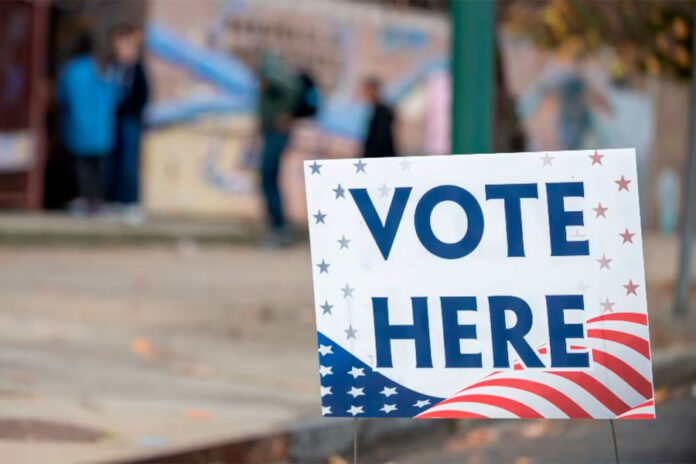
Get details on how to register to vote or how to update your voter status at vote.pa.gov
Harrisburg, PA – Secretary of the Commonwealth Al Schmidt reminded Pennsylvanians today that the Oct. 21 deadline to register to vote in the Nov. 5 general election is just one month away. Ensuring that our elections are conducted freely and fairly – and that every eligible voter can make their voice heard – are top priorities of the Shapiro Administration.
“Every eligible Pennsylvanian who is not yet registered to vote still has the chance to do so before the Oct. 21 deadline,” Schmidt said. “You can ensure your voice is able to be heard in the Nov. 5 general election by taking just a few minutes to register to vote on vote.pa.gov today.”
To be eligible to vote, an individual must be:
· A citizen of the United States for at least one month before the election,
· A resident of Pennsylvania and the election district in which the individual plans to register and vote for at least 30 days before the election, and
· At least 18 years old on the day of the election.
Pennsylvanians who are already registered to vote can check their registration status online and update their voter record with any changes to their name, address, or party affiliation.
Eligible voters will have the opportunity to cast a ballot for federal and state government positions this November. The department’s candidate database lists candidates running for the federal and state offices on the ballot.
In addition to registering online, eligible Pennsylvanians can register by mail or in person at the following locations:
· their county voter registration office,
· county assistance offices,
· Women, Infants & Children (WIC) program offices,
· Armed Forces recruitment centers,
· county clerk of orphans’ courts or marriage license offices,
· area agencies on aging,
· county mental health and intellectual disabilities offices,
· student disability services offices of the State System of Higher Education,
· special education offices in high schools,
· Americans with Disabilities Act-mandated complementary paratransit providers, and
· Department of Transportation (PennDOT) driver and photo license centers.
Last year, the Shapiro Administration launched automatic voter registration at all PennDOT driver and photo license centers, which provides eligible Pennsylvanians with a built-in way to apply to register to vote when they obtain a new driver’s license or ID card or renew their existing identification. The Shapiro Administration launched the automatic registration initiative last year as part of its continued commitment to ensuring free, fair, and secure elections.
Registered voters can also request a no-excuse mail-in or absentee ballot online. Mail-in or absentee ballot applications must be received by a voter’s county elections board by 5 p.m. Oct. 29. Completed mail ballots must be received by county election offices by 8 p.m. on Nov. 5. Completed mail ballots received after that time do not count, even if containing a postmark before the deadline.
Philadelphia Phillies' Bryce Harper celebrates after the Phillies won a baseball game against the Chicago Cubs to clinch the NL East title, Monday, Sept. 23, 2024, in Philadelphia. (Photo: AP/Matt Slocum)
PHILADELPHIA. — Kyle Schwarber and J.T. Realmuto homered, and Aaron Nola struck out seven to help the Philadelphia Phillies clinch their first NL East title since 2011 with a 6-2 win over the Chicago Cubs on Monday night.
Carlos Estévez retired Michael Busch on a flyball to end it, and the Phillies swarmed each other in excitement on the infield. The Phillie Phanatic stormed the celebration waving a 2024 flag as fans stood and filmed it all.
“I think a lot of guys were kind of looking around and seeing them get fired up and them get excited and being on their feet,” slugger Bryce Harper said. “Just really cool to see. Hopefully, we can do that a lot more.”
With a postseason berth already clinched last week, the Phillies won their 12th division championship — and have their sights set on the No. 1 seed and home-field advantage throughout the National League playoffs.
“We need to get the bye, that’s pretty important to us. Really important to us,” manager Rob Thomson said. “Whether you’re the division champion or not, I don’t think that gives you any type of advantage. I think having home-field advantage and having a bye is going to help us quite a bit.”
Philadelphia won five straight NL East titles from 2007-11, then went 10 years without making the playoffs. A wild-card entry each of the past two postseasons, the Phillies put together consecutive October runs that ended in heartbreak.
They lost the World Series to Houston in 2022 and blew series leads of 2-0 and 3-2 in dropping the NL Championship Series to Arizona last season.
This marks the third time the Phillies have reached the postseason three years in a row (1976-78 and 2007-11). Philadelphia’s only World Series championships came in 1980 and 2008.
“We’ve just got to play Philly baseball and continue to play,” Harper said.
Nola (13-8) allowed two runs in six-plus innings. He walked off to a standing ovation when he was pulled for Matt Strahm.
Since 2022, Nola has started seven games in which the Phillies could either clinch a postseason berth, clinch a postseason series or clinch a division title. He has posted a 1.62 ERA with 46 strikeouts against seven walks in those outings.
Realmuto hit a two-run shot in the second and Schwarber added a solo homer in the third for a 3-0 lead. Schwarber’s 37th of the season gave him 100 RBIs. Nick Castellanos also had an RBI single in the third.
Schwarber is the third Phillies player since 1920 with 100 runs, 100 RBIs and 100 walks in back-to-back seasons. Bobby Abreu (2004-05) and Hall of Famer Mike Schmidt (1976-77) are the others.
Cubs reliever Caleb Kilian (0-1) took the loss in a bullpen game.
TRAINER’S ROOM
Cubs: Claimed RHP Enoli Paredes off waivers from Milwaukee. Paredes, who turns 29 on Saturday, went 1-0 with a 1.74 ERA and one save in 17 relief appearances with the Brewers. He dealt with a right forearm issue earlier this season that caused him to spend more than two months on the injured list.
Phillies: OF Austin Hays could return ahead of Tuesday’s game after a stint on the injured list with a kidney infection. … RHP Spencer Turnbull pitched two innings Sunday in a rehab appearance with Triple-A Lehigh Valley.
UP NEXT
The Cubs send LHP Justin Steele (5-5, 3.03 ERA) to the mound. The Phillies had not announced a starter for Tuesday’s game.
Republican presidential nominee former President Donald Trump listens during a campaign event at a farm, Monday, Sept. 23, 2024, in Smithton, Pa. (Photo: AP/Alex Brandon)
SMITHTON, Pa. — Donald Trump sat in a large barn in rural Pennsylvania on Monday, asking questions of farmers and offering jokes but, in a rarity for his campaign events, mostly listening.
The bombastic former president was unusually restrained at an event about China’s influence on the U.S. economy, a roundtable during which farmers and manufacturers expressed concerns about losing their way of life. Behind Trump were large green tractors and a sign declaring “Protect our food from China.»
The event in Smithton, Pennsylvania, gave Trump a chance to drive his economic message against Vice President Kamala Harris, arguing that imposing tariffs and boosting energy production will lower costs. He highlighted Harris’ reversal of a previous vow to ban fracking, a method of producing natural gas key to Pennsylvania’s economy.
And he noted the tractors behind him were manufactured by John Deere, which announced in June it was moving skid steer and track loader manufacturing to Mexico and working to acquire land there for a new factory. Trump threatened the firm with a 200% tariff should he win back the presidency and it opted to export manufacturing to Mexico.
“If they want to build in the United States, there’s no tariff,” he added.
Republican presidential nominee former President Donald Trump speaks during a campaign rally at Ed Fry Arena in Indiana, Pa., Monday, Sept. 23, 2024. (Photo: AP/Rebecca Droke)
Trump opened the event with some of his usual themes. He declared that in 2020: «We had an election that didn’t exactly work out too good. And it was a disgrace.”
But he then did something unusual: He let others do most of the talking.
When one farmer said recent decades had seen scores of family farms shut down, Trump asked what that meant for overall production. The response was that, thanks to larger farms now operating, total production is actually up but «we are losing the small family farms.”
“I know that, yes,” Trump responded somberly. Later, he said, «I am not too worried about the people around this table” supporting him on Election Day, while jokingly adding, “But you never know.”
In response to another participant’s concerns about energy production, Trump said he didn’t know that farmers were so energy-dependent. Another farmer talked about Chinese-subsidized businesses, prompting Trump to respond, “That’s why we need tariffs.”
After the same farmer finished her comments by praising him profusely, he intoned: “Amen. I agree.”
Trump has embraced tariffs as he tries to appeal to working-class voters who oppose free-trade deals and the outsourcing of factories and jobs, and the event wasn’t all about showing a more personable side.
Republican presidential nominee former President Donald Trump speaks at a campaign event at a farm, Monday, Sept. 23, 2024, in Smithton, Pa, as from left, Richard Grenell, Lee Zeldin and Rep. Glenn Thompson, R-Pa., listen. (AP Photo/Alex Brandon)
Later, the former president took questions from reporters and got more customarily combative when asked whether he was concerned that tariffs on manufacturers like John Deere would increase costs for farmers. He said of Harris, “She is not going to be good for Pennsylvania.”
Stopping at a neighborhood market prior to an evening rally in Indiana, Pennsylvania, Trump bought a bag of popcorn and quipped that, if elected, he may send for more from the Oval Office. He also gave a woman paying for groceries a $100 bill, declaring that her total “just went down a hundred bucks.”
The change didn’t last long. At his evening rally, Trump reverted to form, using an abrasive message to energize mostly conservative, white, working-class voters.
“She’s a one-woman economic wrecking ball and if she gets four more years, her radical agenda will smash the economy into rubble and grind your financial situation right into the dust,” Trump said of Harris. He claimed, “She wants to take your guns away” even as the vice president has stressed being a gun owner herself.
«She’s coming for your money. She’s coming for your pensions, and she’s coming for your savings,» he said.
The former president urged supporters to “get out and vote” but scoffed at the idea of casting early ballots, suggesting without evidence that it allowed more time to commit fraud. Citing unknown sources, he declared, “They said, if we don’t win this election, there may never be another election in this country.”
Republican presidential nominee former President Donald Trump arrives to speak at a campaign event at a farm, Monday, Sept. 23, 2024, in Smithton, Pa. (Photo: AP /Alex Brandon)
At one point, the former president caught a glimpse of himself on the big screen and joked about a ”handsome man over there” before concluding, “Oh, it’s Trump.”
He also got especially candid with the rally audience saying, “I don’t like anybody that doesn’t like me, I’ll be honest,” before adding, “sounds childish” but “that’s the way it is … call it a personality defect.”
It was a starkly different tone from Trump’s first event in Smithton, which was hosted by the Protecting America Initiative, led by Richard Grenell, Trump’s former acting director of national intelligence, and former New York congressman Lee Zeldin.
Grenell told the small group of attendees there, “China is getting into our farmlands, and we have to be able to see China very clearly.”
At the end of 2022, China held nearly 250,000 acres of U.S. land, which is slightly less than 1% of foreign-held acres, according to the U.S. Department of Agriculture. By comparison, Canada was the largest foreign owner of U.S. land, accounting for 32%, or 14.2 million acres.
Still, the National Agricultural Law Center estimates that 24 states ban or limit foreigners without residency and foreign businesses or governments from owning private farmland. The issue emerged after a Chinese billionaire bought more than 130,000 acres near a U.S. Air Force base in Texas and another Chinese company sought to build a corn plant near an Air Force base in North Dakota.
Rex Murphy, from a nearby rural community who raises cattle and grows corn and hay, said farmers support Trump in this area, and said he wanted fewer taxes and “more freedom.”
Republican presidential nominee former President Donald Trump speaks at a campaign event at the Indiana University of Pennsylvania Ed Fry Arena, Monday, Sept. 23, 2024, in Indiana, Pa. (Photo: AP/Alex Brandon)
“I want him to do everything for the economy,” said Murphy, 48. “If he just becomes president, and he does what he does, he will do more.”
Harris is visiting Pennsylvania on Wednesday. Attending a New York fundraiser on Monday, Harris’ running mate, Minnesota Gov. Tim Walz, told a group of about 30 donors focused on climate change that Trump’s energy catchphrase of “drill, baby, drill” is “not a solution to things, and the public knows that it’s a cheap, easy thing.”
Walz, speaking at a midtown Manhattan hotel to an audience that included former presidential candidate Tom Steyer and Hollywood producer Jeffrey Katzenberg, called climate change an “existential threat” but also “an incredible opportunity to grow our economy.” He specifically cited farmers who use their land to generate wind energy in addition to growing crops.
Harris campaign spokesman Joseph Costello said that “despite all his lies and pandering, Donald Trump used the White House to give handouts to wealthy corporations and foreign companies.»
Costello said in a statement that those came «at the expense of family farmers, drive farm bankruptcies to record levels, and sacrifice small American farmers as pawns in his failed trade war with China.”
PHILADELPHIA. – The City of Philadelphia’s Department of Sanitation is excited to continue Mayor Cherelle L. Parker’s One Philly, United City Cleaning Initiative by launching its new Residential Bulk Collection Program. This program is designed to help residents dispose of large metal, household items not picked up during regular trash collection, such as refrigerators, air conditioners, and tires. On September 16, 2024, the program launched notifying block captains, community groups, and other residential stakeholders of its creation via direct mail and email.
“Phase One of the One Philly, United City Cleaning Initiative successfully cleaned over 18,000 residential blocks, and I’m extremely proud of the work our Office of Clean and Green Initiatives has facilitated,”said Mayor Cherelle L. Parker. “As we enter Phase Two, I want residents to know that we are addressing their concerns about ‘Filthadelphia’ at every turn, until Philadelphia is the Safest, Cleanest, Greenest big city in the nation, with Access to Economic Opportunity for All.
«This initiative helps discourage illegal dumping and offers residents a convenient solution for getting rid of bulk items without having to transport them to a Sanitation Convenience Center,” said Carlton Williams, Director of the Office of Clean and Green Initiatives. «Thank you to the Parker Administration for acknowledging this essential quality of life issue and allocating funds for this critical initiative.”
Philadelphia residents can schedule bulk item pickups for up to four (4) items per appointment. The service is available to single-family homes and multi-family dwellings with up to six units. Larger apartment buildings, condominiums, and commercial properties are not eligible for the program and must use private haulers. Residents can schedule appointments through the Department of Sanitation’s website or by contacting 311. Appointments are limited and will be scheduled on a first-come, first-serve basis.
The Department of Sanitation understands some residents cannot use personal vehicles or do not have access to vehicles that are viable options for transporting large bulk items. “Sanitation is excited to provide this much-needed service to residents,” said Crystal Jacobs-Shipman, Commissioner of the Department of Sanitation. “This free service assists residents with inoperable bulk items in their homes and limited storage space. They can rely on the Department of Sanitation to pick up their bulk item from their regular trash collection site and properly dispose of them. We are eager to see how this program will positively impact Philadelphia’s residents.”
Items Eligible for Collection
Refrigerators (empty with doors removed)
Other major appliances (e.g., air conditioners, water heaters, microwaves)
Household trash and mattresses (wrapped in plastic)
Hazardous, flammable, or explosive materials
Auto parts
Construction or demolition debris
How It Works
Schedule Your Appointment If eligible, schedule your bulk collection appointment online. Appointments are limited and first-come, first-serve.
Check Your Email After scheduling, you’ll receive an email with:
Pickup Code: Mark items for pick-up with this 4-letter code.
Service Request Number: Use this for any follow-up communication.
Set Out Your Items
Place items at your normal collection point (curbside or rear driveway) the evening before your pickup date (no earlier than 5:00 p.m. during Fall and Winter and 7:00 p.m. in Spring and Summer).
Ensure items are curbside by 7:00 a.m. on pickup day.
Label items with your Pickup Code using a marker or sheet of paper and tape.
Important Notes
The city will not enter homes to collect items.
Residents are responsible for ensuring items are placed in accessible locations on time.
The city is not liable for items taken before pickup.
Should the Department of Sanitation need to reschedule your pickup due to inclement weather or other unforeseen incidents, you will be contacted by telephone.
Sanitation will not collect items that are not included in the Bulk Collection program.
The Bulk Collection service is separate from regularly scheduled trash collection. The Department of Sanitation will continue to collect up to two (2) large items (non-metal) per household on regularly scheduled trash collection days, including mattresses wrapped in plastic and other compactable furniture.
Residents may still also bring bulk items made of metal, such as appliances or items containing refrigerants to the City’s six Sanitation Convenience Centers. (Limited to two per day.)
Fotografía de archivo de decenas de vehículos en la garita de San Ysidro, en la frontera hacia Estados Unidos, en Tijuana, en Baja California (México). EFE/Joebeth Terriquez
San Ysidro (CA).- Largas filas, aglomeraciones, y caos ha causado la implementación de una tarifa de ingreso a México para extranjeros en el puerto más ocupado en la frontera con California, lo que ha provocado protestas incluso de los mismos mexicanos que usan este paso.
Desde este fin de semana las autoridades mexicanas de migración comenzaron a cobrar a extranjeros una tarifa equivalente a unos 37,75 dólares por permitirles cruzar por la garita de San Ysidro hacia México.
Guadalupe Espinoza, una joven mexicoestadounidense que se dirigía a una fiesta de cumpleaños a la ciudad fronteriza de Tijuana (México) dijo a EFE que cruza la frontera con cierta regularidad, pero esta vez se encontró con una «situación caótica».
“Iba a pasar como siempre lo hago pero esta vez me pidieron documento para demostrar que soy mexicana, y soy, soy mexicana y estadounidense, pero no traigo ningún documento mexicano porque pensé que no lo necesitaba”, contó Espinoza.
Las autoridades enviaron a la joven al final de una larga fila en la que tardó unas dos horas para volver a estar el frente, y una vez ahí “comenzaron a preguntarme que dónde vivía y a qué iba a Tijuana”. Para evitar más retrasos para llegar al cumpleaños, decidió pagar más de 717 pesos mexicanos (37, 75 dólares).
Un oficial del Instituto Nacional de Migración (INM) dijo a EFE que el cobro de Permiso de ingreso a México para extranjeros que viajan al país sin fines de lucro o con motivo de turismo ha estado vigente “desde hace muchos años, solo que no lo habíamos aplicado”.
En las largas filas separadas para mexicanos y extranjeros que provocó la medida se presentaron varias quejas. Un usuario dijo a EFE que si “hubieran avisado antes» del cobro habría optado por utilizar el cruce fronterizo de Otay, otra garita que une al condado de San Diego con Tijuana, diez kilómetros al este de San Ysidro, donde el INM aún no ha impuesto el cobro.
Los usuarios también cuestionaron que “los turistas cruzan en carro, y a ellos no les están cobrando; en cambio a nosotros que somos la mayoría trabajadores, nos retrasan y nos cobran», según dijo a EFE una persona que tuvo que pagar el cobro.
El oficial del INM dijo que en la garita siempre han estado a la vista indicaciones de ingreso para connacionales o mexicanos y para extranjeros, “lo que pasa es que se habían acostumbrado a que no realizáramos (estos cobros) más que a unos cuantos extranjeros, pero no siempre va a ser así”
El paso de San Ysidro, el más ocupado de California y de la frontera sur de EE. UU., ha enfrentado críticas de los usuarios por cierres en el pasado, debido al procesamiento de migrantes y solicitantes de asilo.
Governor Shapiro visited Tioga County on September 4, as the Shapiro Administration continues to lead a multi-agency response to the devastation caused by the remnants of Tropical Storm Debby
Thedeadline foreligible Pennsylvaniansto apply for DUA benefits is November 12, 2024.
Harrisburg, PA – Pennsylvania Department of Labor & Industry (L&I) Secretary Nancy A. Walker announced today that Pennsylvanians living or working in Lycoming, Potter, Tioga, and Union counties who were directly impacted by Tropical Storm Debby may now apply for temporary Disaster Unemployment Assistance (DUA). The deadline to apply for DUA benefits is November 12, 2024.
In response to the August disaster, GovernorJoshShapiro quickly issued a Commonwealth proclamation of disaster emergency for 21 counties on August 9, 2024, and amended it to 28 counties on August 20, 2024, to provide immediate response and recovery assistance to affected Pennsylvanians. The Governor’s disaster declaration allowed the Commonwealth to quickly draw down funding and to provide state agencies with the resources needed to assist counties and municipalities with ongoing recovery efforts.
On September 4th, GovernorShapiro and PEMA Director Randy Padfield visited Westfield, Tioga County to meet with Pennsylvanians impacted by catastrophic flooding from the remnants of Tropical Storm Debby. Governor Shapiro visited with impacted residents on Potter Brook Road; stopped by a local business currently closed due to flooding; and met with firefighters and first responders at Crary Hose Company. The Governor was joined by Rep. Clint Owlett and Tioga County Commissioners Shane Nickerson, Sam Vanloon, and Marc Rice.
Most recently, the Commonwealth of Pennsylvania received a federal major disaster declaration on September 11, 2024, which includes DUA benefits for those affected by Tropical Storm Debby in the counties of Lycoming, Potter, Tioga, and Union. The incident period for the storm spans August 9–10, 2024.
“Disaster Unemployment Assistance is a temporary program for Pennsylvanians who were unable to work due to the damage caused by Tropical Storm Debby,” said Secretary Walker. “Individuals who meet the eligibility requirements must submit their applications by November 12, 2024. I urge Pennsylvanians who live in, work in, or travel through these four affected counties and whose employment has been directly impacted by the storm to apply for these benefits as soon as possible.”
DUA Eligibility
Pennsylvanians eligible to apply for DUA assistance must live or work in one of the following counties: Lycoming, Potter, Tioga, or Union. All claims will be verified with the affected employer.
The temporary DUA benefits are only available for individuals, including those who are self-employed and those who are unemployed as a direct result of damages caused by Tropical Storm Debby.
Individuals eligible for DUA benefits are those who work or live in one of the federally declared counties and lost their jobs directly due to the disaster. Those eligible may also include:
Individuals unable to reach their job because they must travel through the affected area and are unable to do so because of the disaster;
Individuals who were to begin employment but were prevented doing so by the disaster;
Individuals who became the major support for a household because of the death of the head of the household as a result of the disaster; or
Individuals who cannot work because of an injury caused as a direct result of the disaster.
Unemployment is a “direct result” of this storm if the unemployment resulted from: (1) the physical damage or destruction of the place of employment; (2) the physical inaccessibility of the place of employment due to its closure by the federal, state, or local government in immediate response to the disaster; or (3) lack of work, or loss of revenues, if, prior to the disaster, the employer or self-employed business received at least a majority of its revenue or income from an entity in the major disaster area that was damaged or destroyed in the disaster or an entity in the major disaster area closed by the federal, state, or local government.”
Applying for DUA
Pennsylvanians whose employment is impacted for the reasons listed above under “DUA Eligibility” should file a claim online at www.uc.pa.gov.
Before an individual can be deemed eligible for DUA, L&I must first establish that the individual is not eligible for regular Unemployment Compensation (UC) benefits under any state or federal law.
Please note that DUA claims filed after the deadline may not be eligible for payment, except in certain circumstances.
The Disaster Unemployment Assistance program is part of the federal disaster assistance process but is administered by L&I.
Pennsylvanians experiencing job loss due to the remnants of Tropical Storm Debby or otherwise can always contact L&I directly for assistance through the Department’s UC helpline (888-313-7284), by email (UCHelp@pa.gov) or the live chat.
For more information on the Pennsylvania Department of Labor & Industry, please visit the website or follow L&I on Facebook, X, and LinkedIn.
26 Blocks Competing to be Philadelphia’s Cleanest Block
Philadelphia. – Judging for the 2024 Philadelphia More Beautiful Committee (PMBC) Annual Clean Block Contest continues over the next two Saturdays: September 28 and October 5 announced, Sanitation Commissioner Crystal Jacobs-Shipman. Judges will inspect a total of 26 contest blocks.
The annual Clean Block contest is the culmination of the cleaning season that involves a lot of hard work and dedication on behalf of the volunteer block captains and their neighbors who make up the PMBC network. The blocks were selected from approximately 6,600 organized blocks registered with PMBC’s block captain program. Each year, judges from areas across the city visit each contest block and evaluate each based on organization, cleanliness, improvements and participation.
Judging on each Saturday begins in the first block at approximately 9:15 a.m. Below is a list of the 2024 contest blocks and judging times organized by date:
September 28 9:15 a.m. – 1000 Wakeling St.
10:45 a.m. – 200 S Millick St.
12:30 p.m. – 100 N Ruby St.
2:00 p.m. – 1600 N. 8th St.
10:00 a.m. – 1500 S. Taylor St.
11:30 a.m. – 6400 Dicks Ave.
1:15 p.m. – 6300 Reedland St.
October 5
9:15 a.m. – Unit N. Robinson St.
10:45 a.m. – 2200 N Mascher St.
12:30 p.m. – 1400 S. 22nd St.
10:00 a.m. – 3300 D St.
11:30 a.m. – 718 E. Cornwall St.
01:30 p.m. – 2300 Diamond St.
PMBC closed this year’s cleaning season with the following statistics:
9,207 blocks cleaned 25,877 PMBC volunteers 26,367 bags collected 970,880 million pounds of debris removed
PMBC, a division of the Sanitation Department, is an urban environmental partnership. The program promotes civic pride, public safety and neighborhood empowerment among block captains, community group leaders and their units. Residents who wish to become a part of this unique Philadelphia experience can contact PMBC at (215) 685-3981 or visit Philadelphia More Beautiful Committee | Programs and initiatives | City of Philadelphia.
Photos of 43 students who have been missing for 10 years cover the stairs at their former Raúl Isidro Burgos Rural Normal School in Ayotzinapa, Guerrero state, Mexico, Saturday, Aug. 24, 2024. (AP Photo/Felix Marquez)
MEXICO CITY— All countries have crimes that resonate. In Mexico, one of the modern day ones is the disappearance of 43 students from a rural teacher’s college in 2014.
Ten years later, it’s still not clear where the students from the Rural Normal School at Ayotzinapa are. Authorities believe they were killed, but have only turned up small bone fragments from three of them.
The families, with the support of the school known for its radical activism, continue to demand justice. They maintain a lack of political will is responsible for not finding the truth. If it was a “state crime” as the current administration says, the government must know what happened and who is hiding information.
Why is the case still alive?
In a country with more than 115,000 registered disappearances, this case continues to hold the public’s attention because it combined cartel violence and corrupt authorities and remains stubbornly unresolved.
It’s considered an emblematic case and another example of abuses that occurred decades ago in Mexico’s dirty war and were never corrected.
What happened on Sept. 26?
The students were attacked by security forces linked to a local drug gang, Guerreros Unidos, in Iguala, when the students were stealing buses to transport themselves to a protest.
During the administration of Enrique Peña Nieto (2012-2018), authorities said the students had gone to Iguala, Guerrero to protest at an event — the mayor, now jailed, was linked to local gang Guerreros Unidos. They were allegedly mistaken for members of a rival gang.
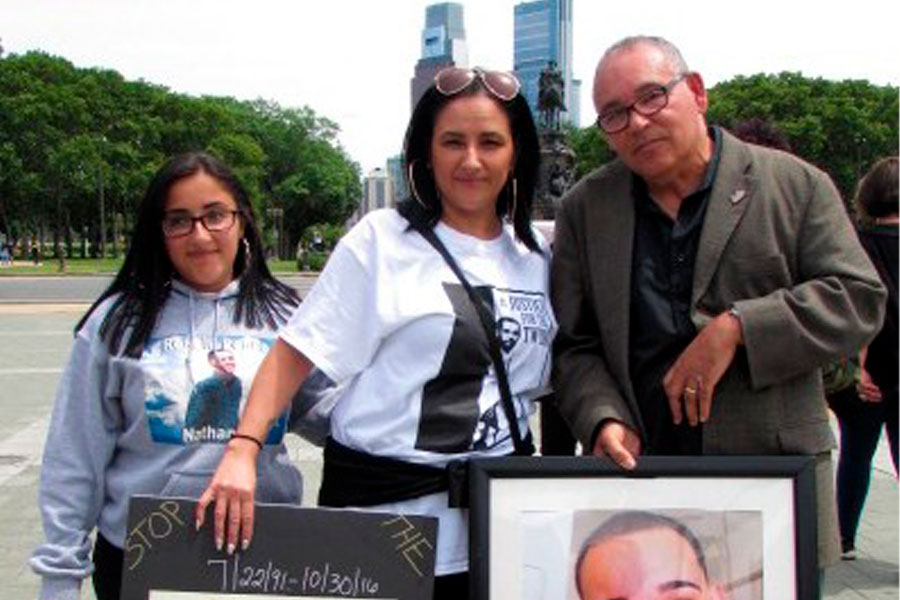
The Peña Nieto administration said that Guerreros Unidos had abducted and killed the students, burned their bodies in a huge fire and tossed their ashes into a river.
But investigations by the Inter-American Commission on Human Rights, the successor Attorney General’s Office and a Truth Commission created in 2019, found that the fire at a dump was a lie built on false statements extracted under torture and manipulated evidence.
Those subsequent investigations found that an enormous operation was put in motion that night involving members of Guerreros Unidos, but also local, state and federal police. And the army was aware of everything that was happening because it had a base in Iguala, soldiers in the streets and spies among the students.
Investigators said members of the army were involved with the gang in smuggling heroin from the mountains of Guerrero on buses to the United States. Prosecutors said the decision to hide the truth was taken at the highest levels of government.
Has anyone been held accountable?
There are more than 100 people in custody and dozens have been charged, but no one has been convicted.
At the end of the previous administration, Mexican courts determined that the investigation was plagued by errors and manipulation. There were dozens of cases of torture.
Those abuses and missteps led to many of those involved being released. Some have been arrested again under the current administration.
The highest-ranking person charged is former Attorney General Jesús Murillo Karam, who is accused of torture, forced disappearance and obstruction of justice. There are also 16 soldiers, most of whom are awaiting trial on house arrest, which infuriates the students’ families.
When did attitudes shift on the current administration?
López Obrador had promised to find the students and hold those responsible accountable. But in 2022, when more and more evidence pointed toward the military’s involvement in the attack and cover-up the administration’s tone changed.
The president had ordered the military to open its archives to investigators. That didn’t happen. Instead, López Obrador shifted more power and responsibility to the military than any president in recent history.
The prosecutor leading the investigation, Omar García Trejo, was suddenly demoted after he sought arrest orders for two dozen soldiers. He was replaced by someone unfamiliar with the case.
There was also growing political pressure to show results, said Santiago Aguirre, one of the families’ lawyers. The administration presented some evidence that did not appear to come from reliable sources and the government’s searches turned slipshod.
Where do the families want the investigation to go?
Their lawyers point out key arrests are still lacking, among them the man who led the investigation during the Peña Nieto administration, Tomás Zerón. In videos, Zerón is seen interrogating and threatening prisoners. He sought refuge in Israel, which has not agreed to extradite him despite Mexico’s request.
They also say they want to see military intelligence records from that night that they still haven’t had access to. They want too more cooperation from the United States government, which has prosecuted members of Guerreros Unidos in drug trafficking cases that also revealed their ties to the military.
Un dentista sostiene un modelo dental y un cepillo de dientes en Seattle, el 3 de agosto de 2018. (Foto: AP/Elaine Thompson/Archivo)
Los sofocos y sudoraciones nocturnas se encuentran entre los síntomas más infames de la menopausia. Pero es posible que también desee prestar atención a sus dientes y encías.
“No estoy seguro de que la gente esté al tanto de esto”, dijo el doctor Thomas Sollecito, jefe de medicina oral de la Universidad de Pensilvania.
Los cambios hormonales, principalmente una caída brusca del estrógeno, pueden reducir la densidad ósea y la producción de saliva, y dañar las encías. Todo eso puede afectar a sus dientes.
Los expertos en cuidado bucal dicen que hay formas de contrarrestar estos efectos y mantener saludable la boca de las personas que están transitando la menopausia.
Menopausia, perimenopausia y síntomas dentales
La menopausia ocurre cuando una mujer pasa 12 meses consecutivos sin menstruar. Pero algunos de los problemas dentales relacionados con las hormonas podrían comenzar antes, durante la perimenopausia, cuando los ovarios producen gradualmente menos estrógeno, de acuerdo con la Maiara Hister-Cockrell, dentista de la universidad UT Health San Antonio, en Texas.
Una de las mayores preocupaciones es la menor cantidad de saliva, “uno de los fluidos más importantes de nuestro cuerpo”, dijo Sollecito.
Cuando el flujo de saliva se vuelve lento, puede causar sequedad en la boca, lo que conlleva un mayor riesgo de dolor bucal, infecciones orales y caries. Esos riesgos son incluso más altos cuando las personas toman medicamentos para la hipertensión o la diabetes, que también pueden provocar sequedad en la boca, dijo Hister-Cockrell.
Menos saliva también significa menos enzimas que maten las bacterias y minerales que fortalecen los dientes, explicó la doctora Sally Cram, periodoncista en Washington, D.C.
Cuando la boca está seca, dijo, “esas bacterias proliferan y uno es más propenso a tener caries”. Y si la caries se agrava, es posible que se pierdan los dientes.
La disminución de la densidad ósea y la retracción de las encías exacerban estos problemas. Si el alvéolo que sostiene el diente es menos denso, explicó Sollecito, es más vulnerable a la pérdida ósea. Y la recesión de las encías puede dejar algunas superficies dentales sin el esmalte que las protege de las caries.
Las mujeres en esta fase de la vida también son más propensas a desarrollar enfermedad periodontal, cuando la placa y las bacterias se acumulan debajo de las encías y alrededor de los dientes.
“El tejido de las encías comienza a enrojecerse e hincharse”, dijo Cram, vocero de la Asociación Dental Estadounidense. “Sangra y comienza a separarse de los dientes, creando grietas más profundas alrededor de los dientes que son más difíciles de mantener limpias”.
Algunas personas experimentan el “síndrome de boca ardiente”. Hister-Cockrell dijo que una sensación de ardor puede extenderse a la lengua, el paladar y los labios.
“Como bien se pueden imaginar”, agregó Sollecito, “todo esto realmente podría salirse de control”.
¿Qué se puede hacer?
La primera línea de defensa, según los expertos, es higiene bucal y nutrición adecuadas. Comer una dieta equilibrada baja en dulces y alta en alimentos ricos en calcio. Cepillarse cuidadosamente con pasta dental con flúor al menos dos veces al día y usar hilo dental regularmente.
“Un cepillo de dientes eléctrico puede ser más útil que el cepillado de dientes manual”, dijo Cram, quien recomienda visitar al dentista y preguntarle la forma correcta de mantener una buena higiene bucal.
Los pacientes también deben preguntar a sus dentistas si les recomiendan visitarlos más de dos veces al año, así como considerar tratamientos con flúor en el consultorio para fortalecer la superficie de los dientes y pasta dental recetada con alto contenido de flúor.
En casa, los expertos recomiendan mantenerse hidratado.
“Probablemente, ninguno de nosotros bebe suficiente agua durante el día”, dijo Cram.
Las personas también pueden usar aerosoles, pastillas o enjuagues bucales secos de venta libre. En los casos graves, Sollecito dijo que pueden preguntar a su dentista sobre los medicamentos recetados que aumentan la cantidad de saliva en la boca, pero que tienen efectos secundarios. También hay medicamentos recetados para el síndrome de boca ardiente.
“La conclusión”, agrega Cram, “es que la mayoría de las afecciones y problemas bucales durante la menopausia son totalmente prevenibles” prestando atención, cuidando bien los dientes en casa y visitando al dentista con regularidad.