

“These archaeological artifacts are coming home after spending more than fifty years in the United States,” said Mexico’s Consul in Philadelphia, Carlos Obrador, on the morning of November 16, shortly before signing the transfer and receipt agreement for 156 artifacts that had been held at Pennsylvania State University.
These archaeological objects (fragments of plates, vessels, containers, censers, braziers, and sculptures) belonged to the university’s collections and originated from the Teotihuacán Valley Project, conducted in the 1960s by the late Dr. William Sanders (1926–2008).
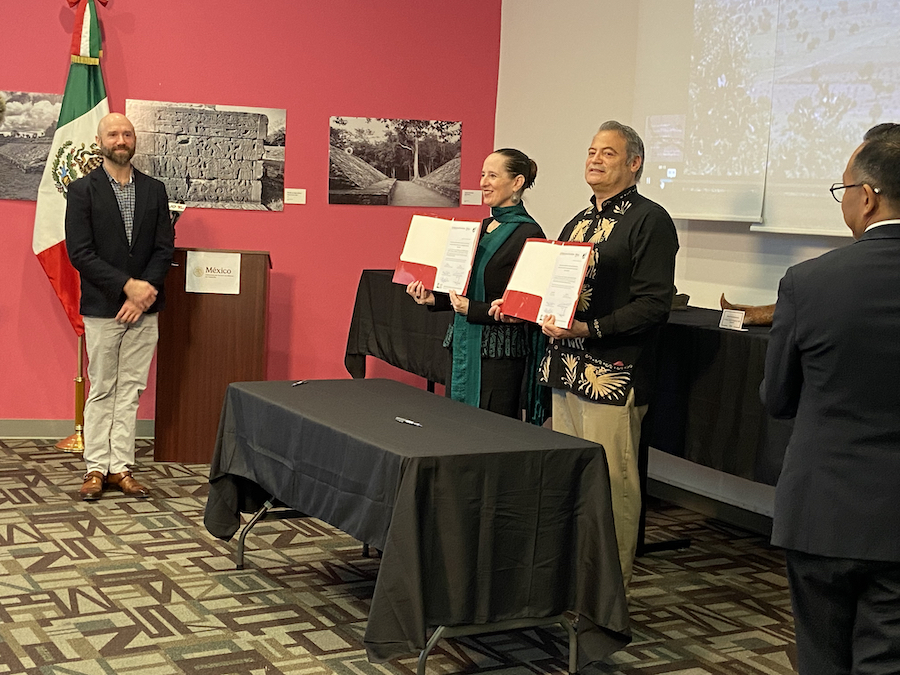
During the event, Consul Obrador commented that the collaboration between the consulate he heads and Penn State University’s Department of Anthropology had made the return of these archaeological objects possible.
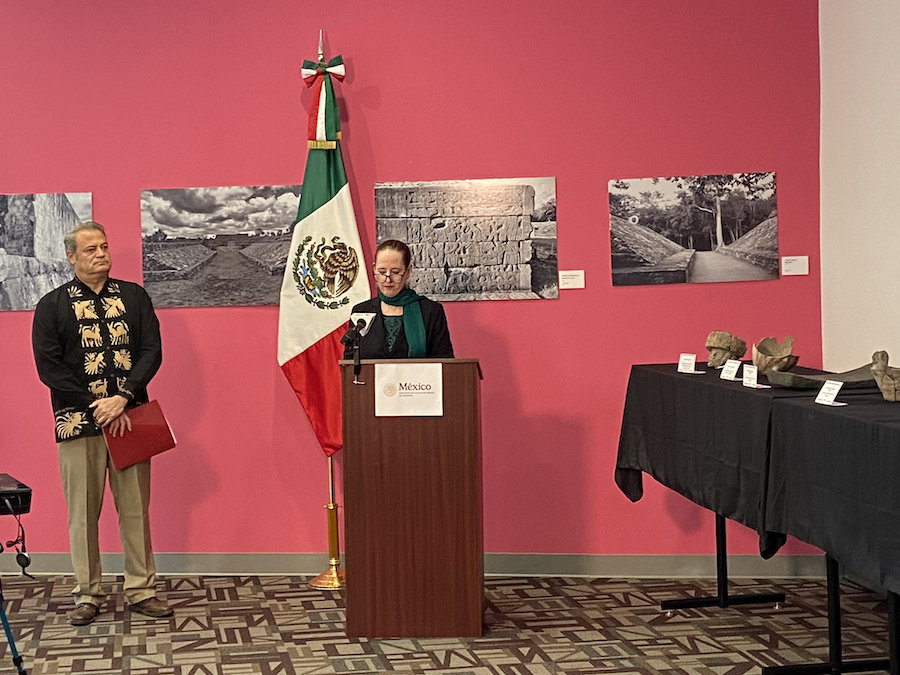
Dr. Mary K. Shenk, professor and head of Penn State University’s Department of Anthropology, was responsible for signing the transfer document on behalf of the university.
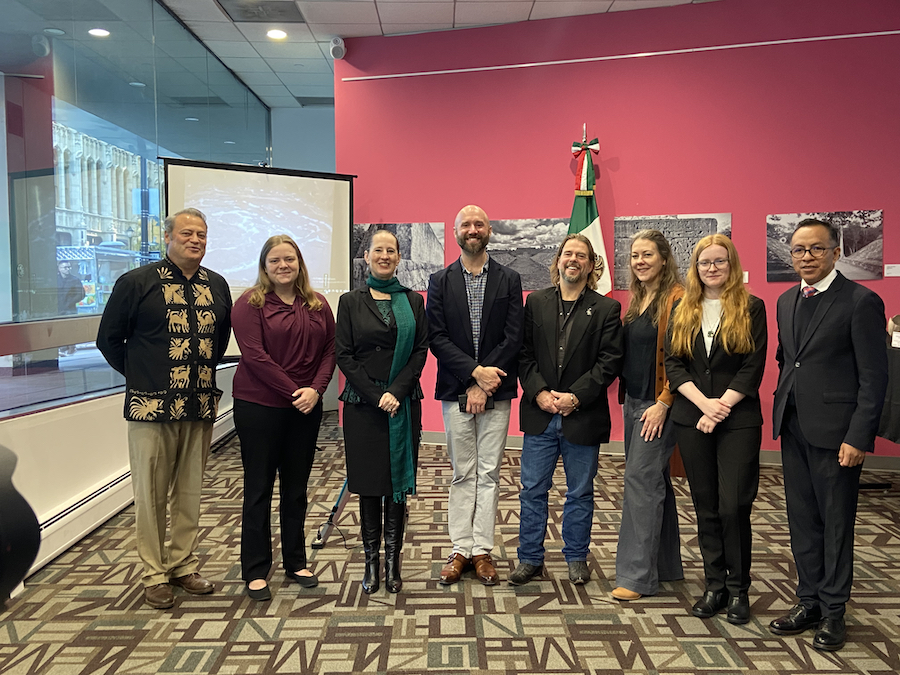
“The irreplaceable collections from the Teotihuacán Valley Project have been essential to archaeological research and education for decades, and they will continue to be so for future generations of students in Mexico who are investigating why and how the city of Teotihuacán developed.”
Teotihuacán, named by the Mexica people as “the place where the gods were born,” was declared a UNESCO World Heritage Site in 1987. It is one of the largest and best-planned pre-Columbian cities. Located northeast of Mexico City, its influence extended from northern Mexico to Guatemala and Honduras. The site is home to the Pyramids of the Sun and the Moon, the Temple of Quetzalcoatl, and the Avenue of the Dead.
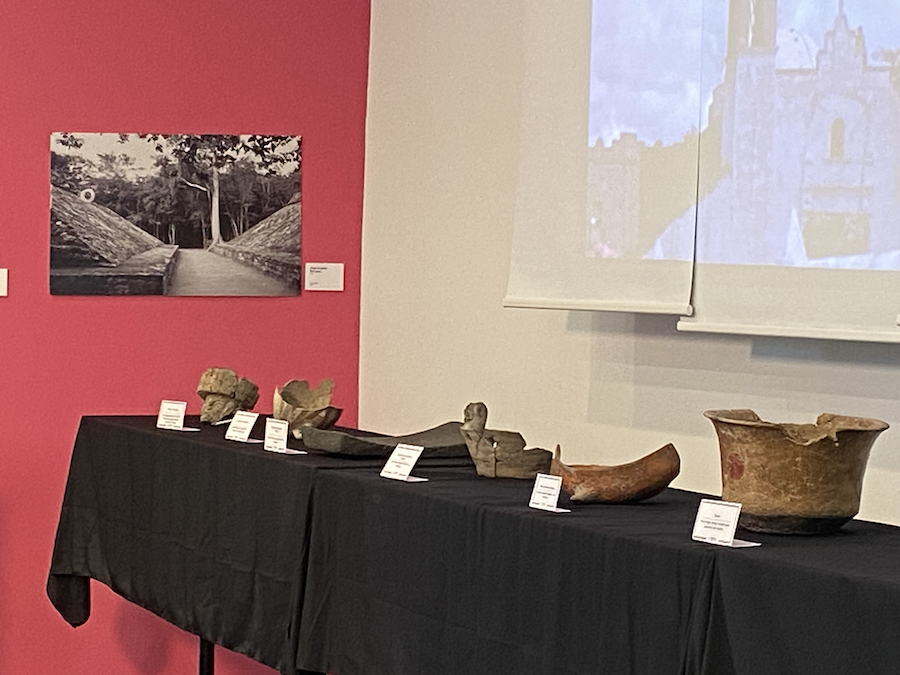
The event also included a screening of the documentary “Tierra y agua: una nueva mirada” (Land and Water: A New Perspective), which explores the Teotihuacán Valley Project from a perspective highlighting environmental changes associated with human development and climate change.
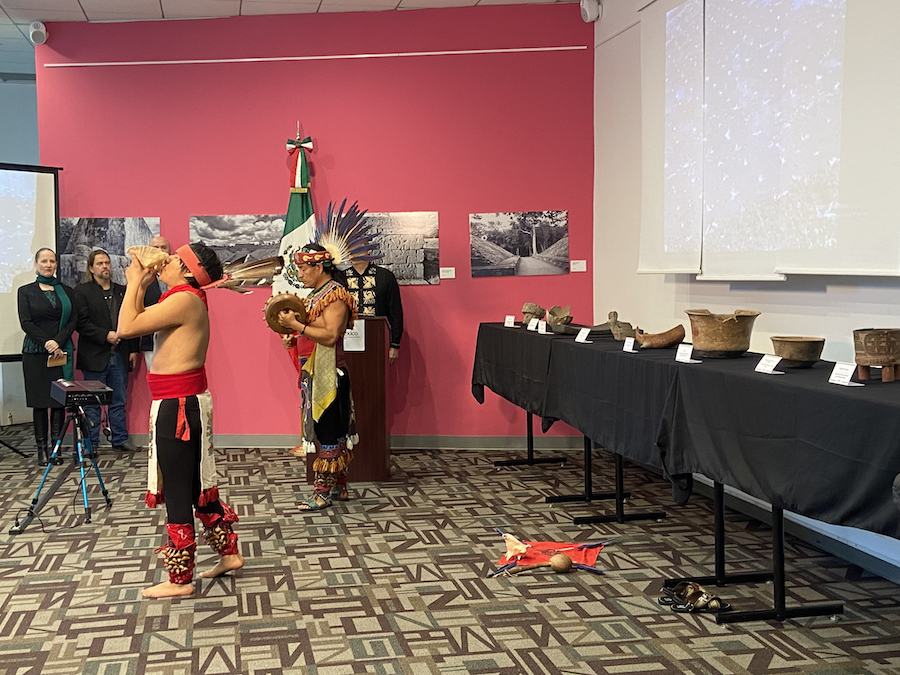
In the presence of the consulate and university delegations, members of the public, and a selection of the returned artifacts, members of Cenzontle Cuicatl performed a ceremony of gratitude known as the Ceremony of the Corn.
This repatriation of archaeological artifacts is part of the efforts to recover Mexico’s cultural heritage carried out by the National Institute of Anthropology and History (INAH) and the Ministry of Foreign Affairs, both agencies of the Mexican government, with the support of Mexican embassies and consulates around the world.