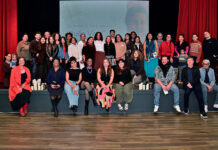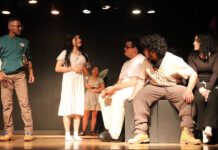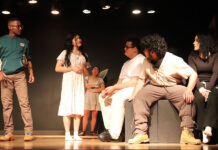


The Second Feminist Poetry Festival “Julia Vive,” organized by Madre Tierra on November 13 at Taller Puertorriqueño, once again fulfilled the goals of its creator, Arianne Bracho Hernández: “to open a space where poetry could engage with women’s stories, our bodies, our struggles, our migrations, and our resistance.”
Her idea found its identity when she attended the premiere of the documentary “Julia Vive,” directed by Álvaro Calderón, at the Philadelphia Latino Arts & Film Festival, alongside Marángeli Mejías Rabel, at Taller Puertorriqueño.
Although she was already familiar with the work and life story of Julia de Burgos, the documentary allowed her to connect with the poet more deeply. There, she understood that the festival could engage with her legacy and create space for new voices. “That is why I called it Julia Vive: because Julia lives every time a woman dares to write what she thinks, what she feels, and what we were told for so long that we should keep silent; we want women with voices, with words, with memory, and with every right to tell their own stories,” Arianne explained.
Julia Constancia Burgos García (1914–1953) was one of the most important poets, writers, and activists in the history of Puerto Rico and Hispanic American literature. Her poetry explored identity, love, metaphysics, the condition of women, social justice, and opposition to colonialism.
Since the first edition, held in November of last year, Arianne has worked on the festival’s conceptualization, the call for submissions, the selection of proposals, program development, and partnerships. Her intention has been to create an experience where different generations, countries, territories, and approaches to poetry could come together, while maintaining Madre Tierra’s identity as a feminist, community-based, diverse space open to voices that often find no place in traditional cultural circles.
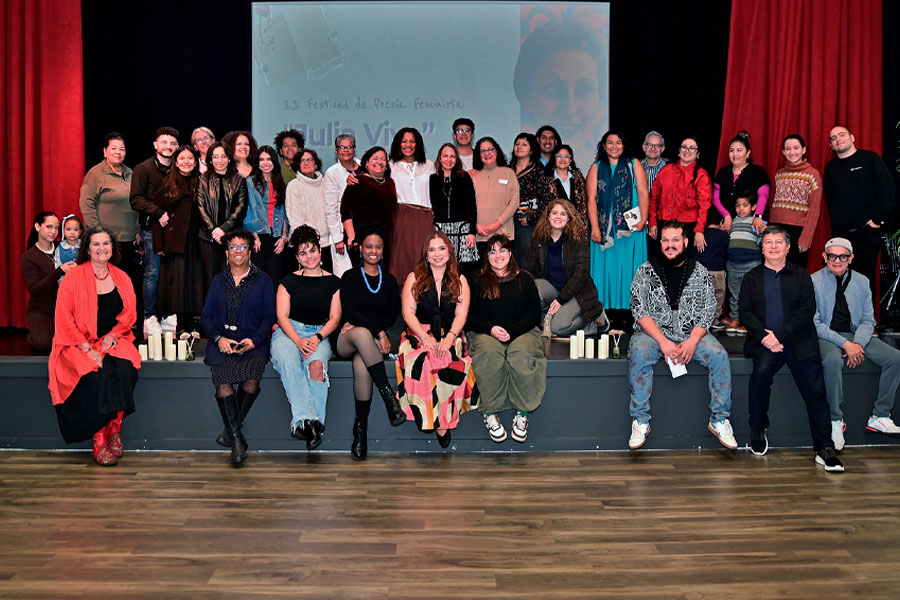
For this second edition, she was responsible for much of the preliminary organization, including the call for submissions, the evaluation and selection of poets, the program structure, institutional partnerships, communications, and coordination of international participants.
In addition, it was an opportunity to share leadership while she was away from Philadelphia. For Arianne, this teamwork is part of “Julia Vive’s” growth as an organizational project, with more people able to ensure its continuity and help it grow.
Paola Andrea Vélez Quigley served as coordinator and producer of this second in-person edition. “My job was to turn that concept and planning into an in-person experience, in communication with Arianne and alongside the team. I coordinated the setup, technical aspects, program schedule, reception of participants and audience members, screening of international videos, and audiovisual documentation. I also made decisions and addressed needs that arose during the setup and throughout the festival.”
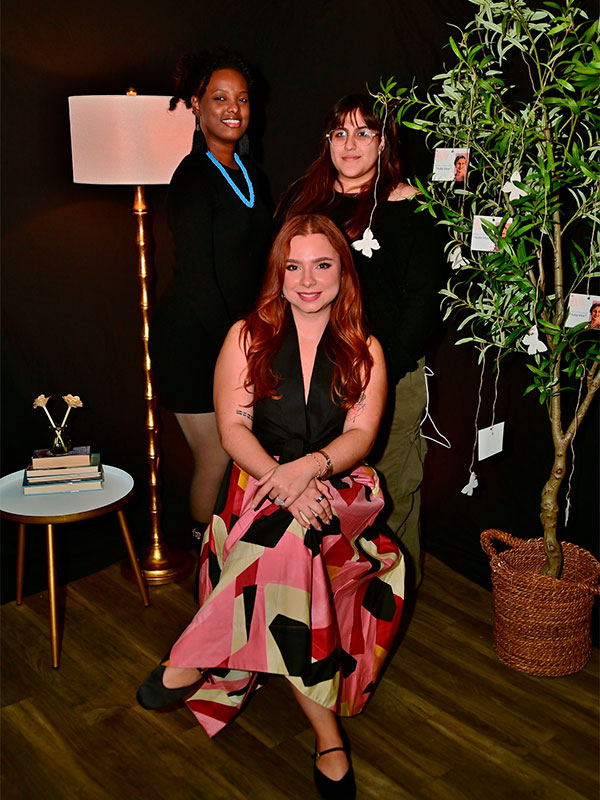
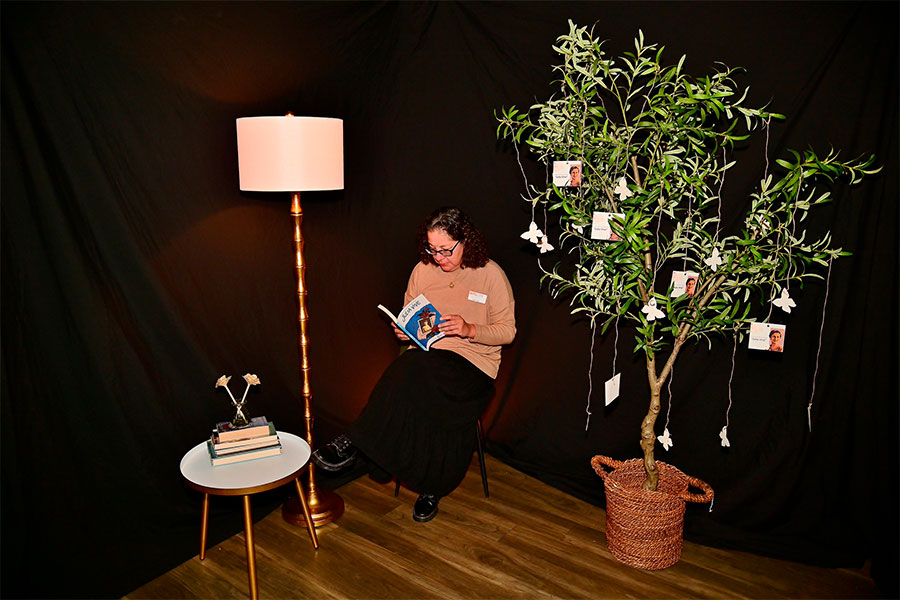
An especially important part of her work was the artistic production of the space. “In this edition, we wanted to create a sensory experience that expressed what the Madre Tierra Integral Women’s Center represents: supporting the community and using art as a form of expression and connection.”
The team carefully considered the atmosphere, lighting, and layout of the space to create an intimate and welcoming environment where people would feel embraced and where a word, an image, or a voice could touch something deep within them. Poetry could also be felt in the body.
Regarding the festival’s content, 21 voices were featured among participants and special mentions, combining in-person readings with audiovisual presentations. Poets came from Philadelphia and other U.S. cities, as well as Puerto Rico, Cuba, El Salvador, Chile, Colombia, Mexico, Venezuela, and other territories.
The poems addressed topics such as migration, the body, violence, motherhood, memory, identity, territory, sexuality, resistance, and freedom.
The first “Julia Vive Anthology,” featuring poems by participants from the inaugural edition, was also officially presented. There were two special mentions: Kurdish poet Yildiz Çakar, based in Berlin, whose participation was presented in Kurdish with Spanish subtitles, and Juan el-Ibrahim, with a visual and experimental poetry proposal.
“We incorporated interpretation with a linguistic justice approach and closed with Colombian-American soprano Valentina Sierra, who performed two pieces by Mexican composer María Grever.”
Regarding the anthology, the first edition has already been published and was presented on November 13 during this second festival. The intention is to develop a new publication featuring the voices selected in this edition and present it at the third gathering. The next step is to evaluate, organize, and plan that process,” the producer emphasized.
For Arianne, the anthology is a way to preserve the memories of those who take part in Julia Vive.
She explains that the main difference between the two editions is that the first marked the birth of an idea and an opportunity to learn how the community would respond. By the second edition, the festival had a clearer identity, greater international participation, a more defined curatorial approach, and broader integration of in-person readings and videos.
Audiovisual production and attention to the space were also strengthened, and other languages, visual poetry, and music were incorporated. One particularly meaningful achievement was being able to hold the first anthology in their hands: the voices that came together in the first edition are now also part of a printed record.
Regarding the benefits for the poets, she highlighted the opportunity to share their work in a space where each woman had her own moment, introduction, and the audience’s attention. They were also able to meet other voices and take part in an exchange among different countries and experiences.
For those who attended, it was an opportunity to recognize themselves in some stories and learn about realities different from their own. Language interpretation, videos, the anthology presentation, and the musical closing offered different ways to connect with what was taking place.
“Something that especially moved me was hearing attendees say they could feel Julia’s essence in the space, that the experience could be felt on their skin, in every fiber of their bodies, and that it had been magnificent. Hearing those words was very meaningful to me because they connected with what we had sought to achieve through the artistic production.”
Lixandra Díaz Portuondo was responsible for the press release and event communications and served as the festival’s host. She agreed with Paola that this year “an immersive experience was provided, incorporating an audiovisual projection” for all attendees.
One of the greatest values of this edition was creating that gathering space, where poets could express themselves and the audience could listen, feel moved, and experience a sense of community.