

Trumpism, or MAGA politics, is more than a partisan affiliation. It has also become a style of exercising power. It reveals itself in the disparagement and personal attacks directed at those who question authority, the transformation of political opponents into enemies, the imposition of decisions through an autocratic exercise of power, the dismantling of diversity, equity, and inclusion initiatives, and the replacement of dialogue with strategies of surveillance and control.
I am not claiming that the members of the Norristown Area School Board belong to the MAGA movement. My argument is different: several practices of the current Board reproduce a political ethos that Trumpism has helped normalize in the United States.
Authoritarianism does not belong exclusively to one political party. It can reproduce itself even among those who identify as Democrats, particularly when winning an election begins to be interpreted as authorization to govern without listening to those who disagree.
This question deserves particular attention in Norristown.
During the 2025-2026 school year, 52.6 percent of students in the Norristown Area School District are Hispanic, representing 3,871 of the district’s 7,363 students, according to the Pennsylvania Department of Education. Yet there is currently no Hispanic representation on the School Board. The concern is not simply demographic representation. It is whether the experiences of families, the challenges facing the community, its cultural richness, its languages, and its knowledge are meaningfully present when decisions affecting our children are made.
Since the arrival of the current Board, we have witnessed rapid changes, controversial decisions surrounding the superintendency, the elimination of the district’s Diversity, Equity, Inclusion, and Belonging position, and school safety strategies increasingly oriented toward surveillance and control.
We can debate each of these decisions.
Indeed, that is precisely what democracy requires.
The real danger begins when civic dissent is portrayed as disloyalty.
That is why comments made publicly by Board member Jordan Alexander at the conclusion of the September 29 public meeting deserve scrutiny. In referring to some of the Board’s critics, Alexander spoke of “I just don’t appreciate impostors of our community who are from other places…”
The remarks can be heard in the publicly available video of the NASD School Board Voting Meeting, September 2026, at approximately 1:03:00.
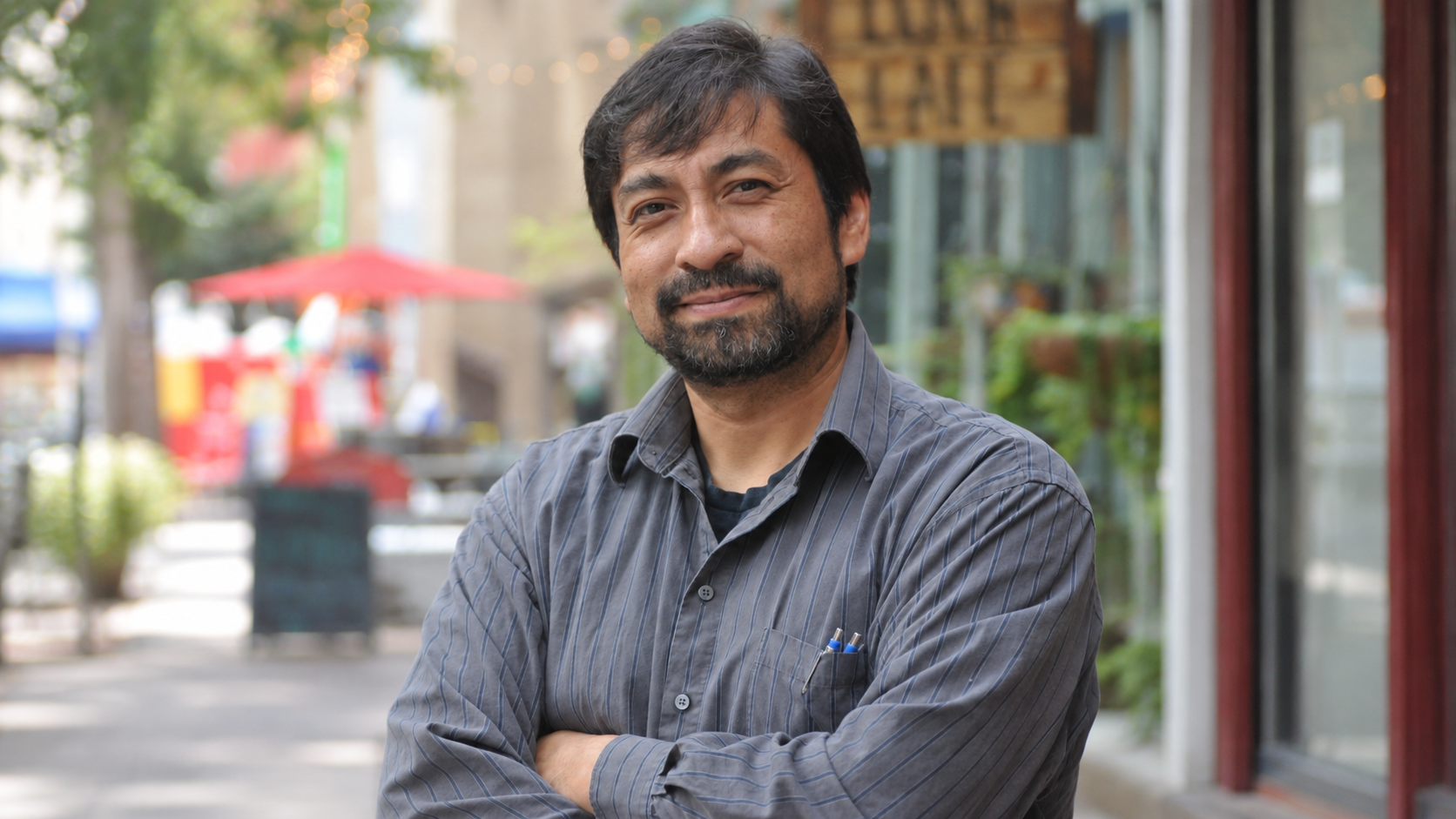
Those words were directed at Carmina Tylor, a Puerto Rican and Afro-Latina education activist and Norristown resident, and at me, a Mexican immigrant, educator, and co-founder and executive director of the Centro de Cultura, Arte, Trabajo y Educación, CCATE, and lecturer of social policy at the University of Pennsylvania. Both, Carmina and I made public comments seconds before his intervention.
I do not need to claim that I know Alexander’s intentions in order to challenge the implications of that language, especially in times when ICE is in the streets of the town every day. Public words spoken by an elected official can and should be examined for what they communicate and for the context in which they are spoken.
Who are the “impostors”?
Who are the people who “are from other places”?
And who gets to decide who authentically belongs to this community?
Carmina is a resident of Norristown and publicly identified herself as such. What, then, does “are from other places” mean? The only option left is that Alexander refers to our place of origin.
Some may argue that three people spoke during public comment: Carmina Tylor, Keya Johnson, and me. However, Alexander’s subsequent statement provides important context. He said:
“…people who are upset that an election didn’t go the way that they panned out now trying to sabotage what the community has uh entrusted us to do, which is move forward.”
There is no record, to my knowledge, of Johnson objecting to what happened to Chris Jaramillo and Tessi Ruiz, then School Board directors and members of the Hispanic community. Both sought reelection but did not receive the party’s endorsement and ultimately did not appear on the ballot. Their circumstances involved a political dispute over opposition to a tax abatement for a local development project, an issue beyond this article’s scope.
This history matters because Alexander explicitly connected his criticism to the election. Carmina Tylor and I had publicly questioned the political decisions surrounding Jaramillo and Ruiz.
After the new board took office, it reversed the previous board’s opposition to the tax abatement. While that does not establish anyone’s private motives, the sequence provides important political context. Taken together, these circumstances lead me to conclude that Alexander’s remarks were directed at Carmina and me.
For those of us whose lives have been shaped by migration, race, language, and the recurring experience of being treated as outsiders, the question cannot simply be dismissed.
It becomes even more troubling when those being questioned are members of the Hispanic community, the very population that constitutes more than half of the district’s students but currently has no Hispanic representative at the governing table.
Here is where I see one of the most disturbing parallels with the MAGA political ethos: the interlocutor becomes an adversary, disagreement becomes disloyalty, and ultimately the legitimacy of the person raising the question is placed in doubt.
At that point, political disagreement becomes something more dangerous. Instead of answering the argument, power questions the person making it.
Calling community members “impostors” exemplifies precisely the kind of political discourse we should reject.
But another path is possible.
For fifteen years, CCATE has been developing a model of democratic and dialogic education in Norristown. We begin with a transformative premise: children, young people, and families are not passive recipients of policies designed for them from above. We are a community capable of interpreting our reality, producing knowledge, and participating in the social transformation of the world around us.
Dialogue, therefore, is not simply a communication strategy.
Dialogue is education. Dialogue is democracy. Dialogue is social justice.
Every afternoon at CCATE, we witness what this philosophy can produce. Children and adolescents advance academically. Young people discover vocations and professions. First-generation students enter college, complete bachelor’s degrees, and pursue graduate education.
But our purpose has never been individual success alone.
We seek to educate people who understand that their education also carries a responsibility to the collective well-being of their community.
That philosophy also explains why we question excessively punitive approaches to education.
A metal detector can scan a body, but it cannot detect trauma, fear, racism, hopelessness, isolation, or family conflict. And it certainly cannot create belonging.
A genuinely safe school community may require reasonable security measures. But lasting safety also requires intercultural education, emotional well-being, art, conflict resolution, meaningful family participation, and strong relationships among students, educators, parents, and the broader community.
CCATE does not seek to replace the board of the School District. We seek to engage it. We can agree and we can disagree with the district. During fifteen years of community work, we have done both.
That is what democratic participation looks like.
And that is also the meaning I find in “No Kings.”
It is not simply a slogan about Donald Trump or Washington. It expresses a fundamental democratic principle: winning an election never makes an elected official immune from questioning.
We do not want Republican kings.
We do not want Democratic kings.
We want public servants who listen, engage in meaningful dialogue, and remain accountable to the communities they were elected to serve.
And we want an education that teaches what every democracy needs in order to survive: to think, to question, to listen, to dissent, and to transform our communities together.
That is what we have been building at CCATE for fifteen years.
That is why we will continue to raise our voices.
We are not impostors.
Long live our community!
* Author’s note: Board member Jordan Alexander’s comments are public and available in the “NASD School Board Voting Meeting, September 2026,” at approximately the 1:03:00 mark.
*Obed Arango is a photographer and social anthropologist, founder and executive director of CCATE, and a professor of public policy at the University of Pennsylvania.