

Venezuelan-American leaders from across the country gathered at Esperanza Arts Center on September 10 and 11 for the III Summit of Venezuelan-American Organizations, a national gathering that brought together more than 40 organizations to consider what a stronger Venezuelan diaspora can build in the United States.
Hosted by Casa de Venezuela Philadelphia, Gente de Venezuela Philadelphia and Casa de Venezuela Delaware, the two-day summit centered on migration, professional integration, leadership, health, financial inclusion, civic participation, culture, democracy and community cooperation.
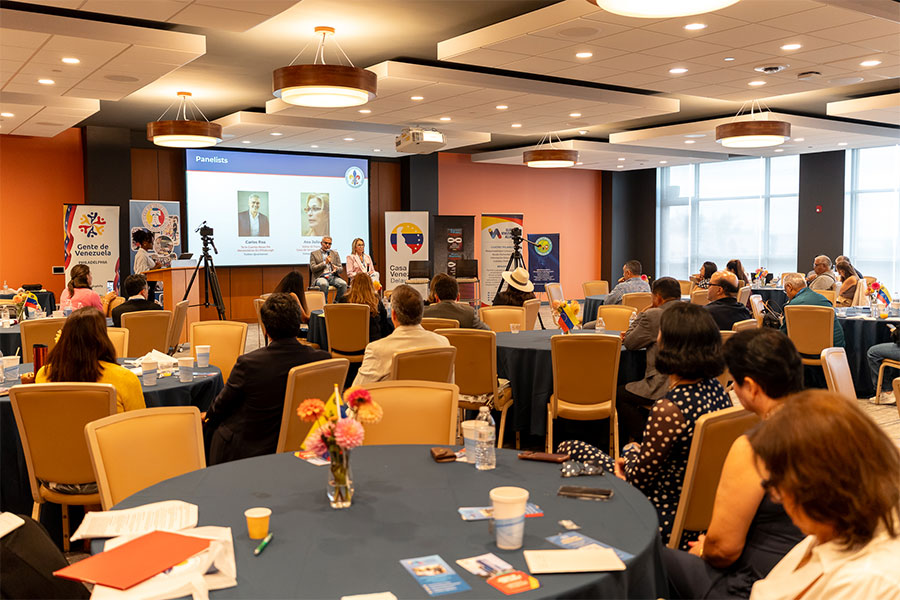
The organizing team included Emilio Buitrago, Liselotte Ponce, Arianne Bracho Hernández, Alex Moreno, Harianned Chaurel, Marilú Salazar and Rossana Arteaga-Lopenza. José Urdaneta helped guide the program across both days, while Esperanza founder Rev. Luis Cortés welcomed delegations to Philadelphia.
The summit came at a moment of deep uncertainty. U.S. policy toward Venezuela has shifted sharply this year, while hundreds of thousands of Venezuelans in the United States remain tied to an ongoing legal fight over Temporary Protected Status.
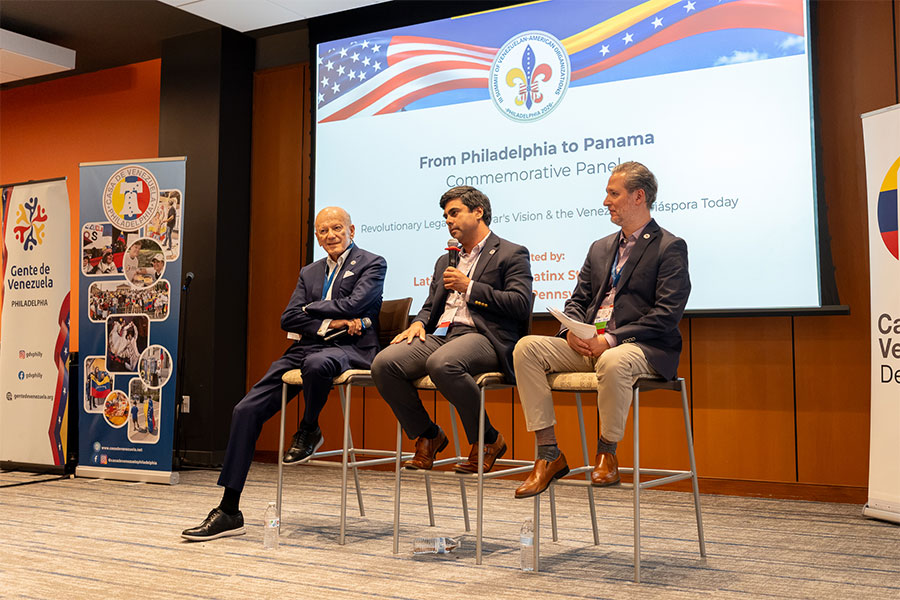
The continued tension made conversations about participation and belonging especially relevant. Across the two-day program, speakers made clear that Venezuelans in the United States do not share a single political viewpoint, and the summit did not try to erase those differences.
Instead, speakers repeatedly returned to a more practical question: how can organizations become strong enough to represent their communities regardless of changing politics in Washington or Caracas?.
Representatives described organizations that have grown alongside Venezuelan communities across the country. Many began by helping newcomers navigate housing, employment, immigration systems and other immediate needs. Their work is now expanding toward civic participation, partnerships and stronger institutions capable of advocating for Venezuelans over the long term.
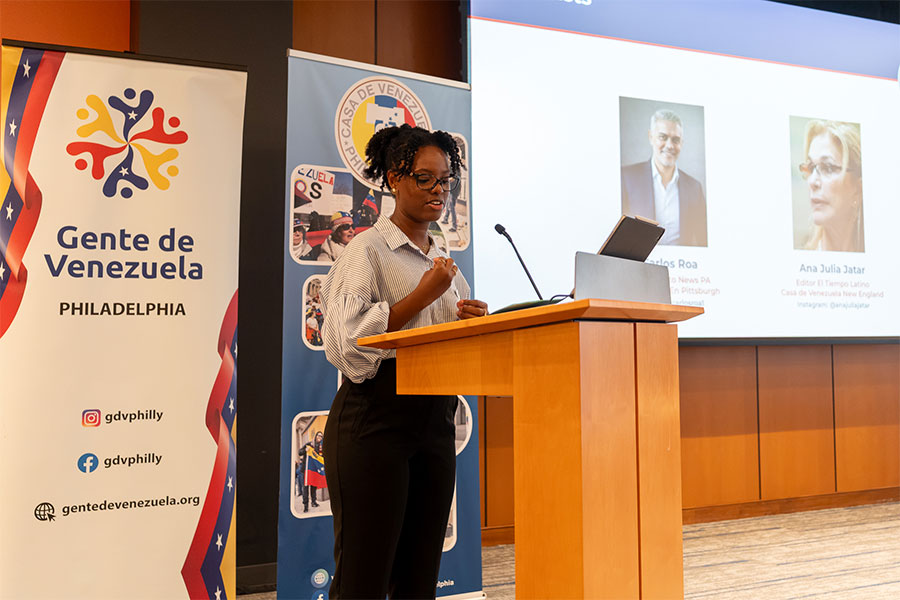
A keynote by Venezuelan economist Ricardo Hausmann, founder and director of Harvard’s Growth Lab, widened that conversation to the knowledge and professional experience spread across the diaspora and how it could contribute to Venezuela’s future.
Panelists also emphasized understanding American political institutions, building relationships with elected officials across party lines and showing measurable community impact when asking for support. Participants from LULAC, the Welcoming Center, UnidosUS and other Latino and immigrant organizations reinforced the importance of building those relationships beyond the Venezuelan community.
Questions of representation also surfaced in discussions about media, misinformation and who gets to tell Venezuela’s story.
Speakers pointed to the damage caused not only by false information, but by missing context and limited representation, while reflecting on the loss of independent media in Venezuela and the manipulation of historical narratives. The conversation also emphasized the role journalists and the diaspora can play in preserving memory and offering fuller accounts of their country.
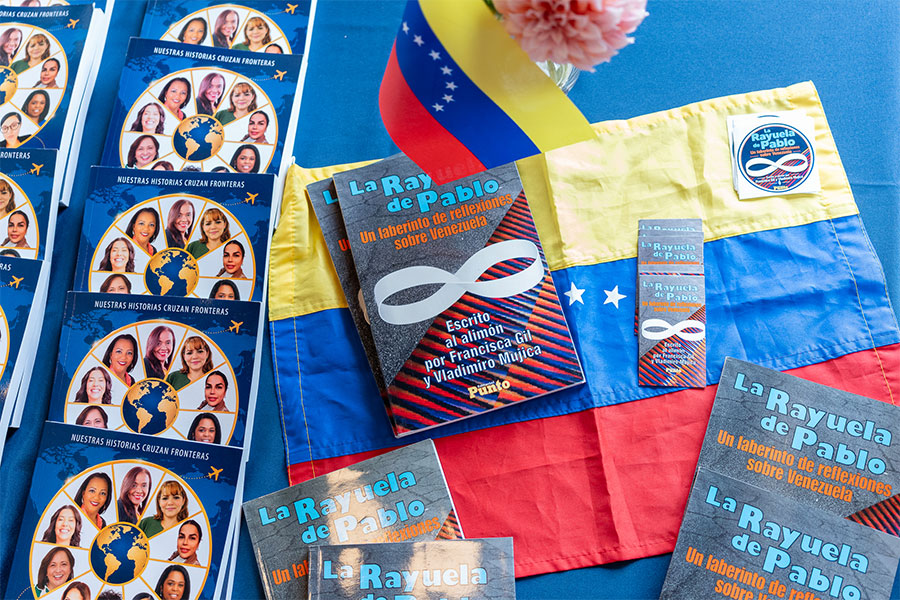
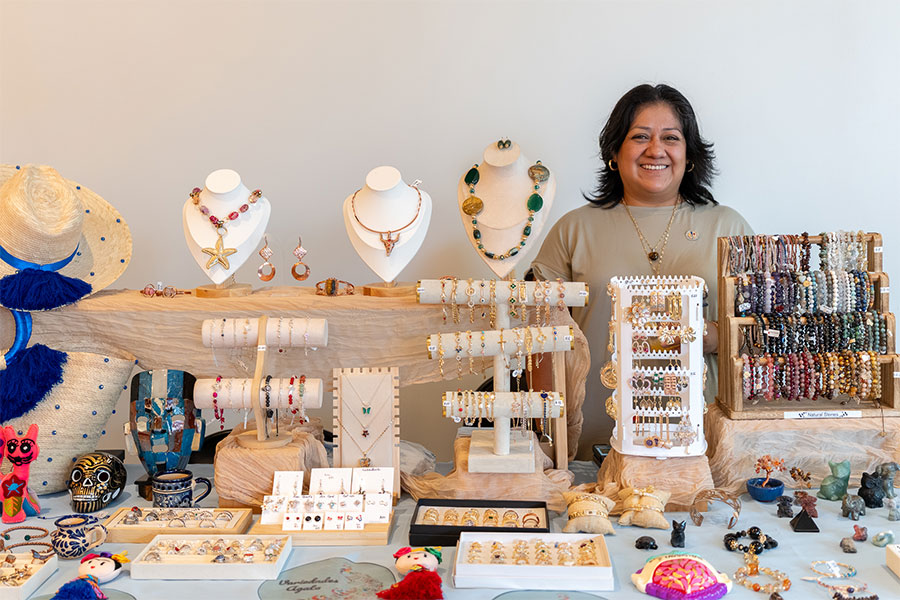
The summit also made room for culture and entrepreneurship. A Multicultural Latino Market gave attendees a space to connect with vendors and creators, reinforcing how community building also happens through businesses and everyday relationships.
The timing connected the summit to a larger history. As the United States marks 250 years of independence and the Congress of Panama marks its bicentennial, speakers reflected on earlier efforts to build cooperation across the Americas, including the legacy of Venezuelan independence figure Francisco de Miranda, and what those ideas mean today.
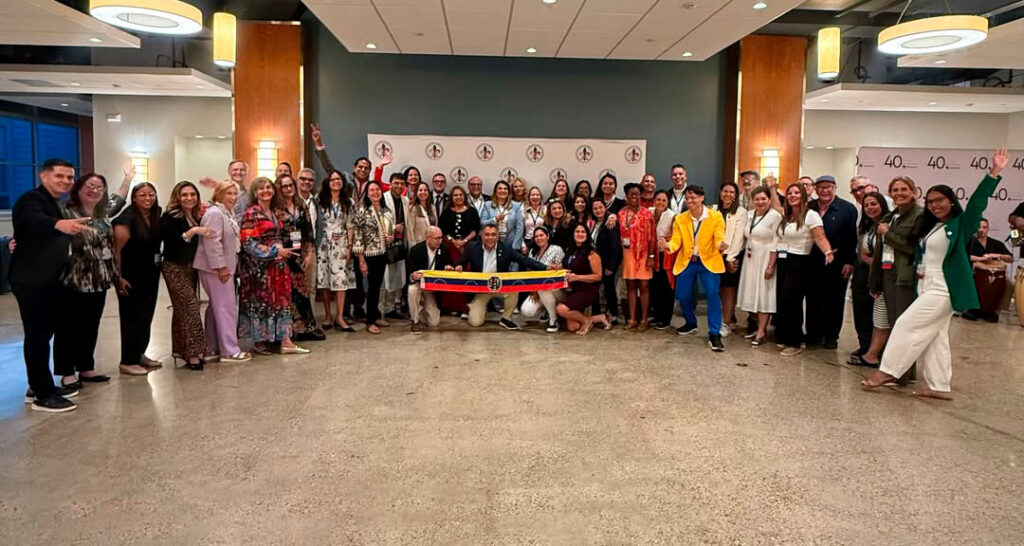
For Venezuelans in the United States, major decisions affecting their futures are still being made in Washington and Caracas. Yet the summit focused less on waiting for governments to determine what comes next.
It was on building through the uncertainty, not waiting for it to pass.
Through organizational relationships, Venezuelans continue creating foundations that can endure political uncertainty and disagreement. The work may look different from state to state, but the larger goal is increasingly shared: stronger institutions, deeper connections and a community with greater agency over its future.
The message from the summit was forward-looking: a diaspora shaped by displacement is also becoming a community defined by what it chooses to build.