

Inicio Blog Página 85

ICE instruye a sus agentes a no entrar en viviendas sin una orden judicial, según NBC

ICE
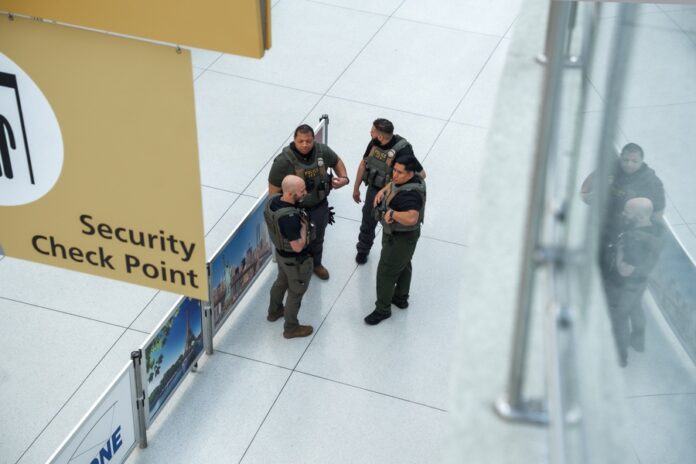
Integrantes del Servicio de Inmigración y Control de Aduanas (Foto: EFE/José Luis Castillo/Archivo)

El Servicio de Control de Inmigración y Aduanas (ICE) ha instruido a sus agentes a no ingresar a viviendas sin una orden judicial y limitar las detenciones en los tribunales de inmigración solo a extranjeros que tengan órdenes de deportación vigentes, según informó este jueves NBC.

Dos altos funcionarios del DHS aseguraron a la televisora que se han revertido algunas de las más polémicas estrategias de los agentes del ICE para cumplir con la campaña de deportaciones de la Casa Blanca.

Las fuentes informaron que los agentes han recibido instrucciones verbales de que ya no deben entrar en viviendas sin una orden judicial, una práctica criticada por defensores de los derechos civiles porque supuestamente viola la Cuarta Enmienda de la Constitución, que protege contra los registros y confiscaciones injustificados por parte del Gobierno.

Además, los agentes de ICE también han reducido las detenciones hechas en los tribunales de inmigración, tras un cambio en la política migratoria del Gobierno del presidente Donald Trump en febrero pasado.

El cambio se dio tras la ola de críticas, incluso de legisladores republicanos, tras los operativos migratorios en Minneapolis en enero pasado, que se saldaron con la muerte de dos estadounidenses, Alex Pretti y Nicole Renée Good, ambos de 37 años.

Tras las muertes, la Casa Blanca retiró de su cargo a la entonces secretaria del DHS Kristi Noem.

Durante su audiencia de confirmación en el Senado el mes pasado, el nuevo secretario del DHS, Markwayne Mullin, dijo que exigiría a los agentes del ICE obtener órdenes judiciales antes de ingresar en los domicilios, revirtiendo así una política anterior más laxa.

Asimismo, propuso reorientar la colaboración de ICE con las policías, centrándose en la detención de indocumentados en las cárceles en lugar de realizar redadas comunitarias a gran escala.

At Julia de Burgos School, a city budget becomes personal: ‘Everyone deserves decent housing’

City Council Members explain the budget to constituents in the 7th district. From left to right, Katherine Gilmore Richardson, Jeffery Young Jr., District 5, staff member, Council President Kenyatta Johnson district 2, Quetcy Lozada, District 7, Jum Harrity, at-large, and Rue Landau, at-large

PHILADELPHIA, PA_ On April 21, the front door of Julia de Burgos Elementary School was propped open when constituents arrived Tuesday evening, and the large vestibule just inside felt warm and inviting, like a neighborhood coming home. Representatives from Philly 311, the Philadelphia Parking Authority, the office of Councilmember Quetcy Lozada, and Congreso de Latinos Unidos, and more lined the walls with flyers, giveaways, and welcoming smiles. People trickled into the meeting room, a large theatre at the school, feet away from the entrance. At 6:00, Philadelphia City Council President Kenyatta Johnson and Councilmember Lozada called the room to order. The theater was energized — residents, community organizers, business owners, and stakeholders settling in to hear in their own neighborhood, exactly how the city plans to spend $6.7 billion of their money.

The town hall — one in a series organized by City Council to bring the proposed Fiscal Year 2027 budget directly to Philadelphia neighborhoods — landed in a community that has earned the right to ask hard questions. The North Philadelphia corridor and Kensington, home to one of the city’s largest Puerto Rican populations, have faced decades of concentrated poverty, chronic disinvestment, a devastating opioid crisis, and a housing market that routinely fails the people who need it most. The school where residents gathered that evening is named after Julia de Burgos, the beloved Puerto Rican poet, and sits less than a block from el Bloque de Oro — North 5th Street’s storied commercial corridor. This neighborhood carries both a deep cultural legacy and a long list of unmet needs. City Council, recognizing that many residents cannot leave work or family in the middle of the day to go to City Hall, is bringing the budget to the people, walking them through the numbers in a projected PowerPoint, defining key terms, and then opening the microphone for questions and comments. Lozada framed the evening in straightforward terms. “Today, the goal is to inform community residents of the proposed budget for fiscal year 2027,” she said. “It is an opportunity for residents to hear and learn about the proposal and to share their concerns and priorities for their neighborhoods. Overall, the priorities for the districts have remained consistent with what we have seen and heard residents prioritize: funds for public safety, for affordable housing, and for our schools.”

City Council Members meet residents in the 7th district to review the proposed City Budget for fiscal year 2027. From left to right, Jeffery Young Jr, District 5, Rue Landau, at-large, Quetcy Lozada, District 7,  President of City Council Kenyatta Johnson, District 2, Katherinne Gilmore Richardson, at-large, and Jim Harrity, at-large.

Additional town halls are scheduled for April 28, April 30, and May 5 at locations across Philadelphia. The numbers, laid out step by step on the screen at the front of the room, told a story of a city balancing urgent priorities against finite resources. Of Philadelphia’s $6.7 billion operating budget, 52 percent goes to public safety. Economic opportunity accounts for 23 percent. Housing receives 15 percent — including $22 million in FY27 to add 1,000 shelter beds, fund proactive rental inspections, and support new housing investments. The city’s opioid response carries a $211 million commitment over five years, directing resources toward the Kensington Wellness Support network, Riverside Wellness Village, and Wellness Court. An additional $25 million is budgeted for grassroots public safety initiatives. The city’s clean and green efforts account for 4 percent of the total, with new sanitation trucks and investments in illegal dumping enforcement.

For Gloria Cartagena Hart, those housing numbers are not abstractions. A resident of Kensington and a community organizer with the Kensington Corridor Trust — where she works the stretch of Kensington Avenue from Allegheny to Tioga — Hart has spent years fighting for the kind of stability that the budget promises but does not always deliver. Housing, drugs, and crime, she said, remain the defining concerns of the neighborhood. She knows that not from data, but from memory. Her family experienced homelessness. For months, she, her husband, and their children lived without a permanent home before they were able to reorganize their lives.

“I felt so alone back then,” Hart said. “Everyone deserves decent housing.”

After the presentation, people lined up on either side of that school theater — and carried their stories to the microphone — that turned a budget presentation into something that felt like democracy working the way it is supposed to. Some forgot to give their names and went straight to the issue. When Gloria reached the microphone, she stood with the composure of someone who has done this before — who has learned that the window is narrow and the stakes are high. She plainly reminded the councilmembers: homelessness can happen to anyone, and we need to prioritize housing in our neighborhood. It had happened to her family. She was determined to make sure it did not happen again — to her, or to as many people as she could reach.

Not everyone in the room came with a crisis. Dan Haney, a committeeman from the 42nd Ward, came with a question. “I like that there is a consensus on how the taxes will be spent,” he said. “I believe that services should not be cut and that the city has to look at places where they can trim waste, as we do with our budgets at home.”

Todd Parker, Director of Communications and Strategic Partnerships for American Paradigm Schools — a Philadelphia charter network, arrived early. He was there, he said, to understand where charter schools fit into the city’s plan. “I am here to listen and be informed about the progress of schools in Philadelphia.”

The lines on either side of the room stayed long until the end. The budget, the City Council had promised, would reflect what they heard. Gloria Cartagena Hart already knows her answer. She gave it at the microphone, in a school named after a poet who wrote about struggle and survival, a block from the golden street where her community has always found a way to endure.

“I felt so alone back then,” she said. “Everyone deserves decent housing. And now I am a community organizer helping people get just that — a decent home.”

Community takes the field in Philly

Philadelphia, PA The day didn’t begin with certainty. Cold air and steady rain hovered over The Lighthouse in North Philadelphia as players from The Storm and Power Queens arrived, unsure if the tournament would even happen. Coats stayed on. Hands stayed tucked. Warmups felt tentative.

Still, both teams and supporters waited.

The tournament, organized by Mujeres Que Inspiran in collaboration with Juddy Nails Beauty and Spa, was designed as a family-friendly event centered on celebration, support, and community. The afternoon carried that intention even before the first pitch.

After a brief delay, the game was on, and the atmosphere shifted almost instantly.

As if on cue, the rain cleared and sunlight broke through the clouds just after the ceremonial first pitch, casting a warm glow over the field and resetting the tone for the afternoon.

What followed was a game driven as much by energy as it was by competition.

From the first inning, both teams played with intensity. Dugouts stayed loud through every hit, and every call from the umpire sparked a reaction. Players stepped up with confidence while teammates rallied behind them, turning each at-bat into a spotlight moment.

Tension built in familiar ways. Close plays on the bases led to disagreements. Questionable calls were met with pushbacks. But just as quickly, those moments gave way to celebration.

Runs brought entire dugouts onto the field. Laughter carried between innings. Music, cheers, and megaphone chants filled the air as cheerleaders helped keep the family supporters engaged, blurring the line between game and gathering.

Despite the stakes on the field, joy remained constant.

Events like this reflect the kind of space Mujeres Que Inspiran continues to build in Philadelphia, one where women are centered & empowered, community is welcomed, and culture is felt throughout the experience.

By the final innings, it was clear that both teams had left everything on the field. Power Queens, led by their captain, Mayorie Paredes, ultimately secured the win over The Storm, captained by Juddy Santos.

But the outcome didn’t define the day. The field held onto the kind of energy that only builds when a community shows up together.

What began as a cold, uncertain morning turned into a bright Sunday afternoon filled with competition and celebration. For those in attendance, it was well earned.

By the end of the afternoon, Mujeres Que Inspiran had created a visible celebration of women, community, and culture. Like many moments rooted in sports, you had to be there to fully understand.

La comunidad sale al campo en el norte de Filadelfia

Filadelfia, PA — El día no comenzó con certezas. El aire frío y la lluvia constante cubrían The Lighthouse en el norte de Filadelfia mientras las jugadoras de The Storm y Power Queens llegaban sin saber si el torneo siquiera se llevaría a cabo. Los abrigos permanecían puestos. Las manos, escondidas. Los calentamientos se sentían tímidos.

Aun así, ambos equipos y sus seguidores esperaron.

El torneo, organizado por Mujeres Que Inspiran en colaboración con Juddy Nails Beauty and Spa, fue concebido como un evento familiar enfocado en la celebración, el apoyo y la comunidad. Esa intención se sentía en el ambiente incluso antes del primer lanzamiento.

Tras una breve demora, el juego comenzó y la atmósfera cambió casi de inmediato.

Como si fuera una señal, la lluvia se disipó y el sol se abrió paso entre las nubes justo después del lanzamiento ceremonial, bañando el campo con una luz cálida y marcando un nuevo tono para la tarde.

Lo que siguió fue un partido impulsado tanto por la energía como por la competencia.

Desde la primera entrada, ambos equipos jugaron con intensidad. Las bancas se mantuvieron animadas con cada batazo, y cada decisión del umpire generó reacciones. Las jugadoras se paraban en el plato con confianza mientras sus compañeras las respaldaban, convirtiendo cada turno al bate en un momento destacado.

La tensión se fue acumulando de manera familiar. Jugadas cerradas en las bases provocaron desacuerdos. Decisiones cuestionables generaron reclamos. Pero esos momentos rápidamente daban paso a la celebración.

Las carreras hacían que las bancas enteras saltaran al campo. Las risas se escuchaban entre entradas. Música, aplausos y cánticos amplificados llenaron el aire mientras animadoras mantenían al público familiar comprometido, difuminando la línea entre un partido y una convivencia comunitaria.

A pesar de lo que estaba en juego, la alegría se mantuvo constante.

Eventos como este reflejan el tipo de espacio que Mujeres Que Inspiran continúa construyendo en Filadelfia: uno donde las mujeres son el centro y se sienten empoderadas, la comunidad es bienvenida y la cultura se vive en cada momento.

Para las últimas entradas, era evidente que ambos equipos lo habían dejado todo en el campo. Power Queens, lideradas por su capitana Mayorie Paredes, finalmente se llevaron la victoria sobre The Storm, capitaneadas por Juddy Santos.

Pero el resultado no definió el día. El campo conservó ese tipo de energía que solo se genera cuando una comunidad se presenta unida.

Lo que comenzó como una mañana fría e incierta se transformó en una luminosa tarde dominical llena de competencia y celebración. Para quienes estuvieron presentes, fue algo bien merecido.

Al final de la tarde, Mujeres Que Inspiran había logrado una celebración visible de mujeres, comunidad y cultura. Como muchos momentos arraigados en el deporte, había que estar allí para comprenderlo por completo.

‘Hold on to your core’: Mayor Parker brings her full self — and a housing plan — to the Union League

Mayor Cherelle Parker speaks to a room of women in leadership at the Union League, emphasizing resilience in difficult times, holding on to your core, and being authentic. (Photo: Aleida García)

PHILADELPHIA, PA_Long before Mayor Cherelle Parker walked through the brass-framed doors of the Union League of Philadelphia that Tuesday afternoon, the mahogany-paneled ballroom at 140 South Broad Street was already humming with purpose. Women in tailored blazers had gathered from every sector of the city’s leadership — business, government, nonprofits, and philanthropy — their conversations layered over the soft clink of water glasses and the low murmur of a city in motion outside.

The agenda before the mayor’s arrival was weighty: a close look at the city’s proposed Fiscal Year 2027 budget and a shared vision for a cleaner, greener Philadelphia — both in this landmark year marking the nation’s 250th anniversary and in the years stretching beyond.

Across the city, in corner stores and cramped Kensington apartments, the policies discussed in that gilded room carry real weight. Carmen Melendez, 68, still rises before dawn to clean office buildings in Center City. She collects Social Security, but the payments don’t stretch as far as they once did — and the rent on her Kensington apartment keeps climbing.

“I am afraid that as my health begins to decline as I get older, I will not be able to meet my financial needs,” Carmen said. “How do you plan for a future with such radical changes?”

Melendez is exactly the kind of resident Mayor Parker says her agenda is designed to protect.

Then the mayor arrived — and the room shifted. Mayor Parker settled into a chair at the front of the ballroom, across from the event moderator, beneath a large portrait of Abraham Lincoln. As she began to speak, the conversation grew warmer, more personal, more urgent. Heads tilted forward. Nods rippled through the rows. From somewhere near the back, soft “ahas” and quiet “yeses” broke through the formal air. She was not delivering a policy address. She was speaking, it seemed, directly to every woman in that room.

“Two of our Union League member groups collaborated to make this event happen,” said Breanna Pleis, Assistant Director of Member Events at the Union League. “We wanted to highlight the Mayor’s female cabinet and give our members the chance to learn how they can support her work toward a cleaner, greener, and stronger Philadelphia.”

The fireside chat — organized around the mayor’s vision for revitalizing commercial corridors, transforming housing and urban development, and advancing philanthropy and wellness across the city — quickly took on a tone that transcended policy.

When the moderator asked how she stays resilient in an often-contentious political climate, Mayor Parker answered without hesitation.

“I stay focused on the center, on the nucleus,” she said. “I don’t forget who I am or where I came from.”

She spoke of her grandmother’s lasting influence on her life and perspective. She invoked advice she received from Augusta “Gussie” Clark — a groundbreaking Philadelphia political figure who served as a City Council At Large Member from 1972 to 1979 — who told her simply: “No one can be you, better than you.” The instruction was direct: be yourself.

“We don’t have to wear masks anymore,” Mayor Parker told the room. “I strongly encourage you to hold on to your core.”

At one point, the mayor paused and smiled, noting she was glad to be in a room full of estrogen, adding, with a knowing laugh, that in political circles, that doesn’t happen often. The room filled with knowing chuckles.

The policy substance emerged steadily. Among the mayor’s most ambitious commitments is the Housing Opportunities Made Easy (H.O.M.E.) initiative — a $2 billion plan backed by $800 million in municipal bonds aimed at creating and preserving 30,000 housing units across Philadelphia. For aging, working-class residents — women like Carmen Melendez in Kensington, who are one illness or rent hike away from losing their home, the program expands eligibility for housing assistance to seniors earning between 60 and 80 percent above the poverty line, a range that has historically left middle-need households without support. The city issued the first $400 million in H.O.M.E. bonds in March.

As the questions deepened, so did the mayor’s candor. She named the barriers, the inherited disadvantages, the weight of expectation that follows women in public life. And then, without drama, she explained how she navigates it: by refusing to become someone else.

For Cathy Scott, retired president of Local 47 AFSCME and a commissioner on the Women’s Commission of Philadelphia, the mayor’s housing commitment landed with personal weight. Like others in the room, she reached for a single word to describe what she had witnessed: authentic.

“As a senior citizen, I am very concerned about the ability of seniors to stay in their homes,” Scott said. “I am happy to hear that housing assistance will be expanded to seniors at 60 to 80 percent above the poverty line.”

As the fireside chat drew to a close, Mayor Parker acknowledged what was visible to anyone in that room: many of the women seated before her were already doing the work — already showing up, already investing in the city they called home. She simply asked for continued support and for others to get on board. Cards were exchanged. Coats were gathered. Resolve settled quietly in the air.

Vivian Denkins, a career professional at Mid Penn Bank who came that afternoon because she believes in the city’s economic future — and in the opportunities it holds for herself and her family — did not hesitate when asked what she was taking home from the room.

“I am inspired by the Mayor,” Denkins said. “Today, we had a chance to see her human side. She is authentic, approachable, and listens to what people have to say.”

«Aférrate a tu esencia»: la alcaldesa Parker se explaya entre mujeres y les presenta su visión para Filadelfia

El martes 21 de abril de 2026, la alcaldesa Cherelle Parker se dirige a una sala llena de mujeres líderes en el Union League of Philadelphia sobre el presupuesto propuesto y la importancia de ser auténtica en la vida. (Foto: Aleida García)

FILADELFIA, PA — Mucho antes de que la alcaldesa Cherelle Parker cruzara las puertas de marco de bronce de la Union League of Philadelphia la pasada tarde de martes, el salón de baile revestido de caoba en el número 140 de South Broad Street ya vibraba con un propósito claro. Mujeres con sacos entallados, provenientes de todos los sectores del liderazgo de la ciudad — negocios, gobierno, organizaciones sin fines de lucro y filantropía — conversaban animadamente, entre el suave tintinear de los vasos de agua y el murmullo distante de una ciudad en movimiento al otro lado de las paredes.

La agenda antes de la llegada de la alcaldesa era sustancial: un análisis detallado del presupuesto propuesto de la ciudad para el Año Fiscal 2027 y una visión compartida de una Filadelfia más limpia y más verde, tanto en este año emblemático que marca el 250 Aniversario de  Estados Unidos como en los años venideros.

En toda la ciudad, desde las tiendas de esquina hasta los estrechos apartamentos de Kensington, las políticas debatidas en ese elegante salón, tienen consecuencias reales. Carmen Meléndez, de 68 años, aún se levanta antes del amanecer para limpiar edificios de oficinas en Center City. Recibe Seguro Social, pero ese ingreso ya no rinde como antes — y la renta de su apartamento en Kensington sigue aumentando.

“Me preocupa que, a medida que mi salud empiece a deteriorarse con la edad, no pueda cubrir mis necesidades económicas”, comparte Carmen. “¿Cómo se puede planificar un futuro con cambios tan drásticos?”

Ella representa exactamente el tipo de residente que, según dice la alcaldesa Parker, su agenda busca proteger.

Entonces llegó la alcaldesa — y la sala cambió. Parker tomó asiento al frente del salón, frente a la moderadora del evento, bajo un gran retrato de Abraham Lincoln. Al comenzar a hablar, la conversación se volvió más cálida, más personal, más urgente. Las cabezas se inclinaron hacia adelante. Olas de asentimientos recorrieron las filas. Desde algún punto del fondo, suaves “ajás” y discretos “sí” rompieron la formalidad del ambiente. No estaba pronunciando un discurso político. Parecía, más bien, estar hablándole directamente a cada mujer presente.

“Dos de nuestros grupos de miembros de la Union League colaboraron para hacer posible este evento”, explicó Breanna Pleis, directora asistente de eventos para miembros en la Union League. “Queríamos destacar el gabinete femenino de la alcaldesa y brindar a nuestras integrantes la oportunidad de aprender cómo pueden apoyar su trabajo para lograr una Filadelfia más limpia, más verde y más fuerte”.

La conversación tipo fireside chat — centrada en la visión de la alcaldesa para revitalizar corredores comerciales, transformar la vivienda y el desarrollo urbano, y promover la filantropía y el bienestar en toda la ciudad — pronto adquirió un tono que trascendió las políticas públicas.

Cuando la moderadora le preguntó cómo se mantiene resiliente en un clima político a menudo conflictivo, la alcaldesa Parker respondió sin dudar.

“Me mantengo enfocada en el centro, en el núcleo”, dijo. “No olvido quién soy ni de dónde vengo”.

Habló de la influencia duradera de su abuela en su vida y su perspectiva. Recordó el consejo que recibió de Augusta “Gussie” Clark — una figura pionera en la política de Filadelfia que fue concejal por representación general entre 1972 y 1979 — quien le dijo de forma simple: “Nadie puede ser tú mejor que tú misma”. La instrucción era clara: sé tú.

“Ya no tenemos que usar máscaras”, le dijo la alcaldesa Parker a la audiencia. “Las animo firmemente a aferrarse a su esencia”.

En un momento, la alcaldesa hizo una pausa y sonrió, comentando que estaba contenta de encontrarse en una sala llena de estrógeno, y añadió con una risa cómplice que en los círculos políticos eso no ocurre con frecuencia. La sala respondió con sonrisas y risas de complicidad.

El contenido de política pública emergió de forma constante. Entre los compromisos más ambiciosos de la alcaldesa se encuentra la iniciativa Housing Opportunities Made Easy (H.O.M.E.) — un plan de 2 mil millones de dólares respaldado por 800 millones en bonos municipales — que busca crear y preservar 30,000 unidades de vivienda en toda Filadelfia. Para residentes mayores de clase trabajadora — mujeres como Carmen Meléndez en Kensington, que están arriesgando con una enfermedad o a un aumento de renta, a perder su hogar — el programa amplía la elegibilidad para asistencia de vivienda a personas mayores que ganan entre el 60 y el 80 por ciento por encima del nivel de pobreza, un rango que históricamente ha dejado sin apoyo a hogares con necesidades intermedias. La ciudad emitió los primeros 400 millones de dólares en bonos del programa H.O.M.E. en marzo.

A medida que las preguntas se profundizaban, también lo hacía la franqueza de la alcaldesa. Nombró las barreras, las desventajas heredadas, el peso de las expectativas que enfrentan las mujeres en la vida pública. Y luego, sin dramatismo, explicó cómo navega todo ello: negándose a convertirse en alguien que no es.

Para Cathy Scott, presidenta jubilada del sindicato AFSCME Local 47 y comisionada de la Comisión de la Mujer de Filadelfia, el compromiso de la alcaldesa con la vivienda tuvo un significado personal. Como otras en la sala, eligió una sola palabra para describir lo que presenció: auténtica.

“Como persona mayor, me preocupa mucho la posibilidad de que los adultos mayores puedan permanecer en sus hogares”, dijo Cathy. “Me alegra saber que la asistencia de vivienda se ampliará para personas mayores que ganan entre el 60 y el 80 por ciento por encima del nivel de pobreza”.

Cuando la conversación llegó a su fin, la alcaldesa Parker reconoció algo evidente para cualquiera en la sala: muchas de las mujeres presentes ya estaban haciendo el trabajo — ya participaban activamente, ya invertían en la ciudad que consideran su hogar. Simplemente pidió que ese apoyo continuara y que más personas se sumaran.

Se intercambiaron tarjetas. Se recogieron abrigos. La determinación quedó suspendida silenciosamente en el aire.

Vivian Denkins, profesional de carrera en Mid Penn Bank, asistió al evento porque cree en el futuro económico de la ciudad — y en las oportunidades que ofrece para ella y su familia — y no dudó cuando se le preguntó qué se llevaba de la experiencia.

“Estoy inspirada por la alcaldesa”, dijo Denkins. “Hoy pudimos ver su lado humano. Es auténtica, accesible y escucha lo que la gente tiene que decir”.

Impacto se une con amor, reconocimiento y solidaridad a Leno Rose Avila

Magdaleno Rose - Avila.

Con profundo respeto, cariño y gratitud, Impacto, junto con toda su comunidad —editores, reporteros, reporteros ciudadanos y colaboradores—, se une hoy a las expresiones de amor, fuerza y acompañamiento hacia Magdaleno “Leno” Rose Ávila, firme defensor de los derechos humanos y referente vivo de conciencia, dignidad y lucha dentro de nuestras comunidades.

En estos momentos, Leno enfrenta serios retos de salud, sostenido por el amor de su familia, sus amistades y una amplia comunidad que él mismo ha ayudado a formar a lo largo de décadas de activismo, organización comunitaria, pensamiento crítico y acción con principios. Su presencia y su voz permanecen firmes entre nosotros.

Aún en medio de la dificultad física, Leno continúa dándonos lecciones de humanidad, claridad política y amor radical. Desde su experiencia vivida y su profunda convicción, insiste en que el amor no es pasividad, sino práctica cotidiana; que la no violencia es una decisión consciente; y que las mujeres, las y los jóvenes, y la organización comunitaria son pilares esenciales de la “pirámide de esperanza” que sigue levantándose desde abajo.

En redes sociales y espacios comunitarios, activistas, organizaciones comunitarias y personas de distintas generaciones reafirman lo que en Impacto conocemos bien: Leno es una fuente viva de inspiración. En estos días, una de sus afirmaciones más claras y honestas resuena con fuerza:
“No tengo espacio para el odio.”
Una afirmación en tiempo presente y urgente, que nos llama a actuar con dignidad incluso en los momentos más difíciles.

Como medio comunitario comprometido con la voz del pueblo, Impacto reconoce que Leno Rose Ávila nos ha dado mucho más que opiniones. Continúa ofreciéndonos ejemplo, coherencia y una ética de lucha, donde la justicia no excluye y la humanidad nunca se negocia.

Cómo apoyar a Leno y a su familia

Desde el espíritu del cuidado colectivo, Impacto invita a su comunidad a apoyar la campaña de GoFundMe creada para ayudar a cubrir gastos médicos y sostener un legado de justicia y solidaridad que él continúa cultivando.

Cada aportación es un acto de amor, gratitud y compromiso con una vida que continúa iluminando el camino.

Hoy, hablando como Impacto, enviamos fuerza, respeto y reconocimiento vivo a Leno; a su esposa, Caro; a su hija, Aviva; a su hijo, Kimbo; y a la familia extendida y comunidad que lo rodea en varios países.

(Foto: Cortesía/Leno Rose Avila)

Porque, como nos recuerda Bertolt Brecht, hay quienes luchan toda la vida —y, para nosotros, Leno Rose Ávila sigue siendo uno de los imprescindibles.

Leno, estamos contigo. Adelante.

What’s driving Philadelphia’s housing crisis? Residents weigh in at WHYY community dialogue

Attendees participated in the community dialogue on housing. (Photo: Leticia Roa Nixon)

The Bridging Blocks program brings together households from diverse cultural and political backgrounds to engage in civil dialogue and foster mutual understanding. This project is an initiative of WHYY, the region’s leading public media organization, in collaboration with the Free Library of Philadelphia and other partner organizations.

The April 15 conversation, held on the fourth floor of the library, focused on the social issues surrounding homelessness, rising rents, and the significant challenge of purchasing a home—key factors fueling the city’s housing crisis. According to the U.S. Department of Housing and Urban Development, homelessness in Philadelphia increased by 9.8% from 2023 to 2024. What systemic forces are driving the housing crisis, and what barriers prevent Philadelphia from resolving it?

Brisa Luzzi Castro, WHYY convener and community coordinator. (Photo: Leticia Roa Nixon)

Participants discussed the lack of regulation for landlords and insufficient protections for tenants. At the same time, they highlighted the housing assistance work and benefits offered by Esperanza, a nonprofit organization based in the Hunting Park neighborhood, as well as Philadelphia City Council legislation aimed at improving tenant living conditions in 2025 and 2026—particularly the Safe Home bill introduced by Councilmember Nicolas O’Rourke.

At left, Rushawn Stanley, project coordinator, with reporter Meir Rinder. (Photo: Leticia Roa Nixon)

One of the dialogue participants was Geraldine Churchwell, founder and CEO of Circle of Life, Inc. a transitional housing project for people experiencing homelessness. Having lost her own home and lived in a shelter, she now dedicates her work to helping others without stable housing. Crystal Morris also contributed her perspective as a real estate agent.

Brisa Luzzi Castro alongside Tony Cuffie, Senior Manager of Community and Engagement at WHYY. (Photo: Leticia Roa Nixon)

Dialogue tables included Tamara Russell, creator of Revive Radio; investigative reporter Meir Rinder of Billy Penn; and Aaron Moselle, a reporter covering housing and community development for WHYY. Attendees of this free event received information about the City’s Fair Housing Commission, the Philadelphia Tenants Union—which organizes tenants to confront abusive landlords—a Know Your Rights fact sheet for renters, and other community resources.

Filadelfia celebra corte de cinta en Esperanza con el congresista Brendan Boyle

En el corte oficial de cinta el rev. Luis Cortés y el congresista Brendan Boyle estuvieron rodeados por los estudiantes de Esperanza. (Foto: Impacto staff)

Esperanza celebró este 20 de abril un importante corte de cinta en sus instalaciones de la calle 5 en el norte de Filadelfia, en un evento que reunió a líderes locales, miembros de la comunidad, estudiantes y empleados, incluyendo al congresista Brendan Boyle como invitado especial.

El acto marca un nuevo paso en el desarrollo e inversión en la comunidad latina de Hunting Park, donde Esperanza ha trabajado por décadas impulsando educación, vivienda y desarrollo económico.

Congresista Brendan Boyle, quien destaco la importancia de invertir en educación. (Foto: Impacto staff)

Durante la ceremonia, el congresista Brendan Boyle destacó la importancia de continuar invirtiendo en organizaciones comunitarias que generan impacto directo en las familias: “Donde hay visión, la gente prospera, y la comunidad de Esperanza tiene una gran visión. Me entusiasma haber acompañado hoy a mis amigos de Esperanza para inaugurar las mejoras en sus instalaciones, financiadas gracias a subvenciones federales que logré asegurar,” expresó el congresista.

Rev. Danny Cortés, Congresista Brendan Boyle, Martin Droz, Rev. Rev. Luis Cortés y Mario Zacharjasz, PZA architects. (Foto: Impacto staff)

El honorable Boyle subrayó que iniciativas como esta representan una alianza entre gobierno y comunidad para fortalecer oportunidades económicas y educativas en Filadelfia.

Rev. Luis Cortés recalco la importancia de apoyar proyectos como Esperanza y agradeció al congresista Boyle por el apoyo. (Foto: Impacto staff)

Por su parte, el reverendo Luis Cortés, fundador, presidente y director ejecutivo de Esperanza, resaltó la misión de la institución como motor de transformación comunitaria: “Tenemos que construir instituciones que nuestra comunidad controle”, ha dicho Cortés sobre el desarrollo económico y social en Filadelfia.

Cortés también enfatizó que el trabajo de Esperanza busca crear lo que denomina una “comunidad de oportunidades”, donde todos los residentes tengan acceso a educación, cultura y crecimiento económico.

Rev. Danny Cortés, Rep. Danilo Burgos, presidente de la junta de Esperanza Martin Droz y Rev. Luis Cortés. (Foto: Impacto staff)

Al evento también asistió el representante estatal Danilo Burgos, quien agradeció públicamente al congresista expresándole: “Gracias por este espacio; aquí se pelea en contra de la delincuencia, en contra de la ignorancia y se pelea para dar una educación justa a nuestros niños. Gracias”.

Fundada en 1986, Esperanza es hoy una de las organizaciones latinas más grandes del país, enfocada en combatir la pobreza sistémica mediante programas de educación, vivienda y desarrollo económico.

El evento de hoy refuerza ese compromiso, en un momento en que el norte de Filadelfia enfrenta desafíos como el aumento de costos de vivienda y el riesgo de desplazamiento de familias latinas.

La ceremonia concluyó con el corte oficial de cinta con los estudiantes de Esperanza haciendo corona y un compartir entre los invitados especiales, simbolizando una nueva etapa de inversión y esperanza para la comunidad.