Una supermercado de Buenos Aires (Argentina). (Foto: EFE/Juan Ignacio Roncoroni/Archivo)
Buenos Aires. – El índice de precios al consumidor (IPC) en Argentina se situó en agosto en el 236,7 % interanual, su cuarta desaceleración consecutiva, informó este miércoles el Instituto Nacional de Estadística y Censos (Indec).
Con todo, en el octavo mes del año los precios al consumidor crecieron un 4,2 % en comparación con julio, evidenciando una aceleración con respecto a la tasa mensual del 4 % que se había registrado en el séptimo mes.
De acuerdo con el informe oficial difundido este miércoles, los bienes tuvieron el mes pasado una variación positiva del 3,2 % en comparación con julio, mientras que los servicios subieron un 6,5 %, unos datos que ascienden al 227,3 % y el 263,9 %, respectivamente, en la comparación interanual.
Entre las subidas registradas en agosto destacan las de vivienda (7 %) por el incremento en los alquileres y en los servicios de agua, gas y electricidad.
Le siguieron los aumentos en educación (6,6 %) y transporte (5,1 %).
Los alimentos y bebidas no alcohólicas crecieron un 3,6 % en relación con julio y el 236,9 % en términos interanuales.
Según el informe oficial, la inflación argentina acumuló en los ocho primeros meses del año un alza del 94,8 %.
Tras el cimbronazo de la súbita devaluación del peso argentino dispuesta por el Gobierno de Javier Milei apenas iniciar su gestión, en diciembre de 2023, y el impacto de sus primeras medidas de ‘shock’, los precios iniciaron una tendencia descendente como resultado de un fuerte ajuste fiscal y monetario y un derrumbe del consumo que aplastó la demanda.
Los precios al consumidor acumularon en 2023 una subida del 211,4 % en Argentina, la tasa más alta desde la hiperinflación de 1989-1990.
Los más recientes pronósticos privados que recaba mensualmente el Banco Central apuntan a que la inflación será este año del 122,9 %, con tasas mensuales de entre el 3,3 % y el 3,6 % hasta diciembre.
Law enforcement investigate the shooting of Philadelphia Police officer Jaime Ramos in Philadelphia on Saturday, June 22, 2024. (Elizabeth Robertson/The Philadelphia Inquirer via AP)
PHILADELPHIA— A Philadelphia police officer has died of his wounds, nearly three months after being shot in the neck after stopping a vehicle while on duty, city officials said.
Officer Jaime Roman, 31, who spent 80 days in intensive care without regaining consciousness, died Tuesday night. Roman leaves behind a wife, a 7-year-old daughter and a 4-year-old son. He had been with the department for nearly seven years.
In a statement released Wednesday, the department said the driver was removing personal belongings from the vehicle in the city’s Kensington neighborhood on June 22 when Roman noticed an empty holster on the floorboard.
The driver, Ramon Rodriguez Vazquez, 36, of Philadelphia, then ran away, and Roman and his partner chased after him, city police said. Rodriguez Vazquez “then turned and fired three shots,” hitting Roman, according to police.
Rodriguez Vazquez forced his way into a home, where police arrested him.
Police Commissioner Kevin Bethel said murder charges would be filed against Rodriguez Vazquez.
Rodriguez Vazquez was previously charged with attempted murder, assault, gun offenses and other counts. George Jackson, a spokesperson for the Defender Association of Philadelphia, which represents Rodriguez Vazquez, declined to comment Wednesday.
Fellow officers stood outside Temple University Hospital to honor Roman Tuesday night as a vehicle drove his body to the Philadelphia Medical Examiner’s Office.
At a news conference Wednesday, Mayor Cherelle Parker vowed to “not allow his death to be in vain” and ordered city flags to be flown at half staff.
Department leaders at the news conference remembered Roman as a vibrant person who could light up a room, and who had always wanted to be a police officer.
The Dauphin County project is one of 186 recent statewide awards through the Neighborhood Assistance Program, which had its funding doubled to $72 million in Governor Shapiro’s bipartisan 2024-25 budget.
Harrisburg, PA – Today, Department of Community and Economic Development (DCED) Deputy Secretary RickVilello highlighted the Shapiro Administration’s $58,500 investment to boost affordable housing options in the Allison Hill neighborhood of Harrisburg during a tour of the future site of Wildheart Ministries’ “The Gateway” project. The project, which recently received support through the Neighborhood Assistance Program (NAP), will acquire and transform five vacant properties at 1260 Market Street into affordable housing units and commercial spaces to benefit residents.
Funding for the NAP, which provides tax credits to businesses that contribute to nonprofit organizations’ efforts to revitalize communities, was doubled in Governor Josh Shapiro’s bipartisan 2024-25 state budget from $36 million to $72 million. The increased funding is allowing DCED to accept applications for the additional $36 million through October 25, 2024. Project awards for the second round of funding are expected to be announced later this year.
“The Shapiro Administration is focused on strengthening our neighborhoods because we know that vibrant communities are essential to our growth as a Commonwealth,” said Deputy Secretary Vilello. “And this year’s doubling of the Neighborhood Assistance Program funding gives more impact to an important tool we use to accomplish that. The award we’re highlighting today will allow Wildheart Ministries to help Allison Hill residents realize the dream of home ownership while revitalizing the neighborhood.”
The Gateway project will provide nine residential units to low-to-moderate income families, with one unit reserved for individuals requiring ADA-compliance. Additionally, the project will foster economic growth by providing four commercial spaces to preserve the identity of the historic section of Market Street in Allison Hill.
“We are thrilled to have the support of the Shapiro Administration for The Gateway affordable housing development,” said Tannon Herman, Executive Director of Wildheart Ministries. “With 822 vacant or abandoned structures within Allison Hill, the depth of impact through funding provided by the NAP program in a community like ours cannot be overstated, and we look forward to sharing this opportunity with our neighbors who are looking to become homeowners. Because of the recent increase in the program funding available and the tax credit benefits for businesses that participate, I believe that we will see a dramatic shift within our neighborhoods towards stability, safety and growth.”
“As State Senator, I have been pleased to support Wildheart Ministries in their mission to promote holistic and sustainable change in south Allison Hill, a significantly blighted section of Harrisburg,” said Senator John DiSanto. I look forward to seeing the impacts from this NAP funding as Wildheart continues serving and improving the community.”
“Affordable housing is a critical need in our community, and I applaud the work that Wildheart Ministries is doing in Allison Hill. Their commitment to revitalizing neighborhoods while ensuring that families have access to safe, affordable homes is a tremendous step toward strengthening Harrisburg,” said Representative Dave Madsen. “I’m proud to support this project and the positive impact it will have on the lives of so many residents.”
The Shapiro Administration’s recently announced NAP funding will support a variety of important community projects across Pennsylvania: 30 in the central region; 20 in the Lehigh Valley region; 27 in the northeast region; 26 in the northwest region; 37 in the southeast region; and 45 in the southwest region.
The NAP has five main components: The Neighborhood Assistance Program (NAP), Special Program Priorities (SPP), the Neighborhood Partnership Program (NPP), Charitable Food Program (CFP), and the Enterprise Zone Program (EZP). More information is available on the NAP impact brochure.
For more information about the Neighborhood Assistance Program or the Department of Community and Economic Development, visit DCED’s website, Facebook, X, and LinkedIn.
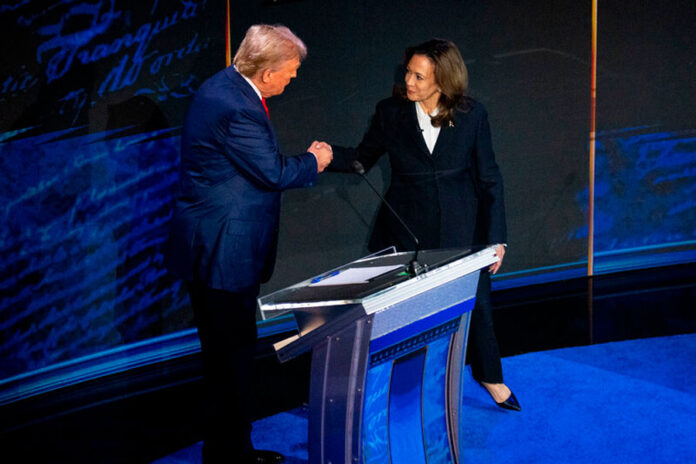
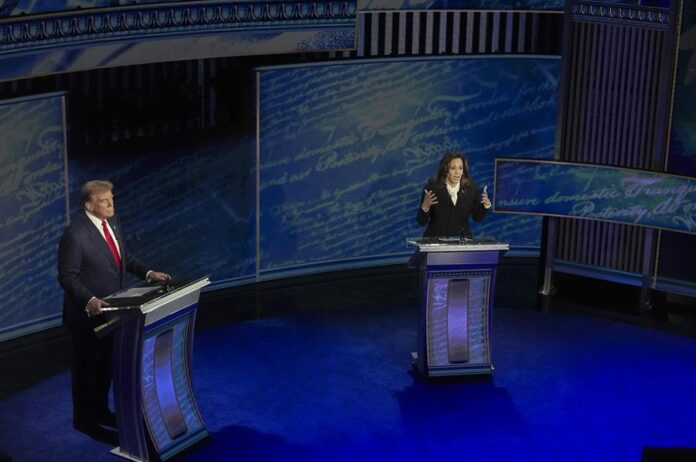
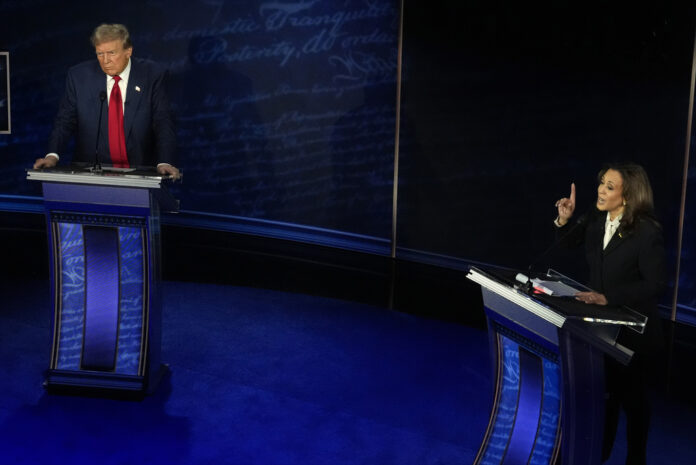
El candidato republicano a la presidencia de Estados Unidos, Donald Trump, y la candidata demócrata a la presidencia, Kamala Harris, participan en un debate en ABC en el National Constitution Center, el martes 10 de septiembre de 2024, en Filadelfia. (Foto: AP/Alex Brandon)
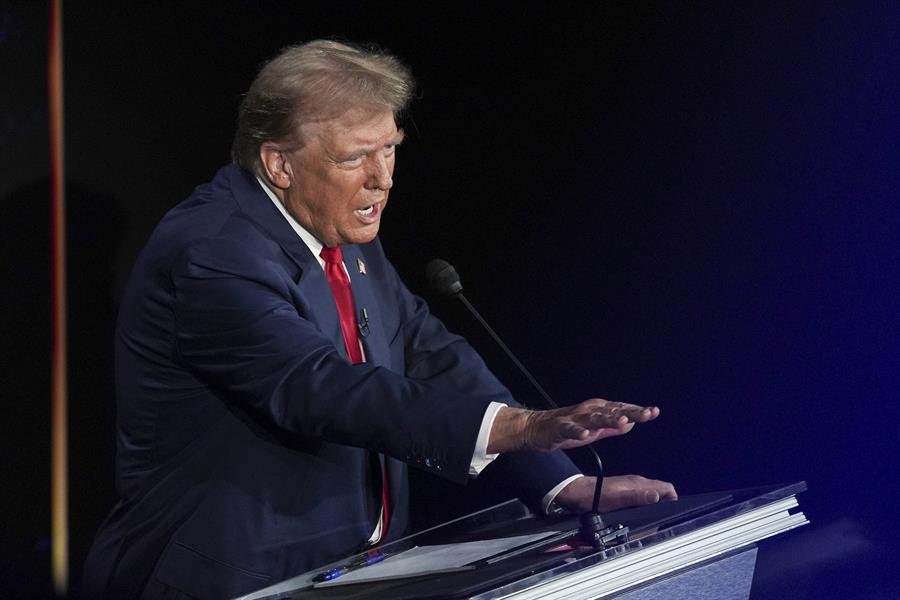
El expresidente de Estados Unidos Donald Trump habló con vehemencia en el debate presidencial del martes sobre que quiere que la guerra de Rusia en Ucrania termine, pero rechazó en dos ocasiones responder a una pregunta directa sobre si quiere que gane Ucrania, aliado de Estados Unidos.
Trump también afirmó falsamente que la guerra había matado a “millones” de personas desde que Rusia invadió Ucrania hace dos años y medio, mientras que la ONU dice que se han verificado 11.700 muertes de civiles. Y afirmó sin pruebas que su rival demócrata, la vicepresidenta Kamala Harris, había fallado en una misión diplomática apenas unos días antes de que Rusia emprendiera su invasión.
Era probable que las declaraciones de Trump aumentaran las preocupaciones en Ucrania y sus partidarios sobre que un regreso del exmandatario a la Casa Blanca pueda abocar a Ucrania a una paz con pérdidas frente a su vecino más fuerte, Rusia. Ucrania, aliada de Occidente, depende de la ayuda militar y financiera de Estados Unidos para seguir el ritmo en su guerra contra las fuerzas rusas, y tendría muchas dificultades para resistir sus ataques si Estados Unidos retira ese apoyo.
Es “una pregunta muy sencilla. ¿Quiere usted que Ucrania gane esta guerra?”, dijo a Trump el moderador, David Muir, de ABC News, en el debate del martes, la primera de las dos ocasiones en las que presionó a Trump para que diera una respuesta directa.
“Quiero que la guerra se pare”, respondió Trump. “Quiero salvar vidas”, añadió, antes de afirmar falsamente “millones” de personas estaban muriendo en el conflicto.
Entonces Muir volvió a preguntar y planteó si Trump cree que “va en el mejor interés de Estados Unidos que Ucrania gane esta guerra”.
El expresidente republicano respondió: “Creo que terminar esta guerra y hacerlo rápido va en el mejor interés de Estados Unidos”.
Trump ha reiterado que si es elegido, conseguiría un acuerdo de paz entre Ucrania y Rusia en un día, aunque no aclara cómo. El temor de los partidarios de Ucrania es que la clase de acuerdo de la que habla Trump suponga que el gobierno democrático del país renuncia a una cantidad considerable de territorio y soberanía ante las duras exigencias de Rusia.
El presidente de Rusia, Vladímir Putin, insistió este año en que Ucrania debe renunciar a amplias extensiones de territorio y evitar sumarse a la OTAN simplemente como condición para iniciar las negociaciones.
“El motivo por el que Donald Trump dice que esta guerra terminaría en 24 horas es porque él simplemente la abandonaría”, dijo Harris el martes. Acusó a Trump de tener “lo que usted cree es una amistad con (…) un dictador que se lo comería para almorzar”.
El vocero de Putin, Dmitry Peskov, dijo el miércoles que “el nombre Putin se utiliza, digamos, como una de las herramientas en la lucha política interna de los Estados Unidos”. El portavoz añadió que “esto no nos gusta nada, nada, y aún confiamos en que dejen en paz a nuestro presidente”. Peskov sugirió que tanto con Harris como Trump tienen una actitud “negativa” y “poco cordial” hacia Rusia.
Trump tiene un largo historial de comentarios de admiración hacia Putin, lo que incluye haber descrito sus estrategias en la invasión de Ucrania de 2022 como “geniales” y “muy astutas”. Trump no expresa el mismo afecto por el presidente de Ucrania, Volodymyr Zelenskyy, al que describe como un “vendedor” por sus peticiones de armas a sus aliados.
El gobierno de Biden dice que una victoria en Ucrania animaría a Putin a tomar medidas contra otras democracias aliadas de Occidente en Europa. El presidente, Joe Biden, y sus altos funcionarios jugaron un papel clave para reunir apoyo para Ucrania y sanciones contra Rusia antes incluso de que las fuerzas rusas entraran en Ucrania. Washington movilizó a sus aliados al mostrar información desclasificada de inteligencia que mostraba preparativos rusos para una invasión.
Apenas unos días antes de la invasión a finales de febrero de 2022, Biden envió a Harris a la Conferencia de Seguridad de Múnich, una misión de alto nivel para consolidar apoyo a Ucrania entre líderes europeos y de la OTAN en la cita anual. Harris se reunió con Zelenskyy en un aparte de la cumbre.
Durante el debate, Trump vinculó la fecha del viaje de Harris a Europa con que Putin enviara tropas a Ucrania días más tarde.
“La enviaron a negociar con Zelenskyy y Putin. Y lo hizo. Y la guerra empezó tres días más tarde”, dijo.
Sin embargo, el gobierno estadounidense dijo que las tropas rusas acumuladas en la frontera ucraniana y los análisis de inteligencia ya apuntaban a una invasión inminente. Y Putin no asistió a la conferencia de seguridad en Alemania ni Harris se reunió con él.
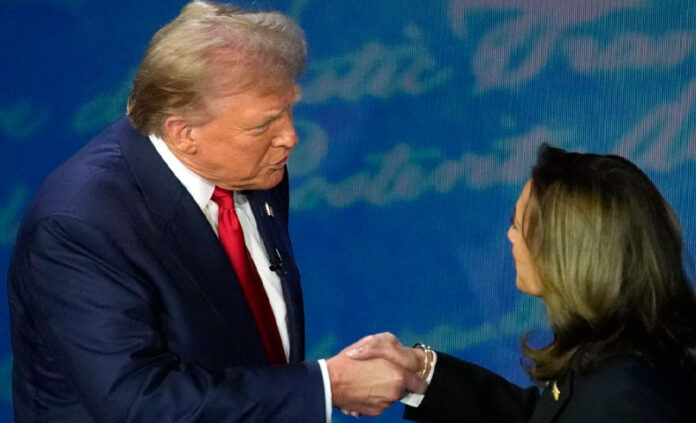
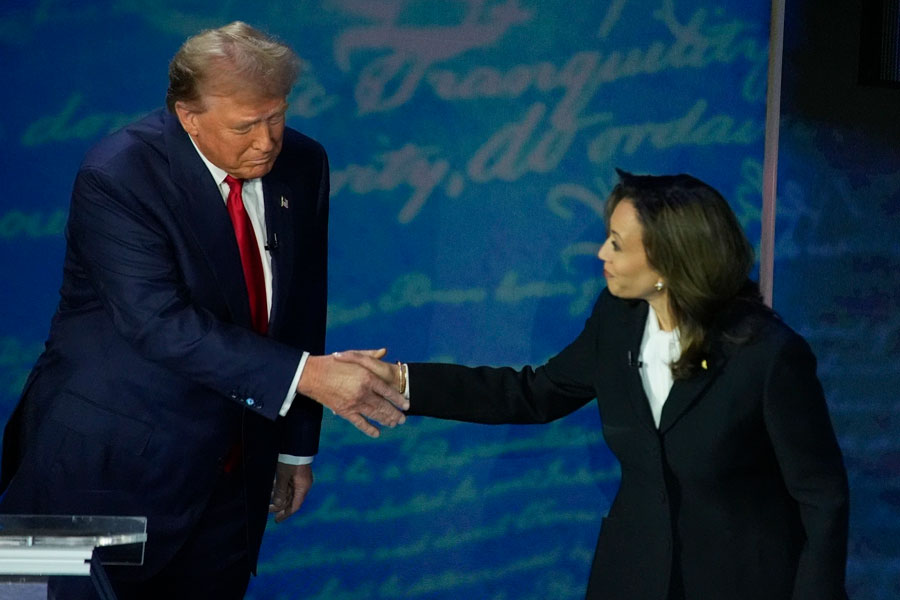
Republican presidential nominee former President Donald Trump shakes hands with Democratic presidential nominee Vice President Kamala Harris during an ABC News presidential debate at the National Constitution Center, Tuesday, Sept.10, 2024, in Philadelphia. (Photo: AP/Alex Brandon)
The Democratic vice president opened Tuesday night’s faceoff with a power move, marching across the stage to Trump’s lectern to shake his hand.
“Kamala Harris,” she said, introducing herself as the pair met for the first time ever. “Let’s have a good debate.”
“Nice to see you. Have fun,” the former Republican president responded.
The exchange set the tone for the 90-minute debate to come: Harris controlled the conversation at times, baiting Trump with jabs at his economic policy, his refusal to concede his 2020 election loss and even his performance at his rallies.
Trump, while measured early on, grew more annoyed as the night went on. And one significant moment played out after the two candidates left the stage, when megastar Taylor Swift said she’ll vote for Harris.
Some takeaways on a historic debate:
Harris took the fight to Trump in a way that Biden could not
In her first answer, the former prosecutor said Trump’s tariffs would effectively create a sales tax on the middle class. She soon accused Trump of presiding over the worst attack on American democracy since the Civil War — the Capitol riot on Jan. 6, 2021. She charged him with telling women what they could do with their bodies. And she mocked Trump’s praise of dictators “who would eat you for lunch.”
Harris effectively controlled much of the conversation with such attacks and baited Trump into responses that were at times vents, and at others, reminders of his wild rhetoric and fixation on the past.
“You did in fact lose that election,” Harris said of the 2020 race that Trump lost to Democrat Joe Biden but still insists he won. “Donald Trump was fired by 81 million people,” she said, referring to Biden’s winning vote total.
But Harris may have got under her opponent’s skin the most when she went after his performance at his rallies, noting that people often leave early.
Growing visibly irritated, Trump insisted that his rallies were larger than hers.
A smiling Harris frequently shifted her message from Trump back to the American people.
“You will not hear him talk about your needs, your dreams and your needs and your desires,” Harris said. “And I’ll tell you, I believe you deserve a president who actually puts you first.”
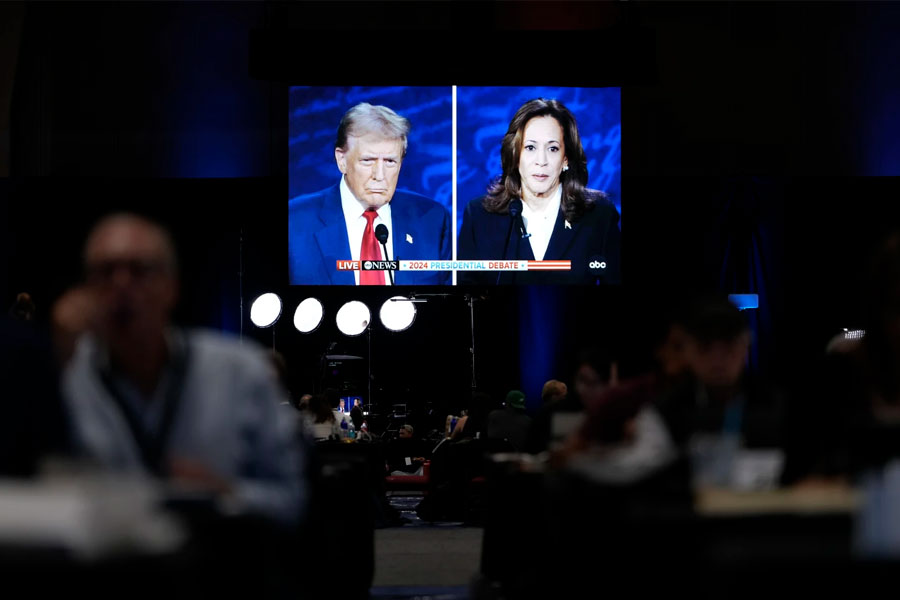
Members of the press appear in the spin room during a presidential debate between Republican presidential nominee former President Donald Trump, on screen at left, and Democratic presidential nominee Vice President Kamala Harris, right, Tuesday, Sept. 10, 2024, in Philadelphia. (Photo: AP/Matt Slocum)
Trump had a label for Harris: ‘She is Biden’
Trump was often on defense, but he did drive the core message of his campaign: Inflation and immigration are hammering Americans.
Immigrants, Trump said, have “destroyed the fabric of our country.”
He repeatedly tied Harris to Biden.
“She is Biden,” he said.
“The worst inflation we’ve ever had,” Trump added. “A horrible economy because inflation has made it so bad. And she can’t get away with that.”
Harris responded: “Clearly, I am not Joe Biden and I am certainly not Donald Trump. And what I do offer is a new generation of leadership for our country.”
Trump also went after Harris for moving away from some of the progressive positions she took in the 2020 Democratic presidential primary, urging voters not to believe the more moderate tone she’s striking in this campaign.
“She’s going to my philosophy now. In fact, I was going to send her a MAGA hat,” he said, referring to the red “Make America Great Again” baseball caps that many of his supporters wear. “But if she ever got elected, she’d change it.”
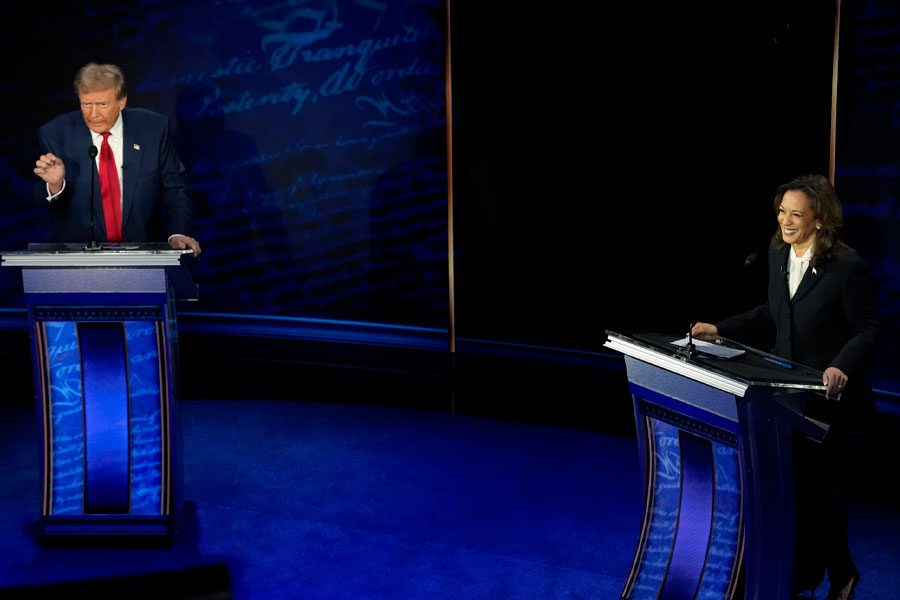
Republican presidential nominee former President Donald Trump and Democratic presidential nominee Vice President Kamala Harris participate during an ABC News presidential debate at the National Constitution Center, Tuesday, Sept.10, 2024, in Philadelphia. (Photo: AP/Alex Brandon)
Swift sings a praise for Harris
One of the most consequential moments came in a post on one of the most followed accounts on Instagram moments after the debate ended.
Swift has a loyal following among young women, a demographic Harris needs to turn out in big numbers. She called Harris a “gifted leader,» telling her fans to do their research and make their own decisions, but “I’ve done my research, and I’ve made my choice.”
Trump on race and Harris on the attack
ABC moderator David Muir asked Trump point-blank about his allegation last month that Harris had belatedly “ turned Black.” Harris is Black and South Asian and a graduate of Howard University, a historically Black school in Washington.
Trump tried to play down the matter. “I don’t care what she is, you make a big deal out of something, I couldn’t care less,» Trump said.
Harris, however, had her opening and she rattled off a long list of Trump’s racial controversies: his legal settlement for discrimination against prospective Black tenants at his New York apartment buildings in the 1970s; his ad calling for the execution of Black and Latino teenagers — who were wrongly arrested — in the Central Park jogger case in the 1980s; and his false claims that former President Barack Obama was not born in the United States.
“I think the American people want something better than that, want better than this,” Harris said.
Trump accused Harris of trying to “divide” people and dismissed her claims as dated and irrelevant.
“This is a person that has to stretch back 40, 50 years ago because there’s nothing now,” he said.
Harris and Trump dug in on abortion positions
Harris came out swinging in defense of abortion rights, perhaps the strongest issue for Democrats since Trump’s nominees created a Supreme Court majority to overturn the constitutional right to an abortion. Her sharp arguments provided a vivid contrast to President Joe Biden’s rambling comments on the issue during his June debate with Trump.
“The government, and Donald Trump, certainly should not be telling a woman what to do with her body,” Harris said. She painted a vivid picture of women facing medical complications, gut-wrenching decisions and the need to travel out of state for an abortion.
Trump was just as fierce in defense, saying he returned the issue to the states, an outcome he said many Americans wanted. He struggled with accuracy, however, repeating the false claim that Democrats support abortion even after babies are born. He stuck to that even after he was corrected by moderator Linsey Davis.
“I did a great service in doing that. It took courage to do it,” Trump said of the overturning of Roe v. Wade and its constitutional protections for abortion. “And the Supreme Court had great courage in doing it. And I give tremendous credit to those six justices.”
Polls has shown significant opposition to overturning Roe and voters have punished Republicans in recent elections for it.
Trump traded on a Harris talking point
Trump took a Harris talking point and directed it right back at her. It happened when he objected after Harris interrupted him.
“Wait a minute, I’m talking now,” Trump said. “Sound familiar?”
He was putting his own spin on a line Harris used famously against Mike Pence in the 2020 vice presidential debate when she rebuked Pence for interrupting, saying, “Mr. Vice President, I’m speaking.”
Harris made a pitch to Republican voters
In a divided nation, the election will ultimately be decided by a small slice of swing voters in only a handful of states. And in a nod toward that fact, Harris made an explicit appeal to voters across the political spectrum — including Republicans.
She noted that she is a gun owner. She cited the “late, great John McCain,” a reference to the Arizona Republican senator and war hero whom Trump criticized for being captured by enemy soldiers. And she listed the many Republicans who formerly served in the Trump administration who have now endorsed her campaign.
Trump, meanwhile, offered little outreach to voters in the middle, ignoring the calls for unity that framed his summertime convention speech.
Harris seized on the Jan. 6 attack on the Capitol to make another explicit appeal to undecided voters.
“It’s time to turn the page,” she said. “And if that was a bridge too far for you, well, there is a place in our campaign for you.”
Trump was restrained, except when he wasn’t
Democrats hoped and Republicans feared that Trump would lose his cool on stage. At first he didn’t, but as Harris increasingly got under his skin, he went to some dark places.
Trump amplified false rumors that Haitian immigrants in Ohio are eating pets — ABC’s Muir noted that local officials say that is not happening — as he argued that the Biden-Harris administration was admitting dangerous immigrants.
When Harris pressed him on the array of criminal and civil cases against him, Trump similarly fumed. He accused Harris and Biden of planting all the cases.
“I probably took a bullet to the head because of the things they said about me,” Trump said, referencing the assassination attempt in July by a gunman whose motives are unknown.
When pressed on whether he had any responsibility for Capitol riot, Trump raised his voice, blaming both Democratic Rep. Nancy Pelosi of California, who was the House speaker at the time, and the Democratic mayor of Washington. He said the rioters have “been treated so badly” and once again denied he lost the 2020 election.
Harris replied, “Donald Trump was fired by 81 million people, let’s be clear about that, and clearly he’s having a very difficult time processing that.”
Republican presidential nominee former President Donald Trump shakes hands with Democratic presidential nominee Vice President Kamala Harris during an ABC News presidential debate at the National Constitution Center, Tuesday, Sept.10, 2024, in Philadelphia. (Photo: AP/Alex Brandon)
There was an in-the-weeds exchange on the economy
The debate opened with an unexpectedly wonky exchange on the economy: Harris took on Trump for his plan to put in place sweeping tariffs and for the trade deficit he ran as president; Trump slammed Harris for inflation that he incorrectly said was the worst in the country’s history.
Trump said people look back on his presidency’s economy fondly. “I created one of the greatest economies in the history of our country,” he said. Harris flatly told viewers, “Donald Trump has no plan for you.”
Harris would be the nation’s first female president. But her gender was an afterthought during the debate.
She made no references to the historic nature of her candidacy. Neither did Trump.
And there were no performative moments in which gender was an issue. Who could forget Trump’s decision to stand behind his last female opponent, Hillary Clinton, during a 2016 debate? He also called Clinton a “nasty woman.” Afterward, Clinton said she was creeped out.
But on Tuesday night, both candidates stayed behind their podiums as instructed and there were no explicit jabs regarding gender.
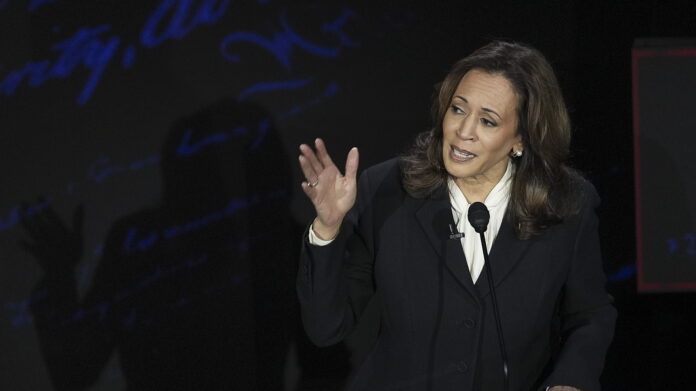
El candidato presidencial demócrata, la vicepresidenta estadounidense Kamala Harris, responde al candidato presidencial republicano Donald J. Trump durante un debate presidencial organizado por ABC News en el Centro Nacional de la Constitución en Filadelfia, Pensilvania. EFE/EPA/DEMETRIUS FREEMAN / POOL
El debate se realizó ocho semanas antes de las elecciones del 5 de noviembre, y días antes de que comience la votación anticipada en algunos estados. Fue el primer debate presidencial para Harris, de 59 años, y el séptimo para Trump, de 78 años, teniendo en cuenta sus campañas desde 2016, que lo convierte en el candidato con más debates presidenciales en la historia estadounidense.
La vicepresidenta demócrata trató varias veces de provocar al expresidente republicano, recordándole en varias ocasiones la derrota electoral que él aún niega, y burlándose de algunas otras de sus afirmaciones falsas. Esto provocó que Trump lanzara la clase de ataques personales de los que sus asesores y simpatizantes han tratado de alejarlo.
Trump habló más de cinco minutos extras, y los conductores no pudieron contenerlo cuando se robaba la palabra o se extendia más de lo permindo.
Una encuesta rápida realizada por CNN entre estadounidenses registrados para votar que vieron el debate presidencial del martes concluye que la vicepresidenta y candidata demócrata a la Casa Blanca, Kamala Harris, superó al expresidente y candidato republicano Donald Trump con creces.
Un 63% de los 605 encuestados por mensaje de texto en todo el país consideró que Harris tuvo un mejor desempeño en el debate celebrado en Filadelfia frente a un 37 % que opinó que Trump fue el mejor de los dos.
Antes del debate, los mismos votantes estaban divididos en partes iguales sobre qué candidato tendría un mejor desempeño, señaló CNN en la presentación de los resultados de la encuesta.
Un 96 % de los partidarios de Harris que presenciaron el debate dijeron que la vicepresidenta hizo un mejor trabajo que el expresidente, mientras que entre los partidarios de Trump el porcentaje de los que lo consideran ganador es del 69 %.
Los resultados de la encuesta rápida marcan un cambio con respecto a la reacción al debate presidencial de junio, cuando los registrados como votantes que vieron el enfrentamiento verbal entre Trump y el presidente Joe Biden, entonces candidato demócrata a las elecciones del próximo 5 de noviembre, consideraron que el expresidente superó a su rival (67 % frente a 33 % ).
CNN precisó que los resultados de la encuesta reflejan las opiniones del debate solo entre los que sintonizaron y no son representativos de las opiniones del público votante en general.
Los observadores del debate en la encuesta tenían 6 puntos más de probabilidades de estar alineados con los republicanos que con los demócratas, lo que da como resultado una audiencia que tenía alrededor de 4 puntos porcentuales más de inclinación republicana que todos los votantes registrados a nivel nacional.
Según CNN, los votantes que vieron el debate también se fueron con mejores opiniones de Harris en comparación con sus impresiones antes del debate, mientras que pocos cambiaron sus opiniones sobre Trump en general.
Un 45 % de los encuestados dijo que ve favorablemente a Harris y un 44 % desfavorablemente, lo que significa una mejora respecto a antes del debate, cuando era vista positivamente solo por un 39 %.
Mientras tanto, las opiniones de los observadores del debate sobre Trump cambiaron poco: el 39 % lo calificó favorablemente y el 51% desfavorablemente después del debate, porcentajes similares a los mismos votantes antes de que subiera al escenario.
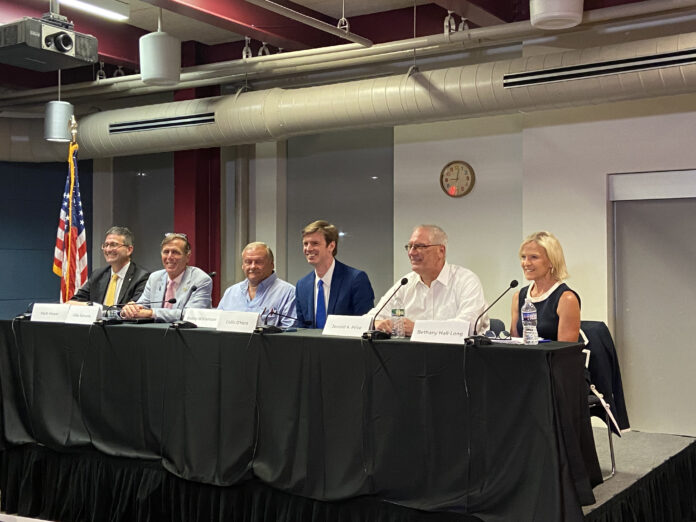
Debate entre los aspirantes a gobernador de Delaware el 14 de agosto de 2024 en la biblioteca de Dover. (I-D: Matt Meyer, Mike Ramone, Bobby Williamson, Collin O’Mara, Jerry Price y Bethany Hall-Long).
Delaware celebró sus primarias el 10 de septiembre mientras en Pensilvania se preparaban para el primer debate entre Trump y Harris.
La senadora estatal Sarah McBride, ganó sus primarias para representante al Congreso (79.85%) e irá a generales contra el republicano John Whalen (55.79%). De ganar en noviembre será la primera representante en el Congreso de los Estados Unidos transgénero.
Matt Meyer ganó (46.98%) a Bethany Hall-Long (36.62%) para gobernador del estado. Hall-Long tenía el apoyo del gobernador Carney y del partido demócrata.
Kyle Evans-Gay ganó (48.2%) en su postulación a vicegobernadora. En noviembre irá contra la republicana Ruth Briggs King.
El gobernador John Carney, venció (53.76%) a Velda Jones-Potter (46.24%) para la alcaldía de Wilmington.
Aspecto que mostraba el exterior del Departamento de Elecciones de Georgetown el 10 de septiembre a las 2:29pm
Los hispanos
Trinidad Navarro ganó (73.96%) sus primarias para comisionado de seguros.
Margie López-Waite perdió (40.28%) frente a Eric Morrison (59.72%) para representante estatal del distrito 27.
Thea López perdió (39.46%). Se postulaba por el distrito 1 al Consejo de Wilmington.
María Cabrera quedó en segunda posición (23.57%) como concejal “at large” de Wilmington.
Apertura de oficina electoral de Matt Meyer en el sur de Delaware (Rehoboth Beach) 10 de julio de 2024.
Estos dos candidatos, Meyer (ejecutivo del condado de New Castle) y Hall-Long (vicegobernadora) tuvieron un gran desencuentro durante la campaña, por la denuncia de Meyer respecto de la auditoría de la campaña de su oponente y su petición de imputación como delito federal. Hall-Long declaró que las irregularidades encontradas en la auditoría eran “errores menores de contabilidad” y contraatacó denunciando la inactividad de Meyer ante denuncias por acoso sexual ocurrido en las oficinas del condado.
Collin O’Mara (tercer aspirante demócrata) y los republicanos (Mike Ramone, Jerry Price y Bobby Williamson), se mantuvieron al margen de las acusaciones anteriores.
Como vicegobernadora, Hall-Long siempre tuvo en cuenta a la comunidad hispana de Delaware y Meyer también.
Los líderes demócratas del Senado (Sokola, Townsend y Lockman) emitieron un comunicado diciendo “Nos gustaría reconocer la indeleble carrera de servicio público de nuestra ex–colega del Senado Bethany Hall-Long. Los resultados de esta noche de ninguna manera disminuyen su legado de liderazgo en nuestro estado, particularmente en las áreas de salud pública, salud conductual y como defensora de las familias trabajadoras. Sabemos que seguirá encontrando formas significativas de contribuir a nuestro estado mucho más allá de su exitoso mandato en el cargo público”.
Parece que en los electores demócratas influyó más la denuncia de Meyer. En su discurso de agradecimiento, justificó su victoria en que “Los habitantes de Delaware quieren un futuro honesto y transparente, que rinda cuentas a la gente y que ofrezca resultados reales para todos nosotros”.
Filadelfia.– El candidato republicano a la presidencia estadounidense, Donald Trump, acusó este martes a los inmigrantes que llegan a Estados Unidos de comerse los perros y los gatos de los ciudadanos que viven en las ciudades fronterizas, ante una atónita Kamala Harris, su rival demócrata en las elecciones del 5 de noviembre.
«Muchas ciudades no quieren hablar de ello porque les da vergüenza. En Springfield se están comiendo a los perros la gente que vino, se están comiendo a los gatos, se están comiendo a las mascotas de la gente que vive allí y esto es lo que está pasando en nuestro país y es una vergüenza», apuntó el expresidente haciéndose eco de una retórica racista.
Trump y su fórmula vicepresidencial, JD Vance, han propagado información falsa sobre migrantes haitianos «causando caos» en una ciudad de Ohio y secuestrando mascotas para comérselas.
(Foto: EFE/DEMETRIUS FREEMAN)
Las autoridades locales han salido ya a desmentir estos rumores, que se han propagado como la pólvora en redes sociales, en especial en X, donde el propio Elon Musk, el multimillonario dueño de la plataforma, ha contribuido a diseminar este bulo.
El propio presentador de ABC News, David Muir, salió rápidamente a corregir al expresidente: «Solo quiero aclarar esto. Usted menciona Springfield, Ohio, y ABC News se puso en contacto con el administrador de la ciudad allí. Nos dijo que no ha habido informes creíbles de reclamos específicos de mascotas que hayan sido lastimadas, heridas o maltratadas por individuos dentro de la comunidad inmigrante», dijo.
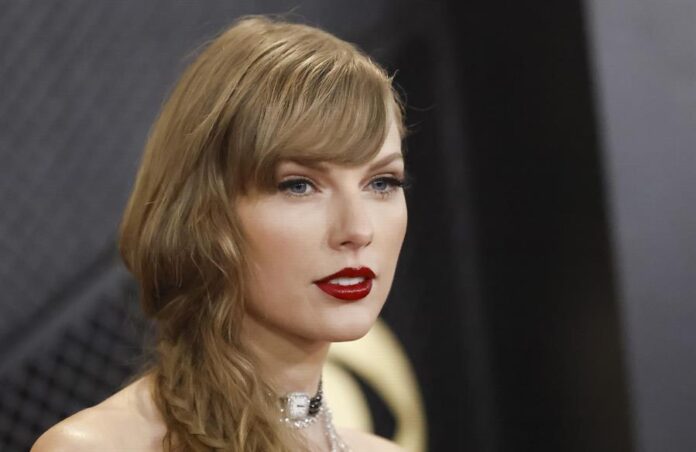
Washington.- La cantante Taylor Swift, una de las figuras más importantes de la cultura pop estadounidense con millones de seguidores en todo el mundo, anunció este martes que votará por la vicepresidenta, Kamala Harris, en las elecciones del 5 de noviembre.
«Votaré por Kamala Harris y Tim Walz en las elecciones presidenciales de 2024», declaró en una publicación en Instagram solo minutos después de que finalizara el debate entre Harris y el exmandatario y candidato republicano, Donald Trump.
En su cuenta de Instagram, donde tiene 283 millones de seguidores, Swift posó con una foto de su gato Benjamin y firmó su publicación como «señora soltera con gatos», una referencia al compañero de fórmula de Trump, J.D. Vance, quien criticó a Harris y a las mujeres sin hijos llamándolas de esa manera.
En ese post, Swift comenzó contando que había visto el debate y que decidió anunciar que votaría por Harris debido a que ella lucha por derechos y causas que, en su opinión, necesitan «una guerrera que las defienda».
«Creo que es una líder de mano firme y talentosa y que podemos lograr mucho más en este país si nos guía la calma y no el caos. Me sentí muy alentada e impresionada por su elección de compañero de fórmula @timwalz, quien ha estado defendiendo los derechos LGBTQ+, la fecundación in vitro y el derecho de la mujer sobre su propio cuerpo durante décadas», afirmó.
Swift respaldó en 2020 al presidente estadounidense, Joe Biden, y ha apoyado anteriormente a otros demócratas. En los últimas semanas, había crecido el debate sobre si se pronunciaría a favor de Harris, dado que la fecha de las elecciones se acerca cada vez más.
En su publicación, explicó que quería esperar a ver a los dos candidatos en el debate y reveló que la decisión de posicionarse se produjo después de que supiera que Trump había utilizado en julio imágenes generadas por inteligencia artificial para decir de manera falsa que había logrado el apoyo de la cantante.
Ese suceso, explicó, evocó «sus temores sobre la inteligencia artificial y los peligros de difundir desinformación».
«Me hizo concluir que necesito ser muy transparente como votante sobre cuáles son realmente mis planes para estas elecciones. La forma más sencilla de combatir la desinformación es con la verdad», afirmó para, a continuación, anunciar su apoyo por Harris y Walz.
La cantante invitó a sus seguidores a leer sobre los temas que les importan para tomar su propia decisión. «He investigado y he tomado mi decisión. Tu investigación y tu decisión son tuyas», afirmó.
Por último, recordó que en Estados Unidos para votar los ciudadanos deben registrarse en un censo de manera proactiva y añadió en sus historias un enlace donde poder hacer ese trámite y donde se ofrece información sobre las fechas para votar por adelantado.
En algunos estados de EE.UU., las fechas para votar por adelantado empiezan el 20 de septiembre.
Mientras salía la noticia de que Swift apoyaba a Harris y Walz, el propio candidato vicepresidencial estaba haciendo una entrevista en la cadena MSNBC. La presentadora le leyó el post de la cantante, ante lo que él se puso la mano en el corazón y le dio su agradecimiento.
El apoyo de Swift podría tener un gran impacto en el voto joven, que podría ser clave para que Harris ganara una carrera que las encuestas muestran especialmente ajustada.
El candidato presidencial republicano y expresidente Donald Trump y la candidata presidencial demócrata y vicepresidenta Kamala Harris durante el debate presentado por ABC News, el martes 10 de septiembre de 2024, en el National Constitution Center de Filadelfia. (AP Foto/Alex Brandon)
Kamala Harris y Donald Trump intercambiaron ataques políticos y personales mientras presentaban sus contrastantes visiones para el país en cuestiones como el aborto, la inmigración y la democracia de Estados Unidos durante su primer, y quizás único, debate antes de los comicios presidenciales de noviembre.
La vicepresidenta demócrata trató varias veces de provocar al expresidente republicano, recordándole en varias ocasiones la derrota electoral que él aún niega, y burlándose de algunas otras de sus afirmaciones falsas.
Harris no sólo trató de presentar argumentos de que Trump no es apto para desempeñar el cargo, sino que trató de usar sus respuestas de tal forma que parecían diseñadas para provocarlo a lanzar ataques personales, de los que sus asesores y simpatizantes han tratado de alejarlo. En cierto punto, Harris se volteó a ver a Trump y dijo que como vicepresidenta, he hablado con dignatarios extranjeros “y dicen que usted es una vergüenza”.
Trump volvió a negar su derrota ante el presidente Joe Biden hace cuatro años, cuando sus intentos por revertir el resultado dieron lugar a la insurrección del 6 de enero de 2021 en el Capitolio federal.
“Donald Trump fue despedido por 81 millones de personas”, dijo Harris. “Así que dejemos eso en claro. Y evidentemente le cuesta mucho trabajo procesar eso”.
Trump, en cambio, trató de relacionar a Harris con Biden, preguntándole por qué no había tomado acciones sobre sus propuestas mientras se desempeñaba como vicepresidenta, y centró sus ataques contra Harris en la asignación que le encargó Biden de lidiar con las causas de raíz de la migración ilegal.
En varias ocasiones se refirió a ella y a Biden como personas débiles, y mencionó los elogios del primer ministro de Hungría, Viktor Orbán, para demostrar que es sumamente respetado por dignatarios de todo el mundo, asegurando que Orbán lo llama “la persona más temida”.
El enfrentamiento les brindó a los estadounidenses la mirada más detallada hasta el momento a una campaña que ha cambiado drásticamente. De inmediato, Harris presentó los argumentos demócratas de una mejor manera de lo que lo hizo Biden durante su debate de junio, vinculando al expresidente con las labores del Partido Republicano para restringir el acceso al aborto, y acusándolo de socavar la democracia del país.