


3.3 C
Philadelphia
spot_img
Inicio Blog Página 738

Visita de Harris a Puerto Rico despeja el camino a la estadidad, dice líder demócrata

líder
Vicepresidenta de Estados Unidos, Kamala Harris. (Foto: EFE/LEIGH VOGEL /Archivo)

El presidente del Partido Demócrata en Puerto Rico, Charlie Rodríguez, aseguró el miércoles que la visita de la vicepresidenta de Estados Unidos, Kamala Harris, a la isla el próximo 22 de marzo demuestra que el camino a la «estadidad está despejado».

Y es que según dijo Rodríguez en un comunicado de prensa, la administración del presidente de Estados Unidos, Joe Biden, se ha interesado en escoger a Puerto Rico como «un punto de referencia» sobre el trato igualitario que merecen los puertorriqueños con los residentes en Estados Unidos.

«Esto de por sí, es una clara señal de que el camino hacia la estadidad está despejado. Es necesario continuar reclamando ante el Congreso la voluntad democrática de nuestro pueblo por la igualdad con la admisión de Puerto Rico a la Unión», sentenció Rodríguez.

Aseguró además que la Casa Blanca tiene planes de desarrollo en Puerto Rico en el sector de energía, acceso a mayores programas de salud y de educación, paridad en todos los programas federales, así como su compromiso de resolver el problema de estatus.

«Biden ha hecho de Puerto Rico, un lugar preferente para su gestión presidencial, aún sin que tengamos la capacidad de apoyarlo con el voto para su reelección», reconoció Rodríguez.

Ante ello, el exlegislador criticó a líderes de la oposición «de poca monta» por oponerse a que Puerto Rico se anexe permanentemente a Estados Unidos como otro estado y que «sigamos en un limbo que socava nuestro desarrollo y progreso».

«Nuestra misión como líder del Partido Demócrata, ha sido trabajar afanosamente para que Washington vea a Puerto Rico como una prioridad y socios iguales de la nación», enfatizó Rodríguez.

«Y por eso es vital de que el Partido Demócrata en Puerto Rico continúe en manos de líderes que culminen esa tarea de igualdad de derechos y no descarrilen un proceso descolonizador que está próximo a rendir frutos», apuntó.

Latinos in Rome not much different than in USA

latinos

In our last column, we talked about Latinos in England, and now we continue our journey as we travel from England to Italy, specifically Rome, the eternal city.  Rome is known for its rich history and diverse culture. Everywhere you look in Rome, there is an era of history represented.  There are about 280,000 immigrants in Italy, and the majority are from countries such as Egypt, Tunisia, and Morocco, but Rome is also home to a substantial Latino population.

Latinos contribute to the vibrant culture of Rome with their delicious cuisine, beautiful art, and joyous festivals. They are an important part of the Roman experience. Yet, the Latino experience in Rome is not unsimilar to their experience in the United States in that documentation issues, language barriers, and discrimination exist in both places.

While touring Rome, I met Maria Barrero, a woman from Nicaragua. As we sat at a cafe, we began engaging in a conversation. Maria asked me where I was from, and I told her that I was born in Cuba and had lived in the United States since the age of 4.

We began talking about the distress involved with having to leave your country. She told me how she and her husband, Pablo, left Nicaragua because of the crime and turmoil in the country. First, they went to the United States and lived there for several years. They had a child in the US;  her daughter, Sara, is an American citizen. The family lived in Texas for several years until the immigration officials arrested and deported her and her husband back to Nicaragua. Sara stayed with relatives in the United States.

Once they had returned to Nicaragua, they began planning another route to leave the country. Maria and her husband have friends in Rome who run a cleaning business, and they invited them to seek a visa to travel to Italy. Her friends offered her and her husband jobs and a place to stay until they established their own home. Although she was happy about the possibility of leaving behind the difficulties of living in Nicaragua, she regretted having to leave her home and close family members. She especially missed her daughter in the United States.

Fast-forward seven years; Maria and her husband are working in the cleaning business and living in a Latino section of town. Her family, she said, has been torn apart by the situation in her native country, and her life in Italy hasn’t been easy. Her visa expired, and now she and her husband are once more undocumented. They work in the cleaning business with their friends, and they are making a humble life for themselves. Maria explains that there is discrimination towards some Latinos.

When I met Maria, her daughter was visiting her in Rome. Maria cried when she told me that her daughter was about to leave Italy and return to her life in the United States. She hopes that someday they will all be reunited. Meanwhile, she continues her life in Rome, learning a new language and becoming accustomed to a new life. Maria is determined to make the best of her situation and create a future for her family. Despite the challenges she faces, she remains positive and focused on a better future.

Franklin Medrano y Angie Millan celebran 15 años de “Actualidad Informativa TV”

En la zona arqueológica peruana de Machu Picchu. (Foto: Cortesía/Franklin Medrano)

El periodista dominicano Franklin Medrano, junto con su pareja de vida y socia, la colombiana Angie Millán, celebraron el décimo quinto aniversario de su programa “Actualidad Informativa TV”, el 2 de marzo en el norte de la ciudad de Filadelfia.

En la sede de la Cámara de Comercio Dominicano-Americana, que encabezan, fueron acompañados por numerosos líderes comunitarios y amigos,

El productor quisqueyano explica que “Actualidad Informativa”, dio inicio en radio y después en televisión, y de ese proyecto han salido otros, entre ellos Emprendedores TV, Viajando por el Mundo TV, la Cámara de Comercio Dominicana y el nuevo proyecto en la industria cinematográfica con Boccaccio Guzmán, con quien produjeron la película “Carmesí de Mariposa”.

  Franklin Medrano ha sido periodista por varias décadas y se ha desarrollado en diferentes medios. (Foto: Cortesía Franklin Medrano)
 

En el concurrido evento anunciaron la próxima premier de la película “Los Ramírez”, filmada en Filadelfia, escrita y dirigida por Guzmán, actor reconocido y cineasta dominicano.

El programa televisivo “Actualidad Informativa TV” cumplió 15 años. (Foto: Cortesía Franklin Medrano)

Junto con Angie Millán, ha recorrido más de 30 países y cientos de ciudades, realizando programas que se transmiten los fines de semana por Telemundo 62 desde hace 15 años. Gracias a estos recorridos, el público televidente puede viajar con ellos para conocer la cultura, arte y gastronomía de los países visitados por esta entusiasta pareja de productores televisivos.

Angie Millan y Franklin Medrano recorriendo República Dominicana en moto. (Foto: Cortesía/Franklin Medrano)
 

El evento fue patrocinado por Asesores Avanzando, Angie Millan Realtor y Club Elite Philadelphia.

Franklin Medrano terminó la carrera de derecho en la Universidad de Santiago, UTESA, en la Republica Dominicana, y un año después de graduarse, curso la de periodismo en la Universidad de Santo Domingo.

God did exactly what Ezekiel 36:26 says, He can do it with you too

The term «heart hardening» may seem like a fairy tale, and many are unaware of its existence and the importance of self-checking. Shockingly, 99% of people have never taken the time to assess their own hearts and ensure that everything is working properly. In the physical aspect, most individuals are unaware of heart problems until a critical stage that requires hospitalization. Such medical conditions may be caused by self-neglect, genetics, external factors, or unknown factors. Regardless of the cause, it is evident that there is an issue at hand. So, what happens when the same thing occurs to the «non-physical heart,» which is concealed and can become as rigid as a rock? 

When the non-physical heart becomes rigid, it can lead to emotional and mental distress. This can manifest in various ways such as difficulty in expressing emotions, lack of empathy towards others, unforgiveness and increased feelings of anger or frustration. Just like the physical heart, it is important to assess the non-physical heart and make sure it is taken care of. One way to do this is by practicing self-reflection and introspection to identify any negative patterns or behaviors that may be affecting the heart. Engaging in activities that promote emotional well-being such as intentional prayer, therapy, and spending time with loved ones can also help to soften and heal the heart. It is important to remember that just like the physical heart, the non-physical heart requires care and attention to function at its best.

Let’s dive deeper.

It amazes me that even this was mentioned in the Word of God. There are many verses in the bible that speaks on the hardening of the heart and other types of hearts that are fascinating to look into. I want to focus on Hebrews chapter 3 verse 7-12, but do take a moment to read the entire chapter.

7 That is why the Holy Spirit says,

“Today when you hear his voice,

8 don’t harden your hearts,

as Israel did when they rebelled,

when they tested me in the wilderness.

9 There your ancestors tested and tried my patience,

even though they saw my miracles for forty years.

10 So I was angry with them, and I said,

Their hearts always turn away from me.

They refuse to do what I tell them.’

11 So in my anger I took an oath:

‘They will never enter my place of rest.’”[e]

12 Be careful then, dear brothers and sisters.[f] Make sure that your own hearts are not evil and unbelieving, turning you away from the living God.

____.____

Now, before we move forward, let’s take a moment to look into the definition of what is the heart according to the Bible.

Broad meaning: It is the center of your personality. Who you are. It is the way you think, behave, and feel. It is what makes you – you. It is also the place where evil is stored. (Luke 6:44-46) (Mark 7:21-23)

Knowing this now, when we try to figure out what does it mean to harden our heart, we are basically closing it out and turning it away from God and people. The consequence of hardening our heart is that it will hinder our way of understanding or perceiving reality and because of that we cannot be who we really are and are meant to be, especially in Jesus.

You might say, “Well, I have a good and valid reason for my heart to be like that,” and yes, we all do. None of us, not even believers of Jesus, are exempt from suffering and hardships, not even Jesus Himself. God understands, and it is ONE of the reasons why He fought so hard and is still fighting to be able to have a relationship with us since The Fall in the Garden of Eden. He knew that we would not be able to do it alone. He knew that His children would need Him. He knew how hopeless the world would be if we did not have Him to lean on amid the pain, confusion, anger, and loss. Even further, He was not obligated to do anything. He could have destroyed the entire world and never created it again. Instead, He placed Himself in pain, confusion, anger, worry, loss, humiliation – just to offer Himself as a solution to the same humanity that rejected Him even when they had everything. He knew that only HE could offer true healing and freedom.

So, as a loving Father, He advises us to not harden our hearts- Why? Just by reading the above verse in Hebrews you can see how the people of Israel behaved and the consequences because of their hardened hearts. Even when they saw with their own eyes all that God did for them, they would still do evil and turn away from God. As a result, they would not enter God’s place of rest or the promises and blessings, not because God ever wanted it that way, but it was their own decisions outside of God that kept them from receiving all that He intended for them. Their hardened hearts rejected God’s love and showed ungratefulness.

I have suffered a lot in life, including losing people I loved dearly to gun violence. I have tasted the good and the bad outside of God, when I did not serve Him, and I have also lived through the same with God as my everything. I have seen that it costs me more to have a hardened heart than not. Today, at almost 30 years old, I can honestly say, I rather experience joy and pain with God in the picture than without. The difference – my true free and hopeful self as God always intended it to be and an unhardened heart that allows me to hear His voice that leads me to peace in the middle of any chaos.

@His_design_Speaks

Bertha Murcia, del campo hondureño al activismo inmigrante

inmigrante
De izq. a der., rabino Michael Ramberg, Bertha Murcia, Blanca Pacheco y Harvey Finkle. (Foto: Cortesía/NSM)

“La lucha aquí es saber encontrar ayuda para lo que se necesite y, también, darle esa ayuda a la gente que no sabe por dónde va”. BM

Cada inmigrante tiene sus razones para salir de su país natal e iniciar la travesía, en muchos de los casos, de alto riesgo.

Para la hondureña Bertha Murcia, lo que la impulsó migrar fue la muerte de su hija, una bebé de un mes y tres días de nacida.  A los 15 días de esa tragedia, en 2009, su esposo le dijo que se venía a los Estados Unidos y ella, en medio de su duelo y dolor, le dijo: «¡pues yo me voy también!». Dejó todo en Honduras, incluyendo a su hijo mayor, a quien vio después de 12 años de salir de su país. Junto con su esposo cruzaron Honduras, Guatemala y México para llegar a los Estados Unidos.


Ya establecida en Filadelfia, después de que pasaron unos años, le preguntó a una señora puertorriqueña cómo podría traer a su hijo, y ella la refirió a la organización Nuevo Movimiento Santuario (NSM), ubicada en el norte de Filadelfia. Allí preguntó y recibió la ayuda que necesitaba para reunirse con él.

Bertha Murcia es ahora una líder y organizadora comunitaria. (Foto: Leticia Roa Nixon)

Bertha pronto comenzó a asistir a las reuniones en el gimnasio de la iglesia de Los Santos Inocentes, en Hunting Park. Tras varios años, María Turcios, una compatriota, la invitó a ser parte del comité “Familias Unidas”, trabajando como voluntaria y ayudando en el fondo comunitario destinado a proveer fianzas a inmigrantes detenidos por el servicio de inmigración y control de aduanas (ICE).  El codirector de NSM, Peter Pedemoti, como parte central de esta organización, comenzó a dar talleres de formación de promotores en los que ella participó con entusiasmo.

Antes de la pandemia, la organizadora comenzó a trabajar para ayudar a las personas de la comunidad a hacer llamadas uno a uno, para conocer las necesidades que tenían, al mismo tiempo que NSM realizaba reuniones comunitarias. Difundían en español la información de ayuda en la ciudad, que era tan necesaria durante ese tiempo.

Previo a las elecciones del 2016, Bertha formaba parte de la lucha activa por una reforma migratoria. “En ese entonces estaba la campaña fuerte en contra de la comunidad inmigrante y nosotros estábamos organizándonos y preparándonos para lo que se podía hacer durante la Administración de Trump, pero bloquearon la reforma migratoria y sufrí la derrota; fue difícil porque creía que estábamos a un paso de conseguirla”.

En Harrisburg, junto con Blanca Pacheco, codirectora de NSM. (Foto: Cortesía/NSM)

Después, la líder comunitaria ayudó, durante el tiempo en que estuvieron en Santuario, a la hondureña Suyapa Reyes y la mexicana Carmela Apolonio Hernández, con sus respectivos hijos en iglesias diferentes. Participó en las reuniones semanales con ambas para brindarles lo que necesitaran. “Estuvimos con Carmela cuando recibimos el aviso de que había ganado el caso”, recuerda con emoción. Tras entrar en Santuario el 6 de enero de 2018, en la iglesia “The Advócate”, Carmela salió formalmente de la iglesia menonita de Germantown el 17 de marzo de 2021 con sus cuatro hijos, Fidel, Keyri, Joselyn y Edwin. El Nuevo Movimiento Santuario, creado en 2007, ayudó a tres familias a refugiarse en iglesias, siendo la de Carmela la primera que participó.

Bertha ha participado en cabildeos en Harrisburg, en las oficinas de los representantes estatales, organizados por la coalición “Manejando PA’Lante”, que lucha para que se aprueben licencias de conducir no marcadas para los inmigrantes.

Junto a su esposo, su hijo menor y Coumba Faye. (Foto: Leticia Roa Nixon)

En la actualidad, Bertha trabaja en los talleres de liderazgo, donde también aprende de otros líderes inmigrantes de países como El Salvador, Guatemala, Honduras y México. “Les enseñamos acerca del racismo, de las leyes de inmigración, de todo lo que conlleva ser un inmigrante en Estados Unidos y las nuevas luchas”. Los talleres de liderazgo son una vez al mes, durante seis meses.

LOS PRICIPALES RETOS

“Yo creo que, como mujeres inmigrantes, hay muchos retos. Cuando llegamos aquí es como comenzar de cero. Es como abrirte camino en una selva, en un lugar que no conoces, que vas a ciegas, no hablas el idioma, no entiendes del sistema, no entiendes cómo funciona la política”, comenta.

Orgullosa campesina

Nacida en “La Montañita”, en el municipio de Quimistán, en el departamento de Santa Bárbara, es hija de un agricultor y una ama de casa.

“Aunque suene raro, mis padres me decían ‘eres mujer, pero puedes hacer todo lo que quieras’, desde las faenas agrícolas hasta los estudios”, afirma.

A los diez años, ayudaba a ir por los terneros o a cosechar el maíz. “Lo que más admiro de mi mamá es que mi papá siempre trabajó fuera de casa y ella es la que nos crio. Mi papá era promotor social, y andaba de comunidad en comunidad campesina haciendo sus capacitaciones en la finca El Zamorano, donde se preparan agrónomos y veterinarios, y se iba por meses o semanas”.

En ocasiones su padre la llevaba a las reuniones donde escuchaba las pláticas de los campesinos. Su padre tenía un huerto enorme donde cultivaba varios tipos de vegetales, e incluso semillas exóticas que les regalaban.

De acuerdo con el censo de 2020, Quimistán tiene 60,047 habitantes. Su principal actividad económica son los cultivos de café, maíz, fríjoles y hortalizas, entre otros.

Bertha estudió y se graduó de cosmetóloga. Le hubiera gustado abrir su propio salón de belleza. Ahora, además de su labor como organizadora comunitaria, se dedica a la crianza de sus cuatro hijos varones, a quienes llama de cariño “mis terremotitos”.

The forgotten role of Hispanic women in voting rights

women
(Foto: Ilustrativa/Pexels)

As Gandhi affirmed, «Strength does not come from physical capacity. It comes from an indomitable will.» It is precisely this courage in the face of life that many Hispanic women have demonstrated and continue to demonstrate, despite remaining in the shadows.

In ancient times, women used to have recognition, but the Industrial Revolution brought a drastic change, marking a before and after. The labor discrimination they faced was just the beginning of a series of losses, which included their status and social recognition.

The New York shirtwaist strike, known as the «March of the Twenty Thousand» in 1909, was a forceful call for equal pay and fair working conditions. This event marked a public outcry against a prolonged social injustice.

In this atmosphere of women’s struggle, which also had the support of men dissatisfied with this postponement, the «Women’s Suffrage Procession» emerged on March 3, 1913 (the day before the inauguration of President-elect Wilson). Thousands of people joined in protest to march in Washington, D.C. and demand that the 19th Amendment be passed authorizing women’s suffrage. It was not until the end of World War I, on June 4, 1919, that the right of women to vote was passed by the United States Congress. It was ratified on August 18, 1920.

«THE FORGOTTEN AMONG THE FORGOTTEN»

American women were considered «forgotten»; however, in the history of the Women’s Rights Movement, names such as Elizabeth Cady Stanton, Lucretia Mott, Carrie Catt, Susan B. Anthony, Lucy Stone, and Alice Paul, among others, are always remembered. But Hispanic names do not appear.

Adelina Otero-Warren – 11 de julio de 1923. Servicio de noticias Bain, Museo Nacional de Historia de la Mujer.

FORGETFULNESS OR ERROR?

Hispanic women, once again, find themselves forgotten, adding injustice upon injustice. Despite this, they’ve been and continue to be crucial shapers of U.S. history, particularly in the fight for women’s suffrage. Bicultural and bilingual, they actively participated in every stage of the struggle.

Nationwide civic associations, established to this day, attest to their ongoing commitment to various causes. Aurora Lucero-White Lea and Adelina «Nina» Otero-Warren played pivotal roles in persuading Alice Paul and the Congressional Union (later the National Woman’s Party) about engaging Spanish-speaking women in the U.S. On October 21, 1915, they orchestrated the Santa Fe March, bringing together 150 Anglo-Saxon and Hispanic suffragists.

Lucero and Otero recognized that the women’s suffrage cause would resonate with Hispanic women, especially those from border territories like New Mexico, Arizona, Texas, and California.

They knew that, pre-U.S. occupation, women enjoyed more rights under Spanish and Mexican law than under English common law later. Mexican and Spanish law legally recognized women as «persons» with rights such as inheritance, property ownership, work, earning money, litigation, and retaining maiden names upon marriage.

None of these rights were granted to married women under English law, the basis of American legal principles. Despite the Treaty of Guadalupe Hidalgo granting automatic US citizenship to Mexican citizens in Arizona, California, western Colorado, Nevada, New Mexico, Texas, and Utah in 1849 (with the commitment to equal rights), the reality was starkly different—they were swiftly relegated to second-class citizenship.

Mexican-Spanish families suffered substantial land and title losses, forced into agricultural, domestic, and food processing jobs. Women’s lives underwent profound changes during the US occupation, stripping them of rights acquired under Spanish and Mexican legal traditions.

Compelled by necessity, they entered the workforce, receiving salaries in return. Other Hispanic women, like María Guadalupe Evangelina de López, Selina Solomons, Gertrudis «Tules» Barceló, María Amparo Ruiz de Burton, Jovita Idár, Luisa Capetillo, Ana Roqué de Duprey, and Genara Pagán, remain among the forgotten figures in the history of the US women’s suffrage movement.

Pagán faced additional hurdles due to her Puerto Rican citizenship, obtaining US citizenship only in 1917 through the Jones-Shafroth Act. While this granted US citizenship to Puerto Rican women, it didn’t confer statehood or federal voting rights. In 1920, after the 19th Amendment, Pagán revived the women’s suffrage cause, attempting to register to vote but facing rejection.

By 1929, the Puerto Rican legislature extended voting rights to literate women, and in 1935, all Puerto Rican women gained access to the vote through local laws, bypassing federal constitutional reforms.

Post-suffrage, Hispanic women pursued institutional roles, facing new struggles in male-dominated settings. A trailblazer in this conquest was Soledad Chávez de Chacón, the first Latina elected to a state office (secretary of state) in the US. In this month of women’s recognition, it’s timely to resurrect these heroines from obscurity. Reflecting on their responses to adversity emphasizes that the mischaracterized «weaker sex» is strong and powerful, both in the past and today.

Biden exige a Israel que no use la ayuda humanitaria como una «moneda de cambio»

biden
EFE/EPA/MICHAEL REYNOLDS

Washington.- El presidente de Estados Unidos, Joe Biden, exigió este jueves al Gobierno del primer ministro israelí, Benjamín Netanyahu, que no use la ayuda humanitaria como una «moneda de cambio» y que permita la entrada de más alimentos y medicinas en la Franja de Gaza.

«Israel debe permitir más ayuda a Gaza y garantizar que los trabajadores humanitarios no queden atrapados en el fuego cruzado. A los dirigentes de Israel les digo esto: la asistencia humanitaria no puede ser un elemento secundario o una moneda de cambio», dijo durante su discurso del estado de la Unión ante el Congreso.

El líder demócrata reivindicó que la protección de las vidas inocentes «tiene que ser una prioridad» y afirmó que Estados Unidos ha liderado «los esfuerzos internacionales para que entre más asistencia humanitaria en Gaza».

Como ya había avanzado la Casa Blanca, el mandatario anunció que Estados Unidos habilitará un puerto en la Franja de Gaza que permita la entrada de alimentos y medicinas al enclave palestino.

«Esta noche, ordeno al Ejército de Estados Unidos que lidere una misión de emergencia para establecer un muelle temporal en el Mediterráneo, en la costa de Gaza, que pueda recibir grandes barcos que transportan alimentos, agua y medicinas», expresó Biden.

Según el presidente, este operativo no requerirá del despliegue de soldados estadounidenses sobre el terreno.

El envío de alimentos y medicinas se llevará a cabo desde Chipre, informaron fuentes del Gobierno.

El mandatario recalcó además que «la única solución real» del conflicto pasa por la construcción de un Estado palestino, algo a lo que se opone Netanyahu, porque es la única forma de garantizar la «seguridad» de Israel y que los palestinos «puedan vivir en paz y dignidad».

Es además, la única forma de lograr que Israel pueda hacer la paz con sus vecinos árabes, incluido Arabia Saudí, opinó.

«La única solución real es una solución de dos Estados. Y digo esto como un partidario de Israel y único presidente estadounidense que ha visitado Israel en tiempos de guerra», explicó.

Biden usa discurso de Estado de la Unión para marcar contraste con Trump y para convencer a votantes

estado
El presidente Joe Biden pronuncia su discurso sobre el Estado de la Unión en el Capitolio de Washington el jueves 7 de marzo de 2024. (Shawn Thew/Pool vía AP)

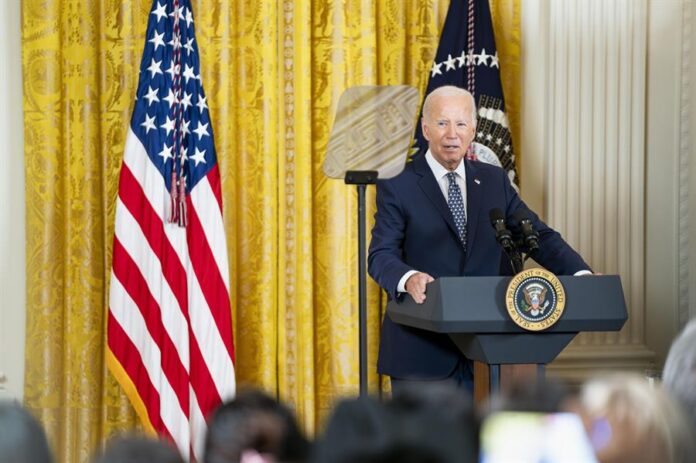
WASHINGTON— El presidente Joe Biden convirtió su discurso del Estado de la Unión del jueves en un animado argumento para tratar de conseguir la reelección, y en el que arremetió contra su posible rival republicano Donald Trump por promover “el resentimiento, la revancha y las represalias” y poner en riesgo las libertades, dentro del país y en el extranjero.

Su discurso desde la tribuna de la Cámara de Representantes, pronunciado sólo ocho meses antes de las elecciones generales, fue algo así como una entrevista de trabajo para el presidente más viejo en la historia del país, quien intenta calmar las preocupaciones de los votantes sobre su edad y su desempeño laboral, y marcar un contraste con su casi seguro rival de noviembre. Elevando la voz, lanzó una diatriba contra su predecesor por no defender a los aliados estadounidenses en el extranjero y por acoger conceptos antidemocráticos en Estados Unidos.

“La libertad y la democracia están siendo atacadas, tanto en casa como en el extranjero, en este preciso momento”, dijo Biden, mientras llamaba al Congreso a otorgar su apoyo a Ucrania para defenderse de la invasión de Rusia. “La historia nos observa”.

Biden rápidamente se enfocó en las amenazas al interior del país, haciendo mención del ataque del 6 de enero de 2021 contra el Capitolio federal por parte de simpatizantes de Trump que buscaban revertir los resultados de las elecciones de 2020, y haciendo un llamado a combatir las amenazas a la democracia.

“Mi predecesor, y algunos de los aquí presentes, intentan enterrar la verdad sobre el 6 de enero. Yo no haré eso”, dijo Biden. “Este es un momento para hablar con la verdad y enterrar las mentiras. Aquí les tengo una verdad simple. No puedes amar a tu país sólo cuando ganas”.

“Mi vida me ha enseñado a creer en la libertad y la democracia”, dijo Biden. “Un futuro basado en los valores fundamentales que han definido a Estados Unidos: honestidad, decencia, dignidad, igualdad. Respetar a todo el mundo. Darle a todos una oportunidad justa. No dar refugio al odio. Ahora bien, otras personas de mi edad ven una historia diferente: una historia estadounidense de resentimiento, venganza y represalias. Yo no soy así”.

El presidente pregonó sus logros en infraestructura y manufactura, y presionó al Congreso para que apruebe más ayuda para Ucrania, normas migratorias más estrictas y precios más bajos para los medicamentos. También trató de recordar a los votantes la situación que heredó cuando asumió el cargo en 2021, en medio de una pandemia y con una economía en contracción.

El presidente, de 81 años, estaba siendo observado de cerca no sólo por su mensaje, sino por si sería capaz de transmitirlo con vigor y firmeza.

Colaboradores de la Casa Blanca señalaron que Biden intentaba demostrarle a quienes dudan de él que están equivocados, mostrar un lado combativo y tratar de exponer a los republicanos por posturas que cree que no encajan con el país, en especial en lo referente al acceso al aborto, pero también en políticas fiscales y servicios de salud. Es parte de las labores que ha emprendido durante todo el año electoral de usar sus discursos oficiales para convencer a los votantes sobre su elección en las urnas en noviembre próximo.

Al resaltar sus logros legislativos, como el que reforzó la producción de chips de computadora en todo el país, Biden dejó de lado su discurso preparado para criticar a los republicanos que votaron en contra de estas medidas pero que no pueden esperar a anotarse el crédito por ellas en sus distritos.

“Si alguno de ustedes no quiere ese dinero en sus distritos, sólo hágamelo saber», dijo el presidente.

La ciudad anuncia cierres viales para el desfile de St. Patrick’s Day

desfile

El Desfile anual St. Patrick’s Day, se llevará a cabo el domingo 10 de marzo a partir de las 11:15 a.m. en Filadelfia.

El desfile de este año, contará con bandas de música, bailarines irlandeses y grupos culturales, comenzará en 16th Street y John F. Kennedy Boulevard, atravesará el área histórica del Independence Mall y terminará en Penn’s Landing. El área de actuación y las tribunas principales estarán ubicadas en las calles 5th y Market. El Desfile se transmitirá en vivo por CW Philly 57 y CBS News Filadelfia.

Market Street entre las calles 6 y 5, estará cerrada a partir de las 5:30 a. m. hasta aproximadamente las 4 p. m.

Las siguientes calles estarán cerradas a partir de las 9 a. m. hasta aproximadamente las 3:30 p. m.

  • Bulevar John F. Kennedy entre las calles 20 y 15
  • Calle 20 entre Market Street y Arch Street
  • Calle 19 entre Market Street y Arch Street
  • Calle 18 entre Market Street y Arch Street
  • Calle 17 entre Market Street y Arch Street
  • Calle 16 entre Market Street y Arch Street
  • Calle 15 entre Market Street y Arch Street

Las siguientes calles estarán cerradas a partir de las 10:30 a. m. (o antes, dependiendo de las condiciones del tráfico) hasta aproximadamente las 3:30 p.m.

  • Bulevar John F. Kennedy entre la calle 15 y la calle Juniper
  • Juniper Street entre John F. Kennedy Boulevard y Market Street
  • Market Street entre Juniper Street y 2nd Street

Habrá zonas de prohibido estacionarse durante el evento, algunas rutas de autobús serán desviadas de sus rutas normales a través del área del Centro de la Ciudad y el área de la Ciudad Vieja a partir de las 8:30 a.m. hasta aproximadamente las 5 p.m. Se publicarán los desvíos y los cambios de ruta específicos en www.septa.org.

Los artículos NO permitidos a lo largo de la ruta del Desfile incluyen:

  • Armas y contrabando de cualquier tipo.
  • Fuegos artificiales o explosivos
  • Sustancias ilegales o ilícitas de cualquier tipo.
  • Bebidas alcohólicas (Se aplicará estrictamente la Ley de Envases Abiertos)
  • Patinetas, vehículos motorizados o scooters (excluidas sillas de ruedas motorizadas o equipos similares)
  • Punteros láser
  • Sistemas de aeronaves no tripuladas (UAS) y drones de cualquier tipo

Para obtener más información visite: www.phillyparade.com

New appointments as the Parker Administration continues to grow

Alcaldesa Cherelle Parker.
Mayor Cherelle L. Parker. (Photo: File)

Five dozen members have now been appointed to the City’s leadership team by Mayor Parker

PHILADELPHIA. – Today, Mayor Cherelle L. Parker announced the latest in a series of significant personnel announcements, as the Parker Administration continues to grow, filling roles essential to the mayor’s vision of a Safer, Cleaner, Greener Philadelphia, with Economic Opportunity for All.
 

“Today we are announcing appointments to two critically important departments that have been long awaited,” said Mayor Cherelle L. Parker. “We are also announcing the team tasked with ensuring that this administration can reach Philadelphians in every community, no matter their gender, faith or socioeconomic status. We know that sometimes, the best way to connect with communities that may be skeptical of government is to meet them where they are, through trusted institutions that our appointees represent.” 
 

“As we continue to do the groundwork to make these next four years run as efficiently as possible, we are being prudent in who we appoint and when we appoint them. There are 44 days until the 100th day mark and it is my job and my responsibility to make sure we handle these personnel decisions like the important tasks they are.” Mayor Parker continued.
 

Today, Mayor Parker made the following appointments to the Parker Administration:

New Positions & Appointments

Susan Slawson, the City’s new Commissioner of Parks & Recreation previously served as the Commissioner for Parks and Recreation overseeing multiple million-dollar projects including the renovations of the Dell Music Center. Before that, she served the Philadelphia Police Department for 30 years, rising to the rank of Lieutenant.

As Commissioner, Slawson will connect the city’s residents to the natural world, each other, and fun things to do and see. She will oversee more than 10,000 acres of land, 500 buildings, 166 miles of trail, 250 playgrounds, and thousands of programs and events throughout Philadelphia’s parks and recreation system.

Perritti Di Virgilio, the incoming Director of the Department of Labor brings a wealth of experience and a lifelong passion for supporting the city’s workforce to his new role. During his 18-year tenure as the Director of Labor Standards, Perritti championed fair pay and equal opportunities for workers, recovering over $3 million in restitution for those who were underpaid. Additionally, he dedicated 14 years as a Business Agent for Laborers Local 332, playing a pivotal role in organizing the asbestos abatement industry in Philadelphia.

A lifelong resident of Philadelphia, Perritti is a proud product of the city’s public school system and a graduate of Temple University’s construction management program. His commitment to labor extends beyond his professional endeavors.

Will Mega will serve as the Deputy Director of Neighborhood and Community Engagement. A distinguished Educator, and Community Organizer, he stands as a pillar of leadership and advocacy in Philadelphia’s African American community. His career, spanning over a quarter of a century, is marked by a profound commitment to the disenfranchised, making him a venerated figure in social, political, and youth-empowerment circles. Mega is a proud member of Kappa Alpha Psi Fraternity Incorporated, an organization known for its commitment to achievement and community service. These achievements, along with his recognition through numerous awards and accolades, exemplify his profound influence on the community engagement landscape. Holding a Master’s Degree in Human Services from Lincoln University, PA, H. Will Mega Ashantee’s educational background compliments his vast professional experience, underscoring his commitment to service and leadership.

Bishop Wilfred H. Speakes Sr. is a distinguished leader with a rich history of service and brings a wealth of experience to his role as Director of the Mayor’s Office of Faith-Based & Interfaith Affairs. Having retired from the Philadelphia Fire Department after a commendable career, Bishop Speakes has seamlessly transitioned into his role as a pillar of spiritual guidance and community leadership. He holds a Pastoral Doctor of Divinity Award, complemented by a Master of Divinity Degree in Theology, and a Bachelor of Religious Education Degree, additionally, he has an Associate’s Degree in Emergency Management.

Director Speakes is not only a learned scholar but also a committed educator, serving as a professor at multiple institutions. Bishop Speakes’ multifaceted talents and unwavering commitment to service underscore his significance as a leader within both the spiritual and civic realms.

Imam Quaiser D. Abdullah, Ph.D., will serve as the Director of Muslim Engagement within the Mayor’s Office. Director Abdullah currently serves as the board chair for Interfaith Philadelphia, co-president for the Association for Conflict Resolution, and co-chair for the Mayor’s Commission on Faith-Based and Interfaith Affairs in Philadelphia, PA. Imam Quaiser is one of the Imams at Masjid Quba and has served as Chairman and COO of Quba Institute, which is a 70-year-old organization that has established social institutions that support the Muslim community in the Philadelphia area. As Director of Muslim Engagement, Imam Quaiser will engage not only the Muslim community but the entire faith community with Director Speakes and the office of Faith-Based and Interfaith affairs.

Abu Edwards will serve as the Director of Black Male Engagement. As a Philadelphia native who has spent over a decade serving the community, he is a highly dedicated and passionate figure who adopts a strategic grassroots approach to his work. Throughout his career, Abu has championed causes related to students of color, government involvement, addiction treatment, libraries, mentorship for at-risk children, voter participation, city parks, and the NAACP. He has been involved in several high-profile campaigns, including those for Presidents Biden and Obama.

Keiwana McKinney Forde will serve as our Director of Women Engagement. She is a Philadelphia native who served as an advocate for women and democracy for over 20 years. Over the last 23 years, she has successfully conceptualized and engaged women in campaigns, events, programs, and tributes that highlight the importance of women wielding their collective power to break glass ceilings and encourage civic, social, and corporate responsibility.

Reappointments

James Leonard is a lifelong resident of Philadelphia, who has spent almost his entire career in public service on behalf of the City of Philadelphia. He has served as the Commissioner of the City of Philadelphia Department of Records since April 2016 and was reappointed today by Mayor Parker. As Commissioner, Jim serves as the Recorder of Deeds for Philadelphia manages the City’s records management program for all departments, administers the Department’s public access to records program, including the City’s historical archives, and oversees the City’s printing and binding center and official City photographer.

Before being appointed Commissioner of Records, Jim practiced law in Pennsylvania for approximately 17 years, with a focus on real estate transactional law, municipal pension matters, and the PA Right-to-Know Law. He spent almost his entire legal career at the City of Philadelphia Law Department.

Randy E. Hayman., Esq., was appointed Philadelphia Water Department Commissioner and CEO in June 2019 and was reappointed today but Mayor Cherelle L. Parker. Hayman received his undergraduate degree from the University of Michigan and a law degree from the Georgetown University Law Center. Before assuming his post in Philadelphia, Hayman was a partner at the environmental law firm of Beveridge & Diamond, headquartered in Washington, DC. He served as general counsel for 15 years at two major water utilities, the District of Columbia Water and Sewer Authority and the Metropolitan St. Louis Sewer District.

“We have almost five dozen senior appointees and staff with more to come in a matter of days,” Mayor Parker concluded. “The Parker Administration is coming together and I am excited as we continue to search for Philadelphia’s best and brightest.”