


-4.6 C
Philadelphia
spot_img
Inicio Blog Página 697

‘Boricua de corazón’, el tema del Desfile Nacional Puertorriqueño en Nueva York 2024

puertoriqueño
Imagen de archivo de personas que participan del desfile puertorriqueño, en la Quinta Avenida, en Nueva York (EE. UU.). (Foto: EFE/Ruth Hernandez)

El 67 Desfile Nacional Puertorriqueño en Nueva York, que tendrá lugar el próximo 9 de junio bajo el tema ‘Boricua de corazón’, estará dedicado a la ciudad de San Germán y a las comunidades puertorriqueñas de Hawái.

«Nuestro tema de 2024 captura nuestro sentimiento colectivo de que ser puertorriqueño es fundamental para nuestra identidad y vive en nuestros corazones sin importar en qué parte del mundo nos encontremos», dijo la presidenta de la Junta Directiva del Desfile Nacional del Día Puertorriqueño (NPRDP, en inglés), Lillian Rodríguez López.
En conferencia de prensa en la sede del Instituto de Cultura Puertorriqueña, en San Juan, Rodríguez López destacó que San Germán alberga más de 100 edificios históricos, incluida la icónica Porta Coeli, una iglesia y un convento construido en 1609.

«Conocida cariñosamente como ‘La Ciudad de las Lomas’ y fundada en 1511, San Germán es el segundo municipio más antiguo de Puerto Rico y uno de sus primeros asentamientos españoles», explicó.

Sobre las comunidades puertorriqueñas de Hawái, con raíces que se remontan a finales del siglo XIX, la presidenta de la junta de la NPRDP indicó que estas «han mantenido su legado y patrimonio cultural puertorriqueño al mismo tiempo que han adoptado su identidad hawaiana».

Además, los organizadores anunciaron su primer grupo de homenajeados: la Madrina del Evento 2024 es Lisa Vélez, también conocida como Lisa Lisa, una cantante y compositora icónica y pionera en los géneros de hip-hop latino, estilo libre y música pop.

Otros de los homenajeados serán dos distinguidos periodistas veteranos, Carmen Jovet y Jorge Rivera Nieves, que recibirán el ‘Lifetime Achievement’.

Serán honrados con el reconocimiento ‘Orgullo Puertorriqueño’ el virtuoso violonchelista, director y compositor Emilio Colón, y los fundadores del grupo Agua, Sol y Sereno, creadores de los cabezudos de las Fiestas de la Calle San Sebastián, los esposos Pedro Adorno y Cathy Vigo.

La NPRDP hará un homenaje asimismo a la danza folclórica, a grupos como Areyto Ballet Folklórico Nacional de Puerto Rico, BombaYo de Nueva York, y Bombazo Dance Company, de Nueva York.

Black physician empowering women of color to experience more joy, less fear, during pregnancy 

Having a baby should be one of the most joyful times in a woman’s life. But for women of color, especially Black women, the pregnancy experience frequently triggers fear and anxiety. Black women and their babies, at all socioeconomic levels, face substantially higher rates of complications and mortality during pregnancy than white women. One dynamic physician is teaching women what they need to know to help turn this situation around. 

Yamicia Connor, MD, Ph.D., MPH, is a Harvard-MIT-educated OB-GYN, surgeon, research scientist, engineer and mother of three. She’s using her unique background to serve as the driving force behind establishing greater equity in women’s healthcare. 

“My passion is improving the lives of women,” she says. “Black women, in particular, face so many challenges both in pregnancy and their everyday lives. I am dedicated to advancing women and their contributions to their families, society and the world. When you have kids, it makes you even more invested in making the world a better place.” 

The statistics are both revealing and alarming 
“The richest Black women have infant mortality rates at about the same level as the poorest white women,” Connor confirms. “Maternal mortality rates are just as high among the highest income Black women as among low-income white women.”

Where a woman lives can also impact her level of care. “It’s very different practicing medicine in a big teaching hospital versus a rural hospital, which is the type of setting where most care in the U.S. is provided. Even with the best intentions, the medical staff may not have the knowledge, familiarity and resources to provide the best care possible.” 

Educating oneself will help bring about change  
Connor wants to redefine standards in women’s healthcare in part by equipping patients with more knowledge. 

“We know a lot more about pregnancy care now than we did 10 to 15 years ago. There are also a lot more tools available,” she says. “We don’t want women to feel the burden of managing their pregnancies. That’s what their medical professionals are there for. However, we do want women to know the key questions to ask and to understand the standards of care they should expect to receive.” 

These include: 

1.    Genetic testing should be offered at the beginning of pregnancy. “This is particularly important if a woman has any concerns in her background such as a history of disabilities and learning delays that increase the likelihood that she would benefit from genetic testing and counseling.” 
2.    A detailed fetal scan must be done at around 18 to 20 weeks. “This should be routine, but I’ve seen women not get it.” 
3.    Diabetes testing should be done at around 28 weeks or potentially earlier in the first trimester. “This is especially important if there are any risk factors such as obesity or elevated hemoglobin A1C.” 
4.    Decreased fetal movement should always be evaluated, especially after 28 weeks. “A woman should not be embarrassed if she goes in multiple times because she can’t feel the baby. An ultrasound can assess issues with the placenta and fluid abnormalities, and evaluate the baby’s movements and breathing. I’d rather reassure patients that their babies look great than have them sit home and worry.”
5.    Headaches during pregnancy must be taken seriously. “If acetaminophen, hydration and rest don’t resolve a headache, her doctor should be consulted. Some headaches may be a symptom of severe preeclampsia, which can progress to eclampsia.” 

Connor is committed to educating both patients and physicians on the most equitable and fair healthcare possible. “We want pregnancy experiences to be filled with joy, not fear. The best way to accomplish that is to ensure pregnancies are safe.” 

She concludes, “To foster meaningful change, we must empower Black women during their healthcare journeys. It is imperative that we amplify female voices.” 

Shapiro reacciona sobre la visita de campaña de Donald Trump a Pensilvania, la semana que entra vuelve Biden

transit
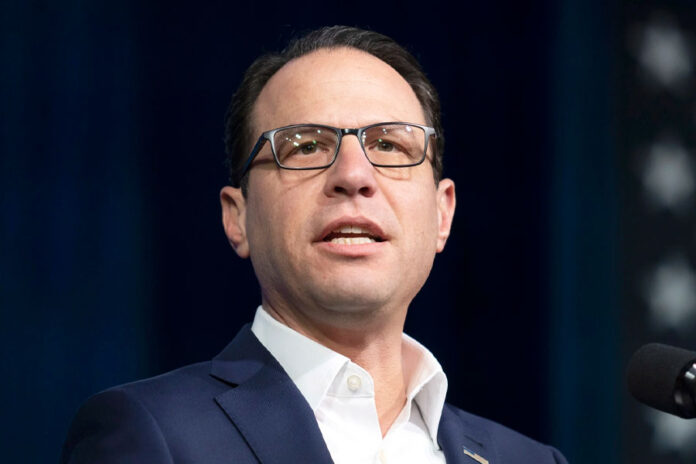
Gov. Josh Shapiro's. (Photo: AP/File)

El gobernador Josh Shapiro, miembro de la Junta Asesora Nacional de la campaña Biden-Harris 2024, emitió la siguiente declaración sobre la visita de campaña de Donald Trump a Pensilvania el día de mañana:

“Donald Trump representa la mayor amenaza a los derechos y libertades de los habitantes de Pensilvania que hemos visto en décadas. Mañana, llegará a nuestra comunidad al mismo tiempo que somos testigos de las consecuencias devastadoras de su primer mandato: mujeres, desde Florida hasta Arizona, están siendo privadas de la capacidad de tomar sus propias decisiones sobre su salud», y agregò «Trump está llevando a cabo una campaña de venganza y retribución por una sencilla razón: no puede aceptar que perdió las elecciones de 2020. Está redoblando su apuesta por las mismas mentiras electorales que inspiraron el ataque al Capitolio, poniendo en riesgo nuestra democracia. No funcionará. Aquí en Pensilvania defendemos la libertad, la libertad de elegir, la libertad de votar y la libertad de mantener a nuestras familias a salvo de la violencia armada; y todo eso está en riesgo bajo otra presidencia de Trump. Lo que está en juego en esta elección no podría ser mayor y estamos orgullosos de apoyar al presidente Joe Biden, un hombre originario de Pensilvania que nunca ha dejado de luchar por nuestras comunidades”.

Mientras tanto el presidente Biden estará en Pittsburgh y Filadelfia la próxima semana para una parada de campaña durante su gira económica por Pensilvania.

El presidente estará en Pittsburgh el miércoles 17 de abril, durante su visita se espera que se centre en el código tributario. La campaña dice que el presidente Biden está adoptando el enfoque de que el código tributario debería beneficiar a la clase media.

Se espera que la gira económica por todo el estado comience en Scranton, la ciudad natal del presidente Biden, el martes 17 de abril. Biden también viajará a Filadelfia el jueves 18 de abril.

Aún no se han publicado otros detalles específicos sobre la visita del presidente.
También se espera que la campaña celebre otros eventos en otros estados clave para su reelección además de las paradas de la campaña en Pensilvania.

The O.J. Simpson case forced domestic violence into the spotlight, boosting a movement

domestic
O.J. Simpson and his wife, Nicole Brown Simpson, arrive for the opening of the Harley-Davidson Cafe in New York on Oct. 19, 1993. Simpson, the decorated football superstar and Hollywood actor who was acquitted of charges he killed Nicole Brown Simpson and her friend but later found liable in a separate civil trial, has died. He was 76. (AP Photo/Paul Hurschmann, File)

PHILADELPHIA— Thirty years ago, as women’s rights advocates worked to pass the 1994 Violence Against Women Act, domestic violence was still something of a hushed topic.

Then Nicole Brown Simpson’s death forced it into the spotlight. Americans riveted by the murder investigation of superstar ex-husband O.J. Simpson, who died Wednesday at 76, heard startling and painful details of the abuse she said she suffered at his hands.

“We must have had 20 media trucks lined up on Hollywood Boulevard to talk to us,” said Patti Giggans, executive director of the Los Angeles-based nonprofit Peace Over Violence, who said interest in the issue exploded overnight.

“Because it was O.J. — he’s famous, an athlete, handsome, everybody loved O.J. — we started to have conversations about what goes on in the mind of a batterer,” Giggans said. “We were able to maintain that conversation throughout that two-year period (of the case). I think it changed the movement.”

___

EDITOR’S NOTE: This story includes discussion of domestic violence. If you or someone you know needs help, please call 1-800-799-7233 in the U.S.

___

Given that victims — then and now — often hide their abuse, many people assumed it happened only to poor or marginalized women. But then they saw that neither Nicole Simpson’s privilege nor her earlier calls to police had insulated her.

“She was beautiful, she was white, she was famous, she was wealthy. So, there was this sense that if it could happen to her, it could happen to anybody,” said Rachel Louise Snyder, an American University professor who explored the issue in her 2019 book, “No Visible Bruises.”

In an undated letter that surfaced after her death, Nicole Simpson revealed that her NFL star-turned-celebrity husband gave her “disgusted” looks when she gained weight in her first pregnancy in 1988 and “beat the holy hell” out of her the following year, although the couple told an X-ray lab she had fallen off a bike.

In October 1993, a year after they divorced, she called 911 when Simpson showed up at her home “ranting and raving.”

“He’s in a white Bronco, but first of all he broke the back door down to get in,” she said. “He’s O.J. Simpson. I think you know his record.”

Eight months later, she and friend Ron Goldman — who had stopped by to return eyeglasses left at a restaurant that night — were fatally stabbed outside her Brentwood home. Her two young children with Simpson were inside. She was 35, Goldman just 25.

“This was absolutely a watershed case,” said Snyder, who said their June 12, 1994, deaths helped galvanize support for the Violence Against Women Act, which Congress passed that fall. “It spurred a national conversation, a national reckoning.»

Simpson was acquitted of the double-murder at the sensational trial the next year, but a different jury found him liable for their deaths in a 1997 civil trial. Simpson was ordered to pay $33.5 million to the two families, money they tried mostly in vain to collect.

In the years since, the Violence Against Women Act has funded more than $9 billion in grants to combat domestic violence, from police training to social services to the 1996 launch of the National Domestic Violence Hotline. The hotline received 75,000 calls that first year. Last year, it handled more than 400,000 calls, texts and chat messages.

Hotline officials, in a statement in response to Simpson’s death, said the numbers reflect «the skyrocketing need among survivors for compassionate and non-judgmental advocacy as well as the pervasiveness of domestic violence in the U.S.”

Over time, advocates have focused on the warning signs that someone’s life could be in danger. Victims are most vulnerable when they try to get help or end the relationship, and in the year or so afterward. (The Simpson divorce was finalized in late 1992.) Any attempt at strangling the victim, or putting hands on their neck, may be a final escalation before the situation turns deadly. And the presence of a gun greatly increases the risk of being killed.

Yet understanding the cycle of violence isn’t always enough to thwart it. As news of Simpson’s death broke Thursday, advocates near Philadelphia were reeling from the fatal stabbing of a 57-year-old woman. She had pursued charges and gotten a restraining order last month after her estranged husband allegedly assaulted her and tried to strangle her. Police believe he kicked in a window air conditioner to break into her home early Wednesday.

“This case for advocates is excruciating,” said Stacy Dougherty, deputy director of the local nonprofit Laurel House, which provides housing and victim services in Montgomery County.

“When you have someone who does everything that she’s supposed to do — she calls the police, she gets the protection order, she changes her locks, she reaches out for help, she does all of those things. And this still happens.”

The housing crisis, she said, has made it even more difficult for victims to leave abusers, as does navigating the decision if they have children and fear sharing custody.

“There’s so many barriers that victims of domestic violence encounter when trying to leave,” Dougherty said.

And yet, Giggans said, the Simpson case “gave us opportunities to teach about the cycle of violence, the dynamics of unhealthy relationships, what does power and control mean.»

“And what do women deserve,” she added.

She worries that cuts on the horizon if federal funding wanes could hamper her group’s work, which includes not only direct services for victims and abusers, but school programs on healthy relationships.

«That came out in a big way around the O.J. time, because college students, high school students — everybody looked up to O.J., right?

“It was a stunning revelation that he was involved in this,» she said. “A lot of people didn’t want to believe he did it, to this day.”

El caso de O.J. Simpson obligó a reconocer la violencia doméstica e impulsó un movimiento

domestic
O.J. Simpson and his wife, Nicole Brown Simpson, arrive for the opening of the Harley-Davidson Cafe in New York on Oct. 19, 1993. Simpson, the decorated football superstar and Hollywood actor who was acquitted of charges he killed Nicole Brown Simpson and her friend but later found liable in a separate civil trial, has died. He was 76. (AP Photo/Paul Hurschmann, File)

FILADELFIA. — Hace 30 años, cuando las defensoras de los derechos de las mujeres trabajaban para aprobar en Estados Unidos la Ley de Violencia Contra las Mujeres en 1994, la violencia doméstica todavía era un tema silenciado.

Entonces, la muerte de Nicole Brown Simpson lo obligó a estar en el centro de atención. Los estadounidenses, fascinados por la investigación al superastro del fútbol americano O.J. Simpson, quien murió el miércoles a los 76 años, conocieron detalles sorprendentes y dolorosos del abuso que su exesposa dijo haber sufrido a manos de él antes de ser asesinada.

“Debimos haber tenido 20 camiones de medios de comunicación en Hollywood Boulevard para hablar con nosotros”, recordó Patti Giggans, directora ejecutiva de la organización sin fines de lucro Peace Over Violence, con sede en Los Ángeles, quien dijo que el interés por el tema explotó de la noche a la mañana.

“Porque era O.J. — era famoso, un atleta, guapo y todo el mundo amaba a O.J. — comenzamos a tener conversaciones de lo que pasa por la mente de un agresor”, dijo Giggans. “Pudimos mantener esa conversación a lo largo de ese período de dos años (del caso). Creo que cambió el movimiento”.

___

NOTA DEL EDITOR: Este artículo aborda temas de violencia doméstica. Si usted o alguien que conoce necesita ayuda llame al 1-800-799-7233 en Estados Unidos.

___

Dado que las víctimas, entonces y ahora, a menudo ocultan su abuso, muchas personas asumían que sólo le sucedía a mujeres pobres o marginadas. Pero luego vieron que ni el privilegio de Nicole Simpson ni sus llamadas anteriores a la policía habían sido suficiente para protegerla.

“Era hermosa, era blanca, era famosa, era rica. Entonces, existía la sensación de que, si le podía pasar a ella, le podía pasar a cualquiera”, dijo Rachel Louise Snyder, profesora de American University quien exploró el tema en su libro de 2019, “No Visible Bruises” (Sin moretones visibles).

En una carta sin fecha que salió a la luz después de su muerte, Nicole Simpson reveló que su esposo, el astro de la NFL convertido en celebridad, la veía “disgustado” cuando subió de peso en su primer embarazo en 1988 y la “golpeó infernalmente” al año siguiente, aunque la pareja dijo en un laboratorio de rayos X que se había caído de una bicicleta.

En octubre de 1993, un año después de divorciarse, ella llamó al 911 cuando Simpson se presentó en su casa “despotricando y delirando”.

“Está en una camioneta Bronco blanca, pero lo primero que hizo fue romper la puerta trasera para entrar”, dijo. ”Él es O.J. Simpson. Creo que conoces su historial”.

Ocho meses después, ella y su amigo Ron Goldman, que había pasado a devolverle unos anteojos que había olvidado en un restaurante esa noche, fueron apuñalados fatalmente afuera de la casa de Nicole en Brentwood. Los dos hijos pequeños que tuvo con Simpson estaban dentro de la casa. Ella tenía 35 años, Goldman apenas 25.

“Este fue un caso absolutamente decisivo”, dijo Snyder, quien dijo que las muertes del 12 de junio de 1994 ayudaron a impulsar el apoyo a la Ley de Violencia Contra la Mujer, que el Congreso aprobó a finales de ese año. “Estimuló una conversación nacional, un ajuste de cuentas nacional”.

Simpson fue absuelto por el doble asesinato en el sensacional juicio del año siguiente, pero un jurado diferente lo declaró responsable de sus muertes en un juicio civil de 1997. Simpson fue condenado a pagar 33,5 millones de dólares a las dos familias, dinero que intentaron cobrar en vano.

En los años transcurridos desde entonces, la Ley de Violencia Contra la Mujer ha financiado más de 9.000 millones de dólares en subvenciones para combatir la violencia doméstica, desde capacitación policial hasta servicios sociales y el lanzamiento en 1996 de la Línea Directa Nacional contra la Violencia Doméstica. La línea recibió 75.000 llamadas ese primer año. El año pasado, manejó más de 400.000 llamadas, mensajes de texto y chat.

Los funcionarios de la línea directa, en un comunicado en respuesta a la muerte de Simpson, dijeron que las cifras reflejan “la creciente necesidad entre los sobrevivientes de una defensa compasiva y sin prejuicios, así como la omnipresencia de la violencia doméstica en Estados Unidos”.

Con el tiempo, los defensores han cambiado su enfoque hacia las señales de advertencia de que la vida de alguien podría estar en peligro. Las víctimas son más vulnerables cuando intentan obtener ayuda o poner fin a la relación abusiva, y en el año posterior más o menos. (El divorcio de los Simpson se concretó a finales de 1992). Cualquier intento de estrangular a la víctima, o ponerle las manos en el cuello, puede ser una escalada final antes de que la situación se vuelva mortal. Y la presencia de un arma de fuego aumenta en gran medida el riesgo de ser asesinada.

Sin embargo, comprender el ciclo de violencia no siempre es suficiente para frustrarlo. Justo cuando se conocía la noticia de la muerte de Simpson el jueves, cerca de Filadelfia se lamentaba la muerte por apuñalamiento de una mujer de 57 años. Había presentado cargos y obtenido una orden de restricción el mes pasado después de que su esposo, de quien estaba separada, presuntamente la agrediera y tratara de estrangularla. La policía cree que el hombre pateó un aire acondicionado de ventana para irrumpir en su casa la madrugada del miércoles.

“Este caso para los defensores es insoportable”, dijo Stacy Dougherty, subdirectora de la organización local sin fines de lucro Laurel House, que brinda vivienda y servicios a las víctimas en el condado de Montgomery.

“Cuando tienes a alguien que hace todo lo que se supone que debe hacer: llama a la policía, obtiene la orden de protección, cambia sus cerraduras, busca ayuda, hace todas esas cosas. Y a pesar de todo ocurre esto”.

La crisis de vivienda, dijo, ha hecho que sea aún más difícil para las víctimas dejar a los abusadores, al igual que la decisión de tener hijos y el temor de compartir la custodia.

“Hay tantas barreras que las víctimas de violencia doméstica encuentran cuando intentan irse”, dijo Dougherty.

Y, sin embargo, dijo Giggans, el caso Simpson “nos dio la oportunidad de enseñar sobre el ciclo de la violencia, la dinámica de las relaciones no saludables, lo que significa el poder y el control”.

“Y lo qué merecen las mujeres”, agregó.

A Giggans le preocupa que si los fondos federales disminuyen se pueda obstaculizar el trabajo de su grupo, que incluye no sólo servicios directos para víctimas y abusadores, sino también programas escolares sobre relaciones saludables.

“Eso salió a la luz a lo grande en la época de O.J., porque los estudiantes universitarios, los estudiantes de secundaria, todos admiraban a O.J., ¿verdad?

“Fue una revelación sorprendente que él estuviera involucrado en esto”, dijo. “Mucha gente no quería creer que lo hizo, hasta el día de hoy”.

El Gobierno de Biden entregará 640 millones a comunidades que ayudan a migrantes

migrantes
Joe Biden, presidente de los Estados Unidos. (Foto: EFE/MICHAEL REYNOLDS)

El Gobierno del presidente Joe Biden anunció este viernes fondos por un total de 640 millones de dólares en programas para organizaciones comunitarias que proveen alojamiento y otros servicios a los migrantes recién llegados en todo el país.

Una primera partida de 275 millones de dólares para el programa de Alojamiento y Servicios por Asignaciones (SSP-A, en inglés) se distribuirá de inmediato, según detalló un comunicado del Departamento de Seguridad Nacional (DHS, en inglés).

Otros 25 millones de dólares se asignarán antes del término del período fiscal 2024 el 30 de septiembre y estarán destinados a acomodar los requisitos de operaciones a medida que evolucionan, señaló el comunicado.

Esta financiación inicial estará disponible para 55 organizaciones y destinadas al alojamiento temporal y otros costos relacionados con los solicitantes de asilo recién llegados mientras estos esperan el resultado de sus trámites ante las autoridades de inmigración.

Asimismo, el Departamento de Seguridad Nacional entregará otros 340,9 millones de dólares para el Programa Competitivo de Alojamiento y Servicios (SSP-C, en inglés), que se asignarán antes de que termine el período fiscal el 30 de septiembre.

Según el DHS, en el período fiscal 2023 se donaron más de 780 millones de dólares a organizaciones y ciudades en todo el país para mejorar el acceso de los extranjeros a permisos de trabajo y la ayuda temporal mientras gestionan su situación migratoria.

Las asignaciones de fondos, autorizadas por el Congreso, se canalizarán por medio de la Oficina de Aduanas y Protección de Fronteras (CBP, en inglés), y la Administración de Gestión de Emergencias (FEMA, en inglés), que dependen del DHS.

El comunicado añadió que entre el 12 de mayo de 2023 y el 3 de abril de 2024, el DHS había deportado o devuelto a sus países a más de 660.000 personas que, en su mayoría, habían cruzado la frontera suroeste de Estados Unidos.

Wait and see                    

days
days

The US economy continues expanding vigorously, despite the central bank’s restrictive monetary policy. This justifies the wait and see posture adopted by the monetary authorities, to gain confidence that inflation is trending down together with strong job creation. That will be the culmination of the so called “soft landing,” with the achievement of the goal of 2 percent inflation, which supposedly does not stimulate or restrains economic performance.

Overcoming almost all expectations, the Labor Department informed last week that 303,000 new jobs were created in March, an increase from the revised figure of 270,000 in February. Therefore, 15 million nonfarm new jobs have been created in the last three years.

Healthcare and education, with hospitality and government were the best performing sectors in March, adding almost 200,000 new jobs, while construction and retail contributed another 100,000. Only business services and manufacturing lagged with incipient job creation. Average hourly earnings increased slightly 4.1 percent from a year earlier.

This will be the last employment figures available before the next meeting of the Open Market Committee, scheduled for April 30-May 1. Another indicator that will be released in two days is the March consumer price index. It is closely watched because during January and February this index revealed a slight increase, which interrupted last year’s second half downward trend in prices.

Esperar y mirar            

esperar y mirar

La economía de Estados Unidos está expandiéndose vigorosamente, a pesar de la política monetaria restrictiva del banco central. Eso justifica la postura de mirar y esperar de las autoridades monetarias, para ganar confianza de que la inflación está tendiendo hacia abajo con fuerte creación de empleo. Esa será la culminación del llamado “aterrizaje suave,” con el logro de la meta de 2 por ciento de inflación, la cual supuestamente ni estimula o restringe el desempeño económico.

Superando casi todas las expectativas, el Departamento de Trabajo informó la semana pasada que en marzo fueron creados 303,000 nuevos puestos de trabajo, un aumento desde la cifra revisada de 270,000 en febrero. Por consiguiente, 15 millones de nuevos empleos no agrícolas han sido creados durante los últimos tres años.

La sanidad y la educación, junto a la hospitalidad y el gobierno, fueron los sectores de mejor desempeño en marzo, agregando casi 200,000 nuevos empleos, mientras que la construcción y el comercio al menudeo contribuyeron otros 100,000. Sólo los servicios comerciales y la manufactura se rezagaron con incipiente creación de empleo. El salario promedio por hora amentó levemente, 4.1 por ciento desde el año pasado.

Estas serán las últimas cifras sobre creación de empleo disponibles antes de la próxima reunión del Comité de Mercado Abierto, programada para el 30 de abril y el 1 de mayo. Otro indicador que será divulgado en dos días es el índice de precios al consumidor. Está siendo cuidadosamente vigilado porque durante enero y febrero este índice reveló un leve aumento, el cual interrumpió la tendencia bajista de los precios que prevaleció durante la segunda mitad del año pasado.

*Analista y consultor internacional, ex-director de la Oficina de la CEPAL en Washington. Comentarista de economía y finanzas de CNN en Español TV y radio, UNIVISION, TELEMUNDO y otros medios.

SEPTA informa de una disminución interanual del 45% en delitos graves en su sistema

septa
(Foto. Archivo)

El informe del primer trimestre muestra una disminución significativa en agresiones, robos y otros incidentes. Las disminuciones son un reflejo de los cambios en las estrategias de patrullajede la Policía de Tránsito de SEPTA y el aumento en la contratación de nuevos agentes

FILADELFIA. – SEPTA ha tenido una disminución del 45 % en delitos graves en su sistema durante el primer trimestre de 2024 en comparación con el mismo período en 2023, según el Informe del primer trimestre de 2024 publicado hoy por el Departamento de Policía de Tránsito de SEPTA. Las disminuciones incluyen caídas significativas en agresiones agravadas de 32 a 24 y robos de
102 a 34.


«Nos complace ver que los incidentes de delitos violentos han disminuido constantemente en todo el sistema durante el último año», dijo la Directora ejecutiva y Gerente general de SEPTA, Leslie S. Richards. «Tenemos alrededor de 700.000 viajes de pasajeros al día y, si bien los delitos graves son extremadamente raros, queremos que todos nuestros pasajeros y empleados se sientan seguros cuando
viajan en SEPTA».

La Policía de Tránsito continúa aumentando las patrullas visibles en todo el sistema: se están desplegando estratégicamente más agentes en trenes, tranvías y autobuses. Aumentar la presencia policial en los vehículos permite a los agentes interactuar con más pasajeros y mejorar la percepción de seguridad en el transporte público.

Los esfuerzos de reclutamiento y retención de la Policía de Tránsito han dado como resultado un crecimiento sostenido durante cuatro trimestres consecutivos: de 196 agentes juramentados a finales de 2022 a 230 agentes juramentados a finales del mes pasado, que es la cifra más alta en años.

Gracias a los aumentos salariales de los agentes de policía, SEPTA está atrayendo el interés de agentes de otros departamentos. SEPTA seguirá contratando más agentes y superará la plantilla presupuestada para reforzar su fuerza policial.

«Si bien todavía tenemos desafíos, me siento alentado por nuestro progreso», dijo el Jefe Policía de Tránsito de SEPTA, Charles Lawson. «Hemos intensificado la aplicación de la ley contra los delitos que afectan la calidad de vida como la evasión del pago de tarifas, el consumo de drogas y el tabaquismo, que a menudo son objeto de quejas de los pasajeros y pueden estar asociados con delitos más graves».

La Policía de Tránsito informó que ha habido más de 47.000 violaciones del código de conducta en el primer trimestre de este año, frente a aproximadamente las 35.000 de hace un año.

A principios de este mes, SEPTA inauguró nuevas puertas de acceso a los andenes más altas en el Centro de Transporte de la Calle 69 para combatir la evasión del pago de tarifas, que le cuesta a la Autoridad aproximadamente entre $30 y $40 millones en ingresos anuales y puede ser un precursor de otras violaciones.

El año pasado, SEPTA lanzó una nueva unidad de vigilancia llamada Patrulla Virtual, compuesta en gran parte por profesionales de las fuerzas del orden jubilados, para monitorear retransmisiones de vídeo en directo y enviar agentes donde sean necesarios. Esta iniciativa maximiza el uso de las 30.000 cámaras de seguridad ubicadas en las estaciones y vehículos de SEPTA.

Los pasajeros y empleados de SEPTA continúan usando la aplicación Transit Watch para reportar de manera fácil y discreta actividades sospechosas a la policía.

Aunque la delincuencia general en SEPTA ha disminuido, ha habido tres homicidios en el primer trimestre. La misma violencia armada que afecta a las comunidades a las que SEPTA presta servicio se está extendiendo al sistema de transporte público. SEPTA sigue comprometida con la lucha contra la violencia armada y la Policía de Tránsito está luchando contra la posesión ilegal de armas.

Para leer el informe completo del primer trimestre de 2024, visite https://wwww.septa.org/safety/security/

Para obtener más información sobre SEPTA, visite septa.org, siga a @SEPTA o descargue la aplicación oficial de SEPTA.

How immigrant workers in US have helped boost job growth and stave off a recession

immigrant
A feed truck is loaded at dawn at the Flood Brothers Farm, Monday, April 1, 2024, in Clinton, Maine. Foreign-born workers make up fully half the farm's staff of nearly 50, feeding the cows, tending crops and helping collect the milk — 18,000 gallons every day. (Photo: AP/Robert F. Bukaty)

Having fled economic and political chaos in Venezuela, Luisana Silva now loads carpets for a South Carolina rug company. She earns enough to pay rent, buy groceries, gas up her car — and send money home to her parents.

Reaching the United States was a harrowing ordeal. Silva, 25, her husband and their then-7-year-old daughter braved the treacherous jungles of Panama’s Darien Gap, traveled the length of Mexico, crossed the Rio Grande and then turned themselves in to the U.S. Border Patrol in Brownsville, Texas. Seeking asylum, they received a work permit last year and found jobs in Rock Hill, South Carolina.

“My plan is to help my family that much need the money and to grow economically here,” Silva said.

Her story amounts to far more than one family’s arduous quest for a better life. The millions of jobs that Silva and other new immigrant arrivals have been filling in the United States appear to solve a riddle that has confounded economists for at least a year:

How has the economy managed to prosper, adding hundreds of thousands of jobs, month after month, at a time when the Federal Reserve has aggressively raised interest rates to fight inflation — normally a recipe for a recession?

Workers tend to cows in the milking parlor at the Flood Brothers Farm, Monday, April 1, 2024, in Clinton, Maine. Foreign-born workers make up fully half the farm’s staff of nearly 50, feeding the cows, tending crops and helping collect the milk — 18,000 gallons every day. (Photo: AP/Robert F. Bukaty)

Increasingly, the answer appears to be immigrants — whether living in the United States legally or not. The influx of foreign-born adults vastly raised the supply of available workers after a U.S. labor shortage had left many companies unable to fill jobs.

More workers filling more jobs and spending more money has helped drive economic growth and create still-more job openings. The availability of immigrant workers eased the pressure on companies to sharply raise wages and to then pass on their higher labor costs to their customers via higher prices that feed inflation. Though U.S. inflation remains elevated, it has plummeted from its levels of two years ago.

“There’s been something of a mystery — how are we continuing to get such extraordinary strong job growth with inflation still continuing to come down?’’ said Heidi Shierholz, president of the Economic Policy Institute and a former chief economist at the Labor Department. “The immigration numbers being higher than what we had thought — that really does pretty much solve that puzzle.’’

While helping fuel economic growth, immigrants also lie at the heart of an incendiary election-year debate over the control of the nation’s Southern border. In his bid to return to the White House, Donald Trump has attacked migrants in often-degrading terms, characterizing them as dangerous criminals who are “poisoning the blood” of America and frequently invoking falsehoods about migration. Trump has vowed to finish building a border wall and to launch the “largest domestic deportation operation in American history.” Whether he or President Joe Biden wins the election could determine whether the influx of immigrants, and their key role in propelling the economy, will endure.

A worker drives a tractor to the feed silos at the Flood Brothers Farm, Monday, April 1, 2024, in Clinton, Maine. Foreign-born workers make up fully half the farm’s staff of nearly 50, feeding the cows, tending crops and helping collect the milk — 18,000 gallons every day. (Photo: AP/Robert F. Bukaty)

The boom in immigration caught almost everyone by surprise. In 2019, the Congressional Budget Office had estimated that net immigration — arrivals minus departures — would equal about 1 million in 2023. The actual number, the CBO said in a January update, was more than triple that estimate: 3.3 million.

Thousands of employers desperately needed the new arrivals. The economy — and consumer spending — had roared back from the pandemic recession. Companies were struggling to hire enough workers to keep up with customer orders.

The problem was compounded by demographic changes: The number of native-born Americans in their prime working years — ages 25 to 54 — was dropping because so many of them had aged out of that category and were nearing or entering retirement. This group’s numbers have shrunk by 770,000 since February 2020, just before COVID-19 slammed the economy.

Filling the gap has been a wave of immigrants. Over the past four years, the number of prime-age workers who either have a job or are looking for one has surged by 2.8 million. And nearly all those new labor force entrants — 2.7 million, or 96% of them — were born outside the United States. Immigrants last year accounted for a record 18.6% of the labor force, according to the Economic Policy Institute’s analysis of government data.

And employers welcomed the help.

Consider Jan Gautam, CEO of the lodging company Interessant Hotels & Resort Management in Orlando, Florida, who said he can’t find American-born workers to take jobs cleaning rooms and doing laundry in his 44 hotels. Of Interessant’s 3,500 workers, he said, 85% are immigrants.

“Without employees, you are broken,» said Gautam, himself an immigrant from India who started working in restaurants as a dishwasher and now owns his own company.

“If you want boost the economy,» he said, “it definitely needs to have more immigrants coming out to this country.”

Or consider the workforce of the Flood Brothers farm in Maine’s “dairy capital’’ of Clinton. Foreign-born workers make up fully half the farm’s staff of nearly 50, feeding the cows, tending crops and helping collect the milk — 18,000 gallons each day.

“We cannot do it without them,» said Jenni Tilton-Flood, a partner in the operation.

For every unemployed person in Maine, after all, there are two job openings, on average.

“We would not have an economy, in Maine or in the U.S. if we did not have highly skilled labor that comes from outside of this country,” Tilton-Flood said in a phone interview with The Associated Press from her farm.

“Without immigrants — both new asylum-seekers as well as our long-term immigrant contributors — we would not be able to do the work that we do,» she said. «Every single thing that affects the American economy is driven by and will only be saved by accepting immigrant labor.”

A study by Wendy Edelberg and Tara Watson, economists at the Brookings Institution’s Hamilton Project, has concluded that over the past two years, new immigrants raised the economy’s supply of workers and allowed the United States to generate jobs without overheating and accelerating inflation.

In the past, economists typically estimated that America’s employers could add no more than 60,000 to 100,000 jobs a month without overheating the economy and igniting inflation. But when Edelberg and Watson included the immigration surge in their calculations, they found that monthly job growth could be roughly twice as high this year — 160,000 to 200,000 — without exerting upward pressure on inflation.

“There are significantly more people working in the country,» Fed Chair Jerome Powell said last week in a speech at Stanford University. Largely because of the immigrant influx, Powell said, “it’s a bigger economy but not a tighter one. Really an unexpected and an unusual thing.’’

Trump has repeatedly attacked Biden’s immigration policy over the surge in migrants at the Southern border. Only about 27% of the 3.3 million foreigners who entered the United States last year did so through as “lawful permanent residents’’ or on temporary visas, according to Edelberg and Watson’s analysis. The rest — 2.4 million — either came illegally, overstayed their visas, are awaiting immigration court proceedings or are on a parole program that lets them stay temporarily and sometimes work in the country.

“So there you have it,’’ Douglas Holtz-Eakin, a former CBO director who is president of the conservative American Action Forum, wrote in February. “The way to solve an inflation crisis is to endure an immigration crisis.»

Many economists suggest that immigrants benefit the U.S. economy in several ways. They take generally undesirable, low-paying but essential jobs that most U.S.-born Americans won’t, like caring for children, the sick and the elderly. And they can boost the country’s innovation and productivity because they are more likely to start their own businesses and obtain patents.

Ernie Tedeschi, a visiting fellow at Georgetown University’s Psaros Center and a former Biden economic adviser, calculates that the burst of immigration has accounted for about a fifth of the economy’s growth over the past four years.

Critics counter that a surge in immigration can force down pay, particularly for low-income workers, a category that often includes immigrants who have lived in the United States longer. Last month, in the most recent economic report of the president, Biden’s advisers acknowledged that “immigration may place downward pressure on the wages of some low-paid workers» but added that most studies show that the impact on the wages of the U.S.-born is “small.»

Dawn light colors the sky over a dairy cow barn at the Flood Brothers Farm, Monday, April 1, 2024, in Clinton, Maine. Foreign-born workers make up fully half the farm’s staff of nearly 50, feeding the cows, tending crops and helping collect the milk — 18,000 gallons every day. (Photo: AP/Robert F. Bukaty)

Even Edelberg notes that an unexpected wave of immigrants, like the recent one, can overwhelm state and local governments and saddle them with burdensome costs. A more orderly immigration system, she said, would help.

The recent surge “is a somewhat disruptive way of increasing immigration in the United States,” Edelberg said. “I don’t think anybody would have sat down and said: ‘Let’s create optimal immigration policy,’ and this is what they would come up with.»

Holtz-Eakin argued that an immigration cutoff of the kind Trump has vowed to impose, if elected, would result in “much, much slower labor force growth and a return to the sharp tradeoff’’ between containing inflation and maintaining economic growth that the United States has so far managed to avoid.

For now, millions of job vacancies are being filled by immigrants like Mariel Marrero. A political opponent of Venezuela’s authoritarian President Nicolás Maduro, Marrero, 32, fled her homeland in 2016 after receiving death threats. She lived in Panama and El Salvador before crossing the U.S. border and applying for asylum.

Her case pending, she received authorization to work in the United States last July. Marrero, who used to work in the archives of the Venezuelan Congress in Caracas, found work selling telephones and then as a sales clerk at a convenience store owned by Venezuelan immigrants.

A worker tends to cows in the milking parlor at the Flood Brothers Farm, Monday, April 1, 2024, in Clinton, Maine. Foreign-born workers make up fully half the farm’s staff of nearly 50, feeding the cows, tending crops and helping collect the milk — 18,000 gallons every day. (Photo: AP/Robert F. Bukaty)

At first, she lived for free at the house of an uncle. But now she earns enough to pay rent on a two-bedroom house she shares with three other Venezuelans in Doral, Florida, a Miami suburb with a large Venezuelan community. After rent, food, electricity and gasoline, she has enough left over to send $200 a month to her family in Venezuela.

“One hundred percent — this country gives you opportunities,’’ she said.

Marrero has her own American dream:

“I imagine having my own company, my house, helping my family in a more comfortable way.”