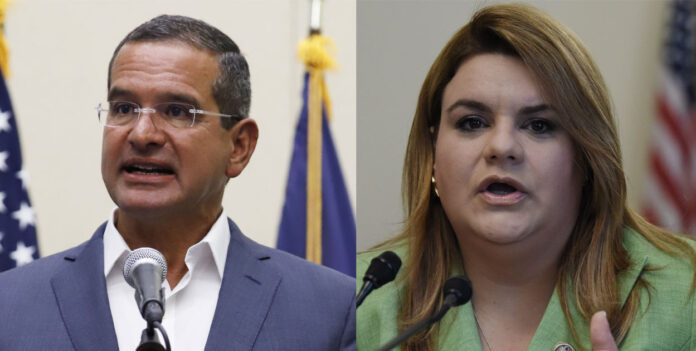
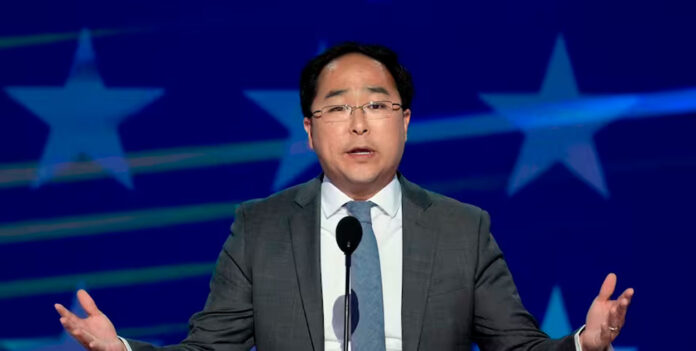
Combo de fotografías de archivo del gobernador de Puerto Rico, Pedro Pierluisi, y Jenniffer González, candidata a la gobernación por el Partido Nuevo Progresista (PNP) y simpatizante del expresidente y candidato republicano Donald Trump. (Foto: EFE/Archivo)
San Juan.– La clase política de Puerto Rico expresó su rechazo a las palabras del comediante estadounidense Tony Hinchcliffe, partidario de Donald Trump, que dijo en un mitin electoral que Puerto Rico es «una isla flotante de basura».
«Basura es lo que salió de la boca de @TonyHinchcliffe, y todos los que lo aplaudieron deberían sentirse avergonzados por faltarle el respeto a Puerto Rico», sostuvo el gobernador de Puerto Rico, Pedro Pierluisi, en su cuenta de X.
«Comentarios como esos dejan al descubierto los prejuicios y el racismo que lamentablemente aún existen en nuestra Nación, y nos recuerdan la importancia de escoger líderes que rechacen y luchen contra ese tipo de intolerancia», agregó el saliente gobernador del anexionista Partido Nuevo Progresista (PNP).
Hinchcliffe dijo dicha expresión como orador previo a un discurso que el expresidente y candidato por el Partido Republicano, Donald Trump (2017-2021), ofreció el domingo en un mitin en el Madison Square Garden de Nueva York al que asistieron unas 20.000 personas.
Hinchcliffe tenía previsto viajar a Puerto Rico esta semana y presentarse en Gala, uno de los principales centros turísticos de San Juan, y en Norbertos Piano Bar & Lounge, en la zona exclusiva de Palmas del Mar en Humacao (este), pero las administraciones de ambos lugares cancelaron su acto.
Por su parte, el director de campaña de Trump-JD Vance en Puerto Rico, Alfred Ocasio, se refirió en un comunicado a Hinchcliffe como «un desconocido alegado comediante», y que «sus expresiones no se pueden calificar de otra manera sino como repugnantes y racistas y de ninguna manera son el reflejo de lo que es el Partido Republicano».
«Este partido abraza la diversidad de razas, respeta todas las culturas y rechaza el racismo. El Sr. Hinchcliffe no tiene cabida en el Partido Republicano y hemos solicitado que no sea contratado nuevamente para cualquier actividad del Partido Republicano», afirmó Ocasio.
A su vez, la candidata a la gobernación por el PNP y simpatizante de Trump, Jenniffer González, dijo que las expresiones de Hinchcliffe «son despreciables, desacertadas y repugnantes».
«Lo que ha dicho no es cómico, de la misma manera que fueron rechazadas por el público asistente, se merece el enérgico repudio de todos», expresó González en un comunicado.
«No se le pueden dar espacios a expresiones tan infames y racistas como esas. Las mismas no representan los valores del GOP (Partido Republicano)», añadió la comisionada residente en Washington, D.C.
Mientras, el aspirante a la gobernación por el Partido Independentista Puertorriqueño y la Alianza, Juan Dalmau, sostuvo que las expresiones de Hinchcliffe no son necesariamente el problema principal, sino Trump.
Trump es «el mismo que desprecia a los puertorriqueños, el que nos tiró papel toalla como bolas de baloncesto, en el peor momento de nuestra historia luego del huracán ‘María’ y aguantó los fondos de recuperación», rememoró Dalmau.
Por su parte, el candidato a gobernador por el Partido Popular Democrático, Jesús Manuel Ortiz, exigió a González «retirarle inequívocamente su apoyo a Donald Trump» por lo enunciado por el comediante norteamericano.
«Estamos cansados de sus excusas y explicaciones cínicas. Hable con la verdad. ¡Este pueblo se respeta!», enfatizó Ortiz en X.
Finalmente, el candidato a gobernador por el Partido Proyecto Dignidad, Javier Jiménez, defendió a Puerto Rico por ser una «tierra rica en cultura, historia y dignidad» y afirmó que «su pueblo ha contribuido enormemente en todos los ámbitos, desde el arte y el deporte hasta el servicio militar y la ciencia».
«Rechazamos cualquier ataque que intente manchar la reputación de nuestro pueblo. Como puertorriqueños, exigimos el respeto que merecemos», apuntó.
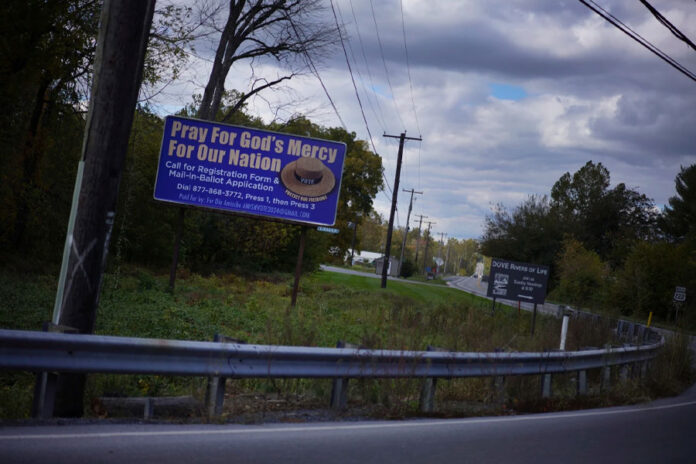
A voting advertisement geared toward the Amish population of Lancaster County is seen from the road in Strasburg, Pa., on Tuesday, Oct. 15, 2024. (Photo: AP/Jessie Wardarsk
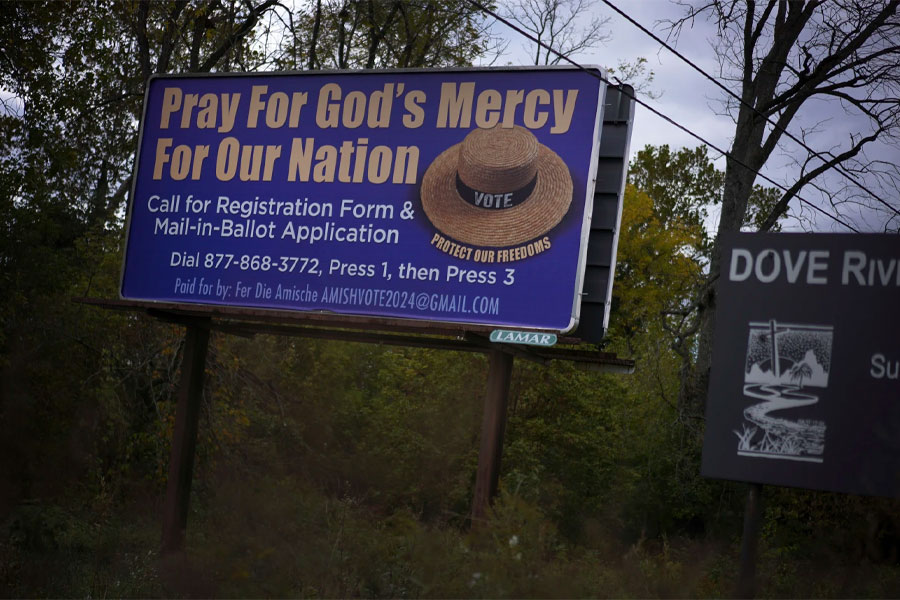
LANCASTER, Pa. On a recent weekday afternoon, an Amish man in a horse-drawn buggy navigated through a busy intersection of auto traffic in Pennsylvania’s Lancaster County, past a billboard proclaiming: “Pray for God’s Mercy for Our Nation.”
The billboard featured a large image of a wide-brimmed straw hat often worn by the Amish. If there was any further doubt as to its target audience, the smaller print listed the sponsor as “Fer Die Amische” — referring to the Amish in their Pennsylvania German dialect.
Researchers say most of the Amish don’t register to vote, reflective of the Christian movement’s historic separatism from mainstream society, just as they’ve maintained their dialect and horse-and-buggy transportation.
But a small minority have voted, and the Amish are most numerous in the all-important swing state of Pennsylvania. So they’re being targeted this year in the latest of decades of efforts to register more of them to vote.
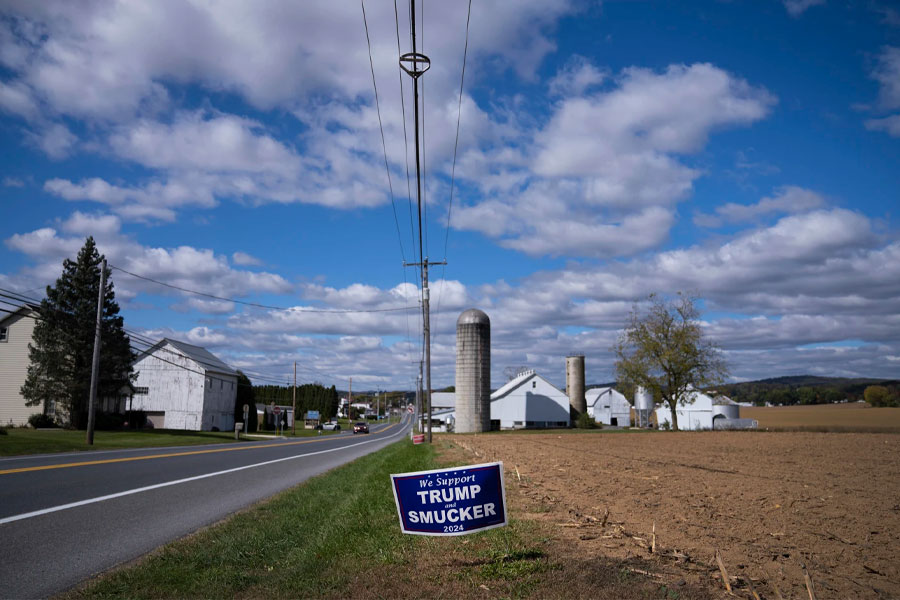
Republicans are seeking their votes through billboards, ads, door-to-door canvassing and community meetings. Republican campaigners see the Amish as receptive to GOP talking points — smaller government, less regulation, religious freedom.
“They just want government to stay not only out of their businesses but out of their religion,” said U.S. Rep. Lloyd Smucker, R-Pa., whose district includes Lancaster County, at the heart of the nation’s largest Amish population. Smucker, whose own family background is Amish, predicted a dramatic increase in the Amish vote, “basing that on the enthusiasm we see.”
A Republican political advertisement is displayed in Ephrata, Pa., on Wednesday, Oct. 16, 2024. (Photo: AP/Jessie Wardarski)
Most Amish don’t vote, but every vote matters in a swing state
But while such efforts could yield an increase, don’t expect the Amish vote to dramatically swing the Keystone State’s bottom line, said Steven Nolt, director of the Young Center for Anabaptist and Pietist Studies at Elizabethtown College in Lancaster County.
“For most Amish history and in most Amish communities today, Amish people don’t vote,” he said. “They haven’t voted, they’re not voting, and I think it’s safe to say in the near future we wouldn’t expect them to.”
But Amish in a handful of settlements in Lancaster and elsewhere have voted, typically less than 10% of their population, Nolt said. He has overseen post-election analyses of voting registration trends in areas with significant Amish populations — painstaking research that involves cross-checking voter rolls and church directories by hand and can’t be conducted in real time during an election.
There are currently about 92,000 Amish of all ages in Pennsylvania, according to the Young Center’s research, which is based on a number of sources, including almanacs, newspapers, and directories. About half are in the Lancaster area and the rest dispersed around the state.
But in a community with many children, less than half the Amish are of voting age, Nolt said. In 2020, he estimated that about 3,000 Amish voted in the Lancaster area, and several hundred elsewhere, he said.
“Even if we would imagine, for example, that here in Lancaster, there would be a tremendous percentage in percentage terms … we’re looking at several hundred to maybe a thousand additional voters,” he said.
On its own, that cannot come close to flipping a state that went for Democrat Joe Biden in 2020 by about 80,000 votes.
Of course, the Amish are hardly the only religious or ethnic constituency being courted by candidates. “In a context where every vote counts, every vote counts,” Nolt said. “But no, we’re not talking tens of thousands of Amish votes.”
Still, Smucker is optimistic about a larger turnout. He said Republican messages resonate with a changing Amish community.
“It was once more agrarian, but they’ve long ago run out of land in Lancaster County,” he said. Only a minority are still in farming, with many starting small businesses, where the Republican emphasis on limited regulation is appealing. Plus, he said, the Amish community perceives Republicans as more friendly to religious liberty and opposed to abortion.
He said Amish tell stories of how their forebears were more likely to vote in the 1950s during controversies about compulsory school policies, but the practice has decreased since then.
Wayne Wengerd, Ohio state director of the Amish Steering Committee, which navigates relations between Amish community leaders and government officials, recalls registration efforts as far back as the 1960s. Get-out-the-vote activists are “going to go after everyone and anyone they think they could possibly convince to vote for their party,» he said. «The Amish are no different.”
A voting advertisement geared toward the Amish population of Lancaster County is displayed on Tuesday, Oct. 15, 2024, in Strasburg, Pa. (Photo: AP/Jessie Wardarski)
Amish theology keeps the church separate from government
But most Amish avoid voting in keeping with “two-kingdom” theology, which puts a stark separation between earthly government and the church with its focus on a heavenly kingdom. They see themselves “being citizens primarily in another kingdom,” Wengerd said.
But, he noted, some still vote. “The Amish are just like any other people,” he said. “Not everyone thinks the same.”
Rural Lancaster County has for generations voted Republican, Nolt said, and so it’s also not surprising that any Amish who do vote would be influenced by their neighbors’ preferences. Most Amish voters register as Republicans, he said. .
An ad in a Lancaster-area newspaper, attributed to an anonymous “Amishman” from Ohio, said refusing to vote would violate Scripture by failing to “stand against evil” while “every good thing our nation stands for is destroyed.” A voicemail message seeking comment, left with the phone number on the ad, wasn’t returned.
Nolt said that ad is appealing to a theology more similar to that of mainstream Reformed Protestantism, which says Christians have a duty both to God and country, than to traditional Amish two-kingdom theology.
“It’s very different than anything in historic Amish documents, which would have said responsibility of the church is to be the church,” he said.
Nolt said a letter being sent to Amish residents did call for voting Republican but didn’t appear aimed at the Amish in particular, citing such issues as immigration.
The widespread support for Trump among conservative Christians of many types has long perplexed observers, given his casino ventures, allegations of sexual assault and vulgar public statements.
Nolt, however, said that compared with the Amish’s separatist lifestyles, neither presidential candidate looks much like them — one reason most of them don’t vote. “Donald Trump’s life is very different from an Amish person’s life, but so is Kamala Harris’,” he said.
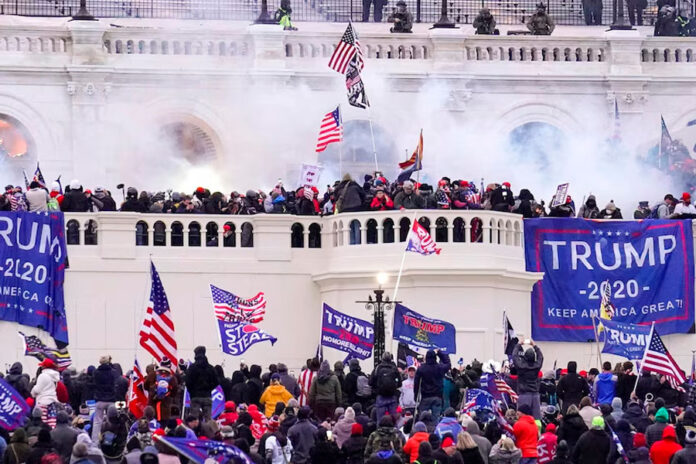
Rioters loyal to President Donald Trump storm the Capitol, Jan. 6, 2021, in Washington. (Photo: AP/John Minchillo/File)
American voters are approaching the presidential election with deep unease about what could follow, including the potential for political violence, attempts to overturn the election results and its broader implications for democracy, according to a new poll.
The findings of the survey, conducted by The Associated Press-NORC Center for Public Affairs Research, speak to persistent concerns about the fragility of the world’s oldest democracy, nearly four years after former President Donald Trump’s refusal to accept the 2020 election results inspired a mob of his supporters to storm the U.S. Capitol in a violent attempt to stop the peaceful transfer of power.
About 4 in 10 registered voters say they are “extremely” or “very” concerned about violent attempts to overturn the results after the November election. A similar share is worried about legal efforts to do so. And about 1 in 3 voters say they are “extremely” or “very” concerned about attempts by local or state election officials to stop the results from being finalized.
Relatively few voters — about one-third or less — are “not very” or “not at all” concerned about any of that happening.
“I thought after Jan. 6 of 2021, the GOP would have the sense to reject him as a candidate,” Aostara Kaye, of Downey, California, said of Trump. “And since they didn’t, I think it just emboldened him to think he can do anything, and they will still stick with him.”
Nearly 9 in 10 voters said the loser of the presidential election is obligated to concede once every state has finished counting its votes and legal challenges are resolved, including about 8 in 10 Republicans. But only about one-third of voters expect Trump to accept the results and concede if he loses.
Democrats and Republicans have widely divergent views on the matter: About two-thirds of Republican voters think Trump would concede, compared to only about 1 in 10 Democrats.
The same concern does not apply to Harris. Nearly 8 in 10 voters said Harris will accept the results and concede if she loses the election, including a solid majority of Republican voters.
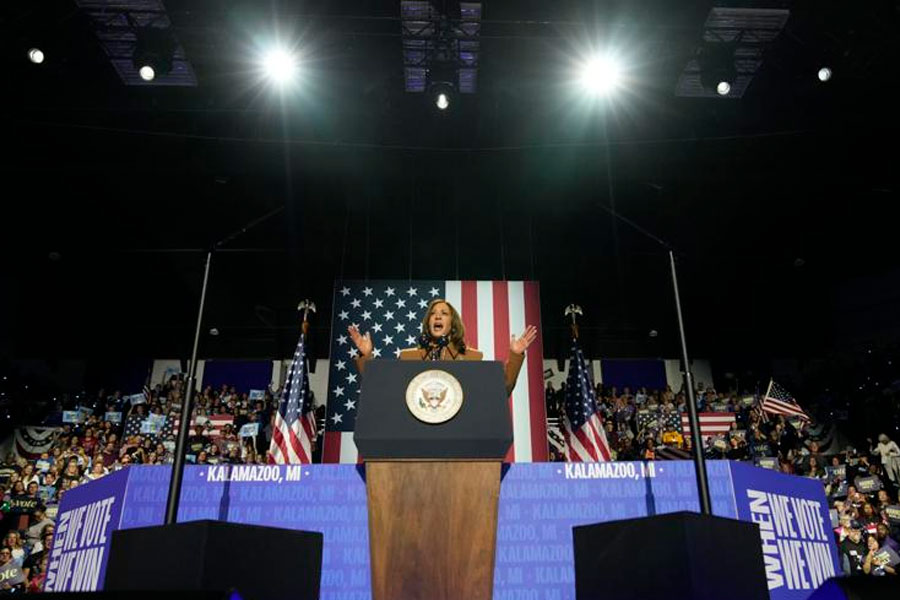
Democratic presidential nominee Vice President Kamala Harris speaks during a campaign rally at the Wings Event Center in Kalamazoo, Mich. (Photo: AP/Jacquelyn Martin)
Democrats and Republicans divided on who would weaken democracy
Members of both parties have broad concerns about how American democracy might fare depending on the outcome of the November election.
Overall, about half of voters believe Trump would weaken democracy in the U.S. “a lot” or “somewhat” if he wins, while about 4 in 10 said the same of Harris.
Not surprisingly, Americans were deeply divided along ideological lines. About 8 in 10 Republicans said another term for Trump would strengthen democracy “a lot” or “somewhat,» while a similar share of Democrats said the same of a Harris presidency.
About 9 in 10 voters in each party said the opposing party’s candidate would be likely to weaken democracy at least “somewhat” if elected.
Kaye, a retired health care system worker, called Trump an “existential threat to the Constitution.” One prospect she said frightens her is that if Trump wins, he likely will not have the guardrails in his new administration that were in place in the last one.
Republican voter Debra Apodaca, 60, from Tucson, Arizona, said it’s Harris who is a greater threat to democracy. She said President Joe Biden’s administration has placed too great a priority on foreign aid and shown a lack of concern for its own people.
“Our tax dollars, we’re just sending it everywhere. It’s not staying here. Why aren’t we taking care of America?” she said. “Why should we pay taxes if we’re just sending it away?”
That lack of concern also includes the border, she said, adding that a Harris win would be “the end to the Border Patrol.”
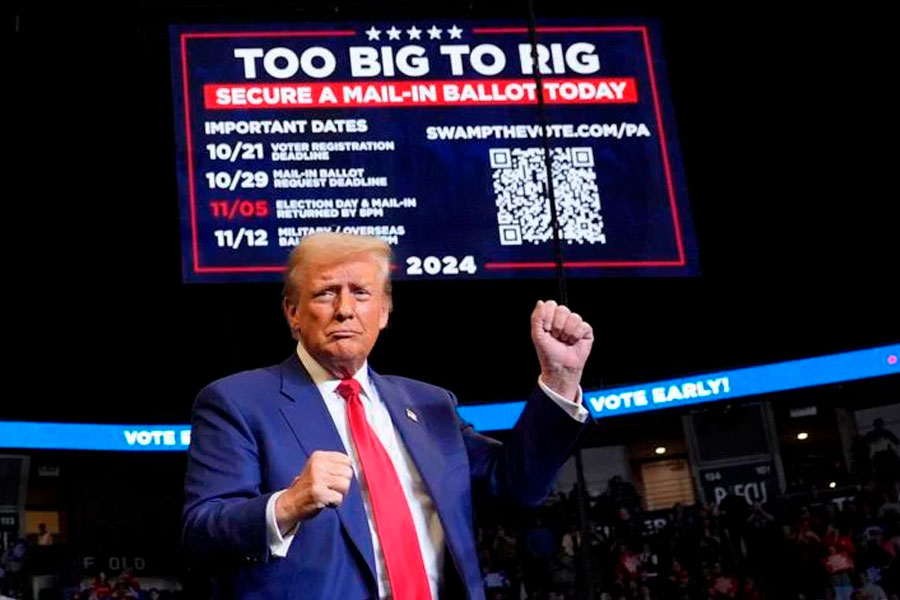
Republican presidential nominee former President Donald Trump dances at a campaign rally at the Bryce Jordan Center, Saturday, Oct. 26, 2024, in State College, Pa. (Photo: AP/Alex Brandon)
The January 6th attack on the Capitol is a dividing line
Part of what divides voters on their views of American democracy is the Jan. 6 attack on the U.S. Capitol and who is to blame. Democrats and independents are much more likely than Republican voters to place “a great deal” or “quite a bit” of responsibility on Trump.
Susan Ohde, an independent voter from Chicago and a retiree from the financial sector, said she’s concerned that “crazy people will buy the misinformation that they’re given,” leading to another such attack.
Giovanna Elizabeth Minardi of Yucaipa, California, said other issues are more important in this year’s election. She said her chief concern is the economy and feels that high prices, especially in her home state, are chasing off businesses and creating a dependency on government. It’s a dependency Harris wants to continue, said Minardi, a children and family services advocate.
Views about the Jan. 6 attack are not the only ones where voters split along ideological lines. Following Trump’s lead, a majority of Republicans maintain that Biden was not legitimately elected. Nearly all Democrats and about 7 in 10 independents believe Biden was legitimately elected.
Other aspects of the political system are divisive too
This year’s presidential campaign has highlighted one aspect of the American political system that some believe is undemocratic — the use of the Electoral College to elect the president rather than the popular vote. Trump and Harris have concentrated their campaign events and advertising in seven battleground states that represent just 18% of the country’s population.
About half of voters think the possibility that a candidate could become president by winning the Electoral College but losing the popular vote is a “major problem” in U.S. elections. As with many other issues, the question also reveals a partisan divide: About two-thirds of Democrats say the potential for an Electoral College-popular vote split is a major problem, compared to about one-third of Republicans.
Debra Christensen, 54, a home health nurse and Democrat from Watertown, Wisconsin, is opposed to the Electoral College that could give Trump the White House even if he loses the popular vote for the third time.
“In this day and age with technology what it is, why can’t we have one person one vote?» she said.
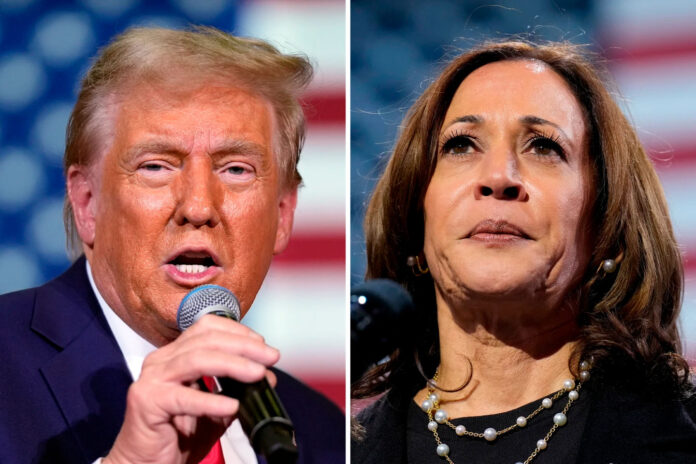
This combination of file photos shows Republican presidential nominee former President Donald Trump, left, speaking at at a town hall on Oct. 20, 2024, in Lancaster, Pa., and Democratic presidential nominee Vice President Kamala Harris, right, speaking at a campaign rally on Oct. 14, 2024, Erie, Pa. (Photo: AP)
Uncertainty reins entering the final full week of the 2024 campaign with Democrat Kamala Harris and Republican Donald Trump locked in a fiercely competitive presidential contest. What happens in the coming days will be pivotal in deciding the winner.
Here’s what we’re watching this week:
Will wars in the Middle East shift the focus?
U.S. presidential elections are rarely shaped by foreign affairs, but the wars in the Middle East are escalating at the very moment that millions of voters are preparing to cast ballots.
It’s still unclear how Iran would respond to Israel’s unusually public airstrikes across Iran on Friday. The answer could determine whether the region spirals further toward all-out war or holds steady at an already devastating and destabilizing level of violence.
Iran’s response could also determine the extent to which the Middle East conflict shapes the U.S. election.
The issue has been especially difficult for Harris to navigate as she simultaneously vows to support Israel and offers empathy for those tens of thousands of Palestinians killed by Israel’s response to Hamas’ Oct. 7, 2023 attacks. The Democratic vice president continues to face intense pressure from her party’s progressive base, which has been extremely critical of Israel.
Trump has been unapologetically supportive of Israel, although some Arab American leaders — especially in swing-state Michigan — have been unusually supportive of the Republican former president, who famously banned travel from many Muslim countries during his first term.
Even in a best-case scenario, the next president will inherit one of the most volatile foreign policy challenges in decades.
Will Harris’ closing message harness Democrats’ anxiety?
It would be an understatement to describe Democrats as anxious as Election Day looms. But there was a deliberate effort by Harris’ senior team over the weekend to project optimism to help temper the fear.
Harris senior adviser Jenn O’Malley Dillon predicted victory on MSNBC on Sunday: “We are confident we’re going to win this thing,” she said. “We’re seeing extraordinary enthusiasm. This is going to be a close race, and our campaign is exactly where we want to be.”
Harris will try to alleviate Democratic anxiety further on Tuesday when she delivers her “closing argument” at the Ellipse, the same spot near the White House where Trump spoke on Jan. 6, 2021 shortly before his supporters attacked the Capitol.
Harris is expected to focus her remarks on the danger Trump poses to U.S. democracy. She has called her Republican rival “a fascist” in recent days. And she’s been joined by an unlikely ally, Trump’s former chief of staff John Kelly, who has also described Trump as a fascist recently.
But she’s expected to hit broader themes as well, encouraging voters to look behind her at the White House and imagine who will be sitting at the Resolute Desk at a moment of great consequence. She’s aiming to drive home the stakes of the Nov. 5 election for undecided voters — especially moderate Republicans who may be uncomfortable with Trump’s divisive leadership and extreme rhetoric. And while Harris’ team is betting that there is a significant number of moderates who can still be persuaded, progressive Democrats are worried she’s not focused enough on economic issues in the campaign’s closing days.
Democratic anxiety, we have learned, may be a fact of life.
Can Trump stay on message (relatively speaking)?
Even before the week began, Trump’s campaign risked being knocked off course by controversy. A rally at New York City’s Madison Square Garden late Sunday that was meant to serve as a closing message was instead overshadowed by racist insults, including a comedian who called Puerto Rico a “floating island of garbage.»
And with eight days to go until Election Day, history suggests Trump is virtually guaranteed to say or do something else controversial in the final stretch. The only question is whether it will break through.
If there’s one thing we know, it’s that Trump cannot help himself. He’s been using authoritarian-style rhetoric in recent days to suggest that his Democratic opponents, whom he calls “ the enemy within,» are more dangerous to the nation than the threat posed by Russia and China.
Democrats will be combing through every Trump interview and public appearance for something similar to exploit. There are also multiple ongoing criminal investigations into Trump, who has already been convicted of 34 felony charges, that could reveal new information.
Yet Democrats are the first to admit that voter opinions of Trump is so hardened that it would take something truly stunning to change the course of the election.
There is precedent for a final-week stunner, however. Remember, it was Oct. 28, 2016 when former FBI Director James Comey sent a letter to Congress indicating that federal investigators learned of new emails pertinent to the investigation into Hillary Clinton’s use of a private email server.
Where will they go?
The candidates’ evolving travel schedules will tell us much about the battlegrounds that will matter most on Election Day.
Here’s what we know for sure: Harris and Trump are aggressively competing in just seven swing states that will ultimately decide the election. They are the three so-called «Blue Wall» states — Michigan, Pennsylvania and Wisconsin — in addition to Arizona, Georgia, Nevada and North Carolina.
For a political perspective, however, not every one of the seven is created equal.
Harris spent Sunday in Pennsylvania, which may be the election’s biggest prize. Harris is next scheduled to go to Michigan. And after Tuesday’s closing argument in Washington, she plans to visit North Carolina, Pennsylvania and Wisconsin on Wednesday alone. She heads to Nevada and Arizona on Thursday.
What do we know about Trump’s schedule? He’s booked to host at least one rally every day next week: Monday in Georgia, Tuesday in Pennsylvania, Wednesday in Wisconsin, Thursday in Nevada, Friday in Wisconsin again and Saturday in Virginia.
But as a reminder, these schedules are likely to change based on the campaigns’ intelligence on the ground.
Will the early voting surge continue?
More than 41 million votes have already been cast in the election nationwide. Democrats generally have an advantage in early voting, but so far, at least, Republicans are participating at a much higher rate than they have in the past.
The question: Will it last?
Trump, of course, has for years encouraged his supporters to cast only in-person ballots on Election Day. The practice put the GOP at a significant disadvantage. He largely reversed course in recent months as he and his party acknowledged the obvious benefit of being able to bank their votes as early as possible.
Because of the Republican participation, the early turnout was breaking records last week in swing states such as Georgia and North Carolina.
But with the GOP more focused on “election integrity” rather than a traditional get-out-the-vote operation, it’s unclear whether the uptick in Republican early voting will continue. Democrats hope it won’t.
How hard will Trump work to undermine election results?
History may one day decide that the most significant thing Trump said in the closing days of the 2024 election is the thing that many voters barely notice anymore: his persistent warnings that this election is rigged against him.
Indeed, as Election Day approaches, Trump is increasingly warning his supporters that he will lose on Nov. 5 only if his political opponents cheat. Such statements have no basis in fact. There was no evidence of significant voter fraud in the 2020 election, which Trump lost, and there is no evidence that Trump’s adversaries can or will rig this election against him either.
Still, Trump’s unfounded warnings make an already tense and violent election season even more fraught. And there are real threats that foreign adversaries — especially Russia, China and Iran — will meddle in the election.
At the same time, the Republican National Committee has invested tens of millions of dollars into an operation to mobilize thousands of polling place monitors, poll workers and attorneys to serve as “election integrity” watchdogs. Democrats are worried that the effort could lead to harassment of election workers and undermine trust in the vote.
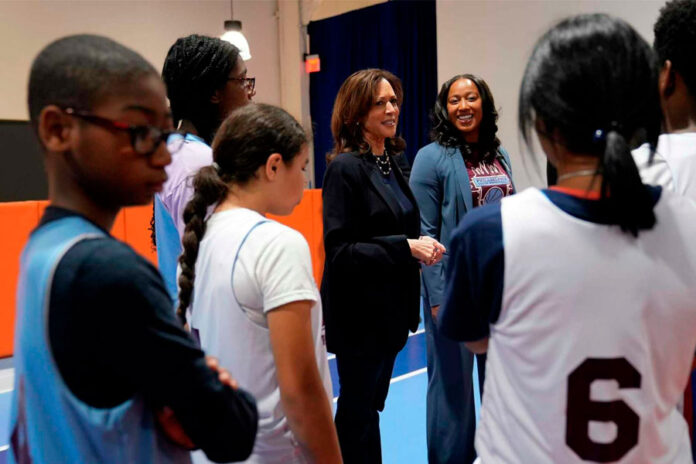
La candidata presidencial demócrata, la vicepresidenta Kamala Harris, al centro, sonríe mientras es circundada por algunas jugadoras de baloncesto y la entrenadora Randyll Butler, a la derecha, durante un evento de campaña, el domingo 27 de octubre de 2024, en Filadelfia. (Foto: AP/Susan Walsh)
Filadelfia. — Kamala Harris declaró el domingo que “nadie puede quedarse al margen” en las elecciones presidenciales de este año, concluyendo una jornada de campaña a lo largo de la ciudad más poblada de Pensilvania, un estado crucial sin una preferencia política clara.
“Estamos concentrados en el futuro y estamos enfocados en las necesidades del pueblo estadounidense”, declaró Harris, “a diferencia de Donald Trump, quien pasa todo el tiempo mirándose al espejo, enfocándose en él mismo”.
En declaraciones desde un centro recreativo de la ciudad, la demócrata se refirió en específico a los votantes jóvenes, a los que elogió por estar “acertadamente impacientes por un cambio”, y les dijo a los presentes que en la campaña “hay demasiado en juego”.
“No debemos despertar el día después de las elecciones y tener ningún remordimiento sobre lo que podríamos haber hecho en estos nueve días restantes”, puntualizó la vicepresidenta.
Mark Ruffalo y Don Cheadle, dos actores que protagonizaron películas de la saga “Avengers” de Marvel, estuvieron presentes en el mitin. Harris les recordó a los asistentes que el martes vence el plazo en Pensilvania para votar por adelantado y los exhortó a “hacerlo mañana, si es que pueden”.
El hecho de movilizar a los votantes en Filadelfia, un bastión tradicional del Partido Demócrata, es crucial para las probabilidades de Harris de imponerse a Trump, el candidato republicano. Si la participación en la ciudad llega a ser menor a la esperada, Harris pasará apuros para sobreponerse a la ventaja de la que goza Trump en zonas rurales de Pensilvania.
“Filadelfia es una parte muy importante de nuestro camino hacia la victoria”, dijo Harris a reporteros. “Es la razón por la que he pasado tiempo aquí. Pero me siento muy optimista con respecto al entusiasmo”.
Kenny Payne, de 62 años, dijo que Harris va a ganar “y no será un resultado apretado”. El elector demócrata señaló que juega golf con un grupo de republicanos que dicen que no votarán de nuevo por Trump.
“Creo que ya estaremos en la cama para la medianoche”, señaló afuera del centro recreativo en el que Harris habló.
Patrick Boe, de 46 años, dijo que se siente optimista en lo que respecta al entusiasmo por Harris en la ciudad, aunque reconoció que su punto de vista podría ser algo parcial.
“Aquí estoy en una burbuja”, recalcó Boe.
Randyll Butler, entrenadora de baloncesto juvenil que presentó a Harris, dijo que las elecciones están en “el último cuarto”.
“No podemos sentirnos cansados”, comentó. “No podemos ser complacientes”.
La coalición demócrata depende de los votantes de raza negra, lo cual quedó de manifiesto con la agenda de Harris del domingo. Inició el día junto a una congregación de raza negra en la iglesia de la Compasión Cristiana, en donde señaló que Estados Unidos está “decidido a dar vuelta a la página del odio y la división”.
Harris hizo referencia a la historia del apóstol Pablo, que superó adversidades para propagar la palabra de Jesús.
“En tiempos difíciles, en los que podemos sentirnos fatigados de hacer el bien, debemos recordar el poder que obra dentro de nosotros, el poder divino que transformó la vida de Pablo, lo guio a través del naufragio y lo sostuvo en las pruebas”, destacó Harris.
Tras su visita al templo se dirigió a Philly Cuts, una peluquería en el sector Oeste de Filadelfia. Jordan Harris, representante estatal de Pensilvania, moderó una conversación con Harris y hombres de raza negra acerca de mejorar la representación racial en la educación. En el muro había un afiche de Barack Obama, el primer presidente negro de Estados Unidos.
“No le pagamos lo suficiente a los maestros”, declaró Harris, que, si gana, se convertirá en la primera presidenta y la segunda de raza negra. “La deuda por préstamos a estudiantes es un problema”.
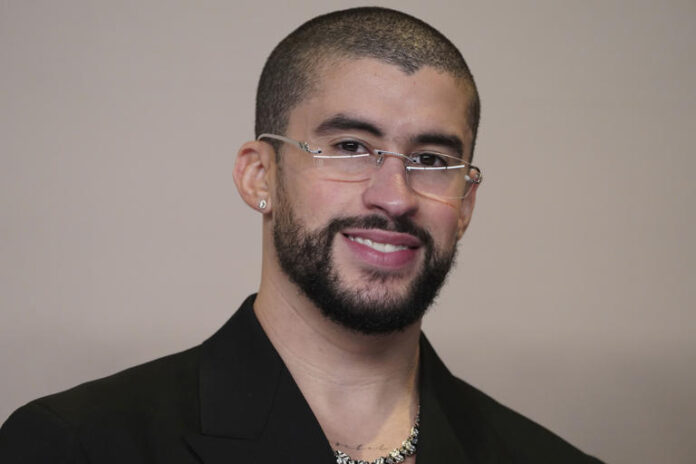
Bad Bunny poses in the press room at the Oscars on Sunday, March 10, 2024, at the Dolby Theatre in Los Angeles. (Photo by Jordan Strauss/Invision/AP, File)
Bad Bunny threw his support behind Vice President Kamala Harris on Sunday by sharing a video of the Democratic presidential nominee shortly after a comedian at Donald Trump’s Madison Square Garden rally made crude jokes about Latinos and called Puerto Rico a “floating island of garbage,» angering artists and some Hispanic Republicans.
Bad Bunny, whose official name is Benito Antonio Martínez Ocasio, is one of the most famous artists of the moment. His backing could be a boost for the Harris campaign as it tries to bolster its support with Latino voters, among whom Trump has been working to gain ground.
The video Bad Bunny shared with his 45 million Instagram followers shows Harris saying “there’s so much at stake in this election for Puerto Rican voters and for Puerto Rico.” A representative of the artist confirmed that Bad Bunny is supporting Harris.
Bad Bunny signaled his support moments after comedian Tony Hinchcliffe made the remarks on Puerto Rico. Later, Hinchcliffe said “these Latinos, they love making babies” and said they don’t use the pull-out birth control method.
The comments on Puerto Rico were immediately criticized by Harris’ campaign, but were also called out by Angel Cintron, the head of the GOP on the island, and Republican U.S. Rep. Maria Elvira Salazar, who represents parts of Miami and has participated in recent Trump events.
Salazar wrote: “Disgusted by “@TonyHinchcliffe’s racist comment calling Puerto Rico a ‘floating island of garbage.’ This rhetoric does not reflect GOP values. Puerto Rico sent 48,000+ soldiers to Vietnam, with over 345 Purple Hearts awarded. This bravery deserves respect. Educate yourself!”
Trump campaign spokeswoman Danielle Alvarez in a statement said «this joke does not reflect the views of President Trump or the campaign.”
Ricky Martin, who had previously endorsed Harris, was also offended by the comment and said «that’s what they think of us,” on Instagram.
In showing support, Bad Bunny shared several times another part of the clip Harris made on Puerto Rico, saying “I will never forget what Donald Trump did and what he did not do when Puerto Rico needed a caring and a competent leader.»
The 30-year-old Puerto Rican reggaeton artist, who has popular songs such as “Dakiti” and “Titi Me Preguntó,” has won three Grammy Awards. He was the most streamed artist on Spotify in 2020, 2021 and 2022, and was only surpassed by Taylor Swift in 2023. He was named Artist of the Year by Apple Music in 2022.
The Puerto Rican vote is sizable in Pennsylvania, which is arguably the hardest fought of the swing states in the 2024 election. Other Puerto Rican singers such as Jennifer Lopez and Marc Anthony had already expressed support for Harris. Trump has also attracted support from other popular stars from the island such as Anuel AA and Nicky Jam.
Bad Bunny has been vocal about criticizing Puerto Rico’s electric system, which was razed by Hurricane Maria. In a 2022 music video for his song “El Apagon,” the artist called out the company Luma Energy, which handles transmission and distribution, for the constant power outages that plague the island.
One of his most recent songs, “Una Velita,” is also a protest against the government response following Hurricane Maria in Puerto Rico in 2017.
A year after the storm, public health experts estimated that nearly 3,000 perished because of the effects of Hurricane Maria. But Trump, whose efforts to help the island territory recover have been persistently criticized, repeatedly questioned that number saying it rose “like magic.”
His visit to the island after the hurricane elicited controversy such as when he tossed paper towels. His administration released $13 billion in assistance years later, just weeks before the 2020 presidential election. And a federal government watchdog found that officials hampered an investigation into delays in aid delivery.
Bad Bunny also shared a part of the clip showing Harris saying that Trump “abandoned the island, tried to block aid after back-to-back devastating hurricanes and offered nothing more than paper towels and insults.”
Harris visited a Puerto Rican restaurant in North Philadelphia earlier on Sunday and released her policy related to the island saying she wants to create a task force to attract investment to fix the electrical grid. And Trump is headed on Tuesday to Allentown, Pennsylvania, where more than half of its population is Hispanic and a majority of them from Puerto Rico.
In 2020, Bad Bunny allowed the Biden campaign to use one of his hits “Pero Ya No” in a TV ad.
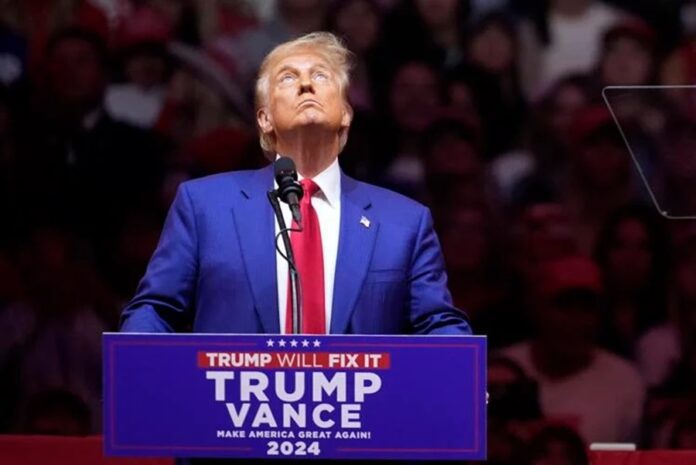
Republican presidential nominee former President Donald Trump speaks at a campaign rally at Madison Square Garden, Sunday, Oct. 27, 2024, in New York. (AP Photo/Evan Vucci)
NEW YORK— Donald Trump hosted a rally featuring crude and racist insults at New York’s Madison Square Garden Sunday, turning what his campaign had dubbed as the event where he would deliver his closing message into an illustration of what turns off his critics.
With just over a week before Election Day, speakers labeled Puerto Rico a “floating island of garbage,” called Democratic Vice President Kamala Harris “the devil,” and said the woman vying to become the first woman and Black woman president had begun her career as a prostitute.
“I don’t know if you guys know this, but there’s literally a floating island of garbage in the middle of the ocean right now. I think it’s called Puerto Rico,” said Tony Hinchcliffe, a stand-up comic whose set also included lewd and racist comments about Latinos, Jews and Black people, all key constituencies in the election just nine days away.
The normally pugnacious Trump campaign took the rare step of distancing itself from Hinchcliffe. “This joke does not reflect the views of President Trump or the campaign,» senior adviser Danielle Alvarez said in a statement.
But other speakers also made incendiary comments. Trump’s childhood friend David Rem referred to Harris as “the Antichrist” and “the devil.” Businessman Grant Cardone told the crowd that Harris ”and her pimp handlers will destroy our country.”
The marquee event reflected the former president’s tone throughout his third White House campaign. Though he refrained from doing so Sunday, Trump often tears into Harris in offensive and personal terms himself, questioning in recent weeks her mental stability and her intelligence as well as calling her “lazy,” long a racist trope used against Black people.
The event was a surreal spectacle that included former professional wrestler Hulk Hogan, TV psychologist Dr. Phil McGraw, former Fox News host Tucker Carlson, politicians including House Speaker Mike Johnson and Reps. Byron Donalds and Elise Stefanik, and an artist who painted a picture of Trump hugging the Empire State Building.
And that was all before Trump was to take the stage, running more than two hours late.
After being introduced by his wife, Melania Trump, in a rare public appearance, the former president began by asking the same questions he’s asked at the start of every recent rally: “Are you better off now than you were four years ago?” The crowd responded with a resounding “No!”
“This election is a choice between whether we’ll have four more years of gross incompetence and failure, or whether we’ll begin the greatest years in the history of our country,” he said.
Trump announced a new tax credit for caregivers
Trump on Sunday added a new proposal to his list of tax cuts aimed at winning over older adults and blue-collar workers, which already includes vows to end taxes on Social Security benefits, tips and overtime pay: A tax credit for family caregivers.
This comes after Harris has talked about the “sandwich generation” of adults caring for aging parents while raising their children at the same time. Harris has proposed federal funding to cover home care costs for older Americans.
Trump otherwise repeated familiar lines about foreign policy and immigration, calling for the death penalty for any migrant who kills a U.S. citizen and saying that the day he takes office, “The migrant invasion of our country ends.”
As Trump’s remarks came up on an hour, some of the crowd began trickling out.
Tech mogul Elon Musk, who spoke earlier and introduced Melania Trump, was a prominent part of Trump’s closing campaign message. The former president called Musk “a genius” and “special.”
Musk nodded to Trump’s recent plan to allow him to lead a government efficiency commission to audit the entire federal government. Several of Musk’s businesses, including Tesla and SpaceX, have major government contracts or have relied on U.S. subsidies, and Musk has faced criticism after reports that he has spoken privately with Russian President Vladimir Putin.
“Your money is being wasted and the department of government efficiency is going to fix that,» Musk said before taking a place offstage beside Melania Trump.
Many of the speakers Sunday appeared on stage at the Republican National Convention. This time, the same speakers shouted and railed more against Democrats.
Hogan, returning to the venue where he performed years ago as a professional wrestler, seemed to reprise his character, emerging wearing a giant red, orange and yellow boa and violently waving a large American flag as he posed and danced. He spat on the stage during his speech, flexed his muscles repeatedly and told the audience: “Trump is the only man that can fix this country today.”
Trump allies went after Democrats for bringing up a pro-Nazi rally
Some Democrats, calling Trump a fascist, have compared his Sunday event to a pro-Nazi rally at the Garden in February 1939. Several speakers on Sunday ripped Hillary Clinton, the Democrat defeated by Trump eight years ago, for saying recently that Trump would be “reenacting” the 1939 event. One of them, radio host Sid Rosenberg, directed a profanity at Clinton.
“Hey guys, they’re now scrambling and trying to call us Nazis and fascists,” said Alina Habba, one of Trump’s attorneys, who draped a sparkly “MAGA” jacket over the lectern as she spoke. “And you know what they’re claiming, guys? It’s very scary. They’re claiming we’re going to go after them and try and put them in jail. Well, ain’t that rich?”
Declared Hogan in his raspy growl: “I don’t see no stinkin’ Nazis in here.”
Trump has denounced the four criminal indictments brought against him as politically motivated. He has ramped up his denunciations in recent weeks of “enemies from within,” naming domestic political rivals, and suggested he would use the military to go after them. Harris, in turn, has referred to Trump as a fascist.
The arena was full hours before Trump was scheduled to speak. Outside the arena, the sidewalks were overflowing with Trump supporters in red “Make America Great Again” hats. There was a heavy security presence. Streets were blocked off and access to Penn Station was restricted.
“It just goes to show ya that he has a bigger following of any man that has ever lived,” said Philip D’Agostino, a longtime Trump backer from Queens, the borough where Trump grew up.
A New Yorker returns home
Trump has a complicated history with the place where he built his business empire and that made him a tabloid and reality TV star. Its residents indicted him last year on 34 felony counts of falsifying business records. He was found guilty in that case, and also found liable in civil court for business fraud and sexual abuse.
But Trump has been talking about wanting to hold a rally at the venue dubbed “The World’s Most Famous Arena” since he launched his campaign.
The rally was one of a number of detours Trump has made from battleground states, including a recent rally in Coachella, California, and rallies on the Jersey Shore and in the South Bronx.
While some have dismissed the stops as nothing more than vanity events aimed at boosting Trump’s ego, the rallies guaranteed Trump national coverage that could help him reach the country’s few remaining undecided voters, many of whom don’t get their news from traditional outlets.
New York has not voted for a Republican for president in 40 years. But that hasn’t stopped Trump from continuing to insist he believes he can win. New York is also home to a handful of competitive congressional races that could determine which party controls the House next year.
Trump routinely uses his hometown as a foil before audiences in other states, painting a dark vision of the city that bears little resemblance to reality. He’s cast it as crime-ridden and overrun by violent, immigrant gangs who have taken over Fifth and Madison avenues and occupied Times Square.
On Sunday, however, Trump was much more complimentary of the city. He said “no city embodies the spirit” and energy of the American people more and talked about attending basketball and hockey games at the Garden.
After Trump concluded his speech after over an hour, opera singer Christopher Macchio came on stage to perform the song “New York, New York.”
The former president smiled and swayed slightly, his wife standing next to him on stage.
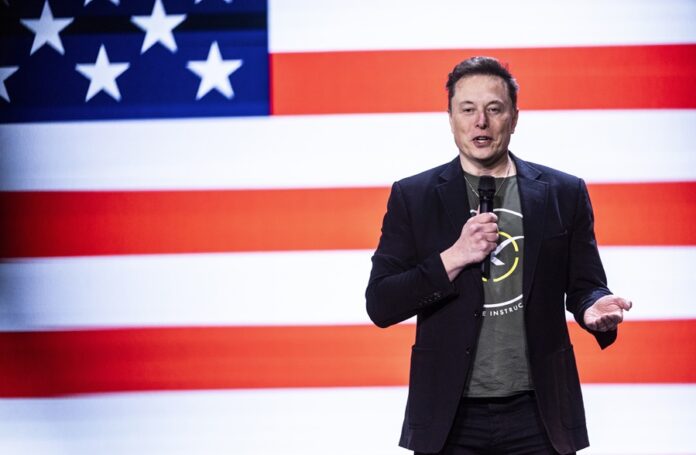
Elon Musk habla en la iglesia Life Center el sábado 19 de octubre de 2024, en Harrisburg, Pensilvania. (Sean Simmers/The Patriot-News vía AP)
WASHINGTON— Elon Musk, el multimillonario propietario del contratista gubernamental SpaceX y aliado crucial del candidato presidencial republicano Donald Trump, ha estado en contacto de forma regular con el presidente ruso Vladímir Putin durante los últimos dos años, reportó The Wall Street Journal.
Una persona al tanto de la situación, que habló a condición de guardar el anonimato para poder declarar sobre este asunto delicado, le confirmó a The Associated Press que Musk y Putin han estado en contacto telefónicamente. La persona no proporcionó detalles sobre la frecuencia de las llamadas, cuándo ocurrieron ni su contenido.
Musk —el hombre más rico del mundo que también es dueño del fabricante automotriz Tesla y la red social X— es ahora una voz destacada en la derecha estadounidense. Ha donado millones de dólares a la campaña presidencial de Trump y convirtió la plataforma que solía llamarse Twitter en un sitio popular entre los simpatizantes del exmandatario, al igual que entre seguidores de teorías de conspiración, extremistas y propagandistas rusos.
El hecho de que Musk tenga contacto con Putin genera interrogantes de seguridad nacional, dado el trabajo que sus compañías realizan para el gobierno de Estados Unidos, y acentúa las preocupaciones sobre la influencia rusa en la política estadounidense.
Esto es lo que se sabe al respecto:
De qué hablaron
Musk y Putin han hablado repetidas veces sobre asuntos personales, de negocios y geopolítica, reportó The Wall Street Journal el jueves, citando a diversos funcionarios y exfuncionarios de Estados Unidos, Europa y Rusia.
Durante una de las conversaciones, Putin le pidió a Musk que no activara su sistema de satélites Starlink sobre Taiwán como un favor para el presidente chino Xi Jinping, cuyos vínculos con Putin se han vuelto más cercanos, reportó el periódico. Putin y Xi se han reunido más de 40 veces desde 2013.
Rusia ha negado que las conversaciones hayan ocurrido. En 2022, Musk dijo que sólo había hablado con Putin en una ocasión, una llamada telefónica efectuada 18 meses antes sobre temas del espacio.
La embajada china en Washington indicó el viernes que “no estaba al tanto de los detalles específicos» de cualquier solicitud efectuada por Putin en nombre de China.
Los mensajes que se le enviaron a X y a Tesla para solicitar comentarios de Musk no habían sido respondidos hasta el momento.
Lo que las conversaciones significan para la seguridad nacional
La relación de Musk con Putin genera interrogantes de seguridad nacional, dados los contratos gubernamentales por miles de millones de dólares adjudicados a SpaceX, un socio crucial de la NASA y de los programas satelitales del gobierno estadounidense.
Trump también se ha comprometido a darle a Musk un cargo en su gobierno si gana los comicios el mes próximo.
Michael McFaul, exembajador de Estados Unidos en Rusia, dijo que es inusual que empresarios estén en contacto con Putin sin informarle a las autoridades estadounidenses. Aunque frecuentemente algunos directores generales de empresas pueden interactuar con gobernantes extranjeros, Putin es un caso aparte, dada la invasión a Ucrania, señaló McFaul.
“Él es un criminal de guerra que está masacrando a civiles. Eso hace que esto esté mal, desde mi punto de vista”, dijo McFaul sobre las conversaciones de Musk con Putin. “Uno tiene que decidir con qué equipo está. ¿Estás en el equipo estadounidense, o estás en el equipo ruso?”.
La solicitud de Putin sobre Starlink como un favor a China probablemente será objeto de escrutinio, dado el respaldo de Estados Unidos a Taiwán y las preocupaciones sobre la creciente sociedad entre el Kremlin y Beijing.
Musk —cuya empresa Tesla opera la Gigafábrica Shanghái— ha desarrollado una relación cercana con los gobernantes chinos. Sus declaraciones sobre China han sido amistosas, y ha sugerido que Taiwán le ceda algo de control a Beijing convirtiéndose en una región administrativa especial.
Moscú tiene vínculos crecientes con otros adversarios de Estados Unidos. Washington ha acusado a Rusia de enviar misiles balísticos a Irán, y dice que Corea del Norte mandó soldados a Rusia, posiblemente para que combatan en Ucrania.
Con respecto a Ucrania, los puntos de vista de Musk han cambiado. En un principio respaldó a Kiev tras la invasión rusa de 2022 y le proporcionó su sistema Starlink para sus comunicaciones.
Posteriormente Musk se negó a permitirle a Ucrania utilizar Starlink en 2023 para un ataque sorpresa contra soldados rusos en Crimea.
Planteó también una propuesta de paz que habría requerido que Ucrania abandonara sus planes de pertenecer a la OTAN y le habría dado a Rusia control permanente de la península de Crimea, de la que se apoderó en 2014. El plan hizo enfurecer al gobierno ucraniano.
El momento en que ocurrieron las llamadas reportadas por The Wall Street Journal y el cambio en los puntos de vista de Musk con respecto a Ucrania son una “coincidencia inquietante”, dijo Bradley Bowman, exprofesor adjunto en West Point que ahora es director sénior del Centro sobre Poder Militar y Político de la Fundación para la Defensa de las Democracias, un centro de investigación en Washington.
“La política del gobierno de Estados Unidos es tratar de aislar a Vladímir Putin, y Elon Musk está socavando eso directamente”, declaró Bowman. “¿Qué está haciendo Putin con Musk? Putin intenta reducir su aislamiento internacional e influir en la política exterior estadounidense”.
Una persona al tanto de las conversaciones entre Musk y Putin le dijo al Wall Street Journal que no hay evidencia de que el contacto de Musk con el mandatario ruso represente un problema de seguridad para Estados Unidos.
Al preguntársele sobre los contactos de Musk con Putin, el portavoz de seguridad nacional de la Casa Blanca, John Kirby, les dijo a reporteros el viernes que no tenía información para compartir.
El Pentágono y funcionarios estadounidenses de inteligencia declinaron comentar. El Departamento de Estado no respondió a un correo electrónico enviado para solicitarle sus comentarios.
Los vínculos cercanos de Musk con Trump
Musk se presentó en un mitin reciente de Trump, en el cual portó una gorra con el eslogan “Hagamos grande a Estados Unidos otra vez” y pronunció una advertencia lúgubre de que si Trump pierde la contienda “estas serán las últimas elecciones” en Estados Unidos.
El año pasado, Musk se mofó de la solicitud de ayuda que hizo el presidente ucraniano Volodymyr Zelenskyy, y en febrero dijo que Ucrania no podía ganar la guerra.
Trump, que ha elogiado el liderazgo de Putin y ha criticado a la OTAN y la ayuda estadounidense a Ucrania, ha generado interrogantes sobre qué estaría dispuesto a conceder en unas negociaciones sobre el futuro de Ucrania si gana las elecciones.
Funcionarios estadounidenses de inteligencia y analistas del sector privado han concluido que Rusia está trabajando para respaldar a Trump en forma encubierta por medio de desinformación y propaganda contra su rival demócrata, la vicepresidenta Kamala Harris. Desde que Musk adquirió X se ha convertido en una de las principales fuentes en línea de propaganda rusa y desinformación dirigida a estadounidenses.
Trump ha enfrentado escrutinio por sus propios contactos recientes con Putin, esbozados en un nuevo libro del periodista Bob Woodward, famoso por destapar el escándalo de Watergate.
Woodward citó a un asesor de Trump cuyo nombre no fue revelado, quien dijo que el expresidente y Putin podrían haber tenido hasta siete conversaciones desde que Trump perdió su intento por ser reelegido en 2020. Antes de una de las llamadas, el asesor indicó que se les pidió que salieran de la oficina de Trump para darles privacidad a ambos.
El equipo de campaña de Trump y el Kremlin han negado que esas llamadas hayan ocurrido.
En respuesta a preguntas sobre Musk y Putin, la secretaria de prensa del equipo de campaña de Trump, Karoline Leavitt, dijo que Musk era “un líder de la industria que sólo se da una vez en una generación” y cuyas ideas podrían beneficiar a “nuestra deteriorada burocracia federal”.
“En cuanto a Putin, sólo hay un candidato en la contienda en cuyo gobierno él no invadió otro país, y es el presidente Trump”, declaró Leavitt en un comunicado. “El presidente Trump ha dicho desde hace mucho tiempo que él restablecerá política exterior de paz mediante la fuerza con el fin de disuadir la agresión de Rusia y acabar la guerra en Ucrania”.
Rusia confirma una conversación
Dmitry Peskov, portavoz del Kremlin, rechazó el viernes el reporte de The Wall Street Journal, llamándolo “información absolutamente falsa”.
Peskov dijo que en una ocasión Putin y Musk sostuvieron “una conversación telefónica de mediana duración” antes de 2022, la cual fue “más de una naturaleza preliminar” y enfocada en “tecnologías visionarias”.
“Después de eso, Musk ya no tuvo contactos con Putin”, señaló Peskov, y dijo que el artículo del periódico tiene móviles políticos.
“Las elecciones han entrado en su recta final, y desde luego que los rivales no se detienen ante nada”, declaró Peskov. “Recuerden que hace una semana estaban diciendo que Putin presuntamente habla con Trump todo el día. Ahora él supuestamente habla con Musk todo el tiempo. Todo es falso”.
La inteligencia militar de Ucrania le dijo a la AP que “se abstendrían de comentar” sobre la comunicación entre Putin y Musk.
El representante Andy Kim, demócrata por Nueva Jersey, habla durante la Convención Nacional Demócrata, el 21 de agosto de 2024, en Chicago. (Foto: AP/J. Scott Applewhite)
Después de unas agitadas primarias, los votantes de Nueva Jersey resolverán en las elecciones generales del 5 de noviembre varias contiendas para cargos federales a lo largo y ancho del estado.
La vicepresidenta Kamala Harris, el expresidente Donald Trump y otros siete candidatos competirán por los 14 votos del Colegio Electoral que otorga el estado en la contienda para sustituir al presidente saliente, el demócrata Joe Biden.
Nueva Jersey ha favorecido a los demócratas en las elecciones presidenciales desde 1992. En 2020, Biden ganó en el estado con el 57% de los votos; en 2016, Hillary Clinton lo hizo con el 55%. No obstante, este año el Estado Jardín albergó una mayor actividad de campañas presidenciales tras las primarias, gracias a Trump. El republicano celebró en mayo un acto de campaña en Wildwood, en la costa de Jersey, entre comparecencias judiciales en Nueva York. En agosto dio una conferencia de prensa en su club de golf de Bedminster, poco antes del inicio de la Convención Nacional Demócrata.
En la contienda por el Senado federal, el representante federal demócrata Andy Kim y el republicano Curtis Bashaw compiten por el escaño que dejó vacante el exsenador demócrata Bob Menéndez luego de que fue declarado culpable en un caso de soborno. Kim ha sido legislador por el 3er distrito durante tres periodos, mientras que Bashaw es un hotelero del sur de Nueva Jersey y candidato por primera vez. También hay cuatro aspirantes independientes.
Desde 2000, los demócratas han tenido un margen medio de victoria de unos 12 puntos en las elecciones al Senado federal por Nueva Jersey. Los dos últimos republicanos del estado que ocuparon una banca en el Senado federal fueron designados para el cargo y sólo se desempeñaron durante pocos meses cada uno. El último senador republicano por Nueva Jersey en ser elegido al cargo dejó su puesto en 1979.
Entre las contiendas a seguir por la Cámara de Representantes de Estados Unidos destaca la del 7mo Distrito, que incluye al club de golf de Trump en Bedminster. El republicano Tom Kean Jr. busca un segundo periodo mientras se enfrenta a la demócrata Sue Altman, exdirigente de la progresista Alianza de Familias Trabajadoras del estado. Kean es hijo, nieto y bisnieto de funcionarios estatales. Por el 8vo Distrito, el demócrata Rob Menéndez, hijo del senador que dimitió recientemente, aspira a un segundo periodo mientras se mide al republicano Anthony Valdes.
El voto anticipado en persona se instauró recientemente en Nueva Jersey. El voto anticipado en persona y por correo representó el 30% de los votos en 2022. Se anticipa que los primeros recuentos que se den a conocer durante la jornada electoral sean una combinación de esos votos anticipados. Los votos no contabilizados la noche de las elecciones pueden suponer una media del 5% o 6%, y un porcentaje mayor para los condados de Cumberland y Bergen.
El norte urbano es, por mucho, la región más demócrata del estado, mientras que el noroeste es la más republicana.
A continuación, un vistazo sobre lo que se puede esperar de las elecciones en Nueva Jersey:
El día de las elecciones
5 de noviembre.
Cierre de urnas
8 de la noche, hora del este
Votos del Colegio Electoral para la contienda presidencial
14, asignados al ganador del estado.
Las principales contiendas
Presidencial: Harris (D) vs. Trump (R) vs. Robert F. Kennedy Jr. (independiente) vs. Jill Stein (Verde) vs. Chase Oliver (Libertario) y otros cuatro.
Senado federal: Kim (D) vs. Bashaw (R) y otros cuatro.
Otras contiendas
Cámara de Representantes de Estados Unidos.
Resultados de contiendas presidenciales pasadas
2020: Biden (D) 57%, Trump (R) 41%. La AP anunció ganador el martes 4 de noviembre de 2020, a las 8 de la noche, hora del este.
Votantes registrados
6.659.963 (hasta el 1 de octubre de 2024). Aproximadamente 38% demócratas, 24% republicanos y 37% sin afiliación.
Participación electoral
En las elecciones presidenciales de 2020: 70% de los votantes registrados.
Votos emitidos antes del día de las elecciones en 2020: alrededor de 93% del total.
Votos emitidos antes de día de las elecciones en 2022: alrededor de 30% del total.
¿Cuánto tarda el conteo de votos?
Los primeros resultados se dieron a conocer el 3 de noviembre de 2020 a las 8:18 de la noche, hora del este.
Para la medianoche, hora del este, se había dado a conocer el 32% del total de la votación.
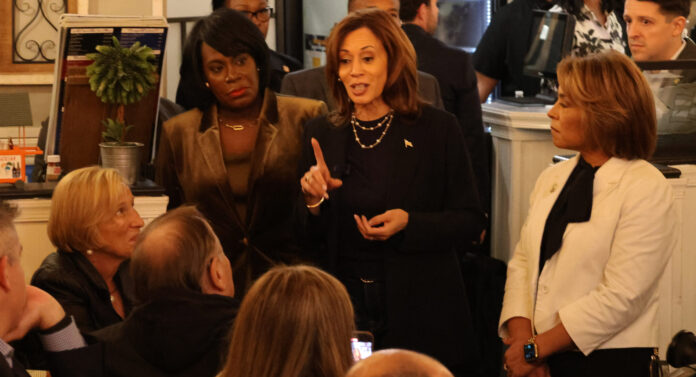
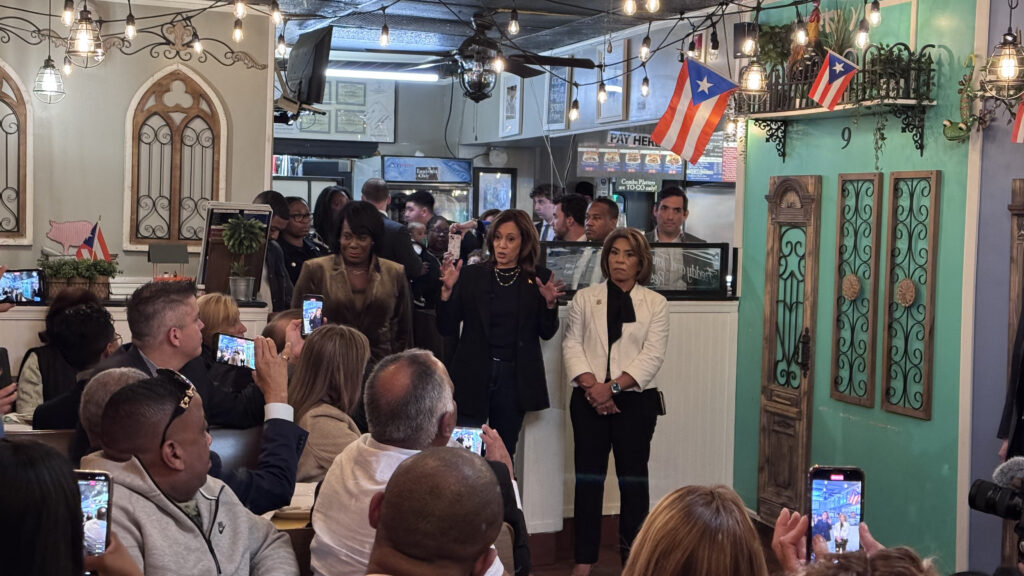
La vicepresidenta y candidata a las elecciones presidenciales de EE. UU., Kamala Harris, habla con simpatizantes este domingo, en el restaurante 'Freddy & Tony's' en Filadelfia (EE. UU). EFE/ Octavio Guzmán
Kamala Harris, anunció este domingo su plan para Puerto Rico en un lugar cargado de simbolismo: el barrio de Fairhill en Filadelfia, conocido como «El Centro de Oro», epicentro de la comunidad boricua desde hace más de medio siglo.
En Pensilvania, uno de los estados clave para las elecciones, solo el 6 % de la población es latina, aproximadamente un millón de personas, de las cuales la mitad tiene raíces puertorriqueñas. Este voto podría ser decisivo, especialmente si se considera que en las elecciones de 2020 el presidente, Joe Biden, superó a Trump por poco más de 80.000 votos.
La vicepresidenta de Estados Unidos y candidata demócrata para las elecciones presidenciales del 5 de noviembre, Kamala Harris, recurrió este domingo a la fe cristiana para hacer un llamado definitivo a la comunidad negra de Filadelfia a que salga a votar y decida el “destino para las generaciones venideras”.
La candidata demócrata dedicó el domingo a recorrer Filadelfia y visitó en las horas de la mañana la Iglesia de la Compasión Cristiana, de mayoría negra, donde habló sobre las enseñanzas que le dejó la lectura de la Biblia.
“Mis primeros recuerdos de esas enseñanzas tienen que ver con amar a un Dios que nos pide que hablemos por aquellos que no pueden hablar”, dijo Harris ante la congregación.
Citó las vicisitudes del apóstol Pablo para difundir la palabra de Jesús e instó a los votantes a tomar en serio las elecciones del próximo 5 de noviembre. “Tenemos nueve días para decidir el futuro de nuestra nación”, insistió la vicepresidenta.
En su recorrido por Filadelfia, la ciudad más grande de Pensilvania y un bastión demócrata, la vicepresidenta quemó sus últimos cartuchos para alentar los votos afroamericanos, que le podrían dar la victoria en este estado clave.
Tras su visita a la iglesia, Harris estuvo en la barbería Philly Cuts, donde escuchó las inquietudes de varios jóvenes afroamericanos sobre el rumbo que debe tomar el país.
Harris dijo a la prensa que su objetivo era dar un mensaje de unidad y “hablar” con la gente y destacar “que tenemos mucho más en común de lo que nos separa”.
“Será un marcado contraste con Donald Trump, que cada vez usa un lenguaje más oscuro y divisivo… Habla de que Estados Unidos es el basurero del mundo y, continuamente, creo, degrada el carácter y la naturaleza de quiénes somos como estadounidenses”, agregó.
Harris expresó optimismo sobre sus posibilidades de alzarse con los 19 votos electorales de este estado clave, donde a nueve días de la elección la media de encuestas FiveThirtyEight otorga a los aspirantes presidenciales un empate técnico.
ENCUENTRO CON LA COMUNIDAD BORICUA
Dentro del restaurante puertorriqueño Freddy & Tony’s, la expectación era máxima antes de la llegada de Harris. Los comensales degustaban papas rellenas y alcapurrias con devoción, levantando nerviosos la vista del plato a cada instante, expectantes por ver a la candidata demócrata.
Rodeada de latinos en especial puerorriqueños, Harris anunció una nueva visión para el éxito y la prosperidad de Puerto Rico que según dijo, fomentará el crecimiento económico, reconstruirá y modernizará la red energética de la isla y apoyará a los trabajadores de toda la isla.
Detallado en un PDF «Construyendo una economía de oportunidades para Puerto Rico», la vicepresidenta Kamala Harris anucia como construirá una economía de oportunidades donde todos, incluido el pueblo de Puerto Rico, tengan la oportunidad de progresar.
Esas propuestas fueron recibidas con entusiasmo por los asistentes, entre quienes se encontraba la alcaldesa de Filadelfia, Cherelle Parker, y figuras latinas destacadas como la concejala Quetcy Lozada, quien representa el distrito que incluye el barrio donde se celebró el evento.
La vicepresidenta Harris dijo que ha sido durante mucho tiempo una defensora de los puertorriqueños, tanto en la isla como en el continente, y recordó que como senadora, visitó la isla después del huracán María y presionó para que se brindara asistencia equitativa en caso de desastres y para la pandemia.
Harris junto al presidente Biden desbloquearon los miles de millones de dólares en fondos para la ayuda y la recuperación en caso de desastres, que habían sido retenidos deliberadamente por la administración Trump
Recibida con una ovación, Harris saludó a los presentes y recordó que quedaban solo nueve días para las elecciones del 5 de noviembre.
La vicepresidenta y candidata a las elecciones presidenciales de EE. UU., Kamala Harris, habla con simpatizantes este domingo, en el restaurante ‘Freddy & Tony’s’ en Filadelfia (EE. UU). (Foto: EFE/Octavio Guzmán)
«Vamos a ganar, y eso es en parte gracias al trabajo que todos ustedes han hecho», comenzó. «Estos nueve días son clave; nuestro objetivo es ganar y, en el proceso, construir comunidad, formar coaliciones y recordar a todos que estamos juntos en esto», agregó.
Mientras los asistentes la grababan con sus teléfonos, Harris presentó su plan para Puerto Rico, enfocado en mejorar la economía de una isla que ha enfrentado un largo proceso de reestructuración de deuda, un sistema eléctrico inestable, alto desempleo y una emigración masiva hacia Estados Unidos continental.
Según explicó, el plan incluye la creación de un «grupo de trabajo para las oportunidades de Puerto Rico», en el que participarán el Gobierno federal, el sector privado, organizaciones sin fines de lucro y líderes comunitarios, con el objetivo de promover el crecimiento económico y generar empleos bien remunerados en Puerto Rico, especialmente para los jóvenes.
Al finalizar su intervención, Harris se unió al clamor de los asistentes en español: «¡Sí se puede, sí se puede!
Delma Santiago, propietaria del restaurante, confesó que llevaba tres días sin poder dormir por los nervios ante la visita de Harris.
Emocionada tras el evento, Santiago comentó a EFE que “fue una experiencia única”, golpeándose el pecho mientras sus ojos se llenaban de lágrimas.
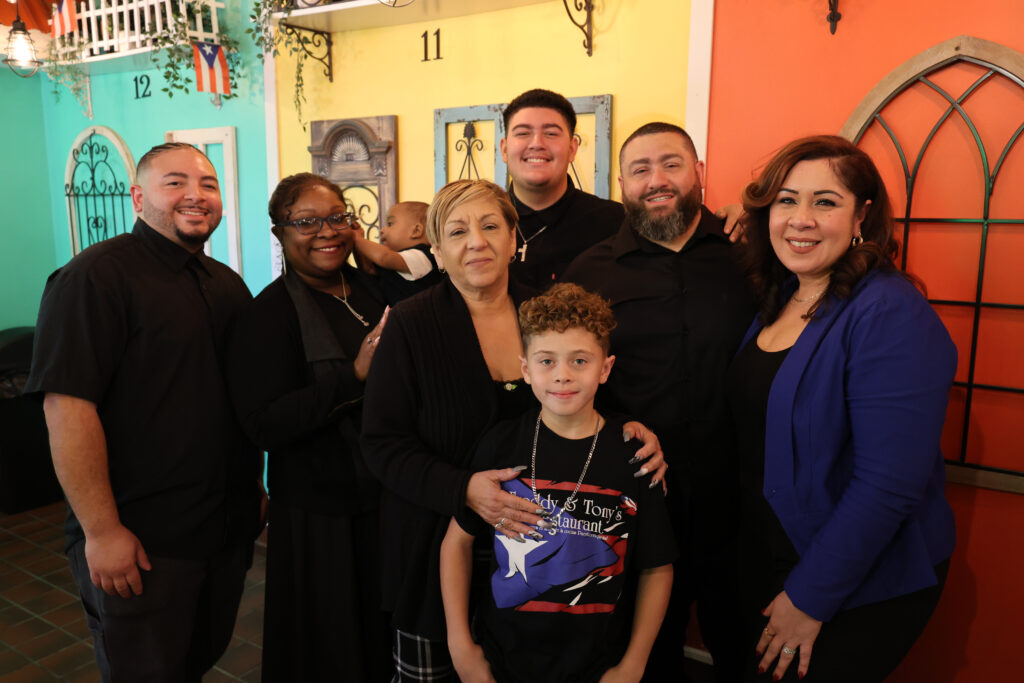
Delma Santiago(c) posa con su familia este domingo, en su restaurante ‘Freddy & Tony’s’ en Filadelfia (EE. UU). (Foto: EFE/Octavio Guzmán)
«Mi voto es 100 % para ella», aseguró Santiago, rodeada de sus hijos, nueras, nietos y sus cocineros de siempre. «Creo en ella, en lo que dice, en lo que ha hecho en el pasado y en lo que hará en el futuro», afirmó.
Santiago fundó Freddy & Tony’s en 1980 junto a su esposo, quien falleció en junio de este año.
Como muchos otros, decidieron abrir su restaurante en una esquina del barrio de Fairhill, un denso cúmulo de residencias pegadas pared con pared en donde el 80 % de los vecinos son latinos, en su mayoría de origen puertorriqueño.
Desde su fundación, el restaurante se ha convertido en un punto de encuentro para quienes buscan un trozo de Puerto Rico lejos de la isla.
Las paredes están decoradas con imitaciones de las coloridas casas del Viejo San Juan, numeradas -la 4 es verde, la 3 roja- y adornadas con balcones, que lucen pequeñas ranas y banderas puertorriqueñas.
Fuera de las paredes del restaurante, en la mayoría de los comercios se habla español y la música que se escucha tiene ritmos caribeños.
Uno de los hijos de Delma, Antonio Santiago, resaltó la importancia de que Harris se acercara a la comunidad. “Fue muy positivo que viniera al barrio, porque es aquí donde todo comienza. Su presencia demuestra su compromiso y apoyo hacia Puerto Rico y nuestra gente”.
Su esposa, Chanoa Santiago, coincidió, destacando la necesidad de un liderazgo que «se involucre con la comunidad, comprendiendo sus dificultades y los problemas económicos que enfrentan las familias trabajadoras».
«Estamos llenos de gratitud y entendemos que esto es más grande que nuestra familia; es nuestra comunidad, nuestra cultura y es un honor ser parte de este momento histórico», añadió Chanoa.
La visita de Harris a la comunidad puertorriqueña se produce en un momento en el que las encuestas muestran una contienda especialmente reñida con el expresidente y candidato republicano Donald Trump.
Con información de Beatriz Pascual Macías para EFE