Inicio Blog Página 64

ICE detainees are dying by suicide at an ‘alarming’ rate, an AP investigation finds

En la imagen, tomada de un video proporcionado por la Patrulla de Caminos del Estado de Missouri, Brayan Rayo Garzon, detenido por el Servicio de Inmigración y Control de Aduanas (ICE, por sus siglas en inglés), mira hacia una cámara de vigilancia en la cárcel del condado Phelps en Rolla, Missouri, el 7 de abril de 2025, poco antes de morir por suicidio. (Foto: AP/Patrulla de Caminos del Estado de Missouri)

Brayan Rayo Garzon was distraught. Detained by Immigration and Customs Enforcement, he was on his fourth day of isolation in a Missouri jail as he battled the fevers and chills of COVID-19.

His request for mental health treatment had been put off, records show, and staff had forbidden Rayo from making his nightly call to his mother as a precaution intended to prevent the spread of illness.

He pleaded with his jailers in handwritten notes to arrange a conversation with her. “I feel in my heart that she’s very worried about me,” he wrote in Spanish.

A guard collected the note and walked away. Within an hour, jail records show, he was found unconscious in his cell. An autopsy determined he killed himself.

Rayo’s April 2025 death was the first suicide in a spike among ICE detainees that has alarmed public health officials and jail experts. They said the unprecedented number of suicide deaths is an indication that authorities are failing to properly oversee the detention of tens of thousands of immigrants swept up in the Trump administration’s aggressive deportation strategy.

An Associated Press investigation found that at least 10 detainees, all men, have died by suicide since President Donald Trump took office in January 2025, a pace that far exceeds the growth in the detainee population, according to a review of ICE data, autopsy reports, coroners’ rulings and police records. Since October, seven deaths have been classified as suicides, a number that is already the most for any fiscal year in the agency’s history. ICE has usually recorded one or no such deaths annually.

“Something is going profoundly wrong from any kind of public health or mental health perspective,” said Dr. Sanjay Basu, a University of California-San Francisco epidemiologist who cowrote a study documenting the increase in mortality and suicide rates among ICE detainees. “This is one of those alarming, sudden increases.”

___

EDITOR’S NOTE: This story includes discussion of suicide. If you or someone you know needs help, the national suicide and crisis lifeline in the U.S. is available by calling or texting 988.

___

Nine of the deaths were of Hispanic men who had arrived in the U.S. from four countries, the AP found. One man was a Chinese citizen. Their average age was 32. While Trump has characterized those facing deportation as the “worst of the worst,” seven of the 10 had no record of violent crimes in the U.S.

The suicides account for nearly a fifth of the 51 deaths in ICE custody since January 2025. The majority of those deaths were from natural causes and experts say many of them would have been preventable with timely medical care.

Department of Homeland Security acting assistant secretary Lauren Bis said suicide deaths in ICE custody remain “extremely rare.”

Bis said detention staff follow protocols to protect detainees who show signs of self-harming and that ICE requires annual suicide prevention training. She said detainees receive comprehensive healthcare, including mental health services.

Reacting to AP’s investigation, Colombian President Gustavo Petro wrote Wednesday in a post on X that the country’s foreign ministry should issue a formal protest regarding Rayo’s death and that the U.S. government should “reflect on how its immigration policy is killing Americans and Latin Americans.”

Investigation finds violations of ICE detention standards

The reasons behind any suicide are complex, and each death often has multiple contributing factors, according to experts. ICE detainees report intense stress after being detained, fear of being returned to countries where their safety may be jeopardized, and frustration and loneliness over the inability to communicate due to language barriers.

Detainees can also feel helplessness because of the complexity surrounding immigration law. Unlike those in the criminal justice system, most detainees do not have lawyers and their detention on immigration violations is not meant to be punitive.

ICE becomes responsible for their well-being when they enter detention, and experts say well-run lockups should have few, if any, suicides. That’s because staff can take steps to mitigate the chances that detainees harm themselves by identifying those at risk, getting them care and monitoring them closely, the experts said.

AP’s investigation found that ICE detention centers have repeatedly fallen short in ways that violate ICE’s own standards.

An examination of the 10 suicide deaths found the men died across ICE’s detention network, including at centers long run by private contractors and county jails that recently became ICE partners. The AP found that staff in the facilities ignored signs of distress, delayed mental health treatment and failed to monitor detainees who were already deemed at risk. They also permitted detainees to have access to materials that could be used for self-harm, according to AP’s review of ICE inspection reports and death records.

In some cases, they jailed distressed detainees in isolation, which can exacerbate feelings of humiliation and helplessness, according to experts.

ICE has repeatedly asserted that it screens detainees within 12 hours of arrival for medical, dental and mental health conditions.

At least three of the nine facilities where ICE detainees died by suicide have struggled to meet that standard, according to ICE inspection reports and jail records.

Dr. Homer Venters, former chief medical officer of New York City jails who previously consulted with ICE on preventing detainee deaths, called the rise in suicides terrifying.

The increase “reflects failures in how the system’s being operated, and particularly failures in how the first stages of coming into detention are happening so that people aren’t being assessed adequately,” Venters said. “And then if that receiving screening picks up red flags, they’re not acted on in a way that reduces the risk of them having preventable death.”

From border crossing to detention

Among those who took their own lives was a 19-year-old from Mexico who had been detained following a misdemeanor traffic stop while riding his scooter.

Another was a 36-year-old restaurant worker who lost contact with his relatives in Nicaragua after ICE detained him in Minnesota and sent him to a crowded camp in Texas. A third was a 45-year-old who had repeatedly crossed the U.S.-Mexico border illegally and had a long criminal record.

Rayo, who took his own life after pleading to talk to his mother, was a veteran of the Colombian military who had worked as a street vendor in his home country. A week after he turned 26 in 2023, his family crossed the U.S. border in California. He was detained for three months before being permitted to settle with family in St. Louis, records and interviews show.

His mother, Adriana Garzon, said Rayo caught on quickly to life in the U.S., making friends easily and working as a housepainter and food delivery driver. He wanted to save money to hire a lawyer to help him stay in the country after a judge in 2024 ordered that he be sent back to Colombia, she said.

He was arrested in March 2025 by St. Louis police after being caught using a stolen credit card, which he had obtained from a friend, at a vape shop, court records show. ICE then took him into custody. An ICE record obtained by AP classified Rayo as a laborer who was a low risk to public safety.

ICE placed Rayo in the Phelps County jail in Rolla, Missouri, about 100 miles (160 kilometers) from St. Louis.

Suicides reveal shortcomings across ICE’s detention network

The deaths have revealed holes in treatment and oversight across ICE’s system, where the detained population has spiked by 50% to 60,000 during Trump’s second term.

Five died in centers run by longtime ICE detention partners CoreCivic and the GEO Group. A sixth died at a camp operated by an inexperienced contractor that ICE has since replaced. Three died in jails run by sheriffs, and one at a federal prison.

“We are deeply saddened by and take very seriously the passing of any individual in our care,” CoreCivic spokesperson Brian Todd said.

GEO Group spokesperson Christopher Ferreira said the company trains staff on suicide prevention and seeks “to maintain a safe and secure environment in compliance with the standards and requirements set by the federal government.” Officials at the three jails either declined comment or didn’t return messages.

Leo Cruz Silva, a 34-year-old who had repeatedly illegally entered the country from Mexico, suffered an acute mental health crisis following his detention after an arrest for public intoxication last fall in a St. Louis suburb, records show.

For two nights in Missouri’s Ste. Genevieve County Jail, Cruz screamed, hid under his bed and reported hallucinations, according to an ICE report on his death. Yet he did not get help quickly.

A nurse ordered antipsychotic medications and planned to get him treatment the next week, the ICE report said.

On the third day, he was found dead in his cell.

Chaofeng Ge arrived in ICE custody last summer at a Pennsylvania facility run by the GEO Group in mental distress, having pleaded guilty to a minor gift card fraud and attempted suicide in state custody, said David Rankin, an attorney representing Ge’s family.

In five days at the facility, he did not get mental health treatment and was unable to communicate because no one spoke Mandarin, Rankin said. Ultimately, Ge went unmonitored before he was found hanged in a shower stall.

“It’s clear that ICE has taken very few steps to ensure the safety of these people,” Rankin said. “They appear to want to make this process as cruel and inhuman as possible. It’s completely unacceptable.”

At Camp East Montana in El Paso, Texas, 36-year-old Victor Diaz died by suicide in a medical holding room in January, according to an ICE report. He had been moved into isolation after reporting harassment by fellow detainees, the report said.

Days earlier at the same facility, Geraldo Lunas Campos died of asphyxia after ICE said guards restrained him following a suicide attempt. His death was ruled a homicide by a medical examiner and Trump administration officials said the FBI was investigating its circumstances.

ICE inspectors visited the facility in February, documenting 49 violations of detention standards at what was then ICE’s largest detention facility, according to their report.

The report found that staff did not record “required checks to prevent significant self-harm and suicide” while inspectors found tools and equipment unsecured and unaccounted for throughout the facility that could be used for harm. Calls to 911 show several other detainees had attempted suicide there.

At the time of the deaths and inspections, Acquisition Logistics was the contractor running the facility. ICE has since replaced Acquisition Logistics with another contractor. Acquisition Logistics did not return messages seeking comment.

Detainee spent final days sick and isolated

The Phelps County Jail had started taking ICE detainees a month before Rayo’s arrival. Sheriff Michael Kirn, a Republican in a county where voters overwhelmingly supported Trump’s reelection, told commissioners his department’s budget was hurting and partnering with ICE could generate millions in revenue.

Records show Rayo’s trouble started immediately. It took the jail 35 hours to conduct the initial medical screening ICE promises within 12 hours, according to jail records obtained by the AP under the open records law.

Rayo exhibited labored breathing and told a nurse he was anxious and wanted mental health treatment.

A nurse who didn’t speak Spanish used a “handheld translator” to assess Rayo, concluding he denied thoughts of suicide and depression, according to the documents compiled by the Missouri State Highway Patrol during an investigation into Rayo’s death.

She recommended him for the general population, listing his physical and mental condition as stable, records show. And she referred him for a routine mental health appointment.

Two days later, he reported head pain and body aches. Staff learned he was positive for exposure to tuberculosis bacteria. He was sent to a hospital, where he was diagnosed with COVID-19. He was returned to jail the following day.

The mental health appointment was scheduled but canceled due to “mental health clinic time and staff,” a jail record shows. Two days later, they again canceled his appointment, this time citing his coronavirus infection.

The delays violated an ICE standard requiring mental health treatment within a week of a referral.

Bis, the DHS spokesperson, said Rayo received “high-quality medical care during his time in ICE custody.”

To ease his anxiety, Rayo called his mother before bed to share a Catholic blessing. “I gave him strength,” said Garzon, whose first name, Adriana, was tattooed on her son’s arm.

As Rayo grew sicker with nausea, chills and aches, staff moved him into a cinderblock isolation cell with a surveillance camera overhead for closer monitoring and to prevent the spread of disease. He was not allowed to call his mother.

On his fourth day of isolation, Rayo passed two notes under his door, begging guards to let him talk to his mom. In one, which was reviewed by AP, he appealed to the guard’s humanity. “I know you have family, and you know that they worry about us,” he wrote in Spanish. “God bless you.”

The English-speaking guard used a colleague’s phone to translate the notes and wrote in a report that he planned to follow up.

Within an hour, guards found Rayo unconscious on his bed with a sheet around his neck.

Emergency responders tried to revive him, transporting him to a hospital. That’s when an official called Rayo’s mother — to let her know her son was in very bad shape and would be flown to a St. Louis medical center. At the hospital, a doctor gave her the devastating news: Her son was dead.
Impacto mourns the passing of PhillyCAM founding executive director Gretjen Clausing

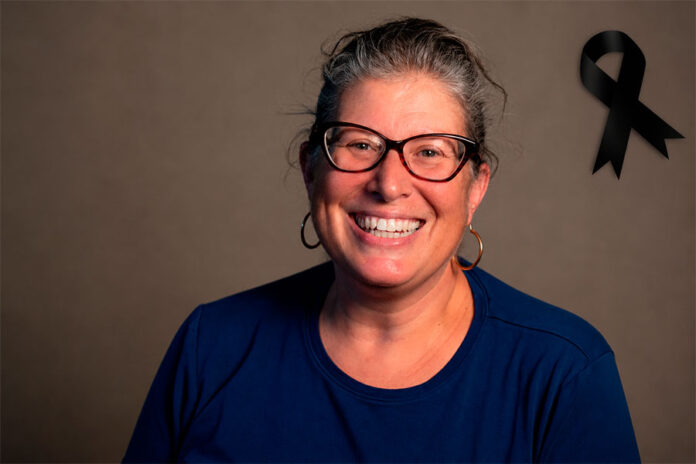
Gretjen Clausing.

With profound sadness, Impacto joins the community in mourning the passing of Gretjen Clausing, founding executive director of PhillyCAM and a key figure in the community media movement in Philadelphia.

Clausing dedicated nearly three decades to advocating for public access to media and freedom of expression, becoming a tireless champion of art, culture, film, and community creativity. For 17 years, she led PhillyCAM—an organization she helped co‑found—transforming it into a vital space where thousands of residents could learn, create, connect, and share their own stories.

Her impact extended far beyond PhillyCAM. She was actively involved in national campaigns supporting community media through the Alliance for Community Media and contributed to strengthening local journalism as an ally of Free Press. She also played a role in co‑founding WPPM 106.5 FM, helping to expand community radio in Philadelphia.

Those who worked closely with her remember not only her visionary leadership but also her generosity as a collaborator, mentor, and advocate for community voices. Known for her warmth and ability to build meaningful connections, she created a supportive environment for creators and emerging leaders.

Her passing, described by those close to her as sudden, has deeply affected the community. Colleagues recall her lasting influence and the powerful legacy she leaves behind—one rooted in empowerment, inclusion, and storytelling.

Impacto extends its deepest condolences to her family, as well as to the staff, members, volunteers, and partners of PhillyCAM and PhillyCAM Latino during this difficult time. The organization has expressed gratitude for the outpouring of support and will soon share information on how to honor Clausing’s life and legacy.

Her work will continue to live on in every story told, every voice amplified, and every community strengthened through media.

May she rest in peace.

Impacto lamenta el fallecimiento de Gretjen Clausing, directora ejecutiva fundadora de PhillyCAM

Gretjen Clausing.

Con profunda tristeza, Impacto se une al duelo por el fallecimiento de Gretjen Clausing, directora ejecutiva fundadora de PhillyCAM y una figura clave en el movimiento de medios comunitarios en Filadelfia.

Clausing dedicó cerca de tres décadas a la defensa del acceso público a los medios y la libertad de expresión, convirtiéndose en una incansable promotora del arte, la cultura, el cine y la creatividad comunitaria. Durante 17 años lideró PhillyCAM, organización que ayudó a cofundar, consolidándola como un espacio vital donde miles de residentes pudieron aprender, crear, conectarse y contar sus propias historias.

Su impacto se extendió más allá de PhillyCAM. Fue parte activa de campañas nacionales por el acceso a medios comunitarios a través de la Alliance for Community Media y apoyó el fortalecimiento del periodismo local junto a organizaciones como Free Press. Asimismo, participó en la creación de WPPM 106.5 FM, contribuyendo al desarrollo de la radio comunitaria en la ciudad.

Quienes trabajaron de cerca con ella la recuerdan no solo como una líder visionaria, sino como una colaboradora comprometida, una mentora generosa y una firme defensora de la comunicación como herramienta de justicia social. Su calidez humana, su capacidad de construir comunidad y su apoyo constante a nuevos liderazgos dejaron una marca profunda en colegas y creadores.

Su fallecimiento, descrito por sus allegados como repentino, ha generado un profundo impacto en la comunidad. “Deja un legado enorme”, expresaron colaboradores cercanos, destacando su corazón solidario y su dedicación incansable al fortalecimiento de voces comunitarias.

Impacto extiende sus más sinceras condolencias a su familia, así como al equipo, miembros, voluntarios y aliados de PhillyCAM, y PhillyCAM Latino, que hoy atraviesan un momento de gran dolor. La organización ha señalado que próximamente compartirá información sobre cómo honrar su vida y legado.

El trabajo de Gretjen Clausing perdurará en cada historia contada desde las comunidades, en cada espacio abierto a la expresión, y en la red de personas que continúan su misión.

Que descanse en paz.

La nueva medida migratoria de Trump complica el camino hacia la green card

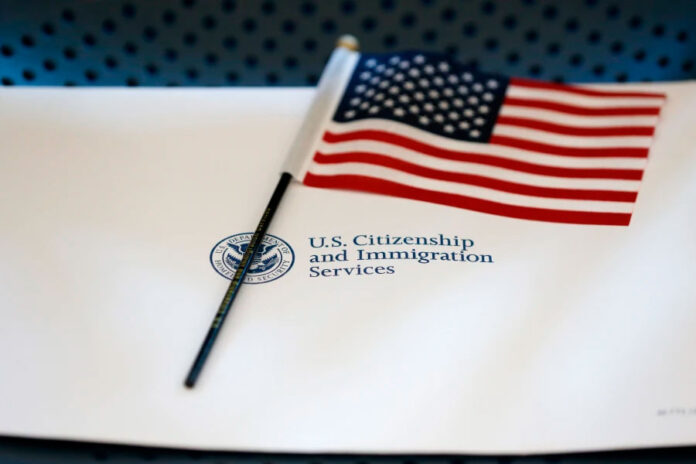
Un paquete de información y una bandera estadounidense se ven en una silla en la oficina de los Servicios de Inmigración y Ciudadanía en Miami, el 17 de agosto de 2018 en Miami. (Foto: AP/Wilfredo Lee/Archivo)

Cuando el gobierno del presidente de Estados Unidos, Donald Trump, anunció la semana pasada que exigiría a quienes buscan una tarjeta de residencia permanente que presenten la solicitud desde sus países de origen en lugar de hacerlo en Estados Unidos, el teléfono de la abogada de inmigración Flavia Santos Lloyd no dejó de sonar, con clientes preocupados por cómo podría afectarles.

Lloyd no estaba segura de qué decirles, pero sabía que la confusa nueva política ralentizaría las solicitudes.

“Tiene un efecto paralizante porque tenemos algunos casos con los que íbamos a seguir adelante y ya veo que deberíamos esperar y ver qué ocurre”, explicó Lloyd.

El Servicio de Ciudadanía e Inmigración de Estados Unidos (USCIS, por sus siglas en inglés) anunció el viernes que los extranjeros en Estados Unidos que quieran una “green card”, como se conoce el permiso de residencia, tendrán que salir del país y solicitarla en su país de origen, salvo algunas excepciones no especificadas.

El anuncio, que potencialmente afecta a cientos de miles de solicitantes al año, era una nueva medida política migratoria presentada por el gobierno republicano de Trump que sorprendía y desconcertaba a abogados, defensores e inmigrantes. También forma parte de un giro del gobierno para apuntar a las vías legales de inmigración, después de centrarse desde el año pasado principalmente en los migrantes que están en Estados Unidos de manera ilegal.

El abogado de inmigración Charles Kuck señaló que “esto es simplemente un intento de tratar de limitar y asustar a la gente para que se aleje del proceso de inmigración legal”, y añadió que esperaba acciones legales contra el cambio. “Esto es una táctica de intimidación”.

Mientras inmigrantes preocupados y sus empleadores inundan las oficinas de abogados de inmigración con preguntas, no está claro cuál será el efecto, qué excepciones podrían permitirse y cómo se aplicará la política en la práctica.

Algunos solicitantes de residencia permanente ya habían enfrentado preguntas sobre por qué se les debería permitir solicitarla desde Estados Unidos.

Una implementación confusa de la nueva política

Durante más de medio siglo, los extranjeros con estatus legal han podido solicitar y completar el proceso de residencia permanente en Estados Unidos, incluidas personas casadas con ciudadanos estadounidenses, titulares de visas de trabajo y de estudiante, y refugiados y solicitantes de asilo político, entre otros.

Eso pareció cambiar de forma repentina el viernes, cuando el USCIS anunció el cambio en su sitio web.

“De ahora en adelante, un extranjero que esté en Estados Unidos temporalmente y quiera una Green Card debe regresar a su país de origen para solicitarla, excepto en circunstancias extraordinarias”, indicó la agencia. En respuesta a preguntas de The Associated Press, USCIS dijo únicamente que las personas que aporten un “beneficio económico” o un “interés nacional” probablemente podrían solicitarla desde Estados Unidos.

La agencia afirmó que los no inmigrantes, como estudiantes o trabajadores temporales, están en Estados Unidos de manera temporal y deberían irse cuando ese periodo termine.

USCIS también emitió un documento interno más detallado concebido como guía para su personal, que decide estos casos. Expertos en inmigración que intentaban interpretar la noticia dijeron que el memorando tenía más matices, lo que generó confusión sobre lo que realmente implicaba el cambio.

Una firma de abogados de inmigración, Boundless Immigration, dio su interpretación de la política en una entrada de blog en su sitio web y señaló que se estaba indicando a los funcionarios que aplicaran “los estándares discrecionales existentes con mayor rigor”, pero la firma entendía que la política no detenía por completo el proceso de ajuste de estatus para “solicitantes elegibles”, dependiendo de la categoría de visa que tuvieran.

La empresa citó documentos internos anteriores sobre la adquisición de la ciudadanía que no habían provocado medidas más severas en la práctica.

Firmas y defensores de inmigración intentan determinar a quién afectará

Shev Dalal-Dheini, directora sénior de relaciones gubernamentales de la Asociación Estadounidense de Abogados de Inmigración, dijo que la guía podría estar dirigida a personas que se quedaron más tiempo del permitido por sus visas, como el padre de un ciudadano estadounidense que permaneció después de que venciera una visa, un empleado de una empresa que fue transferido a Estados Unidos o personas en el país con visas específicas para clérigos y otros trabajadores religiosos.

“Parece que quizá a quienes están apuntando es potencialmente a aquellos cuyo periodo de estancia venció mientras estaban aquí”, indicó Dalal-Dheini.

Kevin Miner, socio del bufete de inmigración Fragomen, dijo que esperaba que las personas con visas basadas en empleo, como las H-1B, quedaran exentas. Estas visas, conocidas como de “doble intención”, permiten que personas con visas de no inmigrante en Estados Unidos soliciten una “green card”. Esas visas de doble intención se mencionaron específicamente en el memorando como áreas de posible excepción.

“Esos probablemente son casos que seguirán como de costumbre y no veremos un impacto significativo”, afirmó Miner, y agregó que el anuncio del viernes tomó a la gente por sorpresa.

Matthew Soerens, director en Estados Unidos de movilización de iglesias para World Relief, una organización que ayuda a reasentar refugiados en Estados Unidos, dijo que la mención en el documento interno sobre casos en los que los inmigrantes tienen que ajustar su situación en Estados Unidos le da a la organización “esperanza” y “expectativa” de que la guía no se aplique a los refugiados.

Los refugiados son personas que huyen de su país de origen y que cumplen un conjunto específico de criterios para ser admitidas en Estados Unidos tras un prolongado proceso de verificación. Están obligados a realizar ese trámite de “green card” un año después de llegar a Estados Unidos y no pueden regresar a su país por los riesgos que enfrentarían allí, explicó Soerens.

El gobierno de Trump ha recortado drásticamente este año el número de refugiados admitidos en Estados Unidos y los ha limitado a sudafricanos blancos.

Soerens indicó que las personas que ingresaron al país bajo un permiso provisional humanitario —que permite a los presidentes admitir a personas por razones humanitarias y que el gobierno demócrata del presidente Joe Biden amplió de manera drástica— también podrían verse afectadas.

Muchas de esas personas quizá ya tenían familia en Estados Unidos o se casaron con un ciudadano estadounidense, dos situaciones que potencialmente les dan vías para solicitar una “green card” que ahora podrían complicarse.

Dalal-Dheini dijo que todos estos matices complican ofrecer asesoría legal general a las personas.

“Va a ser algo muy específico, caso por caso”, manifestó.

Grupo dice que inmigrantes enfrentan preguntas sobre sus solicitudes

La Asociación Estadounidense de Abogados de Inmigración dijo que con el nuevo protocolo, varias personas que tuvieron entrevistas de «green card» el martes enfrentaron preguntas que antes no se les habían hecho a los solicitantes.

A una persona que solicitaba la residencia permanente basada en su matrimonio con un ciudadano estadounidense le preguntaron por qué solicitó ajustar su estatus en Estados Unidos en lugar de regresar a su país de origen y solicitarla en la embajada allí. Le preguntaron si había algún factor que le impidiera solicitarla en su país de origen y si todavía tenía familia allí.

A otra persona le pidieron presentar un formulario para demostrar por qué se le debería permitir solicitarla desde Estados Unidos y le dijeron que las pruebas debían demostrar que no sería una carga financiera o una “carga pública” para Estados Unidos, y que podían incluir su declaración de impuestos de 2025, una carta de un empleador indicando su salario y estados de cuenta bancarios.

Lloyd, la abogada de inmigración, dijo que ha enviado correos electrónicos a sus clientes corporativos y no corporativos para decirles que está monitoreando la situación y que se comunicará con ellos tan pronto como tenga más orientación y aplicaciones prácticas.

Afirmó que cree que la política disuadirá a algunas empresas de tramitar “green cards” para sus clientes.

“No quiero que todo el mundo entre en pánico. Mi consejo para ellos es esperar y ver”, señaló Lloyd.

Refugios de mujeres en México, EE. UU. y Canadá lanzan campaña contra violencia en el Mundial

Fotografía que muestra a varias mujeres en un refugio secreto para mujeres maltratadas en Ciudad Juárez (México). (Foto: EFE/Favia Lineli)

Redes de refugios para mujeres de México, Estados Unidos y Canadá lanzaron este martes una campaña regional rumbo al Mundial de fútbol 2026 para alertar sobre el aumento de violencia de género durante megaeventos deportivos y exigir mayores medidas de prevención y protección.

Bajo el lema ‘La violencia contra las mujeres no es parte del juego’, la iniciativa busca generar conciencia, promover la cero tolerancia a las violencias machistas y fortalecer rutas de apoyo antes, durante y después de la Copa del Mundo.

La campaña articula esfuerzos de la Red Nacional de Refugios (RNR), en México; Women’s Shelters Canada, en Canadá, y National Network to End Domestic Violence, en Estados Unidos, los tres países sede del Mundial 2026.

«No queremos un Mundial que solo deje cifras de turismo y derrama económica; queremos un Mundial que deje acciones concretas para prevenir las violencias», afirmó Wendy Figueroa Morales, directora general de la RNR.

Como parte de la iniciativa, la RNR informó que brindará acompañamiento gratuito y especializado tanto a mujeres mexicanas como extranjeras que enfrenten situaciones de violencia durante el evento.

Las organizaciones alertaron además sobre el riesgo de incremento de distintas formas de violencia contra las mujeres durante eventos masivos, entre ellas violencia familiar, violencia sexual, acoso, explotación sexual y trata de mujeres y niñas.

“La violencia contra las mujeres no reconoce fronteras, la protección y prevención tampoco debería hacerlo”, señaló Figueroa Morales, al remarcar que la seguridad de las mujeres “no puede quedar fuera de la conversación”.

Según datos de ONU Mujeres, durante grandes eventos deportivos las llamadas de emergencia por violencia familiar pueden aumentar hasta un 30 %.

Entre marzo de 2025 y marzo de 2026, los casos de violencia familiar aumentaron a nivel nacional, de acuerdo con la RNR.

A ello se suma que Ciudad de México, Nuevo León y Jalisco, las sedes mexicanas del Mundial 2026, se encuentran entre los estados con más reportes de violencia familiar en el país, según datos del Secretariado Ejecutivo del Sistema Nacional de Seguridad Pública (SESNSP).

En ese contexto, la organización cuestionó que las estrategias rumbo al Mundial continúen enfocadas en turismo, infraestructura y promoción internacional, mientras siguen siendo insuficientes las acciones de prevención, atención y protección para mujeres y niñas.

«La vida, la dignidad y la libertad de las mujeres no pueden quedar fuera del juego», reiteró Figueroa Morales.

En México, alrededor de diez mujeres son asesinadas cada día y menos de una cuarta parte de los casos se investiga como feminicidio, según cifras oficiales y de organizaciones civiles.

Jefe de agencia de desarrollo de Puerto Rico renuncia tras denunciar injerencia del gobierno

Jennifer González, pronuncia un discurso luego de ser juramentada como gobernadora de Puerto Rico, el 2 de enero de 2025, en San Juan. (AP Foto/Alejandro Granadillo, Archivo)

SAN JUAN (AP) — El jefe de la principal agencia de desarrollo económico de Puerto Rico anunció su renuncia el martes, al tiempo que criticó al gobierno de Jennifer González en el territorio de Estados Unidos y la acusó de interferir en el trabajo del departamento.

La salida de Sebastián Negrón Reichard del Departamento de Desarrollo Económico y Comercio se produce en un momento crítico para Puerto Rico, mientras el territorio busca reactivar su economía y atraer inversionistas.

Negrón Reichard señaló en su comunicado que más de 10 funcionarios con cargos de liderazgo en la agencia —incluidos su jefe de despacho, el asesor jurídico general y el jefe de finanzas— también renunciaron tras lo que calificó de intervenciones gubernamentales. Indicó que entre ellas figura la revocación de dos suspensiones sumarias que Negrón Reichard había impuesto tras determinar una investigación intervenciones indebidas en las actividades de compras de la agencia.

Las acciones del gobierno “hacen imposible continuar ejerciendo el cargo con la integridad y la autonomía que el rol requiere y que todo secretario le debe a la ciudadanía”, manifestó Negrón Reichard.

Agregó que esas acciones también dejaron “desprotegido al personal que denunció alegadas irregularidades en procesos internos”.

Negrón Reichard afirmó que no haría más comentarios, a la espera de acciones legales.

La gobernadora González expresó su decepción después de que los reporteros le preguntaran sobre la renuncia y desdeñó las preguntas sobre la presunta interferencia.

“Me decepciona porque creo que fue un gran secretario de la agencia”, dijo.

Mientras tanto, el presidente del Senado de Puerto Rico, Thomás Rivera Schatz, quien recientemente ha tenido discrepancias con González aunque ambos pertenecen al mismo partido proestadidad, calificó la renuncia como sumamente lamentable.

“Yo espero que quienes les toca evaluar y comprender el alcance de estas circunstancias lo hagan y tomen las acciones correctivas que deben, de lo que les advierto desde hace bastante tiempo”.

“Si no lo hacen, pues, yo estaré conversando con estas personas y, si traen ante mí evidencia que demuestre que algo anda mal, yo voy pa’ encima”, añadió.

Bad Bunny se une al elenco de ‘Toy Story 5’ en el personaje de Pizza con Gafas de Sol

El cantante puertorriqueño Bad Bunny, durante el concierto ofrecido el viernes 222 de mayo en el Estadio Olímpico de Barcelona. (Foto: EFE/Alejandro García)

Bad Bunny fue confirmado este martes por Disney y Pixar como parte del elenco de ‘Toy Story 5’, donde dará voz al personaje Pizza con Gafas de Sol.

El anuncio, compartido en la cuenta de Instagram de Pixar, muestra al personaje saltando en pantalla mientras se escucha la risa del artista puertorriqueño.

«Con un estilo desenfadado y misterioso, Pizza con Gafas de Sol pertenece a una pequeña pero formidable comunidad de juguetes olvidados que viven en un cobertizo abandonado», se lee en un comunicado emitido por Disney.

La compañía de entretenimiento también anunció este martes que el actor británico Alan Cumming se ha unido al reparto de voces con un cameo como Evil Bullseye, el alter ego de Bullseye (Tiro al Blanco en Latinoamérica/ Perdigón en España) en la nueva película.

«Aunque el fiel corcel de Woody aún no puede hablar en el mundo de ‘Toy Story’, Cumming le da voz a Bullseye durante una divertida secuencia de juego en la película», adelanta el escrito.

‘Toy Story 5’ llegará a los cines el 19 de junio, siete años después de su última entrega, y también contará con Tom Hanks como la voz de Woody, Tim Allen como Buzz Lightyear, Joan Cusack como Jessie, Conan O’Brien como Smarty Pants, Tony Hale como Forky, y Greta Lee como la amenazante Lilypad.

En esta entrega, los protagonistas Woody y Buzz Lightyear se reencontrarán para enfrentar a Lilypad, una tableta inteligente que amenaza con dominar la vida de los niños.

Los republicanos en Carolina del Sur rechaza cambiar el mapa electoral como pedía Trump

(Foto: EFE/MICHAEL REYNOLDS)

El Senado de Carolina del Sur, de mayoría republicana, rechazó este martes un nuevo mapa de distritos electorales para las elecciones de medio mandato del próximo mes de noviembre tal y como había pedido el presidente Donald Trump.

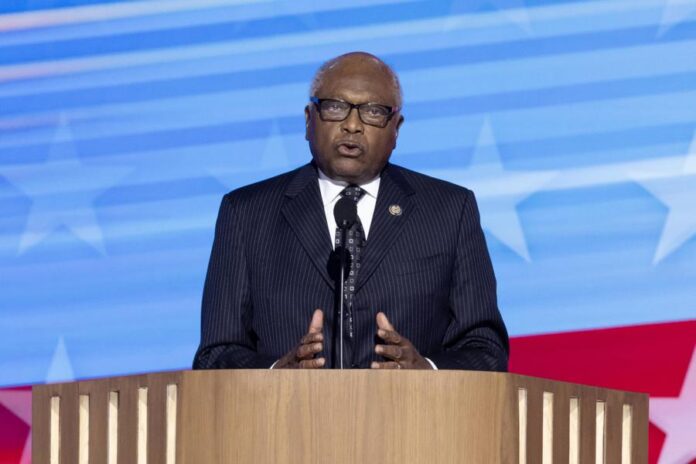
La votación supone un rechazo inesperado para el mandatario, que había solicitado a los legisladores que aprobaran un nuevo mapa electoral que eliminara el único distrito del estado con mayoría negra, que está representado por el veterano congresista demócrata James Clyburn.

La Cámara de Representates de Carolina del Sur había aprobado la semana pasada la nueva distribución de distritos, pero la negativa del Senado, donde muchos legisladores han dicho públicamente que era demasiado tarde para redibujar el mapa a falta de seis meses para los comicios, ha dado al traste con los planes republicanos para lograr mejores resultados en noviembre en este estado.

Normalmente el rediseño de distritos electorales se lleva a cabo después de la publicación del censo, que en EE.UU. se realiza al inicio de cada década.

Sin embargo, los republicanos han decidido empezar a modificar estos mapas sin esperar a 2030 con el objetivo de obtener más escaños en las elecciones de medio mandato, lo que ha llevado a los demócratas a hacer lo propio en California y Virginia, estado donde los tribunales han considerado anticonstitucional la nueva distribución.

Amparados por una sentencia del Tribunal Supremo que limita los derechos electorales al reducir el alcance de la Ley de Derechos Electorales de 1965, y ponen en riesgo la representación de los ciudadanos afroamericanos, los republicanos se están apresurando para redibujar distritos en diferentes estados del sur de EE. UU. como Luisiana, Florida, Tennessee o Texas.

En todo caso, Carolina del Sur no es el primer estado controlado por los republicanos que se rebela contra la agenda de Trump, ya que el Senado de Indiana rechazó en diciembre un nuevo mapa pese a la presión de la Casa Blanca.

Por otra parte, un tribunal de Alabama rechazó este martes el nuevo mapa electoral de los republicanos por considerar que el reparto de distritos que recoge discrimina a los votantes afroamericanos.

Hey hey, oh oh: Data centers have got to go!

(Foto: Ilustrativa/Pexels)

Everyone is using AI even if you don’t source it. It’s a part of Instagram, Google, even in your everyday life just by using your phone or computer. Companies will make sure you use AI. Before this, AI was a part of a different world. Scientific research to be able to provide better quality for their patience or tech users, it felt like something that was out of reach.

So, when did it become so accessible to the everyday person and why should we be worried about this?

AI tech became popular after the 2020’s covid pandemic. With virtual reality goggles to META AI glasses. But where is all this coming from? Just like any other product being sold there needs to be a source. The source? Big Tech AI Data Centers. It’s no coincidence they have been emerging in different locations, with the first one being built around 2020 in Des Moines, Iowa where “few people in Iowa knew about its status as a birthplace of OpenAI’s” (from apnews.com). But this isn’t just a center that is like any warehouse center, nor is it just a small computer data center. To get AI to work, these warehouses are constructed in areas no one would bat an eye at, where the centers are noisy and the computers overheat due to how much electricity it takes. When Big Tech proposes these centers to be constructed, they hide a lot of specifics, like how they source their water to cool down the computers and prevent the warehouses from overheating, or how much electricity they need to keep the centers working. They often require 300 to over 40,000 acres, housing 1 million to 4 million square feet of facility space. Meaning these are the size of “70 Footballs Fields” (from people magazine).

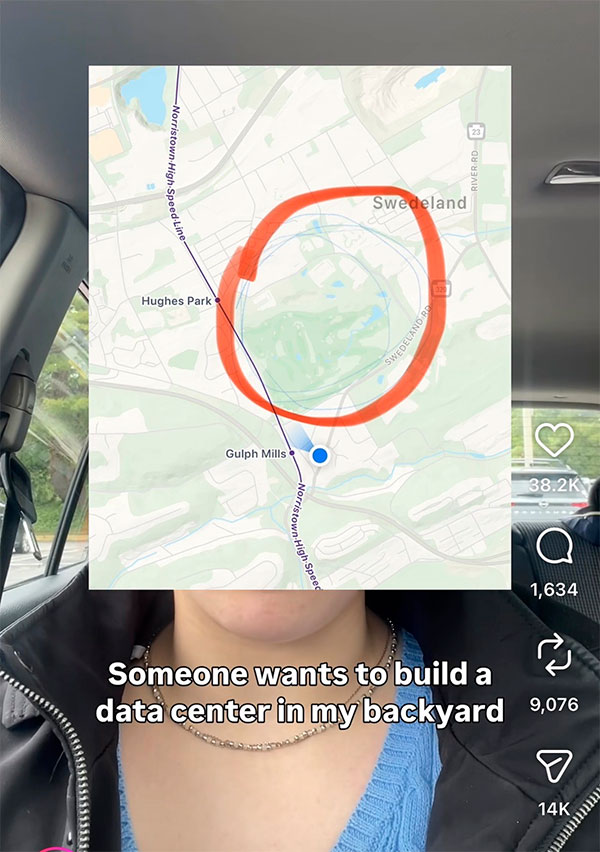
“It’s like you’re taking the whole Philadelphia airport to a small suburb” Laura, a young Colombian resident of Upper Marion/King of Prussia worries “it’s a supper center that surpasses the airport”

Just like Laura, many others around King of Prussia would be affected by the new project proposed by MLP Ventures, a Philadelphia-area real estate firm founded by developer Brian O’Neill.

“This data center would use 19 times the amount of energy that the whole upper Marion would use. And then there’s the question of pollution, air pollution, noise pollution”

Laura found out about this through an old high school colleague who posted about the data center project on her social media, upset about the news. Laura also felt the same as well as scared and decided to post a video about it. To Laura’s surprise the post went viral, shared about 14K times and gained attention in 24 hours after posting it on the weekend of May 15th.

“I don’t have a major social media presence or anything. The response was completely unexpected. It filled me with hope to see the unity the public has over this situation.”

But it also gave Laura a bit of fear. Currently leaders and politicians like Governor Josh Shapiro Sen. Dave McCormick are pro AI data centers and have championed development promising tax revenue and jobs. They push the narrative that these centers are needed. In January 2025, then-president Joe Biden signed an executive order for federal government agencies to support AI data centers on federal sites built by private companies. In its July 2025 AI Action Plan, the second Trump administration supported increased production of these centers.

“This proposal was submitted before Upper Marion Township put in ordinances and regulations to protect its residents. 
So, it was done intentionally to sneak by them.” Laura looked up «The biggest concern is, it’s not regulated, where they bypass the zoning ordinances, and there’s just a lot of unknowns when it comes to the information behind them. This particular data center states that they will use water that will be sourced elsewhere.
But where is this source coming from? We don’t know what the project goal is. We don’t know who its inhabitants are going to be. There’s just a lot of weird coincidences there, where are they going to dump the waste? Because it’s also going to be posted where the Schuylkill River happens to be.”  Which runs all the way to Philadelphia neighborhoods drinking water.

Most of these past centers are usually built in areas where there’s a large body of local lake or rivers using fresh water that the residents use. A 2024 report from the United States Department of Energy stated that data centers overall used 17 billion gallons of water per year in the United States.

And it’s not only the water that will be affected. King of Prussia has a lot of limestone. According to a geological report the township supervisors brought in 1967, sinkholes are common in the area underlain by the Conestoga Limestone formation in the Great Valley. Acid and limestone don’t mix creating a lot of sinkholes, which is the reason there’s potholes in some of the areas of Manayunk, Upper Marion and Philadelphia. “Carbonic acid is formed when rainwater picks up carbon dioxide from the lower atmosphere. Air pollution adds to the problem because the rainwater picks up sulfur gases in the urban and industrial area that make it even more acidic.” (https://www.kophistory.org/upper-merion-1971-sinkhole/)

Meaning if these centers that use a lot of water are built on top of these lands filled with limestone, there will be more probability of sinkholes being caused around the area during its construction or if these centers are not monitored properly, affecting the residence even more.

“I have a lot of fear when it comes to this because I am a homeowner. “Laura states “What regulation can they sneak around that can harm us as residents? Environmental, economic, physical, psychological sense.”

These data centers proposal states it will be less than 1,000 feet from resident’s homes which is approximately around 3 football fields. In other areas that have AI data centers most residents report their waters aren’t clean to drink anymore and the noise pollution that these centers provide just to generate one search when using Open AI or ChatGPT becomes inhabitable for anyone. Not only that but most residents are bought out of their homes for these centers to be built. In a 2025 letter to QTS, the county said the AI Data center company owed $147,474 for more than 29 million gallons of water. “The utility director estimated roughly four months of unpaid use, while QTS put the span at about nine to 15 months. «We got this notification from the Fayette County water system saying the residents need to stop watering their lawns,” James Clifton, a lawyer and the resident who obtained the letter. (https://www.yahoo.com/news/articles/data-center-drained-30-million-002000882.html)

Recently, just like in the KOP area, New Brunswick was also hit with other developers’ intentions to build an AI center around their Jersey-Sandford Redevelopment Area near Rutgers University. Their concerns were the same. Who and what are these AI data centers for? Thanks to the residences catching this on time they were able to push back, and the project was canceled this May of 2026, making this a success for the residences.

Laura did what any caring person would do and spoke up about a situation that’s overlooked. “After posting this video, I got involved in some of the other groups that are against this project.” She acted and started looking in ways she was able to help. “Definitely talk with your neighbors, are they aware that this is happening? Organize with local community members or non-profits. A lot of local leaders count on the fact that many people don’t show up to these meetings so make sure that everyone is attending the meetings.”

With the narrative that big tech pushes that we need AI most of the time a lot of older immigrant families become the victims of AI videos or images and can’t differentiate what’s real or fake anymore. Most aren’t tech savvy or possess practical computer and digital skills and use ChatGPT or Open AI for simple things without realizing that it’s causing more harm to communities. There is a way to push back. Such examples are the students of the graduating class of 2026 who have been publicly showing displeasure whenever AI is mentioned during their commencement speech. Having different communities fight back, these AI Data centers that were a threat to them have accomplished to cancel the projects or shut down the center completely. We can go back to a time when AI was not a tool we use every day or where these data centers are not a threat to us anymore. 

If you would like to help, the petition that residents have organized for anyone to sign is below.

Nuevo timonel     

Eran muy diferentes las circunstancias en enero pasado, cuando el presidente Donald Trump nominó a Kevin Warsh para suceder a Jerome Powell, como presidente del banco central. Después de tres recortes en la tasa de interés, durante la segunda mitad de 2025, se esperaba, de persistir las condiciones favorables sobre inflación y empleo, que habría por lo menos otro recorte en la tasa de interés a lo largo de este año.

Desafortunadamente, el 28 de febrero, todo cambió y no para mejorar. El conflicto en el Golfo Pérsico, con su impacto sobre los precios del petróleo y preocupación justificada por un brote inflacionario, ha cambiado el panorama económico, al punto que mucho depende de la duración del conflicto. Este es el contexto en el cual el nuevo timonel del banco central, juramentado la semana pasada, comenzó su mandato.

 No obstante, el conflicto le proporciona tiempo al nuevo presidente para aplanar algunas diferencias internas y otras interrogantes sobre la política monetaria. Por ejemplo, durante la última reunión del Comité de Mercado Abierto, hubo cuatro votos disidentes, lo cual no se veía desde 1992, tres de ellos expresaron una preferencia por un lenguaje más neutral en futuras decisiones sobre la tasa de interés.  Por ende, el nuevo presidente necesita comenzar a construir un consenso entre los siete miembros de la junta de gobernadores, cuatro de los cuales no fueron nombrados por la administración actual, incluyendo al expresidente Jerome Powell, quien decidió quedarse como gobernador. Otra pregunta decisiva es sobre la relación con la Casa Blanca. Durante la ceremonia de juramentación, el presidente Trump dijo que dejará que el presidente Warsh “haga lo que quiera hacer.”

*Analista y consultor internacional, exdirector de la Oficina de la CEPAL en Washington. Comentarista de economía y finanzas de CNN en Español, UNIVISION, TELEMUNDO y otros medios.