Shapiro-Davis Budget Proposal Invests $55M to Provide $1,000 Recruitment and Retention Bonuses for Childcare Workers in Pennsylvania
CLAYSBURG, PA – Lt. Gov. Austin Davis and Second Lady Blayre Holmes Davis joined local business leaders, parents and providers for a roundtable conversation today at Sheetz’s corporate support center in Claysburg to highlight the Shapiro-Davis Administration’s 2025-26 proposed budget, which continues vital investments in childcare and early learning and includes a new proposal to address shortages in the childcare workforce.
“The childcare workforce shortage hurts working families, and it hurts our economy, likely in the range of billions of dollars in lost earnings, productivity and revenue,” said Lt. Gov. Davis, who is co-chair of the Early Learning Investment Commission (ELIC), a public-private partnership that brings together leaders to make recommendations and policy for early learning. “That’s why our new proposed budget would fund $1,000 bonuses to recruit and retain childcare workers across the Commonwealth. These workers are caring for our most valuable resource – our children. Many of them are mothers, who are also trying to make ends meet for their own families. They work hard, and they deserve it.”
“The Lieutenant Governor and I know about this issue firsthand – our daughter, Harper, attends a wonderful childcare facility that we were incredibly fortunate to find,” said Second Lady Holmes Davis. “We want working parents all across this Commonwealth to have the same access to affordable, high-quality care that we have, and we want every Pennsylvania child to have the same opportunities our daughter has – opportunities to learn, play and grow in a safe and loving environment.”
First announced by Gov. Josh Shapiro in last week’s budget address, the 2025-26 proposal builds on the Administration’s first two budgets with a $55 million investment in workforce recruitment and retention bonuses to increase childcare availability. This would equate to an additional $1,000 annually per employee working in licensed childcare centers with Child Care Works (CCW) collaborative agreements.
Over the past two years, the Shapiro-Davis Administration has expanded the Child and Dependent Care Enhancement Tax Credit, delivering $136 million in savings to nearly 220,000 families, and created the Employer Child Care Contribution Tax Credit to help businesses contribute to employees’ childcare costs. These initiatives have been key in helping to make childcare more affordable for families all across the Commonwealth.
In Pennsylvania, 3,000 unfilled childcare positions are leaving an estimated 25,000 children without access to care – and their parents without access to opportunities. This is a significant workforce issue that ELIC and business groups have highlighted, including:
«We deeply appreciate the attention of Lt. Gov. Davis and Second Lady Holmes Davis to this very important issue,” said Stephanie Doliveira, Sheetz’s executive vice president for people and culture. “Helping employees access childcare is essential across the Commonwealth to ensure organizations have the workforce necessary to sustain and grow their businesses. At Sheetz, we have experienced the benefits of investment in quality childcare, including retention of employees, employee engagement, better work/life balance for families and an involvement in educating the workforce of tomorrow — all important qualities of being a great place to work.”
Other investments in the Shapiro-Davis proposed budget aimed at improving the childcare workforce include:
$15 million additional funding for the Pre-K Counts program to help providers raise wages and stabilize the early educator workforce.
$10 million to increase Early Intervention (EI) provider rates, ensuring all Pennsylvania children have access to needed support and resources.
El Departamento de Trabajo de Estados Unidos informó, la semana pasada, que las contrataciones disminuyeron en enero, a 143,000 nuevos puestos de trabajo no agrícola, desde 250,000 en diciembre pasado. La tasa de desempleo también disminuyó a 4 por ciento, desde 4.1 por ciento en diciembre, mientras que el salario promedio por hora aumentó 4.1 por ciento desde el año pasado, superior a la tasa de inflación. Por sectores, la sanidad, el comercio al menudeo, el gobierno y el entretenimiento, todos aumentaron las contrataciones, en contraste los restaurantes y bares, los servicios comerciales y la minería perdieron empleos.
Estas cifras indican que el mercado laboral se ha enfriado, en comparación con la vigorosa creación de empleo ocurrida saliendo de la pandemia. No obstante, el enfriamiento parece no bastar para modificar la reciente decisión del banco central de pausar los recortes de la tasa de interés. Asimismo, apoya la decisión del banco central, el hecho que es prematuro ponderar los efectos de las medidas económicas del nuevo mandato del presidente Trump.
Para el mercado laboral, por ejemplo, la prometida mayor deportación de trabajadores extranjeros en la historia de Estados Unidos, que ha comenzado, significará menos creación de empleo, salarios más elevados y menos desempleo, resultante de una fuerza laboral menguante. Además, la ominosa amenaza de una guerra comercial, contra aliados y adversarios, puede generar aumentos de precios para los consumidores, represalias contra los exportadores estadounidenses, todo lo cual puede mermar el crecimiento económico.
*Analista y consultor internacional, ex-director de la Oficina de la CEPAL en Washington. Comentarista de economía y finanzas de CNN en Español TV y radio, UNIVISION, TELEMUNDO y otros medios.
Free Rides on Broad Street & Market-Frankford Lines Thanks to Sponsorships from Kevin Hart’s Gran Coramino Tequila, Nike & Duracell
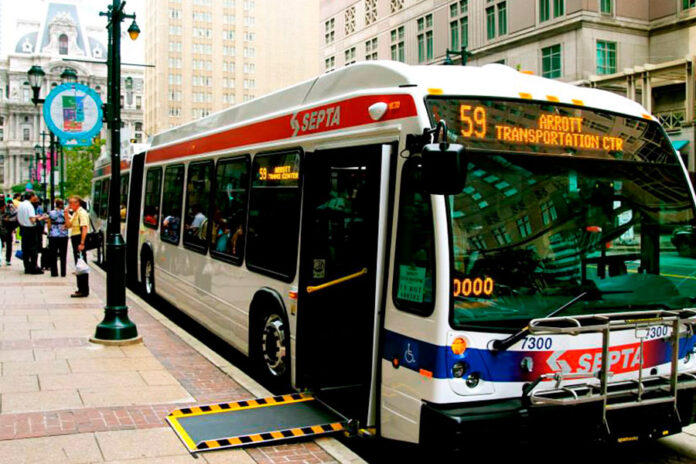
PHILADELPHIA. – SEPTA will limit stops and run express-type rail service on Friday to serve hundreds of thousands of riders who are expected to use the system to travel to-and-from the Eagles Championship Parade. High-frequency service will operate on the Broad Street Line [B] and Market-Frankford Line [L], and trips on both of these lines will be free thanks to sponsorships from Nike, Duracell and Gran Coramino, a line of premium tequilas founded by Philadelphia native Kevin Hart and the official luxury tequila partner of the Philadelphia Eagles.
The parade is scheduled to begin at approximately 11 a.m. on South Broad Street, continue north to City Hall and then onto the Benjamin Franklin Parkway toward the Philadelphia Museum of Art. To better manage crowds with available personnel, and to allow for more efficient service, SEPTA will consolidate stops on all rail lines.
Regional Rail will operate inbound-only in the morning and outbound-only after the parade. Fares are required for Regional Rail, and customers must have either a valid Key Card or pre-purchase a special One Day Pass that is on sale today and tomorrow. No Regional Rail passes or tickets can be purchased in-person on Friday.
Regular fares also apply for travel on buses and trolleys – free rides only apply to the Market-Frankford and Broad Street Lines.
Below are highlights of the major service adjustments for parade day. Riders are urged to check the Eagles Parade section of SEPTA’s website for more details at: septa.org/news/super-bowl-parade.
Market-Frankford & Broad Street Lines [B & L]
The Market-Frankford [L] and Broad Street [B] Lines are the best options for travel to-and-from the parade. Thanks to support from Gran Coramino, rides on both lines are free on FridayThe Market-Frankford Line provides access to Center City from many suburban communities via 69th Street Transportation Center, with connections to the Norristown High Speed Line, the Routes 101 and 102 Trolley Lines, and multiple bus routes. The Market-Frankford Line also connects to outlying points with bus and trackless trolley service at Frankford Transportation Center. To get to the Broad Street Line, customers can connect from multiple bus routes at Fern Rock Transportation Center, Olney Transportation Center, and other stations.
Trains on the Market-Frankford and Broad Street Lines will run approximately every six to eight minutes starting just before 5 a.m. on Friday. The entire 15th Street complex will be closed including City Hall, MFL 13th Street, Metro Trolley 13th & 15th Street, and Suburban Station on Regional Rail.
SEPTA will utilize as many rail cars as possible to provide added capacity for riders. The following stations will be open, although additional closures are possible depending on crowds:
Airport Line: Eastwick, Terminals A, B, C/D and E/F. 30-minute service throughout the day.
Chestnut Hill East Line: Chestnut Hill East and Wyndmoor.
Chestnut Hill West Line: No train service. Customers can use Chestnut Hill East.
Cynwyd Line: No train service.
Fox Chase Line: Fox Chase Station.
Lansdale/Doylestown Line: Doylestown, Lansdale, North Wales, Ambler, and Fort Washington.
Manayunk/Norristown Line: Elm Street, Norristown Transportation Center, and Manayunk.
Media/Wawa Line: Wawa, Media, and Primos.
Paoli/Thorndale Line: Thorndale, Exton, Paoli, Wayne, and Bryn Mawr.
Trenton Line: Trenton, Levittown, and Cornwells Heights.
Warminster Line: Warminster and Jenkintown-Wyncote.
West Trenton Line: West Trenton, Woodbourne, Langhorne, and Philmont.
Wilmington/Newark Line: Wilmington, Marcus Hook, and Norwood.
Bus, Trolley, Norristown High-Speed Line & CCT Paratransit A number of bus routes that operate on and around the parade route in South Philadelphia and Center City will be detoured.
City Trolley Routes 10, 11, 13, 34, and 36 will not stop at 13th or 15th Street Stations, and additional adjustments are possible.
The Routes 101 and 102 Trolleys and the Norristown High Speed Line will stop at all stations, with service every 15 minutes.
CCT Paratransit will operate regular weekday service, although travel could be significantly impacted by rolling road closures and heavy pedestrian traffic. If possible, SEPTA encourages customers who are planning trips for medical care facilities near the parade route to reschedule their appointments.
Fares Accepted
Senior, Reduced, or CCT Fare Card
Special One Day Event Pass Available for $10. This pass is valid for one person to take as many as 10 trips across all SEPTA modes. Special One Day Passes must be purchased in advance at a sales office. Passes not used on the Parade Day can be used for another date of customer’s choosing.
Please note: Cash and credit cards will not be accepted on board Regional Rail trains.
Route-By-Route & Real-Time Updates
Please visit the Alerts section of SEPTA’s website for route-specific details: septa.org/alerts. For added convenience, customers can also get all the latest information on the official SEPTA App.
Real-time travel updates will be posted on septa.org and @SEPTA on X before, during, and after the parade. Open stations are subject to closure based on crowding conditions on street level.
Fotografía del edificio de LUMA Energy, compañía eléctrica de Puerto Rico, en San Juan (Puerto Rico). (Foto: EFE/Esther Alaejos)
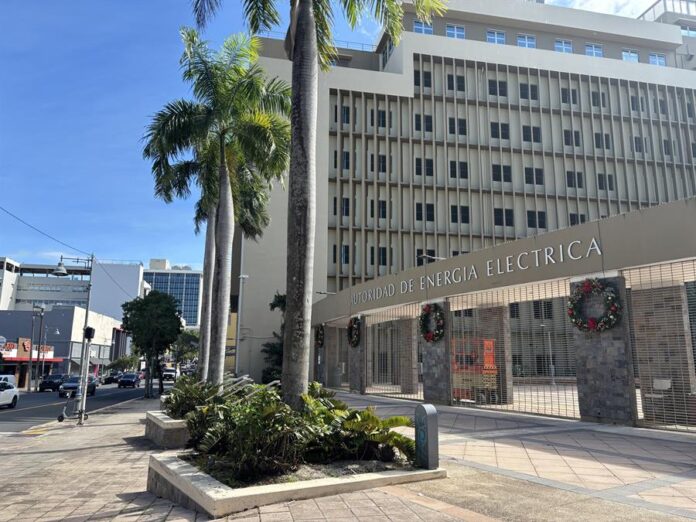
San Juan.- La Junta de Supervisión Fiscal (JSF) para Puerto Rico aprobó el nuevo Plan Fiscal de la estatal Autoridad de Energía Eléctrica (AEE), que proyecta que los gastos de mantenimiento se tripliquen debido a que el sistema «se está deteriorando más rápido» de lo que los operadores lo pueden reparar.
Según explicó la JSF en un comunicado de prensa, los gastos de mantenimiento necesarios serán más del triple en términos reales del año fiscal 2025 al año fiscal 2026, y que luego aumentarán otro 43 % para el año fiscal 2029.
Este crecimiento responde a las proyecciones de gastos actualizadas de los operadores, que reflejan con mayor precisión las necesidades del sistema en deterioro, indicó el ente fiscal en la nota.
«Es evidente que el sistema energético de Puerto Rico se está deteriorando más rápido de lo que la AEE y los operadores de la red y de las plantas generatrices lo pueden reparar, y el nuevo Plan Fiscal que los miembros de la Junta de Supervisión certificaron refleja esa realidad», aseguró el director ejecutivo de la JSF, Robert F. Mujica.
El nuevo Plan Fiscal detalla «el costo real de operar el deteriorado sistema energético de Puerto Rico», las proyecciones de la AEE y los restantes operadores del sistema -Luma Energy y Genera PR-, sobre la demanda de energía y el costo de su funcionamiento, el cual «supera por mucho las proyecciones anteriores, pues el sistema continúa deteriorándose», de acuerdo con la JSF.
Los operadores proyectan que para el 2040 los costos de funcionamiento del sistema energético de Puerto Rico superarán en más de un 60 % los del Plan Fiscal certificado en 2023, que limitaba los gastos a los ingresos generados en virtud la Orden de Tarifas de 2017.
Además, LUMA Energy estima que se requerirá financiamiento federal hasta el año fiscal 2034 para reconstruir, dar mantenimiento y operar plenamente una red limpia, fiable y resiliente, cuyas futuras necesidades no cubiertas oscilan entre 18.000 millones y 24.000 millones de dólares.
La JSF estimó también que los gastos en combustible y compra de energía aumenten un 11 % en comparación con el Plan Fiscal de 2023.
Por el aumento en los costos, la JSF concluyó que la AEE no podrá imponer ningún aumento tarifario adicional para el servicio de la deuda más allá de las tarifas necesarias para cubrir los costos de operación del sistema energético.
De acuerdo con la JSF, la AEE no ha realizado una evaluación de las necesidades del sistema a largo plazo en más de 30 años y opera con un déficit financiero estructural desde 2004.
«Nuestro objetivo es fortalecer el sistema energético, completar la transformación energética y sacar a la AEE de la quiebra con un Plan de Ajuste que sea justo y refleje la realidad que enfrenta la AEE hoy para que pueda dar un mejor servicio a Puerto Rico mañana», subrayó Mujic
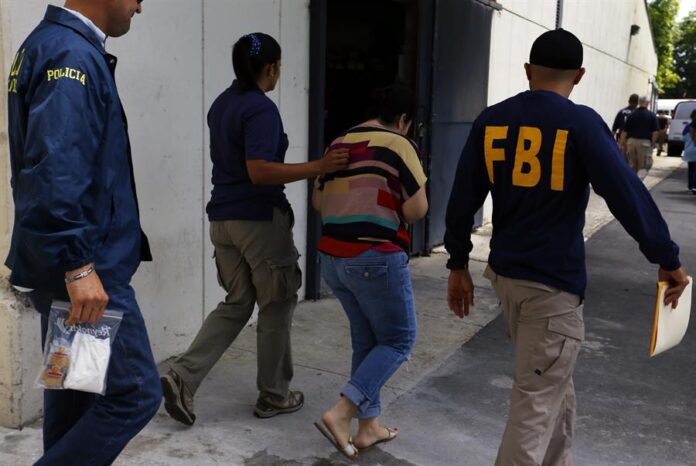
Imagen de archivo en donde se observa a varios agentes del FBI en San Juan (Puerto Rico). (Foto: EFE/THAIS LLORCA)
San Juan.– El FBI anunció este miércoles que designó a Samuel Dorta como el nuevo jefe de su agencia en Puerto Rico y las Islas Vírgenes estadounidenses, tras la salida de Joseph González, nuevo comisionado del Negociado de la Policía local.
«Me siento honrado de tomar este rol y continuar con la crítica misión del FBI de proteger a la gente en Puerto Rico y las Islas Vírgenes estadounidenses», sostuvo Dorta en un comunicado de prensa.
«Espero continuar construyendo los fuertes cimientos que dejó González y desearle lo mejor como nuevo comisionado de la Policía. El FBI continúa trabajando mano a mano con las demás agencias de seguridad. Juntos confrontaremos cualquier nueva amenaza, combatir los crímenes violentos y mantener la justicia con integridad y determinación», agregó.
Dorta cuenta con casi dos décadas de experiencia en el FBI, específicamente trabajando en investigaciones sobre seguridad nacional, contraespionaje y crímenes violentos.
Su carrera ha sido destacada por su firme compromiso en salvaguardar comunidades, desmantelar redes criminales y fijar la misión del FBI con integridad y excelencia, destacó la agencia en el comunicado.
Dorta arrancó su carrera en el FBI en 2005, en sus oficinas de Washington, especializándose en el tema de contraespionaje.
Por su experiencia, fue designado a dirigir la División de Contrainteligencia en la sede del FBI, donde jugó un papel importante en proteger a Estados Unidos de amenazas extranjeras.
En 2018 fue asignado como supervisor líder de la agencia residencial del FBI en Aguadilla (noroeste), donde se encargó de investigar organizaciones criminales, crimen organizado internacional, asesinatos, sucesos violentos contra niños y corrupción pública.
Recientemente trabajó como el asistente de la jefatura de la División Nacional de Seguridad e Inteligencia, guiando esfuerzos estratégicos para reforzar la seguridad en Puerto Rico y otros territorios.
Previo a trabajar en el FBI, Dorta sirvió en el Ejército de Estados Unidos, destacándose en la División de la Tercera Infantería en Bosnia-Herzegovina (2000-2001) e Irak (2003).
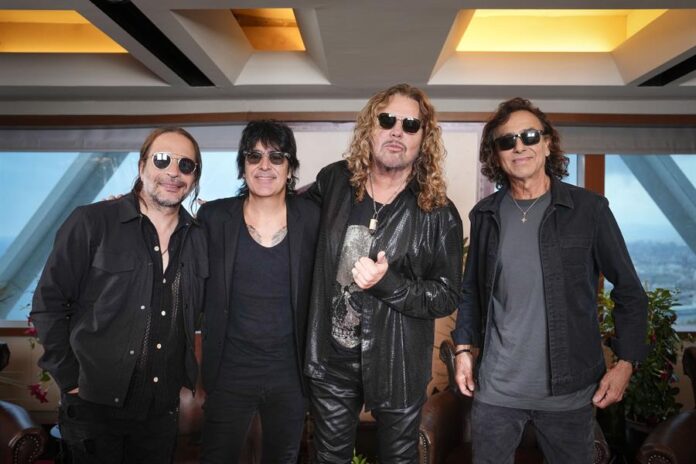
La banda mexicana Maná se convirtió este miércoles en la primera banda que canta en español en ser nominada al Salón de la Fama del Rock & Roll en casi diez años. (Foto: EFE/Enric Fontcuberta/Archivo)
La banda mexicana Maná se convirtió este miércoles en la primera banda que canta en español en ser nominada al Salón de la Fama del Rock & Roll en casi diez años.
Entre los 14 nominados de esta edición están: Bad Company, The Black Crowes, Mariah Carey, Chubby Checker, Joe Cocker, Billy Idol, Joy Division/New Order, Cyndi Lauper, Oasis, Outkast, Phish, Soundgarden y The White Stripes.
«Los artistas o bandas reúnen los requisitos para la nominación 25 años después de lanzar su primera grabación comercial», explica en un comunicado hoy el Salón de la Fama del Rock & Roll.
De acuerdo con Billboard, con esta nominación, Maná se convierte en el primer nominado latino desde que Los Lobos fueron nominados en 2016.
Tres artistas latinos -que graban principalmente en inglés- han sido incorporados al Salón de la Fama del Rock desde su primera edición en 1986: Santana (1998), Ritchie Valens (2001) y Linda Ronstadt (2014), de acuerdo con el medio especializado.
«Soñábamos con compartir nuestra propia música con el mundo. Queríamos compartir los sonidos y el espíritu de México y Latinoamérica. Ser nominados para el Salón de la Fama del Rock & Roll es algo casi imposible de imaginar. Estamos muy agradecidos con este honor», dijo a Billboard el cantante principal de Maná, Fher Olvera.
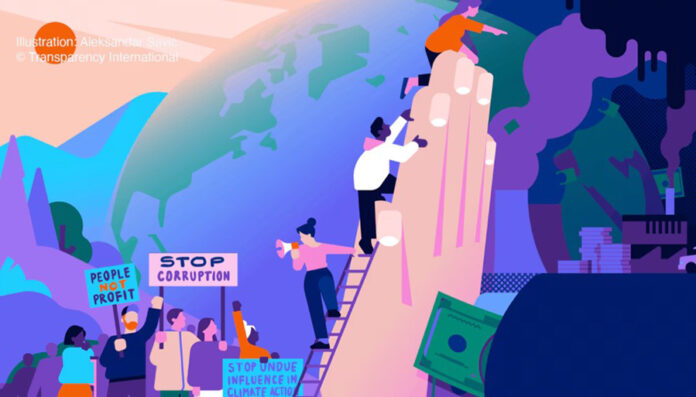
Transparencia Internacional publicó este martes su informe anual correspondiente a 2024 sobre el Índice de Percepción de la Corrupción en el mundo. La VOA entrevistó a la Consejera Regional para las Américas del organismo, quien ofreció detalles de la situación actual en la región.
América Latina presenta «muy pocos avances en materia de lucha contra la corrupción», dijo a laVoz de América Luciana Torchiaro, Consejera Regional para las Américas de Transparencia Internacional.
«América Latina está atravesando un momento particularmente difícil en materia de lucha contra la corrupción, con impactos políticos, económicos y sociales diversos», afirmó Torchiaro.
Sus comentarios llegan con el informe conocido como Índice de Percepción de la Corrupción (IPC) 2024, un mecanismo creado en 1995 y que se ha convertido en el principal indicador mundial de corrupción en el sector público.
Torchiano indicó que países de la región como Venezuela, con una baja puntuación que la sitúa en el lugar 10 de la lista de 180 naciones analizadas, se reportan situaciones de fragilidad y conflicto.
El informe indica que más de una cuarta parte de los países comprendidos en la muestra, equivalente a 47 naciones, obtuvieron hasta el momento su puntuación más baja en el índice, entre ellos Brasil, en el puesto 34; Cuba, en el lugar 41; Haití en el puesto 16; México, en el lugar 26 y Venezuela en el puesto 10. Estados Unidos aparece en el puesto 65.
«Tenemos muy pocos países que mejoran significativamente y lamentablemente varios países que alcanzan mínimos históricos como es el caso de, por ejemplo, Brasil o Chile», agregó la Consejera Regional para las Américas de Transparencia Internacional.
La especialista argumentó que la actual situación se debe a «la falta de medidas contundentes contra la corrupción durante tantos años», con sus consecuencias visibles en «el debilitamiento a la democracia en la región» y el fomento de «niveles de impunidad más altos».
Torchiaro afirmó además que la ausencia de un plan eficaz para enfrentar la corrupción en muchos países de América Latina ha impactado en el espacio cívico, en alusión al rol que deberían jugar los activistas, periodistas y en general la sociedad civil en aspectos clave de la vida pública.
«La región está atravesando un momento particularmente difícil en materia de lucha contra la corrupción, con impactos políticos, económicos y sociales diversos», concluyó.
De acuerdo con el informe, los niveles globales de corrupción siguen siendo extremadamente elevados. «En un contexto de fenómenos climáticos extremos, calentamiento global sin precedentes, erosión de la democracia y un declive en el liderazgo mundial en materia climática, el mundo está contra las cuerdas en la lucha contra la crisis climática. La corrupción entorpece aún más esta lucha, y la comunidad internacional debe ocuparse de la relación que existe entre la corrupción y la crisis climática».
¿Cómo se elabora el informe anual?
El índice asigna una puntuación a 180 países y territorios de todo el mundo en función de las percepciones de corrupción en el sector público, utilizando datos de 13 fuentes externas, incluidos el Banco Mundial, el Foro Económico Mundial, empresas privadas de consultoría y evaluación de riesgo, grupos de expertos y otros. Las puntuaciones reflejan las perspectivas de expertos y empresarios.
«Este listado (que mide la corrupción estatal) es muy importante porque nos permite entender el mapa de la corrupción global, regional y por país (…) Nos permite ver tendencias y también comparar países en términos relativos», agregó la especialista en América Latina de Transparencia Internacional.
A continuación, compartimos fragmentos del texto de la entrevista.
VOA: En las Américas, en la región, se observa que la corrupción generalizada obstaculiza de alguna forma los esfuerzos en la lucha contra el cambio climático. De qué manera la corrupción está vinculada a la emergencia climática?
Luciana Torchiaro, Consejera Regional para las Américas de Transparencia Internacional (AI) : De varias maneras lamentablemente. Por un lado, los niveles de opacidad, la debilidad de las instituciones democráticas permite que empresas, grupos de interés, élites económicas y políticas ejerzan influencia indebida en las políticas que tienen que ver con el cambio climático.
También el nivel de corrupción fomenta el fraude, las licitaciones públicas que no se hacen como se tienen que hacer y muchas veces terminamos observando daños medioambientales o consecuencias para las poblaciones vulnerables cuando los controles medioambientales necesarios no se toman en cuenta debido a esta influencia indebida de ciertos actores.
Algo muy particular de nuestra región, es que los niveles de corrupción han tomado cierto nivel en el que el crimen organizado y me refiero los crímenes medioambientales como la tala, la tala ilegal, la minería ilegal, el tráfico de fauna han tomado un auge particular en la región y digamos se nutren de los niveles de corrupción para poder operar, generando redes en las que están implicados funcionarios públicos, crimen organizado y a veces incluso también ciertos sectores de las economías legales, todos juntos generando estos daños medioambientales.
VOA: Se destacan tres naciones en el informe sobre la región por el bajo nivel de corrupción: Uruguay, Canadá y Barbados. Uruguay sigue con el mejor resultado en el hemisferio¿Cuáles son los elementos que permiten este logro en estos tres países?
Luciana Torchiaro, Consejera Regional para las Américas de Transparencia Internacional (AI) : Se trata de países con instituciones democráticas fuertes, con una ciudadanía que cree en esas instituciones y canaliza sus demandas a través de esas instituciones. Los canales de participación son amplios en estos países, siempre se podría mejorar, por supuesto, sobre todo en lo que respecta a la participación de grupos vulnerables en la formulación de políticas anticorrupción, pero hay buenos niveles de participación, se respeta la libertad de prensa, se respeta la libertad de expresión y por supuesto también tiene niveles de transparencia mucho más altos que los demás países.
Son este conjunto de factores que permite destacar a estos países en el en el contexto latinoamericano y en el caso de Uruguay vale la pena resaltar que por ejemplo el país obtiene puntuación por arriba de Alemania, un país europeo considerado generalmente como poco corrupto.
VOA: Al otro lado del espectro tenemos a Haití, Nicaragua y Venezuela, ¿Qué medidas urgentes deberían tomar estas naciones?
Luciana Torchiaro, Consejera Regional para las Américas de Transparencia Internacional (AI) : Son tres casos diferentes, pero en ninguno de estos tres países hay instituciones fuertes democráticas, de hecho, no hay democracia en ninguno de los tres países.
En el caso de Haití es diferente porque es un país, digamos, un Estado fallido, en donde no hay una entidad, donde el poder está diseminado entre diferentes grupos criminales y hay mucha incertidumbre en cuanto a qué va a pasar en las próximas elecciones.
En el caso de Venezuela y Nicaragua estamos hablando de países en donde está muy desdibujada la línea entre poder público y crimen organizado. Son países también en donde la corrupción ha tomado tal vuelo que estamos hablando de violaciones masivas a los derechos humanos, sociales, económicos, políticos y civiles con altísimos niveles, además, de represión.
VOA: ¿Desde Transparencia Internacional anticipan alguna tendencia para este año teniendo en cuenta la situación política actual en los diferentes países de la región?
Luciana Torchiaro, Consejera Regional para las Américas de Transparencia Internacional (AI): Es difícil anticiparse en un contexto internacional tan turbulento, pero creo que es muy importante que las personas participen y continúen involucrándose en los asuntos públicos. Exijan la rendición de cuentas, demanden a los políticos que luchen contra la corrupción, porque en definitiva la lucha contra la corrupción es un medio para poder tener mejor salud, mejor educación, para proteger el medio ambiente, entonces es un tema que nos ocupa a todos y deberíamos como ciudadanía involucrarnos muchísimos más.
Homenaje póstumo a los siete fallecidos. (Foto: Leticia Roa Nixon)
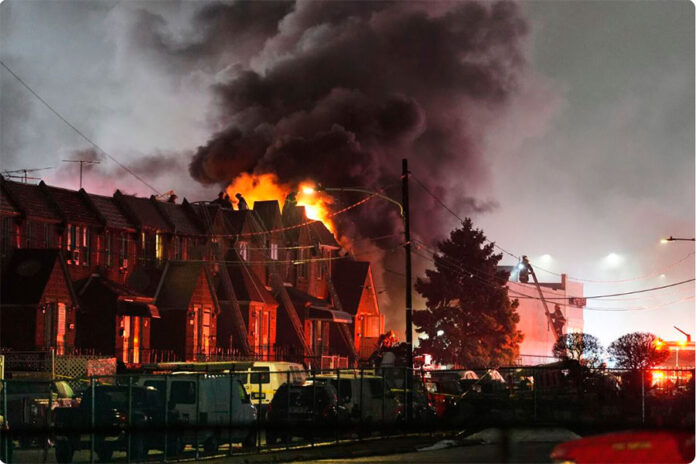
Desde el accidente fatal del Learjet 55, ocurrido en el noreste de Filadelfia el 31 de enero, la comunidad latina ha mostrado su solidaridad participando en las vigilias en homenaje a los siete fallecidos.
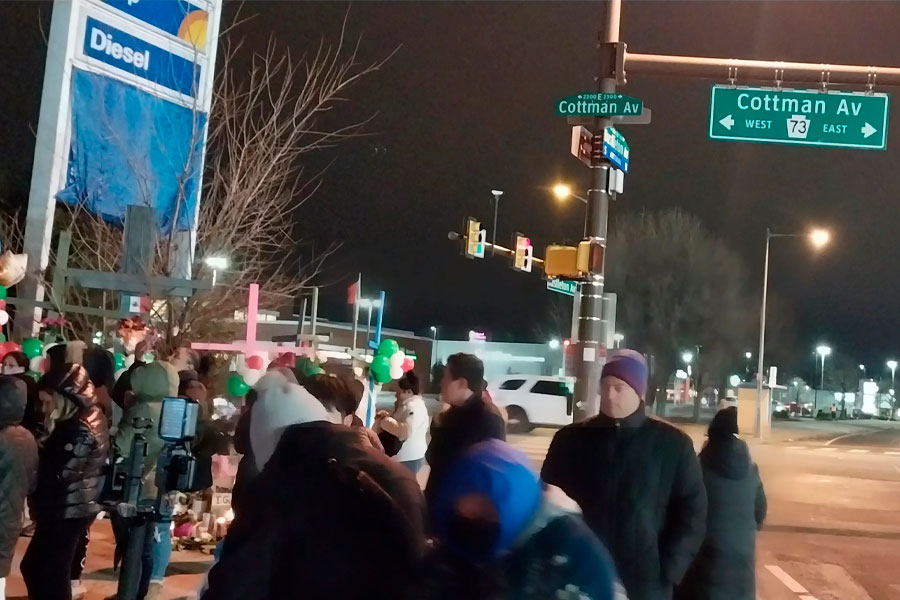
En la esquina de las avenidas Cottman y Bustleton se ha honrado la memoria de los pasajeros de la aeronave la niña Valentina Guzmán Murillo, de 12 años; su madre, Lizeth Murillo Ozuna; el piloto Alan Montoya Perales; el copiloto Josué de Jesús Rodríguez; el médico, Dr. Raúl Meza Arredondo; el paramédico Rodrigo López Padilla; y el motorista Steven Dreuitt.
El Consulado de México no ha confirmado los nombres, esperando la confirmación de la investigación forense, y también por respeto a los deseos de algunos de los familiares.
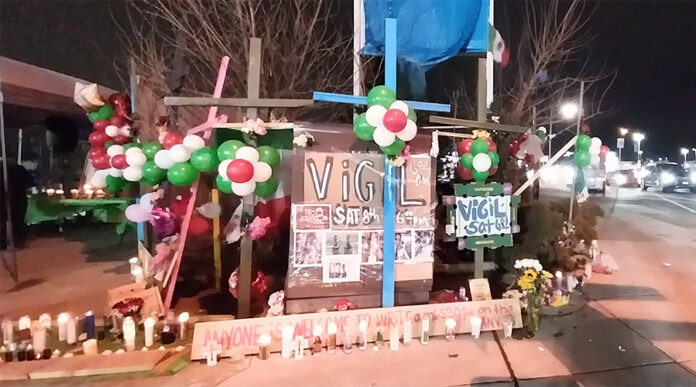
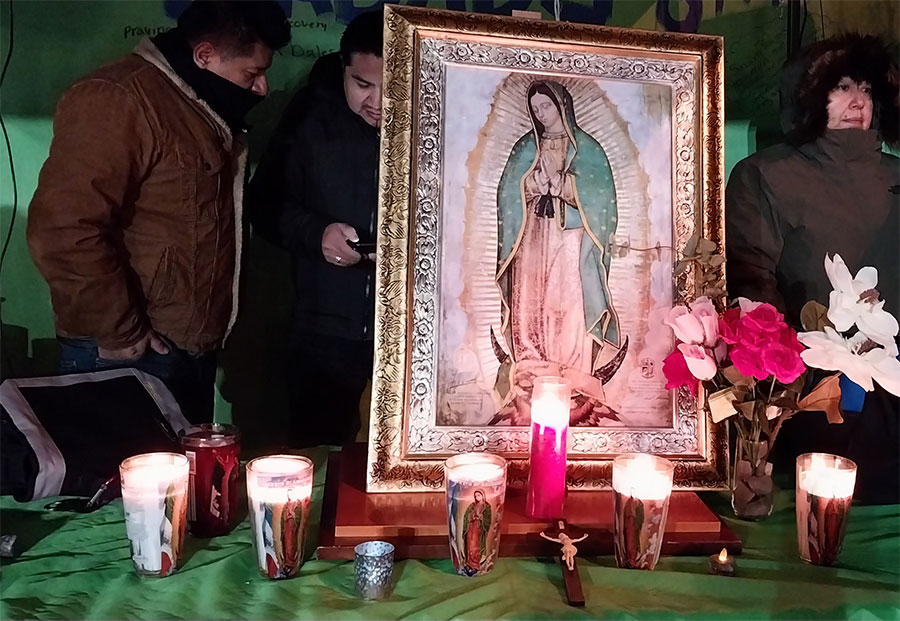
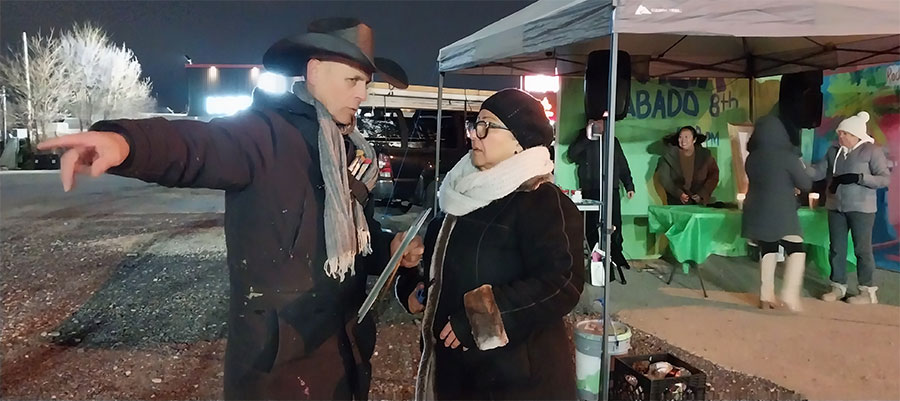
Desde el 7 de este mes, con el apoyo de la activista María Serna y del artista visual mexicano Roberto Márquez, se creó un altar y un mural en el que los asistentes pueden escribir mensajes o dibujar. Miembros de la comunidad de fe dirigieron al grupo para rezar el Rosario.
Altar a la Virgen de Guadalupe ante el cual se rezó el rosario. (Foto: Leticia Roa Nixon)
En la primera vigilia, Charito Morales, en representación de Philly Boricuas, hizo un llamado para que se implementen mejores medidas de seguridad en el despegue de la aeronave, “ya que un error humano puede causar un dolor indescriptible… que no se vuelva a repetir”, expresó la líder.
El artista Roberto Márquez junto a la activista María Serna. (Foto: Leticia Roa Nixon)
Philatinos Radio, encabezado por Edgar Ramírez y Olga Rentería, invitó a la comunidad mexicana a participar en la vigilia del 8 de febrero a través de sus redes sociales. “Cada vez que hay un accidente, siempre pido que no vaya a ser un mexicano. Lamentablemente en esta ocasión fueron seis de ellos. Como lo hacemos en nuestro país, celebramos a los difuntos con música y esta vez estuvo el cantante Aurelio Fernández como DJ y acompañando en los cantos de alabanza al final de cada uno de los 5 misterios del rosario”, explicó Edgar Ramírez.
Esquina donde se realizan las vigilias con solidaridad latina. (Foto: Leticia Roa Nixon)
Entre los asistentes a la vigilia sabatina estuvieron el cónsul Carlos G. Obrador Garrido Cuesta y el cónsul de protección Sebastián Alfonso Galván Duque Covarrubias. El titular del Consulado de México en Filadelfia expresó su agradecimiento a los presentes e informó que su equipo consular ha estado en contacto con las familias de los seis mexicanos fallecidos y está dando seguimiento a la investigación para conocer la causa del trágico incidente.
A pesar del frío y del viento invernal, los participantes rezaron el Rosario y muchos ofrendaron flores y veladoras mientras expresaban su pesar frente a cada una de las cruces, antes de que comenzara la lluvia. También, de manera solidaria, los materiales para el mural y las cruces fueron donados por Home Depot, y Philatinos aportó donaciones de pan, chocolate y dulce de arroz con leche provenientes de la comunidad mexicana.
Los voluntarios del Salvation Army estuvieron apoyando a los socorristas desde el primer momento del accidente aéreo en Cottman. (Foto: AP/Mark Rourke)
Cuando un desastre golpea la comunidad, es común ver las tiendas o los remolques del Salvation Army rápidamente dispuestos a apoyar a quienes enfrentan la emergencia o a los servidores del gobierno que llegan de primeros a cubrir la calamidad. Durante el reciente desastre de la ambulancia aérea en el norte de Filadelfia, el SA se mantuvo en primera línea de servicio a través de funcionarios estatales y locales, brindando apoyo y asistencia de emergencia tanto a las víctimas del accidente como a los socorristas que llegaron al lugar.
En un comunicado de la organización altruista, informan que el trágico accidente de la aeronave de transporte médico el pasado 31 de enero, les dio una nueva oportunidad a Salvation Army para mostrar su rapidez de reacción y su capacidad de apoyo. El Servicio de Emergencias en Desastres (EDS), de la División de Pensilvania Oriental y Delaware (Pendel) del Salvation Army se hizo presente en el lugar del accidente 35 minutos después del insuceso, y estableció una unidad móvil en coordinación con el puesto de mando de la ciudad para asistir a los socorristas y residentes afectados, brindándoles su apoyo hasta pasada la media noche.
El EDS regresó al sitio al día siguiente a las 3:00 de la tarde, luego de movilizar voluntarios y reabastecerse de suministros en la sede de la División Pendel, ubicada en North Broad Street. El Salvation Army se encargó de proveer alimentación a los socorristas y otras personas en la zona del desastre, proporcionando comidas y bebidas frías y calientes, y refrigerios hasta casi la media noche, al tiempo que ayudaron a coordinar las donaciones de alimentos con los operarios de la ciudad por fuera de la zona restringida.
Para el tercer día, el equipo de EDS del Salvation Army estuvo operando en dos turnos, uno en la mañana y uno en la tarde-noche, donde siguieron facilitando y sirviendo todas las comidas en el lugar del desastre. Al mismo tiempo preparaban refrigerios y bebidas en el remolque de descanso y recuperación, para asistir al personal que trabajaba durante la noche.
La organización reporta que a pesar de los cientos de personas que llegaron a trabajar al lugar, el Salvation Army no redujo su nivel de cooperación, y en este trabajo de primera línea, durante los primeros tres días de la emergencia, del 31 de enero al 2 de febrero, el EDS reportó que sirvió más de 1,500 comidas, 4,000 bebidas, 3,750 refrigerios y distribuyó 1,650 calentadores de manos.
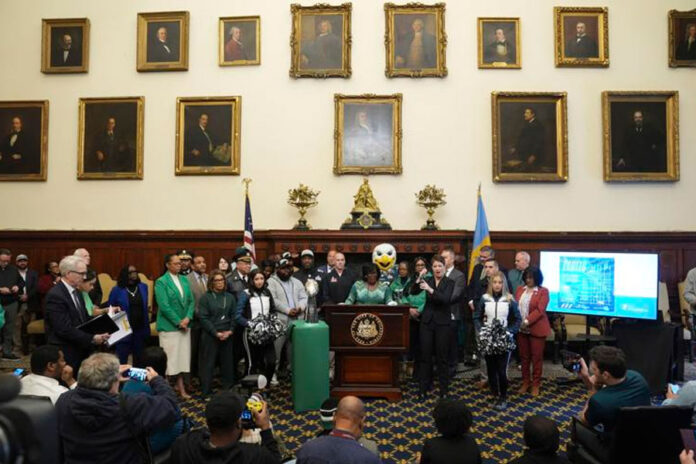
Philadelphia Mayor Cherelle Parker accompanied by Philadelphia Eagles President, Don Smolenski, and other officials speaks during a news conference in Philadelphia, Tuesday, Feb. 11, 2025, ahead of a planned Philadelphia Eagles NFL Super Bowl 59 football victory celebration. (Photo: AP/Matt Rourke)
La ciudad y los Philadelphia Eagles presentaron la ruta del desfile, cierres de carreteras, restricciones de estacionamiento y otros detalles para la celebración del campeonato del Súper Tazón.
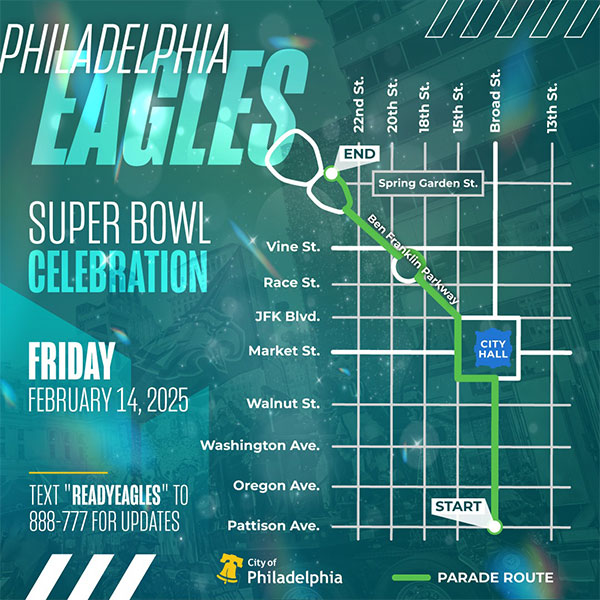
La ciudad de Filadelfia y el campeón del Super Bowl LIX, los Philadelphia Eagles, realizarán una celebración el viernes 14 de febrero de 2025, a partir de las 11 a. m. El desfile comenzará en el Lincoln Financial Field y se dirigirá a las icónicas escaleras del Museo de Arte de Filadelfia.
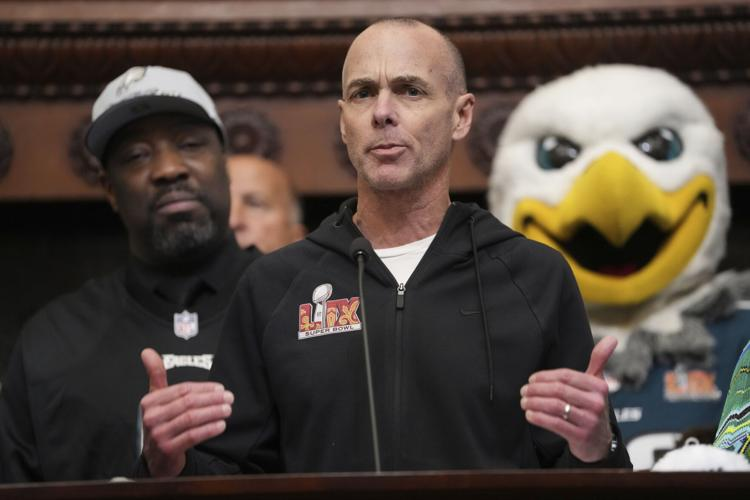
Durante una conferencia de prensa, la alcaldesa Cherelle L. Parker, el presidente de los Philadelphia Eagles, Don Smolenski, y los funcionarios de la ciudad detallaron los preparativos, incluida la ruta del desfile, el horario, la accesibilidad y la información adicional del evento.
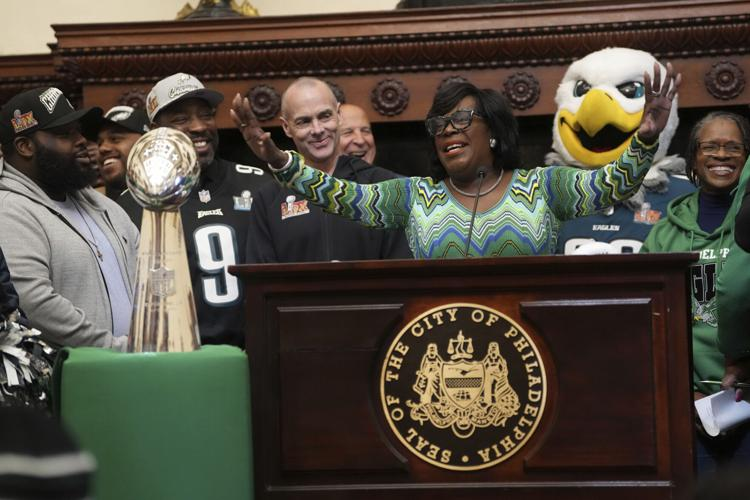
«Mientras celebramos el increíble viaje de los Philadelphia Eagles al Super Bowl, recordemos la resiliencia que define a nuestra ciudad y equipo», dijo la alcaldesa Cherelle L. Parker. “Si bien las oficinas y los edificios de la ciudad estarán cerrados para permitir que todos se unan a las festividades, nuestro enfoque seguirá siendo mantener seguros a todos los habitantes de Filadelfia. Somos One Philly, una ciudad unida. ¡Go Birds!»
Las autoridades dijeron que la ruta del desfile se ha planificado cuidadosamente para garantizar la seguridad de todos los asistentes. “Como se esperan grandes multitudes, les pedimos a todos que celebren de manera responsable y respetuosa, haciendo de este un momento del que Filadelfia pueda estar orgullosa”.
“En nombre del Departamento de Policía de Filadelfia, quiero felicitar a los Philadelphia Eagles por traer su segundo título del Super Bowl de regreso a Filadelfia”, dijo el Comisionado de Policía de Filadelfia Kevin J. Bethel. “Este viernes, celebraremos un día trascendental para nuestra ciudad, y nos estamos asociando con nuestros socios municipales, estatales y federales para que todo funcione sin problemas y de manera segura. Verá muchos oficiales a lo largo de la ruta del desfile, y les pedimos a todos que celebren de manera responsable y se cuiden unos a otros. Debido a que se esperan grandes multitudes y cierres de carreteras, considere tomar el transporte público para ayudar a reducir el tráfico y hacer que su día sea un poco más fácil. Unámonos, mostremos nuestro orgullo por One Philly y hagamos de este desfile una celebración increíble que recordaremos por siempre”.
“Nuestro objetivo es ayudar a las personas mientras, con suerte, planifican con anticipación su llegada a la ciudad para esta celebración especial de los Eagles y garantizar la seguridad”, dijo el Director Gerente Adam K. Thiel. “A través del sistema de información y alerta pública ReadyPhiladelphia de la ciudad, las personas pueden registrarse para recibir alertas de texto gratuitas de la ciudad para mantenerse informadas sobre el tránsito, el clima y la seguridad pública para el desfile del viernes.
Envíe un mensaje de texto con la palabra READYEAGLES al 888-777 para registrarse”
Ruta del desfile
El desfile del Super Bowl de los Philadelphia Eagles comenzará en Broad Street y Pattison Avenue a las 11 a. m. del viernes 14 de febrero y viajará hacia el norte por Broad Street hasta S. Penn Square, hacia el oeste por S. Penn Square hasta 15th Street, hacia el norte por 15th Street hasta John F. Kennedy Blvd., hacia el oeste por John F. Kennedy Blvd. hasta 16th Street, hacia el norte por 16th Street hasta Benjamin Franklin Parkway, hacia el oeste por Benjamin Franklin Parkway hasta Eakins Oval, y finalizará en la plataforma del Museo de Arte de Filadelfia.
Se llevará a cabo un programa formal frente al Museo de Arte de Filadelfia a partir de la 1 p. m. Se colocarán pantallas de video a lo largo de la ruta del desfile
Cierres de carreteras
Habrá demoras significativas en los viajes el viernes. Es posible que se necesiten cierres de carreteras adicionales y restricciones de carriles durante el evento para mantener la seguridad pública. Sin embargo, los viajeros deben prever tiempo adicional el viernes por la mañana, ya que puede haber demoras residuales a medida que las operaciones vuelvan a la normalidad. Se recomienda a los automovilistas que eviten la zona utilizando rutas alternativas y que calculen tiempo adicional para conducir cuando viajen por las inmediaciones. Evite estacionar en doble fila, ya que esto genera congestión, limita el flujo de tráfico y es ilegal.
Si es necesario conducir hasta el centro de la ciudad, hay estacionamientos comerciales fuera de la calle y garajes convenientemente ubicados cerca de Benjamin Franklin Parkway y Broad Street.
Comuníquese con las instalaciones individuales con anticipación para conocer las tarifas y la disponibilidad o visite el sitio web de la Autoridad de Estacionamiento de Filadelfia en www.philapark.org para obtener una lista de las opciones de estacionamiento.
Las calles comenzarán a reabrirse tan pronto como las condiciones lo permitan el viernes 14 de febrero con la extensión total de los cierres vigentes hasta aproximadamente las 6 p. m. La mayoría de las calles deberían reabrirse antes de las 7 a. m. del sábado 15 de febrero.
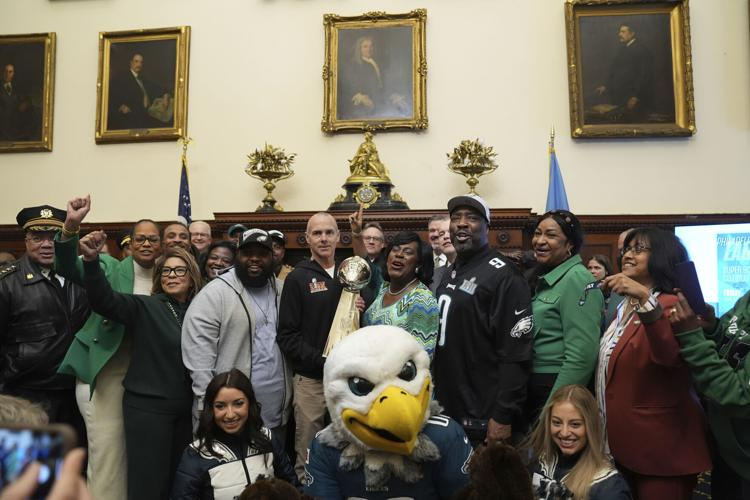
Philadelphia Mayor Cherelle Parker, accompanied by Philadelphia Eagles President, Don Smolenski, and other officials poses for photographs during a news conference in Philadelphia, Tuesday, Feb. 11, 2025, ahead of a planned Philadelphia Eagles NFL Super Bowl 59 football victory celebration. (Photo: AP/Matt Rourke)
Esta es la lista detallada de cierres y restricciones por fecha
Martes 11 de febrero – miércoles 12 de febrero
Los carriles internos (entrantes y salientes) de Benjamin Franklin Parkway estarán cerrados desde Eakins Oval hasta 20th Street estarán cerrados de 10 a. m. a 3 p. m. y de 6 p. m. a 10 p. m. el martes 11 de febrero y el miércoles 12 de febrero. Este cierre no estará en vigor durante las horas pico de la mañana y la tarde. Las calles transversales permanecerán abiertas al tráfico durante todo el tiempo.
Jueves 13 de febrero
Los carriles internos (entrantes y salientes) de Benjamin Franklin Parkway desde Eakins Oval hasta 20th Street, la parte superior del Oval y la entrada a Kelly Drive estarán cerrados de 10 a. m. a 3 p. m. y de 6 p. m. a 10 p. m. el jueves 13 de febrero.
Las siguientes calles estarán cerradas de acuerdo con los horarios que se indican a continuación:
Desde las 7 p. m. hasta aproximadamente las 6 p. m. del viernes 14 de febrero:
Kelly Drive desde Eakins Oval hasta Fountain Green
Sedgley Drive desde W. Girard Avenue hasta Kelly Drive
Lemon Hill Drive
Poplar Drive desde W. Girard Avenue hasta Sedgley Drive
Poplar Street desde 30th Street hasta Poplar Drive
Viernes 14 de febrero
Las siguientes calles permanecerán cerradas según los horarios que a continuación se detallan:
Desde las5 am hasta aproximadamente las 6 pm:
Benjamin Franklin Parkway entre la calle 16 y la calle 20 (incluido Logan Circle)
Calle 17 entre Arch Street y Vine Street
Calle 18 entre Arch Street y Vine Street
Calle 19 entre Arch Street y Vine Street
Calle Race entre la calle 20 y Logan Circle
Calle 20 entre Race Street y Callowhill Street
Benjamin Franklin Parkway entre 20th Street y Eakins Oval (todos los carriles)
Calle 21 entre Spring Garden Street y Winter Street
Acceso local únicamente a Pennsylvania Avenue (todo el tráfico debe girar a la izquierda)
Calle 22 entre Spring Garden Street y Race Street
Acceso local a Park Towne Place únicamente (residentes)
Calle 23 entre Pennsylvania Avenue y Benjamin Franklin Parkway
Acceso local solo si las condiciones lo permiten
Calle 24 entre Benjamin Franklin Parkway y Park Towne Place
Park Towne Place entre la calle 22 y la calle 24
Acceso local a Park Towne Place únicamente (residentes)
Avenida Pennsylvania/Calle Callowhill entre la calle 20 y la calle 21
Acceso local únicamente a la entrada de la Fundación Barnes (en dirección oeste)
Abierto en dirección este desde la calle 21
Calle Spring Garden entre la calle 22 y Benjamin Franklin Parkway
Acceso local solo si las condiciones lo permiten
Túnel del jardín de primavera
Campaña de obras hidráulicas
I-676 en dirección oeste, rampa de salida de la calle 22
Calle de invierno 2000
Kelly Drive entre Benjamin Franklin Parkway y Strawberry Mansion Drive
Carretera Martin Luther King entre Eakins Oval y Montgomery Drive
Puente de Spring Garden Street en la calle 31
Paseo de Anne d’Harnoncourt
Calle 25 entre Pennsylvania Avenue y Kelly Drive
Las siguientes calles serán designadas como “solo acceso local” al oeste de la calle 22:
Calle Wallace
Calle Monte Vernon
Calle verde
Calle Judson
Calle Brandywine
7:30 am hasta aproximadamente las 6 pm:
Calle South Broad entre Pattison Avenue y S. Penn Square
S. Penn Square entre Broad Street y 15th Street
Calle 15 entre Chestnut Street y Vine Street
Calle 16 entre Chestnut Street y Benjamin Franklin Parkway
Calle del mercado 1500-1600
1500-1600 Bulevar JFK.
Todas las calles transversales de Broad Street desde Pattison Avenue hasta S. Penn Square, desde 13th Street hasta 15th Street
Avenida Pattison entre la calle 7 y la calle 20
10:30 am hasta aproximadamente las 6 pm:
Rampa de salida de Broad Street en dirección norte y sur de la I-95
Rampa de salida de Broad Street en dirección este y oeste de la I-76 (complejo deportivo)
12:00 p. m. hasta aproximadamente las 9:00 p. m.:
Bulevar JFK entre la calle 20 y la calle 29/avenida Schuylkill
Calle 29/Avenida Schuylkill entre Market Street y JFK Blvd.
Calle 30 entre Market Street y Arch Street
Rampa de salida de la calle 30 en dirección oeste de la I-76
Rampa de salida de la calle 30 en dirección este de la I-76
Rampa de entrada a la I-76 en dirección oeste de Schuylkill Avenue
Calle Filbert entre la calle 10 y la calle 12
Calle 10 entre Filbert Street y Race Street
Calle 11 entre Filbert Street y Race Street
Calle 12 entre Filbert Street y Race Street
Las calles transversales se reabrirán de sur a norte en Broad Street y en otras partes a lo largo de la ruta del desfile, tan pronto como las condiciones lo permitan el viernes 14 de febrero.
Sábado 15 de febrero
Los carriles internos (de entrada y salida) de Benjamin Franklin Parkway desde Eakins Oval hasta 20th Street estarán cerrados desde las 6 p. m. del viernes 14 de febrero hasta la noche. Las calles transversales permanecerán abiertas al tráfico durante todo el tiempo y todas las carreteras estarán abiertas antes del mediodía del sábado 15 de febrero.
Philadelphia Mayor Cherelle Parker accompanied by Philadelphia Eagles President, Don Smolenski, and other officials speaks during a news conference in Philadelphia, Tuesday, Feb. 11, 2025, ahead of a planned Philadelphia Eagles NFL Super Bowl 59 football victory celebration. (Photo: AP/Matt Rourke)
Restricciones de estacionamiento en la calle
Las restricciones temporales de estacionamiento prohibido a lo largo de la ruta del desfile y en las calles adyacentes comenzarán a las 6:00 p. m. del jueves 13 de febrero. La totalidad de estas restricciones se mantendrán hasta aproximadamente las 6:00 p. m. del viernes 14 de febrero. A continuación, se incluye una lista completa de las calles afectadas:
South Broad Street desde S. Penn Square hasta Pattison Avenue (ambos lados de la calle, incluida la mediana central)
Todas las calles transversales de Broad Street desde Pattison Avenue hasta Chestnut Street desde 13th Street hasta 15th Street (ambos lados de la calle)
S. Penn Square desde Broad Street hasta 15th Street (ambos lados de la calle)
Calle 15 desde Chestnut Street hasta Vine Street (ambos lados de la calle)
1500 Arch Street (ambos lados de la calle)
1400-1600 JFK Blvd. (ambos lados de la calle)
Benjamin Franklin Parkway desde la calle 16 hasta la calle 20 (ambos lados de la calle)
Kelly Drive a lo largo de Boathouse Row
Sedgley Drive entre Kelly Drive y Poplar Drive
Campaña de obras hidráulicas
1500-1600 Market Street (ambos lados de la calle)
1600 Cherry Street (ambos lados de la calle)
Avenida Pennsylvania desde la calle 22 hasta la calle 24 (lado sur de la calle)
Benjamin Franklin Parkway desde 20th Street hasta Eakins Oval (todos los carriles; ambos lados)
Calle 22 entre Pennsylvania Avenue y Winter Street (ambos lados de la calle)
Calle 21 entre Pennsylvania Avenue y Race Street (ambos lados de la calle)
Calle 20 desde Race Street hasta Callowhill Street (ambos lados de la calle)
Calle 19 desde Arch Street hasta Vine Street (ambos lados de la calle)
Calle 18 desde Arch Street hasta Vine Street (ambos lados de la calle)
Calle 17 desde Arch Street hasta Vine Street (ambos lados de la calle)
Calle 16 desde Market Street hasta Benjamin Franklin Parkway (ambos lados de la calle)
1500-1600 Market Street (ambos lados de la calle)
1600 Cherry Street (ambos lados de la calle)
Park Towne Place entre las calles 22 y 24 (lado norte de la calle)
2000-2200 Spring Garden Street (ambos lados de la calle)
Calle de invierno 2000
La Alcaldía hace un llamado a que se obedezcan todas las señales de «Prohibido estacionar temporalmente». Los vehículos estacionados en estos lugares durante las horas publicadas serán remolcados.
No se harán cumplir las normas sobre parquímetros y límites de tiempo el día del desfile, el viernes 14 de febrero, pero se harán cumplir las infracciones de seguridad, como estacionar demasiado cerca de la esquina, bocas de incendio, bloquear cruces peatonales y estacionar en doble fila.
Las personas con audiencias programadas para el viernes deben comunicarse con la Oficina de Adjudicación Administrativa al 888-591-3636 para programar una nueva fecha de audiencia.
Oficinas de la ciudad, escuelas y tribunales
Todas las oficinas del gobierno municipal de Filadelfia estarán cerradas el viernes 14 de febrero. Estos cierres incluyen los centros de recreación, ambientales y para adultos mayores de Philadelphia Park and Recreation.
Los centros diurnos de la ciudad también estarán cerrados. Los centros de admisión de la ciudad fuera del horario laboral funcionarán las 24 horas a partir de entonces y durante el fin de semana.
Todas las escuelas públicas y parroquiales de Filadelfia estarán cerradas el viernes. Todos los tribunales y las oficinas de los tribunales de Filadelfia estarán cerrados. Si tiene programado el deber de jurado el viernes 14 de febrero de 2025, no se presente al servicio. Se le reprogramará en una fecha posterior.
Se espera que todos los servicios críticos de la Corte permanezcan operativos.
Información para empresas
Todas las empresas pueden mantener su horario de funcionamiento regular y establecido. Se anima a los visitantes a ponerse en contacto o visitar los sitios web de empresas e instituciones individuales para determinar el horario de funcionamiento el viernes 14 de febrero. Se anima a las empresas en o cerca de la ruta del desfile a llevar objetos portátiles y no fijos al interior.
Se pueden encontrar consejos generales para propietarios de empresas con respecto a la seguridad pública en el sitio web de la ciudad .
Desvíos de carriles para bicicletas
Durante el desfile, varios carriles para bicicletas a lo largo de Benjamin Franklin Parkway, Broad Street y calles cercanas estarán inaccesibles. Se recomienda a los ciclistas que tengan cuidado al viajar por la zona. No habrá acceso al Schuylkill River Trail desde la parte trasera del Museo de Arte de Filadelfia el viernes 14 de febrero. El viaje en dirección oeste en Schuylkill Travel terminará en Paine Skate Park.
Recolección de basura y reciclaje
La recolección normal de basura y reciclaje residencial se suspenderá el viernes 14 de febrero. El Departamento de Saneamiento funcionará según un horario de feriado y se retrasará un día. Los residentes cuyo día de recolección normal es el viernes deben depositar su basura y reciclaje el sábado 15 de febrero.
Al concluir el evento, el Departamento de Saneamiento se encargará de la recolección de basura y la limpieza de las calles. Si necesita informar sobre el exceso de basura en el área, después del evento, los residentes pueden llamar al 3-1-1 o al 215-686-8686.
Transporte público:
SEPTA ofrece viajes gratis SEPTA implementará un plan especial de transporte público el día del desfile para garantizar la llegada y salida segura de los asistentes al evento el viernes 14 de febrero. Puede encontrar más detalles en SEPTA.org . Se recomienda a todos los visitantes que utilicen el transporte público cuando lleguen a Filadelfia.
SEPTA está operando un programa especial del Eagles Parade con detalles disponibles en línea en SEPTA.org . Puede comunicarse con el Servicio de atención al cliente de SEPTA al 215-580-7800 y directamente en X @septa_social. Para obtener más información sobre las rutas y los horarios de SEPTA y NJ Transit durante el desfile del Super Bowl de los Philadelphia Eagles, visite SEPTA.org o llame al 215-580-7800, y njtransit.org o llame al 973-275-5555.
Información de seguridad pública
La Oficina de Gestión de Emergencias de la Ciudad está coordinando la planificación de seguridad pública para el desfile. A partir del lunes, hay más de 50 agencias que representan a la ciudad, el estado, el gobierno federal y organizaciones no gubernamentales trabajando juntas para construir un panorama operativo común y satisfacer las necesidades logísticas para el viernes. Esto culminará con la activación del Centro de Operaciones de Emergencia de la Ciudad, el Puesto de Comando Móvil y el Centro de Información Conjunto para el evento con muchos de esos mismos socios.
Durante todo el evento, la Ciudad brindará apoyo policial, control de tráfico y servicios médicos de emergencia. El Departamento de Bomberos de Filadelfia contará con carpas para médicos (EMS) en las siguientes ubicaciones:
Calle 24 y Benjamin Franklin Parkway (lado sur)
Avenida Pennsylvania y calle Spring Garden
Parque del Aviador
Lleve a las personas desaparecidas o perdidas a cualquiera de las ubicaciones de las carpas médicas enumeradas anteriormente o notifique a un oficial de policía de Filadelfia de inmediato.
Los «marcadores de ubicación» alfanuméricos están colocados a lo largo de Benjamin Franklin Parkway para identificar clara y fácilmente una ubicación o sección (por letra y número, ejemplo: CD-1) para facilitar la comunicación en caso de una emergencia. No se permite fumar en ninguna propiedad de Parques y Recreación, incluidos, entre otros, edificios, áreas de juegos, pistas de hielo o patinaje, campos o canchas, piscinas, áreas de picnic, áreas para caminar y estacionamientos.
Además, el público debe esperar congestión en estas áreas. Si asiste al desfile, haga un plan con respecto a la conducción, el transporte público, el estacionamiento y la supervisión de los niños. Se recomienda que los asistentes usen ropa cómoda y apropiada para el clima. Esté preparado para caminar, ya que los cierres de carreteras cerca de la ruta del desfile provocarán congestión de tráfico y demoras.
La Ciudad solicita al público que haga su parte, use el sentido común y esté atento a su entorno. No deje bolsas ni artículos desatendidos. En caso de emergencia o para denunciar una persona, actividad o artículo sospechoso (una mochila, un paquete, un contenedor), notifique a un oficial de policía de inmediato o llame al 9-1-1. No intente abrir, mover, cubrir o tocar un artículo sospechoso.
Tenga un plan:
Sepa a dónde quiere ir y cómo va a llegar allí antes de salir por la puerta.
Hable sobre un lugar de encuentro de emergencia en caso de que usted y sus amigos o familiares se separen. Busque puntos de referencia.
El viernes habrá mucha gente usando sus teléfonos celulares y el ancho de banda del servicio puede fallar. Considere enviar mensajes de texto o publicaciones a través de aplicaciones de redes sociales para comunicarse.
Si lleva niños, asegúrese de que lleven ropa de colores vivos o distintiva. Tómeles una foto antes de irse y envíesela por correo electrónico. Escriba su número de teléfono en una pulsera, en su muñeca o en un papel que lleve en el bolsillo.
Cuando llegues a su ubicación, asegúrese de buscar la forma más rápida de salir si es necesario.
Asegúrate de consultar el tiempo antes de ir y de vestirte adecuadamente. El viernes hará más frío. Vístete bien abrigado, estarás al aire libre durante un rato. Lleva abundante agua.
Si ves algo sospechoso, dilo al oficial de policía o al funcionario de seguridad pública más cercano.
Si llamas al 911 para pedir ayuda a la policía o a los bomberos, conoce tu ubicación. No solo las señales de la calle más cercana, sino también un punto de referencia y una descripción de la ropa para ayudar a los servicios de emergencia a ubicarte.
La Oficina de Servicios para Personas sin Hogar ha declarado un Código Azul a partir de las 3 p. m. del martes 11 de febrero. Se espera que finalice a las 9 a. m. del jueves 13 de febrero. Existe una pequeña posibilidad de que este código se extienda hasta las 9 a. m. del viernes 14 de febrero, antes del inicio del desfile. Si bien las oficinas de la Ciudad de Filadelfia estarán cerradas el viernes, los centros diurnos de la Ciudad también estarán cerrados. Sin embargo, los centros de admisión fuera del horario laboral de la Ciudad funcionarán las 24 horas posteriores y durante el fin de semana.
Accesibilidad
La celebración tendrá jumbotrons (pantallas gigantes) colocados a lo largo de la ruta con sonido amplificado. La ceremonia contará con traductores de ASL en el escenario durante las partes habladas del programa que se transmitirán en los jumbotrons. Los productores del desfile han designado un espacio en el lado sur de Eakins Oval para sillas de ruedas y accesibilidad ADA. Ten en cuenta que este espacio es limitado y es por orden de llegada. Los lugares de entrega de paratránsito para la celebración estarán ubicados en 2300 Pennsylvania Avenue y 20th y Spring Garden Streets.
Eagles Autism Foundation se asegurará de que el Desfile de Campeones de los Eagles de Filadelfia del viernes sea una celebración inclusiva. La Ciudad de Filadelfia y EAF están priorizando las necesidades de la comunidad autista mediante la creación de recursos para el desfile. Habrá un área de visualización recomendada, acceso a la unidad sensorial móvil y bolsas sensoriales disponibles. Habrá un cronograma visual y medidas adicionales para las familias que traigan a alguien con autismo.
Philadelphia Eagles President, Don Smolenski, speaks during a news conference in Philadelphia, Tuesday, Feb. 11, 2025, ahead of a planned Philadelphia Eagles NFL Super Bowl 59 football victory celebration. (Photo: AP/Matt Rourke)
Mantente conectado
A través del sistema de información pública y alerta ReadyPhiladelphia de la ciudad, las personas pueden registrarse para recibir alertas de texto gratuitas READYEAGLES para mantenerse informados sobre el tránsito, el clima y la seguridad pública para el desfile del viernes. Eso es READYEAGLES (una palabra/sin espacios) al 888-777.
En 2018, más de 100,000 personas se inscribieron en 3 días. La Oficina de Gestión de Emergencias pudo notificar a los asistentes sobre los detalles antes del evento y mantenerlos informados el día del desfile. Más de 90.000 personas están inscritas en este momento para recibir mensajes de texto de READYEAGLES para el viernes.
Toda la información y las actualizaciones se publicarán en las páginas de Twitter de la Oficina de Gestión de Emergencias ( @Philaoem ), la Ciudad de Filadelfia ( @PhiladelphiaGov ) y la Policía ( @PhillyPolice) .