

-2.3 C
Philadelphia
spot_img
Inicio Blog Página 563

Cada año se liberan más de 52 millones de toneladas de plásticos al medioambiente

Operarios retiran plásticos de la vegetación que cubre el lago Dal, en Srinagar, la capital de verano de Cachemira (India). (Foto: EFE/ Farooq Khan/Archivo)

Cada año se vierten en el medioambiente la friolera de 52 millones de toneladas de productos plásticos, unos desechos que, colocados en línea, darían la vuelta al mundo más de 1.500 veces, según un estudio publicado este miércoles en la revista Nature.

El estudio, liderado por la Universidad de Leeds (Reino Unido), ha utilizado la inteligencia artificial para cartografiar la gestión de residuos en 50.702 ciudades de todo el mundo y calcular cuántos residuos se generan y qué ocurre con ellos.

El artículo concluye que las principales vías de contaminación plástica en el mundo son la basura no recogida y la quema al aire libre de estos residuos, una práctica que supone una grave amenaza para la salud humana.

Según el estudio, más de dos tercios de la contaminación plástica mundial procede de la basura no recogida, ya que casi 1.200 millones de personas (15 % de la población mundial) carece de estos servicios.

Además, el estudio concluye que en 2020 se quemaron sin ningún control medioambiental unos 30 millones de toneladas de plásticos, lo que supone el 57 % de toda la contaminación por plásticos, en hogares, calles y vertederos.

Por áreas geográficas, la investigación revela que la India es el país que más plásticos vierte al medioambiente -y no China, como se había sugerido en modelos anteriores-, seguida de Nigeria e Indonesia.

A la vista de estos datos, los investigadores advierten de que la recogida de basuras debería considerarse una necesidad básica, como los servicios de agua y alcantarillado, y que aunque la quema incontrolada de plástico ha recibido muy poca atención en el pasado, es un problema tan grave como el de la basura arrojada al medioambiente.

La India, el país más contaminante

Cada año se producen más de 400 millones de toneladas de plástico, muchos de ellos de un solo uso o difíciles de reciclar pero que pueden permanecer en el medioambiente décadas o siglos, algunos con aditivos químicos potencialmente nocivos, sobre todo si se queman al aire libre.

Según los datos mundiales estimados por el documento en 2020, los países más contaminantes eran: La India, con 9,3 millones de toneladas, alrededor de una quinta parte del total; Nigeria (3,5 millones de toneladas) e Indonesia (3,4).

China, hasta ahora considerado el peor, ocupa ahora el cuarto lugar, con 2,8 millones de toneladas, gracias a las mejoras introducidas en los últimos años en la recogida y el tratamiento de residuos, mientras que el Reino Unido ocupa el puesto 135, con unas 4.000 toneladas anuales.

Según el estudio, en los países de renta baja y media la generación de residuos plásticos es mucho menor, pero una gran parte no se recoge o se deposita en vertederos.

La India aparece como el mayor contribuyente porque tiene una gran población, unos 1.400 millones de habitantes, y gran parte de sus residuos no se recogen.

En los países del hemisferio norte, pese al elevado consumo de plástico, la contaminación por macroplásticos (de más de 5 milímetros) es relativamente un problema gracias a los sistemas de gestión de residuos. En esta zona, el vertido de basura es la principal causa de contaminación por macroplásticos.

Aunque muchos países del África subsahariana todavía tienen bajos niveles de contaminación, se convierten en puntos conflictivos cuando se consideran per cápita, con una media de 12 kilogramos por persona y año, equivalente a más de 400 botellas de plástico, mientras que el Reino Unido, por ejemplo, tiene menos de tres botellas de plástico por persona y año.

El estudio advierte de que el África subsahariana podría convertirse en las próximas décadas en la mayor fuente mundial de contaminación por plásticos, debido a la falta de gestión de residuos el rápido crecimiento de población.

Los investigadores concluyen que este primer inventario mundial de la contaminación por plásticos proporciona una base de referencia -comparable a la de las emisiones del cambio climático- que los responsables políticos pueden utilizar para hacer frente a este inminente desastre medioambiental.

Luzerne County – Shapiro administration will announce $36 million investment to support projects that assist Low-Income people and improve Pennsylvania communities

Shapiro

Wilkes-Barre, PA – On Thursday, September 5, Department of Community and Economic Development (DCED) Secretary Rick Siger will join local leaders to announce $36 million in new awards through the Neighborhood Assistance Program (NAP), which provides tax credits to businesses that contribute to nonprofit organizations’ efforts to support neighborhoods and communities across Pennsylvania.

Governor Josh Shapiro’s bipartisan 2024-2025 budget includes a doubling of the Neighborhood Assistance Program from $36 million to $72 million  — a significant win for the nonprofits that provide vital services to neighborhoods in distress, create jobs, and revitalize communities.

During his visit, Secretary Siger will meet with representatives of the Diamond City Partnership and the owner of Building Blocks Early Learning Center which was attracted to downtown Wilkes-Barre as the result of a project completed with NAP support, meet with members of the Downtown Ambassador Team which helps maintain business district enhancements through NAP support, and visit a downtown movie theatre which will be revitalized with assistance from the NAP program.

WHO: 

Rick Siger, DCED Secretary

Representative Eddie Day Pashinski

Mayor George Brown

Larry Newman, President, Diamond City Partnership

WHEN:

Thursday, September 5, 2024, at 10:30 AM 

WHERE:

116 South Main Street (outside courtyard area), Wilkes-Barre, PA 18702

VISUALS:

Secretary Siger and local leaders will make formal remarks, then visit the above-mentioned NAP projects. Participants will be available for interviews before and after the walking tour, which will occur rain or shine.

Election Day is about 2 months away and ready or not, the first ballots could go out within days

Election
Voters fill in their ballots for Florida's primary election in South Miami, Fla., Aug. 20, 2024. (Photo: AP/Rebecca Blackwell/File)

It might feel like the presidential election is still a long way off. It’s not.

Election Day on Nov. 5 is only about two months away, and major dates, events and political developments will make it fly by. The stretch between now and then will go as fast as summer break from school in most parts of the country.

The first mail ballots are scheduled to be sent to voters this Friday. The first presidential debate is set for Sept. 10. Former President Donald Trump, the Republican nominee, is scheduled to be sentenced in his New York hush money case on Sept. 18. And early in-person voting will start as soon as Sept. 20 in some states.

Here’s a look at why the calendar will move quickly, with the Democratic and Republican conventions over and Labor Day signaling the traditional start of campaign season.

Who’s ready to vote?

The first batch of ballots typically sent out are ones to military and overseas voters. Under federal law, that must happen at least 45 days before an election — which this year is Sept. 21.

Some states start earlier.

Election offices in North Carolina are scheduled to begin sending mail ballots to all voters who request them on Friday. That could be delayed because presidential candidate Robert F. Kennedy Jr. has sued to have his name removed from the state’s ballot after he suspended his campaign.

In Pennsylvania, counties are allowed to begin processing mail ballot applications up to 50 days before the election, or Sept. 16 this year, unless a county decides to do it earlier. But counties do not yet have a certified ballot from the state because there are three third-party ballot-access challenges pending in the state Supreme Court. After certification, counties will need time to print and test the ballot, leading some county officials to caution that they might not go out until late September or early October. Kennedy has successfully withdrawn from the ballot in Pennsylvania.

Voter registration deadlines vary by state, with most falling between eight and 30 days before the election, according to the National Conference of State Legislatures. The deadline is Oct. 7 in Georgia, one of this year’s most prominent presidential battlegrounds.

Nearly all states offer some version of in-person voting, though the rules and dates vary considerably.

The gloves come off

Whether, where and under what rules the Democratic and Republican presidential and vice presidential nominees will debate has been a point of contention for weeks. But for now, two match-ups are on the calendar.

Trump and Democratic presidential nominee Kamala Harris have accepted an invitation from ABC News to debate Sept. 10 in Philadelphia.

Harris’ pick for vice president, Minnesota Gov. Tim Walz, and Trump’s, Ohio Sen. JD Vance, have agreed to an Oct. 1 debate hosted by CBS News in New York City.

Harris has forecast a possible second debate with Trump, but her proposal appeared to be contingent on the GOP nominee’s participation in the Sept. 10 debate. Trump has proposed three presidential debates with different television networks.

Vance has challenged Walz to another vice presidential debate on Sept. 18, although it’s not been set.

A possible criminal sentence for Trump

Trump is scheduled to be sentenced Sept. 18 in his hush money criminal case, though his lawyers have asked the judge to delay the proceeding until after Election Day. A decision is expected early this month.

In a letter to Judge Juan M. Merchan, Trump’s lawyers suggested that holding the sentencing as scheduled, about seven weeks before Election Day, would amount to election interference. On Sept. 16, Merchan is expected to rule on Trump’s request to overturn the guilty verdict and dismiss the case because of the U.S. Supreme Court’s July presidential immunity ruling.

Trump was convicted in May on 34 counts of falsifying business records to conceal a $130,000 hush money payment to porn actor Stormy Daniels just before the 2016 presidential election. Falsifying business records is punishable by up to four years in prison. Other potential sentences include probation, a fine or a conditional discharge that would require Trump to stay out of trouble to avoid additional punishment.

Next steps in Trump’s other New York cases

On Friday, the 2nd U.S. Circuit Court of Appeals will hear arguments in Trump’s appeal of a jury’s verdict last year ordering him to pay $5 million to writer E. Jean Carroll after it found him liable for sexually assaulting and defaming her. Trump also is appealing a verdict in a second trial in January in which a jury found him liable on additional defamation claims and ordered him to pay Carroll $83.3 million. Trump’s lawyers have until Sept. 13 to file a brief in that appeal.

On Sept. 26, a New York appeals court will hear oral arguments in Trump’s challenge of a nearly $500 million civil fraud judgment in state Attorney General Letitia James’ lawsuit against him. The court typically rules about a month after arguments, meaning a decision could come before the November election. Trump’s lawyers argue that a judge’s Feb. 16 finding that the former president lied for years about his wealth as he built his real estate empire was “erroneous” and “egregious.” State lawyers responded in court papers this week that there’s “overwhelming evidence” to support the verdict.

What about Trump’s election and document cases?

A state case in Georgia that charged Trump and 18 others in a wide-ranging scheme to overturn his 2020 loss in the state is stalled with no chance of going to trial before the election.

Federal prosecutors have brought two criminal cases against Trump, but one was dismissed by a judge last month and the other is likely to be reshaped by the recent U.S. Supreme Court opinion that conferred broad immunity on former presidents for official acts they take in office.

Special counsel Jack Smith has appealed the dismissal by U.S. District Judge Aileen Cannon of an indictment charging Trump with hoarding classified documents at his Mar-a-Lago estate in Florida and obstructing the FBI’s efforts to get them back. But even if a federal appeals court reinstates the case and reverses the judge’s ruling that Smith’s appointment was unconstitutional, there’s no chance of a trial taking place this year.

In light of the Supreme Court’s immunity ruling, a federal judge in Washington is now tasked with deciding which allegations in a separate case charging Trump with plotting to overturn the 2020 election can remain part of the prosecution and which ones must be discarded. Deciding which acts are official and which are not is likely to be an arduous process.

Fights over voting and the election

Before the first ballots are even cast, both camps are gearing up to fight over voting.

Battles over election rules have become a staple of American democracy, but they’re expected to reach new heights this year. Trump installed his own leadership team at the Republican National Committee, including a director of election integrity who helped him try to overturn Biden’s win in 2020. The RNC has filed a blizzard of lawsuits challenging voting rules and promises that more are on the way.

Democrats also are mobilizing and assembling a robust legal team. Among other things, they are objecting to GOP efforts to remove some inactive voters or noncitizens from voter rolls, arguing that legal voters will get swept up in the purges.

Republicans have particularly escalated their rhetoric over the specter of noncitizens voting, even though repeated investigations have shown it almost never happens. Some also are pushing to give local election boards the ability to refuse to certify election results.

All indications are these efforts are laying the groundwork for Trump to again claim the election was stolen from him if he loses and to try to overturn the will of the voters. But there’s no way to know if that will happen until the ballots are cast.

___

EE. UU. busca tranquilizar a votantes de que las elecciones presidenciales serán seguras

votantes
Nick Zaharias, de Derry, New Hampshire, carga una boleta de prueba en una máquina de conteo de votos mientras prueba las máquinas antes de las primarias de New Hampshire, en el Centro Municipal de Derry, el 16 de enero de 2024. (Foto: VOA/Archivo)

Los votantes estadounidenses deben tener confianza en que cuando vayan a las urnas sus votos serán contados con precisión afirmaron funcionarios de seguridad electoral. 

Los principales funcionarios de seguridad electoral de Estados Unidos están pidiendo a los votantes estadounidenses que hagan caso omiso del ruido y rechacen lo que describen como afirmaciones infundadas de que las próximas elecciones presidenciales estarán amañadas.

En cambio, en la primera de una serie de reuniones informativas sobre seguridad electoral planificadas en el período previo a las elecciones de noviembre, dicen que los votantes estadounidenses deben tener confianza en que cuando vayan a las urnas sus votos serán contados con precisión.

«Durante los próximos meses, van a escuchar muchas cosas diferentes de diversas fuentes. Lo más importante es reconocer la señal a través del ruido, los hechos de la ficción», dijo Jen Easterly, directora de la Agencia de Seguridad de Infraestructura y Ciberseguridad de Estados Unidos (CISA), que es responsable de la seguridad electoral.

«Nuestro proceso electoral, nuestra infraestructura electoral nunca ha sido más segura, y la comunidad de interesados en las elecciones nunca ha sido más fuerte», dijo Easterly en una conferencia de prensa el martes. «Es por eso que tengo confianza en la integridad de nuestras elecciones y por eso el pueblo estadounidense también debería tenerla».

El esfuerzo de Easterly para tranquilizar a los votantes se produce poco más de un mes después de que la comunidad de inteligencia estadounidense emitiera su propia advertencia de que los adversarios de Estados Unidos, encabezados por Rusia, Irán y China, están tratando de interferir en las elecciones de noviembre.

Pero esos esfuerzos, que se destacan en la advertencia de la comunidad de inteligencia, están encabezados por operaciones de influencia o campañas de desinformación diseñadas para sembrar dudas sobre el proceso electoral estadounidense y ayudar o dificultar a ciertos candidatos.

En contraste, los esfuerzos de los adversarios de Estados Unidos para atacar o piratear los sistemas utilizados para llevar a cabo las elecciones y contar los votos han sido hasta ahora inexistentes.

«No hemos visto ninguna intención de interferir en el proceso electoral», dijo a los periodistas Cait Conley, asesora principal de CISA.

Y si bien parte de eso podría explicarse por lo que los funcionarios describen como un flujo constante de inversiones en infraestructura de seguridad electoral, incluida la contratación de más oficinas de campo y asesores de seguridad electoral, los funcionarios de CISA no dan por sentado que no haya actividad maliciosa.

«Eso es algo que podría cambiar en cualquier momento», dijo Conley. «Cuando observamos este panorama de amenazas para este ciclo electoral, realmente es posiblemente el más complejo hasta ahora».

CISA dijo que otros esfuerzos para salvaguardar las próximas elecciones presidenciales incluyen una variedad de ejercicios de seguridad electoral, pruebas de precisión de las máquinas de votación y medidas de seguridad mejoradas para proteger las redes informáticas relacionadas con las elecciones.

También destacan que ninguno de los sistemas que registran los votos está conectado a Internet y que el 97 % de los votantes estadounidenses emitirán su voto en jurisdicciones que tienen papeletas de voto de respaldo.

Sin embargo, nada de eso impedirá que países como Rusia, Irán y China intenten convencer a los votantes de que las cosas van mal.

Easterly dijo que una de las mayores preocupaciones es que los adversarios de Estados Unidos presenten pequeños contratiempos como grandes escándalos.

«Es casi inevitable que en algún lugar del país alguien se olvide de traer las llaves para abrir el lugar de votación», dijo. «Alguien desenchufará una impresora para enchufar una olla de cocción lenta. Una tormenta puede hacer que un lugar de votación se quede sin electricidad».

Los cibercriminales podrían incluso encontrar una forma de desactivar temporalmente lo que los funcionarios describen como sistemas adyacentes a las elecciones, incluidos los sitios web de las agencias estatales y locales que registran y cuentan los votos.

«Podemos esperar absolutamente que nuestros adversarios extranjeros sigan siendo una amenaza persistente que intente socavar la confianza estadounidense en nuestra democracia y nuestras instituciones y sembrar discordia partidista», dijo. «Depende de todos nosotros no permitir que nuestros adversarios extranjeros tengan éxito».

Easterly y Conley dijeron que la mejor manera de evitar un pánico innecesario es que los votantes estadounidenses confíen en los funcionarios electorales estatales y locales para obtener información.

Pero si los estadounidenses confían en las cuentas de las redes sociales que se transmiten de boca en boca, podría causar problemas.

«Es un problema difícil para las empresas de redes sociales», dijo un alto funcionario de inteligencia de Estados Unidos en una reciente reunión informativa, hablando con periodistas bajo condición de anonimato para discutir temas delicados.

«La República Popular China definitivamente utiliza a actores influyentes en las redes sociales para intentar al menos provocar discordia en Estados Unidos», dijo el funcionario. «Por lo tanto, esperaría que esa plataforma sea [utilizada]».

Y hay cada vez más evidencia de que China puede estar intensificando sus esfuerzos.

Graphika, una empresa de análisis de redes sociales, emitió un informe el martes advirtiendo que una operación de desinformación vinculada a China conocida como «Spamoflage» se ha vuelto cada vez más agresiva.

Graphika dijo que ha identificado más de una docena de cuentas en plataformas como X, anteriormente conocida como Twitter, y en TikTok «que afirman ser ciudadanos estadounidenses y/o defensores de la paz, los derechos humanos y la integridad de la información centrados en Estados Unidos, frustrados por la política estadounidense y Occidente».

«Estas cuentas han sembrado y amplificado contenido que denigra a los candidatos demócratas y republicanos, sembrando dudas sobre la legitimidad del proceso electoral estadounidense y difundiendo narrativas divisivas sobre cuestiones sociales delicadas», afirma el informe de Graphika, aunque añade que pocas de las cuentas han logrado ganar mucha tracción.

Las conclusiones de Graphika parecen ser coherentes con las evaluaciones anteriores de Meta, la empresa de redes sociales detrás de Facebook e Instagram, cuando identificó por primera vez el esfuerzo el año pasado.

«A pesar de la gran cantidad de cuentas y plataformas que utilizó, Spamouflage luchó constantemente para llegar más allá de su propia cámara de resonancia [falsa]», dijo Meta en ese momento. «Solo se han reportado unos pocos casos en los que el contenido de Spamouflage en Twitter y YouTube fue amplificado por personas influyentes del mundo real».

Reparadas varias bibliotecas comunitarias con 652.000 dólares de fondos de FEMA

bibliotecas
Biblioteca Nacional de Puerto Rico oblique - San Juan Puerto Rico. (Foto: Archivo)

San Juan.– La Agencia Federal para el Manejo de Emergencias (FEMA, por sus siglas en inglés) anunció este miércoles que recientemente se completaron las reparaciones de varias bibliotecas en los municipios de Barceloneta, San Lorenzo y San Juan.

Estos proyectos contaron con una asignación de sobre 652.000 dólares de FEMA y están dirigidos a apoyar el quehacer educativo de estas instalaciones que atienden a cientos de visitantes cada mes.

«Las bibliotecas son herramientas fundamentales para estudiantes, docentes y la ciudadanía en general. Para FEMA estas son características importantes que aportan a la recuperación integral de Puerto Rico, no solo hoy, sino que su impacto alcanzará a las próximas generaciones», expresó el coordinador federal de Recuperación por Desastre, José G. Baquero.

Una de las entidades que recibió una asignación federal para reparar sus instalaciones fue la Biblioteca Sixto Escobar de Barceloneta, inaugurada en 1994 y organizada por un comité de voluntarios.

Con la obligación de sobre 532.000 dólares se reemplazaron ventanas de cristal y aluminio, luminarias, puertas, techos acústicos, acondicionadores de aire y varios monitores, entre otras cosas.

Este proyecto incluyó asimismo una partida de cerca de 102.000 dólares para medidas de mitigación de riesgos, tales como sistemas de anclaje para los acondicionadores de aire y agregar una membrana asfáltica impermeable al techo.

«En la biblioteca se ofrecen servicios a aproximadamente entre 600 a 1.800 participantes cada mes. Además, estas reparaciones permiten la garantía de las colecciones y el equipo», manifestó la supervisora de Programas Federales del Municipio de Barceloneta, Berenice Reyes Machado.

Mientras, en el barrio Cerro Gordo de San Lorenzo, dos instalaciones de servicios educativos y comunitarios recibieron fondos de FEMA: la Biblioteca Virtual Josefa Domingo (61.000 dólares) y el Centro de Enseñanza y Recreación Comunitaria Josefa Domingo (40.000 dólares).

Ambos espacios están ubicados en una escuela en desuso que rehabilitaron para este nuevo fin y que lleva el nombre de la fenecida educadora Josefa Domingo Cordon, oriunda de Andalucía, España, y quien trabajó por muchos años en este plantel construido en 1950.

Por otra parte, una asignación de sobre 19.400 dólares se otorgó a la Biblioteca Francisco Oller de la Escuela de Artes Plásticas y Diseño de Puerto Rico (EAPD) para atender una limpieza especializada.

Se restauraron ocho cajas de libros con hongo y daños causados por el agua; y se reemplazaron un total de 69 libros dañados. También se realizó una reparación especializada de 21 piezas enmarcadas y una pieza de 12 marcos.

«Tanto las reparaciones como el servicio de limpieza, desinfección y control de hongos permitieron que nuestro personal regresara a laborar dentro de las instalaciones y atender la proliferación de hongos que afectó a nuestras colecciones», explicó la directora de la Biblioteca de la EAPD, Estrella del R. Vázquez Domínguez.

Por su parte, el director ejecutivo de la Oficina Central de Recuperación, Reconstrucción y Resiliencia (COR3, por sus siglas en inglés), Manuel A. Laboy Rivera, destacó que «los trabajos realizados en estas bibliotecas además de dar resiliencia estructural, preservan el material y las herramientas que los estudiantes necesitan para su desempeño académico». 

Department of Human Services announces second year of Keystone STARS continuous quality improvement awards for childcare providers across the Commonwealth 

Keystone STARS

Harrisburg, PA – Today, the Department of Human Services (DHS) announced the second round of the Keystone STARS Continuous Quality Improvement (CQI) Awards for childcare programs, providing critical dollars with new flexibilities to help childcare providers use their funds for even more programs and activities. The funding opportunity is now open for all eligible certified childcare providers in Pennsylvania to apply. 

 “Childcare providers and early childhood education professionals help nurture and educate our youngest Pennsylvanians and this award will help in their efforts to continue to provide that quality care and education,” said Human Services Secretary Dr. Val Arkoosh. “DHS first offered the Keystone STARS CQI Awards last year, and we are so proud to be able to do this again. Eligible programs will have funds available to them and childcare providers will have flexibility to use this award in the way that is most impactful for their program.” 

Governor Josh Shapiro knows parents and families in our workforce can’t succeed without access to affordable childcare – that’s why the bipartisan 2024-25 budget makes a critically needed $17.7 million increase for early childhood education, including: 

  • $15 million for the Pre-K Counts program; and
  • $2.7 million for the Head Start Supplement Assistance program to support our early learners and stabilize our workforce.

The Keystone STARS CQI Award is issued to eligible childcare providers designated with a Keystone STARS 2, 3, and 4 rating through the regional Early Learning Resource Centers. The award is provided with federal Child Care and Development Fund (CCDF) funds for childcare programs to maintain and invest in quality activities and expenditures that will positively impact children in care. 

Programs can use the Keystone STARS CQI Award funds for eligible expenses in the following categories: 

  • Staff qualifications and professional development;
  • Early childhood education program;
  • Partnerships with families and communities.
  • Leadership and management; and,
  • Accreditation costs. 

Providers should refer to the Keystone CQI Award FAQ for Providers for additional information on allowable expenses, exceptions for STAR 1 providers and other considerations. 

Eligible providers should expect a Keystone STARS CQI Award Eligibility and Acceptance Letter in early September 2024 that includes the total award amount they are eligible for. To receive the funds, eligible providers must respond to the letter on or before December 13, 2024.

The Office of Child Development and Early Learning (OCDEL) is jointly overseen by the Department of Human Services and the Department of Education. Keystone STARS is OCDEL’s quality measurement for certified childcare providers that measures and recognizes work of Pennsylvania early learning and school-age programs. OCDEL provides awards and financial supports, such as tiered reimbursement, to Keystone STARS 2, 3, and 4 providers as part of their comprehensive support programs for childcare providers in the Commonwealth.  

Find more information about the Keystone STARS Continuous Quality Improvement (CQI) Awards

Sindicalistas de la UPR de Humacao protestan ante incumplido de promesa salarial

salarial

San Juan.- Unos 50 empleados del Sindicato de Trabajadores de la Universidad de Puerto Rico (UPR), recinto de Humacao, lleva a cabo este miércoles una manifestación en la que reclaman que la administración de la institución ha incumplido con su promesa salarial, entre otros argumentos.

La manifestación arrancó a tempranas horas de la mañana de hoy frente a los portones de acceso al campus, indicó la Policía en un informe.

Al momento, no se han reportado incidentes.

Por su parte, la Asociación Puertorriqueña Profesores Universitarios (APPU) informó que ha activado su voto de huelga hoy, «porque una vez más la administración de la UPR ha fallado en cumplir con los acuerdos».

«Como siempre, la APPU se solidariza con todo gremio de la UPR que reclame sus derechos a unas condiciones más dignas. Respetamos la estrategia de lucha de los compañeros y compañeras del sindicato», aseguró.

«En los recintos donde haya manifestación del sindicato y por razones de salud y seguridad, no cruzaremos línea de piquete», alertó.

New Jersey floats $400 million in tax breaks to lure Philadelphia 76ers

76ers
Philadelphia 76ers mascot Franklin waves the flag during pre-game introductions prior to the NBA basketball game against the Brooklyn Nets, April 14, 2024, in Philadelphia. (Photo: AP/Chris Szagola/File)

Seeking to lure the Philadelphia 76ers across the river, New Jersey is offering up to $400 million in tax credits and outlining plans for a sprawling mixed-use waterfront development.

In a letter dated Monday, Democratic Gov. Phil Murphy’s administration said it envisioned a multibillion- dollar plan in the city of Camden featuring residential, commercial and retail properties, with the Sixers as an anchor.

The pitch from Economic Development Authority CEO Tim Sullivan comes as the team and Philadelphia negotiate over a future $1.3 billion arena the team had announced near the city’s Chinatown neighborhood. The team has said it doesn’t plan to stay at the Wells Fargo Arena in the city’s stadium district past 2031 when its lease is up.

The Sixers, which already have a training complex and headquarters facility in Camden, called New Jersey’s offer “thoughtful and compelling,» though the team is still talking to Philadelphia leaders about a new arena in the city.

“The reality is we are running out of time to reach an agreement that will allow the 76ers to open our new home in time for the 2031-32 NBA season,» team spokesperson Molly Mita McEndy wrote in an email. “As a result, we must take all potential options seriously, including this one.”

A spokesperson for the Philadelphia mayor’s office declined to comment on New Jersey’s offer or the status of its own negotiations.

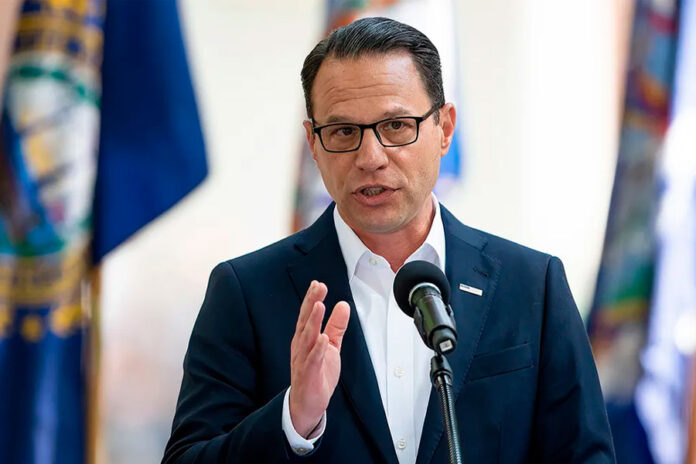
At an unrelated event in suburban Philadelphia on Tuesday, Democratic Gov. Josh Shapiro said the team wants to remain in Philadelphia and that he hasn’t been asked for tax incentives or offered any.

“I love the Sixers,” he said. “They belong in Philadelphia.”

The team’s move to a part of the city a block from Chinatown comes as some in the community worry that street parking could disappear, traffic could rise and it could be harder to hold festivals.

New Jersey’s offer comes just months after the state’s attorney general filed criminal racketeering charges against a Camden Democratic power broker as well as a former mayor of the city and others over what he said was their role in orchestrating tax incentive legislation and benefiting from it. He and the others have denied the charges and are fighting them in court.

Pennsylvania state police report 580 Crashes, 514 DUI arrests during Labor Day weekend enforcement

Pennsylvania

Harrisburg, PA – The Pennsylvania State Police (PSP) today released the results of its annual Labor Day Weekend enforcement initiative.

During the four-day period from August 30 to September 2, the PSP investigated 580 crashes that resulted in 170 injuries and six deaths. Impaired driving was a factor in 65 of those crashes, three of which were fatal. 

Troopers arrested 514 motorists for driving under the influence of alcohol or drugs and issued 24,865 citations, including:

  • 7,069 for speeding
  • 889 for failing to wear a seatbelt
  • 121 for not securing children in safety seats

Table 1: Labor Day Weekend Crash Statistics

YearTotal CrashesFatal CrashesPeople KilledPeople InjuredDUI CrashesDUI-Related Fatal Crashes
2024 (4 days)58056170653
2023 (4 days)671810220612

Table 2: Labor Day Weekend Enforcement Statistics

YearDUI ArrestsSpeeding CitationsChild Seat CitationsSeat Belt CitationsOther Citations
2024 (4 days)5147,06912188916,786
2023 (4 days)5149,11023386417,339

These statistics cover only those incidents investigated by the state police and do not include incidents to which other law enforcement agencies responded.

A detailed breakdown of the 2024 Labor Day Weekend enforcement statistics can be found at psp.pa.gov.

Man arrested at Trump rally in Pennsylvania wanted to hang a protest banner, police say

Pennsylvania
Police remove a man, center with sunglasses, who had climbed onto the media riser, as Republican presidential nominee former President Donald Trump speaks at a campaign event, Friday, Aug. 30, 2024, in Johnstown, Pa. (Photo: AP/Alex Brandon)

HARRISBURG, Pa. — A man arrested last week at a Pennsylvania rally for Republican presidential candidate Donald Trump had hoped to hang a banner to protest Trump’s policies, Johnstown’s police chief said Tuesday.

Authorities announced that misdemeanor charges of disorderly conduct and resisting arrest were filed against Stephen A. Weiss, 36, of Pittsburgh, who was taken into custody at Friday’s Trump rally.

Johnstown Police Chief Richard Pritchard said investigators do not know what the banner said because arena staff apparently discarded it. He said it was made from a bed sheet and that Weiss told a detective that he does not believe in Trump’s policies.

Pritchard said Weiss faked a foot injury and concealed a tube of glue in a metal crutch.

Weiss declined comment when reached by phone Tuesday, saying he was seeking legal advice.

The arrest affidavit by a Johnstown police detective said Weiss “ran onto the arena floor, jumped onto the media stage (and) began to yell towards the main stage where President Trump was speaking.” Weiss allegedly would not release himself from steel barricade fencing “and force had to be used,” police said in the charging document.

A man who accompanied Weiss to the rally told police he was unaware of Weiss’ plan, Pritchard said. The second man was not charged, the chief said.

Weiss also was charged with disrupting a public meeting, a misdemeanor. The Secret Service questioned Weiss on Friday and he was released later that night. He has a court hearing scheduled for Oct. 9.

A Trump campaign spokesman offered no immediate comment Tuesday.

The disruption occurred shortly after Trump criticized major media outlets for what he said was unfavorable coverage.

As Weiss was led away, the former president told the crowd: “Is there anywhere that’s more fun to be than a Trump rally?”

There has been heightened scrutiny of security at Trump rallies since a gunman fired at him, grazing his ear, during an outdoor rally in July in Butler, Pennsylvania. Security at political events has been noticeably tighter since then.