Estados Unidos no ha aprobado ninguna ley que prohíba hablar español en lugares públicos ni que imponga multas o penas de cárcel a quienes lo hagan, a pesar de lo que aseguran algunos internautas que difunden información falsa sobre una supuesta normativa inexistente.
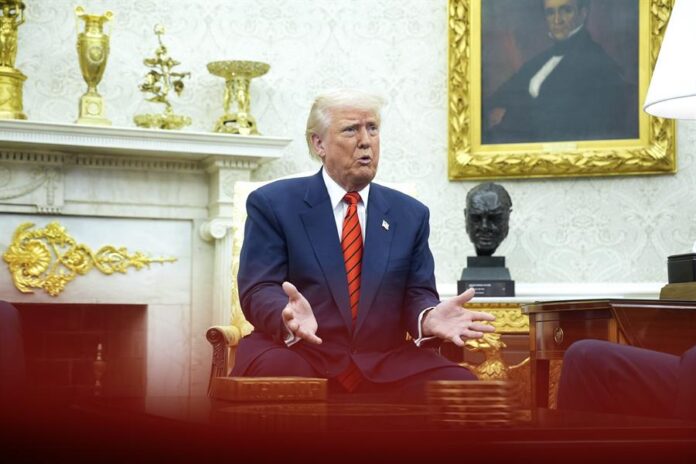
Mensajes en redes sociales como Facebook y TikTok han compartido videos afirmando que el presidente de Estados Unidos, Donald Trump, aprobó una ley para sancionar a quienes hablen español en espacios públicos del país.
“Multa por hablar español en Estados Unidos”, señala un cibernauta que comparte una grabación en la que se observa una imagen del mandatario estadounidense sosteniendo una pancarta que dice: “No speaking spanish in public” (No hablar español en público, en castellano).
Algunas de las secuencias también sostienen que la normativa aprobada se denomina ‘ley del silencio hispano’ y agregan que las penalizaciones oscilan entre los 2.000 y 5.000 dólares para quienes la desobedezcan.
Estos mensajes se extienden días después de que, el 1 de marzo, la Casa Blanca estableciera el inglés como idioma oficial de Estados Unidos, un título que hasta entonces no constaba en ninguna legislación federal.
HECHOS: Si bien la Administración de Donald Trump estableció el inglés como idioma oficial, ni esa orden ni ninguna otra legislación vigente prohíben el uso del español ni sancionan a quienes lo hablen. Así lo confirma una revisión del documento oficial, fuentes diplomáticas consultadas por EFE Verifica y una búsqueda en plataformas gubernamentales de Estados Unidos.
No existe dicha prohibición
No hay evidencia de la supuesta ‘ley del silencio hispano’. Una búsqueda avanzada en Google y en la página oficial del Gobierno de EE. UU., donde se publican todas las leyes y enmiendas, no arroja ningún resultado al respecto. Tampoco hay registros en el archivo de EFE de alguna normativa similar.
Por otra parte, la orden ejecutiva firmada por Trump nunca menciona multas a ciudadanos por hablar español, sino que establece el inglés como lengua oficial del país y revoca una directiva del año 2000, firmada durante el mandato de Bill Clinton (1993-2001), que se emitió para que las agencias federales facilitaran servicios en otros idiomas.
Esto no quiere decir que hablar otras lenguas ahora esté prohibido en territorio estadounidense. El documento ni siquiera menciona la palabra “español” y, de hecho, no obliga a hacer cambios en los servicios prestados por ninguna agencia.
Una fuente de la Embajada de EE. UU. en México, en declaraciones a EFE Verifica, desmintió estas afirmaciones y aclaró que la orden de Trump “no exige a las agencias operar únicamente en inglés”, sino que permite seguir ofreciendo documentos y servicios en otros idiomas, incluido el español.
Son imágenes creadas con IA
Adicionalmente, las imágenes que aparecen en los videos y que muestran a Trump portando un cartel que rechaza el uso del español tienen indicios de haber sido creadas con inteligencia artificial.
Un análisis realizado con Iveres, una herramienta de detección de contenido falso desarrollada por RTVE y la Universidad Autónoma de Barcelona, determinó que hay un 99 % de probabilidad de que los videos de TikTok en los que Trump aparece dando un discurso en el Congreso sean manipulados digitalmente. Características como bordes borrosos y colores excesivamente nítidos confirman el uso de inteligencia artificial.
En conclusión, no es cierto que Estados Unidos haya prohibido hablar español ni que haya establecido multas para quienes lo hagan en lugares públicos. Lo único que ha ocurrido es que el inglés fue designado como idioma oficial del país, sin que esto implique sanciones contra otras lenguas.
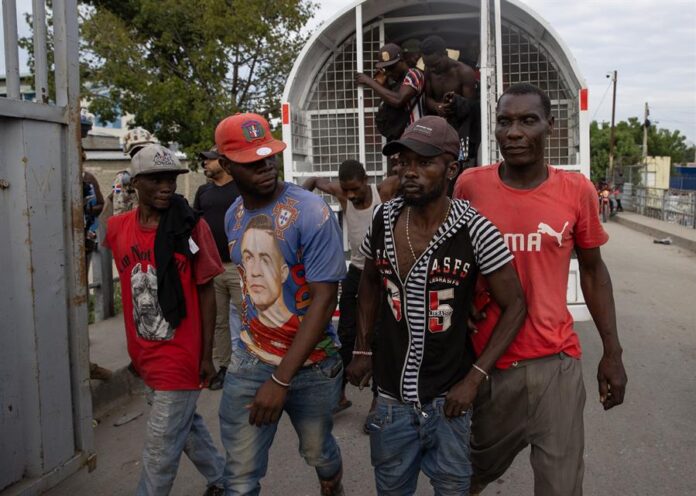
Ciudadanos haitianos que bajan de un camión tras ser detenidos. (Foto: EFE/Orlando Barría/Archivo)
San Juan.- Un total de 30 migrantes haitianos y dominicanos fueron detenidos por las autoridades federales en la isla de Mona, una reserva natural de Puerto Rico, informó este lunes la Guardia Costera estadounidense.
Los migrantes son 27 ciudadanos haitianos y tres dominicanos, que fueron arrestados con la ayuda de guardabosques del Departamento de Recursos Naturales y Ambientales de Puerto Rico.
El grupo fue transferido a agentes de la Patrulla Fronteriza estadounidense en el pueblo de Mayagüez, en el oeste de Puerto Rico, para su procesamiento y deportación, según el comunicado de la Guardia Costera.
«Las fronteras marítimas de Estados Unidos no están abiertas a la entrada ilegal y cualquier persona que intente entrar ilegalmente por mar será interceptada y procesada para su repatriación», declaró el comandante Matthew Romano, jefe de respuesta del Sector San Juan de la Guardia Costera.
La Guardia Costera recibió el aviso sobre la presencia de personas en isla de Mona el viernes en la tarde y la tripulación de uno de sus helicópteros observó una embarcación cubierta de follaje y gente que se apresuraba a esconderse.
Esta isla se ubica en el llamado Canal de la Mona, que separa Puerto Rico de República Dominicana y es una habitual ruta migratoria.
En los últimos años, se han producido numerosos casos de rescates y detenciones en la isla de Mona de migrantes que habían quedado allí varados tras ser abandonados por los contrabandistas.
El presidente de Estados Unidos, Donald Trump, aseguró que los indultos concedidos por su antecesor, el demócrata Joe Biden, son «nulos» y «no tienen valor«, ya que fueron firmados por lo que él denomina un bolígrafo automático (autopen).
«Los indultos que el ‘soñoliento’ Joe Biden otorgó al Comité de Matones Políticos (en referencia al Comité del Congreso encargado de investigarlo), y a muchos otros, se declaran nulos, sin valor y sin efecto, debido a que fueron emitidos por un Autopen», escribió Trump en su red Truth Social la pasada madrugada.
El actual presidente estadounidense sugiere además que Biden no conocía exactamente estos indultos que le fueron impuestos por sus asesores.
«En otras palabras, Joe Biden no los firmó, pero, aún más importante, ¡no sabía nada de ellos!. Los documentos que eran necesarios para el indulto no le fueron explicados ni aprobados por Biden», agregó Trump.
«Él no sabía nada de ellos, y quienes sí los supieron podrían haber cometido un delito. Por lo tanto, quienes integran el Comité de Matones Políticos, quienes destruyeron y eliminaron TODA la evidencia obtenida durante su cacería de brujas de dos años contra mí y muchas otras personas inocentes, deben comprender plenamente que están sujetos a investigación al más alto nivel», subraya el presidente republicano.
«Lo cierto es que probablemente fueron responsables de los documentos que se firmaron en su nombre sin el conocimiento ni el consentimiento del peor presidente de la historia de nuestro país, ¡el corrupto Joe Biden!», insiste Trump.
Antes de dejar el cargo Biden anunció su decisión de conmutar las sentencias de cárcel «desproporcionadas» impuestas a cerca de 2.500 presos que cumplen condenas por «delitos no violentos relacionados con drogas».
Biden también conmutó también las penas de 37 de los 40 condenados a muerte a nivel federal, convirtiendo sus castigos en cadena perpetua, e indultó a su hijo Hunter, que estaba procesado por delitos de armas y fiscales y a altos funcionarios como Anthony Fauci el responsable de luchar contra la pandemia, entre otros.
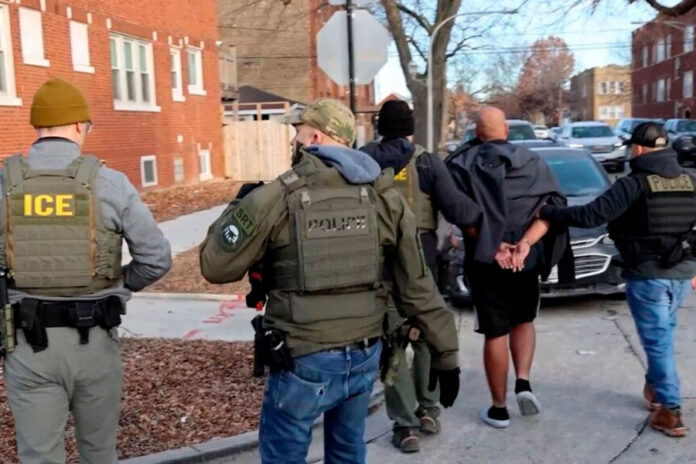
Agentes del Servicio de Inmigración y Control de Aduanas (ICE) de Estados Unidos realizan un arresto como parte de la amplia represión migratoria del presidente estadounidense Donald Trump en Chicago, Illinois, Estados Unidos, el 26 de enero de 2025. (Foto: VOA)
Filadelfia. – Tras la orden ejecutiva de la Administración Trump que rescinde la política de «lugares sensibles» que prohibía al Servicio de Inmigración y Control de Aduanas (ICE) llevar a cabo acciones de aplicación de la ley en escuelas, patios de recreo y paradas de autobús, la Unión Americana de Libertades Civiles de Pensilvania y el Education Law Center han compartido una carta de orientación legal sobre la interacción con ICE con los superintendentes de los distritos escolares públicos de Pensilvania y los directores generales de las escuelas chárter.
La carta recuerda a los administradores escolares que la ley federal, incluida la protección de la Cuarta Enmienda contra registros irrazonables y la Ley de Derechos Educativos y Privacidad de la Familia, ofrece protección a todos los estudiantes, y que los estudiantes tienen derecho, en virtud de la ley federal y estatal, a asistir a la escuela pública independientemente de su estatus migratorio.
La carta detalla las diferencias entre una orden judicial y una administrativa; el ICE suele utilizar órdenes administrativas, que no obligan legalmente a acceder a un lugar. También ofrece sugerencias sobre la mejor manera de proteger la privacidad de los estudiantes, incluso en los registros escolares y cómo fomentar un ambiente acogedor para todos los estudiantes.
«Todos, incluidos los administradores escolares, los padres y los estudiantes, deben comprender que las órdenes ejecutivas del presidente Trump o las directivas de las agencias no anulan, ni pueden anular, los derechos constitucionales o los estatutos federales contra la discriminación y la privacidad,»dijo Witold Walczak, director legal de la ACLU de Pensilvania. «La capacidad de los agentes de inmigración para entrar en las escuelas, acosar a las personas que trabajan duro en su interior y exigir información personal sigue estando limitada por la ley. Los niños en la escuela necesitan poder centrarse en sus lecciones y establecer relaciones con sus compañeros y profesores.»
«Muchos estudiantes inmigrantes y sus padres tienen mucho miedo de las medidas de control de la inmigración que puedan aplicarse en la escuela; algunas familias incluso tienen miedo de enviar a sus hijos a la escuela,» dijo Maura McInerney, directora jurídica del Education Law Center. También existe una confusión generalizada sobre la autoridad del ICE para entrar en las escuelas y acceder a los expedientes de los estudiantes. Esta carta responde a las preocupaciones planteadas por las familias y los educadores. Explica los derechos de los estudiantes, aclara la autoridad de los agentes de inmigración y subraya la obligación legal de todas las escuelas de ser espacios seguros y acogedores donde los estudiantes inmigrantes indocumentados tengan igualdad de acceso al aprendizaje y todos los escolares puedan prosperar.»
Philadelphia. – United States Attorney David Metcalf announced that Naseem Rashidi Clouden, 23, of Philadelphia, Pennsylvania, was sentenced on March 13 by United States District Court Judge Mark A. Kearney to 121 months in prison and five years of supervised release for one count of carjacking and one count of carrying and using a firearm during, and in relation to, the commission of a crime of violence.
Clouden was indicted on those violations in January of 2023. He pleaded guilty in November of 2024, admitting to carjacking a woman who was sitting in her mother’s Toyota Camry at approximately 8 p.m. on November 3, 2022, in Philadelphia. As part of his plea, the defendant also admitted that a firearm was used during and in relation to the armed carjacking.
According to the publicly filed documents in this case, the victim reported that while sitting in her mother’s vehicle in the West Oak Lane section of Philadelphia, six men including the defendant approached the vehicle on foot. The defendant and his accomplices pulled on the door handles of the car and ordered the victim out of the vehicle and two of the men pointed guns at her. When she did not move fast enough, one of the men yelled “shoot her” and the victim immediately complied and got out of the car. Four offenders then jumped into the vehicle and drove away.
The victim immediately called the police, and two officers enroute to the scene observed the victim’s mother’s vehicle. The officers pursued the vehicle until it stopped on the 6200 block of Old York Road and three men fled from the vehicle on foot. The officers then chased after the men, recovered a firearm on the block, and within a short time, located the defendant hiding under a van. The defendant was taken into custody and identified as one of the persons who committed the carjacking.
“Naseem Clouden terrorized our city at gunpoint. These offenses are a priority for my office and our partners on Philadelphia Carjacking Task Force,” said U.S. Attorney Metcalf. “We simply won’t stand for these senseless acts of violence. The crime of federal carjacking brings significant prison time, as Clouden’s sentence shows: a decade in prison for a crime that took just moments to commit.”
“‘Shoot her!’ a carjacker yelled, as the victim scrambled to save her own life. Armed carjacking is a brutal, dangerous crime, and thanks to the responding police officers, Naseem Rashidi Clouden has been convicted and sentenced to more than a decade in federal prison for it,” said Eric DeGree, Special Agent in Charge of the ATF’s Philadelphia Field Division. “Together with our Carjacking Task Force partners we are applying ATF’s unique forensic and investigative tools to stop criminals like this from terrorizing our neighborhoods.”
“This latest sentencing of a carjacker is a testament to the continued commitment of the Philadelphia Police Department and our law enforcement partners to stem the tide of violent crime in our city,” said Philadelphia Police Commissioner Kevin J. Bethel. “Carjacking endangers the safety and peace of mind of our residents, and we will not tolerate it. Through our continued collaboration with federal agencies, we will ensure those who commit these crimes are pursued, prosecuted, and held accountable to the fullest extent of the law.”
This case is part of Project Safe Neighborhoods (PSN), a program bringing together all levels of law enforcement and the communities they serve to reduce violent crime and gun violence, and to make our neighborhoods safer for everyone. On May 26, 2021, the department launched a violent crime reduction strategy strengthening PSN based on these core principles: fostering trust and legitimacy in our communities, supporting community-based organizations that help prevent violence from occurring in the first place, setting focused and strategic enforcement priorities, and measuring the results.
The case was investigated by the Bureau of Alcohol, Tobacco, Firearms and Explosives and the Philadelphia Police Department and is being prosecuted by Assistant United States Attorney Lauren Stram.
El escolta de los 76ers de Filadelfia, Quentin Grimes (5), regatea contra el alero de los Mavericks de Dallas P.J. Washington (25) durante la primera mitad de un partido el domingo 16 de marzo de 2025. (Foto: AP/LM Otero)
Quentin Grimes anotó 28 puntos en su primer partido contra su antiguo equipo y los 76ers de Filadelfia vencieron el domingo a los Mavericks de Dallas 130-125 en un enfrentamiento de equipos diezmados por lesiones.
Jalen Hood-Schifino agregó 19 puntos mientras los Sixers ganaron por solo tercera vez en 18 partidos.
P.J. Washington Jr. tuvo 29 puntos y 12 rebotes para Dallas después de perderse los ocho partidos anteriores debido a un esguince en el tobillo derecho. Klay Thompson y Naji Marshall anotaron 21 cada uno.
Los Mavericks, campeones defensores de la Conferencia Oeste, cayeron a tres partidos por debajo de .500, la peor marca de la temporada. Su ventaja por el 10mo lugar, y el último puesto para el play-in del Oeste sigue siendo de 1 1/2 juegos sobre Phoenix, que perdió 107-96 frente a los Lakers de Los Ángeles el domingo.
Los equipos tenían 19 jugadores entre ellos listados como ausentes en el informe de lesiones, encabezados por Kyrie Irving y Anthony Davis para Dallas y Joel Embiid, Paul George y Tyrese Maxey para los Sixers.
Grimes se unió a Filadelfia en el otro trato que hicieron los Mavs antes de la fecha límite de traspasos. Esto ocurrió dos días después de que Dallas enfureciera a su afición al enviar a la superestrella Luka Doncic a los Lakers a cambio de Davis a principios de febrero.
Los Sixers se enfrentan a Houston el lunes. Los Mavs visitan a Indiana el miércoles.
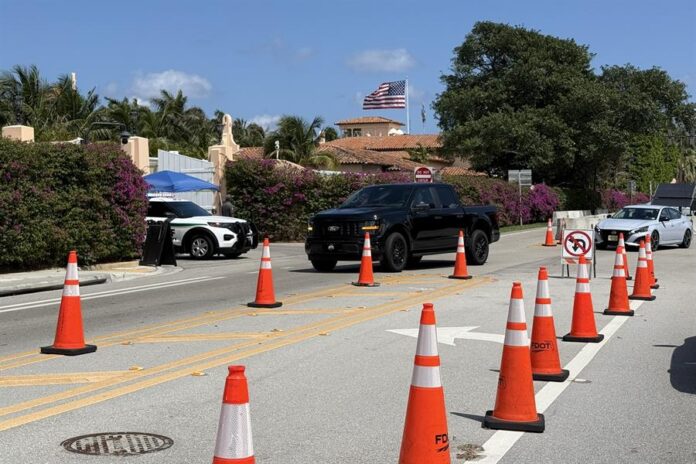
Fotografía de una vía delimitada por conos este sábado, en Palm Beach (Fl, EE. UU.). (Foto: EFE/Alicia Civita)
La sexta visita de este fin de semana del presidente Donald Trump a su mansión de Mar-a-Lago provoca una vez más complicaciones en la ciudad con bloqueos viales, pérdidas por restricciones en el espacio aéreo y el creciente temor de las autoridades locales de que los altos gastos de seguridad no sean reembolsados por el gobierno federal.
Los residentes de la pequeña isla de Palm Beach, donde está la residencia en el condado del mismo nombre, y áreas cercanas soportan las alteraciones con una mezcla de resignación y frustración.
Algunos tratan de verle el lado positivo, pero en entrevistas con EFE todos coincidieron en que «los problemas son molestos». Eso, sin hablar de los gastos.
Los vecinos de Mar-a-Lago, una mansión híbrida entre residencia de los Trump y club privado, lamentan el ruido de las sirenas, la congestión vial cuando el presidente y su larga comitiva se están desplazando y el cierre de la calle que pasa por enfrente de la edificación.
«Antes que él llegan los helicópteros. Siempre se sabe cuándo viene el presidente. Se puede planificar, pero el cierre afecta mucho. Para entrar a la isla solo hay tres vías. Si cierras una, estás bloqueando un tercio del tráfico local», indicó un hombre que mantiene carteles electorales pro Trump en el jardín de su casa y evitó dar su nombre.
Residentes locales contaron este fin de semana que un trayecto que requiere 15 minutos cuando está abierto el paso puede transformarse en una odisea de más de una hora. «Como beneficio, es que esto se vuelve el lugar más seguro de Estados Unidos o del mundo», afirmó el hombre.
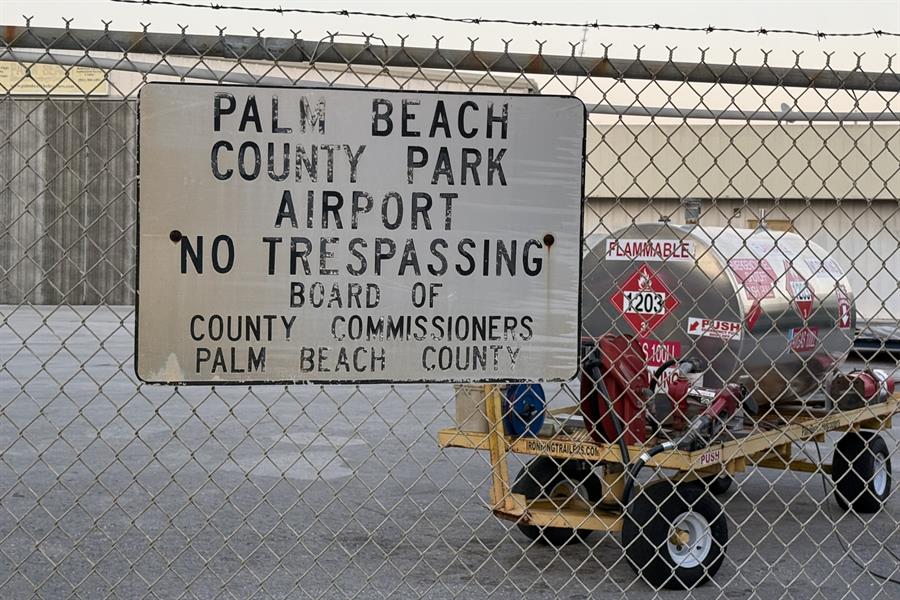
Fotografía de un aviso en el aeropuerto de Palm Beach este sábado, en Palm Beach (FL, EE. UU.). EFE/ Alicia Civita
Durante la estadía presidencial, la Administración Federal de Aviación emite una restricción temporal de vuelo en un espacio de 30 millas náuticas (unos 55 kilómetros).
Los residentes de Flamingo Park, un vecindario a tres kilómetros del aeropuerto Internacional de Palm Beach sufren la medida. Los vuelos que despegan desde allí son obligados a cambiar sus rutas cada vez que Trump está en casa y los pone justamente sobre sus casas.
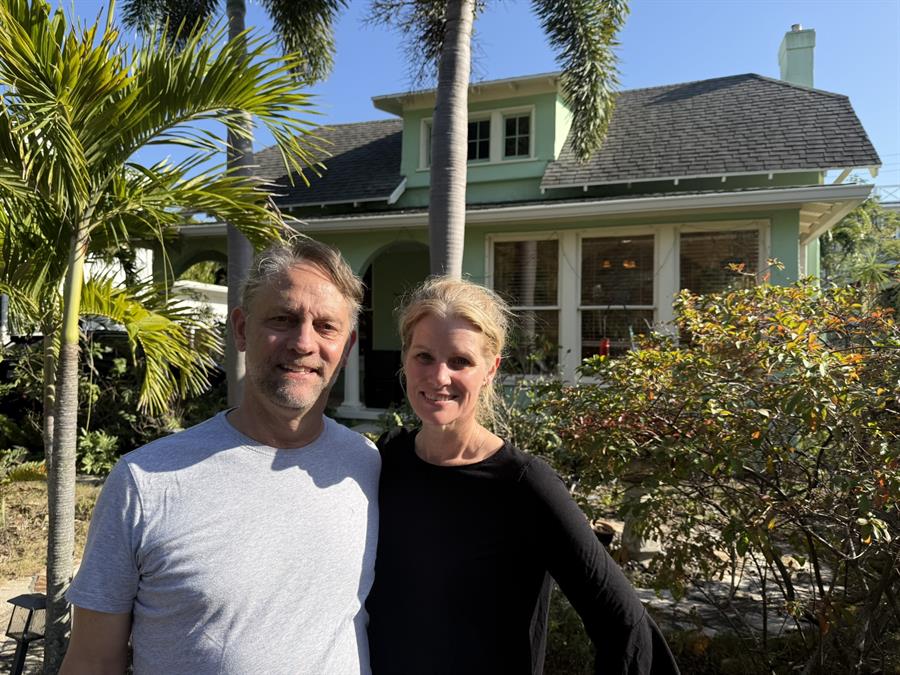
«Esto pasaba en la primera presidencia, pero esta vez ha aumentado la frecuencia y la intensidad y eso que apenas estamos empezando», dijo Christopher Ely, un profesor universitario de historia rusa, quien vive el bucólico vecindario desde hace 20 años.
Cifras oficiales registran un aumento del 16% del tráfico aéreo en ese aeropuerto desde la primera presidencia Trump.
«Yo trabajo desde casa, muchas veces los fines de semana. Cuando pasan los aviones, no se puede ni hablar. Su ruta normal va por encima de Mar-a-Lago», agregó su esposa Madeleine Ely, quien gestiona eventos deportivos.
Dueños y gerentes de negocios locales cercanos también declinaron ser identificados. «Preferimos mantenernos neutrales», dijo la encargada de un bar. Sin embargo, los resultados de las visitas de Trump son mixtos.
En contraste, el aeropuerto de Lantana, a solo 8 kilómetros de Mar-a-Lago, sufre pérdidas millonarias porque no pueden operar durante las restricciones. Allí funcionan también escuelas de vuelo y compañías de helicópteros, con unos 772 empleados.
En 2017, las restricciones de vuelo les costaron 30.000 dólares diarios. Jonathan Miller, presidente de Stellar Aviation, dijo haber perdido medio millón solo en 2018. «Las cifras han aumentado con el paso de los años», agregó.
EFE pasó por las instalaciones y estaban vacías, algo atípico en esta época del año.
Este año, según datos oficiales, ya van 20 violaciones del espacio aéreo de vuelos comerciales, lo que ha obligado a la intervención de aviones de combate. Según Steven Armstrong, vicedirector del Comando de Defensa Aeroespacial de América del Norte, cada una de estas incursiones le cuesta a los contribuyentes unos 50.000 dólares.
Los residentes Christopher y Madeleine Ely posan tras entrevista con EFE este sábado, en Flamingo Park (Fl, EE. UU.). EFE/ Alicia Civita
Un gran peso en el presupuesto local
Según Verdenia Baker, la administradora del condado de Palm Beach, ya se han desembolsado 45 millones de dólares en medidas de seguridad, incluyendo horas extras para el personal del departamento del alguacil, vigilancia aérea y marítima.
La gran pregunta es si y cuándo se recibirá un reembolso federal de este dinero.
«Recientemente pasamos horas en Washington D.C. trabajando con nuestra delegación del Congreso y la Casa Blanca para buscar apoyo», afirmó Todd Bonlarron, asistente del administrador del condado. Durante la primera presidencia de Trump lograron recibir el pago después de mucho esfuerzo, pero existe la preocupación de que esta vez la cantidad sería mucho mayor.
Mientras tanto. Palm Beach sigue en vilo, esperando respuestas del gobierno federal sobre el reembolso y adaptándose a la nueva realidad de ser, una vez más, la «Casa Blanca de invierno».
Foto tomada de video, difundido por la Oficina de Prensa Ansar Allah via el canal de televisión Al Masirah, que muestra a un niño herido en un hospital en hospital en Saada, Yemen, el 15 de marzo del 2025 tras ataques aéreos en el país. (Al Masirah TV via AP)
EL CAIRO (AP) — Estados Unidos y los rebeldes hutíes respaldados por Irán en Yemen están prometiendo una escalada después de que Estados Unidos lanzara ataques aéreos para disuadir a los rebeldes de atacar buques militares y comerciales en uno de los corredores de envío más transitados del mundo.
“No vamos a permitir que estas personas controlen qué barcos pueden pasar y cuáles no. Así que tu pregunta es, ¿cuánto tiempo continuará esto? Continuará hasta que ya no tengan la capacidad de hacerlo”, afirmó el secretario de Estado Marco Rubio a CBS el domingo. Manifestó que estos no son los ataques de represalia aislados que la administración Biden llevó a cabo después de los ataques hutíes.
El presidente Donald Trump prometió el sábado utilizar “fuerza letal abrumadora” hasta que los hutíes cesen sus ataques y advirtió que Teherán sería considerado “totalmente responsable” por sus acciones.
El Ministerio de Salud dirigido por los hutíes informó que los ataques nocturnos mataron al menos a 31 personas, incluidas mujeres y niños, y dejaron más de 100 heridos en la capital Saná y en la provincia norteña de Saada, bastión de los rebeldes en la frontera con Arabia Saudí.
El asesor de seguridad nacional de Trump, Michael Waltz, dijo el domingo a ABC que los ataques “en realidad apuntaron a múltiples líderes hutíes y los eliminaron”. No los identificó ni presentó pruebas. Rubio mencionó que algunas instalaciones hutíes habían sido destruidas.
La oficina política de los hutíes ha declarado que los rebeldes responderán a los ataques estadounidenses y “enfrentarán la escalada con escalada”.
El domingo, los hutíes afirmaron haber atacado al grupo de ataque del USS Harry S. Truman con misiles y un drone, pero dos funcionarios estadounidenses dijeron a The Associated Press que no detectaron nada. Los funcionarios hablaron a condición de anonimato para poder hablar de operaciones militares.
El portavoz del secretario general de la ONU, Antonio Guterres, en un comunicado, pidió “máxima moderación y una cesación de todas las actividades militares”, advirtiendo sobre los “graves riesgos” para la crítica situación humanitaria en Yemen, la nación más pobre del mundo árabe.
Los hutíes han atacado repetidamente el comercio internacional en el Mar Rojo y han lanzado misiles y drones contra Israel en lo que los rebeldes han denominado actos de solidaridad con los palestinos en Gaza, donde Israel ha estado en guerra con Hamás, otro aliado iraní. Hundieron dos buques mercantes.
Rubio indicó que en los últimos 18 meses, los hutíes habían atacado a la Marina de Estados Unidos “directamente” 174 veces y habían atacado el comercio marítimo 145 veces con “armamento guiado de precisión antibuque”.
Los ataques desataron los combates más serios que la Marina había visto desde la Segunda Guerra Mundial.
Los ataques aéreos nocturnos fueron uno de los ataques más extensos contra los hutíes desde que comenzó la guerra en Gaza en octubre de 2023.
Los ataques hutíes se detuvieron cuando un frágil alto el fuego entre Israel y Hamás se estableció en Gaza en enero, pero la semana pasada los rebeldes advirtieron que renovarían los ataques contra buques israelíes que navegan frente a Yemen después de que Israel interrumpiera el flujo de ayuda humanitaria a Gaza este mes.
No se han reportado ataques hutíes desde entonces. El domingo, Irán respondió a la advertencia de Trump y negó estar ayudando a los hutíes.
El jefe de la Guardia Revolucionaria paramilitar de Irán, el general Hossein Salami, negó que su país estuviera involucrado en los ataques hutíes, afirmando que “no juega ningún papel en la fijación de las políticas nacionales u operativas” de los grupos militantes con los que está aliado en toda la región, según la televisión estatal.
El ministro de Relaciones Exteriores de Irán, Abbas Araghchi, escribió en X, instando a Estados Unidos a detener sus ataques aéreos y declaró que Washington no puede dictar la política exterior de Irán.
Estados Unidos y otros han acusado durante mucho tiempo a Irán de proporcionar ayuda militar a los rebeldes. La Marina norteamericana ha confiscado partes de misiles y otras armas de fabricación iraní que, según dijo, estaban destinadas a los hutíes.
Estados Unidos, Israel y Gran Bretaña habían atacado previamente áreas controladas por los hutíes en Yemen, pero la nueva operación fue realizada únicamente por Estados Unidos. Fue el primer ataque contra los hutíes bajo la segunda Administración de Trump.
El grupo de ataque del portaaviones USS Harry S. Truman, que incluye el portaaviones, tres destructores de la Marina y un crucero, se encuentra en el Mar Rojo y formó parte de la misión. El submarino de misiles de crucero USS Georgia también ha estado operando en la región.
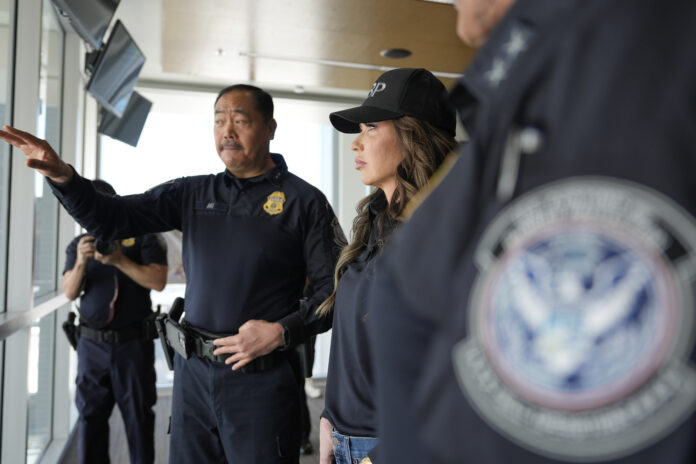
La secretaria de Seguridad Nacional de Estados Unidos Kristi Noem (centro) escucha mientras Sidney Aki, director de operaciones de campo del Servicio de Aduanas y Protección Fronteriza (izq), habla en el puerto de entrada de San Ysidro en San Diego, California, el 16 de marzo del 2025. (Foto AP/Alex Brandon)
La Administración Trump ha transferido a cientos de inmigrantes a El Salvador a pesar de la orden de un juez federal que temporalmente prohibía las deportaciones bajo una declaración de guerra del siglo XVIII dirigida a miembros de pandillas venezolanas, dijeron funcionarios el domingo. Los vuelos estaban en el aire en el momento de la decisión.
El juez federal de distrito James E. Boasberg emitió una orden el sábado por la noche bloqueando las deportaciones, pero los abogados le informaron que ya había dos aviones con migrantes en el aire: uno con destino a El Salvador y el otro a Honduras. Boasberg ordenó verbalmente que los aviones regresaran, pero aparentemente no lo hicieron y no incluyó la directiva en su orden escrita.
“Oopsie… Too late”, (demasiado tarde), escribió en inglés el presidente salvadoreño Nayib Bukele, un aliado del presidente Donald Trump que acordó albergar a unos 300 migrantes durante un año a un costo de 6 millones de dólares en las prisiones de su país, en la red social X, sobre un artículo relacionado con la decisión de Boasberg. Esa publicación fue compartida nuevamente por el director de comunicaciones de la Casa Blanca, Steven Cheung.
El secretario estadounidense de Estado, Marco Rubio, quien negoció un acuerdo anterior con Bukele para albergar migrantes, publicó en la misma red: “Enviamos a más de 250 miembros del Tren de Aragua, que El Salvador ha acordado mantener en sus muy buenas cárceles a un precio justo que también ahorrará dinero a nuestros contribuyentes”.
Steve Vladeck, profesor de derecho en la Universidad de Georgetown, dijo que la orden verbal de Boasberg de hacer regresar los aviones no era técnicamente parte de su orden final, pero que la administración Trump claramente violó su “espíritu”.
“Esto simplemente hará que los tribunales a partir de ahora sean sumamente específicos en sus instrucciones a fin de no darle margen de error al gobierno», explicó Vladeck.
Los migrantes fueron deportados tras la declaración de Trump sobre la Ley de Enemigos Extranjeros de 1798, que solo se ha utilizado tres veces en la historia de Estados Unidos.
La ley, invocada durante la Primera y Segunda Guerra Mundial y la Guerra de 1812, requiere que un presidente declare que Estados Unidos está en guerra, otorgándole poderes extraordinarios para detener o expulsar a extranjeros que de otro modo tendrían protecciones bajo las leyes de inmigración o penales. Se utilizó por última vez para justificar la detención de civiles japoneses-estadounidenses durante la Segunda Guerra Mundial.
La Unión Americana de Libertades Civiles (ACLU), que presentó la demanda que llevó a la orden de restricción temporal de Boasberg sobre las deportaciones, indicó que estaba preguntando al gobierno si las expulsiones a El Salvador eran en desafío a la corte.
“Esta mañana, pedimos al gobierno que asegure a la Corte que su orden no fue violada y estamos esperando escuchar, además de intentar hacer nuestra propia investigación”, informó el domingo en un comunicado el abogado principal de la ACLU, Lee Gelernt.
En un comunicado el domingo, el gobierno de Venezuela rechazó el uso de la declaración de Trump sobre la ley, destacando que esta “evoca los episodios más oscuros de la historia de la humanidad, desde la esclavitud hasta el horror de los campos de concentración nazis”.
El Tren de Aragua se originó en una prisión infame por anarquía en el estado central de Aragua y acompañó a un éxodo de millones de venezolanos, la abrumadora mayoría de los cuales buscaba mejores condiciones de vida después de que la economía de su nación se desmoronó la década pasada. Trump aprovechó la situación de la pandilla durante su campaña para pintar imágenes engañosas de comunidades que él afirmaba estaban “tomadas” por lo que en realidad eran un puñado de infractores.
La Administración Trump no ha revelado el nombre de los migrantes deportados, ni ha proporcionado evidencia de que, de hecho, sean miembros del Tren de Aragua o que hayan cometido algún delito en Estados Unidos. También envió a dos cabecillas de la pandilla salvadoreña MS-13 a El Salvador, que fueron arrestados en Estados Unidos.
Un video publicado por el gobierno de El Salvador el domingo mostró a hombres saliendo de aviones en una pista de aeropuerto rodeada de oficiales con equipo antimotines. Los hombres, con las manos y los tobillos encadenados, batallaban para caminar mientras los oficiales les empujaban la cabeza hacia abajo para que se doblaran hasta la cintura.
El video también mostró a los hombres siendo transportados a prisión en un gran convoy de autobuses custodiados por vehículos policiales y militares, y al menos un helicóptero. Se mostró a los hombres arrodillados en el suelo mientras les afeitaban la cabeza antes de ponerse el uniforme completamente blanco de la prisión: pantalones cortos hasta la rodilla, camiseta, calcetines y zuecos de goma, y luego fueron colocados en celdas.
Los migrantes fueron llevados a la notoria instalación CECOT, el centro de la iniciativa de Bukele para pacificar su país, que alguna vez estuvo plagado de violencia, a través de duras medidas policiales y límites a los derechos básicos.
En un comunicado el sábado ya tarde, la Administración Trump informó que el presidente había firmado la noche del viernes la proclamación afirmando que el Tren de Aragua estaba invadiendo Estados Unidos. Los abogados de inmigración dijeron que, tarde el viernes, notaron que venezolanos que de otro modo no podrían ser deportados bajo la ley de inmigración estaban siendo trasladados a Texas para vuelos de deportación. Comenzaron a presentar demandas para detener las transferencias.
“Básicamente, cualquier ciudadano venezolano en Estados Unidos puede ser removido bajo el pretexto de pertenecer a Tren de Aragua, sin posibilidad de defensa”, advirtió en la red social X Adam Isacson de la Oficina de Washington para América Latina, un grupo de derechos humanos.
La litigación que llevó a la suspensión de las deportaciones fue presentada en nombre de cinco venezolanos detenidos en Texas que, según los abogados, estaban preocupados por ser acusados falsamente de ser miembros de la pandilla. Una vez que se invoca la ley, advirtieron, Trump podría simplemente declarar a cualquiera como miembro del Tren de Aragua y expulsarlo del país.
Boasberg prohibió las deportaciones de esos venezolanos el sábado por la mañana cuando se presentó la demanda, pero amplió la prohibición a todas las personas bajo custodia federal que podrían ser objeto de la ley hasta su audiencia de la tarde. Señaló que la ley nunca se había utilizado antes fuera de una guerra declarada por el Congreso y que los demandantes podrían argumentar con éxito que Trump excedió su autoridad legal al invocarla.
La prohibición de deportaciones se mantiene por hasta 14 días y los migrantes permanecerán bajo custodia federal durante ese tiempo. Boasberg programó una audiencia para el viernes para escuchar argumentos adicionales en el caso.
Dijo que tuvo que actuar porque los migrantes cuyas deportaciones podrían violar realmente la Constitución merecían la oportunidad de que sus súplicas fueran escuchadas en la corte.
“Una vez que estén fuera del país”, comentó Boasberg, “hay poco que podría hacer”.
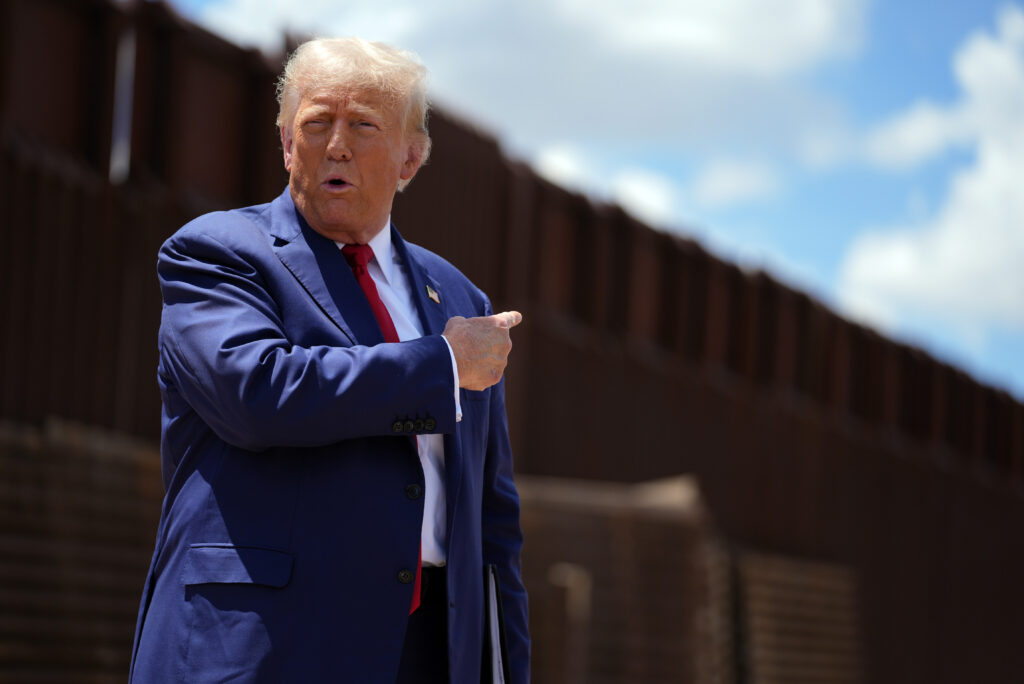
El entonces candidato Donald Trump cerca de la frontera con México en Sierra Vista, Arizona, el 22 de agosto del 2024. (AP foto/Evan Vucci)
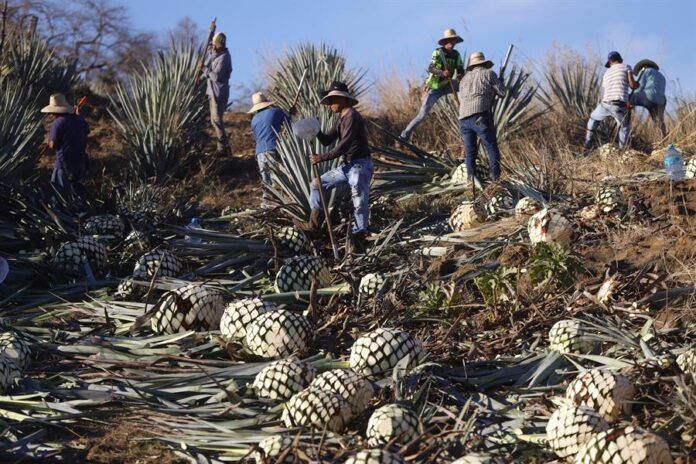
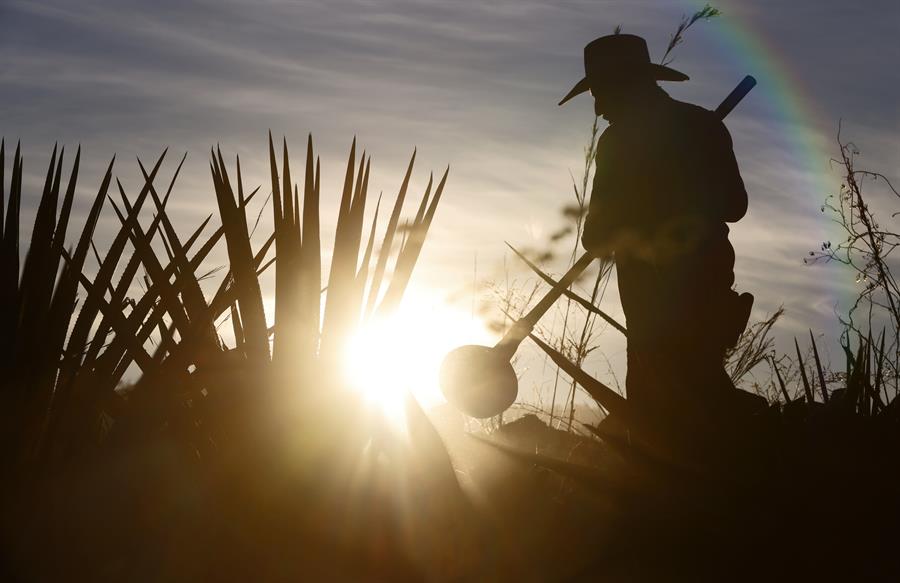
Jimadores laboran este sábado en un campo de agave en el municipio de el Arenal, en el estado de Jalisco (México). (Foto: EFE/Francisco Guasco)
Guadalajara, México.- La industria del tequila en México prepara diversas estrategias de mercado ante la amenaza de aranceles de 25 % por parte del gobierno de Estados Unidos a las exportaciones del país.
Los productores advierten de que de materializarse estas nuevas tarifas a las exportaciones mexicanas se afectaría a toda la cadena productiva, desde los agricultores de agave hasta los distribuidores y consumidores estadounidenses.
Ana Cristina Villalpando, directora general de la Cámara Nacional de la Industria Tequilera (CNIT), dijo a EFE que este sector ha previsto tres escenarios para afrontar los impuestos aduaneros al tequila, el segundo destilado más consumido en territorio estadounidense.
“Lo primero es que la empresa absorba totalmente el 25 %, la segunda es que sea compartido (con el consumidor) y la tercera es trasladarlo completamente al consumidor”, dijo.
Si bien Villalpando delineó estos tres posibles escenarios, explicó que cada empresa deberá evaluar su propia estrategia de mercado.
La CNIT estima que en 2024 las exportaciones de tequila a EE. UU. alcanzaron los 335 millones de litros, es decir, 67,5 % de la producción total de tequila, que fue de 500 millones de litros, convirtiéndose en el principal destino de exportaciones del sector.
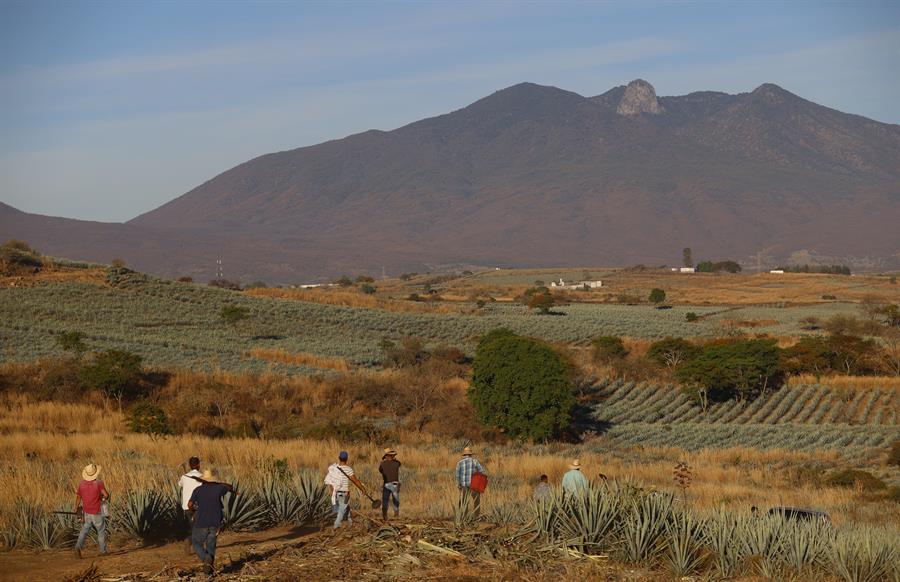
Jimadores laboran este sábado en un campo de agave en el municipio de el Arenal, en el estado de Jalisco (México). (Foto: EFE/Francisco Guasco)
Las afectaciones irían en diferentes direcciones, entre ellas el aumento del precio de cada botella de tequila, lo que propiciaría que los consumidores elijan otras bebidas alcohólicas.
O bien, añadió, que los proveedores y minoristas afronten ajustes en sus márgenes de comercialización, afectando a sus inversiones y estrategias de crecimiento.
También la cadena productiva sufriría los estragos, pues habría menos pedidos y contratos, es decir, menos ventas para exportación, agregó Villalpando.
Para ello, advirtió de que la CNIT diseña ya estrategias para que la bebida mexicana permanezca en el gusto de los estadounidenses.
“Que el consumidor, con el mismo presupuesto que designa a un tequila, pueda adquirir algún otro que sea del segmento del mismo presupuesto que tiene considerado. Entonces ahí dependeremos de la estrategia de negocio que siga cada casa tequilera”, indicó la directora de la CNIT.
Agregó que la Asociación de Destiladores de Estados Unidos les ha referido perjuicios en su cadena de distribución y los centros de consumo, así como la amenaza a 31.000 empleos formales que podrían cambiar a temporales o reducir su jornada.
Jimadores laboran este sábado en un campo de agave en el municipio de el Arenal, en el estado de Jalisco (México). EFE/Francisco Guasco
Compras de pánico
En medio de la incertidumbre por las tensiones comerciales entre ambos países, los productores tequileros en México han recibido pedidos de pánico de distribuidores estadounidenses que quieren adelantarse a un alza de precios que no termina de llegar, debido al aplazamiento de la entrada en vigor que el presidente Trump ha decidido en dos ocasiones.
Melly Barajas, dueña de la empresa Leyenda de México, contó que de diciembre de 2024 a la fecha han sacado a marchas forzadas pedidos de hasta tres veces más de lo acostumbrado en esta época.
En promedio, detalló que envían 10 contenedores a EE. UU. con 11.880 litros de botellas con producto premium.
Sin embargo, aunque estos pedidos extra significan mayores ventas, no hay certeza de que continúen los siguientes meses, precisó.
“Compras de terror. No me encanta, porque si bien es cierto que estamos vendiendo más,¿qué va a pasar mañana? No puedes contratar más gente porque no sabemos si vamos a tener el trabajo para esa gente. Nos está afectando en todo, no sabemos qué hacer y el crecimiento está en pausa”, lamentó.
Al cierre de enero de 2025, las exportaciones de tequila registraron un incremento del 34,6 % respecto al mismo periodo de 2024.
Gildardo Partida, propietario de la empresa El castillo del tequila, que venden en 50 estados de territorio estadounidense, aseguró que están dispuestos a absorber el total de los aranceles para no afectar a los distribuidores, vendedores y consumidores en el país vecino, aunque de manera temporal.
Dijo que de hacerse permanente este gravamen, exportar tequila sin subir el costo sería insostenible a largo plazo.
“Depende de qué tanto tiempo estamos hablando de esto, si decimos ya permanente tenemos que buscar otra estrategia, no pudiera ser esa. Sí, obviamente bajarlo, pero no tanto, el 25 % sería insostenible, porque tampoco tenemos ese margen de utilidad”, concluyó.