


10.9 C
Philadelphia
spot_img
Inicio Blog Página 465

Creating jobs and economic opportunity: Governor Shapiro announces $2 million Investment in York County’s Joseph Machine Company to Create Local Jobs and Grow Pennsylvania’s Manufacturing Sector

Shapiro

Dillsburg, PA – Today, Governor Josh Shapiro and Department of Community and Economic Development (DCED) Secretary Rick Siger visited and toured Joseph Machine Company in York County, where the Governor announced a $2 million investment in Pennsylvania’s manufacturing sector through the Commonwealth’s Redevelopment Assistance Capital Program (RACP).

This investment is a critical component of the Shapiro Administration’s broader Economic Development Strategy, aimed at revitalizing manufacturing, creating jobs, and strengthening Pennsylvania’s economic competitiveness.

“Pennsylvania companies are building the future — the folks at Joseph Machine Company are yet another example of the innovation, growth, and success happening right here in York County thanks to the hard work of highly skilled Pennsylvania workers and top of the line Pennsylvania suppliers,” said Governor Shapiro. “I’m proud to invest in their growth and help create as many as 150 manufacturing jobs here in Dillsburg. My Administration is focused on getting stuff done and putting points on the board for the good people of Pennsylvania — and my Administration is going to keep working to create more economic opportunity in our Commonwealth.”

This RACP grant will support Joseph Machine Company’s planned expansion, including a 150,000-square-foot addition to its current facility in Dillsburg. The project is expected to create 35 highly-skilled permanent jobs immediately, with the potential for up to 150 new positions upon completion of the full expansion. This expansion not only strengthens Pennsylvania’s manufacturing sector but also aligns with Governor Shapiro’s commitment to supporting sustainable, family-sustaining jobs across the Commonwealth.

“As a family-owned business, we’re able to invest in the future we envision. At Joseph, we’ve consistently invested in our people, processes, and technology, averaging 20 percent growth for over 15 years,” said Anthony Pigliacampo, CEO, Joseph Machine Company. “The RACP funding will help us scale even further — allowing us to expand our facility, take on larger automation projects, and add new capabilities that benefit not just Joseph, but the entire Pennsylvania manufacturing ecosystem, advancing our mission to empower U.S.-based manufacturers.”

Founded over 30 years ago, Joseph Machine Company is a leader in custom machinery manufacturing, serving industries such as automotive, aerospace, energy, and renewable power. With a commitment to job creation, family-sustaining wages, and community partnerships, Joseph Machine has become a key player in Pennsylvania’s manufacturing landscape. Through this expansion, the company will double its module assembly capacity and enhance its module reliability center to meet rising demand, supporting local suppliers across Southcentral Pennsylvania. Currently employing 119 people, the company has seen steady growth, adding 39 positions in the past year alone.

«Joseph Machine is a team of talented individuals who share common goals and core values. This company gave me the freedom to innovate and see my ideas turn into real products that make a tangible difference for our customers,” said Tom Vajdic, Director of Sales & Marketing, Joseph Machine Company. “In my time here over 23 years, I’ve had the privilege to work with leading industry partners, helping to shape the future across a variety of sectors. From window and door manufacturers in the housing market to electric vehicle makers and data centers, our reach is broad, and our impact is meaningful.»

The economic impact of this project extends beyond direct job creation. In addition to boosting local manufacturing, the expansion supports dozens of Pennsylvania-based suppliers, with JMC sourcing 60 percent of its materials from over 150 Pennsylvania companies. The company’s growth will also create downstream job opportunities among its regional supplier network and local manufacturers.

“This investment will drive JMC’s expansion forward, doubling their workforce with the full build-out, leveraging nearly $11 million in private investment, and strengthening our manufacturing industry here in York County,” said Kevin Schreiber, President & CEO, York County Economic Alliance. “It’s yet another sign that Pennsylvania is open for business, and this Administration is committed to our economic competitiveness plan — creating new careers, expanding industries, and ensuring manufacturing in Pennsylvania continues to grow right here at home.”

The RACP grant is part of a larger $600 million commitment by the Shapiro Administration to over 400 projects that fuel economic development across the Commonwealth. In line with Governor Shapiro’s Economic Development Strategy, the Administration has focused on five key industries — manufacturing, agriculture, energy, life sciences, and technology — to drive Pennsylvania’s growth.

“Manufacturing is key to our economy and our identity across Pennsylvania, and our goal is to outcompete other states and plant a flag that Pennsylvania manufacturing is open for business,” said DCED Secretary Siger. “The Shapiro Administration is using its resources to support companies like Joseph Machine as they grow, create jobs, and further cement the Commonwealth’s status as a manufacturing leader.”

Since taking office, the Shapiro Administration has secured over $3 billion in private sector investments, delivering on a 2024-25 bipartisan budget that supports the Governor’s key priorities for a competitive Pennsylvania economy. This budget includes:

  • $500 million for site development, including $400 million for the PA SITES (Pennsylvania Strategic Investments to Enhance Sites) program, supporting projects that create jobs and drive economic growth.
  • $20 million for the Main Street Matters program to revitalize small businesses and commercial corridors, the backbone of Pennsylvania communities.
  • $15 million for tourism marketing to attract visitors, support local economies, and promote Pennsylvania’s Great American Getaway brand.

Casey campaign statement on republican efforts to disenfranchise voters while counting continues

Casey
U.S. Sen. Bob Casey, D-Pa. (Photo: AP)

PENNSYLVANIA – Bob Casey for Senate released the following statement in light of Republican efforts to disenfranchise Pennsylvanian voters. 

Statement from Tiernan Donohue, campaign manager for Bob Casey for Senate:

“David McCormick and his allies are trying to disenfranchise Pennsylvania voters with litigation designed to throw out large tranches of votes that they’ve admitted in legal filings could impact the outcome of the election. Senator Casey wants all Pennsylvanians’ voices to be heard as local county election officials continue to count votes. This democratic process must be allowed to play out to determine the result of this election.”

Read More: 

  • McCormick and his allies have now filed two lawsuits and one appeal to the PA Supreme Court to throw out large tranches of ballots, including provisional ballots in Philadelphia and undated mail ballots. In one filing, McCormick’s attorney admitted the votes could “impact…the outcome of the election.”
    • McCormick’s campaign barred reporters from asking questions about the litigation during his press conference.
  • The appeal to the PA Supreme Court on undated ballots is a stark reversal of position for McCormick and his allies, who sued to ensure these ballots were counted in 2022 and argued that to invalidate them would violate the Pennsylvania state constitution.
  • McCormick’s allies are spending hundreds of thousands of dollars on a desperate television ad attacking and spreading lies about Senator Casey.
  • McCormick is working to disenfranchise Pennsylvania voters while the Casey campaign is working to make sure their voices are heard and the votes are counted in this incredibly close election.

La inflación en EE. UU. subió levemente el mes pasado tras dos años de estabilidad, pero sigue baja

inflación
Productos en un supermercado en Chicago el 19 de septiembre del 2024. (Foto: AP/Nam Y. Huh)

La inflación en Estados Unidos aumentó en octubre, impulsada por alquileres, autos usados y tarifas aéreas, una señal de que los aumentos de precios podrían estar estabilizándose después de haber disminuido en septiembre a su ritmo más bajo desde 2021.

Los precios al consumidor subieron un 2,6% en comparación con el año anterior, dijo el miércoles el Departamento de Trabajo, aumentando desde el 2,4% en septiembre. Fue el primer aumento en la inflación anual en siete meses. De septiembre a octubre, los precios aumentaron un 0,2%, igual que el mes anterior.

Excluyendo los costos volátiles de alimentos y energía, los precios “básicos” aumentaron un 3,3% en comparación con el año anterior, lo mismo que en septiembre. De septiembre a octubre, los precios básicos subieron un 0,3% por tercer mes consecutivo. A largo plazo, una inflación básica a ese ritmo superaría el objetivo del 2% de la Reserva Federal.

La mayor parte del aumento mensual en los precios al consumidor reflejó un aumento en los alquileres y los costos de vivienda, una tendencia que los funcionarios de la Fed esperan que disminuya en los próximos meses. Como resultado, las cifras del miércoles podrían mantener a la Fed en camino de reducir su tasa clave por tercera vez en diciembre, como sus funcionarios han indicado previamente que probablemente harían.

La mayoría de los economistas piensan que la inflación eventualmente reanudará su desaceleración. La inflación al consumidor, que alcanzó un pico del 9,1% en 2022, ha disminuido de manera constante desde entonces, aunque los precios generales todavía son alrededor del 20% más altos que hace tres años.

El aumento de precios desanimó a los estadounidenses y contribuyó a la derrota de la vicepresidenta Kamala Harris en las elecciones presidenciales de la semana pasada.

Sin embargo, la victoria de Donald Trump ha generado incertidumbre sobre hacia dónde podría dirigirse la inflación y cómo reaccionaría la Fed si se reacelerara. Trump ha prometido reducir la inflación, principalmente aumentando la perforación de petróleo y gas. Pero los economistas convencionales han advertido que algunas de sus propuestas, notablemente su plan de aumentar sustancialmente los aranceles a las importaciones y perseguir deportaciones masivas de migrantes, empeorarían la inflación si se implementan completamente.

Trump elige a presentador de Fox para Defensa, lo que sorprende al Pentágono y plantea reparos

Trump
El entonces presidente de Estados Unidos, Donald Trump, habla con el copresentador de Fox & Friends Pete Hegseth en un acto del programa Wounded Warrior Project Soldier Ride en la Sala Este de la Casa Blanca, en Washington, el jueves 6 de abril de 2017. (Foto AP/Andrew Harnik/Archivo)

El presidente electo de Estados Unidos, Donald Trump, sorprendió al Pentágono y al mundo de la defensa en general al nominar al presentador de Fox News Pete Hegseth como su próximo secretario de Defensa, lo que designaría a alguien con poca experiencia y que no ha trabajado en el escenario global para dirigir el ejército más grande y poderoso del mundo.

La noticia fue recibida con desconcierto y preocupación por muchos en Washington, ya que Trump dejó de lado a varios expertos de prestigio en seguridad nacional y eligió a un capitán de la Guardia Nacional del Ejército muy conocido en círculos conservadores como copresentador del programa “Fox & Friends Weekend” de Fox News Channel.

Mientras algunos legisladores republicanos respondían con cautela al anuncio, otros describieron su experiencia de combate como un activo o dijeron que era “tremendamente capaz”.

La elección de Hegseth podría traer cambios radicales al ejército, ya que ha dejado claro en su programa y en entrevistas que, al igual que Trump, se opone firmemente a los programas progresistas que promueven la igualdad y la inclusión. También ha cuestionado el papel de las mujeres en combate y abogado por indultar a militares acusados de crímenes de guerra.

En junio, en un mitin en Las Vegas, Trump alentó a sus seguidores a comprar el libro de Hegseth después de prometer que si ganaba, las medidas progresistas y de inclusión «desaparecerán en un período de 24 horas. Se lo puedo asegurar.”

Hegseth, de 44 años, es un conservador acérrimo que abraza las políticas de “Estados Unidos primero” de Trump, y ha presionado para hacer al Ejército más letal. Durante una entrevista en el podcast “The Shawn Ryan Show”, dijo que permitir a las mujeres servir en combate perjudica ese esfuerzo.

“Todo en torno a que hombres y mujeres sirvan juntos hace la situación más complicada, y complicaciones en combate, eso significa que las bajas son peores”, dijo Hegseth.

Y si bien dijo que la diversidad en el ejército es una fortaleza, señaló que era porque los hombres blancos y de minorías “pueden desempeñarse de manera similar” pero ese no era el caso de las mujeres.

Al abrir los puestos de combate a las mujeres, “hemos cambiado los estándares al ponerlas allí, lo que significa que has cambiado la capacidad de esa unidad”, dijo Hegseth en la entrevista del podcast.

Desde que el entonces secretario de Defensa Ash Carter abrió todos los roles de combate a las mujeres en 2016, sucesivas militares han pasado con éxito las pruebas agotadoras del ejército para convertirse en boinas verdes y rangers del Ejército, así como la prueba para servir como tripulación de una embarcación de combate, los operadores de los barcos que transportan a las fuerzas especiales SEAL de la Armada y realizan sus propias misiones clasificadas en el mar.

Mientras Trump elogiaba a Hegseth como “duro, inteligente y un verdadero creyente en ‘Estados Unidos primero’”, otros se apresuraron a señalar la falta de experiencia del presentador, y algunos sugirieron que podría ejercer como jefe del Pentágono sólo en apariencia mientras la Casa Blanca de Trump dirige el departamento.

Otros nombres que se barajaron como posibles responsables de defensa incluían al representante Mike Rogers de Alabama, presidente republicano del Comité de Servicios Armados de la Cámara; el teniente general retirado Keith Kellogg; la senadora Joni Ernst, republicana de Iowa, y Robert Wilkie, exfuncionario del Pentágono que dirigió los asuntos de veteranos en el primer mandato de Trump.

“Hay motivos para preocuparse de que esta no sea una persona lo bastante seria para trazar medidas, lo bastante seria para implementar medidas, para hacer un trabajo exitoso”, dijo el representante Adam Smith de Washington, el demócrata de mayor rango en el Comité de Servicios Armados de la Cámara.

Mark Cancian, asesor principal en el Centro de Estudios Estratégicos e Internacionales, dijo que la falta de experiencia de Hegseth en seguridad nacional de alto nivel hace más difícil obtener la confirmación del Senado para su nombramiento.

“Creo que Trump estaba cansado de pelear con sus secretarios de defensa y eligió uno que sería leal a él”, dijo Cancian.

Funcionarios militares dijeron que la elección salió de la nada. Un oficial militar de alto rango, que habló bajo condición de anonimato porque no estaba autorizado para hablar con los medios, dijo que la selección de Hegseth había planteado reparos sobre si tiene la experiencia práctica para administrar un departamento grande con un presupuesto enorme.

El Departamento de Defensa tiene un presupuesto que supera los 800.000 millones de dólares, con aproximadamente 1,3 millones de soldados en servicio activo y otros 1,4 millones en la Guardia Nacional, reservas y empleados civiles repartidos por todo el mundo.

Si se confirma, Hegseth enfrentaría una serie desalentadora de crisis globales, desde las guerras en Oriente Medio y Ucrania y el estrechamiento de la alianza entre Rusia y Corea del Norte hasta la creciente competencia con China. También está la necesidad de actualizar el complejo aparato de defensa de misiles y nuclear de Estados Unidos y asegurar que la industria de defensa pueda mantenerse al día con la necesidad de sistemas de armas de Estados Unidos.

Smith dijo que, aunque la experiencia de combate de Hegseth es un punto a su favor, dirigir el Pentágono requiere muchas otras habilidades, y considerar su nominación requerirá algo de tiempo.

“¿Cuál es su plan? ¿Qué va a hacer? (…) ¿Cómo puede asegurarnos que esa falta de experiencia, ya sabe, no va a hacer imposible que haga el trabajo?” dijo Smith. “Creo que esas son preguntas que necesitan responderse en los próximos meses.”

Incluso algunos republicanos en el Senado —que tendrían que votar su candidatura— respondieron con cautela.

El senador de Carolina del Norte Thom Tillis, describió la elección como “interesante”, y el senador de Indiana Todd Young, que sirvió como marine, dijo que: “no sé mucho sobre su trasfondo o su visión, así que espero aprender más”.

El senador de Dakota del Norte John Hoeven dijo que no estaba sorprendido de que Trump eligiera a Hegseth porque Trump está “cerca de él y le gusta y confía en él.”

“El tipo es obviamente tremendamente capaz, un gran comunicador”, dijo Hoeven. “Espero conocerlo mejor.”

El presidente de la Cámara de Representantes, Mike Johnson, dijo que Hegseth aporta mucho a la mesa y será “reformista en las áreas que necesitan reforma”.

Hegseth ha sido colaborador de Fox News desde 2014 y ha hecho amistad con Trump, quien hizo apariciones frecuentes en su programa. Es autor de “The War on Warriors: Behind the Betrayal of the Men Who Keep Us Free”.

“Con Pete al mando, los enemigos de Estados Unidos están advertidos: Nuestro Ejército será Grande de Nuevo, y Estados Unidos Nunca Retrocederá”, dijo Trump en un comunicado. “Nadie lucha más duro por las Tropas, y Pete será un campeón valiente y patriótico de nuestra política de ‘Paz a través de la Fuerza’”.

Elon Musk y Vivek Ramaswamy dirigirán el nuevo Departamento de Eficiencia Gubernamental

Eficiencia Gubernamental
Elon Musk, director ejecutivo de Tesla y propietario de X, habla mientras el entonces candidato presidencial republicano Donald Trump participa de un mitin en Butler, Pensilvania, EEUU, el 5 de octubre de 2024.

El presidente electo de EE. UU., Donald Trump, avanza en la conformación de su gabinete para el 20 de enero, anunciando a Elon Musk y Vivek Ramaswamy como timoneles del nuevo Departamento de Eficiencia Gubernamental.

El presidente electo de Estados Unidos, Donald Trump, dijo el martes que Elon Musk y el excandidato presidencial republicano Vivek Ramaswamy dirigirán el incipiente Departamento de Eficiencia Gubernamental.

Musk y Ramaswamy «allanarán el camino para que mi Administración desmantele la burocracia gubernamental, reduzca drásticamente el exceso de regulaciones, recorte los gastos superfluos y reestructure las agencias federales», dijo Trump en un comunicado.

Trump ha estado anunciando en las últimas horas a los principales funcionarios del gabinete que estrenará el 20 de enero de 2025 cuando asuma su segundo mandato al frente de la Casa Blanca.

Musk lidera la compañía de autos eléctricos Tesla, la plataforma de redes sociales X y la compañía de cohetes SpaceX, mientras que Ramaswamy es el fundador de una compañía farmacéutica. Éste se postuló para la nominación presidencial republicana contra Trump y luego le dio su apoyo al expresidente después de abandonar.

Respaldo político y millonario

Musk dio millones de dólares para apoyar la campaña presidencial de Trump e hizo apariciones públicas con él. Trump había dicho que ofrecería a Musk, la persona más rica del mundo, un papel en su administración que promueva la eficiencia gubernamental.

El acrónimo del nuevo departamento -DOGE- coincide con el nombre de la criptomoneda Dogecoin que Musk promueve.

«¡Esto enviará ondas de choque a través del sistema, y a cualquiera que esté involucrado en el despilfarro gubernamental, que es mucha gente!», adelantó Musk, según la declaración de Trump, que calificó la nueva iniciativa gubernamental como «potencialmente ‘El Proyecto Manhattan’ de nuestro tiempo», en referencia al plan estadounidense para construir la bomba atómica que ayudó a poner fin a la Segunda Guerra Mundial.

Veterano, presentador y ahora secretario de defensa

También informó que nominará al presentador de Fox News Channel, Pete Hegseth, para las funciones de secretario de Defensa.

«Pete es duro, inteligente y un verdadero creyente en Estados Unidos Primero», dijo el mandatario electo en un comunicado.

«Con Pete al timón, los enemigos de Estados Unidos están sobre aviso: nuestras Fuerzas Armadas volverán a ser grandes y Estados Unidos nunca retrocederá», añadió.

Hegseth es veterano de la Guardia Nacional del Ejército y, según su página web, sirvió en Afganistán, Irak y Guantánamo, Cuba.

FACT FOCUS: Election officials knock down Starlink vote rigging conspiracy theories

Election
Elon Musk speaks before Republican presidential nominee former President Donald Trump at a campaign rally at Madison Square Garden, Sunday, Oct. 27, 2024, in New York. (AP Photo/Alex Brandon)

As President-elect Donald Trump begins filling key posts in his second administration, social media users are pushing false claims that the 2024 election was rigged in his favor.

One such narrative claims that billionaire Elon Musk facilitated the alleged fraud with his internet service provider Starlink, manipulating the vote count through election equipment such as ballot tabulators. Starlink, a subsidiary of Musk’s SpaceX company, uses satellites to offer high-speed internet, even in remote areas.

Some rural counties used the technology during the 2024 race to access their electronic poll books.

Here’s a closer look at the facts.

CLAIM: Billionaire entrepreneur Elon Musk used his internet provider Starlink to steal the 2024 election for President-elect Donald Trump.

THE FACTS: These claims are unfounded. Election officials, including from multiple swing states, told The Associated Press that their voting equipment doesn’t use Starlink and is not even connected to the internet. States have additional security measures to ensure that the count is accurate, according to experts. Election officials and security agencies have reported no significant issues with the 2024 race.

“It is not possible that Starlink was used to hack or change the outcome of the US presidential election,” David Becker, founder and executive director of The Center for Election Innovation and Research, wrote in an email. “This, quite simply, did not happen, and could not happen, thanks to the security measures we have in place, and these conspiracy theories echo other disinformation we’ve heard over the past several years.”

Becker further explained that the country’s nearly 10,000 election jurisdictions use a wide range of voting machines that are not connected to the internet while voting occurs and that nearly all votes are recorded on paper ballots, which are audited by hand to confirm the results of electronic tabulators.

“If anyone tried to interfere with the machines to rig the election, it would be discovered through multiple means, including reconciling the registered voters who cast ballots with the number of votes, as well as the audits,” he added.

Certain jurisdictions in a few states allow for ballot scanners in polling locations to transmit unofficial results, using a mobile private network, after voting has ended on Election Day and the memory cards containing the vote tallies have been removed.

Election officials who allow this say it provides for faster reporting of unofficial election results on election night. They say the paper records of the ballots cast are used to authenticate the results during postelection reviews, and that those records would be crucial to a recount if one was needed. Computer security experts have said this is an unnecessary risk and should be prohibited.

Cybersecurity and Infrastructure Security Agency Director Jen Easterly said in a statement on Nov. 6 that CISA has “no evidence of any malicious activity that had a material impact on the security or integrity of our election infrastructure.”

Despite a lack of evidence, many on social media suggested that Starlink could indeed have been used to steal the election.

“If Trump & Elon’s ‘little secret’ was to use Starlink in swing states to tally the votes & rig the election — an investigation & hand recount is crucial. Now,” reads one X post that had been liked and shared approximately 41,700 times as of Tuesday.

Another widely shared X post states: “Elon Musk used Starlink to hack our elections so he can have nice things while inflicting pain on Americans. Are we really going to turn a blind eye to what happened and let the worst people among us run the country.”

Election officials in North Carolina, Georgia and Pennsylvania — three of the seven swing states Trump won — told the AP that their voting equipment is never connected to the internet. In some cases, this is mandated by state law.

“Satellite-based internet devices were not used to tabulate or upload vote counts in North Carolina,” said Patrick Gannon, a spokesperson for the North Carolina State Board of Elections. “In addition, our tabulated results are encrypted from source to destination preventing results being modified in transit. And no, tabulators and ballot-marking devices are never connected to the internet in North Carolina.»

The Tar Heel State prohibits its voting systems from being “connected to a network” and requires any feature that allows such a connection to be disabled. This includes the internet, as well as any other wired or wireless connections.

Gannon added that North Carolina has “no evidence of any alteration of votes by anyone” and requested that people stop spreading misinformation about elections.

Mike Hassinger, a spokesperson for the Georgia secretary of state’s office, called the claims spreading online “absolutely conspiratorial nonsense.”

“We don’t use Starlink equipment for any part of our elections, and never have,” he said. “Our election equipment is 100% air-gapped and never connected to the internet.”

The term “air-gapped” refers to a security measure that isolates a secured computer network from those that are unsecured. This means it is impossible to use the internet to manipulate the software that tallies Georgia’s votes or the memory cards on which they’re recorded, according to Hassinger. He explained that memory cards are transported by hand in secure bags with tamper-evident ties to a central elections office where votes are tabulated. There is also a chain of custody protocol in place so that their movement is well documented.

Matt Heckel, a spokesperson for the Pennsylvania Department of State, wrote in an email: “Counties do not use Starlink to transmit unofficial or official election results. No voting system in Pennsylvania is ever connected to the internet.”

A pilot program in Arizona’s Coconino, Apache and Navajo counties intended to “enhance connectivity in underserved areas» uses Starlink systems for electronic poll book synchronization, according to JP Martin, a spokesperson for the Arizona secretary of state’s office. The state’s election equipment is air-gapped, one of many security measures.

MichiganNevada and Wisconsin also employ stringent precautions to protect the integrity of their voting equipment.

Some posts spreading online pointed to a local news segment in which the registrar of voters in Tulare County, California, noted that internet connectivity at the county’s poll sites was improved this year thanks to Starlink. Stephanie Hill, a systems and procedures analyst for the agency, wrote in an email that “this connection is strictly for voter check-in purposes only and in no way a part of our voting system.” California is among the states that prohibit their voting equipment from being connected to the internet.

Trump is currently beating Vice President Kamala Harris in Tulare County with 60% of the vote.

Pamela Smith, president and CEO of Verified Voting, agreed that the idea that Starlink was used to rig the election is absurd.

“While Starlink provided connectivity in a number of jurisdictions for electronic poll books (EPBs) in this election, neither Starlink nor other types of communication networks play any role in counting votes,” she wrote in an email. “Our elections produce huge quantities of physical evidence. A satellite system like Starlink cannot steal that.”

Hispanic voters back Harris over Trump by a 62%-37% margin; cite economic concerns as top priorities

Hispanic Voters Back Harris over Trump by a 62%-37% Margin; Cite Economic Concerns as Top Priorities 

Economy was the potent driver; Latino supermajorities on various policy positions not aligned with Trump platform. 

WASHINGTON, DC – Latino organizations today released key findings on Hispanic voter motivations and election choices, based on interviews with a representative sample of 3,750 actual Hispanic voters. In comparison, the national exit poll had 2,152 Latino respondents. 

In a historic night for Republicans, who increased support across most demographics including Latinos, a majority of Hispanic voters — including men — voted for Vice President Kamala Harris. In many instances, policies associated with Democrats far outperformed candidates from that party. Pocketbook concerns dominated 4 of the top 5 priorities, with reproductive rights rounding up the top 5, nationally. 

  • Click HERE to see Frankie’s remarks and to see the detailed results of the poll 
  • Click HERE to watch a replay of today’s webinar 
  • Click HERE to view Latino vote results by state, and HERE for demographic crosstabs 
  • For interactive Latino poll results, see Hispanic Electorate Data Hub

The poll is part of the American Electorate Poll, a critical cross-check on traditional exit polls which often rely on low and unrepresentative samples of Hispanic voters, and adds depth to our understanding of why and how Latinos and other groups voted. This robust poll surveyed 3,750 Hispanic voters, with representative samples in 10 states (AZ, CA, FL, GA, MI, NC, NV, PA, TX and WI), including an oversample of nearly 800 Puerto Rican voters, making it the largest sample of Puerto Rican 2024 actual voters. 

“This election sent three strong messages regarding Latino voters. First, the influence of Latino voters continues to grow as we reach a new record in terms of the number of Latinos who voted, despite the underinvestment in year-round outreach efforts. Second, Latino communities can mobilize effectively in key moments when properly resourced, both to push back or push forward on issues that matter. And third, but certainly not least, Latinos still hold onto certain core values when it comes to policies, such as the desire for action on climate change, support for a fair economy and a commitment to humane immigration policy, all of which should be taken into consideration when discussing legislative priorities in 2025,” said Frankie Miranda, president and CEO of Hispanic Federation. “Latinos must be invested in if we hope to turn out the Latino vote. We can no longer be ignored or take it for granted. With sufficient and substantial resources, Latinos can be mobilized in unprecedented numbers.” 

UnidosUS Vice President of the Latino Vote Initiative Clarissa Martínez De Castro said 

“The most potent driver in the election was economic discontent, expressed in President-elect Donald Trump’s gains with most demographics. If there is a mandate, it’s on that: raise wages and bring down food, housing and health care costs. A majority of Hispanic voters supported Harris — including men — and a supermajority reject mass deportations and abortion restrictions. The mainstream exit polls got Hispanic candidate support wrong, and that is a recurring sampling issue. But there is dissonance between candidate choice and policy positions, with much greater support for policies supported by Democrats than for Democratic candidates. This is an area of strategic reflection for Democrats. For Republicans, the message is that many of the policies in their platform are opposed by a majority of American voters, including Latino supermajorities. Elected officials on both sides of the aisle would be wise to govern with those elements in mind, to keep or grow Hispanic support in future elections.” 

Vanessa Cárdenas, executive director of America’s Voice, said, “We know that the American public, even amidst this year’s results, opposes the Trump agenda of mass deportation, separation of families and his promises to ‘un-document’ and deport some with current legal status. American voters, and Latino voters in particular, still strongly support legal status for long-settled immigrants. In this poll and in the main network exit polls, when put head-to-head, the American people overall choose legal status for undocumented immigrants living here over deportation and that is even more true for Latino voters. So, let’s be clear: Trump does not have a mandate for mass deportations or sending in the military to round up our immigrant neighbors or family members.” 

“We have to begin telling the full story about this election,” said Melissa Morales, president and founder of Somos Votantes. “While Trump did make some gains with Latino voters, a strong majority of Latino voters in battleground states voted for Vice President Kamala Harris. This election was a referendum on the economy, and while in fact, Harris was able to close the gap on the economy, a top issue for Latinos, in a very short period of time – in the end it was not enough to overcome a rightward shift that swept the country. The real story here is that rightward shift among voters who turned out this election transcended Latino voters and laying the blame exclusively on Latino voters is not only irresponsible but dangerous. This moment calls for a reckoning. Working people simply are not feeling enough economic improvement in their everyday lives. Our mandate moving forward is not only that they do but to ensure we fight to provide them with more opportunities, not less – which includes rejecting the infringement on those opportunities and freedoms Donald Trump’s Project 2025 has planned through actions such as mass deportations or stripping away abortion and reproductive rights.”   

Camille Rivera, founder of La Brega y Fuerza Fund said, “The relationship with the Latino community is fragile and must be harvested and tended to on an ongoing basis. Organizations like La Brega y Fuerza have spent years requesting investment into the over 6 million Puerto Ricans across the country. But the data is clear — while we saw an influx of resources after the MSG rally it wasn’t nearly enough to make up for the weeks of time that we had fallen behind with Latino outreach, especially amongst Latino men. We must learn from our mistakes and invest in these communities year-round, all while trusting those closest to those communities. La Brega y Fuerza is dedicated to this mission and spent months prior to the election organizing with limited resources across states like Pennsylvania, North Carolina and New York. Now, we urge others to be honest about what happened and remember that Latinos hold power, but to spark that power we need year-round fuel for the fire.” 

Key Findings Include:  

Latino/Hispanic Vote 

  • Presidential vote. Latinos voted for the Democratic candidate Kamala Harris (62%) over the Republican candidate Donald Trump (37%) by a +25 margin.  
  • A majority of Hispanic men voted for Harris (51%-48%), and a supermajority of Hispanic women (66%-32%). 
  • Among Latino subgroups, the highest level of Harris support was from Puerto Ricans (65%, followed by Mexican Americans (63%). Highest Trump support was from Cuban Americans (54%). 
  • House vote. On the generic congressional ballot, Latinos voted for Democratic candidates over Republican candidates by similar margins (62% to 34%). 
  • Outreach. 45% of Latino voters reported they had not been contacted this election. 
  • Overall, only 33% said they were contacted by Democrats, 23% by Republicans 
  • Contact rates were higher in battleground states, particularly GA and PA. 
  • Reported Republican outreach was higher than in previous elections. 
  • New Voters. One in five Latinos were voting for the first time in a presidential election. 

Issue Priorities:  

  • #1 Cost of living / inflation (52%)  
  • #2 Jobs and economy (36%)  
  • #3 Housing costs and affordability (27%)   
  • #4 Health care costs (25%) 
  • #5 Abortion and reproductive rights (23%) 

Economy & Inflation 

A supermajority of Latino voters support: 

  • A law or regulation that bans price gouging and prevents corporations from artificially raising prices (90%). 
  • Passing a new voting rights act to ensure that all eligible American citizens can vote without barriers (90%) 
  • Expanding clean energy investments to create more manufacturing jobs (90%) 
  • Closing tax loopholes and requiring all corporations with more than $1 billion in profit to pay a 15% tax (86%) 
  • Building 3 million new homes and providing $25,000 in down payment assistance (80%) 

Abortion Rights 

  • By a 79% to 21% margin, Latinos support Congress passing a federal law to guarantee access to abortion and give women control over their own private medical decisions. 
  • A majority of Hispanic voters supported state ballot measures to protect the right to abortion (AZ 79%, FL 63%, NV 81%).  

Immigration & Border Security (6th priority) 

  • 80% of Latino voters support passing a law to provide permanent legal status to undocumented immigrants who have lived in the U.S. for a long time, including Dreamers who were brought to the U.S. as children. 
  • 71% of Hispanic voters support passing the bipartisan border security bill to block avenues for seeking asylum, increase the number of border patrol agents and asylum officers, and expand detention and technology at the U.S.-Mexico border 

Violence & Extremism 

  • 60% expressed concern over elected officials remaining quiet and not speaking up against white nationalists and extremists who promote hate and attacks against minorities and immigrants. 

Interactive results for Latino voters will be available on UnidosUS’s Hispanic Electorate Data Hub, which includes results going back to 2006. Data from the full 2024 American Electorate Poll, including crosstabs for all racial and ethnic groups polled, can be found on the poll website, www.2024electionpoll.us.  

About the 2024 American Electorate Voter Poll, Hispanic Voters: 

Total N=3,750 voters  

  • N=500 per: Florida  
  • N=400 per: Pennsylvania, other states  
  • N=300 per: Arizona, Georgia, Nevada, North Carolina, Texas, California  
  • N=200 per: Michigan, Wisconsin 
  • N=790 per: Puerto Rican voters  
  • Margin of error +/-1.62% 

Field Dates: October 18-November 4, 2024 

  • Survey available in English and Spanish, according to respondent preference 
  • Mixed mode: 75% online, 25% live telephone interviews 

### 

About the 2024 American Electorate Voter Poll 

The 2024 American Electorate Voter Poll is a large-scale poll of Black, Hispanic, Asian American, Native American and white voters nationally and in key states and congressional districts, conducted by the African American Research Collaborative (AARC) and BSP Research, and sponsored by SEIU, UnidosUS, First Nations Development Institute, Climate Power, Indivisible, Rural Organizing, Voter Participation Center, America’s Voice and the American Civil Liberties Union.  

The election poll contacted more than 9,400 voters who cast their ballots early or were certain to vote in the final days before the November 2024 election, offering exclusive information about the electorate, including Congressional, Senate, and Gubernatorial vote choices, issue priorities, and evaluations of both major parties and what issues motivated voter turnout. The poll also includes data from crucial presidential, U.S. Senate, and U.S. House battleground states, including Florida, Georgia, Texas, Wisconsin, North Carolina, Arizona, Pennsylvania, California, and Nevada, as well as a national sample.  

About UnidosUS
UnidosUS is a nonprofit, nonpartisan organization that serves as the nation’s largest Hispanic civil rights and advocacy organization. Since 1968, we have challenged the social, economic, and political barriers that affect Latinos through our unique combination of expert research, advocacy, programs, and an Affiliate Network of nearly 300 community-based organizations across the United States and Puerto Rico. We believe in an America where economic, political, and social progress is a reality for all Latinos, and we collaborate across communities to achieve it. For more information on UnidosUS, visit www.unidosus.org or follow us on FacebookInstagramLinkedIn, and Twitter.  

About BSP Research 

BSP Research is a Latino-owned polling, research, and analytics firm headquartered in Los Angeles, California. Founded in 2021 by Matt Barreto and Gary Segura, who have more than two decades of experience in national polling and research, BSP Research is a leading research and analytic firm with expertise on the political and social views of the American population and beyond. BSP has industry-leading expertise in culturally competent research on communities of color and other forms of disadvantage, and extensive experience in bilingual polling and data gathering from all varieties of communities.  

About the African American Research Collaborative 

The African American Research Collaborative (AARC) provides high-quality research and analysis on the political interests, motivations, and goals of Americans of all backgrounds. Our expert team of pollsters, researchers, and analysts have vast experience in polling, political behavior, and issues that affect us all: the economy, health care, education, housing, civil rights, immigration, policing, jobs, grassroots organizing, and social justice. 

About Hispanic Federation 

Hispanic Federation (HF) is a nonprofit membership and advocacy organization, founded in 1990, committed to empowering and advancing the Hispanic community, with a focus on low-income, marginalized, and immigrant Latinos. With programs in 40 states, Puerto Rico, the U.S. Virgin Islands, and the District of Columbia, HF’s focus areas include immigration, economic empowerment, civic engagement, disaster relief, philanthropy, education, health, and the environment. HF also maintains ongoing public education campaigns and meets the organizational development needs of its member agencies through grant-making and capacity-building assistance. 

About America’s Voice 

The mission of America’s Voice (AV) and America’s Voice Education Fund (AVEF) is to build the public support and the political will needed to enact policy changes that secure freedom and opportunity for immigrants in America. Priority goal: win reforms that put 11 million undocumented Americans on a path to full citizenship. 

About Somos Votantes 

Somos Votantes is a Latino-led, Latino-focused organization that runs some of the largest independent Latino civic and voter engagement programs in the country. We envision a nation where hardworking Latinos have the opportunities and tools to fully participate in our democracy. Somos Votantes seeks to empower hardworking Latinos in shaping the future of our democracy, primarily through non-partisan civic engagement programs, by increasing our participation in elections and advocating for progressive policies. Visit https://www.somosvotantes.com/ for more information, and follow us on InstagramFacebook, YouTube and X. 

About La Brega y Fuerza Fund 

La Brega y Fuerza is a Puerto Rican organization that was created to build a pipeline of power between the island and the mainland and to advocate for democracy, self-determination and economic resilience for all Puerto Ricans. Founded less than 2 years ago, La Brega y Fuerza has made inroads with the Puerto Rican community and the diaspora across the country.

Arranca el escrutinio general de los votos de las elecciones en Puerto Rico

Puerto Rico
Personas hacen cola para depositar sus votos en un centro de votación en Carolina (Puerto Rico). (Foto: EFE/Thais Llorca)

San Juan.- La Comisión Estatal de Elecciones (CEE) de Puerto Rico arrancó este martes el escrutinio general de los votos de las elecciones celebradas el 5 de noviembre en Puerto Rico, en las que obtuvo la victoria Jenniffer González, del Partido Nuevo Progresista (PNP).

«Es lo que siempre he dicho, si te fijas en las mesas, hay representantes de los cinco partidos. Más transparencia que eso no puede haber. Todos los intereses están representados en la mesa, todos los partidos están representados en la mesa», aseguró la presidenta de la CEE, Jessika Padilla.

«La comisión se encuentra determinando la decisión con relación a la adjudicación, principalmente, de la papeleta legislativa, de cómo se va a atender», explicó Padilla.

En este contexto, la presidenta de la comisión precisó que el último maletín se abrirá este martes a las 16:30 hora local (20:30 GMT), sin embargo los trabajos podrían demorar hasta las 20:00 hora local (2:00 GMT).

Asimismo, detalló que el conglomerado total de los trabajos del escrutinio, se podría extender hasta diciembre.

La cantidad total de votos adelantados, ausente y confinados, no contabilizados, asciende a aproximadamente a 213.724, cifra que incluye 136.713 votos por correo y 6.806 ausentes.

Según los resultados parciales de la CEE, González ganó los comicios del pasado martes con el 39,47 % de los votos y el independentista Juan Dalmau quedó en segunda posición con el 32,69 %.

El PNP se hizo en las elecciones, además, con el control de la Legislatura, mientras que el Partido Popular Democrático (PPD), pese a su debacle en la gobernación, logró una mayoría de alcaldías y el puesto de comisionado residente en Washington.

Shapiro administration invests $79 million to expand recreation, community revitalization efforts across Pennsylvania

recreation
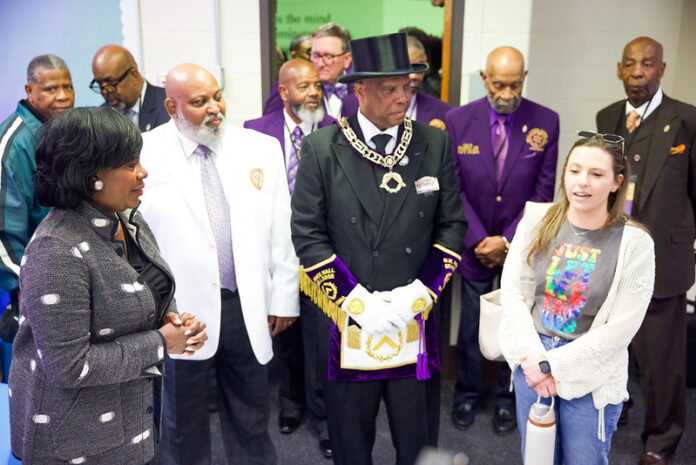
Secretary Dunn visited James Logan Elementary School in Philadelphia to highlight one of the more than 300 projects that will expand recreational opportunities, conserve natural spaces, and revitalize communities.

Secretary Dunn visited James Logan Elementary School in Philadelphia to highlight one of the more than 300 projects that will expand recreational opportunities, conserve natural spaces, and revitalize communities.

Philadelphia, PA – Today, the Shapiro Administration announced $79.4 million in grants for 307 projects across Pennsylvania, aimed at expanding recreational opportunities, conserving natural spaces, and revitalizing communities. These grants will support a wide range of projects, including improving local parks, expanding trails and river access points, and creating more green space in local communities.

These investments underscore Governor Josh Shapiro’s commitment to strengthening the Commonwealth’s communities — all while driving regional economic growth through projects that enrich cultural, civic, recreational, and historic places throughout Pennsylvania. This not only improves the quality of life for Pennsylvanians but also creates dynamic spaces that help to attract visitors to the Commonwealth.

“Every day, my Administration is focused on getting stuff done for the good people of Pennsylvania — and we’re proud to support hundreds of projects across the Commonwealth that not only enhance the quality of life for Pennsylvanians but also serve as a catalyst for economic growth,” said Governor Shapiro. “Investing in these projects – from improving our parks and trails to planting trees in our neighborhoods to increasing access to our rivers – attracts visitors to Pennsylvania, boosts local businesses, and strengthens our communities.”

Secretary Dunn visited James Logan Elementary School in Philadelphia to highlight one of the more than 300 projects that will expand recreational opportunities, conserve natural spaces, and revitalize communities.

Department of Conservation and Natural Resources (DCNR) Secretary Cindy Adams Dunn visited James Logan Elementary School in Philadelphia to spotlight a $500,000 grant to the School District of Philadelphia. This grant will engage communities, school staff, and students in planting approximately 600 trees across 30 school campuses in environmental justice areas, while also building local tree stewardship capacity in partnership with the Pennsylvania Horticultural Society Tree Tenders Program.

“Trees help combat urban heat and flooding, and their planting fosters a connection to nature,” said Secretary Dunn. “In Philadelphia alone, over $5 million in grants will support urban tree planting, park and playground improvements, trail development, and water access. These projects are part of broader efforts to prepare Fairmount Park and other sites for the upcoming 250th anniversary of the United States.”

“Schools are an integral part of our Philadelphia communities and serve as areas where students, parents, and community members can gather and connect,” said Oz Hill, Deputy Superintendent of Operations for the School District of Philadelphia. “As one of the largest landowners in Philadelphia, increasing the tree canopy around schools will positively impact the health and well-being of our students. Thanks to a grant from DCNR, we are thrilled to expand our tree canopy.” 

Secretary Dunn visited James Logan Elementary School in Philadelphia to highlight one of the more than 300 projects that will expand recreational opportunities, conserve natural spaces, and revitalize communities.

This investment is in addition to 16 other projects in Philadelphia, totaling $5.1 million:

  • Awbury Arboretum Association, $299,000 to expand the Prescribe Outside program in Philadelphia;
  • Awbury Arboretum Association, $182,000 to engage communities in planting trees and build local tree stewardship capacity; prepare a tree inventory and maintenance plan for the arboretum;
  • Culturetrust Greater Philadelphia, $163,000 to coordinate and fund activities of the Philadelphia Youth Council;
  • Neighborhood Gardens Trust, $234,000 to help with the acquisition of approximately 0.3 acres along Manayunk Avenue and Dexter Street for the protection of a neighborhood community forest;
  • Philadelphia Parks and Recreation, $100,000 for rehabilitation of Franklin Square playground;
  • Philadelphia Parks and Recreation, $150,000 for installation of approximately 5 acres of riparian forest buffers along Cobbs Creek in the Lower Delaware River watershed;
  • Philadelphia Parks and Recreation, $500,000 for restoration of 180 feet of the Schuylkill River along the Schuylkill River Trail in the vicinity of the South Street Bridge
  • Philadelphia Parks and Recreation, $86,000 for lighting upgrades and other improvements on approximately 0.28 miles of trail;
  • Philadelphia Parks and Recreation, $350,000, for rehabilitation of Starr Garden playground;
  • Philadelphia Parks and Recreation, $428,000 for rehabilitation and further development of Tacony Boat Launch along the Northern Delaware River;
  • Philadelphia Parks and Recreation, $500,000 for rehabilitation of West Fairmount Park Belmont Grove playground;
  • Philadelphia Parks and Recreation, $300,000 for rehabilitation of West Fairmount Park Centennial Gateway;
  • Philadelphia Streets Department, $100,000 for design for the development of approximately 0.6 miles of the Cresheim Trail from the Germantown Avenue trestle bridge to the intersection of Stenton Avenue and Cresheim Valley Drive;
  • Pennsylvania Environmental Council, Inc., $50,000 for installation of approximately 10 acres of meadows in the Central and Lower Delaware River watersheds;
  • Pennsylvania Horticultural Society, $1 million to coordinate urban and community forestry in the City of Philadelphia and southeastern Pennsylvania; and
  • Zoological Society of Philadelphia, $190,000 to plant trees at the Philadelphia Zoo and build local tree stewardship capacity.

Statewide, the investments will facilitate the development of 25 new local parks, the rehabilitation of 85 existing parks, the protection of over 6,800 acres for recreation and habitat preservation, and $10 million to support trails, including nine projects aimed at addressing critical trail gaps.

A complete list of the statewide grants is available, including these projects across the Commonwealth:

  • Asbury Woods Partnership, Erie County, $160,900 to acquire about 14 acres along Walnut Creek and Buttermilk Falls in Millcreek Township as an addition to Asbury Woods;
  • City of Harrisburg, Dauphin County, $218,000 for development of Swatara St. Park including walkways and a rain garden;
  • Cochranton Borough, Crawford County, $100,000 for rehabilitation of Cochranton Lions Community Park;
  • Dormont Borough, Allegheny County, $685,100 for rehabilitation of New Generation Playground;
  • Fountain Hill Borough, Lehigh County, $28,200 to prepare a feasibility study for Fountain Hill Community Pool;
  • Franklin Township, Greene County, $208,100 for the further development of Wisecarver Recreation Area including a loop trail;
  • Johnstown Redevelopment Authority, Cambria County, $300,000 for a feasibility study for possible modifications to the Johnstown flood protection walls;
  • Overfield Township, Wyoming County, $100,000, to further develop Teener Field;
  • Pennsylvania Urban and Community Forestry Council, $400,000, to support its bare root tree program for communities across the Commonwealth;
  • Valley in Motion, Lackawanna County, $72,000 to assist three municipalities along the Lackawanna River to improve accessibility; and
  • Fairview Township, York County, $448,900 to help acquire about 92 acres for a new county park.

These grants are part of the DCNR Community Conservation Partnerships Program, which supports projects to develop new parks, rehabilitate existing spaces, and protect vital natural habitats. With increased state and federal support, $10.5 million of this funding round will go toward tree planting and lawn-to-habitat conversions statewide.

Funding is being provided for projects in 57 of 67 Pennsylvania counties in this round and is provided by the Keystone Fund, Environmental Stewardship Fund, and federal sources.

Pennsylvania has more than 6,400 local parks and 124 state parks, more than 12,000 miles of trails, and more than 83,000 miles of waterways. Together with more than 2.2 million acres of state forests, the Commonwealth has among the largest expanses of public lands in the eastern United States that offer outdoor recreation opportunities in all four seasons – making Pennsylvania The Great American Getaway, launched by Governor Shapiro earlier this year.

EE. UU.: Certificación de resultados electorales presidenciales arranca con calma, a diferencia de 2020

presidenciales
Personal electoral procesa las papeletas en la oficina de registro de votantes del condado de Washoe, el martes 5 de noviembre de 2024, en Reno, Nevada. (Foto: AP/Godofredo A. Vásquez)

Los funcionarios locales han comenzado a certificar los resultados de las elecciones presidenciales de este año en un proceso que, hasta ahora, se ha desarrollado tranquilamente, en marcado contraste con el tumultuoso período de certificación de hace cuatro años que se vivió tras la derrota del entonces presidente Donald Trump.

Georgia es el primero de los estados de la contienda presidencial en empezar a certificar los resultados, y las juntas electorales locales tienen previsto votar a lo largo de la jornada del martes. Mientras varios condados de los suburbios de Atlanta certificaban sus resultados sin controversia, el secretario de gobierno de Georgia, Brad Raffensperger, calificó las elecciones de Georgia de «libres, justas y rápidas».

Trump ganó Georgia y los otros seis estados clave en la batalla presidencial, después de perder seis de ellos ante el demócrata Joe Biden en 2020. Las reuniones de certificación de los condados están programadas más tarde en la semana en varios otros estados en disputa: Nevada, Carolina del Norte y Wisconsin.

La falta de complicaciones en la certificación en lo que va de la semana supone un regreso a cómo funcionaba el proceso, normalmente rutinario, antes de que Trump perdiera su intento de reelección hace cuatro años. Mientras intentaba anular la voluntad de los votantes, él y sus aliados presionaron a los miembros republicanos de las juntas de certificación de Michigan para que retrasaran o detuvieran el proceso. También intentaron retrasar las certificaciones en Arizona, Nevada y Pensilvania.

A fin de cuentas las juntas cumplieron con la certificación, pero el énfasis de Trump en la certificación caló entre los republicanos. Algunos funcionarios republicanos locales se han negado a certificar los resultados en las elecciones desde entonces, lo que hizo temer un movimiento más amplio para rechazar la certificación este año si Trump hubiera perdido frente a la vicepresidenta Kamala Harris.

Algunos de esos sentimientos estuvieron presentes el martes. Michael Heekin, un miembro republicano de la Junta de Registro y Elecciones del condado de Fulton dijo que no estaba de acuerdo en que certificar los resultados electorales “es puramente un deber ministerial”.

“Deberíamos ser la primera línea de defensa, al menos una de las líneas de defensa en examinar la calidad y la precisión de la elección”, dijo.

Un abogado del condado, que incluye Atlanta, de mayoría demócrata, explicó durante la reunión que la certificación era un paso necesario antes de que pudiera proceder cualquier impugnación de las elecciones. La junta electoral del condado de Fulton tenía previsto celebrar su votación de certificación a última hora del martes.

A diferencia de Trump hace cuatro años, Harris reconoció su derrota. Trump también ganó el voto popular por primera vez en sus tres candidatoruas a la Casa Blanca y elogió los resultados electorales. En lugar de abalanzarse sobre los centros de recuento de votos del condado, sus partidarios se han mostrado exultantes.

“Hace cuatro años en esta época, estaba recibiendo constantemente llamadas telefónicas desagradables en mi oficina”, dijo Lisa Tollefson, la secretaria de elecciones en el condado de Rock, Wisconsin. Este año, afirmó, “ha sido muy tranquilo”.