Melissa Scarcliff (c) hablando con una clienta junto a José Crespo, en el Mercado Agrícola del Viejo San Juan (Puerto Rico). (Foto: EFE/Thais Llorca)
San Juan.– El 31 % de los puertorriqueños asegura que la situación económica de su hogar está «peor» en este 2026 en comparación con el año pasado, según una encuesta hecha y presentada este martes por la Cámara de Mercadeo, Industria y Distribución de Alimentos (MIDA) de la isla.
Igualmente, y de acuerdo con un avance en los hallazgos de la Radiografía del Consumidor 2026 de MIDA, el 66 % de los caribeños indicó que «ven de manera negativa la situación actual» económica y un 54 % «piensa que estará peor en un año».
Sobre el particular, el vicepresidente ejecutivo de MIDA, Manuel Reyes Alfonso, dijo en un comunicado que estos resultados podrían tratarse de una combinación de factores, entre los que se encuentran la «psicología de la incertidumbre que sufre el consumidor».
«Las personas que experimentan alta inflación de manera prologada, y reciben noticias constantes de incertidumbre futura como guerras, aranceles, reducción de fondos federales, entre otros, cambian su comportamiento, lo que podría provocar una contracción en el gasto», sostuvo.
«El consumidor no sabe si los precios seguirán subiendo, si habrá escasez o si la situación derivará en una recesión con despidos. Ante el temor a un futuro incierto, las personas tienden a volverse cautas. No necesariamente es que no puedan consumir, es que piensan que no deben», destacó.
Bajo el lema ‘La lógica de compra del consumidor, de la ecuación de valor a la decisión de compra’, Radiografía del Consumidor 2026 analiza cómo continúa evolucionando el consumidor puertorriqueño en medio de un entorno de incertidumbre económica, cambios globales y transformaciones sociales que impactan directamente la forma en que las personas viven, priorizan y compran.
Por su parte, el presidente de MIDA, Félix Aponte, añadió que otros hallazgos principales que reflejó el estudio fueron las leves reducciones en la mayoría de las partidas del gasto mensual del consumidor.
Según detalló, la partida de alimentos reflejó una reducción en el gasto de 5 % o 19 dólares, mientras que el gasto en productos del hogar se redujo un total de 18 dólares, equivalente a un 14 % menos.
El estudio, a su vez, reflejó además que una tercera parte de los encuestados ha considerado mudarse de Puerto Rico en los próximos uno a tres años, debido a la situación económica o a las condiciones del país.
Las dos razones principales que mencionaron los encuestados fueron «una mejor oportunidad económica» (36 %) y «mejor calidad de vida (28 %).
«Vemos que las generaciones más jóvenes y los adultos propensos a criar hijos son las que están considerando irse del país», indicó Aponte.
De los que respondieron que han considerado irse del país, el 57 % pertenece a la generación de 18 a 27 años, y el 37 % pertenece a la generación de 28 a 48 años.
«Esto levanta bandera ante la realidad del envejecimiento poblacional en Puerto Rico», alertó Aponte.
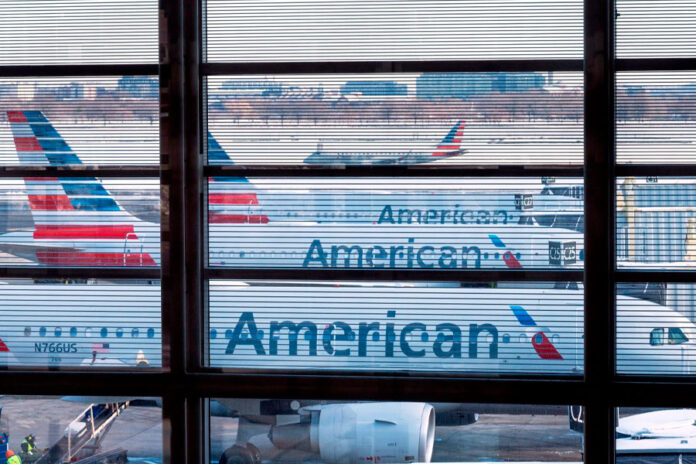
Aviones de American Airlines aguardan en las puertas de embarque del Aeropuerto Nacional Ronald Reagan, el 29 de enero de 2026, en Arlington, Virginia. (Foto: AP/Cliff Owen/Archivo)
¿Planea viajar este verano? Si piensa llevar un cargador adicional para su teléfono u otros dispositivos, tenga en cuenta las normas más recientes para transportarlo en un vuelo.
Los cargadores portátiles recargables con batería de ion de litio, también conocidos como “bancos de energía”, baterías externas o cargadores de baterías, vienen en carcasas protectoras de diferentes formas y tamaños. Son una forma práctica y popular de obtener energía extra cuando se está de viaje.
Pero tras una serie de incidentes que han involucrado humo o fuego, las autoridades de aviación estadounidenses e internacionales han emitido nuevas directrices, y las aerolíneas han endurecido las normas para los pasajeros.
A continuación se presenta una guía sobre cómo viajar con estos cargadores de baterías.
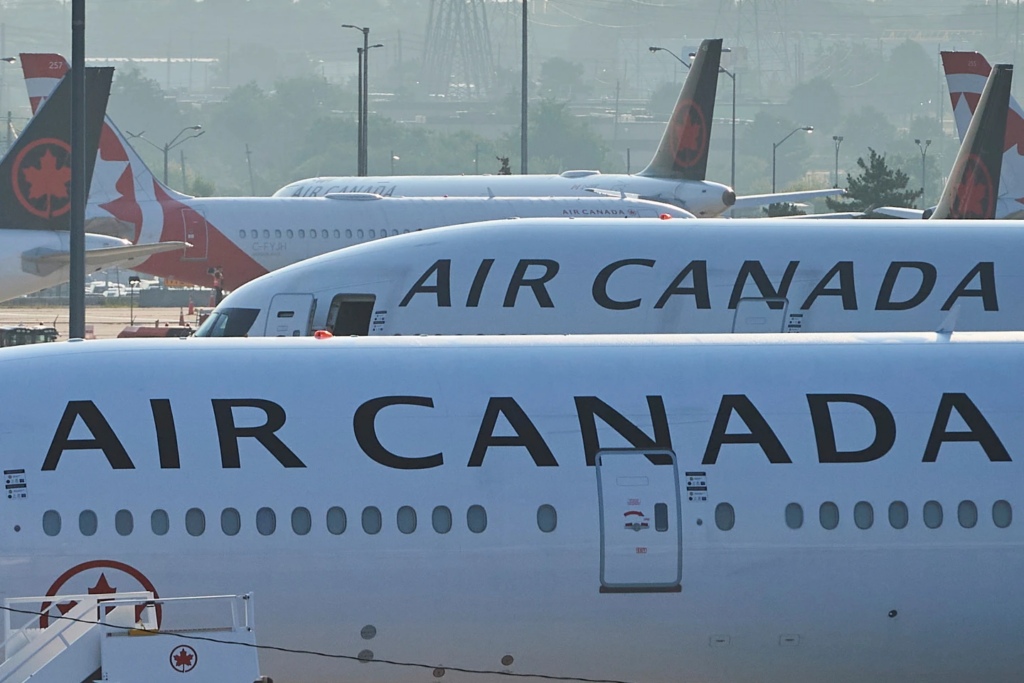
Aviones de Air Canada yacen en la pista del Aeropuerto Internacional Pearson, el 16 de agosto de 2025, en Toronto. (Foto: AP/Sammy Kogan/The Canadian Press/Archivo)
Normas sobre bancos de energía en aviones
Lo más importante que debe saber es que no puede llevar cargadores portátiles recargables con baterías de ion de litio en su equipaje registrado. Deben ir en su equipaje de mano.
Por lo general, los viajeros pueden llevar dos bancos de energía con una capacidad de 100 vatios-hora sin necesidad de requerir aprobación de la aerolínea. Eso es más que suficiente para cargar un celular varias veces.
Para las baterías de litio-metal no recargables, el límite es de dos gramos de litio por batería. Las pilas AA y AAA suelen contener menos de un gramo de litio.
Esos límites abarcan a casi todos los tipos de baterías de litio en los dispositivos electrónicos de una persona promedio, según la Administración Federal de Aviación (FAA, por sus siglas en inglés).
Las baterías de iones de litio más recientes deben tener una etiqueta con su capacidad en vatios-hora (Wh), dice la FAA. Pero si la capacidad energética de su batería externa se indica en miliamperios-hora (mAh), tendrá que hacer algunos cálculos o usar la calculadora en línea de la misma FAA.
Para calcular la capacidad en vatios-hora de su batería, tome el valor en mAh, divídalo entre 1.000 para obtener los amperios-hora y luego multiplíquelo por el voltaje del dispositivo, que suele ser de 3,7 voltios. Por ejemplo, una batería con una capacidad de 10.000 miliamperios-hora equivale a 10 amperios-hora. Al multiplicar eso por 3,7 voltios, se obtienen 37 vatios-hora.
Los pasajeros necesitarán la aprobación de la aerolínea para llevar baterías de iones de litio más grandes, con una capacidad de 100 a 160 vatios-hora, como las que se utilizan en los equipos profesionales de video o en los equipos médicos.
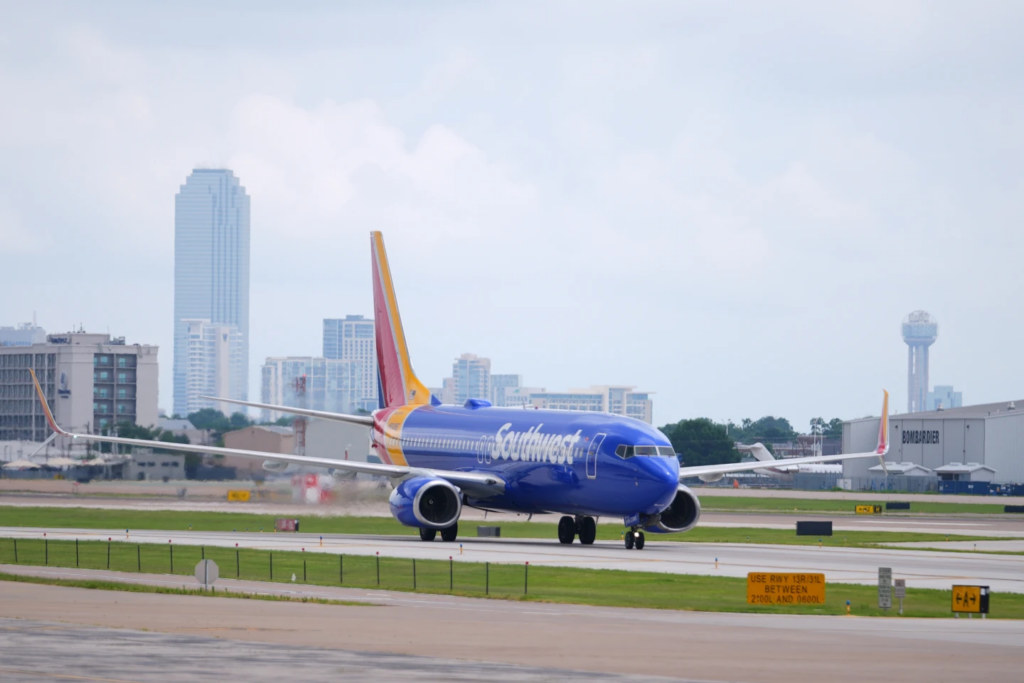
Un avión de Southwest Airlines aterriza en el aeropuerto Dallas Love Field el viernes 5 de junio de 2026, en Dallas. (Foto: AP/Julio Cortez)
Por qué no se pueden llevar bancos de energía en el equipaje registrado
Las aerolíneas han tomado en serio el riesgo de incendios causados por baterías de litio tras una serie de incidentes.
Uno de los peores ocurrió en enero de 2025, cuando se desató un incendio en un avión de Air Busan que aguardaba para despegar de un aeropuerto en Corea del Sur, lo que obligó a evacuar a las 176 personas a bordo.
La FAA ha registrado nueve incidentes aéreos con baterías de litio en lo que va de este año, seis de ellos relacionados con cargadores de dispositivos.
La preocupación ha sido suficiente para causar alteraciones en vuelos incluso cuando no había indicios de algún problema. El mes pasado, un vuelo de Easyjet de Egipto al Reino Unido se desvió a Roma como medida de precaución después de que un pasajero informara a la tripulación que llevaba un banco de energía en el equipaje registrado, y que estaba cargando un dispositivo.
Las baterías de litio en la bodega de carga de un avión representan un peligro porque, en caso de humo o incendio, la tripulación no puede actuar de inmediato para identificarlo y extinguirlo, según la Asociación Internacional de Transporte Aéreo (IATA, por sus siglas en inglés).
Mantenerlas en la cabina facilita que la tripulación detenga un posible incendio mediante el uso de bolsas ignífugas y guantes aislantes para contener un dispositivo sobrecalentado.
El riesgo de que una batería de iones de litio sufra un cortocircuito y cause un incendio es muy bajo, pero si ocurre, el peligro que genera es “terrible”, expresó Paul Christensen, profesor de electroquímica pura y aplicada en la Universidad de Newcastle, en el Reino Unido.
Las baterías de litio pueden almacenar “una enorme cantidad de energía en un espacio muy reducido”, explicó Christensen. El riesgo ocurre cuando una batería es aplastada, se sobrecarga o se sobrecalienta. Eso puede desencadenar lo que se conoce como “fuga térmica”, una reacción química que produce calor y gases tóxicos, agregó.
Christensen recomienda revisar su cargador externo en busca de cualquier signo de daño. Si se ve hinchado o se calienta mucho al cargarlo, esas podrían ser señales de que tiene un problema.
Además aconseja evitar baterías portátiles baratas de fabricantes desconocidos, las cuales podrían no tener los controles de calidad adecuados para prevenir defectos o contaminación. Las baterías de litio de mala calidad pueden “provocar una fuga térmica mucho tiempo después de haberlas comprado”, expuso.
Normas a bordo
Una vez en el avión, las aerolíneas tienen normas estrictas sobre el manejo de los cargadores portátiles de baterías en la cabina de pasajeros.
No puede colocarlos en el compartimento superior, sino que deberá guardarlos en un lugar de fácil acceso, como el bolsillo del respaldo del asiento o debajo del asiento frente al suyo.
Y no puede utilizarlo para cargar dispositivos durante el vuelo, ni recargarlo mediante las tomas de corriente del avión.
Si una batería —o un dispositivo que funciona con baterías— se desliza por la parte lateral de su asiento, no mueva el asiento para intentar recuperarlo.
“Los asientos pueden aplastar o dañar la batería, lo que podría provocar que se sobrecaliente o se incendie”, dice la IATA. Lo que debe hacer es llamar a un miembro de la tripulación de cabina, dado que ellos están capacitados para recuperar los dispositivos de manera segura.
Consulte con su aerolínea
La FAA dice que las aerolíneas y las normas internacionales pueden ser más restrictivas que las regulaciones estadounidenses, por lo que, ante cualquier duda, lo mejor es consultar con su aerolínea.
Southwest Airlines, por ejemplo, informó en abril que limitaría a los pasajeros a un cargador por persona.
Muchas líneas aéreas cuentan con una lista detallada de normas para distintos tipos de baterías, incluidos los dispositivos con batería de litio, como las computadoras portátiles, las tabletas y los cigarrillos electrónicos.
Un inmigrante, de 43 años, que se encontraba bajo custodia del Servicio de Control de Inmigración y Aduanas (ICE) murió en Luisiana, convirtiéndose en el decimonoveno extranjero en fallecer en un centro de detención migratoria en lo que va del 2026, informaron las autoridades este lunes.
Mamuka Artmeladze, originario de Georgia, fue encontrado inconsciente la noche del pasado 4 de junio en su celda en el Centro Correccional Winn en Luisiana.
Aunque se le dio asistencia de emergencia y fue trasladado a un hospital, el inmigrante fue declarado muerto dos horas después.
La causa oficial de su muerte está pendiente de los resultados de la autopsia.
El deceso de Artmeladze es el segundo en menos de dos meses en el centro correccional, que ha estado bajo investigación debido a denuncias por supuesta negligencia.
Artmeladze fue detenido por la Patrulla Fronteriza de EE.UU. el 25 de septiembre de 2022 y fue puesto en libertad condicional, instruyéndole a presentarse ante el ICE en un plazo de 60 días, orden que no cumplió.
El inmigrante fue detenido el 5 de febrero de 2026 durante un operativo dirigido a conductores de vehículos comerciales que representaban un riesgo para la seguridad pública cerca de Alabama.
El ICE lo puso bajo custodia tras determinar que carecía de estatus legal para permanecer en Estados Unidos, subrayó la agencia en un comunicado.
La muerte de Artmeladze se suma al fallecimiento de otros 18 inmigrantes que estaban bajo custodia de ICE este año.
En 2025, el primer año de Gobierno de Trump, 32 personas murieron bajo custodia de ICE, la cifra más alta en más de 20 años.
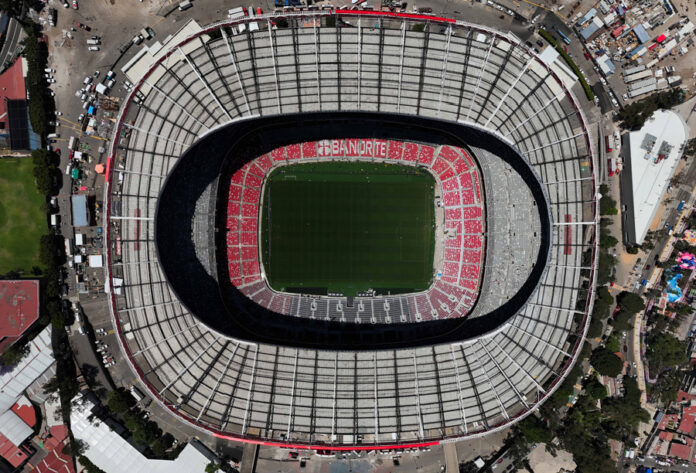
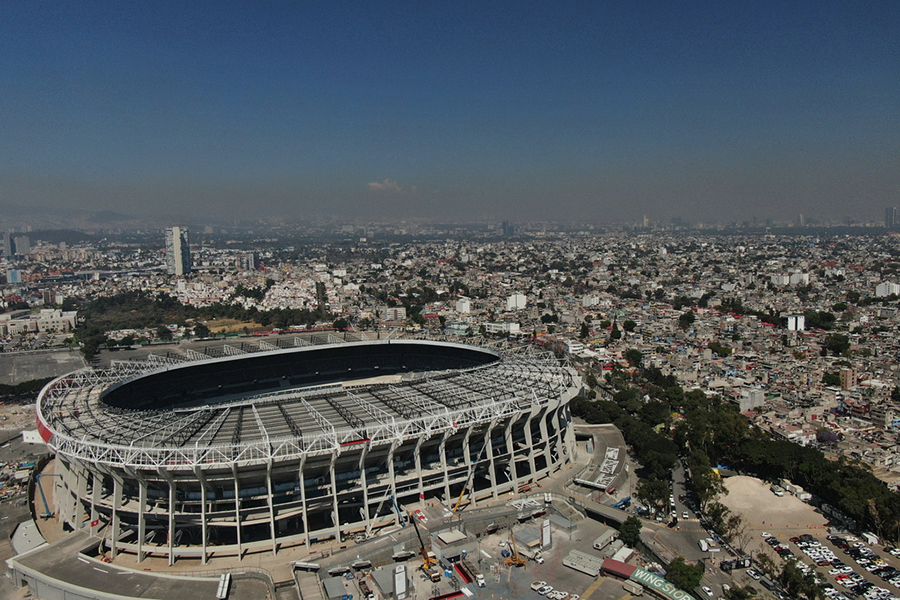
Fotografía de Mario Guzmán, en la que puede verse una fotografía aérea del Estadio Azteca (Banorte) este viernes, en Ciudad de México (México), el pasado 27 de marzo. (Foto: EFE)
México.- En la puesta en escena del fútbol, el Estadio Azteca estrenará el próximo jueves su tercer acto, como sede de la primera Copa del Mundo en la época de la Inteligencia artificial, abierta a 48 selecciones nacionales.
Pasado el mediodía de este 11 de junio, el Azteca, situado en el sur de la Ciudad de México, se convertirá en el primer escenario de tres Copas, después de haber sido la casa de la de 1970, ganada por el Brasil de Pelé; y la de 1986, conquistada por la Argentina de Diego Armando Maradona.
Que los dos futbolistas más grandes de los primeros 2000 años después de Cristo hayan vivido en el estadio mexicano el día más importante de sus carreras deportivas, debería ser suficiente para considerar al Azteca como una mezquita sagrada del fútbol. Pero hay más.
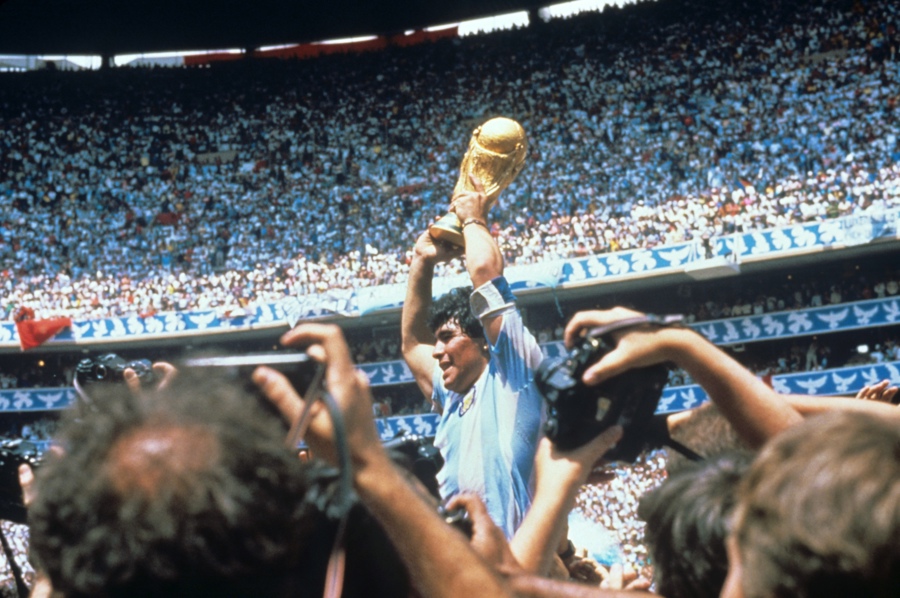
Fotografía de ra en la que puede verse en una imagen de archivo del 29 de junio de 1986 al argentino Diego Armando Maradona con el trofeo de la Copa del Mundo que su selección conquistó en México. (Foto: EFE)
Pelé y Maradona, campeones en el Azteca
Pelé fue el héroe de la victoria en el Mundial, al ganarle la final a Italia por 4-1. Humilde, pícaro, genio en la cancha, cautivó a la gente de Guadalajara, donde su país jugó casi todos los partidos del Mundial de 1970, y luego se trasladó al Azteca para allí ganar su tercera Copa del Mundo.
Maradona se hizo campeón el 29 de junio, cuando Argentina derrotó por 3-2 a Alemania, aunque fue una semana antes, en los cuartos de final, el día más recordado de Diego. Le metió un gol con la mano a los ingleses y luego responsabilizó a Dios, para, cinco minutos más tarde, hacer el gol más hermoso de los Mundiales. Dejó en el camino a cinco defensores y convirtió de zurda, la confirmación de su condición de artista con la pelota en los pies.
El Azteca, inaugurado en 1966, ha visto pasar por su césped a varios de los mejores jugadores de los últimos 60 años. Allí España estrenó su título mundial al empatar 1-1 en un amistoso con México; allí se mostró en 1967 el legendario portugués Eusebio con el Benfica contra la selección mexicana; allí México le ganó en 1999 la final de la Copa Confederaciones al Brasil de Ronaldinho.
Regresó ‘Dinho’ al Azteca un montón de años después para mostrar su clase con la camiseta del Querétaro de la liga local y confirmarse como otro de los grandes en jugar partidos oficiales en el recinto.
Fotografía de ma, en la que puede verse en una imagen de archivo del 21 de junio de 1970 al brasileño Pelé (d), durante el Mundial de México 1970. (Foto: EFE)
Remodelado, con un césped de primera generación, audio y luces modernas, el Azteca será la cancha en la que el ‘Tri’ se enfrentará el próximo jueves a Sudáfrica en la inauguración del Mundial. Pero el tercer acto de la obra de arte llamada fútbol no será una fiesta exclusiva de mexicanos. En el caso de los futbolistas, para sudafricanos, colombianos, uzbecos y checos, jugar en el coloso, será un plus en su experiencia mundialista.
Sudáfrica se enfrentará el 11 de junio en la inauguración al dueño de casa; Colombia a Uzbekistán, el 17; y México a la República Checa, el 24, en los tres encuentros de la fase de grupos en la capital mexicana.
Pelé, Eusebio, Maradona, Franz Beckenbauer, Ronaldinho, Iker Casillas, Iván Zamorano y Sergio Ramos son algunos de los grandes que han pisado la cancha del Azteca, que en estos días muestra aires de templo para recibir por tercera vez a los dioses del fútbol.
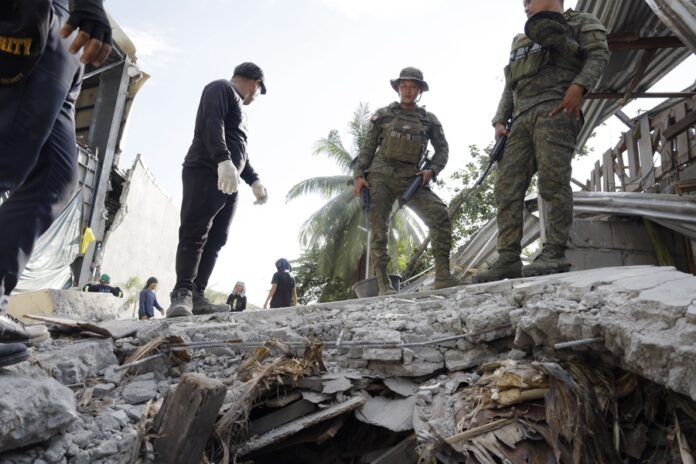
Soldados del ejército filipino inspeccionan los daños en el lugar donde se derrumbó un muro que separaba un almacén de varias viviendas, un día después del terremoto, en la ciudad de General Santos, al sur de Filipinas. (Foto: EFE/CERILO EBRANO)
Las autoridades de Filipinas confirmaron este martes el fallecimiento de 38 personas a causa del terremoto de magnitud 7,8 que azotó la víspera la isla sureña de Mindanao, mientras continúan las labores de búsqueda de desaparecidos y evaluación de daños, con 4 millones de niños sin acceso a la escuela.
Según datos del Consejo Nacional para la Reducción y Gestión del Riesgo de Desastres (NDRRMC), cuatro personas permanecen sin localizar y más de 470 resultaron heridas por el sismo, que afectó de forma directa a unos 145.000 ciudadanos o cerca de 33.000 familias.
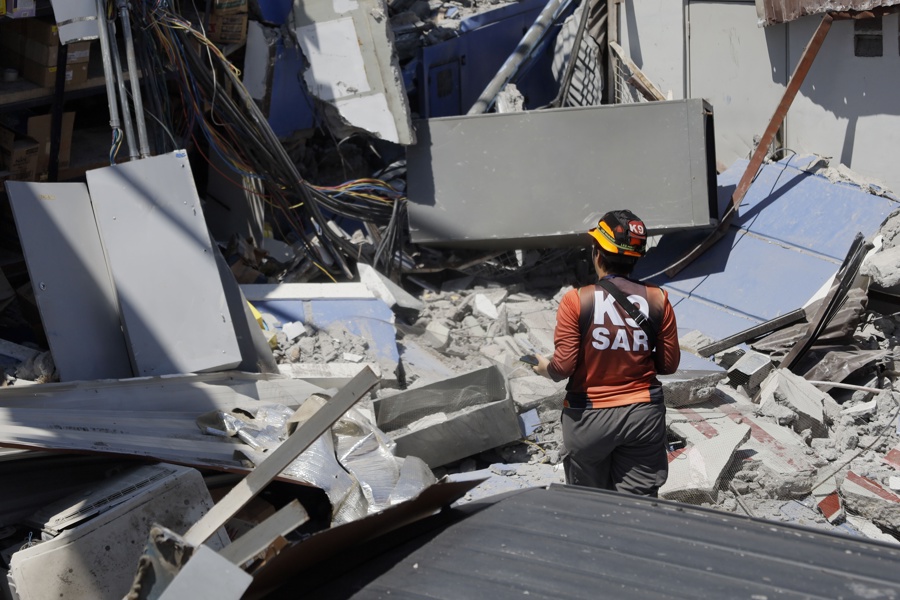
Las autoridades contabilizaron 40.674 desplazados y 2.505 viviendas dañadas, de las cuales 460 quedaron completamente destruidas en Mindanao, la segunda isla más grande del archipiélago, hogar de más de 20 millones de personas y donde numerosas zonas continúan sin suministro eléctrico ni acceso a agua potable.
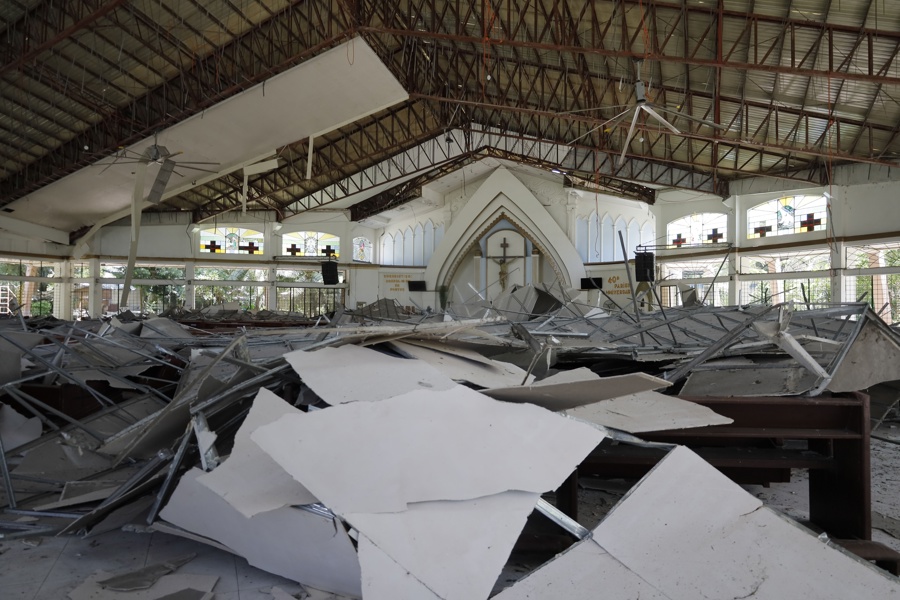
Edificios gubernamentales, viviendas, carreteras y puentes, entre otras infraestructuras, resultaron dañadas por el potente temblor, al que siguieron unas 1.055 réplicas en las siguientes 24 horas, con magnitudes de entre 1,3 hasta 6,7, de acuerdo con los datos oficiales.
El terremoto fue detectado a las 07.37 hora local del lunes (23.37 GMT del domingo) a unos 24 kilómetros al suroeste de la isla de Burias -sur de Mindanao- y a una profundidad de alrededor de 55 kilómetros, según el Servicio Geológico de Estados Unidos (USGS, en inglés), que mide la actividad sísmica de todo el mundo.
(Foto: EFE/CERILO EBRANO)
Cuatro millones de niños sin escuela
El terremoto sacudió Mindanao el mismo día en el que millones de niños regresaban al colegio para iniciar el curso escolar, dejando aulas reducidas a escombros y sin la certeza sobre cuándo podrán regresar unos cuatro millones, conforme a los datos oficiales.
El fuerte temblor causó daños parciales o totales en un millar de escuelas en las zonas afectadas, muchas de ellas en pleno funcionamiento en el momento en el que tuvo lugar el terremoto.
Un menor en edad escolar figura entre los fallecidos, señalan los datos oficiales, a la vez que decenas de niños han tenido que recibir asistencia médica y otros tantos forman parte del total de 31.701 personas que duermen ahora en refugios temporales, apunta NDRRMC.
El desastre, advierten autoridades y organizaciones humanitarias, ha golpeado de manera especial a los más pequeños, a quienes la agencia de Naciones Unidas para la Infancia (Unicef) ha pedido poner en el centro de la respuesta.
«En los próximos días y semanas, los niños y las familias tendrán muchas necesidades, pero las más urgentes incluyen agua potable, refugio seguro y apoyo psicosocial, ya que muchos niños seguirán traumatizados», subrayó a EFE el gerente de Asuntos Humanitarios de Save The Children Filipinas, Faisah Ali.
«El desplazamiento y la interrupción de la educación incrementan el riesgo de violencia, explotación y otros daños a largo plazo», expresó en un comunicado la directora ejecutiva de la ONG, Pebbles Sanchez-Ogang.
(Foto: EFE//CERILO EBRANO)
La ciudad General Santos, en «estado de calamidad»
La ciudad filipina General Santos, la más afectada por el terremoto, se encuentra en «estado de calamidad», declaró este martes a EFE la oenegé local Kidlikasan.
«En General Santos, al menos 12 personas murieron a causa del derrumbe de edificios y la caída de escombros», indicó la organización, apuntando que la cifra de víctimas no es definitiva porque «muchas comunidades» han quedado «aisladas» por el desplome de carreteras y puentes, lo que dificulta las labores de evaluación y recuento de víctimas.
La ciudad, con unos 530.000 habitantes, fue una de las más dañadas por el sismo, que dejó varios edificios reducidos a escombros y obligó a habilitar refugios temporales para las familias perjudicadas.
Además de General Santos, «las zonas más afectadas incluyen los municipios de Maasim, Malapatan y Glan», donde un gran deslizamiento de tierra sepultó viviendas, causando varias de las muertes reportadas en la provincia, detalló la organización.
El archipiélago filipino se asienta sobre el llamado Anillo de Fuego del Pacífico, una zona de gran actividad sísmica y volcánica en la que cada año se registran unos 7.000 terremotos, la mayoría moderados.
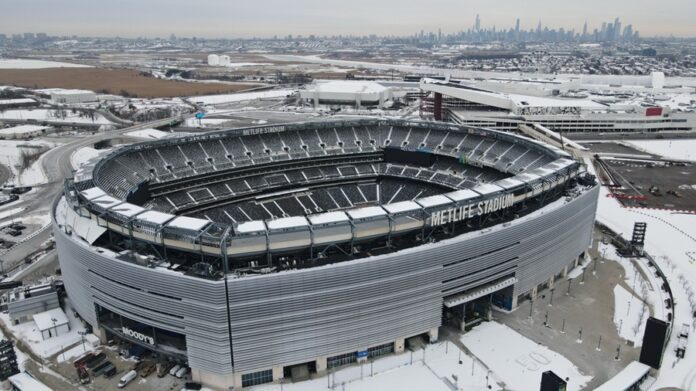
La vista de Manhattan detrás del MetLife Stadium, sede de partidos del Mundial, en East Rutherford, Nueva Jersey, el 3 de enero de 2026. (AP Foto/Seth Wenig)
Los partidos del Mundial 2026 se escenificarán en 16 estadios de Estados Unidos, Canadá y México. La FIFA modificó el nombre de muchos de los estadios durante el torneo porque las empresas que pagaron los derechos de denominación no son patrocinadores de la FIFA.
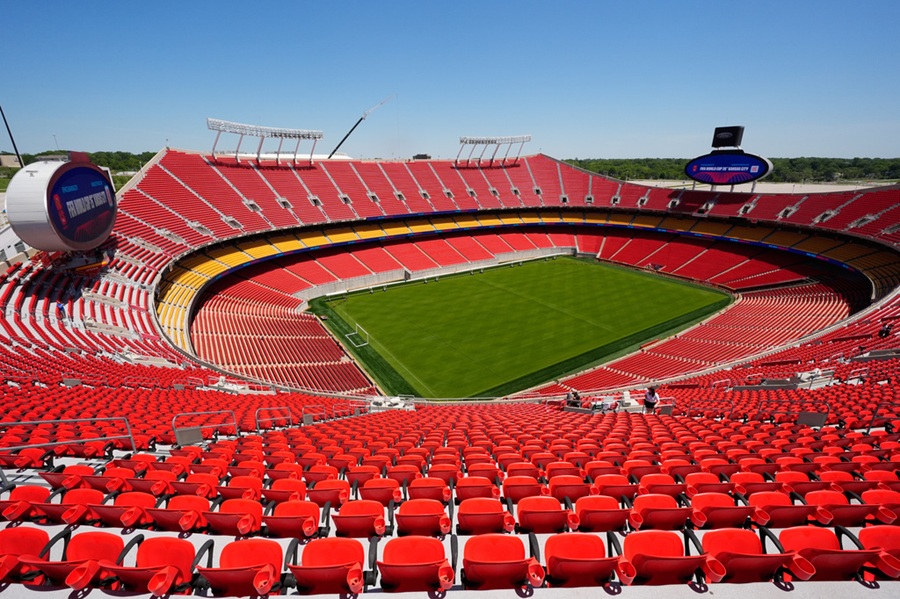
Arrowhead Stadium (llamado Kansas City Stadium por la FIFA)
Capacidad: 73.000 (la FIFA dice que las cifras publicadas están sujetas a cambios)
Ubicación: Kansas City, Missouri
Partidos: Argentina vs. Argelia (16 de junio), Ecuador vs. Curazao (20 de junio), Túnez vs. Holanda (25 de junio), Argelia vs. Austria (27 de junio), octavos de final (3 de julio), cuartos de final (11 de julio)
Qué saber: Inaugurado en 1972, el estadio se llama formalmente GEHA Field at Arrowhead Stadium desde 2021. Es sede de los Chiefs de la NFL desde 1972, está a 8,5 millas del centro de Kansas City, Missouri, y no tiene acceso ferroviario. El comité anfitrión de Kansas City anunció que habrán autobuses que costarán 15 dólares ida y vuelta los días de partido. El recinto está junto al Kauffman Stadium, sede de los Reales de Kansas City de las Grandes Ligas. Arrowhead iba a albergar el Super Bowl de 2015, pero el partido se trasladó a Glendale, Arizona tras fracasar la aprobación de una propuesta de impuesto sobre las ventas que habría financiado un techo retráctil para ambos recintos. Según Guinness World Records, el estadio estableció una marca de la multitud más ruidosa en un evento deportivo al aire libre con 142,2 decibelios en un partido de los Chiefs contra los Patriots de Nueva Inglaterra el 29 de septiembre de 2014. El estadio también fue sede del equipo de Kansas City de la MLS de 1996 a 2007. Los Chiefs tienen previsto mudarse en 2031 a un estadio cubierto planificado que se construirá en Kansas City, Kansas, cerca del Kansas Speedway.
Una vista general del Estadio Arrowhead mientras es renombrado como Estadio de Kansas City, el lunes 11 de mayo de 2026, de cara a los partidos de fútbol de la Copa Mundial de la FIFA 2026 en Kansas City, Misuri. (Foto AP/Charlie Riedel)
AT&T Stadium (Dallas Stadium)
Capacidad: 94.000
Ubicación: Arlington, Texas
Partidos: H vs. Japón (14 de junio), Inglaterra vs. Croacia (17 de junio), Argentina vs. Austria (22 de junio), Japón vs. Suecia (25 de junio), Jordania vs. Argelia (27 de junio), dieciseisavos de final (30 de junio y 3 de julio), octavos de final (6 de julio), semifinal (14 de julio).
Qué saber: El estadio con techo retráctil, inaugurado en 2009, es la sede de los Cowboys de Dallas de la NFL y se conoce como Jerry’s World por el propietario de los Cowboys, Jerry Jones. Fue sede del Super Bowl de 2011, del campeonato de fútbol americano de la NCAA de 2015 y del Final Four de baloncesto de la NCAA de 2014, que volverá a albergar en 2030. El récord de asistencia fue de 105.121 personas para un partido de los Cowboys ante los Giants de Nueva York el 20 de septiembre del 2009, y 108.713 estuvieron en el Juego de Estrellas de la NBA de 2010. Cuatro pantallas de video cuelgan a 90 pies sobre el campo, incluidas dos de 40 por 22 metros orientadas hacia las bandas y dos de 15,8 por 9 metros orientadas hacia las líneas de fondo. El estadio está a unos 32 kilómetros de Dallas y junto al Globe Life Field, sede de los Rangers de Texas de la MLB, y al Choctaw Stadium, el antiguo estadio de los Rangers que se reconfiguró para fútbol americano cuando el equipo se mudó a su nuevo recinto en 2020. Se instaló césped sobre el pasto sintético. La estación de tren más cercana, Centreport Station del Trinity Railway Express, está a 12,8 kilómetros del AT&T y ofrecerá autobuses gratuitos al estadio los días de partido. El Cotton Bowl, a unos 30,5 kilómetros al este en Dallas, fue sede en 1994.
Gillette Stadium (Boston Stadium)
Capacidad: 65.000
Ubicación: Foxborough, Massachusetts
Partidos: Haití vs. Escocia (13 de junio), Irak vs. Noruega (16 de junio), Escocia vs. Marruecos (19 de junio), Inglaterra vs. Ghana (23 de junio), Noruega vs. Francia (26 de junio), dieciseisavos de final (29 de junio), cuartos de final (9 de julio)
Qué saber: Ubicado a 46,6 kilómetros al suroeste de Boston y a 40 kilómetros al noreste de Providence, Rhode Island, el estadio se inauguró en 2002 y es sede de los Patriots de Nueva Inglaterra de la NFL y del New England Revolution de la MLS. Sustituyó al adyacente Foxboro Stadium, sede del Mundial de 1994. Se instaló césped sobre el pasto sintético. El servicio de tren al estadio de la Massachusetts Bay Transportation Authority se limita a los días de eventos y costará 80 dólares de ida y vuelta los días de partidos del Mundial, frente a 20 dólares para partidos de la NFL y la MLS. El servicio de autobús desde Boston costará 95 dólares de ida y vuelta los días de partido del Mundial.
Hard Rock Stadium (Miami Stadium)
Capacidad: 65.000
Ubicación: Miami Gardens, Florida
Partidos: Arabia Saudí vs. Uruguay (15 de junio), Uruguay vs. Cabo Verde (21 de junio), Brasil vs. Escocia (24 de junio), Colombia vs. Portugal (27 de junio), dieciseisavos de final (3 de julio), cuartos de final (11 de julio), partido por el tercer puesto (18 de julio)
Qué saber: Inaugurado en 1987, el estadio es la sede de los Dolphins de Miami de la NFL. También albergó a los Marlins de Miami de la MLB cuando comenzaron a jugar en 1993 hasta 2011, antes de mudarse a un nuevo estadio cerca del centro de Miami, y desde 2019 es sede del Abierto de Miami de tenis. Hard Rock está a unos 25 kilómetros al norte del centro de Miami y a 40 kilómetros al sur de Fort Lauderdale y no cuenta con servicio ferroviario cercano. La FIFA ha organizado autobuses desde la estación Aventura del tren Brightline. Una remodelación que comenzó en 2015 añadió un techo al estilo de los estadios de fútbol que protege a los aficionados de la lluvia. Hard Rock ha sido sede del Super Bowl seis veces, superado solo por las ocho del Superdome de Nueva Orleans, y del campeonato de fútbol americano de la NCAA dos veces, con un tercer partido programado para 2030. El estadio albergó la final de la Copa América 2024, que comenzó con 82 minutos de retraso por incidentes con la multitud fuera del recinto.
Levi’s Stadium (San Francisco Bay Area Stadium)
Capacidad: 71.000
Ubicación: Santa Clara, California
Partidos: Catar vs. Suiza (13 de junio), Austria vs. Jordania (16 de junio), Turquía vs. Paraguay (19 de junio), Jordania vs. Argelia (22 de junio), Paraguay vs. Australia (25 de junio), dieciseisavos de final (1 de julio),
Qué saber: El estadio, inaugurado en 2014, es la sede de los 49ers de San Francisco 49ers y albergó el Super Bowl en 2016 y 2026, además del campeonato de fútbol americano universitario de la NCAA en 2019. Está en Silicon Valley, hogar de muchas empresas tecnológicas, a unos 69 kilómetros al sur de San Francisco, y cuenta con servicio regular de Caltrain. Levi’s es la única sede de Estados Unidos a la que no se le asignó un partido más allá de los dieciseisavos de final. El Stanford Stadium, a unos 21 kilómetros al noroeste, fue sede del Mundial de 1994.
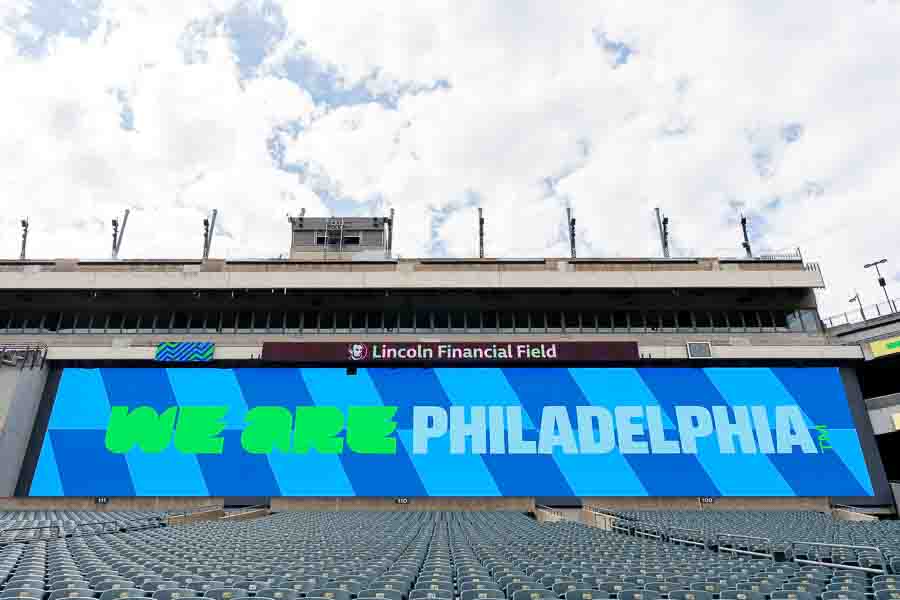
Un gran mensaje “We Are Philadelphia” aparece en el marcador del estadio durante la transición del Lincoln Financial Field hacia la Copa Mundial de la FIFA 2026 en Filadelfia el 13 de mayo de 2026. (Foto: Taíno Studios)
Lincoln Financial Field (Philadelphia Stadium)
Capacidad: 69.000
Ubicación: Filadelfia
Partidos: Costa de Marfil vs. Ecuador (14 de junio), Brasil vs. Haití (19 de junio), Francia vs. Irak (22 de junio), Curazao vs. Costa de Marfil (25 de junio), Croacia vs. Ghana (27 de junio), octavos de final (4 de julio)
Qué saber: Conocido como el Linc e inaugurado en 2003, el estadio es la sede de los Philadelphia Eagles de la NFL. Forma parte del South Philadelphia Sports Complex, a un corto trayecto en el metro de SEPTA desde el centro, y está junto al Citizens Bank Park, sede de los Phillies de la MLB; el Xfinity Mobile Arena, sede de los 76ers de la NBA y los Flyers de la NHL; y Stateside Live!, un complejo de restaurantes y entretenimiento. SEPTA cobra 2,90 dólares por el servicio al estadio y ofrece servicio gratuito al salir después de los partidos del Mundial. El Linc sustituyó al Veterans Stadium, el recinto multiusos que fue sede de los Phillies y los Eagles. El partido de octavos de final tendrá una ceremonia previa que conmemorará el 250.º aniversario de la Declaración de Independencia.
Lumen Field (Seattle Stadium)
Capacidad: 69.000
Ubicación: Seattle
Partidos: Bélgica vs. Egipto (15 de junio), Estados Unidos vs. Australia (19 de junio), Bosnia-Herzegovina vs. Catar (24 de junio), Egipto vs. Irán (26 de junio), dieciseisavos de final (1 de julio), octavos de final (6 de julio)
Qué saber: Lumen Field, a un corto paseo o a un trayecto en el tren ligero Sound Transit Link desde el centro, se inauguró en 2002. Es la sede de los Seahawks de la NFL y los Sounders de la MLS. Está junto al T-Mobile Park, sede de los Marineros de la MLB. Los equipos de la NFL y la MLB compartían el Kingdome. Se instaló césped sobre el pasto sintético.
Mercedes-Benz Stadium (Atlanta Stadium)
Capacidad: 75.000
Ubicación: Atlanta
Partidos: España vs. Cabo Verde (15 de junio), República Checa vs. Sudáfrica (18 de junio), España vs. Arabia Saudí (21 de junio), Marruecos vs. Haití (24 de junio). Congo vs. Uzbekistán (27 de junio), dieciseisavos de final (1 de julio), octavos de final (7 de julio), semifinal (15 de julio).
Qué saber: Inaugurado en 2017, el recinto del centro con techo retráctil y es la sede de los Falcons de la NFL y del Atlanta United de la MLS. Fue sede del Super Bowl en 2019 y está programado para volver a serlo en 2028. El estadio también fue sede del partido por el campeonato de fútbol americano universitario de la NCAA en 2018 y 2025, y está programado para albergar el Final Four de baloncesto de la NCAA en 2031. Por el costo, la FIFA no insistió en que el logotipo de Mercedes-Benz en la parte superior del techo del estadio se cubriera o retirara. Mercedes-Benz está cerca de dos estaciones del metro MARTA.
MetLife Stadium (New York New Jersey Stadium)
Capacidad: 82.500
Ubicación: East Rutherford, New Jersey
Partidos: Brasil vs. Marruecos (13 de junio), Francia vs. Senegal (16 de junio), Noruega vs. Senegal junio (22 de junio), Ecuador vs. Alemania (25 de junio), Panamá vs. Inglaterra (27 de junio), dieciseisavos de final (30 de junio), octavos de final (5 de julio), final (19 de julio).
Qué saber: MetLife Stadium, justo al otro lado del río Hudson desde Manhattan en los pantanos de Nueva Jersey, será la sede de la final del Mundial el 19 de julio. Es sede de los Giants y Jets de Nueva York que se inauguró en 2010 y sustituyó al vecino Giants Stadium, sede del Mundial de 1994. Con sus asientos grises, se le ha considerado uno de los recintos nuevos más feos de la NFL. Está rodeado de estacionamientos y junto al hipódromo Meadowlands Racetrack y el centro comercial American Dream Mall. El transporte es limitado, con poco acceso peatonal y un tren que funciona solo en torno a los eventos. New York Jersey Transit cobrará 98 dólares ida y vuelta los días de partidos del Mundial, menos que los 150 anunciados originalmente, pero más que los 12,90 de los días de otros eventos en MetLife. El precio del autobús desde Manhattan, anunciado inicialmente en 80 dólares, se redujo a 20. El estadio albergó la final de la Copa América Centenario 2016. Para ajustarse a las dimensiones especificadas del campo, se retiraron 1.740 asientos en las esquinas. Se reinstalarán antes de la temporada de la NFL.
NRG Stadium (Houston Stadium)
Capacidad: 72.000
Ubicación: Houston
Partidos: Alemania vs. Curazao (14 de junio), Portugal vs. Congo (17 de junio), Holanda vs. Suecia (20 de junio), Portugal vs. Uzbekistán (23 de junio), Cabo Verde vs. Arabia Saudí (26 de junio), dieciseisavos de final (29 de junio), octavos de final (4 de julio)
Qué saber: Inaugurado en 2002, el NRG tiene techo retráctil y es la sede de los Texans de la NFL, que se mudaron desde el Astrodome. Se instaló césped sobre el pasto sintético. El estadio está a unos 9,5 kilómetros del centro y cuenta con servicio del METRORail. El estadio albergó el Super Bowl en 2004 y 2017, el partido por el campeonato de fútbol americano de la NCAA en 2024 y el Final Four de baloncesto de la NCAA en 2011, 2016 y 2023.
SoFi Stadium (Los Angeles Stadium)
Capacidad: 70.000
Ubicación: Inglewood, California
Partidos: Estados Unidos vs. Paraguay (12 de junio), Irán vs. Nueva Zelanda (15 de junio), Suiza vs. Bosnia-Herzegovina (18 de junio), Bélgica vs. Irán (21 de junio), Turquía vs. Estados Unidos (25 de junio), dieciseisavos de final (28 de junio), dieciseisavos de final (2 de julio), cuartos de final (10 de julio)
Qué saber: Inaugurado en 2020, SoFi se construyó en el sitio del Hollywood Race Course en un suburbio de Los Ángeles cerca del Aeropuerto Internacional de Los Ángeles y es la sede de Los Rams y Chargers de la NFL. UNITE HERE Local 11, que representa a los trabajadores de concesiones de alimentos y bebidas del estadio, ha amenazado con ir a huelga. Aunque hay techo, los laterales están abiertos al aire. Se instaló césped sobre el pasto sintético. El estadio albergó el Super Bowl de 2022 y el campeonato de fútbol americano de la NCAA de 2023. No hay tren adyacente, pero LA Metro ofrece servicio de autobús los días de partido desde la estación LAX/Metro Transit Center Station. La FIFA cobra 250 dólares por partido por estacionar en un garaje del estadio, ubicado a 0,62 millas del recinto, y sube a 300 para algunos partidos. El Rose Bowl, a unos 32 kilómetros en Pasadena, fue sede de las finales del Mundial de 1994 y del Mundial femenino de 1999.
Estadio Akron (Estadio Guadalajara)
Capacidad: 48.000
Ubicación: Guadalajara, México
Partidos: Corea del Sur vs. República Checa (11 de junio), México vs. Corea del Sur (17 de junio), Colombia vs. Congo (23 de junio), Uruguay vs. España (26 de junio)
Qué saber: Inaugurado en 2010, el estadio es la sede de Chivas de México, que lo estrenó con un amistoso contra Manchester United. El recinto albergó las ceremonias de apertura y clausura de los Juegos Panamericanos de 2011.
Estadio Azteca (Estadio Ciudad de México)
Capacidad: 83.000
Ubicación: Ciudad de México
Partidos: México vs. Sudáfrica (11 de junio), Colombia vs. Uzbekistán (17 de junio), México vs. República Checa (24 de junio), dieciseisavos de final (30 de junio), octavos de final (6 de julio)
Qué saber: Sede del partido inaugural del torneo de este año, el Azteca se inauguró en 1966 y albergó finales del Mundial en 1970 y 1986. La asistencia a la final fue de 107.412 en 1970 y 114.600 en 1986, pero la capacidad se redujo durante una serie de remodelaciones. Se conoce formalmente como Estadio Banorte. Hay servicio de tren ligero que conecta con el metro. La altitud es de 2.200 metros, lo que supone un desafío para los equipos que viajan desde zonas cercanas al nivel del mar. Los clubes América y Cruz Azul de la Liga MX son los equipos locales actuales del estadio, y entre los equipos que lo fueron en el pasado están Atlante, Atlético Español y Necaxa.
ARCHIVO – Vista del Estadio Azteca de la Ciudad de México, sede del partido inaugural del Mundial, el 3 de marzo de 2026. (AP Foto/Fernando Llano)
Estadio BBVA (Estadio Monterrey)
Capacidad: 53.500
Ubicación: Monterrey, México
Partidos: Túnez vs. Suecia (14 de junio), Túnez vs. Japón (20 de junio), Corea del Sur vs. Sudáfrica (24 de junio), dieciseisavos de final (29 de junio)
Qué saber: Inaugurado en 2015, el estadio es la sede de Monterrey de la Liga MX. Está en una de las zonas más cálidas que albergarán partidos del Mundial este año, con temperaturas que superan los 32 grados Celsius. El estadio, con un exterior futurista que recuerda a branquias, ofrece vistas a la sierra del Cerro de la Silla.
BMO Field (Toronto Stadium)
Capacidad: 45.000
Ubicación: Toronto
Partidos: Canadá vs. Bosnia-Herzegovina (12 de junio), Ghana vs. Panamá (17 de junio), Alemania vs. Costa de Marfil (20 de junio), Panamá vs. Croacia (23 de junio), Senegal vs. Irak (26 de junio), dieciseisavos de final (2 de julio)
Qué saber: Construido en el sitio del Exhibition Stadium, antigua sede de los Azulejos de Toronto de la MLB y los Toronto Argonauts de la CFL, el BMO se inauguró en 2007 y es la sede del equipo de la MLS de Toronto y de los Argonauts. Su capacidad de 28.180 se amplió para el Mundial con gradas temporales. Se puede llegar al estadio en tranvía y en tren.
B.C. Place (B.C. Place Vancouver)
Capacidad: 54.000
Ubicación: Vancouver, Columbia Británica
Partidos: Australia vs. Turquía (13 de junio), Canadá vs. Catar (18 de junio), Nueva Zelanda vs. Egipto (21 de junio), Canadá vs. Suiza (24 de junio), Bélgica vs. Nueva Zelanda (26 de junio), dieciseisavos de final (2 de julio), octavos de final (7 de julio)
Qué saber: Inaugurado en 1983, B.C. es la sede de los Whitecaps de la MLS, que amenazan con mudarse, y de los BC Lions de la CFL. Una remodelación del techo que comenzó en 2010 lo cambió de fijo a retráctil. El estadio está en el centro y cuenta con servicio de Skytrain. Se instaló césped sobre el pasto sintético. Sede de la final del Mundial femenino de 2015, B.C. también albergó las ceremonias de apertura y clausura de los Juegos Olímpicos de Invierno de 2010.
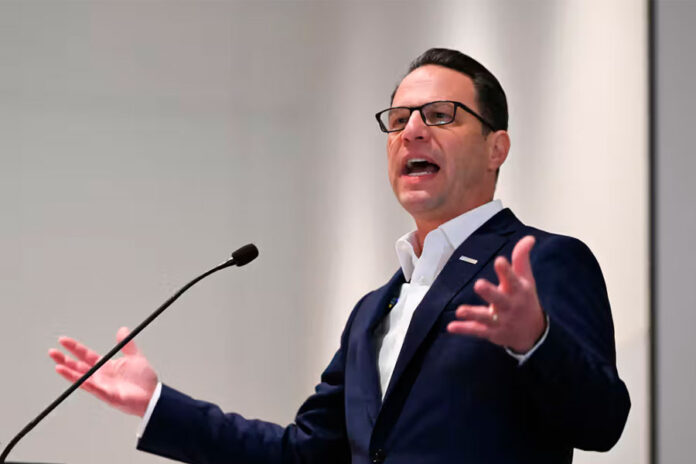
Pennsylvania Gov. Josh Shapiro speaks to the crowd at a Centre County Democratic Party event at the Penn Stater hotel, April 11, 2026, in State College, Pa. (Photo: AP/Marc Levy/File)
$103 million in SUN Bucks food assistance is going to children who are automatically eligible in first round distribution, with more money to be distributed on rolling basis throughout the summer.
Approximately 1.3 million PA children in total will qualify for SUN Bucks in Summer 2026.
Harrisburg, PA – Today, theShapiro Administration began distributing $103 million in summer food assistance benefits for eligible children as part of the SUN Bucks program, a federally funded summer benefit that helps families have fresh food and groceries while schools are closed. As part of this first round of funding, families of approximately 860,000 children who are automatically eligible for SUN Bucks can expect to receive benefits starting this week.
SUN Bucks is a federal program that provides eligible children’s families with a SNAP-like benefit to purchase food for the summer months when school is not in session. Most eligible children will receive the benefit automatically and do not need to apply, including children who already receive free and reduced-price school meals through the National School Lunch Program (NSLP) during the school year.
“The Shapiro Administration is committed to helping parents have the resources they need to keep their children fed so they can grow and thrive. The SUN Bucks program provides eligible households with critical dollars to help bridge the gap during the summer break and ensure that children have enough to eat,” said PA Department of Human Services (PA DHS) Secretary Val Arkoosh. “Be on the lookout for benefits and if your family did not get SUN Bucks last year, use our Eligibility Navigator to see if your family is automatically eligible or if you need to apply for SUN Bucks for this summer’s benefit.”
Benefits are issued to families in one issuance for the entire summer. Most Summer 2026 issuances will occur in June and July for children who are automatically eligible; those issuances begin today. Additional issuances above the initial $103 million in benefits will occur on a rolling basis from July through September depending on when PA DHS receives individual applications and information on eligible families from school districts.
“Summer should be a season of opportunity for children: a time for reading programs at the library, camps, family experiences, summer jobs, and continued learning in every form. But kids can’t fully engage in those opportunities when they’re hungry,” said Secretary of Education Dr. Carrie Rowe. “SUN Bucks makes it possible for families to stretch their grocery budgets when school meals aren’t available and for children to absorb every learning opportunity this summer offers.”
A Commitment to Ensuring Pennsylvania’s Students Are Fed
The Shapiro Administration has made it a top priority to ensure Pennsylvania students start the day with a full stomach, ready to learn. That’s why Governor Shapiro’s 2026-27 budget proposal includes funding for universal free school breakfast for a fourth consecutive year, helping to ensure Pennsylvania’s 1.7 million students continue to receive free breakfast at school, regardless of income.
During the summer months, these same students and families may be strained by higher food bills when school is closed. SUN Bucks provides a one-time payment of $40 per summer month ($120 total) per eligible child. An estimated 1.3 million children in Pennsylvania will qualify for this program across all distributions for Summer 2026.
SUN Bucks Eligibility
Most children who will receive SUN Bucks are automatically eligible and do not need to apply. If families already have an EBT card, SUN Bucks benefits will be automatically added to this card, if possible. Families who do not have an EBT card will receive a Summer EBT card in the mail. If families lost or got rid of an EBT card from a previous summer and need a replacement, they can get one by calling the Customer Service Center at 1-877-395-8930 or 1-215-560-7226 in Philadelphia.
There are several ways for a child to be automatically eligible for SUN Bucks without needing to apply, including:
Qualifying for SNAP or Temporary Assistance for Needy Families (TANF);
Qualifying for Medicaid with qualifying income for NSLP; or,
Being eligible for free or reduced-priced school meals.
Families can determine if their child is automatically eligible or whether they need to apply by using the SUN Bucks Eligibility Navigator. If households are not automatically eligible and believe their child is eligible, families are encouraged to complete an application. Applications can be submitted online, by mail or completed at a local County Assistance Office.
Applications can be submitted anytime throughout the year, but the deadline to apply for Summer 2026 is August 31. Applications received after this date will be considered for SUN Bucks 2027 next summer.
Capitolio del Estado de Pensilvania. (Foto: Archivo)
HARRISBURG. – El representante estatal José Giral anunció hoy que su proyecto de ley, que obligaría a que los seguros cubran los análisis de plomo en sangre para mujeres embarazadas y niños de 12 y 24 meses de edad, fue aprobado por la Cámara de Representantes de Pensilvania con apoyo bipartidista.
Esto supone un cambio con respecto a la ley vigente, que se limita a recomendar la realización de pruebas de plomo en estos grupos, a menos que se les considere de alto riesgo. La ley actual no exige que los planes de seguro médico ayuden a cubrir los costos.
«El envenenamiento por plomo es un riesgo significativo para la salud de los niños y las mujeres embarazadas», dijo Giral. «No estamos haciendo un buen servicio a estos grupos vulnerables si solo recomendamos una línea de acción. Este proyecto de ley exigiría a los profesionales de la salud realizar pruebas de plomo en sangre al menos una vez durante el embarazo de una mujer y dos veces antes de que el niño cumpla dos años, a menos que haya una negativa expresa por escrito de la mujer o de los padres del niño».
Según Giral, el plomo puede causar retrasos en el desarrollo, convulsiones y daños en el sistema nervioso en los niños. Durante el embarazo, la exposición al plomo aumenta el riesgo de aborto espontáneo y puede exponer al feto al plomo, lo que puede provocar partos prematuros, órganos subdesarrollados, bajo peso al nacer y problemas futuros de aprendizaje y desarrollo.
Las pruebas tempranas de los niveles de plomo en la sangre ayudan a identificar a los niños que ya han estado expuestos al plomo y a aquellos que podrían estar viviendo en entornos donde hay plomo. Una vez que se sabe que hay exposición al plomo, las familias pueden tomar medidas para reducirla, antes de que provoque problemas de salud graves. Muchas personas no muestran signos ni síntomas visibles de exposición al plomo antes de llegar al punto de intoxicación por plomo.
«Quiero que la gente entienda que la única forma de conocer los niveles de plomo en sangre con la suficiente antelación como para evitar problemas graves es hacerse un análisis de plomo en sangre. Se trata de análisis de sangre sencillos y no invasivos que deberían estar al alcance de todos», afirmó Giral. «Al exigir a los médicos que realicen el análisis y a las compañías de seguros médicos que cubran los costos como lo harían con cualquier otro análisis de sangre, estamos facilitando a las familias el control de su salud y reduciendo los costos».
El proyecto de ley pasa ahora al Senado para su consideración.
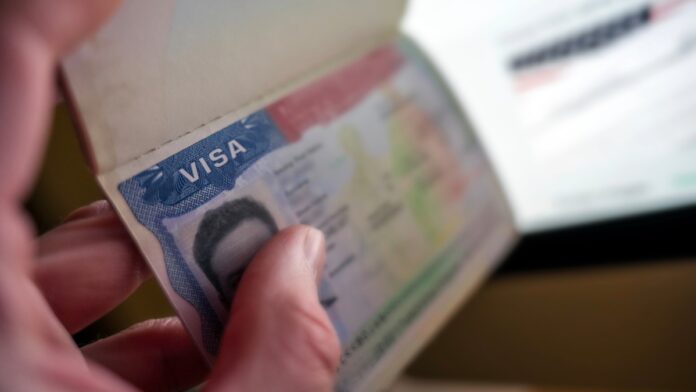
El Departamento de Estado de Estados Unidos ofrecerá un servicio “premium” para extranjeros que soliciten visas de negocios o turismo, lo que les costará a los solicitantes 750 dólares, además de la tarifa inicial de 185 dólares.
En un aviso que se publicará en el Registro Federal esta semana, el departamento presentará un programa piloto que permitirá a los solicitantes de visa pagar los 750 dólares para programar una cita de entrevista dentro de los 10 días posteriores al pago en determinadas embajadas y consulados de Estados Unidos.
El programa piloto se desarrollará del 1 de julio al 31 de diciembre, según documentos internos obtenidos por The Associated Press y un funcionario del Departamento de Estado, quien habló bajo condición de anonimato porque el programa aún no ha sido anunciado.
La medida podría ser un intento por mejorar las condiciones causadas por las políticas del gobierno de Trump que dificultan la entrada en Estados Unidos. El gobierno estadounidense ha endurecido la mayoría de las formas de inmigración para extranjeros, al exigir que en algunos países —principalmente africanos— se paguen fianzas de hasta 15.000 dólares para la tramitación de visas y al requerir que se revisen años de historial personal, incluidas cuentas de redes sociales.
Los nuevos requisitos han provocado demoras en la tramitación de visas en todo el mundo, lo que ha generado quejas.
Los tiempos de espera para entrevistas de visa para ciudadanos de países que no forman parte del Programa de Exención de Visa pueden ser de varios meses. Pero pagar la tarifa por el “servicio adicional premium opcional” no garantiza que se emita una visa.
Las embajadas y consulados en los que estará disponible el servicio acelerado se anunciarán antes de que el programa entre en vigor. El programa piloto se extenderá hasta fin de año, pero podría prolongarse dependiendo de la demanda.
Carlos Manuel Gil Reyes, barbero de origen dominicano que desapareció en la madrugada del sábado en las aguas del río Delaware. (Foto: Captura video)
Un conocido barbero dominicano, Carlos Manuel Gil Reyes, de 29 años, y quien atendía en un negocio ubicado sobre la Rising Sun Avenue falleció ahogado el fin de semana en las aguas del río Delaware.
Según las autoridades, Carlos junto a unas 20 personas habían ido a celebrar con varios amigos el viernes 5 de junio por la tarde paseando en varios botes. Después decidieron dar un paseo en bote, y dos de ellos decidieron tirarse al agua a nadar; pero solo un regresó, el otro, Carlos Manuel, desapareció en las aguas del río.
Los amigos dieron la alarma y poco después de la media noche el cuerpo de bomberos y la guardia costera se movilizaron para empezar la búsqueda del hombre reportado como desaparecido; pero después de muchas horas, la búsqueda no tuvo resultados, haciendo que poco a poco se apagara la esperanza de sus amigos de encontrarlo con vida.
Uno de sus amigos, Junior Rondón, recordó a Carlos como “un hombre tranquilo, alegre, trabajador y conversador, que cada mañana acudía puntual a la barbería para ganarse el sustento con su trabajo. Nos ha causado mucho dolor y mucha tristeza esta noticia”.
Aunque las esperanzas de encontrarlo con vida se fueron desvaneciendo, sus amigos, familiares y conocidos suplicaron a las autoridades que no se detuviera la búsqueda, de modo que los organismos de socorro siguieron escaneando el río, especialmente en las cercanías del muelle de barcos de Torresdale.
Finalmente, la tarde del lunes 8 de junio sus restos fueron encontrados por los cuerpos de búsqueda que habían continuado el trabajo de escanear las orillas y la superficie del río.
La Policía de Palmyra Township, Burlington County, confirmó el hallazgo por escrito diciendo que «el hombre que encontramos es fiel a la descripción provista del desaparecido tras el incidente en Hawks Island. Fue identificado como Carlos Gil Reyes, de 31 años, y residente de Nueva York”. El comunicado también afirma que la investigación seguirá activa para determinar las causas de la muerte de la víctima.