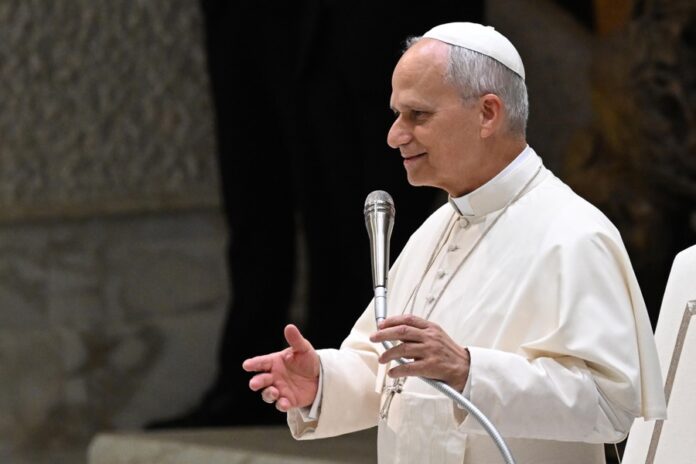
Washington.- El papa León XIV instó este viernes a los participantes de la Conferencia Nacional de Jóvenes Católicos de EE. UU. a no politizar la Iglesia y a seguir las enseñanzas de Jesús para ser «personas que construyen puentes en lugar de muros», palabras pronunciadas en un momento marcado por las divisivas políticas del Gobierno de Donald Trump.
«Jesús también llama a sus discípulos a ser pacificadores, personas que construyen puentes en lugar de muros, personas que valoran el diálogo y la unidad en lugar de la división. Por favor, eviten usar categorías políticas para hablar de la fe. Hablen de la Iglesia. La Iglesia no pertenece a ningún partido político; más bien, ayuda a formar la conciencia», aseguró el papa por videoconferencia.
León XIV, que ha hablado en defensa de la dignidad y el trato humano hacia los inmigrantes y criticado el trato «extremadamente irrespetuoso» que han recibido en EE. UU., respondió así a una pregunta sobre sus anhelos para con el futuro de la Iglesia y el rol que los jóvenes pueden jugar.
El pontífice aseguró que los jóvenes son parte esencial del presente y futuro de la iglesia católica y que lo primero en lo que hay que pensar en este sentido es «en profundizar la amistad con Jesús», en línea con la experiencia de sus primeros discípulos.
«Esto significa conversión personal, dejar que Dios transforme nuestros corazones», añadió León XIV.
Durante el evento de hoy, celebrado en Indianapolis, el sumo pontífice también dialogó con cinco jóvenes sobre temas como la salud mental, la construcción de relaciones personales o el equilibrio entre fe y las nuevas tecnologías, incluida la inteligencia artificial (IA).
«Nada puede reemplazar la verdadera presencia humana, y aunque la tecnología sin duda nos conecta, no es lo mismo que estar físicamente presentes. Debemos usarla con prudencia para que no eclipse nuestras relaciones», explicó Robert Prevost, que habló de San Carlo Acutis, canonizado por él mismo en septiembre, como ejemplo del buen uso de la tecnología «para ayudar a las personas a crecer en su fe».
El papa también instó a los jóvenes a usar la IA -la cual consideró incapaz de sustituir a la inteligencia humana- de manera «responsable», para que fomente el crecimiento personal y no distraiga de la educación o de la «vocación a la santidad».
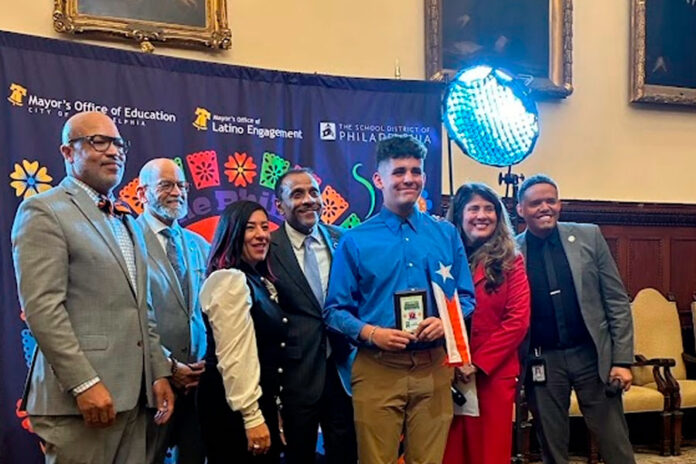
Israel Santiago, a 9th grader at EACS, is presented with his third-place award by school and city officials. (Foto: Credit/Joana Díaz)
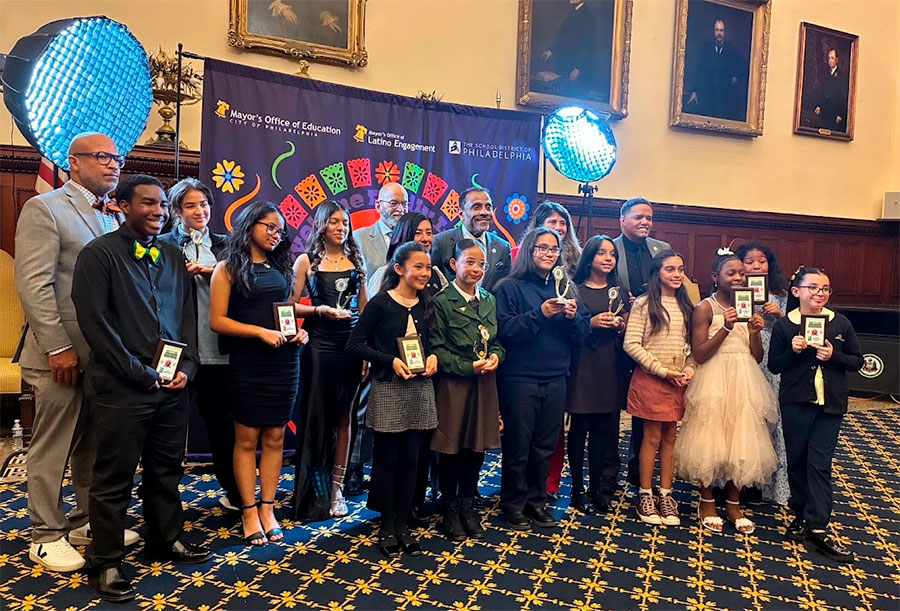
On Thursday, November 6, the evening was crisp, but the air in the Mayor’s Reception Room in City Hall crackled with energy and pride. It was more than an event; it was a powerful affirmation of voice at the inaugural ¡Oye! One Philly Latino Oratorical Showcase. Portraits of every mayor of Philadelphia adorned the walls, while the enormous room was filled with the powerful voices of these young people. The twenty-one finalists weren’t just reciting words; they were embodying the legacy of resistance, poetry, and aspiration by Latino greats like Julia de Burgos and new voices like local poet Denise Frohm.
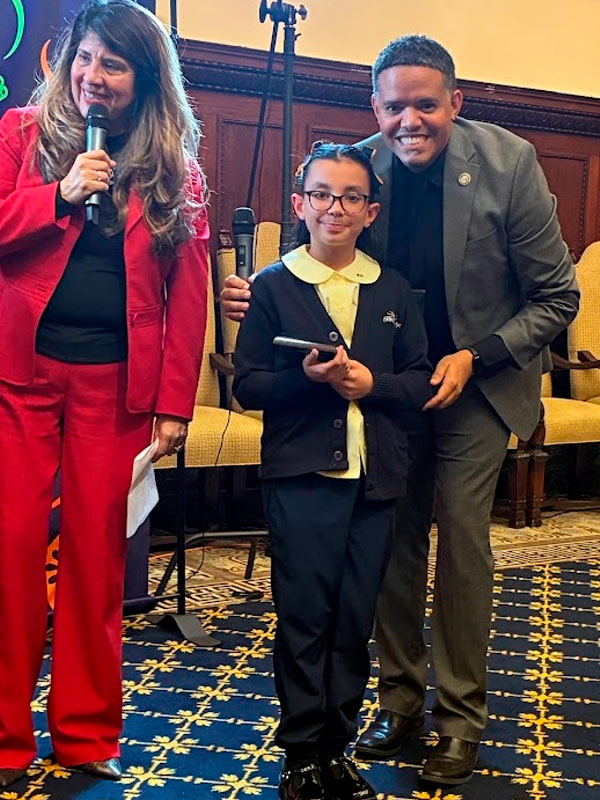
There were four Esperanza Academy Charter School students among the finalists. 4th grader Helianna Amarante recited wisdom from astronaut Dr. Ellen Ochoa and won third place in the elementary category. 7th grader Evangelyne Ortiz recited an impassioned piece by Cesar Chavez about immigrant labor. 9th grader Israel Santiago channeled the fire of Pedro Albizu Campos, speaking about Puerto Rican independence, and took home third place in the High School category. 11th grader Eskarlet Santos gave a rhythmic spoken word excerpt from The Poet X by Elizabeth Acevedo about acceptance and Latinidad. Each held the audience captive during their one-to-two-minute passages.
Helianna Amarante, a 4th grader at EACS, receives her third-place award from William Garcia, Director of the Mayor’s Office of Latino Engagement. (Photo: Credit/Joana Díaz)
This powerful showcase was a joint venture from the Mayor’s Office of Latino Engagement and the Mayor‘s Office of Education. Among the honored guests was Dr. Evelyn Nuñez, CEO/Superintendent of Esperanza Academy Charter School. Judges included Esperanza Academy administrators and members of the Office of Latino Engagement Advisory Board, including Celina Vélez and the undersigned author.
Participants and awardees from across the city celebrate their accomplishments alongside school and city leaders. (Photo: Credit/Joana Díaz)
It was a fitting end to Latino Heritage Month in a year when Hispanic identity has been under fire and young people have few places to express themselves. The success of the event promises to begin a new Philadelphia tradition.
There was not a dry eye in the house as these students stood in front of family, teachers, officials, and the judges, making their voices heard. The emotion was a collective acknowledgement that these voices matter, that these stories are essential, and that the future of Philadelphia is enriched and emboldened by the passion and courage of its young Latino orators. ¡Oye! Listen! These young people have something to say.
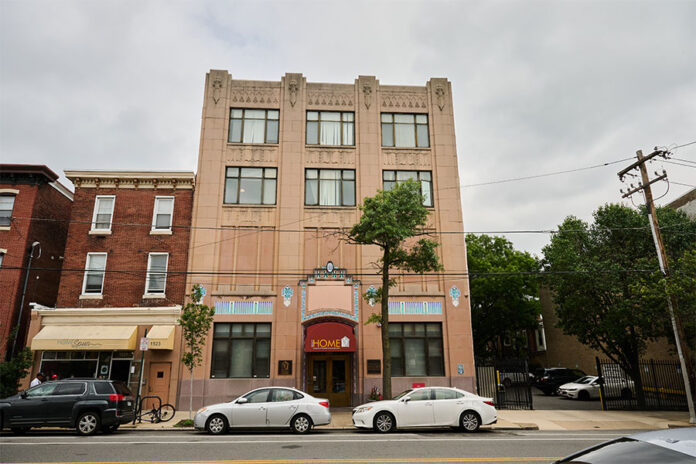
Chrisopher J. Seward Residence is the epicenter of the Project HOME family. It's formerly known as 1515. (Photo: Courtesy)
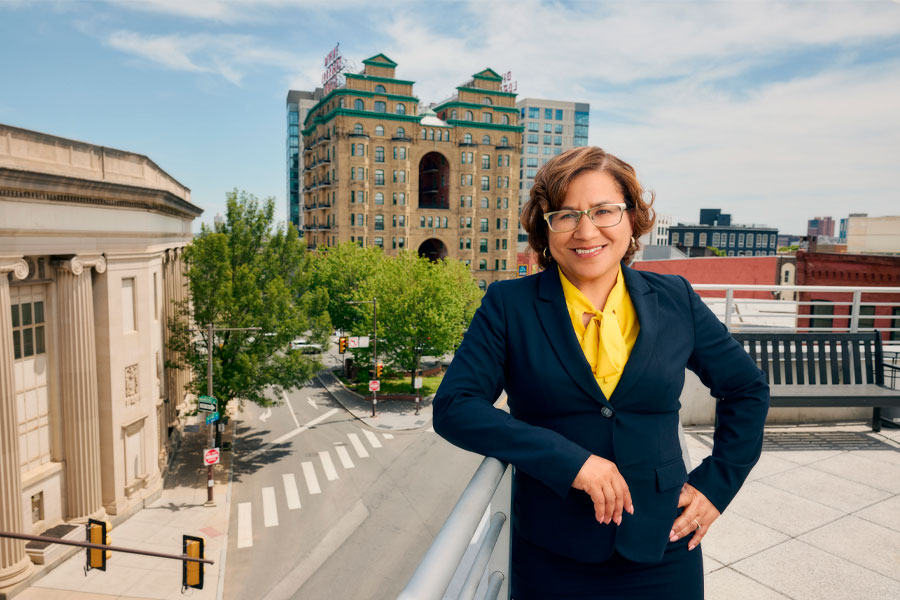
In a city where thousands of people face homelessness every day, Project HOME has become, over the past 35 years, one of the most influential and committed organizations working to prevent and end homelessness. In a conversation with Donna Bullock, the organization’s president and CEO, she explained Project HOME’s mission, the services they offer, and the real stories that continue to inspire hope throughout the city.
Bullock describes Project HOME as a comprehensive support network designed to accompany people according to their needs. The organization provides permanent and transitional supportive housing, medical care, educational and employment opportunities, as well as training programs and extracurricular activities for youth. It is a holistic response aimed at addressing both the immediate crisis of homelessness and its root causes.
Donna Bullock, president and CEO of Project Home. (Photo: Courtesy)
“Our vision is ‘None of us are home until all of us are home,’” Bullock explained. “What affects one of us affects all of us. A home is not just a physical space; it is also a place of peace, support, and community.
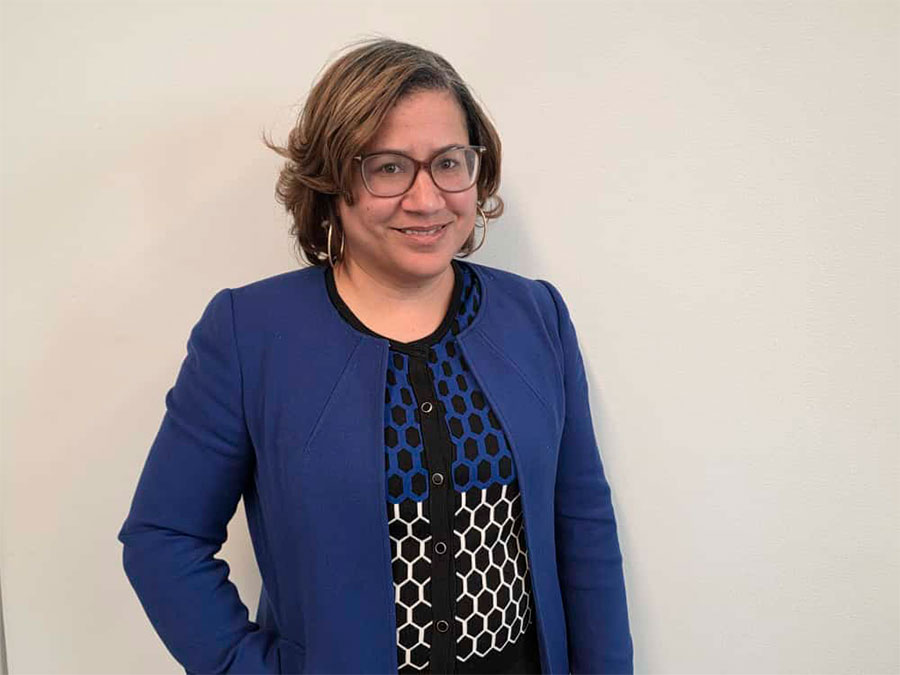
Donna Bullock, president and CEO of Project Home. (Photo: Impacto staff)
Who they serve
Project HOME supports people experiencing homelessness in different situations—from those living chronically on the streets to individuals facing mental or behavioral health challenges, job loss, or the death of a loved one. The organization also helps young people aging out of the foster care system and those without stable housing. “Homelessness takes many forms, but the root of the problem for most people is the lack of accessible housing,” Bullock said. “That’s why we offer different options within our continuum of care, to meet each individual’s reality.”
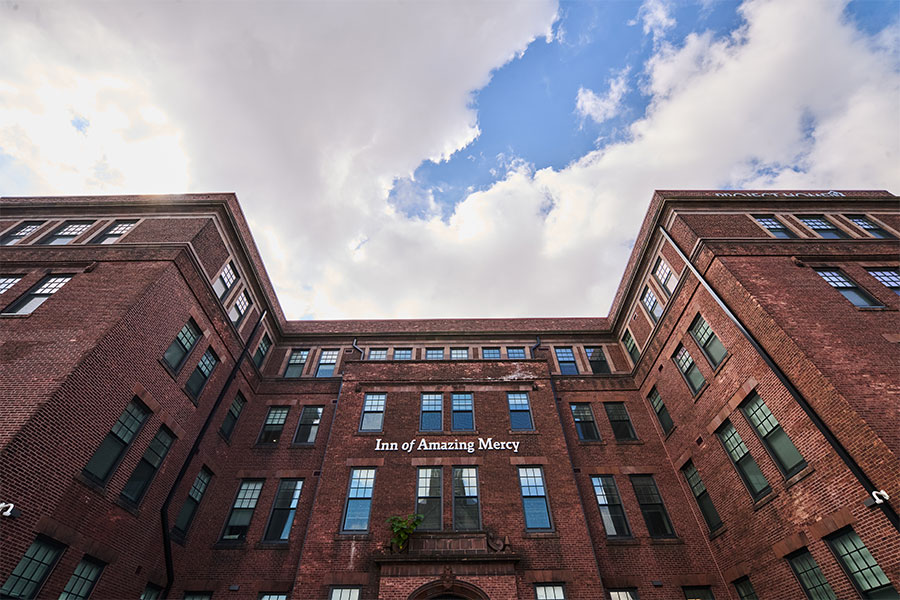
Inn of Amazing Mercy is a recovery residence for 62 individuals experiencing homelessness who want to begin their recovery journey directly from the street or after being discharged from in-patient recovery program. (Photo: Courtesy)
A story of transformation
Bullock shared the story of Nef, a resident who once lived on the streets of Kensington and rebuilt his life through Project HOME. After receiving transitional housing and accessing educational programs, he now has his own apartment at the Inn of Amazing Mercy, is an artist, and attends classes at the Community College of Philadelphia. His story reflects how access to dignified housing and opportunities can transform life.
Project HOME’s healthcare workers specialize in serving those who may have more difficulties accessing care. (Photo: Courtesy)
How the community can support
From volunteering to donations and simple acts of kindness, there are many ways for the community to get involved. “On our website, projecthome.org, people can find different ways to help. Some volunteer to serve meals, organize activities, or collect essential items like winter coats, hygiene products, or books,” Bullock said.
Project HOME also runs initiatives that provide employment for residents, including its online store and clothing donation programs.
The volunteers of the Project HOME community are integral to bringing us closer to ending and preventing chronic street homelessness and alleviating poverty in Philadelphia. (Photo: Courtesy)
Food insecurity: A growing challenge
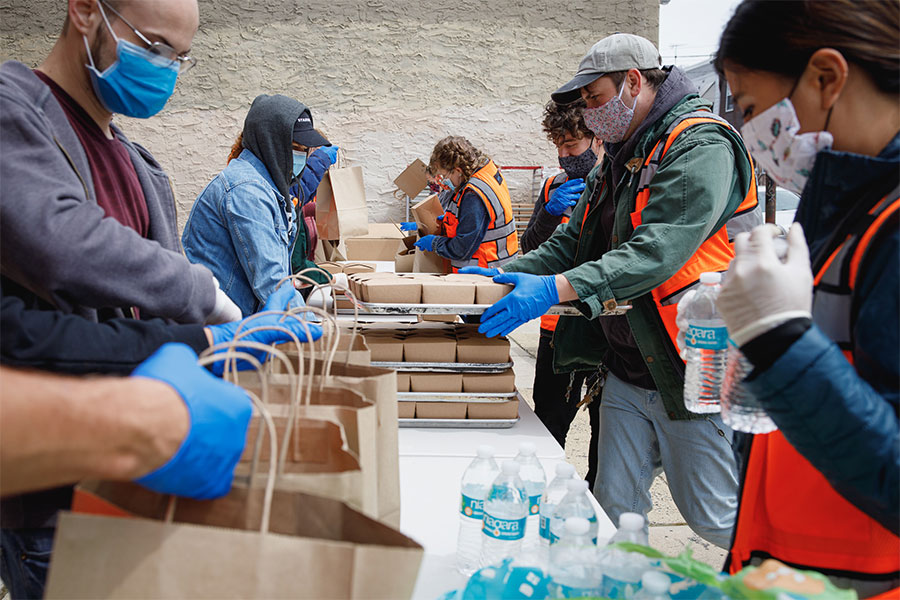
When asked about today’s food crisis, particularly during the holiday season—Bullock explained that food insecurity affects thousands of families in Philadelphia, including Project HOME residents. “Each of our residences has a food pantry so residents can access food when needed. We also operate a community pantry that serves more than 200 families weekly,” she said.
She added that cuts to federal benefits like SNAP could worsen the situation. “Food insecurity has long been a problem across neighborhoods, and it may worsen depending on federal policy changes.”
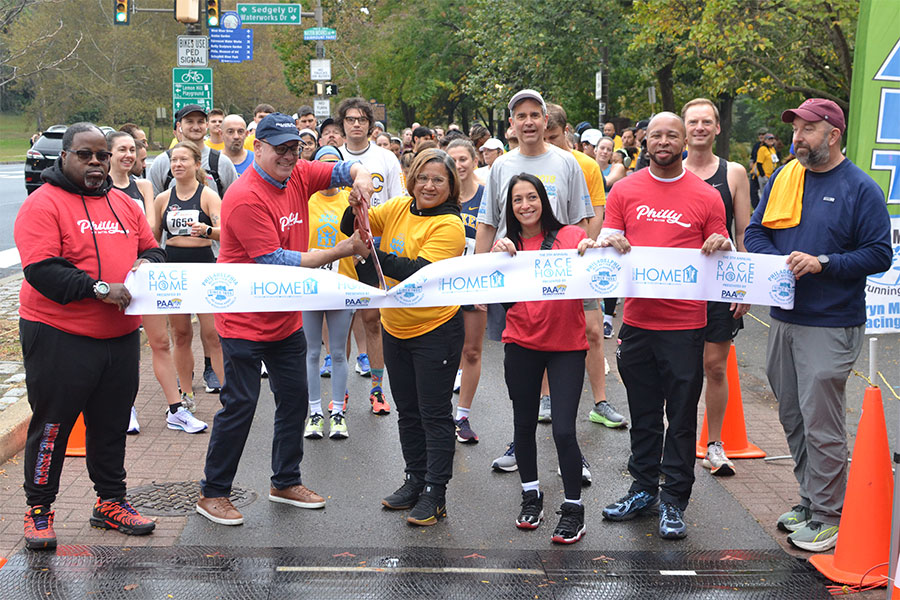
The 2025 Annual Race HOME took place on October 11, 2025 on Boathouse Row. (Photo Courtesy)
Ongoing challenges in the fight against homelessness
Although passionate about her work, Bullock acknowledges daily challenges, from internal matters to federal cuts that reduce funding and essential benefits. She worries about how these changes could affect residents’ ability to pay rent, access medical care, or simply have enough to eat.
The offices have a cozy room to make you feel at home. (Photo: Impacto staff)
Philly Gives and its importance
Community funds like Philly Gives are essential to keeping programs running and expanding. “Philly Gives is a driving force for projects like ours,” Bullock said, “because it enables organizations like Project HOME to keep building housing, providing services, and responding to emergencies day and night. Initiatives like Philly Gives make it possible to transform lives.”
Project HOME works to break the cycle of homelessness through affordable housing, health services, education, employment, and community outreach. With more than 1,000 units of supportive housing and 24 sites across the city, it offers a nationally recognized integrated model. Its mission is to empower individuals and families under the belief that “none of us are home until all of us are home.” They also help through the hotline 215-232-1984 for people living on the streets.
Project HOME has been selected to participate in this year’s Philly Gives campaign, which will run from November 1 through December 31, 2025. All donations made through phillygives.org will go directly to the 10 selected nonprofit organizations, ensuring that 100% of the funds raised support essential programs.
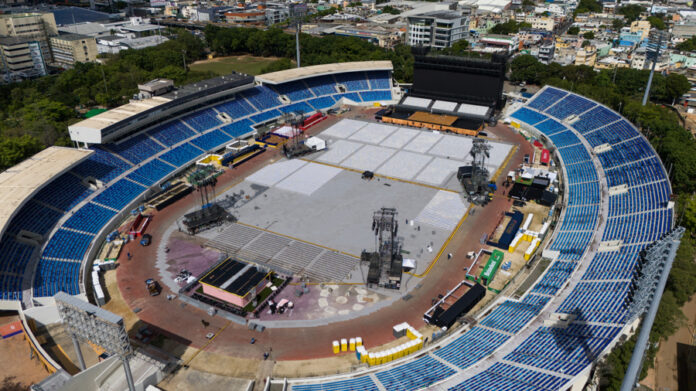
Fotografía aérea del Estadio Olímpico Félix Sánchez previo al concierto del cantante puertorriqueño Bad Bunny, este jueves, en Santo Domingo (República Dominicana). (Foto: EFE/ Red Laboratorio Visual)
Santo Domingo.– La capital dominicana se prepara para vivir este viernes uno de los conciertos más esperados del año, el de Bad Bunny, que marcará el inicio de su gira mundial ‘DeBÍ TiRAR MáS FOToS World Tour’, cuyo montaje está prácticamente listo, en medio de la efervescencia colectiva por el show de la estrella puertorriqueña.
«Hasta el momento hemos avanzado con el calendario. Nos quedan algunas situaciones que resolver» aunque «nada fuera de los normal», dijo a EFE Jonathan Pimentel, responsable de área de montaje del concierto, al que seguirá una segunda función mañana, mientras operarios seguían trabajando para dejar todo listo antes de la apertura de puertas en el Estado Olímpico de Santo Domingo.
Los asistentes empezarán a entrar el estadio alrededor de las 17:00 hora local (21:00 GMT), tres horas antes de la hora establecida para el inicio del espectáculo.
«Entendemos que para la hora de apertura de puertas estaremos listos», añadió Pimentel, quien indicó que en la producción trabajan entre 700 y 800 personas, tantos locales como extranjeros.
Desde la producción local se ha descrito esta gira como «una experiencia inmersiva que celebra las raíces puertorriqueñas» del Bad Bunny, escogido por la revista Billboard como el máximo artista latino del siglo XXI.
En tanto, en las afueras del Centro Olímpico Juan Pablo Duarte, donde se ubica el estadio, se sigue revendiendo boletos, agotados a pocas horas en junio pasado cuando se pusieron a disposición del público de manera digital, con precios de entre 53 y 373 dólares.
A pocas horas del evento, las entradas más económicas pueden costar 153 dólares, dijo a EFE Antonio, un vendedor independiente, quien señaló que «la jornada va muy buena», y describió a Bad Bunny como «un fenómeno».
«Está buena la cosa… supera a Michael Jackson», apuntó emocionado Antonio en sus declaraciones, en las que insistió en que las ventas «están increíbles».
Con su esperada gira ‘DeBÍ TiRAR MáS FOToS World Tour’, homónima de su último álbum, el artista puertorriqueño, de 31 años, recorrerá Costa Rica, México, Colombia, Perú, Chile, Argentina, Brasil, Australia, Japón, España, Portugal, Alemania, Países Bajos, Reino Unido, Francia, Suecia, Polonia e Italia, antes de concluir en Bélgica el 22 de julio de 2026.
Benito Antonio Martínez Ocasio, nombre real del cantante, estrenó el 5 de enero su sexto disco, compuesto por 17 canciones, en el que incluye homenajes a su Puerto Rico natal y críticas a los problemas que enfrenta la isla.
Además, en enero el artista hizo historia al vender todas las entradas en tiempo récord de la serie de 30 conciertos bajo el título ‘No me quiero ir de aquí’, que ofreció en el Coliseo de Puerto Rico este verano.
En 2024 fue el artista latino más escuchado del mundo en Spotify. Sus últimos álbumes, ‘Un Verano Sin Ti’ y ‘Nadie Sabe Lo Que Va a Pasar Mañana’, batieron récords de reproducciones.
SEAMAAC: The growing homes garden community farm. (Photo: Courtesy)
SEAMAAC (Southeast Asian Mutual Assistance Associations Coalition) was born in 1984 with the purpose of supporting Southeast Asian refugees. Today, more than four decades later, its mission has expanded enormously: “Our mission is basically to help people, families, and communities that are economically, socially, and politically vulnerable, and truly help them thrive in Philadelphia, in Pennsylvania, and in the United States,” explains Thoai Nguyen, SEAMAAC’s CEO.
Funding comes from city, state, and federal contracts, private foundations, and individual donors, those who help fill the gaps left by the public system.
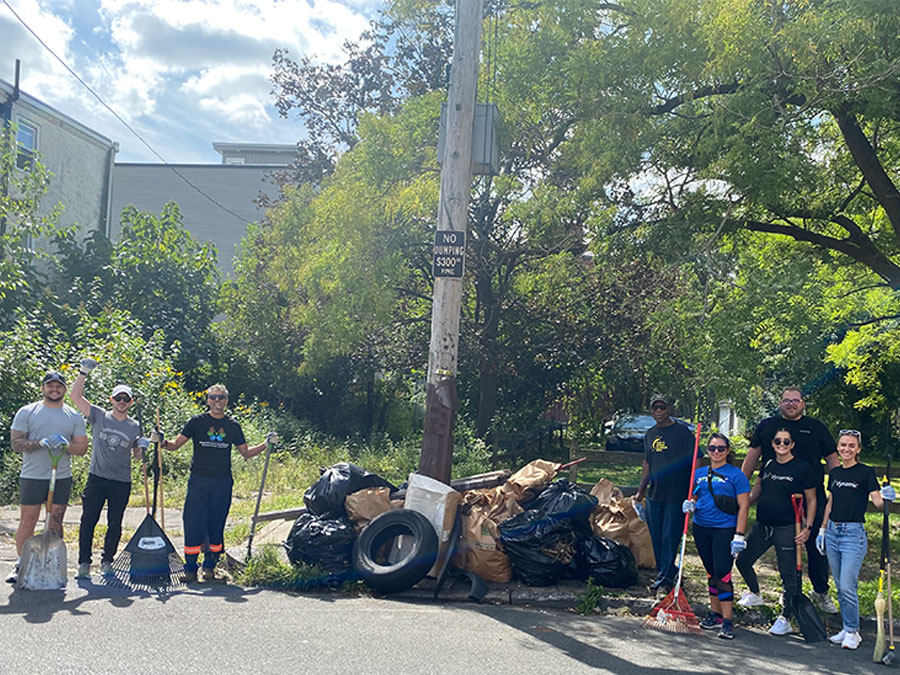
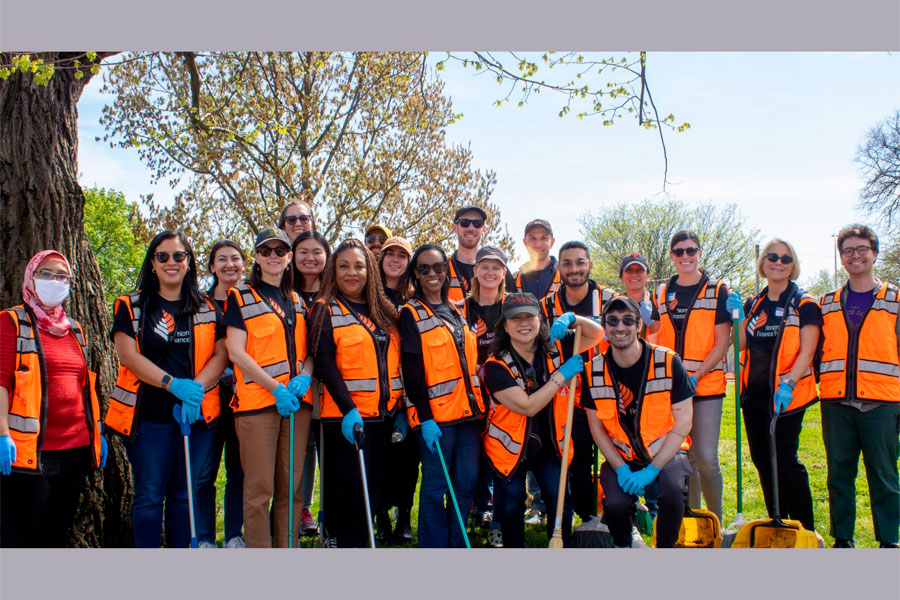
SEAMAAC invites the community to volunteer in beautification activities. (Photo: Courtesy)
From a small group to a global community
What began as support exclusively for Asian refugees has evolved into inclusive services for all communities most in need. “Today, we serve anyone who needs a service or program we offer. They just must come in; we do an assessment, and we make no distinctions,” Nguyen says.
SEAMAAC serves refugees from Africa, Eastern Europe, Central America, South America, and Mexico. The philosophy is clear: to strengthen a community, you must serve all its members.
SEAMAAC Hunger Relief 2005. (Photo: Courtesy)
Programs that feed, educate, and protect
In response to the recent SNAP crisis and prolonged government shutdown, SEAMAAC reactivated its food security program, which now serves 1,500 families in South Philadelphia: “Many families were at risk of not being able to put food on the table,” Nguyen notes.
SEAMAAC Toy Drive event. (Photo: Courtesy)
SEAMAAC also offers:
-Safe families, support for domestic violence survivors
-School absenteeism programs and tutoring for students
-English classes and digital literacy
-Public space revitalization and management of the South 7th Street commercial corridor
-Programs for elderly refugees
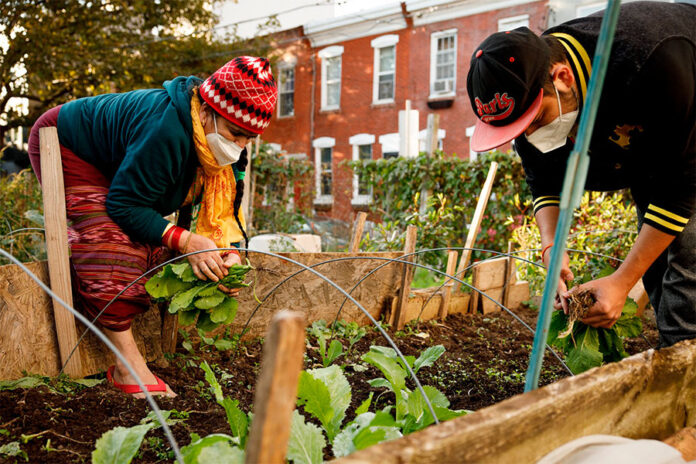
-The growing homes garden community farm, with more than 100 family plots
-Environmental justice and climate resilience initiatives
All of this is carried out with a small but committed team.
Garden Community Farm. (Photo: Courtesy)
Stories that leave a mark
Amid so many services, some stories deeply touch the team. Nguyen recalls a family they supported through the naturalization process: “They came to the office to show me their naturalization papers and their voter registration. Seeing them so happy to become U.S. citizens and being able to vote… that stayed with me.”
SEAMAAC serves refugees from Africa, Eastern Europe, Central America, South America, and Mexico. (Photo: Courtesy)
This year, SEAMAAC was selected by the philanthropic program Philly Gives news that surprised its director. “I was surprised… not because SEAMAAC doesn’t deserve it, but because the work we do is sometimes not recognized,” he confesses.
Although the organization is relatively small, with between 35 and 38 employees, SEAMAAC impacts between 8,000 and 12,000 people a year, many of whom are invisible to the system.
“We serve 2,000 people no one has heard of and who would not otherwise be assisted,” he states.
SEAMAAC Arts Program. (Photo: Courtesy)
Relief in times of cuts
Federal cuts have hit organizations like SEAMAAC hard: “We lost 12 employees in eight months. Without them, we do the work of 50 people with only 38,” Nguyen explains.
Although there is not yet a defined plan for the Philly Gives funds, the support will help address the deficit and maintain operations: “For every dollar donated to SEAMAAC, 87 cents go directly to services for the people.”
SEAMAAC Art Students (Photo: Courtesy)
Humility and generosity: the SEAMAAC spirit
When asked to describe the organization in one word, the team offered two: humility and generosity. Both reflect the daily work of an organization that serves not out of obligation but out of vocation.
Opportunities to serve
SEAMAAC invites the community to volunteer in beautification activities, garden preparation, events, and more. “Anyone can contact us and offer their time,” Nguyen says. Those interested in supporting the organization can visit their offices at 1711 S. Broad Street in Philadelphia or go to www.seamaac.org.
Thoai Nguyen, CEO SEAMAAC Toy Drive in December. (Photo: Impacto staff)
A growing challenge: poverty and hunger
The current landscape is concerning: “It is unacceptable for a child to go to bed hungry in the richest country in history,” the director says firmly.
SNAP cuts have pushed many families to the brink of economic collapse, forcing them to choose between rent, food, or heating. “The direction we are going in is tragic and unacceptable,” he warns.
SEAMAAC Logo. (Photo: Courtesy)
A message for Philadelphia
Nguyen closes with a powerful reflection on the contribution of immigrants to the city: “Just speak with any immigrant, refugee, or asylum seeker to see their deep love and respect for Philadelphia. When you invest in SEAMAAC, you invest in the city’s economic and cultural vitality.”
He adds a phrase that captures the organization’s philosophy: “The money donated to SEAMAAC does not belong to us; it belongs to the people we serve.”
SEAMAAC has been selected to participate in this year’s Philly Gives campaign, which will take place from November 1 to December 31, 2025. All donations made through phillygives.org will go directly to the 10 nonprofit organizations chosen, ensuring that 100% of the funds raised support essential programs.
El presidente de Estados Unidos, Donald Trump, y el alcalde electo de Nueva York, el demócrata Zohran Mamdani. (Foto: EFE/Yuri Gripas)
El presidente de Estados Unidos, Donald Trump, y el alcalde electo de Nueva York, el demócrata Zohran Mamdani, coincidieron en que la reunión que tuvieron este viernes en la Casa Blanca fue «muy productiva», un encuentro que se produjo tras una tensa campaña electoral llena de ataques entre ambos.
Al concluir la reunión, Trump y Mamdani ofrecieron una rueda de prensa en el Despacho Oval, en la que el republicano permaneció sentado en su escritorio y el demócrata se situó de pie a su lado, mostrando ambos una inesperada cordialidad.
«Tengo mucha confianza en que puede hacer un buen trabajo», dijo Trump, quien detalló que el encuentro, que se llevó a cabo a puerta cerrada, fue «muy productivo».
El republicano aseguró que cree que los neoyorquinos «con suerte, tendrán un alcalde realmente excelente» y prometió a Mamdani ayudarlo a «hacer realidad el sueño de todos».
El mandatario, quien en ocasiones anteriores tildó a Mamdani de «comunista», dijo que el demócrata «tiene ideas un tanto extravagantes» pero cree que con «suerte» sorprenderá a «muchos conservadores» «y también a muchos liberales».
Por su parte, Mamdani, quien asumirá el poder el próximo 1 de enero, coincidió en que la reunión fue «positiva» y dijo que ambos tienen posturas claras y que la reunión se centró en buscar políticas para servir a los habitantes de la ciudad y no en sus diferencias.
El giro de postura entre ambos surge luego de una larga campaña política donde Mamdani se refirió a Trump como «un déspota» y por su parte el republicano aseguró que muchos habitantes de Nueva York iban a huir hacia Florida por un posible «régimen comunista».
Durante la ronda de preguntas en el Despacho Oval, Mamdani señaló que también discutieron sobre los despliegues de la Patrulla Fronteriza en la Gran Manzana y Trump le siguió diciendo que ambos buscan una ciudad «libre de crimen».
La victoria de Zohran Mamdani en las elecciones municipales del 4 de noviembre de 2025 fue histórica: obtuvo aproximadamente el 50,6 % de los votos frente al 41,2 % de Andrew Cuomo y el 7,4 % de Curtis Sliwa y Con sólo 34 años, se convierte en uno de los alcaldes más jóvenes en la historia reciente de la ciudad y es el primer alcalde musulmán de Nueva York.
Fotografía de archivo en la que se captó de (i a d) a Scott Bessent, secretario del Tesoro de EE.UU., el vicepresidente de EE.UU., JD Vance, y el presidente de Estados Unidos, Donald Trump, en Washington DC (EE.UU.) EFE/Aaron Schwartz/Pool
Los Ángeles (EE. UU.)- El Gabinete del presidente Donald Trump ha profundizado en las últimas semanas la demonización de los inmigrantes, a los que ha acusado de traer consigo al país ganado infectado, lo que supuestamente ha generado la subida de los precios de la carne, en una narrativa falsa para ocultar sus desaciertos económicos, advierten expertos a EFE.
El secretario del Tesoro de EE. UU., Scott Bessent, ha sido el último en cargar contra los indocumentados, tras afirmar -en una entrevista con FOX- que el aumento del precio de la carne de res en EE.UU. se debe a que los inmigrantes introducen ganado enfermo a través de la frontera.
“Debido a la inmigración masiva, una enfermedad que habíamos erradicado en Norteamérica se ha extendido desde Suramérica, ya que estos migrantes trajeron consigo parte de su ganado”, dijo el secretario tras ser preguntado por informes que indican que el precio de la carne de res podría alcanzar los diez dólares por libra el próximo año.
Bessent trató de justificar sus palabras al argumentar que EE. UU. ha tenido que cerrar la frontera a la carne de res mexicana debido a los contagios del gusano barrenador.
Las redes sociales se han llenado de memes que ilustran a indocumentados tratando de pasar reses sobre el muro fronterizo, en referencia a las palabras de Bessent.
Estas afirmaciones también le dieron material al caricaturista mexicoestadounidense Lalo Alcaraz para compartir una mordaz crítica a Trump y su actual gabinete.
“Tengo que decirle a Bessent que las vacas son más fáciles de transportar hacía EE. UU. porque caben perfectamente dentro de una tortilla, con una salsa y cebollita”, dijo a EFE el artista, que plasmó su descontento en un dibujo.
Una narrativa «peligrosa»
Para Ricardo Valencia, profesor de la Universidad Estatal de California Fullerton, el mensaje de Bessent continúa de «manera peligrosa» la narrativa antiinmigrante alentada por Trump.
“Es una ficción muy bien elaborada que perpetúa la demonización de inmigrantes que le ha funcionado muy bien al republicano cuando quiere desviar la atención de los votantes”, dice a EFE el catedrático.
Valencia cree que el exabrupto del secretario del Tesoro busca justificar el alto costo de vida que ha desatado el descontento entre los votantes.
El más reciente sondeo de Ipsos y Reuters le dan la razón al profesor, pues solo el 26 % de los encuestados entre el 14 al 17 de noviembre cree que Trump está manejando adecuadamente el costo de vida.
Culpables por la falta de casas
Bessent no ha sido el único en achacar a los indocumentados los problemas económicos del país, la semana pasada el vicepresidente de EE. UU., J.D. Vance, dijo -en otra entrevista con FOX- que el aumento de la inmigración indocumentada ha disparado los precios de las casas.
“Muchos jóvenes dicen que la vivienda es demasiado cara. ¿Por qué? Porque hemos inundado el país con treinta millones de inmigrantes ilegales”, declaró el vicepresidente en la conversación, en la que elevó sin pruebas el número de inmigrantes sin estatus que vive en EE.UU.
Vance aseguró que los indocumentados estaban “ocupando casas que por derecho deberían pertenecer a los ciudadanos estadounidenses” en un momento en que el país “no está construyendo suficientes viviendas nuevas”.
“Está tratando de repetir la narrativa de la ultraderecha en Canadá e Inglaterra, donde el Estado tiene un mayor control de las viviendas de interés social que se ofrecen al mercado, algo que en EE.UU. no sucede”, valora el profesor Valencia.
Por su parte, Miguel Tinker Salas, profesor retirado del Pomona College, advierte que las deportaciones masivas de las que se vanaglorió Vance y que ayudarían en el combate de la escasez de vivienda tendrían el efecto contrario, debido a la falta de mano de obra en la construcción.
«El objetivo (de esta narrativa) es reunificar a la base que está fracturada por el alto costo de la vida y escándalos como los de Jeffrey Epstein», agrega el catedrático Tinker Salas.
Tanto para Alcaraz como para Valencia es necesario que la comunidad inmigrante denuncie y desmienta esta clase de narrativa.
“Aunque se crea que es tiempo perdido, no podemos quedarnos callados. Es nuestro deber contestar y dejar ver que las dos acusaciones son falsas, y que ambos (Bessent y Vance) desconocen la inmigración”, sentenció el profesor Valencia.
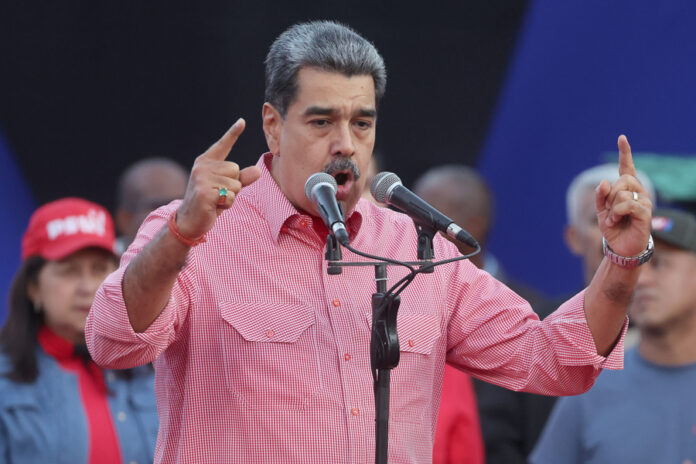
Presidente de Venezuela, Nicolás Maduro, hablando durante un evento en Caracas (Venezuela). (Foto: EFE/ Miguel Gutiérrez/ Archivo)
Caracas.- «War, no», «peace, peace, peace», dice el presidente de Venezuela, Nicolás Maduro, ante sus seguidores o en actos oficiales en los que hace mención a EE. UU., país que mantiene un inédito despliegue militar en el Caribe que ha elevado la tensión entre Caracas y Washington, y que el líder chavista parece dispuesto a apaciguar con diplomacia, diálogo y su peculiar forma de hablar en inglés.
«De tanto hablar inglés, se me confunde la lengua», bromeó Maduro en un acto el miércoles en Caracas, tras referirse a su esposa, la diputada Cilia Flores, como «the first lady and the first combatant (la primera dama y la primera combatiente)».
El chavista, que al parecer pretende llegar de forma más directa a Washington y al público estadounidense, auguró, en su discurso, una «victory forever (victoria para siempre)».
También se burló de su pronunciación, al contar que, recientemente, dijo de manera incorrecta una palabra que sonó como Starlink, el servicio de internet satelital de Elon Musk.
«Le hice campaña a Elon Musk», expresó el gobernante, que en agosto de 2024 ordenó suspender en su país, durante diez días, la red X, propiedad del magnate sudafricano, pero desde entonces se mantiene bloqueada para los usuarios venezolanos.
A modo de disculpa, atribuyó al cansancio que dice sentir «a veces» el que no le salga «el inglés fluido», pero que igual lo intenta porque, afirma, en EE. UU. lo «ven mucho» y «les gusta» que él «hable y cante» en este idioma.
«Peace, peace, peace»
La frase en inglés que el jefe de Estado más repite es «peace, peace, peace (paz, paz, paz)», para referirse al estado en el que asegura se encuentra su país pese a las que tacha de «amenazas y acechanzas», y que también usa para hacer un llamado en contra de «una guerra».
«No war (no a la guerra)» y «yes peace (sí a la paz)», repitió, insistentemente, en un acto celebrado en octubre, mientras que el pasado 14 de noviembre expresó su rechazo a la «death (muerte)» y abogó por una situación de «peace, and life, and love (paz, vida y amor)».
Un día después, en un acto en la barriada de Petare, considerada la favela venezolana más grande, sorprendió cuando cantó brevemente la emblemática canción ‘Imagine’ del músico británico John Lennon.
Sobre un escenario y frente a cientos de sus simpatizantes, el gobernante llamó a «hacer todo por la paz, como decía John Lennon» y se atrevió a interpretar la frase «imagine all the people».
«Dialogue? Yes»
El jefe de Estado también ha apelado a la carta del inglés para responder a su homólogo de EE.UU., Donald Trump, luego de que este dijera que está abierto a conversar con su par suramericano.
«El que quiera hablar con Venezuela, se hablará face to face, cara a cara, sin ningún problema», espetó en su programa ‘Con Maduro +’, transmitido por el canal estatal VTV.
«Dialogue? Call? Yes. Peace? Yes. War? No, never (¿Diálogo? ¿Llamada? Sí. ¿Paz? Sí. ¿Guerra? No, nunca)», agregó.
No obstante, ha advertido que atacar «militarmente» a Venezuela sería «el fin político» de Trump, quien insistió el lunes en que no descarta ninguna opción con respecto a una posible intervención en territorio venezolano.
En los últimos meses, el discurso del chavista sobre EE. UU. ha fluctuado entre los llamados a la paz y los anuncios de ejercicios militares, inscripción y adiestramiento de civiles y planes de defensa con «armamento pesado y misiles», en respuesta a la movilización que la Casa Blanca defiende como parte de una operación contra el narcotráfico procedente de Latinoamérica.
Venezuela ve el despliegue estadounidense como una «amenaza» a su soberanía y como parte de un plan para propiciar un «cambio de régimen» que saque al chavismo del poder, que ocupa desde 1999, e imponga una autoridad «títere».
«I’m hungry, Mom.» These simple words from a child can send fear and panic into the hearts of parents and caregivers when the cupboard is bare.
We live in the United States—the wealthiest country in the world when measured by total net wealth. Yet, that wealth doesn’t always reach individual households, especially families struggling to make ends meet in an inflationary economy. The portion of income allocated for food keeps shrinking, while the cost of groceries, utilities, and other essentials continues to rise.
More than one-third of American households (over 36%) report having a «somewhat difficult» or «very difficult» time paying their usual expenses. On top of that, the recent suspension of Supplemental Nutrition Assistance Program (SNAP) benefits, the ongoing federal government shutdown, and the lack of pay for military and federal workers have deepened the crisis. Many people in need fall just above the income threshold for assistance, leaving them without support.
The government shutdown in the United States lasted 43 days, beginning on October 1, 2025, and ending on November 12, 2025. For nearly two weeks, 42 million people across the country either did not receive or received only partial food assistance benefits.
But when children say they’re hungry, Philadelphians rise to the occasion. With grit and the spirit of brotherly love, our city comes together to find solutions.
Mayor Cherelle L. Parker signed an executive order directing all city departments and staff to take immediate action to address the emergency, bypassing time-consuming procedures and formalities (except for mandatory constitutional requirements). “This set the plan in motion across city agencies,” said Philadelphia Solicitor Renee Garcia.
Under Mayor Parker’s leadership, the city launched the One Philly SNAP Support Plan, a $14 million initiative to provide food and assistance during the shutdown.
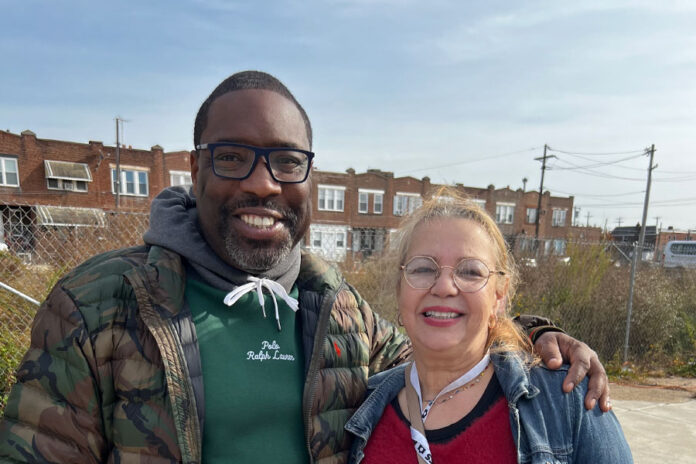
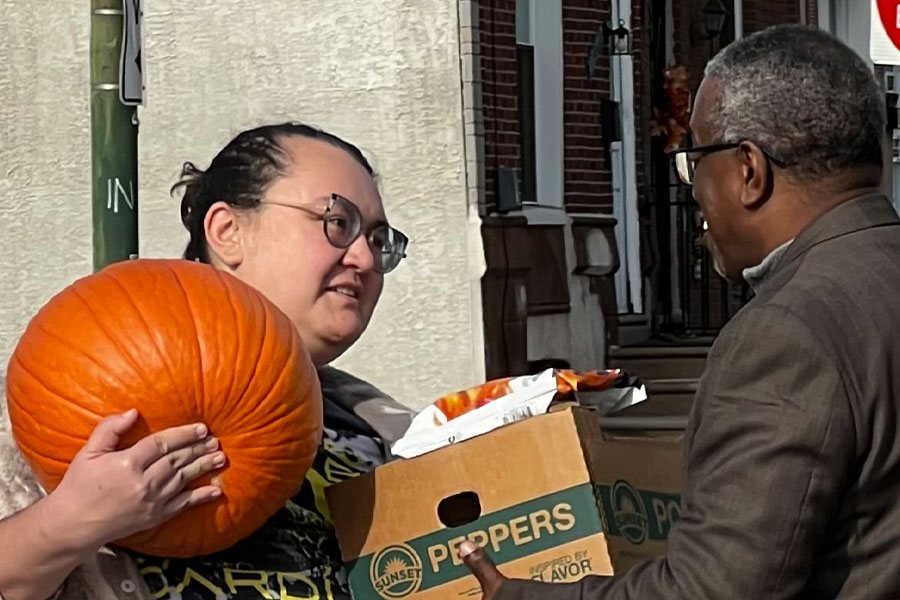
City Council President Kenyatta Johnson and other council members have actively advocated for relief, allocated funds, and personally participated in food distribution efforts. I caught up with Council President Johnson at a food distribution event in Point Breeze. “We’re prepared to feed 1,000 people today,” he said. “So far, 500 have received generous groceries.” The event was still underway at the time.
Johnson emphasized that Philadelphia, as the second-largest city in America with a high poverty rate, must address food insecurity, hunger, and overall economic stability by creating generational employment and ensuring access to good jobs.
The lines were long, with many elderly and disabled residents using walkers and canes to move through. Mabel, a 75-year-old Point Breeze resident, shared her experience: “With the cost of food, utilities, and my medicine, I’m having a hard time just getting by. The food stamps and the food being given out help me a lot.”
Older Philadelphians can receive daily meals at local senior centers at low or no cost. The Philadelphia Corporation for Aging (215-765-9040) and Catholic Charities (222 North 17th Street, 3rd Floor, Philadelphia, PA 19103) can help connect seniors with meal programs that meet their needs.
Here are some ways to find food near you:
Search “free food” + your zip code or “free food in Philadelphia” on Google
Visit https://www.phila.gov/food/ and search by zip code
Call the United Way helpline at 211
Contact Share Food Program and Philabundance, the city’s two main food distribution hubs
Reach out to BenePhilly for free assistance enrolling in public benefit programs that can help cover food, medical insurance, utilities, and more
Local pantries and community organizations are working tirelessly to meet the immediate needs of Philadelphians. Whether you’re facing homelessness, illness, or temporary hardship, help is available. Our city stands ready to answer the call when children cry out in hunger—with compassion, action, and nutritious food.
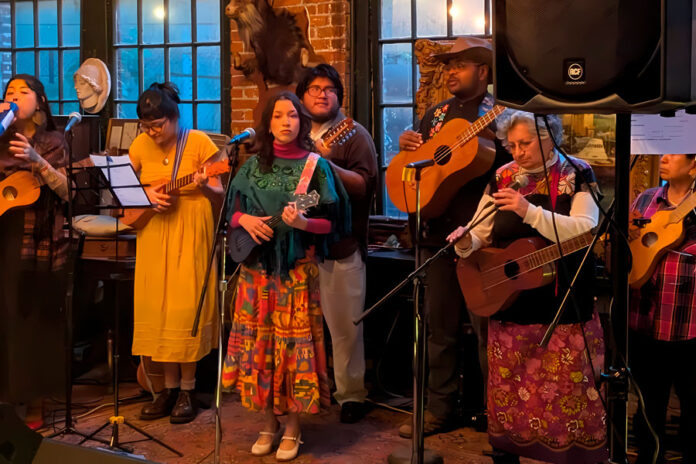
“Son Revoltura”, grupo local que interpreta son jarocho. (Foto: Cortesía/Black Squirrel Club)
Musician Dariel Peniazek organized and successfully presented the first Philatino Music Fest, held on November 14 at the Black Squirrel Club in the Fishtown neighborhood. The festival included a bilingual yoga class and performances by several local groups: Son Revoltura, dedicated to Veracruz music; Los Búhos, an Afro-Latin jazz ensemble from Temple University; as well as guest groups from New York, including Plena del Puente, one of the city’s most prominent plena ensembles, and ALBA Musik, a project that blends flamenco with other styles.
La carismática y talentosa cantante Tanicha López. (Foto: Cortesía/Tanicha López)
The evening concluded with a stellar performance by Tanicha López, a promising Puerto Rican artist accompanied by a band of Philadelphia musicians.
Introducing Son Revoltura, Dariel explained that during a visit to Veracruz he fell in love with son jarocho, a genre characterized by its blend of Indigenous, African, and Spanish influences. The group, a community collective formed in Philadelphia ten years ago, also offered a singing and zapateado workshop led by Alejandro Utria, with audience participation.
Their performance was followed by the Afro-Latin jazz ensemble Los Búhos, who fuse African rhythms with Latin American musical traditions, incorporating percussion, jazz instrumentation, and improvisation. Their set included “Como Fue”, a bolero written by Cuban composer Ernesto Duarte Brito and “El Cuarto de Tula”, by Sergio González Siaba.
El duo que integra ALMA Musik de fusión de flamenco. (Foto: Cortesía/ALBA Musik)
Next, the members of Plena del Puente delivered a vibrant demonstration of plena, using the traditional panderos and güiro characteristic of this genre, which has deep African, Spanish, and Taíno roots. Plena emerged in the 19th century in the sugar-producing regions of southern Puerto Rico, particularly around Ponce, and remains strongly connected to the daily life and struggles of the Puerto Rican people.
Afterward, the duo ALBA Musik took the stage, composed of flamenco singer and dancer Bárbara Martínez—born in Venezuela and grandniece of renowned tango singer Libertad Lamarque—and guitarist and composer Albert Alabedra, originally from Barcelona.
To close the musical presentations, the Philatino Music Fest featured Tanicha López, considered one of Puerto Rico’s most promising young artists. Born and raised in the town of Carolina, Tanicha blends the island’s musical traditions with influences from rhythm and blues, gospel, and jazz, creating a unique and contemporary sound.
With this festival, Dariel Peniazek—musician, composer, and educator—brought together renowned artists from a wide range of Caribbean, Spanish, and Latin American genres, marking a highly successful debut for the Philatino Music Fest.