

In April 1952, I was in the sixth grade, 11 years old and almost 12. By then, we were a family of 12. Mom had given birth to twins the previous December at the age of 31. Our jacalito, a ramshackle two-bedroom house in a small town in southeastern Colorado, was more crowded than ever. Fortunately, our home was conveniently located just one block from the hospital, where Mom proudly worked as a practical nurse.
I vividly recall a spring morning when the sky was the bluest blue imaginable. Mom was bustling about, getting us kids ready for school while preparing to leave for work herself. As she dashed out the door, she called to me, “Wear your pretty dress today. I’m going to become an American, and I’m taking you with me. I’ll pick you up right after lunch.”
My mother, Carmen Avila, née Montes, was Mexican. She was born in Chihuahua and had always been a Mexican citizen. How was she going to become an American in a single day? Little did I know that she had applied months earlier and had prepared for the occasion with the help of our school principal.
Right after lunch, the principal summoned me with her bright smile and twinkling blue eyes.
“Come along, my dear. Your mother is in my office. She’s becoming an American today, and she wants you with her.”
I nodded as though I knew exactly what she was talking about.
There was my mother, dressed in her beautiful blue Sunday dress, looking as lovely as ever and visibly excited.
“We have to hurry,” she said. “We need to get to the La Junta courthouse before three.”
“Don’t worry, Carmen. You have plenty of time,” the principal replied as she escorted us out the door.
Mom’s dear friends, Mary and Henry Gonzales, were driving us there. Twenty miles was a long distance in those days, and Mr. Gonzales drove carefully and slowly.
No one talked about how one became an American. Instead, they wanted to know what I was learning in school. I gave them more than an earful about my geography class, the Allegheny Mountains, and the story of Achilles’ heel from Greek history, all of which seemed to fascinate them. Mom listened proudly.
Her own education had ended in the fourth grade because her cruel stepfather had taken her out of school to work in the fields. Yet even with those few years of schooling, she understood what America was all about: that it offered more than mere survival; that it offered hope, opportunity, and the possibility of building a better life. Most of all, she believed that education was the key to getting ahead.
My mother’s mother, Maria, fled Mexico in 1919, bringing Mom to Colorado as a nine-month-old infant. My grandmother sought refuge in the United States with her three young daughters after her father and her husband were viciously killed by a band of Carrancistas in the aftermath of the Mexican Revolution.
Growing up in Colorado, Mom loved the United States and everything American: the Brownies, the Girl Scouts, the high school band, Fourth of July parades, and the opportunities this country offered. She wanted her children to receive the best education possible.
When we arrived at the courthouse, our group was escorted into a room where Mom joined those gathered on the opposite side. The Gonzaleses and I found our seats, and soon everyone was asked to rise as the elderly judge entered the courtroom.
The judge instructed us to sit, but Mom and the other applicants were then asked to stand once again.
There I was, watching her naturalization ceremony.
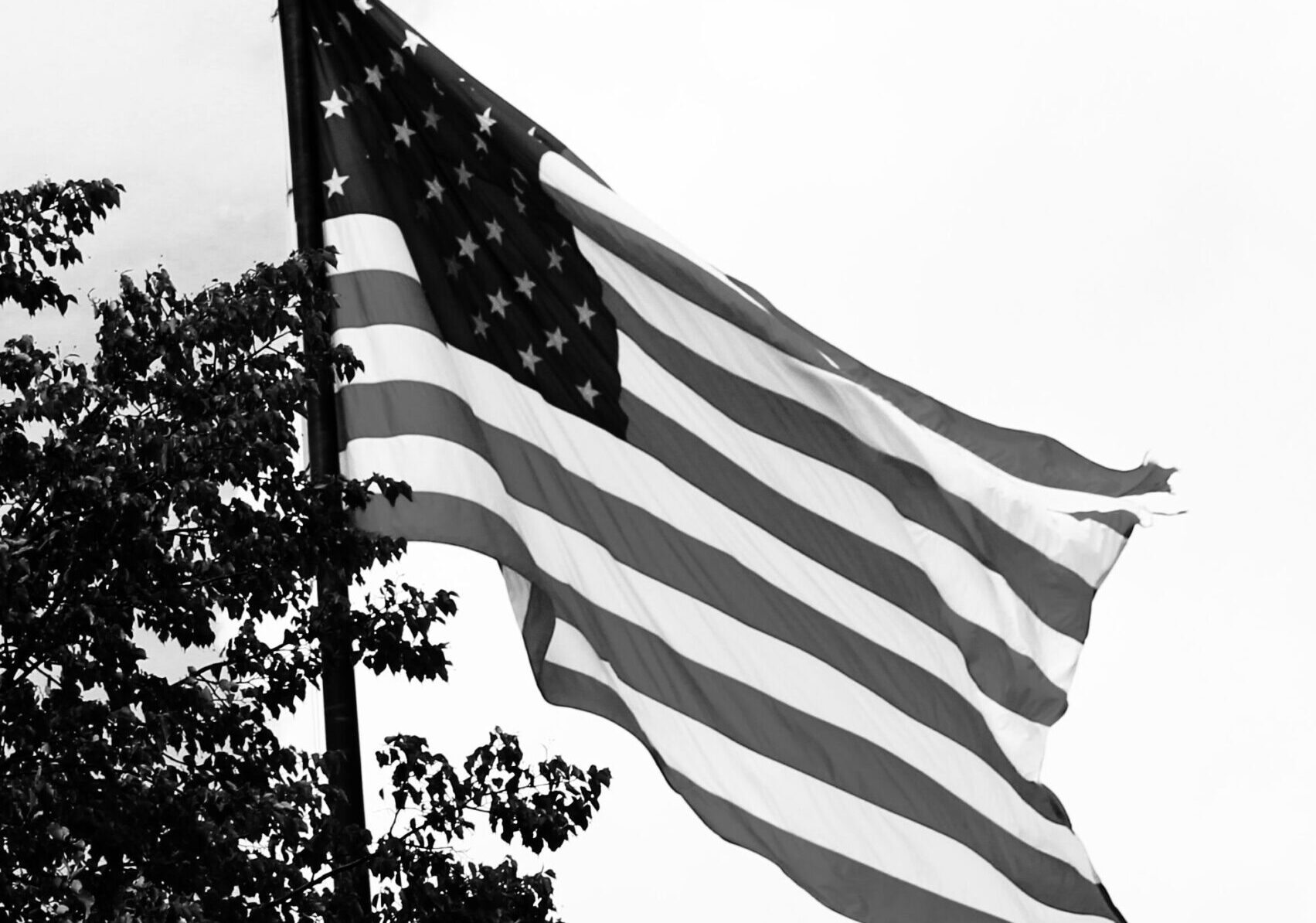
She positively glowed when the judge instructed them to raise their right hands. Tears filled my eyes as I sensed her joy, pride, and triumph while she pledged allegiance to her new country. When she was presented with an American flag, she held it lovingly in her hands.
Afterward, Mom and I joined the other new citizens and the judge in the courthouse lobby for punch and cookies. Everyone was talking, but Mom and I mostly stood there smiling at each other and at anyone who smiled at us.
That is how my mother became an American.
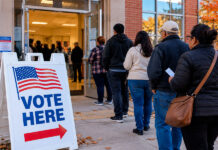
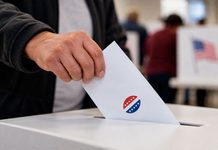
She was so proud to be an American that she never missed voting in a local, state, or national election. Even when she worked double shifts at the hospital, she made time to vote. After finishing a night shift at seven in the morning, she would go directly to the polls, then come home proudly to tell us she had voted before seeing us off to school.
For my mother, Carmen, voting was one of the most important responsibilities of being a full-fledged American citizen. It meant having a voice in American government and helping choose both our leaders and our laws.
I was born an American, but I have never forgotten the significance of my mother’s becoming one and embracing the nation that welcomed her.
Now, more than ever, I share her belief that participating in every election matters.
VOTE!