

On Thursday, May 28, the Philadelphia Latino Arts & Film Festival (PHLAFF) officially launched the celebration of its 15th anniversary. Over the next six weeks, the festival will showcase more than 180 films from 21 countries across multiple venues throughout Philadelphia. Beyond film screenings, PHLAFF continues to establish itself as a dynamic cultural platform, blending workshops, immersive installations, community programming, and online events at spaces such as Icebox Project Space, Ulises, The Barnes Foundation, Cherry Street Pier, PhillyCAM, Vox Populi, The Rail Park, Taller Puertorriqueño, and Puentes de Salud.
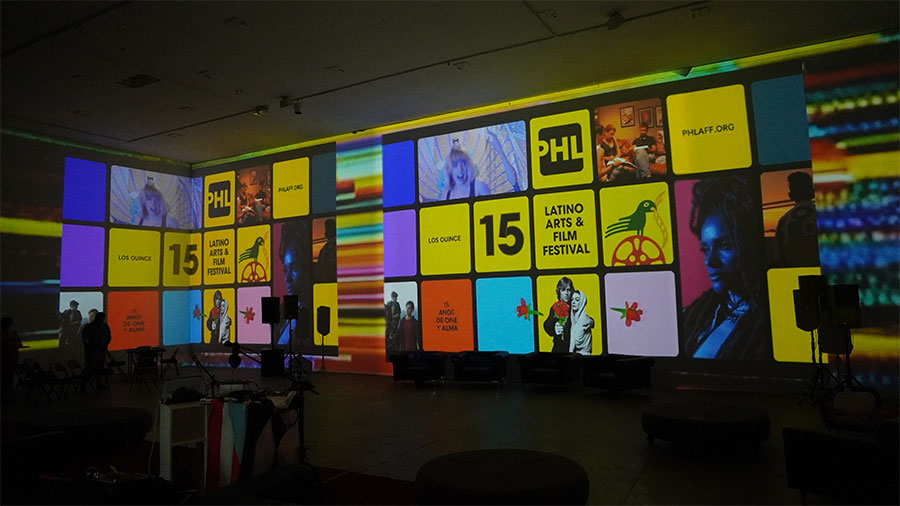
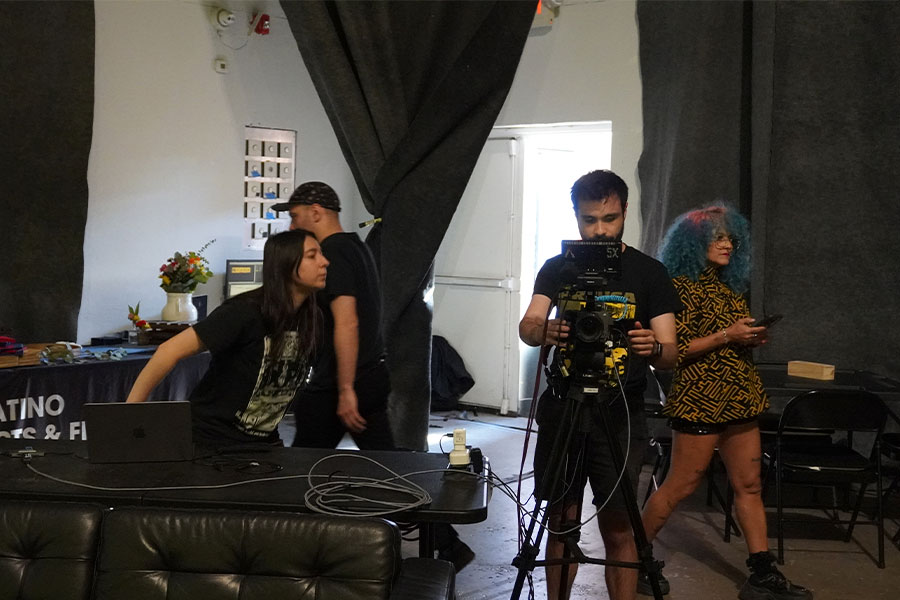
The festival’s opening night took place at Icebox Project Space, a massive experimental contemporary art venue dedicated to socially engaged and community-centered projects. Once an industrial refrigeration warehouse, the building still carries echoes of its past in its concrete walls and towering ceilings. For one night, however, the venue was transformed into a vibrant gathering space where artists, filmmakers, and community members connected through music, projections, and conversation.
Inside the space, a monumental projection spanning two full walls displayed the official Los Quince artwork and visual identity. Nearby, filmmaker and visual artist Eunice Levis presented a scaled version of Colmado del Futuro, an immersive installation inspired by Caribbean corner stores and Dominican culture. The project integrates projection mapping, motion sensors, sound, and scent to explore how artificial intelligence and automation are reshaping everyday spaces and community dynamics. The full installation will be available free to the public at Cherry Street Pier from June 5 through July 26 as part of Where Freedom Flows: A Public Art Series on the Delaware River Waterfront.
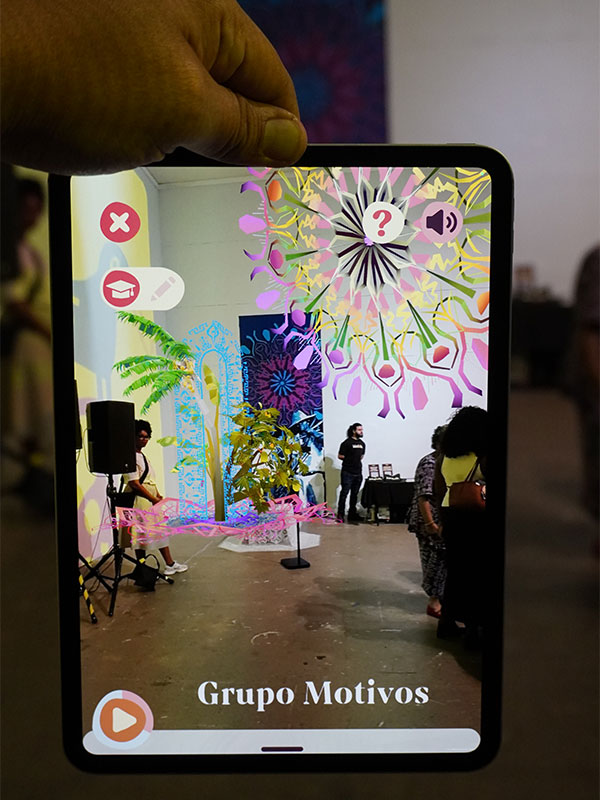
Also present was Kinfolk Tech, a collective focused on immersive experiences and augmented reality, participating in PHLAFF 2026 as part of the Los Quince celebration. During the event, organizers announced an upcoming conversation with Puerto Rican artist Betsy Casañas centered on Grupo Motivos, an augmented reality monument inspired by a collective of Puerto Rican women who transformed abandoned lots in Norris Square into the community gardens known as Las Parcelas. The project reflects the power of collective organizing and the ways public spaces can be reimagined through art, memory, and technology.
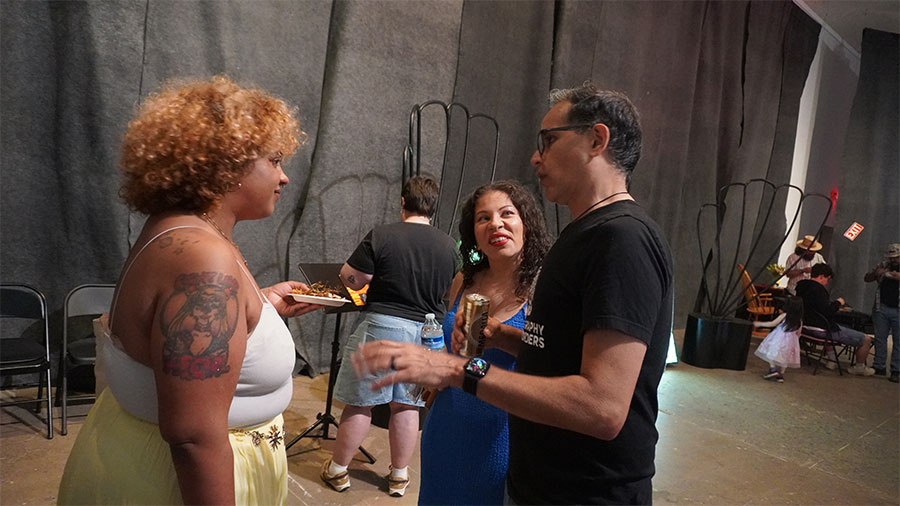
The official opening presentation was led by PHLAFF director and curator Marángeli Mejía Rabell, a Puerto Rico–born cultural organizer based in Philadelphia whose work emphasizes accessibility, diversity, and cultural collaboration as tools for social change. In her remarks, she reflected on defining moments from the festival’s fifteen-year history and offered a heartfelt tribute to Gretjen Clausing, founder of PhillyCAM and a pillar of community media in Philadelphia, who recently passed away. The evening also featured Gabe Castro of PhillyCAM, and was livestreamed by Sergio Galeano, Lead Producer at PhillyCAM.
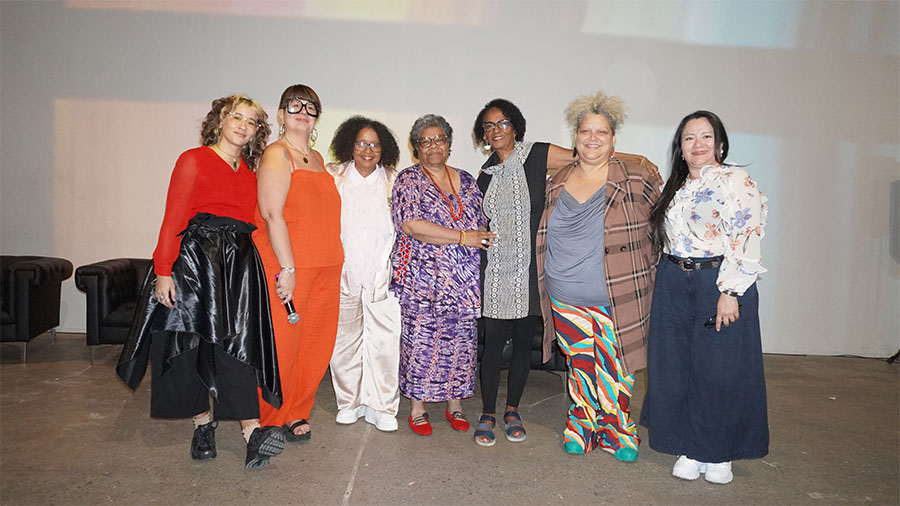
As part of the program, the team behind GRIOT 2124 introduced their innovative Afrofuturist television series currently airing on Telemundo Puerto Rico. The series follows GRIOT, a time traveler from the year 2124 who journeys into the past to uncover the cultural and artistic movements that helped eradicate racism in the future. Across seven episodes, the show explores Afro-descendant legacies and their impact on Puerto Rican identity through a creative, forward-looking lens, with plans to expand to additional Telemundo networks.
In addition to presenting Colmado del Futuro, Eunice Levis also screened her short film Affordable Housing as part of the Lighthearted Horror Block, alongside The Soup, Beyond the Moonlight, and Cat Sitters. A standout selection was The Soup, directed by Gabe Castro, a Philadelphia-based Latine multimedia creator whose horror work examines the real-world influences behind cinematic fear while using the genre as a tool for social reflection and cultural empowerment. Castro currently serves as PhillyCAM’s Member Programming Manager and collaborates with cinéSPEAK and the award-winning media literacy project Ghouls Next Door.
In an interview with Marángeli Mejía Rabell, she shared part of the history and evolution of PHLAFF. During the conversation, she noted that many people believe she is the festival’s founder, although PHLAFF was actually established in 2012 through the collective efforts led by David Acosta and Beatriz Vieira, along with a group of artists and cultural organizers committed to creating spaces of representation for Latino communities.
One of the central themes of the interview was community. Marángeli emphasized that in times of uncertainty, creating spaces centered on joy, collaboration, and togetherness is essential. She also expressed deep gratitude for the work of Kirsten Senske, the festival’s Senior Programmer—a multidisciplinary Latina artist, digital designer, dancer, and choreographer—whose behind-the-scenes contributions have been instrumental to PHLAFF’s success.
Marángeli also highlighted the importance of opening the festival to new voices, younger generations, and emerging programmers, allowing PHLAFF to continue evolving without losing its core values of collectivity and community engagement. Reflecting on her own journey, she described her role today as that of a mentor and bridge-builder, helping to create opportunities for emerging cultural leaders.
For her, PHLAFF is far more than a film festival—it is a community platform where Latino communities can gather, share experiences, and strengthen networks of support through art, culture, and community media.