

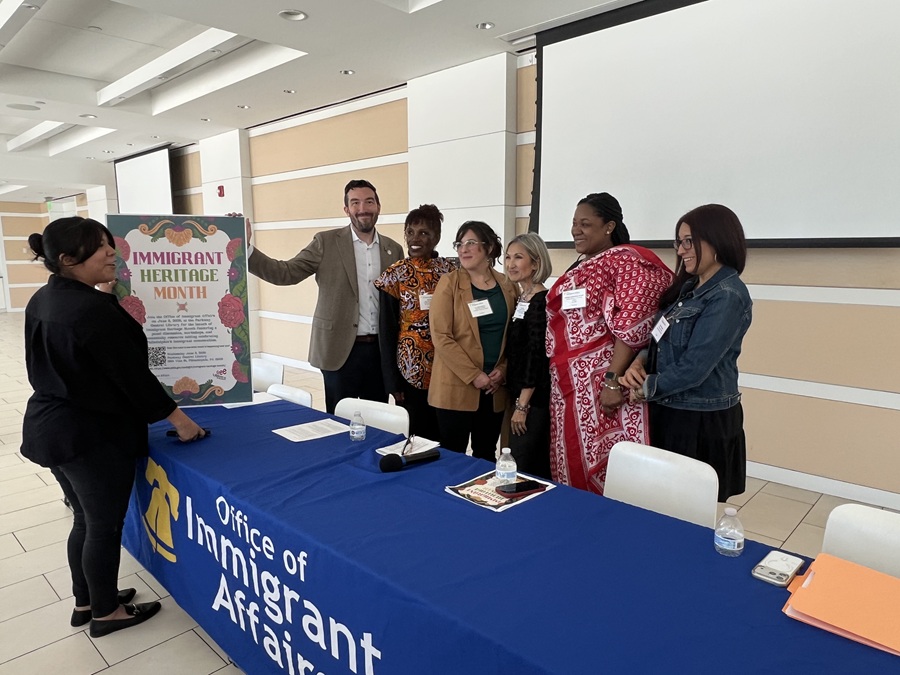
The Skyline Room on the fourth floor of Parkway Central Library filled with the sound of overlapping languages on the morning of June 3, as Philadelphia’s Office of Immigrant Affairs (OIA) launched Immigrant Heritage Month with a daylong celebration honoring more than 250 years of immigrant contributions to the city.
Sunlight streamed through the tall windows, illuminating a diverse gathering of community members, artists, advocates, and civic leaders who came together to reflect on how immigrant heritage continues to shape Philadelphia’s art, festivals, parades, and neighborhood traditions.
As the nation approaches the 250th anniversary of the signing of the Declaration of Independence in 1776, city officials are reframing the milestone as a story not only of the nation’s founding, but of the generations of immigrants who have helped build Philadelphia into what it is today.
The Office of Immigrant Affairs, housed within the Managing Director’s Office and led by Executive Director Charlie Elison—appointed by Mayor Cherelle Parker—plays a central role in supporting the well-being of immigrant communities. The opening event reflected that mission, bringing together cultural organizations that sustain the city’s artistic and cultural life.
Open to the public, the program unfolded throughout the morning and early afternoon in a warm, welcoming atmosphere that felt more like a family gathering than a formal civic ceremony.
At 10 a.m., attendees settled in for the day’s central panel, moderated by Valerie Gay, executive director of Creative Philadelphia. A trained opera singer, Gay set an engaging tone as she highlighted her department’s efforts to support artists and cultural organizations that define the city’s cultural fabric. Heritage, she noted, is not confined to museums—it lives in studios, kitchens, and community celebrations.
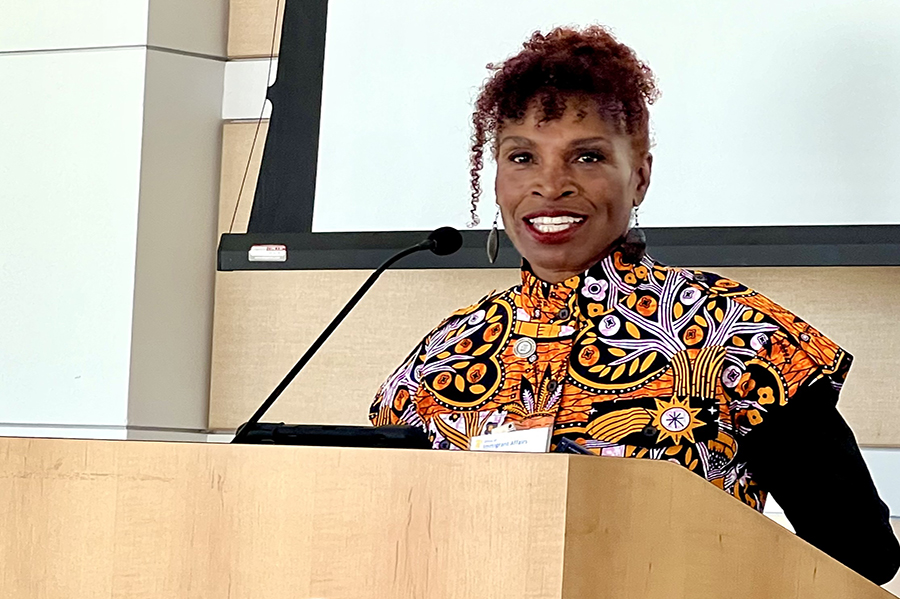
The panel featured leaders from organizations that nurture cultural traditions across Philadelphia’s neighborhoods. Nani Shin of the Philadelphia Asian American Film Festival spoke about elevating stories that rarely reach mainstream audiences. Lisa Volta-Zalloum of Al-Bustan Seeds of Culture described her organization’s work promoting Arabic arts and music in the years following 9/11, during a time of heightened cultural tension. Ivette Compean of the Mexican Cultural Center highlighted the beauty of Mexican traditions and the importance of festivals in bringing families together while inviting broader community engagement.
Nakkiat Ali Zaki of the African Cultural Alliance of North America (ACANA) emphasized how festivals, language classes, and community programs help preserve cultural identity far from home.
A common theme emerged throughout the discussion: Philadelphia’s immigrant story is not something preserved behind glass, but something lived and renewed every day. Panelists pointed to vibrant street parades, sold-out film screenings, and children learning songs passed down through generations. Each organization, in its own way, is carrying traditions forward.
The audience responded with quiet recognition, many having lived experiences similar to those being shared.
Among them was Peter Dias, the son of immigrants from Goa, India. Reflecting on the event, he said, “I am impressed by the respect everyone shows for each other’s cultures and by how openly people share their diversity and interests.” What stood out most to him, he added, was “the ease with which strangers share their traditions—a reminder that this is still a city being built by immigrants.”