

The 35th Philadelphia Film Festival gave me my first chance to experience the event through its opening and closing screenings, red carpets, and conversations with the people who make the films. From October 15 to 25, 2026, the festival organized by the Philadelphia Film Society brought together international cinema, independent films, and stories that found much more than a filming location in our city. For me, these were days of discovery, encounters, and films I am still processing.
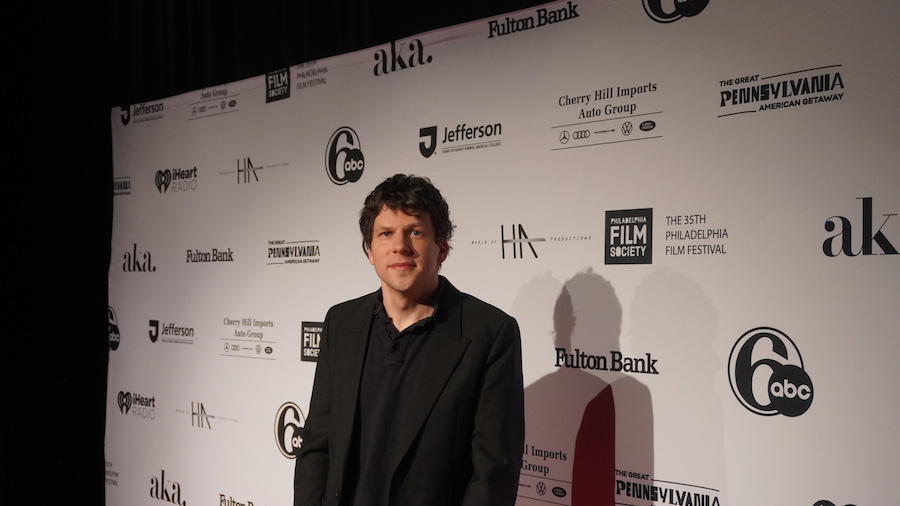
My viewing included films as different as 2001: A Space Odyssey, All of a Sudden, Being Heumann, Paper Tiger, Bunker, Club Kid, and Ink, alongside the films I want to spend more time on here. Between screenings, I met Jesse Eisenberg, the director and stars of Joy Will Prevail, the team behind Yale, and the cast of Andrew Sullivan’s I Don’t Want to Drink Your Blood Anymore. Listening to their creators offered another way into what I had just seen.
A Pickpocket Out of His Time
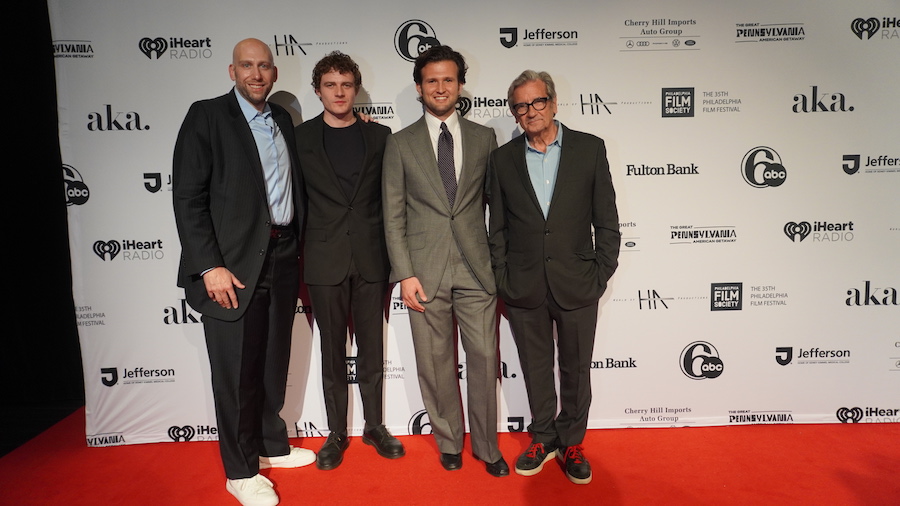
The festival opened with The Only Living Pickpocket in New York, directed by Noah Segan, with whom I had the chance to speak. John Turturro plays Harry, an old-school pickpocket who seems to have been left behind as New York keeps changing. His trade, built on observation and dexterity, has less and less room in a city of credit cards and cellphones.
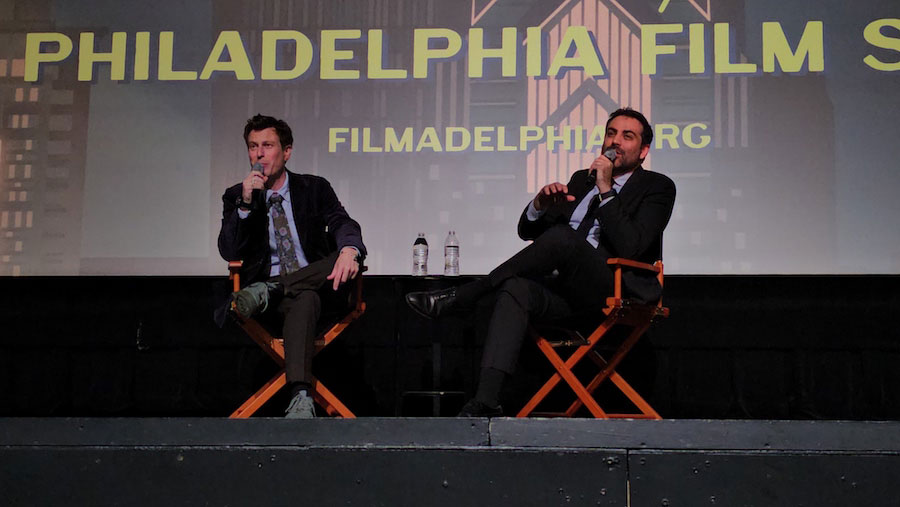
Turturro is surrounded by a cast that gradually reveals itself, including Steve Buscemi, Giancarlo Esposito, and Tatiana Maslany, with Will Price as Dylan, the young man whose connection to a crime family lands Harry in trouble. The film makes the most of the tension between a man out of his time and the world around him without stretching its story unnecessarily. At 88 minutes—one hour and 28 minutes—it knows when to leave without overstaying its welcome. It was a thoroughly enjoyable way to begin the festival.
Philadelphia on Screen
Two films made the city I call home especially recognizable. The first was Joy Will Prevail, directed by Max Korman and starring Griffin Dunne as architect Louis I. Kahn. The story follows his relationship with Steve Korman, played by Ben Rosenfield, and a house project that leads both men to question how they want to live.
Dunne, whom many will recognize as Nicky from This Is Us, has a long career in film and television. During our conversation, he told me he has Mexican ancestry and that this role holds special meaning for him. I found his performance deeply dignified, in a film where the buildings and landscapes of Philadelphia and its surroundings become part of the story. There is a particular pleasure in recognizing these places while discovering the human questions behind their construction.
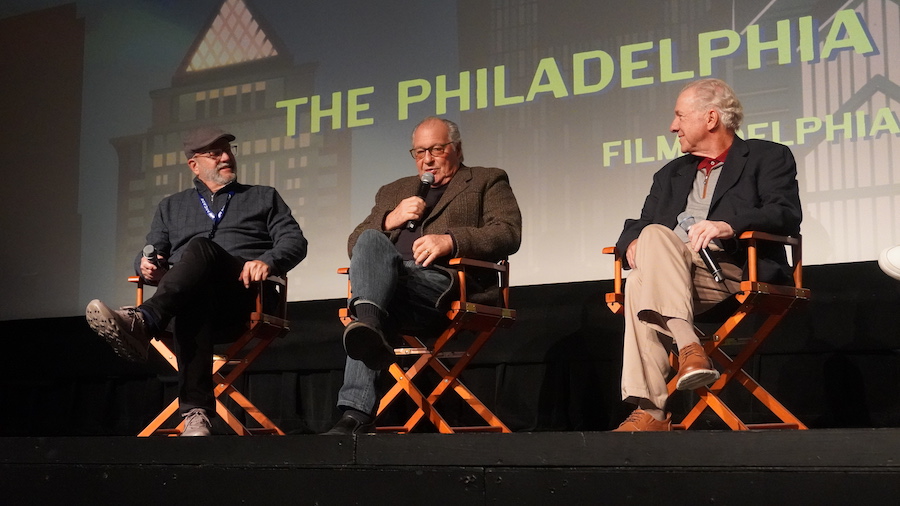
The second was Jay Silverman’s Yale, starring Caitlin McGee and Kevin Dunn. Its settings and atmosphere feel familiar to those of us who live here, even if the family story it portrays is extraordinary. A woman seeks out the father who abandoned her in an attempt to find a kidney donor for her son. Their reunion opens the door to other families he had kept hidden.
Screenwriter Van Billet drew inspiration from his maternal grandfather, Yale Parker. As he explains in an account of the screenplay’s origins, the protagonist combines elements of his mother, Bette, and his aunt June. During our conversation, Billet told me that his grandfather is estimated to have had more than 450 descendants—a figure that adds a startling dimension to the character’s family legacy.
Josephine Pushed My Stomach to Its Limit
Josephine, written and directed by Beth de Araújo, affected me in a way I did not expect. Mason Reeves plays an eight-year-old girl who witnesses a rape. Channing Tatum and Gemma Chan play her parents, who try to support her as she attempts to understand and process an experience she has no tools to handle.
What I managed to watch shook me so deeply that I had to leave the theater. I felt I needed emotional support. I therefore cannot assess the entire film, but I can speak to the intensity of that encounter. Its execution reminded me of Darren Aronofsky’s ability to put us in uncomfortable situations, and made me think that horror is not confined to the genre that bears its name.
The discomfort also brought to mind films associated with New French Extremity, such as Gaspar Noé’s Irreversible and Baise-moi—known in Spanish as Fóllame or Viólame—by Virginie Despentes and Coralie Trinh Thi. I am not saying Josephine belongs to that movement, only that it made me feel the same way.
Behemoth and the Pleasure of Listening to Cinema
For those of us who love music, Tony Gilroy’s Behemoth! was a treat. I have to confess that there are days when I think Pedro Pascal is my dad, given how often we have seen him play a father figure. Here, he plays Alex, a cellist who returns to Los Angeles and must confront his past.
I was drawn to his hedonistic side and to the way his experiences interact with the music he performs. The compositions accompany his memories and give them rhythm, as though he were helping score his own life. The film moves between humor, drama, and moments of spectacle, carried by Pascal and Gilroy’s enthusiasm for this world.
After the screening, I attended a conversation with Tony Gilroy, who joked that, after his work on Andor and Rogue One, he had dared to ask Disney for the favor of getting this film made. The music is credited to The Behemoth! Collective, a group of nine composers that includes Michael Giacchino, James Newton Howard, and Alan Silvestri. That range of voices suits a film celebrating the people who give cinema its sound and emotion. I enjoyed it as a generous work, devoted to the pleasure of putting on a great show. Perhaps that favor will end up paying off for Disney.
The Debut and the Desire to Change
The Debut was my second-favorite film of the festival, and not simply because Jesse Eisenberg was there. Julianne Moore plays Mona Friedman, a New Jersey woman who joins a community theater production and begins a transformation that spills beyond the stage.
The film is part farce, part comedy, and part autobiographical exploration. Eisenberg has explained that the story grew out of his experience in community theater when he was six. In that sense, Mona is an unusual avatar: a middle-aged woman who embodies the anxious little boy who found a place to belong onstage. I like how that childhood experience takes shape in someone of a different age and gender without losing its vulnerability or its desire for transformation through art.
Moore delivers an extraordinary performance in what sometimes feels like an emotional unraveling. What I liked most was the affection with which Eisenberg treats his character: even at her most excessive, there is humor and compassion. I recognized in her those people who turn to art hoping to change something in their lives, even if they do not yet know exactly what.
Closing night also included a special encounter. Before the screening, Fresh Air Live brought Terry Gross and Eisenberg together for an onstage conversation, the result of the festival’s first collaboration with the WHYY program. There was also a discussion with the audience after the film. It was a way to hear from its creator and extend the experience beyond the credits.
La bola negra and What Stays with Me
I have saved the crown jewel for last: La bola negra, directed by Javier Calvo and Javier Ambrossi, known as Los Javis, with Guitarricadelafuente among its stars. It was the film that caught me most off guard, and the one I still want to discuss with everyone.
My advice is to go in knowing as little as possible, even avoiding the trailer and detailed synopses. All you need to know is that it weaves together three stories: one in 1932, before the Spanish Civil War; another in 1937, during the conflict; and a third in 2017. I would rather keep their connection to myself. Discovering it without advance knowledge was an essential part of my experience.
The male body becomes a site of contradictions here, shifting between a destructive force and an object of desire, between the violence it inflicts or suffers and the possibility of intimacy. Through those tensions, the film reclaims gay memory in Spain and offers a way to look at wounds that span generations.
I also found in it an attempt at repair through art: recovering what history sought to silence and giving it a place in the present. I do not want to reveal any more. I long to see this film again with my friends on the big screen and walk out of the theater talking about it together. I want them to have an experience like mine. I hope they will not wait for Netflix: I feel that watching it for the first time at home would take so much away from the experience I want to share.