

The art of listening in order to clearly understand what has been heard—in other words, to interpret the message we receive clearly—requires practice, concentration, and commitment.
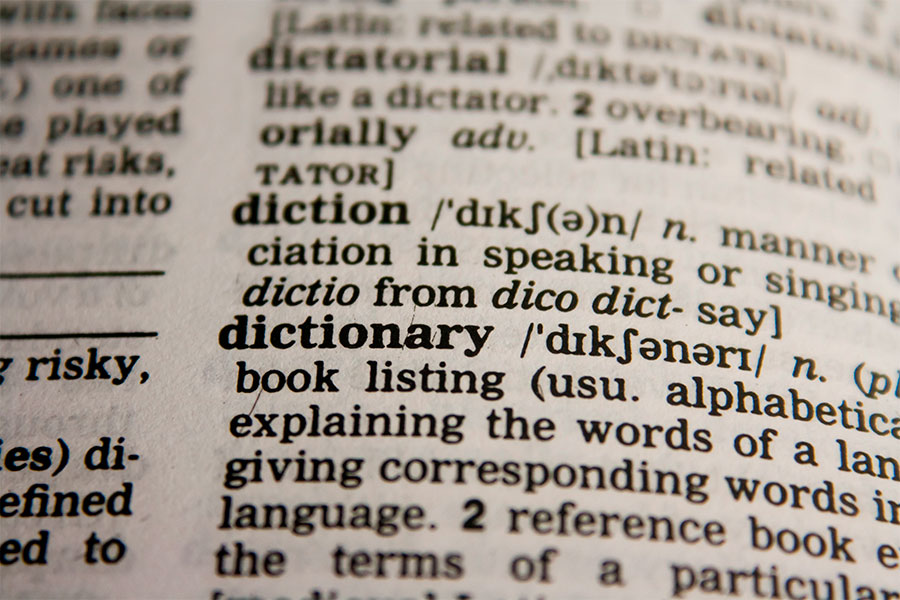
What prevents us from interpreting what we hear clearly? Everyone has their own answer to this question; mine is the following: “Not truly listening.” There is a big difference between listening and hearing. Let me be clear: I am not claiming to be an academic expert. I learned the difference between listening and hearing early in my personal life, while I developed the art of listening through my education. What can hinder the art of listening? In my opinion, it is a lack of vocabulary. Have you ever wondered how many words you really know and how many you understand? When was the last time you looked up the true meaning of a word in a dictionary or on Google?
According to the dictionary of the Royal Spanish Academy, listening means “paying attention to what one hears,” while hearing means “perceiving sounds with the ear.” The truth is that we can hear clearly, but if we do not understand the words we hear, we cannot fully understand the message. Likewise, if we assign the wrong meaning to a word, our interpretation may be incorrect.
Word: a feminine noun defined as a lexical unit formed by a sound or a set of articulated sounds that carry meaning and belong to a grammatical category.
Have you ever stopped to think about the power of a word and how we use it to gain power? Personally, I believe that the word has unlimited power. What is your opinion?
To me, power and the word are inseparable lovers. I have long since lost count of how many times I have had to turn to a dictionary to look up words and understand their meaning. The reality is that, whether in a conversation or in writing, a word can hide what someone is really trying to communicate. This is especially true when a word can replace many others because it has, or is given, a very general meaning. The dictionary refers to this type of word as a “catch-all word.” Ultimately, we all need words to express ourselves, whether verbally or in writing.
Have you ever had difficulty expressing what you want to say? How many times have your words been misunderstood when speaking or sending a written message? This has happened to me hundreds of times, especially when communicating between two languages: English and Spanish.
An example comes to mind. On one occasion, I was at an event celebrating our Hispanic heritage when I was told that someone wanted to present an award to a guest. I knew the guest personally and knew he had no idea he was going to receive the award. So, I announced that it was a well-deserved recognition for a beloved and admirable person. I said the following: “This person is here and has no idea why we are going to call him up to the microphone.”
When his mother heard this, she became offended because she understood me to be saying that her son did not know what he was doing. Although we explained to her that this was not at all what I had meant, I believe that to this day she remains convinced that we were making fun of her son.
The truth is that the power of the word hypnotizes us, takes over our thoughts, and plays with our emotions, especially when it stirs up fear within us. I believe that if we can control our thoughts, then we can control our emotions and, in this way, counteract the use of that power to manipulate us. The most visible example today is the spread of fear about new digital technology. Educate yourself, expand your technological vocabulary, and do not let yourself be swept away by the fear being spread. Remember the countless times fear has been spread for different reasons and nothing has happened. Yet, we have suffered uncertainty, unease, and despair—emotions that fear continually inflicts upon us.