


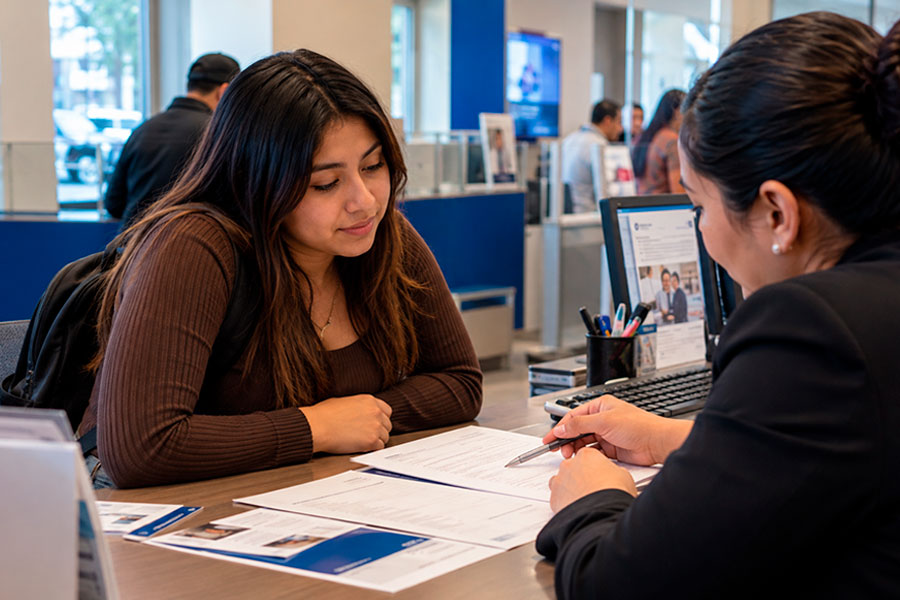
Philadelphia, Pa.- Recently, I had the opportunity to help a 19-year-old woman open her very first bank account.
It wasn’t a complicated process, and it didn’t require a significant amount of money. But as we went through the experience, I was reminded that something many of us take for granted can be intimidating, unfamiliar, or even overwhelming for someone who has never done it before.
And that’s really what inspired me to share this story.
This young woman was working as an intern at Esperanza, but she didn’t have a checking or savings account. Like many young people, she simply hadn’t been introduced to the banking system or shown how to get started.
So, we started with a little research.
I looked at banks in her community because I wanted her to have a convenient location, somewhere she could walk into, ask questions, and begin developing a relationship with the people who worked there.
I also learned that several banks offer student or young adult accounts with reduced or waived monthly fees, low minimum balances, and relatively simple requirements to get started.
We talked about what she would need to bring: a government-issued ID, information to verify her address, her Social Security number or other acceptable identification number, and potentially a small opening deposit. Depending on the bank and the account, that deposit might be $25 or $50, although some accounts require no opening deposit at all.
I explained why having a bank account matters, particularly when you’re working and earning your own money.
A checking account allows you to receive your paycheck through direct deposit, pay bills, make purchases, and manage your everyday expenses. A savings account gives you a place to begin setting money aside, whether that’s $5, $10, or $25 at a time.
The amount you start with isn’t nearly as important as developing the habit of saving.
When we arrived at the bank, we walked in and asked to speak with a banker. We were introduced to someone who sat down with us, explained the different accounts, reviewed the requirements, and walked her through the process.
I encouraged her to ask questions. What fees should she be aware of? Is there a minimum balance? How does the debit card work? What happens if she spends more than she has? How can she access her account online? Can she set up automatic savings?
These are basic questions, but they’re important ones. And for someone entering a bank for the first time, simply knowing that it’s okay to ask them can make a difference.
I also wanted her to understand something beyond just opening an account.
A bank is more than a place to keep your money. It can also be a place to learn about money.
I explained the value of developing a relationship with a banker, someone who can help her understand financial products and services as her needs evolve.
Today, it might be a checking account and a small savings account. Tomorrow, it could be learning about interest, certificates of deposit (CDs), establishing credit, financing a car, or eventually purchasing a home.
Not every financial product is appropriate for everyone, and a banker shouldn’t be your only source of financial advice. But having someone who can explain your options and answer questions is a valuable resource.
For me, the most meaningful part of the experience wasn’t the paperwork or the account itself. It was watching a young person become a little more comfortable navigating a financial institution and beginning to understand that she belongs in that environment just as much as anyone else.
And that’s an important lesson.
Financial literacy isn’t something we’re born knowing. It’s something we’re taught, something we practice, and something we develop over time.
For parents, guardians, mentors, and anyone supporting young adults, I would encourage you to have these conversations early.
If your teenager or college student is working and earning money but doesn’t have a bank account, help them take that first step. Research local banks or credit unions together. Compare accounts, particularly those with no monthly fees or minimum balance requirements. Explain the difference between checking and savings. Talk about budgeting, avoiding overdraft fees, protecting their account information, and setting aside a portion of every paycheck.
And if possible, go with them.
Let them sit across from the banker, introduce themselves, ask questions, and participate in the process. Don’t just do it for them. Help them learn how to do it for themselves.
I also recognize that not every parent has had the opportunity to learn these things. Some families have historically been underserved by financial institutions, and others may have had difficult experiences with banks or simply never had someone explain how the system works.
Sometimes the most valuable thing we can offer a young person isn’t money. It’s our time, our experience, and the willingness to walk alongside them as they learn something new.
Opening a bank account won’t make someone financially secure overnight. It won’t solve every financial challenge. But it creates an opportunity to build confidence, establish good habits, and begin taking ownership of their financial future.
What took us a relatively short amount of time may have a lasting impact on how this young woman approaches money for years to come.
Often empowerment doesn’t begin with a big financial decision. Sometimes it begins with walking through the front door of a bank, sitting down, asking a few questions, and realizing that you belong there.
And sometimes, all a young person needs is someone willing to walk through that door with them.