


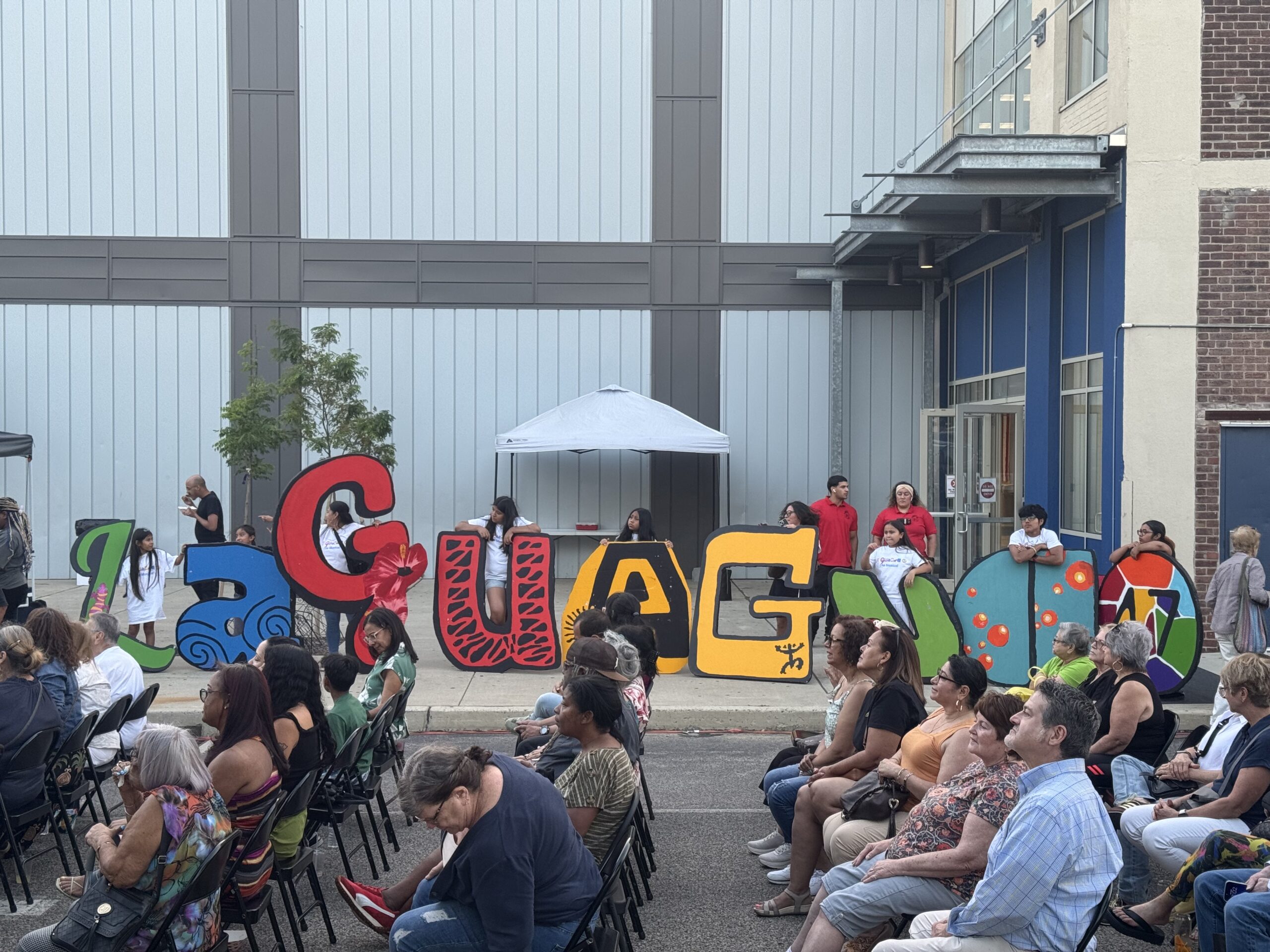
Philadelphia, PA – On the evening of Saturday, July 25, a Philadelphia bus route became more than a line on a transit map. At Esperanza Arts Center’s Arte en las Calles celebration, La GuaGua 47 transformed the familiar Route 47 into a moving symbol of migration, memory, and the human need to belong.
Presented as an outdoor concert performance the new bilingual Puerto Rican musical brought together the La GuaGua 47 Orchestra and singers as part of an evening filled with music, food, dancing and community. At the center of the story is Lucía, a 15-year-old whose family loses everything and moves from the mountains of Puerto Rico to Philadelphia. Separated from her grandmother, her friends and the only home she has known, Lucía boards the 47 bus while struggling with the feeling that she has become invisible.
For creator, composer and writer Alba Martínez, Lucía’s age was a deliberate choice. Martínez said she had not seen enough stories told through the perspective of a young person who had no control over leaving home. Young people often find themselves caught between two worlds, she explained, surrounded by love but still forced to face uncertainty and grow up quickly.
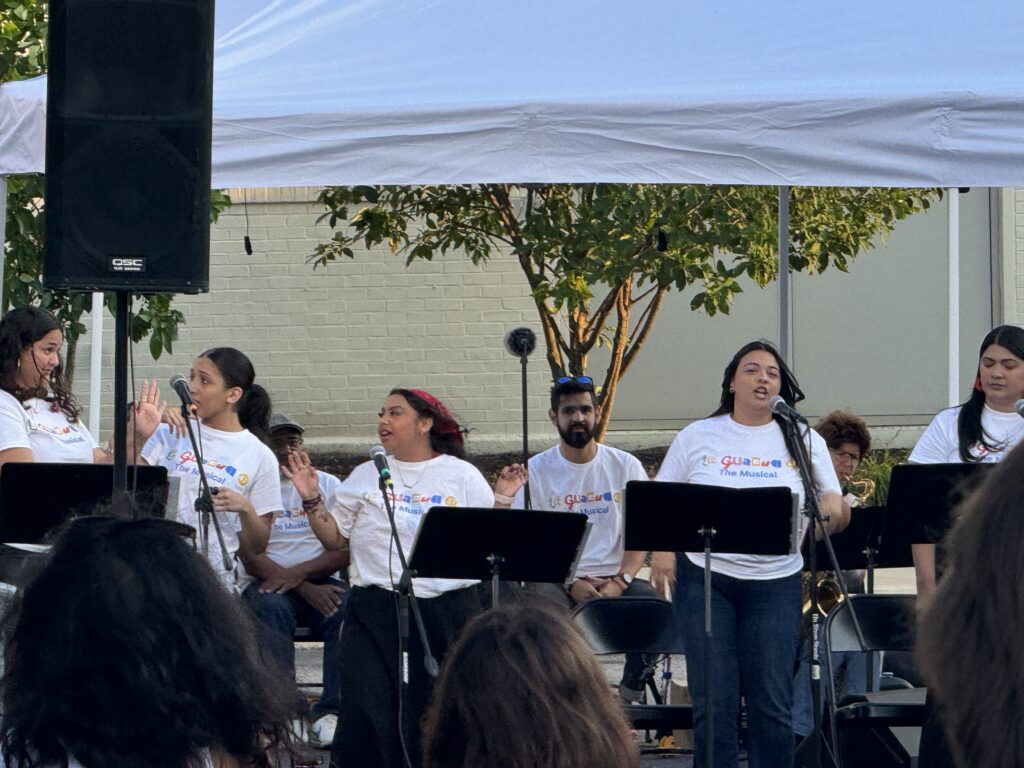
Lucía’s experience is distinctly Puerto Rican, but the emotional journey is universal. Anyone who has left a beloved place, crossed a border or started over in a new city may recognize the loneliness of arriving where nobody knows their name. Yet GuaGua 47 does not leave its central character alone in that uncertainty. The bus carries her toward people who begin as strangers and become family “over the course of an afternoon.”
That message reached community resident Adia Sánchez, who moved to Philadelphia from Puerto Rico when she was five years old. Sánchez said the performance introduced her to places, sayings and cultural references she had not grown up knowing firsthand. Her last trip to Puerto Rico was in 2011, following the death of her grandmother, but the music reopened a connection that distance and time had never erased.
“My roots were coming out,” Sánchez said. “I’m connected.”
Her reaction reflects the deeper purpose of the musical. Representation is not simply about seeing a Puerto Rican flag or hearing Spanish onstage. It is about creating a space where people raised away from the island can still recognize themselves, learn what came before them and feel pride in what their community has built.
“We came a long way,” Sánchez said.
Route 47 carries its own meaning for Martínez. In 1985, shortly after arriving in Philadelphia, she was lonely and searching for a connection to home. Someone told her to take the 47 bus. When she stepped off, she remembered smelling, seeing and hearing home around her. She visited Centro Musical, bought records and Puerto Rican art, and placed a vejigante mask on the wall of an otherwise empty home.
Decades later, that memory became a song. The song became a film, and continued writing eventually revealed a larger story. Martínez came to understand that her sense of home existed not only in Puerto Rico, but also within Philadelphia’s Latino community. The musical therefore belongs to both places. Puerto Rico is not merely a prologue to the Philadelphia story; it is part of the same journey.
The production’s sound is equally personal. Martínez, a self-taught musician, described the score as being built from “the soundtrack of my life.” Latin music comes from what she knows and carries within her, while the musical-theater elements have been strengthened through study and collaboration with experienced arrangers, orchestrators and theater artists.
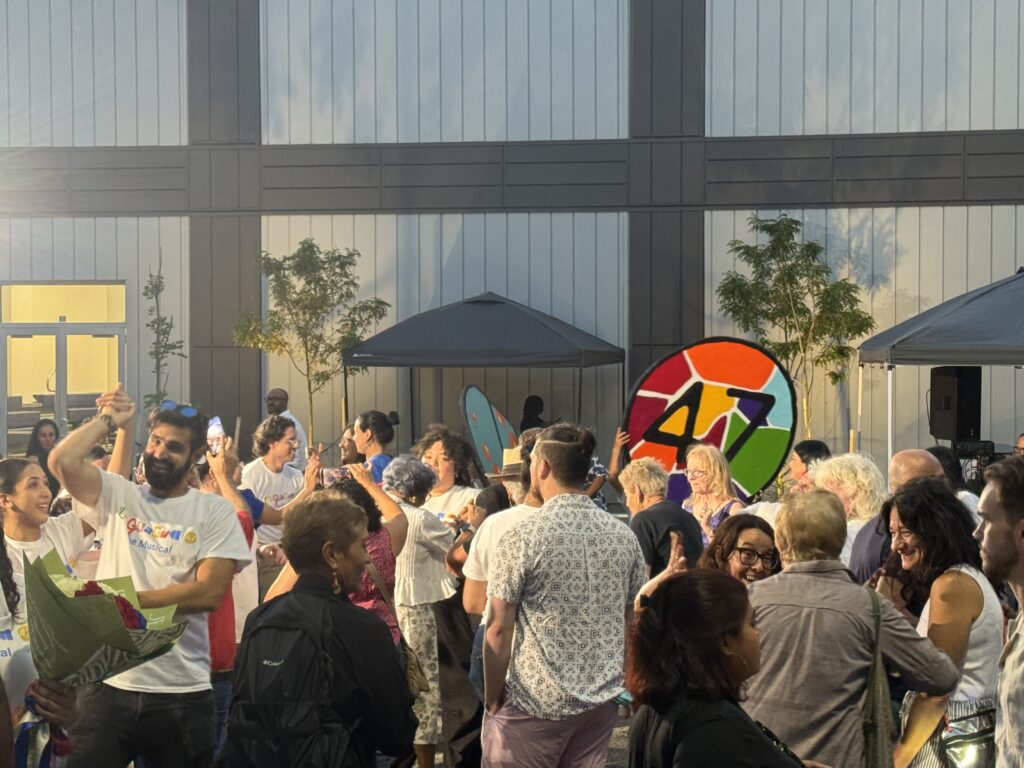
That combination gives LaGuaGua 47 its identity: bilingual, rooted in Puerto Rican culture and shaped by Philadelphia. Rather than focusing on what separates Latino communities, Martínez said the musical asks audiences to recognize what unites them. Belonging can determine whether someone feels seen, whether they can succeed in a new environment and whether a strange city can eventually become home.
The July 25 performance was part of the musical’s continued development before a planned full production with Philadelphia Theatre Company during its 2027-28 season. Martínez wants the community to remain part of that process, not only by attending, but by responding honestly to the songs, characters and story.
The stakes are larger than one production. Stories created by and for Latino Philadelphia rarely reach major theatrical stages without confronting long odds. Martínez is clear that La GuaGua 47 intends to challenge those odds.
The musical is, she said, “made with love” for Latinos, Philadelphians and anyone who has moved from one place to another and felt lonely or invisible. Its message is both simple and urgent: home is not only the place we leave behind. Sometimes, home is the community that catches us when we arrive.
Like the bus that inspired it, La Guagua 47 is still moving. Its destination is not only a theater stage, but a future in which Puerto Rican stories are not treated as side routes. They are central, visible and carried forward together.
For more information about La GuaGua 47, its development, upcoming performances and how to support the production, visit www.laguagua47musical.com.