


Critics argue the facilities plan disproportionately impacts Black and Latino students and repeats the mistakes of 2013.
Inside a packed town hall held at the School District of Philadelphia, the students, parents, and elected officials delivered a unified message: invest in our children, don’t repeat the mistakes of 2013 — and Lankenau’s national award, announced days before the vote, only sharpened the urgency. At the center of the dispute is the district’s Facilities Planning Process master plan. Released on January 22, 2026, it originally proposed closing 20 schools over the next ten years, but after hearing dissenting feedback from the community, the number was reduced to 18 schools. The plan also includes the merger of six schools and the modernization of 159 buildings. The projected cost would be in the area of $2.8 billion.
Students in colorful T-shirts representing several schools slated for closure sat in rows of seats arranged before the podium, some holding handwritten signs, others gripping papers with the three-minute statements they had rehearsed for the allotted time. The mood was not angry –exactly, yet it felt like a face-off at times. The audience was determined, the sort of determination of students, parents, and teachers who have been here before in past closure meetings. They come to speak their minds, but they suspect that their words might not be taken to heart or implemented. According to the Superintendent, Dr. Tony Watlington, financial considerations necessitate decisive action. The school district points to District-wide surveys with 13,700 responses, 35 data verification sessions with principals, and the public release of a data website that shares scores for all schools.
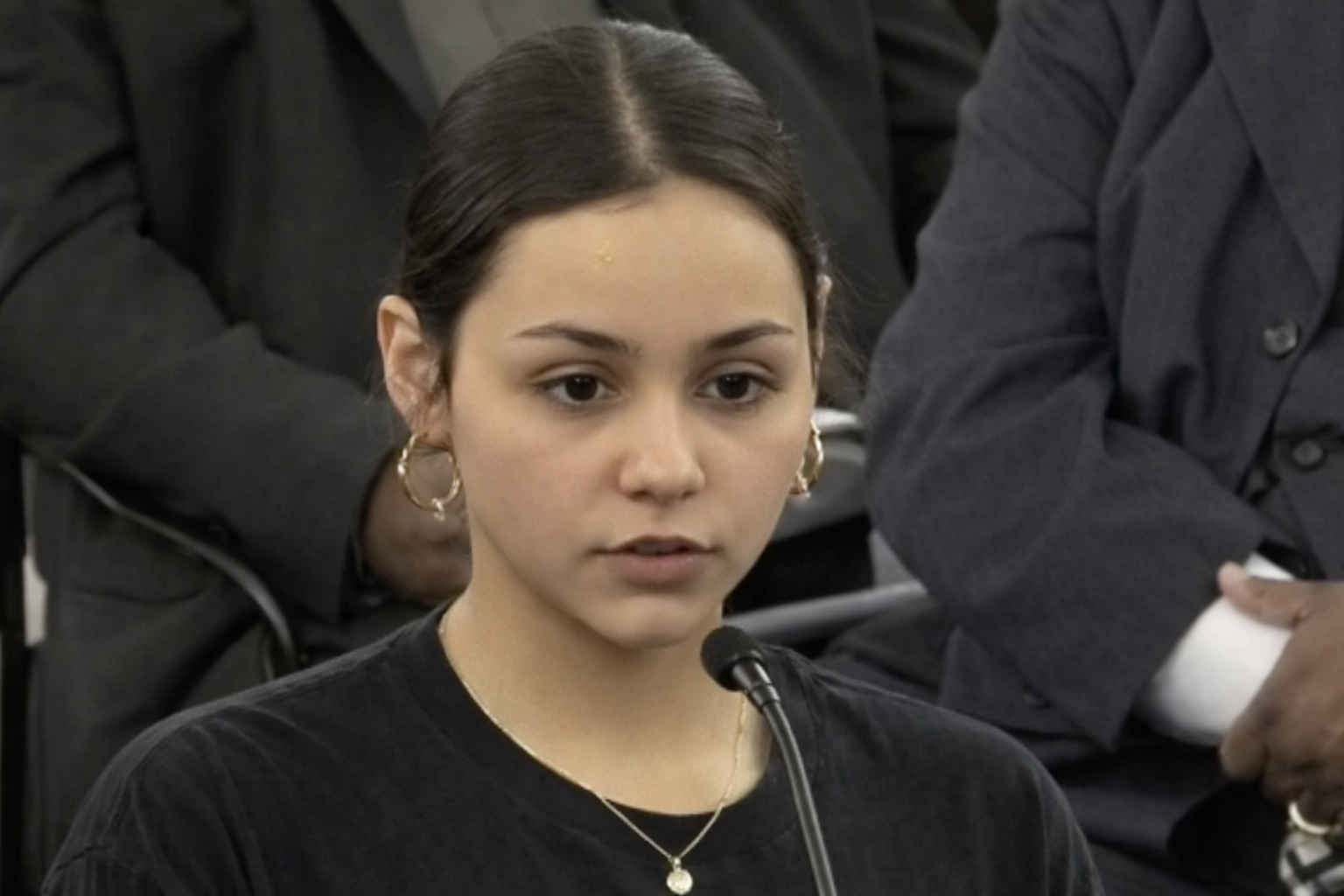
One by one, they walked to the microphone, and one by one, they said the same thing in different ways: do not close our schools. Asia Alicea, a student at Lankenau High School, offered a clear response. The plan, she said, lacked care for the students it claimed to serve. “This facility plan has no heart,” she told the board. “It’s no plan.” The room went quiet.
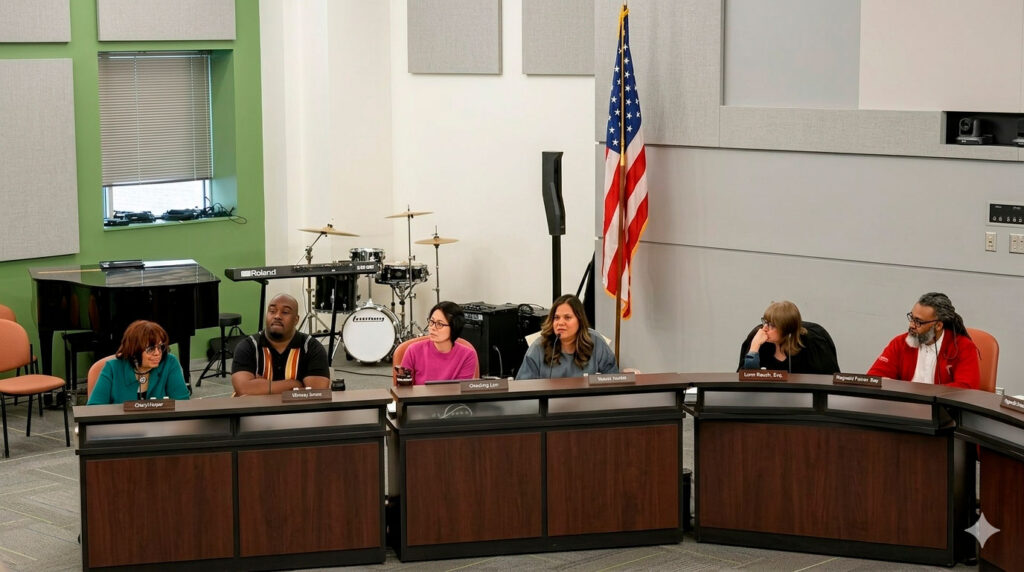
Board President Reginald Streater, who at times appeared visibly frustrated as speakers ran over their time limits or voices called out from the back of the room, has defended the plan as a fiscal necessity — arguing that the district cannot continue to maintain buildings that are significantly underenrolled. Superintendent Tony Watlington Sr. has said publicly that closing schools in the nation’s sixth-largest city is “inevitable” given the financial realities. On Thursday night, no one who came to the microphone agreed with that framing.
I reached out to the School District of Philadelphia Communications Department for comments on whether the March 2026 board meetings had affected the future of the proposed Facilities Master Plan. The School District of Philadelphia did not respond to a request for comment by press time.
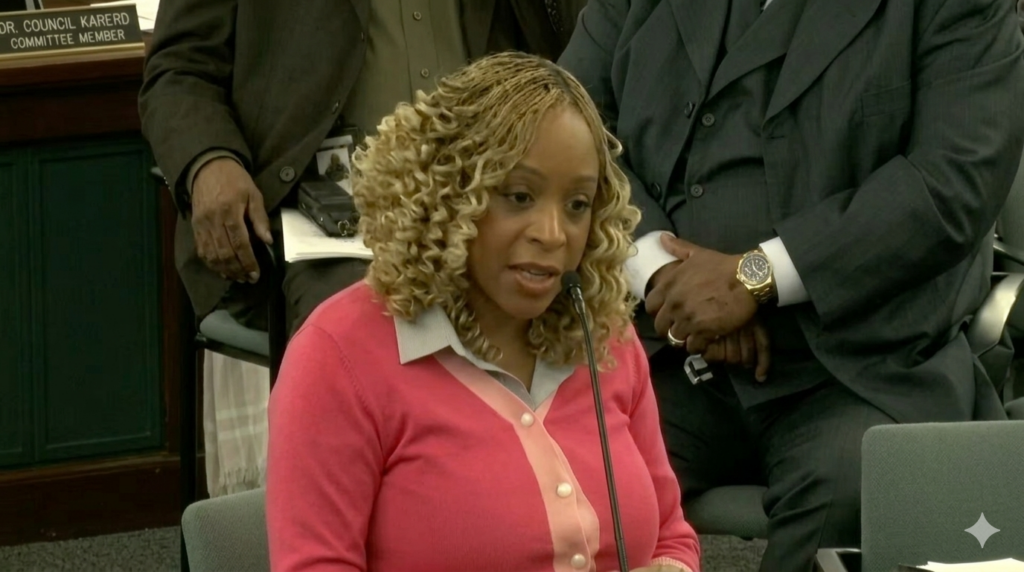
Students repeatedly invoked the names of elected officials who had met with them and taken their concerns seriously: Councilmembers Cindy Bass, Quetzy Lozada, and Jamie Gauthier, and Dr. Nina Ahmad, City Councilmember at large. Councilmember Gauthier, who represents District 3 and also spoke at the March 6 board meeting, returned on March 12 with the same argument she had made a week earlier. She urged the board to slow down, to be precise about its data, and to treat the schools with respect. “The school board owes the affected communities a slower, more transparent process”, she said.
State Representative Morgan Cephas, who represents the 192nd District in West Philadelphia, thanked the students, staff, parents, and supporters who had attended the hearings. She raised a concern about transportation, suggesting that reassigned students could face commutes of an additional hour or more each day, time taken from studying, family, and rest. Representative Cephas also questioned whether the value of school buildings as real estate had played any role in selecting which schools to close, arguing that development interests and educational decisions do not belong in the same conversations. The plan’s equity, she said, was also questionable. According to the district’s own data, Black and brown students constitute roughly 70 percent of total enrollment,
yet represent 90 percent of students who would be affected by the proposed closures.
Dr. Nina Ahmad, a PhD in chemistry and a City Councilmember-at-large, spoke with particular urgency about what would be lost if specialized programs like Lankenau Environmental Sciences Magnet High School were dissolved rather than protected, calling on the district to pursue a broader partnership — with City Council, the state legislature, and philanthropic partners — before making life-changing decisions.
Lankenau High School drew the largest and most vocal contingent of supporters at the meeting, and for reasons that went beyond neighborhood loyalty. Lankenau is the only high school in Philadelphia with a curriculum built around environmental science — offering students structured pathways into ecology, agroecology, and urban agriculture that exist nowhere else in the district. The district’s proposal would close Lankenau and redirect its students to George W. Saul High School, which specializes in animal science. One Lankenau student put the problem precisely: “You cannot tell a botanist that studying dairy cows is enough”. The disciplines are not interchangeable, and the students, their teachers, and their supporters made clear they understood the difference better than the plan’s architects appeared to.
Just days before the board meeting, Lankenau Environmental Science Magnet High School took home two of the most prestigious honors at the 2026 PHS Philadelphia Flower Show: the Alfred M. Campbell Memorial Trophy, awarded for the educational exhibit making the most inventive use of plants, and a PHS Gold Medal for excellence in educational display. The winning exhibit, titled “Inheritance,” traced the cultural histories of plants and elements, tracing ancestral foodways. Individual students earned second-and third-place awards for ten plants on display at the show. Supporters of the school noted the painful irony: Lankenau was named a model for environmental education in the same week the district proposed closing it.
When the district closed 30 schools between 2012 and 2013 — six in the first year, twenty-four in the second — more than 10,000 students were displaced, a majority of them Black or from low-income families. The neighborhood schools that received those displaced students fared no better: a landmark study by University of Pennsylvania education professor Matthew Steinberg and Penn criminology professor John MacDonald, published in the Economics of Education Review and drawn entirely from Philadelphia student data, found that academic achievement at receiving schools declined measurably for up to two years following the influx of displaced students. Displaced students themselves accumulated significantly more absences and suspension days, and those behavioral consequences grew worse the farther they had to travel to their new schools. The district has said that it has studied those findings and included safeguards in the current plan.
The message from speaker after speaker was consistent and, by the end of the evening, almost rhythmic in its insistence: the neglect of these buildings has been deliberate and long. Moffet School — a small, diverse neighborhood school with a devoted community — was cited as an example of what is lost when institutions that anchor working-class neighborhoods are treated as expendable. Speakers also made clear that the schools absent from the closure list were not safe: those buildings, too, require real investment, not the quiet deterioration that precedes the next round of cuts. Asia Alicea was still in the room when the meeting ended. She had said what she came to say and moved many in the room. Whether the board had heard her was, as of Thursday night, an open question.