


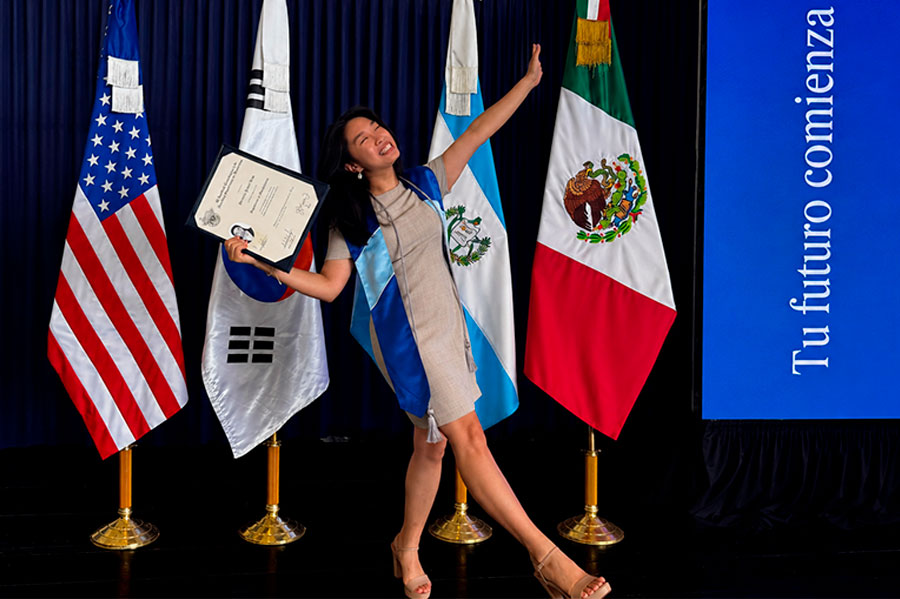
“So, who are you rooting for? Mexico or Korea?” Priscila Kim’s Mexican friends asked her as the World Cup match put the two teams head-to-head.
Priscila was born in Pennsylvania; she is of Korean descent and was raised in Mexico. She speaks English, Spanish, and Korean fluently; she is “tricultural,” and currently lives in the suburbs of Philadelphia.
Answering that question could be a dilemma even for a “child of globalization” like her. And if the question comes from someone in the passionate Mexican fan base, it requires even more thought.
Almost all of us might wonder—paraphrasing Cuban singer Antonio Machín in Corazón Loco—whether it’s possible to love two, or even three, teams at once without being “crazy.”
But for Priscila, a brilliant Mechatronics graduate from Tecnológico de Monterrey and multicultural since birth, feeling torn was no surprise. Especially as the 2026 World Cup is shaping up to be the most diverse tournament in the history of international soccer (nearly one in four players represents a country different from where they were born, and many are children of immigrants or were born abroad). Globalization and naturalization laws have completely transformed the composition of national teams.
“It’s definitely a difficult question. I usually try to avoid it, but after being asked so many times over the past few days, I’ve really thought about it—and if I had to choose between the two, I would choose Mexico.”
She clarifies, however: “If we’re talking about the Mexico–Korea match, I’ll go with Mexico. But if we’re talking about the World Cup overall, the answer is easier: I support both!”
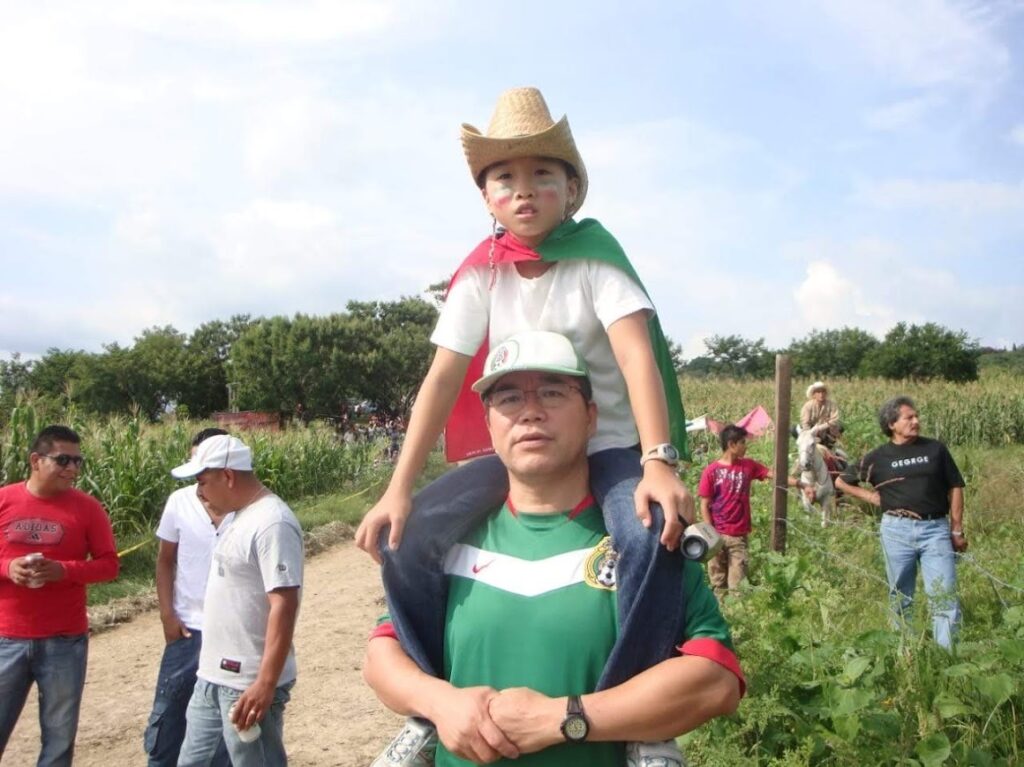
Priscila grew up watching matches in Mexico, wearing the green jersey. And although she may look Korean on the outside, she says:
“Inside, I always say I’m Mexican at heart—more Mexican than mole.”
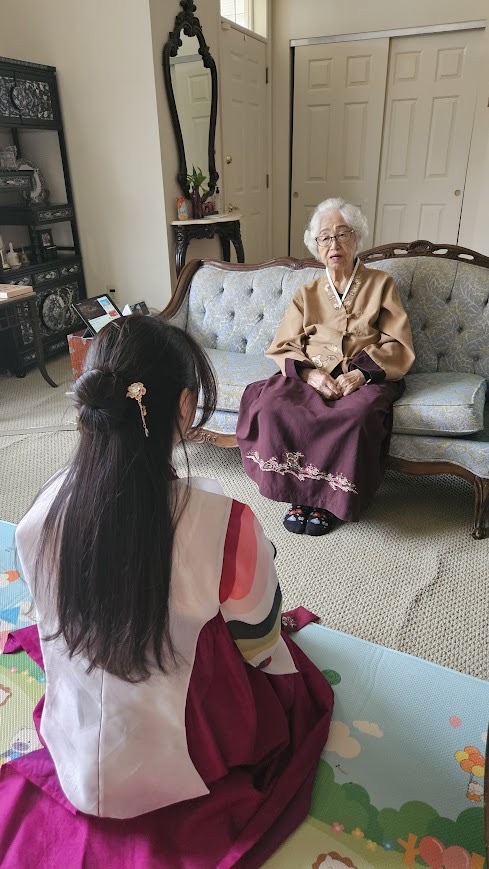
The young engineer explains that her multicultural identity has helped her beyond simply interacting with different cultures:
“I always keep an open mind when I meet new people or enter a new environment, because I understand that not all of us were raised the same or share the same perspective. What may be considered rude in one place can be a sign of respect in another.”
She also recognizes the role of social media in this process of globalization.
“Thanks to social media, it’s much easier to learn about other cultures. I’ve definitely seen progress in terms of respect, but there’s still a lot more to learn and understand about different cultures and how to treat each other with respect despite our differences.”
The American-Mexican-Korean says that, interestingly, she doesn’t have many close friends who share her multicultural background.
“I would love to have more friends in the same situation. I think they would understand a part of me that very few people really can, even if I explain it.”
At the same time, she feels “grateful for all the friendships I’ve had in each country—I’ve learned so much from them and from the cultures that are now part of me. It’s like building a puzzle!”
Regarding her intercultural experiences—since she actively integrates her multicultural identity—she says it has helped her see life and people from a beautiful perspective.
“But of course, that same part of me also makes it very difficult to relate to and fully identify with others. There will always be a part of me that doesn’t fit in 100%.”
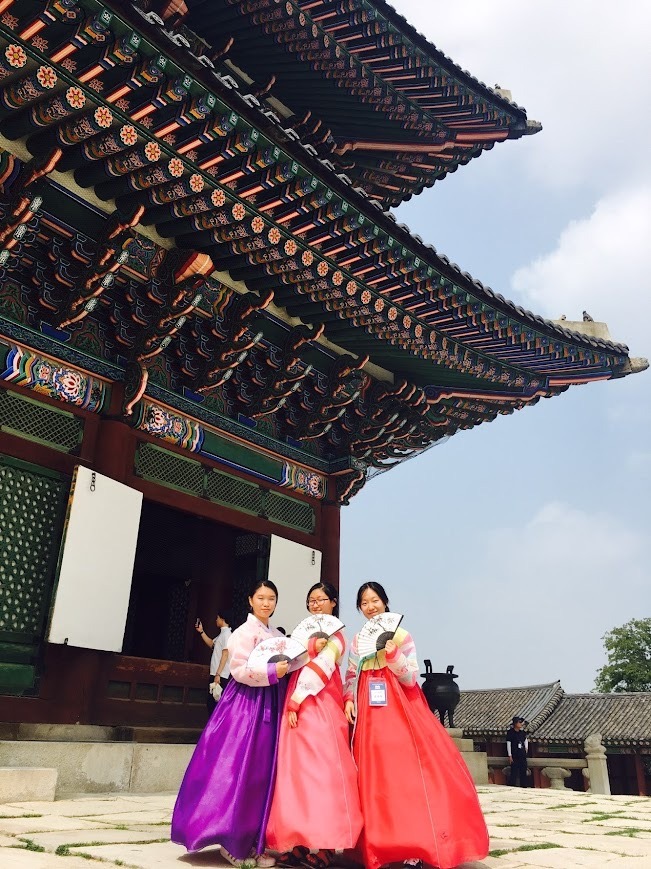
Her identity is a layered one, and she realized that difficulty of “fitting in” when she visited Korea for the first time. She thought she would finally feel at home “because I would look like everyone else,” but instead, she was surprised to find that it was the place where she felt least at home.
Over time, she learned: “I carry my home with me.” And as the Mexican saying goes, “My house is your house,” she has decided that her home is wherever she is welcomed.
“I’m very fortunate to have friends who open their doors to me all over the world,” she says with a smile.
She approaches people’s curiosity with humor. There are always questions.
“When I lived in Mexico, people would always ask, ‘Where are you from?’ or ‘Are you Chinese?’ (although, thanks to K-pop, that has changed a bit).”
Now that she lives in the United States, people often ask her, “Why do you speak Spanish so well?” or, “But where are you really from? What’s your background?”
She admits that answering these questions can sometimes be exhausting—especially when they are phrased in a way that feels intrusive or disrespectful. Still, Priscila recognizes that, in most cases, they stem from genuine curiosity, and she enjoys sharing her story.

“I think I’ve found a balance. I understand that most people around me won’t fully grasp who I am, but I don’t feel like I’m holding myself back either. There are people with whom I can be completely myself, and even if they don’t understand me 100 percent, they still love and accept me for who I am.”
In addition, Priscila explains that she ultimately finds her identity in Christ. “So I walk confidently in the person God created me to be—with all three cultures!”
As the conversation comes to an end, Priscila signs off in the only way that feels fitting:
¡Viva México! and 대한민국 만세!! (Long live Korea!)