

WALLINGFORD, PA — As the United States approaches the 250th Anniversary of the signing of the Declaration of Independence, the question of representation is not abstract. It is a vital and relevant question. Who is recognized in the story of the development of our country? — and who remains unseen? At the Duke Gallery inside the Community Arts Center, Puerto Rican artists offered a powerful answer.
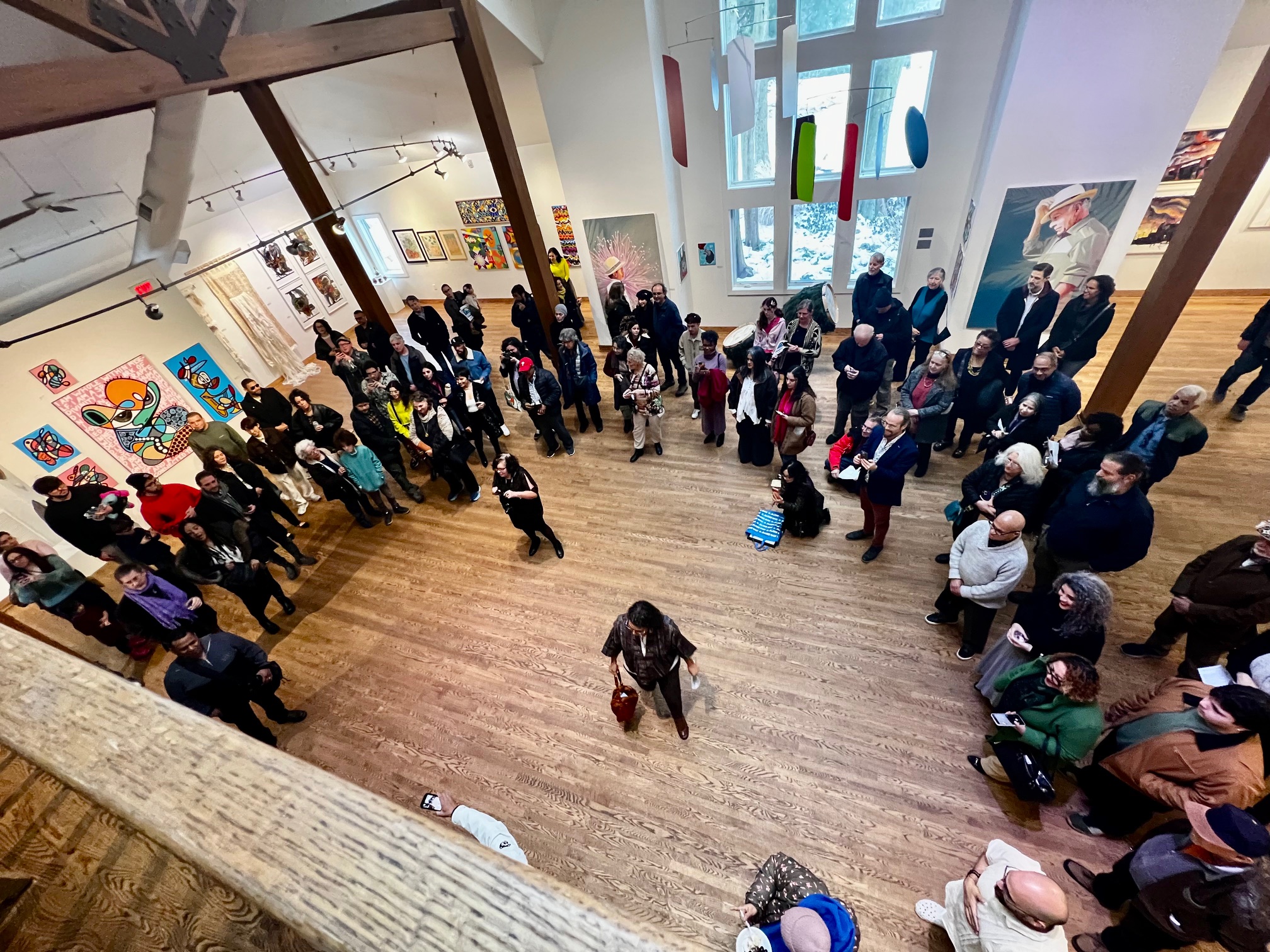
On February 15, 2026, during the reception for Confluencia Visual, a Puerto Rican Art Exhibit, the gallery was filled with saturated color, conversation, and a rich perspective. The exhibit reception transformed the space into something larger than an art show. It became a gathering of Puerto Rican artists and a statement of historical presence and cultural pride. The audience also reflected the exhibit’s broader reach — longtime urban community members alongside suburban patrons, Spanish and English conversations flowing freely.
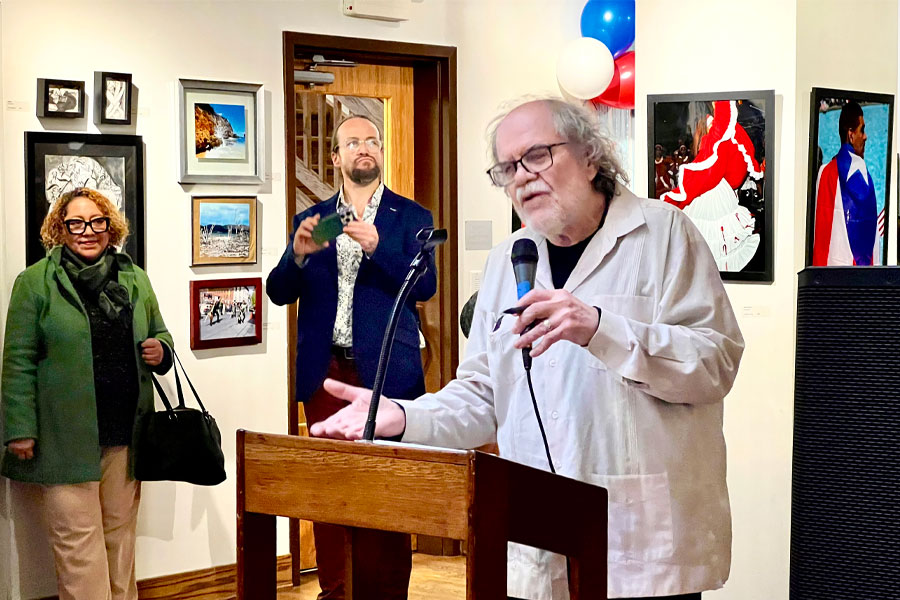
The exhibit was conceived by Paul Downie, Director of the Wallingford Art Center, who wanted to ensure Puerto Rican inclusion in the nation’s semiquincentennial observance. Downie reached out to Carmen Febo-San Miguel, former director of El Taller Puertorriqueño, in turn, she contacted longtime arts advocate Johnny Irizarry, former director of the Center for Hispanic Excellence: La Casa Latina at the University of Pennsylvania, former Executive Director of the Lighthouse, former Director of Taller Puertorriqueño, and currently a lecturer of Latin American and Latinx studies at the University of Pennsylvania. Irizarry clearly described the origin of the exhibit. “We didn’t want to do a narrowly curated show.
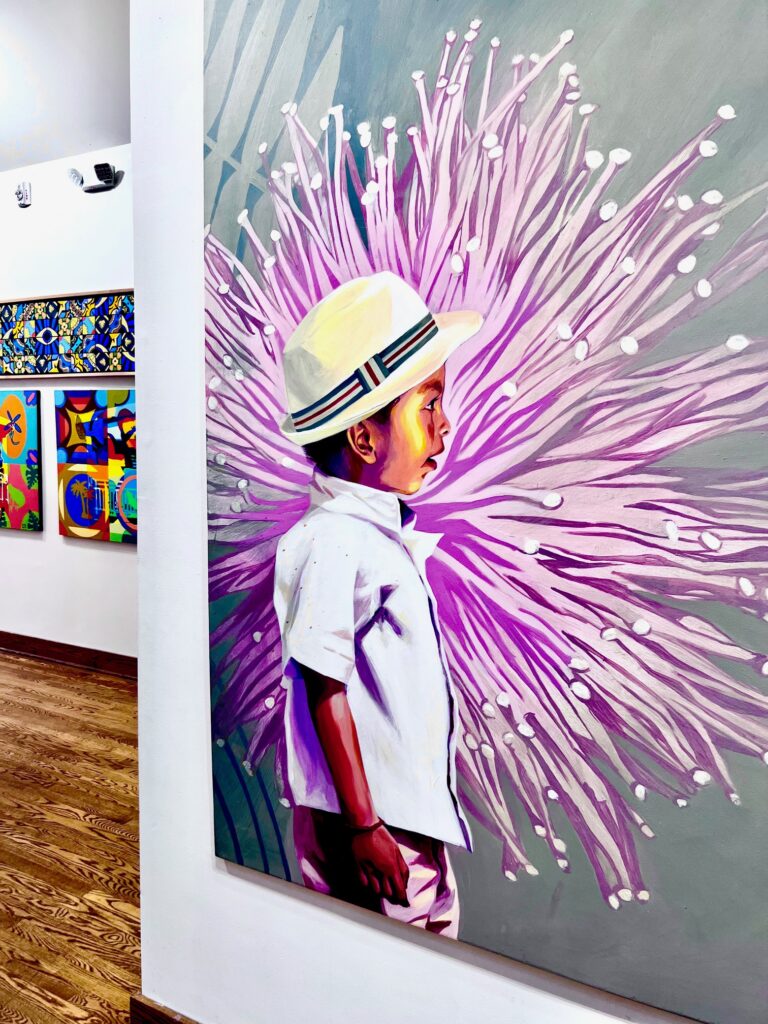
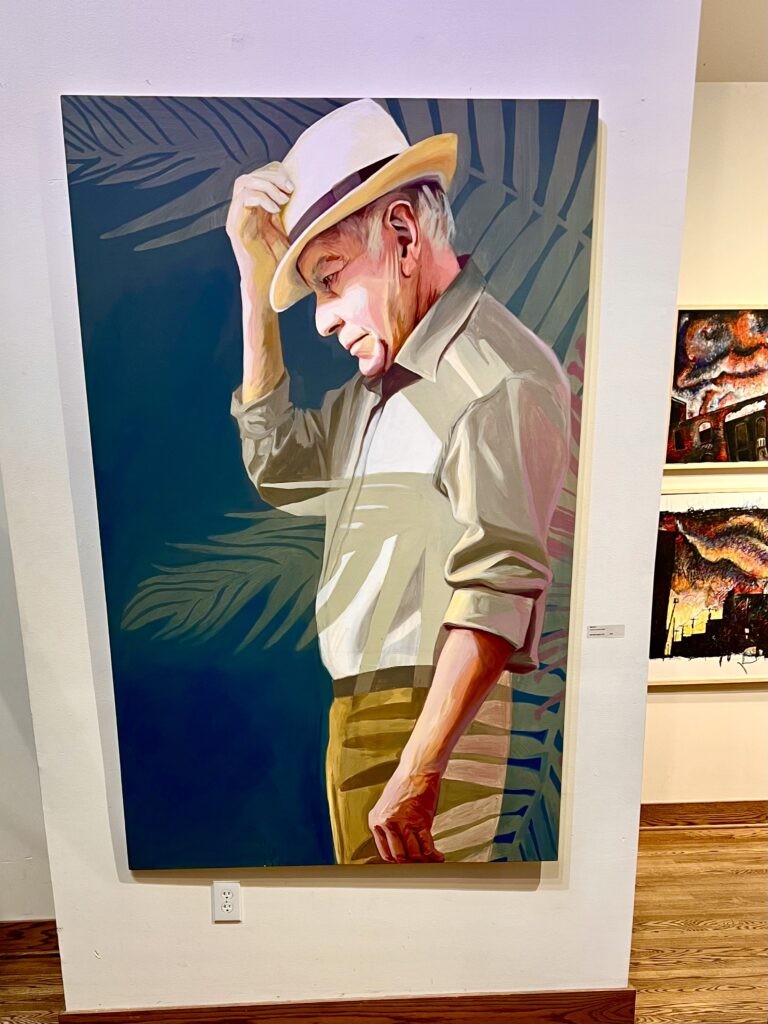
We wanted to show that historically, the Puerto Rican community has been here in the Philadelphia area and has grown and contributed to our City. The important thing is that artists have been working here for decades. That intention shaped Confluencia Visual — not as a selective showcase, but as evidence of continuity.” Inside the Duke Gallery, color carries weight. Mango oranges and hibiscus reds pulse against white walls. Deep blue tones stretch across canvases like twilight over North Philadelphia rooftops.
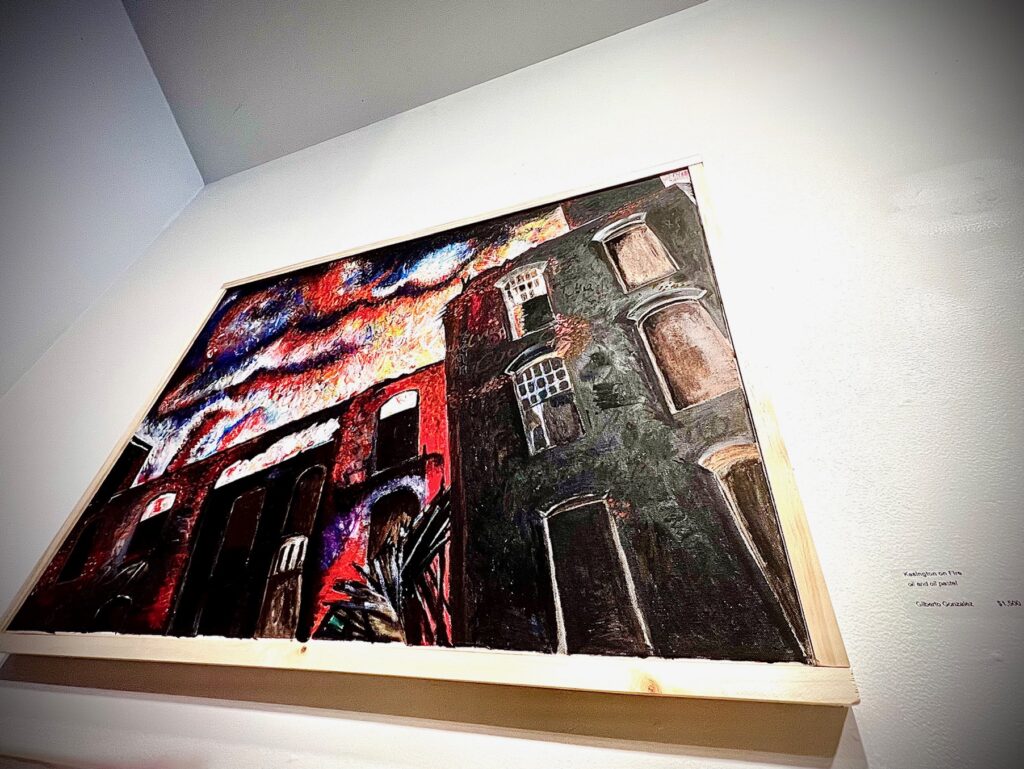
The exhibit does not whisper; it declares! Among the featured artists was Luz Selenas, who has documented Puerto Rican life in Philadelphia since 1972. Her presence anchored the exhibit historically and emotionally. “Our community needs an avenue to express our creativity,” Selenas said. “That is why I have always supported young artists. It’s important to encourage them to exhibit and sell their work.”Luz Selenas’s photographs preserve migration stories and neighborhood memories. Faces emerge with dignity — steady, unflinching. Muralist Betsy Casanas presented Las Paredes del Barrio, a dynamic work inspired by the Puerto Rican culture of North Philadelphia in compositions that feel alive with movement. Artist Gilberto Gonzalez exhibited two striking pieces, including Kensington Fire, a work that blends searing oranges and smoky grays — flames rising against an urban skyline. The painting captures both destruction and resilience, reflecting the lived realities of often-overlooked communities. The reception also drew visitors from beyond Philadelphia’s Puerto Rican neighborhoods. Sandra Roberts, a local from Newtown Square, attended with her friend Sherryl Hendershot from the Clay Studio.
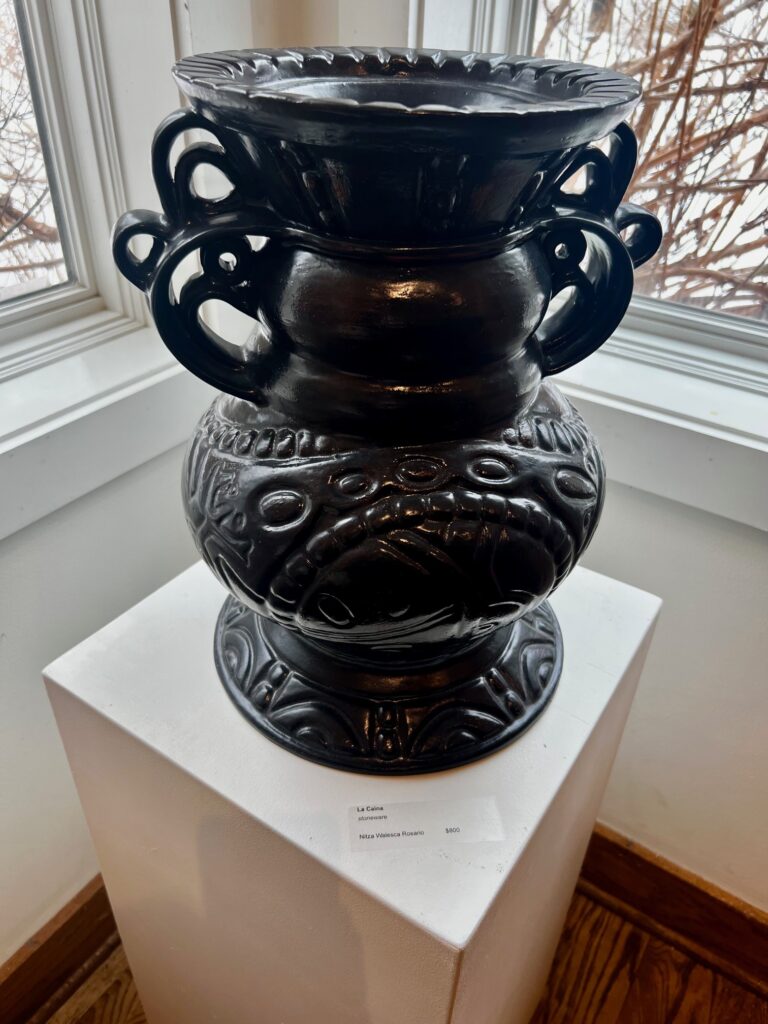
They were admiring the show. Sandra shared that she had hosted her daughter’s sweet sixteen celebration at the Community Arts Center, praising the venue’s welcoming atmosphere. This time, she came specifically to view the work of ceramic artists Roberto Lugo and Nitza Walesca Rosario, bridging traditional craft and contemporary social commentary. Guests enjoyed delicious, traditional Puerto Rican cuisine — aromatic arroz con gandules, tender bacalao con verduras, and notes of flavors as vibrant as the artwork itself. The scent of “comida criolla” lingered in the air, reinforcing that culture is experienced through all senses. The food added its own layer of authenticity. The title Confluencia Visual — visual confluence — is deliberate.
Many possible names were suggested, but “Confluencia” spoke to the organizers. It represents merging generations, merging geographies, merging histories. Established artists expressing community voices, bridging the island and diaspora. Philadelphia is home to one of the largest Puerto Rican populations outside the island, second only to New York, in the words of Johnny Irizarry. Yet cultural representation in regional art institutions has not always reflected that reality. This exhibit addresses that gap.
For Irizarry, the moment is about permanence, not symbolism. “We have always been part of the American story,” he said. “This exhibit shows that clearly.” As winter light faded outside the Duke Gallery, the colors inside remained radiant, layered, unapologetic. If the 250th anniversary of the American Revolution is to truly reflect the breadth of the nation’s history, Puerto Rican contributions and lived experiences must be welcomed, not as an afterthought, but as an essential part of what it means to be a United States citizen and part of the fabric of the United States. It must recognize the generations of Puerto Rican artists who have shaped this country’s cultural landscape with bold color, unyielding vision, and enduring presence. At the Duke Gallery in Wallingford, that recognition has already begun.