


The morning began in shades of gray, the sky low and damp, rain tapping the sidewalks like a slow drumroll. But just before noon, as marchers started gathering on the North Apron of Philadelphia City Hall, something shifted. The clouds thinned, then opened. Warm March sunlight spilled across the plaza as if the weather itself had arrived to bolster the crowd’s demands.
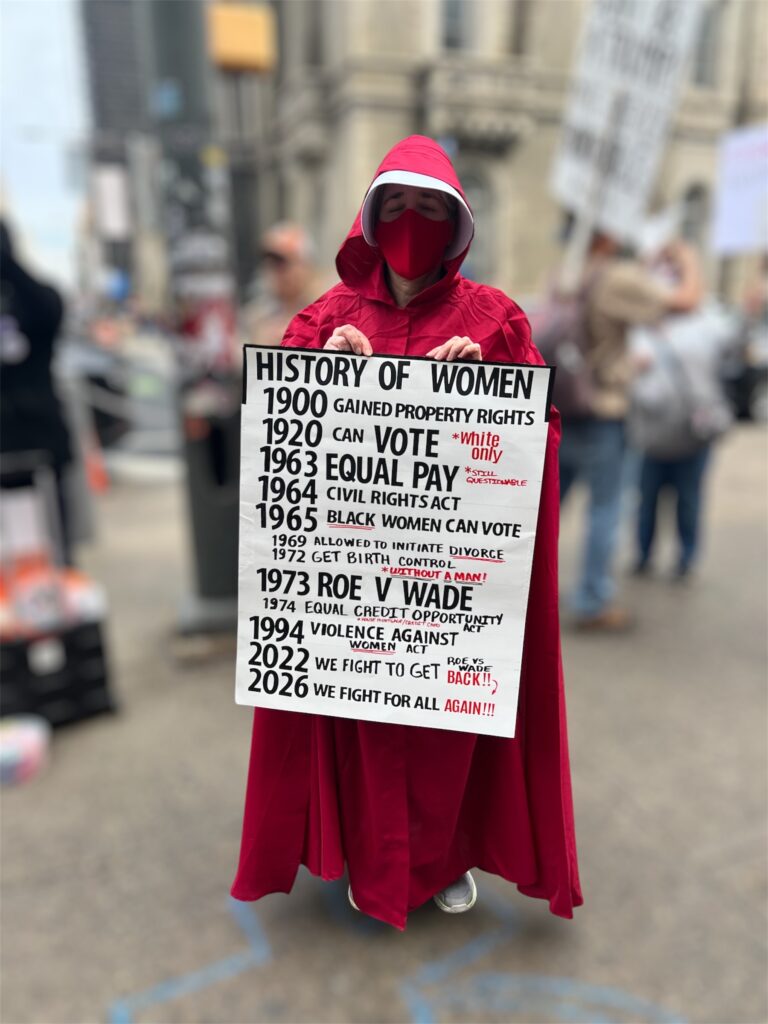
Amid the gathering, one figure stood completely still. Draped head to toe in a long scarlet cloak and crowned with a stiff white bonnet, she looked like a warning brought to life. Impossible to miss—which was precisely her intention. The woman, who gave her name only as Melinda M., came dressed as a handmaid from Margaret Atwood’s The Handmaid’s Tale: the red of subjugation, the white of enforced purity, the silence of a woman whose choices have been stripped away one law at a time.
“This is what the chipping away of women’s rights looks like,” she said, her voice steady, the voice of someone who knows exactly what she is talking about. She was referring to the 2022 Supreme Court decision that overturned nearly 50 years of constitutional protections and returned authority over abortion to individual states, paving the way for sweeping restrictions nationwide. “It doesn’t stop there,” Melinda added. “It never stops there.”
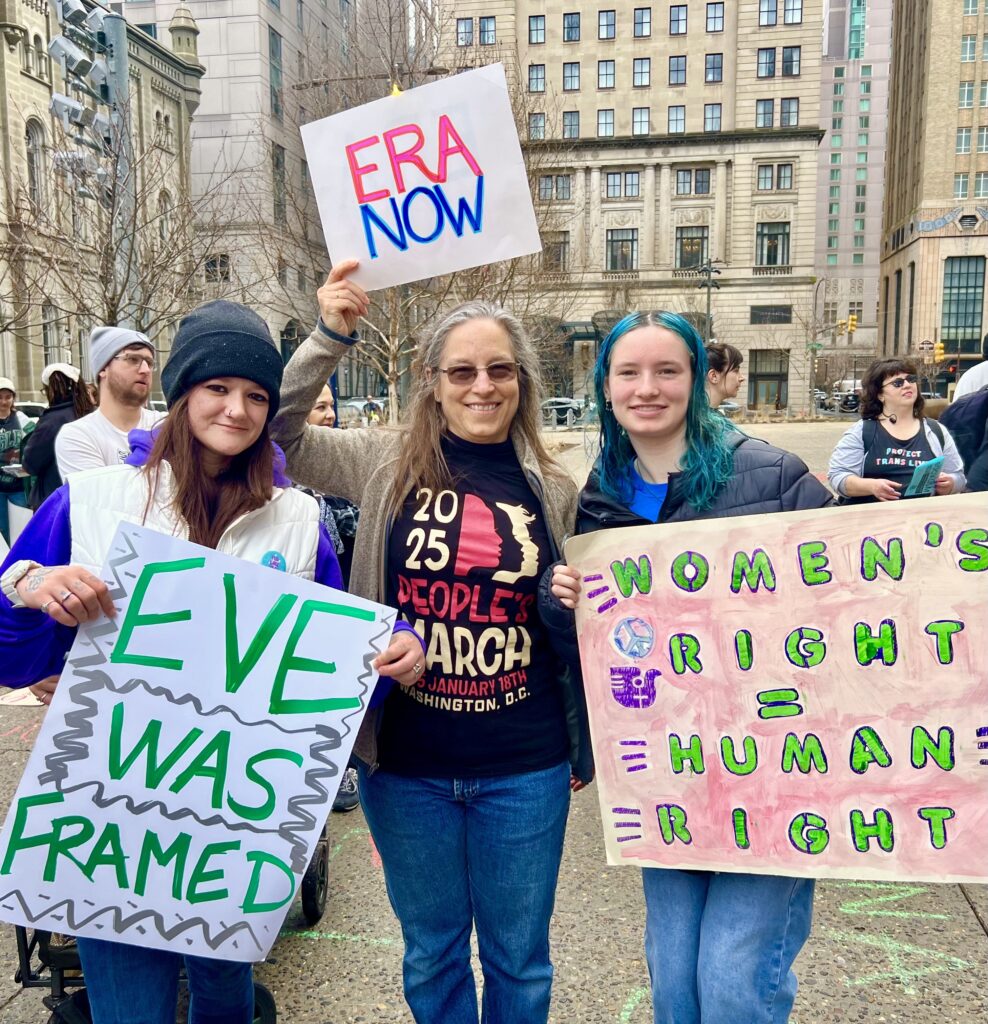
She was one of hundreds gathered for Philadelphia’s International Women’s Day March—a crowd as vivid and insistently alive as a wildflower breaking through concrete. Hand-lettered signs rose above the marchers in every direction. Heads nodded as speakers took the microphone, voices carrying across the sunlit plaza.
Across the street, Alice Ward, a South Philadelphia resident, observed quietly. She hadn’t planned to march, she said. She had simply felt drawn in—by something older than the day itself.
“We’ve taken a massive step backward,” she said, her voice soft but unwavering. “It breaks my heart to see younger generations having fewer rights than I did at their age.” She paused, shaking her head. “I never thought I’d be marching again. I never thought we’d have to.”
Not everyone at the perimeter shared her grief. A man standing with arms folded said he believed the marchers were overreacting and that state legislatures—not federal courts—were the proper place for such decisions.
A few feet away, Jennifer, a middle‑aged woman from Northeast Philadelphia, watched with an expression that held neither anger nor celebration. She described herself as a person of faith and said some of what she heard from the speakers conflicted with her values.
“Adults need to take responsibility for their choices,” she said plainly. But then she added, after a moment of reflection: “A doctor and patient should be able to make difficult medical decisions without the government in the room.”
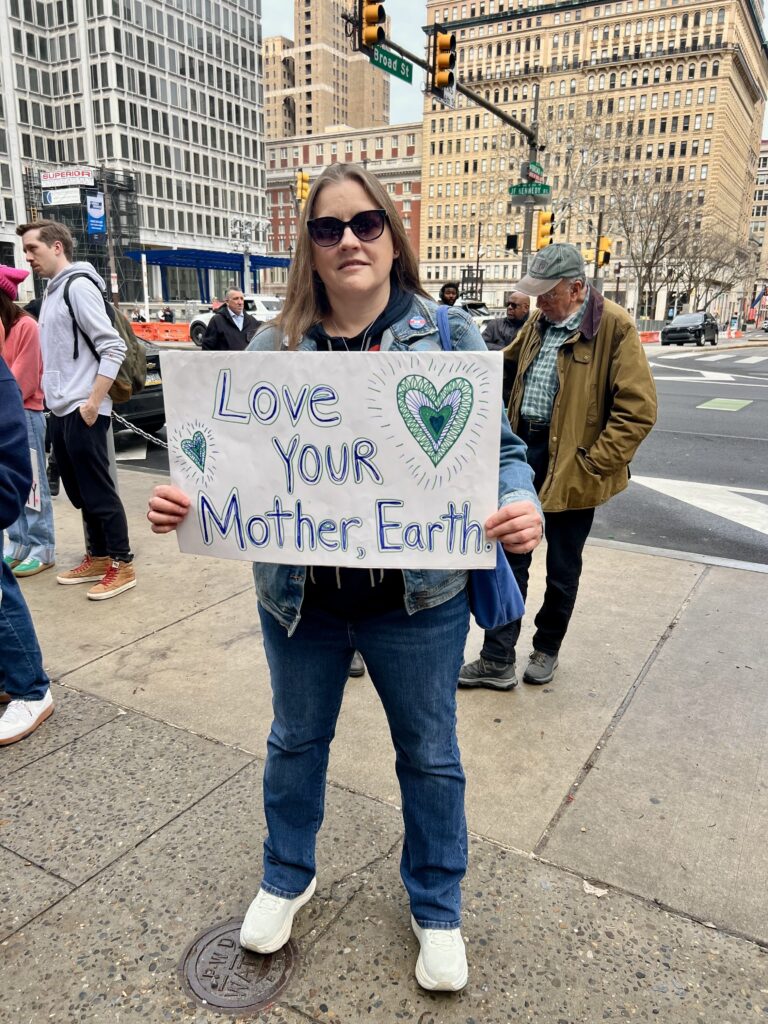
Among the organizations represented were several Latina women’s groups whose presence was both celebratory and deeply intentional. Comadre Luna, led by Alejandra Alvarez, arrived with a vibrant and unmistakable showing of members. Alvarez explained that she and her compañeras had searched for a feminist organization that understood the unique pressures Latinas face at the intersection of gender, culture, and community. When they couldn’t find such a space, they built one themselves.
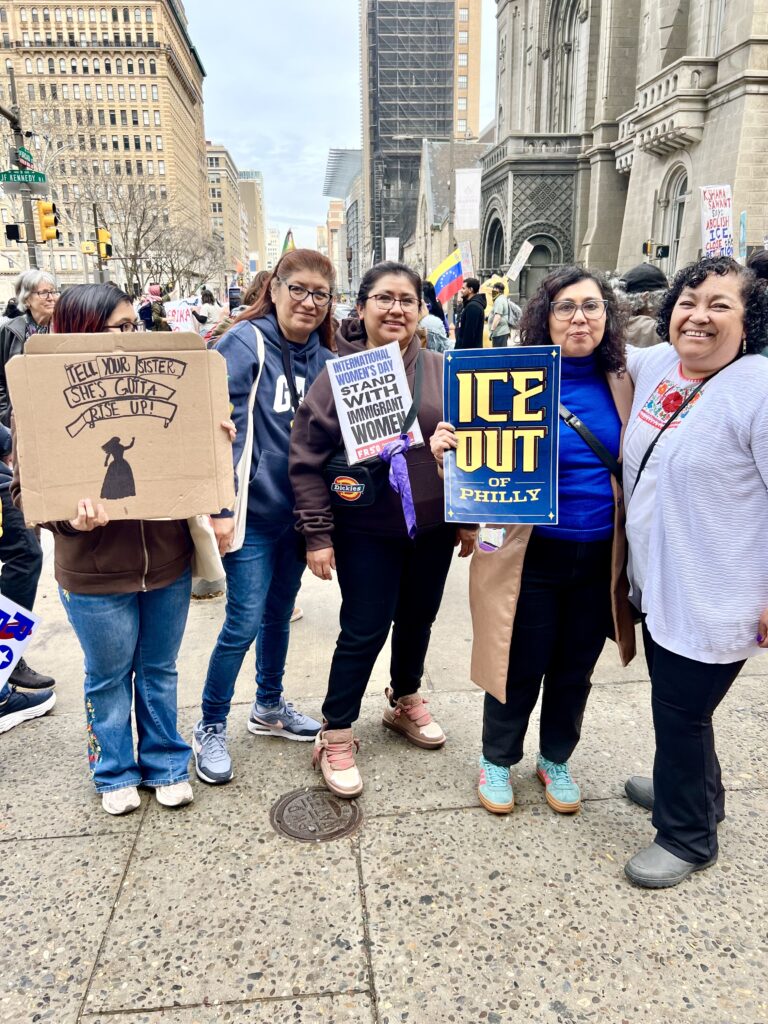
Also present was Centro Integral de la Mujer / Madre Tierra, represented by Arianne Bracho and Carmen Marcet. The organization’s name—Mother Earth—carries an entire worldview within it, one clearly understood by those gathered that afternoon.
Nearby, Lilly Belvin of Delaware and her friend Lauren Flood of Pottstown stood holding signs reading “I march for all womankind” and “We only lose if we stop fighting.” Lilly said she was marching for all women, including queer and transgender women—a message that was met with visible warmth in the crowd.
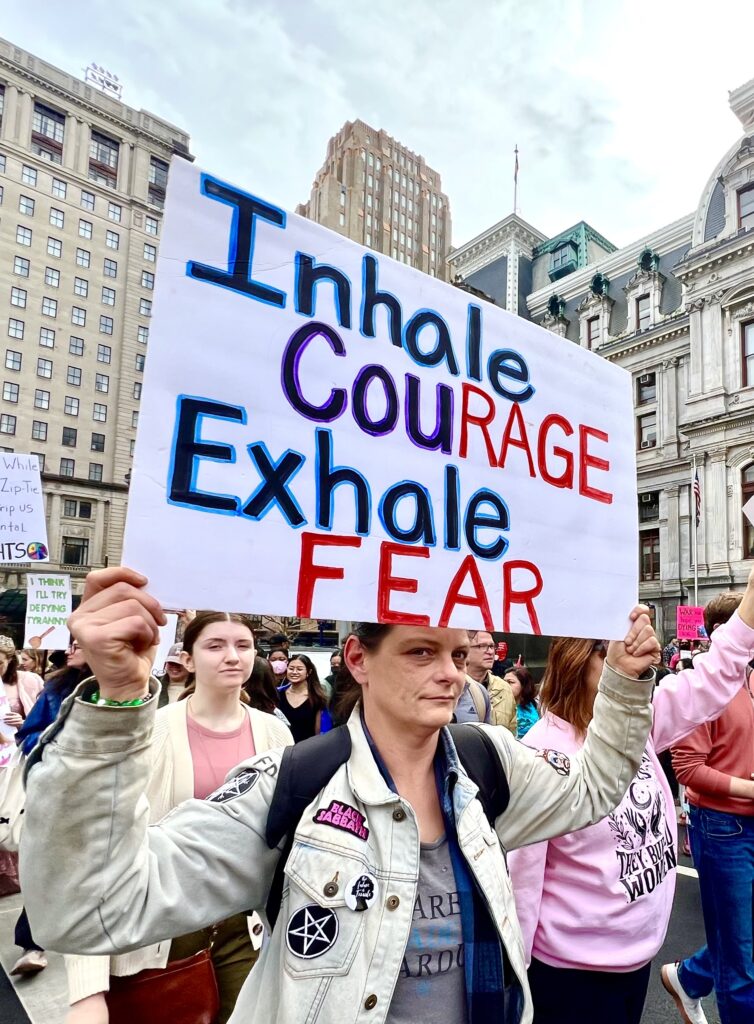
Among the organizers weaving through the rally were AJ, representing Cat Calls of Philly, a project sharing stories of street harassment in the city, who pledged the group would keep abortion rights at the center of public conversation; and Jay Cie of Philly Phemenists, who has made reproductive‑rights organizing a sustained effort in Philadelphia.
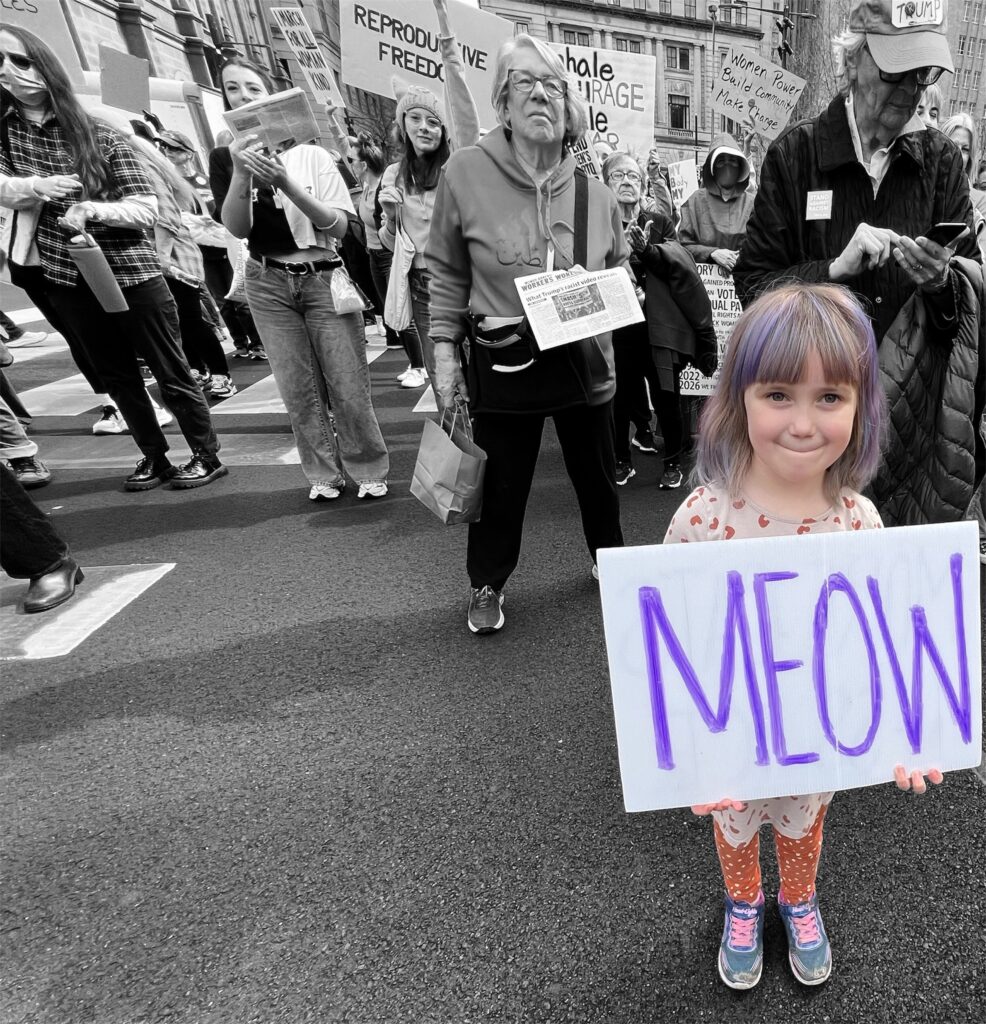
That commitment carries more than a century of history. International Women’s Day traces its roots to 1908, when garment workers in New York City walked off the job to protest brutal hours and poverty wages. The first National Women’s Day was organized the following year by the Socialist Party of America. By 1911, the movement had crossed the Atlantic; in 1977, the United Nations officially recognized the observance. A permanent mark on the calendar. A refusal to forget.
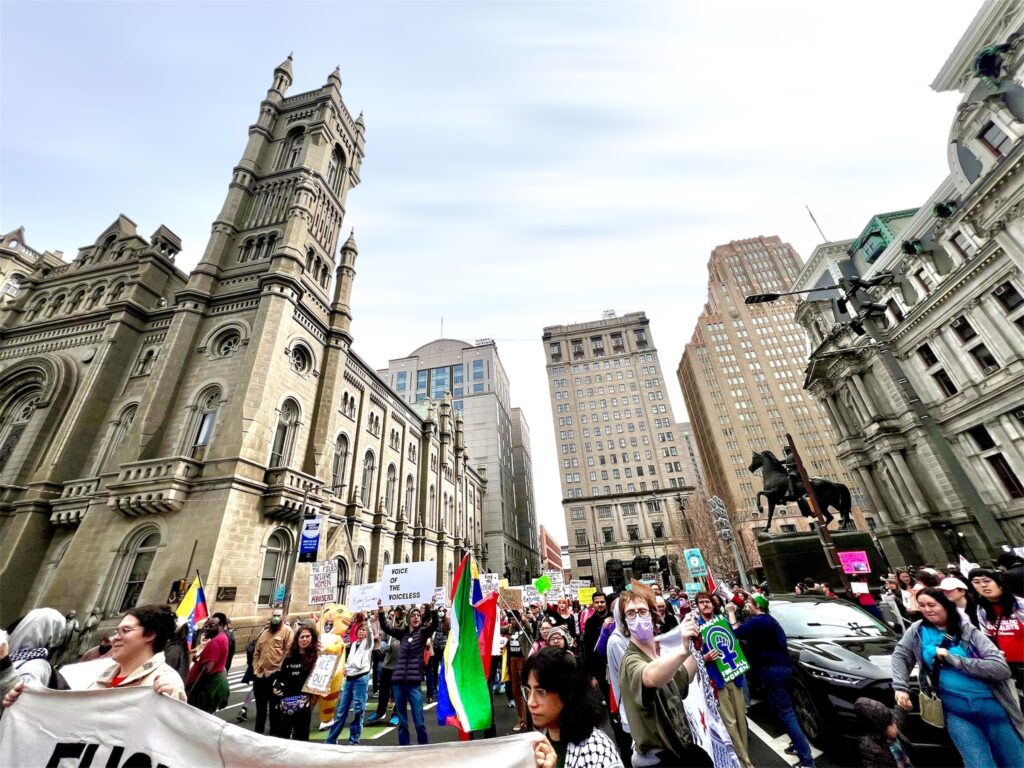
As Melinda—the handmaid in red—disappeared into the flow of JFK Boulevard, Jennifer remained at the edge of the plaza, hands folded, watching. She disagreed with the crowd on some matters she considered fundamental. She had made that clear. But she stayed—present, listening, witnessing.