Inicio Blog Página 978

Casa Blanca: Israel acepta «pausas humanitarias» diarias de 4 horas en el norte de Gaza

Soldados israelíes realizan una operación en la Franja de Gaza, 8 de noviembre de 2023. La Casa Blanca dijo el jueves 9 de noviembre de 2023 que Israel ha aceptado declarar pausas humanitarias de cuatro horas diariamente en su asalto a Hamas en el norte de Gaza. (Photo: AP/Ohad Zwigenberg)

Israel ha aceptado instituir pausas humanitarias de cuatro horas diariamente durante su ataque a Hamás en el norte de Gaza a partir del jueves, dijo la Casa Blanca, y el presidente Joe Biden insistió en que los israelíes deben detener los combates durante varios días para tratar de obtener la liberación de los rehenes en poder de la milicia.

Biden dijo que “no había posibilidad” de un cese de fuego formal por el momento y que había “tomado un poco más de tiempo” que lo esperado para que Israel aceptara las pausas humanitarias. Biden había pedido al primer ministro israelí Benjamin Netanyahu que instituyera las pausas diarias durante una llamada telefónica el lunes y dijo que también le había pedido una pausa de al menos tres días para permitir las negociaciones por la liberación de algunos rehenes.

“Sí”, dijo Biden al preguntársele si había pedido una pausa de tres días. “Pedí una pausa aún más larga para algunos de ellos».

El vocero del Consejo Nacional de Seguridad estadounidense John Kirby dijo que la primera pausa humanitaria sería anunciada el jueves y que los israelíes se comprometieron a anunciar cada pausa con al menos tres horas de anticipación.

Añadió que Israel estaba abriendo una segunda vía de escape para los civiles que viven en las zonas donde libra su campaña militar contra Hamás, con un camino costero que se suma a la principal ruta norte-sur del territorio.

El secretario de Estado estadounidense Antony Blinken había advertido a Israel la semana pasada que corría el riesgo de destruir una eventual posibilidad de paz, a menos que tomara medidas rápidas para aliviar las condiciones humanitarias en Gaza para los civiles palestinos a medida que intensifica su guerra contra Hamás.

Blinken exhortó a Israel a poner una pausa en las operaciones militares en el territorio para permitir la entrega inmediata y mayor de ayuda, y dijo que la situación radicalizaría aún más a los palestinos y eliminaría cualquier perspectiva de reanudación de las conversaciones de paz para poner fin al conflicto.

El presidente francés Emmanuel Macron inauguró una conferencia sobre ayuda a Gaza con un llamado a Israel a proteger a los civiles. “Todas las vidas tienen el mismo valor”, dijo Macron, y añadió que la lucha contra el terrorismo “jamás se puede llevar a cabo sin reglas”.

Los demócratas arrasan en 4 contiendas judiciales en Pensilvania

Democrata Timika Lane. (Photo: AP/File)

Harrisburg, Pensilvania— La demócrata Timika Lane ganó un escaño en un tribunal de apelaciones estatal en Pensilvania, lo que les dio a los demócratas una gran ventaja en cuatro contiendas judiciales estatales en las elecciones del martes pasado, incluido un escaño vacante en el tribunal más alto del estado.

El recuento de votos continuó hasta el miércoles y colocó a Lane, jueza del Tribunal de Apelaciones Comunes de Filadelfia, en la cima de su carrera por un puesto en el Tribunal Superior estatal.

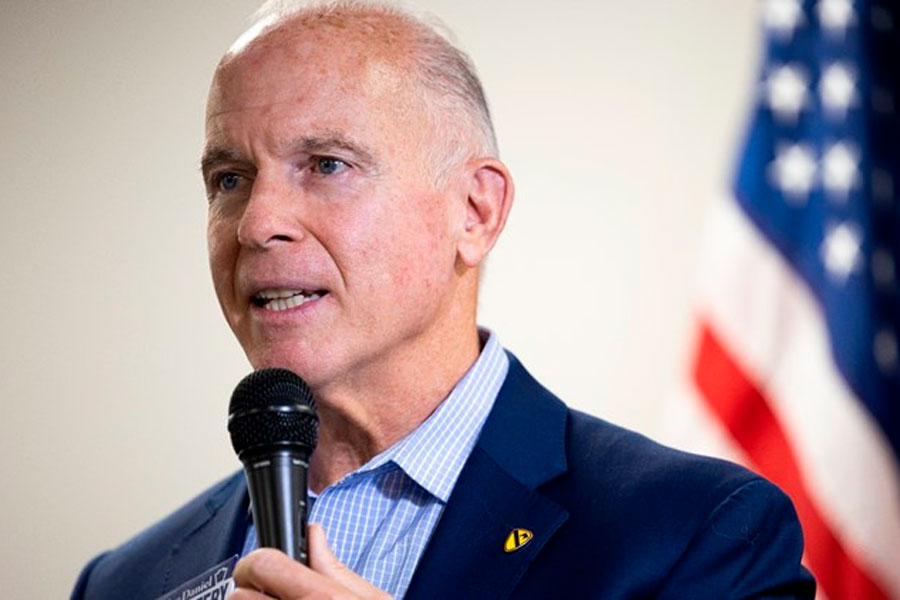
El demócrata Dan McCaffery salió victorioso en la carrera por la Corte Suprema estatal, preservando una fuerte mayoría demócrata en un panel que ha producido varios fallos críticos relacionados con las elecciones en el estado de batalla presidencial.

Daniel McCaffery, candidato demócrata electo a juez de la Corte Suprema de Pensilvania. (Foto: AP/Ryan Collerd/Archivo)

El banco de siete miembros, que estará compuesto por cinco demócratas y dos republicanos, también está en el centro de los casos sobre armas y derecho al aborto, que tuvieron un papel destacado en la campaña.

En los tribunales de apelaciones inferiores a nivel estatal, la abogada Jill Beck de Pittsburgh se unió a Lane para ganar un puesto vacante en el Tribunal Superior. Matt Wolf, juez del Tribunal Municipal de Filadelfia, ganó un puesto en el Tribunal de la Mancomunidad.

El Tribunal Superior de 15 miembros escucha apelaciones de casos civiles y penales ante los tribunales del condado. Los dos escaños están abiertos porque un juez republicano se jubiló y otro juez republicano alcanzará la edad de jubilación obligatoria de 75 años este año. El tribunal cuenta actualmente con siete miembros elegidos como republicanos y siete elegidos como demócratas.

El Tribunal de la Mancomunidad, de nueve escaños, atiende impugnaciones o apelaciones de los tribunales de condado en casos relacionados con leyes o acciones gubernamentales. Actualmente, el tribunal tiene cinco miembros elegidos como republicanos y tres elegidos como demócratas.

David Oh logra mejores resultados que varios de sus antecesores

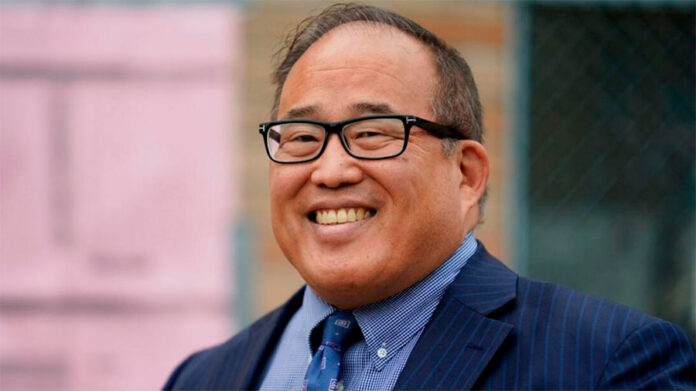
El candidato republicano David Oh hizo acudió a primera hora a un colegio electoral para reunirse con los electores que acudieron desde temprano a emitir su voto. (Foto: AP/Matt Rourke)

El republicano David Oh parece haber ganado alrededor del 25% de los votos en la carrera por la alcaldía, según los resultados que aún se estaban ultimando 24 horas después del cierre de la votación.

Sería el mejor resultado para un republicano desde que Sam Katz obtuvo más del 40% de los votos en sus campañas contra el entonces alcalde John F. Street en 1999 y 2003.

Ganar casi 1 de cada 4 votos lo hace que haya tenido mejores resultados que los oponentes republicanos del alcalde Jim Kenney en 2015 y 2019. Ni Melissa Murray Bailey ni Billy Ciancaglini alcanzaron el 20%.

Oh esperaba que su coalición única de partidarios cambiara las matemáticas electorales. En sus campañas para el Consejo, Oh ganó votos en comunidades de inmigrantes y diversos vecindarios fuera de los bastiones del Partido Republicano en el noreste y el sur de Filadelfia, lo que le permitió ganar tres elecciones sin el apoyo de los líderes de su propio partido.

Pero estuvo muy lejos de lograr que la carrera por la alcaldía fuera competitiva y, con algunas excepciones, como ganar el distrito que incluye Chinatown, fue el más fuerte en el terreno tradicional del Partido Republicano.

Oh parece haber ganado nueve de los 66 distritos de la ciudad, un resultado respetable para un republicano. Ocho están en el noreste y uno en el sur de Filadelfia. En su discurso de concesión el martes por la noche, Oh dijo que se postuló en parte porque creía que había poco más que podía hacer en el Concejo Municipal después de casi tres mandatos y porque quería que los votantes tuvieran una opción real en la boleta electoral de noviembre.

«No sentí que estuviera siendo eficaz después de 11 años… así que pensé que lo mejor que podía hacer es ofrecer a los votantes una opción», dijo Oh a sus seguidores en el restaurante Emperor en Noreste de Filadelfia. “Podemos hacer cosas para mejorar esta ciudad, pero no si tenemos miedo y no si tenemos miedo de perder. No tengas miedo de perder, de no tratar.»

Esta historia es parte de Every Voice, Every Vote, un proyecto colaborativo administrado por The Lenfest Institute for Journalism. El apoyo principal lo proporciona la Fundación William Penn con fondos adicionales del Instituto Lenfest, Peter y Judy Leone, la Fundación John S., James L. Knight, Harriet y Larry Weiss, y la Fundación Wyncote, entre otros. Para obtener más información sobre el proyecto y ver una lista completa de colaboradores, visite www.everyvoice-everyvote.org. El contenido editorial se crea independientemente de los donantes del proyecto.

Pennsylvanians without health coverage may enroll through Pennie to receive the lowest costs on high quality health insurance 

Philadelphia. – Representatives from the Pennsylvania Insurance Department (PID), the Pennie Health Insurance Marketplace, and the Pennsylvania Department of Human Services (DHS) celebrated the beginning of the open enrollment period today at Maria de los Santos Health Center in Philadelphia to highlight that Pennie, Pennsylvania’s official health insurance marketplace, is now open for Pennsylvanians to enroll in high-quality health coverage for 2024. This annual Open Enrollment Period is the time when Pennsylvanians can compare quality health plans at the lowest costs through Pennie.

Pennie’s Open Enrollment Period began on Nov. 1, and the deadline to enroll in coverage that will start New Year’s Day is Dec. 15. Plans and prices change every year, so anyone who needs coverage should review their options even if they have looked before. Anyone currently enrolled in Pennie should make sure their family size, income, and contact information are up to date. Enrolling in coverage is the best way to make sure you are protected in 2024.

“The Philadelphia region has more people without coverage than any other part of Pennsylvania. This means that more people are missing out on important medical care to prevent and manage serious illnesses, and more people are at financial risk if they get hurt,” said Pennie Executive Director Devon Trolley. “Having health coverage means protecting your health and your wallet. We encourage any Pennsylvanian without health insurance to start the new year with the peace of mind that comes with having coverage.”

Pennie is the only place where Pennsylvanians can get financial savings to reduce the cost of coverage and care. Currently, 9 in 10 enrollees qualify and save over $500 a month on average.

The high-quality plans sold through Pennie are guaranteed to have important benefits. Pennie makes sure health plans will financially protect Pennsylvanians in the case of injury or illness and provide access to a wide range of medical care, including care for pre-existing conditions and free preventive services.

Pennsylvanians should be aware that health plans outside of Pennie that you can buy on your own may not have the same protections as plans through Pennie. Pennie is the only way to make sure you are getting a plan that will cover important medical care in the case of a serious illness or injury. Pennie help is always free – if you are being told that you need to pay to get help with enrolling, then go to pennie.com/connect for support at no cost to you.

“This Open Enrollment period is the best time to explore available options and shop around to find a plan, even if you already have insurance. Quality, comprehensive health care coverage has never been more affordable, or more within reach for Pennsylvanians,” said Pennsylvania Insurance Commissioner Michael Humphreys. “The Pennsylvania’s Insurance Department’s goal of increased competition in the Marketplace has resulted in more choices, and increased affordability for consumers across the Commonwealth. We encourage consumers to research and compare plans to find coverage that best fits their needs and provides robust benefits for themselves and their families.”

Pennie coordinates with Pennsylvania’s Medicaid program and picks up where Medicaid leaves off. Pennsylvanians who no longer qualify for Medicaid because of changes in income can see large savings on private health plans through Pennie. For anyone who is no longer eligible for Medicaid and still needs coverage, Open Enrollment is the last chance to enroll for 2024.

“Your health is too important to go without coverage, and fortunately, Pennsylvanians have options. When you complete your Medicaid renewal, the Department of Human Services will determine whether you are still eligible to receive Medicaid, and if you aren’t, we will automatically and securely transfer you to Pennie so that you can pick a new health plan that’s right for you,” said Department of Human Services Secretary Dr. Val Arkoosh. “If you are no longer eligible for Medicaid or if you don’t have health coverage at all, open enrollment is the best time to pick a new plan through Pennie to make sure you’re getting the best cost savings and that you and your loved ones are covered in the new year.”

Escepticismo y urgencia en Acapulco para reactivar el turismo tras golpe de Otis en México

Fotografía de una zona afectada tras el paso del huracán Otis, hoy, en Acapulco (México). EFE/David Guzmán

Ciudad de México/Acapulco.- Tras dos semanas del huracán Otis, habitantes y empresarios de Acapulco expresaron este miércoles su escepticismo ante la promesa del presidente mexicano, Andrés Manuel López Obrador, de reabrir 40 hoteles en marzo y reconstruir el puerto en menos de dos años, aunque coincidieron con su urgencia de reactivar el turismo en diciembre.

En las calles del puerto, donde el histórico ciclón dejó 48 muertos, más de 300 hoteles destruidos y a cerca de 250.000 personas sin vivienda, la persistente devastación provoca dudas sobre las metas del Gobierno.

La empresaria Dolores Pineda comentó a EFE que «en marzo no se recuperarán» los hoteles, «es muy pronto», al lamentar que la población «no siente mucho apoyo por el momento», pero compartió el objetivo del mandatario y de la Asociación Mexicana de Hoteles y Moteles en Acapulco de reactivar el turismo a finales de año.

«Sé que ya en diciembre hay algunos hoteles que van a abrir y todos estamos poniendo un granito de arena para que eso salga adelante, con nuestro esfuerzo, nuestra actitud, porque nosotros como empresarios y personas que vivimos aquí en Acapulco lo queremos mucho y tratamos de que sea lo antes posible», expresó.

«Visítennos en diciembre, ya vamos a tener playas bonitas», pidió.

El optimismo oficial a dos semanas de la devastación

Este miércoles se cumplen dos semanas del azote de Otis, que tocó tierra el 25 de octubre como categoría 5 en el sureño estado de Guerrero, donde rompió el récord de intensificación de un ciclón en México, con Acapulco y Coyuca de Benítez como las ciudades más golpeadas.

El Gobierno de México anunció 61.313 millones de pesos (cerca de 3.500 millones de dólares) para las reparaciones y apoyos sociales en Guerrero.

Pero Fitch calculó en 16.000 millones de dólares las pérdidas catastróficas y las cámaras empresariales previeron dos años y hasta 300.000 millones de pesos (casi 17.000 millones de dólares) para la reconstrucción de Acapulco.

Aún así, López Obrador prometió que el turismo se reactivará en diciembre, por lo que se reunió en el Palacio Nacional este miércoles con dueños de hoteles en Acapulco, como el magnate Carlos Slim, el empresario Juan Antonio Hernández y representantes del Grupo Vidanta y Mundo Imperial.

«Que ya desde diciembre empiece de nuevo la actividad, el 24 de diciembre, que los acapulqueños vuelvan a la normalidad, fue una situación muy dolorosa, muy fuerte para muchos”, manifestó el mandatario en su rueda de prensa matutina.

La premura del devastado puerto de Acapulco

La premura por recibir de nuevo a visitantes es palpable en Acapulco, donde el turismo representa una carta parte de la economía y los hoteles y restaurantes son la principal fuente de empleo, según un reporte de la consultora turística Gemes.

Por ello, el chofer Francisco Hernández espera que los turistas vuelvan «lo más pronto posible» a la ciudad, con más de 20 kilómetros de playa.

«Para que el ingreso que vayan a dejar los turistas ayude a la gente de aquí de la ciudad de Acapulco, entonces sería conveniente lo más pronto posible, en cuanto ya empiecen a trabajar los restaurantes, y que haya, si no al 100 %, los hoteles (abiertos), podrían ayudar muchísimo a la ciudad», señaló a EFE.

Pero otros costeños, como Marisol Rentería, creen que «la expectativa del mandatario nacional no corresponde a la realidad de Acapulco», donde las labores de limpieza y rescate continúan.

«Las principales avenidas, como son la avenida costera Miguel Alemán, la Cuauhtémoc y la avenida Ruiz Cortines, siguen invadidas de montañas de basura, de montañas de desechos, de desperdicios y, me atrevo a decir, hasta algunos muertos que no han sido desenterrados», relató la mujer.

«Es indescriptible lo que he vivido estás semanas en Gaza», afirma enfermera mexicana

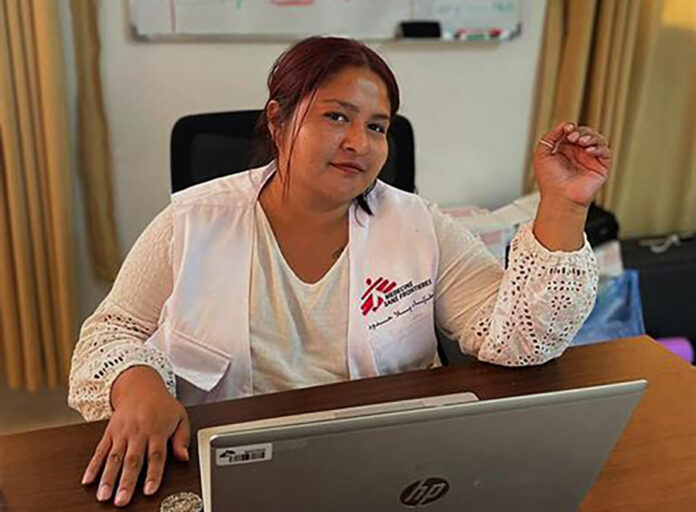
Fotografía cedida hoy por Médicos sin fronteras donde se observa a la enfermera mexicana Michelle Ravell en un consultorio. EFE/ Médicos sin fronteras

La enfermera mexicana Michelle Ravell, originaria del estado de Veracruz y colaboradora de Médico sin Fronteras (MSF), señaló este miércoles en una rueda de prensa que Gaza vive «una crisis humanitaria sin precedentes» y que se sintió «en peligro muchas veces» durante los ataques por parte de Israel.

“Es indescriptible lo que he vivido estás semanas en Gaza. Los ataques son indiscriminados. Me sentí en peligro muchas veces y sentí que me iban a asesinar”, destacó Ravell, que tras semanas de intentos logró salir de Gaza y llegar a México.

La enfermera describió la situación como una “crisis humanitaria sin precedentes en Gaza”.

Ravell, quien lleva colaborando con MSF durante cuatro años, participó en varias misiones humanitarias dentro de la República de México y también en Sudán del Sur y los Territorios Palestinos.

“He visto niños y niñas morir en mis manos, pero no en está magnitud. No es lo mismo. Cada país tiene su particularidad, pero Gaza es una masacre”, aclaró.

La enfermera explicó que vivió una «incertidumbre diaria» sin saber qué sucedería ni cuándo, pero con la certeza de que “va a pasar”.

Antes de que comenzaran los bombardeos, Ravell describió a Gaza como “una ciudad demasiado poblada y llena de ruido”, pero desde el 7 de octubre “no se escuchaba ni a las aves”.

Hay ya más de 10.000 muertos en la Franja de Gaza tras un mes del estallido del conflicto, que comenzó el 7 de octubre con un sorpresivo ataque del grupo Hamás que ha dejado más de 1.400 fallecidos en Israel.

«No hay lugar seguro en Gaza»

“No hay un lugar seguro en Gaza. Temo por la vida de mis compañeros y por toda la gente que vive allí. (…) Los ataques son indiscriminados, a cualquier hora y en cualquier lugar. Sentía la muerte inminente. Yo misma me despedí de mi familia”, admitió Ravell.

Acerca de los motivos de su salida, la enfermera respondió que su «seguridad no estaba garantizada en ningún momento».

 «Fueron días y noches muy inciertos. A la larga va afectando, por eso salí de Gaza. Nunca había sentido un peligro inminente en la vida y en Gaza lo sentí muchas veces”, remarcó.

En Gaza, explicó, la escasez abarca incluso necesidades tan fundamentales como el agua, y expresó que la ayuda humanitaria que llega es limitada, apenas «una gota de agua en un océano».

“No hay para beber ni para la higiene. No hay suficientes cobijas ni para refugiarse. No hay comida, no hay acceso a nada. Se toma mucho tiempo para tener un poco de pan”, subrayó Ravell.

A ello se suma la falta de electricidad, combustible y suministros médicos, que ha dado lugar a infecciones de las vías respiratorias y problemas intestinales.

“No hay anestesia para aliviar el dolor. Hay gente que está siendo amputada con un paracetamol. La falta de medicamentos es increíble.”, exclamó.

Ravell reconoció que en Gaza, las personas son “muy resilientes” y que a pesar de vivir en una constante incertidumbre siempre la trataron con amabilidad y la cuidaron durante su estancia.

“No sé si hay esperanza. Ellos esperan que esto termine pronto y puedan seguir vivos. El ánimo en Gaza es de supervivencia”, manifestó.

La enfermera concluyó la conferencia con un mensaje al mundo: “Por favor, no seamos indiferentes a las personas que están sufriendo».

Editorial Roundup: Pennsylvania

Pittsburgh Post-Gazette. November 5, 2023

Editorial: Pa. Human Relations Commission should remove bias in favor of NDAs

The sexual harassment scandal roiling the administration of Gov. Josh Shapiro has highlighted the increasingly controversial use of non-disclosure agreements in sexual misconduct settlements. While it is difficult, of not impossible, to say whether an NDA is unjust in any particular case, given the power imbalance between accusers and institutions — especially governments — they should be used sparingly, at most.

While 17 states have restricted NDAs in sexual misconduct settlements, it is not necessary for Pennsylvania to enact legislation to make a small change in favor of transparency and victims’ rights: The Pennsylvania Human Relations Commission (PHRC) should amend its default settlement form to exclude, rather than include, non-disparagement and confidentiality clauses.

A troubling case

In March, a female employee in Mr. Shapiro’s Office of Legislative Affairs alleged the office’s head, long-time Shapiro aide and ally Mike Vereb, committed sexual harassment and retaliation. The accusations only came to light in September, when Mr. Vereb was allowed to resign as media caught wind of the story.

Earlier that month, the accuser had agreed to a $295,000 settlement that included a mutual non-disclosure agreement. The NDA binds both sides from discussing details of the case: The Commonwealth gets the benefit of potentially damaging details remaining secret, while the accuser is said to get the benefit of privacy.

Mr. Shapiro’s handling of the situation has been perplexing, at best. The governor’s office released a statement praising Mr. Vereb upon his dignified departure, and Mr. Shapiro himself has never publicly broken with him.

It’s uncertain when Mr. Shapiro first became aware of the allegations against one of his top advisers. We do know that the complaint was escalated to the PHRC in June. If the office’s protocols were followed, the governor would have been notified of the complaints by mid-July at the latest. Yet two more months passed, with Mr. Vereb continuing his public duties, until his September resignation.

The settlement agreement frees Mr. Shapiro from having to explain this delay.

Opt-out vs. opt-in

A structural problem with NDAs in cases like this is that, in binding both sides equally, it gives the public impression that both sides’ claims are equal, when in reality very few sexual misconduct claims are contrived. While institutions — whether corporate or public — have many means at their disposal to continue to protect themselves, and to subtly press their case, individual accusers do not. In other words, in most cases, the NDA’s mantle of protection is much broader over the institution than the individual.

In negotiations, the individual accuser is also at a disadvantage — unless he or she can afford a team of excellent lawyers — against a behemoth. In that context, the silence ensured by the NDA can be held out as a requirement to receive the justice of a settlement payout.

The Pennsylvania Human Relations Commission offers mediation of employment related disputes in both the public and private sector, and that’s ultimately where the Vereb case ended up. When parties reach a settlement, the PHRC offers a form in which to fill out the details. Curiously, both non-disparagement and non-disclosure agreements are included in the default settlement form. In other words, the accuser must negotiate them out of the agreement, instead of into it.

This places the commission’s thumb on the scales in favor of NDAs, nudging all parties away from transparency. While it is often said that accusers generally desire the protections of an NDA, it’s hard to know when they are presented with them as faits accomplis.

As an independent commission (whose board members are appointed by the governor), the PHRC can change its settlement forms. It should do so: NDAs should never be the default, and should only ever be added on the initiative of the person whose protection is most important — the victim.

___

Pittsburgh Tribune-Review. November 5, 2023

Editorial: Is Shapiro’s voluntary agreement with CNX the right move for gas well safety?

We do not trust foxes to guard henhouses.

That makes sense. Foxes have a vested interest in chicken coops being as unsecured as possible. A few missing birds may occur under the best circumstances, but if the foxes are in charge, who protects the chickens from the guards?

Is Pennsylvania entering into that kind of deal with gas well data?

On Thursday, Gov. Josh Shapiro announced a collaboration with a natural gas producer to collect in-depth information about emissions and water quality and improve transparency on chemicals used in drilling processes.

“Pennsylvanians want us to do everything we can to help keep them and their families safe,” Shapiro said.

The agreement between the state and CNX Resources of Canonsburg is voluntary. The company will report its air quality on a website. It will also report what chemicals it is using in drilling — something many companies have been reluctant to do for years as they consider the blends proprietary.

These are good steps. So is moving the buffers around drilling sites from 500 or 600 feet to 2,500 feet around things like schools and hospitals. It’s also good that CNX president and CEO Nick Deiuliis says he is committed to “radical transparency.” Nice to hear because a lot of Pennsylvanians are concerned about these issues.

But the word voluntary is a two-edged sword. It says that the driller is stepping forward by choice — but leaves open the door to questions about how that participation and transparency is maintained.

CNX has a history with penalties. In 2017, there were fines topping $400,000 for violations in 2015 and 2016. In 2020, there was a $175,000 fine for a 2019 well failure.

It is up to Shapiro to make the arrangement one that keeps security of the proverbial henhouse in the state’s hands. He has the background to understand that. He was attorney general when a grand jury pointed out flaws in Pennsylvania’s regulation of the drilling industry and made recommendations, which remain unimplemented.

The governor said he would increase state regulators’ role through executive direction as legislators have not taken action. Critics were unimpressed with Shapiro’s steps and the involvement of CNX. Not to be outdone, the natural gas industry likewise bristled at the suggestion of additional legal or regulatory demands.

In the end, the move makes the question of safety surrounding Pennsylvanian gas wells a question of what is better — letting the fox guard the henhouse or no guard at all?

___

Uniontown Herald-Standard. November 2, 2023

Editorial: Reconsider automatically closing schools for prank threats

Students, parents and educators know the drill by now.

The emergency text alert of a bomb threat goes out, forcing caregivers to scramble, cutting the school day short and spreading fear among students, parents and educators alike. Multiple schools across Northeast Pennsylvania have been evacuated and/or closed due to threats on five different weekdays since classes resumed in September. On one occasion, those local threats were part of a nationwide scam that targeted 150 U.S. schools.

The incidents interfere with students’ progress, inconvenience parents and sow anxiety across the community. And they put school administrators in the unenviable and difficult position of weighing student safety against maintaining normalcy, knowing that these threats are almost certainly bogus, but also knowing that making the wrong call could lead to tragedy.

The reaction of local educators during this latest rash of threats has not been uniform. The Scranton School District, for example, chose to keep students in school with heightened security when threats led other regional schools to send students home earlier this month.

Perhaps it’s time for other school districts to consider Scranton’s approach.

The state Department of Education requires all schools and school districts to develop emergency plans, coordinate with local law enforcement, conduct regular safety drills and regularly assess the security of their buildings. But the decision on whether to close schools in reaction to threats is left up to individual districts.

In Washington state, the Office of Superintendent of Public Instruction, which oversees all K-12 schools, has adopted a series of best practices that recommends against an automatic evacuation in the case of a bomb threat “unless a bomb is obvious.”

“Staying in the school may be the best option,” the agency advises on its website.

That didn’t stop three school districts in eastern Washington from closing all their buildings and sending their students home after they received an email suggesting a bomb threat in April.

But a fourth district chose an alternative called “Secure and Teach” in which all students remain indoors, outside doors are locked and classes continue.

Some parents and teachers might be uncomfortable with that approach. But if repeated fake bomb threats continue to interrupt classes, schools should at least consider other options, such as finding facilities nearby where students can be evacuated while law enforcement assures the safety of their buildings in anticipation of returning kids to class.

Automatically closing schools when threats are received probably encourages future occurrences and even with the expanded remote study options available since the COVID pandemic, students will undoubtedly fall behind when in-school instruction is continually disrupted.

These are difficult decisions best made on a case-by-case basis by the professionals who run our schools. But it is at least worth discussing whether, under certain circumstances, we can keep students safe, secure and still in their classrooms when pranksters strike.

END

Presentan en el Senado de EE. UU. un proyecto de estatus no colonial para Puerto Rico

Imagen de archivo del gobernador de Puerto Rico, Pedro Pierluisi. (Foto: EFE/Thais Llorca)

San Juan, Puerto Rico.- El gobernador de Puerto Rico, Pedro Pierluisi, anunció este miércoles que 21 senadores federales radicaron en el Senado de Estados Unidos un proyecto de ley con opciones no coloniales o territoriales para la isla.

La llamada Ley del Estatus de Puerto Rico (Proyecto del Senado 3231) está liderada por los senadores demócratas Martin Heinrich, Alex Padilla y Catherine Cortés-Mastos.

Esta medida es la versión senatorial del proyecto 2757 de la Cámara de Representantes y dispone la celebración de un plebiscito vinculante autorizado por Washington que permita a los residentes de la isla elegir entre la «estadidad» (anexión a EE. UU.), la independencia y la soberanía en libre asociación.

«Todos estos senadores han dado un paso al frente para estar del lado correcto de la historia y responder al llamado de que hay que darle acceso a la democracia plena a los más de 3,2 millones de ciudadanos americanos en Puerto Rico, tal y como lo esboza la Constitución de EE. UU.», dijo Pierluisi.

El gobernador destacó que este es el proyecto senatorial para resolver el problema del estatus de Puerto Rico con «el mayor número de coauspiciadores originales (21 senadores)»: «Eso es una buena señal para nuestra lucha por la igualdad», agregó.

Pierluisi y su Partido Nuevo Progresista (PNP) apuestan por la llamada «estadidad», mientras que otros grupos en la isla abogan por mantener el actual estatus de Estado Libre Asociado o por la independencia.

«Este proyecto de ley, al igual que el proyecto similar de la Cámara de Representantes federal, responde al imperativo moral de poner fin al centenario estatus colonial de Puerto Rico y proveer una solución permanente no territorial. Nuestro estatus no es digno de EE.UU.», subrayó Pierluisi.

El primer ejecutivo de Puerto Rico también recordó que desde 2012 se han celebrado tres plebiscitos no vinculantes en la isla en los que una mayoría de puertorriqueños optó por la «estadidad».

La idea con los actuales proyectos de ley, tanto en el Congreso como en el Senado, es que el Gobierno estadounidense autorice un referéndum que sí sea vinculante y que permita definir por fin el futuro político de la isla.

«El Congreso tiene que defender los derechos de nuestros ciudadanos a escoger su futuro político y a ser escuchados por su Gobierno federal. Durante demasiado tiempo, mis constituyentes han tenido que esperar acción del Congreso. Esa espera tiene que acabar», concluyó Pierluisi.

Por su parte, el director ejecutivo de la Administración de Asuntos Federales de Puerto Rico (PRFAA, en inglés), Luis Dávila Pernas, argumentó que este proyecto «allana el camino para que Puerto Rico trace su propia ruta de manera libre y democrática».

FDA approves new version of diabetes drug Mounjaro for weight loss

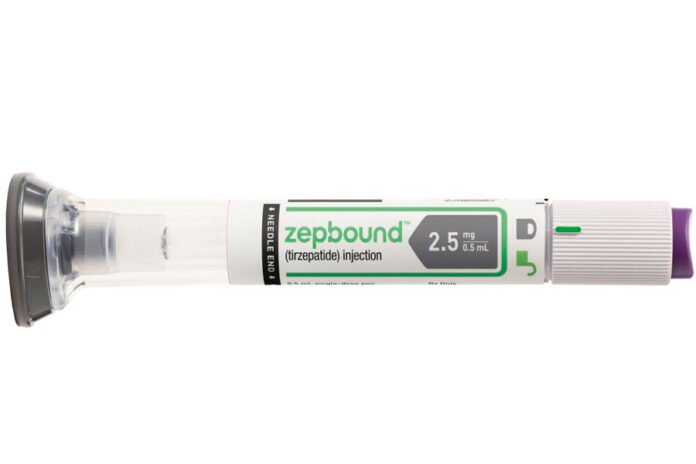
This image provided by Eli Lilly on Wednesday, Nov. 8, 2023 shows packaging for their new drug Zepbound. The new version of the popular diabetes treatment Mounjaro can be sold as a weight-loss drug, the U.S. Food and Drug Administration announced Wednesday. (Photo: AP/Eli Lilly)

A new version of the popular diabetes treatment Mounjaro can be sold as a weight-loss drug, U.S. regulators announced Wednesday.

The U.S. Food and Drug Administration approved Eli Lilly’s drug, named Zepbound. The drug, also known as tirzepatide, helped dieters lose as much as 40 to 60 pounds in testing.

Zepbound is the latest diabetes drug approved for chronic weight management, joining Novo Nordisk’s Wegovy, a high-dose version of its diabetes treatment Ozempic. Both are weekly injections.

The FDA approved Lilly’s drug for people who are considered obese, with a body mass index of 30 or higher, or those who are overweight with a related health condition, like high blood pressure, high cholesterol or diabetes. The drug should be paired with a reduced-calorie diet and regular exercise, the FDA said.

In the U.S., at least 100 million adults and about 15 million children are considered obese.

The drugs tirzepatide in Zepbound and Mounjaro and semaglutide in Wegovy and Ozempic work by mimicking hormones that kick in after people eat to regulate appetite and the feeling of fullness. Both imitate a hormone called glucagon-like peptide-1, known as GLP-1. Tirzepatide targets a second hormone, called glucose-dependent insulinotropic polypeptide, or GIP.

FDA’s approval was based on two large studies: More than 2,500 participants got different strengths of Zepbound and nearly 1,000 people got dummy shots over 16 months. Participants without diabetes who received the highest dose lost about 18% of their weight, or about 41 pounds (19 kilograms), compared to placebo. Those with diabetes, who have a harder time losing weight, cut about 12%, or nearly 27 pounds (12 kilograms), the FDA said.

In another recent study, the drug helped people lose up to a quarter of their weight, or 60 pounds (27 kilograms), when combined with intensive diet and exercise.

Overall, Zepbound appears to spur greater weight loss than Wegovy. Approved for weight loss in 2021, Wegovy helped people lose about 15% of their weight or 34 pounds (15 kilograms), according to study results.

“This would be the most highly efficacious drug ever approved for the treatment of obesity,» said Dr. Fatima Cody Stanford, an obesity medicine expert at Massachusetts General Hospital in Boston.

Touted by celebrities and on social media, semaglutide and tirzepatide drugs have already been in such demand that their manufacturers have struggled to keep up. Both have been listed on the FDA’s drug shortage site for months. All strengths of tirzepatide are currently listed as available, but a company spokesperson said that could vary by location and demand.

Side effects of the new weight-loss drug include vomiting, nausea, diarrhea, constipation and other gastrointestinal problems. In the most recent published trial, about 10% of people taking tirzepatide dropped out of the study because of such problems, compared to about 2% of people taking dummy shots.

While experts lauded approval of Zepbound, they worried that it wouldn’t necessarily mean greater access to the drug, which has been prescribed “off-label” to help people pare pounds.

“Most patients won’t be able to afford Zepbound without insurance coverage and many health plans exclude obesity care,” said Dr. Katherine Saunders, an obesity expert at New York’s Weill Cornell Medicine and co-founder of company focused on obesity treatment.

Eli Lilly and Co. said the list price will be about $1,000 a month, the same as Mounjaro. The drug is expected to be available in the U.S. by the end of the year, the company said. Dosing strengths are the same for Zepbound and Mounjaro.

Kelly Burns, 50, of St. Petersburg, Florida, lost nearly 100 pounds (45 kilograms) using tirzepatide after joining a study of the drug to treat obesity in 2021. When testing ended and she no longer had access to the medication, she struggled, but eventually lost another 50 pounds (23 kilograms).

“My whole life is completely different,” she said. Her health measurements improved and her confidence soared. Now that is is approved for weight loss, Burns plans to ask her insurance company about coverage.

“It would be ridiculous not to,» she said, adding: “I want to stay this way as long as I possibly can.»

Liberal and moderate candidates take control of school boards in contentious races across US

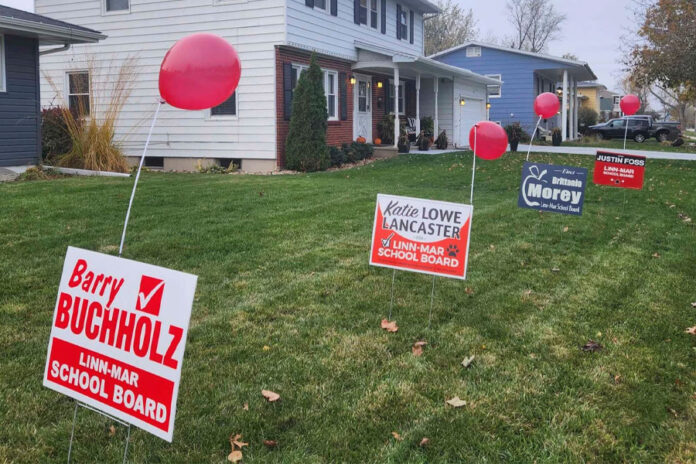
This photo provided by Mary Jo Carlson shows balloons attached to yard signs of four school board candidates who defeated Moms for Liberty-backed candidates in the Linn-Mar Community School District, located outside of Cedar Rapids, Iowa, Wednesday, Nov. 8, 2023. Voters across the U.S. largely rebuked conservative candidates on Tuesday, Nov. 7, in school board races across the country. (Photo: AP/Mary Jo Carlson)

HARRISBURG, Pa. — Voters across the U.S. largely rebuked conservative candidates in local school board elections who want to ban books and restrict classroom conversations on race and gender.

In recent years, down-ballot elections have become proxy votes for polarizing national issues. Liberal and moderate candidates took control in high-profile races Tuesday in conservative Iowa, and the swing states of Pennsylvania and Virginia.

The American Federation of Teachers said that candidates publicly endorsed by conservative groups such as Moms For Liberty and the 1776 Project lost about 80% of their races nationally in elections this week.

“They don’t want to engage in this banning of books or censoring of honest history or undermining who kids are,” Randi Weingarten, the teachers union president told The Associated Press on Wednesday, characterizing the candidates who won as “pro-public school.”

Conservative groups weren’t totally shut out though. In Pennsylvania’s York County, for instance, the 1776 Project’s political action committee said on social media that 36 of the 37 candidates they endorsed had won. Conservatives took control of the board in Texas’ third-largest district, Cypress-Fairbanks, in the Houston suburbs, and made gains in Minnesota’s largest district, Anoka-Hennepin.

Tina Descovich, a Moms for Liberty founder, said that 40% of the candidates endorsed by the group won in Tuesday’s elections, bringing to 365 the number of its candidates who have won races in the past two years.

Democrat Susan Gibson, middle, hugs supporters after an announcement that she and fellow Democrats swept the Central Bucks, Pa., school board races on Wednesday, Nov. 8, 2023. (Photo: AP/Jason Nark/The Philadelphia Inquirer)

“We have to work harder and we have to figure out how to invest in our candidates,” Descovich said, noting that teachers unions — a frequent foe — have decades-old political operations.

School boards, usually nonpartisan, deal with the nitty-gritty of running a key community institution that decides curriculum standards and discipline policies for students, negotiates contracts with teachers unions and sets property tax rates for homeowners.

But they also deal with some of the most divisive issues.

Pennsylvania saw a number of Democratic victories in school boards, particularly in districts that have recently seen GOP-led school boards adopt policies targeting transgender students, as well as reading materials and curriculum on LGBTQ+ history.

Turn PA Blue, a partisan political organization, said Democrats gained control of at least seven school boards and gained ground in a half-dozen others in Pennsylvania.

In the Central Bucks School District north of Philadelphia, Democrats flipped three seats, ousting the incumbent school board president, and retained two others, giving the party majority control. Democrats also wrested control of two other Bucks County boards.

At contentious school board meetings in Central Bucks in the past year, students who spoke out at meetings recalled experiences where they endured hearing slurs, hate speech and sometimes violence.

Many students felt more isolated after the board barred school staff from using students’ chosen names and pronouns without parental permission. The board also enforced policies of so-called “neutrality,” which prohibited classroom discussions that opponents say targeted LGBTQ+ students.

But strong opinions about these policies are precisely what drove people to the polls, said Bonnie Chang, the chairperson for Turn Bucks Blue.

“I think all of that made people understand that this has to change,” she said.

School board politics have also become contentious in Virginia since 2021, when Republican Gov. Glenn Youngkin successfully campaigned on supporting “ parents’ rights ” in education.

He has criticized local school boards that prohibit schools from telling parents that their child identifies as transgender, and he is trying to roll back accommodations for transgender students.

In Spotsylvania County, in the far outer suburbs of the Washington, D.C. area, all four GOP-endorsed candidates lost to more liberal candidates.

A conservative board in that county was one of the first to enact Youngkin’s reforms, and the superintendent hired by that district pulled 13 books from library shelves, including “Beloved” by Nobel laureate Toni Morrison and “The Perks of Being a Wallflower” by Stephen Chbosky. Two board members went as far as to suggest that the books should be burned. One of those two, Kirk Twigg, lost his reelection race by almost 25 points.

Tamara Quick, a mother of five in Spotsylvania County, said she would leave the county if the current conservative board stayed in place. She was relieved about Tuesday’s results.

“I think it had to do with people really understanding the importance of education,” she said. The current board was not focused on that, Quick said. “They were drunk on power, tilting at windmills, creating monsters that didn’t exist so they could battle them.”

“They were just worried about how many books they could ban,” she continued.

In Loudoun County, another Virginia exurban area where the school board has been beset by controversies for two years, particularly over its policies on transgender students, Democratic-endorsed candidates won or were leading in six of the nine school board races, although two Democratic incumbents lost or were trailing.

Meanwhile in Iowa, three candidates supported by Moms for Liberty were defeated in a district outside Cedar Rapids that has been in the national spotlight for its support of transgender students.

The race was targeted after the school board for Linn-Mar Community School District adopted a policy last year allowing students to request a plan supporting their gender identity that teachers, administrators and other students would follow — but that didn’t require permission from the students’ parents.

Before dropping out of the 2024 presidential race, former Vice President Mike Pence traveled to Cedar Rapids to rally opponents of the policy.

Parents sued over the policy, much of which became unenforceable after Gov. Kim Reynolds signed bills restricting which bathrooms transgender students can use and banning gender-affirming medical care.

“I think that that is a rejection of these policies and beliefs that public schools are bad,” said Brittania Morey, who won reelection to the Linn-Mar board with the support of those who oppose Moms for Liberty-endorsed candidates. “It is a rejection of the belief that there is some sort of hidden agenda of indoctrination. None of that is happening.”