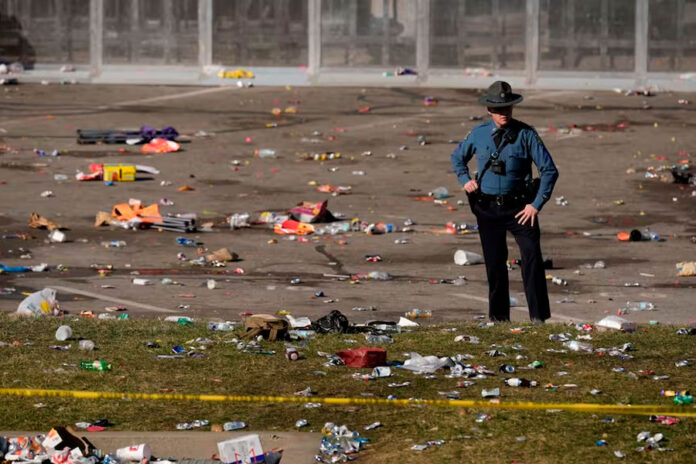
Un agente mira el lugar donde ocurrió un tiroteo durante el desfile del miércoles 14 de febrero de 2024, para festejar el triunfo de los Chiefs de Kansas City en el Super Bowl. (Foto: AP/Charlie Riedel)
KANSAS CITY, Missouri, EE. UU. — El tiroteo masivo que se registró el miércoles en Kansas City en medio de una multitud durante las celebraciones por el triunfo de los Chiefs en el Super Bowl al parecer se debió a una disputa entre varias personas, indicaron las autoridades de la ciudad.
La jefa policial Stacey Graves dijo que las 22 personas heridas en el tiroteo tenían edades entre los 8 y los 47 años, y la mitad de ellas eran menores de 16. En el incidente falleció también una mujer que tenía dos hijos.
Tres personas fueron detenidas —dos de ellas menores de edad— y se recuperaron armas de fuego durante el caos, indicó la policía. Pero los investigadores están pidiendo a los testigos, a personas con grabaciones de teléfonos móviles y a víctimas del tiroteo que llamen a una línea directa exclusiva.
“Estamos trabajando para determinar la participación de otros. Y cabe resaltar que hemos recuperado varias armas de fuego. Este incidente sigue siendo una investigación muy activa”, dijo Graves durante una conferencia de prensa.
El tiroteo afuera de Union Station ocurrió a pesar de la presencia de más de 800 agentes de policía que estaban en el edificio y sus alrededores, incluso en lo alto de estructuras cercanas, dijo el alcalde Quinton Lucas, quien asistió junto con su esposa y su madre y corrió para ponerse a salvo cuando sonaron los disparos. Pero no espera cancelar el próximo desfile del Día de San Patricio.
“Tenemos desfiles todo el tiempo. No creo que terminen. Ciertamente reconocemos los desafíos de seguridad pública y los problemas relacionados con ellos”, dijo Lucas.
Multitudes se habían alineado en la ruta del desfile antes del tiroteo, y los aficionados trepaban a los árboles y postes o se paraban en los tejados a fin de tener una mejor vista. Los jugadores avanzaban entre la multitud en autobuses de dos pisos, mientras los DJ y tambores anunciaban su llegada.
Se desconoce exactamente cuántas personas asistieron al desfile del Super Bowl de los Chiefs. Cuando los Reales de Kansas City ganaron la Serie Mundial de Grandes Ligas en 2015, se estima que 800.000 personas acudieron en masa a ese desfile de la victoria, rompiendo las expectativas en una ciudad con una población de aproximadamente 470.000 habitantes y un área metropolitana de aproximadamente 2 millones.
Los testigos describieron confusión cuando comenzaron los disparos, que a algunos les parecieron fuegos artificiales.
Algunas personas no corrieron al principio, pero otras inmediatamente buscaron refugio. Al principio la música del rally siguió sonando a pesar del caos. Y luego, momentos después que cesaron los disparos, algunas personas caminaban como si nada hubiera pasado.
Gene Hamilton, de 61 años, de Wichita, Kansas, dijo que le resultaba desconcertante que la música alegre del rally haya continuado en medio de la confusión.
Una mujer es llevada a una ambulancia tras un tiroteo en el desfile que celebraba el campeonato de los Chiefs de Kansas City en el Super Bowl, el miércoles 14 de febrero de 2024 (AP Foto/Charlie Riedel)
KANSAS CITY, Missouri, EE. UU.— Ocho niños figuraron entre las 22 personas heridas de bala durante un tiroteo al concluir el desfile del miércoles, en el que una multitud vitoreó a los Chiefs de Kansas City por su victoria reciente en el Super Bowl, informaron las autoridades.
Los disparos dejaron un muerto y provocaron que numerosos aficionados corrieran despavoridos para cubrirse, en otra celebración deportiva en Estados Unidos que es manchada por la violencia con armas de fuego.
Una radiodifusora identificó a una de las personas fallecidas como una de sus trabajadoras, una locutora hispana.
La jefa de la policía de Kansas City Stacey Graves dio detalles de los fallecidos y lesionados, en una conferencia de prensa. Dijo que tres personas fueron detenidas y que, de acuerdo con las versiones que había escuchado, un grupo de aficionados capturó a un sospechoso.
Sin embargo, Graves no pudo confirmar esa información.
“Estoy enojada por lo que sucedió hoy. La gente que vino a celebrar espera tener un ambiente seguro”, dijo la jefa de policía.
Las autoridades no revelaron detalles sobre la gente detenida o un posible móvil de los ataques. Graves dijo que se recuperaron algunas armas de fuego, pero no explicó de qué tipo.
“Hay mucho trabajo por delante. Estamos apenas en las primeras etapas”, comentó. “Y todo esto se investiga activamente”.
Se trata de la celebración deportiva más reciente que queda empañada por la violencia con armas de fuego en Estados Unidos. El año pasado, un tiroteo en el centro de Denver tras la coronación de los Nuggets en la NBA dejó lesionadas a varias personas.
También en 2023, se registró un tiroteo en un estacionamiento cerca del desfile con el que los Rangers de Texas festejaban la conquista de la Serie Mundial.
Algunas personas publicaron en redes sociales videos impactantes. Una de las imágenes muestra a alguien que aparentemente realiza compresiones torácicas a una víctima del tiroteo, mientras que otra persona, que está tendida en el suelo, se retuerce de dolor. La gente está llorando detrás.
En otro video se ve a dos personas persiguiendo y embistiendo a otra, reteniéndola en el suelo hasta que dos policías llegan.
La emisora KKFI informó en Facebook por la noche que su locutora Lisa López, conductora del programa “Taste of Tejano”, murió en el tiroteo.
“Este ataque sin sentido ha dejado a una familia y a esta comunidad de Kansas City sin una persona hermosa”, informó KKFI en un comunicado.
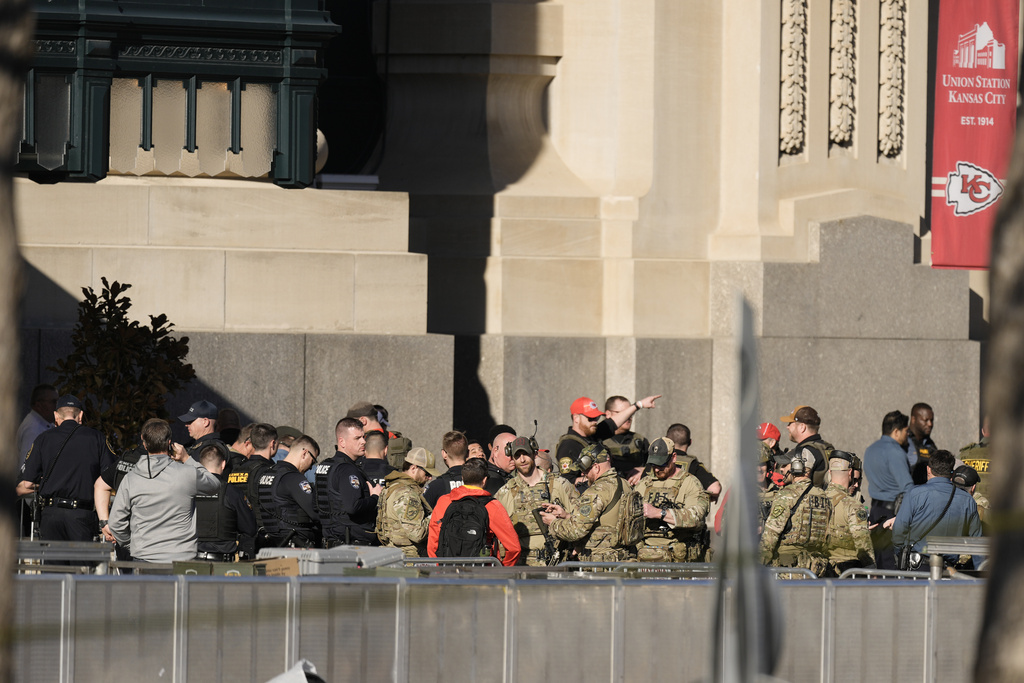
Oficiales de policía tienen una conversación en el lugar del tiroteo durante el desfile de los Chiefs de Kansas City tras su victoria en el Super Bowl el miércoles 14 de febrero del 2024. (Foto: AP/Charlie Riedel)
El ataque ocurrió pese a que había más de 800 agentes policiales emplazados en el edificio de la estación ferroviaria y en la zona, incluidos los techos de varios edificios cercanos, dijo el alcalde Quinton Lucas.
Lisa Money, de Kansas City, Kansas, intentaba juntar algo de confetti cerca del desfile cuando escuchó a alguien gritar: “¡Abajo, abajo, todos abajo!”
Inicialmente, Money pensó que alguien estaba haciendo una broma hasta que vio a los cuerpos especiales saltando la valla.
“No puedo creer que realmente sucediera. ¿Quién en su sano juicio haría algo así? Este debía ser un día de celebración para todos en la ciudad y las áreas cercanas y tienen a un idiota que quiere venir y hacer algo así”, dijo.
Kevin Sanders, de 53 años y originario de Lenexa, Kansas, indicó que escuchó un sonido como de fuegos artificiales y luego vio corriendo a la gente. Tras la ráfaga inicial hubo calma y no pensó más al respecto. Pero comentó que las ambulancias comenzaron a llegar después de 10 minutos.
“Apesta que alguien tuviera que arruinar la celebración, pero estamos en una gran ciudad”, dijo Sanders
Lisa Augustine, portavoz del Hospital Infantil Mercy Kansas City,dijo que esa clínica atendía a 12 pacientes que estaban en el desfile, incluidos 11 niños, algunos de los cuales presentaban heridas de bala.
El gobernador de Misuri Mike Parson y su esposa estaban en el desfile cuando se detonaron los disparos pero se encuentran bien, dijo Parson en la red social X.
El presidente Joe Biden fue informado del tiroteo y seguiría recibiendo datos actualizados, dijo un vocero de la Casa Blanca.
“El personal de policía estatal está asistiendo a la autoridad local en su respuesta”, publicó Parson. “Mientras esperamos para conocer más, nuestros corazones están con las víctimas”.
El preparador Rick Burkholder comentó que estaba con el entrenador en jefe Andy Reid, otros integrantes del cuerpo técnico y los jugadores en los autobuses rumbo al Estadio Arrowhead.
“Oro por Kansas City”, dijo el quarterback Patrick Mahomes mediante una publicación en X.
Tras el desfile de campeonato de los Nuggets de Denver el año pasado, hubo un tiroteo en el centro de Denver en el que dos personas resultaron heridas, aunque la policía dijo que no cree que el incidente estuviera relacionado con los festejos. El año pasado, una discusión terminó en disparos en un estacionamiento cerca del desfile de los Rangers de Texas por el título de la Serie Mundial. No hubo lesionados.
Las zonas que habían estado atestadas de aficionados quedaron vacías tras el tiroteo. Varios policías y bomberos charlaban de pie detrás de un área acordonada con cinta amarilla.
Una multitud llenó las calles por las que pasó el desfile y algunos aficionados incluso treparon árboles y postes o se subieron a las azoteas para tener una mejor vista. El dueño del equipo Clark Hunt estaba arriba de uno de los autobuses con el trofeo Lombardi. Eric Stonestreet, estrella de la serie de televisión “Modern Family, fue parte de los miles de aficionados.
Los jugadores avanzaron entre la multitud sobre autobuses de dos pisos mientras un DJ y bateristas anunciaban su llegada.
“Estamos coleccionado trofeos”, señaló el linebacker Drue Tranquill al tomar el micrófono de un reportero durante los festejos tras la remontada de los Chiefs por 25-22 en tiempo extra el domingo sobre los 49ers de San Francisco.
“Los mejores aficionados en el mundo”, exclamó el receptor Mecole Hardman, quien atrapó el pase de touchdown que se selló la victoria.
“Nunca se detengan”, gritó Isiah Pacheco en el trayecto.
Muchos aficionados se preguntaron si la superestrella del pop Taylor Swift estaría con su novio Travis Kelce durante el desfile y mensajes. Pero la cantante no apareció por ningún lado al inicio del desfile. En cambio Kelce estuvo con su madre Donna Kelce, considerada una súper estrella entre las madres de la NFL.
La inusual temperatura de entre 15 y 20 grados centígrados, inusualmente cálida, llevó a que más gente asistiera. De acuerdo con cifras de las autoridades de la ciudad, alcanzaron el millón de asistentes.
“Me lo perdí el año pasado y dije ‘No me lo perderé este año”, dijo un viejo aficionado de nombre Charles Smith Sr., quien viajó desde Sicklerville, Nueva Jersey.
Tras décadas sin ganar un campeonato, la ciudad comienza a ganar experiencia en desfiles de victoria. Hace cinco temporadas, los Chiefs superaron igualmente a los 49ers para su primer título de la NFL en 50 años. Y también está fresco de la consagración de los Reales en la Serie Mundial de 2015, su primer campeonato de béisbol en 30 años.
Luego, el año pasado, los Chiefs derrotaron a los Eagles de Filadelfia y prometieron que regresarían por más.
El Departamento de Salud Pública de Filadelfia continúa monitoreando un brote reciente de sarampión. El Departamento de Salud ha informado de un total de nueve casos confirmados de sarampión, incluidos al menos cinco casos entre niños.
La ciudad está trabajando para identificar a cualquier persona que haya estado expuesta o pueda haber estado expuesta y emitiendo recomendaciones de cuarentena y exclusión cuando sea necesario. Todos los casos hasta ahora se dan entre personas que no tenían inmunidad al virus.
Según diversos medios de comunicación, una persona que contrajo sarampión fuera de Estados Unidos acudió al Hospital Infantil de Filadelfia en diciembre del año pasado, donde expusieron a tres personas, entre ellas un padre y un niño. Ese padre y su hijo, que dieron positivo por sarampión, no siguieron las recomendaciones de cuarentena adecuadas. En cambio, el niño asistió a una guardería en Filadelfia.
Apenas unos días después, dos niños de esa guardería fueron hospitalizados con sarampión. Se han identificado más niños de la guardería con posibles casos de sarampión. Desde entonces, los funcionarios del departamento de salud de Filadelfia han agregado más lugares y fechas a la lista de posibles exposiciones que ocurrieron entre el 19 de diciembre y el 3 de enero.
El sarampión es un virus peligroso y muy contagioso. Se transmite cuando una persona infectada tose o estornuda, o al dejar el virus en objetos o superficies. Los síntomas son similares a los de muchas enfermedades respiratorias, como secreción nasal, tos o fiebre alta, seguidas de una erupción que generalmente comienza en la cara y se extiende por todo el cuerpo.
Los niños pequeños, las personas inmunocomprometidas y las personas mayores corren mayor riesgo de sufrir complicaciones graves por esta enfermedad, como deshidratación grave, neumonía, ceguera, convulsiones e inflamación del cerebro. Estas complicaciones pueden provocar la muerte.
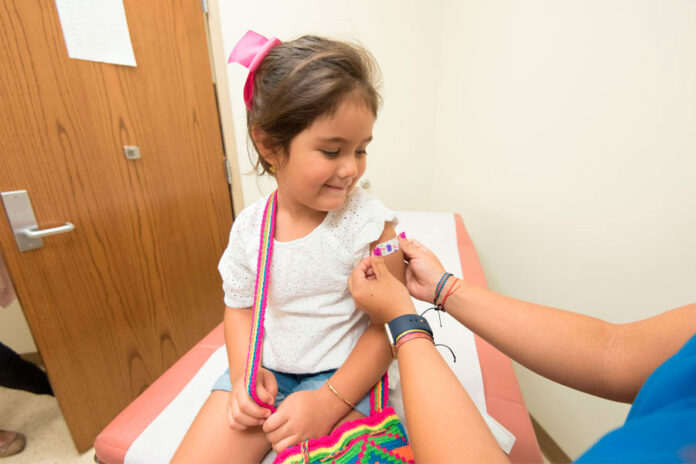
La mejor manera de prevenir el sarampión, similar al COVID-19, es vacunarse. Para los niños esto es especialmente importante. El Departamento de Salud de Filadelfia ofrece vacunas gratuitas contra el sarampión, las paperas y la rubéola (vacuna triple vírica) para cualquier residente de la ciudad. La vacuna MMR es extremadamente segura y eficaz y se ha utilizado durante décadas para proteger a millones de estadounidenses.
También se recomienda a cualquier persona que haya estado expuesta que se ponga en cuarentena durante 21 días para evitar la propagación del virus, así como que llame con anticipación a cualquier clínica de salud u hospital que pueda visitar para recibir tratamiento y diagnóstico, a fin de informar al personal que se prepare para prevenir. otros quedan expuestos.
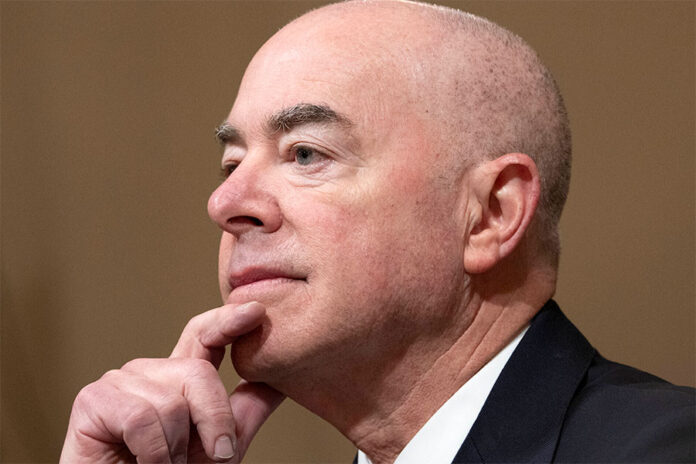
Secretary of Homeland Security Alejandro Mayorkas testifies during a Senate Homeland Security and Governmental Affairs Committee hearing on threats to the homeland, Oct. 31, 2023, on Capitol Hill in Washington. (Photo: AP/Stephanie Scarbrough/File)
For years, the American political right has demonized immigrants at the Southern border with Mexico. While we condemn any racist attacks on religious or ethnic groups, we must also stand up for immigrants. The number of racist attacks against them exceeds those on Jews, Arabs, or Asians. Yet, the media and even our supposed allies rarely express the outrage they should.
Why is only the Mexican border singled out for a wall when our border with Canada remains porous? Don’t forget our numerous seaports, historically gateways for undocumented immigrants, and documented individuals overstaying visas. Additionally, immigrants arriving at the Southern border come from all over the world.
Some have been manipulated into believing the lies that immigrants illegally vote Democrat, take American jobs, are drug smugglers and murderers, and come north to violate women and kill. Over the years, politicians have cherry-picked examples of immigrant lawbreakers, conveniently ignoring that most are hardworking individuals doing jobs many wouldn’t, valuing family more than the average US citizen, and often more religious.
This upcoming election will likely see hateful rhetoric targeting immigrants and their children. Ironically, Donald Trump’s mother and two wives were themselves immigrants. Did we err in letting them enter our country?
Immigrants did not fly the planes on 9/11, they were not responsible for the Oklahoma City bombing, school shootings, attacks on places of worship or shopping malls, nor were they part of the Capitol insurrection on January 6th two years ago. Hate crimes are rising against many groups, and we must work towards a society where everyone feels welcome and respected.
Early in his term, the Biden administration proposed a comprehensive immigration reform bill, but it was rejected by House Republican leadership. Recently, the Senate has been working on a compromise package that progressives oppose, while some conservative senators hail it as their dream bill. Yet, Donald Trump pressured Republican senators and House members to oppose this restrictive bill, fearing it would undermine his key campaign issue – the border conflict – and benefit President Biden.
The House of Representatives attempted to impeach Homeland Security Secretary Alejandro Mayorkas for failing to enforce border policy and breaching public trust. However, they were unaware that Mayorkas and his staff had been meeting with Republican senators for months to negotiate this very restrictive bill.
Following an incredibly narrow vote (214-213), Mayorkas became the first Cabinet member impeached since the 1870s. However, removal is unlikely due to the Democratic-controlled Senate. While Republicans claim they are upholding promises and exercising oversight, Democrats argue the impeachment is baseless and politically motivated.
House Republicans lack legal grounds for impeachment, yet Trump pushed them to take this risky step. It appears Trump opposes any action on the border, fearing it would aid Biden’s re-election.
Senator Kevin Cramer (North Dakota) expresses frustration with his fellow GOP colleagues who seem to defer to former President Donald Trump on major issues.
«I just think it’s unfortunate that we, as individual United States senators, can’t take the time and the effort and intellectual honesty to study something on your own and make a decision,» Cramer told Politico. «Donald Trump has his opinion too. That’s great, but ours should be our opinion.»
According to Politico, Cramer represents a growing number of GOP lawmakers on Capitol Hill who are increasingly troubled by Trump’s influence. This influence will be on display in the coming days as lawmakers prepare to release a bipartisan immigration and Ukraine aid bill, which Trump has attempted to block. Additionally, they await Trump’s public stance on a major bipartisan tax bill that trades an expansion of the child tax credit for the reinstatement of some corporate tax breaks.
Adding to the border conflict, a group of right-wing radio DJs organized a self-proclaimed «Army of God,» raising approximately $157,000. Their initial claims involved mobilizing 40,000 vehicles, primarily 18-wheelers, to three border entry points to halt immigration. However, the «army» reportedly consisted of only 20-50 vehicles, highlighting internal divisions within the group. It’s worth noting that Jesus, whom they invoke, was not a military leader but a man of peace. As a hypothetical six-star general, he would surely advocate for peaceful solutions.
We require fair and efficient legal procedures to swiftly determine legitimate asylum claims. The Trump administration created a bottleneck of legal frustration by neglecting to hire additional judges and staff to expedite processing. Furthermore, their policy of separating children from their parents resulted in many being lost in the bureaucratic maze.
If Mexico and Central America offered better jobs and safer living conditions, fewer people would migrate to our border. However, it’s important to recognize that people from all over the world, including Russia, China, and Africa, also transit through Mexico seeking a better life.
Hypothetically, sealing the border completely would result in a threefold increase in food prices and similar hikes for hotels and restaurants. The people who currently perform low-wage cleaning and yard work for these anti-immigrant voices would likely no longer be available or demand significantly higher wages.
Maybe the expatriates from Mexico, Central, and South American countries who are living comfortably in a less expensive economy south of the border should be sent back to the USA.
Perhaps we should consider prohibiting US citizens from seeking services from dentists and body sculpting doctors who undercut plastic surgeons and dentists in our communities.
Ultimately, practical solutions exist that would benefit everyone. This necessitates eliminating the hysterical, racist rhetoric and its proponents, paving the way for a reasonable path forward.
Una mujer es trasladada hacia un ambulancia tras el festejo por la victoria de los Chiefs de Kansas City en el Super Bowl, el miércoles 14 de febrero de 2024, en Kansas City, Missouri. (Foto: AP/Reed Hoffmann)
KANSAS CITY, Missouri, EE. UU. — Un tiroteo al final del desfile por la victoria de los Chiefs de Kansas City en el Super Bowl dejó al entre 10 y 15 personas heridas y envió a los aterrorizados aficionados buscando donde resguardarse.
El jefe de los bomberos Michael Hopkins informó que entre ocho y 10 personas resultaron heridas pero no dio más detalles. Indicó que prevén más información dentro de poco.
La policía informó en un comunicado que dos personas fueron detenidas. Se le pidió a la gente salir de la zona lo más pronto posible.
Ofilio Martínez, de 48 años, dijo que escuchó disparos a unas cuadras 10 o 15 minutos antes de escuchara el tiroteo cerca del desfile en Unión Station.
“Esto me está poniendo nervioso, da miedo”, indicó. Kevin Sanders, de 53 años y originario de Lenexa, Kansas, indicó que escuchó un sonido como de fuegos artificiales y luego vio corriendo a la gente. Tras la ráfaga inicial hubo calma y no pensó más al respecto. Pero comentó que las ambulancias comenzaron a llegar después de 10 minutos.
“Apesta que alguien tuviera que arruinar la celebración, pero estamos en una gran ciudad”, dijo Sanders
Lisa Augustine, portavoz del Hospital Infantil Mercy Kansas City, aseguró que el hospital “está recibiendo pacientes del desfile”. No sabía cuántos y no dio detalles de las lesiones.
El gobernador de Misuri Mike Parson y la primera dama estaban en el desfile cuando se detonaron los disparos pero se encuentran bien, dijo Parson en la red social X.
“El personal de policía estatal está asistiendo a la autoridad local en su respuesta”, publicó Parson. “Mientras esperamos para conocer más, nuestros corazones están con las víctimas”.
El preparador Rick Burkholder comentó estaba con el entrenador en jefe Andy Reid y otros integrantes del cuerpo técnico y los jugadores estaban en autobuses regresando al Estadio Arrowhead.
Las zonas que habían estado atestadas de aficionados quedaron vacías tras el tiroteo, con policías y bomberos hablando de pie detrás de un área acordonada con cinta amarilla.
Aficionados de los Chiefs de Kansas City se reúnen para el desfile de celebración con el equipo tras ganar el Super Bowl en Kansas City, Misuri el miércoles 14 de febrero del 2024. (Foto: AP/Reed Hoffmann)
Una multitud llenó las calles por las que pasó el desfile y algunos aficionados incluso treparon árboles y postes o se subieron a las azoteas para tener una mujer vista. El dueño del equipo Clark Hunt estaba arriba de uno de los autobuses con el trofeo Lombardi. Eric Stonestreet, estrella de la serie de televisión “Modern Family, fue parte de los miles de aficionados.
Los jugadores avanzaron entre la multitud sobre autobuses de dos pisos mientras un DJ y bateristas anunciaban su llegada.
“Estamos coleccionado trofeos”, señaló el linebacker Drue Tranquill al tomar el micrófono de un reportero durante los festejos tras la remontada de los Chiefs por 25-22 en tiempo extra el domingo sobre los 49ers de San Francisco.
“Los mejores aficionados en el mundo”, exclamó el receptor Mecole Hardman, quien atrapó el pase de touchdown que se selló la victoria.
El dueño mayoritario de los Chiefs de Kansas City Clark Hunt sostiene el trofeo Vince Lombardi mientras el autobús del equipo llega a la celebración tras ganar el Super Bowl en Kansas City, Misuri el miércoles 14 de febrero del 2024. (Foto: AP/Reed Hoffmann)
“Nunca se detengan”, gritó Isiah Pacheco en el trayecto.
Muchos aficionados se preguntaron si la superestrella del pop Taylor Swift estaría con su novio Travis Kelce durante el desfile y mensajes. Pero la cantante no estuvo por ningún lado al inicio del desfile. En cambio Kelce estuvo con su madre Donna Kelce, considerada una súper estrella entre las madres de la NFL.
La inusual cálida temperatura de entre 15 y 20 grados centígrados llevó a que más gente asistiera. De acuerdo con cifras de las autoridades de la ciudad, alcanzaron el millón de asistentes.
“Me lo perdí el año pasado y dije ‘No me lo perderé este año”, dijo un viejo aficionado de nombre Charles Smith Sr., quien viajó desde Sicklerville, Nueva Jersey.
Tras décadas sin ganar un campeonato, la ciudad comienza a ganar experiencia en desfiles de victoria. Hace cinco temporadas, los Chiefs superaron igualmente a los 49ers para su primer título de la NFL en 50 años. Y también está fresco de la consagración de los Reales en la Serie Mundial de 2015, su primer campeonato de béisbol en 30 años.
Luego, el año pasado, los Chiefs derrotaron a los Eagles de Filadelfia y prometieron que regresarían por más.
DeAngelo Harris-Rosa, subdirector de la Oficina de Prevención de la Violencia de Filadelfia, galardonado por la Casa Blanca por su labor para frenar la violencia con armas de fuego. (Foto: Cortesía/DeAngelo Harris-Rosa)
El líder afroboricua y director adjunto de la Oficina de Prevención de la Violencia de la Ciudad de Filadelfia, DeAngelo Harris-Rosa, recibió un reconocimiento de la Casa Blanca por sus esfuerzos para reducir la violencia con armas de fuego y por el impulso a programas comunitarios.
En la Casa Blanca, el 9 de febrero de 2024, Harris-Rosa se graduó con honores de la Academia de Liderazgo en Intervención de la Violencia Comunitaria (CVILA) del Laboratorio de Investigación del Crimen de la Universidad de Chicago. La ceremonia contó con la presencia de autoridades locales y nacionales, y reconoció el trabajo de 31 líderes de organizaciones comunitarias y agencias gubernamentales de 21 ciudades de Estados Unidos. La iniciativa especializada de formación en gestión y liderazgo duró seis meses.
El programa CVILA capacita a líderes de alto nivel y ejecutivos en el ámbito de la intervención de la violencia comunitaria (CVI), en especial a quienes trabajan en comunidades minoritarias desproporcionadamente afectadas por la violencia con armas de fuego. Les brinda las habilidades esenciales para amplificar el impacto de sus organizaciones y para desarrollar estrategias más relevantes y efectivas.
Harris-Rosa y los demás participantes recibieron capacitación práctica de expertos en gestión de programas, retención de personal, alfabetización en datos, evaluación y desarrollo organizacional. El plan de estudios tiene como objetivo formar líderes de CVI, capaces de mejorar la seguridad pública y abordar los factores de riesgo subyacentes y las disparidades socioeconómicas que desembocan en la violencia con armas de fuego.
Al recibir el reconocimiento, Harris-Rosa, con mucha humildad, reconoció los esfuerzos colaborativos de miembros de la comunidad, organizaciones y funcionarios públicos dedicados a enfrentar la violencia con armas de fuego a escala nacional.
Destaca la importancia de este recorrido juntos, como colectivo, para transformarnos en agentes de cambio capaces de enfrentar la violencia con armas de fuego. Para ello, debemos aprovechar las experiencias de todos y el conocimiento existente.
Desde 2015, Harris-Rosa ha desempeñado un papel crucial en la lucha contra este tipo de violencia a través de su trabajo en la Oficina de Prevención de la Violencia con Armas de Fuego de la Ciudad de Filadelfia. Esto implica supervisar las operaciones diarias, evaluar las estrategias de prevención de la violencia, colaborar con las fuerzas del orden locales e implementar prácticas y modelos basados en evidencia que identifiquen y aborden las causas fundamentales de la violencia en las comunidades negras, latinas y mestizas.
Conozca más de la Oficina de Prevención de la Violencia en este enlace. Para más información sobre el programa CVILA haga clic aquí.
DeAngelo Harris-Rosa, Deputy Director of Philadelphia's Office of Violence Prevention, honored by the White House for his work in curbing gun violence. (Photo: Courtesy/DeAngelo Harris-Rosa)
Community leader DeAngelo Harris-Rosa, proudly identifying as Afro-Boricua and serving as Deputy Director for the City of Philadelphia’s Office of Violence Prevention, received recognition from the White House for his dedicated efforts in curbing gun violence and spearheading community-based programs.
On February 9, 2024, Harris-Rosa graduated from the University of Chicago Crime Lab’s Community Violence Intervention Leadership Academy (CVILA) ceremony held at the White House. He was one of 31 leaders selected from community organizations and government agencies across 21 U.S. cities to participate in this specialized 6-month management and leadership training initiative.
The CVILA program empowers senior and executive leaders in the field of community violence intervention (CVI), especially those working in minority communities disproportionately affected by gun violence. It equips them with essential skills to amplify the impact of their organizations and advance the field.
Participants like Harris-Rosa underwent hands-on training from expert practitioners and scholars in areas such as program management, staff retention, data literacy, evaluation, and organizational development. The curriculum aims to develop well-rounded and skilled CVI leaders capable of enhancing public safety and addressing the underlying risk factors and socioeconomic disparities contributing to gun violence.
«I acknowledge the collaborative efforts with community members, organizations, and public officials dedicated to tackling gun violence nationwide,» said Harris-Rosa, expressing humility and gratitude for the recognition.
He emphasizes the collective journey towards becoming effective change agents, leveraging lived experiences and institutional knowledge to navigate the complex challenges associated with gun violence.
Since 2015, Harris-Rosa has played a crucial role in combating gun violence through his work with the City of Philadelphia’s Office of Gun Violence Prevention. This involves overseeing day-to-day operations, evaluating violence prevention strategies, collaborating with local law enforcement, and implementing evidence-based practices and models that identify and address the root causes of violence in Black, Brown, and Latinx communities.
More information on the Office of Violence Prevention can be found here. More information on the CVILA can be found here.
Una mujer compra flores antes del Día de San Valentín, en el Mercado de Flores del Sur de California, el 13 de febrero de 2024 en Los Ángeles, California.
La profunda división política actual se refleja también en el amor. Tener creencias opuestas puede ser motivo de ruptura o incluso motivo para no iniciar una relación. Expertos afirman que esta brecha podría aumentar, aunque algunos románticos siguen apostando por la unión pese a las diferencias.
En tiempos de profunda polarización política, la pregunta de «¿por quién votas?» puede iniciar o acabar una relación.
«Puse mis preferencias políticas en mi perfil de Hinge porque no quería perder el tiempo, ni quería hacérselo perder a otros. Si no crees en lo que creo, no veo cómo podemos avanzar como pareja», reconoció Rebecca, una estadounidense que «no pierde la esperanza de encontrar el amor».
Como esta joven de 25 años, cada vez son más quienes aseguran que no podrían vivir o establecer una relación duradera con alguien que tenga preferencias políticas diferente. La tendencia se ha acentuado a medida que se agudiza también la polarización política a nivel global. En Estados Unidos, en medio de un año electoralque se avizora como uno de los periodos más divisivos de su historia reciente, los ejemplos son elocuentes.
A pesar de que las diferencias de religión y hasta de raza eran tradicionalmente motivo para la ruptura o en algunos casos, para no iniciar una nueva relación, «durante la última década, la política se ha convertido aparentemente en un tema aún más divisivo de lo que era», dijo a la Voz de América la profesora de Leyes y codirectora del Centro de Derecho Familiar de la Universidad de Virginia, Naomi Cahn.
Hasta que la política nos separe
Una encuesta del portal de citas Match.com encontró que en 2015, más de tres cuartas partes de los solteros que usaban el sitio para encontrar el amor aseguró que estarían dispuestos a salir con alguien de otro partido político diferente del suyo. En 2022, la misma pesquisa demostró que esa cifra se redujo a la mitad.
«Es un gran cambio en siete años” insistió Cahn, coautora del libro Familias Rojas versus Familias Azules. “También hay investigaciones que muestran que en 2017, después de que Donald Trump asumiera la Presidencia, alrededor del 10 % de los estadounidenses informaron que habían terminado una relación amorosa romántica porque su pareja tenía una visión política diferente. Así que ciertamente, en la pasada década ha habido un aumento dramático en la falta de voluntad de involucrarse con una persona del otro lado del espectro político”.
Para Belén, una española radicada en EE. UU. desde hace una década, Trump era un dealbreaker o como ella lo pone: un gran motivo para ni siquiera comenzar una conversación en la aplicación de citas donde encontró al que hoy es su esposo.
“En mi perfil yo puse: ‘Si vas a votar a Trump, no le des al like’. Ese era mi primer filtro, era lo primero que aparecía en mi bio”, dijo a la VOA, en referencia a una modalidad cada vez más común en este tipo de aplicaciones, donde puedes añadir un badge o “insignia” con tu preferencia política. La práctica se hizo más común después de los pasados comicios presidenciales y se ha mantenido hasta ahora.
«Las Insignias de Interés son una excelente forma para que las personas destaquen en su perfil qué es lo que les mueve y apasiona», explicó a la VOA Javier Tuirán, director de Comunicación para Latinoamérica de la aplicación de citas Bumble, quien especificó que estas herramientas permiten «una búsqueda más precisa del perfil de personas con las que buscamos conectar».
Según la investigación de Tendencias del Dating 2024 de la app, casi la mitad (49 %) del total de los encuestados tienen una visión clara de lo que quieren en sus vidas románticas para el próximo año y conectarán con personas que se alineen a sus valores, intereses, indicó Tuirán. La muestra de Bumble incluyó 26.849 usuarios en todo el mundo.
«Una de las tendencias más sobresalientes para este año, es la de Nosotros = nuestras causas. Ésta se refiere al aumento de personas que valoran la participación en temas que les importan. Para 1 de cada 4 personas (25 %) en Bumble, es fundamental que su pareja participe activamente en causas políticas y sociales, de hecho, esto los hace más atractivos», afirmó.
De igual forma, el sitio OkCupid publicó recientementeun recuento con motivo de sus dos décadas, en el que afirmó que “casi 20 millones de personas dijeron que disfrutan hablar de política” con sus posibles parejas.
Siendo 2024 uno de los años electorales más importantes para el mundo en décadas, con unos 76 países celebrando comicios. “A nivel mundial, casi 8 de cada 10 (79 %) personas que se citan en OkCupid dijeron que están abiertos a hablar de política con su pareja”, reveló la plataforma.
Expertos coinciden que esta es una conversación muy importante, sobre todo en los estadíos tempranos de la relación. La de afinar filtros online para encontrar pareja es una tendencia que cada vez cobra más importancia debido a que esta es una de las formas más usuales de buscar el amor.
«De hecho, 7 de cada 10 (73 %) de los usuarios de Bumble considera a la tecnología como un aliado para conocer nuevas personas y casi la mitad (44 %) señaló que conocer a alguien en una app de citas ha aumentado su felicidad», agregó el director de Comunicaciones de Bumble Latam.
El género también juega un papel interesante en esta división, agregó la profesora de Leyes de la Universidad de Minnesota, coautora junto a Naomi Cahn de Familias Azules… Según investigaciones, en la última década también ha aumentado el número de mujeres solteras entre 18 y 30 años que se identifican como liberales, una tendencia completamente opuesta a la observada entre sus coetáneos masculinos, donde se ha visto un incremento de ideas conservadoras.
Cuando se habla de posibles parejas o matrimonios entre un hombre y una mujer, “eso disminuye el número de parejas potenciales que compartirán sus opiniones políticas”, dijo Carbone.
En esto coinciden los datos recogidos por Bumble, que muestran que «las mujeres son menos abiertas a salir con alguien con opiniones políticas diferentes y para 1 de cada 3 mujeres (33 %), es un punto en contra que la persona con la que están saliendo no está al tanto de los problemas sociales actuales», reveló Javier Tuirán.
“Cuando tienes cónyuges de diferentes partidos, hay algunas investigaciones que muestran que son menos felices, que tienen más conflictos y que incluso podrían ser más propensos a terminar sus relaciones. Podrían tener más probabilidades de terminar en divorcio que en matrimonios en los que los cónyuges están de acuerdo”, destacó por su parte Cahn, quien remarcó que definitivamente los “desacuerdos sobre temas importantes, pueden tener un impacto negativo en nuestra relación”.
Uno de los dos tiene que ceder
La pregunta de si realmente importa la política a la hora de plantearse una nueva relación o incluso en la interacción con la familia y amigos, provocó respuestas encontradas entre los seguidores de la Voz de América en redes sociales.
Mientras algunos usuarios aseguraron que “jamás pelearían por política con nadie” pues en sus familias “todos pensamos distinto y eso es lo bueno” – según arroba_chirola_oficial- otros fueron más tajantes, advirtiendo que incluso han dejado de comunicarse con allegados con creencias opuestas.
Sin embargo, ante esta disyuntiva, predominan los que encuentran un punto intermedio o están dispuestos a llegar a un entendimiento. Un entendimiento es “deseable más no indispensable. Siempre y cuando no sean posiciones diametralmente opuestas y que califiquen como ‘fanatismo’”, aseguró otro seguidor, identificado como ricarditox.
Según estudios, encontrar este terreno de compromiso, casi siempre depende de que uno de los dos en la pareja sea menos apasionado que el otro si de política se trata. O como mínimo, respetar al otro y ser tolerante con su ideología.
“No necesariamente tienen que tener la misma afiliación política, pero al menos debe estar en la misma escuela de pensamiento sobre cómo abordamos los problemas en nuestra sociedad”, dijo a la VOA LaDarius Thompson, director del centro para la participación de la comunidad académica de la Universidad Queens en Charlotte, Carolina del Norte.
Thompson, un joven afroamericano que se identifica abiertamente como queer, confiesa que como tal, en el sur conservador debe ser “muy cauteloso acerca de cómo aproximarse» a las citas. «Si me encuentro con alguien conservador y no necesariamente de acuerdo con los derechos LGTBIQ o el derecho al matrimonio igualitario, entoncessimplemente no habría conversación allí”.
Entre las mayores diferencias desde el ciclo electoral pasado a 2024, está precisamente el cambio en diferentes leyes que han amenazado el acceso federal al aborto legal. La decisión de la Corte Suprema de revocar este derecho en 2022 y dejarlo en manos de cada estado, lo convirtió en un tema clave y divisorio de cara a los comicios generales
«Creo que si estás considerando a una pareja potencial, no sólo te centras en saber a qué partido político o por quién votaste en las últimas elecciones, sino que también podrías preguntarte cuáles son sus opiniones sobre ciertas cuestiones importantes, y por supuesto, dentro de esto está la decisión de la Corte Suprema. Creo que hace que el aborto sea un tema mucho más público y se discuta con mayor frecuencia», destacó Cahn.
En la pregunta de la VOA en Instagram, el usuario @somoscreactivocoincide. «No es importante compartir la misma ideología de mi familia, pero debes siempre rodearte de personas afines a tus creencias (…) es importante dejar que el otro sea (eso está bien ), pero más importante es que te respetes por lo que tú eres (eso también está bien)», advirtió, tiempo que concluyó que «llevar la fiesta en paz es lo importante».
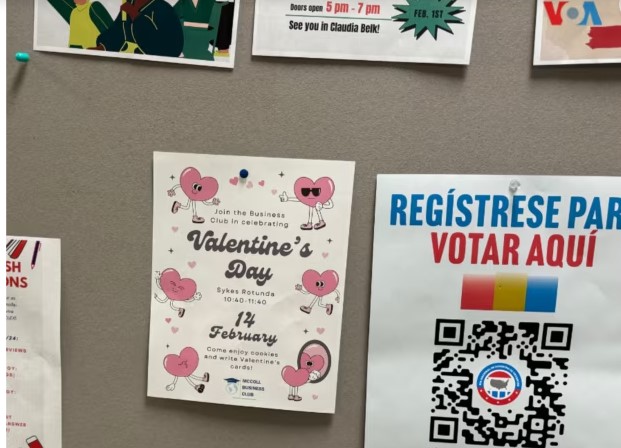
Carteles con invitaciones a una fiesta por el Día de San Valentín y llamados a registrarse para votar coinciden en un tablero de anuncios en la Universidad Queens en Charlotte, Carolina del Norte, el 5 de febrero de 2024.
¿El amor salva las diferencias?
Aunque muchos románticos insistan en que el amor lo puede todo y que si dos personas se quieren, nada más importa, los hechos y los expertos aseguran que quizá no sea del todo así. Especialmente durante este periodo de elecciones en EEUU, un país donde republicanos y demócratas, conservadores y liberales, al parecer dejan muy poco de terreno común a la vista.
«Una de las cosas es que esto ha cambiado (…) es que hace años escuché de los conservadores que tenían la sensación de crisis, que el país estaba en problemas, que se había desviado de los valores correctos, y que el otro lado era el Diablo. Pero nunca escuché eso de los liberales. Ahora lo hago», dijo June Carbone.
Los principales aspirantes a la nominación de sus partidos, el presidente Joe Biden, y su antecesor, el exmandatario Donald Trump, han enfocado sus campañas en el hecho que uno es un reflejo completamente opuesto del otro, algo que podría resultar en el reforzamiento de la división entre ambos lados.
«Esta es una elección profundamente divisiva. Y entonces, cuando estás en una relación íntima y romántica con alguien de la parte opuesta, y no estás de acuerdo con algunos valores fundamentales, eso tendrá consecuencias a largo plazo. Quiero decir, si ven esto como un nosotros contra ellos, mi partido contra su partido, entonces quiero decir que también se aplicará a las relaciones», indicó por su parte Naomi Cahn.
La profesora advirtió que «para las relaciones existentes o para las relaciones de pareja o el matrimonio existentes, esto ciertamente podría tener un impacto».
«Creo que la situación podría empeorar después de las elecciones», pronosticó a su vez Carbone.
A pesar de la aparente insalvable barrera, algunos se mantienen optimistas, entre ellos LaDarius Thompson. «A menudo parece que en este país estamos aislados y teniendo experiencias monolíticas, pero ese no es el caso. Yo creo que cuando tenemos una comunidad que nos ayuda a ver que no estamos solos y tenemos escuelas de pensamiento similares, ayuda a que esas relaciones sean más estrechas y cercanas».
El joven Ryan Byrd va más allá. El estudiante universitario confiesa que mantiene una relación de cinco años y que en este tiempo mantiene su fe en el amor, aunque advierte que «debemos alejarnos un poco de la tecnología y volver a la base, a preguntarnos ¿Realmente me gustas? Y luego, ir profundizando más a medida que continúas quitando esas capas, donde puedes ver que, a pesar de todo, todavía te amo, incluso si eres diferente a mí».
«Cuando estás enamorado de alguien, simplemente retiras las capas y encuentras cosas que tal vez no sabías y te tomas el tiempo para reflexionar y darte cuenta que está bien, no te gustan estos intereses, pero todavía quiero viajar por la vida contigo», insistió.
In this Feb. 24, 2019, file photo, containers of Roundup are displayed on a store shelf in San Francisco. The Bayer Corporation has spent more than $10 billion to settle lawsuits that claim the popular weed killer Roundup causes cancer. But a single verdict in Philadelphia this year has topped $2 billion and thousands of cases are still to come. Bayer calls the recent verdict "excessive" and insists Roundup is safe. However, it has reformulated the consumer version to remove a pesticide called glyphosate. (Photo: AP/Haven Daley/File)
PHILADELPHIA. — When a Philadelphia jury awarded $2.25 billion in damages this year in a case that linked Roundup to a cable technician’s blood cancer, the verdict became the largest yet in the long-running litigation over the popular Monsanto weed killer.
Corporate parent Bayer had set aside more than $10 billion in 2020 to settle about 125,000 cases, many consolidated in California. And it won a string of nine individual lawsuits that started going to trial in 2021. But the tide changed last year when juries began handing down nine- and 10-figure awards to plaintiffs who had developed non-Hodgkin lymphoma.
“They try to show that non-Hodgkin lymphoma is just something that happens randomly,” said lawyer Tom Kline, who represented the Philadelphia plaintiff with co-counsel Jason Itkin. “(But) the arc of the scientific literature has turned against Monsanto in the past seven years.”
Thousands of cases remain, including one under way in Delaware over a South Carolina groundskeeper’s cancer death. Bayer insists the weed killer is safe, but has reformulated the version sold to consumers to remove the pesticide known as glyphosate.
“Bayer will continue to try cases based on the overwhelming weight of science and the assessments of leading health and scientific regulators worldwide, including E.P.A., that support the safety and non-carcinogenicity of Roundup,” the Berlin-based company said in a statement, referring to the U.S. Environmental Protection Agency.
Kline argued that Bayer ignored known health risks from glyphosate to keep Roundup on the market, failing to even warn consumers to wear gloves and protective clothing when they used it. He and Itkin obtained a $175 million verdict in another Roundup case in Philadelphia last fall.
Their latest client, John McKivison, told jurors in January that he used the product for 20 years — at a former warehouse job, on a deer food patch he tended at his home near Williamsport, Pennsylvania, and at the church and Little League where he volunteered. He said he mixed the concentrated version of Roundup into a spray bottle, which sometimes led to spills that soaked his skin.
McKivison’s cancer is in remission but he said he fears a relapse and at 49 spends his days “worrying, wondering and waiting.”
The jury awarded him $250 million in actual damages, then penciled in an additional “2 billion dollars” for punitive damages, the verdict slip shows. The jury foreman, a college librarian, declined to comment while other Roundup cases are still playing out.
Bayer, in a 174-page post-trial motion filed this month, called the jury award “excessive” and the ground rules in Philadelphia courts unfair. The company, for instance, said there was no evidence McKivison had suffered hundreds of millions of dollars in actual losses.
And the company continues to challenge the central claim that glyphosate causes non-Hodgkin lymphoma, pointing to studies that say it occurs at the same rate in Roundup users as the general population.
The Roundup lawsuits took off after a branch of the World Health Organization raised concerns about glyphosate in 2015, calling it “probably carcinogenic to humans.”
The EPA meanwhile says it does not pose an “unreasonable risk.» A U.S. appeals court in California has ordered the agency to review that 2020 finding, while Bayer hopes to persuade the U.S. Supreme Court that the EPA’s stamp of approval should invalidate the state court claims.
Bayer meanwhile hopes to reduce the McKivison award, noting that judges have slashed three other large verdicts. A $2 billion verdict awarded to a California couple who both got cancer was reduced to about $87 million. A $289 million verdict in the first Roundup trial was cut to $78 million and then about $20 million.
Bayer, in the post-trial motion, said the McKivison judge allowed “improper and abusive cross-examinations» and let their opponents make “the gruesome and false statement that the plaintiff is under a ‘death sentence.’”
Large jury awards in Philadelphia are nothing new and the city has the dubious distinction of often topping a list of “ judicial hellholes ” by the ATR Foundation, a tort reform group.
However, Kline said the city jury pool is changing along with its demographics as more young professionals settle there. He said half of the 12 jurors had attended college and a few, including the foreman, had graduate degrees. Ten of them had to agree Roundup was more likely than not a cause of McKivison’s cancer to find Bayer liable.
“We’re confident that the verdict is sound,” Kline said.
Bayer bought St. Louis-based Monsanto for $63 billion in 2018, only to see its share price tumble in the years since.
El dueño mayoritario de los Chiefs de Kansas City Clark Hunt sostiene el trofeo Vince Lombardi mientras el autobús del equipo llega a la celebración tras ganar el Super Bowl en Kansas City, Misuri el miércoles 14 de febrero del 2024. (Foto: AP/Reed Hoffmann)
KANSAS CITY, Missouri, EE. UU.— El centro de la ciudad de Kansas City se convirtió en un mar rojo el miércoles, en el Día de San Valentín, una fecha en la que los aficionados de los Chiefs festejaron su tercer título del Super Bowl en cinco años con un desfile.
“Estamos coleccionado trofeos”, señaló el linebacker Drue Tranquill mientras se subía a un autobús y tomar el micrófono de un reportero durante los festejos tras la remontada de los Chiefs por 25-22 en tiempo extra el domingo sobre los 49ers de San Francisco.
Los cañones de confeti explotaron desde los autobuses de dos pisos en los que los jugadores se trasladaron entre la afición. DJs y bateristas anunciaron su llegada. A lo largo del trayecto, los aficionados se colgaron de los árboles y se pararon en las azoteas para tener una mejor vista.
El dueño Clark Hunt estuvo en uno de sus esos autobuses con el trofeo Lombardi. Eric Stonestreet, estrella de la serie de televisión «Modern Family, fue parte de los miles de aficionados.
Muchos aficionados se preguntaron si la superestrella del pop Taylor Swift estaría con su novio Travis Kelce durante el desfile y mensajes. Pero la cantante no estuvo por ningún lado al inicio del desfile. En cambio Kelce estuvo con su madre Donna Kelce, considerada una súper estrella entre las madres de la NFL.
Aficionados de los Chiefs de Kansas City se reúnen para el desfile de celebración con el equipo tras ganar el Super Bowl en Kansas City, Misuri el miércoles 14 de febrero del 2024. (Foto: AP/Reed Hoffmann)
La inusual cálida temperatura de entre 15 y 20 grados centígrados llevó a que más gente asistiera. De acuerdo con cifras de las autoridades de la ciudad, alcanzaron el millón de asistentes.
“Me lo perdí el año pasado y dije ‘No me lo perderé este año”, dijo un viejo aficionado de nombre Charles Smith Sr., quien viajó desde Sicklerville, Nueva Jersey.
Tras décadas sin ganar un campeonato, la ciudad comienza a ganar experiencia en desfiles de victoria. Hace cinco temporadas, los Chiefs superaron igualmente a los 49ers para su primer título de la NFL en 50 años. Y también está fresco de la consagración de los Reales en la Serie Mundial de 2015, su primer campeonato de béisbol en 30 años.
Luego, el año pasado, los Chiefs derrotaron a los Eagles de Filadelfia y prometieron que regresarían por más.
Un cambio es que el desfile en esta ocasión inició a las 11 de la afición para que la afición pudiera disiparse antes de la hora de la cena por el Día de San Valentín.