Inicio Blog Página 892

Semana de los Derechos Laborales: información clave para trabajadores

Laborales

Este año se celebra la semana de #DerechosLaborales del 26 al 30 de agosto, que se centra en los derechos, la salud y la seguridad de los trabajadores.

Con tal motivo el Departamento del Trabajo de Estados Unidos, en colaboración con otras instancias y la Embajada de México, están difundiendo información importante para los trabajadores migrantes. En el sitio de internet TrabajadorMigrante.gov se encuentran recursos sobre sus derechos en el trabajo.

En esa página se puede consultar gratuitamente recursos sobre derechos laborales en español y otros idiomas.

Si trabajas en Estados Unidos, y sin importar de dónde seas, ni tu estatus migratorio, tienes derechos.

Todos los que trabajan en Estados Unidos tienen derechos laborales. Los trabajadores migrantes tienen derechos, incluso durante el proceso de reclutamiento y antes de su llegada a suelo estadounidense.

En ese sitio web puedes obtener respuestas a preguntas comunes y qué hacer si tu empleador o reclutador no está cumpliendo con la ley.

Todos tienen el derecho a hablar sobre condiciones laborales inseguras, independientemente del lugar de origen, el idioma que hable o el trabajo que realice. 

Hay videos sobre los derechos de los trabajadores migrantes que cubren preguntas comunes sobre salarios, seguridad y más. Véalos en https://www.youtube.com/watch?v=8IzfX2gCh0U&list=PLY-LCLcsLXVEp0E4PjQRv6ZyHExqp_Aqg.

Los trabajadores agrícolas también tienen derecho a una vivienda y transporte seguros, a agua potable e instalaciones para lavarse las manos. dol.gov/sites/dolgov/files/WHD/publications/Farm_Worker_Rights_Flyer.pdf 

Los empleadores deben brindar un lugar privado y tiempo de descanso para que las mujeres lactantes se extraigan leche en el trabajo.

Si tienes preguntas, también puedes llamar al 1-866-487-2365 para hablar con @USDOL de forma confidencial. dol.gov/agencies/whd/pump-at-work/espanol

Ciertos trabajos peligrosos son prohibidos para trabajadores jóvenes menores de 18 años de edad. Para obtener más información visite https://www.dol.gov/sites/dolgov/files/whd/youthrules/YouthRulesBrochureSp.pdf.

También puedes obtener información sobre el derecho a afiliarse con compañeros de trabajo para mejorar las condiciones de trabajo, y ese derecho se tiene sin importar el estatus migratorio.

Todos los trabajadores tienen derecho a: 

•          Ser pagados correctamente

•          Un lugar de trabajo seguro y saludable

•          Ser tratados por igual

•          Afiliarse con otros trabajadores

•          Un tratamiento justo como veterano o militar

•          Protección contra peligros

•          Reportar condiciones de trabajo

Problemas de seguridad, salarios y represalias

Se puede presentar confidencialmente una queja en línea o por teléfono. Más información: dol.gov/general/trabajadormigrante/safety 

Para reportar condiciones inseguras, también se puede llamar al 800-321-OSHA (6742).

Si se cree que el empleador no ha pagado el salario que debe, o se retrasa con la nómina, puede llamar a @WHD_DOL al 1-866-487 2365 o visitar dol.gov/general/trabajadormigrante/wages 

La ley federal otorga a los trabajadores el derecho a un lugar de trabajo seguro. Esto incluye la protección frente a enfermedades relacionadas con el calor y el calor excesivo. Más información sobre los derechos de los trabajadores: osha.gov/heat 

Si el empleador no está haciendo lo suficiente para proteger de los peligros del calor, también puede reportarse. 

Las represalias por denunciar problemas de seguridad y salud no son aceptables.

Un empresario no puede tomar medidas negativas por recibir informes de lesiones, problemas de seguridad u otras preocupaciones. Si se sufre represalias como el despido, el bajar las horas de trabajo o cambios de horarios, puedes reportarlo. 

Para conocer los derechos al respecto está el sitio: dol.gov/general/trabajadormigrante/retaliation 

Más información: dol.gov/general/trabajadormigrante/union, se invita a la población a usar #SDL2024 en sus redes sociales.

Opera Philadelphia cuts all tickets to $11 in ‘pick your price’ model, hoping to widen audience

Opera
The Italian Air Force Frecce Tricolori flies over Center City Philadelphia on Monday, Aug. 12, 2024. (Photo: AP/Yong Kim/The Philadelphia Inquirer)

Opera Philadelphia is lowering all tickets to $11 under new general director Anthony Roth Costanzo, establishing a “pick your price” model aimed at widening the company’s audience.

Costanzo announced Tuesday the company has raised $7 million since June 1 when he replaced David Devan, who retired after 13 seasons. The money addressed debt and enabled the new model, in which people can pay more than the minimum if they want to.

“This is chapter one of a long-term turnaround story,” Costanzo said. “Creating a new place for opera in our current time requires risk. It doesn’t require doubling down on safe choices, and that’s going to mean that we have to enable failure.”

Costanzo, a 42-year-old countertenor with an active singing career on the world’s top stages, took over ahead of a 2024-25 season trimmed to 10 performances, down from 30 in 2018-19, the last season before the coronavirus pandemic, and 16 in 2022-23. Tickets for this season originally were priced at $30-$300.

“Every dollar you spend over $11 helps to not only support the opera, but support the people who want to come to the opera,” Costanzo said. “It will certainly represent a decrease in income from ticket sales. But it will represent an increase in contributed revenue and I believe also in the future in foundation revenue and hopefully corporate revenue.”

Opera Philadelphia sold 14,211 tickets last season at an average of $85.77, resulting in 13% of the company’s revenue. In the 2022-23 season, 17,464 tickets were sold at an average of $78.32, also bringing in 13% of revenue.

This season’s schedule at the Academy of Music, which has about 1,800 full-view seats, includes three performances of Missy Mazzoli’s “The Listeners” beginning with its U.S. premiere on Sept. 25, two performances Joseph Bologne’s “The Anonymous Lover” starting Jan. 31 and four performances of Mozart’s “Don Giovanni” opening April 25. The company scrapped its innovative season-opening festival as part of budget cutting.

Costanzo spoke with Henry Timms, the outgoing president of New York’s Lincoln Center for the Performing Arts, which since 2022 has relied on a choose-what-you-pay model starting at $5 for many events during its “Summer for the City” schedule.

Costanzo said the past model had been predicated on including popular titles such as Bizet’s “Carmen,” intended to spur ticket sales.

“We market to the people who can afford $150 tickets. That changes the feel of the marketing. It changes the demographics of who we market to and where we market,” Costanzo said. “Ticket price and selling tickets becomes a real focal point of how we create art form in our time. And I think that’s a shame. I think it limits us and hinders innovation and progress.”

What is Telegram and why was its CEO arrested in Paris?

Telegram
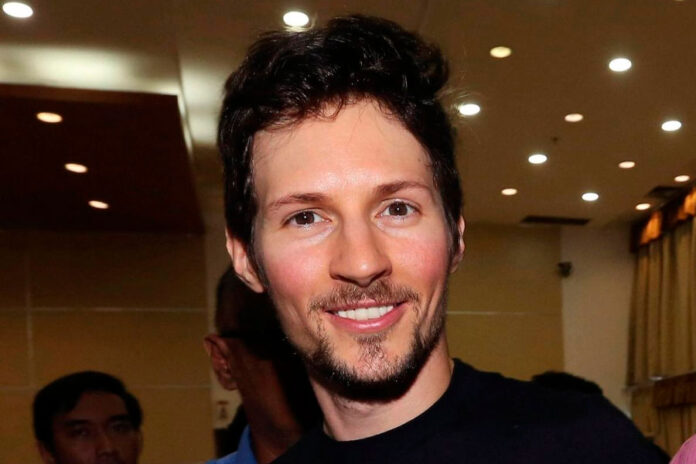
Telegram co-founder Pavel Durov, center, smiles following his meeting with Indonesian Communication and Information Minister Rudiantara in Jakarta, Indonesia on Aug. 1, 2017. (Photo: AP/Tatan Syuflana/ File)

Pavel Durov, the founder and CEO of the messaging app Telegram, was arrested in Paris over the weekend over allegations that his platform is being used for illicit activity such as drug trafficking and the distribution of child sexual abuse images.

Durov, who was born in Russia, spent much of his childhood in Italy and is a citizen of France, Russia, the Caribbean island nation of St. Kitts and Nevis and the United Arab Emirates. He was taken into custody at Paris-Le Bourget Airport in France on Saturday after landing from Azerbaijan.

In a statement posted to its platform, Telegram said it abides by EU laws and its content moderation is “within industry standards and constantly improving.” Durov, the company added, “has nothing to hide and travels frequently in Europe.”

Here are some details on Telegram, the app at the center of Durov’s arrest.

What is Telegram?

Telegram is an app that allows for one-on-one conversations, group chats and large “channels” that let people broadcast messages to subscribers. Unlike rivals such as Meta’s WhatsApp, Telegram’s group chats allow as many as 200,000 people, compared to a maximum of 1,024 for WhatsApp. Experts have raised concerns that misinformation spreads easily in group chats of this size.

Telegram offers encryption for their communications, but — contrary to a popular misconception — this feature is not on by default. Users have to switch on the option to encrypt their chats. It also doesn’t work with group chats. That contrasts with rival Signal and Facebook Messenger, where chats are encrypted end-to-end by default.

Telegram says it has more than 950 million active users. It is widely used in France as a messaging tool, including by some officials in the presidential palace and in the ministry behind the investigation into Durov. But French investigators have also found the app has been used by Islamic extremists and drug traffickers.

Telegram was launched in 2013 by Durov and his brother Nikolai. According to Telegram, Pavel Durov supports the app “financially and ideologically while Nikolai’s input is technological.»

Before Telegram, Durov founded VKontakte, Russia’s largest social network. The company came under pressure amid the Russian government’s crackdown after mass pro-democracy protests rocked Moscow at the end of 2011 and 2012. Durov said government authorities demanded that the VKontakte take down the online communities of Russian opposition activists. It later asked the platform to hand over the personal data of users who took part in the 2013 uprising in Ukraine, which eventually ousted a pro-Kremlin president.

But Durov sold his stake in VKontakte after pressure from Russian authorities in 2014. He also left the country. Today, Telegram is based in Dubai, which Durov called “the best place for a neutral platform like ours to be in if we want to make sure we can defend our users’ privacy and freedom of speech» in an April interview with conservative talk show host Tucker Carlson.

Why was Durov arrested?

Durov was detained in France as part of a judicial inquiry opened last month involving 12 alleged criminal violations, according to the Paris prosecutor’s office. It said the suspected violations include complicity in selling child sexual abuse material and in drug trafficking, fraud, abetting organized crime transactions and refusing to share information or documents with investigators when required by law.

As of Tuesday morning, he had not been charged. He can be held for questioning until Wednesday evening, at which point judges must either charge him or release him.

What has been the response?

In Russia, Kremlin spokesman Dmitry Peskov declined to comment on reports of Durov’s arrest in France.

“We still don’t know what exactly Durov is being accused of,” Peskov said Monday during his daily media conference call. “We haven’t heard any official statements on that matter.”

“Let’s wait until the charges are announced — if they are announced,” Peskov said.

Russian government officials have expressed outrage at Durov’s detention, with some calling it politically motivated and proof of the West’s double standard on freedom of speech. The outcry has raised eyebrows among Kremlin critics: in 2018 Russian authorities themselves tried to block Telegram but failed, withdrawing the ban in 2020.

Elsewhere, Elon Musk, the billionaire owner of X who has called himself a “ free speech absolutist,” has been speaking out in support of Durov and posted ”#freePavel” following the arrest.

“It is absurd to claim that a platform or its owner are responsible for abuse of that platform,” Telegram’s post after the arrest said. “Almost a billion users globally use Telegram as a means of communication and as a source of vital information. We’re awaiting a prompt resolution of this situation. Telegram is with you all.”

Does Telegram moderate content?

Western governments have often criticized Telegram for a lack of content moderation, which experts say opens up the messaging platform for potential use in money laundering, drug trafficking and the sharing of material linked to the sexual exploitation of minors.

Compared to other messaging platforms, Telegram is “less secure (and) more lax in terms of policy and detection of illegal content,” said David Thiel, a Stanford University researcher, who has investigated the use of online platforms for child exploitation, at its Internet Observatory.

In addition, Telegram “appears basically unresponsive to law enforcement,» Thiel said, adding that messaging service WhatsApp “submitted over 1.3 million CyberTipline reports in 2023 (and) Telegram submits none.”

In 2022, Germany issued fines of 5.125 million euros ($5 million) against the operators of Telegram for failing to comply with German law. The Federal Office of Justice said that Telegram FZ-LLC hasn’t established a lawful way for reporting illegal content or named an entity in Germany to receive official communication.

Both are required under German laws that regulate large online platforms.

Last year, Brazil temporarily suspended Telegram over its failure to surrender data on neo-Nazi activity related to a police inquiry into school shootings in November.

Un juez de Texas bloquea temporalmente un plan de regularización de inmigrantes de Biden

Biden
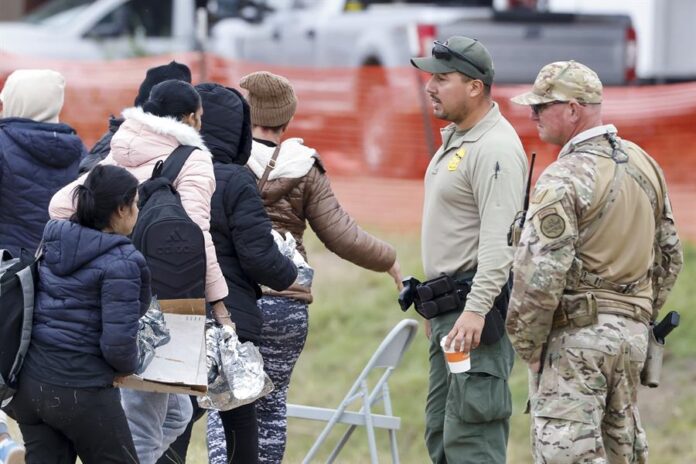
Fotografía de archivo donde se ve a un grupo de migrantes pasar frente a un agente de la Patrulla Fronteriza (C) y una Guardia Nacional de Texas (D) en Shelby Park en Eagle Pass, Texas, EE. UU. (Foto: EFE/Adam Davis)

Un juez federal del estado de Texas decidió este lunes bloquear un programa del presidente Joe Biden que buscaba regularizar la situación de cerca de medio millón de indocumentados, cónyuges o hijastros de ciudadanos estadounidenses.

Todo ello después de que el pasado viernes una coalición de 16 estados liderados por republicanos demandara al Gobierno estadounidense para detener el programa Keeping Families Together (Mantener unidas a las familias), que abrió sus inscripciones el lunes pasado.

Este plan se apoya en el llamado ‘Parole in place’, que otorga un permiso temporal para permanecer en EE. UU., ofreciendo protección frente a la deportación, así como la posibilidad de obtener un permiso de trabajo.

Pero lo más importante es que permite a los beneficiados realizar el proceso para obtener una residencia permanente en EE. UU. por estar casado o ser hijastro de un ciudadano estadounidense sin tener que salir del país.

El juez J. Campbell Barker del Tribunal de Distrito de los Estados Unidos para el Distrito Este de Texas emitió una suspensión administrativa mientras el tribunal considera la denuncia, que estuvo encabezada por el polémico fiscal general de Texas, Ken Paxton.

El juez consideró que la demanda plantea preguntas legítimas sobre la autoridad del poder ejecutivo del Gobierno para eludir al Congreso y establecer políticas de inmigración.

Por lo tanto, tras esta suspensión la Administración podrá seguir aceptando solicitudes, pero ya no podrá procesarlas.

Según Paxton, la norma viola la Constitución, la Ley de Procedimiento Administrativo y las leyes de inmigración.

Para poder adherirse al programa, el solicitante debe haber vivido en el país un mínimo de 10 años y estar casado antes del 17 de junio pasado.

La Administración Biden estimó que aproximadamente 500.000 cónyuges de ciudadanos estadounidenses y unos 50.000 hijastros son elegibles.

Desde que fue anunciado en junio pasado, los sectores ultraconservadores habían amenazado con retarlo en las cortes y han acusado a la Administración demócrata de utilizarlo como parte de la campaña para retener la Presidencia.

Texas ha liderado varias batallas legales contra el Gobierno Biden por temas de inmigración, entre ellas una que solicita poner fin al programa de Acción Diferida para los Llegados en la Infancia (DACA), que favorece a miles de jóvenes «soñadores» desde 2012.

Club de golf de Trump acogerá gala para recoger fondos para acusados de asalto a Capitolio

Trump
(Foto: EFE/JIM LO SCALZO/Archivo)

El club de golf del expresidente Donald Trump en Bedminster (Nueva Jersey) acogerá el 5 de septiembre una gala en beneficio de los acusados por el asalto al Capitolio de 2021, en el que una turba de seguidores del político intentó impedir que se certificara la victoria electoral de Joe Biden.

Según la página web del evento, la organizadora y beneficiaria es la fundación Stand in the Gap, que presta asistencia a los detenidos por el asalto y que dice de ellos «que han mostrado increíble valentía y sacrificio» pero «afrontan importantes desafíos».

Entre los invitados confirmados están dos antiguos asesores políticos de Trump, Rudy Giuliani y Peter Navarro; varios ‘influencers’ conservadores, Anthony Raidmoni, Bo Loundon y Hannah Faulkner; el campeón de lucha Colby Covington y familiares de los acusados por el asalto al Capitolio.

El expresidente y candidato republicano aparece al inicio de la lista como «invitado», pero su campaña precisó este lunes al medio USA Today que no asistirá al evento.

Trump, en su campaña actual, ha insistido en las denuncias infundadas de fraude electoral que desembocaron en el incidente y sigue expresando respaldo a los participantes, entre los cuales 1.400 han sido identificados y acusados por el Departamento de Justicia.

De hecho, el magnate colaboró a principios del año pasado con una veintena de detenidos por el incidente que han formado un coro en la cárcel y grabó una canción junto a ellos llamada ‘Justice for all’ (Justicia para todos), que ascendió rápidamente en las listas de ventas.

La gala, que también busca «celebrar» el éxito musical de los acusados, propone pagar 1.500 dólares por una entrada individual y hasta 50.000 por una mesa ‘VIP’ para 12 personas, indica la web.

Shapiro administration announces $1 million for hunger-free campus grants

shapiro

 Shapiro Administration continues work to ensure all students have access to healthy, nutritious food.

Harrisburg, PA – The Pennsylvania Department of Education (PDE) today announced $1 million in PA Hunger-Free Campus Grant funding to help institutions of higher education (IHE) better serve their school communities and ensure their students have access to the healthy, nutritious food they need to thrive. Last year, the Shapiro Administration awarded $1 million in grants to 30 institutions of higher education and private licensed schools to combat student hunger on campuses across the Commonwealth.

“Learning and achieving is much harder to accomplish when you’re trying to learn on an empty stomach, and food insecurity knows no age or geographic limits—it impacts learners from pre-K to postsecondary in all areas of the Commonwealth,” said Secretary of Education Dr. Khalid N. Mumin. “This grant funding will continue the critical work of addressing food insecurity on Pennsylvania’s college and university campuses so students can focus on learning rather than hunger.”

Interested applications should apply through the eGrants system. Additional information about the grant is available on the Pennsylvania Hunger-Free Campus Initiative webpage. Applications will be accepted until September 23, 2024, at 11:59 PM. 

Through the PA Hunger-Free Campus Grant Program, colleges with the PA Hunger-Free Campus or PA Hunger-Free Campus+ designation may apply for competitive funding in an amount up to: 

  • $20,000 for institutions with 3,000 or fewer learners; 
  • $40,000 for institutions with 3,001 to 7,000 learners; and 
  • $60,000 for institutions with 7,001 learners or more.

The PA Hunger-Free Campus Initiative began in 2022, and is a focus of First Lady Lori Shapiro and part of her work to advocate for students and families to ensure they have the support they need to thrive and live healthy, successful lives.

The initiative brings together Pennsylvania postsecondary institutions focused on addressing hunger and other basic needs for their students, creating opportunities for connection, networking, and the sharing of best practices. Over the past two years, Governor Josh Shapiro secured $1 million each year to support postsecondary institutions’ efforts in addressing student hunger needs on campus.

These grants are available to both PA Hunger-Free and PA Hunger-Free+ campuses. Schools with a PA Hunger-Free Campus+ designation implemented additional innovative solutions to address student hunger and other basic needs for their campus community, such as offering a variety of meal plans, including an option that provides ten or fewer meals weekly to avoid interfering with SNAP eligibility, creating or implementing meal-sharing programs, educating student leaders on campus to develop student-centered programs, or facilitating innovative community partnerships.

For more information on the Pennsylvania Department of Education, please visit the website or follow PDE on InstagramFacebookTwitterYouTube, or Pinterest

She se puede! Yes she can!

Kamala Harris
(Foto: EFE/MICHAEL REYNOLDS)

Eva Longoria, actor and activist, spoke in support of Vice President Kamala Harris and energized the crowd to chant «she se puede,» which translates to «she can,» as a twist on the Spanish phrase «sí se puede» during her remarks at the DNC. In the front rows of the audience was 94-year-old Dolores Huerta, who popularized the phrase «sí se puede!» Eva, a longtime friend of Dolores, is also a voter activist in her own right. Dolores cheered and danced throughout the four days of this historic convention.

In a month, a recording of an epic poem entitled «No, I Am Dolores,» featuring the voices of 33 grassroots women, will be released.

The four-day Democratic convention sharply contrasted with the Republican Party’s convention. The Republican event featured little to no diversity. When looking at the Republican audience, it was rare to see people of color, and even young attendees were few and far between.

The Democrats focused more on policy issues than the Republicans. Just listening to the speeches and noting how often policies were mentioned makes this clear.

Meanwhile, Trump, who had recently survived an assassination attempt and wore a white bandage over his right ear, described the shooting in detail during his acceptance speech, but it did not seem to captivate the crowd in Milwaukee as it might have. Trump’s rambling acceptance speech lasted nearly an hour but did little to energize his audience. At this point in the campaign, Biden was still the Democratic candidate, slipping in the polls, while Trump was gaining ground in key swing states. Republican pollsters were predicting an easy victory, especially after Biden’s lackluster performance in the debate.

To see the major difference between the two conventions, compare the acceptance speeches of the two presidential candidates and observe the energy in each of the halls, as well as the diversity present.

The Republican convention was filled with anger, hatred, and the stoking of racist fears, while the Democrats emphasized country over party and the inclusion of all Americans. They even invited Republicans who might not agree with the Democratic platform on everything to speak out and prioritize democracy over division.

Walz, the Democratic vice-presidential candidate, received an overwhelmingly positive response and came out of the convention with strong support from his party. Meanwhile, Vance, the Republican vice-presidential candidate, received a much more tepid response, exiting the convention with a negative rating that has yet to improve.

One surprise during the Democratic convention was that, on the second day, Harris and Walz held a rally in the same Milwaukee hall where the Republicans had held their convention just a few weeks earlier, successfully filling two huge arenas at once. On the final night, the Democrats also showcased numerous watch parties across the country on the big screen.

The exonerated Central Park Five were honored as they stood with Reverend Al Sharpton. When these young men were wrongfully imprisoned, Donald Trump took out a full-page ad in the New York Times, calling for their execution. At that time, I was working in New York for Amnesty International, and we pushed back against this heinous act of racism. Even after their exoneration, Trump continued to call for their execution.

This convention also addressed the issue of mass shootings. Kimberly Mata-Rubio of Uvalde, Texas, where 19 students and two teachers were killed, reminded America of the loss of her daughter Lexi in that horrific tragedy.

Robert F. Kennedy Jr. has ended his campaign and endorsed Trump. Kennedy should remember that many of these MAGA supporters despised his uncle and father, both of whom were assassinated. Many of Kennedy’s friends and supporters are unlikely to follow his endorsement, but in some states, a few votes could still make a difference.

Meanwhile, Jill Stein has re-entered the presidential race for the so-called Green Party. She has been virtually invisible for three years. Stein is driven more by ego than candidacy and should be regarded as such.

«Hope is back» was a memorable line from Michelle Obama, and at this moment, our country is in desperate need of a double serving of it. Reverend/Senator Rafael Warnock also reminded us that «those without a vision create division.» While we may not always agree on every issue, we must still accept our differences and recognize that there is more at stake than just an electoral victory—we must defend our country first and foremost.

Although many belong to political parties, a significant number, like Oprah Winfrey, are independent and prioritize the country over partisan politics.

While some attack individuals without children and those in blended families, the Democrats stand by them and ask that we hold them close to our hearts and uphold our Constitution. This inclusivity was a key theme of the Democratic agenda over the four days of the convention.

The Democratic Convention exuded an upbeat atmosphere of love, inclusion and possibilities, unlike anything ever witnessed at a political gathering. It was a fiesta of love, akin to the Woodstock of politics.

In the coming weeks, we will see if the Republicans can regroup and strategically challenge the Democrats. The Democrats, in turn, must find a way to channel the energy from their convention into a robust, ground-level campaign.

Many are waiting for the upcoming presidential and vice-presidential debates to see if they will make a difference. In the meantime, Michelle Obama reminded us all to Do Something.

In new peak, Italy’s Lampedusa shelter receives nearly 900 migrants

migrants
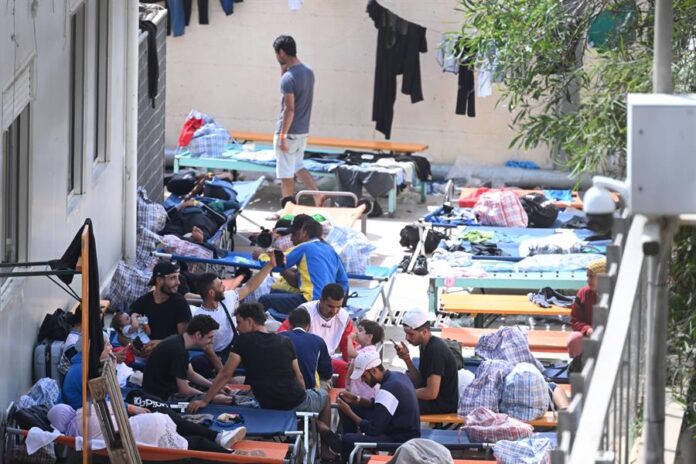
Migrants wait to be relocated at Lampedusa, Italy, 19 September 2023. (Foto: EFE/CIRO FUSCO/File)

The reception center on the Italian island of Lampedusa had taken in nearly 900 migrants on Monday, more than double its capacity, after hundreds of people arrived by the central Mediterranean route due to good sea conditions.

On Sunday night alone, 110 migrants arrived on the shores of this small island, the southernmost Italian territory and only 100 km from the African coast, aboard five barges intercepted by the coast guard and NGO ships, according to media reports.

Another boat managed to reach the beach of Guitgia, southeast of the island, but the migrants were immediately intercepted by the police.

The arrivals have put a new strain on the island’s reception system, which is at more than double its capacity of 400 beds, and authorities are already beginning to transfer migrants to other parts of the country, especially the nearby and larger island of Sicily.

A ferry is expected to take 250 migrants to the Sicilian town of Porto Empedocle on Monday.

Also on Monday, Doctors Without Borders transported 191 people aboard its ship Geo Barents to Salerno in the Campania region, after carrying out five rescue missions.

Most will stay in Campania, while 66 will be transferred to the Lazio region.

And the vessel Mare Jonio of the organization Mediterranea Saving Humans rescued 65 migrants, including five unaccompanied minors of Syrian, Pakistani and, Bengali nationalities, which it brought to the Sicilian city of Pozzallo on Monday, the NGO reported.

So far this year, 39,566 migrants have reached Italian shores, compared with 112,494 in the same period of 2023, according to data updated Monday by the Italian Interior Ministry.

Grupos civiles denuncian abusos y trato inhumano en nueve cárceles migratorias de Luisiana

abusos
Fotografía de archivo donde aparece un hombre que sostiene una pancarta de rechazo al Servicio de Inmigración y Aduanas (ICE). (Foto: EFE/Francisco Miraval)

Nueve centros de detención de inmigrantes en Luisiana (EE. UU.) incumplen sistemáticamente los mínimos estándares de atención, lo que permite abusos generalizados y tratos inhumanos a los reos, según revela una investigación publicada este lunes por una coalición de grupos de derechos civiles.

La investigación, encabezada por la Unión Estadounidense de Derechos Civiles (ACLU, en inglés) y que analizó los datos obtenidos durante 59 visitas a los centros de detención entre 2022 y 2024, halló que los centros estarían violando las leyes federales y de derechos humanos.

Los inmigrantes detenidos denunciaron agresiones físicas, abusos sexuales, negación de medicamentos recetados para la epilepsia y la diabetes, y la falta de acceso a productos de higiene femenina, entre otras cosas.

El informe basado en entrevistas a más de 6.200 personas detenidas documenta abusos como el uso de grilletes dentro de la cárcel, el aislamiento prolongado, alimentos infestados de cucarachas en los centros del Servicio de Control de Aduanas e Inmigración (ICE), un 98% administrados por compañías particulares.

Luisiana es uno de los estados con mayor número de centros de detención de inmigrantes del país, solo superado por Texas, con más de 6.000 inmigrantes. La mayoría de las cárceles se encuentran en zonas rurales, lo que mantiene a los detenidos alejados de los abogados y de sus familias.

Luisiana también tiene la única cárcel del ICE en Estados Unidos conectada directamente a un aeropuerto.

«Hemos escuchado historias horribles que han sido corroboradas por una amplia documentación. Nuestros hallazgos respaldan aún más lo que las personas detenidas y sus defensores han exigido durante mucho tiempo: las cárceles del ICE de Luisiana deben cerrarse», dijo en un comunicado Sarah Decker, coautora del informe y abogada de Robert F. Kennedy Human Rights, una de las organizaciones que hizo parte de la investigación.

Por su parte, Andrew Perry, abogado de la ACLU de Luisiana, considera que el gobierno federal ha convertido la detención de inmigrantes en «una máquina de ganancias» a expensas tanto de los solicitantes de asilo como de los residentes de larga data de los Estados Unidos.

El abogado insistió en que «estas instalaciones deben cerrarse».

El informe en el que también participaron las organizaciones Immigration Services & Legal Advocacy (ISLA) y National Immigration Project, subrayo que en 2021 la Oficina de Derechos Civiles y Libertades Civiles del Departamento de Seguridad Nacional tomó la medida sin precedentes de abrir una investigación sobre toda la red de cárceles del ICE en el sector de Nueva Orleans, que incluye las de Luisiana, la primera en la historia.

Escuelas compiten con los celulares. Así creen que podrían ganar

celulares
Alumnos posan para una foto mientras pintan un mural en la escuela Spokane Community College en mayo del 2024, en Spokane, Washington. Foto suministrada por el Distrito Escolar de Spokane. (Foto: AP/Distrito Escolar de Spokane)

Isabella Pires notó por primera vez lo que ella llama la “pandemia de apatía gradual” en octavo grado. Sólo un puñado de compañeros de clase se inscribieron en proyectos de servicio que ella ayudó a organizar en su escuela de Massachusetts. Incluso menos se presentaron.

Cuando llegó al noveno grado de la escuela secundaria el otoño pasado, Isabella descubrió que el problema era aún peor: una Spirit Week (Semana del Espíritu) mediocre y clases en las que los estudiantes rara vez hablaban.

En cierto modo, es como si a los estudiantes “simplemente les importara menos y menos lo que la gente piensa, pero también les importara más de alguna manera”, dijo Isabella, de 14 años. A algunos adolescentes, agregó, ya no les preocupa parecer desinteresados, mientras que otros tienen tanto miedo al ridículo que se mantienen solos. Ella culpa a las redes sociales y al aislamiento persistente de la era posterior a la pandemia de COVID-19.

Los educadores dicen que sus planes de lecciones ensayados y comprobados ya no son suficientes para mantener a los estudiantes interesados en un momento de problemas de salud mental, períodos de atención más cortos, asistencia reducida y empeoramiento del rendimiento académico. ¿En el centro de estos desafíos? La adicción a los celulares. Ahora, los adultos prueban nuevas estrategias para revertir el malestar.

Las prohibiciones de teléfonos celulares ganan terreno, pero muchos dicen que no son suficientes. Abogan por una estimulación alternativa: dirigir a los estudiantes al aire libre o hacia actividades extracurriculares para llenar el tiempo que de otro modo podrían pasar solos en línea. Y los estudiantes necesitan salidas, dicen, para hablar sobre temas tabú sin miedo a ser “cancelados” en las redes sociales.

“Para que los estudiantes se involucren ahora, hay que ser muy, muy creativo”, dijo Wilbur Higgins, profesor de inglés en la secundaria Dartmouth, donde Isabella será estudiante de 10mo año este otoño.

Guárdelos bajo llave

Las bolsas para celulares, los casilleros y los contenedores para teléfonos celulares han ganado popularidad para ayudar a hacer cumplir las prohibiciones de utilizar dispositivos.

John Nguyen, profesor de Química en California, inventó un sistema de bolsas porque le angustiaba mucho el acoso y las peleas por celular durante la clase, a menudo sin la intervención de los adultos. Muchos profesores tienen miedo de enfrentarse a los alumnos que utilizan el teléfono durante las clases, dijo Nguyen, y otros se han rendido y ya no intentan detener su uso.

En la escuela de Nguyen, los alumnos meten sus teléfonos en bolsas de neopreno durante las clases o incluso durante todo el día. La llave magnética de un profesor o director abre las bolsas.

No importa lo dinámica que sea la lección, dijo Nguyen, quien enseña en la escuela secundaria Marina Valley y ahora vende las bolsas a otras escuelas. “No hay nada que pueda competir con el celular”.

Haga algo (más)

Algunas escuelas guardan bajo llave los relojes inteligentes y los auriculares inalámbricos también. Pero las bolsas no funcionan una vez que suena la campana final.

Por eso, en Spokane, Washington, las escuelas aumentan las actividades extracurriculares para competir con los celulares fuera del horario escolar.

Una iniciativa que se lanzará este mes, llamada “Engage IRL” (Involúcrate en la vida real), tiene como objetivo brindar a cada estudiante algo que le resulte atractivo después de la rutina de la jornada escolar, ya sea un deporte, artes escénicas o un club.

“Aislarte en tu casa cada día después de la escuela durante horas y horas con un dispositivo personal se ha vuelto normal”, subrayó el superintendente Adam Swinyard.

Los estudiantes pueden crear clubes en torno a intereses como juegos de mesa o tejido, o participar en ligas de baloncesto del vecindario. Los profesores ayudarán a los estudiantes a elaborar un plan para participar durante las conferencias de regreso a la escuela, dice el distrito.

“De 3:00 a 5:30 estás en un club, practicas un deporte, estás en una actividad”, en lugar de en un celular, expuso Swinyard. (El distrito tiene una nueva prohibición de uso de celulares durante las clases, pero los permitirá después de la escuela).

En un momento de alto ausentismo, también espera que las actividades sean el empujón adicional que algunos estudiantes necesitan para asistir a la escuela. En una encuesta de Gallup realizada en noviembre pasado, sólo el 48% de los estudiantes de secundaria respondieron que se sentían motivados para ir a la escuela, y sólo el 52% sentía que hacía algo interesante todos los días. La encuesta fue financiada por la Walton Family Foundation, que también apoya el periodismo ambiental de la AP.

Vivian Mead, estudiante de último año en Spokane, opinó que tener más actividades después de la escuela ayuda, pero no funciona para todos.

“Definitivamente todavía hay algunas personas que sólo quieren estar solas, escuchar música, hacer sus propias cosas o estar metidas en su teléfono”, dijo Vivian, de 17 años.

Su hermana de 15 años, Alexandra, refirió que las sesiones de asesoramiento matutinas han mejorado la participación en el club de teatro que mantiene ocupadas a las hermanas.

“Obliga a todos —incluso si no quieren involucrarse— a tener que intentar algo, y tal vez eso resuene (en ellos)”, agregó.

Salir al exterior

Trece escuelas de los primeros tres grados de secundaria en Maine adoptaron un enfoque similar, y llevaron a los estudiantes al aire libre durante un total de 35.000 horas durante una semana elegida en mayo.

Es motivador para los estudiantes conectarse entre sí en la naturaleza, lejos de las pantallas, dijo Tim Pearson, profesor de educación física y salud. Sus estudiantes en la escuela Dedham participaron en el desafío estatal “Life Happens Outside” (La vida sucede en el exterior).

Los profesores adaptaron sus lecciones para que se impartieran al aire libre, y los estudiantes se vincularon unos con otros al aire libre durante el almuerzo y el recreo. Por la noche, aproximadamente la mitad de los estudiantes de Dedham acamparon, incentivados por una fiesta con pizza. Varios estudiantes le dijeron a Pearson que acamparon nuevamente después del desafío.

“Ya sea que tengan teléfonos con ellos o no, están haciendo fogatas, están levantando sus tiendas de campaña”, dijo Pearson. “Están haciendo cosas en el exterior que obviamente no son en las redes sociales ni mediante mensajes de texto”.

Solicite apoyo a los padres

Los padres también deben hacer cambios en la cultura del teléfono celular de su familia, dicen algunos docentes. En casa, Aaron Taylor, profesor en Ohio, prohíbe los dispositivos celulares cuando sus propios hijos reciben amigos en casa.

Y cuando los chicos están en la escuela, los padres no deberían distraerlos con mensajes de texto para saber cómo están a lo largo del día, dijo.

“Los estudiantes están muy apegados a sus familias”, agregó Taylor, quien enseña en la secundaria Westerville North, cerca de Columbus. “Existe esta ansiedad de no poder contactarlos, en lugar de apreciar la libertad de estar solo durante ocho horas o con tus amigos”.

Combatir el miedo de ser “cancelados”

Algunos dicen que otras fuerzas detrás del desinterés adolescente se amplifican con el teléfono celular. El clima político divisivo a menudo hace que los estudiantes no estén dispuestos a participar en clase, cuando cualquier cosa que digan puede difundirse por toda la escuela en una aplicación de mensajería.

Los estudiantes de inglés en la escuela secundaria de Taylor le explican que no hablan en clase porque no quieren ser “cancelados” —un término que se aplica a las figuras públicas que son silenciadas o boicoteadas después de opiniones o discursos ofensivos.

“Yo respondo: ‘Bueno, ¿quién te va a cancelar? ¿Y por qué te cancelarían? Estamos hablando de `The Great Gatsby”, no de algún tema político polémico, refirió.

Los estudiantes “se quedan muy, muy callados” cuando se abordan temas como la sexualidad, el género o la política en las novelas, dijo Higgins, el profesor de inglés de Massachusetts. “Hace ocho años, las manos se levantaban por todos lados. (Ahora) nadie quiere que lo etiqueten de una determinada manera, que lo ridiculicen o que lo señalen por sus posturas políticas”.

Debido a eso, Higgins utiliza sitios web como Parlay, que permiten a los estudiantes tener debates en línea de forma anónima. Los servicios son caros, pero Higgins cree que la participación en clase vale la pena.

“Yo puedo ver quiénes son cuando responden a preguntas y cosas, pero otros estudiantes no pueden verlo”, explicó Higgins. “Eso puede ser muy, muy poderoso”.

Alarmada por la falta de compromiso de sus compañeros, Isabella, la estudiante de Higgins, escribió un artículo de opinión en el periódico de su escuela.

“Evitar que las generaciones futuras se sumen a este mismo ciclo descendente depende de nosotros”, escribió.

Un comentario en la publicación destacó el desafío y lo que está en juego.

“En resumen”, escribió el comentarista, “¿por qué nos debería importar?”