El déficit comercial de Estados Unidos se redujo en junio un 2,5 % hasta los 73.100 millones de dólares, gracias a un momento del valor de las exportaciones a los 265.900 millones de dólares, según informó el Buró de Análisis Económico (BEA).
El valor de las exportaciones aumentó en un 1,5 %, un ritmo superior al aumento del 0,6 % de las importaciones, que registraron un valor de 339.000 millones de dólares en junio.
La reducción de déficit comercial de junio representó la primera rebaja en tres meses.
La mejora del déficit comercial se debe principalmente a una reducción de déficit de la balanza de bienes en 2.500 millones de dólares hasta los 97.400 millones de dólares, a lo que hay que añadir un empeoramiento del tradicional superávit de la cartera de servicios, que se se redujo en 600 millones de dólares hasta los 24.200 millones de dólares.
Por categorías, las exportaciones aumentaron en material industrial (1.400 millones de dólares), aviación (1.300 millones de dólares), gas natural (600 millones) y productos de hidrocarburos procesados que aumentaron las ventas al exterior en junio con respecto a mayo de una manera similar.
Las importaciones que aumentaron con más fuerza en junio fueron las de productos farmacéuticos (3.200 millones dólares), bienes de capital (2.200 millones de dólares), semiconductores (600 millones de dólares) y equipos de telecomunicaciones (500 millones de dólares).
Las de material industrial se redujeron en 1.900 millones de dólares, mientras que también menguó el valor de las compras de crudo, que se redujeron en 1.200 millones de dólares.
Los altos tipos de interés en Estados Unidos, los más altos en más de dos décadas, han incrementado el valor del dólar frente las principales divisas extranjeras, algo que hace que generalmente el valor de las importaciones sea menor y el de las exportaciones aumente.
El déficit de Estados Unidos en el apartado de bienes fue mayor con China (22.800 millones de dólares), Unión Europea (17.400 millones de dólares) y México (14.600 millones de dólares).
En la primera mitad del año, el déficit comercial de bienes con México fue de 82.700 millones de dólares, con unas importaciones por valor de 249.000 millones de dólares y unas exportaciones por valor de 166.400 millones de dólares.
México se mantuvo como el segundo mayor origen de las importaciones de Estados Unidos en la primera mitad de 2024, solo superado por la Zona Euro.
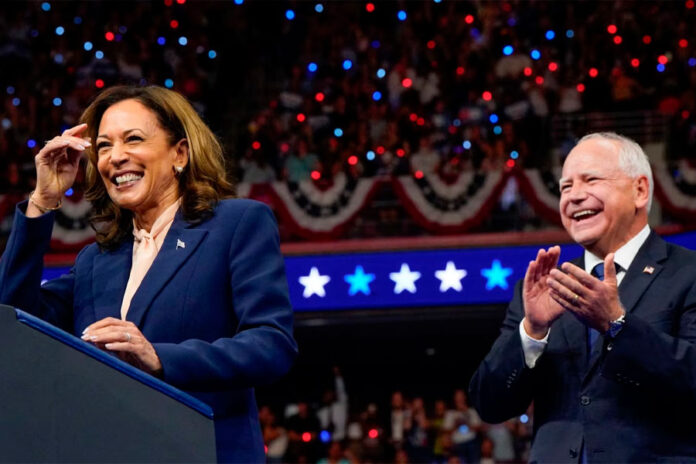
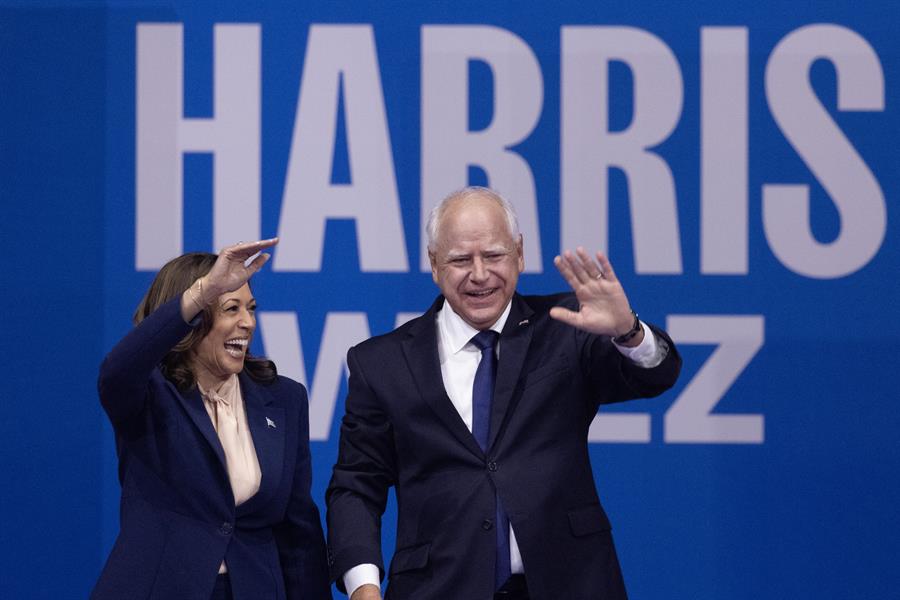
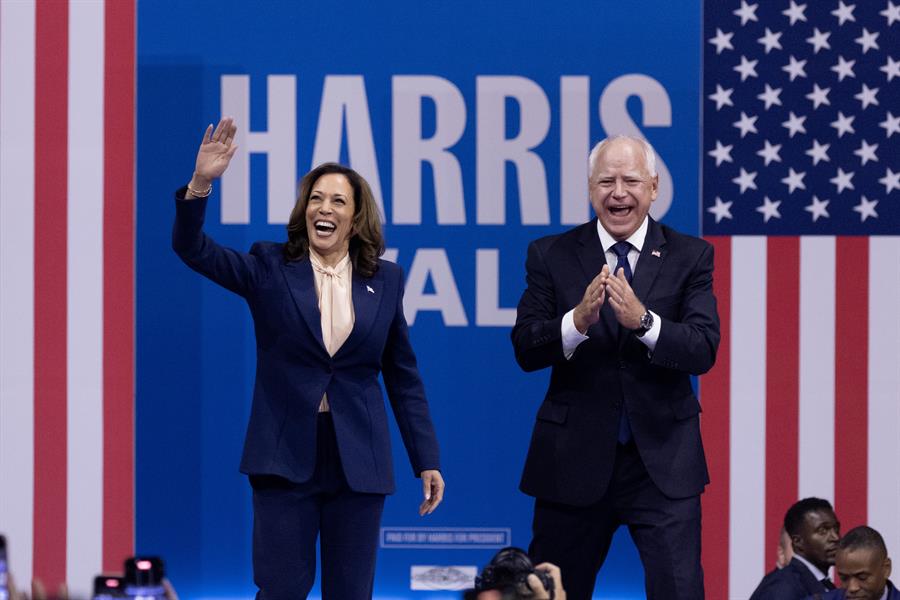
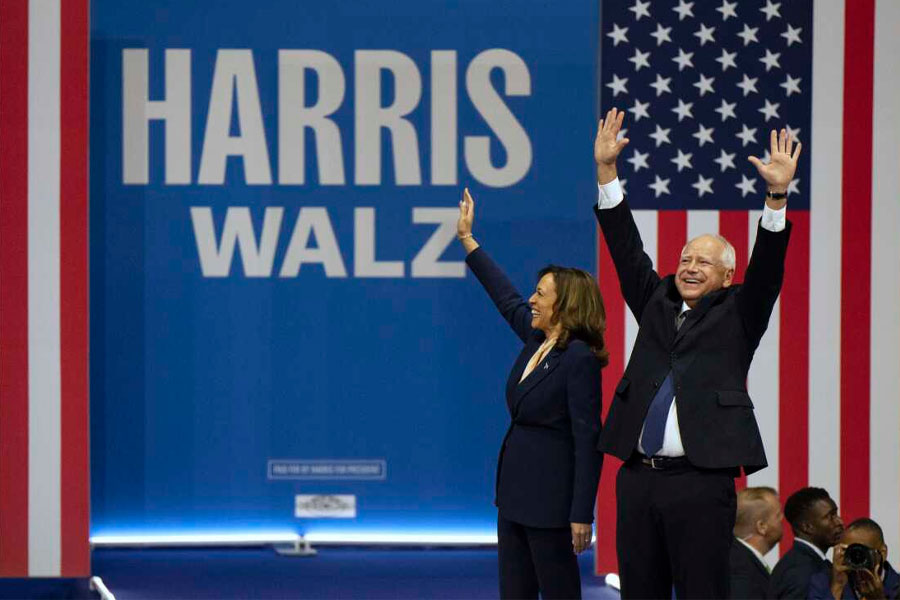
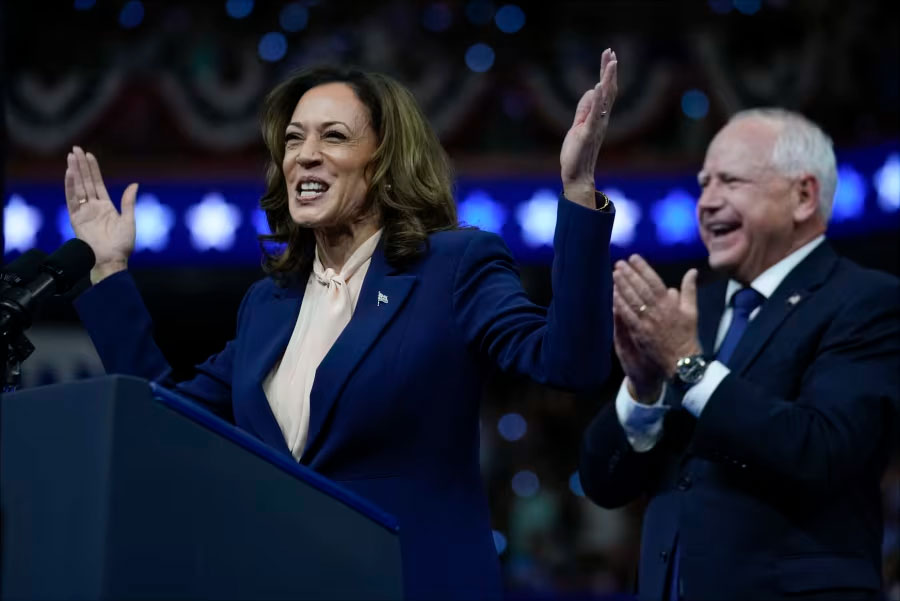
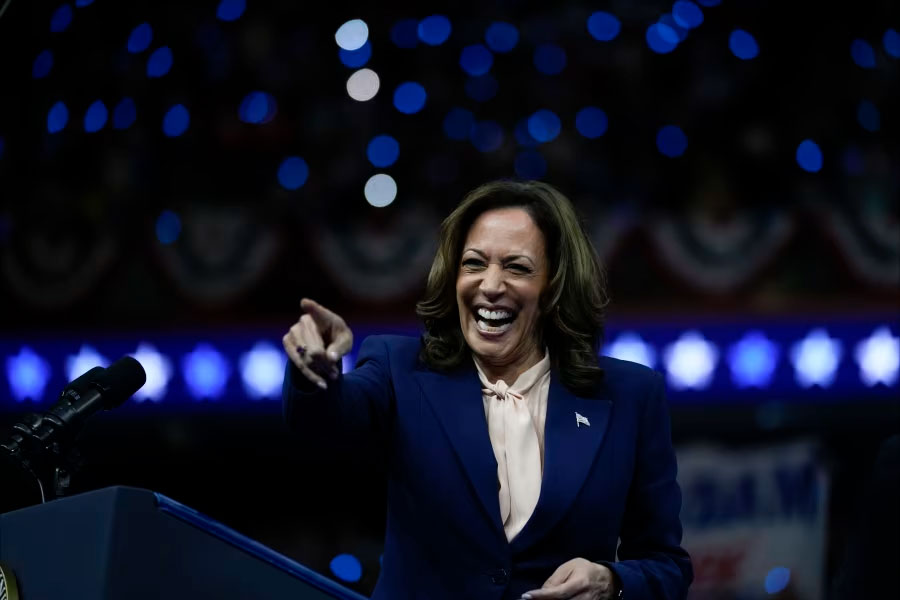
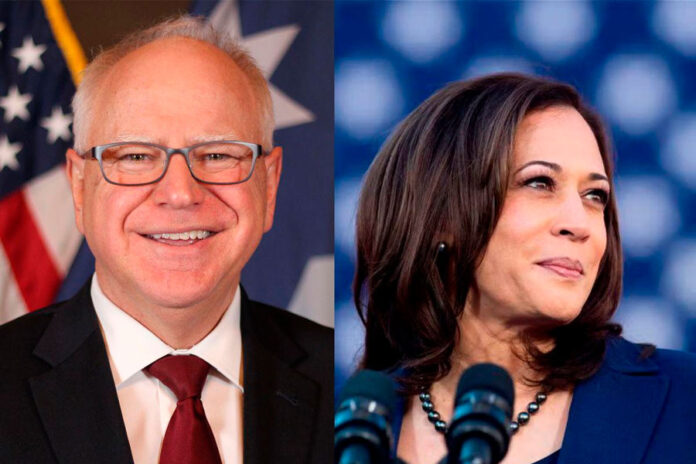
La vicepresidenta de Estados Unidos y candidata presidencial demócrata, Kamala Harris, realiza un mitin de campaña con su nuevo compañero de fórmula a la vicepresidencia, el gobernador de Minnesota, Tim Walz, en Filadelfia, Pensilvania, EE. UU., el 6 de agosto de 2024. (Foto: VOA)
Los comandos de campaña de los partidos Demócrata y Republicano centran sus esfuerzos en los estados considerados clave para ganar la presidencia en noviembre.
Las principales campañas presidenciales de Estados Unidos están enfocando sus esfuerzos esta semana con eventos en varios estados clave que jugarán un papel importante en la determinación de quién gana las elecciones de noviembre.
Después de escoger al gobernador de Minnesota, Tim Walz, como su compañero de fórmula, la vicepresidenta Kamala Harris viajará el miércoles a Wisconsin y Michigan, con otras paradas planeadas esta semana para Arizona y Nevada.
El senador JD Vance, compañero de fórmula del expresidente Donald Trump, llevará a cabo sus propios eventos el miércoles en Wisconsin y Michigan. Los eventos en Carolina del Norte programados para finales de esta semana fueron pospuestos debido a un sistema meteorológico tropical que se movía a través de esa área.
Después de anunciar su elección el martes por la mañana,Harris elogió a Walz en un mitin más tarde en Pensilvania para iniciar su campaña juntos.
«Me propuse encontrar un socio que pueda ayudar a construir este futuro más brillante, un líder que ayude a unir a nuestra nación y nos haga avanzar», dijo Harris.
Los progresistas se habían unido en torno a Walz, de 60 años, quien defendió políticas de su agrado como gobernador de Minnesota. El exmiembro de la Guardia Nacional del Ejército de EE. UU. y maestro también es visto como atractivo para los votantes blancos rurales.
«Walz es una elección fenomenal, que energizará a los votantes de todo el Medio Oeste en estados que deben ganar como Wisconsin, Michigan y Pensilvania», dijo la estratega demócrata Julie Roginsky a la VOA.
En Walz, los demócratas encontraron a un liberal que ganó en los distritos conservadores rurales de Minnesota, que posee un arma, tiene experiencia militar y nació en Nebraska, dijo Jennifer Lawless, profesora de política en la Universidad de Virginia.
Walz es «una elección bastante segura, pero ciertamente no aburrida», dijo Lawless a la VOA.
«Es alguien que entiende a la clase media de Estados Unidos y sostiene estas políticas progresistas no porque esté fuera de contacto, sino porque cree que esta es la mejor manera de hacer avanzar al país», agregó.
Una ventaja adicional: Walz es respetado por los sindicatos, un punto fuerte mientras Trump intenta hacer avances con los trabajadores.
«Liberal incompetente»
Incluso antes de que la campaña de Harris anunciara formalmente a Walz como su candidato a vicepresidente, la campaña de Trump emitió un comunicado en el que lo llamaba un «liberal incompetente».
«No es sorpresa que la liberal de San Francisco, Kamala Harris, quiera al aspirante a la costa oeste Tim Walz como su compañero de fórmula», dijo la secretaria de prensa de la campaña de Trump, Karoline Leavitt, en un comunicado. «Walz está obsesionado con difundir la agenda peligrosamente liberal de California a lo largo y ancho».
Un contendiente cercano para la elección de Harris como vicepresidenta fue el gobernador de Pensilvania, Josh Shapiro, una estrella demócrata en ascenso con fuertes índices de aprobación en un estado clave para la victoria electoral.
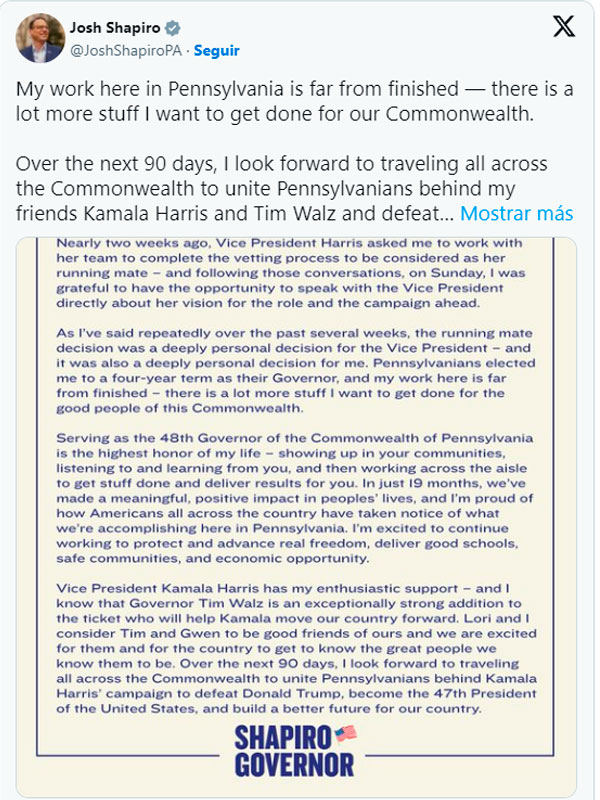
«Durante los próximos 90 días, espero viajar por toda la Commonwealth para unir a los habitantes de Pensilvania detrás de mis amigos Kamala Harris y Tim Walz y derrotar a Donald Trump», publicó Shapiro en las redes sociales tras el anuncio.
«Mi trabajo aquí en Pensilvania está lejos de terminar: hay muchas más cosas que quiero hacer por nuestra Commonwealth. Durante los próximos 90 días, espero viajar por toda la Commonwealth para unir a los residentes de Pensilvania detrás de mis amigos Kamala Harris y Tim Walz y derrotar a Donald Trump», posteó Shapiro en la red social X.
Trump nombró a Vance como su compañero de fórmula durante la convención de nominación del Partido Republicano el mes pasado. Walz recientemente elevó su perfil como un perro de ataque efectivo contra la candidatura republicana, llamándolos «raros».
«Simplemente resalta lo radical que es Kamala Harris», dijo Vance el martes sobre Walz. «Esta es una persona que escuchó al ala de Hamás de su propio partido al seleccionar a un candidato».
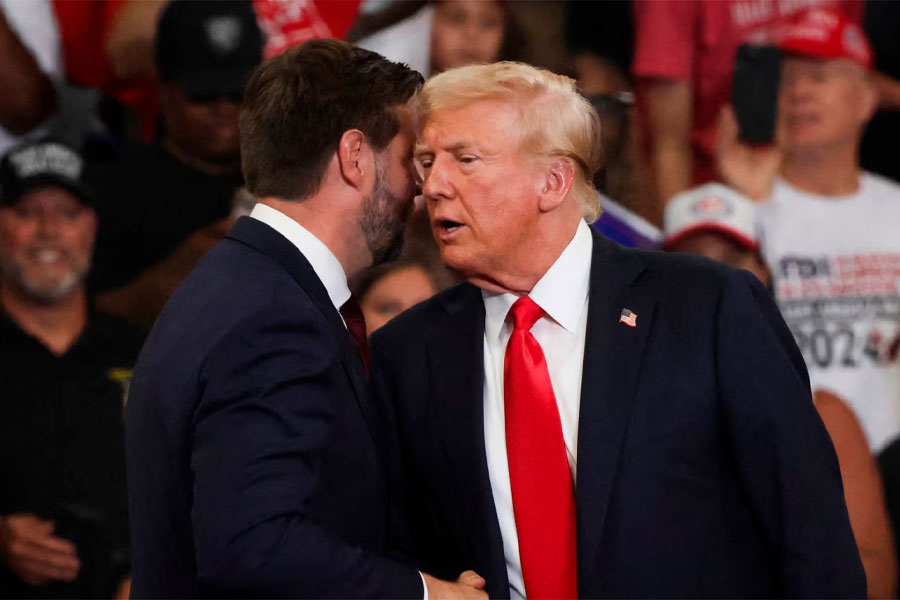
El expresidente de los EE. UU. y candidato presidencial republicano, Donald Trump, estrecha la mano del senador y candidato republicano a la vicepresidencia para 2024, J.D. Vance, antes de hablar en un mitin de campaña en la Universidad Estatal de Georgia. (Foto: VOA)
Harris emergió rápidamente como la candidata demócrata a fines del mes pasado después de que el presidente Joe Biden anunciara que ya no buscaría otro mandato en el cargo.
Los números de Biden en las encuestas se hundieron luego de un mal desempeño en un debate contra Trump a fines de junio, lo que provocó llamados para que abandonara la carrera.
El Distrito de Policía 24 está organizando su fiesta anual a las 10 a.m. entre las calles Somerset y Emerald. Habrá comida gratis, actividades para niños, mesas de recursos y más. Para más información, contacta a tina.willis@phila.gov. Jueves8 de agosto, 10 a.m.
Charla sobre préstamos con Community First Fund
El Community First Fund está organizando una sesión gratuita de información sobre préstamos grupales de afinidad a las 6 p.m. para que los propietarios de pequeñas empresas aprendan más sobre oportunidades de financiamiento. Haz clic aquí para registrarte en la sesión de esta semana y futuras. Jueves 8 de agosto,6 p.m.
Xiente trae «Salsa en la Plaza»
Xiente está organizando “Salsa en la Plaza” en el Parque Norris Square de 6 p.m. a 9 p.m. Habrá baile de salsa, redes comunitarias y presentaciones en vivo de Jimmy Jorge & The Latin Express y Estilo Dance Studio. Para más información, contacta a Rodolfo Santos al 215-426-8734 o por correo electrónico a rsantos@xiente.org. Viernes 9 de agosto, 6 a 9 p.m.
“Limpieza del Segundo Sábado” con The Harrowgate
La Asociación Cívica de Harrowgate está organizando su “Limpieza del Segundo Sábado” en la cuadra 3300 de la calle I de 9 a.m. a 11 a.m. El grupo se reunirá en la esquina de las calles E Madison y Emerald. Se proporcionarán suministros de limpieza y refrigerios. Sábado10 de agosto, 9 a 11 a.m.
Fiesta anual «Rock the Block»
Rock Ministries está organizando su fiesta anual «Rock the Block» en 2755 Kensington Ave de 1 p.m. a 6 p.m. Habrá actividades para niños, música en vivo y más. Haz clic aquí para registrarte y aprender más sobre este evento. Sábado, agosto 10. 1 pm a 6 pm.
Festival de Música y Artes de Fishtown
Cedar Point, Amy’s Pastelillos y otros pequeños negocios vecinos en Fishtown se están asociando con el Festival de Música y Artes de Fishtown para organizar la fiesta “Block Party at Fishtown Forks”, con mercado de pulgas, pintura facial, comida, música en vivo y más. Intersecciones de Norris, Cedar y Susquehanna, Sábado, agosto 10, 12 pm a 7 pm.
Festival de Cemitas en La Placita
Cantina La Martina está organizando su festival anual de Cemitas en La Placita de 11 a.m. a 4 p.m. El festival contará con vendedores locales, comida, bebidas y más. 11 de agosto, 11 am.
Dedicación Mural «Las Historias de Olney»
Mural Arts dedicará un nuevo mural de la artista Winnie Sidharta Ambron a las comunidades asiático-americanas y de las islas del Pacífico. «Las Historias de Olney» representa la diversidad, el brillo y la visión de la gente de Olney. Este es el tercero de cinco murales que celebran a las comunidades AAPI de Filadelfia. La primera está en el Restaurante Hardena (1754 S Hicks St.). El segundo en Chinatown, Restaurante Vietnam (221 N. 11th St.). El cuarto destacará a las comunidades del sur de Asia de Filadelfia. 5957 N. 5th St, Filadelfia, miércoles, 14 de Agosto, 11:00 am a 12:30 pm.
Día de Pintura Mural «MLK Freedom Now»
En asociación con Full Court Development, Mural Arts restaurará el icónico mural «MLK en Lancaster» en las Avenidas 40th y Lancaster, conmemorando el histórico discurso de 1965 del Dr. Martin Luther King Jr. en el oeste de Filadelfia. Este evento atrajo a una multitud de aproximadamente 10,000 habitantes de Filadelfia, donde el Dr. King habló apasionadamente sobre la necesidad de “libertad ahora” en Filadelfia. El mural, originalmente pintado por el artista Cliff Eubanks, será restaurado con la asistencia de Kien Nguyen y Efrain Herrera. 3952 Lancaster Avenue. viernes, 16 de agosto, 11:00 am – 3:00 pm.
Festival de Faroles Chinos
El histórico Franklin Square se ilumina con el regreso del imperdible Festival de Faroles Chinos de Filadelfia en Old City. Celebra el Año del Dragón entre docenas de enormes, intrincados y artesanales faroles e instalaciones construidas por artesanos chinos, junto con presentaciones culturales en vivo, arte popular, elaboración de dumplings, espectáculos de fuentes, manualidades temáticas y mucha comida y bebida internacional. Comienza a las 6 pm cada día. Franklin Square, 200 N. 6th Street, hasta el domingo 18 de agosto.
“The Art of the Brick” en el Franklin
Por primera vez en diez años el Instituto Franklin, trae su exhibición de más de 100 piezas de arte hechas completamente de LEGO, desde recreaciones de obras maestras como La noche estrellada de Van Gogh y La Mona Lisa de DaVinci, hasta esculturas originales, incluyendo un esqueleto de T. rex de 20 pies de largo. Cada pieza es obra del artista contemporáneo Nathan Sawaya, el primero en crear una exposición de arte con LEGO. 222 N. 20th Street, hasta el lunes, 2 de septiembre.
Spruce Street Harbor Park
Para los entusiastas de relajarse junto al río, Spruce Street Harbor Park está de vuelta esta temporada con las mismas hamacas flotantes, luces, comida y música en vivo. Este año presenta algunas adiciones nuevas como “The Lazy Hammock”, un bar cubierto con escenario para actuaciones, “The Blue Anchor”, que ofrece cerveza local, cócteles artesanales y comida; “The Trading Post”, una bodega en el agua con helados, aperitivos y productos de artistas y vendedores locales. 301 S. Christopher Columbus Boulevard, hasta el jueves, 29 de septiembre.
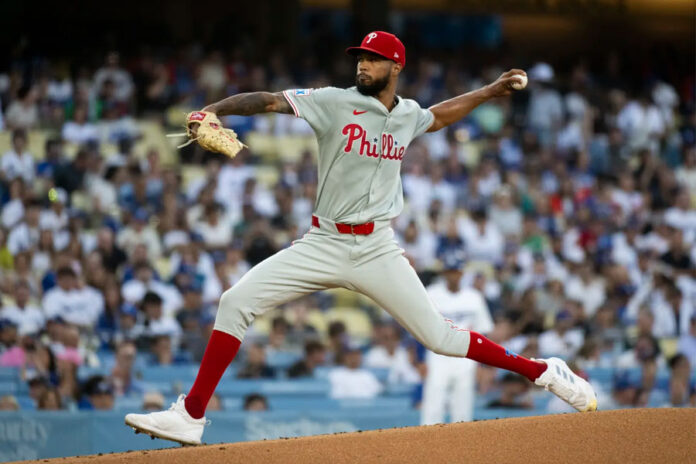
Philadelphia Phillies starting pitcher Cristopher Sánchez delivers a pitch during the first inning of a baseball game against the Los Angeles Dodgers in Los Angeles, Tuesday, Aug. 6, 2024. (Photo: AP/Kyusung Gong)
A preliminary magnitude 5.3 earthquake struck in the middle of the seventh inning. It was centered near Mettler, California, about 89 miles north of downtown Los Angeles, according to the Los Angeles Fire Department. The Phillies announcers said they didn’t feel it in their booth, but it was noticed in the control truck and in the Dodger Stadium press box. There was no discernible reaction from the crowd of 47,150. Phillies manager Rob Thomson said he felt it in the dugout.
Philadelphia clinched the season series over the Dodgers, 4-1, going into the finale Wednesday.
“That can be huge coming down the stretch,” Thomson said.
Sánchez (8-7) allowed one run and five hits, struck out two and walked one to help end the Dodgers’ three-game winning streak.
“I was attacking the hitters early and I was throwing a lot of strikes,” Sánchez said through an interpreter. “They have a lot of good hitters, but all good hitters have their weak spot.”
Schwarber’s two-out RBI single knocked Dodgers starter Clayton Kershaw (0-2) out of the game in the fifth and gave the Phillies a 1-0 lead. After Austin Hays’ double, Kershaw had an 0-2 count on Brandon Marsh before hitting him to set up Schwarber.
Making his third start of the season, Kershaw gave up one run and five hits in 4 2/3 innings. He struck out five against no walks.
“Just made some dumb mistakes. A couple guys got on base which shouldn’t happen,» Kershaw said. ”Health-wise, I’m fine. It’s just a matter of trying to pitch good.»
Dodgers reliever Brusdar Graterol sustained a strained right hamstring that forced him out in the sixth, a day after he came off the 60-day injured list.
“It’s super sad,” Kershaw said. “Definitely a tough night.”
The Phillies battered Graterol’s replacement, Brent Honeywell.
They tacked on three runs in the sixth. Nick Castellanos had an RBI single and Sosa added a two-run single that made it 4-0.
The Dodgers got their first run in the sixth on Will Smith’s RBI groundout.
Trailing 4-1 in the seventh, Shohei Ohtani came to the plate as the potential tying run with runners on first and second, but All-Star reliever Matt Strahm induced a flyout to right to end the inning. Ohtani went 0 for 4. Strahm struck out Ohtani in the same inning last month during the Phillies’ three-game sweep of the Dodgers.
“You can just kind of feel a sense that he’s looking for my fastball up. I mean, that is my bread and butter and he’s very good at hitting those,” Strahm said. “I kind of went to my 1-B and tried to stick one down and away.”
Teoscar Hernández, the Home Run Derby champion last month, pulled the Dodgers to 4-2 with his 25th homer off Jeff Hoffman in the eighth.
But Sosa went deep leading off the ninth on an 0-2 pitch from Honeywell that landed in the lower right-field seats. Schwarber’s 24th homer dinged off the right field foul pole to extend the lead to 6-2.
“It was a complete win,” Thomson said. “Everyone in the lineup got on base. We played well defensively.”
Dodgers right fielder Andy Pages made the defensive play of the game in the seventh. He caught J.T. Realmuto’s fly and fired to third, where Kiké Hernández tagged out a sliding Bryce Harper to complete the inning-ending double play. The Phillies lost their challenge of the call.
Phillies: LHP Ranger Suárez (lower back soreness) is set to throw a two-inning simulated game Thursday in Arizona. … RHP Taijuan Walker (right index finger inflammation) will make a second rehab start before rejoining the rotation next week at home.
Dodgers: RHP Yoshinobu Yamamoto (shoulder) had a 30-pitch bullpen session and will have another this week before pitching to hitters ahead of a game in Milwaukee next week.
UP NEXT
Phillies: RHP Tyler Phillips (3-1, 4.39 ERA) makes his first career start against the Dodgers in the series finale Wednesday.
Dodgers: RHP Gavin Stone (9-5, 3.63) tries to rebound from a loss at Oakland in which he got rocked for five runs and eight hits over four innings.
Estados Unidos se ha situado en el liderato del medallero de los Juegos Olímpicos de París 2024 con 24 medallas de oro, 31 de plata y otras tantas de bronce, al rebasar a China, que se queda segunda a dos triunfos.
Australia completa el podio provisional con 14 oros, doce platas y 9 bronces; y Francia es cuarta con 13-16-19.
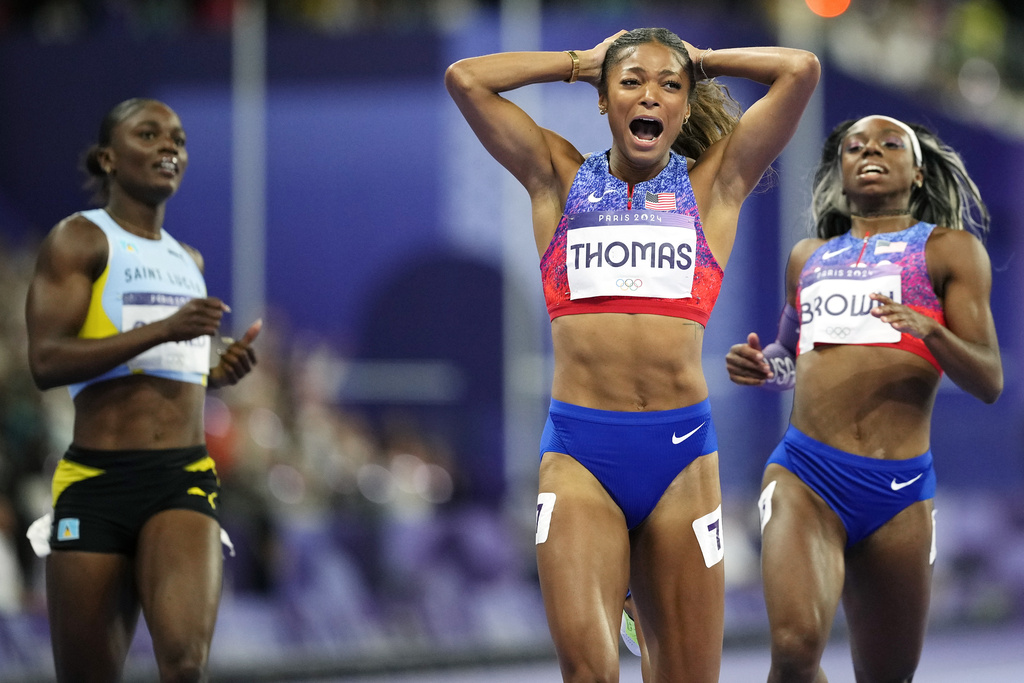
La estadounidense Gabrielle Thomas reacciona tras ganar los 200 metros femeninos de los Juegos Olímpicos de París, el martes 6 de agosto de 2024, en Saint-Denis, Francia. (AP Foto/Petr David Josek)
Pennsylvania Gov. Josh Shapiro speaks before Democratic presidential nominee Vice President Kamala Harris and her running mate Minnesota Gov. Tim Walz during a campaign event in Philadelphia, Tuesday, Aug. 6, 2024. (Photo Impacto/staff)
Vice President Kamala Harris’ choice of Minnesota Gov. Tim Walz as her running mate disappointed fans of Pennsylvania Gov. Josh Shapiro, who was one of Harris’ finalists for the job and seen as someone who could help Democrats win a key swing state and make history by electing the first Jewish vice president.
With his history of winning three statewide elections in Pennsylvania, Shapiro was seen as someone with particular appeal to moderate voters. His state’s 19 votes in the Electoral College have long been critical for candidates trying to reach the necessary 270 to win.
But the same things about Shapiro that appealed to moderates angered some on the left in his party: his support for a private school voucher program and natural gas infrastructure as well as particularly his support for Israel’s war in Gaza after Hamas’ Oct. 7 attack.
Some Democrats lamented what they said was a missed opportunity by bypassing Shapiro. Republicans, meanwhile, tried to paint Harris’ choice as a snub to Jewish voters, a traditionally Democratic constituency that former President Donald Trump has tried to court in this year’s race.
“Not only is he exceptionally smart and capable, but, in my opinion, he brought the math to the path of 270,” said Ryan Bizzarro, 38-year-old Democratic state lawmaker from Erie, Pennsylvania, said of Shapiro.
Shapiro spoke at a rally in Philadelphia Tuesday night before the new Democratic ticket took the stage, with the Pennsylvania governor receiving big applause from thousands of attendees.
“I love you Philly. You know what else I love, I love being your governor,” Shapiro said.
He added, “I am going to continue pouring my heart and soul into continuing to serve you every single day as your governor.”
Shapiro also praised Walz as a great man with strong midwestern values, calling him a friend he said he couldn’t wait for Pennsylvanians to get to know.
Walz returned the compliment when he took the stage later with Harris in Philadelphia.
“My God, what a treasure you have in Josh Shapiro,» he said. «Holy hell, can this guy bring the fire.”
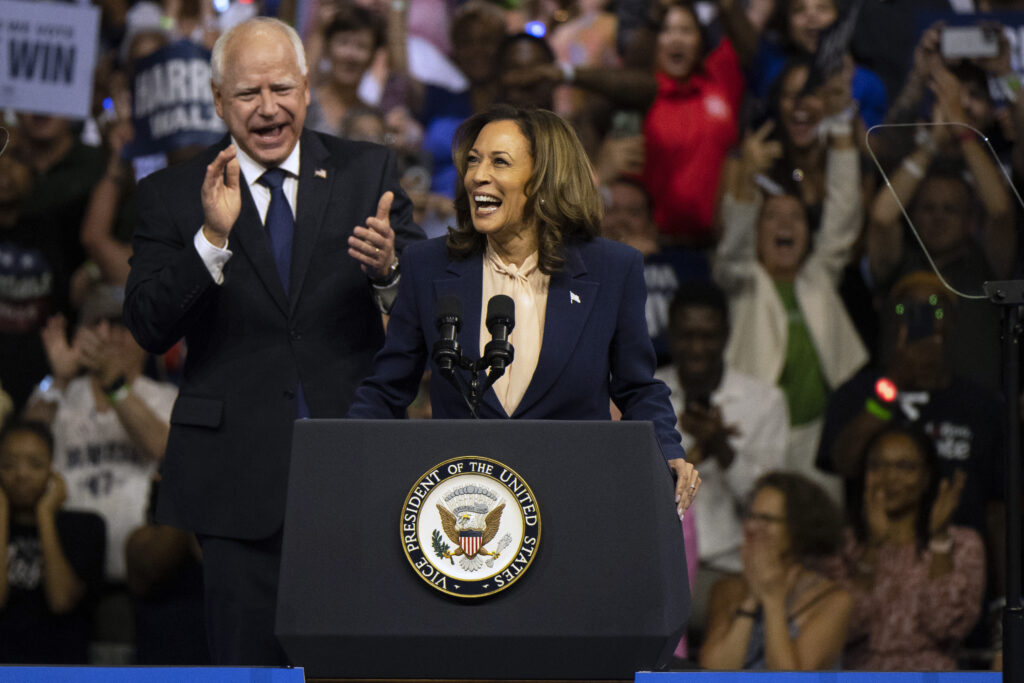
Democratic presidential nominee Vice President Kamala Harris and her running mate Minnesota Gov. Tim Walz speak at a campaign rally in Philadelphia, Tuesday, Aug. 6, 2024. (Photo: Impact o Staff)
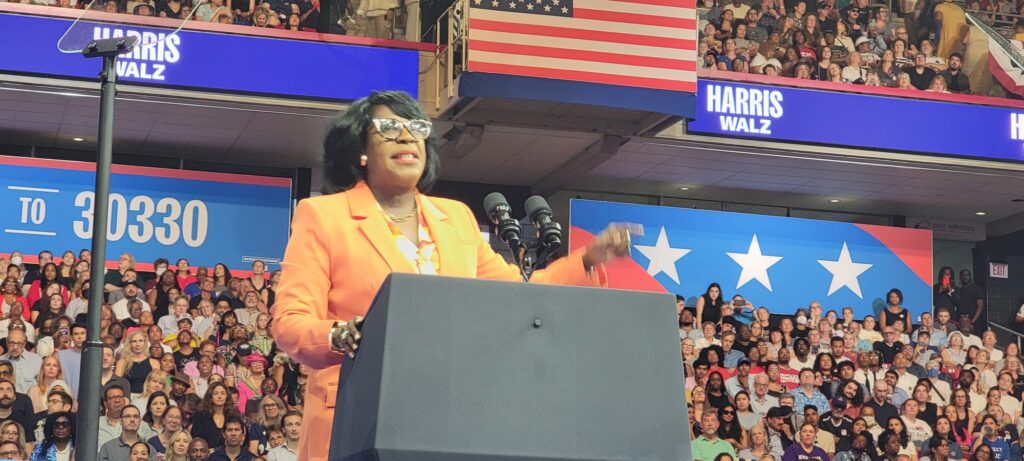
Philadelphia Mayor Cherelle Parker, who advocated fiercely but unsuccessfully for Shapiro, also spoke at the event and said Democrats should not let Republicans and detractors divide them over the pick.
“Our Democratic nominee has spoken and that’s it. Period. End of story,» Parker said.
“Our Democratic nominee has spoken and that’s it. Period. End of story,» Parker said. (Photo Impacto Staff)
Republicans try to take advantage of Shapiro not being picked
A number of high-profile Republicans sought to seize on the liberal pushback Shapiro faced over his stance on Israel, suggesting Tuesday that Shapiro was not picked as Harris’ running mate because of antisemitic attitudes in the Democratic Party.
Trump, the Republican nominee, has been sharply criticized for his record on antisemitism, notably his suggestion that there were “fine people on both sides” of an antisemitic march in Charlottesville, Virginia, and his dinner with white nationalist Nick Fuentes at his Mar-a-Lago residence in 2022.
The former president recently suggested Harris “doesn’t like Jewish people” even though her husband, second gentleman Doug Emhoff, is Jewish, and seemed to agree with a radio host who called Emhoff “a crappy Jew.”
Ohio Sen. JD Vance, the Republican vice-presidential candidate, told reporters in Philadelphia on Tuesday that it seemed Harris didn’t pick Shapiro because Democrats feared “grassroots activists in their party wouldn’t take a Jewish nominee.”
Michigan state Sen. Jeremy Moss, who is Jewish and was excited at the prospect of a Jewish vice president, praised Walz and criticized Republicans for framing her decision as a slight against Jewish Democrats.
“I’ve seen the discourse on the right saying that there’s clearly no room for Jews in Democratic politics,” said Moss. “I defy any one of them to name a single Jewish Republican governor or a single Jewish Republican U.S. senator. They can’t, because there are none.”
The last Jewish Republican senator was former Sen. Norm Coleman of Minnesota, who left office in 2009. Missouri’s former Republican Gov. Eric Greitens is Jewish, but he resigned in 2018.
Arab American leaders who had publicly cautioned against picking Shapiro countered claims that the opposition was based on the governor’s Jewish background and said his positions on Israel and statements on campus protests went further than other candidates, particularly Walz.
Abdullah Hammoud, the mayor of Dearborn, Michigan, noted that the Arab American community overwhelmingly voted for Jewish politicians in the past, backing former Democratic Rep. Andy Levin and twice supporting former presidential candidate Bernie Sanders, the independent Vermont senator.
“It’s certainly not antisemitic to critique somebody’s position on Israeli policy,» Hammoud said. “That’s just called stewardship and accountability.”
Most Jewish Americans vote Democratic and are still poised to rally around the Democratic ticket, even without Shapiro.
Only 30% of Jewish voters supported Trump in 2020, while 69% supported Biden, according to AP VoteCast, a sweeping survey of the electorate. That made Jewish voters one of the religious groups where support for Biden was strongest.
The Jewish Democratic Council of America, which held an online rally for Harris last week, issued a statement in support of Walz on Tuesday, calling him “an exceptional choice” and noting he and Harris “align with the vast majority of Jewish voters on every key issue, including Israel and antisemitism.”
Shapiro remains a key Democratic asset for this year’s campaign
Shapiro is a popular first-term governor who two years ago was elected in a battleground state that is seen as critical to Democrats’ path to win the White House. The 51-year-old emerged in recent days as a finalist on Harris’ speedy search for a running mate, winning fans in the party for his speaking style that evoked former President Barack Obama.
With his background as a former state attorney general, like Harris, he also stood out for his forceful defenses of the White House and critiques of Trump.
He is a staunch proponent of abortion rights but is also seen as a moderate on energy policy, a significant issue in his natural gas producing state.
Shapiro has professed solidarity with Israel in its campaign to eliminate Hamas and has aggressively confronted what he saw as antisemitism appearing at pro-Palestinian demonstrations. In recent days, the Philadelphia Inquirer reported on a column he wrote for his college newspaper saying Palestinians were “too battle-minded” to coexist with Israel.
Jonathan Sarna, professor of American Jewish history at Brandeis University in Waltham, Massachusetts, said that as the opposition to Shapiro over his position on Israel became more vocal, “suddenly this decision took on new significance.”
Nathan Diament, the executive director of public policy for the Orthodox Union, an umbrella group of Orthodox Jews in the U.S., said “It’s a bit disappointing” a Jewish candidate won’t be on the ticket.
“Certainly, it would have been exciting if that had happened for a second time,” he said, referencing Joseph Lieberman’s run with Al Gore in 2000.
Amy Spitalnick, the CEO of the Jewish Council for Public Affairs, said in a post on X that it was “ridiculous” for people to claim Harris, whom she noted was married to a Jewish man, second gentleman Doug Emhoff, didn’t pick Shapiro because of antisemitism.
“There are two crowds using Jews as political footballs here: The far-left that singled out Shapiro (despite Israel policies largely aligned with Walz and others) AND the swarm of right-wingers now claiming Harris/Dems are antisemitic,” she wrote. “Neither is credible.”
State Sen. Sharif Street of Philadelphia said that Walz’s values, including on abortion and gun control, align more with Philadelphians than those of Vance or Trump. And he believes his retail political skills will help carry the state, even without Shapiro on the ticket.
“Look, Gov. Shapiro’s a rockstar in this state. People love him,” said Street, Pennsylvania’s Democratic Party chair and the son of former Mayor John Street.
“But he will still be out there campaigning for this ticket. They haven’t lost Josh Shapiro.”
Associated Press reporters Tiffany Stanley in Washington, Peter Smith in Pittsburgh, Meg Kinnard and Will Weissert in Philadelphia and Joey Cappelletti in Lansing, Michigan, contributed to this report.
La vicepresidenta estadounidense, Kamala Harris, se convirtió este martes finalmente en la nominada oficial de Partido Demócrata para las elecciones presidenciales de noviembre y dará su discurso de aceptación de la candidatura en la Convención Nacional Demócrata, que comenzará el día 19 de agosto en Chicago.
«La vicepresidenta Harris y el gobernador Tim Walz aceptaron oficialmente las nominaciones hoy, luego del cierre de la votación de los delegados el lunes 5 de agosto y la certificación oficial de la votación virtual por parte del secretario de la convención, Jason Rae», informó el Comité Nacional Demócrata (DNC).
(Foto: EFE/MICHAEL REYNOLDS)
Tanto Harris como el recién nombrado compañero de fórmula, el gobernador de Minesota, Tim Walz, darán su discurso de aceptación de la candidatura en la Convención Nacional Demócrata de Chicago, que tendrá lugar entre el 19 y el 22 de agosto.
“Es un gran honor y privilegio felicitar a los candidatos oficiales del Partido Demócrata a presidenta y vicepresidente, Kamala Harris y Tim Walz”, dijo el presidente del DNC, Jaime Harrison.
Kamala Harris obtuvo el apoyo de 4.567 delegados del partido, el 99 % del total, en la votación telemática para formalizar su candidatura, que duró cinco días, anunció este mismo martes el Comité Nacional Demócrata.
Sin embargo, la vicepresidenta, la única aspirante en este proceso de urgencia, ya había logrado el pasado viernes el número suficiente de votos para hacerse con la nominación.
(Foto: EFE/MICHAEL REYNOLDS)
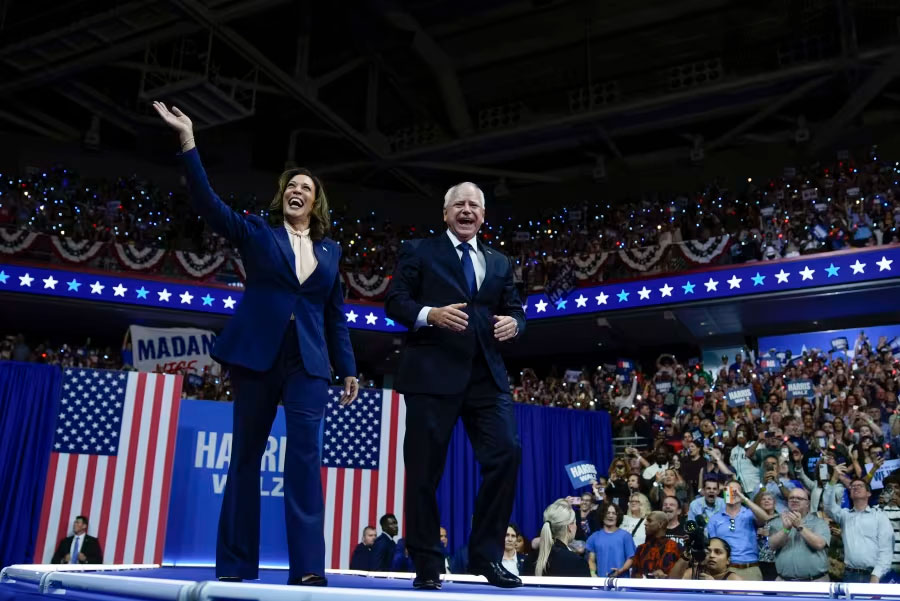
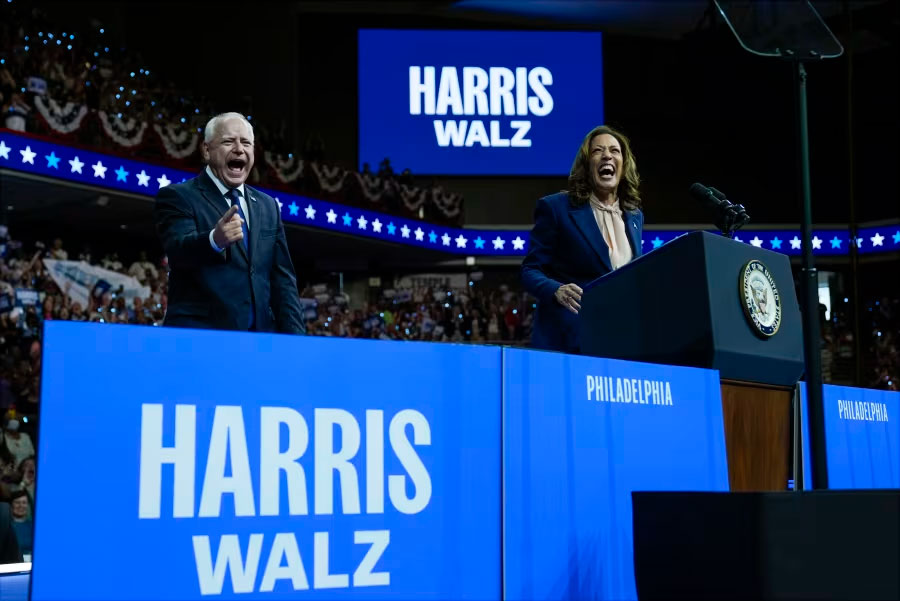
Harris y Walz comparecieron este martes por primera vez en público en un mitin en Filadelfia, la gran ciudad del estado clave de Pensilvania, tras haber construido una candidatura en tiempo récord, apenas dos semanas después de que el presidente Joe Biden renunciara a presentarse a la reelección.
Ambos estuvieron acompañados por más de 13.000 asistentes y comenzaron una gira que los llevará a los siete estados claves para ganar las elecciones del 5 de noviembre.
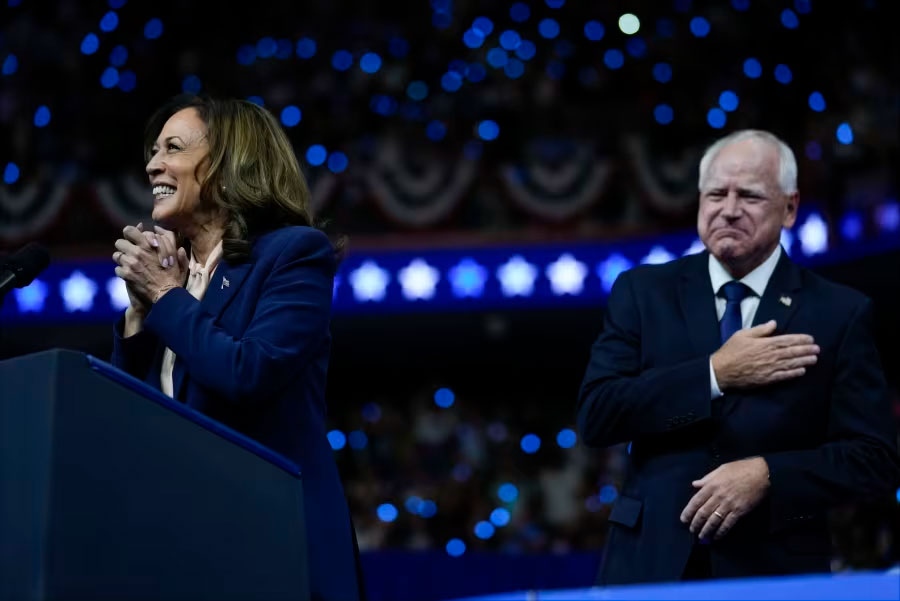
Tim Walz, conmovido por el recibimiento en un animado mitin en el disputado estado de Pensilvania, con el objetivo de impulsar el recién acuñado binomio presidencial demócrata en la carrera hacia la Casa Blanca.
“Es el tipo de persona que infunde en la gente un sentimiento de pertenencia y la inspira a soñar en grande (…) Ese es el tipo de vicepresidente que Estados Unidos merece», dijo Harris, parada junto a Walz, en Filadelfia, también visiblemente emocionada.
Walz tomó el micrófono después de Harris y arengó a la multitud para la ardua campaña que se avecina. “Tenemos 91 días. Dios mío, qué fácil. Ya descansaremos cuando estemos muertos», dijo.
Los comentarios reflejaron la urgencia del momento, ya que Harris eligió a Walz como compañero de fórmula durante uno de los periodos más turbulentos de la política estadounidense moderna.
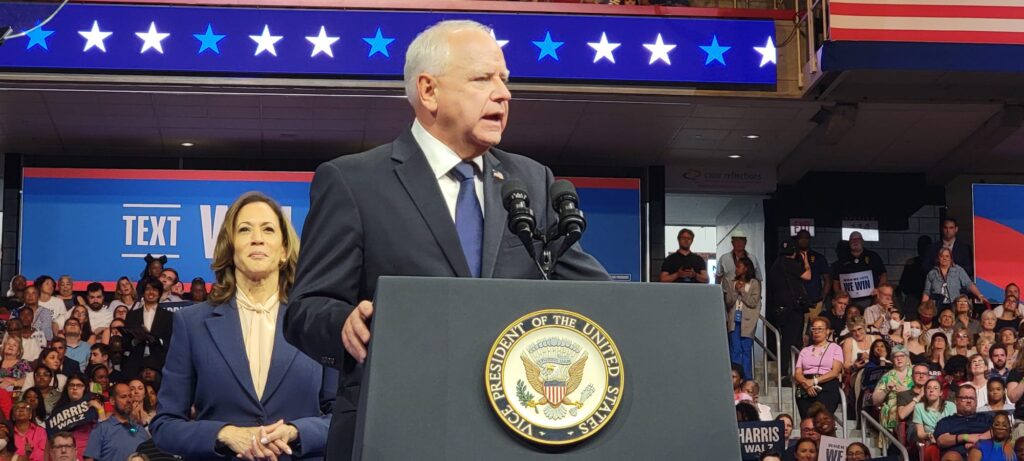
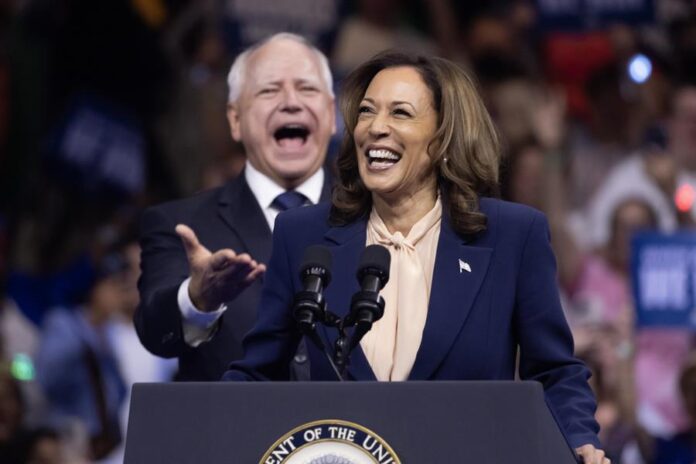
La candidata demócrata a la presidencia Kamala Harris y su compañero de fórmula, el gobernador de Minnesota, Tim Walz, hablan en un acto de campaña en Filadelfia, el martes 6 de agosto de 2024. (Foto AP/Joe Lamberti)
El presidente Joe Biden puso fin a su campaña de reelección, lo que obligó a Harris a luchar por unificar a los demócratas y a elegir a un candidato vicepresidencial a toda prisa, en apenas dos semanas.
Al elegir a Walz, de 60 años, Harris está recurriendo a un gobernador de la región centro-norte de Estados Unidos, quien es veterano militar, prosindicalista y ayudó a promulgar una ambiciosa agenda demócrata para su estado, la cual incluía amplias protecciones del derecho al aborto y generosos apoyos para las familias.
Se trata de su decisión más importante como candidata presidencial demócrata, y Harris ha elegido una opción que la mayoría encuentra aceptable: alguien que afirma que la política debería ser más alegre y que desvía la atención de la retórica oscura de los republicanos con un toque más ligero, una estrategia a la que la campaña demócrata ha recurrido cada vez más desde que Harris asumió la candidatura presidencial.
Harris espera que Walz le ayude a apuntalar el apoyo que tiene en el centro-norte de Estados Unidos, una región crítica en la contienda electoral que muchas veces funge, para los candidatos demócratas, como una zona de contención en el camino a la Casa Blanca.
Desde que Walz fue nombrado candidato a la vicepresidencia, el equipo de campaña recaudó más de 20 millones de dólares en donaciones de simpatizantes, según la propia campaña.
Walz dista mucho de ser un nombre conocido. Una encuesta de ABC News/Ipsos realizada antes de su nombramiento, pero después de que comenzaran a barajarse varios nombres, reveló que casi 9 de cada 10 adultos estadounidenses carecían de suficiente información para tener una opinión sobre él.
Harris dedicó gran parte de su discurso a la vida y trayectoria profesional de Walz, la cual incluyó periodos como profesor de estudios sociales, entrenador de fútbol americano, veterano, miembro del Congreso,y gobernador.
“Quienes lo conocen de cerca saben que Tim es más que un gobernador”, dijo Harris.
“Los dos creemos en levantar a la gente, no en derribarla”, dijo. “Ambos sabemos que la inmensa mayoría de nosotros tenemos más cosas que nos unen de las que nos separan. Y en nuestros compatriotas vemos vecinos, nunca enemigos».
Shapiro fue el orador previo a la presentacion de Harris y Walz. Con grandes ovaciones durante su discurso, ratifico el endoso a la candidata a la presidencia Kamala Harris y al gobernador Tim Walz en su encomienda.
El gobernador, quien era uno de los punteros para la nominación de Harris para compañero de fórmula, anunció previamente que «en los próximos 92 días estará viajando por el estado junto con la campaña de Harris apoyándolos para arrasar con Donald Trump y tener un mejor futuro en el país».
Democratic presidential nominee Vice President Kamala Harris and her running mate Minnesota Gov. Tim Walz speak at a campaign rally in Philadelphia, Tuesday, Aug. 6, 2024. (Photo: AP/Joe Lamberti)
PHILADELPHIA. — Kamala Harris introduced Minnesota Gov. Tim Walz to the nation at a raucous rally Tuesday in battleground Pennsylvania that was aimed at building momentum for the newly minted Democratic presidential ticket in the sprint toward Election Day.
“He’s the kind of person who makes people feel like they belong and then inspires them to dream big. … That’s the kind of vice president America deserves,” Harris said while standing with Walz in Philadelphia.
Taking the microphone after Harris, Walz revved up the crowd for the rigorous campaign to come. “We’ve got 91 days. My God, that’s easy. We’ll sleep when we’re dead,» he said.
The remarks reflected the urgency of the moment, with Harris tapping Walz for the ticket during one of the most turbulent periods in modern American politics. Republicans have rallied around former President Donald Trump after he was targeted in an attempted assassination in July. Just days later, President Joe Biden ended his reelection campaign, forcing Harris to scramble to unify Democrats and decide on a running mate over a breakneck two-week stretch.
In choosing the 60-year-old Walz, Harris is elevating a Midwestern governor, military veteran and union supporter who helped enact an ambitious Democratic agenda for his state, including sweeping protections for abortion rights and generous aid to families.
It was her biggest decision yet as the Democratic nominee and she went with a broadly palatable choice — someone who says politics should have more joy and who deflects dark and foreboding rhetoric from Republicans with a lighter touch, a strategy that the campaign has been increasingly turning to since Harris took over the top spot.
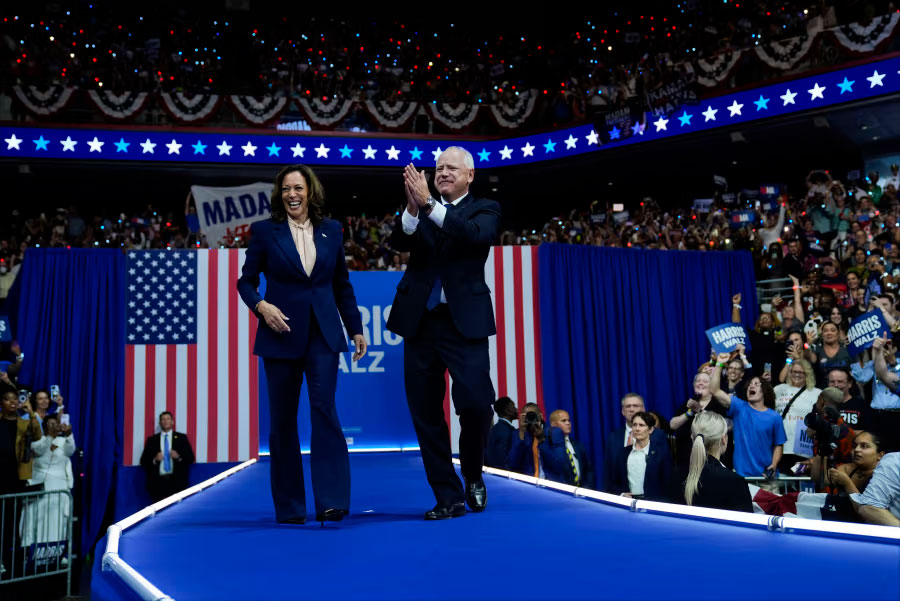
Democratic presidential nominee Vice President Kamala Harris and her running mate Minnesota Gov. Tim Walz arrive at a campaign rally in Philadelphia, Tuesday, Aug. 6, 2024. (Photo: AP/Matt Rourke)
Harris hopes Walz will help her shore up her campaign’s standing across the upper Midwest, a critical region in presidential politics that often serves as a buffer for Democrats seeking the White House. The party remains haunted by Trump’s wins in Michigan and Wisconsin in 2016. Trump lost those states in 2020 but has zeroed in on them as he aims to return to the presidency this year and is expanding his focus to Minnesota.
Since Walz was announced, the team raised more than $20 million from grassroots donations, the campaign said.
Walz is far from a household name. An ABC News/Ipsos survey conducted before he was selected but after vetting began showed that nearly 9 in 10 U.S. adults did not know enough to have an opinion about him.
Harris devoted much of her speech to telling the audience about Walz’s life and work, which included stints as a social studies teacher and a football coach.
“To those who know him best, Tim is more than a governor,” she said.
“We both believe in lifting people up, not knocking them down,” she said. “We both know that the vast majority of us have so much more in common than what separates us. And we see in our fellow Americans neighbors, never enemies.”
Harris, the first Black woman and person of South Asian descent to lead a major party ticket, initially considered nearly a dozen candidates before zeroing in on a handful of serious contenders.
Democratic presidential nominee Vice President Kamala Harris and her running mate Minnesota Gov. Tim Walz speak at a campaign rally in Philadelphia, Tuesday, Aug. 6, 2024. (Photo: AP/Matt Rourke)
Trump has focused much of his campaign on appealing to men, emphasizing a need for strength in national leadership and even featuring the wrestler Hulk Hogan on the final night of the Republican National Convention. Harris’ finalists — all white men — marked an acknowledgement of the Democrat’s need to at least try to win over some of that demographic.
She personally interviewed three finalists: Pennsylvania Gov. Josh Shapiro, Arizona Sen. Mark Kelly and Walz. Harris wanted someone with executive experience who could be a governing partner, and Walz also offered appeal to the widest swath of the diverse coalition.
His selection drew praise from lawmakers as ideologically diverse as progressive leader Rep. Alexandria Ocasio-Cortez, D-N.Y., and independent Sen. Joe Manchin of West Virginia, a moderate who left the Democratic Party earlier this year.
Democratic presidential nominee Vice President Kamala Harris and her running mate Minnesota Gov. Tim Walz arrive at a campaign rally in Philadelphia, Tuesday, Aug. 6, 2024. (Photo: AP/Matt Rourke)
A team of lawyers and political operatives led by former Attorney General Eric Holder pored over documents and conducted interviews with potential selections. Harris mulled the decision over on Monday with top aides and finalized it Tuesday morning, according to three people familiar with Harris’ decision who spoke on condition of anonymity to describe private deliberations.
Shapiro, an ambitious politician in his own right, struggled with the idea of being No. 2 at the White House and said he felt he had more to do in Pennsylvania, according to one of the people familiar with Harris’ decision. There was also public pushback to Shapiro for his stance on Israel from Arab American groups and younger voters angry over the administration’s response to the Israel-Hamas war.
Democratic presidential nominee Vice President Kamala Harris and her running mate Minnesota Gov. Tim Walz speak at a campaign rally in Philadelphia, Tuesday, Aug. 6, 2024. (Photo: AP/Matt Rourke)
The other contenders threw their support behind the ticket Tuesday, and Shapiro was one of the speakers at Tuesday’s Philadelphia rally. Biden described the Harris and Walz ticket as “a powerful voice for working people and America’s great middle class.”
Walz coined one of Democrats’ buzziest campaign bits to date, calling Trump and his running mate Ohio Sen. JD Vance “just weird,” a label that the Democratic Governors Association — of which Walz is chairman — amplified in a post on X and Democrats more broadly have echoed.
On Tuesday, Walz said: “Just an observation of mind, I just have to say it. These guys are creepy and, yes, just weird as hell.”
Harris, second gentleman Doug Emhoff and Walz will spend the next five days touring critical battleground states, visiting Wisconsin and Michigan on Wednesday and Arizona and Nevada later in the week.
Vance, for his part, planned stops in some of the same areas. He said Tuesday that he called Walz earlier in the day and left a voice message.
Democratic presidential nominee Vice President Kamala Harris and her running mate Minnesota Gov. Tim Walz speak at a campaign rally in Philadelphia, Tuesday, Aug. 6, 2024. (Photo: AP/Matt Rourke)
The Trump campaign on Tuesday immediately tried to tag Walz as a far-left liberal.
“It’s no surprise that San Francisco Liberal Kamala Harris wants West Coast wannabe Tim Walz as her running-mate – Walz has spent his governorship trying to reshape Minnesota in the image of the Golden State,” said Karoline Leavitt, Trump’s campaign press secretary.
Trump, who often weighs in on the news on his social media network, posted simply, “THANK YOU!” after the news of Walz’s selection was public. He followed up with another post a few hours later, proclaiming “This is the most Radical Left duo in American history” and suggested Biden “feels that he made a historically tragic mistake” and would try to get back in the race again.
Walz, who grew up in the small town of West Point, Nebraska, was a teacher, coach and union member at Mankato West High School in Minnesota before entering politics.
Democratic presidential nominee Vice President Kamala Harris and her running mate Minnesota Gov. Tim Walz speak at a campaign rally in Philadelphia, Tuesday, Aug. 6, 2024. (Photo: AP/Matt Rourke)
He won the first of six terms in Congress in 2006 from a mostly rural southern Minnesota district and used the office to champion veterans issues. Walz served 24 years in the Army National Guard, rising to command sergeant major, one of the highest enlisted ranks in the military, although he didn’t complete all the training before he retired so his rank for benefits purposes was set at master sergeant.
David Ivory, a 46-year-old St. Paul resident, rode over to Walz’s residence on his bike with his kids shortly after the announcement to deliver their congratulations.
Democratic presidential nominee Vice President Kamala Harris and her running mate Minnesota Gov. Tim Walz arrive at a campaign rally in Philadelphia, Tuesday, Aug. 6, 2024. (Photo: AP/Matt Rourke)
“He’s just down to earth. He gets it. He can talk to anybody,” Ivory said. “He doesn’t seem like he’s above anybody.”
As governor, Walz had to find ways to work in his first term with a legislature split between a Democratic-controlled House and a Republican-led Senate. Minnesota has a history of divided government, though, and the arrangement was surprisingly productive in his first year.
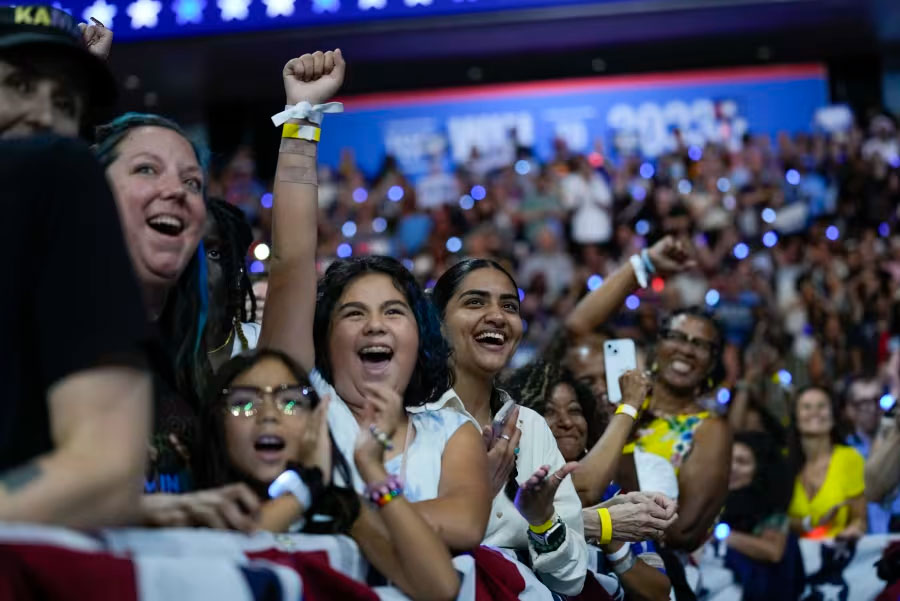
Supporters cheer as Democratic presidential nominee Vice President Kamala Harris and her running mate Minnesota Gov. Tim Walz arrive at a campaign rally in Philadelphia, Tuesday, Aug. 6, 2024. (Photo: AP/Matt Rourke)
Walz easily won reelection in 2022, and Democrats flipped the Senate to win full control of both chambers and the governor’s office for the first time in eight years. A big reason was the Dobbs decision from the conservative-majority Supreme Court that overturned a federal right to an abortion.
Walz currently serves as co-chair of the bipartisan Council of Governors, advising the president and the Cabinet on homeland security and national defense issues. He was first appointed to the position by Trump, then later reappointed by Biden.
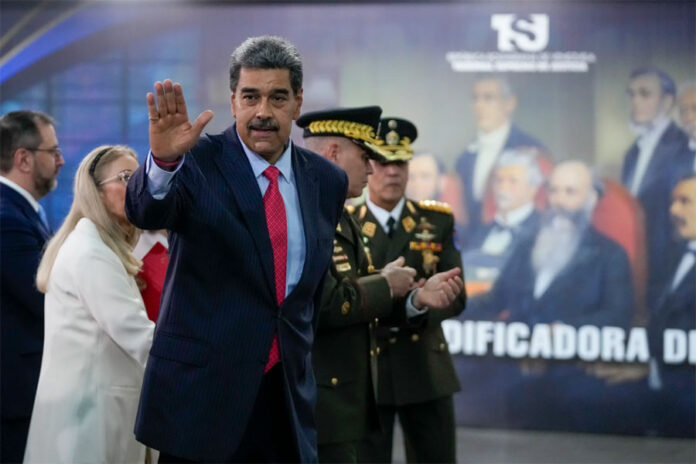
El presidente venezolano Nicolás Maduro, saluda tras terminar una conferencia de prensa en la Corte Suprema en Caracas, Venezuela, el miércoles 31 de julio de 2024, tres días después de una controvertida reelección. (Foto: AP/Fernando Vergara)
Caracas, Venezuela. — Tras las disputadas elecciones presidenciales de Venezuela hace nueve días, funcionarios de Brasil, Colombia y México han estado en permanente contacto con representantes tanto del presidente Nicolás Maduro como del candidato opositor Edmundo González para buscar una solución a la crisis política de ese país.
Un alto funcionario mexicano que ha formado parte de las discusiones dijo a The Associated Press que las tres naciones, cuyos actuales presidentes son aliados de Maduro, sostienen “conversaciones” con ambas partes, pero dijo que no se trata de una “mediación” formal porque ninguna de las partes lo ha solicitado.
El funcionario confirmó que hay esfuerzos diplomáticos en curso y admitió que los representantes de los tres países han recomendado al gobierno y a la oposición seguir las leyes venezolanas y comparecer ante las instituciones correspondientes para apelar cualquier parte del proceso electoral.
Esa, sin embargo, es una petición difícil para la oposición, ya que el partido gobernante controla todos los poderes, incluido el Judicial al que utiliza para perseguir y reprimir a sus oponentes.
El funcionario, que habló bajo condición de anonimato porque no estaba autorizado a discutir el asunto, se negó a identificar a los representantes del gobierno venezolano y de la oposición que han participado en las discusiones y no dijo si el equipo de González ha manifestado su voluntad de apelar formalmente los resultados de la elección.
Por su parte, el canciller colombiano Luis Gilberto Murillo aseguró el martes a la prensa que tanto él como sus homólogos de México y Brasil trabajan para “superar las controversias que se han presentado en Venezuela” y que se espera que esta semana o la próxima los tres gobiernos puedan comunicar los avances que han tenido.
Murillo indicó que los contactos se han realizado con “todas las figuras políticas” de Venezuela, tanto del oficialismo como de la oposición, pero no especificó con quiénes. Dicha facilitación, añadió, no tiene un límite de tiempo estipulado. “Venezuela tiene su propia dinámica y eso es lo que va a condicionar algunos tiempos”, indicó.
A diferencia de otras naciones occidentales, los gobiernos de Brasil, Colombia y México han adoptado una postura más neutral al no rechazar ni aceptar lo que las autoridades electorales de Venezuela declararon como una victoria de Maduro en las urnas. En un comunicado conjunto emitido la semana pasada, esos países pidieron al organismo electoral de Venezuela que publique decenas de miles de actas de escrutinio de votos que son consideradas la prueba definitiva de los resultados.
“El principio fundamental de la soberanía popular debe ser respetado mediante la verificación imparcial de los resultados”, dijeron en su declaración los presidentes Luiz Inácio Lula da Silva de Brasil, Gustavo Petro de Colombia y Andrés Manuel López Obrador de México.
El funcionario mexicano dijo a AP que los presidentes no han descartado una reunión en persona con Maduro.
Millones de venezolanos acudieron a las urnas el 28 de julio —algunos incluso realizaron vigilias desde horas antes de la apertura de los centros de votación— para las muy esperadas elecciones que, según vaticinaban todas las encuestas, eran el desafío electoral más difícil que Maduro y su gobernante Partido Socialista Unido de Venezuela habían enfrentado en décadas.
El Consejo Nacional Electoral (CNE) proclamó ganador a Maduro sin publicar cifras detalladas, como lo había hecho en anteriores elecciones.
Aproximadamente 12 horas después de que se anunciaran los resultados, miles de venezolanos en todo el país salieron a las calles a protestar y fueron recibidos con una brutal represión gubernamental.
Según los resultados del CNE Maduro obtuvo 6,4 millones de votos, mientras que González, que representó a la coalición opositora Plataforma Unitaria, obtuvo 5,3 millones. Pero González y la líder de la oposición María Corina Machado sorprendieron a los venezolanos cuando revelaron que habían obtenido más del 80% de las actas de escrutinio emitidas por las máquinas de votación electrónica después del cierre de las urnas y afirmaron que Maduro había sido derrotado.
En un análisis realizado por AP de casi 24.000 imágenes de actas electorales, que representan los resultados del 79% de las máquinas de votación, se verificó que González recibió 6,89 millones de votos, casi medio millón más de los que el organismo electoral dice que obtuvo Maduro.
Para contrarrestar las revelaciones de la oposición sobre el resultado de las elecciones, Maduro pidió al Tribunal Supremo de Justicia de Venezuela que realizara una auditoría de los comicios, medida que inmediatamente generó las críticas de observadores extranjeros que dijeron que el tribunal es demasiado cercano al gobierno como para realizar una revisión independiente.
Los magistrados del tribunal son propuestos por funcionarios y ratificados por la Asamblea Nacional, dominada por simpatizantes de Maduro.
El tribunal convocó a los 10 candidatos que aparecieron en la boleta para una audiencia el viernes. El único que no se presentó fue González. El lunes el tribunal le ordenó comparecer en otra audiencia el miércoles.
También el lunes el Fiscal General de Venezuela anunció una investigación penal contra González y Machado por una declaración en la que llamaron a las Fuerzas Armadas a que le retiren su respaldo a Maduro y no repriman las protestas.
El Fiscal General Tarek William Saab afirmó que ambos “falsamente anuncian un ganador de las elecciones presidenciales distinto al proclamado por el Consejo Nacional Electoral, único órgano calificado para hacerlo” e incitaron abiertamente a “funcionarios policiales y militares a la desobediencia de las leyes”.
Maduro cuenta con la lealtad de las Fuerzas Armadas, el árbitro tradicional de las disputas políticas en Venezuela.
Hoy, la campaña Harris-Walz lanzó un nuevo video que presenta a los votantes al compañero de fórmula de la vicepresidenta Harris para 2024: el gobernador Walz es un defensor de las familias trabajadoras, un guardia nacional retirado del ejército, ex maestro de secundaria y entrenador de fútbol americano, miembro del Congreso, y gobernador durante dos mandatos, donde redujo los impuestos para las familias trabajadoras, redujo el costo de la insulina y protegió el derecho de las mujeres a elegir.
El breve video, narrado por el Gobernador Walz, destaca los valores que él aprendió mientras crecía en Nebraska: respeto, compromiso y servicio a nuestro país. En el video, el gobernador Walz se presenta al pueblo estadounidense y comparte su experiencia en la lucha por las familias trabajadoras.
TRANSCRIPCIÓN
A veces la vida se trata tanto de las lecciones que aprendes como de las lecciones que enseñas.
Donde crecí, la comunidad era una forma de vida.
Mi clase de secundaria era de 24 personas.
La mitad de ellos eran mis familiares.
Aprendí a ser generoso con mis vecinos, a buscar compromisos sin sacrificar mis valores, y a trabajar por el bien común.
Mi papá fue miembro del ejército y, con su apoyo, me uní a la Guardia Nacional del Ejército cuando tenía 17 años. Serví durante 24 años.
Usé mis beneficios GI para ir a la universidad y convertirme en maestro de escuela pública.
Entrené fútbol americano y fui maestro de estudios sociales durante 20 años.
Y traté de enseñarle a mis alumnos lo que me enseñó un pequeño pueblo de Nebraska: respeto, compromiso y servicio al país.
Y cuando entré al gobierno, eso es lo que llevaba conmigo. Trabajé con los republicanos para aprobar un proyecto de ley de infraestructura. Recorté impuestos para las familias trabajadoras. Firmé la licencia remunerada como ley. Codifiqué el derecho al aborto después de que se anuló Roe.
Porque voy a trabajar por el bien común.
Pero ya basta de mí.
Hablemos de ti. Porque de eso se trata esta elección.
Se trata de tu futuro. Se trata de tu familia.
Y la vicepresidenta Harris lo sabe. Ella también creció en una familia de clase media. Ella también va a trabajar todos los días, asegurándose de que las familias no sólo puedan sobrevivir sino salir adelante.
Creemos en la promesa de Estados Unidos. Esos valores los aprendí en Nebraska. Y estamos listos para luchar por ellos.
Porque como dice Kamala Harris: cuando luchamos ganamos