

Inicio Blog Página 768

Editorial Roundup: Pennsylvania

Pennsylvania

Uniontown Herald Standard. June 25, 2024

In 1966, the U.S. Supreme Court ruled in Miranda vs. Arizona that criminal defendants were entitled to say nothing so as to not incriminate themselves, and they were also entitled to an attorney.

Not too long after, television viewers became familiar with what came to be called the Miranda warning thanks to its recitation on popular series like “Dragnet” and “Adam-12.” Along with a right to silence and a right to attorney, it became widely understood by Americans in all walks of life that if a defendant could not afford an attorney “one will be provided for you.”

A question that has long lingered over that valuable right, though, is whether criminal defendants who are being represented by court-appointed attorneys are getting the best possible defense. Across the country, many public defenders are overworked and underpaid, working with caseloads that don’t allow them to spend much time on each case. In Pennsylvania, counties have been left to fund and oversee public defender offices, and it has resulted in many of them being starved of resources and manpower.

That’s the argument the American Civil Liberties Union (ACLU) of Pennsylvania puts forward in a lawsuit it recently filed in Commonwealth Court. It asserts that the current system leaves defendants without effective counsel and, according to an ACLU news release, “creates an inconsistent patchwork of counsel depending on the county in which a person is charged with a crime.”

Witold Walczak, the ACLU’s Pennsylvania legal director, explained, “Pennsylvania’s grossly underfunded system leads to overwhelming caseloads that make effective representation practically impossible even for the most dedicated lawyer.”

The suit, which names Gov. Josh Shapiro and members of the General Assembly as defendants, was filed just as Pennsylvania counties are being awarded state money to support indigent defense. Washington County, for instance, is going to use the $94,000 it is receiving to hire an additional full-time attorney, while Fayette County is using the money it requested – close to $98,000 – to make upgrades to its software and equipment. All told, Harrisburg is sending $7.5 million out to the commonwealth’s 67 counties to support their indigent defense offices, the first time it has ever done so. The Shapiro administration is requesting the amount be boosted to $10 million in the 2024-25 budget, and Lt. Gov. Austin Davis has said that getting the funds out to counties is “no small feat.”

But critics say even the $7.5 million in state funds is not sufficient. They point to the fact that states, on average, spend about $19.67 on a cost-per-capita basis for indigent defense, while Pennsylvania only spends $10.25, even when the new state funding is included. When you look across the 50 states, only Mississippi, Hawaii, Oklahoma, Missouri and Texas spend less on indigent defense than Pennsylvania does.

When discussing the state money being put toward indigent defense, Shapiro said, “We need to do more to build equity in our criminal justice system, and a critical piece of that is sustained, dedicated funding for public defenders.” In the years ahead, Shapiro and his fellow lawmakers need to assure that funding actually meets the size of the need.

___

Pittsburgh Tribune-Review. June 24, 2024

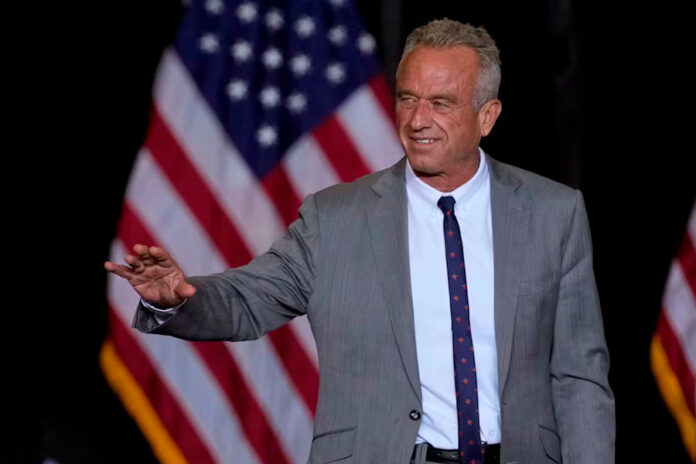
Robert F. Kennedy Jr. has filed paperwork to appear on the Pennsylvania ballot as a presidential candidate.

The fourth Kennedy to run for president and the first to do so as an independent, he maintains that he will win. That’s the position of any presidential candidate, no matter how long the odds.

Make no mistake, Kennedy’s odds are indeed long. Composite polling numbers from The Hill, for example, place him a distant third in the Keystone State. While former President Donald Trump is at 43.9% and President Joe Biden a hair behind at 42.6%, Kennedy is at 5.5%. That’s barely over the margin of error.

Let’s be clear. If the election happened today, Kennedy could not become president.

He is on the ballot in just five states. Three went for Trump in 2020: Oklahoma, Tennessee and Utah. The fourth, Michigan, was a swing state that went for Biden in 2020 and Trump in 2016. Delaware voted for Biden, its former longtime senator.

Kennedy has filed to get on the ballot in 11 more states: Alaska, California, Minnesota, Nebraska, New Hampshire, New Jersey, New York, North Carolina, South Carolina, Texas and Washington. The 12th, Pennsylvania, is the only reliable swing state.

The presidential election takes place in just over four months. Absentee and mail-in voting in various states starts earlier. In Pennsylvania, ballots can start to be mailed out 50 days before the election. That makes the question of whether Kennedy is on the ballot one that needs to be resolved within weeks.

It needs to be resolved nationally, too, not just in Pennsylvania. To do otherwise devalues the decisions of every Pennsylvania voter.

If Kennedy is not on every state’s ballot, his candidacy is an expensive practical joke on the electorate. It presents him as an option, persuading some to throw him support.

But if he is not on the ballot in all states or at least enough to get the required electoral votes, voting for Kennedy is no different than writing in a vote for the Pirate Parrot. Yes, you might prefer him to the other options, but the baseball mascot isn’t a viable option.

CNN is not allowing Kennedy to participate in Thursday’s debate between Biden and Trump, the first debate of the presidential race. The reason is the math. There is simply no way for Kennedy to get to the presidency at this point. Polls aside, he is not on enough ballots to make it happen.

The one value the Kennedy campaign really demonstrates to Pennsylvania voters is in the delineation of that averaged 5.5% block of his supporters in the various polls.

Those are the people the presidential race may boil down to in Pennsylvania — and if history tells us anything, that chunk of Pennsylvanians could decide the whole race.

In polling, those people are sticking by their independent candidate. His tiny chunk of polled voters is not enough for him to win, but it will make all the difference when only 1.3% separates Biden and Trump.

___

Pittsburgh Post-Gazette. June 25, 2024

In his second budget as Pennsylvania’s chief executive, Gov. Josh Shapiro has a chance not just to boost funding in the short term for Pennsylvania’s intellectual disabilities and autism (ID/A) community, but to establish long-term stability for these essential services. As the state’s rarely-met June 30 budget deadline approaches, and as the General Assembly already has an important bill before it, it’s time for Harrisburg to follow through on Mr. Shapiro’s promises.

There’s hardly a better, more humane use for the state’s billions of dollars in reserve funds.

Caring effectively for people with ID/A in Pennsylvania is a struggle because of absurdly low reimbursement rates — below $17 an hour — for direct support professionals (DSPs), who compassionately administer care that is often physically and emotionally exhausting. This has led to a massive staffing shortage, and a waitlist of over 13,200 people across the state. This includes 6,000 patients in the “emergency” category. They need help now — without it, families are desperately treading water to keep their loved ones safe and healthy.

Mr. Shapiro has promoted a plan to end this emergency waitlist within five years — and that is still a very long time for families to wait. This goal is only achievable with serious state investment to fulfill its legal duty to provide this care. Last year looked promising, until the General Assembly slashed a total of $370 million from the governor’s appropriation for the ID/A community.

This year’s budget is back to big promises, including $217 million in state funds to raise DSP reimbursement rates closer to competitive wages and $34 million to specifically cut down on the emergency waitlist. Another $266 million in federal matching funds will bolster these efforts. Support from key Senate Republicans is encouraging: This may finally be the year the ID/A community gets the support it’s been waiting for.

But long-term commitment to keeping reimbursement rates fair is the only way to achieve a truly sustainable solution. Mr. Shapiro has done well by embarking, last September, on the process of reevaluating DSP wages before the typical three-year cycle had completed. This demonstrated Mr. Shapiro’s understanding of the seriousness of the crisis, and provided important information for this year’s budget process.

However, the state’s methods for evaluating reimbursement increases remain vague and ill-suited to current labor market conditions. HB661, introduced by disability advocate and House Majority Whip Dan Miller, D-Mt. Lebanon, would index these pay scales to inflation. adjusting them every year. The bill has been idling in the Human Services subcommittee since March of last year. Full passage should accompany passage of Mr. Shapiro’s funding request, so that the ID/A community will not have to beg for Harrisburg’s care and attention every year.

Last year, the debate on private school vouchers for low-income families caused months of delays and budget compromises, leaving Pennsylvanians with ID/A behind. By passing new funding and long-term support for the ID/A community, the legislature can ensure that Mr. Shapiro’s commitment to vulnerable Pennsylvanians will outlast his time in office — and doesn’t become another unfulfilled promise.

___

LNP/LancasterOnline. June 23, 2024

THE ISSUE: State Sen. Ryan Aument, a Republican from West Hempfield Township and the Senate Republican majority whip, said he believes that cellphones are a classroom distraction and possible source of decline in student mental health and academic performance. To that end, he’s working on two proposals that he believes would help address the issue. Aument “plans to introduce legislation to create a state-funded voluntary pilot program for public schools to purchase lockable cellphone bags where students will be required to store their phones during the entire school day,” LNP ‘ LancasterOnline’s Ashley Stalnecker reported earlier this month. “As part of the pilot program, these schools would track data that would assess impact on mental health and academic performance. He also wants to draft a separate bill that would mandate the use of lockable cellphone bags at all kindergarten through grade 12 public schools statewide.”

The prevalence of smartphone usage in schools — and in the daily lives of young people in general — is a legitimate concern.

But don’t take our word for it.

Listen to the students, too.

In a Generation Z(eal) column for this newspaper in March, Maggie Poole, then an 11th grader at Solanco High School, wrote about the irritability, anxiety, depression and body dysmorphia that can afflict kids who spend significant time on social media (generally accessed by smartphone). Poole cited research that showed kids using social media experience “decreased, disrupted and delayed sleep” and are subjected to “unrealistic beauty standards” that can lead to disordered eating.

On the flip side, Janae Riehl, then a 12th grader at Manheim Township High School, wrote a Generation Z(eal) column in April 2022 about the bliss of being without her smartphone for a week she spent at summer camp.

“I got the best sleep of my life. I had so much peace, and I was connected to people on a personal level,” Riehl wrote. “That week was one of the best weeks of my life. We were forced to have face-to-face interactions with one another. We were forced to get out of our comfort zones, to meet new people, to find things to entertain us, to focus on the here and now and to enjoy life without constant electronic stimulation.”

Devices such as smartphones, she concluded, “are stealing our lives from us.”

Aument would agree. And so would we.

“We are expecting children to have the discipline to disconnect from social media and their phones, but most adults can’t even do that,” Aument noted on his website. “Instead of putting an adult responsibility on their shoulders, my bill would give them a break during school hours and the opportunity they deserve to learn without a constant distraction in their pockets.”

According to Stalnecker’s article, Aument’s inspiration for the legislation was a meeting with Jonathan Haidt, a social psychologist who wrote “The Anxious Generation: How the Great Rewiring of Childhood is Causing an Epidemic of Mental Illness,” which was published in March. (We might add that to our summer reading pile, alongside some of the other compelling books mentioned by members of the Lancaster County community in today’s Perspective section.)

Haidt’s book posits “that a decline in academic achievement and mental health correlates with an increase in time U.S. teens spend on smartphones and online,” Stalnecker wrote. “(He) favors restricting access to cellphones during school time by storing them in a phone locker or lockable pouch.”

That’s Aument’s stance, too.

Aument’s communications director, Stephanie Applegate, told Stalnecker that, for now, Aument is focusing on passing the pilot program bill, which has better odds of getting through the General Assembly than a bill mandating the statewide use of lockable cellphone bags in public schools.

“Aument wants to pass the pilot program legislation as a budget item by the end of June, when the Pennsylvania budget is due,” Stalnecker wrote. “If it passes then, he said he’d look to implement cellphone restrictions in pilot schools by the start of the 2024-25 school year in August.”

The bigger picture for this month’s budget deadline, of course, is public school funding. We strongly believe the budget should incorporate passage of state House Bill 2370, which, as we noted last Sunday, would provide a “transformative” boost in funding of public schools over the next seven years.

Adequate funding for public schools — a state constitutional requirement that lawmakers have long failed to uphold — goes hand in hand with addressing students’ mental health and academic performance. So we see school funding and legislation to address smartphone usage to be of the same cloth.

“While it’s great that the commonwealth dedicated an additional $100 million last year to schools to care for students’ mental health, that money won’t go very far unless we get at the root cause of the problem,” Aument noted on his website. “Because we know widespread access to smartphones and social media apps increases depression, anxiety, feelings of isolation, and even suicidal thoughts in teens and children, my bill is a commonsense approach to improve student mental health and academic performance alike.”

Aument’s sentiment is starting to be shared by many across the nation.

New York Gov. Kathy Hochul, a Democrat, plans to introduce a bill banning smartphones in schools, The Guardian newspaper reported May 30.

“I have seen these addictive algorithms pull in young people, literally capture them and make them prisoners in a space where they are cut off from human connection, social interaction and normal classroom activity,” Hochul said.

Under Hochul’s proposal, schoolchildren in New York state could still have simple phones that cannot access the internet but can send texts. This seems like a wise compromise to allay the concerns of parents worried about having no contact with their kids during the school day.

In Florida, a law took effect last July that requires public school districts to prohibit student cellphone use during instructional time and block access to social media on district Wi-Fi.

As The Associated Press reported earlier this year, Oklahoma, Vermont and Kansas have introduced what is becoming known as “phone-free schools” legislation. “And two U.S. senators — Tom Cotton, an Arkansas Republican, and Tim Kaine, a Virginia Democrat — introduced legislation in December that would require a federal study on the effects of cellphone use in schools on students’ mental health and academic performance,” the AP noted.

As lawmakers seek to restrict cellphone access and usage when school is in session, we want to hear from parents and educators — and especially students — on this topic in letters to the editor. Parents: Please encourage your kids to weigh in. We look forward to reading everyone’s thoughts on this important issue.

FDA warns maker of Sara Lee and Entenmann’s not to claim foods contain allergens when they don’t

FDA
Bimbo bread is displayed on a shelf at a market in Anaheim, Calif., on April 24, 2003. On Tuesday, June 25, 2024, U.S. federal food safety regulators warned Bimbo Bakeries USA - which includes brands such as Sara Lee, Oroweat, Thomas', Entenmann's and Ball Park buns and rolls - to stop using labels that say its products contain potentially dangerous allergens when they don't. (Photo: AP/Damian Dovarganes/File)

Federal food safety regulators said Tuesday that they have warned a top U.S. bakery to stop using labels that say its products contain potentially dangerous allergens when they don’t.

U.S. Food and Drug Administration inspectors found that Bimbo Bakeries USA — which includes brands such as Sara Lee, Oroweat, Thomas’, Entenmann’s and Ball Park buns and rolls — listed ingredients such as sesame or tree nuts on labels even when they weren’t in the foods.

Under FDA regulations, such products are “misbranded,» FDA officials said in a warning letter sent to officials at the company’s Horsham, Pennsylvania, headquarters earlier this month.

“Food labels must be truthful and not misleading,” officials said. The warning followed inspections late last year at Bimbo plants in Phoenix, Arizona, and Topeka, Kansas, that make Sara Lee and Brownberry breads.

In addition, FDA officials indicated that allergen labeling is a “not a substitute” for preventing cross-contamination in factories.

Advocates with the nonprofit group FARE, Food Allergy Research & Education, said such labeling “does a disservice” to the estimated 33 million people in the U.S. with food allergies. Those consumers have to be constantly aware of foods that can cause potentially life-threatening allergic reactions, said Sung Poblete, FARE’s chief executive.

“Our community relies on accurate product labeling for their health and safety,” Poblete said in an email. “These findings about Bimbo Bakeries’ products undermine their trust and further limit their choices.”

Bimbo, a Mexico City-based food giant, bills its U.S. operations as the largest commercial baking company in the country. In an email, company officials said they “take their role in protecting consumers with allergen sensitivities very seriously” and that they are corresponding with FDA to resolve the issue.

Concerns over labels at Bimbo and other companies followed a law that took effect in 2022, which added sesame to the list of major allergens that must be listed on packaging.

Because it can be difficult and expensive to keep sesame in one part of a baking plant out of another, some companies began adding small amounts of sesame to products that didn’t previously contain the ingredient to avoid liability and cost. FDA officials said that violated the spirit, but not the letter, of federal regulations.

Some companies, including Bimbo, began listing allergens such as sesame on labels as a “precaution” in case of cross-contamination.

FDA officials acknowledged Tuesday that statements that a product “may contain” certain allergens “could be considered truthful and not misleading.” Bimbo officials have until July 8 to identify steps taken to remedy the issue — or to explain why the labeling doesn’t violate FDA standards.

¿Cómo impacta la inmigración en la intención de votos en EE. UU.?

EE. UU.
El incremento en las llegadas irregulares de migrantes a la frontera suroeste de EE. UU. durante los últimos años centró la atención pública en la crisis de movilidad que enfrenta la región

El incremento en las llegadas irregulares de migrantes a la frontera suroeste de EE. UU. durante los últimos años centró la atención pública en la crisis de movilidad que enfrenta la región. En ese contexto y de cara a las elecciones presidenciales de noviembre, el tema de la inmigración es clave para los candidatos.

WASHINGTON Por primera vez en años, la inmigración saltó en 2024 a los primeros puestos en la lista de preocupaciones de los estadounidenses. El manejo de la frontera sur, la gestión de la “crisis” migratoria y la integración de los inmigrantes a la sociedad tomaron protagonismo en este ciclo electoral, tanto en las campañas de los principales candidatos presidenciales, como en las encuestas a votantes.

Este ha sido el tema más mencionado entre los que han generado polarización política en los últimos 25 años, según un análisis de la consultora Gallup, que registra como una “constante” que el 27 % de personas encuestadas lo considera el “problema más importante que enfrenta Estados Unidos”.

Esta tendencia se ha mantenido estable desde diciembre de 2023, cuando la Oficina de Aduanas y Protección de Fronteras de EE. UU. (CBP en inglés) registró uno de sus mayores récords de llegadas de migrantes a la frontera con México en la última década.

“La inmigración se ha vuelto mucho más visible en la sociedad estadounidense… La cuestión de la frontera se ha convertido en tema de debate mucho más amplio a medida que el número de personas que llegan a la frontera y cruzan sin autorización ha crecido”, dijo a la Voz de América Andrew Selee, presidente del Instituto de Políticas Migratorias en Washington.

Este gran flujo supone una presión para las autoridades migratorias de EEUU, que tienen límites en su capacidad de procesar al amplio número de personas que intentan cruzar irregularmente a territorio estadounidense. La mayoría de los votantes, según Selee, coinciden en pensar que la situación es “caótica”.

Este resultado se produce a pesar de que cerca del 14 % de la población del país, o una de cada cuatro personas, nació en el extranjero o tiene padres nacidos fuera de EE. UU.

Elizabeth Jacobs, directora de políticas y asuntos regulatorios del Centro de Estudios de Inmigración en Washington, agregó que este énfasis se debe a que “el país ha soportado probablemente la crisis fronteriza más severa que jamás haya experimentado en su historia… por lo que es una imagen muy clara de abdicación del estado de derecho y del orden público a la que los estadounidenses están respondiendo”.

Medidas para contener cifras récords de llegadas

Después de una caída durante la pandemia – en gran parte debido a restricciones impuestas por la administración del expresidente Donald Trump y luego mantenidas en parte por su sucesor Joe Biden – las llegadas de migrantes a la frontera con México registraron récords de más de 2,3 millones en 2022 y 2,4 millones en 2023.

Los encuentros con inmigrantes irregulares aumentaron significativamente a partir de marzo de 2022, con un pico hasta ahora no superado de 301.980 en diciembre pasado, según cifras de CBP.

Todo esto a pesar de que la administración Biden impulsó en enero de 2023 un programa de parole humanitario combinado con restricciones a los cruces irregulares diseñado para disminuir la entrada de venezolanos, nicaragüenses, cubanos y haitianos, las nacionalidades con mayor representación en los registros hasta ese momento.

En conjunto con la ampliación de vías legales para la migración y la estrecha colaboración con México y otros países de la región, Biden también anunció limitaciones a la concesión de asilo en la frontera sur relacionada con los flujos de llegadas.

Según analistas, estas medidas son las más restrictivas anunciadas por un gobierno demócrata hasta el momento y se pusieron en vigor luego de negociaciones fallidas con el ala más extrema del partido republicano, quienes rechazaron la propuesta migratoria de Biden bajo indicaciones de Trump, considerado el líder de esa formación.

Biden -agregó Andrew Selee- se ha “inclinado por la idea” de que EEUU es un país de inmigrantes, por lo que deberían ser bienvenidos. Sin embargo, durante los últimos meses “comenzó a intentar endurecer los requisitos para ingresar en la frontera y los procesos de ingreso y acceso al asilo”.

Esta movida, de acuerdo con los expertos, podría ser un intento de “reconocer” que tiene “un problema de opinión pública” y que “gran número de estadounidenses están preocupados específicamente por cómo cruza la gente la frontera”. Sin embargo, ha recibido fuertes críticas de otros demócratas y organizaciones pro inmigrantes, que ya la han desafiado en tribunales.

“No creo que Biden pueda ganarse a la opinión pública estadounidense sobre la inmigración, pero está intentando detener la hemorragia. Está tratando de que sea un tema menos público, porque los números bajan y salen de las portadas”, apuntó Selee.

Se trata de una “estrategia sobre óptica”, dijo por su lado Elizabeth Jacobs. “No creo que las políticas que la administración Biden está implementando en este momento serán eficaces para lograr los objetivos que dicen que cumplirá, pero le brinda al presidente Biden la oportunidad de decir: lo intentamos”, agregó.

La migración desde ambos lados del espectro

La extrema polarización que sufre EEUU causa frustración entre votantes de ambos lados, quienes han sido testigos de la inacción en un Congreso extremadamente dividido. Sin embargo, los demócratas son más propensos a un acercamiento menos crítico con la inmigración. Con esto cuenta el equipo de Biden para demostrar que son una mejor opción frente a Trump.

“La gente en la frontera no es una amenaza para nosotros. Los necesitamos en nuestro país. Siempre hemos tenido gente cruzando la frontera. Y es una pena que los traten como lo son. Y creo que Biden encontrará una respuesta si simplemente se lo permiten”, dijo a la Voz de América la votante demócrata de Carolina del Sur, Donna Tate.

Sólo un 11 % de los partidarios del actual presidente están en contra de ampliar vías legales para los inmigrantes. Por otro lado, 6 de cada 10 seguidores de Trump están a favor de la deportación masiva que ha prometido el exmandatario en su campaña para regresar a la Casa Blanca.

“Nos preocupa la inmigración ilegal. Porque todos sabemos que nuestro país está saturado de ilegales, lo que supone una carga para nuestros sistemas escolares. Una nación sin fronteras no puede mantenerse”, aseguró a la VOA el legislador estatal republicano de origen cubano, José Cambrills.

A pesar de sus recientes medidas restrictivas, la administración Biden se ha diferenciado del gobierno de Trump al ampliar vías legales para llegar a EEUU y promover el financiamiento de programas sociales en América Latina, cruciales -según expertos- para enfrentar la crisis migratoria que vive la región. El actual presidente asegura que su colaboración con México ha logrado disminuir los números de cruces irregulares.

Por su parte, el expresidente Trump impulsó una política más dura contra los migrantes. Durante su campaña en 2020 culpó -sin base- a quienes llegaban al país de aumentar el crimen y robar los trabajos de los estadounidenses.

En su gestión, redujo el número de visas de trabajo, prohibió la entrada a ciudadanos de países predominantemente musulmanes y puso en vigor el Título 42 que durante la pandemia permitió la devolución a México de los migrantes irregulares. Este sólo fue derogado por Biden en mayo del año pasado.

¿Cómo influye la elección en los flujos migratorios?

La incertidumbre acerca de la posible llegada de una administración diferente a la actual, mantiene en vilo a quienes aún buscan cruzar hacia EEUU en la frontera suroeste. Jacobs, del Centro de Estudios de Inmigración en Washington, explicó que históricamente, las políticas fronterizas cambian rápidamente luego de una elección, lo que afecta los flujos migratorios.

“Tiende a haber una caída temporal en las cifras (de cruces irregulares) mientras la gente intenta entender cómo les afectarán las nuevas políticas migratorias o si existen lagunas en dichas políticas. Después de un tiempo, las cifras tienden a aumentar después de que el panorama se haya entendido mejor”, dijo a la VOA.

Al inicio del primer año fiscal de la administración Biden en 2021, el número de encuentros mensuales con migrantes irregulares se ubicaba en unos 72.000. En mayo de 2024, el número superó los 170.000.

Jacobs opinó que en esta elección, los votantes están “en una circunstancia realmente especial en la que realmente tenemos dos presidentes en ejercicio compitiendo entre sí”, lo que, según la analista, deja la elección entre “¿quieren volver a políticas más estrictas de control de fronteras y de inmigración que vieron bajo la administración Trump, o están contentos con el status quo bajo la administración Biden?”.

Sin importar quién resulte ganador en las próximas elecciones, expertos coinciden en que las primeras acciones relacionadas con la inmigración deben llegar al Congreso para “lidiar” con los procesos en la frontera y asignar recursos a las agencias que administran esta área.

Pese a las divisiones sobre las maneras de atender la crisis migratoria, los estadounidenses parecen unidos en su preocupación por la frontera, incluso entre sectores independientes y demócratas, según los expertos.

“Pero los estadounidenses el tema de la inmigración parece muy polarizado pero en realidad, la mayoría están en el mismo lugar, piensan que necesitamos inmigrantes. Los inmigrantes son una parte importante del país. Quieren ver a personas que han estado aquí durante mucho tiempo integradas en la sociedad. Pero también quieren que la frontera esté bajo mucho más control”, concluyó Selee.

Puerto Rico demanda a exfuncionarios acusados de corrupción para recuperar más de $30 millones

Puerto Rico
La bandera de Puerto Rico ondea frente al Capitolio, en San Juan, Puerto Rico. (Foto: AP/Ricardo Arduengo/Archivo)

San Juan, Puerto Rico. — El Departamento de Justicia de Puerto Rico anunció el martes que ha demandado al menos a 30 exfuncionarios gubernamentales acusados de corrupción para recuperar más de 30 millones de dólares en fondos públicos.

Entre los demandados están tres exlegisladores, incluida María Milagros Charbonier, condenada en mayo a ocho años en una prisión federal tras ser hallada culpable de robo, soborno y crear un esquema de compensaciones indebidas.

“Vamos a recuperar el dinero del pueblo puertorriqueño y a reclamarles una cuantía que suma tres veces el daño causado por parte de quienes se han apropiado ilegalmente de los fondos públicos”, dijo Domingo Emanuelli, secretario de Justicia del territorio estadounidense no incorporado.

También se demandó a ocho exalcaldes, entre los que están Félix Delgado, de Cataño, y Ángel Pérez, de Guaynabo. Delgado fue sentenciado en marzo a pasar un año en una prisión federal tras declararse culpable de aceptar sobornos a cambio de conceder contratos municipales por varios millones de dólares. Pérez fue sentenciado en febrero a más de cinco años en una prisión federal tras ser hallado culpable de soborno y extorsión.

Por el momento, no se ha podido contactar a sus abogados para que den sus comentarios.

Desde hace mucho tiempo, el Departamento de Justicia de Puerto Rico ha sido acusado de no ejercer medidas suficientemente estrictas para atacar la corrupción gubernamental generalizada en la isla, y las autoridades federales han tomado las riendas en los últimos años.

“Por primera vez en la Isla, el Departamento de Justicia de Puerto Rico demandó a más de 30 convictos por corrupción para recobrar los fondos públicos y los daños que le ocasionaron al pueblo mediante esquemas ilegales que han provocado pérdidas millonarias a las arcas gubernamentales”, agregó Emanuelli.

El departamento también demandó a dos empresas: J. R. Asphalt, Inc., y Waste Collection Corp. Las autoridades federales las habían acusado anteriormente de tener vínculos con casos de corrupción gubernamental.

El Departamento de Justicia declaró que, de acuerdo con las normas procesales civiles del territorio estadounidense, podría aplicar medidas provisionales para recuperar activos y restringir la capacidad de los acusados para vender propiedades.

Varios alcaldes han sido detenidos por el FBI por presunta corrupción desde las elecciones de 2020, y otros se enfrentan a cargos locales. Otros arrestos de alto perfil, no relacionados con las demandas del martes, incluyen a la exgobernadora de Puerto Rico, Wanda Vázquez Garced, quien fue arrestada en 2022 por presuntamente sobornar a varias personas para financiar su campaña electoral para gobernadora en 2020.

El año pasado, el exalcalde de Trujillo Alto, José Luis Cruz Cruz, y Abel Nazario, exsenador y exalcalde de Yauco, fueron condenados a prisión tras participar en un esquema de soborno y malversación de fondos municipales, respectivamente. En 2022, los exalcaldes de Aguas Buenas y Humacao, Javier García y Reinaldo Vargas, fueron arrestados por conspiración, solicitar sobornos y extorsión.

En 2021, un día después de que Delgado se declarara culpable de soborno, el empresario Mario Villegas, fue acusado de presuntamente pagar sobornos a Delgado, cobrando más de 9,9 millones de dólares en contratos municipales para su empresa de asfalto y pavimentación. Villegas fue condenado a más de tres años de prisión.

Lehigh County Father and Son Sentenced for Unlawful Possession of Machine Guns

(Photo: File/Pexels)

PHILADELPHIA – United States Attorney Jacqueline C. Romero announced that Joseph Raymond Berger, 69, and his son, Joseph Paul Berger, 35, both of Bethlehem, PA, were sentenced by United States District Court Judge Joseph F. Leeson, Jr., to 36 months of supervised release and 37 months’ imprisonment, respectively, for illegal weapons possession.

Joseph Raymond Berger’s sentencing hearing was June 24, 2024; Joseph Paul Berger was sentenced on June 12, 2024.

In February of 2022, the men were charged by indictment with possession of a machine gun and possession of non-registered firearms. The charges stemmed from the defendants’ illegal possession of 13 fully automatic machine guns and 12 firearms silencers. The Bergers entered guilty pleas on February 28, 2024.

According to court documents, law enforcement agents with Customs and Border Protection intercepted three firearms silencers that were illegally imported into the United States in packages addressed to the defendants at their shared residence. Investigators then obtained a search warrant for the home and recovered from the basement the 13 fully automatic machine guns and the 12 firearms suppressors/silencers listed in the indictment. The machine guns included 11 rifles and 2 submachine guns.

Investigators also uncovered evidence that the firearms found in the Berger home were originally sold and purchased as semi-automatic firearms, which were then manually converted into unregistered, fully automatic machine guns.

“Our nation’s firearms laws exist to protect public safety,” said U.S. Attorney Romero. “Abide by those regulations and you’re good to go. But if, like the Bergers, you brazenly flout them by illegally possessing dangerous items like fully automatic machine guns and silencers, expect to be held accountable for your actions.”

“The importation of illegal firearms suppressors is a serious crime that poses a serious threat to the American public,” said Acting Special Agent in Charge of HSI Philadelphia Sara Bay. “HSI, along with its partner agencies, is committed to keeping dangerous, illegal weapons off of the streets and out of the hands of criminals.”

“This sentencing validates the tireless efforts of U.S. Customs and Border Protection officers to intercept illicit and dangerous products at our nation’s borders before they can harm America citizens, including fully automatic weapons that could be used on unsuspecting victims or on law enforcement officers,” said Adam Streetman, CBP’s Area Port Director for the Area Port of Philadelphia. “CBP remains committed to ensuring that imports comply with our nation’s laws, and to working with our law enforcement partners to keep our communities safe and hold nefarious actors accountable.”

“The combination of machine guns and silencers that these individuals illegally imported created a serious threat to our communities,” said Eric DeGree, Special Agent in Charge of the ATF Philadelphia Field Division. “Getting illegal firearms like these, and the people who traffic them, off our street is core to the ATF mission of protecting our communities from violent crime.”

The case was investigated by Homeland Security Investigations, with assistance from Customs and Border Protection and the Bureau of Alcohol, Tobacco, Firearms, and Explosives, and prosecuted by Assistant United States Attorney Anthony Carissimi.

La mayoría de muertes de inmigrantes en custodia de EE. UU. era prevenible, según informe

inmigrantes
Imagen de archivo de activistas del Comité de Solidaridad con Migrantes Detenidos presentaron sus altares en el barrio Duranguito, de El Paso, donde incluyeron nombres de inmigrantes fallecidos, así como ropa, calaveritas de dulce, flores y ofrendas, tales como panes de muerto y agua. (Foto: EFE/Alberto Ponce de León)

La mayoría de medio centenar de muertes de inmigrantes bajo custodia migratoria en EE. UU. entre 2017 y 2021 se hubieran podido evitar con la atención médica adecuada, según un informe divulgado este martes por la Unión Estadounidense de Libertades Civiles (ACLU).

ACLU analizó los fallecimientos de 52 extranjeros bajo custodia del Servicio de Inmigración y Ciudadanía (ICE, en inglés) entre el 1 de enero de 2017 y el 31 de diciembre de 2021 y encontró que el 95 % se hubiera podido evitar.

«Cada una de estas muertes representa una tragedia evitable y subraya el peligro sistemático que representa poner a personas en detención migratoria», precisó Eunice Cho, coautora del estudio ‘Fracasos mortales: Muertes evitables durante la detención de inmigrantes en EE. UU.’.

La abogada del Proyecto Nacional de Prisiones de ACLU dijo que el ICE no ha brindado atención médica y de salud mental adecuada, «ni siquiera básica, ni ha garantizado que las personas detenidas sean tratadas con dignidad».

Cho subrayó que es hora de responsabilizar al ICE y «poner fin a esta peligrosa y fallida máquina de detención masiva».

Los investigadores encontraron que «las fallas persistentes» del ICE en la atención médica y mental han causado muertes evitables, al no proporcionar servicios de salud ni medicamentos.

También, se hallaron problemas en el personal médico que atendió a los inmigrantes, como diagnósticos incorrectos o incompletos en el 88 % de las muertes; además, proporcionó tratamientos y medicamentos incompletos, inapropiados o retrasados, que en algunos casos contribuyeron directamente a las muertes de los inmigrantes detenidos.

Los centros de detención del ICE tampoco brindaron atención de emergencia oportuna y adecuada ni tomaron precauciones básicas durante la pandemia de la covid-19, halló el estudio.

Los investigadores también encontraron que el personal médico había falsificado o presentado documentación insuficiente en el 61 % de los casos de muerte de detenidos, y los procesos de supervisión del ICE no han tenido consecuencias significativas.

«Las revisiones médicas independientes del informe revelan fallas atroces en la atención médica. En la mayoría de los casos revisados, la atención inadecuada o ausente contribuyó directamente o posiblemente contribuyó a las muertes», señaló Michele Heisler, directora médica de Physicians for Human Rights (PHR).

El informe, un proyecto de la ACLU, PHR y American Oversight, se basó en el análisis de más de 14.500 páginas de documentos, la mayoría obtenidas a través de solicitudes a través de la Ley de Libertad de Información (FOIA).

El calor derrite la cabeza de una estatua de Lincoln en Washington y se hace viral

Lincoln
EFE/MATTHEW CAVANAUGH/Archivo)

La ola de calor de los últimos días en la costa este de Estados Unidos se ha cobrado una víctima inesperada: una estatua de cera de Abraham Lincoln expuesta en una calle de Washington a la que se le derritió la cabeza, convirtiéndose en un fenómeno viral.

La escultura de seis pies de altura (1,8 metros) del expresidente del país, obra del artista Sandy Williams IV, fue colocada frente a una escuela primaria en febrero pasado, sin prever las altas temperaturas que el verano lleva consigo a la capital estadounidense.

Los termómetros de Washington llegaron el fin de semana a los 100 grados Farenheit (37,7 Celsius), un calor que decapitó a Lincoln, cuya cabeza ha ido derritiéndose poco a poco.

El afinado humor de las redes sociales se puso manos a la obra y la producción de chistes sobre la estatua ha sido considerable durante las últimas horas.

La escultura era una réplica a menor escala de la que está colocada en el Monumento a Lincoln de Washington, una obra construida hace 100 años para conmemorar el legado del presidente (1861-1865) que abolió la esclavitud.

Devers, Ramírez y De la Cruz hacen sonar el merengue dominicano en las Grandes Ligas

dominicano
Fotografía de archivo en la que se registró al pelotero dominicano Rafael Devers, tercera base de lo Medias Rojas de Boston, quien conectó un jonrón de dos carreras y anotó dos veces en el triunfo de su equipo 7-6 sobre los Azulejos de Toronto en la MLB. (Foto: EFE/CJ Gunther)

Redacción Deportes.– Rafael Devers y Vladimir Guerrero brillaron este jueves ante los campeones de la NBA, los Celtics de Boston, mientras que Elly de la Cruz y Oneil Cruz lucieron en Pittsburgh y José Ramírez fletó un tablazo histórico, para hacer sonar el merengue dominicano en las Grandes Ligas.

MEDIAS ROJAS 7-6 AZULEJOS

El quisqueyano Rafael Devers disparó un jonrón de dos vueltas y anotó dos veces, y el mexicano Jarren Duran pegó el imparable remolcador de la carrera de la victoria en la novena entrada, para que los Medias Rojas de Boston coronaran la remontada, al dejar en el terreno a los Azulejos de Toronto, ante la mirada de los campeones de la NBA, los Celtics de Boston, quienes realizaron el lanzamiento previo al inicio del partido en el Fenway Park.

David Hamilton pegó un vuelacercas y el curazoleño Kenley Jansen (3-1) laboró una entrada en blanco para quedarse con la victoria por los Medias Rojas.

El dominicano Vladimir Guerrero Jr. disparó un tablazo de tres carreras, que recorrió 470 pies, para los Azulejos.

PIRATAS 5-11 ROJOS

El dominicano Elly de la Cruz se quedó a un triple de batear para el ciclo y este lunes fletó un jonrón, anotó y remolcó tres vueltas para comandar el ataque de los Rojos de Cincinnati en su triunfo ante los Piratas de Pittsburgh.

Jonathan India anotó tres veces y Spencer Steer impulsó tres anotaciones para complementar el ataque de los Rojos.

El quisqueyano Oneil Cruz se voló la barda y remolcó tres carreras, mientras el venezolano Edward Olivares agregó dos anotadas para los Piratas.

ORIOLES 2-3 GUARDIANES

El dominicano José Ramírez disparó su cuadrangular 20 de la temporada y remolcó dos carreras para liderar la victoria de los Guardianes de Cleveland en su visita a los Orioles de Baltimore.

El jonrón de Ramírez fue el 236 de su carrera con los Guardianes, empatando con su compatriota Manny, en el listado histórico de batazos de vuelta completa de la franquicia de Cleveland.

El venezolano Anthony Santander produjo una carrera para los Orioles, que contaron con una entrada en blanco del puertorriqueño Cionel Pérez.

REALES 4-1 MARLINS

El venezolano Salvador Pérez, Vinnie Pasquantino y Hunter Renfroe mandaron la pelota por encima de la pared para cargar a los Reales de Kansas City hasta la victoria sobre los Marlins de Miami.

Cole Ragans(5-5) ponchó a 11 bateadores en seis entradas de una carrera, para llevarse el triunfo por los Reales.

El dominicano Bryan de la Cruz llevó al plato la carrera de los Marlins, que contaron con seis episodios de cuatro carreras del quisqueyano Roddery Muñoz (1-3), quien cargó con la derrota.

RAYS 4-3 MARINEROS

El cubano Yandy Díaz pegó un indiscutible remolcador de dos impulsadas para darle la vuelta al partido y de esa manera los Rays de Tampa Bay vencieron a los Marineros de Seattle.

El dominicano José Siri y el puertorriqueño Richie Palacios anotaron una vuelta cada uno por los Rays.

Mitch Garver y Cal Raleigh mandaron la esférica por encima de la pared por los Marineros.

TIGRES 1-8 FILIS

Bryce Harper conectó un cuadrangular y remolcó cinco carreras, y Alec Bohm lo acompañó con un jonrón y produjo tres anotaciones para que los Filis de Filadelfia impusieran su ley ante los Tigres de Detroit.

Aaron Nola (9-3) siete capítulos de una carrera, ponchó a seis rivales y participó en una triple eliminación, para conseguir la victoria.

CERVECEROS 6-3 RANGERS

Rhys Hoskins disparó un grand slam, los venezolanos Jackson Chourio y William Contreras, así como el dominicano Willy Adames, pisaron el plato en una ocasión para que los Cerveceros de Milwaukee vinieron de atrás para derrotar a los Rangers de Texas.

El dominicano Freddy Peralta lanzó cinco episodios de dos carreras y seis ponches, para salir sin decisión, en el encuentro que ganó el relevista quisqueyano Elvis Peguero (5-2), quien tiró una entrada de una vuelta y un ponche.

El cubano Adolis García logró un jonrón y el dominicano Leody Taveras tuvo una anotada por los Rangers.

Bill to ensure access to contraception advances in Pennsylvania, aided by dozens of GOP House votes

Pennsylvania
The Pennsylvania Capitol is seen, Feb. 6, 2024, in Harrisburg, Pa. A proposal to ensure access to contraceptives cleared the Democratic majority Pennsylvania House on Tuesday, June 25, drawing dozens of Republican votes but facing an uncertain future in the GOP controlled state Senate. (Photo: AP/Matt Rourke, File)

The bill was approved 133-69, with 14 women among the 32 Republicans voting yes. A spokeswoman for the Senate Republican caucus did not directly answer when asked if GOP senators or their leadership were generally supportive of the measure.

There was no debate in the House before the vote — only brief remarks by the sponsor, Rep. Leanne Krueger, a Delaware County Democrat.

The bill would have the state health secretary or physician general issue a statewide standing order for FDA-approved over-the-counter contraceptive drugs, including emergency contraception. It would mandate that health insurance and government programs cover all FDA-approved contraceptive drugs, devices and other products that have been prescribed, without copays.

It also would provide a religious and moral exception for employers, modeled on federal law, but that exception would not apply if the medication is needed for medical needs other than pregnancy prevention. There are also confidentiality provisions.

The vote occurred almost three weeks after Republicans in the U.S. Senate blocked federal legislation designed to protect women’s access to contraception.

The issue took on new significance nationally when former President Donald Trump told a Pittsburgh TV station in May that he was open to supporting regulations on contraception. Trump later said his comments had been misinterpreted and that he “has never and never will” advocate to restrict such access.

Planned Parenthood PA Advocates executive director Signe Espinoza called the proposal “an enormous shift toward control over our bodies.”

“We must have control over if and when we decide to start our families, but Pennsylvania has for too long allowed loopholes, exemptions and oversights to stand between us and our autonomy,” Espinoza said in a statement.

Rep. Krueger said in an interview Monday that she also was concerned about Justice Clarence Thomas’ concurring opinion in the U.S. Supreme Court decision on abortion access two years ago. Thomas wrote that the Supreme Court «should reconsider all of this Court’s substantive due process precedents,” including cases that found married people have the right to obtain contraceptives, people can engage in private, consensual sex acts and the right to same-sex marriage.

A state law could help people obtain contraceptives if federal law changes, Krueger said.

“We have seen that access to reproductive health care, including contraception, is coming down to a state’s rights issue,” Krueger said.

In other states, contraception has been a politically contentious issue. A review earlier this month by the Guttmacher Institute, which advocates for abortion access, found several states have proposed or enacted laws to reduce access to contraception this year.

KFF, a nonprofit that studies health care issues, said in May that 14 states have legal or constitutional protections for the right to contraception, with six states and Washington, D.C., enacting them since the high court’s decision on abortion in June 2022.

Assange’s release ‘a victory’ for press freedom: RSF

victory
An activist of the FreeAssangeNapoli network puts up a poster on an abandoned newsstand with the announcement of Julian Assange's release from prison, in Naples, Italy, 25 June 2024. (Photo: EFECIRO FUSCO)

The release of WikiLeaks founder Julian Assange from a British prison is «a victory» for journalism and press freedom, Reporters Without Borders (RSF) said on Tuesday.

“We are hugely relieved that Julian Assange is finally free – a long overdue victory for journalism and press freedom,” RSF campaign director Rebecca Vincent said in a statement.

Assange had been in a British prison since 2019, after spending over seven years in refuge at the Ecuadorian embassy in the United Kingdom.

Vincent said that Assange, wanted by the United States for leaking classified documents, “never should have spent a single day” deprived of his liberty for publishing information in “the public interest.”

“Nothing can undo the past 13 years, but it is never too late to do the right thing, and we welcome this move by the US government,” she added.

According to WikiLeaks, Assange left Belmarsh high-security prison in London on Jun. 24, after spending 1,901 days awaiting the outcome of extradition proceedings initiated by the US government.

He was granted bail at the High Court in London and then boarded a plane at Stansted Airport to reunite with his family in Australia.

RSF said that Assange, who has “unjustly” spent years in prison for “exposing war crimes and human rights abuses,» is being freed after reaching “a plea deal” with the US justice system.

Assange is now expected to plead guilty to one charge instead of the 18 he was previously facing, with the five-year term he has served in the UK to be taken into account.

The Australian citizen was previously facing up to 175 years in prison on 18 counts related to WikiLeaks’ 2010 publication of more than 250,000 leaked classified military and diplomatic documents.

RSF said that Assange’s release, which comes after a years-long global campaign, brings “enormous relief” to his family and journalists worldwide.

However, RSF noted that it is “deeply alarming” that Assange had been deprived of his liberty for publishing material that was both “true and of enormous public interest,” while there has been “no accountability for the crimes” exposed in the leaked documents.

“On a personal level, Assange’s incarceration has taken a huge toll on his mental and physical health,” RSF said.