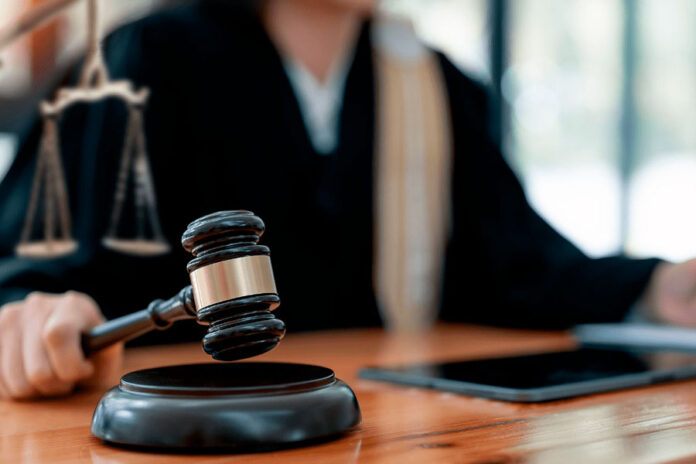
PHILADELPHIA. – United States Attorney Jacqueline C. Romero announced that Joseph Cole Barleta (aka “Joe Cole”), 41, of Philadelphia, Pennsylvania, entered a plea of guilty today before United States District Court Judge Mark A. Kearney on one count of racketeering conspiracy, in connection with his role in the operation of a fraudulent investment vehicle known as Complete Business Solutions Group Inc. d/b/a Par Funding (“Par Funding”), which is alleged to have generated over $100 million in illegal proceeds for Barleta and its other principals, to the detriment of Par Funding’s numerous investors, many who live in the Philadelphia region.
According to a second superseding indictment filed in February, Barleta and codefendants Joseph LaForte, James LaForte, and others, were part of an association-in-fact RICO enterprise that conspired to commit a number of predicate crimes, including crimes related to the fleecing of Par Funding’s many investors. Barleta’s admitted role in the conspiracy related to the securities and wire fraud components of the enterprise.
Joe LaForte and James LaForte pleaded guilty last month to racketeering conspiracy, securities fraud, and related crimes.
Joe LaForte is scheduled to be sentenced on January 13, 2025.
James LaForte and Joseph Cole Barleta are both scheduled to be sentenced on February 20, 2025.
Per the terms of Barleta’s plea agreement, the government is seeking a sentence of imprisonment of up to eight years, although the Court has discretion to impose a higher or lower sentence.
This case was investigated by the FBI, IRS Criminal Investigation, the Federal Deposit Insurance Corporation Office of Inspector General, and Pennsylvania State Police and is being prosecuted by Assistant United States Attorneys Matthew T. Newcomer, Samuel S. Dalke, Eric D. Gill, and Patrick J. Murray, as well as former Assistant United States Attorney Alexandra M. Lastowski. The SEC in Florida investigated and litigated the civil securities fraud charges, which formed the basis of a portion of the criminal prosecution.
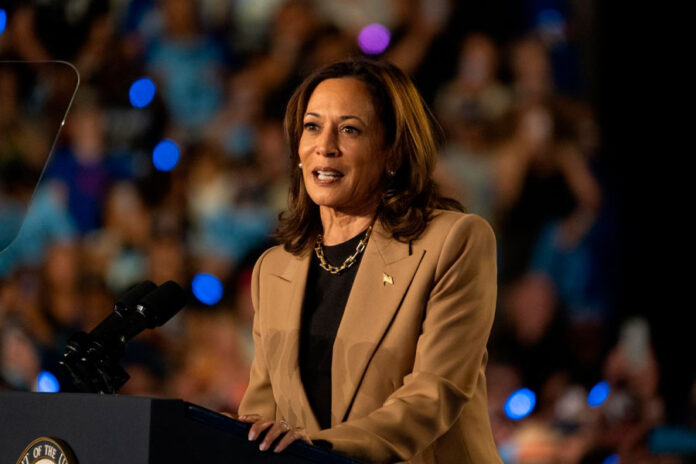
La vicepresidenta Kamala Harris. (Foto: EFE/Archivo)
Vicepresidenta Kamala Harris: “Trabajar duro es la manera de salir adelante. Eso es lo que me llevó de trabajar como fiscal en un tribunal a la Casa Blanca como su vicepresidenta”
“Todas nuestras familias merecen una oportunidad no solo de sobrevivir, sino de salir adelante”.
Tras el “town hall” de Univision de la vicepresidenta Harris la semana pasada, la campaña Harris-Walz lanzó un nuevo anuncio destacando el trabajo de la vicepresidenta para crear una economía de oportunidades para las familias latinas, creando oportunidades de adquirir una casa, negocio o cumplir su sueño americano. Habrá menciones específicas en los anuncios para cada estado clave.
En este anuncio la vicepresidenta Harris destaca a las corporaciones codiciosas que se están aprovechando de las familias trabajadoras que intentan salir adelante; por ello planea reducir los impuestos para la clase media, reducir los costos de los alimentos y enfrentar la especulación de precios, reducir los costos de ser propietario, alquilar una casa y aliviar la deuda médica de millones de estadounidenses. Esto contrasta marcadamente con la peligrosa agenda del Proyecto 2025 de Trump, la cual encarecería la vida de las familias latinas en todo el país.
“Como hija de una madre trabajadora, como muchos en nuestra comunidad, la vicepresidenta Harris conoce bien la importancia del trabajo duro. También sabe que cuando las grandes corporaciones aumentan los precios de las necesidades diarias, como la vivienda y los alimentos, sin importar cuánto trabajen las familias, el sueño americano se vuelve más difícil de alcanzar», dijo Maca Casado, directora de medios de coalición de la campaña Harris-Walz, y agregó, «mecemos una líder que esté dispuesta a defendernos, luchar por nuestras familias y brindar oportunidades reales para todas nuestras comunidades. Y eso es lo que tenemos en la vicepresidenta Kamala Harris”.
The School Safety Pledge Tour is visiting 20 school from Tuesday, October 15 to Friday, October 25
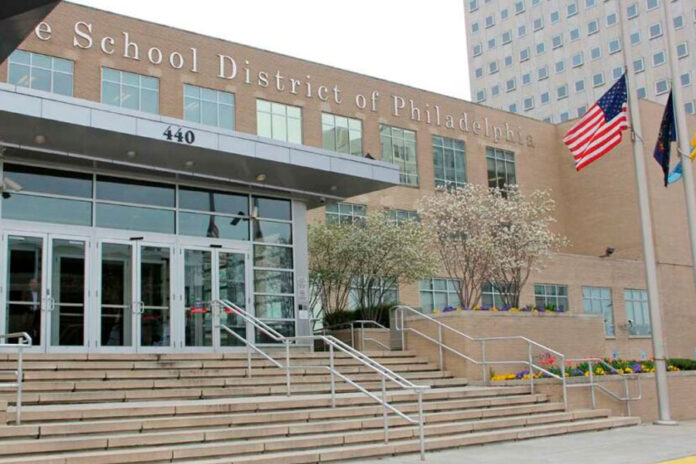
PHILADELPHIA. – This week the Mayor’s Office of Youth Engagement launched a School Safety Pledge Tour in partnership with the School District of Philadelphia, the Mayor’s Office of Education, and the Office of Public Safety. During this School Safety Tour, the Mayor’s Office of Youth Engagement and partnered offices will visit schools in every Council District to engage young people in the Parker Administration’s work in making our city safer and connecting them to resources and programming.
The School Safety Pledge Tour kicked off on Tuesday, October 15 and will run through Friday, October 25. Over 20 Philadelphia schools have signed up to engage their students in the tour. The tour will include influencers, performers, and special guests who will administer the pledge.
According to the U.S. Department of Health and Human Services, firearm violence – including suicides, homicides, and accidental deaths — is the leading cause of death of children and adolescents; and the daily effects of gun violence are felt by residents across the City of Philadelphia, especially younger Philadelphians.
“We must emphasize peaceful conflict resolution. Youthful disputes should not end in life altering shootings or loss of life,” said City Councilmember Curtis Jones (4th District) who introduced a resolution in Philadelphia City Council recognizing Wednesday, October 16, 2024, as National Day of Concern about Young People and Gun Violence in the City of Philadelphia.
The pledge that will be administered for young students says:
“If I see a gun, I won’t touch it. I will remember that any gun I see might be loaded. I know how important it is to keep myself safe.” The pledge for older students says: “I will never bring a gun to school; I will never use a gun to settle a personal problem or dispute; I will use my influence with my friends to keep them from using guns to settle disputes. My individual choices and actions, when multiplied by those of young people throughout the country, will make a difference. Together, by honoring this pledge we can reverse the violence and grow up in safety.”
«It is a tragedy that in this day and age we must declare a Day of National Concern about gun violence for our young people here in Philadelphia. Firearms are now the leading cause of death for children and adolescents nationwide, and it is critical that we as Philadelphians commit ourselves to ending this epidemic,» said Adam Geer, Chief Public Safety Director, Office of Public Safety. «Recognizing today and centering our young people in our gun violence prevention efforts is essential to making it clear that the Office of Public Safety and the Parker Administration will not sit idly by while our communities feel unsafe. The young people of Philadelphia are exceptional, full of talent and potential, and we will never stop putting their safety and well-being first.»
“None of us can end gun violence alone. We need young people, which is why this School Safety Pledge Tour is so important,” said Shania Bennett, Director, Office of Youth Engagement. “Taking this pledge reinforces the idea that — with the collective power of young people’s positive actions — we can end the culture of violence and chaos and, instead, chart a future of peace and productivity.”
“You cannot foster learning and growth in schools when students feel unsafe,» said Dr. Debora Carrera, Chief Education Officer, Mayor’s Office of Education. «Students want and need to be part of the solution and the School Safety Pledge can help make that happen meaningfully and pragmatically—one student at a time.”
Twelve grants across Pennsylvania will improve water quality and improve habitat for fish and wildlife
Projects will also help improve the Chesapeake Bay Watershed
Harrisburg, PA – The Pennsylvania Department of Environmental Protection (DEP) has awarded more than $3.4 million in grants to projects to improve water quality and fish and wildlife habitat throughout Pennsylvania’s part of the Chesapeake Bay watershed and other watersheds.
“Ensuring clean water and healthy watersheds is a fundamental right for all Pennsylvanians. With these grant awards we will continue our work to reduce pollution and improve water quality in Pennsylvania,” said DEP Acting Secretary Jessica Shirley. “These projects are creating healthier streams and wetlands across Pennsylvania, reducing flood risk and improving fish and wildlife habitat. We are building on the success we are seeing in the Chesapeake Bay watershed by restoring streambanks, removing legacy sediment, and treating mine water discharge, among other improvements.”
The 12 awards are funded by the Section 319 Grant program from the U.S. Environmental Protection Agency and selected by DEP. The purpose of the grants is to support projects that carry out best management practices (BMPs) specified in Watershed Implementation Plans for 43 watersheds around the state. The program also supports development of new Watershed Implementation Plans for impaired watersheds in Environmental Justice (EJ) areas. Ten of the 12 grants are for projects in the Chesapeake Bay watershed.
Pennsylvania has made historic progress in the Chesapeake Bay watershed. Earlier this year, the Shapiro Administration announced that for the first time in the history, the Chesapeake Bay showed steady overall improvement, earning a C+ grade from the University of Maryland’s Chesapeake Bay and Watershed Report Card – the highest grade ever awarded to the overall health of the Bay since the report was created. The Upper Bay, which is fed by the Susquehanna River from Pennsylvania scored one of the highest grades among any area of the Bay – and posted a significant improvement from last year – showing how efforts in agency collaborations, strong partnerships, and sustained investments led to progress throughout the Susquehanna River watershed and beyond.
Grants were awarded to projects in the following counties:
Bucks
Middletown and Newtown Townships – Core Creek and Lake Luxembourg, Bucks County Conservation District: $224,830 for an updated Watershed Implementation Plan employing new data for modeling; a lake management plan and conceptual green stormwater infrastructure design for the in-line Silver Lake municipal park; and engineered and conceptual designs for repair of a storm-damaged pocket wetland to lake tributary.
Erie
Waterford Township – Trout Run Advance Restoration Plan, Western PA Conservancy: $169,381 for targeted landowner outreach to implement erosion and sediment controls on farmlands, plant 10 acres of forested riparian buffers, and stabilize 1,000 linear feet of stream
Huntingdon
Carbon Township – Miller Run Abandoned Mine Discharge Limestone Replacement Project, Huntingdon County Conservation District: $80,000 to reduce loading of acidity, iron, manganese, and aluminum into the Shoup’s Run watershed and maintain the functioning capacity of two AMD passive treatment systems by placing new limestone in two 16 year-old systems.
Lancaster
Fulton Township – Supplee Farm Stream Restoration, Lancaster County Conservation District: $390,625 to implement a stream restoration project in the Conowingo Creek. The project will restore 3,500 linear feet of the stream through in-stream aquatic habitat and bank stabilization structures.
Lebanon
West Cornwall Township – Beck Creek 6 Project, Doc Fritchey Trout Unlimited: $761,021 to restore 2,000 linear feet of Beck Creek. The restoration design objectives include creating a stable stream channel that meanders across the center of a restored floodplain. The restoration of the floodplain will create 5.15 acres of high value emergent, scrub-shrub and forested wetlands and 10.2 acres of riparian buffer that provide water quality and habitat functions.
Schuylkill
Tremont Borough – Middle Creek Watershed-Wide Restoration Prototype Projects Design, Schuylkill Conservation District: $273,000 develop prototype stream restoration designs with watershed-wide permit along with the development of one Middle Creek Strategic Watershed Restoration Plan, which will help stream restoration projects to alleviate frequent flooding in the Middle Creek watershed.
Foster Township – Buck Mountain Abandoned Mine Discharge Treatment System Design, Schuylkill Conservation District: $214,000 for design of an AMD treatment system to remove iron and acidity from the Upper Swatara Creek watershed.
Snyder
Perry Township – Investing in Riparian Buffers to Support Clean Water, Chesapeake Bay Foundation: $500,000 to design and implement 100 new forested riparian buffer acres and maintain existing buffers on agricultural lands prioritizing projects in Lancaster, York, Cumberland, Franklin, Adams, Bedford, Centre, Clinton, Lebanon, Lycoming, Mifflin and Juniata counties.
Freeburg Borough – Hoffman Streambank Restoration and Habitat Project, Snyder County Conservation District: $56,968 to construction of stream stabilization/fish habitat structures to remediate significant streambank erosion along 1,340 ft. Susquehecka Creek.
York
North Codorus Township – Unnamed Tributary to South Branch Codorus Creek Restoration, Watershed Alliance of York: $333,300 to restore approximately 2,000 linear feet of stream, relocate 500 feet of stream through natural channel design, create half and acre of floodplain, and plant 1.5 acres of riparian buffer. The restoration project will stabilize severely-eroded stream banks, remove of legacy sediment, establish floodplain benches, use instream aquatic habitat and flow control structures and establish a native tree and shrub forested riparian buffer.
Shrewsbury Township – Centerville Creek Stream Restoration, Watershed Alliance of York: $245,940 to restore approximately 800 linear feet of stream and install 2.7 acres of forest buffer.
Spring Garden Township – Unnamed Tributary to Codorus Creek Stream Restoration, York County Conservation District: $184,579 to design and permit the restoration of approximately 3,135 ft. of stream and approximately 304,099 sq. ft. of riparian buffer planting, remove legacy sediment, and convert the restored floodplain into a riparian buffer that is comprised of wetland vegetation.
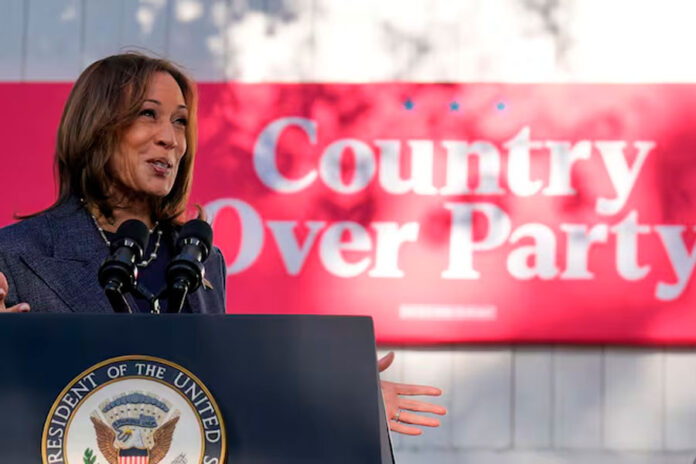
Democratic presidential nominee Vice President Kamala Harris speaks during a campaign event at Washington Crossing Historic Park, Wednesday, Oct. 16, 2024, in Washington Crossing, Pa. (Photo: AP/Jacquelyn Martin)
Surrounded by more than 100 former Republican office holders and officials, Democrat Kamala Harris urged GOP voters on Wednesday to put “country first” and abandon Donald Trump.
The Democratic presidential candidate made her case to Republican voters that the patriotic choice was her party in next month’s election because Trump is “unstable” and “unhinged» and would eviscerate democratic norms if given a second White House term.
“America must heed this warning,» said Harris, speaking at a rally near where Gen. George Washington led hundreds of troops across the Delaware River to a major victory in the Revolutionary War.
Joined by the former lawmakers and government officials for a rally in the Philadelphia suburbs, Harris said, “Anyone who tramples on our democratic values as Donald Trump has, anyone who has called for the ‘termination’ of the Constitution of the United States as Donald Trump has, must never again stand behind the seal of the president of the United States.»
The rally was part of Harris’ effort to appeal to a swath of Republican voters in battleground states that she believes still can be swayed.
With 20 days to go, Harris is hoping to tear away any Republican or on-the-fence voter by warning that Trump is looking to govern with “unchecked power.” She has pledged to nominate a Republican to her Cabinet and create a bipartisan council to advise her on policy matters if elected.
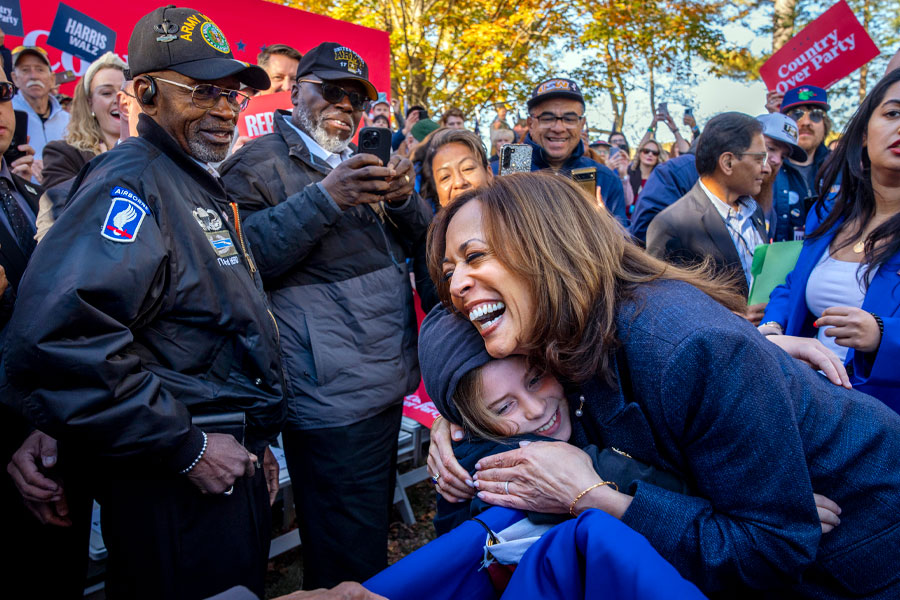
Democratic presidential nominee Vice President Kamala Harris hugs a child after speaking during a campaign event at Washington Crossing Historic Park, in Washington Crossing, Pa., Wednesday, Oct. 16, 2024. (AP Photo/Jacquelyn Martin)
Meanwhile, Trump addressed Latino voters in Miami, Florida. It’s a group that historically has leaned Democratic but that Republicans have made inroads with.
Trump is walking a tightrope as he looks to woo Latino voters.
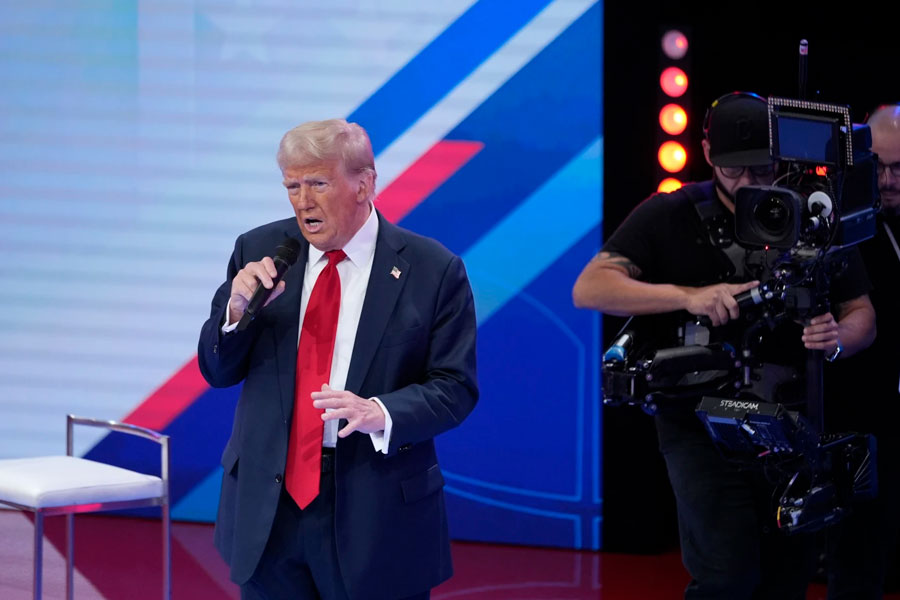
On Wednesday, he defended his call for mass deportation of immigrants who are in the U.S. illegally, even as he nodded to a need for immigrant labor during a town hall-style event on Univision, the nation’s largest Spanish-language network.
“We want workers, and we want them to come in, but they have to come in legally, and they have to love our country,” the Republican presidential candidate said during the event, scheduled to air Wednesday evening. Trump was answering the question of Jorge Velásquez, a farm worker who said most people doing such jobs are undocumented and suggested, if they’re deported, food prices will increase.
Trump then returned to his criticism of Harris for being a critical player in the Biden administration’s that presided over an influx of migrants with criminal backgrounds.
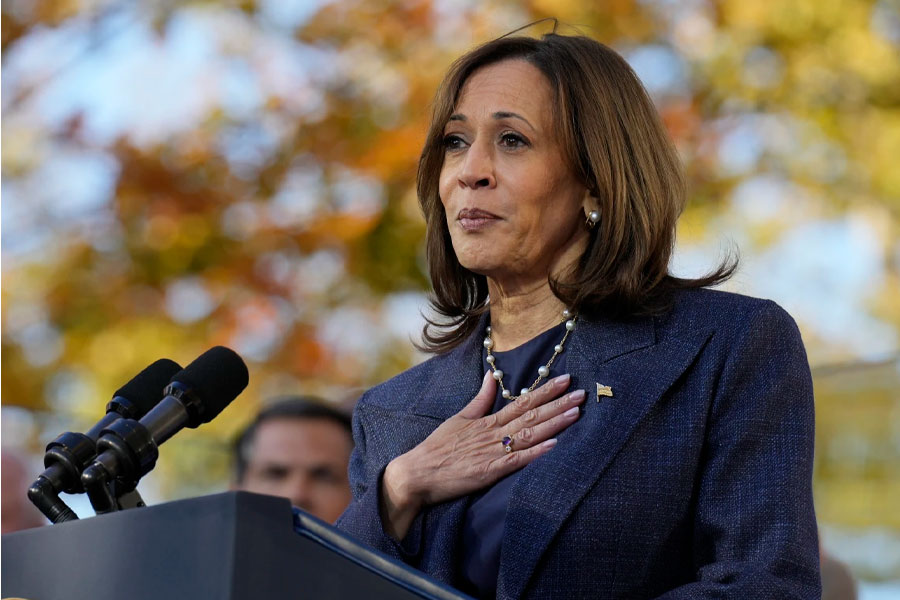
Democratic presidential nominee Vice President Kamala Harris speaks during a campaign event at Washington Crossing Historic Park, Wednesday, Oct. 16, 2024, in Washington Crossing, Pa. (AP Photo/Jacquelyn Martin)
The event featured pointed questions for Trump, about his wife Melania’s support for abortion rights, noted in her new memoir, and about the Jan. 6, 2021, siege of the U.S. Capitol by his supporters who breached the building in an attempt to stop the certification of the 2020 election results.
“Your own vice president doesn’t want to support you now,» said Ramiro Gonzalez, of Tampa, Florida, a Republican who said he was no longer registered with the party but wanted to give Trump the chance to win him back. Gonzalez was referring to former Vice President Mike Pence, who has disavowed Trump in light of Jan. 6.
Trump’s response: “Hundreds of thousands of people come to Washington. They didn’t come because of me. They came because of the election. They thought the election was a rigged election. That’s why they came.»
“That was a day of love from the standpoint of the millions,» Trump told Gonzalez.
Harris was in Bucks County, a vote-rich stretch of suburban Philadelphia where Democrats have held a narrow advantage in recent presidential elections. Her advisers believe she needs to improve her margins in Philadelphia and surrounding suburbs to win the state’s 19 electoral votes.
Harris was joined for her rally by former Reps. Barbara Comstock of Virginia, Jim Greenwood of Pennsylvania, Mickey Edwards of Oklahoma and Adam Kinzinger of Illinois as well as Republican officials from every administration going back to Ronald Reagan.
“No matter your party, no matter who you voted for last time, there is a place for you in this campaign,” Harris said. “The coalition we have built has room for everyone who is ready to turn the page on the chaos and instability of Donald Trump.”
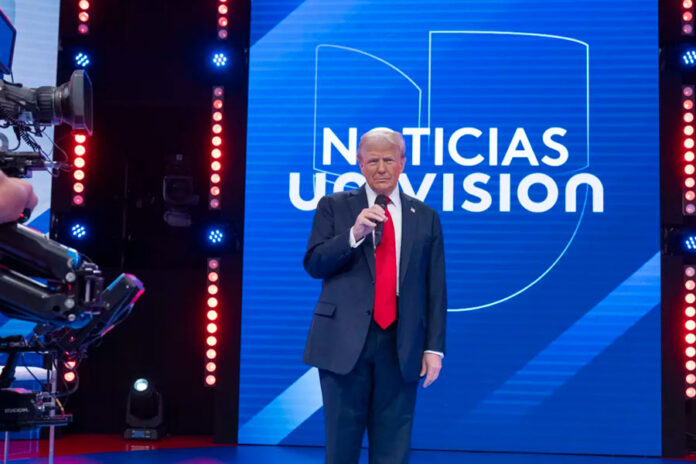
Republican presidential nominee former President Donald Trump speaks during a Univision town hall, Wednesday, Oct. 16, 2024, in Doral, Fla. (Photo: AP/Alex Brandon)
Several of the GOP surrogates said that supporting a Democrat felt awkward but was necessary due to Trump’s rejection of electoral norms and his support of the rioters who tried to stop the certification of his 2020 election loss to President Joe Biden.
“You know, Donald Trump may be running as a Republican, but the truth is, he does not share those long held Republican values of supporting democracy, of standing for the rule of law, and a faithfulness to the Constitution as a Republican,» Kinzinger said. “That saddens me.”
Harris tapped a couple, Pennsylvania farmers Bob and Kristina Lange who had previously backed Trump, to introduce her at the rally. Bob twice voted for Trump and Kristina backed him in 2016.
“Never in a million years did either of us think that we’d be standing here supporting a Democrat,” Kristina Lange said. “But we’ve had enough. We’ve had enough.”
Some of the rallygoers who have voted Republican in the past said they were looking for the party to rewind to its fiscal conservative roots.
“We need more Republicans to stand up and say, ‘This is not what our party is about, this is not what we are about,’” said Sarah Larson, 53, of East Rockhill Township, who last voted for a Republican presidential candidate in 2008 when John McCain was at the top of the ticket. “It’s not what we recognize anymore as Republican values – which is less government, more freedom – right now.»
Democratic presidential nominee Vice President Kamala Harris talks with former Rep. Jim Greenwood, R-Pa., before she speaks during a campaign event at Washington Crossing Historic Park, Wednesday, Oct. 16, 2024, in Washington Crossing, Pa. (Photo: AP/Matt Slocum)
Trump and Harris also campaigned in Pennsylvania Monday, when the Republican was in nearby Oaks while Harris was on the opposite end of the state in Erie County, among Pennsylvania’s most closely divided counties over the past two presidential contests.
Harris’ simplest path toward the 270-vote winning threshold in the Electoral College is by carrying a trio of northern battleground states, Michigan, Pennsylvania and Wisconsin. Harris campaigned in Detroit Tuesday and planned to campaign in three Wisconsin cities Thursday.
El candidato presidencial republicano Donald Trump habla durante una pausa publicitaria durante una asamblea ciudadana de Univision, el miércoles 16 de octubre de 2024, en Doral, Florida (Foto: AP/Alex Brandon)
A Donald Trump se le pidió el miércoles que nombrara tres virtudes de su oponente demócrata Kamala Harris, una semana después de que a Harris se le pidiera que hiciera lo mismo con el candidato republicano.
Su respuesta fue muy parecida a la de ella.
“Es una pregunta muy difícil”, dijo Trump al final de una asamblea abierta organizada por Univision, la mayor cadena en español de Estados Unidos. “Esa es la pregunta más difícil. Las otras son fáciles”.
Trump comenzó diciendo que Harris había “dañado horriblemente a nuestro país” antes de elogiar su “capacidad de sobrevivir”.
Luego vino el dardo envenenado.
“Porque estaba fuera de la contienda”, dijo Trump, refiriéndose a la salida anticipada de Harris de la campaña demócrata por la candidatura presidencial en 2020 y al hecho de que este año sustituyera al presidente Joe Biden como candidata para las elecciones de 2024. “Y de repente es la candidata presidencial”.
También señaló que “parece tener algunas amistades de larga data” y que “parece tener una forma de ser agradable”.
“Me gustan algunas de sus declaraciones, algunos aspectos de su comportamiento”, dijo. “Pero en otro sentido, creo que es muy mala para nuestro país”.
Pedirles a los candidatos de los principales partidos que digan algo positivo de su opositor es una tradición en las elecciones presidenciales, la cual a veces propicia momentos y ocurrencias memorables. Pero Trump y Harris no se conocen personalmente, ya que sólo se conocieron públicamente en su debate de septiembre. Y en una contienda tensa en las que ambos candidatos han calificado a su oponente de amenaza para la democracia, los simpatizantes de ambos candidatos no esperarían que elogiaran a su opositor.
La semana pasada, Harris dijo que el enfoque político de Trump le “dolía», y señaló que el candidato republicano tiene un enfoque de “nosotros contra ellos”. “No creo que eso sea saludable para nuestra nación y no lo admiro”, dijo la vicepresidenta.
Para concluir, dijo: “Creo que Donald Trump ama a su familia y creo que eso es muy importante”, y agregó: “Pero verdaderamente no lo conozco. Sólo me reuní con él una vez… así que no puedo decir mucho más”.
La pregunta tanto para Trump como para Harris fue planteada por la misma persona, Teresa Djedjro, de 48 años, quien asistió a ambos eventos.
Hace ocho años, cuando un votante pidió a Trump y a su rival demócrata, Hillary Clinton, que dijeran algo que cada uno respetara de su oponente, Clinton se ofreció a responder primero, diciendo que respetaba a los hijos de Trump, a los que calificó de “increíblemente capaces y devotos”.
Trump dijo que era un “elogio muy bonito”, y luego afirmó: “Diré esto sobre Hillary: no se rinde, no se da por vencida. Respeto eso”.
Ambos candidatos, sin embargo, dijeron estar en desacuerdo con el otro en casi todo.
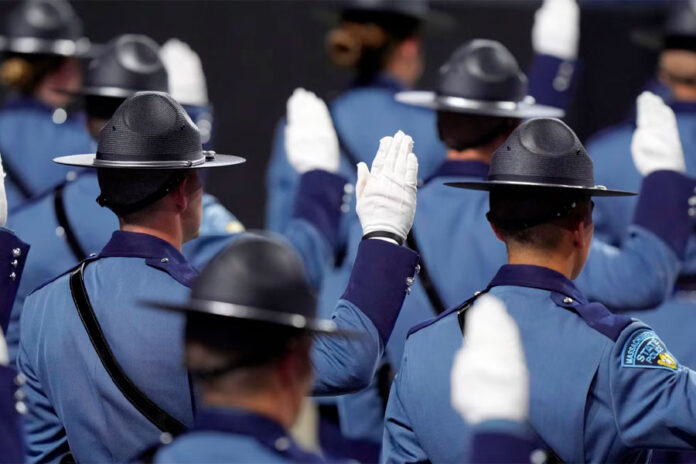
Los miembros del 90.º Grupo de Entrenamiento de Reclutas de la Policía Estatal de Massachusetts juran como agentes del orenden, durante las ceremonias del miércoles 9 de octubre de 2024 en el DCU Center, en Worcester, Massachusetts. (Foto: VOA)
Una nueva guía es la herramienta que blande hoy el Servicio Secreto de Estados Unidos, al tiempo que pide mayor cooperación de agencias a nivel local y estatal para evitar actos violentos en todo el país.
Y está tratando de mostrar a las agencias policiales de todo el país cómo hacerlo exactamente.
El Centro Nacional de Evaluación de Amenazas (NTAC, por sus siglas en inglés) del Servicio Secreto de Estados Unidos publicó el miércoles una nueva guía, en la que se alienta a las agencias policiales a crear unidades específicas para abordar el comportamiento amenazante en casos en los que existan preocupaciones significativas, incluso aunque todavía no se haya infringido ninguna ley.
La guía pide específicamente que las agencias policiales establezcan lo que el NTAC llama unidades de evaluación de amenazas conductuales, que puedan evaluar los peligros potenciales y luego proporcionar recursos para asegurarse de que las personas obtengan ayuda antes de recurrir a la violencia.
«Lo que nuestra investigación ha encontrado continuamente es que en muchos casos de violencia masiva u otras formas de violencia dirigida, el comportamiento del atacante fue presenciado por transeúntes de la comunidad, algunos de los cuales intentaron informar sus inquietudes a los funcionarios de seguridad pública», dijo Lina Alathari, directora del NTAC, informando a los reporteros antes de la publicación de la guía.
«Desafortunadamente, muchas comunidades carecen de los sistemas estructurados para recibir, evaluar y responder a estos informes de una manera que reduzca la probabilidad de un resultado violento o trágico», indicó.
Pero, la petición del NTAC para que las agencias policiales encuentren formas de ser más proactivas no es nueva.
Un informe de enero de 2023 que analizó 173 ataques masivos llevados a cabo durante un período de cinco años instó a las comunidades a facilitar que los testigos informen sus inquietudes y permitir una intervención más temprana de los asesores de crisis y los servicios sociales.
Ahora esta última guía llega en un momento en que los funcionarios de seguridad nacional se preparan para posibles actos de violencia.
La evaluación anual de amenazas para 2025 del Departamento de Seguridad Nacional, publicada el mes pasado, advirtió: «El entorno de amenaza terrorista en Estados Unidos durante el próximo año seguirá siendo alto».
«La amenaza seguirá estando caracterizada principalmente por delincuentes solitarios o pequeñas células motivadas por la violencia por una combinación de agravios raciales, religiosos, de género o antigubernamentales; teorías de conspiración; y factores personalizados», agregó.
El Servicio Secreto ha respondido a dos intentos no relacionados de asesinar al expresidente y candidato presidencial republicano Donald Trump, y ha sido criticado por no haber impedido que uno de los posibles asesinos disparara ocho tiros y hiriera a Trump antes de que lo detuvieran.
Los investigadores de ese caso han dicho que el hombre armado de 20 años, ahora muerto, había pasado meses investigando asesinatos y vio al expresidente como un «objetivo de oportunidad».
La nueva guía tiene como objetivo mostrar a las agencias policiales cómo detectar señales de advertencia más rápidamente y encontrar formas de intervenir.
«Hemos visto históricamente que las fuerzas del orden en Estados Unidos a veces pueden sentirse limitadas en lo que pueden hacer cuando responden a informes de amenazas u otro comportamiento preocupante, particularmente cuando ese comportamiento no involucra actividad delictiva», dijo el subdirector del NTAC, Steven Driscoll.
«Esta publicación representa la guía más completa jamás producida sobre cómo adaptar y poner en funcionamiento el modelo de Evaluación de Amenazas Conductuales de los Servicios Secretos para su uso por parte de las agencias policiales estatales y locales», explicó.
Algunas agencias policiales estatales ya han adoptado el modelo del Servicio Secreto.
La Oficina Estatal de Investigaciones de Carolina del Norte estableció una unidad de evaluación de amenazas de análisis de comportamiento luego de un tiroteo en 2018 que mató a 17 personas en Parkland, Florida.
La unidad trabaja con otras agencias estatales y el sistema universitario del estado para prevenir posibles ataques.
El estado de Hawái también ha creado un equipo para intervenir en casos de posible violencia. Y hay un programa similar en Washington, la capital de Estados Unidos.
«La metodología de evaluación de amenazas conductuales ha demostrado ser eficaz para proteger a la comunidad una y otra vez», dijo Driscoll. «La prevención se lleva a cabo con éxito todos los días y, afortunadamente, estas son historias de las que nunca oímos hablar, cuando todo el mundo vuelve a casa sano y salvo».
Como ejemplo, Driscoll señaló un estudio de 2021 del NTAC que analizó 67 incidentes en los que se evitaron ataques a escuelas gracias a que los estudiantes y los miembros de la comunidad informaron de señales de advertencia para que las autoridades pudieran intervenir antes de que alguien resultara herido.
A pesar de estos éxitos, el NTAC dijo que no tiene datos sobre cuántas comunidades tienen unidades de evaluación de amenazas conductuales. Y a los funcionarios les preocupa que demasiadas agencias policiales estatales y locales carezcan de acceso a programas que les permitan intervenir cuando se ha identificado una amenaza, pero no se ha infringido ninguna ley.
Sin embargo, hay algunos fondos federales disponibles.
El Departamento de Seguridad Nacional (DHS) de Estados Unidos dijo que ha otorgado casi 90 millones de dólares a través de su Programa de Subvenciones para la Prevención de la Violencia y el Terrorismo, desde 2020.
Y Alathari, del NTAC, dijo que las unidades especializadas pueden ser efectivas, incluso cuando las personas y los recursos son escasos.
«Las unidades de evaluación del comportamiento pueden variar en tamaño», dijo en respuesta a una pregunta de la Voz de América. «Una agencia con recursos limitados para establecer este tipo de unidad podría comenzar con un solo oficial de prevención de la violencia designado que mantenga la responsabilidad de recopilar información para gestionar situaciones que podrían girar en torno a la violencia potencial».
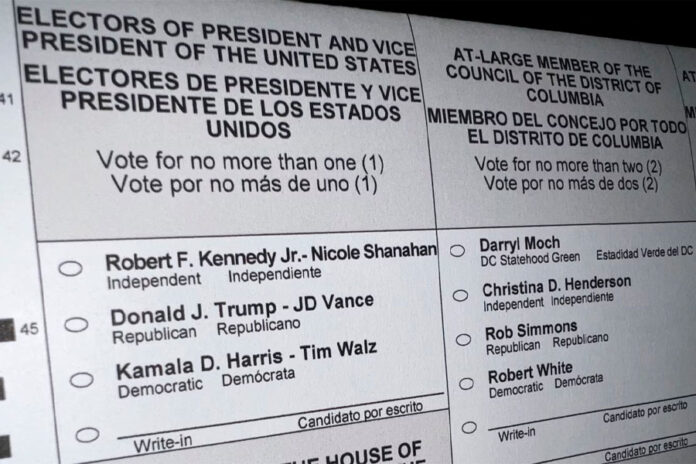
Boleta para voto adelantado enviada en el Distrito de Columbia de cara a las elecciones generales del 5 de noviembre en Estados Unidos. (Foto: VOA)
Un grupo de estados “indecisos” serán los que definan quién ganará la presidencia de EE. UU. en noviembre. En la recta final de la contienda electoral, la demócrata Kamala Harris y el republicano Donald Trump dedican todos sus esfuerzos a apelar a los residentes de estos siete territorios.
En Estados Unidos, unas 244 millones de personas están habilitadas para votar en las elecciones generales del 5 de noviembre. Sin embargo, posiblemente dependerá de una fracción de ellas definir quién ocupará la presidencia del país entre los principales contendientes: la demócrata Kamala Harris y el republicano Donald Trump.
Esto sucede porque el sistema electoral estadounidense establece que la persona que gana la contienda no es necesariamente la que alcanza la mayor cantidad de votos de los ciudadanos. En su lugar, se declara ganador quien alcanza 270 votos del colegio electoral.
El colegio electoral es un sistema de elección indirecta creado en 1787 y que asigna votos a los 50 estados y al Distrito de Columbia en gran medida en función de su población.
Algunos estados son históricamente demócratas o republicanos, otros, como los indecisos o “estados bisagra” no evidencian un apoyo definido hacia un partido y por lo tanto, serán clave para decidir el ganador de las elecciones este próximo noviembre. Este ciclo electoral esa responsabilidad recae en siete territorios.
Pensilvania
Entre el grupo de estados indecisos, Pensilvania resalta con la mayor cantidad de votos electorales: 19 en total. Esto lo convirtió en el foco principal de las campañas a menos de un mes de las elecciones.
Trump ganó este estado en 2016, sin embargo, en 2020, se volcó hacia Joe Biden y le aseguró la presidencia. Los votantes allí dicen sentirse motivados por la economía y la alta inflación.
Aproximadamente 7 millones de boletas están en juego en el estado más disputado de la elección, donde la votación por correo ya está en marcha.
Georgia
En Georgia están en juego 16 votos del colegio electoral. Mientras el Partido Republicano intenta movilizar bloques de electores en áreas metropolitanas como Atlanta, los demócratas intentan ganar el apoyo de los afroamericanos, mayoría en el estado, con un tercio de su población y una de las mayores proporciones del país.
La votación anticipada ya abrió en este estado y los electores han acudido a las urnas en cifras récord. Al menos 252.000 votantes emitieron su voto en los centros de votación anticipada el primer día de apertura, casi el doble de los 136.000 que participaron en las elecciones de 2020.
En Carolina del Norte también están en juego 16 votos electorales. Este estado ha apoyado a los republicanos por la mayor parte del último medio siglo, a excepción de 2008, cuando ganó Barack Obama.
En 2020, Trump obtuvo la victoria en el estado pero lo hizo por poco más de 70.000 votos. En Carolina del Norte residen unas 10,8 millones de personas.
Este estado se está recuperando de los daños causados por el huracán Helene a finales de septiembre, lo que podría causar retos en la votación adelantada o por correo.
Michigan
Michigan, con 15 votos electorales, fue por mucho tiempo un territorio confiable para los demócratas. Sin embargo, en 2016 Trump ganó el estado debido a su popularidad entre los votantes blancos de clase trabajadora.
Este año, sin embargo, la diversidad de su población podría ser beneficiosa para Harris. Aunque encuestas recientes indican que la economía es lo más importante para los votantes de Michigan, un tema que suele favorecer a Trump.
En Michigan además vive la mayor proporción de árabes estadounidenses del país quienes han criticado a la actual administración por su manejo del conflicto en Gaza.
Arizona
El estado fronterizo de Arizona acumula 11 votos electorales. Su cambiante demografía y protagonismo en el tema migratorio, lo hacen un estado indeciso.
Durante décadas, Arizona apoyó fielmente a los candidatos republicanos, incluido Trump. Sin embargo, en 2020 Biden revirtió esa tendencia por un estrecho margen.
La inmigración irregular es una de las principales preocupaciones de los votantes. Trump, por su parte, ha prometido una deportación masiva a la vez que aumenta su retórica en contra de los inmigrantes.
Harris ha criticado a Trump por su papel en evitar la aprobación de un proyecto de ley bipartidista de seguridad fronteriza en el Congreso, acusándolo de sabotearlo para obtener beneficios políticos.
Wisconsin
En Wisconsin se deciden 10 votos electorales, y durante el último siglo, quienes han ganado el estado, lo han hecho por menos del 1 % de los votos.
Es decir, 20.000 votos pueden inclinar la balanza en un estado de casi 6 millones de personas.
La vicepresidenta Harris espera que Wisconsin la ayude a afianzar el “muro azul” de los demócratas, mientras que el expresidente Trump pretende derribarlo como lo hizo en 2016.
Nevada
Aunque apenas se juegan 6 votos electorales, la diversidad de la población de Nevada podría ser clave. Allí, alrededor del 40 % de los votantes son latinos, negros o asiático-americanos.
Aunque son grupos que podrían inclinarse hacia Harris, sus preocupaciones por la economía podrían beneficiar a Trump.
En la recta final de la campaña, tanto Trump como Haris han intentado apelar a los votantes hispanos en Estados Unidos. En la última semana, Harris viajó a Nevada para participar de una asamblea electoral con Univision en Las Vegas y una reunión con el sindicato de trabajadores culinarios Local 226.
Trump, por su parte, participó de un evento de campaña con latinos en Las Vegas, donde repitió sus críticas a las políticas fronterizas actuales.
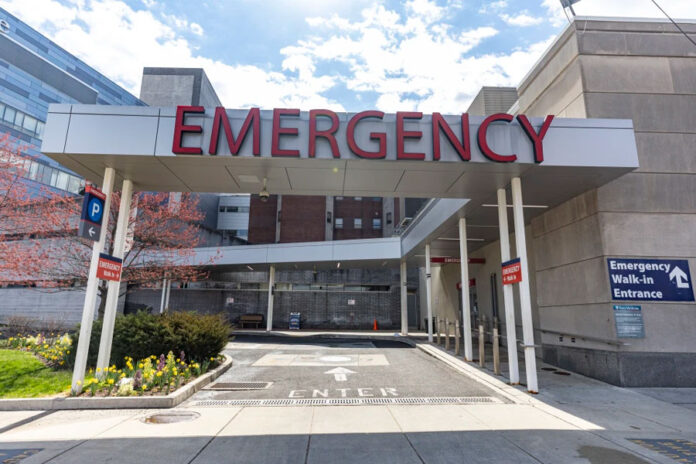
The outside of the Penn Presbyterian Medical Center in Philadelphia, Pa., is shown, on Wednesday, March 20, 2024. (Photo: APTyger Williams/The Philadelphia Inquirer )
PHILADELPHIA.— A man accused of driving into three nurses and injuring them as they tried to treat a gunshot victim outside a Philadelphia hospital last weekend has turned himself in, city police announced Wednesday.
Authorities had identified Jaadir Goodwyn, 20, of Philadelphia, as a suspect on Tuesday. He’s facing several charges, including aggravated assault by vehicle and reckless endangerment.
Police said Goodwyn was driving a silver Jeep Cherokee and dropped off the shooting victim in the ambulance bay at Penn Presbyterian Hospital about 4:30 a.m. Saturday. He and two other men went inside to get help, and the three nurses and hospital security staff ran outside to help the wounded man.
When Goodwyn and his passengers spotted a police car arriving, they got back in the Jeep and sped off, striking the three nurses and the gunshot victim, police said.
One nurse, a 36-year-old man who had facial injuries and internal bleeding, remained hospitalized Wednesday in critical condition. The two other nurses — a 51-year-old man with head and back injuries and a 37-year-old man who injured his legs — are both hospitalized in stable condition.
The 28-year-old gunshot victim also remained hospitalized in critical condition.
The vehicle involved in the hit-and-run was later found in nearby Upper Darby. Evidence found inside the vehicle, along with surveillance video and witness statements led investigators to Goodwyn, police said. It wasn’t known Wednesday if Goodwyn had an attorney who could speak for him.
Authorities have not said if they are also looking for the two men who were with Goodwyn or if they could face charges.
PHILADELPHIA. – United States Attorney Jacqueline C. Romero announced that Carlton Rembert, 70, of Hampton, Virginia, was sentenced on October 11, 2024, by United States District Judge Joel H. Slomsky to 66 months’ imprisonment, five years of supervised release, $534,335 in restitution to the victims, and a $400 special assessment for his role in a scheme to defraud elderly incapacitated people of over $1 million.
Rembert’s late co-conspirator and sister, Gloria Byars, was a court-appointed guardian for over 100 incapacitated wards in Pennsylvania. Between 2012 and 2018, Byars, Rembert, and other co-conspirators stole the life savings from dozens of wards while Byars served as their court-appointed guardian. Byars pleaded guilty to conspiracy, wire fraud, money laundering, and tax fraud for her role in the fraud scheme. Rembert proceeded to trial in November 2023 and after a four-day trial, a jury found Rembert guilty of conspiracy, bank fraud, and wire fraud.
As guardian, Byars had unfettered access to wards’ property including bank accounts, pensions, real estate, retirement accounts, and other assets. Byars stole money from the wards’ bank accounts by writing unauthorized checks to companies she controlled, or to shell companies controlled by her co-conspirators, Rembert and Alesha Mitchell. Rembert and Mitchell assisted Byars in the theft by opening bank accounts in their home state of Virginia in the names of shell companies purporting to be medical services companies. Byars made the checks payable to her co-conspirators’ fake medical services companies, to make it appear that the elderly incapacitated ward incurred a legitimate medical expense.
After receiving dozens of checks from his sister, Rembert deposited over $695,000 in stolen ward checks into five separate shell business bank accounts he had opened. Rembert then withdrew over $388,000 in cash through 94 structured withdrawals. Rembert also obtained $217,082 in certified checks, sending the certified checks to Byars and keeping a share of the stolen ward money for himself. When confronted by law enforcement, Rembert lied to investigators, pretending that he provided services to the elderly and sick victims. Some of the victims’ families testified at Rembert’s trial, telling the court that they had never heard of Rembert’s sham medical companies, and that neither Rembert nor his companies provided any services for their loved ones.
Rembert and Byars spent the stolen ward money on personal expenses, including vacations, clothing and other retail purchases, restaurants, vehicles, gifts, and parties. In all, Byers, Rembert, and Mitchell stole well over $1 million from at least 120 incapacitated people in the Eastern District of Pennsylvania.
Alesha Mitchell is scheduled to be sentenced on October 24, 2024.
“Rembert and his co-conspirators had no qualms about ripping off these incapacitated victims and living it up on their stolen money,” said U.S. Attorney Romero. “The greed and callousness here are off the charts. It’s vile that criminals target the elderly and infirm specifically to take advantage of their vulnerability. My office and our partners will continue to do all we can to hold these crooks responsible and protect our elders from such greed, fraud, and abuse.”
“Elder fraud leaves a damaging impact on victims and our communities, and our office remains steadfast in pursuit of those who exploit this vulnerable population,” said Wayne A. Jacobs, Special Agent in Charge of FBI Philadelphia. “We encourage those who believe that they or a loved one are a victim of elder fraud to report it. Reporting elder fraud is not only a step towards justice, but it helps protect others from victimization.”
“Carlton Rembert, together with his co-conspirator Gloria Byars, abused the trust of the most vulnerable among us – individuals who have been incapacitated by age, illness, or both. What they did was truly heinous – and truly criminal. I applaud United States Attorney Romero for prosecuting these individuals, in one of the first guardianship fraud cases to be prosecuted. Unfortunately, this type of fraud is increasing, and it is important for law enforcement to send a clear signal that it will not be tolerated,” said Delaware County District Attorney Jack Stollsteimer.
“As a law enforcement community, it is our duty to hold individuals accountable who abuse their position of trust and steal from the people that are under their care,” said Amy MacNeely, Acting Special Agent in Charge of IRS Criminal Investigation. “We, along with our law enforcement partners and the Department of Justice, will continue to hold accountable those who exploit the most vulnerable among us.”
The case was investigated by the FBI, the Delaware County District Attorney’s Office Criminal Investigation Division, and IRS Criminal Investigation and is being prosecuted by Assistant United States Attorneys Tiwana Wright and Samuel Dalke.