Inicio Blog Página 656

Shapiro administration invests over $460,000 to strengthen child nutrition, hands-on ag education

education

Grants in 26 counties will create opportunities for healthier children and families across Pennsylvania.

Harrisburg, PA – Agriculture Secretary Russell Redding today announced PA Farm Bill Farm-to-School Grants of $462,607 to 45 schools, school districts, and childhood education centers in 26 counties. Grants of up to $15,000 will fund projects aimed at improving access to healthy, local food and increasing hands-on learning for children in pre-kindergarten through eighth grade.

“Farm-to-School grants are an investment not just in feeding hungry minds, but feeding our future, Secretary Redding said. “Introducing children to fresh, local food can change their diets and open their eyes to career possibilities when they learn how food is produced and who produces it. The Shapiro Administration is making critical investments to feed the future of our communities and expand opportunities for children to succeed and Pennsylvania farms to prosper.”

Funded projects connect local farmers to schools to supply fresh, in-season products to be served in cafeterias, expanding market opportunities for farmers. Other projects support school gardens, field trips, and other hands-on agriculture education, enriching early career awareness.

Grant recipients, amounts, and funded projects are listed below by county.

Allegheny

The Environmental Charter School – $15,000

The Edible Schoolyard program creates hands-on experiences that connect students to food, nature, and each other, addressing the crises of climate change, public health, and social inequality.

Highlands School District – $11,002

Digging Deeper project aims to increase awareness of healthy, nutritious food choices, and environmental sustainability, through exposure to local farms and crops. Through classroom instruction, they will plant, care for, and harvest their own crop and see it integrated in a recipe.

School District of Pittsburgh – $14,975

Pittsburgh schools are partnering with Grow Pittsburgh’s network of gardens to provide agriculture lessons to nine schools facing challenges reactivating their garden programs post-pandemic.

Beaver

Beaver County School District – $1,165

Cheeseman Farm field trip – district first-graders will learn about farming, agriculture, planting, growing, and harvesting. The trip will include a hayride on which students get to pick a pumpkin, a hay maze, an informational movie about planting, growing, and harvesting crops, and a story-telling session.

Bedford

Northern Bedford County Elementary – $15,000

Partnership with the PA Beef Council’s PA Beef to PA Schools program, purchasing local beef to serve to their students.

Berks

Kutztown Area School District – $2,392

From Cow to Cone will expose 8th-graders to dairy production. Students will tour a local dairy farm with an on-farm processing plant and store, then use fresh milk and cream from the farm in recipes.

Morrisville Borough School District – $14,700

Community School, Farm and Family Initiative will include monthly lessons on nutrition; plant-based healthy eating basic food prep; healthy snacks choices, agriculture and what farmers do; organic farms; home gardening and more; plus local food purchases, take-home recipes, and field trips.

Tulpehoken Area School District – $15,000

Project aims to increase the amount of local food purchases by the Tulpehocken Food Service Department and served to K-8 students.

Bucks

Lifespan Day Care – $14,975

LifeSpan’s Learning Garden: Project goal is a community children’s garden and program with senior “grand friends” living in an assisted living facility next door.

Centre

State College Area School District – $3,000

Grant will fund a year-long school garden club in an elementary school in the district. Students will travel to the Penn State Student Farm, maintain the school garden, and run a farmers market.

Chester

Great Valley School District – $15,000

The district plans to purchase local, seasonal produce, yogurt, beef, and other products. In partnership with The Common Market, local products from Pequea Valley Farm, Frecon Farms, Happy Valley Meat, and other farms will be served in cafeterias along with information on where food was sourced.

Clarion

North Clarion Elementary – $14,958

Hydroponic School Lunch Project aims to establish a student-led hydroponic farm producing fresh fruit and vegetables to be served in elementary lunches. All 325 pre-K through 6th-graders will plant, maintain, and harvest the garden as part of their weekly STEM curriculum throughout the school year.

Redbank Valley School District – $550

District will purchase local fruit and vegetables at Smicksburg Produce Auction twice monthly in September, October and May. 

Columbia

Bloomsburg Area School District – $15,000

Partnership with PA Beef Council in procuring local beef with the goal of serving more beef to the students, with local farmers for PA the Harvest of the Month Program and with local farms for elementary field trips.

Cumberland

St. Patrick’s School (Carlisle) – $11,500

A new partnership with the LEAF Project (Leadership, Education, and Farming) to bring back a Kindergarten Tasting Program and introduce a 6th-grade. Project aims to promote healthy eating habits among students and foster an understanding of the science behind food and farming.

Dauphin

Bright Futures Learning Centers – $15,000

Urban gardening initiative to increase food literacy in young children and families who experience poverty. In addition to installation of raised garden beds, project will fund outdoor learning spaces and will engage with local farmers markets and stands.

Jewish Federation of Greater Harrisburg – $15,000

The Brenner Family Early Learning Center’s well-established school garden has been used to teach children, teachers, and parents about food, nutrition, the earth, and Jewish values for many years. The grant will help rebuild the garden after relocation to the Alexander Grass Campus for Jewish Life.

Upper Dauphin Area Middle School – $11,208

Project will establish a large greenhouse associated with the Middle School Agriculture Classroom.

Erie

Erie Public Schools – $9,700

Harvest of the Month Engagement program provides nutrition education for staff, so they can be school-wide proponents of the program, creates opportunities for families to sample local foods through out-of-school events and learn about local places to purchase healthy food.

Huntingdon

Southern Huntingdon County School District – $10,642

Shade Gap Elementary Farm Fresh Futures program connects students to agriculture with a focus on sustainability. Through nutrition education, and hands-on activities like edible landscaping and composting, students learn about agriculture from production to consumption.

Lackawanna

Dunmore School District – $4,000

Expansion of the Dunmore Elementary Center School Garden Club’s garden. Project aims to instill a love of gardening at an early age, and promote a healthy lifestyle, encouraging students to try new, freshly grown foods. 

Lawrence

Laurel School District – $7,500

Funds will be used to purchase a freezer to store local fresh beef from the PA Beef for PA Schools program.

Lawrence County Social Services – $15,000

Healthy Start Ag and Nutrition Center will use funds to support the upkeep of the center’s grow zones and defray costs of early learning field trips to visit the center, where they will explore the garden, greenhouse, and hydroponic lab, and participate in PA Harvest of the Month activities. Funds will also support Ag and Nutrition activities at family engagement events.

Lehigh

Allentown School District – $9,993

Fancy Farm-Fresh Apples – Students in grades 6-8 will be exposed to a new local apple variety every month throughout the year. Apples will be sourced from Frecon Farms in Boyertown, and the farmer will discuss nutrition at the Afterschool Cooking Club.

Learning Minds Education Center (Allentown) – $12,900

Project includes lesson plans incorporating agriculture, field trip to a local farm, books for classrooms, a nutrition informative meeting for families, and purchase of equipment to prepare and cook local food for students.

Traci’s Learning Center – $14,846

Project will focus enhancing garden features in an outdoor learning space. It will also include field trips to local farms to learn about raising animals and growing produce

Luzerne

Cheder Menachem School (Wilkes-Barre) – $15,000

The Integrating Farming and Jewish Cultural Food at School initiative will engage staff and students through farming education and Jewish foods, festivals, and culture, and share the passion and experience with the local Jewish community.

Mercer

West Middlesex Area School District – $15,000

Stronger Communities, Deeper Roots – Project aims to transform elementary STEM education by installing aquaponic systems in science classrooms. This program engages students with hands-on learning to foster a love of local food while cultivating the next generation of scientists.

Montgomery 

Colonial School District – $9,997

Project will expand beyond local produce to include local protein items such as local beef, chicken, and yogurt in school cafeteria menus. Project aims to minimize the district’s carbon footprint, reduce transportation emissions, and support regional agriculture.

Montour

Danville Child Development Center – $5,408

Partnership with PA Beef Council and Davis Grown Farms to receive 75 pounds of fresh ground beef per month through the PA Beef to PA Schools Program. Additionally, field trips to Rohrbach’s Farm Market will foster a deeper connection to agriculture and understanding of food production.

Perry

Newport School District – $3,942

Fourth Grade Seed Cycle Project will continue a collaboration with the LEAF Project teaching ag-science concepts, and exposing students to local farms, and farming as a viable career. 

West Perry School District – $11,761

Agri-Science Adventures will continue a 4th-grade collaboration with the LEAF Project and introduce a 7th-grade component, teaching ag-science concepts and exposing students to local farms and farming as a viable career.

Philadelphia

Early Literacy Academy – Fairmount – $10,000

Early Literacy Academy – Oxford – $10,000

Harvest Tasting Program in both locations will teach benefits of healthy eating through farm-fresh produce and balanced diet lessons and integrating local fruit and vegetables into the school menu by including the Harvest of the Month featured product from the Common Market.

Methodist Services – $15,000

Re-energized Farm to School programming for preschool, Head Start, and kindergarten children and their families in nutrition, farming, fresh foods, and maintaining 16 Children’s Garden container beds.

New Foundations Charter School – $9,300

Service-learning courses using the school’s garden to educate and empower students, families and school community. The revitalized garden will equip our community with skills in sustainability and nutrition that are otherwise nearly inaccessible in this area.

Parent Infant Center – $5,646

Grant will fund Pennsylvania-grown, fresh seasonal produce and dairy products as preschool snacks, hands-on opportunities to experience urban agriculture in a new greenhouse, and a weekly gardening club during the summer.

William H. Loesche School – $2,833

Second Grade Class to Kitchen  – Through firsthand experience of growing vegetables and herbs in the classroom, maintaining the crops, harvesting, and preparing them in a dish, students will connect with their food, and gain a deeper understanding of plant biology, and nutrition, while developing cooking skills.

Schuylkill

Pottsville Area School District — $15,000

DHH Lengel Middle School is partnering with Pottsville teacher, after-school garden educator and farmer Leah Zerbe and other farms to teach students to create and maintain urban vegetable and native pollinator gardens, while making healthy food choices.

Tioga

Southern Tioga School District – $1,816

F2S Hydroponics, It’s Elementary – Aims to engage 23 fourth-grade students in Liberty Elementary School in an immersive, hands-on learning experience growing herbs and vegetables using hydroponic systems.

Washington

California Academy of Learning – $13,631

The Sunflower Symphony: A Buzzing Collaboration with Bees” – Project will teach K-5 students about sunflowers and apiary agriculture in PA.

California Area School District – $8,590

Buzzing Minds Learn from Farm to School – Partnership with Bedillion Honey Farm, the program immerses elementary students in the world of honeybees, teaching them about their essential role. Middle school students will explore honeybee genetics, gaining advanced knowledge of these vital pollinators.

Fort Cherry School District – $2,679

Fort Cherry Elementary Community Garden aims to foster hands-on learning, community engagement, and environmental stewardship. Key activities include student planting and harvesting, integration of science curriculum, and collaboration with high school students.

Washington School District – $3,200

Prexie Farm Friends Project includes a field trip to a local dairy farm for 139 first-graders. Students will learn about farm work, animals, lifestyle and products. Project will include purchasing local produce to serve in the cafeteria and promote in taste-testing events.

Westmoreland

Queen of Angels Catholic School (North Huntingdon Township) – $13,700

Farm Fresh Future Program aims to integrate local food systems into educational environments, providing students with comprehensive learning experiences around agriculture and nutrition. Goals include serving local foods in the cafeteria, field trips to local farms, expanded variety of food on campus, and combatting food insecurity.

Find a map of previous Farm-to-School and other PA Farm Bill grant recipients in your area as well as details of initiatives to grow and sustain Pennsylvania agriculture at agriculture.pa.gov/pafarmbill.

Governor Josh Shapiro’s bipartisan 2024-25 budget invests in Pennsylvania’s national legacy as a leader in agriculture. The Governor’s new Economic Development Strategy recognizes agriculture as key to Pennsylvania’s future economic success.

Shapiro administration invests $200,000 to train more than 2,000 students in robotics, Boosting PA’s manufacturing industry

Shapiro

The grant to Millersville University’s Robotic WorX program builds on Governor Shapiro’s commitment to helping Pennsylvanians chart their own course to success.

Millersville, PA – Today, Department of Community and Economic Development (DCED) Director of Workforce Development Initiatives Gwen Ross announced the Shapiro Administration’s new $200,000 investment in the Robotic Worx program at Millersville University, which equips high school and undergraduate students with the opportunity to address genuine manufacturing problems through automation and robotics.

Governor Josh Shapiro and his Administration are committed to developing a strong pipeline of workers through career training to boost the Commonwealth’s manufacturing industry and create more options for Pennsylvanians to succeed.

The new Manufacturing PA Training-to-Career (MTTC) grant will create paid student internships and support training and supplies for the program in Millersville University’s state-of-the-art Solutions Lab. The state’s investment will help ensure that financial barriers do not prevent talented students from participating in the training program.

“Investing in programs like Millersville University’s Robotic WorX is essential to building a skilled workforce and strengthening Pennsylvania’s manufacturing industry,” said Director Gwen Ross. “The Shapiro Administration is proud to invest in advanced technology training programs like this one that inspire students and adults and helps put them on the path to a good paying manufacturing career.”

With help from the MTTC grant, the Robotic WorX program expects to impact more than 2,000 individuals over the next two years through increased high school participations, additional internship, peer mentoring, and engagement events for local organizations. The program provides a link between STEM education and career pathways through internships, job shadow experiences, and tours in which participants engage with cutting-edge automation and robotics technologies. 

“We’re very thankful for the grant from the Shapiro Administration,” said John Haughery, Robotic WorX Co-Founder and Program Coordinator of Millersville’s Automation & Robotics Engineering Technology program. “The Robotic WorX program provides so many entry points to Pennsylvania’s automation and robotics pipeline. From first time experience with robotics, to getting your hands on a collaborative robot, to spending a semester long internship developing state-of-the-art automation technologies for real manufacturing problems in PA and beyond, this program offers so much to so many,”

A partnership between Millersville University and Precision Cobotics, the Robotic WorX program connects middle school, high school, undergraduate, and community groups in Lancaster County with real-world STEM career training in manufacturing to meet the growing need of the region’s industry.

“This hands-on experience, using the latest in AI and robotics technologies, creates clear career pathways in this exciting field,” said John Bridgen, Robotic WorX Co-Founder and Director of Customer Satisfaction and Co-Worker Advancement at Precision Cobotics. “I found my passion for the field of automation and manufacturing when I was given a college internship in the packaging department at M&M/Mars in Elizabethtown. This grant from the Shapiro Administration pays that forward by allowing us to connect the real-world problems of manufacturing in Pennsylvania with area high school STEM students.”

The MTTC grant program works collaboratively with local manufacturers to identify and teach missing essential skills for entry level applicants seeking manufacturing employment, engage youth or those with barriers to career opportunities in manufacturing, and/or advance capacity for local or regional manufacturers.  

Governor Shapiro and his Administration are committed to investing in classroom to career and apprenticeship programs to provide skill-building opportunities for Pennsylvanians and a strong workforce for businesses. Having robust job training programs across Pennsylvania will provide pathways for workers to earn family-sustaining wages and help build vibrant communities. For more information about his commitment to workers, businesses, and our economy, visit the Governor’s website.

Biden visita Pensilvania y Wisconsin, estados clave en la contienda electoral

Biden
El presidente Joe Biden hace señas a los medios de comunicación mientras se dirige al Marine One en el Jardín Sur de la Casa Blanca en Washington, el sábado 5 de octubre de 2024. (Foto: AP/Ben Curtis)

El presidente Joe Biden hará una inusual incursión en la contienda política de 2024 desde que dio un paso atrás tras poner fin a su candidatura a la reelección.

El martes hará campaña en Pensilvania por un aliado y visitará Wisconsin para destacar un logro legislativo emblemático.

Pero mientras Biden hace un rápido recorrido por estos estados clave, dos senadores demócratas inmersos en reñidas batallas por la reelección están adoptando enfoques diferentes respecto al presidente saliente, cuyos índices de aprobación en una franja significativa del país siguen estando por los suelos.

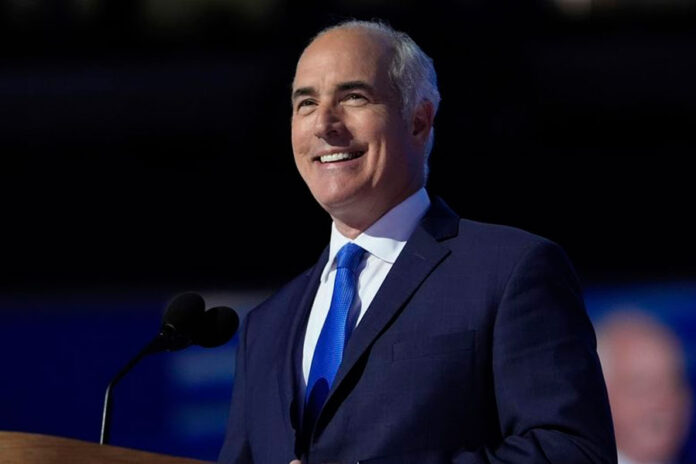
Biden será recibido con los brazos abiertos por el senador demócrata Bob Casey cuando participe en un acto privado de recaudación de fondos para la campaña del legislador por Pensilvania en los suburbios de Filadelfia. Pero en Milwaukee, donde Biden está destacando los esfuerzos de su gobierno para sustituir las tuberías de plomo tóxicas del país, la senadora demócrata Tammy Baldwin estará ausente.

“Los demócratas en contiendas muy reñidas, en su mayoría, están calculando que el riesgo de apoyar a Biden supera con creces cualquier recompensa que sus esfuerzos puedan aportar a su campaña”, señaló Christopher Borick, director del Instituto de opinión pública del Muhlenberg College, en Pensilvania. “No hay muchos lugares en los que pueda ser de gran ayuda a los demócratas en contiendas competitivas”.

Biden ha pasado poco tiempo haciendo campaña desde que puso fin a su proceso de reelección en julio. Eso hace que sus escalas en Pensilvania y Wisconsin –dos estados muy disputados que la vicepresidenta Kamala Harris y el expresidente Donald Trump consideran cruciales– sean aún más notables.

Las contiendas de Casey y Baldwin también se consideran imprescindibles para los demócratas, que intentan mantener su estrecho control del Senado.

Tras retirarse, Biden se comprometió a hacer campaña por Harris y los demócratas. Pero a medida que avanza la campaña, Biden se ha mantenido al margen y sigue siendo un sustituto inadecuado de Harris y de otras candidaturas demócratas.

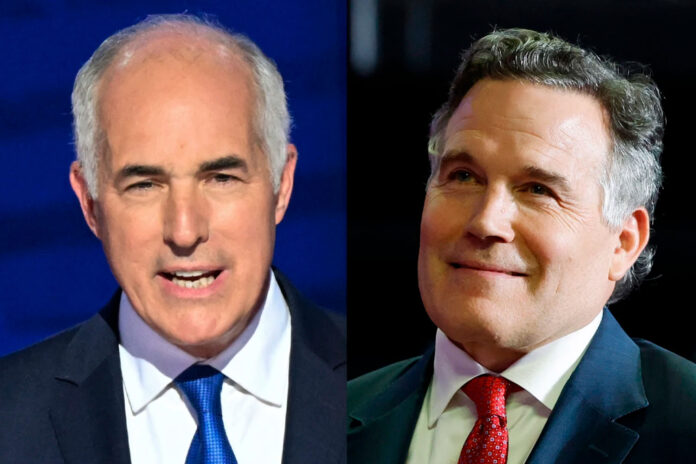
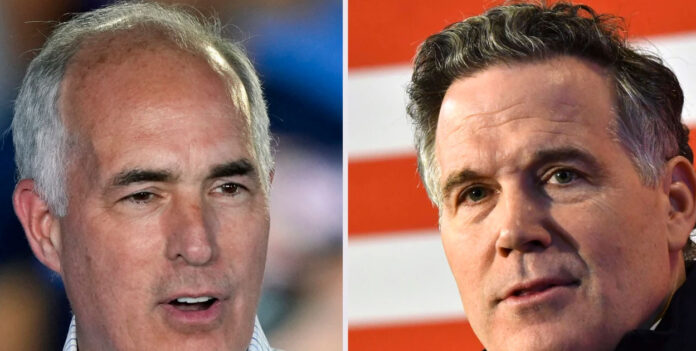
Casey, que se enfrenta al republicano David McCormick en busca de su cuarto periodo en el Senado, mantiene una larga relación con Biden desde hace tiempo.

El senador demócrata creció en la misma calle que Biden en Scranton. Sus familias se conocen desde hace décadas, y Casey ha hecho campaña con Biden en innumerables ocasiones, incluso a principios de este año.

City receives over $1.38 million to construct interim flood barrier in Eastwick

barrier

The City’s first barrier project addressing flooding challenges in Eastwick will bring interim flood protection to residents while long-term solutions are in development.

PHILADELPHIA. – The City of Philadelphia’s Office of Sustainability (OOS) will receive $1,383,069 in congressional funding, secured by Congresswoman Mary Gay Scanlon (PA-5), to construct the Eastwick Near-term Flood Barrier Project as an interim measure to protect vulnerable residents from flooding and increase flood resilience in the Eastwick neighborhood.  

Located in Southwest Philadelphia, Eastwick is one of the lowest-lying neighborhoods in the city and faces growing flood risks with climate change. The Eastwick Near-term Flood Barrier Project is the City’s first implementation project to address the complex flooding challenges in the neighborhood, following years of studies and calls to action from residents.  

The project will build a HESCO® barrier in the most flood-prone part of Eastwick to mitigate moderate flooding events stemming from the Cobbs and Darby Creeks. HESCO® barriers – soil-filled boxes made of fabric mesh and a wire frame – are used in interim flood protection projects nationwide, including in New York City. Compared to a levee, the HESCO® barriers in this location will be shorter in height and quicker to implement. The project’s design process is tentatively scheduled to begin in spring 2025. 

“The Eastwick Near-term Flood Barrier Project will protect vulnerable residents and properties from damaging floods. This represents an important step forward in tackling a complex flooding problem and building a more resilient Eastwick,” said Elizabeth Lankenau, Interim Director, Office of Sustainability. “We would like to thank Congresswoman Scanlon and FEMA for making it possible to provide peace of mind to the residents of Eastwick, while we continue working with the community and government partners to explore solutions and develop a long-term flood resilience strategy.” 

Through the Eastwick: From Recovery to Resilience initiative, the Office of Sustainability has been partnering with residents, community organizations, and government partners to develop a community-driven, long-term flood resilience strategy for Eastwick. This includes supporting the Philadelphia Water Department and the U.S. Army Corps of Engineers with an ongoing feasibility study of building a levee to mitigate flooding along Cobbs Creek.

While long-term solutions are being evaluated, and with support from FEMA and PEMA, OOS has been committed to pursuing funding sources to design and build interim flood barriers that bring relief to residents and properties in the nearer term. The City also plans to use funds from the U.S. Department of Housing and Urban Development’s Community Development Block Grant – Disaster Recovery (CDBG-DR) program as a local match. The CDBG-DR program supports Philadelphia’s recovery and mitigation efforts following the impacts of Hurricane Ida.

 Deadline to register to vote is two weeks away

(Photo: File)

Oct. 21 is the deadline to register to vote in the Nov. 5 election

Harrisburg, PA – Today, Secretary of the Commonwealth Al Schmidt reminded eligible Pennsylvanians that the Oct. 21 deadline to register to vote in the Nov. 5 general election is only two weeks away. Ensuring that our elections are conducted freely, fairly, and securely – and that every eligible voter can make their voice heard – are top priorities of the Shapiro Administration. 

“Eligible Pennsylvanians who are not registered to vote risk missing out on the opportunity to have their voices heard in this important election,” Schmidt said. “Visit vote.pa.gov to get registered now.”

To be eligible to vote, an individual must be: 

  • a U.S. citizen for at least 30 days before the election, 
  • a resident of Pennsylvania for at least 30 days before the election, and 
  • at least 18 years old on the day of the election.  

Schmidt encouraged Pennsylvanians to use the Online Voter Registration (OVR) system, which is a fast and convenient way to register to vote. In addition to registering through the OVR system, eligible voters can register to vote by mail or apply in person at:  

  • a county voter registration office,  
  • county assistance offices,  
  • Women, Infants & Children (WIC) program offices, 
  • Armed Forces recruitment centers, 
  • county clerk of orphans’ courts or marriage license offices, 
  • area agencies on aging, 
  • county mental health and intellectual disabilities offices, 
  • student disability services offices of the State System of Higher Education, 
  • offices of special education in high schools, 
  • Americans with Disabilities Act-mandated complementary paratransit providers, and
  • Department of Transportation (PennDOT) driver and photo license centers.  

In 2023, all PennDOT driver and photo license centers began offering automatic voter registration (AVR), which provides eligible Pennsylvanians with a convenient way to apply to register to vote when they obtain a new driver’s license or ID card or renew their existing identification. The Shapiro Administration launched the automatic registration initiative as part of its continued commitment to ensuring free, fair, and secure elections.

Regardless of which method eligible Pennsylvanians use to register, county election offices must receive their voter registration application by 5 p.m. Oct. 21 for them to be eligible to vote in the Nov. 5 election. 

“You also can request a mail-in or, if applicable, an absentee ballot and vote from the convenience of your home,” Schmidt added. “Your vote is valuable, regardless of how you choose to cast it, and I encourage you to exercise your constitutional right to be heard by voting in this election.”  

Voters who wish to vote by mail-in or absentee ballot must apply by 5 p.m. Oct. 29. The deadline for county election offices to receive mail-in and absentee ballots is 8 p.m. on Election Day, Nov. 5. Completed mail ballots received after that time do not count, even if they are postmarked before the deadline.

Pennsylvanians who prefer to vote in person on Election Day can find their polling place on vote.pa.gov. Polls will be open 7 a.m. to 8 p.m., and as long as a voter is in line by 8 p.m. they can vote.

Eligible voters will have the opportunity to choose candidates in the following races: 

  • President of the United States, 
  • United States Senator 
  • Representative in Congress, 
  • Pennsylvania Attorney General,
  • Pennsylvania Auditor General,
  • Pennsylvania State Treasurer,
  • Senator in the General Assembly (odd-numbered districts), and
  • Representative in the General Assembly.

The Department’s candidate database lists federal and state candidates.  

The Department’s voter information website, vote.pa.gov, is available in English, Spanish, and Chinese, and it offers county election offices contact information as well as tips for first-time voters and members of the military. Voters also can familiarize themselves with the voting system they will use if they vote in person on Election Day. 

Moody’s upgrades Pennsylvania’s credit rating to Aa2, citing Shapiro administration’s “Sound Fiscal Management” and “Steady” economic growth

Shapiro

The upgrade from Moody’s is the second credit rating upgrade in two years — after Fitch Ratings upgraded the Commonwealth’s credit rating last November — giving the Commonwealth its highest credit rating in more than a decade.

Ratings upgrade raises the possibility of additional taxpayer savings after last year’s upgrade resulted in a successful bond sale that yielded millions in savings.

Harrisburg, PA  Today, Governor Josh Shapiro announced that Moody’s Ratings has upgraded Pennsylvania’s credit rating to Aa2 from Aa3, citing the Commonwealth’s “sound fiscal management,” balanced budgets, and «steady” economic growth. This follows a similar upgrade from Fitch Ratings last year which raised Pennsylvania’s credit rating to ‘AA’ from ‘AA-,’ and a rating outlook upgrade from S&P Global Ratings, which improved Commonwealth’s outlook to ‘positive’ from ‘stable’ while affirming its A+ long-term rating.

This rating upgrade is in anticipation of the Commonwealth’s plans to sell $1.4 billion issuance of new money, and $238 million refunding, planned for mid-October. Pennsylvania is now at its highest rating since 2013.

This fiscal progress reflects Governor Shapiro’s commitment to responsible financial stewardship, supported by a growing economy and the bipartisan 2024-25 budget. As a result of those upgrades last year, the Commonwealth conducted a successful bond sale in December which saved Commonwealth taxpayers millions of dollars – including $99.7 million in gross debt service savings and $80.7 million of net present value debt service savings.

«Under my Administration, Pennsylvania has received two ratings upgrades in our first two years – a testament to our responsible fiscal stewardship that sets the Commonwealth up for success in the future while making critical investments in our economy and our workforce today,” said Governor Shapiro. «Pennsylvania has the only divided legislature in the country, but we’ve shown two years in a row that we can come together to pass balanced budgets that invest in Pennsylvanians, grow our economy, and create real opportunity for people all across the Commonwealth.»

«Pennsylvania is clearly on a strong path toward continued economic and financial success,” said Secretary of the Budget Uri Monson. «Our responsible investments and sound management are keeping the Commonwealth on solid fiscal footing while providing critical support to Pennsylvanians.»

Financial Overview and Ratings Rationale

Moody’s upgrade acknowledges Pennsylvania’s large, diverse economy and strong fiscal management as key strengths for the state’s creditworthiness. The Commonwealth’s expanded economic base and job creation efforts have made its financial outlook more stable, despite increasing spending pressures.

Additionally, Moody’s upgraded approximately $10.8 billion in outstanding general obligation bonds to Aa2 and raised ratings for several state-backed financial obligations, including:

  • Appropriation-backed debt upgraded to Aa3 and A1
  • Pennsylvania School District Intercept Program rating upgraded to Aa3
  • Pennsylvania General Municipal Pension System State Aid Program rating upgraded to A1
  • Pennsylvania Turnpike Commission’s (PTC) $983 million Motor License Fund-enhanced bonds upgraded to Aa3

This latest announcement reinforces that Pennsylvania’s economy is strong under Governor Shapiro’s leadership and that his Administration’s sound fiscal management is positioning the Commonwealth for long-term success.

The press release issued by Moody’s Investors Services can be found here and a chart of Pennsylvania’s ratings’ history can be found here.

Biden logra hablar con gobernador de Florida sobre plan de emergencia por huracán Milton

Biden
(Foto: EFE/CRISTOBAL HERRERA-ULASHKEVICH/Archivo)

El presidente de Estados Unidos, Joe Biden, logró hablar este lunes con el gobernador de Florida, el republicano Ron DeSantis, sobre las medidas de emergencia para enfrentar la llegada del huracán Milton esta semana, después de que se reportara que el jefe del Ejecutivo floridano se había negado a contestarle al mandatario demócrata.

La Casa Blanca informó en un comunicado que Biden habló con DeSantis «para obtener un informe de primera mano» sobre los esfuerzos de recuperación tras el paso del huracán Helene, que ha dejado 230 muertos en el sureste de EE. UU., y para analizar los preparativos para el huracán Milton.

Según explicó este lunes la portavoz de la Casa Blanca, Karine Jean-Pierre, DeSantis habló el domingo solo con la administradora de la Agencia Federal para el Manejo de Emergencias (FEMA, en inglés), Deanne Criswell.

En la mañana de este lunes la cadena NBC informó que en las últimas horas, citando a fuentes cercanas a DeSantis, el gobernador se había negado a contestar a Biden y a la vicepresidenta Kamala Harris.

Es habitual que el presidente de EE. UU. llame por teléfono a los gobernadores de estados afectados por desastres naturales para coordinar la prestación de ayuda.

En la rueda de prensa de la Casa Blanca, Jean-Pierre defendió que el Ejecutivo está cumpliendo con su obligación de ayudar a los estadounidenses que se han visto damnificados por el huracán Helene y que ahora se preparan para el Milton.

«Si tienes al presidente y a la vicepresidenta intentando ofrecer asistencia a tus constituyentes, a la gente que vive en tu estado, para asegurarnos de que estamos haciendo todo lo que debemos hacer y estamos tendiendo la mano, ofreciendo nuestro apoyo, corresponde al gobernador decidir si responde o no», dijo.

Biden viajó a Florida el jueves para supervisar el daño causado por Helene y no se reunió con DeSantis porque este tenía previsto viajar a otras partes del estado para ver el daño provocado por el huracán, según indicó entonces la Casa Blanca.

En una rueda de prensa en Florida, DeSantis confirmó a mediodía del lunes que no había hablado por teléfono ni con Biden ni Harris.

Explicó que Biden intentó contactarlo hace un par de días, pero que no pudo atender la llamada porque se encontraba en un helicóptero. Respecto a Harris, aseguró desconocer cualquier intento de comunicación por parte de la vicepresidenta.

«No sabía que ella había llamado, así que no estoy seguro a quién llamaron, pero a mí no me contactaron», declaró DeSantis, quien sin embargo subrayó que ha recibido toda la ayuda solicitada del Gobierno federal.

DeSantis es una de las figuras más destacadas del Partido Republicano. Fue durante años un fiel aliado del expresidente Donald Trump (2017-2021), que se enfrentará a Harris en las elecciones del 5 de noviembre próximo, aunque la relación se agrió cuando el gobernador compitió en las primarias del partido que el expresidente acabó ganando.

El propio Trump ha difundido desinformación sobre la respuesta del Gobierno federal a los huracanes. La semana pasada llegó a afirmar que el Ejecutivo no estaba respondiendo a la destrucción y que el gobernador de Georgia, Brian Kemp, estaba intentando llamar a Biden por teléfono y no conseguía hablar con él.

El propio Kemp, del Partido Republicano, negó inmediatamente que eso fuera verdad y, de hecho, elogió la oferta de ayuda del Gobierno federal

Por su parte, Harris se mostró este lunes contundente al referirse al incidente con el gobernador de Florida.

En declaraciones a los medios en la Base Aérea Andrews, en Maryland, cerca de Washington, consideró que en momentos de crisis como el actual es «cuando los que se llaman líderes deben dejar la política a un lado y poner a la gente primero».

«La gente necesita apoyo desesperadamente en estos momentos, y jugar a juegos políticos durante situaciones de crisis, en el punto álgido de las emergencias, es totalmente irresponsable y egoísta. Solo se trata de ventajas políticas», señaló la vicepresidenta.

Además de hablar con DeSantis el presidente estadounidense habló por separado con la alcaldesa de Tampa, Jane Castor, sobre las medidas tomadas por la ciudad, que se espera sea una de las zonas más impactadas por el huracán Milton.

Biden pidió al gobernador y a la alcaldesa que «lo llamaran directamente si hay algo que se pueda hacer» para seguir apoyando las tareas de respuesta y recuperación.

Florida, que aún intenta recuperarse de los daños de Helene, está preparándose para la mayor evacuación desde 2017 ante la amenaza del huracán Milton, de categoría 5 y con vientos de 280 kilómetros por hora (175 millas), que atravesará casi todo el estado de oeste a este a partir del miércoles.

New analysis suggests national debt could increase under Harris, but it would surge under Trump

Harris
This combination photo shows Democratic presidential nominee Vice President Kamala Harris at a rally in Flint, Mich., Oct. 4, 2024, left, and Republican presidential nominee former President Donald Trump at a campaign rally in Walker, Mich., Sept. 27, 2024. (Photo: AP)

No one is likely to be happy with the projected higher deficits laid out in a new analysis of Kamala Harris’ and Donald Trump’s economic plans.

The analysis released Monday by the nonpartisan Committee for a Responsible Federal Budget suggests a Harris presidency could increase the national debt over 10 years by $3.5 trillion. That’s even though the vice president’s campaign insists her proposed investments in the middle class and housing would be fully offset by higher taxes on corporations and the wealthy. Her campaign policy guide states that Harris is “committed to fiscal responsibility — making investments that will support our economy, while paying for them and reducing the deficit at the same time.”

The same analysis says former President Trump’s ideas could heap another $7.5 trillion onto the debt and possibly as much as $15.2 trillion. That’s even though he suggests growth would be so strong under his watch that no one would need to worry about deficits.

The 34-page report released by the fiscal watchdog group puts a spotlight on the issue of government borrowing that will confront the winner of November’s election. Total federal debt held by the public now tops $28 trillion and is expected to keep climbing as revenues can’t keep up with the growing costs of Social Security, Medicare and other programs. The analysis noted that the expense of servicing that debt in dollar terms has “eclipsed the cost of defending our nation or providing health care to elderly Americans.”

Drawing on the candidates’ speeches, campaign documents and social media posts, the analysis warns bluntly: “Debt would continue to grow faster than the economy under either candidates’ plans and in most scenarios would grow faster and higher than under current law.”

Neither candidate has meaningfully stressed budget deficit reduction in their pitch to voters. But multiple analyses show a clear difference of Harris being much more fiscally responsible than Trump.

Harvard University professor Jason Furman, who was the top economist in the Obama White House, estimated in an opinion article for The Wall Street Journal that Harris’ plans could cut deficits by $1.5 trillion or raise them by $1.5 trillion. Meanwhile, his estimates show that Trump’s plans would increase deficits by $5 trillion, though that figure does not include his plans to charge no taxes on overtime pay and scrap the limit on deductions of state and local taxes.

There are other estimates by The Budget Lab at Yale and the Penn Wharton Budget Model that also show Harris would be better at keeping the deficit in check.

The Harris campaign said it sharply disagreed with the analysis of Harris’ policies by the Committee for a Responsible Federal Budget, saying she would reduce the deficit if she became president.

The Trump campaign also criticized the analysis, with Brian Hughes, a senior adviser, saying, «Trump’s plan will rein in wasteful spending, defeat inflation, reduce the burden of interest costs, and ignite economic growth that fuels federal revenue, so we can make our economy great again.”

The committee analysis estimates that Harris’ policy ideas could add $3.5 trillion to the national debt through 2035. That conclusion depends on its treatment of how much various programs could cost.

It forecasts that Harris would implement $4.6 trillion in tax reductions, including extensions of some of the expiring 2017 tax cuts that Trump signed into law and tax breaks for parents and no taxes on tipped income for hospitality workers. Roughly $4 trillion in higher taxes on corporations and the wealthy would be insufficient to cover the total cost of her agenda and the additional interest on the debt that it could generate.

Still, the analysis notes that its numbers depend on various interpretations of what Harris has said. It’s possible that Harris’ agenda would add nothing to baseline deficits, but the report also said it might plausibly add as much as $8.1 trillion in debt in what appears to be a worse-case scenario.

By contrast, Trump’s ideas would likely add another $7.5 trillion to the debt. His $2.7 trillion in tariff revenues would be unable to cover $9.2 trillion in tax cuts and additional expenditures such as $350 billion to secure the border and deport unauthorized immigrants.

But the analysis includes other possibilities that show far higher deficits under Trump. If his tariffs raised less money and there were higher costs for his mass deportations and tax breaks, the national debt could jump by $15.2 trillion.

On the other hand, if the tariffs raised $4.3 trillion and there were no costs tied to deportations, Trump’s plans could only increase the debt by $1.5 trillion over 10 years.

U.S. Attorney Announces an additional vivil settlement as part of national effort to combat electronic

Virginia
(Photo: File)

PHILADELPHIA. – United States Attorney Jacqueline C. Romero announced that Gregory Thomas White Jr, DC and Healing Place Medical, P.C. (collectively, “Healing Place”) agreed to pay $170,000 to resolve liability under the False Claims Act for the alleged improper billing of “Sanexas” devices. This settlement is the latest action in the national investigation into the improper billing involving the RST Sanexas neoGEN-Series device (“Sanexas”).

Healing Place is a chiropractic clinic that principally used Sanexas treatment for patients diagnosed with edema and other forms of acute and chronic pain. Sanexas is an electric stimulation device marketed by RST Sanexas, Inc. (“RST”) to treat various forms of pain and other medical conditions. It consists of a large central unit and electrical leads that are temporarily affixed to the area being treated.

Patients typically received treatment on an outpatient basis and received two treatments per week for 12 weeks, for a total of approximately 24 treatments. Treatment times generally lasted approximately 30 to 40 minutes. In conjunction with Sanexas treatment, the clinics injected patients with a vitamin blend.

White is a chiropractor and owner of the Healing Place, which operated at 1600 Horizon Drive #123, Chalfont, Pa. The United States contends that Healing Place submitted approximately 27,121 claims to Medicare for payment under various codes for Sanexas treatment and vitamin injections, TM Flow testing, and ENFD testing, during the relevant time period, all of which were non-reimbursable.

The United States contends that Medicare did not permit reimbursement of Sanexas or vitamin injections used in conjunction with Sanexas in the way in which Healing Place administered them. In particular, National Coverage Determination 160.7.1 states: “Electrical nerve stimulation treatments furnished by a physician in his/her office, by a physical therapist or outpatient clinic are excluded from coverage by § 1862(a)(1) of the Act.”

Similarly, Local Coverage Determination (“LCD”) 35222 reinforces that “[t]he use of electrostimulation alone for the treatment of multiple neuropathies or peripheral neuropathies caused by underlying systemic diseases is not medically reasonable and necessary.” Other LCDs contain the same or similar statements, such as L35456, L35457, L37642, and L36850.

The United States Food and Drug Administration cleared Sanexas as substantially equivalent to a transcutaneous electrical nerve stimulator (“TENS”) on or around January 24, 2003. Sanexas treatment was not FDA-cleared for use in combination with vitamin injections, the vitamin blend was not FDA-approved, and the vitamin blend was produced in bulk, rather than prescribed for individual patients.

The United States contends that vitamin injections used in conjunction with Sanexas treatment as Healing Place administered them do not fall under the limited coverage available for prescription drugs under Medicare Part B. The LCDs noted above reinforce that vitamin injections that act as nerve blocks are not medically reasonable and necessary.

Healing Place also submitted Medicare claims for testing used in conjunction with electric stimulation treatment – ENFD testing and/or TM Flow testing. ENFD testing involves performing a punch biopsy on patients to purportedly evaluate nerve damage that could be treated with the Sanexas device. ENFD testing was also conducted after Sanexas treatment, purportedly to evaluate whether there has been an improvement to nerve health. The Sanexas device, however, is not FDA-cleared for healing or regrowing nerves. In addition, the United States alleges that it was not medically reasonable or necessary to conduct additional testing related to electrical stimulation treatment, which was not covered by Medicare in the way in which Healing Place administered it.

Healing Place also offered “TM Flow” testing to screen new patients for various diseases, which, if identified, could purportedly support the need for electric stimulation treatment using the Sanexas device. The TM Flow device conducts various autonomic nervous system (“ANS”) and vascular function assessments. The applicable LCD includes 10 limitations, which the United States contends render ANS testing not medically reasonable and necessary and not covered, including “patient screenings without signs or symptoms of autonomic dysfunction,” testing where “results are not used in clinical decision-making and patient management,” and testing without the competence in the Autonomic Disorders medical subspecialty. See L35395. LCDs L23236, L33609, and L35124 contain similar limitations. Contrary to these limitations, however, Healing Place used it to screen patients during an initial visit, offered treatment with the Sanexas device regardless of the results of TM flow testing, and lacked the necessary training to perform and interpret ANS testing.

“Our office continues to lead the national charge to hold alleged fraudsters accountable for improper Sanexas billing,” said U.S. Attorney Romero. “We will continue working closely with our partners at CMS’s Center for Program Integrity, the Department of Health and Human Services Office of the Inspector General, and sister U.S. Attorney’s Offices around the country to hold accountable any other providers who inappropriately billed for these devices and caused false claims to be submitted.”

“Accurately billing for services provided to Medicare enrollees is required of all health care providers participating in the program,” said Maureen R. Dixon, Special Agent in Charge for the U.S. Department of Health and Human Services, Office of Inspector General (HHS-OIG). “HHS-OIG, CMS’s Center for Program Integrity, and the U.S. Attorney’s Office will continue to evaluate and pursue allegedly inaccurate billings of Sanexas and similar devices.”

Prior DOJ press releases related to the Sanexas national initiative include:

This matter was investigated by the U.S. Department of Health and Human Services Office of the Inspector General. The investigation and settlement were handled by Special Assistant U.S. Attorney Eric S. Wolfish, Civil Division Chief Gregory B. David, and Auditors Dawn Wiggins and Andrew Schobert.

The settled civil claims are allegations only. There has been no determination of civil liability.

Department of Human Services Highlights Trauma-informed research and Resources for individuals with autism

research

Harrisburg, PA – The Pennsylvania Department of Human Services (DHS) today released the latest issue of the Positive Approaches Journal, which aims to provide the most recent research for people with mental and behavioral health challenges, intellectual disabilities, autism, and other developmental disabilities to help them live an everyday life. This edition focuses on the importance of trauma-informed research and the best practices that can be implemented to support people with autism.

“DHS works to ensure that Pennsylvanians with intellectual disabilities and autism have the services and supports they need,” said DHS Secretary Dr. Val Arkoosh. “We know that there is a higher prevalence of trauma among individuals with intellectual disabilities and autism, and it is our hope that the research in this edition of the Positive Approaches Journal can help individuals and families find the resources they need to improve their everyday lives.”

The Shapiro Administration believes that every Pennsylvanian with intellectual disabilities and autism deserves to receive the supports they need to achieve an everyday life with dignity and opportunity to pursue their goals and live, work, and recreate among their families and peers. Life-changing investments in Governor Josh Shapiro’s bipartisan 2024-25 budget secured historic increases in funding for home- and community-based services for Pennsylvanians with intellectual disability and autism (ID/A) as well as increases in rates for the providers responsible for essential care and support of these individuals every day.

This edition of the Positive Approaches Journal features research and articles on the following:

  • Data Discoveries outlines an increased prevalence of post-traumatic stress disorder among individuals with autism and identifies trends that indicate an urgent need for further research, clinician training, and increased awareness.
  • Creating a Trauma-Informed Human Services Workforce in Pennsylvania:  A Successful Cross-Sector Collaboration details the delivery of Trauma-Informed Care in Pennsylvania and demonstrates how collaboration between state government and other stakeholders helps to create safe, supportive environments that promote healing and resilience for children and youth.   
  • Trauma and Social Adversity in Autism: Considerations and Directions for Clinicians and Researchers highlights recent research on the influence of the environment on mental health outcomes among people with autism.
  • Utilization of Art Therapy in Processing Overwhelming Emotions for Individuals with Autism Spectrum Disorder details research that found that there was a trend in reduced depression and PTSD symptoms for these individuals after art therapy sessions. 

The journal is a collaboration of DHS’ Office of Developmental Programs and Office of Mental Health and Substance Abuse Services. It collects resources, observations, and advancements in mental and behavioral health in order to better serve people in their communities.