El Museo de la Casa Blanca en Washington exhibe a los empleados de la residencia presidencial que llevan décadas en sus posiciones. Trabajos como cocineros, ama de llaves y encargados de seguridad son no partidistas y pueden pasar de administración en administración. (Foto: VOA)
Al interior de la Casa Blanca, decenas de empleados se dedican a mantener la residencia presidencial. Desde cocineros hasta jardineros, estas personas están en posiciones que no son consideradas políticas, y por lo tanto, su futuro sería diferente en medio de la transición a un nuevo mandatario.
La Casa Blanca se prepara para recibir a un nuevo inquilino el próximo 20 de enero. Donald Trump regresará a la mansión presidencial tras su triunfo en las elecciones de noviembre, y su segundo mandato obliga a la residencia a pasar por grandes cambios, entre ellos, de personal. Sin embargo, no todos los empleados de la Casa Blanca serán reemplazados.
La transición, naturalmente, lleva al nombramiento de personas nuevas que trabajan directamente con el presidente y su gobierno. Asesores superiores, secretarios de prensa y jefes de personal son posiciones políticas, elegidas por el mandatario entrante.
Estos empleados son responsables de implementar las políticas y prioridades de la nueva administración, así como de aconsejar al presidente en la toma de decisiones.
Pero este personal no es el único que habita la Casa Blanca. Al interior de la mansión trabajan unas 100 personas encargadas de mantener las tareas diarias de una residencia, estos son funcionarios de carrera o personal militar.
Algunos de estos puestos son mayordomos, mucamas, amas de llaves, cocineros, porteros, floristas, electricistas, plomeros e ingenieros. Todas sus funciones se consideran no partidistas.
La Asociación Histórica de la Casa Blanca explicó a la Voz de América que «históricamente, el personal doméstico iba y venía con muchas administraciones, pero a finales del siglo XIX, más de estos puestos se convirtieron en puestos permanentes en el gobierno».
Hoy en día, agregaron, el personal de la Casa Blanca se «encargan de la primera familia y brindan continuidad a la Casa Blanca como institución. Por lo general, no cambian con una transición».
Algunos empleados acumulan décadas de trabajo en la Casa Blanca, como Donna Hayashi Smith, curadora de arte, quien está allí desde 1995; Marcus Jones, quien integra el equipo de limpieza desde 2002; o Susie Morrison, que trabaja en la cocina desde 1995.
Morrison es actualmente la pastelera ejecutiva de la residencia, un rol en el que “trabajo con mis colegas y residentes ejecutivos para preparar dulces, pasteles y otros productos horneados”, dice la empleada en una exposición disponible en el museo de la Casa Blanca en Washington.
El personal trabaja en un espacio de múltiples habitaciones debajo de la escalera norte de la Casa Blanca, alejados de la vista de quienes visitan la mansión presidencial.
“Hoy en día, estos miembros del personal manejan solicitudes de hospitalidad personal, servicio de comidas y brindan otras comodidades que necesita la primera familia”, describe la Asociación Histórica de la Casa Blanca.
Además, el equipo de “hospitalidad” también tiene bajo su responsabilidad el ayudar a mudar a las familias desde y hacia la Casa Blanca. En este caso, apoyarán a los Biden a recoger sus artículos antes del día de la juramentación, y asistirán a los Trump en organizar sus pertenencias en sus habitaciones. Todo en una ventana de tiempo de seis horas.
Aún así, no todos están exentos de un cambio. El Jefe de Ujieres de la Casa Blanca es quien supervisa al personal y sirve directamente a la voluntad del presidente, por lo que puede ser reemplazado en medio de una transición. Actualmente, la posición la ocupa Robert B. Downing, que fue nombrado por Joe Biden en 2021.
Y es que llegar a estas posiciones no es tarea fácil. De hecho, casi todas las personas en estos trabajos fueron recomendados por empleados que ya estaban al interior de la Casa Blanca y deben pasar por amplios procesos de entrevistas y revisiones de seguridad.
En la edición de invierno de 2018 de la revista USBE, dedicada a veteranos de guerra afroamericanos, el exjefe de personal de la Casa Blanca Stephen W. Rochon, describió cómo fue su paso por la residencia y lo que llevó a su contratación.
Rochon, quien ejerció en la posición de 2007 a 2011, narró que tuvo que pasar ocho entrevistas con supervisores hasta tener una reunión final con el presidente George W. Bush. “Siguiendo el consejo de mi mentora de simplemente ser yo mismo, me ofrecieron el trabajo”, escribió.
Fue precisamente un jefe de personal, el empleado que logró la mayor trayectoria en la Casa Blanca. Irwin Hood Hoover sirvió en la residencia durante 42 años, desde 1891 hasta 1933. 29 de esos años fueron como supervisor de personal. Ambos récords continúan intactos.
Fotografía de archivo de un letrero de Walmart sobre unas cruces, durante un acto en homenaje a las víctimas de un tiroteo hace cuatro años, en El Paso, Texas (EE.UU.). Fotografía de archivo. EFE/ Jesús Rosales
Según reportes de la cadena NBC, dentro de las políticas del próximo gobierno MAGA, estarían las de no considerar más, las iglesias, escuelas y otros lugares donde en la actualidad no pueden intervenir los agentes de ICE, como refugios para los inmigrantes indocumentados.
Las amenazas del presidente electo Trump, de realizar “la madre de todas las deportaciones” cueste lo que cueste, ha mantenido la zozobra entre las familias de estatus migratorio mixto.
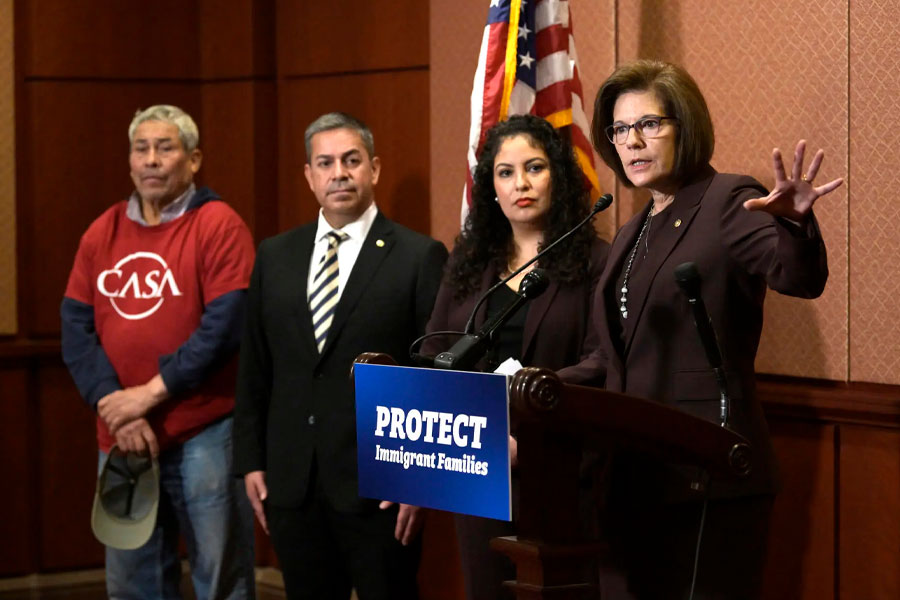
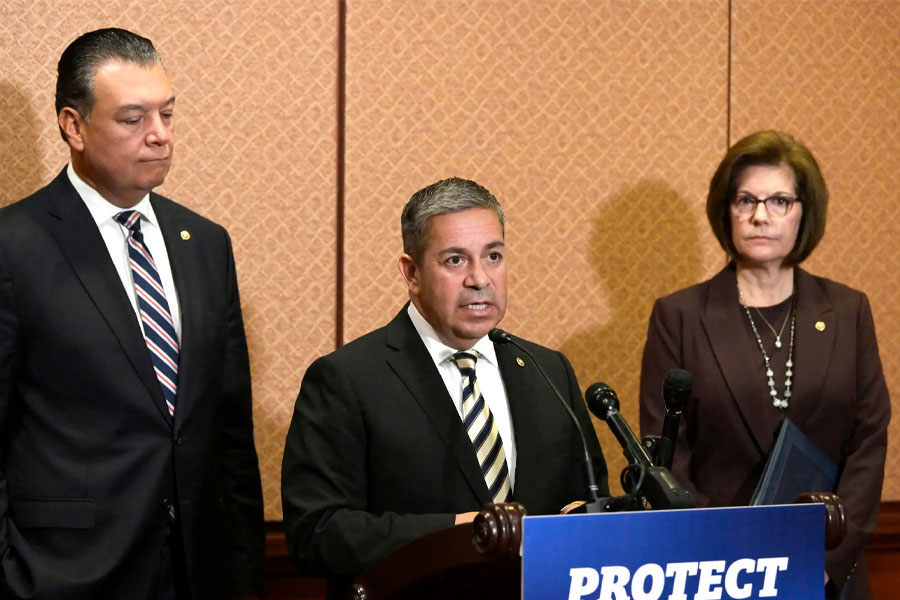
El presidente estadounidense, Joe Biden, recibió el pasado miércoles por parte de los senadores de origen hispano Catherine Cortez Masto, Alex Padilla y Ben Ray Luján la petición firme y urgente de usar su autoridad para proteger a los inmigrantes antes de la llegada al poder del republicano Donald Trump.
Cualquier acción del presidente saliente ocurriría a raíz de una elección que Trump ganó con promesas de una estricta aplicación de las leyes de inmigración. El Partido Demócrata también está debatiendo internamente cómo debería abordar la inmigración y la seguridad fronteriza después de sus derrotas electorales.
Biden, según Cortez Masto, tiene la oportunidad de «fortalecer de verdad su legado como mandatario que mantiene a las familias unidas y protege a la gente» que ha ayudado a conseguir que Estados Unidos sea un país «fantástico».
En concreto, insta a proteger a los migrantes beneficiarios del Estatus de Protección Temporal (TPS) de países como Venezuela, Ecuador, El Salvador y Nicaragua y a los «soñadores» o «dreamers», aquellos migrantes que llegaron al país de manera irregular siendo niños.
Más de 1 millón de migrantes en Estados Unidos dependen del TPS, que permite a las personas que ya están en el país quedarse y trabajar legalmente si sus países de origen se consideran inseguros. Trump ha insinuado que reducirá el programa.
«Es muy sencillo. El presidente tiene la autoridad legal para actuar», sostuvo Cortez Masto en una conferencia de prensa, advirtiendo de que, tal y como en el primer mandato de Trump (2017-2021), la futura Administración «va a intentar implementar políticas migratorias caóticas que separan a las familias».
Trump ha prometido mano dura en materia migratoria: quiere deportar a todos los que están en EE. UU. ilegalmente.
«En los próximos cuatro años tenemos que estar dispuestos a usar nuestras voces. Trabajaremos con la administración actual y futura para proteger a los inmigrantes titulares del TPS, los soñadores, las familias que huyen de la violencia y cualquier persona que busque refugio en nuestro suelo de buena fe», añadió en la rueda de prensa Ben Ray Luján.
«Mientras Biden siga en el poder todavía hay esperanza de evitar el desastre. Hemos pedido esto durante años, pero hoy lo hacemos de nuevo sabiendo que las amenazas para las comunidades migrantes son reales e inminentes», concluyó Padilla.
El gobierno de Biden hizo permanente esta semana una regla que extiende las autorizaciones de trabajo para los solicitantes de asilo, pero no ha hecho compromisos sobre otros puntos prioritarios para los defensores de los migrantes y los demócratas.
Aunque Trump podría intentar deshacer algunas de las acciones, establecerían un impedimento legal y darían a los migrantes una posición legal más fuerte para impugnar las órdenes de Trump.
En 2017, el gobierno de Trump anunció el fin del TPS para los nicaragüenses, diciendo que ya no era necesario. Pero los beneficiarios de TPS impugnaron la legalidad de esa decisión en una demanda en la corte. Desde entonces, la duración del TPS para Nicaragua depende de una orden de un juez federal.
Redeclarar estatus protegido para algunas naciones implicaría que pudieran extender su estadía legal. El procedimiento de renovación sólo involucra a aquellos que ya están en Estados Unidos y a los que se les permitiría quedarse más tiempo.
El TPS también podría beneficiar a aquellos nicaragüenses que llegaron bajo otro programa de Biden llamado permiso condicional humanitario y tienen un estatus legal temporal que expira después de dos años. Trump ha dicho que dará fin al programa de permisos condicionales humanitarios.
El Gobierno del presidente Joe Biden permitió el ingreso a EE. UU. de al menos 5,8 millones de extranjeros que buscaban asilo u otros amparos migratorios, según un informe difundido el 10 de diciembre por el Instituto de Política Migratoria (MPI).
De la cifra total (5.844.770) registrada durante los cuatro años de la actual Administración federal, los solicitantes de asilo que llegaron a la frontera sur de Estados Unidos y fueron dejados en libertad condicional para presentar sus casos, incluidos los que realizaron el trámite por medio de la aplicación CBP One, representan el grupo más grande (4.695.300).
A ellos les siguen 531.600 inmigrantes de Venezuela, Haití, Cuba y Nicaragua que llegaron al país gracias a un permiso, o “parole”, especial. También recibió a 327.900 extranjeros que ingresaron por la frontera con Canadá y 214.800 ucranianos que llegaron al país gracias a un amparo humanitario.
Otros 75.000 extranjeros llegaron a través de un programa que favorecía a personas que ayudaron al gobierno estadounidense en Afganistán.
El Departamento de Seguridad Nacional (DHS) realizó más de 2,5 millones de expulsiones bajo el Gobierno de Biden, mientras estuvo vigente la política del Título 42, que permite expulsar a los extranjeros por una emergencia sanitaria, la cifra no incluye las expulsiones y deportaciones realizadas después que se impusieron las restricciones al asilo en junio pasado.
El informe subraya que las medidas de inmigración en las fronteras estadounidenses aplicadas por la Administración Biden fueron criticadas por ambos bandos.
“Para los defensores de los inmigrantes, la administración representó un nuevo mínimo para sus límites a la protección humanitaria; para los intransigentes en materia de inmigración, estaba dando luz verde a una frontera abierta”, dice el reporte.
“La administración intentó apaciguar a ambos bandos, pero finalmente no logró satisfacer a ninguno de los dos”, escriben Muzaffar Chishti, Kathleen Bush-Joseph, Colleen Putzel-Kavanaugh y Madeleine Greene, autores del análisis.
El MPI resalta que Biden ha adoptado más medidas ejecutivas relacionadas con la inmigración (605) que Donald Trump en su primer mandato (472), imponiendo un número récord en esa materia. Y es que la Administración demócrata que está por terminar tuvo que usar su poder ejecutivo para lidiar con el tema migratorio ante la inacción del Congreso, lo que le permitió extender el Estatus de Protección Temporal (TPS) a varios países, y otorgó o extendió el permiso de trabajo a 3,4 millones de extranjeros.
En el año fiscal 2024 EE. UU. recibió la mayor cantidad de refugiados en un solo año desde mediados de la década de 1990, con más de 100.000 extranjeros que ingresaron al país bajo esa categoría.
Extiende los permisos de trabajo para ciertas categorías de inmigrantes
El Departamento de Seguridad Nacional (DHS) anunció ese mismo día la extensión automática del permiso de empleo para ciertas categorías de inmigrantes, una medida aplaudida por los activistas y los empresarios que protege a estos trabajadores ante la toma de posesión de Trump.
En un comunicado, el DHS dijo que la extensión de la validez hasta 540 días hace parte de los esfuerzos del Gobierno de Biden para reducir las interrupciones en la contratación de inmigrantes autorizados, que en muchos casos debían abandonar sus puestos en espera a la renovación del permiso y extiende el tiempo en que están protegidos contra una deportación.
El Servicio de Inmigración y Ciudadanía (USCIS) ha recibido una cifra récord de solicitudes de permisos de trabajo este año.
“(La extensión automática) ayudará a eliminar la burocracia que agobia a los empleadores, a asegurar que cientos de miles de personas elegibles para empleo puedan continuar contribuyendo a nuestras comunidades”, dijo en el comunicado el secretario del DHS, Alejandro Mayorkas.
La extensión automática entrará en vigor el 13 de enero de 2025.
La abogada Lauren Eagan responde a algunas dudas generales
¿Puede Trump deportar a 11 millones de inmigrantes indocumentados?
Su plan incluye declarar una emergencia nacional, utilizar al ejército para apoyo logístico y expandir los centros de detención. Sin embargo, esta iniciativa enfrenta serios obstáculos:
Retraso en los tribunales de inmigración: Con más de 3,7 millones de casos pendientes, el sistema ya está sobrecargado. Agregar millones más podría extender los tiempos de procesamiento hasta 16 años.
Costos: Expertos estiman que las deportaciones masivas costarían entre $150 mil millones y $350 mil millones.
Desafíos legales: Trump ha insinuado que podría invocar la Ley de Extranjeros Enemigos de 1798, un estatuto raramente usado para poderes en tiempos de guerra. Su aplicabilidad a la inmigración no ha sido probada y probablemente enfrentaría impugnaciones constitucionales.
Problemas diplomáticos: Algunos países históricamente se han negado a aceptar deportados, lo que complica los esfuerzos de repatriación.
Los grupos afectados podrían incluir a personas indocumentadas con antecedentes penales, beneficiarios del Estatus de Protección Temporal (TPS) y recipientes de DACA.
¿Qué dice la ley?
Poderes legales: El presidente puede dirigir a las agencias federales a aplicar las leyes de inmigración con mayor agresividad. Sin embargo, escalar la aplicación a este nivel enfrentaría obstáculos logísticos y legales.
Límites: Las deportaciones requieren el debido proceso, según la Constitución de EEUU, lo que significa que cada caso debe ser adjudicado en tribunales de inmigración. Esto hace que una deportación masiva inmediata sea prácticamente imposible.
¿Puede eliminarse la ciudadanía por nacimiento?
Trump ha propuesto emitir una orden ejecutiva para reinterpretar la Cláusula de Ciudadanía, que otorga ciudadanía a cualquier persona nacida en suelo estadounidense, independientemente del estatus migratorio de sus padres.
Si se implementara, esta medida:
Negaría documentos esenciales, como tarjetas de Seguro Social y pasaportes, a los hijos de inmigrantes indocumentados.
Afectaría a casi cuatro millones de niños que viven con al menos un padre indocumentado, dejándolos en un limbo legal.
¿Qué dice la ley?
Poderes legales: El presidente puede emitir órdenes ejecutivas para limitar ciertos beneficios. Sin embargo, estas acciones no alterarían la garantía constitucional de ciudadanía por nacimiento.
Límites: La Enmienda 14 explícitamente garantiza la ciudadanía a todas las personas nacidas en EE. UU. Eliminarla requeriría una enmienda constitucional, lo que es casi imposible con un Congreso dividido y un proceso de ratificación complejo.
Retirar la ciudadanía a personas naturalizadas
Trump ha propuesto desnaturalizar a ciudadanos naturalizados por errores u omisiones en sus solicitudes como:
Errores administrativos: Revisar solicitudes pasadas en busca de errores técnicos.
Fraude: Revocar la ciudadanía por falsificación en el proceso de naturalización.
Historiales penales: Quitar la ciudadanía a quienes sean encontrados culpables de delitos no revelados antes de su naturalización.
¿Qué dice la ley?
Poderes legales: El gobierno puede desnacionalizar con pruebas sustanciales a ciudadanos si obtuvieron la ciudadanía mediante fraude o tergiversación.
Límites: La desnacionalización no puede aplicarse retroactivamente ni basarse en errores menores. La Constitución prohíbe la aplicación arbitraria o discriminatoria de estas leyes.
¿Qué pasará con DACA?
Trump ha reiterado su intención de terminar con DACA, que protege a aproximadamente 700,000 jóvenes traídos a EE. UU. cuando eran niños, aunque en declaraciones reciente dijo que estaría dispuesto a trabajar con los demócratas para resolver su estatus temporal.
¿Qué dice la ley?
Poderes legales: DACA es una acción ejecutiva, lo que permite que un presidente rescinda el programa mediante otra orden ejecutiva.
Límites: Incluso si DACA se termina, los individuos conservarían ciertas protecciones constitucionales, como el derecho al debido proceso.
Harrisburg, PA – In an effort to boost environmental literacy and sustainability across the Commonwealth, the Shapiro Administration today announced that applications are now being accepted for the U.S. Department of Education Green Ribbon Schools (ED-GRS) and the PA Pathways to Green Schools awards.
Each state may nominate up to five Pre-K-12 schools, early learning centers, or districts, and one postsecondary institution for the annual ED-GRS program. USDE then selects and announces awardees in the spring. Eligibility requirements are located on the U.S. Department of Education Green Ribbon Schools website.
“Green Ribbon Schools help learners become stewards of their environment and their communities,” said Interim Acting Secretary of Education Angela Fitterer. “By participating in this program, schools are signaling their commitment to preserving our ecosystem and providing hands-on learning opportunities that have real-world impacts.”
Pennsylvania schools, districts, and institutions of higher education are invited to submit their self-nomination materials for the 2023-24 the ED-GRS program and PA Pathways to Green Schools Program awards via the dual application, available on the PDE website.
«Exposing students to effective environmental education plays an important role in promoting conservation and environmental stewardship,» said DEP Interim Acting Secretary Jessica Shirley. «The Green Ribbon Schools program serves as a model for developing innovative environmental education programming and environmental leadership. We are proud to see the program help school districts across the Commonwealth start on the path towards a more sustainable future.»
ED-GRS nominees must show progress in the following areas: reducing environmental impacts, such as waste, water, greenhouse gases, and transportation; improving health and wellness with consideration to air quality, lighting, thermal comfort, school nutrition, and outdoor physical activity; and offering effective environmental and sustainability education that emphasizes hands-on, real-world learning, civic engagement, STEM connections, and green career preparation.
“Pennsylvania schools have been very competitive in the Green Ribbon Schools selection process each year and we look forward to continuing this growing tradition,” said DCNR Secretary Cindy Adams Dunn. “This initiative is key in preparing future generations for positive environmental stewardship. We encourage schools in the Commonwealth to apply for this distinct recognition aimed at promoting sustainability, STEM knowledge, and improving the health and wellness of students and staff through outdoor activities.”
Since 2011, the ED-GRS program has recognized schools, districts, and institutions of higher education across the country for their dedication to reducing environmental impact and cost, improving the health and wellness of school communities, and providing environmental education to students. In 2024, 24 states nominated 55 honorees, in the following categories: 10 districts, 42 preK-12 schools (including early childhood learning centers), and 3 postsecondary institutions. In Pennsylvania, the following education entities received national recognition:
Rowan Elementary School, Seneca Area School District
Green Woods Charter School, Philadelphia
Reading Senior High School, Reading School District
The Shapiro Administration is committed to improving school infrastructure and providing safe, healthy learning spaces for learners of all ages. Governor Shapiro has secured $275 million in his first two budgets to fund school infrastructure repairs, including heating and air conditioning upgrades, window replacement, lead and asbestos abatement, solar installations, and other improvement projects.
In 2024, PDE drove out $75 million to 109 Pennsylvania school districts, career and technical education centers (CTCs), and charter schools through the Department of Education’s new Environmental Repair Grant Program to eliminate lead, mold, asbestos, and other environmental hazards.
Additionally, DCED drove out $175 million to 208 public school districts and career and technical schools for critical safety and environmental repair projects through the Public School Facility Improvement Grant Program — ensuring facilities are modern, safe, healthy, and conducive to learning.
The Governor and bipartisan group of legislators built on that progress by including another $25 million for Solar for Schools in the 2024-25 budget.
The Gen Z workforce has more than doubled since the beginning of the Shapiro Administration as younger workers seek out careers with stability, purpose, and opportunities for professional growth.
Governor Josh Shapiro’s executive order to expand opportunities for careers in public service and build a world-class competitive workforce are making the Commonwealth one of the best places to work for the future leaders of Pennsylvania.
Harrisburg, PA –The Shapiro Administration is attracting the next generation of talent to state government, as demonstrated by substantial increases in the number of Generation Z (Gen Z) and Millennial employees who have joined the Commonwealth workforce in recent years.
“Pennsylvania’s state agencies need qualified, talented employees to help us deliver the services that our fellow residents depend on,” said Secretary of Administration Neil Weaver. “In order to attract talent to these roles, Governor Shapiro has committed to creating a workplace that gives individuals the opportunity to succeed, both professionally and personally. Under his leadership, the Office of Administration is working to make Pennsylvania one of the top employers in the nation and attract the next generation of public servants.”
Recent age diversity trends demonstrate these efforts are paying off. In December 2022, the Commonwealth had approximately 2,000 Gen Z employees who were born from 1997 to 2009. Today, the figure stands above 4,600, an increase of 128 percent under the Shapiro Administration.
In December 2022, Millennials made up 34.5 percent of the Commonwealth’s workforce (approximately 24,000 employees). Since then, the number of employees born from 1981 to 1996 has grown to 37.4 percent (about 27,000 employees), an increase of 12.4 percent.
Recruitment efforts have illustrated that Millennial and Gen Z job seekers are looking for employment opportunities that provide career growth, stability, and a work-life balance. Gen Z in particular values the freedom to progress in their careers in a secure environment – one that offers job security, health and retirement benefits, and that prioritizes their mental and physical well-being.
So far this year, Commonwealth recruiters have attended over 400 career events at Pennsylvania high schools, universities, and colleges with an estimated combined attendance of over 100,000 students.
“Our recruiters are actively going out to communities across the state to speak to Pennsylvania’s younger generations and raise awareness about all that we have to offer,” said Secretary Weaver. “There are numerous openings available around the Commonwealth, so whether you’re a recent college graduate or have gained skills and experiences outside the classroom, if you are looking for a job that makes a difference, we want to hear from you.»
Recently, the Office of Administration collaborated with several Gen Z employees to highlight how working for the Commonwealth helps them fulfill goals in both their careers and lives.
Sophia, an employee of the Department of Human Services, is pursuing a master’s degree while working for the Commonwealth. She appreciates the opportunity to apply lessons from the classroom to support the department’s mission. “Working at the Commonwealth allows me to combine my passion for social justice with job security, all while contributing to projects that improve healthcare access and support vulnerable communities.»
Angelina, a Department of Labor and Industry employee and new mother, says working for the Commonwealth allows her to balance time with her family and a fulfilling career. “I just would love to stay with the Commonwealth, work my way up, grow my family. I’m so grateful for it.”
In February, the Shapiro Administration increased paid parental leave for employees from six to eight weeks following the qualifying birth, adoption, or foster care placement of a child. The Administration also expanded support for families and caregivers under the State Employee Assistance Program.
Mateo, a Department of Labor and Industry employee, says the stability offered by the Commonwealth supports him in giving his best each day. «The Commonwealth’s benefits, especially the job security and medical coverage, give me peace of mind and allow me to focus on what truly matters—serving others and making a difference.»
The Commonwealth of Pennsylvania offers a total benefits package that makes a positive impact on the lives of its employees every day. These benefits, including comprehensive health coverage, flexible retirement plans, counseling services for mental wellness, generous paid leave, and for certain positions, the opportunity to telework, provide the supportive environment that Gen Z workers expect – and demonstrates the empowering culture that is being cultivated by the Shapiro Administration.
Jayne, a former Department of Environmental Protection employee, credits the Commonwealth with helping her to achieve for her lifelong aspiration to attend law school. “Working for the Commonwealth is geared towards someone who really wants to be a changemaker, who really wants to be impactful, and be a good neighbor.”
The Commonwealth has prioritized supporting employees who want to advance their skills through further education and is working to make higher education more affordable for employees and their families. Benefits include:
Commonwealth employees may qualify for loan forgiveness through the federal Public Service Loan Forgiveness program, or PSLF.
Executive Order 2024-01, signed by Governor Shapiro in May, directed the Office of Administration to expand Pennsylvania’s fellowship, internship, and apprenticeship programs to create new pathways to careers in public service with the Commonwealth. You can view information about the Commonwealth’s growing selection of internship, apprenticeship, and fellowship opportunities on the Launch Your Career page on Employment.pa.gov.
To learn more about working for the Commonwealth of Pennsylvania, visit Employment.pa.gov where you can view and apply to current job openings, receive notifications about new vacancies, and learn more about the Commonwealth’s Total Rewards benefits for employees.
HARRISBURG, Pa. (AP) — The new year will usher in the bitcoin-friendly administration of President-elect Donald Trump and an expanding lobbying effort in statehouses that, together, could push states to become more open to crypto and for public pension funds and treasuries to buy into it.
Proponents of the uniquely volatile commodity argue it is a valuable hedge against inflation, similar to gold.
Many bitcoin enthusiasts and investors are quick to criticize government-backed currencies as prone to devaluation and say increased government buy-in will stabilize bitcoin’s future price swings, give it more legitimacy and further boost an already rising price.
But the risks are significant. Critics say a crypto investment is highly speculative, with so much unknown about projecting its future returns, and warn that investors should be prepared to lose money.
Only a couple public pension funds have invested in cryptocurrency and a new U.S. Government Accountability Office study on 401(k) plan investments in crypto, issued in recent days, warned it has “uniquely high volatility” and that it found no standard approach for projecting the future returns of crypto.
It has already been a landmark year for crypto, with bitcoin hitting $100,000, the U.S. Securities and Exchange Commission approving the first exchange-traded funds that hold bitcoin and crypto enthusiasts being cheered by Trump’s promise to make the United States the “bitcoin superpower” of the world.
More legislation on crypto could be coming
Lawmakers in more states can expect to see bills in 2025 to make them crypto-friendly as analysts say crypto is becoming a powerful lobby, bitcoin miners build new installations and venture capitalists underwrite a growing tech sector that caters to cryptocurrencies.
Meanwhile, a new crypto-friendly federal government under Trump and Congress could consider legislation from Sen. Cynthia Lummis, R-Wyoming, to create a federal bitcoin reserve on which states can piggyback.
A bill introduced last month in Pennsylvania’s House of Representatives sought to authorize the state’s treasurer and public pension funds to invest in bitcoin. It went nowhere before the legislative session ended, but it caused a stir.
“I had a friend who is a rep down the road text me, ‘Oh my god, I’m getting so many emails and phone calls to my office,’ more than he ever did about any other bill,” said the measure’s sponsor, Republican Mike Cabell.
Cabell — a bitcoin enthusiast who lost his reelection bid — expects his bill to be reintroduced by a colleague. And leaders of bitcoin advocacy group Satoshi Action say they expect bills based on their model bill to be introduced in at least 10 other states next year.
But what about public pension funds?
Keith Brainard, research director for the National Association of State Retirement Administrators, said he doesn’t expect many public pension fund investment professionals, who oversee nearly $6 trillion in assets, to invest in crypto.
Pension fund professionals take risks they deem to be appropriate, but bitcoin investing has a short track record, might only fit into a niche asset class and may not fit the risk-to-reward profile they seek.
“There might be a bit of dabbling in bitcoin,” Brainard said. “But it’s difficult to envision a scenario in which pension funds right now are willing to make a commitment.”
In Louisiana, Treasurer John Fleming helped make the state the first to introduce a system by which people can pay a government agency in cryptocurrencies.
Fleming said he’s not trying to promote cryptocurrency, but rather sees the step as a recognition that government must innovate and be flexible in helping people make financial transactions with the state. He said he would never invest his money, or the state’s, in crypto.
Fleming recalled meeting with a bitcoin lobbyist recently and came away unconvinced that bitcoin makes for a good investment.
“My concern is that at some point it’ll stop growing and then people will want to cash in,” Fleming said. “And when they do, it could tank the value of a bitcoin.”
In Pennsylvania, Treasury Department officials said they have the authority to decide for themselves if cryptocurrencies meet the agency’s investment standards under state law and don’t need new legislation.
Still, a highly volatile asset is ill-suited to the agency’s need for predictability, considering it writes millions of checks a year. The overwhelming majority of the roughly $60 billion it invests at any given time is in short-term, conservative investments designed for an investment period of months, officials there said.
Pension boards, which invest on a 30-year time horizon, may already hold small investments in companies involved in mining, trading and storing cryptocurrencies. But they have been slow to embrace bitcoin.
That could change, said Mark Palmer, managing director and a senior research analyst at The Benchmark Company in New York.
Pension boards got investment tools they like this year when the U.S. Securities and Exchange Commission approved the first exchange-traded funds that hold bitcoin and, in October, approved listings of options on those funds, Palmer said.
Many “are likely in the process of getting up to speed on what it means to invest in bitcoin and kicking the tires, so to speak, and that’s a process that typically takes a while at the institutional level,” Palmer said.
Several major asset managers like BlackRock, Invesco and Fidelity have bitcoin ETFs.
Some states already are investing in crypto
In May, the State of Wisconsin Investment Board became the first state to invest when it bought $160 million worth of shares in two ETFs, or about 0.1% of its assets. It later scaled back that investment to $104 million in one ETF, as of Sept. 30. A spokesperson declined to discuss it.
Michigan’s state investment board later reported about $18 million in bitcoin ETF purchases while a candidate for New Jersey governor, Steven Fulop, said that if elected he would push the state’s pension fund to invest in crypto.
Fulop, the Democratic mayor of Jersey City, just across the Hudson River from Manhattan, has been preparing for months to buy bitcoin ETF shares for up to 2% of the city’s $250 million employee pension fund.
“We were ahead of the curve,» Fulop said. “And I think that’s what you’re eventually going to see is this is widely accepted, with regard to exposure in all pension funds, some sort of exposure.”
Nicholas Fontaine posa para un retrato fuera de su casa en Akron, Ohio, martes 3 de diciembre de 2024. Fontaine está acusado de un delito de voto ilegal. (Foto: AP/David Dermer)
Antes de las elecciones presidenciales de noviembre, el secretario de gobierno y el fiscal general de Ohio anunciaron investigaciones sobre un posible fraude electoral que incluía a personas sospechosas de haber votado aunque no eran ciudadanos de Estados Unidos.
Esto coincidió con una estrategia retórica republicana a nivel nacional que advertía que potencialmente miles de electores no elegibles votarían.
“El derecho al voto es sagrado”, dijo en un comunicado en ese momento el fiscal general Dave Yost, republicano. “Si no eres ciudadano estadounidense, votar es ilegal, tanto si pensabas que podías hacerlo como si no. Tendrás que rendir cuentas”.
Al final, sus esfuerzos sólo condujeron a un puñado de casos. De las 621 denuncias por fraude electoral que el secretario de gobierno, Frank LaRose, envió al fiscal general, los fiscales han logrado acusaciones contra nueve personas por votar como no ciudadanos en el transcurso de 10 años, y más tarde se descubrió que una de ellas había fallecido. Ese total es una pequeña fracción de los 8 millones de votantes registrados en Ohio y las decenas de millones de votos emitidos durante ese período.
El resultado y las historias de algunos de los que ahora enfrentan cargos ilustran la brecha, tanto en Ohio como en todo Estados Unidos, entre la retórica sobre el voto de no ciudadanos y la realidad: poco frecuente, se descubre y se persigue cuando ocurre y no forma parte de un plan coordinado para alterar las elecciones.
The Associated Press asistió en persona y virtualmente a audiencias judiciales de tres de los acusados de Ohio en las últimas dos semanas. Cada uno de los casos involucraba a personas con fuertes lazos con su comunidad que actuaron solas, a menudo bajo la impresión errónea de que eran elegibles para votar. Ahora se enfrentan a cargos por delitos graves y posible deportación.
Entre ellos se encuentra Nicholas Fontaine, un trabajador metalúrgico especializado en chapas de precisión de 32 años de Akron. Fue acusado en octubre de un cargo de voto ilegal, un delito grave de cuarto grado.
Fontaine es un residente permanente nacido en Canadá que se mudó a Estados Unidos con su madre y hermana cuando tenía 2 años. Se enfrenta a una posible pena de cárcel y deportación por acusaciones de haber votado en las elecciones de 2016 y 2018.
Recuerda que, siendo estudiante de secundaria, lo abordaron en la calle para que se inscribiera en el censo electoral.
“Creo que en mi cerebro de joven adolescente, pensé, ‘Bueno, tengo que inscribirme en el servicio militar, debería poder votar’”, explicó Fontaine en una entrevista.
Los residentes permanentes como Fontaine son solo una de varias categorías de migrantes que deben registrarse para un posible reclutamiento militar a través del Servicio Selectivo, pero que no pueden votar legalmente.
Fontaine dijo que recibió una postal de la junta electoral local en 2016 informándole sobre su lugar de votación. Votó sin problemas. Incluso mostró su identificación antes de recibir su boleta.
“No hubo problemas. Entré, voté, entregué mis cosas de votante, eso fue todo”, relató. “No hubo algo como: ‘Oye, hay un problema aquí’, o, ‘Hay una cosa aquí’. Solo, aquí está tu papel (boleta)”.
Fontaine dijo que un oficial del Departamento de Seguridad Nacional lo visitó en su casa en 2018 o 2019, le alertó sobre el hecho de que sus votos en 2016 y 2018 habían sido ilegales y le advirtió que no votara nuevamente. Desde entonces, nunca lo ha hecho. Esa es una razón por la cual su acusación este otoño fue una sorpresa.
Dijo que nunca recibió notificación de que había sido acusado y se perdió su audiencia judicial a principios de diciembre, siendo informado de los cargos solo cuando un reportero de la AP tocó a su puerta después de la audiencia programada y le dijo.
Fontaine dijo que se crió en un hogar donde su padrastro estadounidense le enseñó el valor del voto. Dijo que nunca habría emitido un voto ilegal intencionalmente.
“No conozco a ninguna persona, incluso estadounidenses con quienes he hablado sobre votar, que consideraría votar ilegalmente por ninguna razón”, afirmó. “¿Por qué harías eso? No tiene sentido. Se van a enterar, claramente, se van a enterar. Y es convertir un voto en dos. Incluso haciendo eso, ¿puedes conseguir cien? ¿Cuántos millones de votantes hay en América?”.
Faith Lyon, la directora de elecciones del condado de Portage, indicó que los funcionarios locales en el condado donde se acusa a Fontaine no habrían tenido ninguna manera de verificar independientemente su estado migratorio. Cada formulario de registro de votantes incluye una casilla que pregunta si una persona es ciudadano de Estados Unidos o no y explica que las personas no pueden votar a menos que lo sean, dijo.
En otros dos casos de votación ilegal que avanzan en los tribunales de Ohio, los acusados dejaron esa casilla sin marcar, según sus abogados, creyendo que la omisión resultaría en que la junta electoral no los registrara si realmente no eran elegibles. Sin embargo, fueron registrados de todos modos y ahora enfrentan procesos penales por votar.
Un día antes de la audiencia programada de Fontaine, una de las personas acusadas, Fiona Allen, de 40 años, lloró fuera de una sala de tribunal en Cleveland cuando un defensor público le explicó los cargos que enfrentaba.
Se mudó a Estados Unidos desde Jamaica hace nueve años. Después de entregar el formulario de registro de votantes y recibir su registro, Allen votó en 2020, 2022 y 2023, dicen los fiscales. Allen, madre de dos hijos, incluido un hijo en la Marina de los Estados Unidos, y su esposo desde hace 13 años, un ciudadano naturalizado que también es militar, no quisieron hacer comentarios en el tribunal. Allen se ha declarado inocente.
Otra, Lorinda Miller, de 78 años, apareció ante un juez a través de Zoom la semana pasada. Parecía atónita al enfrentar los cargos.
Su abogado dijo que Miller, quien llegó a Estados Unidos desde Canadá cuando era niña, está afiliada a una tribu indígena que le emitió documentos que la identifican como “ciudadana de América del Norte”. Le dijeron que eso era suficiente para permitirle registrarse y votar. Incluso la han llamado para el servicio de jurado, indicó el abogado Reid Yoder.
Planea llevar el caso a juicio después de que Miller se declaró no culpable de los cargos.
“Creo que la integridad del voto debe ser protegida, de todo corazón”, afirmó Yoder. “Creo que la intención de la ley es castigar a las personas que defraudaron el sistema. Esa no es mi cliente. Para realmente defraudar el sistema, tienes que saber que lo estás haciendo. Mi cliente no es así. Ella cree en la santidad del voto, por eso participó. No sabía que estaba haciendo algo mal”.
Los casos de Ohio son solo un ejemplo de lo que es cierto a nivel nacional: que la narrativa de números generalizados de migrantes sin los documentos legales necesarios que se registran para votar y luego votan simplemente no está respaldada por los hechos, dijo Jay Young, director senior del Programa de Votación y Democracia de Common Cause.
Las listas de votantes estatales se limpian regularmente, afirmó, y las penas por emitir un voto ilegal como no ciudadano son severas: multas, la posibilidad de una pena de prisión y deportación.
Dijo que el papel de tales migrantes y su potencial para influir en la elección “fue la narrativa falsa más duradera que vimos durante esta elección”. Pero también evidenció que cumplió un propósito, mantener al país dividido y sembrar desconfianza en el sistema electoral.
“Si tu candidato no gana o eres un candidato que no gana, tienes una excusa que puedes decirte a ti mismo para justificarlo”, afirmó.
Visitantes observan una villa navideña ayer, en el municipio de Atlixco, en el estado de Puebla (México). (Foto :EFE/Hilda Ríos)
La comunidad de Atlixco, considerado un Pueblo Mágico por la Secretaría de Turismo de México, colocó una villa navideña de casi 2 kilómetros de recorrido que atrae a los turistas a este sitio, en el central estado mexicano de Puebla.
La temática es ‘Alicia en el País de las Maravillas’, por lo que en el pino de Navidad que comienza el recorrido hay imágenes virtuales de figuras como el Gato Sonrisas o de Cheshire, además de Santa Claus y los renos.
En el trayecto los visitantes caminan entre pasillos que simulan pasajes en el tiempo adornados de las llaves y cerrojos clásicos en el cuento animado.
Siguiendo el tour hay un gato gigante en colores morado y rosa, un grupo de payasos, el conejo blanco que controla el tiempo, el personaje de Sombrerero y otras figuras a gran escala.
Visitantes observan una villa navideña ayer, en el municipio de Atlixco, en el estado de Puebla (México). (Foto: EFE/Hilda Ríos)
También hay galletas de jengibre, el Cascanueces y los bastones de dulce, que concluyen el camino.
Patricia, visitante del estado de Veracruz, expresó a EFE que se maravilló con tantas luces y viajó al lugar solo para visitar la instalación.
Para seguir con esta experiencia, hay un callejón lleno de luz custodiado por soldados de plomo y al final hay renos gigantes, algunos amarrados a un trineo.
Tania Solís, visitante, explicó que es la tercera vez que visita el Pueblo Mágico en esta actividad navideña y nunca la deja de sorprender, pues cada año cambian toda la dinámica.
Visitantes observan una villa navideña ayer, en el municipio de Atlixco, en el estado de Puebla (México). (Foto. EFE/Hilda Ríos)
“Es la tercera vez que vengo y está hermoso, me encanta, no me había dado cuenta, pero me gusta que tengan temáticas, se ve muy bonito», señaló.
Paulina Salazar, visitante de Tlaxcala, compartió que es la primera vez que visitan Atlixco, y la motivación fue que a su hija de 4 años le encanta la Navidad y las luces.
“Para mi hija, es emocionante tanta luz, que ya se acerca la Navidad, es algo maravilloso, la verdad, a mí me encantó ir a pasear y ver todo iluminado», dijo.
El colombiano Juan Castillo, ubicado con sus protestas mamarias elaboradas de forma manual en la Plaza de Bolívar en Bogotá, con el objetivo de que más mujeres puedan conocer su proyecto. (Foto: VOA/Juan Hernández)
Un fotógrafo de profesión en Colombia crea prótesis de seno gratuitas con tejidos naturales para mujeres con mastectomía. Una red de tejedores solidarios, expandida por varios países, ofrece una solución cómoda, suave y efectiva que les permite a ellas volver a sentirse seguras consigo mismas.
Hace más de una década, el colombiano Juan Castillo teje prótesis de manera gratuita para mujeres que se han sometido a una mastectomía o algún procedimiento relacionado con el cáncer de seno.
Este fotógrafo de profesión creó la fundación Oropéndola, que debe su nombre al ave “mochilera” que teje sus nidos en forma de bolsa en la copa de los árboles. Castillo se inspiró en la organización internacional sin fines de lucro Knitted Knockers que surgió en Estados Unidos con el objetivo de ofrecer prótesis de mama a cualquier mujer que haya tenido que operarse de manera radical o parcial.
“Conocí la idea porque estaba tejiendo gorros para habitantes de calle y un día en la mercería donde estaba comprando estos hilos me sacan una prótesis de seno y me dicen: usted debería tejer estas prótesis”, explicó Castillo a la Voz de América.
“Desde ese momento empezó un reto bastante grande porque las prótesis de seno tienen que ser tejidas perfectamente, no puede haber un solo error; entonces tuve que tomar clases durante un año hasta que tuviera la puntada perfecta para no hacer un daño al intentar hacer un bien”, añadió.
Son hechas a mano, de material 100 % de algodón siliconado con fibras naturales que son probadas en agua para que la prótesis no se deforme y tenga durabilidad.
“Las prótesis tienen que ser tejidas dependiendo del tamaño del seno que ha perdido la mujer porque lo que nosotros buscamos es llenar ese vacío que le quedó a ella en el brassier, entonces, pues si son copa A, B, C o D, dependiendo de eso nosotros hacemos las prótesis de ese tamaño”, detalló.
Castillo se tatuó en el brazo izquierdo las medidas de la copa de seno en centímetros para poder tejer en cualquier lugar en el que se encuentre.
“Nos escribe la misma señora que perdió su seno, pero a veces no es tan fácil que las mujeres se abran al mundo a decir que perdieron una parte de su cuerpo y, sobre todo, un seno que es tan importante para ellas, así que en muchas ocasiones son sus hijos o hijas o sus esposos quienes se acercan a nosotros a pedir una prótesis para su esposa”, aseguró Castillo, quien se ubica rutinariamente en la céntrica Plaza de Bolívar de Bogotá para ofrecer sus prótesis y así estas puedan llegar a más mujeres.
El movimiento Knitted Knockers está actualmente en más de 30 países alrededor del mundo, muchos de ellos en América Latina. En Colombia se ha encargado de difundirlo este fotógrafo que ha capacitado a tejedoras y no tejedoras para que logren la puntada precisa.
“Al ser un tejido que tiene que ser perfecto, tiene que tener un poquito de supervisión. En muchas ocasiones a las expertas hay que guiarlas y decirles contrólate un poquito, cambia tu aguja hasta llegar a esa puntada perfecta”, menciona.
Además, reconoce que sin “ellas no seríamos nada. Aunque yo tejo, no me da la vida porque no vivimos de esto. Entonces es cuando tenemos un minutico que nos sentamos a tejer. Estas mujeres tejedoras, con un corazón gigante, nos donan sus puntadas de amor y tejen y tejen y nos hacen llegar las prótesis”.
Cáncer de mama en Colombia
En el país, el cáncer de seno es la patología más frecuente entre las mujeres. De acuerdo a cifras oficiales, entre el 2 de enero de 2023 y el primero de enero de 2024 se diagnosticaron 9.615 casos.
Además, de acuerdo a la Cuenta de Alto Costo (CAC), la entidad del sistema de salud que gestiona y proporciona datos e información comparable para acelerar las mejoras en la atención de las personas con enfermedades de alto costo, al 1 de enero de 2024, se han reportado un total de 140.096 casos de cáncer de mama en las mujeres.
“Es súper importante diagnosticar tempranamente la enfermedad porque es la mejor manera de mejorar el pronóstico. Siempre hay que buscar atención médica si se detectan cambios en las mamas”, insistió Sandra Díaz, médica cirujana de mama y tejidos blandos.
En América Latina y el Caribe, según cifras de GLOBOCAN (Observatorio Mundial del Cáncer), de los 2.296.840 casos registrados en 2022, el 9,6 % corresponde a esta región.
“Hay un listado de países que han tomado la idea de Knitted Knockers y están autorizados para hacer las prótesis como nosotros, totalmente gratis. Son seres de un corazón gigante que las fabrican y las envían totalmente gratis”, indicó Castillo.
Para fabricarlas solo hace falta un hilo de algodón 100 % siliconado, con relleno no alergénico de cualquier color: azul, rosado, celeste, morado, rojo o blanco.
“Los materiales en muchas ocasiones nosotros mismos los compramos porque para nosotros tejer solidaridad es una terapia. Entonces, en muchas ocasiones ir a comprar unos hilos y tejer una prótesis, cualquier persona lo vería como un gasto, pero yo lo veo como un beneficio”, aseguró.
Las carátulas de discos de vinilo se exhiben en la segunda feria anual RPM en La Habana, Cuba, el viernes 13 de diciembre de 2024. (Foto: AP/ Ramón Espinosa)
LA HABANA. — Redondos, negros, llenos de imperceptibles surcos, los discos de vinilo que marcaron el compás de la vida de nuestros abuelos cobraron renovado protagonismo este fin de semana en Cuba.
Sin importar que hubieran sido usados mil veces, estos discos volvieron a sonar tocados por las delicadas agujas que hicieron bailar a los jóvenes y aglutinaron a varias decenas de ávidos coleccionistas de este soporte musical analógico.
A medida que los viejos discos de vinilo se vuelven cada vez más populares en el mundo, en Cuba la segunda versión del Festival de Havana RPM –-una alusión a revoluciones por minutos y el tiempo en que giran las placas-—mostró que el interés por los también llamados multisurcos no se ha perdido en la isla, la cual por décadas se destacó en su producción y distribución y en los cuales se guarda gran parte de su clásico patrimonio sonoro.
En un antiguo almacén de la Avenida del Puerto un puñado de DJs de cubanos y extranjeros —italianos y canadienses— se programaron para “pinchar” —como se dice en su argot la tarea de mezclar música— durante dos días —hasta el viernes por la noche— con discos de vinilos, una actividad que se acompañó de un simposio sobre este soporte.
Además se realizó una feria de coleccionistas y melómanos que intercambian o venden esos discos –sobre todo de música cubana– caracterizados por sus grandes carátulas de cartón y su vistoso arte de tapa.
“Lo más importante de un DJ es la colección. Esto se trata de la música… y el soporte que más ha trascendido es el vinilo”, dijo a The Associated Press, Reinier Torres, más conocido como DJ Reitt, de 40 años de edad. “Las nuevas tecnologías brindan muchas posibilidades y no es que se quiera complicar la vida de la gente, pero el DJ, como formación tiene que tener esta base completa”.
DJ Reitt se especializó en mezclar vinilo con música cubana, un muestrario que va de los Van Van a la orquesta Aragón, o Iraquere.
Lanzado a finales de la década de los años de 1940 en Estados Unidos por la firma Columbia Records, una de las más importantes compañías de la industria discográfica para remplazar a los antiguos discos de goma, los de vinilo se masificaron copando completamente el mercado de la música por su mayor nitidez y durabilidad.
Sin embargo, en los años de 1980 perdieron terreno entre el público y la industria primero a manos de los cassettes, posteriormente de los Cds –o discos compactos– que permitían un almacenamiento en un espacio más pequeño.
Cuba llegó a ser un bastión de la producción y distribución de los vinilos sobre todo a partir de la creación de la firma Panart que los hiciera en la propia isla en fuerte competencia a compañías mundiales como las RCA Victor o la Columbia que los traían de afuera.
Tras el triunfo de la revolución en 1959 y en los primeros años de los 60 las disqueras quedaron intervenidas por el Estado. Las transnacionales se fueron y en 1964 se creó la empresa nacional EGREM, que lideró este sector sin sombra hasta los 80, cuando también comenzaron a operar otros sellos, pero sin perder su primacía.
“Había un correlato entre la creación, la grabación, prensado, distribución y ventas de ejemplares”, explicó a la AP, Rafael Valdivia, un destacado coleccionista de vinilos y experto cubano al indicar que cada año se fabricaban y exportaban desde Cuba “cientos de miles de discos” de la muy reconocida música isleña.
“La industria musical cambió drásticamente pero se sigue produciendo el vinilo (en el mundo), la novedad es que el vinilo se vende (ahora) más que el CD, pero en relación a las descargas ‘streaming’ es mucho menor”, agregó.
El director de la EGREM, Reinier Rodríguez, indicó recientemente que buscarían retomar la producción limitada de los discos de vinilo para 2025 debido una tendencia mundial que los trae de regreso a los mercados más exclusivos y a pedido de los propios artistas que salen a presentarse al exterior. Este año no se imprimió ninguna obra en este soporte en la isla.
Para el coleccionista y melómano cubano Ramiro Fabars, quien además tiene un puesto de comercialización de discos en el festival, nada se compara con escuchar su música favorita con el multisurcos puesto en un tocadiscos.
Su tarima estaba tapada de pilas de discos de vinilo, allí convivían: La Sonora Matancera, Celia Cruz, La Charanga Habanera, aquellos primeros discos de Silvio Rodríguez y Pablo Milanés o compilados del Benny Moré, Alberto Ruiz y su conjunto o Joseíto González con su Rumbavana.
“En el caso de la música cubana aquí está lo clásico, lo original, los mejores jazzistas, los mejores percusionistas”, expresó apasionadamente Fabars. “Con el vinilo se rescata la calidad original que tiene”.
Esta foto proporcionada por Trisha Bushey muestra el cielo nocturno y puntos de luz cerca en Lebanon Township, Nueva Jersey, el jueves 5 de diciembre de 2024. (Trisha Bushey via AP)
Por BIANCA VÁZQUEZ TONESS y DAVE COLLINS
BOSTON (AP) — Después de semanas de temor y desconcierto por los drones que sobrevuelan partes de Nueva York y Nueva Jersey, funcionarios electos están instando a tomar medidas para identificar y detener los vuelos misteriosos.
“Hay muchos de nosotros que estamos bastante frustrados en este momento”, dijo el congresista Jim Himes, de Connecticut, el principal demócrata en la Comisión de Inteligencia de la Cámara de Representantes, en entrevista con Fox News Sunday. “La respuesta ‘No sabemos’ no es suficiente”.
Funcionarios de seguridad nacional han indicado que los drones no parecen ser una señal de interferencia extranjera ni una amenaza para la seguridad pública. Pero debido a que no pueden decir con certeza quién es responsable de las repentinas oleadas de drones sobre partes de Nueva Jersey, Nueva York y otras zonas del este de Estados Unidos —o cómo pueden ser detenidos— ha llevado a líderes de ambos partidos políticos a exigir mejor tecnología y poderes para lidiar con los drones.
El senador estadounidense Chuck Schumer exhortó el domingo al Departamento de Seguridad Nacional de Estados Unidos a desplegar una mejor tecnología de rastreo de drones para identificar a los drones y sus operadores.
“Los neoyorquinos tienen tremendas preguntas sobre esto”, sostuvo Schumer, el líder de la mayoría del Senado, a los periodistas sobre los avistamientos de drones. “Vamos a obtener las respuestas para ellos”.
El gobierno federal hizo poco para responder esas preguntas en sus propios reportes de prensa el domingo por la mañana.
“No hay duda de que la gente está viendo drones”, dijo el secretario de Seguridad Nacional de Estados Unidos, Alejandro Mayorkas, a George Stephanopoulos de la cadena ABC. “Pero quiero asegurar a la población estadounidense que estamos en ello. Estamos trabajando en estrecha coordinación con las autoridades estatales y municipales”.
Algunos de los drones reportados sobre partes de Nueva York y Nueva Jersey resultaron ser “aeronaves tripuladas que comúnmente se confunden con drones”, explicó Mayorkas. “No sabemos de ninguna implicación extranjera con respecto a los avistamientos en el noreste. Y estamos atentos a la investigación de este asunto”.
El año pasado, las normas federales de aviación comenzaron a requerir que ciertos drones transmitan sus identidades, incluyendo la ubicación de sus operadores. No está claro si esa información ha sido utilizada para determinar quién está operando los drones que sobrevuelan lugares en Nueva York y Nueva Jersey. La oficina de Mayorkas no ha respondido de momento a preguntas sobre si han podido identificar drones empleando esta función.
Schumer está pidiendo que el gobierno federal utilice una tecnología de ondas de radio recientemente desclasificada en Nueva York y Nueva Jersey. El detector de ondas de radio puede ser adjuntado a un dron o avión y es capaz de determinar si otro objeto volador es un pájaro o un dron, leer su registro electrónico y seguirlo hasta su lugar de aterrizaje. Schumer aclaró que las autoridades estatales y locales no tienen la autoridad para rastrear drones.
El domingo, la gobernadora de Nueva York, Kathy Hochul, anunció que las autoridades federales estaban enviando un sistema de detección de drones al estado.
“Este sistema apoyará a las fuerzas del orden estatales y federales en sus investigaciones”, afirmó Hochul en un comunicado. La gobernadora no proporcionó de inmediato detalles adicionales, incluyendo dónde se desplegará el sistema.
Docenas de vuelos nocturnos misteriosos comenzaron el mes pasado sobre partes de Nueva Jersey, generando preocupación entre los residentes y funcionarios. Parte de la preocupación proviene de que los objetos voladores inicialmente fueron avistados cerca del Arsenal Picatinny, una instalación de investigación y fabricación militar de Estados Unidos y sobre el campo de golf de Trump en Bedminster. Los drones son legales en Nueva Jersey para uso recreativo y comercial, pero están sujetos a regulaciones locales y de la Administración Federal de Aviación de Estados Unidos (FAA, por sus siglas en inglés) y restricciones de vuelo. Los operadores deben estar certificados por la FAA.
Ahora se están reportando drones a lo largo de toda la costa este norte, con avistamientos sospechosos en Connecticut, Massachusetts, Pensilvania y Virginia, según informes de noticias.
Algunos líderes políticos estadounidenses, entre ellos Trump, han instado a tomar medidas mucho más fuertes contra estos drones, incluyendo derribarlos.
Ciertas agencias dentro del Departamento de Seguridad Nacional tienen el poder de “incapacitar” drones, dijo Mayorkas el domingo. “Pero necesitamos que esas autoridades se amplíen”.
Un proyecto de ley ante el Senado estadounidense mejorará la autoridad de algunas agencias federales y dará nuevas habilidades a las agencias locales y estatales para rastrear drones. También iniciará un programa piloto que permitirá a los estados y autoridades locales interrumpir, deshabilitar o incautar un dron sin el consentimiento previo del operador.
“Lo que el problema de los drones señala son lagunas en nuestras agencias, lagunas en nuestras autoridades entre el Departamento de Seguridad Nacional, la policía local y el Departamento de Defensa.”, dijo el congresista Mike Waltz, republicano por Florida, la elección de Trump para ser su asesor de seguridad nacional, hablando en el programa “Face the Nation” de la cadena CBS el domingo. “A los estadounidenses les resulta difícil creer que no podemos averiguar de dónde vienen”.